How Cape Town’s beautiful €2m public pool upgrades are making a splash
Enhancements to many of the South African city’s 37 bathing facilities have made for a bumper summer of swimming and poolside fun. Monocle wades in to find a populace brought together.
Straddling a peninsula at the tip of the African continent, Cape Town is famous for its beaches and dramatic landscapes, even though much of the city is flat and far from the ocean. In 1908 the Long Street Baths, a beautiful Edwardian swimming pool, was opened in the South African legislative capital’s CBD to provide respite for residents during the summer. Since then, a further 36 public pools have been built, many of them since the end of apartheid in the early 1990s, in neighbourhoods once designated “black” or “coloured”. It is the residents of these areas who are most likely to be without easy access to the coast.
“Our beaches are world-class and we’re very proud of them,” says Francine Higham, the member of the city’s mayoral committee in charge of community services and health. “Public pools serve a different purpose. They’re embedded in communities: places you can walk to, visit after school or pop into on the weekend.” Severe drought (Cape Town almost ran out of water in 2017) and the coronavirus pandemic meant that the city’s government reduced investment in recreational facilities.
With those challenges behind it, Cape Town, under the leadership of its young, driven and popular mayor, Geordin Hill-Lewis, has invested R40m (€2m) in upgrading its public pools. This summer all but one of the city’s 37 community pools are operational, the highest number in 15 years. “In many areas, particularly those facing daily challenges of poverty and crime, these spaces provide structure, opportunity and hope,” says Higham. Monocle visited three (Sea Point, Muizenberg and Newlands) at the beginning of the school holidays to take the temperature of this refurbishment programme poolside.
Sea Point
It’s 17.30 on the first Sunday of the holidays and the sun is leaning towards Robben Island. Many young people are grouped around the edges of the vast oceanfront pool. A chant cuts across the gentle murmur of the swimmers: “Go! Go! Go!” At the end of the three-metre-high diving board a teenage boy peers down nervously at the water. Eventually, a lifeguard leads him sheepishly off the board and back down the ladder. Seconds later, it’s back to business as usual, with acrobatic men and boys performing flick-flacks and swallow dives from the five-metre-high platform.
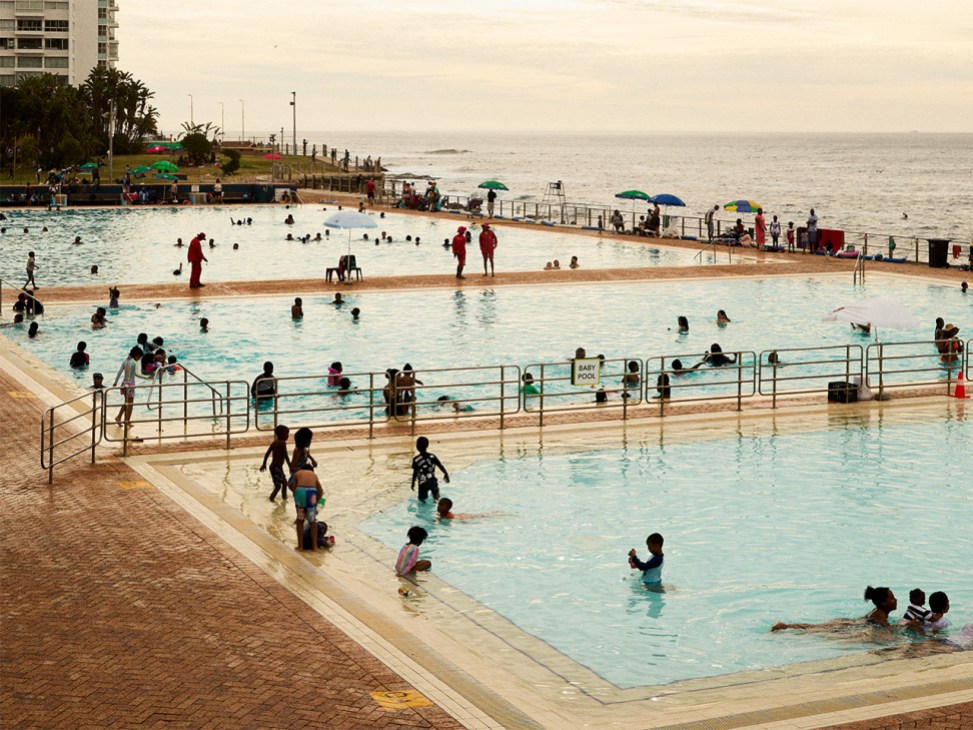
One of the most impressive divers is Keano Cedras, who lives in Athlone, 20km away. He has been coming to Sea Point since he was a babe-in-arms. Indeed, the swimming pool is home to his family’s business: Cedras’s grandparents have rented out umbrellas here for more than 30 years and now he and his brother, Reece, perform the same service, charging R40 (€2) a day. “It’s a good job,” he says. “You enjoy yourself while you work. Sea Point is my second home.”
The coastal resort of Sea Point was established in 1880 by British colonists inspired by Victorian bathing spots back home. On a rocky stretch of coastline with few places to swim, the current facility, which still pumps water directly from the Atlantic Ocean to fill its pools, was opened in 1959 at the height of apartheid. In the beginning, its azure waters and pristine lawns were accessible only to white people but this restriction fell with the end of the segregationist policy. These days it’s common for long queues to form outside its art deco entrance long before the pool’s 07.00 opening time.
Sitting nearby are Shakeelah Saayman, Ashif Abdulkader Gaylanie, “El Chapo” Williams and Sadiq Stemmet. The friends have travelled from Manenberg, a small suburb with a big gang problem: you’re three times more likely to be murdered there than elsewhere in South Africa. “We come here every weekend,” says Saayman. “The pool is much better than the beach. If we go to the beach, I can’t leave my baby sister to swim alone. It’s safer here.”


On a sweltering Sunday afternoon, Sea Point echoes to the sounds of Capetonians enjoying the first of the summer’s consistent heat. During cooler times of the year, this is a popular training spot for open-water swimmers – many of whom make up the Friends of the Sea Point Pavilion (FSPP), a charity that runs swimming programmes for local residents. The FSPP, which is funded by the rental income collected from food vendors on the complex’s forecourt, recently spent R2m (€100,000) to refurbish Sea Point’s original 1950s entrance.
Muizenberg
On the opposite side of the Cape Peninsula is Muizenberg Swimming Pool. Also founded as a Victorian seaside resort, Muizenberg is flanked by wealthy suburbs such as Lakeside to the north and the Cape Flats, an expanse of townships and poorer suburbs, to the east. Macchiato-sipping, 4×4-driving surfers lounge alongside families who have come on public transport with packed lunches. Muizenberg’s pavilion, which has been repainted as part of the mayor’s refurbishment programme, is designed to look like a ship, while the landscaping, palm trees and contorted water slides give the place a Caribbean atmosphere.
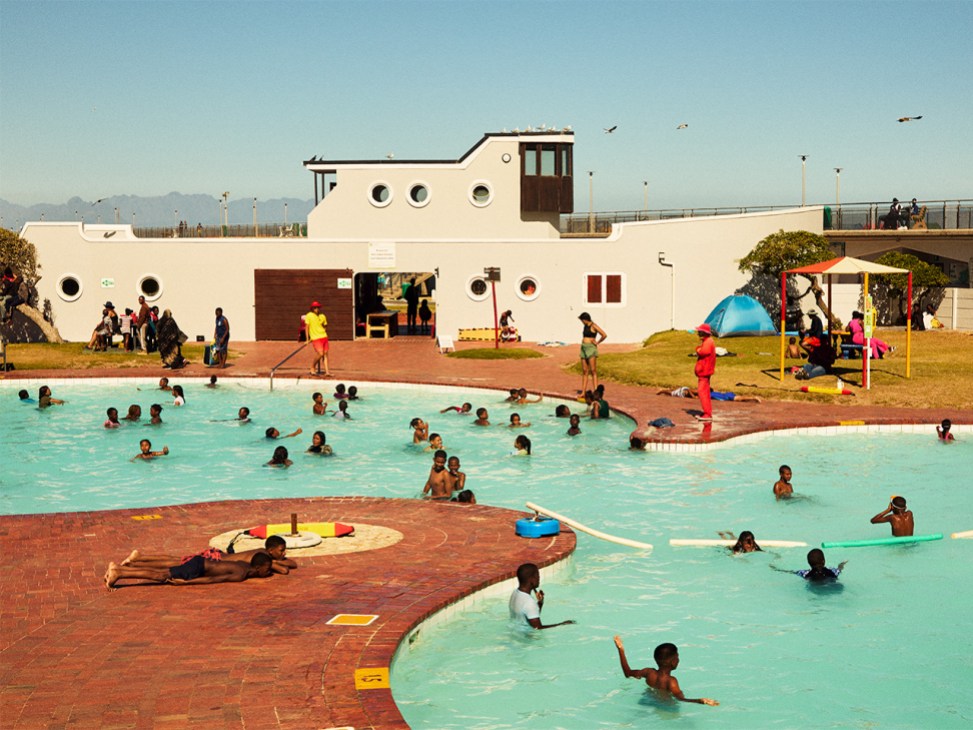
Its spruce-up has brought a bigger crowd than usual this summer. Khaaliq Khan is an 18-year-old graduate from Lavender Hill, a low-income suburb 5km away. He is here on an end-of-year excursion with his madrasa, an Islamic religious school. Khan and his mates started queuing to get in at 06.30 and, 10 hours later, show no signs of flagging.
“We are just waiting for 17.00 – that is our time,” he says, with a devilish smile. “I’m not sure if the lifeguards know but that’s when we’re all going to jump in the pool.” Lounging in the shade nearby, unaware of the impending splash mob, are sisters Evelyn and Beauty Zimba, and Evelyn’s four-year-old daughter. “I’ve been coming here my whole life,” says Beauty, who lives in Capricorn Park. “It’s good to see it looking cleaner.”


While it should hopefully be all fun and games for the swimmers at Muizenberg today, Aziz Rayners – one of 557 lifeguards on duty across Cape Town’s pools this summer – is on constant alert. “This is my second season,” says the lean 20-year-old computer-science student, sporting retro round sunglasses and a sparse goatee beneath his wide-brimmed red hat. “It’s a good holiday job but it’s also a big responsibility – last year I prevented a few drownings. They look like they’re swimming but then their eyes go big and they start panicking. Even the person next to them won’t know that they’re drowning.”
Reassured by Rayners’ vigilance, Monocle takes a dip. On this sultry afternoon, as the sound of children laughing wafts along on the gentle sea breeze, it’s difficult not to see Muizenberg as emblematic of a brighter future for Cape Town, a city still riven with divisions that, while no longer enforced by the government, are nonetheless evident in many areas. This swimming pool might represent the idealised rainbow nation. As part of the citywide R413m (€21m) seafront upgrade, Muizenberg will see R228m (€12m) invested in its parking areas, seawalls, coastal paths and beach huts. A brighter future indeed.
Newlands
Nestled in Cape Town’s southern suburbs, not far from the cricket stadium that shares its name, Newlands pool used to be South Africa’s home of competitive swimming. Today regional heats and Olympic training take place at the University of the Western Cape. Newlands’ grandstand is off-limits and the diving board has been removed but the crowds flooding into the pavilion on the first day of the summer season are enjoying a complex that has had a winter makeover. Many of the pool’s pumps have been replaced, while the changing rooms have been retiled and painted. Newlands’ location in a richer part of town brings a wealthier clientele but there’s still an unrestrained atmosphere that only sun and a large body of water can bring.
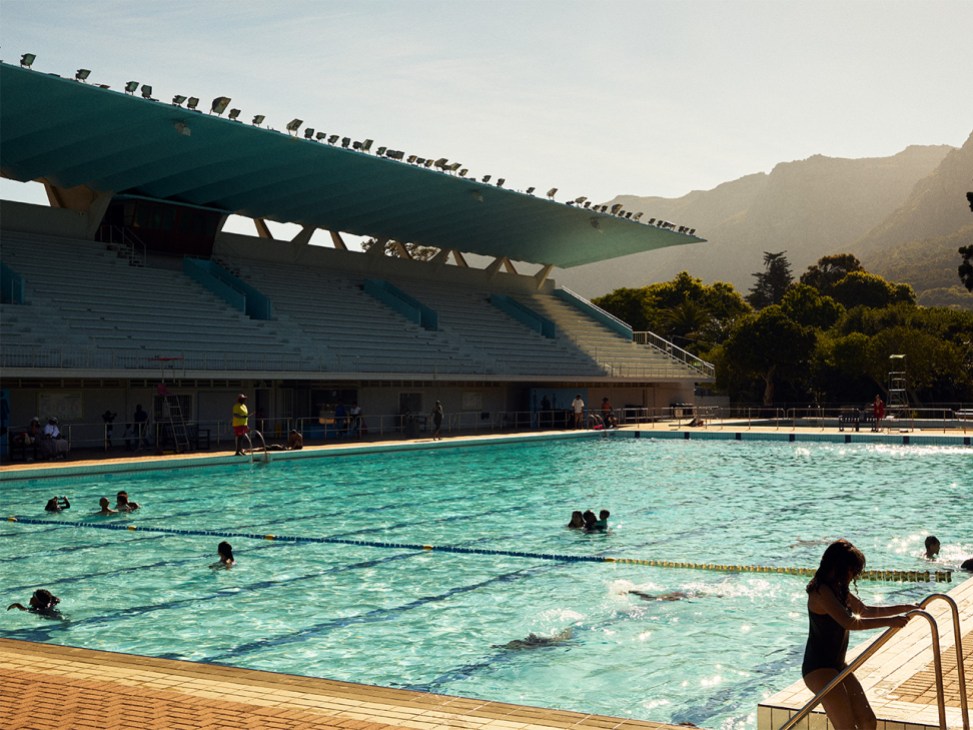
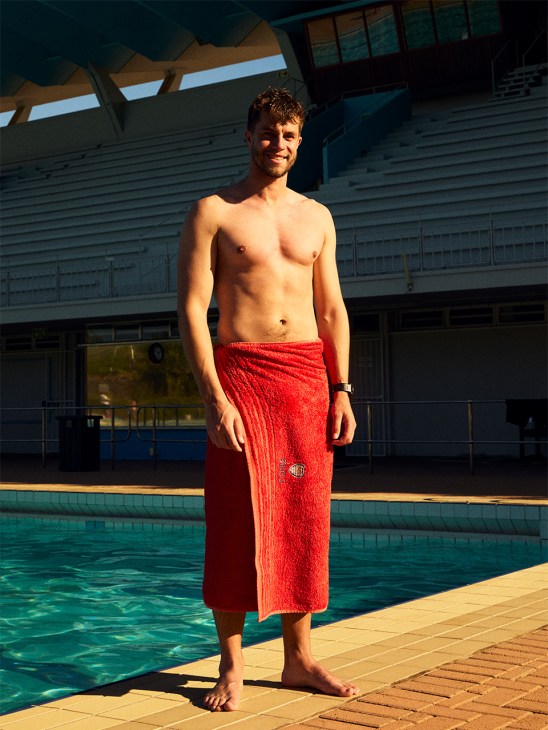
Back for the first time in 10 years is Taariq Adams, who works on cruise ships in the US but has returned to South Africa with his wife and children for the summer. “Newlands has a park and a pool; the children can play and I can swim,” he says. “We’ve had an awesome time and the tariffs are so cheap.” Despite a higher social bracket, a family of four pays little more than R24 (€1.25) for a day pass to Newlands, similar to the rate at other Cape Town public pools, all of which are subsidised by city hall.
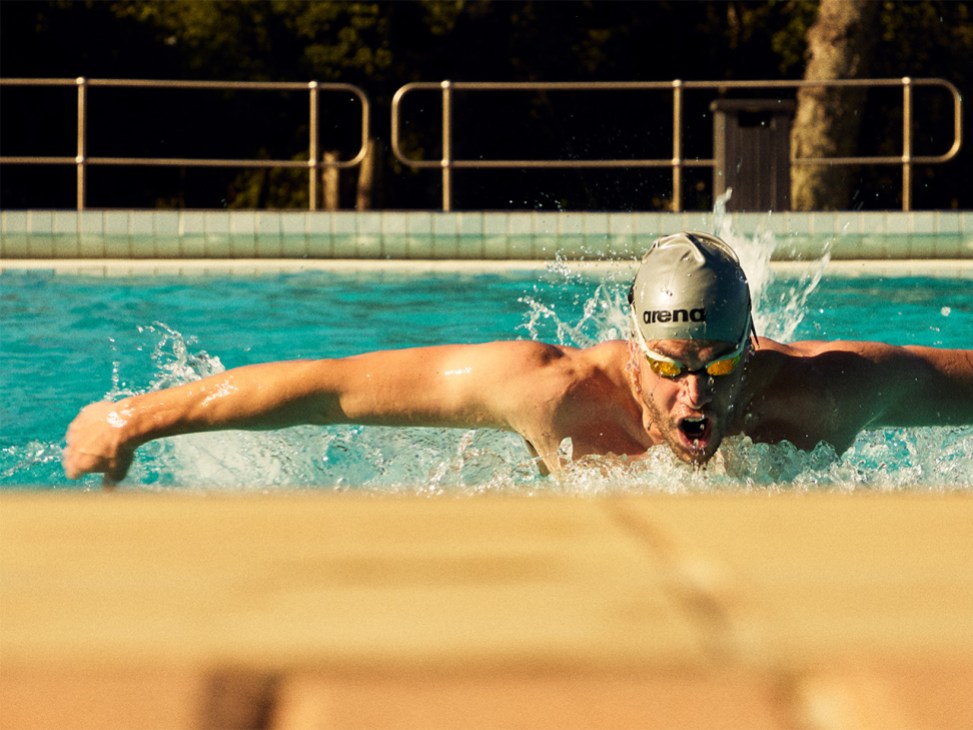
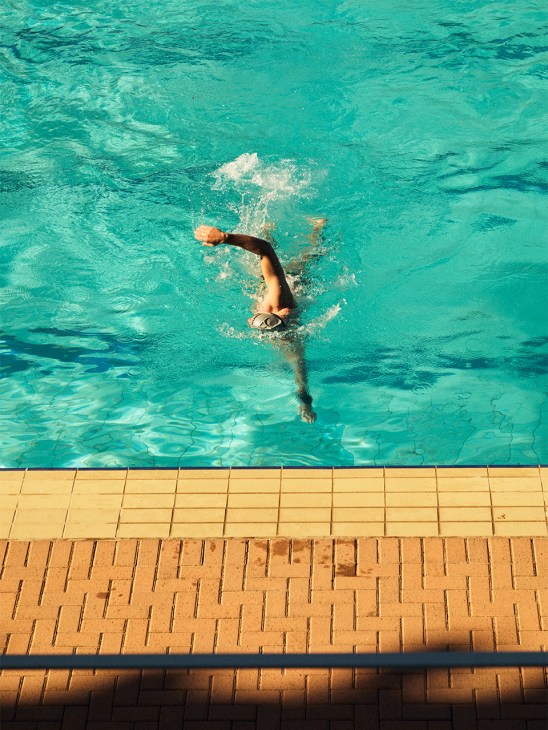
Beyond the jovial din is the sound of thrashing as a lone serious swimmer ploughs back and forth across the deep end. He scythes through the water in a metronomic freestyle, before breaking into an explosive butterfly, revealing dark Speedos emblazoned with the South African flag. “While Newlands was closed, I’ve been training in the gym or the sea,” says mechanical engineer Louis Gouws, as he rests on the edge of the pool. “But this is much better. It’s outside, it’s 50 metres long and I can look at Table Mountain every time I breathe. I’ll be here a few times a week for the rest of the summer.” Lucky him.
Read next: Dive into history: The art deco charm of Paris’s Piscine Pontoise