Could Valerii Zaluzhnyi be Ukraine’s next president?
Though Ukraine’s constitution prohibits elections in wartime, speculation abounds for presidential successors to Volodymyr Zelensky. Despite Valerii Zaluzhnyi’s quiet political profile, the country’s eyes are on the war commander-turned ambassador.
Except for the transparent earpiece curling down his collar, the man standing outside one of central London’s classic townhouses is dressed in all black. His appearance is stark compared to the pedestrians streaming past him, though few seem to notice. Our man, by contrast, is not so oblivious; his eyes dart up and down the street in methodical sweeps. What might be a suspicious tableau elsewhere is par for the course at think-tank Chatham House, where on this particular day the guest speaker is Valerii Zaluzhnyi – a Ukrainian war commander more accustomed to security protocols than cushy speaking invitations.
Despite being Ukraine ambassador to the UK, Zaluzhnyi is better known for his role as commander-in-chief of Ukraine’s armed forces. Appointed to the post by president Volodymyr Zelensky in 2021, Zaluzhnyi did away with the military’s lingering Soviet practices, including a rigid top-down approach to decision-making that actively discouraged any criticism or feedback from junior members. The effort played an important role in the country’s nimble response to Russia’s full-scale invasion in 2022. Softly spoken and a self-professed poetry fan, Zaluzhnyi quickly earned a reputation as a thoughtful and caring leader – and a potential political opponent to Zelensky.
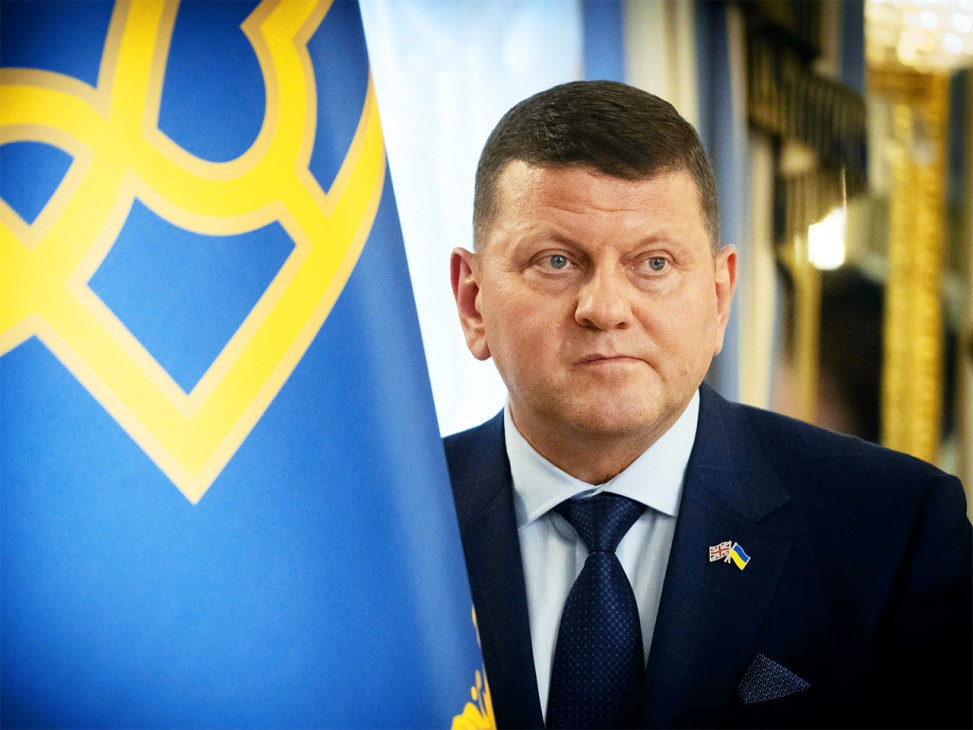
Yet any true plan of succession is pure speculation. Despite pressure from the US and Russia, elections in wartime Ukraine are explicitly forbidden by the country’s constitution. There’s also the small matter of organising safe and fair voting for a population dispersed abroad as refugees, deployed within the military or living in conditions too dangerous to gather for a vote. Even so, Zaluzhnyi has continued to top opinion polls. “Ukrainians are looking for someone who can preserve their security and has a record of success”, says Yaroslav Hrytsak, historian and author of Ukraine: The Forging of a Nation. “Zaluzhnyi meets that criteria.” Kateryna Denisova, a reporter for the Kyiv Independent, agrees: “Although he has never said anything about his intention to launch a political career, he has already become a political figure in Ukraine – even if that’s not something that he wants right now.”
Inside Chatham House’s auditorium, Zaluzhnyi takes the stage. In his preamble he compares news stories that suppose his presidential ambitions with the daily changes in London’s weather. “I [am beginning] to suspect that there is a [dedicated] department that wakes up every day with the thought, ‘What is Zaluzhnyi thinking today?’” he says in English. However, he stops short of giving anything concrete on the matter.
Instead, Zaluzhnyi switches into Ukrainian to deliver a speech on subjects that he clearly feels most at home speaking about: military and diplomatic analysis. Ukraine and its allies need a new form of alliance in which the latest technology, AI developments and drone innovations can be easily exchanged, he argues. His words are soberly realistic. “We, Ukrainians, have no choice”, he says. “We will either perish or survive. The formula for [our] survival is simple: keep fighting, strengthen the economy and maintain [our] unity.”
While his address is met with warm applause in London, admiration for the ambassador remains mixed back home. “My concern is that he is just a symbolic figure rather than someone with depth. We don’t know much about him”, says Nataliya Gumenyuk, co-founder of Kyiv-based media outlet Hromadske. “People feel very emotional about him and he has this image of being an easy-going, simple man. But is there anything behind that?”
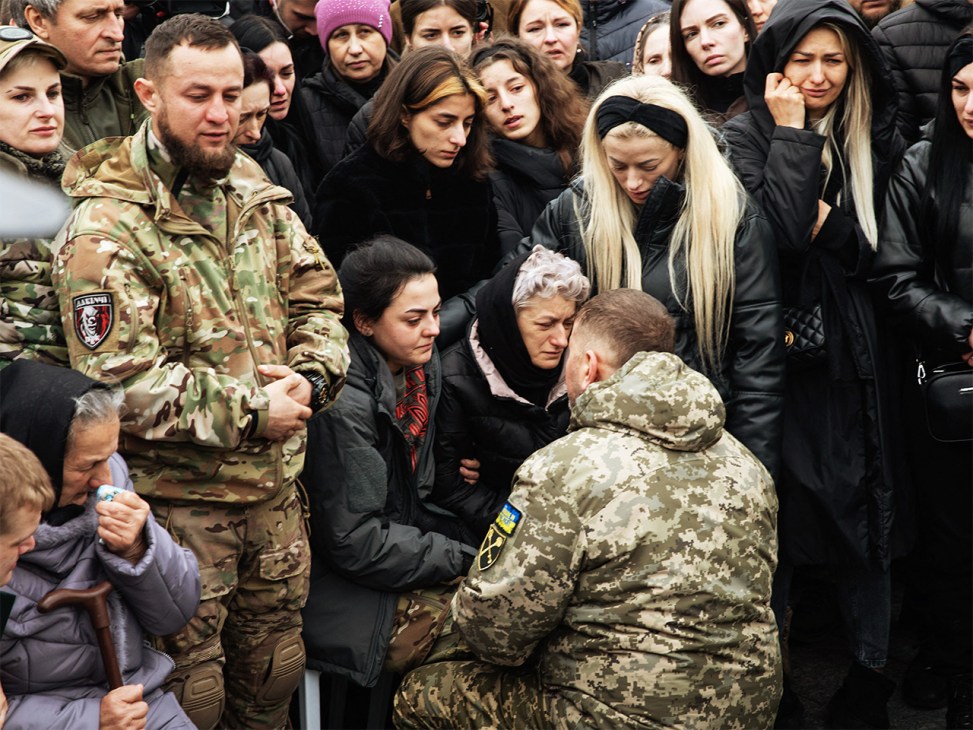
Many in Ukraine also feel that it is too soon to talk about presidential elections with a war still ongoing. “Even though domestic politics have been back in the spotlight in the past year, it’s still not the right time to be discussing [electoral] ambitions,” says Denisova. “It could split society and shift the focus away from the battlefield.” Still, some see the conversations around Zelensky’s successors as forward thinking. “Ukrainians are looking for a new political leader but are not willing to [push for] change during the war – they understand that it is too risky”, says Hrytsak. “They see Zelensky as a good but old car that has to be replaced. But they can’t afford [the replacement] yet, so they’ll keep the old one for now”.
While active campaigning remains off the cards, Zaluzhnyi’s popularity has posed a challenge to Zelensky. This is perhaps no better illustrated than in the president’s decision in 2024 to reassign Zaluzhnyi from the post as commander-in-chief of the armed forces to UK ambassador. With rumours of possible candidacies swirling and corruption scandals rocking Zelensky’s office last year, the president’s thoughts undoubtedly turned to his legacy. “Although current polls show that the scandal hasn’t significantly affected his trust ratings, it will certainly affect his campaign as well as the results, if [Zelensky] decides to run again,” says Denisova.
Back at Chatham House, bodyguards quickly whisk Zaluzhnyi offstage the moment that his address is over, instructing the audience to remain seated until the ambassador has left the building. Whether through slick bureaucratic machinations or by pure chance, the level of security shows that Zaluzhnyi has become pivotal to Ukraine’s future – and someone to watch for observers keen to map the country’s political trajectory.