Denmark 2026 forecast: Diplomacy, downfall and Donald Trump
Looking back on 2025, it is hard not to conclude that the Danish prime minister, Mette Frederiksen, has played a good hand badly. It’s an assessment that applies as much to her own political fortunes as it does her nation’s economy and, not least, its vulnerability on the world stage.
Let’s start with the least important of these: the destiny of Frederiksen herself. As has happened with almost all successful Danish PMs in recent memory, rumours began to grow at the beginning of the year that the Jutland-born Social Democrats leader had her eye on a major international post – either in the EU or Nato – to escape the frustrations inherent in leading the multiparty government of a small Nordic nation.
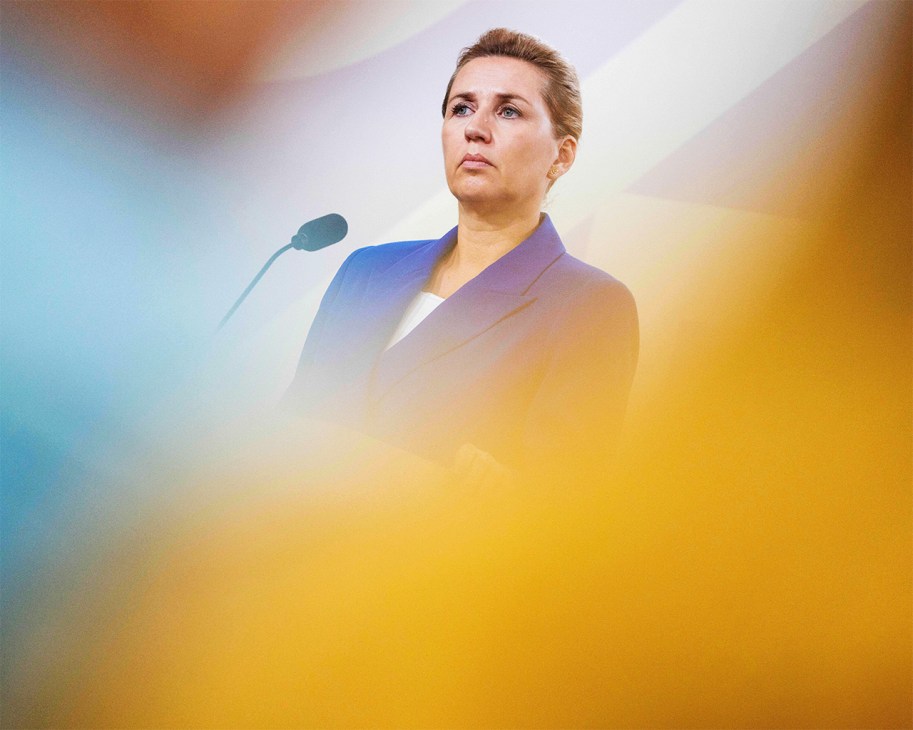
The rumour-mongers had, however, failed to spot that Frederiksen is very much a domestic political animal, most at home dealing with (some would argue overstating) crises and threats to her nation. She was here to stay, she assured us.
It was ironic, then, that by March she would find herself at the centre of the biggest news story in the world: US president Donald Trump’s refusal to rule out a military annexation of Greenland, a Danish territory. Who knows how much Trump’s ego had played in his threats but it probably didn’t help that Frederiksen had openly scoffed at his desire to buy Greenland during his first term in 2019. Trump doubled down. Greenland reportedly remains high on his to-do list and even higher on the agenda of the US vice-president, JD Vance, who in March visited the country, seemingly on a mission to stir things up.
Meanwhile, Frederiksen’s unusually demonstrative support of Ukraine since its invasion by Russia is beginning to look incautious. Beyond the welcoming of more than 50,000 Ukrainian refugees and what equates to the largest financial support per capita of any nation to the war effort, Frederiksen has been a visible friend to the Ukrainian president, Volodymyr Zelensky, at one point being photographed with him in one of the many F-16 fighter jets that the Danes are donating.
I can’t be alone in wondering whether she has poked the bear a little too insistently. Supporting a beleaguered ally is admirable but perhaps Frederiksen might do well to take a less vociferous role in 2026’s coalition of the willing. In October, driving over the Great Belt Bridge from Funen to Zealand, I observed a Russian submarine sailing blithely through Danish waters, trailed at a polite distance by a Danish frigate. Earlier that month, I found myself deposited at a remote airport in northern Jutland when my flight from London was rerouted from a Copenhagen airport bedevilled by (allegedly Russian) drones.
Frederiksen’s electoral fortunes are certainly waning. The year ended with a poor local election performance for the Social Democrats, most notably losing control of Copenhagen for the first time in more than 100 years. This does not bode well for the next general election, which is to be held no later than 31 October 2026.
There are further doomy omens in the prosperous yet stagnating Danish economy, not least a couple of high-profile corporate share-price nosedives. Trump had a hand in both: the majority-state-owned Danish energy company Ørsted was deeply wounded when the US president cancelled federal support for offshore wind, a sector in which the company is a global frontrunner. Meanwhile, Danish pharma giant Novo Nordisk has suffered from unregulated sales of copies of its weight-loss drugs in the US.
Denmark is still rich and free and relatively equal. It is still open and democratic and its interiors are still beautifully lit. You have never seen so many great sofas as grace this nation’s living rooms, Tivoli Gardens remains a magical wonderland and the natural wine continues to flow in the bars of Copenhagen. My wish for 2026 is perhaps just a little less complacency from its corporate and political leaders – and maybe keep a couple of those warplanes, just in case.
Michael Booth is Monocle’s Copenhagen correspondent. Read his opinion about Danish business naivety here.