‘We’ve seen the opposite of peace’: Kosovo’s president, Vjosa Osmani, on her nation’s commitment to democratic values
At the World Governments Summit, the Balkan leader spoke to Monocle about pursuing diplomacy outside of Europe, joining the EU and why she doesn’t take democracy for granted.
For Kosovo’s president, Vjosa Osmani, global gatherings such as the World Governments Summit (WGS) serve a very specific purpose. More than 15 years after declaring independence, Kosovo remains recognised by only about half of the world’s states and is excluded from the UN and the EU. Relations with Serbia continue to cast a long shadow, with recent flare-ups prompting Nato intervention and renewed concern over stability in the western Balkans.
Speaking to Monocle in Dubai, Osmani positioned Kosovo as a small state with outsized geopolitical clarity. She described the country as one of Washington’s closest allies, fully aligned with the EU’s foreign and security policy – including sanctions on Russia – and keen to broaden its economic and defence partnerships beyond Europe. Her argument is rooted in experience: Kosovo, she says, knows what the absence of democracy looks like and does not take Western values for granted. Yet her optimism sits alongside ongoing frustrations in Brussels over Pristina’s handling of local governance and dialogue with Belgrade. The president pressed Kosovo’s case on the world stage, even as the country’s path to full international integration remains unfinished.
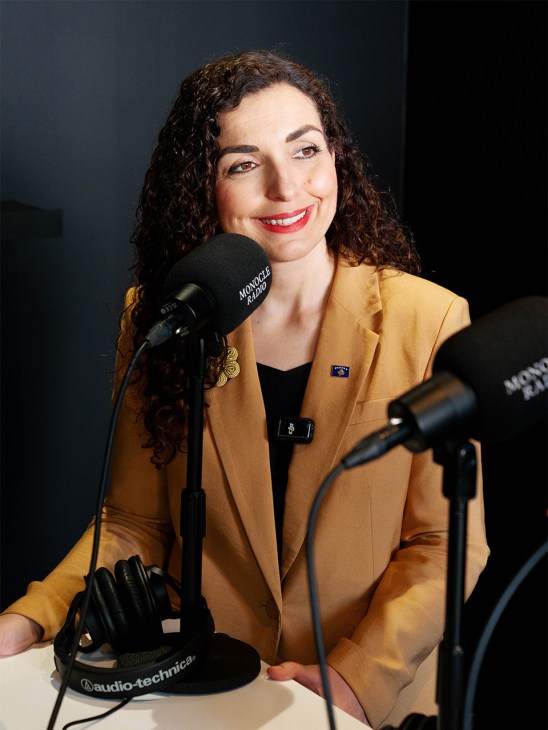
Osmani spoke with Monocle’s Gulf correspondent, Inzamam Rashid, and head of radio, Tom Edwards. Listen to the conversation on The Daily. The following transcript has been edited for clarity and length.
Can you tell us about the role of dialogue here in UAE, and at the WGS in particular, in Kosovo’s diplomatic relations?
Dialogue is critical for nations big or small. But it’s especially critical for countries such as Kosovo because we don’t necessarily get the opportunity to meet everyone at the same time in the same place. Most of our diplomatic engagement is within the European continent. It would take so much time for us to visit every single country [and have bilateral conversations] in every continent. But when you get to forums such as [the WGS], everyone is here. There is enormous opportunity – not just diplomatically but there’s economic opportunity with countries that we’ve never spoken to before. It’s a place where, within an hour, you can meet four presidents.
For us, it has already been fruitful. The UAE has been supportive of Kosovo since 1999, when we underwent genocidal war. [They] supported us to rebuild our country from the ashes and now they support us in health and other sectors. We’re grateful to have been included in this summit [because] it’s an enormous opportunity to strengthen existing relations but also create fresh alliances with new friends around the world.
What kind of conversations are you having with your counterparts, especially when US-Kosovan conversations are reigniting after what has been a fraught relationship?
The relationship that we have with the US has always been existential. The US led the world to come to our rescue – to give us an opportunity to live in freedom, independence and to enjoy the democracy that we have today. Kosovo has turned into one of the biggest success stories of US foreign policy in modern history. [We had support from] not only the US but Nato in general, including the UK and many other members of the EU.
We are working strongly with the Trump administration to see how we can expand this relationship beyond diplomacy and the usual political ideas and engagements that we’ve had in the past. We have enormous support from the US in the area of defence. As you know, we are in a very fragile region in terms of security. So it’s very important that we have the necessary defence capabilities.
What kind of conversations are you having with the US?
We get a lot of support when it comes to defence weapons and we get training in the US to make sure that our army develops in line with Nato standards. Training is crucial but, at the same time, defence weapons are crucial. We work to make sure that the soldier behind the weapon is well-motivated and supported so that there’s not just recruitment but also retainment within our army.
We’re working with the US to expand our economic relationship. Kosovo might be seen as small but because of the free-trade agreements, we have free access to hundreds of millions of Europeans. Today, when you invest in Kosovo, you’re also investing in hundreds of millions of Europeans. Our alignment continues to sit with the Euro. We’re also 100 per cent aligned with the EU’s foreign and security policy, whether in sanctions against Russia or other issues, because we believe that what you stand for is what truly matters, especially in difficult moments.
Do we advocate enough in Europe for a strong foundation based on shared values? Does Kosovo have a stronger advocacy for that because of its relatively recent, fraught history?
The reason that we are a strong voice for [Europe] is because we never take those values for granted. We know what it means to be a country that lives in the opposite of democracy. We’ve seen the opposite of peace. It’s destruction, it’s suffering – it’s horrible. Though all the values and democracy that the EU represents today are not perfect, it’s the best system that we know, it’s the best system that works and it’s a system that saves lives. We still believe that focusing on democracy, rule of law and human rights is the right way to go.
Further insights from the World Governments Summit:
● Amid heightened geopolitical tensions, the World Governments Summit is a masterclass in soft power
● Neutrality is not passive: Dr Anwar Gargash explains the UAE’s diplomatic stance