Is the Iranian regime on the verge of collapse?
As anti-government protests erupt across the country, the Iranian regime’s resilience is being tested as never before. Will it survive?
Over the past fortnight, Iran has been gripped by a wave of unrest that has taken even seasoned regional analysts by surprise. What began in late December 2025 as protests in Tehran over the collapse of the Iranian currency and punishing inflation has quickly morphed into something deeper and more existential: a widespread repudiation of the ruling system.
From the bazaar merchants who first rolled down their shop shutters in protest to young people in universities and working-class districts, the discontent now spans generations and geographies, across Tehran to Isfahan, Mashhad and beyond. This breadth is one of the defining features that separates the current upheaval from earlier tides of dissent, including the widespread protests in 2022 to 2023 triggered by Mahsa Amini’s death.
For a regime that has survived for decades on strict ideological control and a tightly bound clerical establishment, this distinction matters. Slogans such as “Death to the dictator” and chants calling for the return of former Crown Prince Reza Pahlavi signal not just economic grievance but a challenge to the legitimacy of the system.
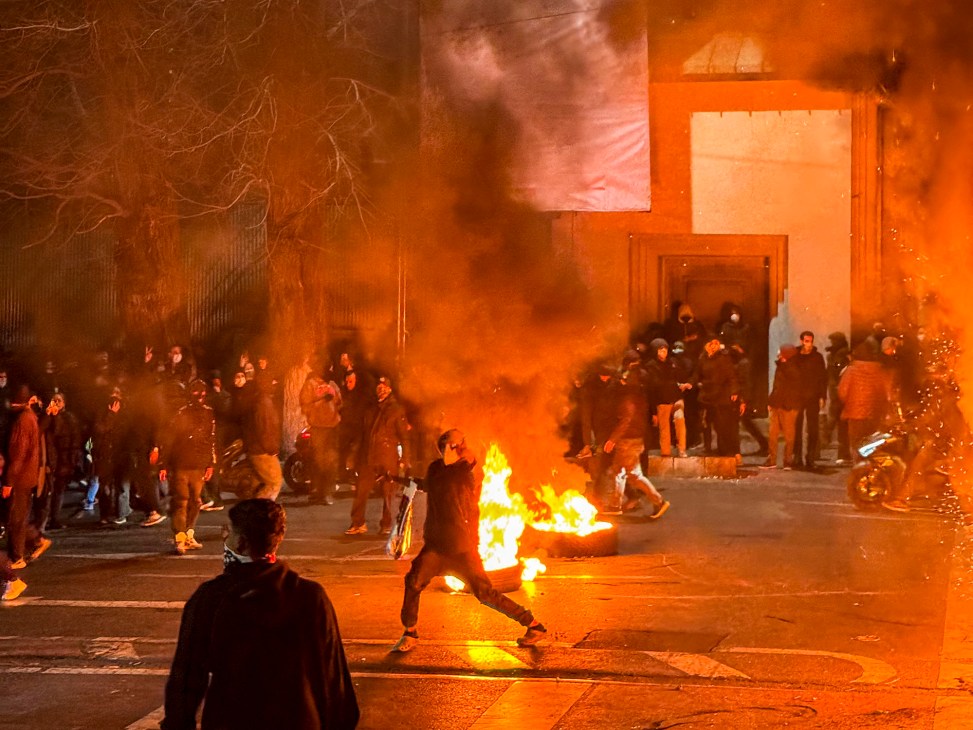
Tehran’s response has been forceful. Authorities have cut nationwide internet access in an effort to slow the protests and obscure the scale of state violence. Security forces have fired live ammunition at demonstrators. Dozens – if not hundreds, according to some rights groups – have been killed. The top judiciary has branded protesters “enemies of God”, a designation that carries the death penalty. Against this backdrop of state repression, a broader question looms: is the Iranian regime on the verge of collapse?
The short answer from many analysts is: not yet. But the system’s fragility is no longer theoretical. For years, the Islamic Republic has been juggling economic stagnation, political dissent and international isolation. And today, these pressures have converged. The Iranian rial’s dramatic depreciation, double-digit inflation and widespread hardship have stripped the government of its ability to deliver basic economic stability – a core pillar of its claim to legitimacy.
Still, collapse is not imminent in the traditional sense. The clerical state commands robust coercive tools, including the Islamic Revolutionary Guard Corps and Basij militia, and key centres of power remain intact. The leadership’s sweeping narrative of foreign instigation aims to delegitimise protest movements and rally conservative sections of society. But there are cracks. The sustained intensity of the protests, the erosion of routine communication through blackouts and the visible strain on the regime’s security apparatus all point to systemic exhaustion. Even some loyalists whisper that the government’s current course is unsustainable.
From the vantage of the Gulf – where Iran’s economic and geopolitical weight is never far from view – the real question isn’t whether the Islamic Republic will fall this winter. Rather, it’s whether Tehran can withstand a sustained legitimacy crisis without ceding meaningful power or undertaking serious reform. And in that sense, 2026 already feels like a turning point. Only time will tell if this moment yields transformation, fragmentation or something altogether unprecedented.
On ‘The Globalist’ our foreign editor, Alexis Self, spoke with Negah Angha about the latest. Listen to it here.