Japan’s 10 buzzwords of 2025 reveal a snapshot of a country in flux
From climate anxiety to soaring rice prices and a momentous leadership transition, Japan’s annual buzzwords offer a window into how the country faced 2025’s changes and challenges.
Every year, Jiyu Kokumin-sha – the publisher of contemporary-affairs glossary Gendai Yogo no Kiso Chishiki – takes stock of contemporary Japan via an annually updated encyclopaedia of the 10 most popular buzzwords of the year. The final line-up (whittled down from a longlist of 30) offers a fascinating snapshot of a year in Japan shaped by heat, inflation and political shift.
10. Myaku-Myaku
The mascot of Expo 2025 Osaka went from zero to hero during the course of the six-month event. Initially derided for his baffling blue-and-red appearance, Myaku-Myaku became the star of the show, shifting vast quantities of merch and providing the backdrop for endless selfies. The Expo itself defied gloomy predictions, intense summer heat and epic queues to pull in 25.5 million visitors and make a profit.

9. ‘Niki’
As Japan endured another record-breaking summer this year, there was much discussion about how the country’s distinctive seasons are becoming less defined. With longer summers and shorter winters, many fear that Japan’s famous four seasons (shiki) are blurring into two (niki).
8. ‘Toranpu kanzei’
The country was taken aback by the severity of Trump’s tariffs. Japan, which considers the US an ally, found itself treated as harshly as other nations and its auto industry in potential difficulty. In the end, the nation’s top trade negotiator Ryosei Akazawa’s repeated trips to Washington saw the final figure drop to a still-painful 15 per cent.
7. ‘Sen go 80-nen’ / ‘Showa 100-nen’
2025 was a big year for anniversaries: 80 years since the end of the Second World War and a century since the start of the Showa era – the longest imperial reign in the nation’s history and a distinctive period remembered for its astonishing economic growth and a golden age for design in everything from architecture to cars and interiors.
6. ‘Kokokomai’
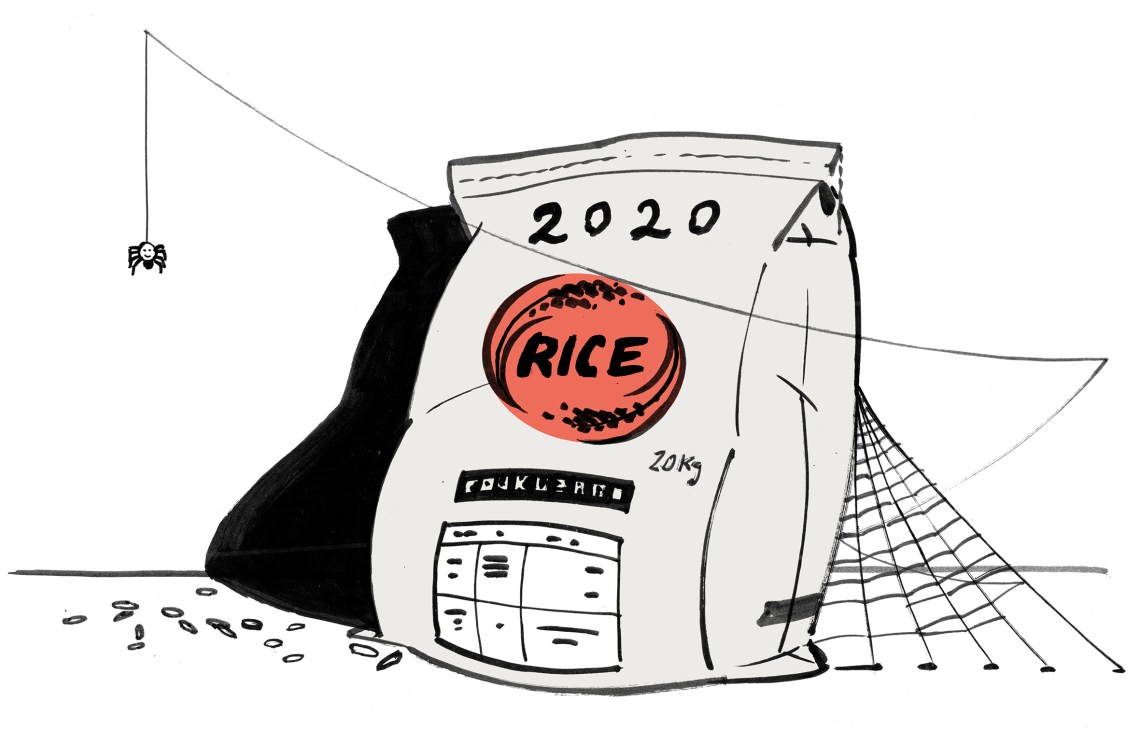
Rice was an even hotter topic than Trump’s tariffs this year, as households watched the price of the crucial staple soar. The government attempted to bring costs down by releasing some of its stockpile from 2020 and 2021 harvests, which resulted in people talking about kokokomai or “very, very old rice”.
5. ‘Kokuho’
Japanese-Korean director Lee Sang-il’s lavish period drama about the world of kabuki theatre, Kokuho (National Treasure), paired two industry stars – Ryusei Yokohama and Ryo Yoshizawa – and became the highest-grossing Japanese live-action film of all time.
4. ‘Kinkyu juryo’ / ‘Kuma higai’
The phrases kinkyu juryo, meaning “emergency cull”, and kuma higai, or “damage caused by bears”, reflected the nation’s increased ursine threat this year. Bear attacks reached record highs, with more than a dozen people killed. Hungry bears were seen climbing persimmon trees and munching their way through valuable apple harvests, particularly in Akita prefecture, where the Self Defence Forces were called in to restore order.

3. ‘Orudo media’
While Japan tends to steer clear of the “fake news” culture war, there was a growing sense this year that young people were gathering information on social-media platforms rather than from orudo media (“old media”) outlets such as TV, radio and newspapers. A major sexual-harassment scandal at Fuji TV didn’t help.
2. ‘Ehho ehho’
This was a niche one. The phrase ehho ehho – meant to convey the sound of huffing and puffing – accompanied by a photo of a baby owl on the run, taken by Dutch photographer Hannie Heere, became a viral meme, used by anyone in a hurry or working hard.
The winner:
1. ‘Hataraite hataraite hataraite hataraite hataraite mairimasu’ / ‘Josei shusho’
Japan appointed its first female prime minister (josei shusho) in October after Sanae Takaichi was elected president of the ruling Liberal Democratic Party. With a minority government, a faltering economy and tricky regional geopolitics, Takaichi has a tough road ahead. Her plan, she said, was to throw work-life balance out the window and give it her all, announcing: “I will work, work, work, work and work” (Hataraite hataraite hataraite hataraite hataraite mairimasu). A spat with China early into the job hasn’t made life easier.