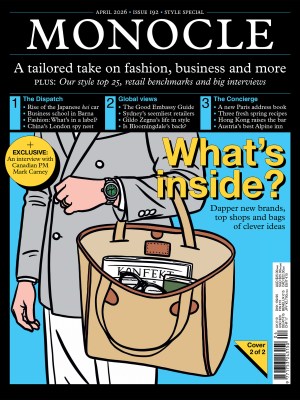
‘You can’t be truly sovereign by yourself’: Mark Carney talks geopolitical pragmatism and a confident Canada
Speaking exclusively to Monocle in Tokyo, Canada’s prime minister, Mark Carney, on the national brand, the importance of connectivity and the new responsibilities facing middle powers in a time of rupture.
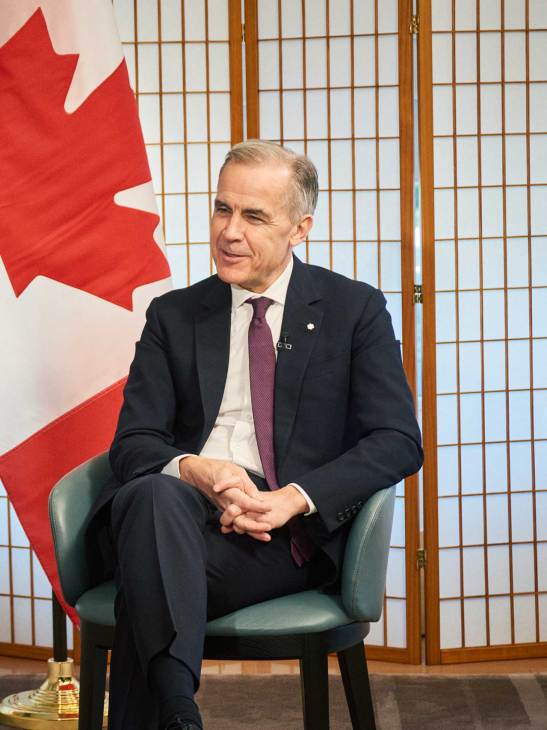
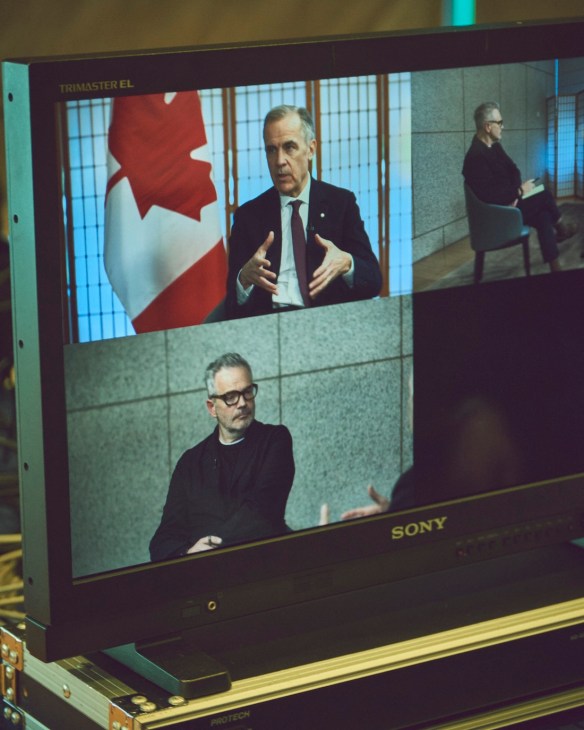
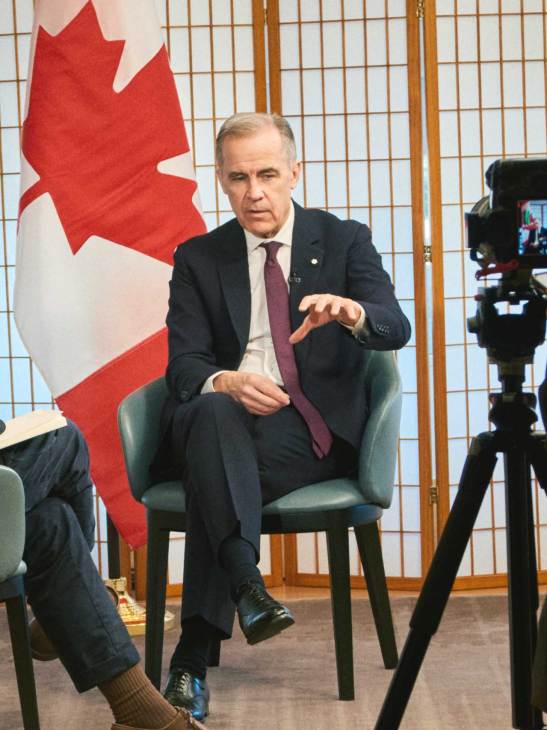
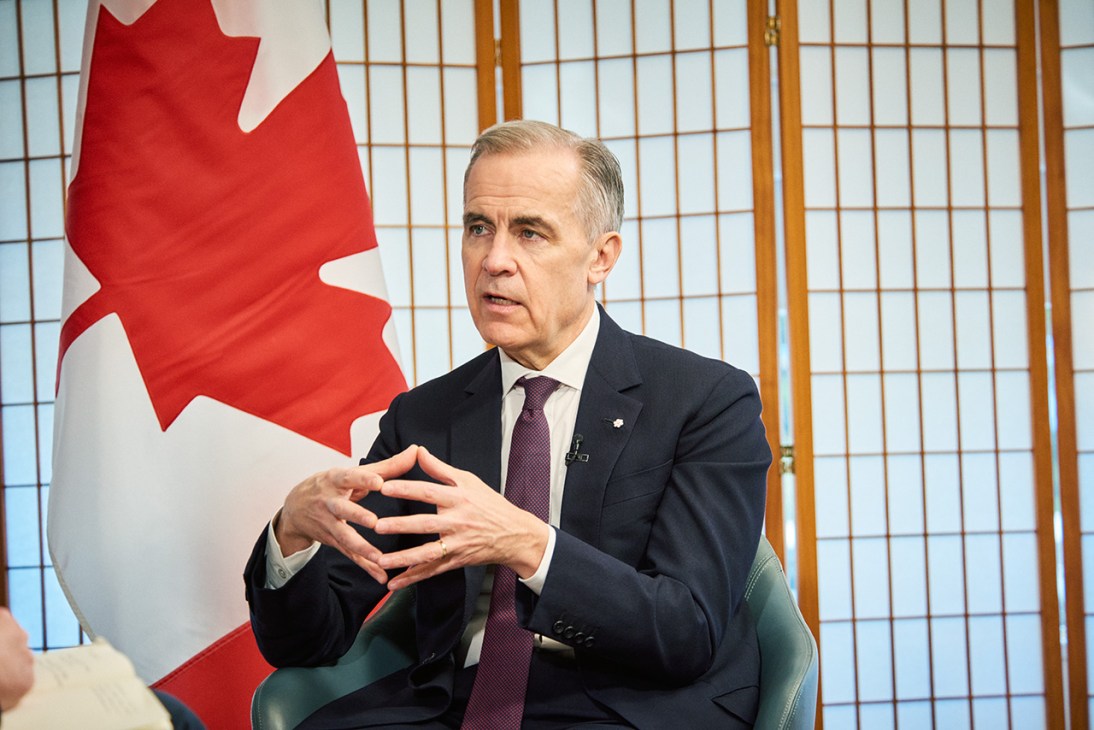
It’s a sunny March morning when Monocle’s editorial director and chairman, Tyler Brûlé, sits down with the Canadian prime minister, Mark Carney, at his country’s Tokyo embassy. Designed by Japanese-Canadian architect Raymond Moriyama and opened in 1991, the embassy and residence is one of Canada’s finest diplomatic missions and is a fitting setting for an interview focusing on Carney’s reset of his nation’s presence on the world stage.
This is the final stop on a tour that has taken him to India and Australia, and comes less than two months after he made a widely lauded speech at the World Economic Forum in Davos, in which he spoke of the need for “middle powers” to work more closely together. It has been a decade since a Canadian prime minister has made a bilateral visit to Japan and Carney, who worked in Tokyo in the early 1990s for Goldman Sachs, spoke a few lines of Japanese during a speech in which he announced co-operation agreements in areas such as defence, trade and energy. He is the first world leader to visit Japan’s prime minister, Sanae Takaichi, since her landslide election victory in February.
Carney tells us about that Davos speech, how to navigate the new world order, resetting relationships and more. During a 40-minute sit down, he does not once discuss the United States. Surprising? Read on.
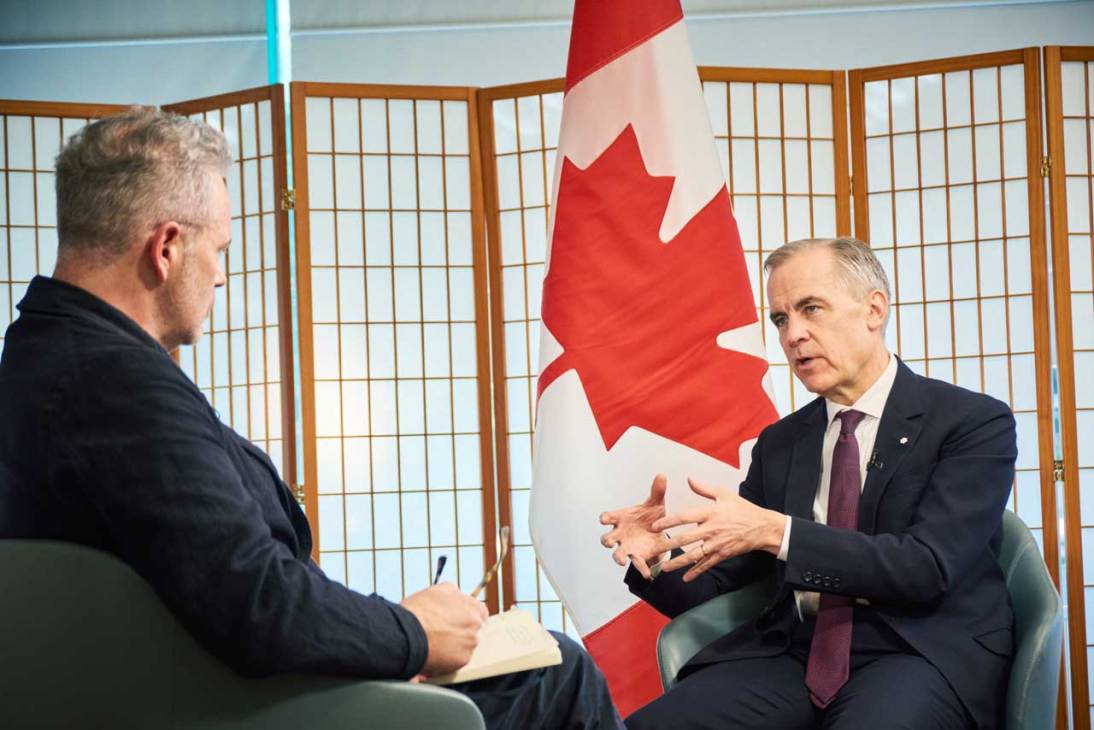
Prime Minister, we’re two months on from Davos. How is the message getting through? How are you feeling?
I feel good about it because the message did get through – and more broadly than I would have anticipated. It’s the popular take-up of it. Whether it’s on the streets of Japan, Australia or Canada, a number of people will come up to me and will have heard the speech and agreed with the message. That tells me one thing: that people were already there; they had already figured it out themselves. It just hadn’t been expressed by someone like me – as usual, politicians being behind the people.
The second thing is that at the core of that speech, the pivot in the middle was towards a positive agenda. We face these challenges; integration is being weaponised. What do you do about it? Well, you find countries that share your values on specific issues, even if they don’t agree on everything. Then you build together. At the same time, you must recognise that you can’t be truly sovereign or independent just by yourself. If you pair up with somebody who will use that relationship against you, then, of course, you’re not truly sovereign or independent. Two months on, there has been a lot of engagement – like-minded nations in the Nordics on specific issues, for example. There’s a range of aspects to this: Arctic security, co-operation with what’s called the Nordic-Baltic Eight. We’ll be doing more with them under the broader umbrella of Nato; specifically, co-operation with Australia on critical minerals, for example, and a variety of other areas as well as defence. It’s about diversifying your partnerships at a time when the nature of defence is changing pretty rapidly. Crucially, what you do on defence can also help to build peacetime capabilities. Artificial intelligence and quantum computing are two of many examples. So there’s very intense engagement. Obviously, you need to prioritise and you need to execute.
How much does that need to be formalised, this notion of an M10 (middle 10)? Does it need a framework?
I don’t think so. And that’s not what we are pursuing. This is not “Middle powers of the world unite”, with a T-shirt. You won’t agree with everybody on everything or with the same intensity and prioritisation. The Coalition of the Willing, which is backstopping Ukraine, is quite broad. But it’s not everybody. And that’s different from who will come together on critical minerals, for example. And it’s different from what we are working on with the Australians and others, which is to bring together the CPTPP [Comprehensive and Progressive Agreement for Trans-Pacific Partnership] and the EU as one connected trading bloc of one and a half billion people. It would be far and away the biggest trading bloc in the world. And that’s what you can do when you search for issues where you have common ground.
A last point, if I may, Tyler. One of the things that I think is necessary is speed. We’re in what we have called a “rupture”, a big shift in the way that the world operates. To use an old analogy, the kaleidoscope has been shaken. How will the pieces come together? Now is the time to be engaged, to put together a web of connections – a group of these coalitions that will help to improve the situation.
Here we are in Tokyo. From an Ottawa perspective, there’s a lot of looking across the Atlantic – but should there be a bigger focus across the Pacific?
Without question, there is now a bigger focus on them. It started with repairing relations that were deeply damaged. We needed to re-establish our engagement with China and India and we have accomplished that.
There is a bigger overlap in terms of shared interests and values between two democracies in the case of Canada and India, of course, than there is with Canada and China. The Chinese understand that. It was an element of the early discussions I had with president Xi Jinping about where the guardrails are in this relationship, where would we develop, where would we not necessarily and where we would agree to disagree. And so we start there.
More broadly, there are a host of deep relationships. With South Korea, for example, the overlap between our two countries is enormous. The areas for our co-operation include everything from defence – we’re talking with them, alongside the Germans and the Norwegians, trying to decide on submarine perspectives – to space, satellite communications and critical minerals. They have some of the most important automotive companies in Canada and there are the cultural connections between roughly similar-sized economies: K-pop and, of course, the culture beyond it. South Korea is one of many examples. I’m going to throw out a few others, if I may. We’re negotiating a free-trade agreement with the Philippines. We have launched negotiations with Thailand. The Asean group of countries are in what we hope this year will be the final stages of that free-trade negotiation.
I’m coming here from Australia, where we have really stepped up our relationship. Canada and Australia have deep ties but it could be far deeper. That’s something that we, prime minister Anthony Albanese and I, and our cabinets have agreed on.
Our relationship with India is also deepening. And we have deep ties with Europe, deep institutional ties. The Comprehensive Economic and Trade Agreement [Ceta] is one example – the free-trade agreement with the EU. We’re taking that to another level through a broad strategic-partnership arrangement that is being negotiated. We are basically treated as a domestic producer, as part of the European defence-procurement process. So all of that is there. I think that you can sense, maybe from my list, the importance of this region in relative terms.
Let’s talk about Japan within all of this.
Japan is one of Canada’s biggest foreign investors. The auto sector is a great place to start: 70 per cent of the vehicles produced in Canada are by Japanese companies. We provide 10 per cent of the calories to Japan in terms of our food and agrifood but at both levels, we have CA$40bn [€25.6bn] worth of two-way trade every year. There is a huge opportunity for that to deepen across these strategic sectors.
Even defence?
Yes. In fact, what we have with this visit is a deepening in defence co-operation, information sharing, joint exercises – those elements. Canada is the second most present of the G7 in defence. It’s not quite 365 days a year but it’s pretty close in terms of maritime exercises, air exercises and the physical presence of troops because the security of the Indo-Pacific is fundamental. We’re a Pacific nation and Japan is one of our deepest allies here. And so, the co-operation is there. I expect it to continue to build. Related to that, we’re both increasing our defence spend.
To put some numbers to it, over the next decade, Canada will invest about CA$500bn [€319bn]. It’s a huge number. A significant proportion of that, as you would expect, is in defence – submarines, aircraft, drones and materiel that are necessary, particularly to protect the Arctic, which is where the threats are rising. But just as much, if not more, is spent on what is called “dual use”. Think new ports, AI, quantum computing – all of which are necessary to move forward. Some of the developments on the resource side are directly tied to the military side but have broader economic benefits for the country.
How do you make joining the Canadian forces attractive?
Obviously, salaries are important. Let me give you an example of our shift in focus. Since June, when we began to put in place our new defence strategy, recruitment has gone up 13 per cent. People want to join the Canadian forces because they know that they will be well-resourced. They believe in the mission of protecting Canadians and the combination of those two things attracts the best and brightest women and men.
But what does well-resourced mean in the Canadian forces? What does it mean in the media? What does it mean in government? It will increasingly mean that you are technologically empowered, that you’re using unmanned systems, machine learning, AI, robots and other things, so that you’re doing the higher-value add, the more interesting parts of your job. The key is to build the skills to get the most out of that and this will be the case with the forces. And it’s part of the reason, Tyler, why that scale of spend is necessary to ensure that we are protecting Canadians. That’s our job with the forces.
Big change in the world necessitates a big response. As technology is changing, I would rather have it in that order, all coming together, because it means that we’re not locked into old systems and we’re just pouring money into tanks, because that’s what we did in the Second World War. It made sense then but it doesn’t make sense now.
And just remind our readers: what is that CA$500bn in GDP terms?
Right now, it’s about a sixth of our GDP – 16 per cent or so. But this is half a trillion spread over a decade. So, it’s 1.6 per cent – that is the full multiplier. We have got our defence spending to 2 per cent of GDP this year. So we have reached our Nato commitment.
Is it morally important?
It’s important, first and foremost, to protect Canadians. When we came into government, we were in a situation where our ships and planes were functioning less than 50 per cent of the time. You can’t have that. You never get them to 100 per cent because you want to constantly be retooling them and repairing them but we didn’t have enough basic equipment, including ammunition for troops. We weren’t paying our women and men properly.
The basics had to be done. Almost in and of itself, righting that started to move us towards that 2 per cent. But then, on top of that, we have much bigger threats – and this is the downside of technological change – from interballistic and hypersonic missiles. So one of the things that we were doing in Australia, one of the first decisions we took as a government, was to start to build what is called an over-the-horizon radar system. The Australians are world leaders in this. Basically, what it means for Canadians is that we will have a system that can see over the North Pole before missiles and hypersonic missiles come in. The fact that we can defend ourselves against that makes it less likely to happen. Now those are big systems; the first phase of that costs more than CA$6bn [€3.8bn].
First and foremost, our job is to protect Canadians. It is also important to support our allies in the defence of freedom, sovereignty and territorial integrity. That is what being a member of Nato means. And the need to do that with a more aggressive Russia, with persistent state sponsors of terrorism such as Iran and with the risks of nuclear proliferation means that we need to do more collectively.
If I can make two points, one is this: what we and our Nordic partners have been arguing is that Nato needs to spend more time on its western flank, meaning the Arctic. We have to spend money to defend Canadians and defend the Canadian Arctic. Even a few years ago, that would have been totally discounted by Nato, which was fixated on the eastern front. Risks come more broadly and [Canada’s] Article 5 and other obligations extend there.
And then the other point that I want to make concerns the commitments for Nato. The new commitments go beyond 2 per cent, so we’ll continue to build. We’re not going to spend more money than we need to in order to protect ourselves but we can see that this would be consistent with further increasing the defence spend and that’s what we’re planning to do. That’s where that CA$500bn [€320bn] comes from. But at the same time, under Nato commitments, there is something called the Defence Industrial Pledge. What that means is you should spend about 1.5 per cent of GDP on your resilience. That can mean your ports, your AI systems, cyber defences – those aspects.
Canada is one of the world’s leaders in cyber. One of the important agreements that we struck yesterday with Japan is about further cyber co-operation. We need to continue to invest in that. Quantum computing is very relevant to the future of cyber protection and information protection, so we will invest heavily in that. Canada will continue to have a lead and we’re going to build those industries as a consequence.
I’m curious about presence. You have been out on the road. We’re at this amazing mission here. How does Canada show up? It’s great that you’re flying around but how do you sustain this?
The first thing is engagement in the run-up to my arrival. Let me take the example of India. We had five ministers who had a series of meetings since the time when Prime Minister Narendra Modi and I met at the G7 last June, which was when we restarted the relationship. We had five separate ministerial meetings with Canadians going to India. There was some reciprocation with Indian ministers coming to Canada and that’s apart from meeting on the sidelines of Apec and elsewhere. So that begins to establish the groundwork and the engagement. There has been more engagement in the past year than in the previous 20 years put together.
The next thing is to ensure that our stakeholders are engaged. So, again, in India, our business groups have now reformed and are re-energised. So you get that cross-pollination. Importantly, we had two sets of visits from our universities. We had 20 show up and there was a series of partnerships being struck with Indian universities. When I was there last week, another four of our top universities showed up again, reinforcing these partnership scholarships. You have to establish these connections at multiple levels and have very clear deliverables and timetables. In the example of India, Prime Minister Modi and I have set the deadline of the end of this year to complete the cepa [comprehensive economic partnership agreement] between the two of us. It’s hard to overstate the importance of people-to-people cultural ties and getting that going too.
What about the importance of proper embassies and having proper representation? A lot of people have said that Canada became ‘Canada by Marriott’ for a while: ‘Let’s meet the ambassador at the hotel because the embassy is not so great.’
I’ll give you an example about this embassy. I was visiting when I was a central bank governor in 2010 or 2011; it was a G7 or G20 in Tokyo. And the emperor and the empress were planning to go to Canada. Prior to their visit, they were coming to visit the ambassador but his hospitality budget had run out in the first three months. The ambassador at the time wasn’t flamboyant; the budget was just so small. But he was going to host the emperor of Japan! So, I was helping them with our funds so that they could buy some tea and so on.
That is a false economy so there has been a reset. You have to be prudent because it’s taxpayers’ money but you also have to be effective.
And let me give you another example from the past 24 hours. Last night was the eve of Prime Minister Takaichi’s birthday. So, with the embassy, we arranged for a Canadian cake, which featured elements of the country. Yes, it had some maple but it had Canadian strawberries too – it was a unique concoction. And it had a beautiful sakura with a maple leaf in the middle of it. I thought that it was beautiful. And to her surprise, we presented this cake. These things matter. It matters that you remember somebody’s birthday, that the connection has something to do with both countries. It’s an element of diplomacy but I put it deeper than that. It’s friendship, right?
From a brand perspective, what would you like to reset about Canada’s image? What needs fixing?
“Canada Strong” – that’s our brand. We are a strong, confident, ambitious country. We’re taking control of our destiny. We are known not just for the strength of our values but the value of our strength. There is an understanding that we are in control of our destiny, that we have big ambitions. We’re building – and we’ll build with partners.
The other element of the Canadian character is that we’re generous people. We care about the vulnerable and support them, and we’re reliable in a world that’s anything but. When I was proposed as the governor of the Bank of England, [the British prime minister at the time] David Cameron told me that when he went to see the Queen [Elizabeth II] to inform her that one of her subjects, albeit from a different country, would be governor, she said, “Oh good, a Canadian. They’re very reliable.” It had nothing to do with me. It was the reputation of the country.
So, on Canada Strong, I’m curious. We’re in this time of specific interests – everybody has their own week, their own month, because they represent a community. Does Canada need to come together more as a nation?
The nation is very much united. We’re united not because of blood, soil, specific ethnicity or religion. In fact, it’s very much the contrary. We’re a country that recognises differences, celebrates those differences and has allowed a diverse public square. We don’t seek unity in uniformity. That diversity is a fundamental strength of Canada. It’s something that has been built gradually. You think of our history: it was two cultures ignoring the Indigenous culture that was there and, over time, that structure became more formal, then became multiculturalism.
Now we’re really in this process of reconciliation but it’s with a common set of values, with responsibilities to each other alongside the rights of individuals. Our civic nationalism – because that’s what it is – is very strong. I don’t want to say that it’s unique because others are moving in that direction but it’s relatively rare in this world.
A country is built on great infrastructure. What’s happening right now in terms of connectivity?
A lot needs investing in. Let me take rail. We are building, finally. In Europe, certainly during my whole adult life, high-speed rail has been discussed. We are one of the pioneers of the technology. For a while, we were one of the largest builders, just not in Canada. We have now started the process for establishing high-speed rail from Québec City all the way through to Windsor. When we came into government, we chopped four years off the timeline for that process. So that’s tremendously exciting – that is core connectivity, not just for the big urban centres but a series of the rural areas in between.
We flagged in our most recent budget that we’ll look for strategic options for airports. That will require additional capital. As we go around the world, we hear a lot from airport operators about what they could help to do with our major airports and serve Canadians better and get better value for money.
We’re also talking people-to-people connectivity. One of the crucial things is that we have what the world wants. We need to build out some new ports. Some will be in the Arctic. Some will be dual use with the military and some will be expansion of our existing ports. And for connectivity, we need to build from where the product or the commodity is being developed, to those ports with strategic trade corridors. You have seen components of that and we’re about to see a lot more over the next year.
Are enough people coming to Canada? Is Canada attractive from an education point of view but also for a long weekend?
From an education point of view, four times as many Indians study in Canada compared to the UK and twice as many as in the US. We have a lot of people coming to Canada to study. In fact, and not surprisingly, on most metrics, we have the most educated population in the world. But we only have so much capacity, so one of the things that we need to do – and are beginning to do – is have satellite campuses and better hybrid connectivity.
As for people coming for a long weekend: every country that I go to wants more flights into Canada, whether it’s in the Gulf, Asia or elsewhere. We’re starting a process of granting those requests more quickly. Obviously, that will lead to follow-on in terms of tourism and hospitality. I will take this opportunity to reinforce that we are co-hosts of the Fifa World Cup in June and we look forward to welcoming the world to Canada.
———
Carney’s to-do list
To help his country live up to the “Canada Strong” motto, Monocle has a few suggestions for the prime minister for 2026 and beyond.
1. It’s great to tour the world to restore relationships and stimulate trade but how do you host the world in Canada? Ottawa needs a proper scrub down and an improved sense of arrival.
2. Likewise, Canada needs a global media campaign to boost tourism. There are plenty of Europeans who don’t want to go to the US at the moment but are still keen to drive across from the Atlantic to the Pacific. Get marketing.
3. You’re only as good as your networks and connections. Young Canada needs to get out in the world. Create a programme that promotes work abroad. A bilateral deal (three-year work permits for 18-to-25-year-olds) with the EU would be a good place to start.
4. Join Eurovision. If Australia can do it, so can Canada.
5. Speaking of soft power, invest more in sport and winning medals. The past two Olympics weren’t Canada’s finest.
6. The PM should stick to his mission of ensuring that brand Canada sharpens up – better embassy locations, stronger graphics, best architecture and sharp tailoring for front-line staff. Appearance really does matter.
7. Take a cue from the Japanese and build rail links complete with dense, well-considered urban infrastructure at every stop. Make the new high-speed rail initiative a global benchmark.
8. Here’s a bold idea. Get rid of your US-brand limo and procure a Toyota Century (you’ll need a few) to cut a better look in Ottawa and beyond. Toyota Land Cruisers for the Royal Canadian Mounted Police.
9. Commission a new official residence of which the nation can be proud.
10. The middle powers need a home and a brand. Build it, brand it.