Rising rhetoric and deepening Gulf tensions push the Middle East to the brink
As the US-Israeli war against Iran drags on, the rhetoric among the latter’s fellow Gulf states is beginning to reach fever pitch.
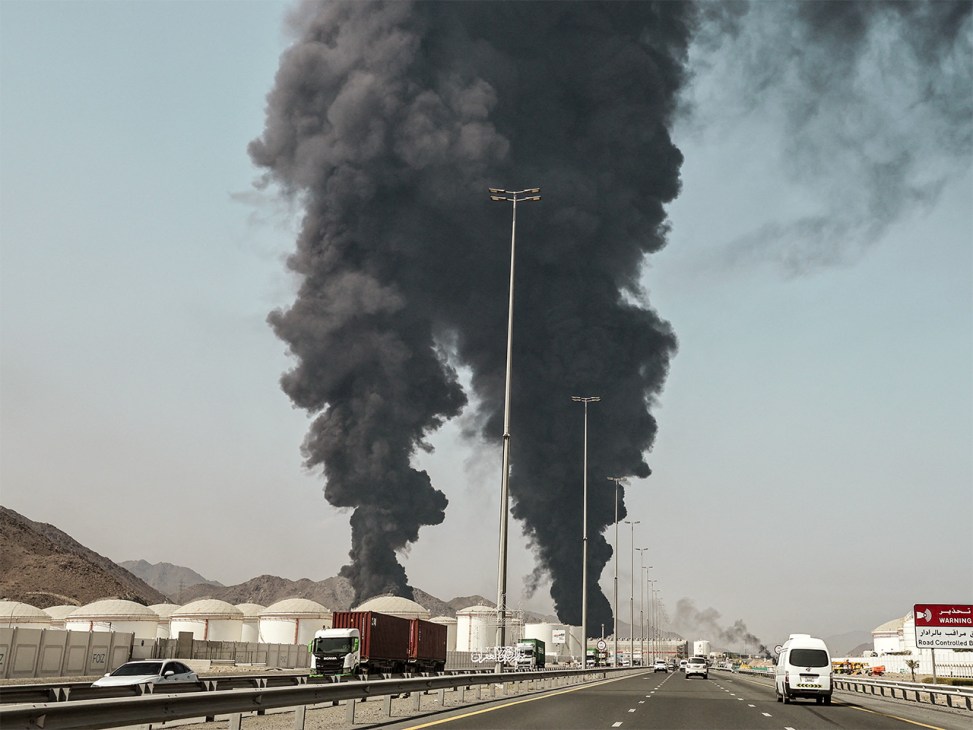
There are wars that escalate in firepower and wars that escalate in tone. The Middle East is now witnessing both – and it is the latter that might prove more consequential. Last week, this conflict took a decisive turn. Israel’s strike on Iran’s South Pars gas field – the largest in the world and the backbone of Tehran’s energy economy – was not just another tactical hit. It was a message: nothing is off limits. Iran’s response was equally telling. Evacuation warnings across Gulf energy sites quickly gave way to missile and drone strikes in Qatar, the UAE and Saudi Arabia. The war moved quickly from shadow confrontation to direct regional exposure.
But the more revealing shift is rhetorical. For weeks the Gulf states have walked a tightrope, supporting stability, avoiding escalation and quietly aligning with Washington. Now that balancing act is fraying. The UAE and Qatar’s unusually sharp condemnation of the South Pars strike signalled something deeper than diplomatic discomfort. It was a warning that the rules of engagement have changed. They understand what Israel’s move unlocked: an “eye for an eye” doctrine from Tehran, where energy infrastructure becomes fair game. And once production – not just storage or transport – is hit, the damage is not measured in days or weeks but in years.
Saudi Arabia’s response went further. Foreign minister Prince Faisal bin Farhan Al Saud’s remarks were striking not just for their ire but also for their clarity. Iran’s actions were described as “blatant blackmail” and, more importantly, Riyadh signalled that its “patience is not unlimited”. This is not the language of restraint – it is the language of conditional escalation.
“Everybody is hedging, trying to figure out how they secure their economies and societies, and weighing up what the best step is to make now,” says Abishur Prakash, a strategist at Toronto-based The Geopolitical Business Inc. The Gulf states are being attacked, economically squeezed and politically cornered – but they still don’t know how long this war will last.
That uncertainty is critical because it explains why Gulf capitals have not yet crossed the line into direct military retaliation. As Prakash notes, any such move would likely require a clear signal from the US on timing and commitment. Without it, striking Iran risks being left exposed should the US abruptly step back. And that brings us to Washington, where the tone is shifting just as dramatically.
Donald Trump’s messaging has become increasingly contradictory. On one hand he has threatened overwhelming retaliation, even suggesting the destruction of key Iranian energy infrastructure if attacks continue. On the other he has publicly distanced himself from Israel’s targeting decisions, insisting that further strikes on South Pars would not happen.
The US and Israel might share an overarching goal – regime change in Tehran – but their tolerance for economic shock is vastly different. Israel can absorb regional volatility. The US cannot.
The stakes for Washington extend far beyond the battlefield: rising energy prices, inflationary pressure and growing frustration among Gulf allies. This is not just a war in the Middle East, it is also a stress test of America’s role as a global stabiliser.
That role is already under strain. Iran’s positioning in the Strait of Hormuz has effectively turned global energy flows into leverage. With about 20 per cent of the world’s oil passing through these waters, even partial disruption sends shockwaves through the global markets. The result is a slow-burning economic siege, where ships hesitate, insurers panic and prices creep upward.
Efforts to assemble a multinational security response have been lukewarm at best. European and Asian powers are cautious, reluctant to be drawn into a deeper conflict that increasingly feels open-ended. The message is clear: confidence in US leadership is not what it once was. An image of Trump and all of his navy vessels alone in these waters is comically striking.
For the Gulf states this war is no longer just about Iran. It is about dependency and the realisation that reliance on US security guarantees might be a vulnerability. If the conflict drags on this could push the region towards a new strategic doctrine – one centred on digital sovereign defence and great autonomy. This would not be a rupture with Washington but a recalibration. So will the Gulf nations attack?
The answer, for now, is no – but the question itself is becoming less hypothetical by the day. Saudi Arabia’s warning was not idle – it was a signal that thresholds exist and that they are being tested. This war is still searching for its limit. Militarily, it is already dangerous and, politically, it is becoming unpredictable. Rhetorically – in the language of warnings, frustrations and diverging agendas – it has entered its most volatile phase yet. In conflicts such as this, tone has a habit of turning into action.
More on the conflict that’s rocking global markets?
– Who is Mojtaba Khamenei, Iran’s new supreme leader?
– Iran’s attacks on the UAE have revealed a nation whose resilience is built on diversity
– The view from the Strait of Hormuz: Ground zero for Iran’s war on global commerce