Carnival is serious business as Brazilian cities battle to be the biggest and the best
Brazil’s biggest party is just days away. Right now, revellers across the country are stocking up on glitter, body paint and fishnet tights. They’re putting the final touches on new costumes or shaking out old ones before the country grinds to a halt for Carnival. Held in the days running up to Lent, from 13 to 18 February this year, it’s a moment of collective catharsis when anything goes. From carefully choreographed samba school parades and blocos (roving street parties) to VIP balls, the celebrations come in myriad guises but are all shaped by creativity and tradition, and best approached with stamina and a sturdy pair of trainers.
Carnival looks like wild hedonism to most but it’s also serious business. This year’s festivities are tipped to generate R$14.48bn (€2.32bn) in revenue and welcome 1.42 million tourists from abroad, both figures up 4 per cent on 2025, according to the National Confederation of Commerce of Goods, Services and Tourism (CNC). It’s a short window where big sponsorship deals are done, flights sell out, hotels run close to capacity and roughly 39,000 temporary jobs are created nationwide. With these sorts of gains up for grabs, Brazil’s major cities have been turning up the heat in their bids to host the biggest and best Carnival – and attract the greatest share of the 50 million or so partygoers who turn out across the country.
For the uninitiated, it might come as a surprise that Carnival is celebrated well beyond Rio. Sure, the picture postcard city has a long history with the event. It also bags the most global press coverage with photos of its “samba queens” – bikini-clad beauties with giant feathered headdresses, each representing a samba school competing in Rio’s official parade, hosted at a purpose-built “Sambadrome”. But Carnival is, in some shape or form, enjoyed in most Brazilian cities.
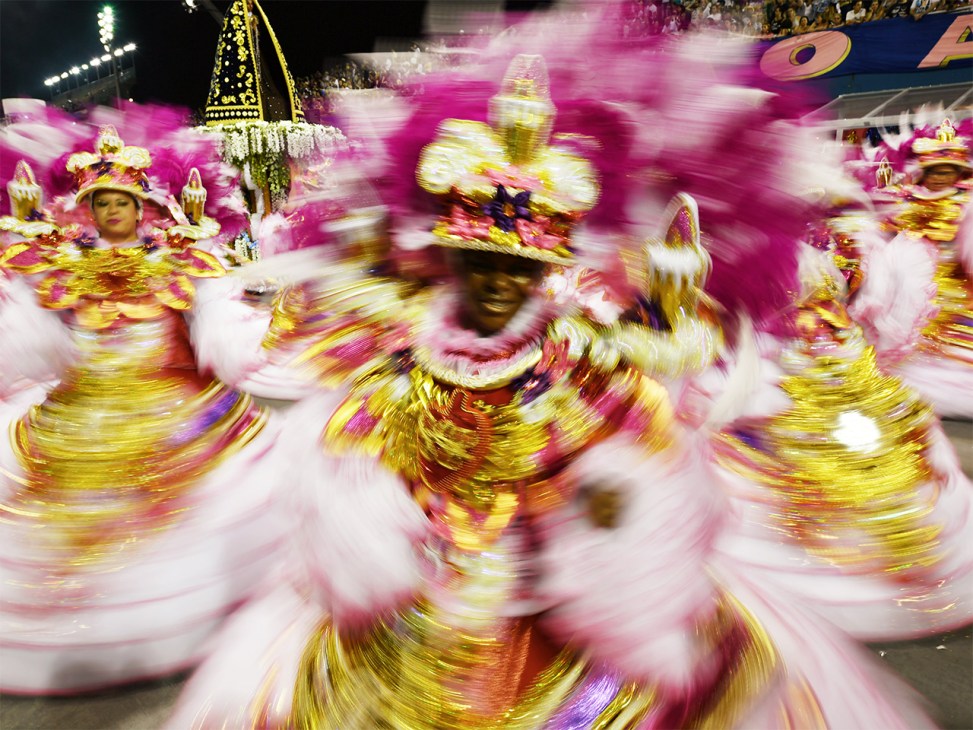
São Paulo – never to be outdone by its rival Rio – also has its own Sambadrome and official samba-school parade. In recent years, it has also begun to compete with Rio in the number of blocos, which can range from small groups of ragtag musicians marching around the streets to megablocos with hulking sound trucks that draw crowds of half a million or more. In 2020, São Paulo beat Rio’s street Carnival in the number of registered blocos for the first time ever: 644 to 453 – a lead that it has maintained in the years since.
Once the place where Brazilians visited precisely in order to escape the festivities, São Paulo now promotes itself as having the largest street Carnival – a claim that rubs other cities up the wrong way. Last year an online post by São Paulo City Hall went viral after announcing “the biggest street Carnival is coming soon”. Official City Hall profiles from Recife, Olinda and Salvador – three of the most iconic spots to celebrate, steeped in Northeastern traditions and rhythms – chimed in with wry comments. “Shall I count or will you?” wrote Salvador’s City Hall account.
São Paulo’s recent victory by bloco numbers is a fairly facile metric for success. Recife and Olinda – twin cities in Pernambuco state – are famed for their traditions, which were granted protected legal heritage status in 2025 (a nod to their cultural importance and also a way to access federal funding). Their street parties are rooted in musical traditions such as frevo, whose choreography calls for jumps, crouches and the spinning of colourful umbrellas.
Carnival in Salvador, the capital of Bahia state, was also granted protected legal heritage status last year. There, blocos represent the city’s distinct Afro-Brazilian heritage while giant, glitzy sound trucks carry some of the country’s biggest musical stars.
Cultural heritage is a big calling card for the likes of Salvador and Recife, especially during Carnival when revenues spike; both cities predict the festivities will inject more than R$2.6bn (€497m) into the local economy. São Paulo is projecting marginally higher revenues but nowhere near Rio’s estimated R$5.7bn (€924m). If true, will Rio claim victory as Brazil’s biggest Carnival? The metrics war will play out on different battlegrounds in the coming weeks. But whoever claims the crown, one thing is certain: a good time will be had by all.
Catherine Balston is a São Paulo-based journalist and writer. For more insight and analysis, subscribe to Monocle today.
Further reading? Here’s how French comedian Paul Cabannes has taken Brazil by storm