‘Kolay gelsin’ is Turkey’s great societal leveller. English-language cities should take note.
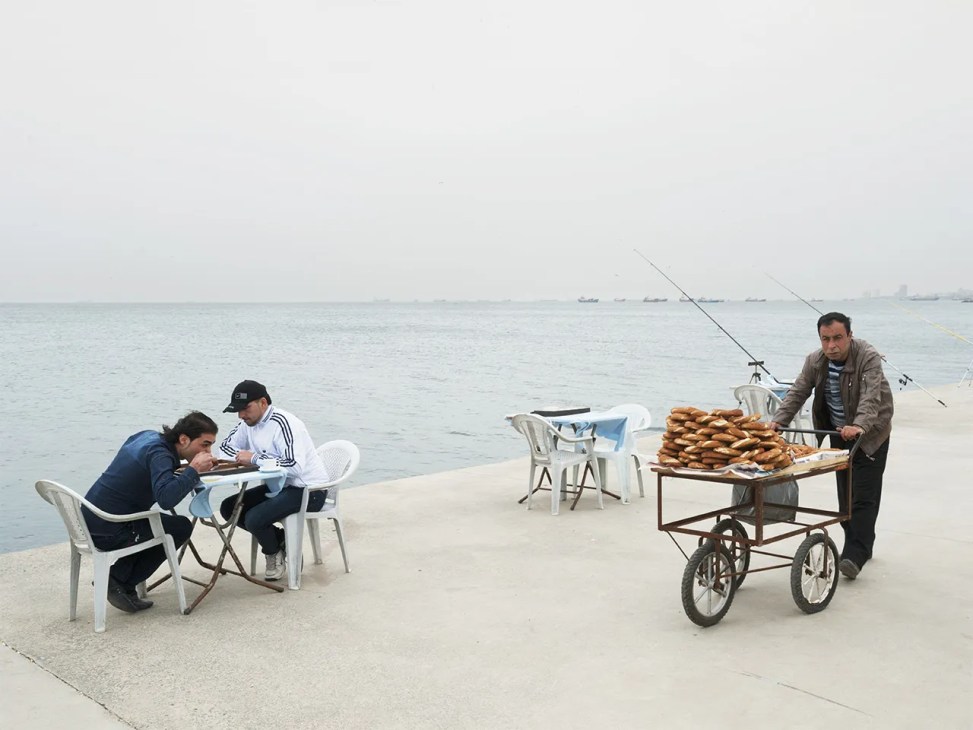
Since being back in London, I’ve retained a Turkish compulsion. Every time that I see someone at work, a street cleaner, say, or a shop worker, I feel the urge – no, the need – to say “kolay gelsin”. In Turkey you say it to anyone who is exerting themselves – it literally means “may it come easy”. You say it down the phone to your bank’s call-centre worker when you finally get past the on-hold music and to the man on the street struggling home with his shopping. You can say it ironically if someone is facing a long weekend with the in-laws. You can even use it at the migration office, where the bureaucrat and I say it to one another as we pick through a problem in my Turkish paperwork.
These four syllables smooth the rough edges between urban tribes and social classes in Istanbul, creating frictionless moments of civility in the big city. Kolay gelsin is an acknowledgement that you both see and appreciate the effort that someone else is putting in. It is a social leveller, its grammar unafflicted by the Turkish formal and informal registers. It’s the kind of phrase that punches holes in the walls that we build up around ourselves in a megacity of strangers. In fact, Turkish is rich in them: there is also geçmiş olsun (may it be behind you), applicable to illness or any kind of misfortune. And as a nation of gourmands, Turkey also has its version of bon appétit: afiyet olsun, which is printed on napkins or menus, and even uttered when someone is just taking a sip of water.
English-language cities need an equivalent of kolay gelsin. London is a place that enjoys stout, single-syllable pleasantries – please, thanks, cheers – and while any of those could be used in similar situations, none capture the broad spectrum of its sentiment. “May it come easy” doesn’t have the succinct ring or charm of the original. Earlier this week I inadvertently let out a kolay gelsin when I passed one of the builders who has been shovelling skips full of earth out of the garden next door.
“Huh?”
“May it come easy,” I said.
He stared back. “Right. OK.”
In that moment he might have wanted to use one of the snippier Turkish replies: kolaysa sen yap – meaning “if it’s easy, you do it”. And I wouldn’t have blamed him – “may it come easy” sounds imperious, even mocking to Anglo ears.
What we need is a phrase that will slip naturally into our street-speech, a phrase that both acknowledges the toil of the recipient and bestows the giver with the glow of having contributed positively to city life. “Good job” sounds a little patronising. “I hope it’s not too difficult” feels like a curse.
Perhaps the answer is simply to import kolay gelsin unaltered, in the way that English is so good at. Kismet is Turkishism fully absorbed into London English. It is one of the more pronounceable Turkish phrases, short in length and sweet sounding yet its force is far stronger than its literal meaning. Within the English language it can take on new regional accents and nuances, and perhaps even one day be accepted into the Oxford English Dictionary (given that the 2025 Oxford Word of the Year was “rage bait”, a little civility wouldn’t go amiss). And for Turkey, what better soft-power tool? President Recep Tayyip Erdoğan presents the tough face of his country, while the tourism board promotes the clichés. But if Turkey wants to endear itself, this might be the key.
Happy Monday – kolay gelsin!
Hannah Lucinda Smith is Monocle’s Istanbul correspondent. For more from Lucinda Smith, read:
– Coasters be damned – a well-worn table is the heart of a home
– Turkic states are investing in soft power but it’s Ankara that seeks to steal the show
– Street food is still a defining force in the culinary scene of Istanbul