Soft Power Survey 2022
With the international order shaken by the war in Ukraine, we celebrate the gentler art of global persuasion.
The past few years have been a bumpy ride for most nations but 24 February 2022 still stands out as a date of epochal import. The sound of the first Russian boot striking Ukrainian asphalt reverberated around the globe, upending the consensus that large-scale, conventional land wars between European nations were a thing of the past. With the return of hard power as a tool of statecraft in Europe comes a reappraisal of what soft power means.
For this year’s survey, we have returned to the basics, making the case for co-operation over coercion, peace over war and soft power over hard. We drew up a list of countries based on metrics such as foreign-aid expenditure, number of embassies abroad and years until pledged carbon neutrality. Knowing that the winners in such fields would mostly be rich, we also used metrics such as number of Unesco World Heritage Sites, Michelin stars, Oscar wins and more. And we introduced a third rubric. In a year when most countries have undergone one form of tumult or another, which nations have stood out for the positive effect that they have had?
This is why Ukraine makes its debut and the US takes first place. The former’s struggle for democracy and the rule of law highlights the success of the latter in promoting these things as defining characteristics of a successful state. US influence on the world is so great that it’s difficult to quantify. But when you think about how many people have iPhones (240 million bought in 2021), listen to Beyoncé (49 million monthly listeners) or are affected by American breakthroughs in science (the US has almost three times as many Nobel laureates as the next highest country), you understand why it matters. In terms of the rest, one analogy is to look at countries as guests at a dinner party and ask: who makes the best impression?
1.
USA
America has provided strong leadership at a time when the global democratic order is under fire.
On his first visit as president to the State Department in early 2021, Joe Biden boasted, “America is back” – but it took a year for the world to fully understand what that might mean. That December, his government shared intelligence revealing that Russia was amassing troops along its border with Ukraine. The last time the world found itself poring over US intelligence while on the precipice of war, it was confected material about Iraq’s nuclear arsenal, an experience that docked the country’s reputation even in historically friendly foreign capitals. So there was reason to be cynical about what was coming out of Washington. But in February the intelligence was proven right, setting up a bravura performance of US diplomatic and economic might. Biden rallied a coalition that stretched from Nato to South Korea and New Zealand, demonstrating America’s unique position as both an Atlantic and Pacific power. Within days his Treasury Department moved to financially isolate Russia and the Pentagon began supplying Ukraine with arms (to date, it has provided more than €15.2bn in assistance), all while managing to avoid being drawn into direct conflict with Moscow.
The philanthropic and corporate sectors were enlisted in the war effort too. The Washington-based World Central Kitchen, which in the previous year had fed medical staff managing a coronavirus surge in India and those displaced by an earthquake in Haiti, began tending to refugees in Poland, Hungary and even Spain. Elon Musk’s SpaceX provided Starlink satellite internet access to Ukrainian troops. A roll call of other major US companies, from Apple and Levi Strauss to Goldman Sachs and McKinsey, announced that they would withdraw from Russia. These moves demonstrated the economic and cultural force of US brands. A 1998 advert from Pizza Hut featuring Mikhail Gorbachev had been a symbol of Russia’s integration into the global economy after the Cold War; little spoke to its new isolation more than the closure of 50 of the fast-food chain’s franchises by its parent company, Yum Brands, in March 2022.
However, despite Biden’s steadfastness, the future of these initiatives is uncertain. A deeply polarised politics that infects nearly everything in American life has made stable consensus on anything all but impossible. That now includes the matter of Ukraine’s defence. Before the midterm elections half of Republican voters told pollsters that the US was doing “too much” for the country and Kevin McCarthy, who was then the House minority leader, said that the Republican party would no longer extend a “blank cheque” to Kyiv. Musk, now playing to a right-wing audience after buying Twitter, said that he could no longer afford to fund Starlink.
But even the points of most fractious internal division help to illuminate the strengths of the US worldwide. When the Supreme Court in June overturned the right to abortion, which had stood for nearly half a century, the global shock and disbelief were a testament to the high esteem for the country’s commitment to personal liberty and the constitutional order.
The US’s domestic debate over immigration policy is so bitter in part because, despite the pandemic and economic downturn, the country remains a place where billions of people want to live, work and study. In October the UK’s prime minister, Rishi Sunak, became the 68th currently serving world head of state or government to have been educated in the US.
It’s unsurprising that the world’s biggest pop star, Taylor Swift, is American but the scale of her popularity is supersized (in October her latest album, Midnights, topped charts in 25 territories). Hoping to imitate Swift’s international appeal are the two biggest US sports franchises, the nfl and nba, both of which are taking their glitzy spectacles on the road. And Apple, the world’s largest company, shows no signs of tapering off. Nothing that happens in Washington is likely to change any of this soon.
In numbers:
Top-100 global companies based on market capitalisation: 63
Foreign-aid budget: €54bn
Good: Under Joe Biden’s leadership, the US has put its money (and considerable cultural, economic and political capital) where its mouth is over Ukraine.
Bad: Its deeply divided domestic politics and toxic online discourse inspire, at best, unease and, at worst, outright revulsion among the country’s allies.
2.
Denmark
Overcoming internal divisions, the Nordic nation remains an industrial and cultural powerhouse.
Despite a late wobble, Denmark had another good year in 2022. In November its prime minister, Mette Frederiksen, was forced by a coalition partner to call a general election. This followed what her critics decried as her increasingly autocratic approach to running the country, one example of which was her decision to order the destruction of millions of mink during the pandemic. In the end, however, her Social Democrat party enjoyed its best result in 20 years.
Meanwhile, Denmark’s hardline messaging on refugees and asylum seekers has furrowed brows among its EU allies. The government seems determined to follow the same path as the UK in establishing processing centres in Rwanda, despite various legal and treaty conflicts. Even the Danes’ green credentials have taken a hit, with Copenhagen quietly dropping its goal of carbon neutrality by 2025 because the necessary carbon-capture plans proved to be impossible.
But a handful of Danish industrial titans continue to fly the flag internationally, especially in the realm of renewables. The country is home to both the world’s largest wind-turbine manufacturer, Vestas, and its largest developer of offshore wind power, Ørsted. Novo Holdings is a key player in the world’s insulin market; its Novo Nordisk Foundation is the largest fund of its kind, dwarfing even the philanthropic efforts of Bill Gates. Lego remains the world’s largest toy company and logistics company Maersk continues its extraordinary boom, thanks in part to the rocketing cost of shipping.
As for culture, the arts and sport, hopes now lie with the men’s national football team, which until a recent spate of injuries was among the favourites in the 2022 World Cup. Food lovers, meanwhile, will be keen to see what New Nordic pioneer Noma comes up with at its second Japanese pop-up from March 2023 in Kyoto.
In numbers:
Foreign-language Oscar wins: 4
Michelin stars: 39
Good: This country of fewer than six million people boasts a truly outsized influence in industry, culture and gastronomy, and leads the way in green infrastructure.
Bad: Denmark’s strong national desire for low rates of immigration could hamper its future growth, as well as relations with other EU countries.
3.
France
Despite an untamed far-right and its faltering response to Ukraine, France can still be a leader.
When Emmanuel Macron was elected president of France in 2017, his youthful brio and global outlook shook up the image of a nation that often gave the impression of resting on its laurels. His re-election in 2022 came as a relief to other European nations but the strong performance of the far-right raised uncomfortable questions. There has long been a disconnect between the narratives at the heart of French soft power and the realities of life in the country.
Macron was always more popular abroad than in his homeland but he has lost some of his lustre internationally. Russia’s invasion of Ukraine underscored the misguidedness of his years of Putin-whispering and his 2019 declaration that Nato was “braindead” is now an embarrassment. There are worrying signs in Francophone Africa, where anti-France sentiment is on the rise, partly driven by the decolonisation movement. Meanwhile, Algeria’s decision to add English classes to its school curriculum and issue banknotes featuring the language caused consternation in Paris. Given the geopolitical stakes, Parisian think-tanks are calling for increased engagement with Africa and the Arab world.
That said, France remains one of the world’s most visited destinations and boasts international TV hits such as Call My Agent. The allure of its language is one of the reasons why the country’s education system has been exported worldwide. And its near-monopoly on luxury goods – lvmh, L’Oréal Luxe and Kering are among the sector’s top-10 companies – brings in millions of tourists and projects French soft power onto the shopping streets of every international city. France also has the potential to lead when it comes to the climate emergency by demonstrating that a green transition can boost competitiveness, a core objective of state energy giant edf. Macron’s €50bn renewables investment plan is a step in the right direction but he has a chance to steer the international agenda too.
In numbers:
Universities in QS top 100: 4
Michelin stars: 627
Good: Emmanuel Macron is a well-respected leader internationally while the country’s way of life and culture have enormous cachet worldwide.
Bad: Like the US, the country’s fractious internal politics sometimes makes France look irreparably polarised, dangerous and in a state of decline.
4.
South Korea
East Asia’s global pop-cultural juggernaut also boasts a hit industrial sector.
South Korea’s soft-power star continues to rise in spite of its political leaders. Global fashion houses are racing to Asia’s fourth-largest economy to hold mega-events and the country’s contemporary art scene is thriving to such a degree that the Frieze art fair decided to host its first Asian edition in Seoul in September. Meanwhile, South Korean television programmes and pop music continue to capture the world’s imagination.
The country’s artists and performers, from boy band bts to Park Chan-wook, director of The Handmaiden and 2022’s Decision to Leave, have never been as visible on the international stage – there’s even a name, “Korean wave”, for the phenomenon. But it’s South Korea’s titans of industry that are doing the heavy lifting. A government study put the value of the country’s semiconductor sector at $128bn (€123bn) – about 10 times that of its cultural exports, which bring in about $11.7bn (€11.3bn). Slightly more visible is the growth of Hyundai Motor Company, which has been steadily improving its global market share of electric-vehicle sales.
A common misconception is that state support is responsible for such successes. While Seoul has provided some funds to plug its exports, industry observers say that the credit for these achievements lies with private-sector investment in talent and production capacity. Indeed, the government has some catching up to do in terms of both foreign and domestic affairs. After Russia invaded Ukraine, Seoul issued a lukewarm response to the international call for sanctions, citing trade relations with Moscow. Yoon Suk-yeol won the presidency earlier this year on a conspicuously anti-feminism platform, downplaying a gender gap that international bodies have rated as among the worst in the developed world. Also of concern is that the country’s fertility levels were the world’s lowest in 2021.
In numbers:
Visa-free travel: to 193 countries
BTS’s global album sales: 34 million
Good: South Korea’s cultural producers keep churning out global hit shows and singles, winning fans across national borders and generations.
Bad: Despite its cool points, the country is plagued by social problems. Politicians need to step up to ensure that the hit dystopian dramas don’t become a reality.
Out in force
The Kissinger Center’s Sergey Radchenko on Russia and the limits of hard power.

While Russia’s invasion of Ukraine appeared to herald the return of hard power to global politics, it had, in a sense, never gone away. For all of the emphasis in recent years on economic and technological competition, military force remained in use, not least by the US in its long wars in the Middle East. But the appeal of a major conventional land war had faded to the point of preposterousness, certainly in Europe – until Vladimir Putin broke the taboo.
Russia has long been a mid-ranking economic power, its weak economy sustained by oil and gas exports. But in military terms, it considered itself – and was widely believed to be – a major global player. That was why its invasion of Ukraine sent shockwaves around the world. Would other great powers, notably China, follow Russia’s lead in pivoting to hard power and, if they did, could it mean a replay of the 20th century with its destructive global wars?
Fortunately, Russia’s reliance on hard power has backfired. Its defeats in Ukraine at the hands of a supposedly second-rate army highlight the fact that Putin, much like many Western observers, overestimated his country’s capabilities and underestimated Ukraine’s. Of course, Ukraine has relied heavily on Western support, which partially redeems the value of hard military power, for if Kyiv did not counter Russian force with its own, the country would have been overrun in days.
Yet there is a broader issue at stake. What did Russia gain from its misadventure? Its humbling has reduced its global stature, cutting it down to size. Western economic sanctions caused severe disruption to the country’s economy, raising grave doubts about its ability to compete in the long term. Moscow lost much of its economic leverage in Europe as its erstwhile partners on the continent sought rapid decoupling, especially in the energy sector. The Kremlin became far more dependent on China’s good graces.
Russia’s hopes of exercising any form of residual influence in Ukraine have been dashed. Far from showing the viability of hard power, Russia has demonstrated its limitations. It is a lesson that other would-be disrupters of the global order would be wise to heed.
5.
Switzerland
Though its neutrality is being tested by Russia, the Alpine nation remains a steadying force.
Despite being a historically dependable, perhaps even purposefully dull presence on the international stage, Switzerland has had a particularly tricky year diplomatically. Thorny questions around the nature of its prized neutrality were navigated as the nation mirrored the EU’s economic sanctions against Russia following its invasion of Ukraine. In August a bellicose Moscow (with billions of roubles no doubt tied up in various Swiss banks) responded by declaring that Switzerland was no longer neutral, questioning the country’s reputation as an international peacemaker and relocating any talks between Russia and Ukraine to Istanbul.
One month later the country lost its greatest soft-power emissary since William Tell when Roger Federer retired from competitive tennis after revealing that he hadn’t fully recovered from a knee operation in 2021. As he took to the court a final time to bow out, facing longtime rival and friend Rafael Nadal at the Laver Cup in London, waves of emotion struck the usually straight-faced Swiss sportsman.
In 2023, Switzerland’s soft-power mettle will be put to the test as the country takes its seat for the first time as a non-permanent member of the UN Security Council for two years. Facing no other contenders, the Helvetic delegation was almost unanimously elected and has vowed to promote peace, protect civilians, address climate insecurity and help to “enhance effectiveness”.
The intergovernmental body is currently contending with multiple crises and struggling for credibility as Russia, a permanent member of the council, vetoes any resolution to condemn its invasion of Ukraine. Strengthening international law is a notoriously difficult task but if any country has the patience and expertise to wade through its intricacies, it might just be Switzerland.
In numbers:
Foreign-aid budget: €3.6bn
Top-100 companies based on market capitalisation: 3
Good: Switzerland remains a dependable nation if you want something to run like Mondaine clockwork, be it an international summit or a financing arrangement.
Bad: The country’s historic reputation for neutrality has come under threat at a time when multiple world crises require close international co-operation.
6.
Japan
With borders reopened, the quiet allure of the world’s third-largest economy is back on show.
As soon as Japan fully reopened its borders in October, visitors started flocking back, a testament to the magnetic appeal that this country continues to have to the global imagination. Tourists were clamouring to revisit old haunts but also see what had happened in the years when they hadn’t been able to visit. They found a Japan that was as polite and welcoming as ever but also cheaper than it had been for years; the drop in the yen’s value in 2022 now makes it a bargain destination for some.
Cash used to rule but coronavirus finally ushered in the era of cashless payments. Transport infrastructure was always good here – Japan didn’t need to host an Olympics to sort that out – but there have been a few upgrades. Century-old Tokyo Station finally has the wide front plaza that it deserves, the Shinkansen network has extended further, into Kyushu, and construction of the maglev train that will eventually connect Tokyo to Osaka in just over an hour continues, with the first leg to Nagoya expected to open in 2027. Japan’s relations with China remain economically crucial but politically fragile. Its Quad alliance with Australia, India and the US – the legacy of the late Shinzo Abe – points to the more prominent role that the country would like to have on the global stage.
Culturally, Takashi Murakami and Yayoi Kusama still wave the banner for art and big-selling novelists such as Haruki Murakami for literature. Murakami’s new work in translation, Novelist as a Vocation, gives readers a fascinating glimpse of his methods. Anime continues to play its part. Makoto Shinkai, the director behind Your Name, one of Japan’s most successful-ever film exports, released his latest work, Suzume no Tojimari, in November and the Studio Ghibli juggernaut rolls on. Ghibli Park, a thoughtful theme park without rides, partially opened in the autumn and will draw crowds from home and abroad to Aichi. Japan’s soft power is just that: an oasis of gentle civility in an increasingly shouty world.
In numbers:
Michelin stars: 413
Visa-free travel: to 193 countries
Good: Japan’s rich culture continues to exert a magnetic pull on the world, as the rush of tourists after the lifting of pandemic-related restrictions demonstrates.
Bad: To escape economic stagnation, which is related to its ageing population, Japan needs to increase working-age immigration – something it has long been resistant to.
7.
Germany
Post-Merkel, Europe’s biggest economy has shifted its focus to domestic issues.
This was always going to be a particularly tough year for Germany. For nearly 20 years the country’s soft power was at least partly tied to the stature of its longtime leader Angela Merkel, who served as chancellor from 2005 to the end of 2021. By contrast, her successor, Olaf Scholz, leads a fragile three-party coalition government. Added to that are shifting geopolitical realities that have exposed its structural weaknesses, including an over-reliance on Russia for energy and China for exports, and inadequate investment in its military. To adjust to the demands of the present, Germany is now busy expanding its armed forces, the Bundeswehr, and diversifying its economy and energy – all quite introspective endeavours.
Diplomats and politicians in Berlin, however, bristle at the notion that they are losing influence. On Ukraine, they point out that Germany has given more financial support than almost any other country and still provides significant levels of foreign aid at a time when many developed nations are pulling back from their international responsibilities. As for their chancellor, Scholz, they say that he is a statesman of quiet diplomacy.
But it is also true that Germany’s Western allies, most notably Ukraine, expected more leadership from Europe’s largest economy than it has been ready or willing to give this past year. That is why the country’s soft-power ranking has fallen.
This is a time of reckoning for Germany. Still, its vaunted network of embassies and cultural institutions, such as the Goethe-Institut, continues to provide a stable presence abroad, while its prowess in the sphere of international-development aid gives it a leading role in Ukraine’s reconstruction. And the country’s corporate might is still impressive. Bertelsmann, which owns Penguin Random House, is the largest book publisher in the English-speaking world.
In numbers:
Foreign aid budget: €28.9bn
World Heritage Sites: 51
Good: Germany is one of the world’s largest aid donors. Despite serious tests during its first year, the country’s three-way left-right governing coalition has proved stable.
Bad: A shift to hard-power priorities (military, economy, energy) in response to new geopolitical realities has forced Germany to turn its attentions inward.
8.
UK
Though diminished by Brexit and internal political turmoil, Britain still wields influence.
The UK’s political chaos is such that the relative competence of the current prime minister, Rishi Sunak, is treated as if it is virtuosic skill. Once seen as a paragon of stability, years of fractious politics have made the country an international joke. Most of this stems from Brexit, which left the UK economically damaged and unsure of its place in the world.
Throughout the recent comings and goings in government, one constant remained. Elizabeth II, who reigned for 70 years, was the human thread connecting the country to its cherished pre-war past. When that thread was broken, the country entered 10 days of official soul-searching. As she lay in state, about 250,000 people filed past her coffin. The mood in Britain, so divided in recent years, felt mostly unified in grief. Though the country lost one of its most potent soft-power assets, her death also reminded it of how much goodwill, or at least interest, the quasi-celebrity royal family generates around the world as millions tuned in to watch the state funeral.
And the world will surely find something to like in King Charles iii, an environmentalist monarch who drives an Aston Martin powered by cheese and wine by-products. On 25 October he invited Sunak to form a government, making him the UK’s first non-white prime minister. The milestone, which we are unlikely to see replicated in, say, France or Germany any time soon, shows Britain at its best: outward-looking, progressive and inclusive.
As does the country’s support for Ukraine, to which it has been Europe’s single most generous benefactor, donating about £1.5bn (€1.7bn) in humanitarian support and committing £2.3bn (€2.6bn) in military aid, including Javelin anti-tank missiles. Though this effort was spearheaded by Boris Johnson, who often seemed to have one eye on the way that his visits to Kyiv would play at home, the gratitude shown by Volodymyr Zelensky and his government towards the UK was very real.
In numbers:
Olympic medals at Tokyo 2020: 65
Confirmed Green Climate Fund donation: €1.8bn
Good: The UK has plenty of soft-power assets, from music and sport to education, and the queen’s death showed the amount of goodwill that she had generated for Britain.
Bad: Brexit continues to poison the country’s public discourse and international relationships, while Liz Truss’s rise and fall made the UK look unserious.
9.
Italy
The wonder of everyday life in the Bel Paese outshines the far-right posturing of its leaders.
What a difference a year can make. After topping our Soft Power Survey in 2021, Italy has slipped considerably. A large part of this has to do with the image that its politicians are broadcasting to the world. Of course, the country’s notoriously discordant decision-makers have a certain amount of form in this respect. But former prime minister Mario Draghi, a US-educated technocrat, was at least able to paper over the cracks until his departure in October. He has been replaced by far-right rabble-rouser Giorgia Meloni, who suggested for a while that she would soften her stance and break with her neo-fascist past.
However, as we go to press, the Italian government has been making life extremely difficult for boats of ngos docking in its ports and cherry-picking which migrants are allowed to leave and which must remain onboard – hardly what one would expect of a humane, enlightened society. As if that isn’t bad enough, Italians can no longer even let their hair down at an informally organised sound-system party because one of the first new laws that Meloni’s administration introduced was a clampdown on illegal raves – surely not a pressing problem – in a bid to appear tough on law and order.
That said, it’s also true that a nation should not be judged on its government alone. And that’s why Italy continues to occupy a respectable spot in this survey, if not the top one. When it comes to makers, designers, fashionistas and foodies, it is still winning plenty of friends. Let’s face it, this is where many of us want to spend our summers, soaking up coffee and Campari culture and wandering around historic cities and towns. Indeed, 27 million people visited the country in 2021, keen to take a front row seat and watch the great performance that is Italian life. And don’t forget the sporting prowess of gli Azzurri (the Blues) this winter in Qatar. Oh, wait, Italy failed to qualify for the World Cup for the second time in succession.
In numbers:
World Heritage Sites: 58
Michelin stars: 363
Good: With its abundant natural, architectural and cultural riches, Italy is arguably the world’s most intoxicating and beautiful country, pound for pound.
Bad: After flirting with the far-right for years, the electorate has finally thrown its lot in with the Fratelli d’Italia, whose origins can be traced back to Mussolini.
Transmission failure
Monocle’s deputy head of radio Tom Webb on why deep cuts to the BBC are muzzling the UK broadcaster when the world needs it most.

Applause erupted on the grounds of the Nairobi Serena Hotel. A young woman had just asked a government figure whether the imminent election result would be determined via the ballot or the bullet. This moment was beamed into television sets and broadcast on radio to millions around the world earlier this year. I was producing the BBC’s Global Questions, devised to offer ordinary people the chance to debate their leaders.
Eighteen hours earlier, our travelling eight-camera set had been hurriedly transported across the city after a bomb threat was made to prevent the discussion from taking place. The woman who had the microphone for no more than 20 seconds found me after the broadcast to thank us for the opportunity to question those in power. As with so many people I’ve met around the world, her only touchpoints when it came to the UK were Queen Elizabeth II and the BBC.
Like so many other World Service programmes, Global Questions will be broadcast far less frequently next year after a fifth of all jobs in the network were axed to cut costs in September. Audience figures aren’t the problem: listenership grew by 13 million in 2022. Soaring inflation and costs played a part but the killer blow was entirely avoidable.
The World Service is tied to the BBC’s core funding source, an annual TV licence fee charged to all UK citizens who receive its broadcasts. The corporation has contended with a series of cuts since the beginning of the Conservative-led coalition government in 2010. First, it was forced to pay for free licences for over-75s; then the licence fee was frozen for six years, which is equivalent to a 16 per cent cut in funding. This substantially shrank the institution at a time when its importance was growing.
Russia’s invasion of Ukraine has demonstrated the BBC’s dual role during wartime: reaching millions of Ukrainians without internet access, while informing the Russian people amid a sea of misinformation. As the microphone is snatched from the voiceless and the BBC disappears from these territories, I wonder, now that Elizabeth II is gone, what people around the world will be left with when they think about the UK.
10.
Ukraine
Russian aggression has been a testing ground for this young democracy with an indomitable spirit.
In 2019, Ukraine’s president, Volodymyr Zelensky, made the shortlist of Monocle’s Soft Power Awards. While this comedian-turned-leader was untested at the time, our nomination proved prescient. Zelensky became a global icon in 2022. His leadership and refusal to abandon Kyiv as Russia invaded helped to strengthen the resolve of his people to defend their nation – and of the international community to provide support.
But Ukraine’s soft power doesn’t stem from its president alone. Diplomats, parliamentarians, mayors and cultural figures also play their part. Zelensky appears on video screens at many major global gatherings but the on-the-ground presence of other officials, despite the 24 hours that it takes to travel from Kyiv out of the country, makes a tremendous difference too. The Ukraine House at locations such as the World Economic Forum in Davos, as well as embassy events in capitals around the world, not only help to keep the war in the public eye but are building Ukraine’s soft-power presence for years to come. Then there’s culture: a central goal this year has been to portray Ukraine’s heritage as distinct from that of Russia. Literary figures, artists and others have been catapulted onto the global scene, led by Ukraine’s 2022 Eurovision Song Contest winners Kalush Orchestra.
Ukraine remains a relatively young democracy. Leaders, including Zelensky, can be tempted to centralise power and undermine checks and balances. As aid floods in, there have been calls for more international oversight, highlighting scepticism about Ukraine’s notoriously high levels of corruption. Nor does Ukraine measure up in some of our traditional metrics of soft power (such as universities, multinational companies and foreign aid). Yet it would be impossible to leave this resilient nation off the rankings after this most tumultuous year, though Ukrainians surely wish that it wasn’t a consequence of a brutal war.
In numbers:
Embassies abroad: 84
Olympic medals at Tokyo 2020: 19
Good: Ukraine is winning the PR war. Though the circumstances are tragic, it’s clear that Kyiv was ready for its moment in the international limelight.
Bad: Ukraine’s democracy has been tested but it remains breakable. The country will need to avoid any semblance of sliding into autocracy as it enters a second year of war.
Keys to the kingdom
Saudi journalist Ahmed Al Omran on his country’s long road to rehabilitation.
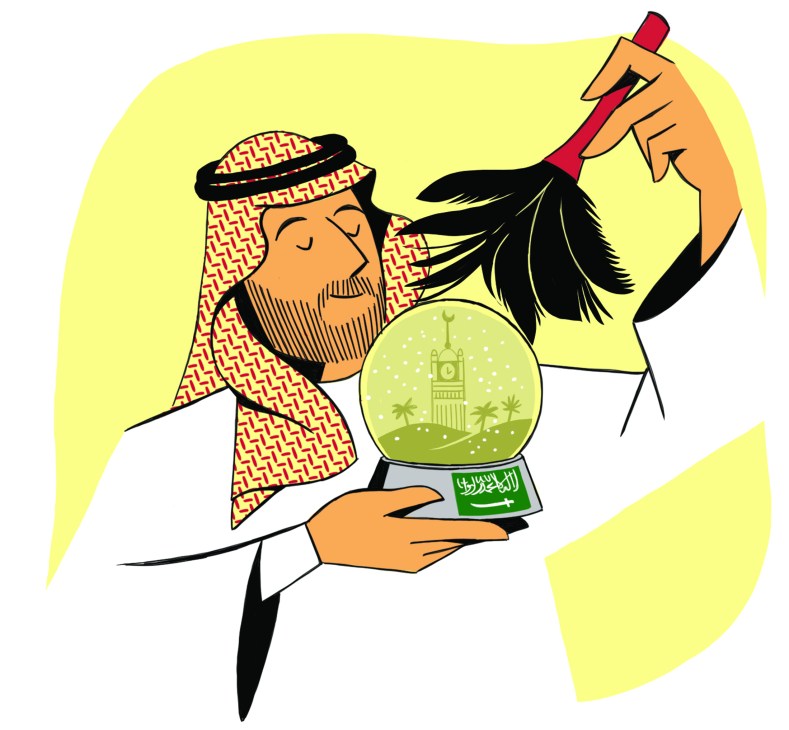
As Mohammed bin Salman began his rise to prominence in 2017, the young prince was largely welcomed with open arms. The planned reforms that he announced, from diversifying the economy to easing social restrictions such as the ban on women driving, had long been demanded by both the West and activists at home. Saudi youth celebrated the return of cinemas and the prince toured the world to entice foreign investors to bring their money and expertise to the kingdom.
His early foreign policy misadventures, such as the war in Yemen, were dismissed as the slips of an inexperienced leader. Even the arrest of hundreds of senior government officials at the Ritz-Carlton in Riyadh in a purported anti-corruption drive was seen as a necessary measure for a country seeking to transform. The Arab world’s largest economy had been stagnant for decades and if shock therapy was what was needed to wake up this sleeping giant, so be it.
The embrace of mbs came to a screeching halt in October 2018 after Saudi government agents killed US-based journalist Jamal Khashoggi at the kingdom’s consulate in Istanbul. The murder changed perceptions overnight and the world began to pay more attention to the reality that even as the country was becoming socially and culturally more open, it had become far more politically oppressive.
The pandemic offered an opportunity for a reset. Saudi Arabia hosted the g20 summit (albeit remotely) and ended its dispute with Qatar. The kingdom embraced a fragile truce in Yemen and Western leaders including Joe Biden visited the country after concluding that the 37- year-old mbs would be in power for decades to come. Domestic reforms continued, with the economy growing at its fastest pace in 10 years and an overhaul of the judiciary in which secular laws were introduced.
But it remains to be seen whether the Saudi attempt to project soft power through investment, tourism and global events will help the kingdom to change its image. Erratic foreign policy might have been tamed but many are still being imprisoned for transgressions as minor as posting critical tweets. Rehabilitating the kingdom’s reputation still has a long way to go.
11.
Spain
With popular destinations at home and big hitters in culture, Spain remains a serial charmer.
Last June, Madrid hosted a pivotal Nato summit at which members resolved to transform and strengthen the military alliance. Spain’s prime minister, Pedro Sánchez, recently seems to be raising a more assertive voice at every key European debate; at the summit, he showed the world just why Spain’s soft-power war chest is best wielded on home turf. Good food, warm weather and friendly faces have always been a persuasive recipe for charming hearts and minds but powerful politicians weren’t the only ones getting their fill this year. Spain’s tourism industry has almost returned to its pre-pandemic heights, with last September’s visitor numbers up 66 per cent year on year. In uncertain times, popular destinations such as Mallorca, Barcelona, Madrid, Ibiza and Valencia, which was the 2022 World Design Capital, are being embraced again like reliable, fun-loving friends.
While the country is busy wooing visitors at home, some standout exports have been making waves abroad. Last March flamenco-inspired songstress Rosalía dropped her latest album, Motomami, and went on tour, reminding audiences that Spain often strikes the right tone between trends and tradition. Celebrity chef and activist José Andrés was the subject of Disney documentary We Feed People, directed by Ron Howard, following his endeavours to supply meals to crisis-hit areas. As Rafael Nadal enters the twilight of his tennis career, 19-year-old sensation Carlos Alcaraz won the US Open, becoming the youngest male winner of a Grand Slam tournament. All eyes are now on Spain’s World Cup squad in Qatar to see whether it can repeat 2010’s success. And though it lasted just a few minutes, actor Úrsula Corberó’s charismatic appearance on The Tonight Show Starring Jimmy Fallon in the US shows how getting a Hollywood agent (and a role in a popular Netflix show) can do wonders for your country’s reputation.
In numbers:
Visa-free travel: to 191 countries
World Heritage Sites: 49
Good: After decades of Eurovision disappointment, Spanish singer Chanel came a respectable third place in 2022. Fewer ballads and more bangers, por favor!
Bad: While Javier Bardem’s new film The Good Boss received international acclaim, Spanish cinema disappointingly seemed to pack fewer punches this year.
12.
Norway
A major player in global peace-making despite its small size and a driver of the green transition.
Ever since Norway facilitated the Oslo Accords between Israel and Palestine in 1992 and 1993, the country has retained a high profile in the sphere of international peace-making. It continued in that vein in January 2022, hosting talks with the Taliban regime that pushed for improved human rights and access to schools for girls in Afghanistan. The country’s reputation as a neutral facilitator might run into trouble in future years, however, as Russia blames a collective West, represented by Nato, for provoking its illegal war in Ukraine. A founding member of the military alliance, which currently has Norwegian Jens Stoltenberg at its helm, it might no longer be regarded as an entirely neutral party by certain countries.
In a smart soft-power move to counter the current hard-power challenges facing the world, Norway will increase its number of diplomats in Bucharest, Kyiv and Vilnius (where the embassy will also cover Belarus), as well as at its EU mission in Brussels. The country is still a liberal, egalitarian state that scores highly in global quality-of-life rankings and has also emerged as a key driver for the transition to a greener future. Successive governments have tried to decrease the harmful effects of Norway’s sizeable oil and gas output by taxing carbon emissions. The country also allocates as much as €285m a year to fighting global deforestation.
Meanwhile, Norway continues to press forward on the cultural front, with two major openings this year: the Munch museum, located just 10 minutes by foot from Oslo Central Station, and the new National Museum building in Vestbanen, billed as the largest museum in the Nordics, which houses the state’s public collection of art, architecture and design objects. Both are well worth a visit.
In numbers:
Years until pledged carbon neutrality: 8
Visa-free travel: to 188 countries
Good: Norway has been effectively refocusing its diplomatic efforts in areas considered crucial to protecting liberal interests from Russian aggression.
Bad: The government’s failure to set out a timeline for phasing out the oil and gas industry seriously dents Norway’s otherwise exemplary green credentials.
13.
Portugal
The sun-soaked nation continues to capitalise on its reputation as a consummate host.
Portugal has long been winning friends with its sunny approach to statecraft. Smart visa programmes, investment opportunities, progressive politics and a healthy dose of vitamin D (Lisbon enjoys more than 300 days of sun a year on average) make this European nation attractive for those seeking to put down roots. Over the past year there was a 5.6 per cent increase in the number of foreigners moving here. Portugal’s buzzy capital is well served by air connections to both sides of the Atlantic, along with direct routes to Brazil and Africa. This, paired with Portugal’s commitment to the Community of Portuguese Language Countries, has cemented its relationship with nations across the Lusophone world.
Portugal knows how to be a good host. Its hospitality industry has grown into one that is proud of its national heritage and hoteliers continue to see the appeal of a place that is blessed with natural beauty and culture. In November the country took home 12 World Travel Awards. So it’s unsurprising that international players keep choosing Portugal to host their flagship events. In autumn 2022 the Websummit technology conference brought a record 71,000 attendees to Lisbon, while blockbuster productions such as House of the Dragon and the latest Fast & Furious film have been shot here. Meanwhile, the country’s national drink vinho verde (“green wine”) is finally catching on abroad.
That said, brand Portugal could do with a refresh. A newly announced deal between Portugal, Spain and France to build a gas pipeline to carry hydrogen and other gases could be a game changer as the energy crisis deepens, enlarging the country’s role in helping the continent achieve energy independence. There are ongoing issues with flagship air carrier Tap, as well as slow innovation and investment in national railway CP, so infrastructure needs to be at the top of the government’s list in 2023.
In numbers:
Foreign-aid budget: €380m
World Heritage Sites: 17
Good: Portugal consistently ranks in the top 10 of the Global Peace Index. This year’s position at number six is a testament to its smart politics and quality of life.
Bad: Portugal shouldn’t let those from abroad dictate the cost of living. It’s great that Lisbon is buzzing with recent arrivals but locals need to be able to afford to live there too.
14.
Canada
Despite the reputational damage of the Freedom Convoy, the country retains its cultural reach.
Canada’s sense of its soft power and perceptions of the country abroad were shaken at the beginning of 2022 when thousands of right-wing protesters imposed a three-week blockade of its capital city, Ottawa, to demonstrate against coronavirus restrictions and the government of the Liberal prime minister, Justin Trudeau. The so-called “Freedom Convoy” inspired copycat convoys around the world – not a trend that any nation would hope to be responsible for setting. As in other countries that have suffered upheavals fuelled by conspiracy theories, several domestic politicians have dispiritingly pandered to the demonstrators’ less palatable views in an attempt to turn the country’s focus inwards. Canada’s newly elected Conservative party leader, Pierre Polievre, who is widely regarded as a potential future prime minister, has already stated that he would ban government officials from attending the World Economic Forum in Davos if he comes to power.
Beyond politics, however, Canada has enjoyed some significant successes. In March, Toronto’s De Havilland Aircraft of Canada announced an update to its distinctive yellow-and-red CL-series line of water bomber planes, existing fleets of which were deployed across Europe this summer to fight wildfires. Elsewhere, Canada continued to expand its role as a major international production hub for television and film. Among the companies that have expanded their presence there are Amazon and Netflix, with new production and administrative outposts in Toronto and Vancouver.
In sport, Canada has achieved success beyond the winter sports that it has traditionally been known for. The men’s football team’s qualification for Qatar 2022 marks its first appearance at a World Cup since 1986, boosting the sport’s popularity at home, which will be in the spotlight in 2026 when Canada will host the tournament alongside the US and Mexico.
In numbers:
Embassies abroad: 145
Olympic medals at Tokyo 2020: 24
Good: Thanks, in part, to a refreshingly progressive immigration policy, Canada is a young and diverse nation, with all of the dynamism that brings.
Bad: In recent years the country – long known as the US’s milder-mannered neighbour – has begun to import some of America’s divisive culture wars.
15.
Greece
The nation’s bounceback from economic malaise continues with its tourism industry booming.
Greece’s tourist figures for 2022 are on course to surpass those of 2019, which was itself a record year, with 34 million people expected to visit this sun-kissed country of 10 million and spend at least €18bn. The holiday season seems to last longer here: by the end of November, 2019’s air-ticket numbers had already been smashed. But mass tourism isn’t all euros and roses. The resulting huge demand for rooms and rapid expansion of Airbnb have contributed to a rise in property prices of more than 40 per cent in the past four years, squeezing the purchasing power of the local population.
Athens continued its renaissance from a somewhat down-at-heel port to a flourishing cultural centre with the renovation of its National Gallery in 2021. This year the Parthenon “Fagan fragment” from Palermo was permanently returned to the Acropolis Museum. After years of economic malaise, Operation Rebrand is in full gear in the Greek capital, which in three years’ time will have its first skyscraper: the “green” Riviera Tower that will loom 200 metres above the sea in Hellinikon. And there’s also good news for the capital’s commuters: the Athens Metro will soon be expanded with the new Line 4.
But Greece’s economic recovery is taking place in a challenging geopolitical environment. Turkey’s president, Recep Tayyip Erdogan, has escalated his bellicose rhetoric in the eastern Mediterranean, even questioning the sovereignty of Greek islands such as Samos, which has seen flyovers by Turkish military aircraft on several occasions this year. In response, Greece has focused on diplomacy, signing a defence pact with France in September 2021 and upgrading its role within Nato by transforming the northern port of Alexandroupoli into a strategic hub for the transfer of troops and weapons systems to the east.
In numbers:
World Heritage Sites: 18
Embassies abroad: 83
Good: Greece has always been a tourist hot spot but in recent years its cities, beaches and mountains have proved increasingly irresistible to travellers.
Bad: A wiretapping scandal stained the image of the Greek government and forced its prime minister, Kyriakos Mitsodakis, to make changes to its intelligence service.
16.
Sweden
Long a beacon of progressivism, the Nordic nation has abruptly shifted rightwards.
The largest of the Scandinavian countries has for decades been considered a stable and peaceful nation with sensible, decidedly moderate governance at its core. This year, however, Sweden lurched to the political right with a new conservative-led coalition that is dependent on the far-right Sweden Democrats, a party that the mainstream had previously shunned as a result of its neo-Nazi past.
The new government ran on a ticket to crack down on violent gang crime, which has risen rapidly in recent years, further denting Sweden’s reputation as a peaceful, open democracy. Its choice to scrap the stand-alone Ministry of the Environment and incorporate its responsibilities into the Ministry of Energy, Business and Industry has also raised eyebrows. After all, Sweden was the first country to pass an environmental protection act in 1967 and is home to one of the world’s best-known environmentalists, Greta Thunberg, who presciently warned during the election campaign in September that the climate crisis was being “more or less ignored” and “reduced to an issue about energy”.
Despite this apparent shift in priorities, several Swedish industry giants are continuing to press ahead with their green agendas. Volvo and electric-vehicle battery giant Northvolt have announced ambitious plans for several sites to produce power packs for both personal and commercial cars.
Culturally, the nation of about 10.5 million people hasn’t stopped punching above its weight. Perhaps most notably, 2022 saw the return of musical behemoths Abba – at least, virtually – with their digital “Abba-tars” performing at the purpose-built Abba Arena in London. Less visible but entirely real is Swedish hit-maker Max Martin, who in the past year produced and wrote smash hits for major international artists such as The Weeknd, Lizzo and Måneskin.
In numbers:
Visa-free travel: to 190 countries
Entries in top 100 of QS World University Rankings: 2
Good: In the past decade, Sweden has taken steps to gear the economy towards a green future and is now ranked third in the EU’s Eco-Innovation Index.
Bad: A coalition that is dependent on parliamentary support from a far-right party with an ugly neo-Nazi past does not augur future stability for the country.
17.
Finland
As neighbouring Russia rattles its sabre, Finland is punching above its weight as a diplomatic force.
The tumultuous twin challenges of the coronavirus pandemic and the ongoing war in Ukraine have left Finland in a stronger position. Under the steady leadership of its young, female prime minister, Sanna Marin, who has quickly established herself as a soft power icon in her own right since assuming power in 2019, the country adopted a business-friendly lockdown policy that focused on keeping society open and businesses running, while managing to achieve one of the lowest infection and fatality rates in the West.
When Russia invaded Ukraine, the country resolutely abandoned its long-standing policy of neutrality and moved towards Nato membership. At the same time, its skilful diplomats negotiated defence pacts with the UK and US, sending a clear signal to Russia. For a small Nordic nation, Finland’s network of embassies and consulates is surprisingly vast, with recent openings in Dakar in Senegal and Doha in Qatar.
Despite often topping international rankings in terms of education, happiness and foreign aid, Finland doesn’t shout about its successes. Indeed, Finns still seem convinced that diligently getting on with things is all that it takes to win over hearts and minds around the world. The country could learn a thing or two about bricks-and-mortar soft power along the lines of the Goethe-Institut or Institut Français.
That said, Finland is not without its global icons. Brands such as design company Iittala and Marimekko, which specialises in textiles, clothing and home furnishings, are expanding in North America and Asia, while Santa Claus and pop-cultural characters such as the Moomins are attracting an increasing number of tourists to the country. Still, Finland needs to do more to promote its creative sector abroad, as all too often talented young Finnish designers are overshadowed by heritage names such as Alvar Aalto.
In numbers:
Years until pledged carbon neutrality: 13
Visa-free travel: to 191 countries
Good: Finland’s outsized diplomatic prowess and the goodwill that it enjoys overseas have allowed it to navigate the Ukraine crisis with skill and speed.
Bad: Despite a fertile and distinctive creative scene, the country has so far proved less effective than its Nordic neighbours at selling its culture abroad.
18.
Mexico
Soaring tourism numbers have helped the nation overcome its poor record on crime and coronavirus.
Mexico’s reputation soured in the 1980s and 1990s when its economy buckled and its capital became notorious for sprawl, air pollution and crime – but the country has since enjoyed a renaissance. Chefs such as Pati Jinich and film directors including Alfonso Cuarón and Alejandro González Iñárritu have helped the country to restore the prestige that it once enjoyed through cultural luminaries Diego Rivera, Luis Barragán, Frida Kahlo, Octavio Paz and others. In 2021 the country welcomed 31.9 million foreign tourists, up from 22.7 million in 2011. Mexico has had great success in promoting its cuisine abroad; tequila exports more than doubled from 164 million litres in 2011 to 339 million litres in 2021.
That this success has come at a time when violent crime has been at historic highs and the country has suffered one of the world’s highest coronavirus death rates is a testament to the appeal of Mexico’s good-time image. Its president, Andrés Manuel López Obrador (“Amlo”), made the decision to keep businesses open and place no restrictions on foreign tourism during the pandemic, helping his country become a haven for digital nomads and sun-seekers. His laissez-faire “prohibiting is prohibited” policymaking helped to burnish Mexico’s credentials abroad but came at a high cost for the country’s residents – officially, Mexico City tallied more than 43,000 coronavirus deaths but the true toll is likely to be as many as three times higher.
Amlo has embraced huge infrastructure projects, such as a $20bn (€19.3bn) train service in southern Mexico. He has struggled, however, to deal with violent crime or catalyse economic growth and job creation. For now, Mexico’s celebrities and chefs are helping to preserve the respect and interest that the country has earned over the past decade. But if it wants to maintain this reputation, it will need to direct tourist revenue into solving its endemic problems.
In numbers:
World Heritage Sites: 33
Embassies abroad: 67
Good: Mexico’s vibrant culture and raucous hospitality have made it one of the fastest-growing tourist destinations of the past 10 years.
Bad: The country still suffers from endemic violent crime on a scale that makes many of its regions resemble warzones. Action is needed.
Raising the stakes
How Romania’s tourism authorities turned from Dracula’s henchmen into vampire slayers.

In the 1970s the Romanian tourism authorities noticed that devotees of Bram Stoker’s Dracula were travelling to Transylvania – but when they arrived, many were disappointed to find nothing at all related to the novel. While Dracula’s fictional castle is located in the Carpathian Mountains, there is little connection between the book and the real Transylvania. Stoker never visited it and had a sketchy grasp of its history.
The country’s government wasn’t going to let this get in the way of lucrative tourism. It began to promote a Dracula visitor experience centred on two castles. The first was the magnificent Bran Castle, on a site whose fortification dates back to 1212. It was once believed that a Wallachian leader best known as Vlad the Impaler (but also as Dracula) spent time there, perhaps as a prisoner. There is now a consensus among historians that he never set foot in it.
The second castle, Castel Hotel Dracula, is on a site whose fortification dates back to 1983. It was built by the tourist board after communist dictator Nicolae Ceausescu ordered its construction during a hunting trip in the region. Ceausescu, who had been taunted with chants of “Dracula!” on a visit to the US in 1978, apparently didn’t realise what he was signing off on. The hotel attempted to recreate the vampire’s castle precisely as Stoker’s novel describes it but the result is underwhelming.
The relationship between Romania and its biggest, fakest cultural export has long been fraught. As one research paper put it, the country has been forced to choose between “the historical truth” and “the economic benefits derived from the capitalisation of a foreign myth”. Romania’s current tourism strategy seeks to drive a stake through the heart of the Dracula question. A proposed theme park devoted to the vampire was torpedoed in 2005 and there is a moratorium on the development of further related facilities. But the rationale for this isn’t a concern over the inauthenticity of Stoker’s Dracula. Instead, a national report expresses anxiety that such gauche attractions could alienate the “superior categories” of tourists that the country seeks to court.
19.
Australia
After the lost years of pandemic-related isolation, a change in leadership is reversing its fortunes.
The past couple of years have not been a golden age of Australian soft power. During the coronavirus pandemic, the country walled itself off from the world, even to the extent of locking out thousands of its own citizens. Its government of this period was led by Scott Morrison, a prime minister who seemed to be exactly the sort of provincial dullard who would have been much happier in, say, the 1950s, when neither Australia nor the international community gave each other much thought.
Both of those things have changed. Australia is once again open for business, though tourists are not yet stampeding back. Arrivals for the year that ended in August 2022 were still down 81 per cent on the last pre-pandemic year. And the country has a new government that does not appear to regard the rest of the planet as a baffling nuisance. Its current prime minister, Anthony Albanese, and new foreign affairs minister, Penny Wong, are representative of how Australia prefers to see itself in its more liberal phases. Albanese is an Italian-Irish-Australian from working-class inner Sydney, while Wong is a gay woman who was born in Malaysia. While no politician should be judged on their biography, both project a more open-minded attitude abroad.
The country’s most potent soft-power assets, however, have always been its top-flight sportspeople. Members of the current generation have been notably more willing than their predecessors to speak up about social issues from their lofty platform. Prior to the 2022 World Cup in Qatar, Australia’s national team, the Socceroos, caused a commendable fuss with a video criticising the host’s record on labour relations and lgbt rights. Most of the world has positive notions of Australia and few hold grudges. There is work to do to make up lost ground but that seems easily achievable.
In numbers:
Olympic medals at Tokyo 2020: 46
Top-100 companies based on market capitalisation: 2
Good: Australia has wisely decided to significantly increase foreign aid in the Pacific. It should be a regional leader, especially as China takes a closer interest.
Bad: Qantas, Australia’s best-known global brand and flag carrier, has conspicuously struggled to recover from the disruptions of the pandemic.
20.
The Netherlands
The world’s unofficial capital of international justice now serves as Europe’s steadying force.
The importance of having a steady hand at the heart of Europe is not to be underestimated and the departure of Germany’s Angela Merkel in 2021 left a void. Step forward Mark Rutte, the EU’s second-longest-serving leader and a familiar face in European diplomacy. While domestic politics in the Netherlands was dogged by months of messy coalition building in 2021, Dutch politicians managed to get their act together and form a government by Christmas, handing Rutte a fourth term in time for Russia’s invasion of Ukraine. Though southern Europe is wary of Rutte’s frugality, the authority that he brings to the foreign-policy table is widely appreciated.
As host to the International Criminal Court (ICC), the International Court of Justice and the Nobel-winning Organisation for the Prohibition of Chemical Weapons, all situated in The Hague, the Netherlands can claim to be the global capital of international justice. After long-running concerns about the ICC, its new chief prosecutor, Karim AA Khan, is proving a more effective public face than his media-shy predecessor and events in Ukraine have highlighted the need to hold countries to account. Domestically, however, problems with organised crime continue; heir-apparent Princess Catharina-Amalia was recently forced to move out of her student accommodation after threats were made against her.
But the nation’s cultural exports are thriving, with an insatiable appetite for Van Gogh leading to an explosion of immersive exhibitions across the world. The Dutch also continue to be the go-to architects when it comes to global statement projects, despite a rare blip with London’s Marble Arch Mound in 2021, designed by Rotterdam-based mvrdv. In recent years, Dutch firms have found a niche in floating architecture designed to adapt to rising sea levels, neatly marrying their expertise in water management and modern design at a time when cities are clamouring for climate-proof solutions.
In numbers:
Foreign-aid budget: €4.8bn
Visa-free travel: to 190 countries
Good: The Netherlands has a reputation as an excellent place for both tourists and businesspeople to visit, in large part due to the famed hospitality of its people.
Bad: Tolerance can have negative consequences. The country’s famously permissive society has contributed to an alarming rise in organised crime.
Honourable mentions
Five countries that have impressed and have potential – but also hurdles to overcome.
Turkey
Ankara’s attempt to position itself as a third power between East and West is a shrewd diplomatic move. Its success was evident in Turkey’s hosting of negotiations between Ukraine and Russia. The country has also become a tourist hot spot, with Istanbul the gleaming jewel in its crown. But the rise of the country’s autocratic president, Recep Tayyip Ergodan, has tempered its considerable gains.
Morocco
Rabat has quietly become a serious soft-power force in Africa, using its expertise in chemical engineering to great effect by making 550,000 tonnes of phosphate-based fertiliser available to farmers across the continent as prices soared following Russia’s invasion of Ukraine. Like Turkey, the country’s appeal to international visitors continues to grow but a question mark lingers over its annexation of Western Sahara.
Thailand
With the decline of Hong Kong as a regional hub and Singapore still subject to some coronavirus restrictions, now is Bangkok’s moment to assert its regional primacy. Despite infrastructure and traffic issues, the Thai capital offers plenty of fun and culture; as such, it’s a perfect representative of the nation at large. Those aspects of Thai culture that have received traction abroad, notably its cuisine, are well loved. But closer to home, problems of corruption and inequality persist.
Brazil
Luiz Inácio Lula da Silva’s election as president has put the ball back in Brazil’s court after years of the country slipping down (and eventually off) the Soft Power Survey. Its readmittance is not guaranteed, as much will depend on how the president handles his first months in office. But even the mention of this country’s name used to be enough to elicit a smile, so it should be able to earn back the world’s affection.
New Zealand
Once described as a potential “moral superpower”, New Zealand chose the path of isolation, shutting itself off from the world for more than two years, making it almost impossible to get in or out. As such, the things that had brought it kudos and goodwill – a progressive immigration system, tourism and investment – withered and died. After reopening its borders in July, the country will be hoping that all three of those things will pick up again soon.