‘The challenge is to never let hubris overtake your team’: F1 technical director James Allison on what it takes to win
We speak to James Allison, senior engineer and technical director for the Mercedes-AMG Petronas F1 Team, about navigating regulation changes and the craft of automotive engineering.
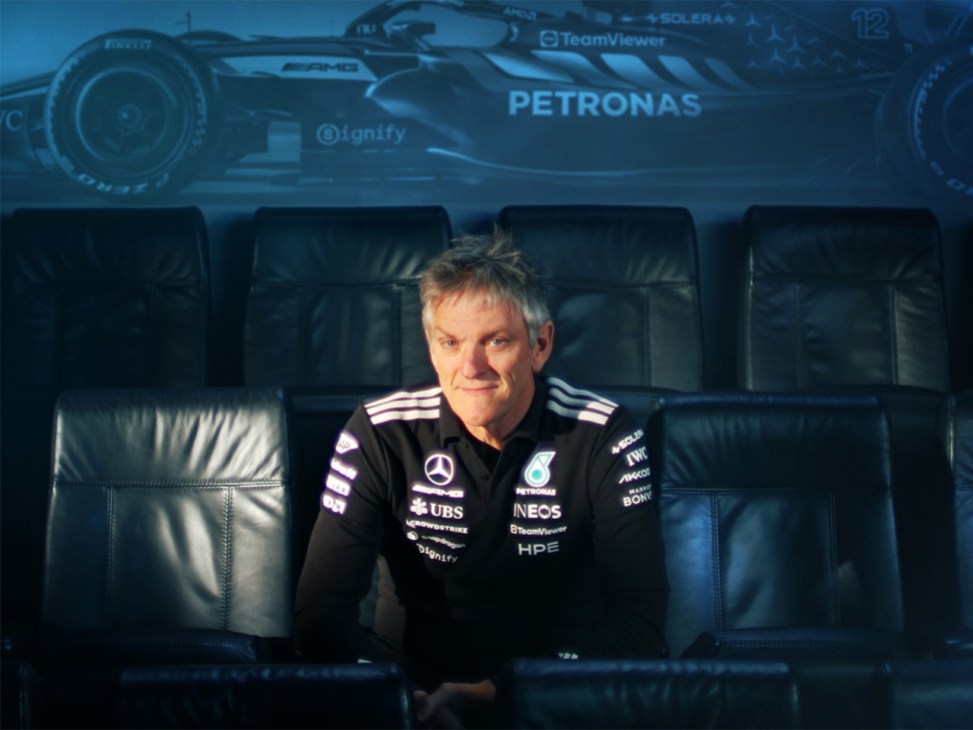
James Allison, technical director of the Mercedes-AMG Petronas F1 Team, is enjoying tremendous success through great pressure of change. Updated F1 regulations have introduced a new direction for teams, drivers, engineers and managers, and Allison visited Monocle Radio to discuss the approach he’s taking.
In conversation with Tom Edwards for the UBS Craftmakers series, Allison explores the delicate balance between ambition and humility, sharing insights into leading large teams, navigating sweeping regulatory change and sustaining performance in one of the world’s most unforgiving arenas. From the intricate process of building a competitive car to the inevitability of failure, his perspective reveals a simple truth: success demands precision, resilience and a relentless commitment to collective excellence.
This interview has been edited for length and clarity. Listen to the full conversation on The Bulletin with UBS, on Monocle Radio.
The technical director role involves navigating complex regulations and maximising car performance. It must be quite the puzzle?
Formula 1 is a famously complicated sport, and even more so in a year when the regulations change – everything has changed [in 2026] from a regulatory point of view. Figuring out where the opportunity is, where the lap time is to be found and also where the difficulty lies is a real challenge. My responsibility is to encourage an environment where work can be distributed and then brought back together as a coherent whole.
What excites you about such a dramatic rule change?
It’s rare for the sport to change everything all in one go. There’s quite a lot of risk attached to that because it’s never easy to fully predict exactly what will happen downstream – there’s nearly always a heap of unintended consequences. So changing the engine rules, the chassis rules, the tyre rules and also the backbone controller unit in the car, the ECU, all in one go is a strong dose.
It is simultaneously terrifying and brilliant. We hope that we are working effectively to make the most of those opportunities. But I would be lying if I said that we’re sleeping easy in our beds because there’s just way too much that can go wrong, and so many unknowns. You have got to just trust that we have the skill to see our way through it. And hopefully all the sleepless nights will end up with us smiling.
How do you define craftsmanship in Formula 1?
You can’t make something as beautiful, as involved and as complicated as an F1 car without having a small army of craftspeople. My role has migrated from someone who would have originally drawn and worked on components [of the vehicle] – something more akin to what we might traditionally think of as craft – to a job that is mostly cerebral. Fighting the good fight of a championship is relentless. We often reach for martial language to describe the nature of this business instead of the more peaceful, sometimes solitary activity that you might think of as a traditional craft. But nevertheless all that skill and endeavour is brought together to create something that is indisputably a work of craft. And I play my small part in that.
How do you handle failure and maintain belief in such a competitive environment?
It is horrendously difficult to [continue winning] because all manner of forces will play against that occurring. So when you are inevitably failing, the thing that makes you keep going, that gives you the self-belief that it will come good if you stick at it, is the knowledge that it’s tremendously hard for whoever is currently winning to keep doing so. Hubris gets all of them in the end.
It’s the fact that it is so hard to achieve, that it takes so many years of trying, which means that when it does happen, it feels completely fulfilling. And you just can’t have one without the other. The challenge is to never let hubris overtake your team and to make sure that you stay hungry enough to keep the victories coming. If it was cheap and easy to win, it would mean nothing.
When we look at young talent coming through, what mindset shows that they have what it takes?
I would recommend this working environment to anyone as a wholesome, brilliant, rewarding way to pursue a career. But it isn’t for everyone. The glitz and the glamour is not the same inside as it appears from the outside. The unrelenting nature of the season is then followed by another unrelenting season and another after that. That unbroken cascade of effort doesn’t suit everyone.
You can tell, from early on, those for whom the extremely black-and-white goal of entering a car to win a championship fits them like a second skin. You can see in the shining eyes of those who have found their people when they come to join the sport. Finding the people who love the struggle and love working alongside their teammates is [what] marks out the people that are going to prosper and enjoy [a career in Formula 1], in the same way that I still enjoy it 30-something years after I started.
Listen to the full conversation with James Allison on ‘The Bulletin with UBS’, on Monocle Radio.