Eased sanctions, friendly talks with Israel and new Assad-free bank notes – Syria is readying to join the Western economy
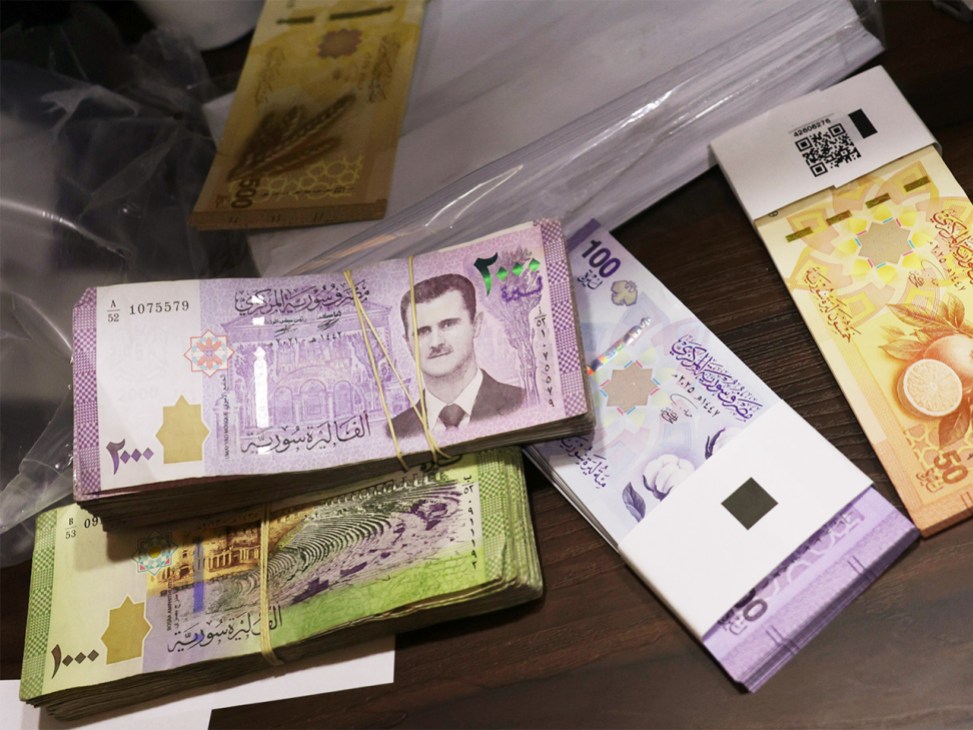
For five decades, Syrians were reminded of their despotic rulers every time they reached into their wallets. The faces of Bashar al-Assad and his father, Hafez, adorned banknotes, which, since the currency crashed under sanctions, Syrians have been forced to carry around in huge stacks. Now, however, they are getting a fresh start, with new notes that have had two zeros removed from their nominal value: each new Syrian pound is worth a hundred old ones. The central bank began issuing the redesigned notes on 4 January, the first working day of 2026. The move is a promising sign for the long-suffering country.
The change of currency will bring psychological relief to Syrians. The Assads were omnipresent through the pictures of them that were hung on public buildings and stared down from behind every shop counter. Those images were removed and defaced after Bashar al-Assad fled the country for Moscow in December 2024, bringing his family’s 54-year dictatorship to an end. The new notes will remove a lingering reminder of the old regime – and turn the old notes into collectors’ items.
Crucially, the move is an important step in stabilising the economy. The almost 14-year civil war plunged most Syrians below the poverty line and wrecked what was once a middle-income economy (the World Bank reclassified the country as low-income in 2018). Profiteers with regime connections sucked much of the wealth from Syria throughout the war and billions in assets were spirited out of the country by Assad before he fled. Thankfully, the new rulers managed to protect the Central Bank’s vaults from looters during the chaotic transfer of power.
Embargoes that were aimed at punishing the regime inflicted extra pain on the population, particularly after 2019, when the US imposed measures in response to evidence of the industrial torture and murder taking place in Assad’s prisons. The lifting of international sanctions has brought foreign investment back into the country and the promise of US, Turkish and Gulf backing has boosted confidence. In June the government hiked public service salaries by 200 per cent, though the price of bread and fuel has also increased significantly. With much of the nation’s housing stock destroyed, rents in the capital remain sky high.
Obstacles are to be expected but the signs for Syria are positive. On Tuesday, Israel and Syria agreed to set up a joint mechanism for de-escalation and intelligence-sharing during US-mediated talks. It was an extraordinary step towards normalising relations. If the talks continue, Syria will be one of the few states in the Arab Middle East to maintain relations with Israel.
Entrepreneurs and businesses might soon be able to move beyond cash too, as the EU and US sanctions that severed the nation from international payment systems were lifted last month. Facilitating electronic transfers will be key to allowing businesses to begin operating fully again in 2026, particularly for those traders who brought Syrian products to much of the Middle East before 2011.
It’s quite the turnaround. Until Assad’s fall, Syria was firmly part of the Russia-China-Iran power bloc that Donald Trump now appears to have in his sights. Venezuela, like Assad’s Syria, fell within that sphere of influence until US special forces moved into Caracas on 3 January. Syrians watching events in Latin America and the ongoing protests in Iran will be relieved that their country has moved firmly into Washington’s sphere – and looking forward to the year ahead with a rare sense of optimism and opportunity.
Hannah Lucinda Smith is Monocle’s Istanbul correspondent. She joined a flight from Istanbul packed with returnees and Turkish investors just after the fall of Bashar al-Assad to discover how the nation’s future is shaping up. You can watch the film here.
Read next: The effort to rebuild Syria: Life after the fall of the Assad regime