The Netherlands’ diplomatic ideology finds form in the architecture of its Addis Ababa embassy
The building that houses the Dutch mission to Ethiopia is a study in cross-cultural collaboration, expressed through architecture.
The Dutch mission to Addis Ababa is a striking low-rise, terracotta-hued structure that is built into – as well as on top of – the ground. “There is a moment of awe when people enter it for the first time,” says Christine Pirenne, the Netherlands’ ambassador to Ethiopia, in her sun-soaked office. “This is the most beautiful of our embassy buildings.”
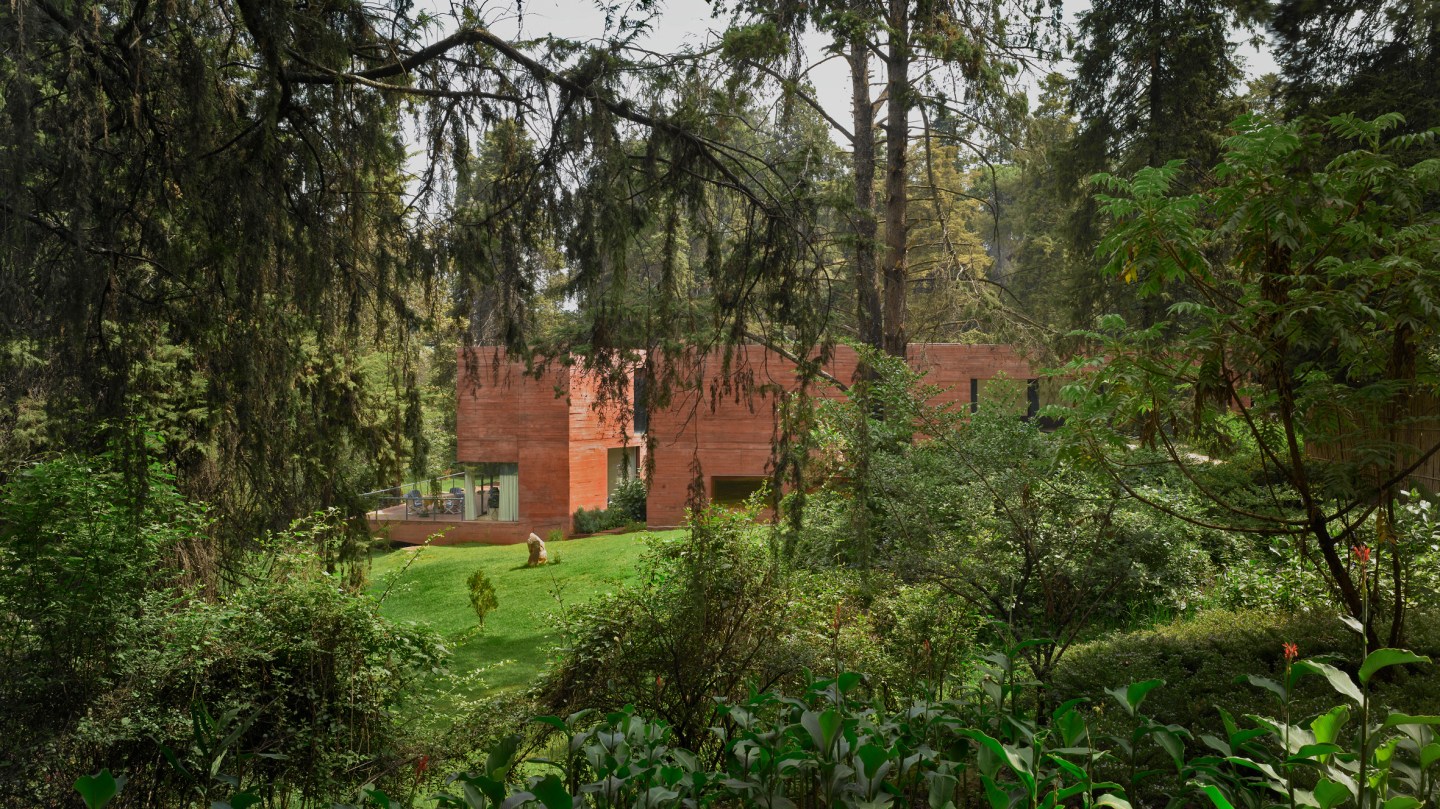
Completed in 2005, the embassy – designed by Dutch architects Bjarne Mastenbroek and Dick van Gameren, in collaboration with Ethiopian architect Rahel Shawl – is an example of how diplomatic architecture can reflect and influence the host country and how a statement embassy can be the manifestation of a key trade relationship. The building blends so completely into the lush compound that, from certain angles, one can only just make it out. Inside, however, visitors are engulfed in clean geometry and earthy colours, complemented by well-chosen artworks and sparse fittings in a nod to Dutch minimalism.


Design inspiration came from both the Netherlands and Ethiopia. The former is reflected in canal-like irrigation channels on the roof and the hint of gabling in its jagged protuberance. The latter’s influence can be seen in the form of its nod to the monolithic 13th century rock churches of Lalibela in northern Ethiopia, which are hewn into the landscape.
Van Gameren designed the structure to disappear into the embassy compound’s topography. Rather than flattening the site for the construction, its undulations were used to separate and hide the working buildings from the residences. Existing trees were factored into the plans. The mission was built by workers from the area who used only locally sourced materials. Wood and bricks are in short supply in Ethiopia but concrete is ubiquitous. Here, it was poured into forms made using wooden planks that left imprints of their texture on the surface; it was also pigmented to turn it the same reddish-brown colour as the Lalibela churches. The result is raw, unclad concrete that resembles organic material. The building’s long, straight wings run through and under the soil, merging with the greenery as though part of the earth. On top, pools reference the waterlogged landscape of the Netherlands.
The way that the building is changing as it ages and the concrete weathers is a neat reflection of diplomacy itself. “Life is never perfect – we have to deal with imperfections,” says Pirenne. “Diplomacy is about developing and learning. It isn’t a static thing.”
Ambassador: Christine Pirenne
Number of diplomats: 19
Year formal relations began: 1926
Key bilateral issues: Trade (the Netherlands is the largest EU investor in Ethiopia and 10 per cent of Ethiopian exports go to the Netherlands)
In Monocle’s April issue, we profile our selection of the best foreign embassies in the world — this is just one of the establishments featured. See the rest of our favourites here.