For the UAE, culture is what binds its diverse population and gives it hope in times of conflict
Mohamed Khalifa al-Mubarak, the chairman of the UAE’s Department of Culture and Tourism, on how culture can help a nation to transcend crisis.
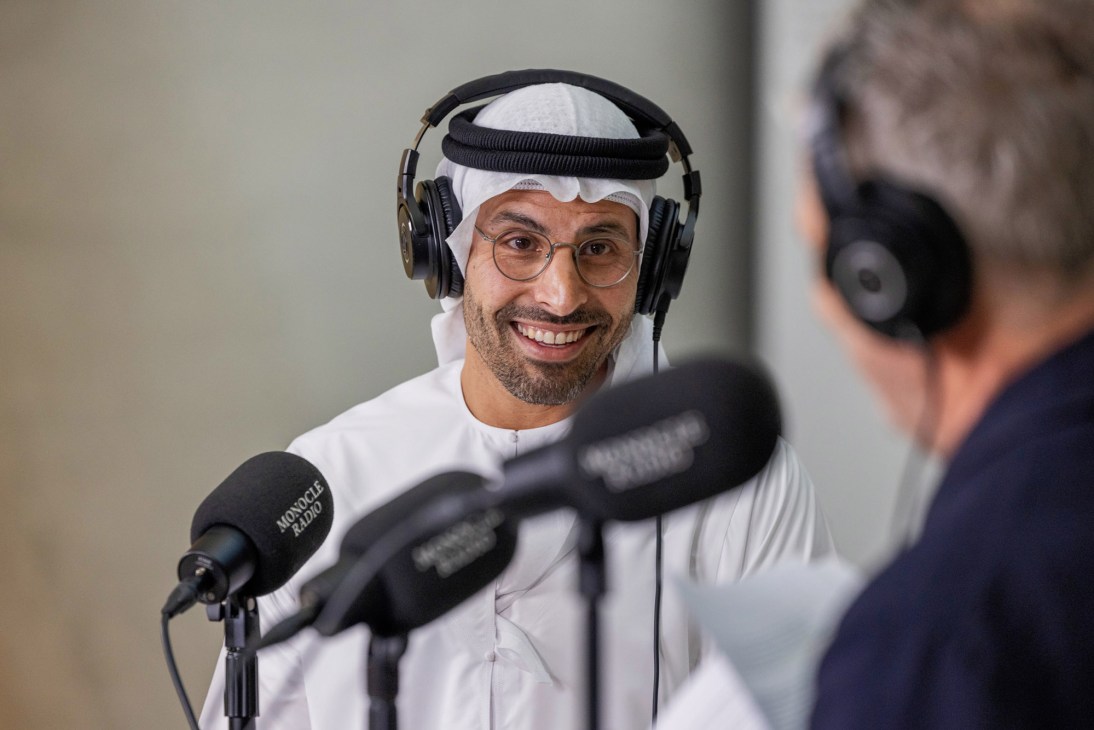
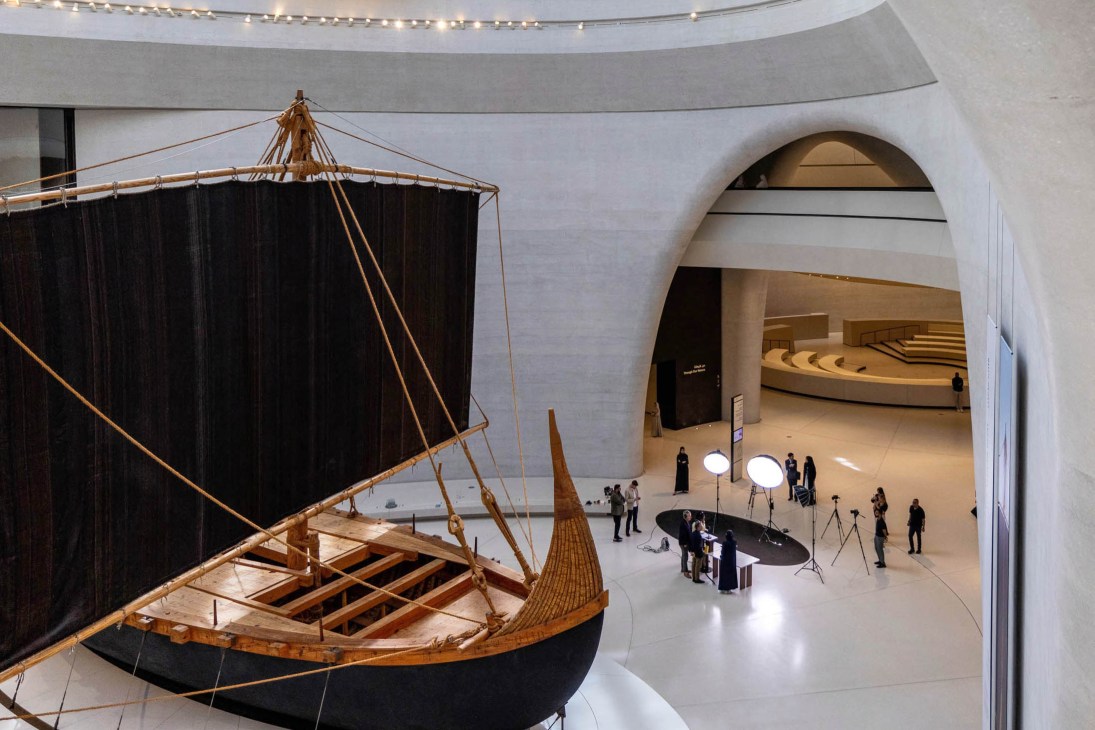
As the fragile US-Iran ceasefire seems to falter, Monocle Radio is broadcasting live from the UAE this week. In the latest episode of The Globalist, Monocle’s editorial director, Tyler Brûlé, and editor in chief, Andrew Tuck, speak to Mohamed Khalifa al-Mubarak, the chairman of the UAE’s Department of Culture and Tourism. Behind the scenes, the tall, trainer-wearing chairman stands against an 18-metre-long reproduction of a 4,000-year-old sailing boat inside Abu Dhabi’s vast, sand-toned Zayed National Museum. It’s the kind of setting that lends itself to big ideas and Al-Mubarak doesn’t shy away from them. “Since the first ballistic missile, we haven’t stopped,” he says. “We haven’t had a day off.”
For Al-Mubarak, engaging with culture is a way to deal with the conflict. “Culture is the light at the end of the tunnel,” he says. In a region where war is often framed in terms of territory, trade routes or geopolitics, Abu Dhabi is making the argument that culture is as crucial as ports or pipelines.
The Zayed National Museum isn’t a space designed purely for tourists or soft-power optics. School groups move through its galleries and families linger over artefacts that tell stories of hardship, trade and survival. “Our forefathers were here when oil wasn’t discovered, when they were battling left and right,” says Al-Mubarak. The museum is a space for memory and, importantly, continuity. In times of instability, that matters.
In a country where most residents are expats, culture is also being used to redraw the boundaries of belonging. “When we say that 200 nationalities are local, we really mean it,” says Al-Mubarak. Museums, festivals and public spaces are shared ground, places where identity is less fixed and more negotiated. This has implications beyond the UAE. Across the Middle East, culture has often been caught in the crossfire, literally and figuratively. Here, it is being positioned as a stabiliser – something that can hold a diverse population together, even as external pressures mount.
For Al-Mubarak, culture is also a long-term asset. “These institutions are not for the next five years,” he says. “They’re for the next 100 years.” The Guggenheim Abu Dhabi remains under construction, acquisition committees are still meeting and investments continue, even as uncertainty caused by the war lingers.
This is where sceptics – particularly in the Western media – might raise an eyebrow. Can cultural ambition transcend geopolitical volatility? Al-Mubarak’s response is characteristically unbothered, borrowing from LL Cool J. “Don’t call it a comeback – I’ve been here for years,” he says. There’s a degree of bravado to this statement but the UAE has a track record to back it up. The country has weathered economic downturns, a global pandemic and regional conflict, each time recalibrating, rather than retreating.
As Monocle Radio broadcasts from across the country this week, that recalibration will be visible everywhere – and I know because I live here. Hotels are busier, exhibitions and events are returning and conversations are less focused on whether the conflict will stop and more on how it will evolve.
None of this is to suggest that culture can resolve conflict. It cannot. But what Abu Dhabi is showing is that culture can shape how a society endures it. In a week where anything could still happen, that feels like something worth paying attention to.