Fresh off a successful stint as Winter Olympics host, Milan has finally found its mojo
Encouraged by impressive events such as Expo 2015 and the Milano-Cortina Winter Olympics, brand Milan is back in business.
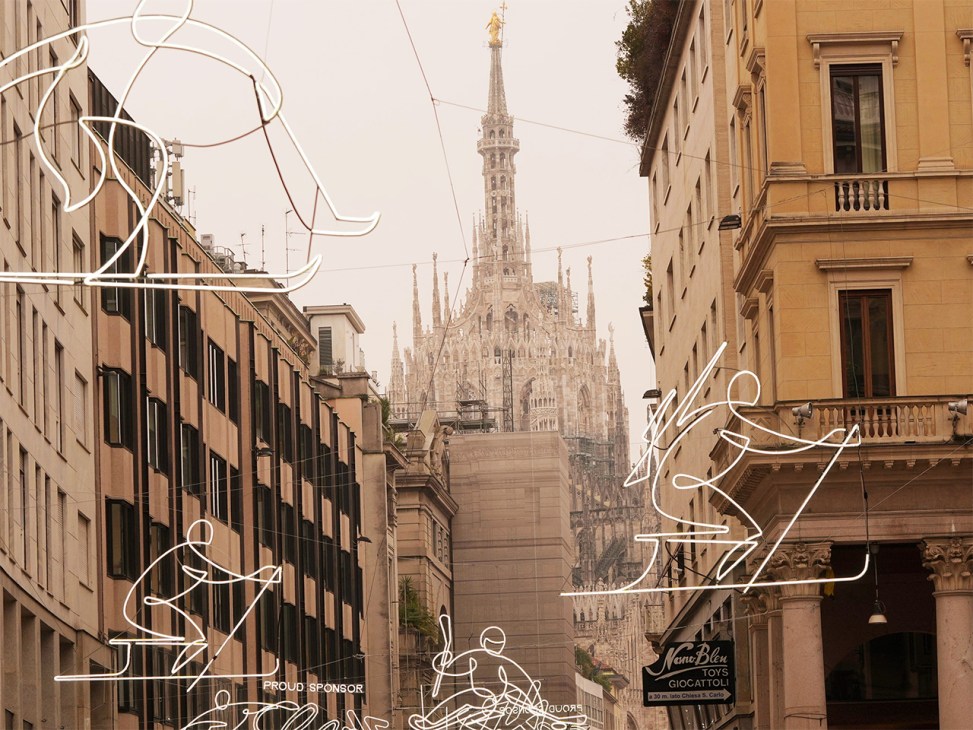
With persistent heavy showers drenching much of northern Italy earlier this month, Milan was not feeling particularly optimistic ahead of the Winter Olympics Opening Ceremony. Reporters spoke of a spirit split across the Lombard capital and the Alpine towns hosting events: enthusiasm was high in the towns, while Milan plodded along as if the eyes of the world were elsewhere. A little more than two weeks on, the Olympic torch has been extinguished but the clouds over Milan have finally lifted, revealing a city swinging with cranes and a sense of self-assurance.
“We haven’t felt this way since Expo 2015,” Monica Diluca from Università degli Studi di Milano tells Monocle as we walk through Milano Innovation District. Diluca pauses amid piles of rubble around the Decumano (the principal pedestrian boulevard) to gesture at a marked point: “This is here to remind us of the exact moment a decision was made to stop demolishing the original buildings from 2015.” It signifies a change in the city’s attitude: a shift towards renewal and long-term urban strategy.
“Milan is getting a new identity,” says Patricia Viel, co-founder of ACPV Architects, a firm that is responsible for transforming an entire business district on the city’s southern edge. “Modernity is very much embedded in the aesthetics of its evolution,” she adds. “[Milan has a] growing ability to attract international champions in the economic world”. Those “international champions” have made the Lombard capital one of Europe’s most multicultural cities; foreign residents now exceed 20 per cent.
The city’s global outlook has only broadened with the arrival of the Winter Olympics. “The Expo was a moment [when] we could restart a design season with architects from all over the world,” says Manfredi Catella, CEO of Coima, one of Italy’s most influential property-development and investment groups. “It marked the beginning of a transition for the city, which is continuing with the success of the Games.”
By hosting two global events, the city has proved to itself that – unlike neighbouring metropolises – it is able to deliver successful megaprojects with style and confidence. It’s certainly true for development; there are few other European cities with such a scale of brownfields or industrial sites that can be repurposed. Italy is not known for bureaucratic efficiency, though Milan has demonstrated a pragmatic performance on the world stage.
This edition of the Winter Games was designed with a focus on sustainability. This is perhaps most visible in the sprawling Olympic Village, which was slotted into the former rail yards at Porta Romana and will soon become student accommodation.
The feeling of Milan quietly looking over its shoulder at Rome is over. It has successfully crafted its own identity, one that embraces both its history and capacity for reinvention. Just take a ride on its near-century‑old streetcars adorned in Moncler advertising. People want to be here and they also want to be associated with the city’s renewed sense of purpose. After the last curling stone is packed up and the snowpants are hung to dry, Milan will have shown that it is now less self-critical, more confident and ruthlessly efficient.
Tom Webb is Monocle’s deputy head of radio. For more from Milan, check out our dedicated City Guide.