What the Crans-Montana fire means for Switzerland, a country that prides itself on alpine life, hospitality and safety
Tyler Brûlé comments from St Moritz on the mood in Switzerland and reaction to the disaster from the press, public and presidency.
It has been a somber start to the new year in Switzerland. Some 40 people are dead and more than 115 are injured after a fire tore through Le Constellation bar in the Alpine resort of Crans-Montana as New Year celebrations took place early Thursday morning.
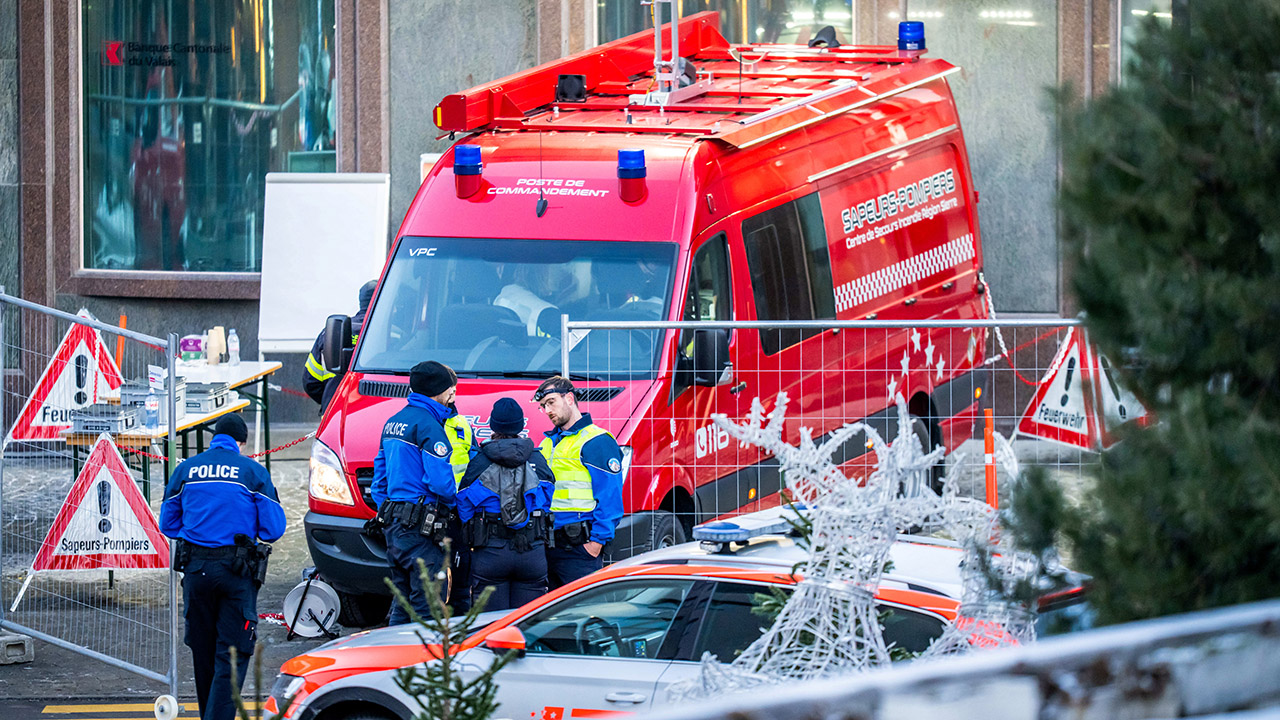
The severity of the event has triggered a major emergency response. Thirteen helicopters, 42 ambulances and 150 emergency responders were deployed after the Valais State Council declared a special situation to allow authorities to mobilise all necessary resources without delay. With many foreign nationals among the victims – and Switzerland’s hospitals overwhelmed by the number of injuries – the response has extended beyond the country’s borders.
Monocle’s editorial director, Tyler Brûlé, joined Monocle Radio’s The Globalist from St Moritz and The Briefing from Zurich to comment on the mood in Switzerland.
This conversation has been edited for length and clarity. Listen to the full broadcasts on Monocle Radio.
The fire seems to have started from champagne-bottle sparklers that were held close to the ceiling and ignited the sound-proofing. How has Switzerland reacted?
In papers such as NZZ, graphics have helped to provide an accurate picture of how the bar would have ignited. We know that there is tight legislation around so many things in Switzerland but it seems that there could have been insulation that was not up to code. This is still speculation, of course, but speculation that is appearing in much of the Swiss press.
The first thing that the Swiss authorities called for on Thursday, both at a cantonal and at a federal level, was solidarity. Immediately, there was a call for people to be sensible on the slopes, on the highways and in daily life because the medical system has been overwhelmed. We’re talking about some 115 people injured, 80 of them critically, and people in comas.
This is a small country, with a population of about 9 million. There are hundreds of thousands of other people in the country for the holiday as well. Switzerland has some of the most respected medical centres in the world but it only has two major burns units and they were immediately overwhelmed. The Burns Unit at the Children’s Hospital in Zürich has also been admitting adults because the system is overwhelmed by the number of injuries.
The helicopter rescue system here means that you should never be more than 10 minutes away from a hospital and that kicked in yesterday.
You have been travelling around Switzerland from St Moritz to Zürich. What’s the mood like across the country?
We’re in a period where there is a little bit of disbelief and and quite a measured tone. People are asking, ‘How could this happen in Switzerland, the country that is famous for its building codes, for its safety, for its risk aversion?’ But I think there’s something else, another dynamic, which is that this country can’t cope with this.
The other aspect is the press. I would say that the Swiss press, like everywhere, can be very quick to start pointing fingers. There is a search for answers. But that search is often rather accusatory. That is not the case right now. I think that there is a real sense of shock.
On Thursday, his first day in the job, Swiss president Guy Parmelin had to go to Crans-Montana to tour the scene and be part of the second press conference in Sian for what is being described as one of the worst disasters in the country’s history.
What does this mean more broadly for Switzerland, for a small nation that prides itself on alpine life, hospitality and safety? So many eyes are on the country right now.
There has certainly been lot of focus on the speed and the swiftness of the organisation and all of these Swiss values around the recovery operation. This is a nation that generally gets on very well with its neighbours and is often a unifying force diplomatically.
France announced that it has 20 burns unit beds on standby and people were also evacuated to Italy and Germany. Israel was quick to send part of its rescue team to the scene, which is highly skilled in identification and rapid DNA testing. It was airborne by late yesterday morning as there might be Israeli victims among the dead and injured. Poland has just said that it will take up to 14 burns victims. So that’s one part of the story.
The flip side of it, though, is this that this country relies on people filling its slopes, valleys, hotels, restaurants and bars during their cross country skiing trips. This is a period when these places need to make money. You could argue that the ski season is not as stable as it used to be, so there is a bit of a feast or famine.
When you think about Switzerland, you imagine about a law-abiding, rule-abiding nation. We will have to ask whether the building codes were adhered to, was a blind eye turned to anything, was this place supposed to be renovated this coming July or 24 months from now?
I’m speaking to you from one of the other big alpine resorts in this country. There are ways that things happen in mountain regions all over the world, in closed valleys, and oftentimes it’s not so above board.
Listen to the full comments from Tyler Brûlé on ‘The Globalist’ and ‘The Briefing’ from Monocle Radio.