Why Fuglen chose Kyoto’s Shichiku neighbourhood for its newest Japanese space
Norwegian coffee roaster Fuglen Kyoto has opened a design-led outpost in Shichiku, blending café, jewellery studio and family home.
On a sunny morning in Kyoto’s Shichiku neighbourhood, there’s a lively crowd at Fuglen coffee shop’s latest opening. Dog owners sit out front, an older gentleman thumbs a book and friends natter. The Oslo-based company established its first overseas outpost in Japan in 2012; it also has branches in Tokyo and Fukuoka.
“We had been dreaming about an outpost in Kyoto for years,” says Keiya Takahashi, who runs its Japan operation. “The city has a strong coffee culture and we wanted to be here – but not right in the centre.” Luckily, Takahashi and Fuglen’s founder, Einar Kleppe Holthe, were introduced to designer Shin Mononobe and his jewellery-maker wife, Ami Masamitsu, who were renovating a 58-year-old shop connected to a small factory: just what Fuglen was looking for.
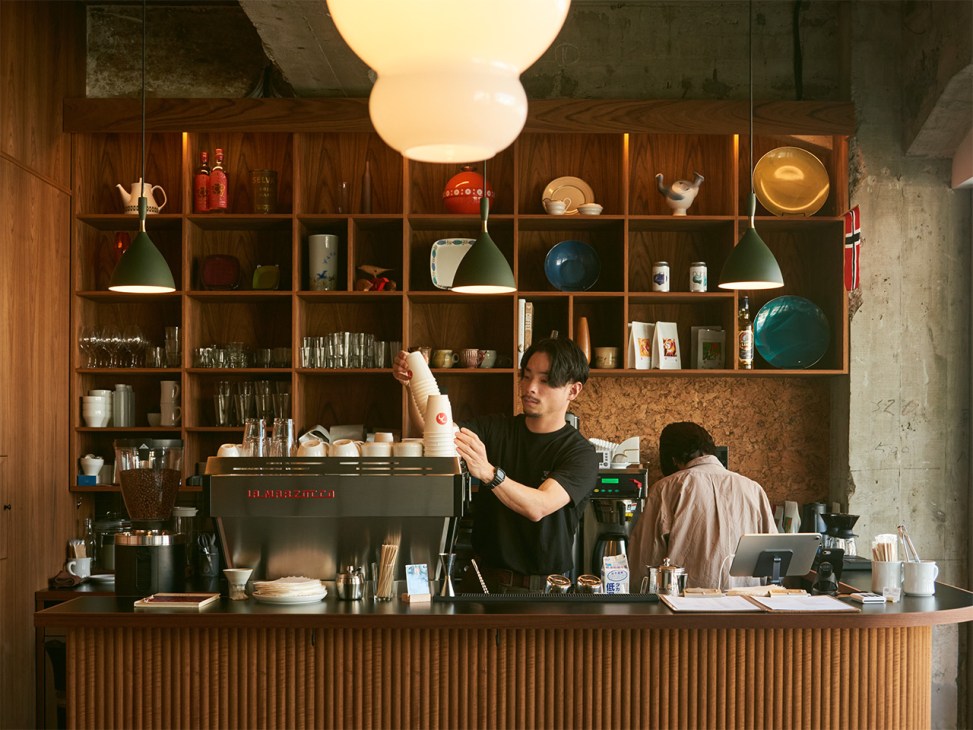
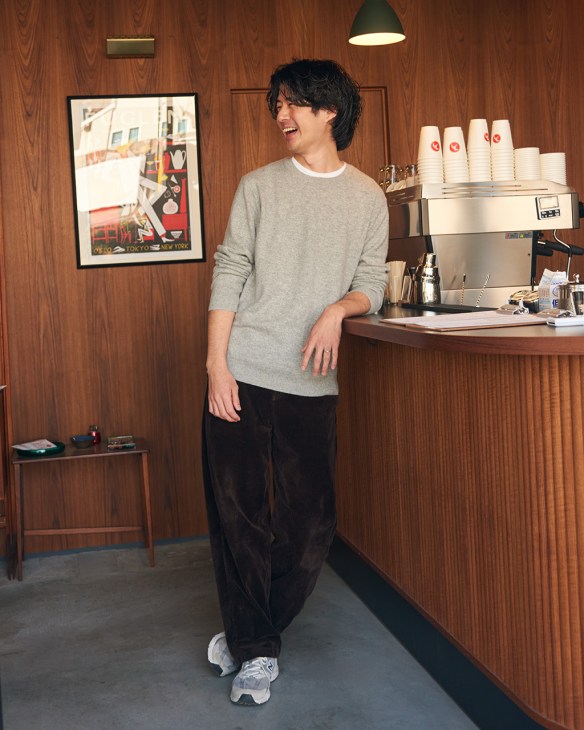
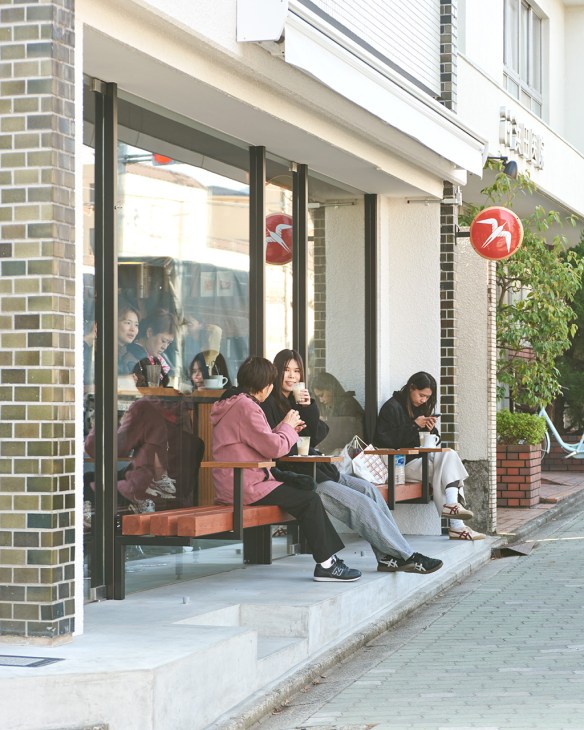
Today, Mononobe’s studio and Masamitsu’s jewellery workshop are hidden away at the back of the café; the latter’s shop, Ausome, which sells a mix of contemporary and vintage jewellery, is in the basement, while the pair live upstairs in a refurbished apartment with their young daughter. The spacious rooftop reveals open vistas of the city and the hills beyond. The building – which has already become a magnet for Kyoto’s creatives – has been refreshed without its past life being erased.
The Kamo river is close by; so too is a local shopping street and 1000-year-old Imamiya Shrine. Coffee shops (kissaten) have been at the heart of city neighbourhoods across Japan for decades but Takahashi says Fuglen Kyoto was inspired by the spirit rather than the aesthetic of those old-school institutions. “We aren’t trying to do something ‘retro’,” he says. “A kissaten has to be authentic, with a real community.”
In a city getting a bad name for overtourism, this friendly neighbourhood feels detached from the frenzy. Mononobe and Masamitsu – neither of whom hails from Kyoto – have been welcomed with open arms. “Kyoto is often seen as a difficult city to settle in but we found the opposite,” says Masamitsu. “People were really interested in what we were doing – they wanted to celebrate with us.” Opening from 7.00 to 18.00 allows Fuglen’s rhythm to shift with the time of day and the café has quickly inserted itself into the daily life of Shichiku. Takahashi says Fuglen is looking to open another shop in Kyoto, probably somewhere more central. It will be hard to improve on the current set-up.
fuglen.no
This article is from Monocle’s March issue, The Monocle 100, which features our editors’ favourite 100 figures, destinations, objects and ideas.
Read the rest of the issue here.
Read next:
Monocle’s full city guide to Kyoto