Hotelier Andrew Zobler shares his blueprint for scaling up in hospitality without losing brand appeal
The Sydell Group was acquired by Hilton in 2024 but has remained true to itself as it expands to Singapore.
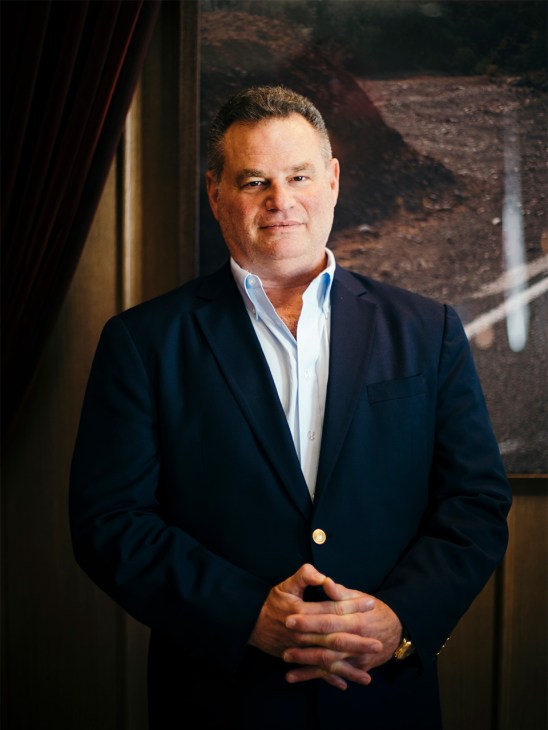
Judging by the success of The Ned, Nomad, The Line and Freehand, Andrew Zobler appears to have mastered the art of transforming hotels into community anchors. The founder and CEO of New York-based Sydell Group has found a way to weave the worlds of art, design and food into compelling destinations for travellers and locals alike. Known for his attention to detail – from crafting rooms with residential qualities to creating buzzy playlists – Zobler has been the driving force behind a number of neighbourhood revivals, most notably in the area north of New York’s Madison Square Park.
But even with his string of accomplishments, the entrepreneur shows no signs of slowing down. In 2024, Hilton acquired a majority controlling interest in the Sydell Group, setting into motion an international expansion plan for Nomad. Sydell will continue to manage Nomad’s design, branding and management while Hilton oversees development.
This “joint venture”, according to Zobler, has enabled him to deliver the Nomad spirit to various hubs around the world, all rooted in the belief that a hotel should feel like a great home. Despite ambitious plans for global growth (Hilton’s long-term goal is 100 Nomad properties), Zobler is confident that the brand will be able to preserve its character while integrating into the individual locales in fresh ways.
Nomad will break into the Asia-Pacific region with a Singapore outpost in autumn 2026. Zobler sat down with Monocle in the sunny island nation to talk about his involvement in the brand and how a boutique hotel can scale up without losing its soul. The following conversation has been edited for clarity and length.
How did the partnership with Hilton come about?
I met Chris Nassetta, the CEO of Hilton, many years ago. He was always interested in us and we were interested in him. He wanted to get into the luxury lifestyle space and he knew that we were good at it. But most importantly, he recognised that entering a joint venture and keeping the founder and creatives behind it was just as important as buying a brand. If you look at our competitors, the principals are not necessarily involved anymore and that differentiates us in a material way. They tend to duplicate a model rather than do the extra work in creating something that is idiosyncratic and location specific. We now have the benefits of Hilton’s balance sheet, its global distribution and its relationship with [property] owners around the globe but I’m still running the company the same way as I have for the past 15 years.
What makes the Nomad brand special?
The way that we think about the brand is more intellectual than it appears. There are certain principles that are important to us and those can be manifested in different ways. For example, we want the hotel to feel residential, not commercial. We want it to be a melange of cultures, like Paris meets New York meets Singapore. The food experience is also central to the heart of the brand and we create an environment that is welcoming to the community. You won’t just see travellers – you’ll see locals too – and that’s one of the reasons why we’re successful.
A lot of luxury operators want to be more lifestyle but wonder why they can’t achieve it. The reasons are straightforward: their restaurants are very expensive and all their rooms are large [with] five-fixture baths, so they are also very expensive. Your typical 30-year-old cannot afford to stay there. At Nomad, we have a certain percentage of rooms that are large and luxurious but we also have entry-level rooms because this [chemistry] between the young and the old is important to us.
How do you keep the charm of a boutique hotel while thinking about scale?
Our company is run in a very familial way and a lot of our people have been involved from the beginning. What we do is borrow the best things from Hilton but keep the service, culture and design close [to what we had]. When we open Nomad Singapore, we’re going to send employees from London to transfer the culture. I’ll be here to immerse people in our history and [share] what we’re trying to achieve, and then [we want] them to be themselves. We don’t believe in scripting people.
One of Nomad’s hallmarks is the high number of repeat guests – it’s all about creating relationships with them. We Google everyone who comes into the restaurant, so that we know a little about who they are. For regulars, we always figure out a way to get them a table. Another thing that’s important in creating a restaurant for the community is humility. To be sustainable in the long run, we’ve got to treat everyone with a great deal of respect, make them feel comfortable and not act like we’re the coolest kids on the block.
How did you decide on Singapore?
It’s one of the gateway cities of Asia and we want to be in all of [the cities]. Hilton’s Asia headquarters is also here, which means that it is an easy place for us to start and receive support. We also liked the location on Orchard Road, the architecture and [Singapore-based property and hospitality company] UOL Group, so it all worked out.
What can we expect from the Singapore outpost?
Many of the lifestyle hotels here were not custom-crafted for Singapore. We’re going to deliver a hotel that will speak to Singaporeans. The public spaces have double-height ceilings and what we like to call “aspirational aspects”. The restaurants will have that strong New York-meets-Singapore duality. What’s particularly Singaporean is the design of the building, such as the open-air lobby and hallways, which have a real connection to nature. The biggest challenge was to take a brand that has been set in great, old buildings and make it work in a new build. And we’ve done that successfully through the art programme, which will bridge the classic Nomad look with the contemporary architecture.
What would you say to travellers who are sceptical now that Nomad is under a big brand?
I would ask them to come and judge for themselves. The Hilton relationship is taking us towards a global direction and it has introduced us to extremely interesting people in places that we otherwise wouldn’t have had access to. The relationship is entirely accretive: Hilton has been very smart about letting us do our own thing without diluting the brand.