‘People don’t expect it’: Art Basel Hong Kong director lauds the fair’s public programme
We sit down with the director of Art Basel Hong Kong, Angelle Siyang-Le, to discuss the city’s cultural coming of age, new features of the fair and the best places for dim sum.
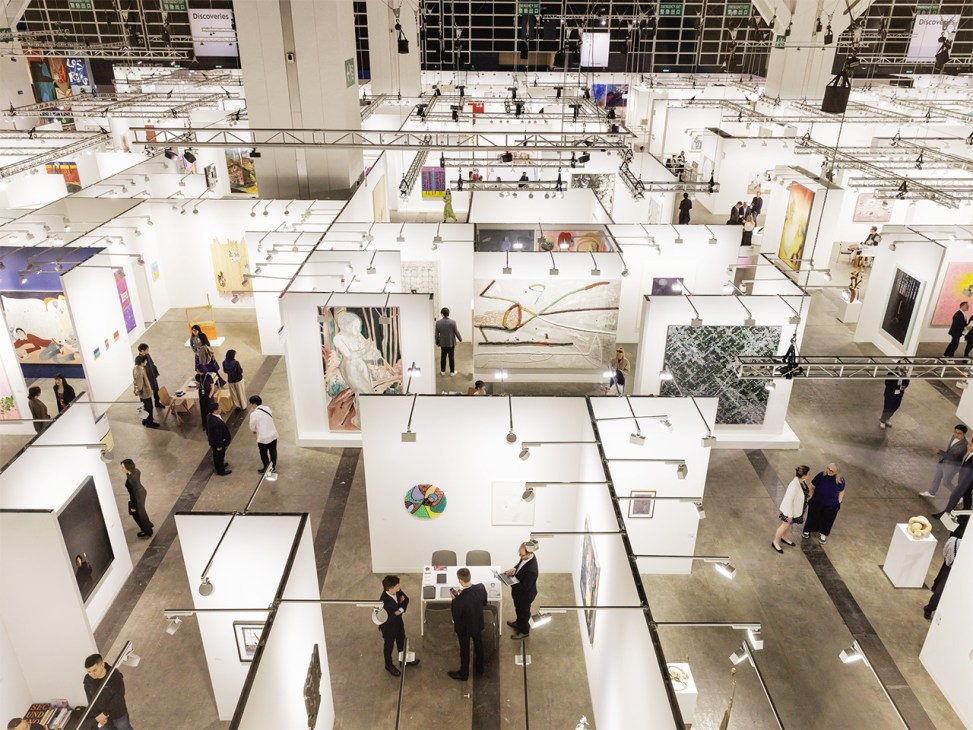
Art Basel Hong Kong arrives in the city this week. The Hong Kong Convention and Exhibition Centre will soon be filled with the booths of 240 galleries hailing from 41 countries. Elsewhere in the city a public programme of satellite events and fairs will bring in more collectors and art lovers. Here we catch up with fair director Angelle Siyang-Le to discuss how the art scene has changed in the city since the arrival of Art Basel Hong Kong, new features at the fair and her favourite spot for dim sum.
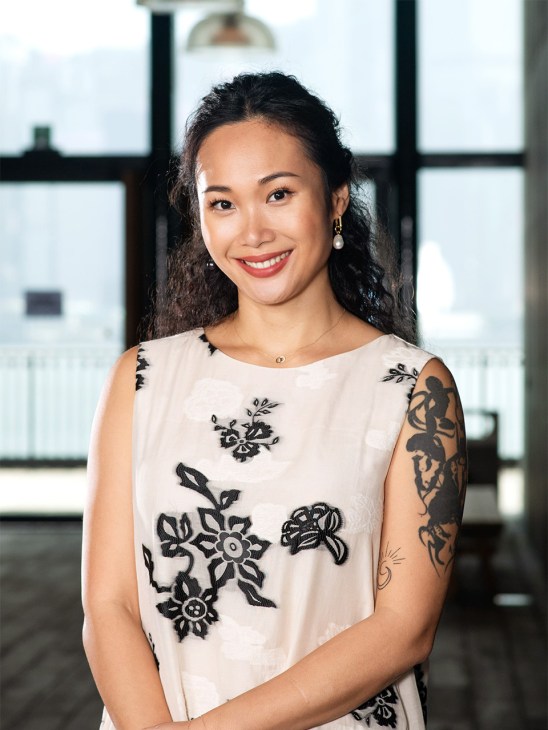
What are you excited about at this year’s Art Basel Hong Kong?
I’m most excited about our new sector, Echoes. You’ve likely read that it’s for artists with works made in the past five years. But what you probably haven’t read is that we are spotlighting mid-career artists here, and the sector is giving an additional platform for mid-sized galleries. Echoes is very much a reflection of what the art ecosystem needs now.
We also have Zero 10, a sector dedicated to digital art, which had its debut at Art Basel Miami Beach. In Asia we have already cultivated a group of crypto and digital enthusiasts and, this year, we’re grouping all these digital elements into one sector. I’m interested to see how the audience responds. We’ve also been branching out into the performing arts community, and the Hong Kong Ballet is one of our newest cultural partners on the show floor.
Art Basel Hong Kong is known for its public programme – tell us about it.
People don’t expect it. Why would a commercial art fair spend so much effort on its public programme? But what is important for us is the longevity of the art ecosystem, which eventually will contribute to our business. The public programme includes the film sector, conversation sector, exchange circles and public art. At Pacific Place, which is a prominent central shopping area, we are working with Swire Properties on a commission of the works of artist Christine Sun Kim. Christine is an amazing personality and I’m super excited to introduce her to Hong Kong.
It has been 13 years since Art Basel Hong Kong arrived in the city. How has the art scene changed?
Hong Kong has always had an international identity. In 2012, when I returned to the city from some time abroad, Hong Kong was only known for finance. It wasn’t known as a cultural centre – in fact, it was called a cultural desert. Within 10 years we’ve seen that the city has been able to promote its culture with world-class museums such as M+ and Palace Museum, but also more homegrown institutions such as Para Site, Hong Kong Museum of Art and Tai Kwun Contemporary. After 13 years of Art Basel Hong Kong, the city is now a global cultural hub.
How would you characterise the local collectors at Art Basel Hong Kong?
The Hong Kong collectors are always internationally minded. Many are on the boards of institutions such as Tate, the Guggenheim Museum or Centre Pompidou. They almost act like Asian art ambassadors across the world. There has been a new surge of collectors – often immigrants to Hong Kong, many coming from mainland China. They’re young and engaged with the local institutions; they know that it’s important to contribute to the wider art scene in their role as a collector.
Finally, where do you recommend visitors to the city go to drink and dine?
I would recommend trying one of the local dim sum places rather than the trendy ones. My dad and I always go to the same local and there’s nothing fancy about it. It’s called Dim Sum Square in Sheung Wan and it’s run by two brothers. They’re very friendly but they never say an extra word, because the restaurant is always packed. They let you in, you eat and then you go, but the quality of the food is always fantastic.
Hong Kong is also known for its fusion. You can be in the middle of the city but it feels like you are somewhere else entirely. Recently I’ve been loving a restaurant called Always Joy. It’s Japanese inspired but it uses local ingredients, so it’s like having a Cantonese twist on Japanese cuisine. There’s a beautiful, architectural table where you can seat a big group of friends.