Beyond the postcard: Thailand Biennale puts Phuket’s hidden stories in the spotlight
As election-season imagery collides with tourist spectacle in Phuket, the Thailand Biennale redirects attention toward the island’s cultural histories.
In the final days before Thailand’s general election on 8 February, I mistook a Democrat Party rally flag, depicting the earth goddess Phra Mae Thorani wringing a flood from her hair to drown demons, for a commissioned artwork. In a nation where the pantheon of deities is rivalled by the proliferation of political factions – some 57 parties have been vying for Phuket’s swing voters – the streets are a contest of signs. Here politics and art blur, each using symbols to fight for attention.
Nowhere is this clearer than at the Thailand Biennale, its site plan a network of 20 venues extending from Old Phuket Town through the mangroves of Saphan Hin and into the island’s rugged interior. Decommissioned industrial ruins, such as the Kathu Liquor Distillery and the Chao Fah Power Station, have been reactivated for the event, which began in November 2025 and runs until April. The Biennale directs attention away from postcard Phuket and toward its true identity: a working landscape shaped by tin and timber – long before the first sun lounger arrived.
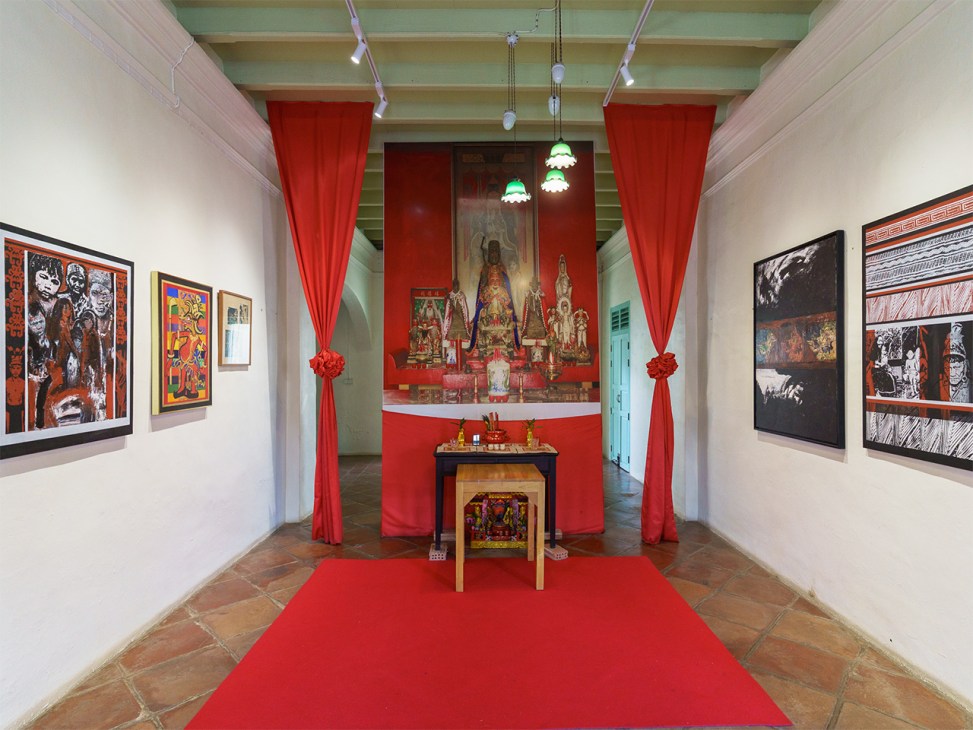
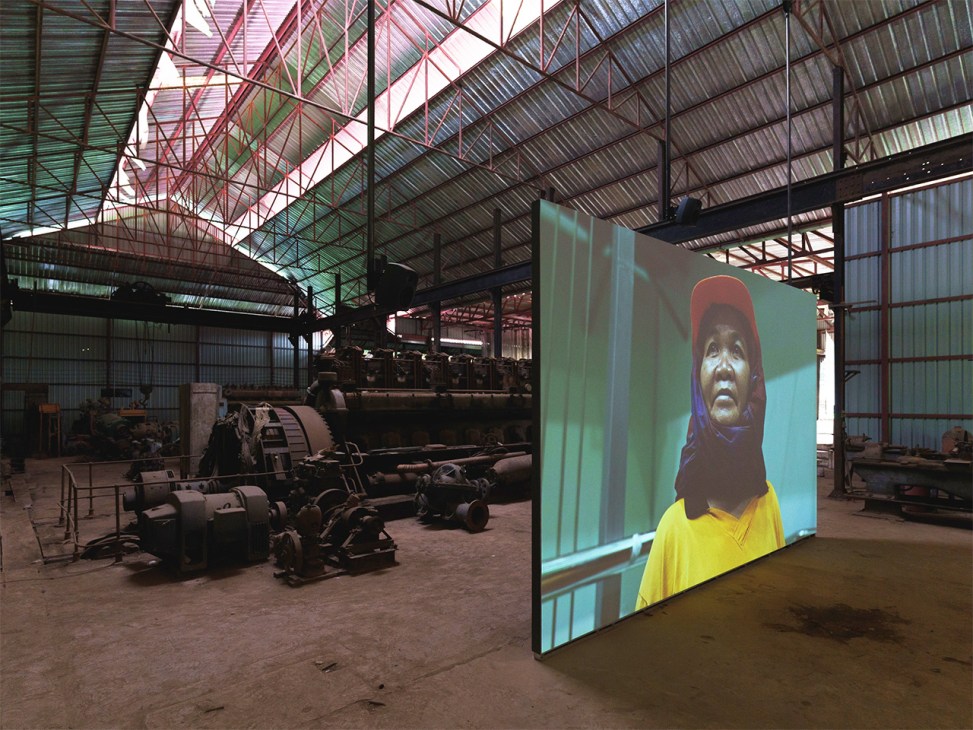
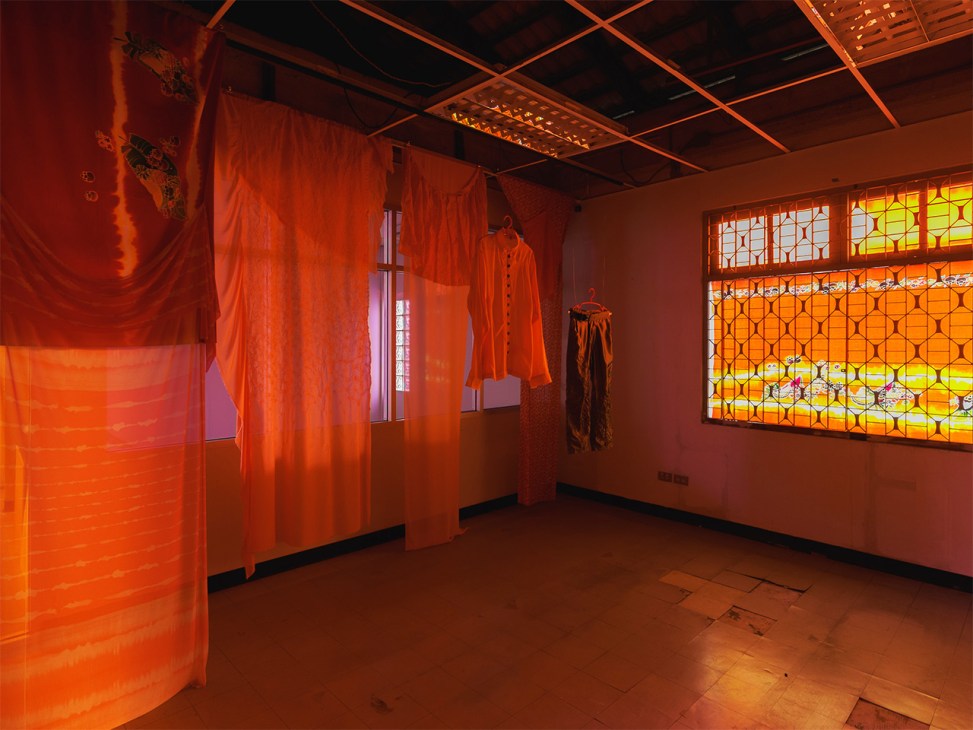
Phuket today is a tourism juggernaut, projected to generate some 605bn baht (€16.3bn) in 2026. While HBO drama series The White Lotus amplifies a fantasy of lacquered leisure, the Thailand Biennale resists that veneer. Curator Marisa Phandharakrajadej describes the ambition as “building attention rather than attraction”. This is especially visible at the Pearl Theater – opened in 1971 by a tin-mining family at the height of Phuket’s adult-entertainment sector. Here art installations treat the nightlife economy not as peripheral spectacle but as infrastructure: a labour-intensive system that continues to organise the island’s after-dark life.
The event’s title, “Eternal” [Kalpa], is a Sanskrit term for an eon in Hindu and Buddhist cosmology. It lands neatly during this transformative chapter of Thai history, as the unprecedented triple-ballot election and referendum serve as a bellwether for constitutional legitimacy and democratic resilience in Southeast Asia. It also aligns with the long-awaited opening of Dib Bangkok, signalling a shift from Thailand’s event-driven cultural economy toward institutional endurance. While the Bhumjaithai Party’s stronger-than-expected victory will define national life over the coming years, the Thailand Biennale offers an alternative view – one that looks to the past to understand a culture measured not in news cycles but in kalpa.
thailandbiennale.org