Zona Maco: The art fair where Latin American artists are primed for centre stage
Latin America’s biggest international art fair demonstrates the region’s growing presence in the global market.
Over the past two decades, Latin American art fair Zona Maco has evolved from a regional showcase into a fixture on the global circuit. When it launched in 2004, it drew roughly 15,000 visitors. But at its 22nd edition last week the crowd swelled beyond 80,000, each person keen for a glimpse of presentations by more than 200 galleries from 26 countries. The fair today is a reflection of Mexico City’s transformation into a point of convergence, a place where regional voices have the floor in global conversations.
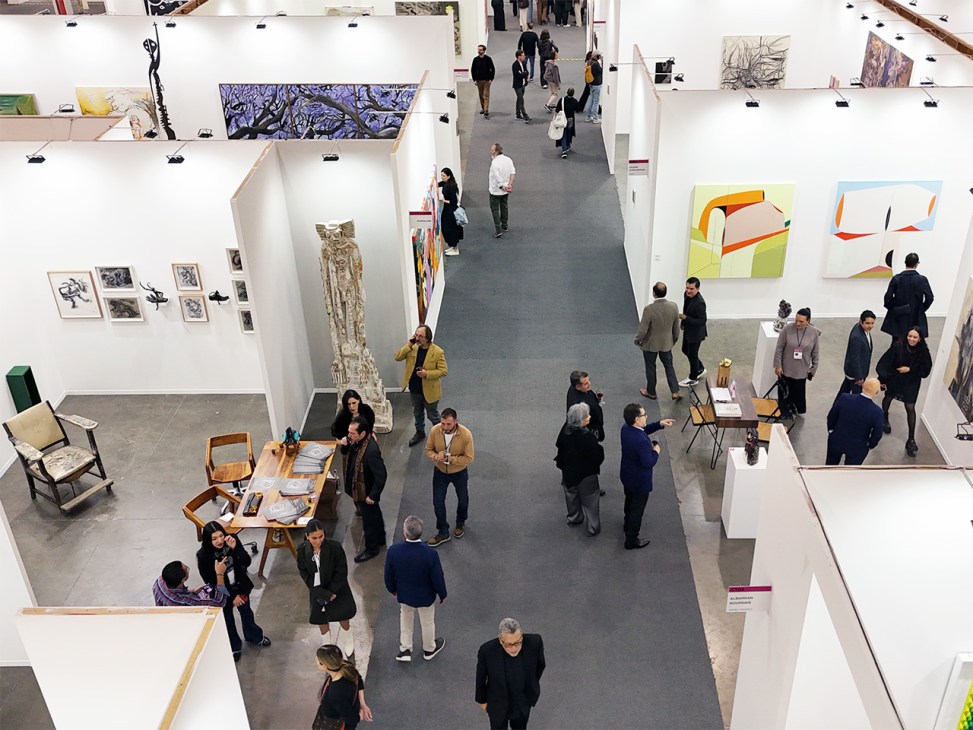
Zona Maco’s selection committee includes representatives from Mexico City, New York, Berlin and São Paulo, and this year’s programme was supported by major sponsors from HSBC to Starbucks and Mercedes-Benz – a roster unthinkable in its early years. But the fair’s growth is about more than flashy new logos. In the crucial first 24 hours, between 70 to 80 per cent of visitors were industry professionals: museum directors, curators, advisors and representatives roaming the aisles, business cards in hand.
It’s clear that collectors also want in on the region. In 2024, Latin America’s online art market generated just over $1bn (€843m) in revenue, accounting for 9.2 per cent of the global total. In November 2025, Frida Kahlo’s painting “El Sueño (La Cama)” fetched $54.7m (€46.1m) at a Sotheby’s auction, while Leonora Carrington’s “Les Distractions de Dagobert” sold for $28.5m (€24m) in 2024. At Zona Maco, more than half of the participating galleries hailed from Latin America, with Mexico representing the largest share. “Over the past five years, major international fairs have expanded their curatorial frameworks to foreground Latin American artists,” says the fair’s artistic director, Direlia Lazo. “Historically, the prices of [artwork by] Latin American artists were shaped more by regional socio-economic conditions rather than the significance of the work. In recent years, values have risen in a measured and sustainable way.”
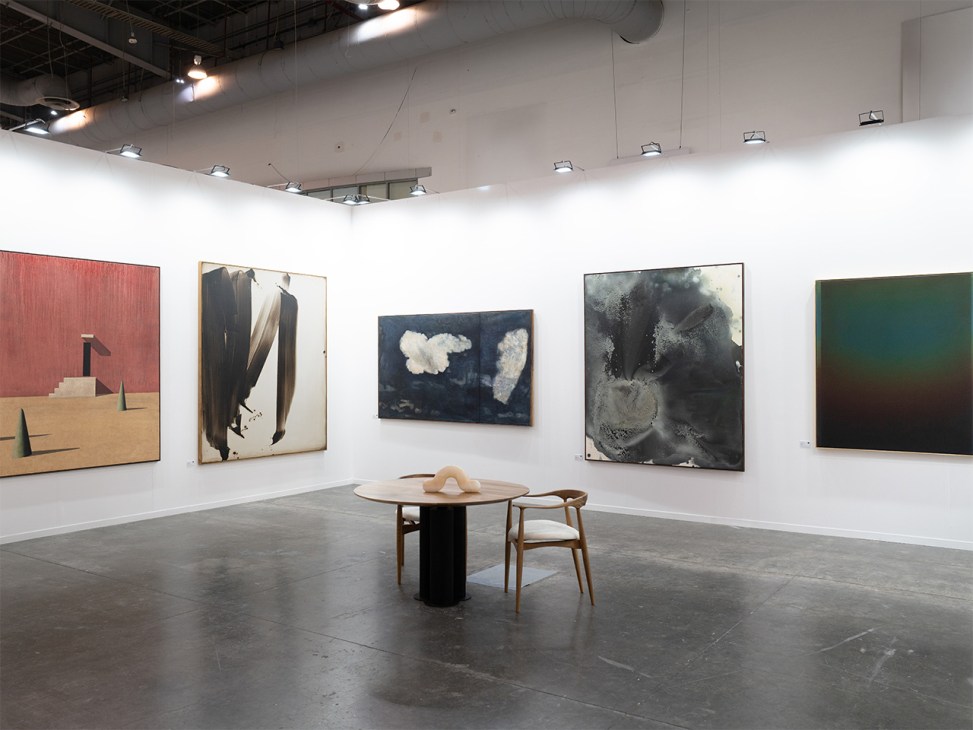
For London-based Cadogan Gallery, Zona Maco has been a turning point. Since debuting at the fair, the gallery has expanded its roster with artists from or working in Latin America now accounting for roughly a quarter of its representation. “We’ve seen strong and growing demand, particularly at international fairs,” says director Freddie Burness. Smaller galleries have felt the shift too. At New York’s JO-HS, half of its artists are Latin American and roughly 75 per cent of recent sales have been of works by creatives from the region. “Early interest came primarily from Peruvian, Venezuelan and Mexican collectors,” says founder Elisabeth Johs. Today, she notes rising engagement from US and Chinese buyers, and widening institutional interest in Latin American creators from the likes of the San Diego Museum of Art and San Antonio Museum of Art. For these galleries and the artists they represent, Mexico City has shown itself to be more than a cursory stop on the art-fair circuit. In the crowded aisles, what feels tangible is not just a market trend but a cultural transformation.
Keen to read more about Mexico’s booming art market? Meet the entrepreneurial trailblazers revitalising Guadalajara’s art scene.