How Solvej Balle turned 18 November into one of literature’s most arresting time loops
The Booker-shortlisted novelist explains how a single day evolved into a seven-book epic, and what it teaches us about ageing, relationships and our sense of time in the real world.
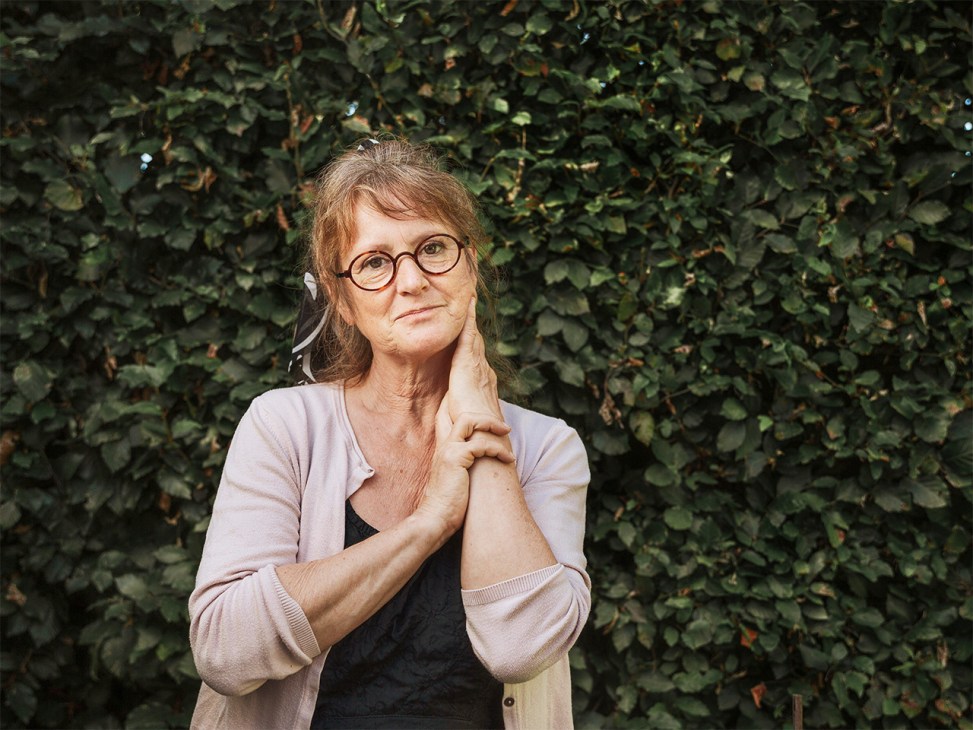
Writer Solvej Balle achieved literary stardom in her native Denmark with the publication of her 1993 novel Ifølge loven. Today, that fame has spread with the English-language translation of her series On the Calculation of Volume. The first volume was shortlisted for the International Booker Prize 2025 earlier this year.
While the books have been decades in the making, the narrative revolves around only a single day. The story follows an antiquarian bookkeeper named Tara Selter, who is stuck reliving 18 November. You might think that re-experiencing the same day is dull but in Balle’s hands, it is always compelling.
Here, Balle discusses her unique time-loop narrative, whether the novel is a love story and why she picked 18 November.
You began writing the series 10 years after deciding on the title. Had you already planned that this would be a seven-book series? At what point did you realise there was so much material in a single day?
I initially thought that it would just be a novel. But that’s a very vague term, isn’t it? I knew it wouldn’t be a short story and I thought of it as a single book. I wrote bits and pieces at the start – just fragments. After I began writing it properly, around 1999 or 2000, I envisioned it as a two-volume book. Later, I imagined that there would be four. I realised in about 2017 that there would be seven books when I started to see very different pieces, all with certain themes or atmospheres.
Has writing the series changed how you experience time in the real world?
Yes, especially with ageing. I have grown nearly 40 years older over that time. I knew early on that Tara Selter was going to be there for a long time and that she would age. At first I was trying to understand what it meant to age but it’s hard when you are 25 or 26. I interviewed people and asked them what it is like. Later on, as I started to see signs of ageing on myself, I thought, ‘Oh my goodness, this is research.’ I had to understand firsthand what it’s like to have an ageing body to write the story.
Did you ever have any doubts about whether the concept of repeating the same day would work?
I certainly knew from the beginning that it was a stupid idea. I tried to throw it out many times because in the 1980s, there was a certain doubt about writing from a concept. I often felt that I had to let go of it but it kept coming back. I realised that there was something in it that I wanted to know more about – the philosophy of the repetition; what happens if the day repeats itself.
I hadn’t yet seen the film Groundhog Day because it didn’t exist at the time, so I never thought that things would simply click back – that everything would be the same each day. I knew that Tara would age and that she would move from place to place. When I finally watched Groundhog Day, I was certain that I wouldn’t write it in the same way. It felt as though someone had researched for me about how not to do this. There were so many philosophical questions in it that I wanted to embark on. And if ever I felt bored, I would let it go. I’ve started many projects and I believe that when you start something, you’re not required to finish it. If it can’t keep you ticking, there’s no point.
To what extent do you look at the books as stories about relationships as much as they are a philosophical reflection on the meaning of time?
I thought of the first book as nothing other than a love story. But suddenly, all sorts of details came in that were not part of the plan. It is as if the love story were dissolved in the mechanics of time.
What was your reason behind the choice of the date?
Originally, the date was 17 October. I thought that for a very long time, even after I began writing the story 25 years ago. Yesterday, I was sitting near the sea and looking up at a cloudless October sky. I have had this feeling many times: October is too crisp, too sharp and too clear. I needed something more blurred. There was too much machinery in October and when I landed on 18 November, I realised that it worked much better. November gives more than it promises. We don’t expect much of it, so when it gives us something wonderful, we are rather surprised because it’s the kind of month that we need to get through.
You’re now working on the final book of the series. How does it feel to approach saying goodbye to a project that has been so significant in your life?
Some time ago, I would have said, ‘It’s great that I can see the end of it because I’ve been working on it for so long.’ But I’m not sure. I think I will miss Tara Selter, though I don’t think she will miss me.