The 2026 Women’s Prize winners talk rejection, process and finding stories worth telling
Veteran journalist Lyse Doucet turned an experience in Afghanistan into a chronicle of history. Meanwhile, after years of setbacks, Virginia Evans turned a writing exercise into award-winning fiction.
The winners of the 2026 Women’s Prize, one of the world’s most prestigious literary accolades, have been announced. Virginia Evans and Lyse Doucet, both debut authors, won in the fiction and non-fiction categories respectively.
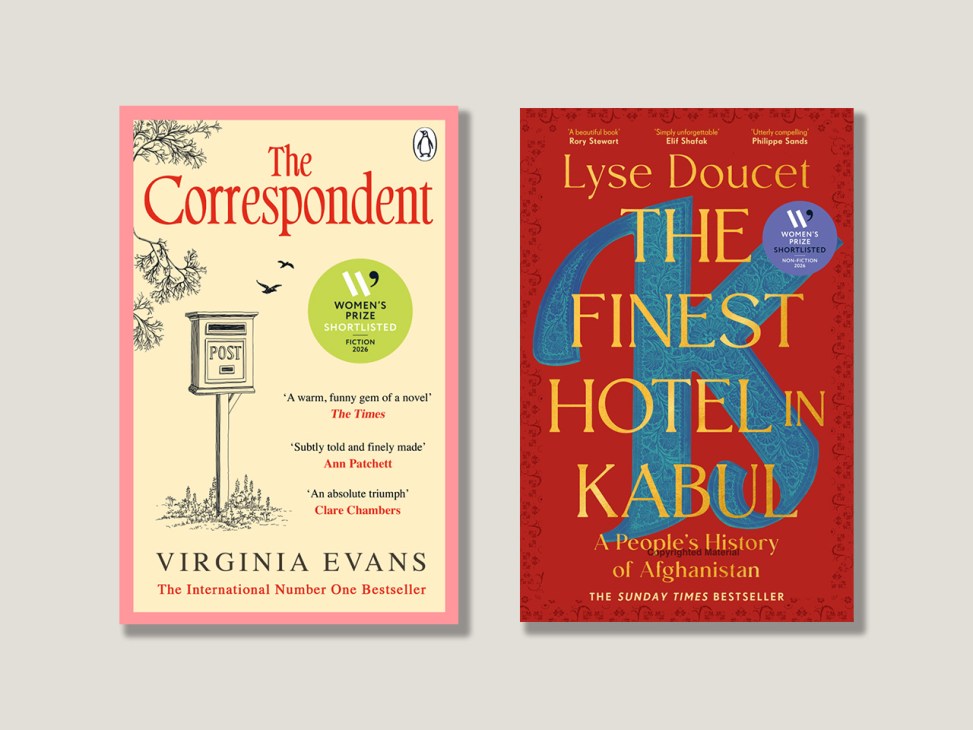
Their paths to publication were vastly different. Evans spent years writing books that never found a publisher until her debut, The Correspondent, became a breakthrough success. The epistolary novel is told through the correspondence of protagonist Sybil van Antwerp, and it will make you want to start writing letters of your own, if you can manage to put the book down.
Doucet drew on decades of reporting from Afghanistan for the BBC to create The Finest Hotel in Kabul. It’s an intimate history of the capital in the eyes of the famous mainstay: the Intercontinental Hotel. The BBC’s chief international correspondent, Doucet writes in detail about the staff of the Intercontinental and how they’ve prevailed throughout Afghanistan’s turbulent history, from former US president Joe Biden’s withdrawal of assistance to the Taliban’s regaining of control.
Speaking to both winners, Georgina Godwin discusses their works, winning the prize and the reception of their books by a new audience.
These conversations have been edited for clarity and length. Listen to the full interviews on Monocle Radio’s Meet the Writers.
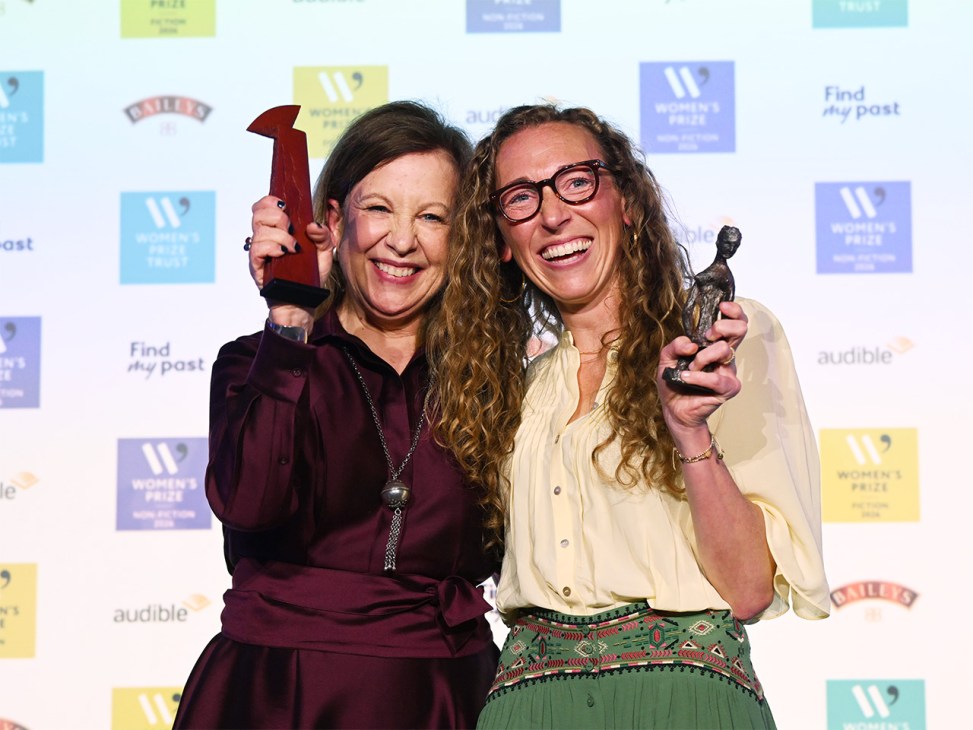
Georgina Godwin (GG): Behind every literary success there is often a string of rejections. This is also true of the fantastic The Correspondent, isn’t it?
Virginia Evans (VE): Yes, [there was] a lot of rejection, a lot of failure and that’s okay with me. I’m comfortable with that being a part of the story, and it all feels like it’s building towards the next thing. Part of what brought me here was trying and failing, and trying and failing, and then finally trying and getting one off the ground.
GG: There were seven rejected books – that’s enough to make most people give up! What happened to those manuscripts? Are you planning to revisit them, or do you see them as building blocks that should be discarded?
VE: Some of them should absolutely be discarded, the early ones. I love them but nobody needs to read them. There are two that I would consider going back to but, for me, I would finish writing a novel and then in the back of my mind already have the next one starting to take shape, so I’m pretty much ready to start. That’s always how I’ve worked, and so the thought of going backwards and reopening something that feels old to me doesn’t appeal. I don’t have a need for those books to be published. I sort of feel comfortable that they weren’t. They still exist, and to me they are complete.
GG: The Correspondent began as a writing exercise. How did it develop into your first published – and now award-winning – book?
VE: I wasn’t thinking that I would sell this book. I had a book out on submission with editors that was complete, and then I was thinking about starting something new. I wrote about 20,000 words of something else but didn’t want to stay with it. [I did this writing exercise] to clear my head. I wasn’t going to give it to anyone but when my agent asked me what I was doing, she wanted to read it. At first I said no but then she pressed me on it. Eventually she thought that this one could sell. I didn’t have any confidence because I had never had success before, and especially because I had written it in a mind of not showing it to anyone. But that turns out to be the ticket.
GG: The book is structured with letters, and is full of readers and writers. Does what you’re reading at the time influence your writing?
VE: I have to be so careful with what I’m reading when I’m writing a book, and I find I cannot read almost anything modern that even comes close to what I’m writing. I find myself reading either classics or reading outside the genre that I write. I’ll read thrillers or things like that. If I start a book and catch the scent that it’s coming close to the world that I’m writing, I have to put it away. Perhaps I’m afraid that I’m too much of a sponge, I don’t want to take something that’s not mine. I feel very protective of my brain when I’m writing.
GG: Lyse, what about the Intercontinental Hotel in Kabul made you think that this was the story that you wanted to tell?
Lyse Doucet (LD): As a journalist, I’ve always believed that a smaller story can carry much greater truths, people are drawn to that. The iconic Intercontinental Hotel has been part of Afghan history for so long, and so many Afghans have a story about how it went from being this rarefied place of bikinis by the pool, cocktails on the roof and exorbitant prices only for the elite, to being almost the headquarters for building democracy after 2001. The hotel became part of the front lines. I stayed there for a year. All of Afghanistan was there; people from different social classes, from the royal families to very poor families, educated, non-educated, and different ethnic groups in this modern box of glass and steel. The 200 balconies were like eyes looking over the city, the watchtower bearing witness. The war which swirled around it over the decades came inside, ravaging the rooms.
GG: You’ve been reporting on stories from Afghanistan since the 1980s. Were there stories that you had carried within you that weren’t suitable for a news report that you were longing to tell, and did this book manage to give them a home?
LD: During the coronavirus pandemic, I went through everything that I’d kept from Afghanistan. I had kept all the cartoons that another worker, Amanullah, who was a teenager then, drew for me when I stayed at the Intercontinental. He was working as the room service cashier. He went to the Soviet-run university down the hill during the day, speaking Russian, and came to the hotel at night to do the room service. He, like all Afghans, is a great observer of humanity. He would see the journalists staying there [and draw them on] the ledger, which was the perfect size to do a grid of the rooms in the hotel. Then he would slip them under the room service trays. His version of service with a smile. Of course, these drawings never got into the book but these sorts of things were part of the journal of how we survived those times.
GG: Now you have won this extraordinary prize, how does it change how you think about the future?
LD: We say in journalism that you’re only as good as your next story. I still walk down the street and think, did I finish that book? It’s like a miracle. I don’t know how I did it because there was so little time and so many major world events – and [at the BBC] while I can sometimes miss small stories, I can’t miss the big ones. There have been earth-shaking stories ever since I signed this book contract. But, of course, every new book is a new challenge – first to find a story to tell for which I have the authority, interest and ability to write. The most important thing right now is how can I tell a story which will draw people in rather than turning them away? As Margaret Atwood says, will they keep reading beyond five pages? They have to keep turning the pages to get to the end of the book. So I do think about the next one. In my [Women’s Prize-winning] speech I said that in order for there to be writers there have to be readers. The book will only really come to life and be loved if there are both.
Listen to the full interview on Monocle Radio’s ‘Meet the Writers’.