The death of the end credits: What streaming subtly gained by taking them away
Autoplay isn’t just about convenience – it’s also a small power shift that many of us might have overlooked.
When you’ve finished reading this piece, I hope that you will pause to mull it over and consider the team that brought it to life.
That might be a lot to ask of those reading a short article but until quite recently, sitting through end credits was a reasonable expectation for audiences of TV series that had taken hundreds of people months to create. For instance, AMC drama Mad Men (2007–15), despite being about people who produced punchy advertisements, lingered deliberately at the end of each episode, pairing its credits with carefully chosen songs that invited us to sit with what we had just seen.
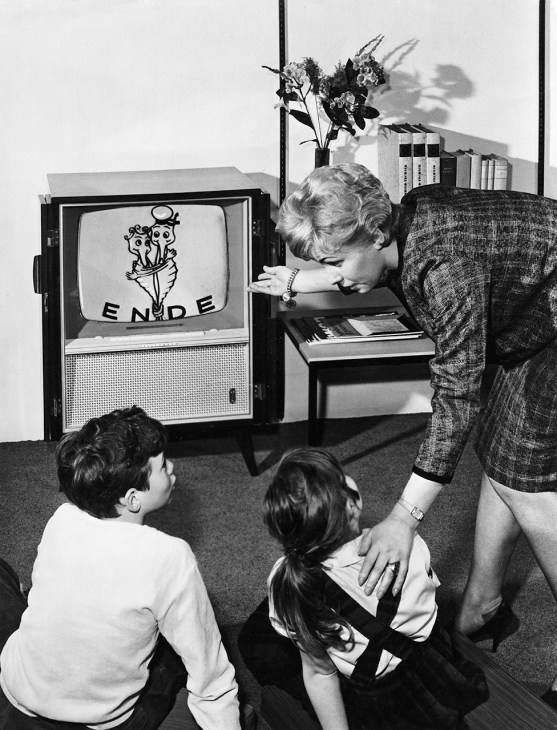
Still, that sense of an ending carried an economic risk: viewers might switch off, with traditional broadcasters having no way to prevent it. Streaming services, on the other hand, have a way of ensuring audience retention. With a few seconds’ grace, the credits are overridden and the next episode begins – whether you are ready to watch it or not.
And it works. A December 2024 study by researchers at the University of Chicago found that “disabling autoplay on Netflix significantly reduced key content consumption aggregates, including average daily watching and average session length”.
It’s a tiny change in our habits but it reflects several broader shifts, starting with people’s lack of awareness of what goes into making a programme. Every one of the many specialised jobs that television dramas require takes time to learn and to carry out well. Even half-watching the credits and wondering what a best boy does is a way to acknowledge that. After a theatre production, no one resents the curtain call because we recognise that the work involved gives value to a performance. But autoplay turns this into a skippable chore, like reading the terms and conditions.
If we come to believe that our demands should be instantly satisfied, expectations – not only of entertainment programmes and businesses but of larger systems such as governments – will eventually become impossible to achieve. Watching the credits is a reminder that things are more complicated than what we see and that what happens “behind the scenes” is not a matter of shadowy figures conspiring against us but of ordinary people struggling to get things done.
The determination of streaming services to maximise our screen time is not a conspiracy either – it’s just a function of the competition for our attention. But removing the credit sequence is also an example of a mindset that has driven the internet since it was invented: optimisation.
Optimisation has improved life in countless ways. But it works by elevating a single variable, brushing aside any side effects in the name of efficiency. That sense of irritation you feel when the next episode launches as you fumble for the remote control comes from this logic. Autoplay is a minor assertion of power and one of the many, easily overlooked ways that the attention economy leans on us every day.
Opposition to this way of being treated appears to be gaining ground. GWI, an audience research company, reported that 19 per cent of viewers in the US “prefer streaming a series with scheduled weekly releases” – a 40 per cent increase since 2020. Netflix released the final season of its blockbuster series Stranger Things, not all at once, but in batches. There is value in watching TV programmes from beginning to end.
The premise of streaming – that you can go on drinking in content forever – is a fallacy. There is a personal limit on how much you can watch, even for the most active viewers. Part of the point of dramas is to help us come to terms with the fact that our lives don’t just go on forever. They help us cope with that by giving us the sense of an ending.
Phil Tinline is the author of ‘The Death of Consensus: 100 Years of British Political Nightmares’ and ‘Ghosts of Iron Mountain: The Hoax That Duped America and Its Sinister Legacy’.