‘You have to go into it head-on’: Oscar-nominated Miyako Bellizzi on kitting out ‘Marty Supreme’
Oscar-nominated costume designer Miyako Bellizzi on why crafting garments from scratch is the key to achieving authentic period worldbuilding.
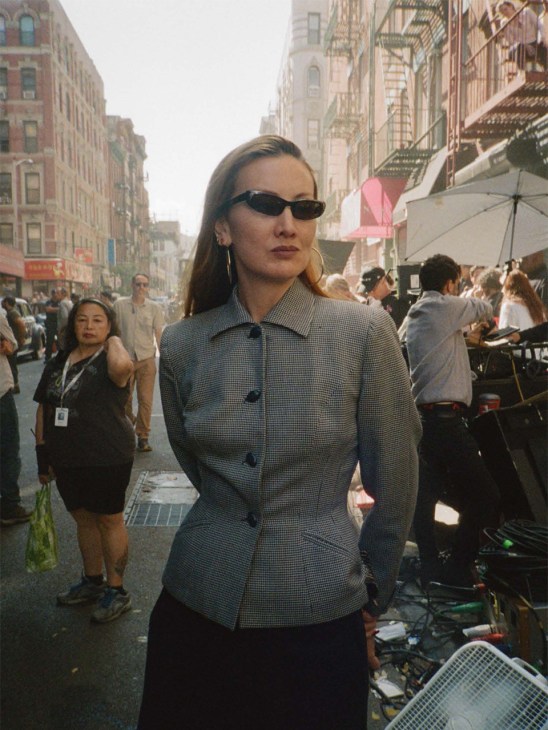
San Francisco-born and New York-based costume designer Miyako Bellizzi might have begun her career in fashion editorial but she has since become celebrated for her ability to unlock characters and build entire filmic worlds through costume. Across a decade-long collaboration with the filmmaking duo Josh and Benny Safdie, Bellizzi has delivered costumes that feel as essential to the films’ visual language as the restless camerawork and erratic plot lines. Some have become enshrined in the public consciousness: take Connie Nikas’s (Robert Pattinson) red hero jacket in Good Time or Howie Ratner’s (Adam Sandler) canary-yellow polo and black leather jacket in Uncut Gems.
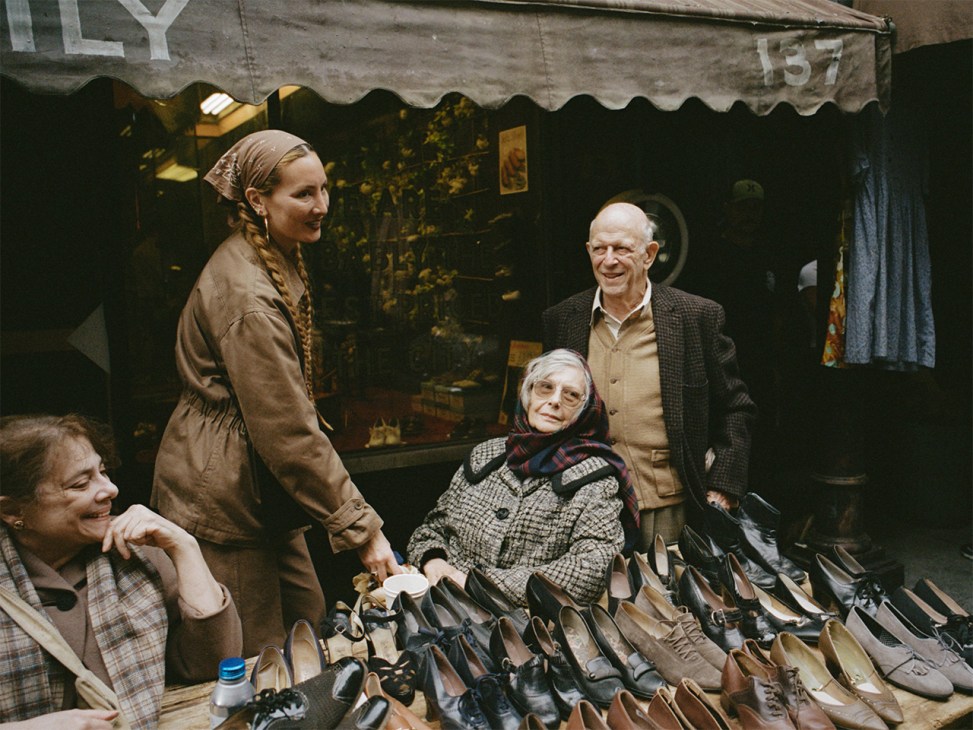
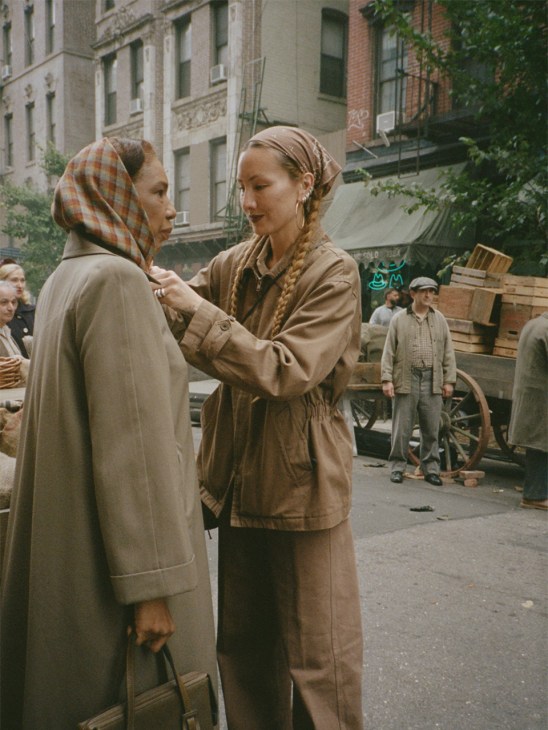
Yet Bellizzi’s real craftsmanship often happens at the edges of the frame. Her meticulous attention to background costumes – paired with the street-cast ensembles selected by Jennifer Venditti – gives the Safdies’ films their gritty, documentary-like atmosphere. Every extra is given their own sartorial story, turning the screen into a vibrant mise en scène.
Bellizzi’s latest project reunites her with Josh Safdie – this time without his brother – for Marty Supreme, starring Timothée Chalamet and Gwyneth Paltrow. The film marks A24’s most ambitious project to date: it is the production house’s highest-budget feature and highest-grossing release.
Set in 1952, the film is anchored in New York’s Lower East Side but cuts between a range of settings: Japan, New Jersey, London and even Auschwitz. Following her work on The History of Sound with Paul Mescal and Josh O’Connor, Marty Supreme is Bellizzi’s second period piece – unless, as some suggest, Uncut Gems (set in 2012) now qualifies as vintage.
Ageing the costumes was central to the film’s hyperrealism. Out of the more than 3,500 garments seen across the 149-minute table-tennis spectacle, Bellizzi and her 20-person in-house tailoring team built nearly half themselves, distressing fabrics to achieve their lived-in quality.
At this year’s Academy Awards, Bellizzi earned her first nomination for Best Costume Design. In the lead-up to awards season, Monocle’s Annelise Maynard spoke with Bellizzi to discuss her route into costume design, what changes – and what doesn’t – when moving to a production of this magnitude, and which costume from Marty Supreme she thinks might become the film’s defining image.
This conversation has been edited for length and clarity. Listen to the full conversation on Monocle on Fashion.
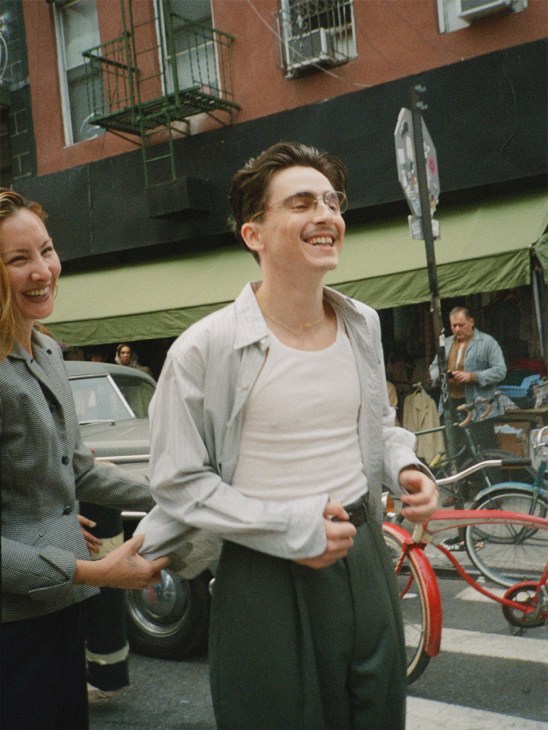
Many people might not know that you began your career in fashion media, working at ‘Details’ and ‘Vice’. How did that experience inform your approach to costume design?
When I moved to New York more than 20 years ago I had this big dream of working in fashion. I started my first internship at Details, assisting the editors. That was my introduction to men’s fashion. I then moved to Vice at a time when they were very anti-fashion. They came at fashion from a photojournalism approach, which opened my eyes to how fashion captures stories. When people ask me how I got here, I feel like that’s not the normal approach of how you get into costume design. When I left Vice I was making small independent films with friends in New York. I remember my first small film. I used all my own clothes, worked with friends, had no budget and wasn’t getting paid. I think about those years and how informative they were to my career now.
You’ve worked with the Safdie brothers before on ‘Good Time’ and ‘Uncut Gems’ but ‘Marty Supreme’ operates on a completely different scale. Not only was it A24’s highest-budget film, it has now become its highest-grossing release. Did stepping into something of that magnitude change your process?
Marty Supreme is Josh [Safdie] and I’s third feature together over the course of 10 years. We have this spirit – it’s like Marty’s spirit – in the way that we approach films. You see it in the way that it’s presented; you have to go into it head-on. The stakes were higher, and there were more cooks in the kitchen, but really it’s the same approach that we had for Good Time and Uncut Gems.
The costumes have this beautifully lived-in feel. How did you achieve that and why was it essential?
Ageing the pieces was super important to us. In period films it’s a big pet peeve of [Josh Safdie’s and mine] when you see that everything is brand new. It was really important to make sure that everything was lived in. Having the support of a team experienced in working on period films really helped me because I don’t know everything. I had an incredible MTO (Made-to-Order) and ager/dryer team. It was tricky because when you’re using vintage from rental houses, you can’t ruin the beautifully preserved clothes from the 1930s and 1940s. They’re very delicate, so ageing the pieces was out of the question. We decided to build a lot of [the clothes] ourselves so that we could break the costumes down.


When we first meet Kay Stone (Gwyneth Paltrow), she feels muted and unhappy in her life. But by the end, whether for better or worse, she’s found a new vigour through Marty’s youth and passion, represented by the red cape gown. What choices did you make in curating this evolution, and what fashion houses or figures informed Kay’s style?
Kay was a 1930s film star but we meet her 20 years later. I wanted to showcase what it was like to be a woman at that time. I wanted to show what it would be like to be in her marriage and how to keep up as a socialite in New York. She’s dead inside and so she begins in these muted black and whites. In the 1950s there were so many new designers – Dior, Givenchy and Balenciaga. For me it was about considering someone that was aware of these changes in fashion but kept it understated as an older woman. Marlene Dietrich and Grace Kelly were big inspirations for me. Meeting Marty brought colour back into her world a little bit. I [showed that] with colour theory and fabric but also in the silhouettes. I wanted to keep her very sophisticated.
And then with Marty, there’s obviously so much going on with his character. His clothes are often a bit too big, almost like a boy performing his masculinity. For such a complex character, how do you capture that reach, that pretence, in his costumes?
Showing Marty’s reach and pretence was the biggest challenge when designing his costumes. Considering how we could show these qualities without overdoing it, in much more subtle ways. I selected styles mainly from the early-to-mid 1940s, the jackets were longer, the shoulder pads were bigger and the pants were wider. I wanted things to look ill-fitted. We made the sleeves and the body of the shirts larger so that they’d billow more. It was also about what a person like Marty would have realistically bought in the neighbourhood. He’s not shopping at the best places. I wanted it to feel like he had his own sense of style, without it being overly stylised.


Your work on previous Safdie films has created instantly iconic looks. Do you have a sense of which costume might endure as the defining image of this film?
There are so many characters in this film so it’s really tough to choose one look. When I think about what will be the defining costumes of this film, I think about Rachel (Odessa A’zion) but it’s Marty’s suits that are really the look of Marty Supreme. I go back and forth between the brown one and the grey one. Ultimately it’s the culmination of all of the characters and how they come together that makes the world of the film so vibrant, but also real. Having glimpses of all these different worlds within Marty’s world was very important.
You are nominated for your first Academy Award for Best Costume Design. How does it feel?
It’s interesting because when I think about costume design, I usually think about the fantastical types of films. My work on Marty Supreme – being deeply rooted in hyper reality – feels a bit different. I think about some of the other women who are up for nominations, such as Kate [Hawley] for her dresses in Frankenstein that are just so unbelievably beautiful. It feels surreal to be compared to all these other films and their costumes. It’s very cool to be recognised, and having so many people resonate and be inspired by this film and the costumes.