Paweł Pawlikowski tackles ‘sacred beast’ Thomas Mann in his new film, ‘Fatherland’
The filmmaker discusses his directorial style and his casting of Sandra Hüller in a drama that follows the Nobel laureate and his daughter on a journey through war-ravaged Germany.
The question of belonging is one that haunts the work of Polish filmmaker Paweł Pawlikowski. His most recent releases – Ida, Cold War and now Fatherland – all ruminate on the theme in black and white, the loose trilogy united by its striking framing. The magnitude of the ideas these works explore and the performances they feature belie their tight sub-90-minute runtimes.
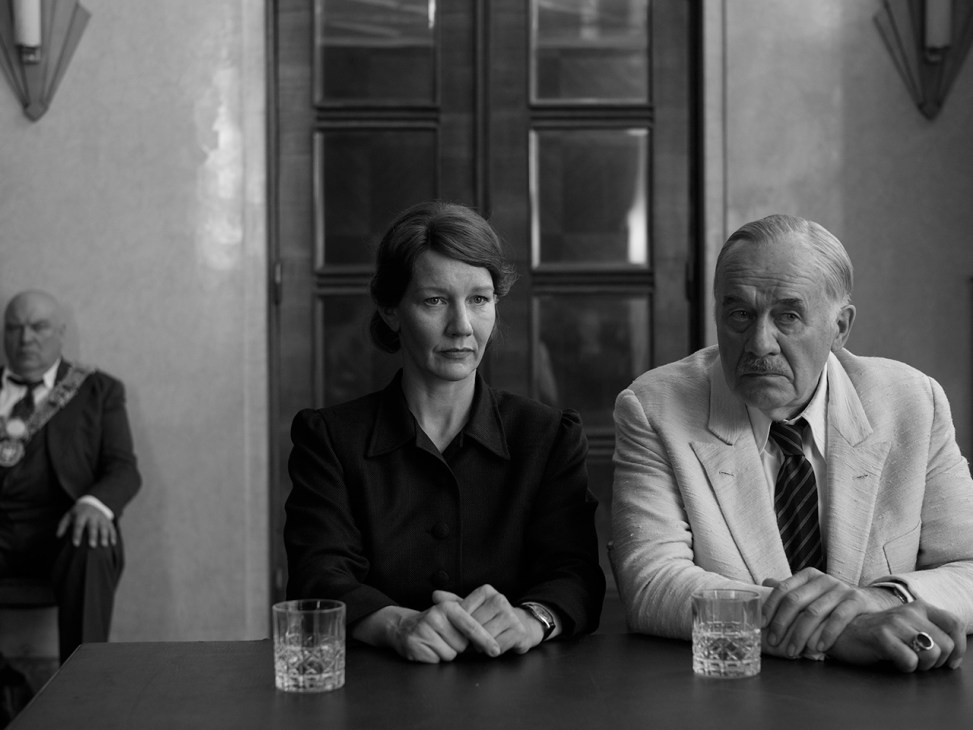
Pawlikowski’s latest project takes as its subject the German writer Thomas Mann. It follows Mann (Hanns Zischler) and his daughter Erika (Sandra Hüller) as they set out on an uncanny road trip across Germany in 1949, the first time the author has returned to the country in 16 years. The filmmaker tells Monocle about having the nerve to take on the story of one of Germany’s most beloved cultural heroes, the contemporary echoes of Fatherland’s postwar context and getting bored at the cinema.
This is the third and final part of a loose series after your films ‘Ida’ (2013) and ‘Cold War’ (2018). What unites the three projects?
I didn’t set out to do a trilogy. I’m looking back to the 1940s, 1950s and early 1960s in central Europe because it’s a period that interests me, that I have a certain vision of and an angle on – as opposed to today’s world, which I have no idea how to describe or deal with.
The films all have a mixture of strong characters who are divided within themselves or in interesting relationships. History shapes them; it forces them to make decisions. Nowadays we live in a world where history is there but [it’s as if] it happens in the digital sphere. Nothing much actually happens in our lives in the West but we have strong opinions about everything.
The three films have a similar style: shot in black and white and created almost through a series of vignettes. How does this style allow you to tell these stories?
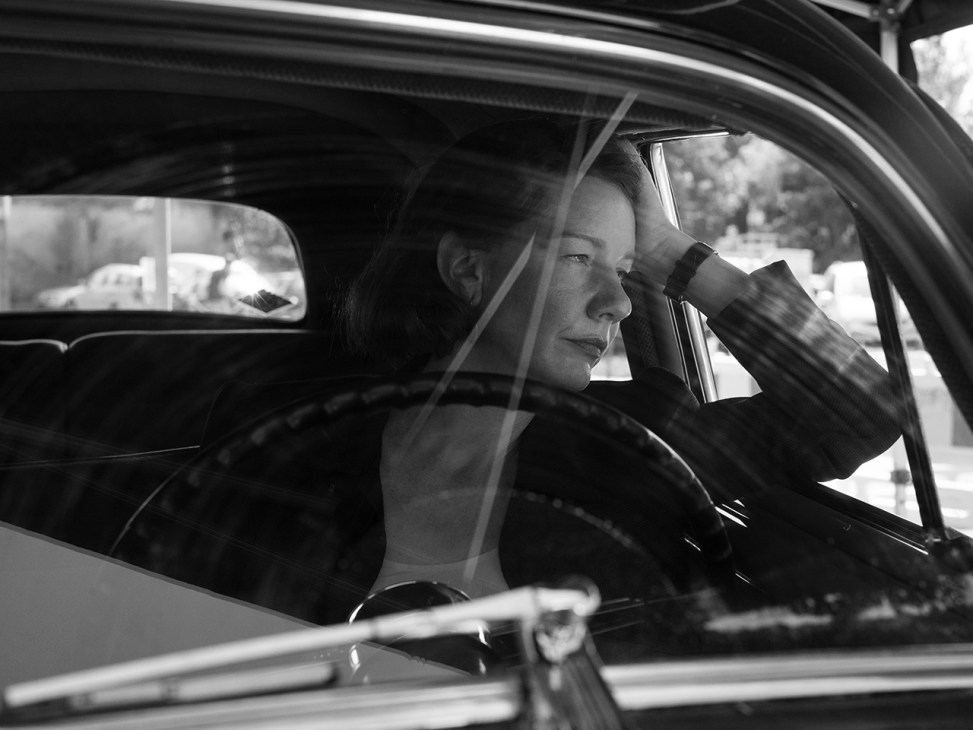
One thing that [the style] helps me with is the mise en scène, because discipline releases a lot of possibilities. I like working out the mise en scène in relation to a strong image. I like the audience to really look. I want to make a kind of photograph where there’s a lot in it to discover and then give you time to discover it. In all the recent films, I have tried to establish a certain way of looking from the very beginning. The audience – well, those who don’t leave the cinema after five minutes – tune into this way of watching. It’s powerful and absorbing once you do.


What’s your history with Thomas Mann and his work?
I have read many of his books but it’s not a passionate relationship. He’s not my favourite writer but he is a great one, and with age I’m discovering how great because there are layers and layers to his novels. But this episode in his life and his relationship with his daughter and son [Klaus, played by August Diehl] is really rich, and it’s something I can connect with. It’s a great triangle. Three great characters. That’s the reason I made it. Plus, I like the context – this polarised world.
Did you have any hesitation about using real figures as characters?
The characters in my films are inspired by real people but they are not portraits of them. In Germany, Thomas Mann is a sacred beast, so I knew I was stepping into dodgy territory. But weirdly, Germans love it. Fatherland has done super well in Germany. And they don’t seem to mind me fiddling with the facts because they can see it’s for the sake of greater intellectual and emotional truth.
Sandra Hüller is excellent as Erika Mann. Why was she right for the role?
Because she is a brilliant actress and is quite complicated. But above all, she’s a brilliant actress. She can convey so much with such small gestures. It probably wouldn’t work without her. Erika has a big range. She is this cynical intellectual; then she is scared like a little girl; then she is like a vicious beast that suddenly turns wild; then she is dreamy and vulnerable. So many things over the short duration of the film and there’s not a moment of emoting – signalling emotions. It all comes from inside.
Although these three films are set in the past, they have strong echoes in today’s world. Have you become more aware of that since ‘Fatherland’ was released?
When we showed it at Cannes, a lot of Russians in exile came up to me and said, “You made a film about us because we have no home to go back to.” I could see why it echoes [in today’s world] but what’s surprised me is how consistent it has been that people come up to me, especially people who are in exile, to say that.
It feels a bit clichéd to comment on the length of your films but they are unusually short in today’s cinema landscape. What’s your process like?
It’s endless rewriting. I’m shooting and editing at the same time. Five days filming, then a day off and then one day in a cutting room, putting the scenes side by side.
Very often, I change stuff that I haven’t shot yet. I cut some things, fuse some stuff, invent new scenes. There’s no script that then gets shot. It’s more like a loose beginning, middle and end, and some good scenes – and some that are not so good – and then constant reworking and distilling, distilling, distilling to make sure that every beat resonates.
It’s all about what you come out with at the end of the film. And whether it was three hours long or it was 82 minutes doesn’t matter. It’s what stays with you and what you live through in the film. That’s why I have no guilty conscience. People talk about it for a long time afterwards.
When you go to the cinema, do you often think the film is too long?
Some films deserve to be but many have, like, three endings. Even very popular films. And then I just want to go home. The energy drops when you have a weak scene that’s just there to fill the space or because they paid for the location or something. I have a feeling that a lot of films are just executing a script that was okayed by the financiers. But I don’t mind long films, per se. Lawrence of Arabia couldn’t be any shorter, you know? I think every filmmaker has their own language. Well, the good ones anyway.
‘Fatherland’ is in UK cinemas from 23 October.