How Jetzt is bringing member-funded journalism to Austria
The independent news app draws its reports from paying members’ input.
Cronyism is a stubborn problem in Austria, a country where party allegiance runs deep. In 2021, then-chancellor Sebastian Kurz resigned amid allegations that his allies had used public funds to buy favourable coverage. Kurz denies both but the scandal cast a harsh light on a media landscape in which major publications were known for their political leanings rather than fair reporting.
When independent digital media platform Jetzt began its pre-launch membership drive last spring, endorsements from would-be readers on its website stressed one thing above all: that Austria needed an objective journalistic voice unburdened by political affiliation. The outlet’s name, which means “now” in German, is intended to convey that urgency. Media diversity and journalism are enormously important for democracy,” said Corinna Milborn, one of the country’s best-known television anchors, in her support video.
By November, Jetzt had secured the 5,000 subscriptions that it required to get started. Its business model resembles that of Danish outlet Zetland, in which paying members exert a direct influence on what is reported. In fact, Jetzt’s publisher, Florian Novak, was inspired by Zetland’s chief executive, Tav Klitgaard, after hearing him speak at a conference in Vienna in 2023.

Klitgaard explained how it all worked: in the spirit of less is more, there were only a handful of stories a day published in both written and audio form, a discussion forum and a dedicated app to round off the experience. Novak was impressed: “I always wanted media like this, happening right on my smartphone.” An alliance was forged, with Zetland helping to get Jetzt off the ground.
As a result, the websites and apps of both outlets look almost identical, featuring the same clean layout, colourful navigation blocks and integrated audio playback. An annual subscription to Jetzt costs €189, roughly the same as Zetland’s. Both prioritise mobile use, with about 70 per cent of traffic at Jetzt coming through its app.
Novak is in his early fifties and twinkles with youthful enthusiasm. Although he studied law and completed a PhD a few years ago, he has long been fascinated by journalism. He laughs as he recalls his first venture – a newspaper – which appeared when he was just eight, thanks to a photocopier at the practice of his father, a doctor in Upper Austria. More serious ventures followed.
In 1997 he co-founded Radio Energy Vienna, one of Austria’s first commercial stations, before launching LoungeFM in 2005. He sees Jetzt as his most important project to date, with a mission to counter the role of social media as a source of news. “I look at my 19-year-old daughter and I think Austrian media are not mastering the so-called digital transformation properly,” says Novak. “And if nothing happens, we will have huge problems 10 years from now.”
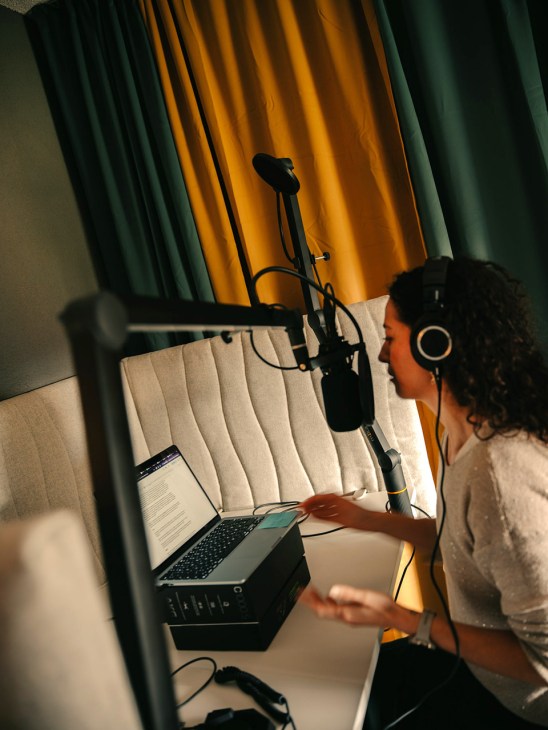
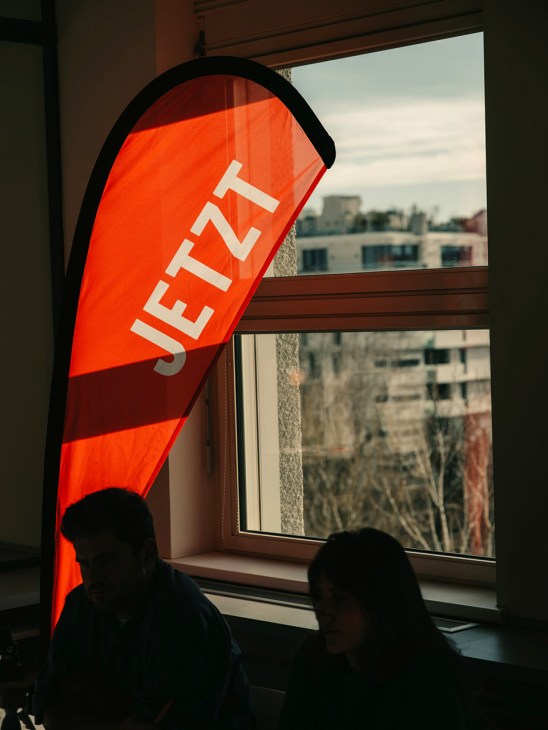
Jetzt’s offices are housed in Vienna’s 1930s Funkhaus, the former radio headquarters of Austria’s national broadcaster, ORF. In spaces once occupied by ORF’s bilingual German-English station FM4, Jetzt now uses three of its former studios – spruced up with second-hand vintage cupboards and plush, green-yellow armchairs – to record its audio and video output.
The website’s reportage is focused on domestic and international news, covering stories on a diverse range of subjects, from Austria’s alarmingly high femicide rate to the conflict in Iran. Jetzt’s star contributor is Bulgarian journalist Christo Grozev, who is known for his deep dives into the murky world of Russian espionage as part of investigative group Bellingcat. He co-wrote Jetzt’s launch essay, headlined “Dirty Water” – an investigation into an Austrian wastewater disposal facility allegedly linked to Russian military intelligence.
Other Jetzt stories include one about Jordan Mechner, creator of the cult computer game series Prince of Persia and the son of an Austrian Jewish family who fled following the country’s 1938 annexation by Nazi Germany. Another tells the story of an organic farmer in Austria’s westernmost Vorarlberg region, who faced stigma for being the son of a Moroccan soldier who helped to liberate Austria in the Second World War. However far removed in time, what all these stories share is a determination to show their relevance – and their relation – to the present.
That same impulse runs through Jetzt’s audio work, which includes not only voiced versions of written stories, complete with sound effects and music, but also news highlights in the mornings and afternoons. Austrian journalist Pia Miller-Aichholz presents the afternoon bulletin, the B-side. “We want to show the bigger picture behind every story,” she says after recording her latest round-up. “For me, as both a producer and consumer of news, this is the best way not to be inundated with information.”
Jetzt’s membership is growing steadily but it’s too early to say whether, like Zetland, the website will be profitable. For now, Novak’s pitch to his investors is simple: Austria has a problem with its media and he has a solution.
Jetzt in numbers
€189: Cost of an annual subscription
70 per cent: Readers who use the dedicated app
20: Staff headcount