Martin Krasnik is the newspaper veteran restoring trust in the media with Denmark’s most resilient title
In the first of our new series featuring editors working to rebuild confidence in the media in the age of free content and misinformation, we meet the cool-headed Dane of weekly title ‘Weekendavisen’.
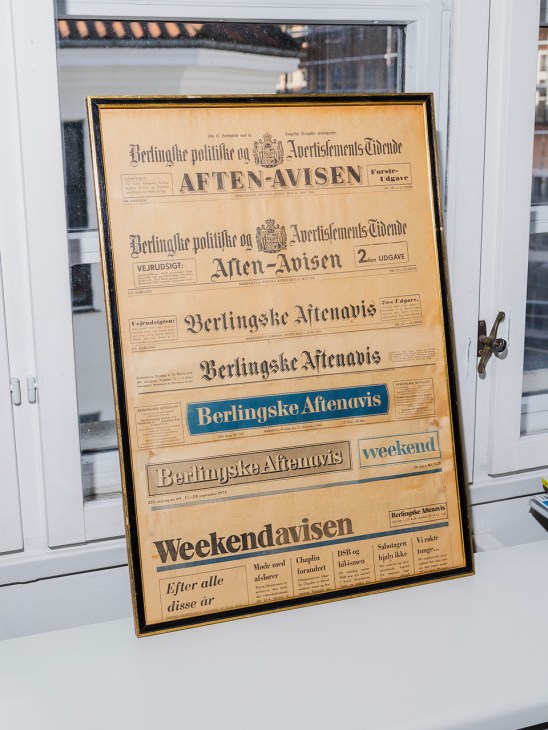
Alongside wishbone chairs and teak tables, Weekendavisen newspaper has long been a part of the furniture in Denmark’s thinking homes. The elegantly designed broadsheet hits newsstands every Friday and covers society, culture, books and ideas. It features handsome photography and illustrations, as well as plenty of white space. Weekendavisen is unusual in that – for now, at least – it still sells more hard copies than digital subscriptions. Its longtime editor, Martin Krasnik, is a well-known public figure in Denmark, with his distinctive strawberry-blond hair and spectacles.
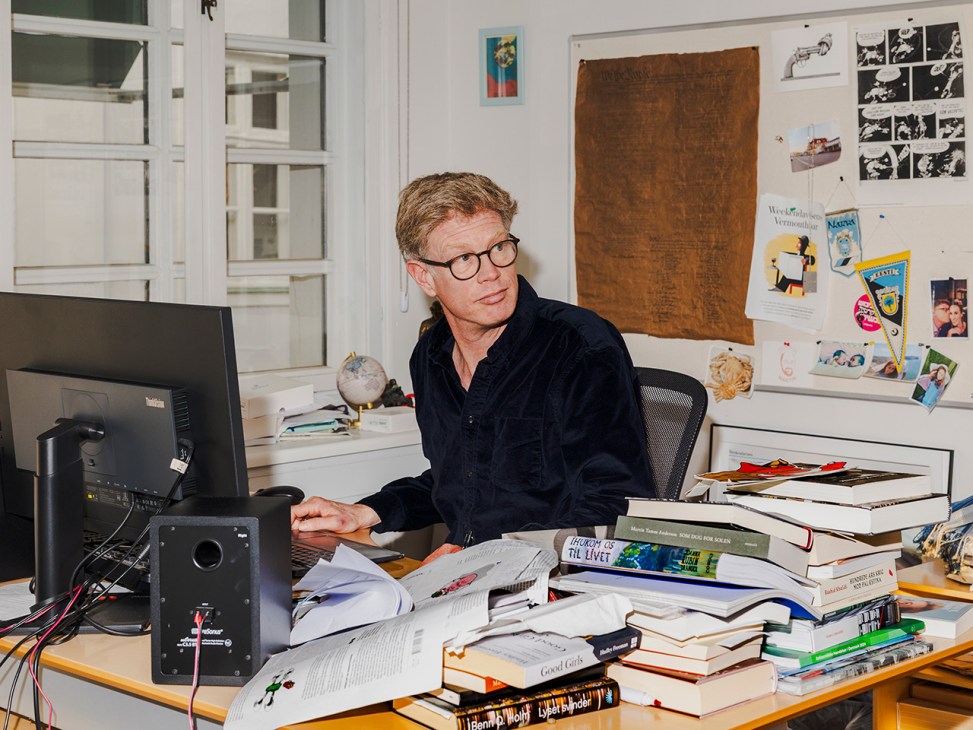
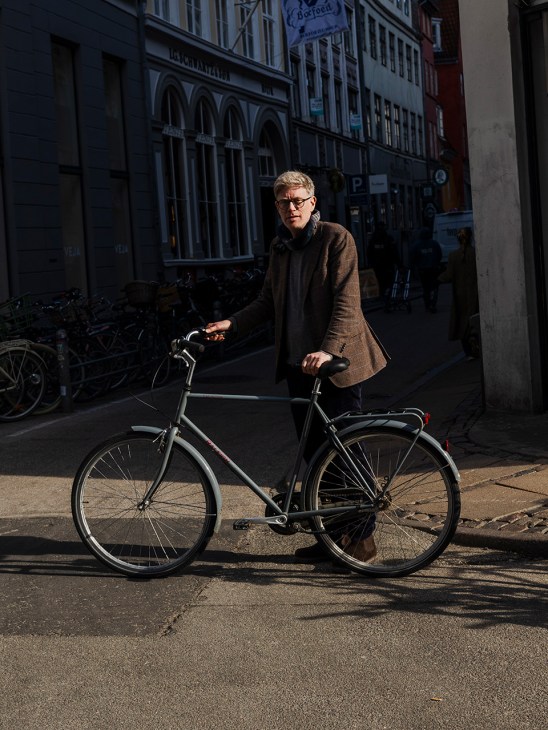
“We were very late movers online but that was good for us because we avoided the infant mortality of a lot of media,” says Krasnik. He is sitting down with Monocle in his bright, third-floor corner office in the heart of Copenhagen’s shopping district, a short bike ride from where he lives. “We learnt from their mistake of giving digital stuff away for free.” So when Weekendavisen finally went online in 2017, readers had to pay. Today a monthly subscription costs DKK179 (€24). The long-read broadsheet has 20,000 digital subscribers but 30,000 Danes still like to hold the paper version in their hands every week too. Both are respectable figures for a nation that has a population of about six million but, perhaps more importantly, Weekendavisen is in rude financial health.
Like most Danish mainstream media outlets, the paper receives state support. This amounts to about DKK10m (€1.3m), which goes towards a total annual budget of DKK50m (€6.7m). According to Krasnik, the publication, which has a profit margin of 20 per cent, could survive without the funding. Further security comes from Norwegian news group Amedia’s purchase of Weekendavisen’s parent company, Berlingske Media, last year. The group is owned by a foundation that specialises in local newspapers. “We are in a moment in Scandinavian media when everybody just wants to be bigger – and if you’re not bigger, you’ll be eaten,” says Krasnik. Amedia is considered a safe pair of hands in this part of the world and Krasnik insists that the paper’s editorial independence remains unaffected. He points to recent stories that Weekendavisen has run that have been critical of Norway’s relative lack of financial support for Ukraine.
But there are new threats to Weekendavisen’s dominance of the Danish cultural elite’s attention. “We offer a niche, highbrow perspective,” he says. “But that niche has been completely challenged in the past few years.” Krasnik names influential online media outlet Zetland, founded in 2012 and also based in the Danish capital, but it’s not only media start-ups that are doing something new. “Even the daily papers are claiming to be offering the same thing as us these days,” says Krasnik. “They aren’t breaking news. That all happens on social media. Information [a left-leaning Danish broadsheet] has skipped its Saturday paper and, in a few years, I think that the dailies will do the same.”
With its opinionated mix of topical long reads spanning politics, society, culture and science, Weekendavisen is part of a European tradition of newspaper-magazine hybrids, such as Die Zeit or The Economist, says Krasnik. “It’s something that allows you to take a step back and look at whatever everyone has been fighting over that week,” he says. How does that chime with today’s relentless news cycle? “When we started our website, we had the urge to publish every day. And that was a mistake – we felt that we had to keep up with the headlines.” Krasnik mentions the terror attack on Bondi Beach in Australia in December. “You couldn’t not mention something like that on your web page but what was it really about? That’s what we have to look at.”
The solution was to hold editorial meetings every morning rather than just once a week and increase communication between writers and editors – as well as, simply, bringing on more writers. Today, Weekendavisen has about 40 full-time journalists and employs many more freelancers. “Our readers can find everything online in terms of news, so we have to find a balance between the daily pulse and the weekly breath,” says Krasnik.
Another challenge is to attract younger readers. Weekendavisen leans right, which is not where young readers tend to sit politically, and geographically it skews to Copenhagen, which is a strongly left-wing city. “It’s a fruitful tension but our readers come from all over the place,” says Krasnik. “Other Danish newspapers have become more siloed – so [the left-wing] Politiken is more Politiken, [the right-wing] Berlingske more Berlingske. But we are trying not to fall into that trap. Our readers want a well-written, well-researched and maybe challenging perspective.”
One example of this is the publication’s Middle East coverage. Krasnik is one of Denmark’s most prominent Jewish voices and Weekendavisen has covered the Israel-Gaza conflict extensively. “We have insisted on talking to both sides, which might sound banal but it has been a dangerous position,” he says. “And, of course, we have been criticised by both sides.”


We turn our attention to Krasnik’s desk, which he admits is a mess. “People just bring me books all the time,” he says; these are stacked in unruly piles. He says that he is failing to follow his own advice to his writers to read more fiction; over the past year, he has read quite a few titles related to the clash between liberalism and conservatism.
“I think that this is where the big battle is right now,” he says. Krasnik has just finished US political scientist Francis Fukuyama’s Liberalism and Its Discontents, which examines the threats to liberalism from both political wings. When it comes to writing about Europe, Krasnik is a fan of venerable UK historian Norman Davies; for commentary on the Middle East, New York-based Jewish writer Peter Beinart has, he says, “an extremely interesting perspective, even though I disagree with him”.
Krasnik largely shuns social media. He cites The Atlantic, The New Yorker, New York magazine, The Economist and The Spectator as his favoured English-language reads. “I tend to read dailies less and less but I think that the most important daily in the world is Haaretz,” he says. “It is defining Israeli liberal values against this horrible tide of religious, ethno-nationalist bullshit. Everybody should support it.”
While our photographer goes to work, Krasnik turns to the pinboard behind his desk and points to a copy of what he calls the “most important document”: the US Declaration of Independence. “The Americans are tending to forget this or ignore it,” he says. “It’s under threat everywhere.” On the board beside it, there is a pendant from the Estonian town of Narva. Its significance? Narva has an overwhelmingly Russian-speaking population. “It is the most eastern part of Estonia,” says Krasnik. “That’s where war will start if it comes to Nato.”
weekendavisen.dk
Martin Krasnik’s CV
1971: Born in Copenhagen. The same year, the first edition of Weekendavisen is published.
1990: Studies for a degree in political science and rhetoric at the University of Copenhagen, followed by studies at the Hebrew University, Jerusalem, and the London School of Economics.
1994: Interns at Weekendavisen before becoming a correspondent in London and Jerusalem.
2003 to 2005: Becomes the host of current affairs TV show Deadline on DR2, to which he returns between 2012 and 2016.
2005 to 2012: Works as Weekendavisen’s US correspondent, splitting his time between Copenhagen, Washington DC and New York.
2017: Becomes the editor of Weekendavisen.
2023: Publishes En smal bro over avgrunnen (A Narrow Bridge Over the Abyss), a book about Israel and Palestine.