How photographer Greg Girard captured the hidden sides of Hong Kong and Tokyo
Greg Girard’s photographs of Tokyo and Hong Kong reject spectacle, focusing instead on overlooked lives, hidden bars, subtle encounters and the freedom that comes with observing as an outsider.
Greg Girard’s images have helped to define how the world sees Hong Kong and Tokyo. From the labyrinthine alleys of Kowloon Walled City to the electric sprawl of Shinjuku at night, the Canadian photographer has shaped the collective imagination of some of Asia’s most mythologised urban centres. He’ll tell you that he was simply in the right place at the right time – but a career like his is rarely accidental.
Ahead of the 2026 edition of Art Basel Hong Kong, Monocle sat down with Girard at the opening of his latest exhibition, HKG-TYO 1974-2023, at WKM Gallery in Wong Chuk Hang. He discusses his special relationship with the two cities and how seeing the world as an outsider became his greatest gift.
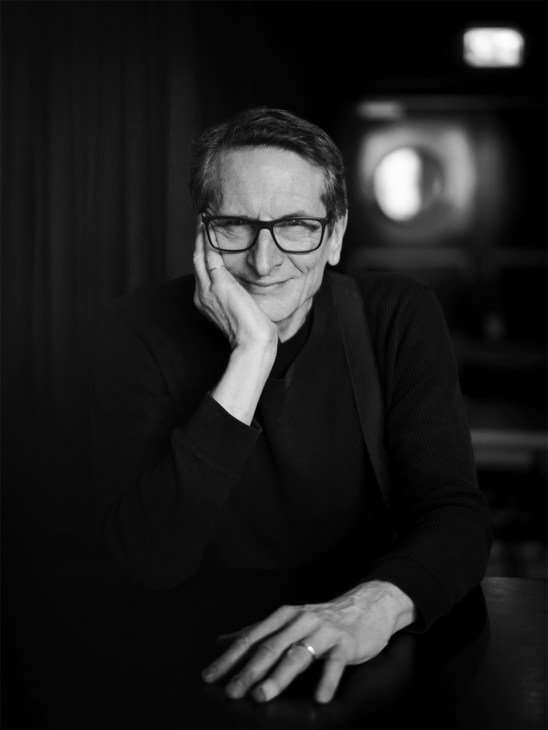
Why did you choose to pair Hong Kong and Tokyo for this exhibition?
I have always wanted to. I spent the late 1970s in Tokyo, before Blade Runner looked at Asian cities as some kind of near-future dystopia. I moved to Hong Kong in 1982, during what people now look back on as a golden age. Both cities have been perceived as bigger than themselves, like myths. But this show looks at life in both places on a personal, ordinary street level. No bigger narrative is needed.
Your work often challenges pre-existing narratives. Where does that perspective come from?
Being an outsider allowed me to break the patterns of given places and get into less glamorous ones. Kowloon Walled City, for example, felt like a myth to many local Hong Kongers. It was thought of for crime, gangs and chaos, and it had only been [photographed] in black and white, perpetuating this notion of danger, poverty and otherness. But not growing up surrounded by these preconceptions, I allowed myself to get lost in it and discover its life and colours. That motivated me to set the record straight [for the people who lived there] but also to not shy away from how completely insane it was.


More recently this mentality took me to Sakura [a common name for snack bars] that are found all over Japan. They’re not fashionable and they’re not even on Google Maps because they’re not interested in attracting new clientele. The project [Snack Sakura], now a published book, took me to places where there was no reason to go. I had to work my way in but maybe being a foreigner with a camera helped. That’s the gift of not belonging.
How have external pressures from magazines to social media shaped your work?
When I started [my career], magazines were one of the only accessible entry points for someone like me. But after 20 years of working for them, I hit a limit. I bought a different camera and told myself: when I’m using this, I’m only doing it for me. I do my best work when I do it for myself. Not getting attention turned out to be a really good thing for developing my craft. But it’s true that these days, that’s a luxury. With social media, everybody is a public personality – something that used to require skill.
More than ever, shooting for yourself rather than a platform is a very conscious choice, and one I welcome photographers to make more often. We all have a different way of understanding craft and our purpose. We all have something to bring, regardless of the platforms existing today.
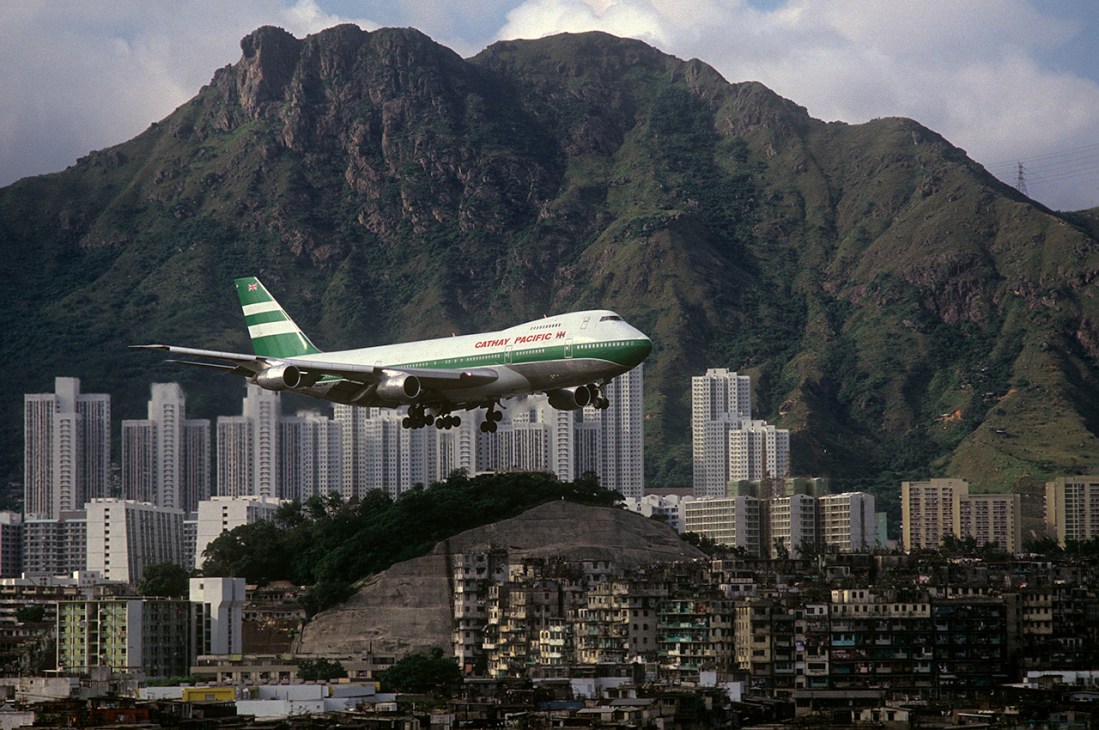
For example there are pictures in this exhibition, such as ‘Cathay Pacific 747 with Lion Rock and Kowloon Walled City’, that didn’t make it into the magazines [when] I shot them in 1989. But here they are.
What keeps you grounded in your craft after all these years?
Photography is a way of not being overwhelmed. It’s a chance to get out of myself – to not be locked in my head. It’s my way of existing in the world. And it’s something that is completely open and endless. There’s nothing you can’t photograph. There’s no such thing as bad weather. There’s no such thing as something not being attractive enough. There’s no such thing as something not being worthy. It’s infinite.
For more local insights, meet The Hong Kong Correspondent, Monocle’s stylish new city newspaper that dives into Hong Kong’s vibrant culture from boardrooms to bars, highlighting the people, places and ideas shaping the metropolis. Drawing on more than a decade of local experience, it offers insider stories on everything from urban design and dining to the booming pet scene, capturing the energy of a city that’s always looking ahead.