“The scenes with my kids were hardest to watch”: War photographer Lynsey Addario’s balancing act
The American conflict photojournalist shares what drives her to continue capturing the realities of war in moments of danger and reflects on the personal toll of her career.
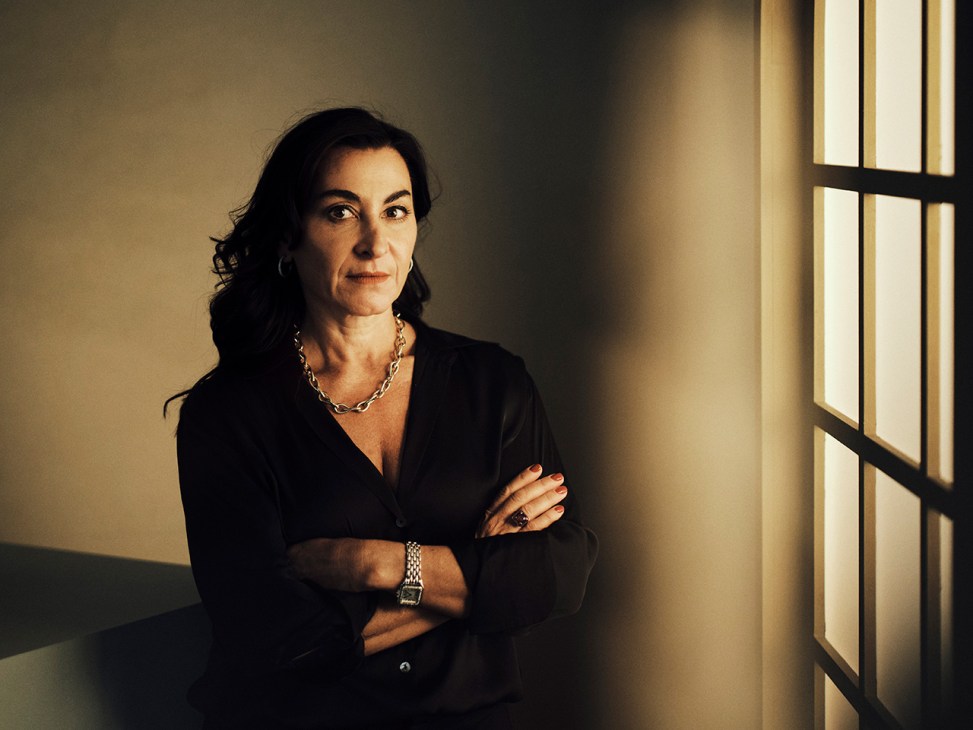
Pulitzer Prize-winning photojournalist Lynsey Addario has spent nearly a quarter of a century documenting almost every major conflict and humanitarian crisis since the September 11 terror attacks. She has been kidnapped twice while in the field.
Addario is now the subject of ‘Love+War’, a National Geographic documentary by Chai Vasarhelyi and Jimmy Chin, which explores the dichotomy between her work on the frontlines and her family life in London.
Addario recently spoke with Monocle Radio’s Joana Moser about what pulls her towards danger and the emotional toll that her work takes on her family.
The following Q&A has been edited for length and clarity. For the full conversation, tune in to ‘The Briefing’ on Monocle Radio.
‘Love+War’ opens with you witnessing a Russian strike on civilians in Ukraine at close quarters. How do you keep photographing during these moments?
I’ve been covering wars for about 25 years. When I first started, I would often forget to continue photographing [when under attack] because I was too busy taking cover. But once I can position myself in a place where I feel like I’m remotely safe, I need to start shooting. That’s ultimately why I’m there: to show what is happening.
Do you plan your photos or simply react to what is happening?
War is unpredictable. I have various [possible] scenarios in my head but ultimately I must react to what happens in front of me. I look for emotion – images that capture the essence of the moment. In Ukraine, for example, it’s very hard to capture fear because Ukrainians have been at war since 2014 and many of them don’t get scared anymore.
Have you always worked with a security advisor?
No. Early on, I made decisions alongside other journalists. After I was kidnapped in Libya, The New York Times began having us work with security advisors, which can make the work more difficult. It can feel limiting to have someone tell you where you shouldn’t go but having another set of eyes [to assess] dangerous situations is invaluable.
This documentary turns the lens on you. How did it feel to become the subject?
I step into incredibly intimate moments in other people’s lives and I’m always struck by how much they open up. So when I agreed to being filmed, I knew that I had to do the same – to be open, honest and vulnerable. Ultimately, that’s how people learn, stepping outside their comfort zone.
What was the hardest scene to watch?
The scenes with my kids were hardest to watch – you could feel the weight of my work on them. And the interviews with my family after I was kidnapped in Libya and hearing what they went through during that process.