Coasters be damned – a well-worn table is the heart of a home
A pristine tabletop is soulless. The marks, dents and spills that your table collects tell the story of growth, love and messy, beautiful living.
I am suspicious of people who use coasters. What reason could there be for keeping a tabletop spotless, gleaming and with no signs of life? Clean like a desk in a corporate office, carrying no evidence of the meals it has carried, the drinks that have been spilt or the drawings and letters that have been etched upon it? Such a piece is devoid of soul.
Tables play a unique role among furniture. They are not sat upon, nor placed upon, nor planted somewhere purely for admiration but are gathered around: they are a meeting point. Conversations happen over tables. People fall in love across them. They support us, silently, as we write, draw or sort out the paperwork that we’ve neglected for far too long. And as the clocks change and the evenings draw in, they become the centre of our social lives. Once the weather is too chilly to meet in parks, it is our tables that we are drawn towards. They sustain our relationships and support our endeavours. So why are we so keen to make them look as if they have carried nothing at all?
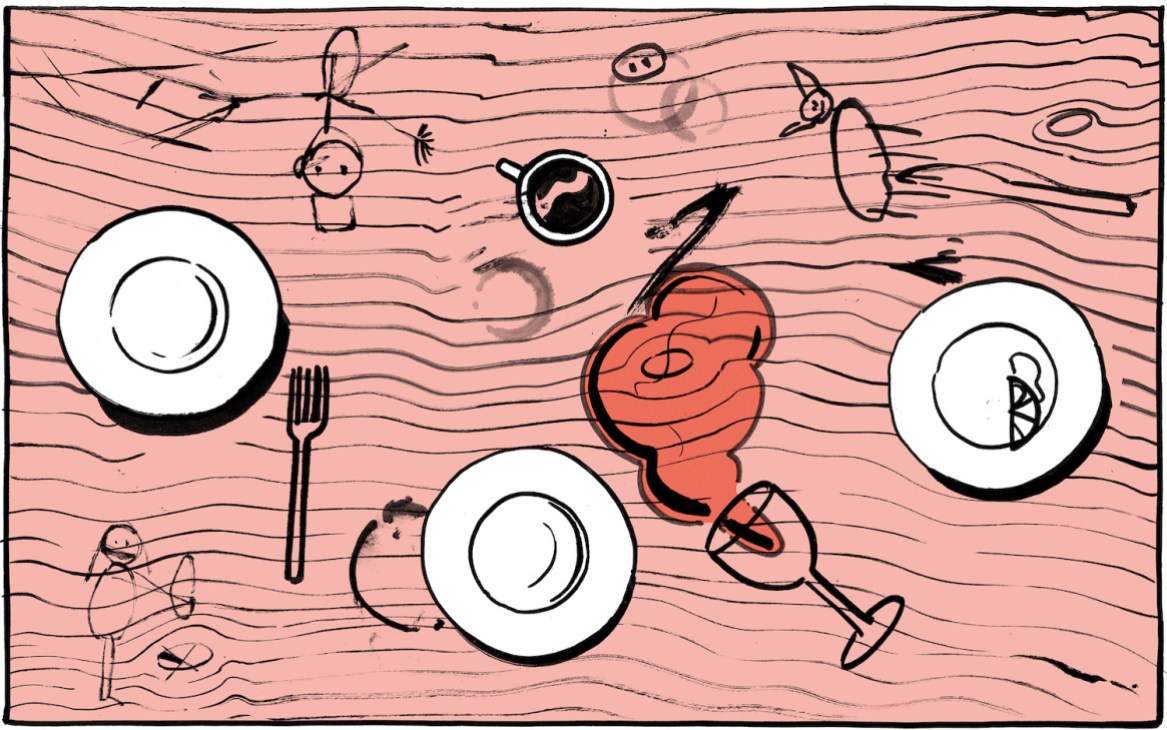
In the Istanbul-based workshop of Uniqka, a leather atelier established by designers Kerem Aris and Merve Parnas, there sits a large, leather-covered table in milk-tea brown that was crafted decades ago by Aris’s artist father. It is a hugely valuable artefact, both for the quality of the materials and its craftsmanship. Yet Aris and Parnas are refreshingly un-precious about preserving it. The leather covering is beautifully maintained, supple and soft to the touch, but it also shows indentations and coffee-cup rings collected throughout the decades, carrying the spirit of the generations of creatives who have sat around it to put their ideas to paper. No table can ever replicate this one; it is the sum of every person who has sat at it.
My own coffee table is also a thing of deep history and imperfect beauty. I had it made by a carpenter in Istanbul from pieces of cherry-tree wood taken from an 19th-century Ottoman chest. The artisan polished it to a lustre – and once it was safely in my house, I set about dampening that sheen down with the wear of daily life. Mugs of tea and bottles of beer have left crescent markings over its irresistibly irregular surface. A pen leaked over one corner and the stain, once vibrant, is now merging into the rich browns of the wood. The cat has added a few scratches and I love the table more with each new flaw.
Even mass-produced tables benefit from wear and tear – a little battering can turn the blandest of pieces into a far more beguiling prospect. A round metal side table has been much improved by the splashes of paint it gained when I inexpertly redecorated my flat during the pandemic. After five years of board games and roast dinners, my Ikea dining table has some large and very satisfying scratches.
So as the nights close in and tables once again become the centre of our social lives, consider throwing those placemats out. No pristine tabletop or set of decorated coasters will ever be as interesting or as sentimental as the marks that trace out our lives.