How a Swiss architecture duo transformed a dilapidated farmhouse into a light-filled, modern home on Lake Geneva
A painting of an abandoned farmhouse near Lausanne inspired the architect couple to bring the real structure back to life.
“How we ended up here is a fairy tale,” says Ueli Brauen. The co-founder of Lausanne-based practice Brauen Wälchli Architectes is referring to the home near the small village of Noville that he shares with Doris Wälchli, his partner in business and life. The fairy tale started here at the eastern tip of Lake Geneva in the early 1990s, when the couple had a client whose mother painted landscapes. “I saw one of her works featuring a little house in a field and said, ‘That home has some character,’” says Wälchli. “The woman told us that it was an actual house nearby.”
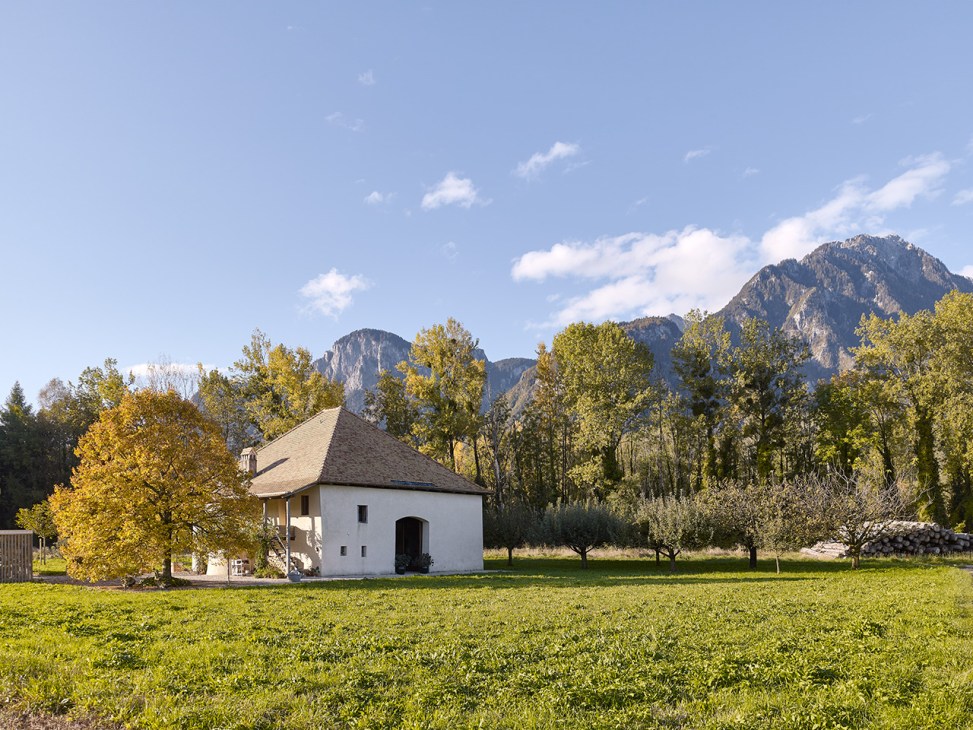
The architect duo promptly visited the property, finding a dilapidated structure in the middle of a clearing – an 18th-century stone farmhouse combining a barn, stable and living quarters. It had been abandoned for more than four decades. “We contacted the local community, who were the owners and had been leasing it out to farmers. They said that if we were interested, we could have it.” The commune owned a demolition permit for the crumbling building, which had vast cracks in its walls and damaged roof-tie beams (a previous tenant had sawn through them).
Despite this, both parties recognised the significance of the structure, a traditional Savoyard agricultural building with a square floor plan and boxy, mostly windowless façades. “It was once a common typology but now it’s very rare,” says Wälchli. “A lot of farmhouses in the region are abandoned because it’s not easy to receive permits to rezone these houses for purposes other than farming.”
The architects and commune came to an agreement whereby Wälchli and Brauen would have a free lifetime lease on the property on the condition that they rehabilitated the home. “The authorities also listed it as a historic monument, which gave us subsidies from the canton and Swiss governments.”
The successful listing ultimately funded the renovation of a structure that is now a love letter to the region. The duo, while being Swiss-German, felt themselves drawn to the French-speaking cantons in the west, first to study at the Swiss Federal Institute of Technology of Lausanne, and then by the lifestyle. “In Bern, where I’m from, we say that the people here drink too much wine and are always late – and we have adapted to that quite well,” says Brauen, laughing, before adding that the landscape is a pull too. The area around Noville is defined by the flat Rhône delta that transforms rapidly into mountains. “There’s no transition between the two landscapes. It means that when you see our home in this low clearing with steep mountains in the background, it’s like a rock, a strong form – a monument.”
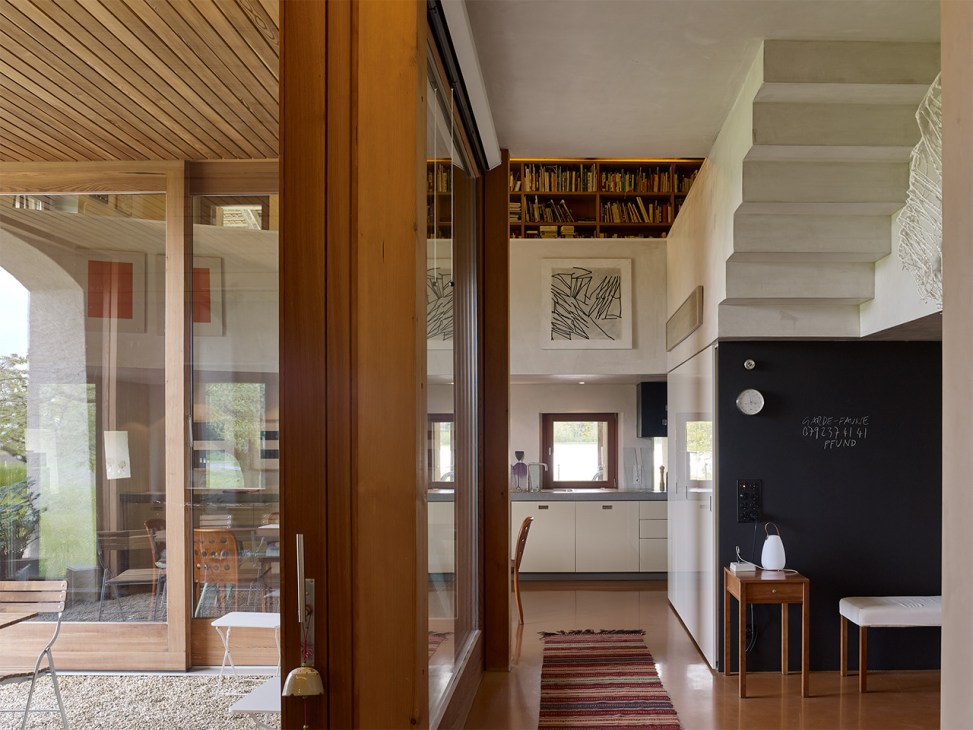
The brief that the duo set themselves was to enhance this existing character. “We wanted to give this place its splendour back,” says Brauen. “So we asked the house what it could be.” Its answer? A modern take on the traditional tripartite farmhouse layout. The stable was transformed into a living space, the ground-floor hay barn was reformed as a patio enclosed with sliding glass doors with bedrooms added upstairs, while the original kitchen maintained its function but was given a contemporary overhaul. “We adapted the project to the qualities of the existing building,” says Brauen. “The living room is small and the bedroom large. Normally it’s the other way round but the house wanted the layout to be like this.”
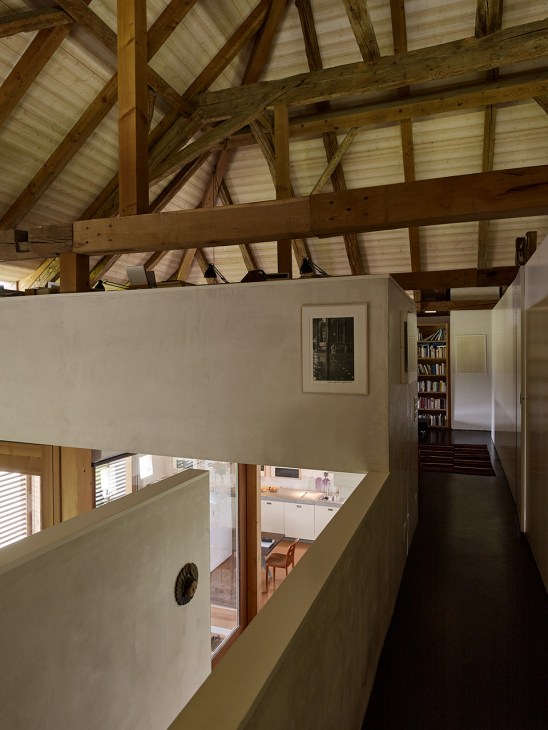
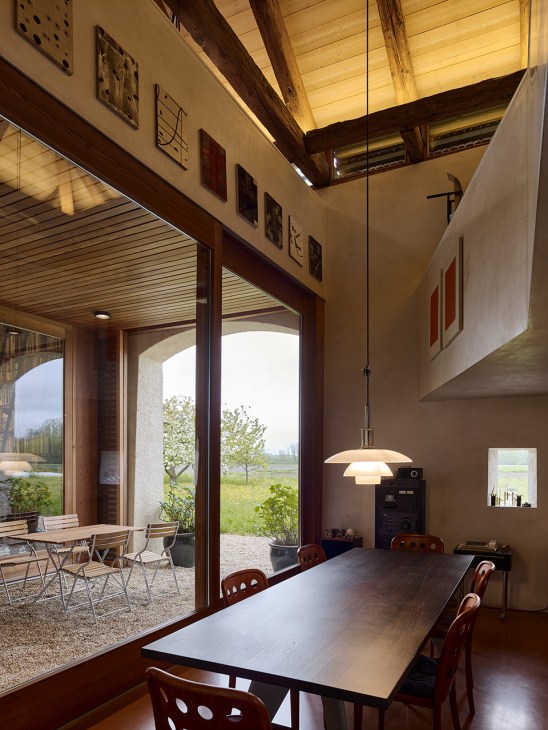
Key structural adjustments were made. The roof was restored with beams straightened and joints repositioned, allowing the exposed structure and rafters to be retained. All the roof tiles were replaced and crumbling walls repaired using rubble found on site. Modern conveniences were added: an insulating mineral render was applied to the walls and new underfloor heating is powered by a heat pump drawing energy from the water table below. Interior elements, except for two masonry walls, were stripped out, inviting light into the open-plan home. Mezzanines functioning as a reading room and study space hover above the ground floor, which includes a double-height living room, defined by a custom four-metre-high bookcase.
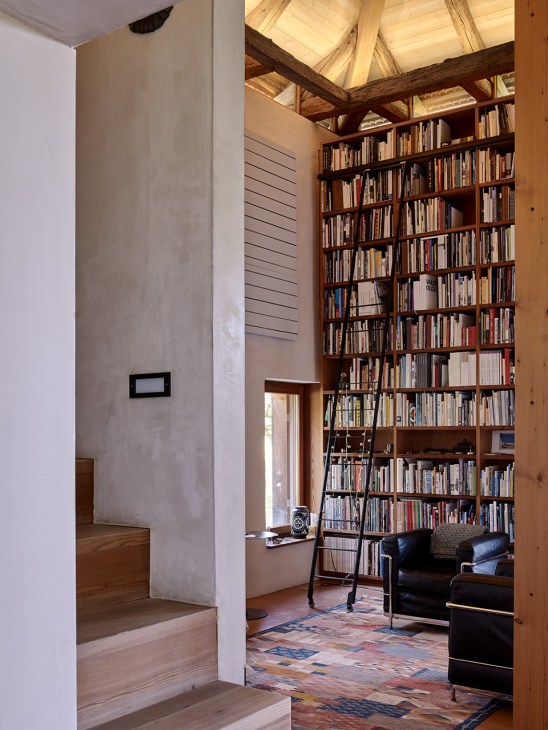
“It’s a reference to Pierre Chareau’s bookcase in Maison de Verre, the modernist glass house in Paris,” says Wälchli, who adds that the bespoke work serves a dual purpose. “The glass door for the patio can slide behind the bookcase, opening up the space.” It’s proof of a subtle efficiency now built into the house, with interventions allowing its original atmosphere to remain intact.
A case in point is the lack of windows. Three small openings were inserted in the upstairs sleeping quarters, with the local authority authorising the architects to make additional openings in the roof to bring in more light. They declined. “We said no because of the existing presence of the house,” says Wälchli. “We wanted to keep it as strong as possible.” As a result, they glazed the gaps between the roof and wall structure, which originally ventilated the barn, bringing light to the upper floor without altering the structure. A creamy Jura gravel was also laid around the house and in the patio space, reflecting additional light into the interiors.
Iconic furniture is dotted throughout the home: Le Corbusier armchairs; a small table by Pierre Chareau that sits in front of the bookcase that he inspired; bentwood dining chairs by Josef Hoffmann, a Jean Prouvé table; Eames side tables; Louis Poulsen pendant lights; and simple timber stools to the design of mid-century Swiss carpenter Jacob Müller.
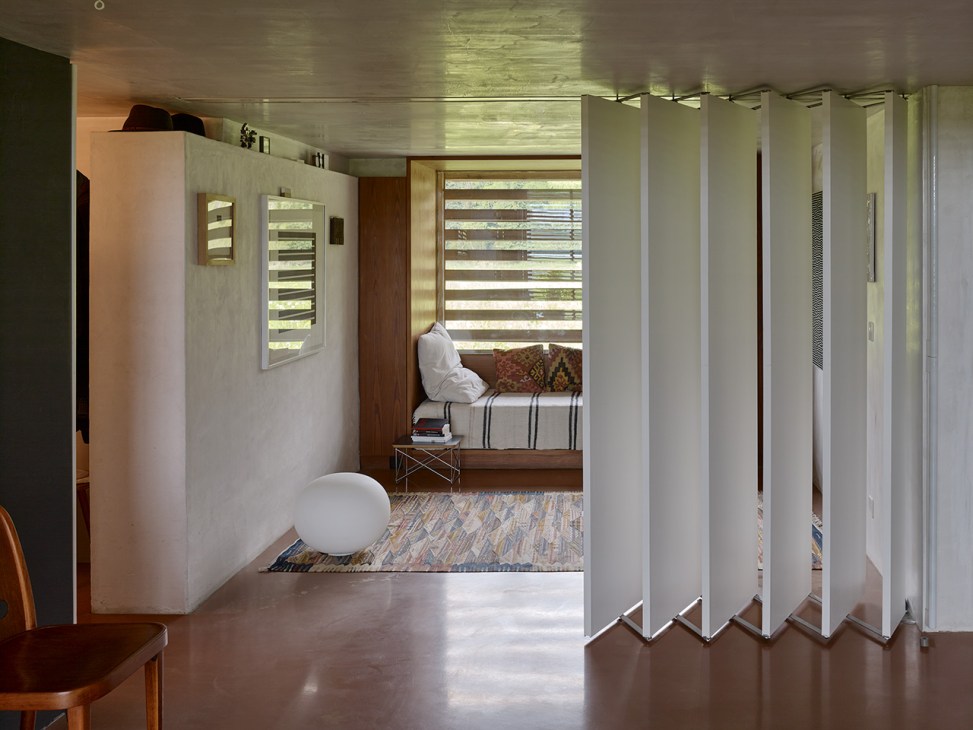
All of this complements custom in-built furniture, including a long daybed sitting in a nook that can be sectioned off by sliding horizontal lamellas. “It’s a reference to the mihrabs of Arabic architecture – Ueli worked in the Middle East,” says Wälchli. “The daybed corner is perfect for coffee on winter mornings when the sun comes through the space. In summer we move out to the patio; we live in the house according to the changing seasons.”
Despite this inbuilt seasonality, the house remains visually connected to itself year-round. “Wherever you are, you can see the whole volume,” says Wälchli “When you’re in the ground-floor kitchen, you can see the top of the roof. It feels generous. There are high spaces and compressed spaces, and there are few windows, but all of the openings have views like paintings.” It’s an appropriate observation, given that a painting first drew Brauen and Wälchli here. Some 30 years on, the duo have transformed the home on that original canvas into a living work of art.