How nature-focused lifestyle brand Sanu is shifting Japanese perceptions of second homes
The Tokyo-based company is luring city dwellers back to nature with its cleverly manufactured modular cabins.
Less than a year after Takahiro Homma established Japanese lifestyle brand Sanu in 2019, a small house by the sea in Chiba provided the inspiration for what is now the company’s flagship second-home service. It was there that Homma escaped Tokyo life during the early stages of the coronavirus pandemic.
After a morning surf with fellow Sanu co-founder Gen Fukushima, he would spend the day working remotely before returning to the nature on his doorstep. He realised that this way of life would resonate with many people at a time when dual-base lifestyles were gaining traction and city dwellers – young families in particular – were seeking more access to nature.
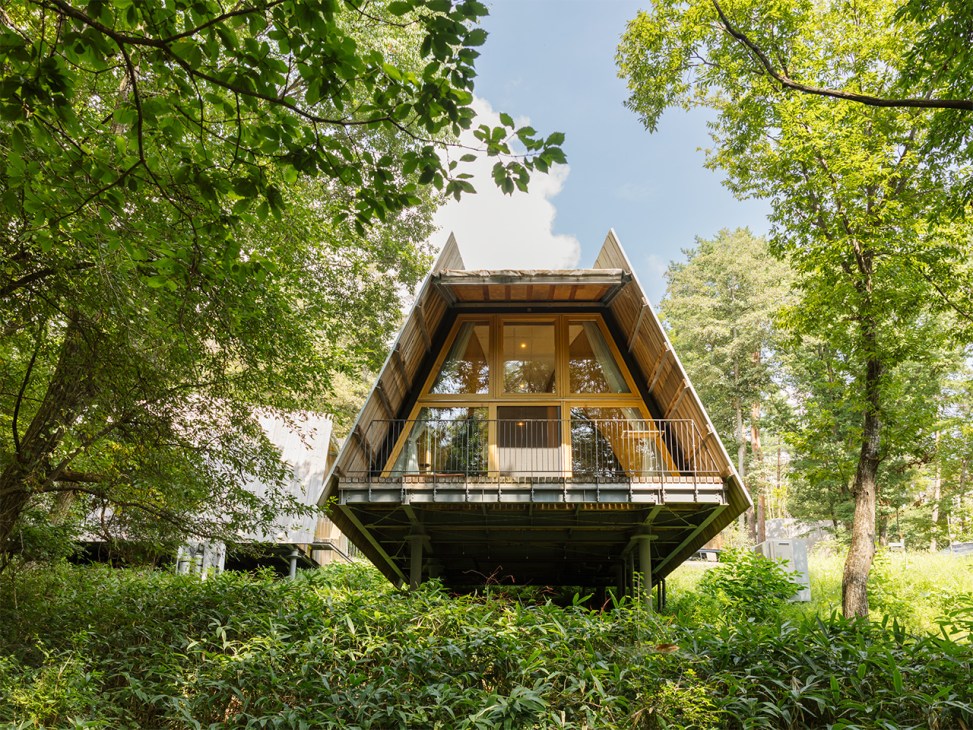
Plans for a subscription-based service providing access to a network of villas were soon in the works, with Homma honing a model that would result in Sanu developing sites across the country, installing cabins that members of its network could rent or buy as a home away from home.
“In Japan, second homes have tended to be more luxurious – large villas with five bedrooms and marble floors in places such as Karuizawa or Zushi,” Homma tells Monocle from the company’s Tokyo headquarters. “Many were simply status symbols for the wealthy. But right from the outset, we wanted to go in the opposite direction and give more people easy access to nature, even those who hadn’t ever considered a second home. A simple cabin, well designed with the bare necessities, could make that a reality.”
When it came to giving physical form to these ideas, Sanu sought out the services of Kotaro Anzai from Japanese architectural collective ADX. Born and raised in Fukushima, the award-winning architect has, over the course of his two-decade career, become known for designing human-scale buildings using wood from Japan’s forests. Also an avid mountain climber, Anzai builds on the work of his father and grandfather, who constructed mountain huts across the peaks of the Tohoku region. “Wood was always the most readily available material in our town,” he tells Monocle. “There was a sawmill nextdoor to our family’s business, while lumber yards, furniture shops and forests were all part of the community’s essential infrastructure.”
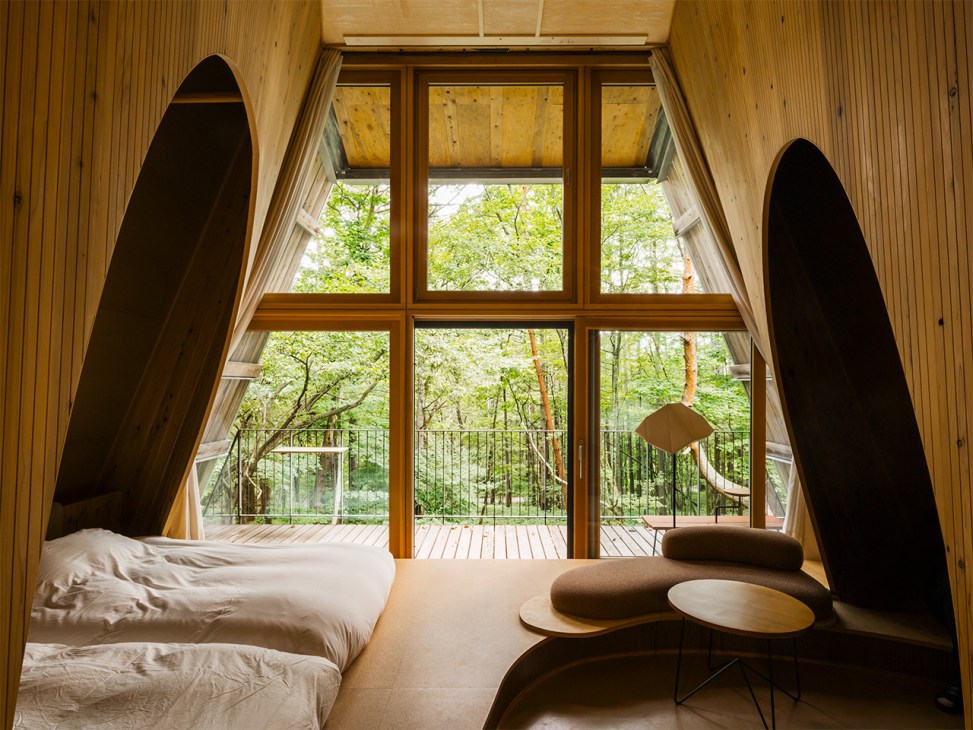
Presented with Homma’s brief for simple, refined architecture akin to a “white vessel”, Anzai developed a beehive-inspired structure for Sanu: Cabin Bee. This kit-model-style cabin features a distinctive V-shaped roof and raised pile foundations, designed to minimise clearing work and the impact on the surrounding flora and fauna. Made exclusively with Japanese timber, the interior draws on the concept of shakkei or “borrowed scenery”, where distant landscapes – mountains, trees, the sky – are framed by windows, making the spaces feel larger and more expansive. It’s an approach that also helps to bring a sense of the outdoors inside.
When it came to construction, Sanu’s initial aim of installing 100 buildings across Japan in its first year of operation required speed and scale. So Anzai completely modularised Cabin Bee’s design for mass production. He also sought to simplify construction work by creating a structure that could largely be assembled, rather than built, reducing the need for highly skilled labour. “The aim was to create architecture that wasn’t entirely dependent on carpenters being on site,” he says.
In addition to fast-tracking the construction process in the face of chronic labour shortages in Japan – where the number of skilled workers has fallen by 12 per cent in the past decade – the assembly-led approach allows minor enhancements to be made post-completion, improving both performance and longevity.
Starting with the inaugural deployment of five buildings across two sites in 2021, Cabin Bees have spread across Japan’s eastern Kanto region and become synonymous with Sanu’s pitch to nature-seeking urbanites. And with their domestic timber construction, among other sustainable features, they have also helped to establish the B Corp-certified company as a model for regenerative businesses.
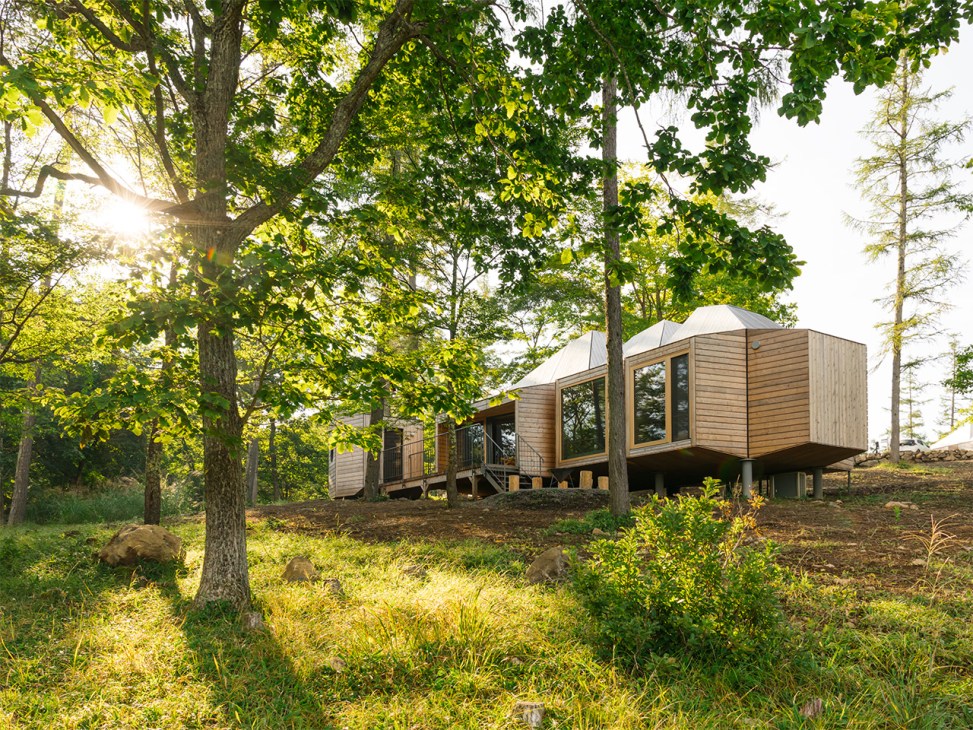
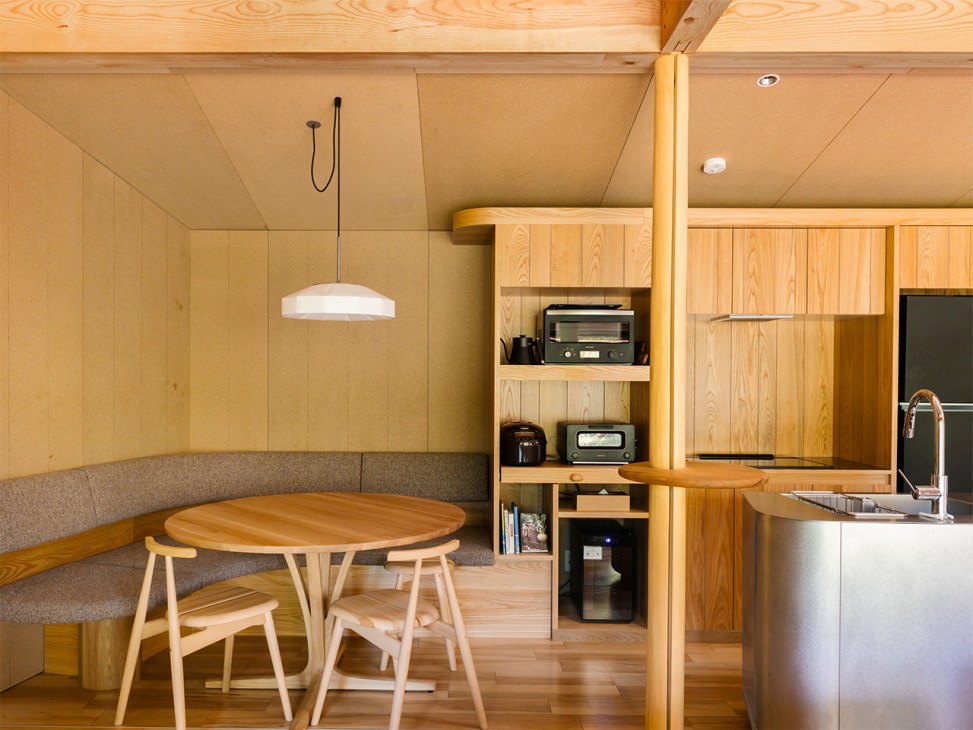
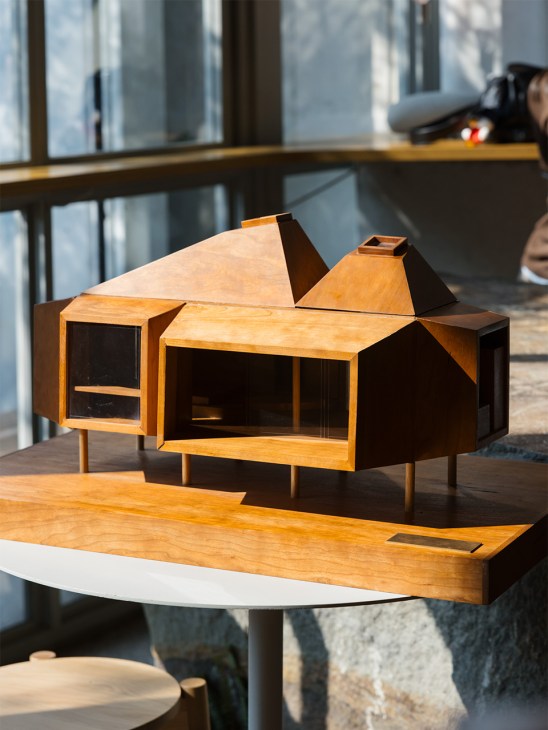
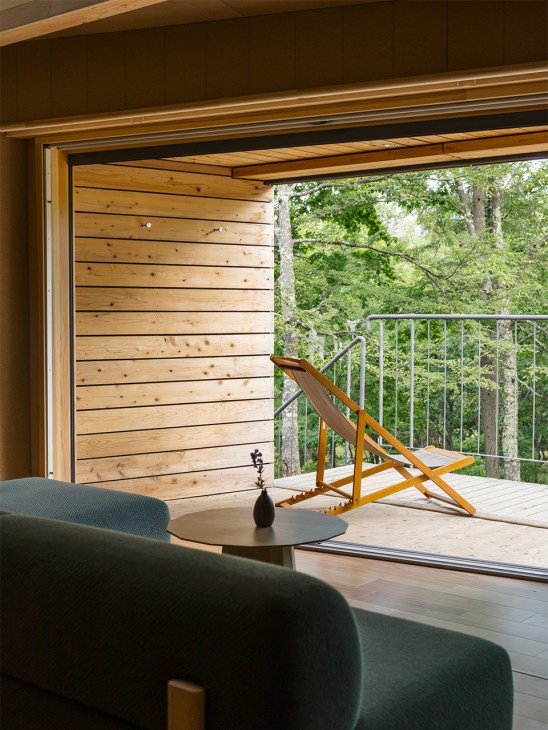
Rising demand for Sanu’s second-home subscription and co-ownership services has driven the company’s plans to expand. This growth has resulted in Sanu’s line-up of original architecture growing to include terraced-house designs by architects such as Keiji Ashizawa and Puddle, and a second modular-cabin commission for Anzai in 2024.
Sanu’s expansion to new locations throughout Japan called for another Anzai design to be tailored to a wider range of conditions, from the snow-laden mountains of Hokkaido to the subtropical humidity of Okinawa. The architect responded with Cabin Moss, a building made to perform under harsh conditions, ranging from 50c to minus 20c, while connecting with the landscape and providing a feel for the elements – rain, hail or shine. The variety of wood was also expanded, with Hokkaido elm, Aizu-Wakamatsu chestnut and Kitayama cedar from Kyoto among the species used as part of an effort to support regional forestry.
Another development was the modular design, which has been configured based on a 2.7-metre grid calculated with the most efficient freight transport in mind. “Construction-worker numbers are decreasing and, as we enter more remote locations where populations are declining, building not only becomes impossible but so does maintaining the finished product,” says Anzai. “Between 70 and 80 per cent of Cabin Moss’s construction is completed in advance, reducing site work to just two weeks.”
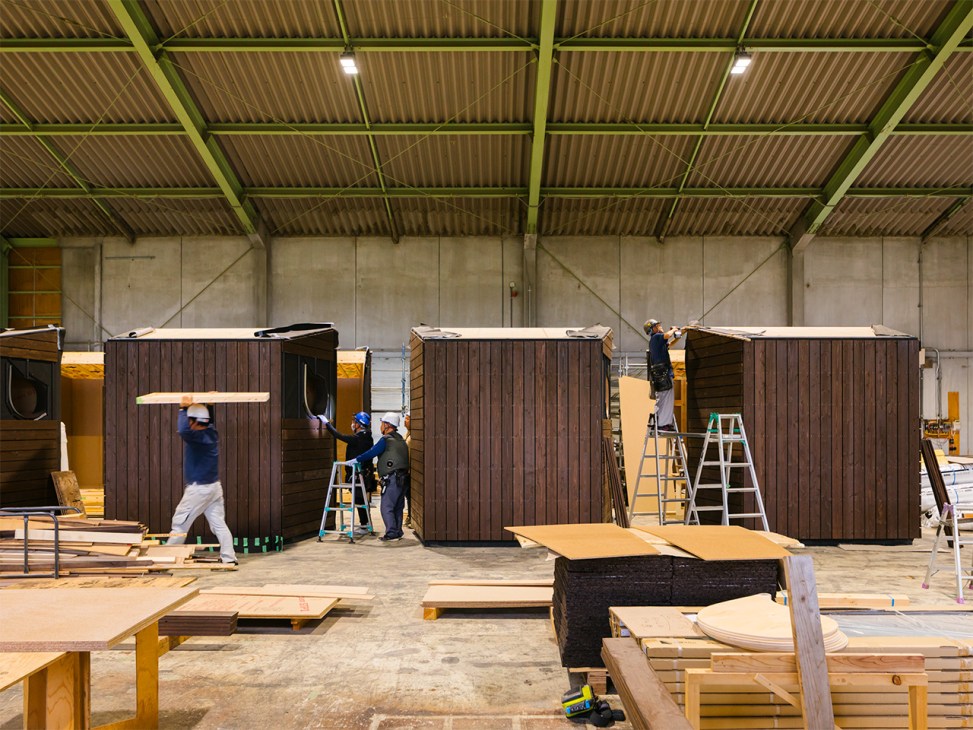
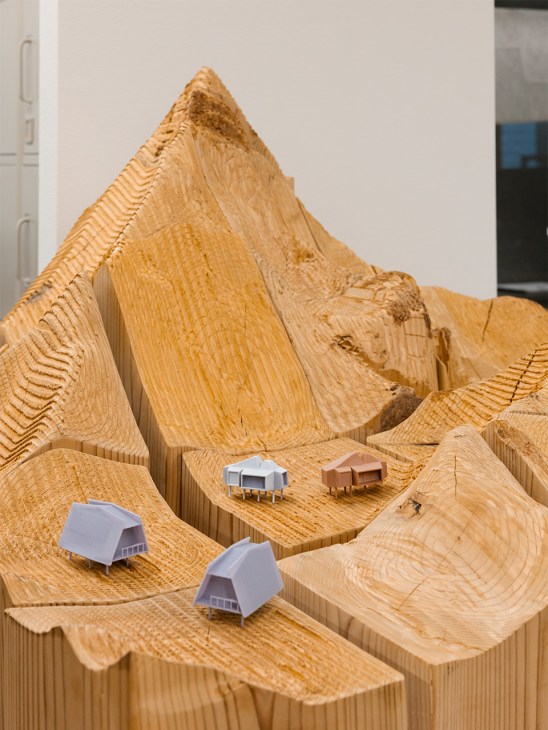
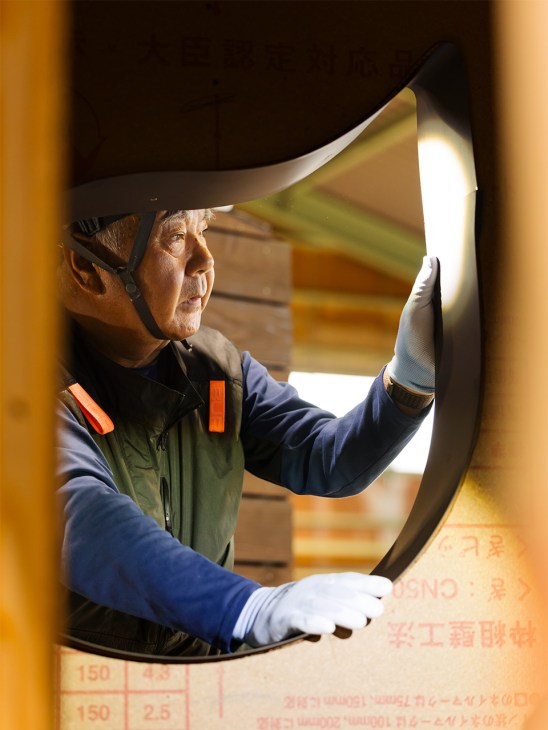
The pre-installation work is carried out in a factory that’s about half an hour’s drive south of ADX’s Fukushima headquarters. When Monocle visits, a dozen seasoned carpenters are making their way along a row of sauna add-ons for the Cabin Moss series. Sheets of cork lining are secured in place and windows fitted ahead of their journey north to Niseko, Sanu’s first site in Hokkaido.
In another corner of the workshop, a wooden skeleton structure is being laden with weights to test its resilience in the face of heavy snowfall. “Some of the professionals are self-employed, while others are from regional businesses,” says Keita Noji, ADX’s factory manager. “But they have developed a sense of camaraderie that goes beyond our directions, which ultimately leads to the creation of great products.”
The workshop’s standing as a place for knowledge-sharing and craftsmanship has taken on new significance with Sanu’s acquisition of ADX last year. The teams are now joining forces to plan the integration of architectural design, manufacturing and operations. Central to this transition is the transformation of the current production facilities into a semi-automated manufacturing base, which Homma has dubbed Sanu Factory. It will aim to deliver 300 buildings a year by 2028. “There will be a role for machines in some cases but there will also be times when skilled hands are required for a quality finish,” says Noji. “Our challenge will be finding the ideal balance between the two.”
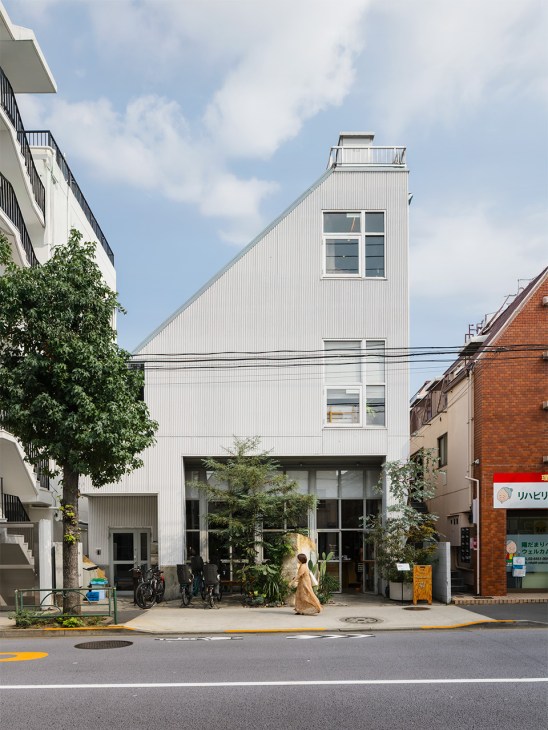
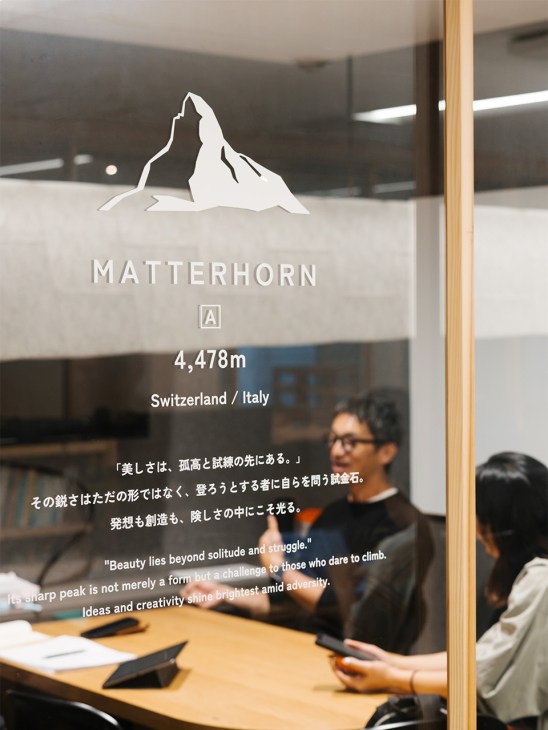
Sanu expects to expand its network to 40 locations across Japan by the end of this year and is planning for 500 sites worldwide by 2035. The factory will place the business in a unique position to tackle issues surrounding architecture and construction. “The industry is currently confronting labour shortages as well as environmental, energy and emissions issues,” says Sanu’s head of business development, Yusuke Ishikawa. “Building in nature, we’re dealing not only with the environment but the future of the industry too. The world is calling for net zero by 2050. While no one has the answers yet, we’re working hard to find solutions and provide leadership in the field of architecture.”
Over the past six years, Sanu’s evolution from ambitious start-up to leading nature-focused business has gone hand in hand with architectural and design innovations. This year’s release of the first Sanu Factory-made prototype is eagerly anticipated and has the potential to set a new benchmark for the manufacture of wooden modular buildings at scale. And with global expansion slated for 2030, its applications have the potential to reach far and wide, shaping everything from affordable housing to forestry and the future of craftsmanship.
sa-nu.com
Q&A: Gen Fukushima
Sanu’s Hokkaido-born co-founder tells us about Sanu Factory and the dual roles of automated manufacturing and craftsmanship in the company’s future.
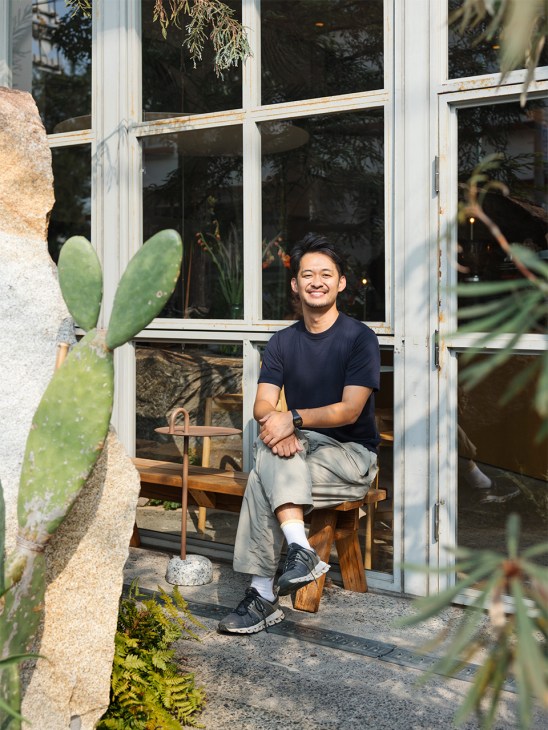
What is your vision for Sanu Factory?
The main idea is that it’s not simply about mass production. By developing the factory and mechanising operations to a certain extent, we can have more fun with designs. The ideal facility would be one in which techniques can be passed down. That means balancing machine-based processing with finishing touches completed by skilled craftspeople.
How has the acquisition of an architecture firm such as ADX changed Sanu’s approach to manufacturing buildings?
We’re now in a position to realise a circular production process: drawing up blueprints, building, operating, repairing and then using dismantled materials for future buildings. Maintaining our own buildings also means that we have real-time feedback, helping us to make slight updates. Integrating the entire value chain will allow us to be truly original.
How would you describe your approach to making?
It’s about the enjoyment of creating things but also about reducing our burden on nature. It’s important to remember that what’s good for nature is also good for humans. At Sanu, we value a sense of wonder and Kotaro Anzai’s designs can be quite unusual at times. That’s the kind of architecture – slightly strange and playful – that we might be creating in the future.