
‘There is never a simple generational evolution’: Prada Group CEO Andrea Guerra on the importance of taking risks while staying authentic
From the Prada Galleria – the brand’s refurbished Milan flagship – the luxury giant’s CEO is steering the leviathan’s present while safeguarding its future by taking stock of its storied past.
In the central octagon of Milan’s Galleria Vittorio Emanuele II is a mosaic of a bull that, according to local lore, will bring you good fortune if you place your heel on the toro’s prairie oysters and spin three times. Throughout the day, crowds pass through the 19th-century shopping arcade that links Piazza del Duomo with Piazza della Scala, pausing to take photos of the vaulted glass ceilings or admire the window displays of luxury boutiques.
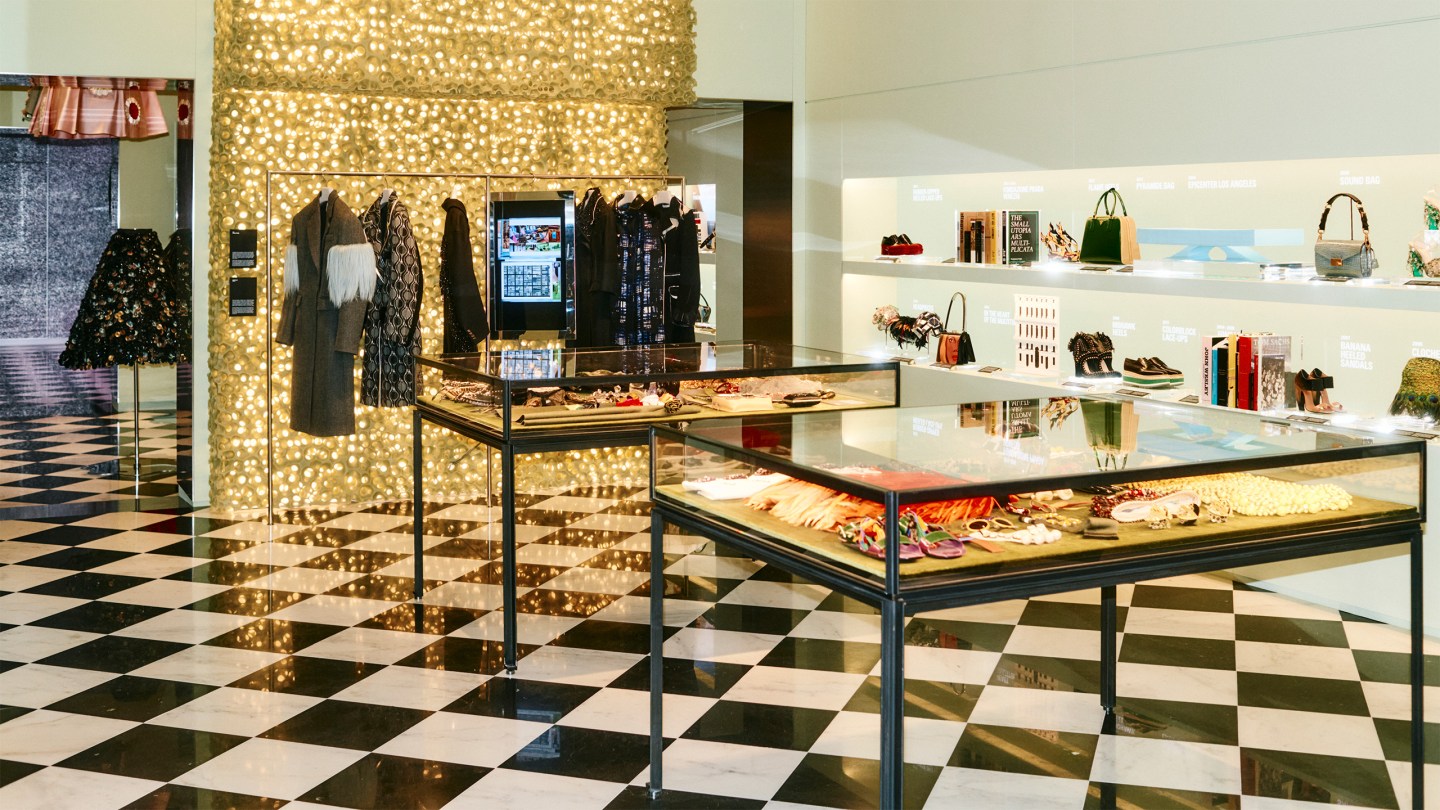
It’s here, under the auspices of the luck-bringing bovine artwork, that Prada opened the doors of its renovated flagship in September. Dubbed the Prada Galleria, the retail outpost comprises eight storeys split across two buildings, linked by an underground passage. Visitors can find the latest in women’s and men’s ready-to-wear, accessories, leather goods, jewellery and beauty, as well as invite-only shopping suites, a space to host private events, a Marchesi 1824 pasticceria and a Pradasphere exhibition that delves into the history of the house. It’s something of a behemoth. It’s also a homecoming – the flagship encompasses the ground-floor shop where Mario and Martino Prada launched their leather goods brand in 1913.


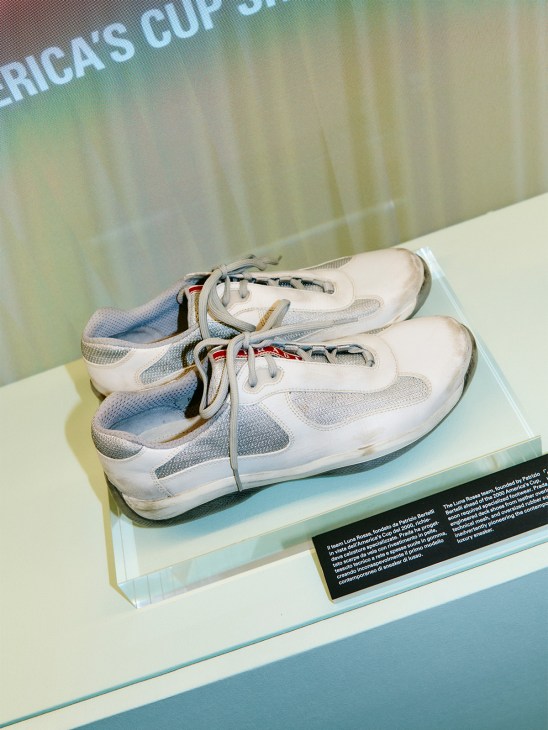
To guide Monocle through the labyrinthine, multilevel shop is Prada Group’s CEO, Andrea Guerra. “With this project we’re explaining our roots, where we come from and how we want to behave in this world,” he says, as he shows us through the heavy glass doors. The first stop on our itinerary is the Pradasphere. “We’re taking the time to go deep, to go wide and to tell a multifaceted story,” says Guerra, pointing out pieces from the brand’s archive, which includes beauty travel cases from the 1930s, its first foray into nylon (a Prada signature) from the 1980s and spacesuits from the 2020s developed in partnership with US aerospace experts Axiom Space. “This is a brand that loves history: we have an archive here in Milan, archives in Tuscany and products that have been kept throughout the decades,” he says. “A lot of what you see has elements that have been brought into the contemporary age but always with the same sensibility that has defined the history of Prada.”
Guerra’s CV is filled with high-profile leadership roles, including a decade-long stint as CEO of Italian eyewear manufacturer Luxottica Group, as well as two years heading the hospitality division of French luxury conglomerate LVMH. Since taking the helm at Prada in 2023, Guerra has overseen a period of commercial success. In the face of a luxury slowdown caused by geopolitical volatility in the Middle East and headwinds in key markets such as China, the group reported 22 consecutive quarters of growth in July and reported annual revenue of €5.7bn at the end of 2025. This equates to a 9 per cent year-on-year increase, supercharged by Prada’s sister brand Miu Miu, for which net sales soared by 35 per cent year on year. For context, Italy’s wider fashion and luxury sector had a year-on-year decline of 2.6 per cent at the beginning of 2026, according to data published by the Camera Nazionale della Moda Italiana. Last December, Guerra also helped to complete the Prada Group’s acquisition of Italian fashion brand Versace, in a cash deal valued at €1.25bn.


Though Guerra’s recipe for success includes investing in vertical manufacturing across Italy, upgrading retail offerings and streamlining operations, he’s quick to point out that the key to the Prada Group’s achievements is Miuccia Prada. The septuagenarian, who took over the family business in 1978, now serves as the co-creative director, alongside Belgian designer Raf Simons. She’s also creative director of Miu Miu, which she launched in 1993. Celebrated for her intellectual approach to fashion and known in the industry as Mrs Prada, she has challenged the conventions of bourgeois taste, be it through peculiar colour palettes or off-kilter silhouettes.
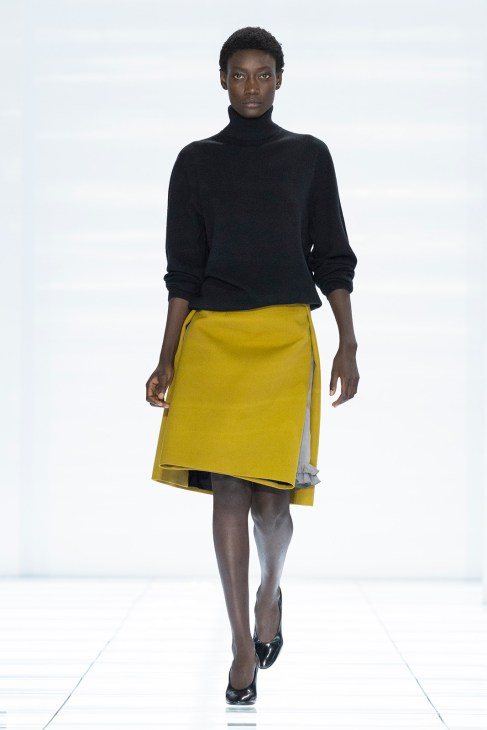
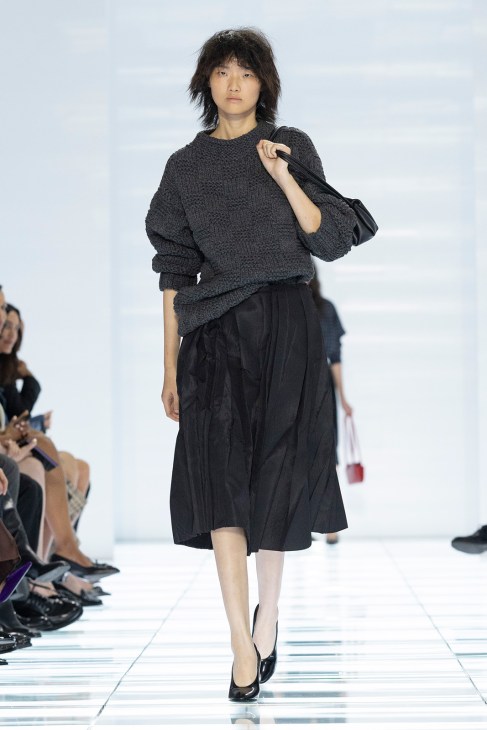
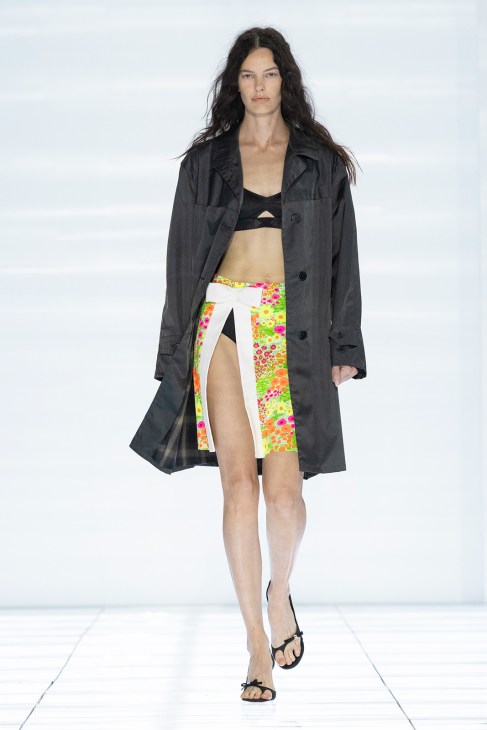
Some of these ideas do not, on paper, sound conducive to commercial success. The Prada spring/summer 2027 women’s ready-to-wear collection, for example, revolved around a fixed parameter of the skirt (63 of them, to be exact). The season before that, 15 models each took to the runway four times, shedding layers with every new lap. Rather than showcasing 60 different looks, this format revealed the different stages of 15 outfits – a high-fashion striptease that began with thick coats, scarves and jumpers, and ended with bloomers and silk slips paired with knee-high socks. On the menswear side, the autumn/winter 2026 collection rejected the pristine image of traditional luxury by including deliberately rumpled and wrinkled clothes, with coffee stains on oversized shirt cuffs. During the annual Milan Design Week, rather than peddling homeware or chairs like other fashion brands, Prada hosts symposiums that explore topics such as image-making in the digital age and operational infrastructure. Meanwhile, Miu Miu stages a “literary club” to discuss the writings of Annie Ernaux, Ama Ata Aidoo and Fumiko Enchi.
It takes a certain type of CEO to trust that this eccentricity will translate to in-store sales. “If we didn’t take these risks, we would never be successful,” says Guerra, as we make our way up to the plush quarters reserved for “VICs” – the very important clients in the top one or two percentiles of shoppers, who are estimated to account for up to half of the luxury sector’s sales. “You need to be credible today,” he says. “Credible to the brand, to your clients, to your fans, credible to your haters as well.” Does Prada have haters? “Sure. There will always be people who say that the past was better, that the future looks worse.”
Prada spring/summer 2027 women’s ready-to-wear
The collection focuses on skirts, showcasing 63 in total.
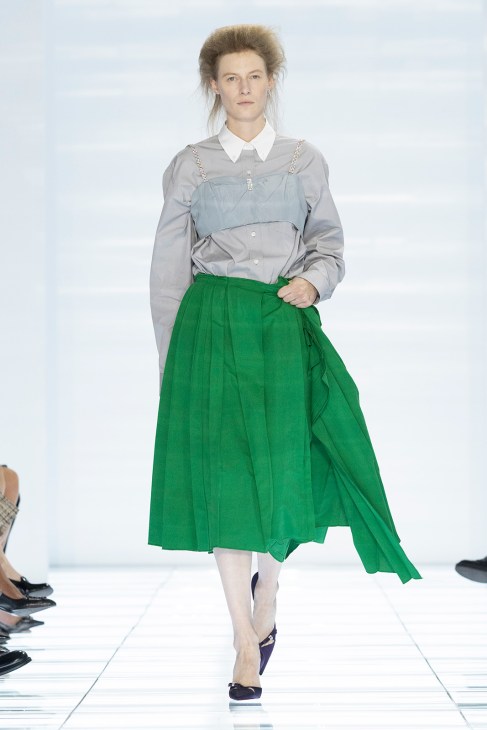
Indeed, future-proofing the group’s legacy for the next generation is a challenge that was put to Guerra when he took over from Miuccia Prada and her husband, Patrizio Bertelli. The plan is to orchestrate a smooth family succession to the group’s heir apparent – the couple’s son Lorenzo. “There is never a simple generational evolution,” says Guerra. “And as Italians, it’s not in our hearts to plan for the future. The first year of this job was dominated by discussions and conversations. ‘What is this?’ ‘Why should we do it?’ ‘How should we do it?’ ‘What should we say?’ It’s classic Prada – we debate. It’s how we make decisions. Everyone has strong ideas but everybody listens because it’s this reasoning and pulling together of the small pieces that will see us evolve another 20 years.”
These boardroom meetings prove effective. The most recent edition of Milan Fashion Week cemented Prada’s status as one of the most beloved brands to come out of the Lombard capital. Switching up its usual Thursday show slot for an earlier one on Tuesday, Prada’s change in schedule encouraged buyers and press to fly in for the full duration of the week, rather than the final few days when major brands – notably Gucci, Bottega Veneta and Giorgio Armani – show in quick succession. A rave thrown at the brand’s cultural centre, the Fondazione Prada in the south of the city, attracted a crowd of thousands who stayed until the early hours of the morning under the strobe lights of a smoke-filled dancefloor. Making time for a pit stop at the Pradasphere was high on the back-to-back agenda of industry insiders. But perhaps most importantly, the skirt-centric spring/summer 2027 collection drew rapturous applause for its conceptual simplicity and expert execution.

As the dust settles following a period of fashion-industry musical chairs, with numerous creative directors and C-suite executives moving between houses, Prada remains steadfast. Though the current outlook is rosy, Guerra does not take it for granted. His focus is fixed on improving retail offerings and meeting the needs of top-tier clients, while drawing in a younger generation of shoppers. “This industry has gone through a negative cycle in the past three, four years,” he says. “We lost clients for a number of reasons. Maybe it was price inflation, maybe there were too many products. Now, we want to understand how we can dedicate more affordable collections, projects and ideas to new clients. We cover everything, from the very top tier, with private suites and tailoring services, to a younger, entry-level crowd.” What will always stay the same, says Guerra, is a desire to connect to a wider audience by going beyond fashion, through a cultural lens that encompasses everything from art and architecture to literature and space exploration – without these pursuits, Prada would lose its cerebral essence.
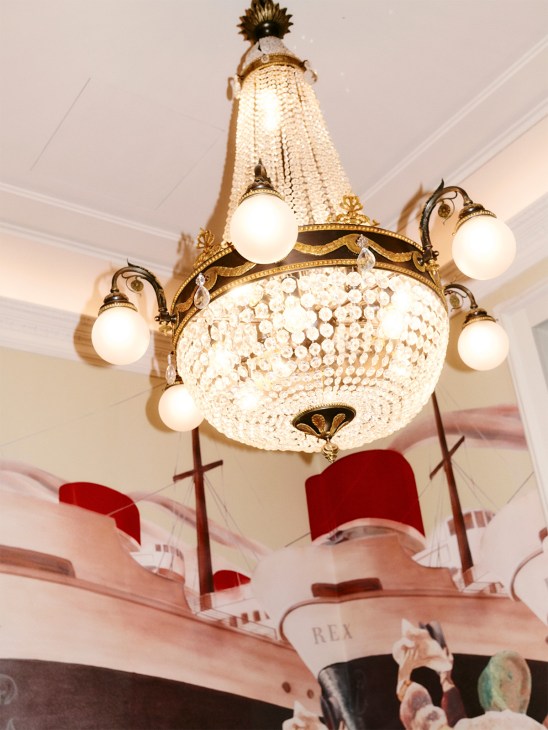
Before Monocle leaves, the final stop of our tour is the private, invitation-only apartment for VIP clients on the flagship’s top floor. Here, antique furniture and chairs are pushed up against walls in the kind of aristocratic set-up that you might find in European palaces. There’s also an industrial kitchen for chefs to prepare meals or assemble canapés for cocktail parties and even a bath should a client fancy a soak after a long day of shopping. “Everything here is put together by Mrs Prada, who is a true Milanese lady,” says Guerra. “This element of hospitality is very Italian, very simple, very Prada.” From this secluded perch, the lunette-shaped paintings of the different continents, set in the eaves of the Galleria Vittorio Emanuele II, look so close that you could touch them. Four storeys below us, under the glass dome, a circle forms at the epicentre of the arcade, where people patiently wait to improve their fortunes via a triple pirouette on the bull mosaic.
prada.com