Show time
Baselworld watch fair is where manufacturers unveil the new timepieces that often take years to craft. There are no quick sales either; brands eager to retain exclusivity don’t sell to any old oligarch.
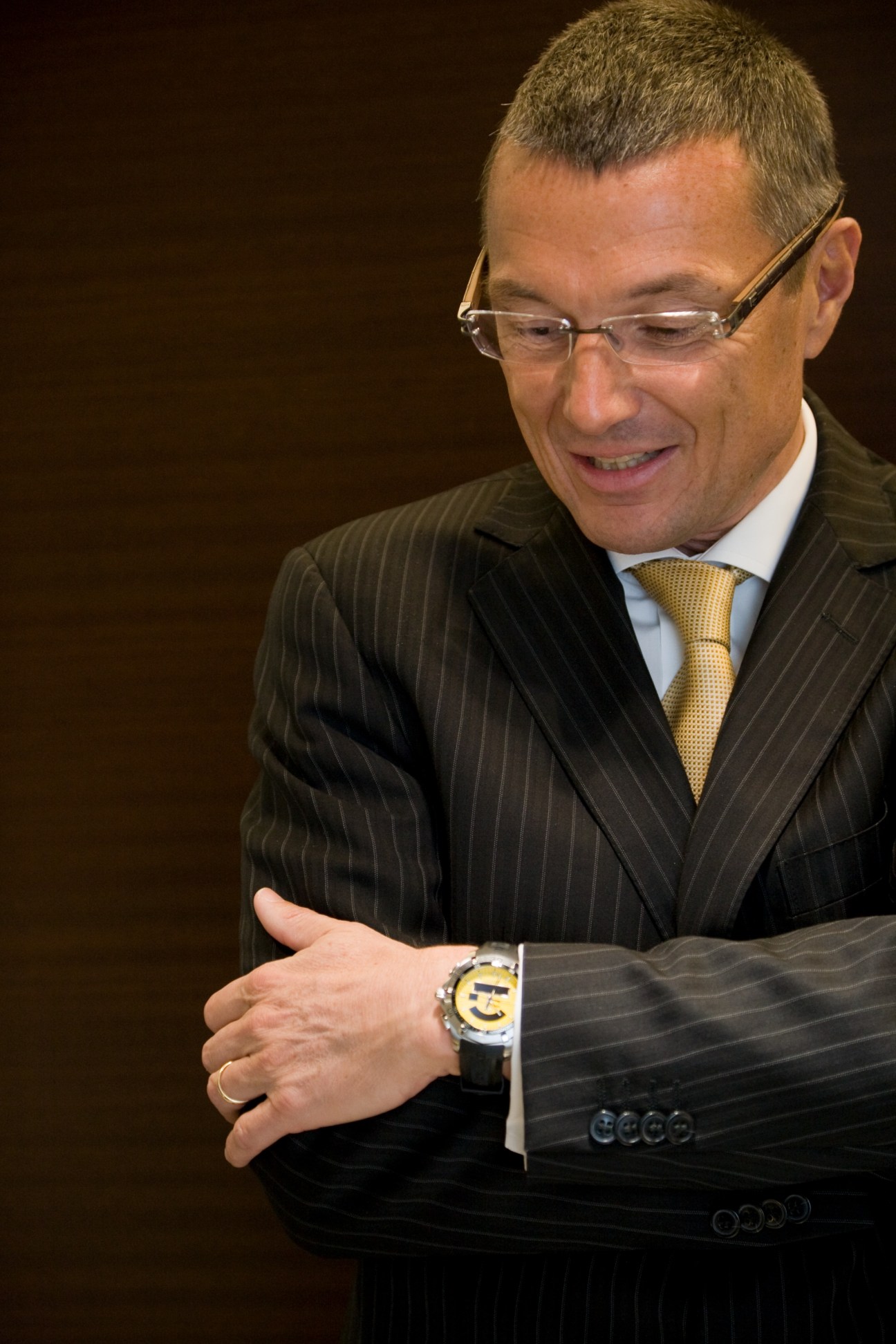
“This one is black on black because we don’t care if you can read what time it is,” bellows Jean-Claude Biver, as he points at his Big Bang All Black. The CEO and hurricane-proportioned personality behind Hublot is on bullish form at Basel’s watch fair. “You don’t buy a watch to read the time – you buy it to look at and for other people to look at!” One can’t often say this of Basel, the sleepy antidote to the madness of Zürich – but it’s showtime. Little wonder Biver was on such fine form as he must have been very close to signing a deal with LVMH, who snapped up the brand two weeks after the close of fair.
Last year, CHF16bn (€10bn) of orders were taken at Baselworld, a 50 per cent rise over the figure for the previous four years. The event now accounts for 90 per cent of the Swiss watch export market. Despite the spectre of recession rearing its head, the high-end watch industry is in rude health. And 2008 was another record-breaking year. “Despite the economic climate, orders have far exceeded our expectations,” says Françoise Bezzola, international communication director of TAG Heuer, after the fair.
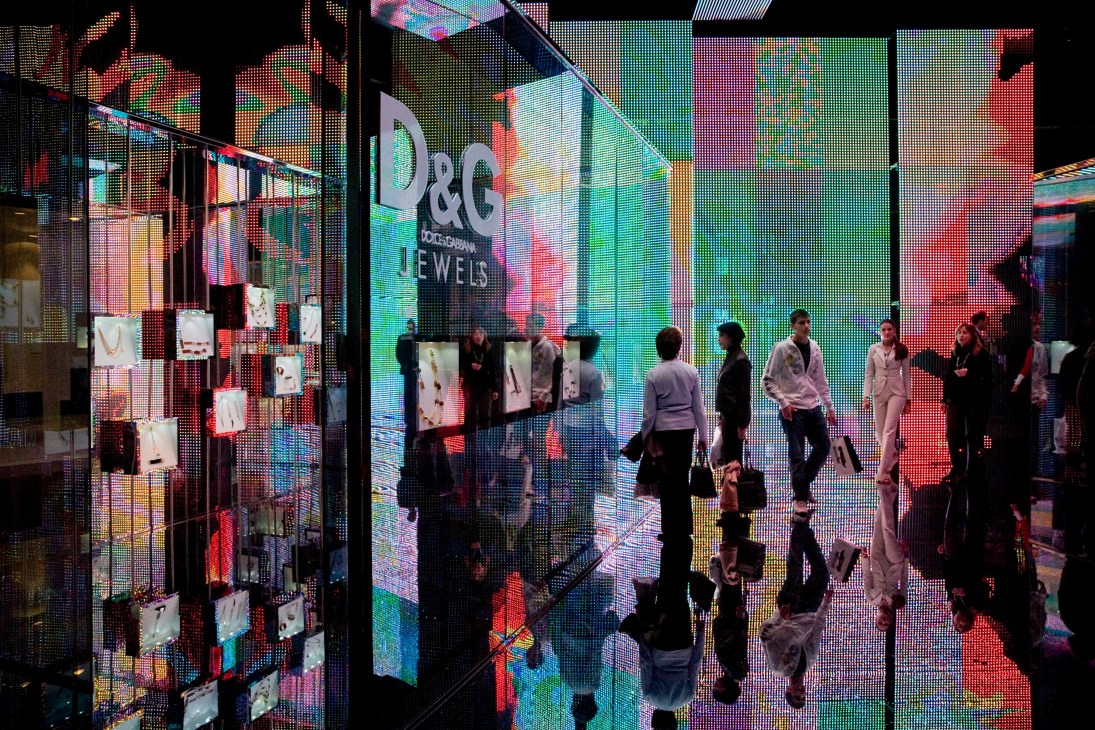
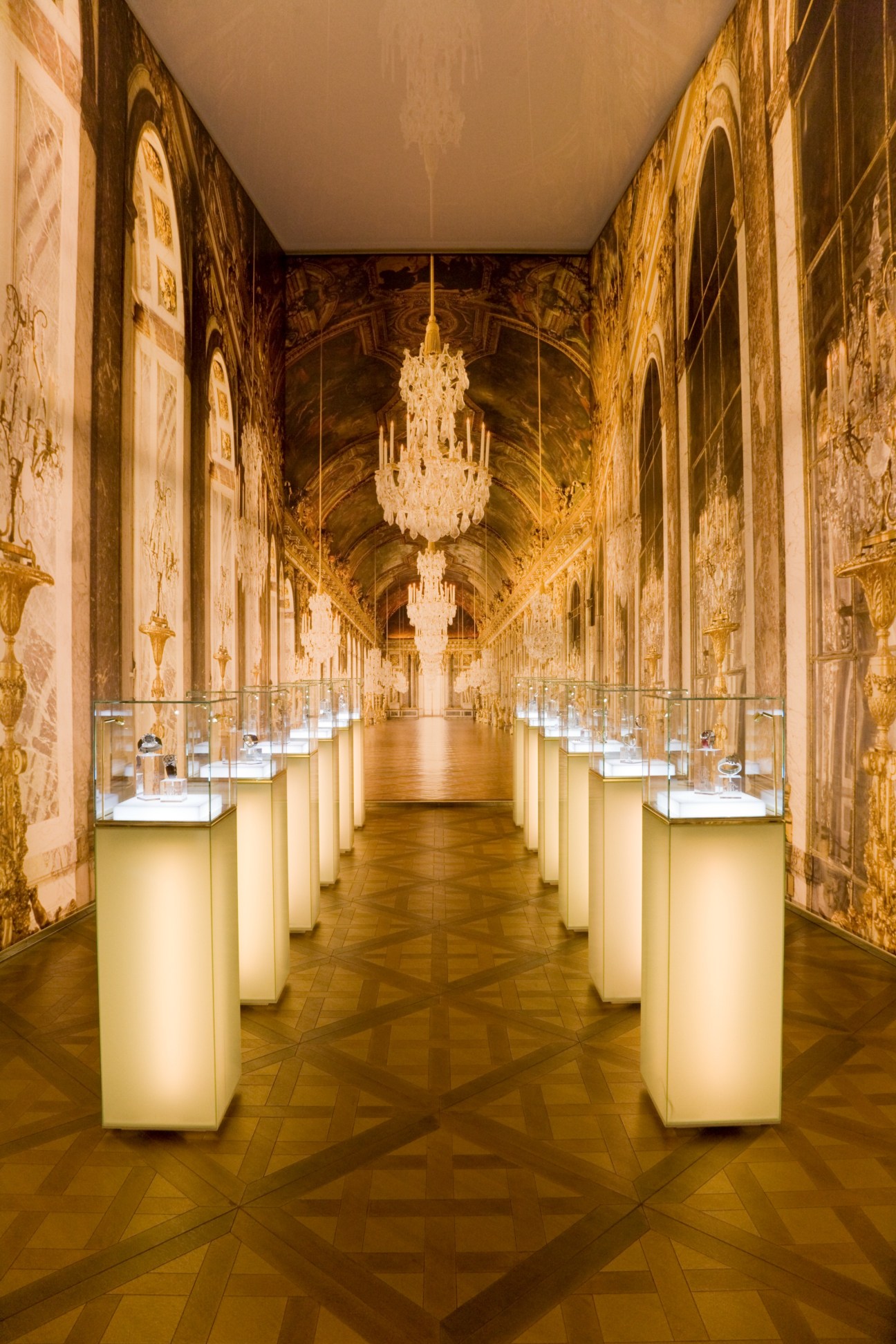
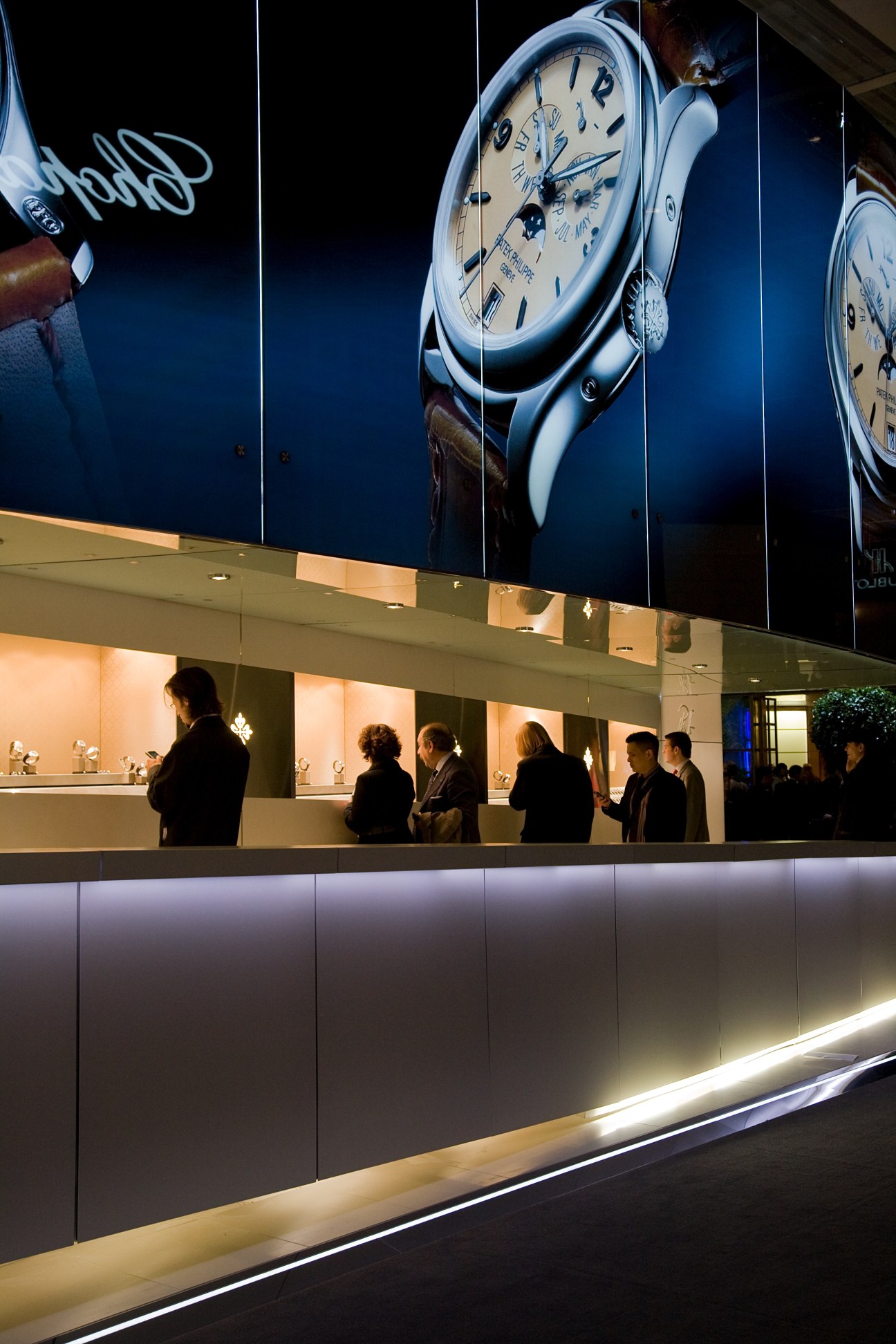
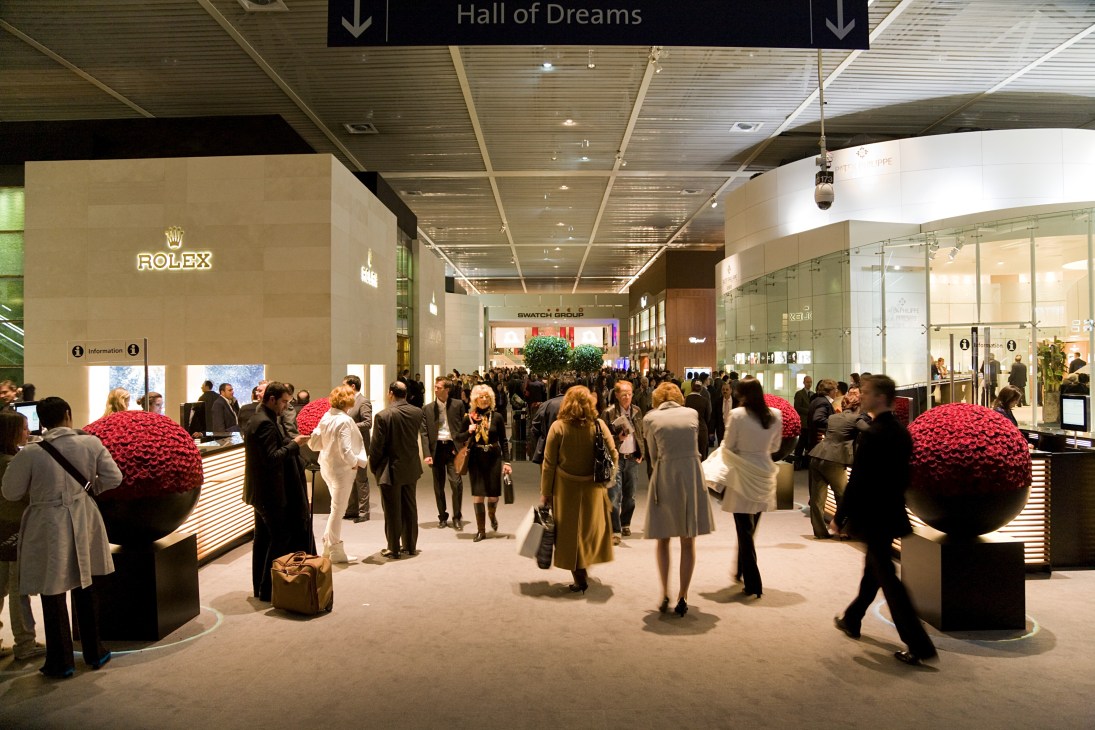
The exhibition halls are named emotively, erotically, nonsensically: the Halls of Desires, Fascinations and Emotions are lorded over by the Hall of Dreams where the big players pitch their tents and will have been doing so for up to three months before the fair. Zenith and Movado moodily hustle the entrance with dark-lit stands; Rolex and Patek Philippe are gatekeepers to the Sunset Strip of premium brands. These huge “booths”, replete with aquariums (Breitling), branded interactive games (Tissot) and moustachioed mojito-mixers (Cuervo y Sobrinos, established Havana, 1882) are the size of houses and cost the same amount.
The stands are an investment in brand identity; theme-park re-imaginings of Fifth Avenue, spot-lit strolls down Bond Street. The finery of Patek Philippe’s crystal palace backs on to Chopard’s triple-storey townhouse, an exercise in haute-bourgeois good taste. Rolex is a sleek country pile, its east and west wings linked by a footbridge beneath which a CGI moat glimmers with ripples. The odd dolphin reflects the inspiration for the brand’s Basel launch – its new Submariner series diver’s watch.
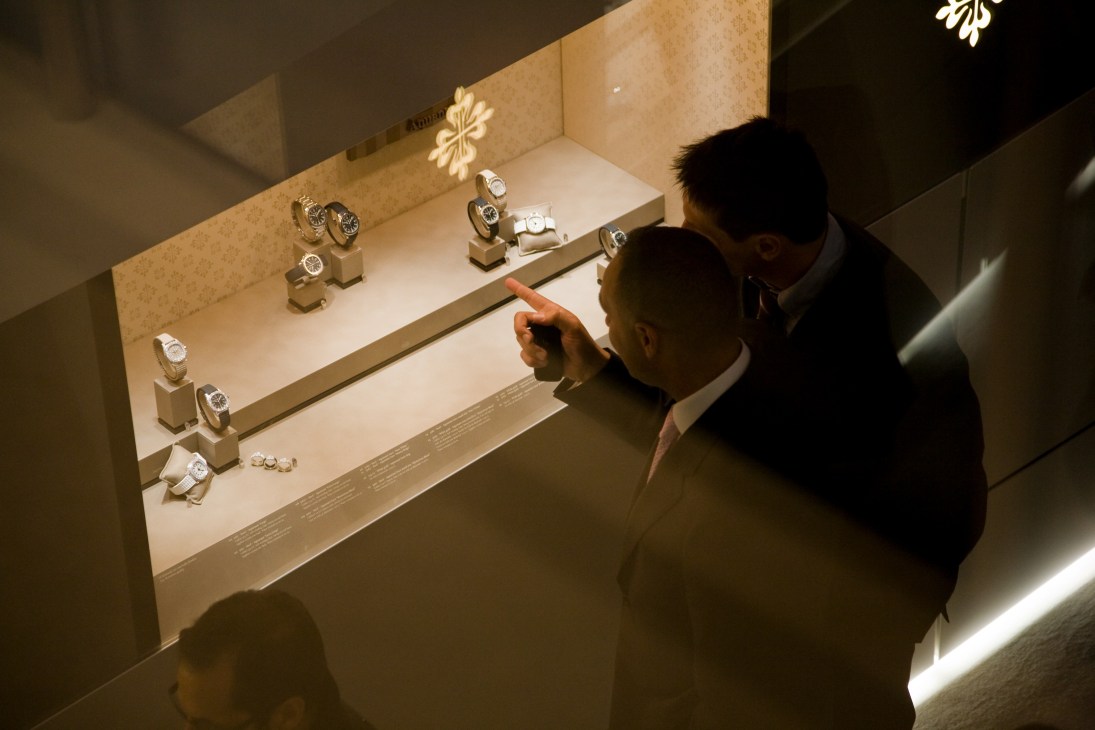
These Basel launches are the talk of the fair and are often the product of at least a year of research and development, craft and fine-tuning. Patek Philippe added to its Nautilus series with pavé and baguette diamond-set pieces. At €93,000 and €49,000 respectively, these models are aimed to appeal to a new market.
“It’s not just men in the Middle and Far East who want diamonds on their watches,” says Liz Allister, Patek’s British representative at Basel. “A lot of British men are wanting to buy into jewellery.” One of the trends at the fair seems to be watches, even classic shapes, getting the dripping-in-diamonds treatment. It’s been surmised that brands do this simply to increase the price and improve their margins. “We can’t follow trends,” says Allister. “Some of our models take five years from design to production.” Meanwhile the Nautilus, first seen in 1976, glitters, albeit manfully, at front of house.
Omega has been busy. The brand, approaching its 160th birthday, introduced 170 new references (variations on models within a range) for Baselworld, as well as three entirely new movements. The Seamaster, Omega’s rock solid design classic, is set to celebrate its 60th birthday with a bejewelled makeover too.
“We are introducing a jewellery concept,” says Gregory Kissling, product and research manager for the Swiss firm, sweat building on his brow as he handles a piece comprising 1,840 diamonds (and retailing at €250,000). Kissling is candid about the marketplace: “Sure, our reference is the past but we look to the future. We analyse trends, but it’s actually our Swissness that’s the important thing.”
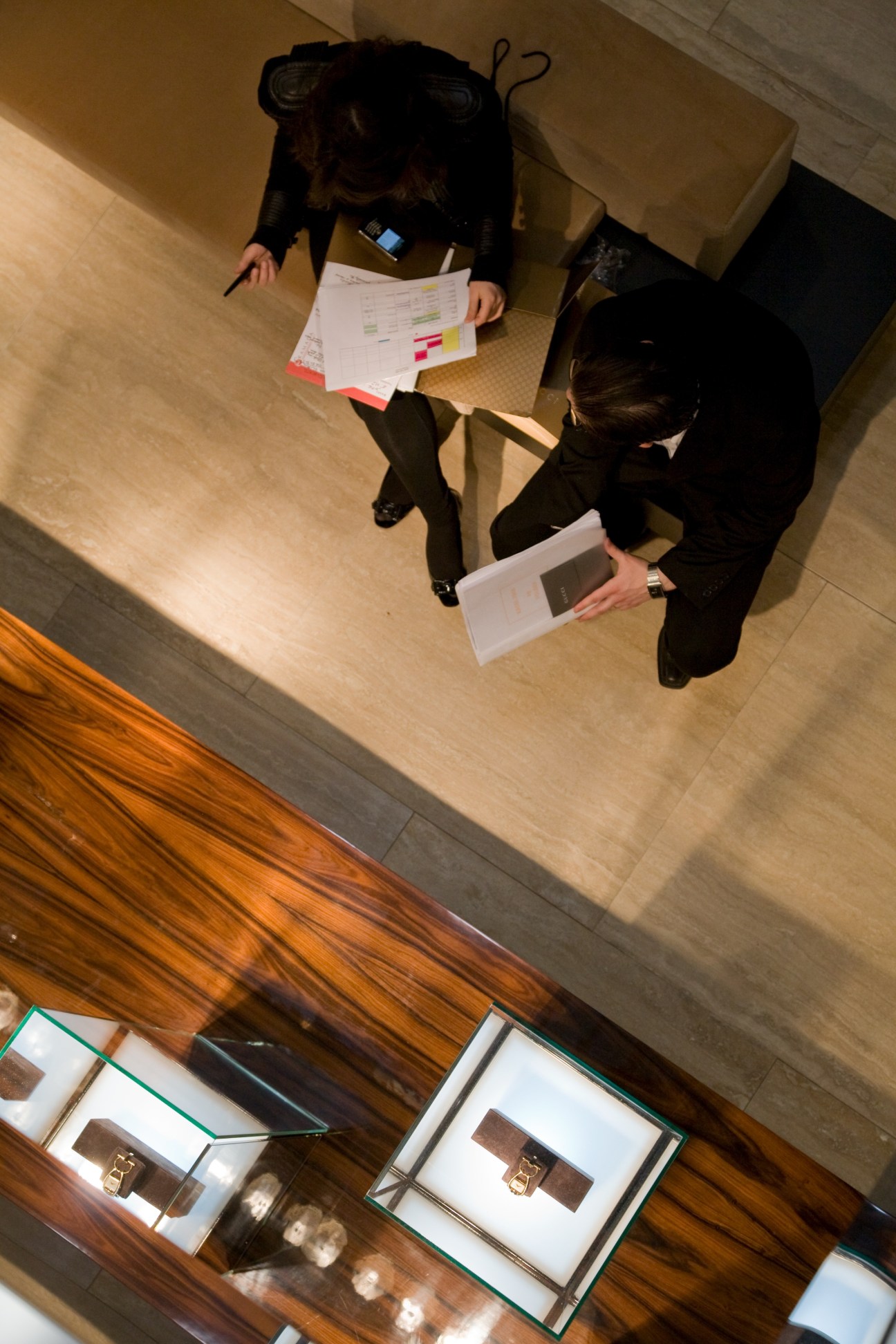
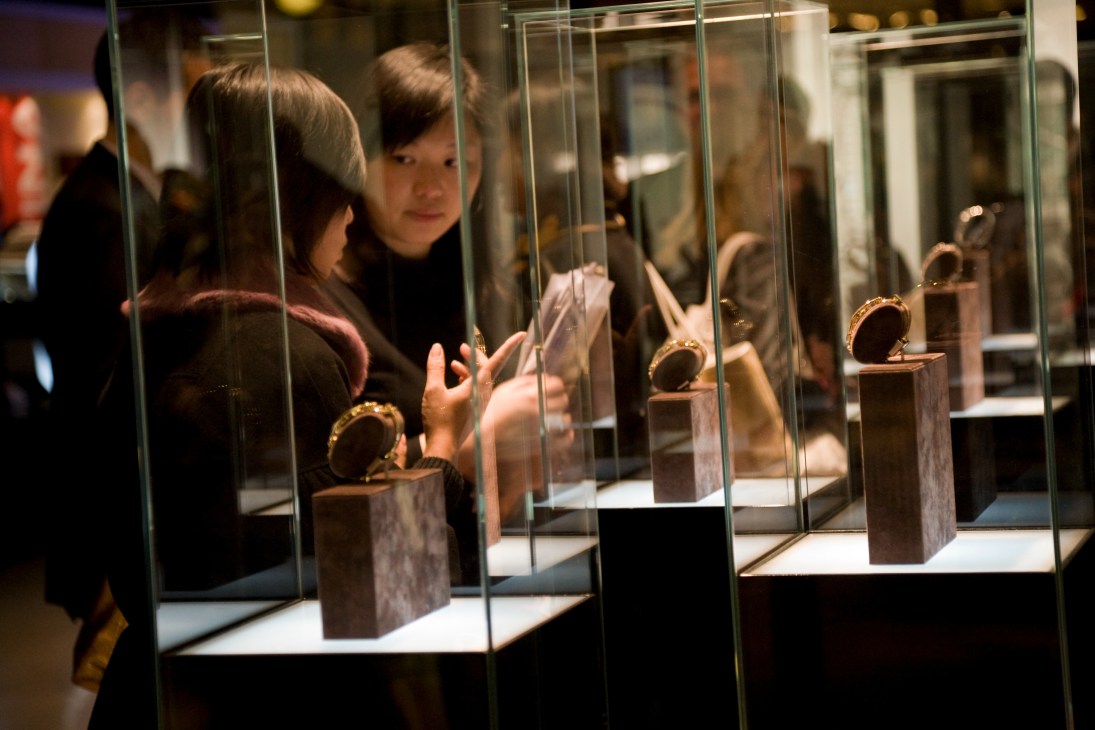
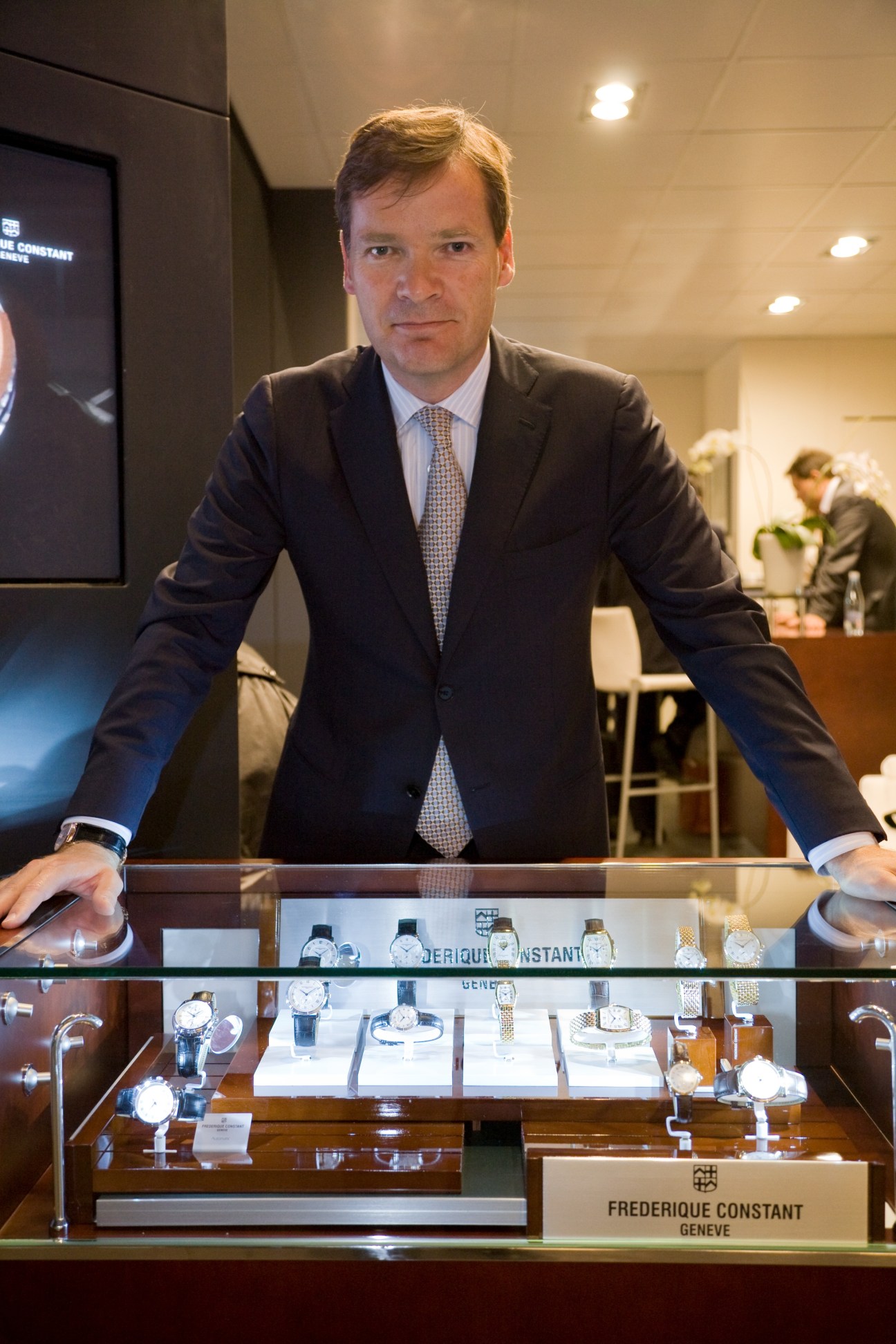
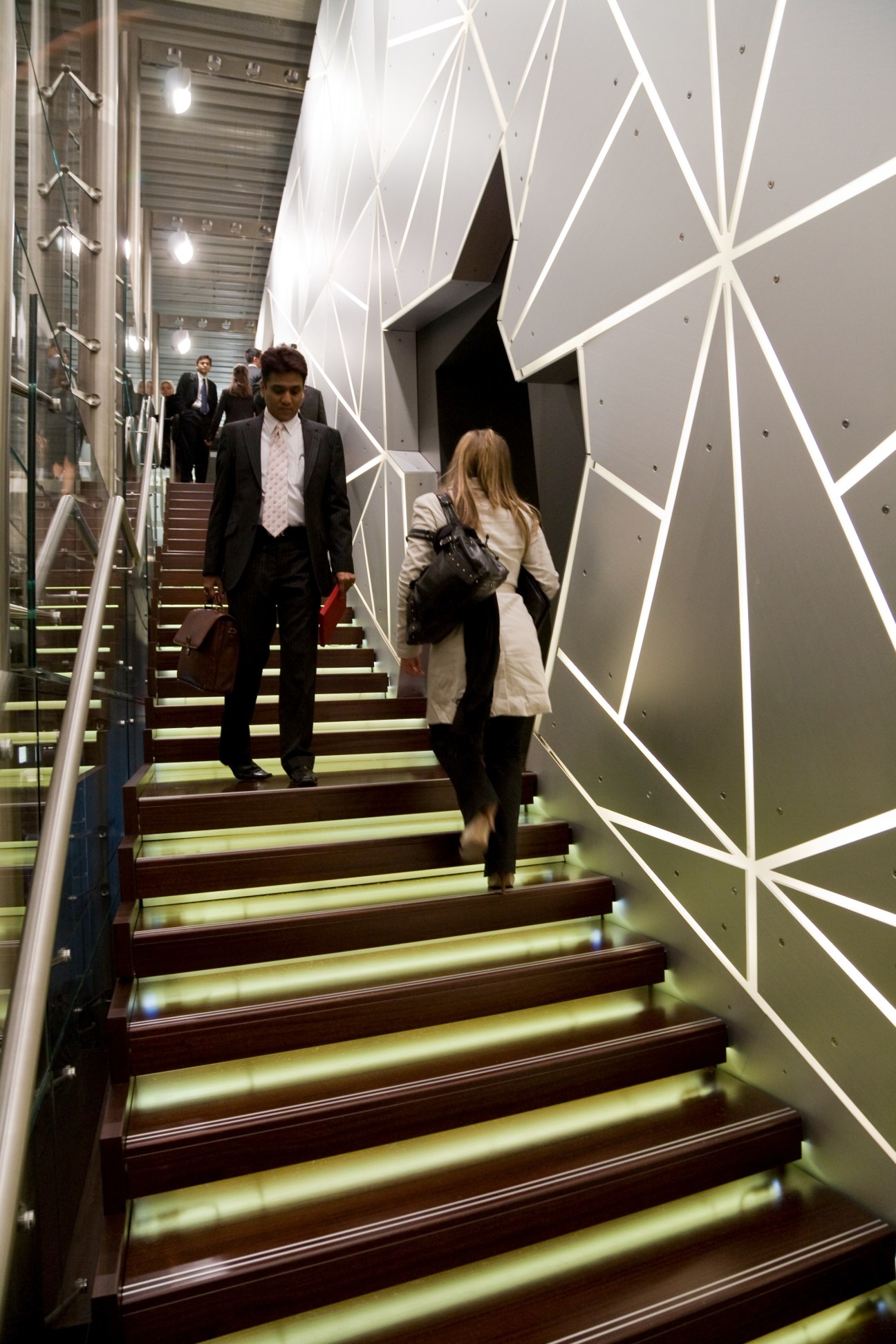
At the centre of Basel’s horological party is an intricate courtship dance undertaken by manufacturers and retailers: watches need to be sold, but in the right number and environment to keep brands rare and luxurious, while retailers only attain high-end status by carrying certain brands. This strict diet of supply gets complicated when it comes to the new-money markets of India, China and Russia whose young entrepreneurs want Swiss but often want it with a cherry on top – jewels, pink gold, platinum. To avoid Burberry bikini syndrome, Swiss watchmakers have an eye on the long game.
“Retailers send us a list of what they would like and we send them back a list of what we’ll give them,” says Allister at Patek. “We’re actually closing points of sale to tighten distribution and protect our brand,” she adds.
Brand is all. Legitimacy takes a while to achieve but is something that all the manufacturers on display either flaunt, albeit in a sleeves-down Swiss way, or are still trying to attain. Fashion houses have an uphill struggle, but clearly want a slice of the market – Ferragamo and Fendi launched lines at this year’s Basel and even the most haute of all couture houses, Dior, recognises the limitations.
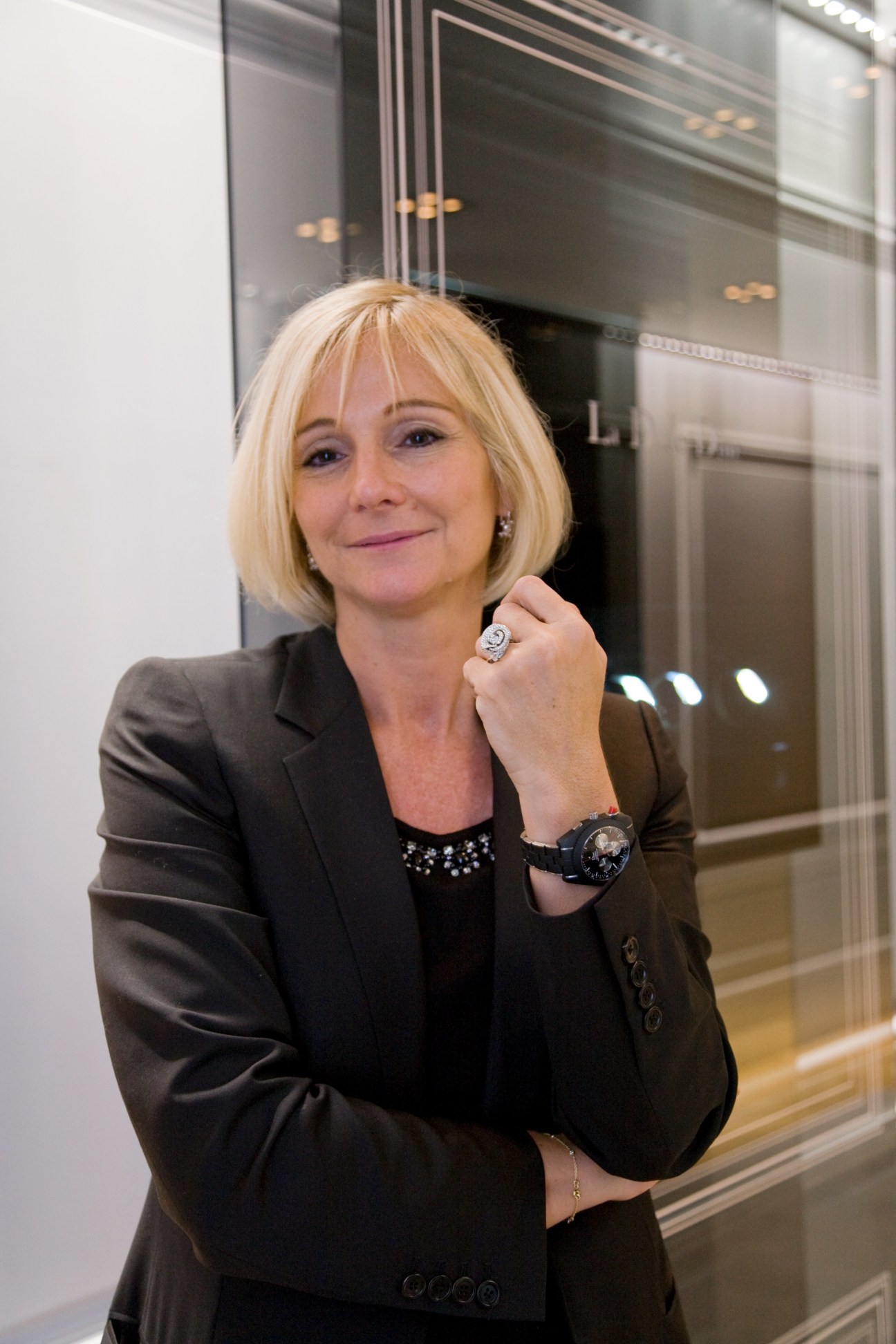
“We are not necessarily a watchmaker, but we behave like we are,” says Laurence Nicolas, president of Dior Montres. “Everything is produced in La Chaux-de-Fonds and we are proud of the inside our watches.” Chanel and Versace are also focusing on craftsmanship while Gucci watches aim wide with price points from €620 up to €45,000.
Back at Hublot, Biver is raising a toast. “We have the best Chateau Latour ’89; the best cheese in Switzerland; we even have 100-year-old eggs from China!” he roars. Biver’s roof terrace offers views of the back of the Rolex fort. Of the strict hierarchy of placement, he is dismissive. “We don’t enjoy our position in the market – we’re young and they don’t like innovation,” he shrugs, offering a fist to the old guard while banging a CHF24,900 (€15,500) watch on the table.
“This is the new Bullet Bang, he says, tossing around the handsome, meaty watch. “It’s made from ceramic and tantalum, the stuff used in bullet-proof vests and rockets – it’s indestructible and looks brilliant!” he booms, before whispering, “You can’t have one; we keep supply scarce – we meet only 60 per cent of demand – keep them hungry!”