If not to tell time, why do we continue to wear watches?
No longer a mere tool for keeping time, wristwatches have become a discreet signifier of personal identity.
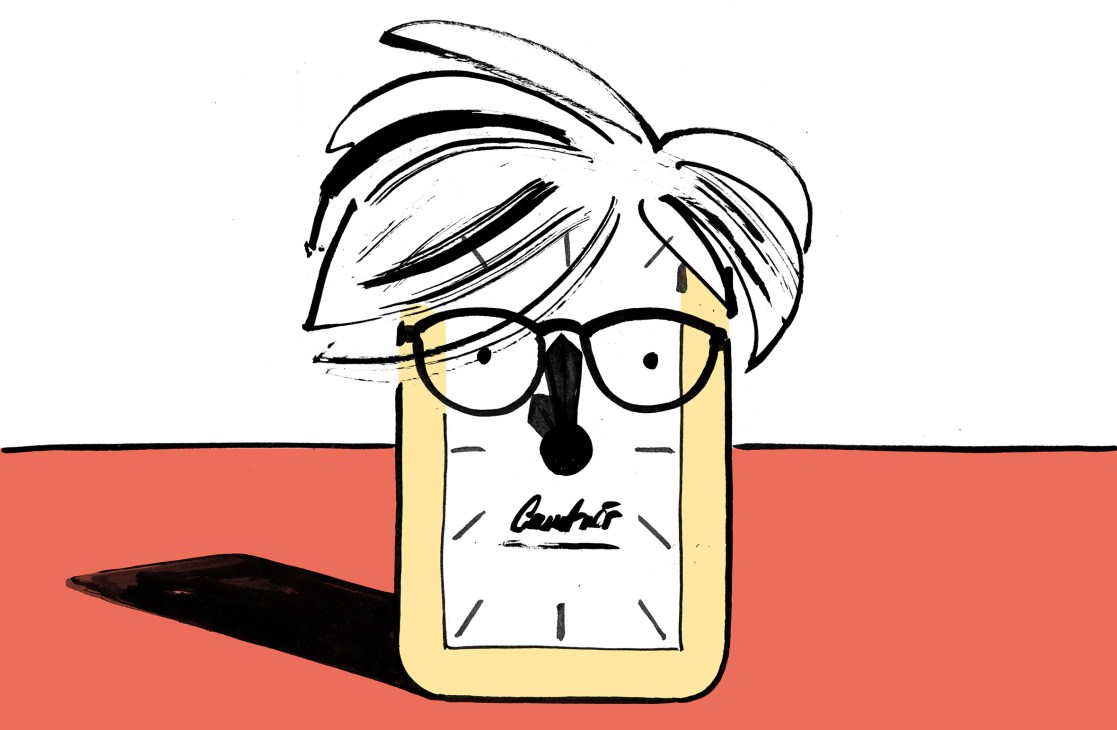
In the early 1970s, before laptops, mobile phones and smartwatches, Andy Warhol declared: “I don’t wear a Tank watch to tell the time. Actually, I never even wind it. I wear a Tank because it is the watch to wear.” The remark was likely met with incredulity, yet Warhol’s words would help the watch industry eventually reinvent itself.
For millennia, measuring time has been one of our great obsessions. It allowed humans to determine the optimal time to sow and harvest, ensuring that they could feed themselves and live longer. It guided explorers across the oceans. It determined the outcome of wars.
Then on Christmas 1969, the world marvelled at the first battery-powered quartz watch, Seiko’s Quartz Astron 35SQ. Swiss watchmakers stared at their rotors, balance wheels, mainsprings and mechanical components, wondering whether anyone would ever need them again. Paradoxically, however, as time became a commodity displayed on our every domestic appliance and mobile phone, something happened in the Swiss mountains: storied makers such as Blancpain and Audemars Piguet began championing mechanical watchmaking as an art form, and a new conviction took hold: that a timepiece, despite all the research and precision poured into it, was never about telling the time at all.
But if timekeeping is not the point, then what is? Van Cleef & Arpels sees watches as jewellery. Consider one of its signatures, the Cadenas (padlock in French). It has a rectangular case tilted at a 45-degree angle to your wrist and, from a distance, does not look like a watch at all. If the watch is jewellery, it follows that it is also the most popular form of men’s jewellery, communicating taste and status. There is an old joke that watches exist because men cannot wear their cars. Richard Mille has taken that idea literally, engineering technically complex watches that aren’t used to tell the time as much as to signal that its wearer belongs to an exclusive club.
Just as Warhol intuited 50 years ago, we do not wear a watch just to tell the time but to reflect our tastes, ambitions and private relationship with time itself. I have followed Warhol’s lead and invested in a Cartier Tank, engraved with the words: “Time is what you make of it.”
About the writer
Lazazzera is a luxury editor and consultant, specialising in fine jewellery and watches, and contributing to publications such as The New York Times, Vogue and The Business of Fashion.