Tenerife: The secret north

Northern Tenerife is a paradise for the curious traveller, with its exemplary quality of life, distinctive volcanic terroir and stylish design culture.

Away from the luxury resorts in the south, there’s a more relaxed and authentic way of life to be enjoyed in the historic towns that dot Tenerife’s north coast.
Garachico
A town with an explosive history
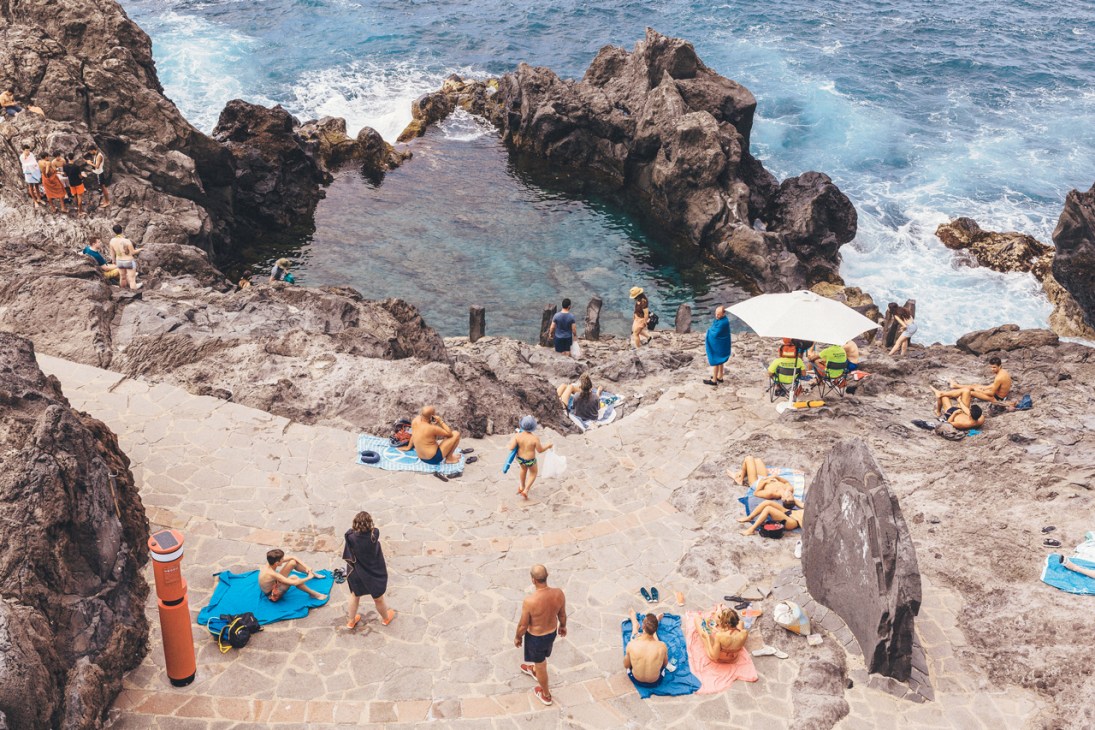
The influence of Tenerife’s unique volcanic geology is strong. Take Garachico, for example. Once the island’s most important port, that all changed in the early hours of 5 May 1706 when a volcanic eruption all but wiped out the town. Today reminders of that seismic event are dotted around Garachico. There are vestiges of the old pier, a 16th-century harbour gateway and, perhaps most famously, El Caletón, a series of natural volcanic rock pools ideal for morning swims or afternoon lounging. To truly experience the Garachico spirit, book a stay at Boutique Hotel San Roque, a restored 18th-century manor house decorated with Canarian contemporary art and furniture by the likes of Mies van der Rohe and Le Corbusier, or Hotel La Quinta Roja, which boasts the elegant Silogía restaurant and views over the Plaza de la Libertad, where locals sip kiosk coffee in the shade of the plane trees.
La Orotava
Following the roads less travelled
Driving east from Garachico on dramatic coastal roads that evoke California’s Highway 1, every hillside town has a story to tell. Amid the banana groves of Icod de los Vinos sits a 1,000-year-old dragon tree so beloved by locals that it has its own park. In the colourful streets of El Toscal, head for the guachinche – small restaurants serving Canarian cuisine with homely hospitality. However, the north’s vibrant antidote to over-tourism is perhaps best typified by La Orotava, a town founded in the 16th century after the Spanish Conquest. Today its carved wooden balconies and terraced gardens play host to a tight-knit community, while visitors browse charming boutiques or spoon cremoso café helado by the bandstand in the Plaza de la Constitución.
Whether you choose to admire its modern architectural masterpieces, taste the fruits of the volcanic landscape, or simply live the good life in the many historic towns and elegant hotels, Tenerife’s north coast has destinations to savour.
San Cristóbal de La Laguna
Benchmark for the Spanish world
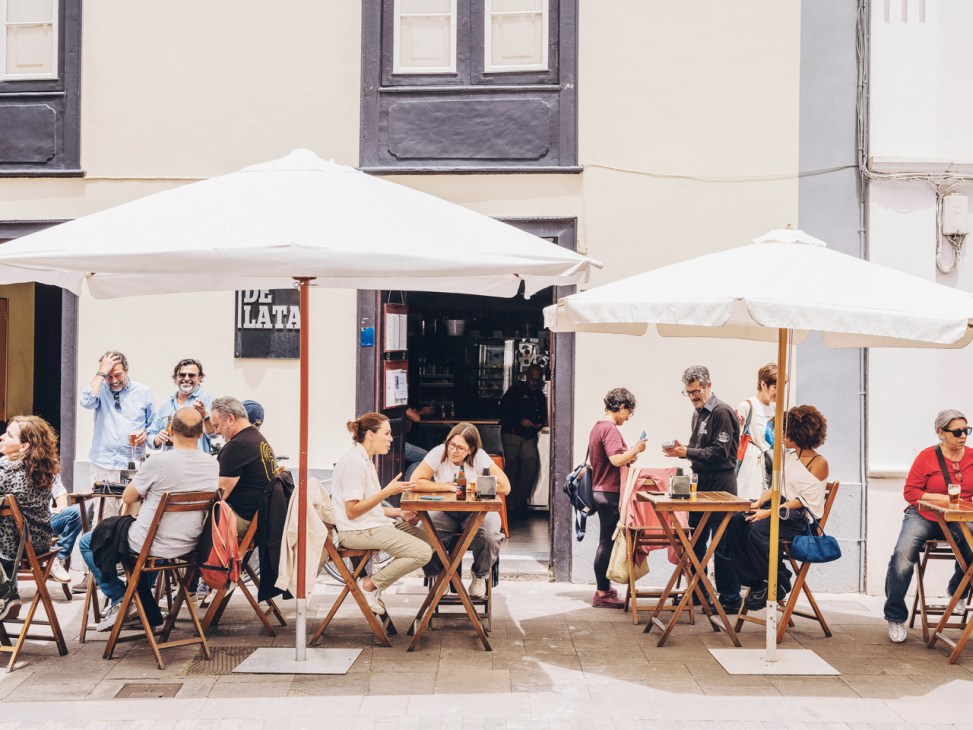
If La Orotava is small town Tenerife personified, San Cristóbal de La Laguna is a benchmark city for the world. The island’s former capital was founded after the Spanish conquest in 1496 and its non-fortified, grid system layout would inspire many Latin American cities, from Lima to Havana. You don’t need to see the blueprints for this university city to appreciate why its historic centre was ascribed a UNESCO World Heritage Site in 1999. This is a masterclass in living, breathing urbanism, where historic buildings are thoughtfully repurposed and the overspill from tapas bars and cafés bring life to the wide pedestrianised streets.
Bodegas Viñátigo
Destination vineyard, deep in the soil
The entrance to this modern organic winery replicates a volcanic cone, with a spiral staircase that descends deep into the rich fertile earth of the Orotova valley. At the bottom, passages designed like volcanic tunnels further reaffirm that the landscape shapes everything here, from the architecture to the flavour profiles. There’s more acidity and the grapes are more aromatic in the north because of the humidity and the Atlantic winds;’ says Vifiatigo’s fourth-generation owner and trained chemist Juan Jesus Mendez. Take home a bottle of the Listan Negro; when served at 13-14 degrees, it is a perfectly juicy summation of Tenerife’s rocky terroir.
Bodegas Monje
A winemaker steeped in history
On the slopes of La Hollera in the Sauzal region lies one of Tenerife’s oldest and most established bodegas: Monje. Cobweb-strewn barrels in the historic cellar attest to the heritage of a family that has been making wine here since 1750. Felipe Monje leads the business today, nurturing centuries-old vines while embracing modern production methods. He believes Tenerife is the perfect place for flavourful winemaking. “It has a particular kind of characteristic: the volcanic soil, the different kinds of grapes, and the subtropical weather,” he says. For connoisseurs, Monje has personal wine lockers to keep your bottles at the perfect temperature in the basement events space.
Moral
Canarian culinary excellence
There’s more to northern Tenerife than great grapes; the pleasant, warm climate is conducive for growing all kinds of fresh produce. A new generation of culinary innovators are utilising this fresh harvest to craft dishes that riff on Tenerife favourites: seafood, rabbit stew and papas arrugadas – wrinkled potatoes served with a spicy mojo sauce. At Santa Cruz’s Moral, the understated ambience belies the artistry taking place in the kitchen, where Icíar and Juan Carlos Pérez express their love of Canarian produce via menus of Michelin-star quality. Of course, great wine is served here too: a chilled glass of Benje only enhances this heartfelt tribute to Tenerife cuisine.
By combining playfulness and utilitarianism in a series of striking modern designs, Tenerife’s architecture provides an inspiring concrete backdrop for local makers and visitors too.

Auditorio de Tenerife
Calatrava’s waterfront masterpiece
Santiago Calatrava was drawn to architecture for its capacity to satisfy both his art school ambitions and his taste for simplicity in engineering. Those elements come together beautifully in Auditorio de Tenerife, a structure that invites artistic interpretation. Is it a wave? An iceberg? An insect’s mouth? An elaborate piece of origami? Completed in 2003, the comparisons with the Sydney Opera House are inescapable yet this is proudly its own design, one that typifies Tenerife’s considered and distinctive style of architecture: pleasingly functional, free of adornment, with bold shapes that change with the light. Inside, Calatrava succeeded in creating stunning spaces while working within the confines of the sculptural exterior. Aesthetics are matched by acoustics in the vast concert hall and smaller chamber music room.
Tenerife Espacio de las Artes
Cultivating the island’s culture
That Tenerife has such a distinctive design culture is thanks in part to the Official College of Architects of the Canary Islands being headquartered in a suitably impressive brutalist building in Santa Cruz. Across the city, the local style is distilled to its essence at the stunning Church of Santisimo Redentor: three colossal concrete forms, each slightly offset, with just a cross-shaped aperture to indicate its religious function.
To truly understand the island’s creative spirit, however, head to Tenerife Espacio de las Artes (TEA), a bustling cultural centre designed by Herzog & de Meuron. The galleries stage exhibitions of important local artists, while the vaulting library and photography centre serve as valuable and well-utilised resources.
Lighthouses
Beacons of architectural invention
Tenerife’s northern coastline has an otherworldly quality, which enhances the sense of escapism when exploring this rugged landscape. The intertidal shelves are lunar-esque while the native flora resembles alien lifeforms in all their colourful, curious glory. Standing tall like sentinels at the most dramatic – and, coincidentally, picturesque – points are a series of modern lighthouses that uphold the island’s distinctive approach to architecture. In 1985, Spain’s Maritime Signal Plan Instigated a new wave of structures across the Canary Islands that are as aesthetically pleasing as they are functional. On Tenerife’s northwest coast, Buenavista Lighthouse contains a 2il-step spiral staircase in architect Enrique Martínez Tercero’s modernist corkscrew design. To the east, Punta del Hidalgo Lighthouse is a simple, angular design that rises to 50 metres. With its white concrete offset by the black volcanic rocks below, this keeper-less beacon provides a focal point for a refreshing 2.5km stroll around the peninsula.