Leading the way for culture

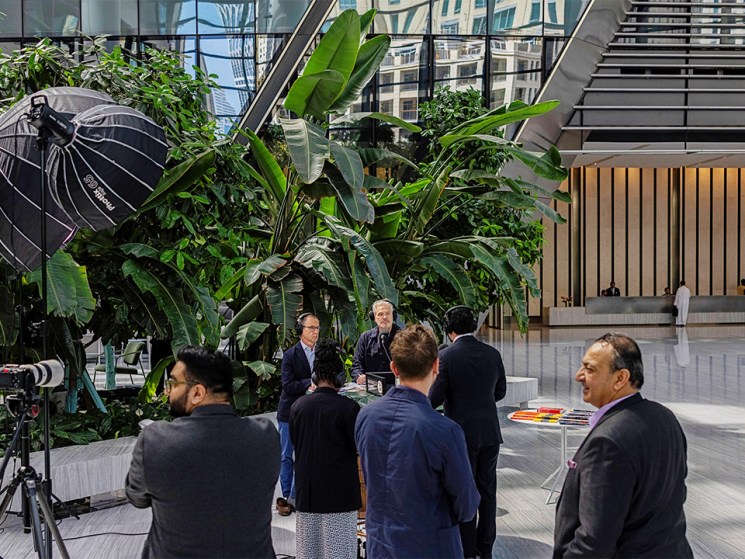
As the chairman of the Department of Culture and Tourism – Abu Dhabi, Mohamed Khalifa Al Mubarak has helped to transform the emirate into a global cultural capital.

Mohamed Khalifa Al Mubarak
From the launch of Saadiyat Cultural District to the transformation of Yas Island into a global entertainment hub, Mohamed Khalifa Al Mubarak has championed creativity and innovation, while positioning culture as the bedrock of Abu Dhabi’s future.
Abu Dhabi’s cultural ambition is striking. Where does that sense of purpose come from?
It goes back to our Founding Father, the late Sheikh Zayed bin Sultan Al Nahyan. Before the United Arab Emirates was established in 1971, Sheikh Zayed opened Al Ain Museum, a single act that tells you everything about his priorities. He understood that our history and our culture are imperative to who we are. Institutionalising culture and giving it a permanent home and a formal mandate was essential to preserving who his people were and would become. He understood culture is the substance of how a society understands itself and its place in the world. This is what underpins the significant cultural momentum in Abu Dhabi today and the institutions being built.
The institutions on Saadiyat Island and across the emirate, the programming running year-round, and the creative industries we proactively support, are all recent expressions of a commitment that is as old as the formation of the nation. The brief has also always been broader than building impressive institutions. What matters is what those institutions do for the people who live here, what they contribute to society and the economy, what they say about who Abu Dhabi is.
When we open a national museum, a natural history museum, reopen a historical museum, and plan to open an arts museum, all within the timeframe of a year, while sustaining serious programming alongside all of it, we are making an argument about the kind of place that we intend Abu Dhabi to be.
In recent years, Abu Dhabi has evolved into a global cultural destination while remaining rooted in Emirati identity. How do you navigate that balance between international influence and cultural authenticity?
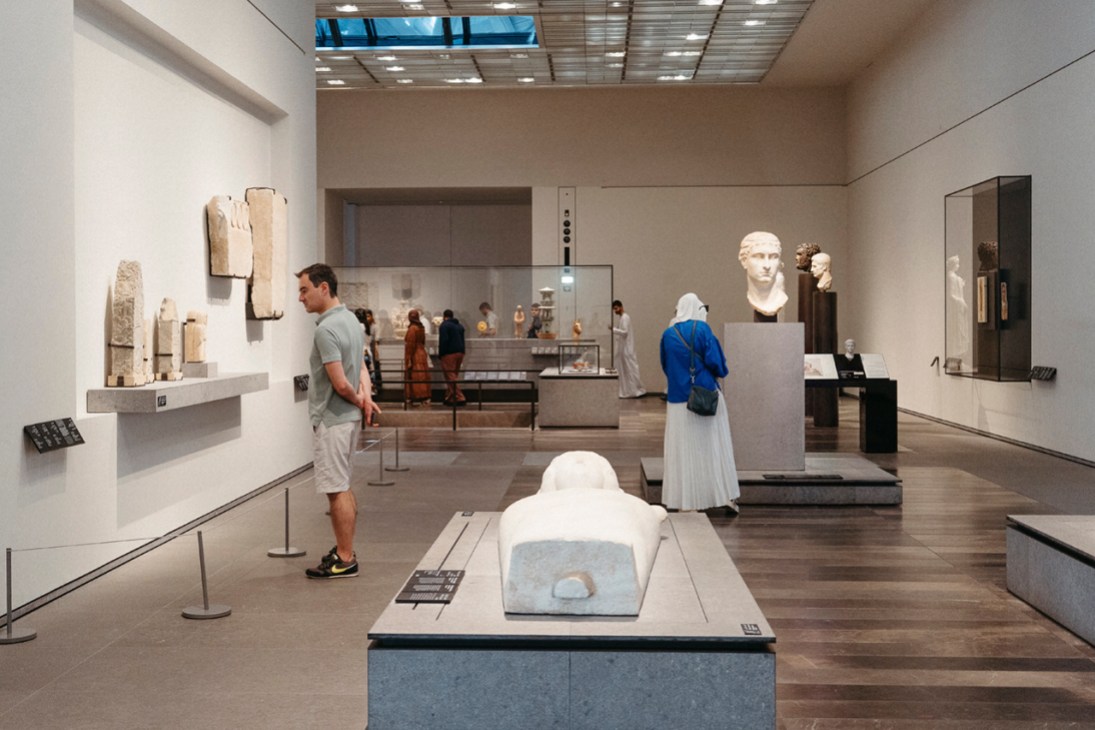
I would challenge the idea that there is a tension to navigate. The premise assumes that global engagement pulls you away from who you are. Our experience has been the opposite. Establishments such as Louvre Abu Dhabi in Saadiyat Cultural District, our work with the world’s most significant cultural institutions, and our cooperation with artists and thinkers from across the globe, have not diluted Emirati identity. If anything, they have reinforced global awareness of it. When you place an emphasis on cultural exchange, you foster understanding of your own heritage and what makes it unique. The institutions we are building are rooted in our culture and land. Zayed National Museum tells the story of this land and its people, and modern UAE built on the values of Sheikh Zayed. The Natural History Museum Abu Dhabi takes the visitor on a journey through 13.8 billion years but draws on the extraordinary geological and natural heritage of the Arabian Peninsula.
The international partnerships we develop are part of our cultural policy. They contribute to the curatorial depth and intellectual exchange of our cultural scene and tell stories that reflect our context and the people who shape it.
What the visitor figures also show is that people are seeking out the full breadth of what Abu Dhabi offers, the globally recognised institutions alongside the deeply local offerings, like the heritage festivals, historic sites and experiences unique to the emirate. Abu Dhabi brings a combination of international and local rigour and rootedness making it a compelling and inspiring cultural scene. We are narrating, through our institutions, stories that reflect the history of our land and the diversity of our community. This authenticity is why people return to Abu Dhabi and reinforces the cultural credibility of our scene.
How does Abu Dhabi’s cultural strategy align with broader national ambitions for social and economic development?
Our nation has always supported and invested in the social development of our people, in the capacity building of our talent, and the wellbeing of our residents. The statistics reflecting the investment in culture are clear proof of our vision. In 2025, Abu Dhabi welcomed a record 26.6 million visitors, with more than 8.6 million people visiting the emirate’s cultural sites and institutions.
That depth of engagement, with people returning, staying longer and recommending the destination, is what sustainable cultural tourism looks like. People are choosing Abu Dhabi deliberately, and the cultural offering is a defining part of the destination. But the connection to national development runs deeper than the figures. A city with cultural depth, with institutions that produce scholarship, host debate, and tell stories that matter has a much longer cycle than one built on tourism alone. Culture also shapes who chooses to live here, and the social fabric of the city. The economic and social objectives reinforce each other, and we pursue them in tandem with that understanding.
There is growing recognition globally that culture contributes to mental health, wellbeing and social cohesion. What responsibility does a government entity have in improving everyday quality of life?
What is the most underappreciated aspect of Abu Dhabi’s rich cultural heritage?
Our natural history. Most conversations about our heritage, understandably, focus on the human story, such as our Bedouin traditions, the pearling economy, the founding generation and the extraordinary speed of what they built. But the land itself carries a remarkable record that most people, including Emiratis, have never fully encountered.
The Arabian Peninsula was a very different place millions of years ago: lush, green, with large rivers crossing the landscape, and full of life that no longer exists anywhere on earth.
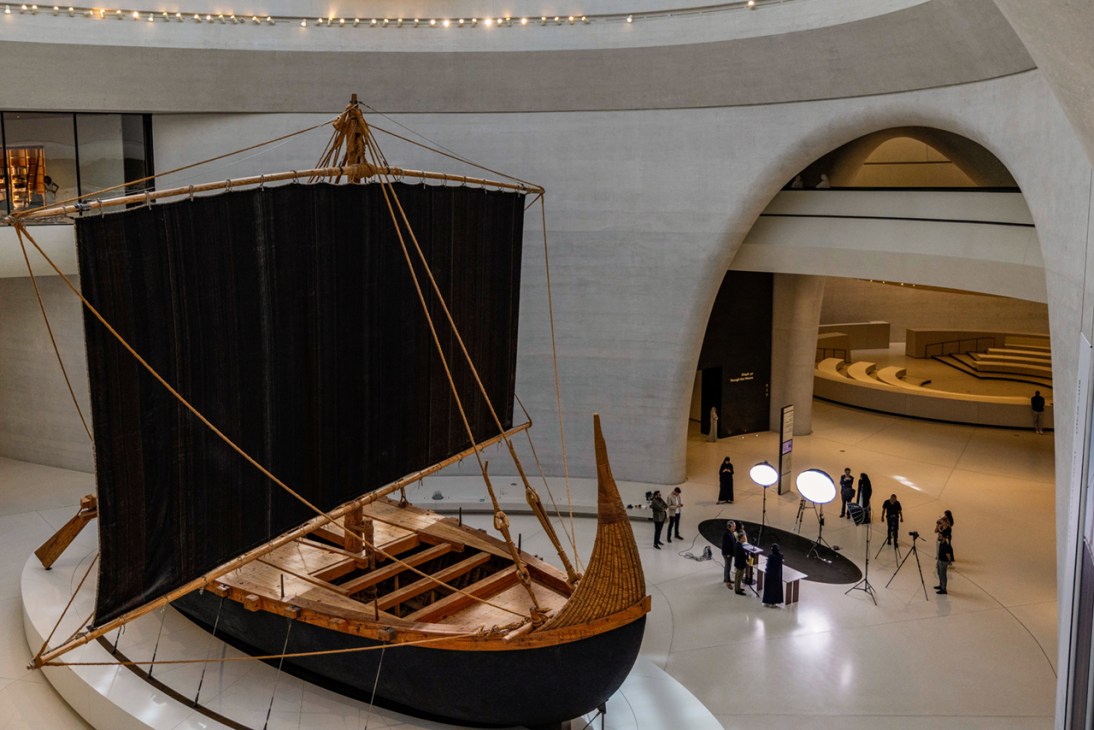
Natural History Museum Abu Dhabi, which opened in 2025, will begin to change that perception. It tells a story spanning 13.8 billion years, from the formation of the cosmos to the present, but placing the Arabian Peninsula and its natural heritage at the centre. That ambition, to locate Abu Dhabi within the deepest possible timeline of natural history, is significant. It shifts the frame.
Abu Dhabi is a young emirate, but the land has been here across an almost incomprehensible span of time, and the life that inhabited it left a record worth understanding. This framing positions the Arabian Peninsula as a landscape of scientific significance, a place where major chapters of Earth’s evolutionary history unfolded.
How do you ensure that an ambitious cultural development such as Saadiyat Cultural District remains connected to the wider cultural fabric of the city and to the people who call Abu Dhabi home?
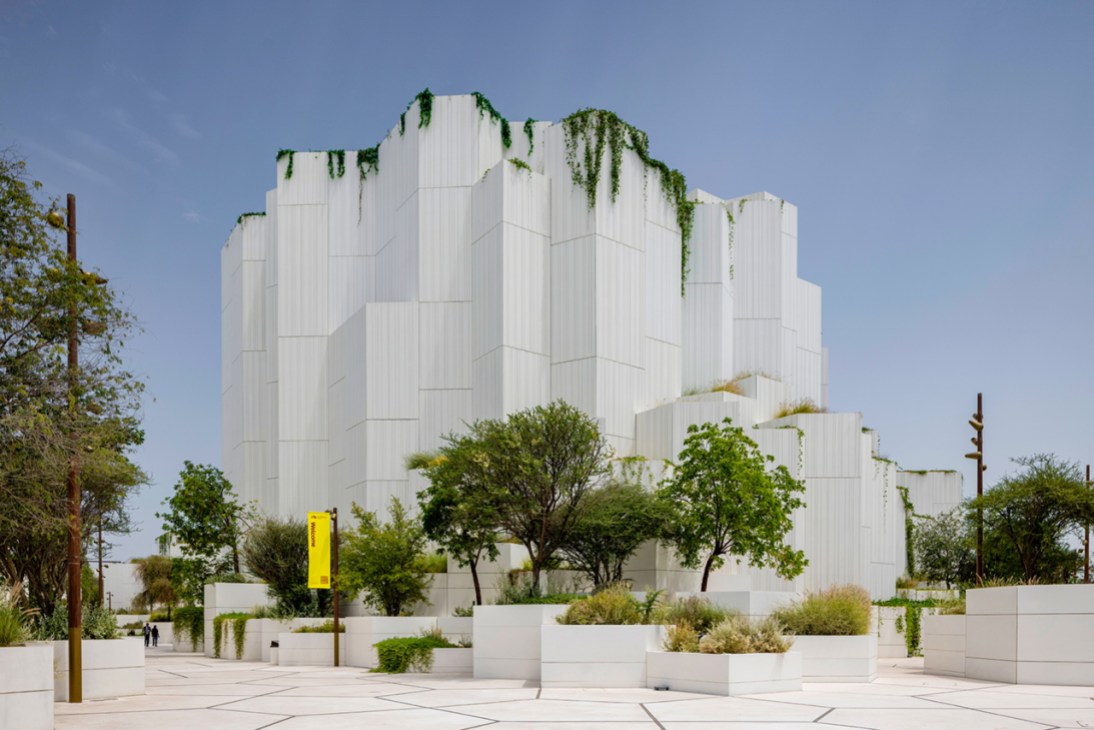
For Saadiyat Cultural District, the ambition from the beginning was to create something that functions as an intrinsic part of the city, a place that residents feel a genuine sense of ownership of, that local artists and practitioners see as their own, and that visitors understand as an expression of a living culture rather than a curated showcase. The programming across our institutions is built to reflect Abu Dhabi’s identity and its communities, with local and regional voices woven into the curatorial process at every level. The stories told within the galleries, and the people invited to shape them, both carry that same commitment.
At the same time, the district sits within a broader cultural ecosystem that spans the entire emirate, connecting Saadiyat to heritage sites, community spaces and cultural destinations in Al Ain and Al Dhafra. The institutions anchor the offering, the wider network gives it roots.
Accessibility is also central to how we think about this. For instance, we marked International Museum Day by making our institutions free to all for three days, a deliberate signal that these spaces belong to everyone, residents and visitors alike. That gesture matters because it reflects our belief that cultural institutions fulfil their purpose when they are open, inviting and felt to be part of shared life rather than preserved behind a barrier of cost or occasion. The visitor figures bear that out, but the intent behind them is the more important point.
Which cultural experience in your life has been the biggest influence on your work and the direction in which you are taking the department?
My earliest memory that speaks directly to this work is visiting the Cultural Foundation as a child. My mother would take me to the library there, and my aunt worked there, so I spent hours in that building, roaming through it, watching practitioners at work, sitting in the theatre and letting my imagination go. The library, the performing arts, the energy of a place where things were being made and ideas were being exchanged. That was my introduction to it all: my love for music, for art, for performance. It came from the Cultural Foundation. It was the reason why I, and many colleagues, entered this field.
One of my first responsibilities at Department of Culture and Tourism – Abu Dhabi was the restoration and rehabilitation of that same building. That connection, between a childhood memory and a professional mandate, has stayed with me. One institution, in a city that had far less than it has today, shaped the direction of my life. When I look at what we are building across Abu Dhabi, the museums, the cultural sites, the performing arts venues, the programmes reaching young people across all three regions, I think about what that means for the children growing up here now. We did not have a natural history museum or contemporary art institutions when I was young. Today, they do. The question of what they will dream, and what they will go on to build, is one I find moving. It all began with the one institution of Cultural Foundation; imagine what children can dream of with all these different cultural platforms now.
The other formative influence is harder to pin to a single place or moment. It came from time spent with my grandfather and my uncles in the majalis [traditional Arabic salons] – learning our ways, hearing our stories, learning how to pour coffee, understanding where we came from. Those hours defined something in me that no institution could have given me, and they are why the preservation and celebration of our intangible heritage sits at the heart of everything we do.
In today’s polarised global climate, what unique role can culture play in creating an atmosphere of tolerance and understanding?
Culture operates at a level that formal exchange rarely reaches. When someone stands in front of a work of art, regardless of the background, faith, or history of its creator, it can speak directly to the heart and the emotions. That form of connection carries its own power and its own logic.
Abu Dhabi’s position – whether that is geographically, historically, or as a place where trade, encounter, and exchange have always defined daily life – gives us a particular vantage point on this. We have our own perspective and our own story, and we tell it with conviction. We have also always understood that being open to others is an expression of confidence in who we are. The Abrahamic Family House in Saadiyat Cultural District is one expression of that instinct, an architectural and conceptual statement about the possibility of coexistence. Louvre Abu Dhabi is another: a museum the entire premise of which is that the story of human creativity is a shared one, told across civilisations and centuries, and that Abu Dhabi is a place where that conversation belongs. The Guggenheim Abu Dhabi, when it opens, will extend that further with a transnational collection and a programme including modern and contemporary art from the Arab world, South Asia and beyond, giving voice to perspectives that global cultural institutions have historically underrepresented.
When millions of visitors from around the world engage with our cultural sites, they encounter one another as they experience this place. What emerges from these encounters over time reshapes how people understand the world and each other’s place within it.
What metrics do you use to quantify the success of Abu Dhabi’s cultural vision?
We measure what can be measured: visitor numbers, economic contribution, the growth of the creative sector, and levels of community participation. Those indicators matter and we take them seriously. But the metrics that matter most are qualitative and longer term: whether Emirati artists are building sustainable careers, whether young people are developing a meaningful relationship with their heritage, whether our talents are building their capacity, and whether Abu Dhabi is seen globally as a source of cultural ideas.
At the heart of this is quality of life. Culture remains a fundamental building block of a well-rounded individual, and our role is to ensure that access to it is universal. That principle of universal access to cultural life is as important to me as any visitor figure or economic metric.
The economic case for culture is clear, and the social case is equally important. Culture is the connective tissue of a place of 200 nationalities, as the foundation of belonging for people who came from elsewhere and chose to stay. These are felt before they are measured.
True success, in the fullest sense, will not be measured in our lifetime. The institutions we are building now, the creative habits we are cultivating in young people today, and the sense of cultural identity we are strengthening will take generations to fully realise. Our duty is to cultivate the richest cultural environment we possibly can, so that our children’s children inherit not just buildings and collections, but a living culture that is entirely and confidently their own.
Younger people are increasingly engaging with culture through social media, gaming and immersive technologies. How is the department adapting to the changing ways in which people will experience culture now and in the future?
Every generation is offered new tools, and we will always consider new technologies as opportunities, as seen through our approach to gaming and many other creative industries. These are meaningful modes of cultural expressions, with their own practitioners, talent ecosystems and cultural nuances.
Abu Dhabi Gaming represents our ambition to position Abu Dhabi among the world’s top global gaming hubs and to build the talent pipeline that makes that sustainable over the long term. Gaming, media and multimedia support innovative mediation tools that allow us to reach out to wider and more diverse segments of the pubic. Culture is constantly evolving to reflect the specificity of its contexts. All means are studied to constantly connect with our youth.
We are constantly investing in reaching young people at the point of formation, through accessible grassroots programming designed to build a relationship with culture early. The goal is to ensure that creative participation feels like a natural part of growing up in Abu Dhabi, across all backgrounds and all three regions of the emirate. What remains constant across all these formats is the purpose: to provoke thought, to create connection, to make people feel something about where they come from and what might be possible. That holds whether you are standing in front of a 7th-century artefact or navigating an immersive digital environment.
Discover more at dct.gov.ae
Live from Dubai: Business, media and culture in the Gulf amid talks and blockades
Our team is in Dubai for a look at the business and investment community’s view and the impact of a prolonged blockade of the Strait of Hormuz. Plus: The Avenue, Dubai’s cultural hub and…