
Meet the winner of the 2026 RIMOWA Design Prize

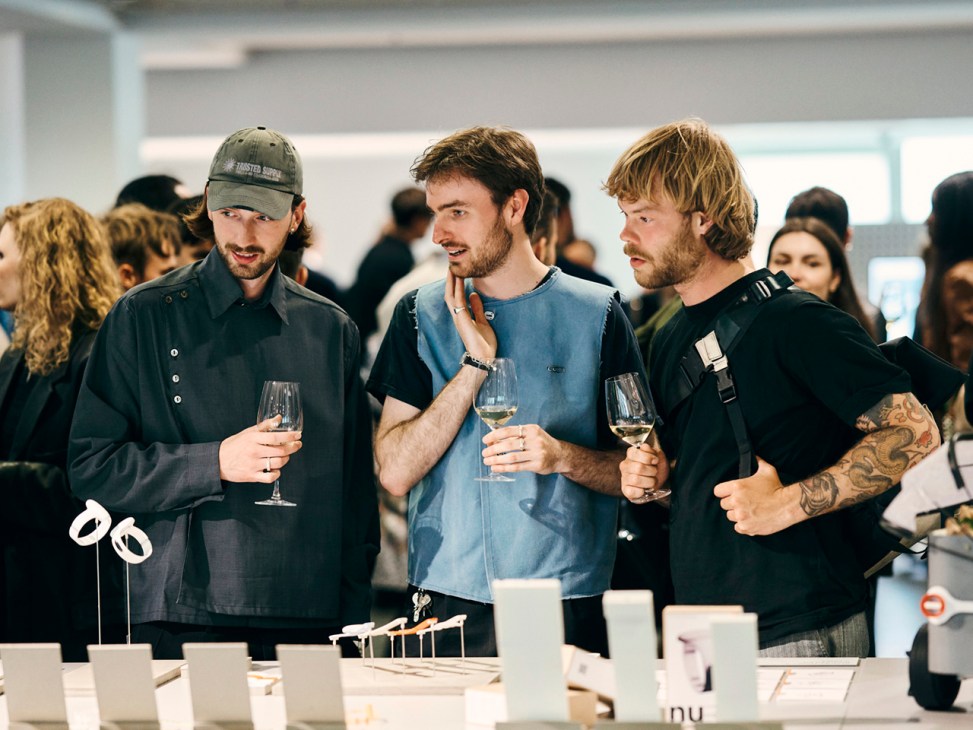
In late spring, industry tastemakers and international press gathered at Berlin’s Kulturform for the fourth edition of the RIMOWA Design Prize.


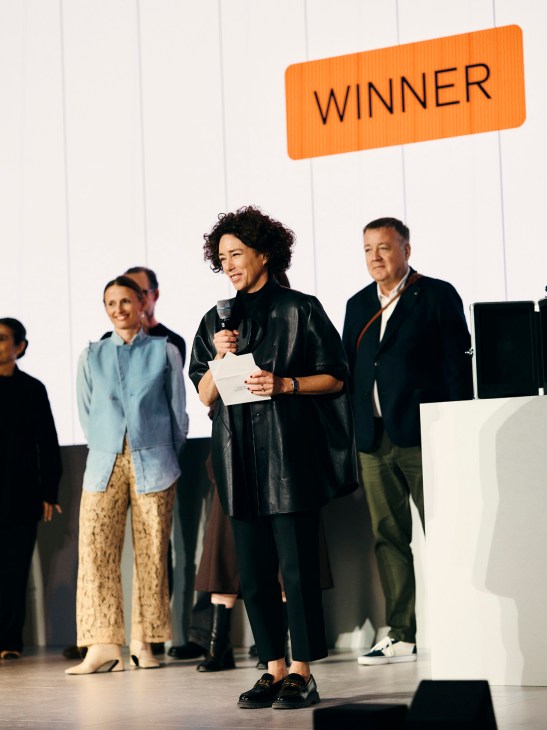
From RIMOWA Design Prize 2026’s many ingenious prototypes, including a mobile beehive and a clay bird that eases loneliness, the jury handed the top award to Nura, a wearable device that translates sign language into speech by measuring muscle activity. All finalists are paired with a top industry mentor. Nura’s Samuel Nagel and Paul Feiler were steered by Tim Richter, head of industrial design at Siemens Healthineers. At a roundtable moderated by Monocle, the trio considers what it means to design by RIMOWA’s principles of creativity, globality, ingenuity and timelessness.
MONOCLE What did you learn from your eight months working together on Nura?
Paul Feiler: We came to Tim with a prototype. We designed Nura for a university project and we wanted to take it further. He encouraged us to dig deeper and not just accept the first answer.
Samuel Nagel: We came in with a lot of ideas on function. He made us focus on the person wearing it.
Tim Richter: They had a very clear vision and they stuck to it. That amazed me. As a designer, you need to withstand critics. It made me reflect on what compromise on vision looks like.
What does creativity mean to you?
TR: Putting pieces together, figuring out what is needed from all angles. How do I show it? How do I visualise it? How do I make it work? You, as a designer, are the creative moderator of the process.
PF: We learned a lot about that with Tim: how to combine those different pieces, how they all communicate. It’s not a formula.
One of the concerns when developing Nura was that sign language isn’t universal – in fact, there are more than 60 different recognised sign languages around the world. Was it a challenge to design with globality in mind?
SN: Absolutely. Each user has to programme their own language, so it involves complex technology – but it’s also a strong point. Muscle movements are so individual that everyone signs differently, even in the same language, so the device is now able to learn its user’s ways.
TR: Good design should have a global mindset and I think Nura really does. In a connected world like ours, there is no such thing as “local” design any more.
PF: Another part of thinking about the globality of our design is more subtle. I hope that it sparks conversations about, for example, the responsibility of designers to design with everyone in mind.
SN: We tried to show that you can create a medical device that’s not a compromise. Something that looks nice and is empowering and that people like to wear. TR Instead of something that is stigmatising, Nura empowers deaf people in their individual mobility.
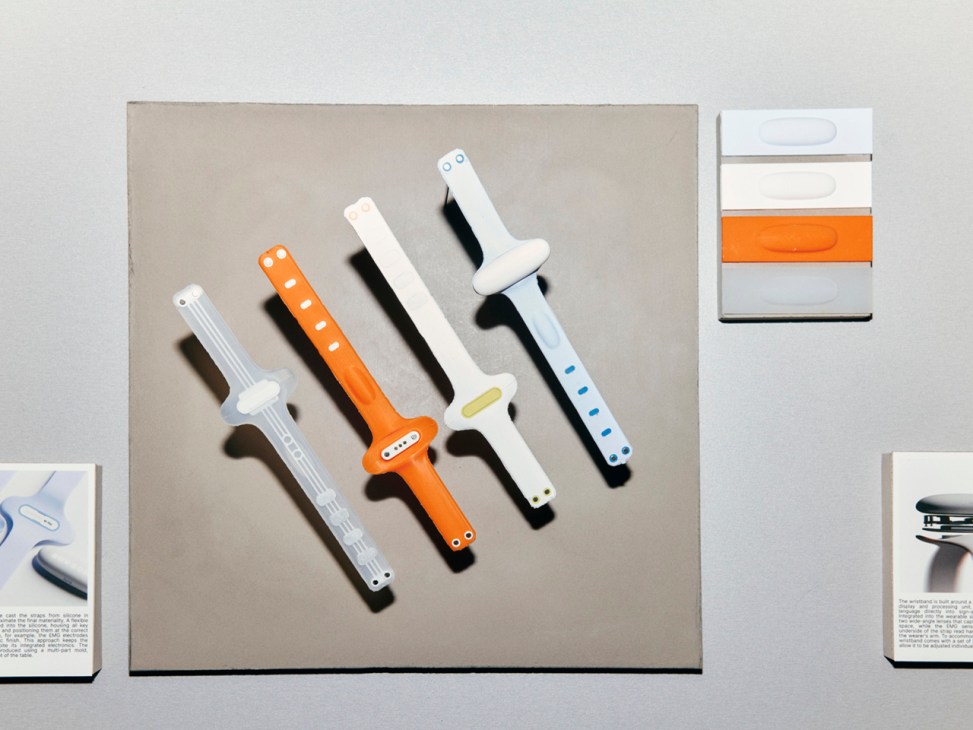
Nura aims to improve mobility – the theme of the RIMOWA Design Prize since it launched in 2022 – through connection.
SN: Exactly. You can’t have mobility without connection. When we were developing the prototype, we had a lot of conversations with sign-language interpreters, who told us that they were booked out for months in advance, or that their services weren’t always affordable for those who needed them. People with hearing impairments were prevented from going to a wedding, for example, or participating in a big work meeting, so we started to think of ways to remove those barriers.
PF: It’s also about the barriers in our minds. We built a tool to communicate with people who we usually would not communicate with, because we weren’t sure how to approach them.
TR: It’s made me reflect in my own work about how important it is to keep patients – users – at the centre of design. And the planet.
Nura is a beautiful product. Did you have to make any compromises on aesthetics to improve functionality?
PF: We tried to stay true to our goal of empowering the wearer through the design language. But it’s always a conversation. It may look more elegant but then how do you integrate technical parts in there?
TR: One aspect that we talked about a lot was whether we should integrate it into a powerful device, like a smartwatch.
PF: Ultimately, Nura has one function that enables mobility, and we didn’t want to complicate it. It’s not always about making an object do everything possible.
SN: We want it to stand alone and the wearer to be proud of it. What is the key to designing a product that lasts?
PF: It’s about the emotional connection that you create – the connection a user has to a product.
TR: When an object serves a purpose with elegance, it’s a lasting product. And a lasting product is a sustainable one.
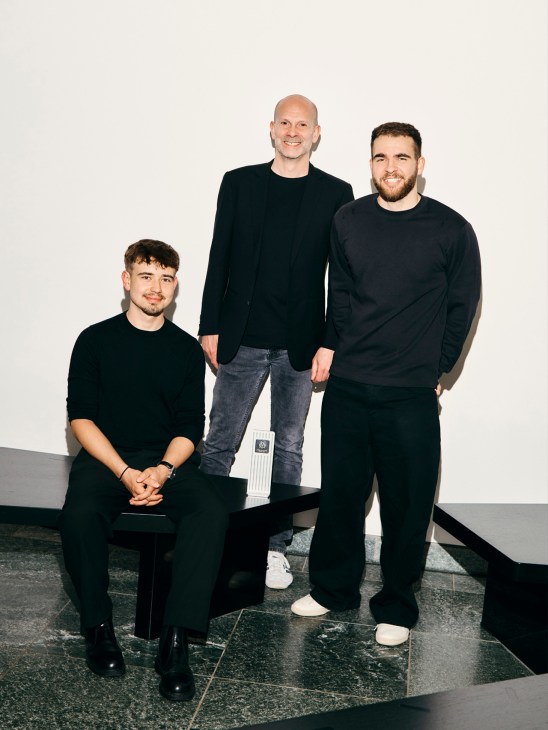
“When an object serves a purpose with elegance, it’s a lasting product. And a lasting product is a sustainable one.”
– Tim Richter, head of industrial design, Siemens Healthineers
Discover more rimowa.com