Design Directory
Editor’s letter: Monocle’s inaugural Design Directory
Why the Monocle Design Directory? And why now? To answer these questions, we need to rewind to the launch of Monocle in 2007. Since our first issue, politics, business, fashion and culture have been filtered through the lens of design. Diplomatic residences have been scrutinised, national economies assessed in terms of their industrial-design output and social cohesion in cities measured in terms of newly built galleries, museums and institutions. It’s an approach to journalism that recognises that the work of architects, graphic designers, furniture makers and design brands is far-reaching – beyond simply making beautiful things, these creatives have the power to shape our lives and build communities. It’s what drew me to Monocle in 2010 as a designer on the lookout for benchmark projects and then – after a slight career pivot – as a design journalist in 2018. And it’s why we’re pressing play on our first stand-alone magazine dedicated solely to design.
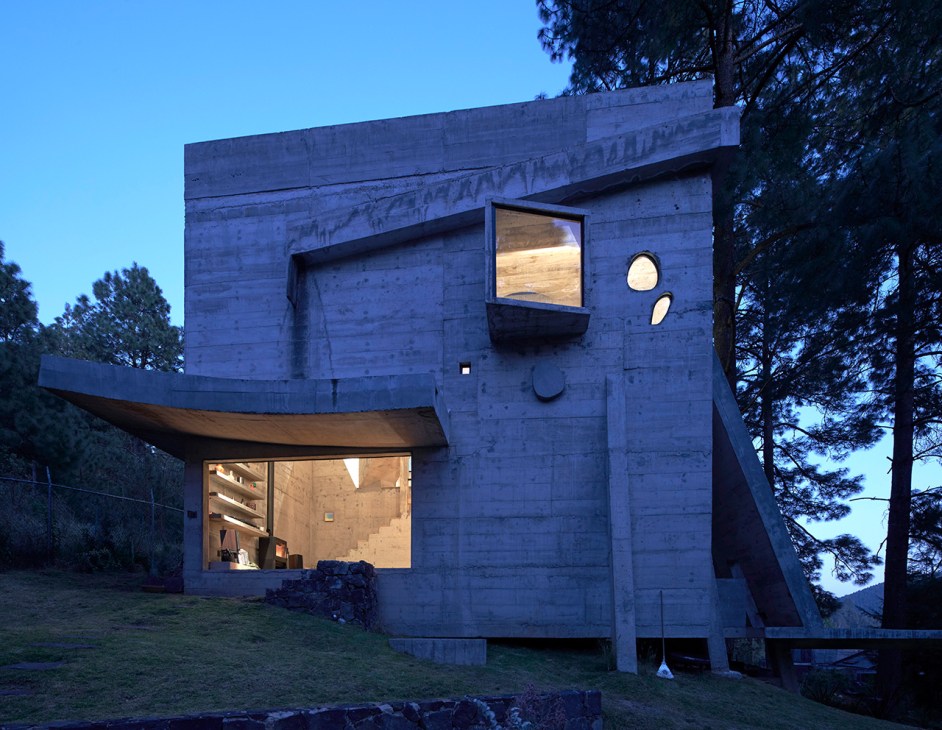
The world today needs good design and architecture more than ever. Across our pages, you’ll find homes with substance, businesses with heft and some gorgeous products too. For example, one can look at the reporting of this publication’s deputy editor, Grace Charlton, who took a tour through the Balkans, visiting Cold War-era memorials. Originally built to recognise conflict and postwar development, these monuments tell a story that is as much about reconciling the past and the present as it is about recognising striking architecture. The report might just inspire your next roadtrip.
Complementing this is a story from Edmund and Yuki Sumner, a photographer-and-journalist super team, who examined how contemporary Mexican architects are building inspiring homes. Meanwhile, our editor in chief, Andrew Tuck, paid a visit to the father-and-son duo behind Fenix Originals. This Barcelona-based outfit is drawing attention to forgotten mid-century Spanish designers through the restoration of vintage furniture. It’s a cause that tugs at the heartstrings and provides buyers with unique furniture with which to kit out their homes and offices.
Naturally, some broader themes have emerged.
Immersing ourselves in design communities in Tokyo, Paris and São Paulo, we report on how traditional craftsmanship lays the foundations for innovation. In our visits to projects across the globe – from Bidadari Park in Singapore to a repurposed flyover space in Surat, India – we examine how design can help to build communities. These stories will hopefully inspire you to use design to improve your life and wellbeing, while delivering on our promise to spotlight uplifting projects and beautiful wares for your home.
For more design coverage from our team, tune in to Monocle on Design every week, or subscribe to our weekly design newsletter at monocle.com/minute.
Monocle’s Global Design Directory 2025: Where to find designers around the world
Need an architect in Athens or collectable furniture in Copenhagen? Our new Design Directory connects you with vetted creatives on every continent. From emerging studios to market leaders, skilled craftspeople to cutting-edge brands, this guide delivers contacts for transforming any space – an address book for navigating the world of design.
Europe
Regional design identities remain strong in Europe. The continent’s design capitals maintain distinct visual languages – from Scandinavian minimalism to Italian luxury – shaped by local materials, cultural heritage and the peculiarities of each market.
Amsterdam
The Dutch capital plays host to some of design’s brightest minds, from the Amsterdam School’s community-minded architecture to its savvy housing scheme.
Inside Outside
The name says it all: this design studio specialises in both landscape and interior design.
Schakelstraat 4, Amsterdam
+31 20 681 0801, insideoutside.nl
UNStudio
Architecture practice renowned for large-scale infrastructure projects imbued with a sculptural sensibility.
Stadhouderskade 113, Amsterdam
+31 20 570 2040, unstudio.com
Nicemakers
Looking for cinematic interiors? This is the studio to turn to.
Stadhouderskade 160, Amsterdam
+31 20 354 7228, nicemakers.com
Antwerp
Belgium’s diamond capital layers cutting-edge contemporary structures on art nouveau mansions. Meanwhile, the city’s famed fashion academy plays an outsized role in shaping its creative scene.
Studio Helder
Buy outstanding collectable pieces ranging from furniture to jewellery or turn to the studio of this multifaceted business for advice on design.
Provinciestraat 100, Antwerp
+32 3 289 43 18, studiohelder.be
Espoo
Searching for a piece of Scandinavia in Belgium? Drop by this shop that stocks the best in Nordic furniture and homeware.
Kloosterstraat 75-77, Antwerp
+32 3 237 57 97, espoo.be
Going East
Interiors practice specialising in design-build, ensuring that projects are delivered accurately and impeccably.
Ridder van Parijsstraat 18, Antwerp
+32 3 226 81 59, goingeast.be
Athens
Ancient craft traditions meet a contemporary design renaissance in the Greek capital, with marble and ceramic workshops influencing modern furniture makers.
Hyper Hypo
Colourful bookshop selling the best print titles. It’s also an informal community hub for the city’s creative scene.
Voreou 10, Athens
+30 21 1735 9628, hyperhypo.gr
Antiqua
Gallery established in 1954 that specialises in 20th-century design masterpieces – drop by for the best collection in Athens.
Irodotou 7, Athens
+30 21 0323 2220, antiqua.gr
Point Supreme
Masters of blending simple geometries with complex colour palettes, this architecture studio is the go-to for inspiring Mediterranean interiors.
Genneou Kolokotroni 68B, Athens
pointsupreme.com
Barcelona
Gaudí’s fairy-tale modernisme might be Barcelona’s calling card but the Catalonian city has never coasted on past glories, with a host of contemporary firms creating illuminating architecture, furniture and objects.
Isern Serra
Versatile design studio creating beautiful objects with a focus on materiality and craftsmanship.
Carrer Llull 47-49, Barcelona
+34 650 293 485, isernserra.com
Santa & Cole
One of Catalonia’s leading lights, this design firm adds atmosphere and character to any space.
Carretera, C-251 Km 5,6, Parc de Belloch, Barcelona
+34 938 619 100, santacole.com
Mesura
Studio creating beautiful architecture with a deep understanding that aesthetics is linked to durability and sustainability.
Carrer de Gomis 34, Barcelona
+34 934 672 190, mesura.eu
Marset
Family-run firm continuing to produce innovative, cutting-edge lighting designs.
Carretera de Rubí 284, Barcelona
+34 934 602 067, marset.com
Sandra Tarruella Interioristas
Looking for a timeless, atmospheric interior? Turn to these experts who specialise in restaurants, hotels and commercial spaces.
Madrazo 83, Barcelona
+34 933 622 264, tarruellainterioristas.com
BD Barcelona
Design pioneers since 1972, this newly revived firm brings to life iconic furniture pieces by Gaudí, Dalí and contemporary masters.
C/Ramon Turró 126, Barcelona
+34 934 570 052, bdbarcelona.com
Basel
Despite the city’s compact size, celebrated international designers including Frank Gehry, Zaha Hadid and Tadao Ando have worked in Basel. Swiss engineering prowess is also evident in the precision of the construction of its skyline.
Tiny Küche
Looking for a space-saving mini kitchen? Turn to this company for interior and exterior fit-outs.
St. Alban-Vorstadt 15, Basel
+41 61 272 18 18, tinykueche.ch
Christ & Gantenbein
Architecture firm that has delivered significant infrastructure and cultural landmarks with efficient design concepts.
Spitalstrasse 12, Basel
+41 61 260 90 20, christgantenbein.com
Glassworks Matteo Gonet
Bespoke glassworker that specialises in everything from large-scale sculptural works to made-to-order chandeliers.
Tramstrasse 66, Münchenstein
+41614114121, matteogonet.allyou.net
Vitra
Firm dedicated to improving homes, offices and public spaces through quality furniture design.
Charles-Eames-Strasse 2, Weil am Rhein
+49 76 21 702 32 40, vitra.com
Berlin
The German capital’s architectural layers tell stories of kingdoms, republics, division and reunification. It’s a mix that attracts creatives of all stripes – from architects and designers to musicians and couturiers.
DOM Publishers
Print specialists producing high-quality design-minded publications.
Caroline-von-Humboldt-Weg 20, Berlin
+49 30 206 96930, dom-publishers.com
Hacking Gutenberg
Workshop redefining the letterpress in the 21st century through research, printing and experimentation.
Potsdamer Strasse 98A, Berlin
+49 30 832 19070, hackinggutenberg.berlin
Holder
Editorial platform, retailer and gallerist showcasing contemporary and collectable design from Latin America.
Rosenheimer Strasse 7, Berlin
+49 152 078 77192, holder-objects.com
Süper Store
Curated design shop specialising in glass, ceramics, jewellery and objects from Japan.
Prinzenstrasse 85C, Berlin
sueper-store.de
Copenhagen
Far from resting on the laurels of its mid-century designers, Copenhagen continues to export outstanding creative talent worldwide, thanks in no small part to its respected design schools.
NormArchitects
Design studio that creates architecture, interiors and products with a focus on minimalist forms and calming spaces.
Amaliegade 21D, Copenhagen
+45 28 87 93 09, normcph.com
SLA
Studio with a focus on landscape architecture, with projects that range from nature-inspired spaces and drawing up city master plans to biodiversity strategies.
Njalsgade 17B, Pakhus 2, Copenhagen
+45 33 91 13 16, sla.dk
Tom Rossau
Independent lighting designer with a shop-front workshop and studio where distinctive sculptural pendant lights and lamps are created.
Frederiksberg Allé 5,Copenhagen
+45 71 94 00 00, tomrossau.com
AtelierAxo
Cross-disciplinary studio specialising in small-scale architecture, interior design and bespoke furniture.
Bredgade 66, Copenhagen
+45 40 88 63 38, atelier-axo.com
Moebe
Danish furniture brand doing more with less, producing furniture and objects reduced to their simplest, most efficient forms.
Strandlodsvej 42a, Copenhagen
+45 71 74 74 96, moebe.dk
Fritz Hansen
Established in 1872, this storied international design house continues to create world-class furniture, lighting and homeware.
Valkendorfsgade4, Copenhagen
+45 39 20 20 31, fritzhansen.com
Geneva
A lakeside city where French and German architectural traditions merge with Italian influences, Geneva also has a watchmaking heritage that brings mechanical flair to the city’s creative scene.
Lacroix Chessex
Architecture studio specialising in residential, educational and public buildings, often defined by impressive geometric forms.
Ruedes Cordiers 4, Geneva
+41 22 300 54 07, lacroixchessex.ch
Les Illuminés Design XXème
Gallery specialising in 20th-century design classics from masters such as Le Corbusier, Charles and Ray Eames and Poul Kjaerholm.
Rue Vignier 3, Geneva
+4179 725 33 75, lesilluminesdesign.ch
Bonhôte Zapata
Architecture firm with a masterful grasp of light and natural materiality, working on everything from civic to residential projects.
Rue du Levant 3, Geneva
+41 22 786 37 83, bonhotezapata.ch
Helsinki
Finnish design’s reputation was built on the backs of companies such as Iittala and Artek, which embraced the country’s glassmaking and timber heritage – a trend that continues to evolve today.
Studio Joanna Laajisto
Functionality, quality and beauty converge in this interior studio’s work across retail, hospitality and commercial spaces.
Kalevankatu 18 B, Helsinki
+358 44 214 5937, joannalaajisto.com
Vaarni
Pine is the material of choice for this firm that creates brutal yet sleek objects in partnership with Finnish craftspeople and factories.
Sorvaajankatu 15, Helsinki
+358 10 319 9670, vaarnii.com
Hakola
Colourful family-run firm creating responsibly-made, joy-inducing furniture.
Annankatu 5, Helsinki
+358 50 358 2739, hakola.fi
Istanbul
Radical design has flourished on the Bosphorus for centuries, creating a patchwork where 1950s international style sits alongside 16th-century mosques. Its craft scene, defined by carpet weaving and kilim making, adds texture to interiors and the fabric of the city.
Autoban
Architecture studio delivering sensitively conceived projects, ranging from underground transport terminals and vast airports to tropical resorts.
Dibek Sokak No 48 Galata, Istanbul
+90 212 243 8641, autoban.com
Sanayi313
Design, furniture, art and food come together at this lifestyle brand’s industrial workshop.
10 Sokak No 313 Maslak, Istanbul
+90 212 286 3857, sanayi313.com
Uniqka
Design brand reviving handcrafted leather traditions in partnership with contemporary designers.
Aktarlar Sokak No 27/A Besiktas, Istanbul
+90 532 427 1383, uniqka.com
Lisbon
Portugal has a rich design heritage defined by a deep appreciation for craft and a recent influx of expats in the capital is enlivening the city’s artistic milieu.
Corticeira Amorim
Leading cork producer that is transforming the natural material into innovative architectural products and design solutions.
Rua de Meladas 380, Mozelos
+351 22 747 5400, amorim.com
Garcé Dimofski
Design studio known for interiors and furniture with a pared-back look that maintains a sculptural quality.
Rua dos Anjos 16, Lisbon
garce-dimofski.com
P-06
Storytelling is at the core of this studio specialising in environmental graphic design, from wayfinding to place branding.
Praça Guilherme Gomes Fernandes 28A, Paço de Arcos
+351 21 446 7367, p06.studio
Monade
Publishing house with a focus on research books and monographs on architecture, photography and art.
Rua Rodrigues Sampaio, 19 5B, Lisbon
+351 96 654 7982, monadebooks.com
London
The UK capital continues to attract global talent thanks to its world-class educational facilities and the diversity of its creative communities. The result is innovation in fashion, graphics, architecture and furniture.
Michael Anastassiades
Cypriot-born designer known for cinematic ambient lighting and high-quality objects.
50 Rochester Place, London
+44 20 7928 7527, michaelanastassiades.com
Industrial Facility
Beauty and utility seamlessly combine in this studio’s furniture- and product-design output.
20 Britton Street, London
+44 20 7253 3234, industrialfacility.co.uk
Studio Frith
This design studio is an expert in using colour and typography to create inspiring branding and graphic work.
18 Club Row, London
studiofrith.com
Goldfinger
Community-minded organisation that designs everything from bespoke furniture pieces to outreach programmes aimed at training the next generation of craftspeople.
66A Turnmill Street, London
goldfinger.design
Modular By Mensah
Furniture-design studio that promotes social connection and community through its work.
Unit 221B, Peckham Levels, Moncrieff Street, London
modularbymensah.com
William Smalley
Architecture studio creating spaces informed by a deep understanding of context and memory, as well as material and craft.
13 Great James Street, London
+44 20 7242 0028, williamsmalley.com
SCP
Leading furniture retailer of contemporary and iconic interior pieces that also commissions and produces new British design.
135-139 Curtain Road, London
+44 20 7739 1869, scp.co.uk
Madrid
Grand boulevards and ornate fountains sit alongside village-like plazas and narrow streets in this city of contrasts. This varied inspiration shapes the work of its creatives.
Langarita-Navarro
Architecture studio blurring boundaries between indoor and outdoor spaces, public and private spheres, as well as nature and the manmade.
Grijalba 8, Madrid
+34 915 645 984, langarita-navarro.com
Office for Political Innovation
Multidisciplinary agency dedicated to architecture and exhibitions, operating at the intersection of design, research and environmental activism.
Calle Arriaza, 6, Madrid
+34 910 572 163, officeforpoliticalinnovation.com
Penadés
Research-driven studio developing new materials and objects while curating architectural experiences.
Rondade Toledo 16, Local 304, Madrid
+34915524270, penades.xyz
Espacio Brut
Design outpost for 20th- and 21st-century objects, art, books and collectable design.
Calle Pelayo 68, Madrid
+34 910 258 963, espaciobrut.com
Milan
Home to the famed Salone del Mobile, Milan continues to have far-reaching influence on global design trends and industries. Against this business backdrop is a city of impressively varied architecture, spanning from the gothic spires of the Duomo to Liberty decoration and Gio Ponti’s modernism.
ACPV Architects
Architecture studio delivering city-defining projects, from high-rise towers to urban plazas, grand hotels and commercial headquarters.
Via Cerva, 4, Milan
+39 02 763 8801, acpvarchitects.com
Vero International
Next-generation furniture and homeware brand using Italian know-how to produce simple and elegant wares.
verointernational.com
6:AM Glassworks
Studio that is redefining Italy’s glassmaking heritage by combining traditional techniques with contemporary aesthetics.
Via Privata Felice Romani 2, Milan
+39 02 8410 6869, 6am.glass
Formafantasma
Leading design studio working across architecture, branding, product and exhibition design, with an approach defined by a deep respect for cultural, social and environmental context.
Via Privata Assab 1, Milan
formafantasma.com
Objects Are By
Homeware brand connecting creatives and artisans in the production of unique, environmentally low-impact pieces.
objectsareby.com
Munich
From Olympiapark’s landscape-embedded stadiums to corporate headquarters, function precedes aesthetics in the Bavarian capital. The result? Practical industrial design and smart, contemporary architecture.
Holzrausch
An interior-design studio with production facilities for the creation of bespoke furniture and architecture.
Blumenstrasse17, Munich
+49 89 1893 2880, holzrausch.de
Bureau Borsche
Graphic-design studio specialising in editorial design, creating distinct visual identities and typographic work.
Paul-Heyse-Strasse17, Munich
+49 89 6214 6672, bureauborsche.com
J*Gast
Innovative brand challenging notions of what traditional unit kitchens can be through the use of modular, customisable solutions.
Blumenstrasse 17, Munich
+49 89 8776 5575, jgast.com
Occhio
Systems-based lighting brand that manufactures its own luminaries and fixtures.
Wiener Platz 7, Munich
+49 89 4477 8630, occhio.com
Oslo
Sustainable timber construction and landscape-integrated buildings reflect the Nordics’ love for nature. It’s an outlook embraced by Oslo’s leading furniture makers.
Shapes by Hydro
The research and furniture-production arm of aluminium specialists Norsk Hydro.
Drammensveien 264, Oslo
+47 22 53 81 00, shapesbyhydro.com
Fjord Arkitekter
Architecture firm delivering structures with a respect for local ecologies, economies and cultures.
Bjerregaardsgate 1A, Oslo
+47 40 41 61 61, fjordarkitekter.no
Edvin Klasson
Independent designer creating objects and furniture, radically combining materials and forms.
+47 97 14 66 39, edvinklasson.com
Paris
An appreciation for beauty and craft shapes Paris’s outlook on design, whether in the work of haute-couture ateliers or the magnificent rooftops lining Haussmannian boulevards.
Pierre Yovanovitch Mobilier
Renowned interior designer producing elegant furniture collections with high-quality French craftsmanship.
4 Passage Sainte-Avoye, Paris
+33 1 84 74 77 90, pierreyovanovitch.com
Yorgo & Co
Creative studio specialising in savvy solutions across branding, interiors and product development projects.
51 Rue des Vinaigriers, Paris
+33 1 40 38 81 85, yorgo.co
Garnier & Linker
Lighting, furniture and object design studio producing work for a range of environments, from residences to hotels and galleries.
22 Rue de l’Echiquier, Paris
+33 6 73 51 76 18, garnieretlinker.com
The Invisible Collection
Curators of exceptional contemporary furniture and decorative objects, sourced from a global cohort of designers and artisans.
20 Rue Amélie, Paris
+33 1 84 88 04 66, theinvisiblecollection.com
Festen Architecture
Makers of elegant interiors defined by rich textures and robust materials.
14 Rue Commines, Paris
+33 9 86 41 30 26, festenarchitecture.com
Kann Design
French-Lebanese studio designing, manufacturing and kitting out interiors with bespoke furniture and architectural solutions.
30 Rue des Trois Bornes, Paris
+33 9 62 54 42 03, kanndesign.com
Tiptoe
Savvy design meets sleek industrial machining to produce smart seating, tables and homeware.
49 Rue Étienne Marcel, Paris
+33 1 80 50 05 13, tiptoe.fr
Prague
A post-communism creative renaissance saw a design boom in the Czech capital, where Bohemian glass traditions and heritage woodworking and ceramic practices have been adapted to suit modern needs.
Chybik + Kristof
This Czech-founded global office carries out projects with strong cultural and community ambitions.
Vodickova 736/17, Prague
+420 775 727 488, chybik-kristof.com
Camp
The Center for Architecture and Metropolitan Planning (Camp) is a hub for discussion, encouraging discourse on the development and construction of Czech cities.
Vyšehradská 51, Prague
+420 770 141 547, praha.camp
Master & Master
Czech-made furniture marrying functionality and playfulness across a range that spans from sofas to magazine holders.
Na Zátorách 7, Prague
+420 725 258 289, masterandmaster.eu
Rome
The Italian capital has a long history: Roman ruins and Renaissance churches join baroque basilicas. But new constructions in the city prove that its design know-how extends far beyond its ancient foundations.
Rhinoceros
Seventeenth-century palazzo combining hospitality with exhibition spaces showcasing work by contemporary creatives and deep dives into design history.
Via delVelabro 9, Rome
+39 6 679 7434, rhinocerosroma.com
Secondome
Design gallery championing Italian designers and promoting handcrafted contemporary objects.
Via Portuense 201, Rome
+39 34 7634 4053, secondome.biz
Giustini / Stagetti
On the lookout for 20th-century Italian design? This gallery stocks a variety of pieces from design masters.
Via Gregoriana 41, Rome
+39 06 8765 2093, giustinistagetti.com
Rotterdam
The Dutch city owes its reputation to the post-Second World War construction boom in which the city became an architectural playground filled with bold, experimental design.
Studio Sabine Marcelis
Few designers are shaping the contemporary design landscape quite like Sabine Marcelis. The Dutch designer has collaborated with the likes of Ikea, Hem and Cc-Tapis.
Vlaardingweg 28, Rotterdam
+31 6 3421 0798, sabinemarcelis.com
Cloud
Multidisciplinary practice working across architecture, interiors and product design, delivering work defined by a masterful command of sculptural forms.
Delftseplein 36, Rotterdam
+31 6 8627 9603, cloud-ism.com
MVRDV
Global architecture firm working on projects that function as “city doctors” connecting people with each other and the environment.
Achterklooster7,Rotterdam
+31 1 0477 2860, mvrdv.com
Stockholm
Thriving creative neighbourhoods are scattered across the Swedish capital, defined by rusty townhouses, sky-splitting spires, baroque palaces and Nordic classicism.
Note Design Studio
Interiors and architecture studio redefining the contemporary Nordic aesthetic through the use of playful forms and colour combined with natural light and materials.
Nytorgsgatan 23, Stockholm
+46 8 656 88 04, notedesignstudio.se
Massproductions
Contemporary furniture company building on the clean, functional elegance of modernism.
Katarinavägen 11C, Stockholm
+46 8 789 03 90, massproductions.se
Hem
Independent design brand delivering imaginative, functional contemporary furniture of exceptional quality.
Torsgatan 16, Stockholm
+46 8 408 067 40, hem.com
Jacksons
Gallery specialising in 20th-century Scandinavian design, with a focus on Swedish classics.
Sibyllegatan 53, Stockholm
+46 70 545 40 49, jacksons.se
Venice
A global standout in terms of urban design and architecture, the city is also home to the Venice Biennale’s famed International Architecture Exhibition, while its glassmaking scene on the island of Murano continues to inspire.
Nason Moretti
Family-run Murano glassworks creating distinctive pieces finished in a range of hues and textures.
Calle Dietro Gli Orti 12, Venice
+39 041 739 020, nasonmoretti.com
Bruno
Graphic-design studio, exhibition space, specialist bookshop and publishing house focusing on visual communication.
Dorsoduro 2729, Venice
+39 041 523 0379, b-r-u-n-o.it
Laguna B
Firm creating contemporary Murano glassware, reinterpreting traditional goti de fornasa into collectable pieces.
Dorsoduro 3276, Venice
+39 041 098 6405, lagunab.com
Vienna
The legacy of the city’s golden age at the turn of the 20th century laid the foundations for the Austrian capital to remain full of vibrant creativity.
Eoos
Product and furniture studio designing for global brands, while also working on humanitarian projects for disadvantaged communities.
Zelinkagasse 2/6, Vienna
+43 1 4053987, eoos.com
Studio Es
Graphics and branding studio specialising in print and visual identity design.
Siebenbrunnengasse 21/5, Vienna
+43 664 8498717, studio-es.at
Jarosinski & Vaugoin
Celebrated silversmith creating pieces that range from cutlery to ornamental urns.
Zieglergasse 24, Vienna
+43 1 5233388, vaugoin.com
Warsaw
A hub of Eastern European talent, Warsaw’s modernist architectural heritage, informed by postwar reconstruction, continues to influence its contemporary design.
366 Concept
Brand specialising in reissuing classic mid-century Polish furniture using environmentally minded production methods.
Nowogrodzka 10/Apt 2, Warsaw
+48 57 760 73 66, eu.366concept.com
Tylko
Furniture label known for its bespoke and readily customisable shelving and storage systems.
Czerska 8/10, Warsaw
tylko.com
Maja Ganszyniec Studio
Design studio with a global roster of clients, creating products rooted in material honesty and refined forms.
Odynca 9/4, Warsaw
studioganszyniec.com
Zürich
The international typographic style – a graphic movement that prioritised clarity, order and legibility – had a significant influence on Zürich. Today, those effects on its foundational home can still be seen, from architecture to print.
MACH Architektur
Architecture practice creating elegant and robust buildings with a focus on precise details and materials.
Hardturmstrasse 76, Zürich
+41 44 248 36 50, macharch.ch
Lars Müller
Publisher of award-winning books on architecture, design and photography, renowned for its intellectual and aesthetic rigour.
Pfingstweidstrasse 6, Zürich
+41 44 274 37 40, lars-mueller-publishers.com
Charles O Job
Designer known for furniture and product design emphasising simple forms, rich colours and a multicultural sensibility.
Ottikerstrasse 53, Zürich
+41 44 361 14 20, charlesjob.com
Kodai and Associates
Architecture studio blending Japanese, Italian and Swiss influences to create detail-rich, intentional spaces.
Lavaterstrasse 45, Zürich
+41 44 536 39 83, kodaiandassociates.com
Edition VFO
Publishing house behind a wide range of editioned prints and artworks, promoting graphic art to a wider public.
Limmatstrasse 268, Zürich
+41 44 241 53 00, edition-vfo.ch
Milan Rohrer Studio
Industrial-design studio with a specialisation in transport, from autonomous aircraft-towing vehicles to modular fire engines.
AmWasser 55, Zürich
+41 78 677 42 73, milanrohrer.com
Middle East and Africa
From Accra to Riyadh, a new generation of designers is drawing on millennia of artistic heritage and traditional craft to produce work that is deeply contextual, sustainable and forward-looking. The region's creative scene is imbued with a bold sense of optimism about the future.
Abu Dhabi
Emirati traditions meet ultra-modern aspirations as contemporary designers reimagine the city’s cultural heritage, using everything from traditional Islamic geometries to mashrabiya latticework.
Agata Kurzela Studio
Architecture, interiors and furniture-design studio producing sleek works that play with form, light and shadow.
kurzela.com
Fount
Design-minded concept shop celebrating good design with a world-class selection of objects, books and collectables.
Erth, Khor Al Maqta, Al Khaleej Al Arabi Road, Abu Dhabi
+971 58 540 5698, fountconcept.ae
Slash
Part of the Ripple Collective of Abu Dhabi-based creative businesses, this multidisciplinary studio works across strategy, branding, visual identity and spatial design.
Level 3, Erth, Khor Al Maqta, Al Khaleej Al Arabi Road, Abu Dhabi
+971 2 679 8800, ripplecollective.ae
Accra
Ghana’s capital embraces both traditional craft and Africa’s best new design. Vibrant textile traditions and local hardwoods, such as mahogany, shape the furniture industry.
Dot Ateliers
Creative residency and hub providing resources for artists and designers to deepen their practice.
254a Third Kaadjano St, Accra
dotateliers.space
Limbo Accra
Spatial-design practice working across public art, design and architectural production to challenge perceptions about the way we use buildings and develop cities.
limboaccra.online
Nav_S Baerbel Mueller
Architecture and design studio specialising in contemporary projects across western Africa.
nav-s.net
Beirut
At the crossroads of Mediterranean culture with a proud emphasis on Middle Eastern traditions, the Lebanese capital plays host to a design scene that is constantly rebuilding and reinventing itself.
Blatt Chaya
Family-owned tile producer reviving 19th-century artisanal tile-making practices with contemporary patterns.
POBox 5685 663, Al Midane Street, Dekweneh, Beirut
+961 1 695 222, blattchaya.com
Fabraca
Specialists in the design and making of bespoke lighting, this studio combines spatial design with in-house manufacturing expertise.
3rd Floor, Obeid Building, Bauchrieh Industrial City
+961 3 917 501, fabracastudios.com
Cairo
Five millennia of design heritage converge in Cairo, where specialist schools foster new talent while artisans in workshops across the city adapt ancient techniques for contemporary markets.
Dar Arafa Architecture
Contemporary architecture firm known for residential and commercial projects across the Middle East and North Africa.
New Cairo1, Cairo
+20 10 26000669, dararafa.com
Matter
Colourful brand-design and communications agency working in creative strategy and visual identity.
2ElMalekElAfdal, Zamalek, Cairo
+20 10 33960972, matterbranding.com
Timm Henger
Based in Cairo but with roots in Leipzig, Germany, this visual-communication studio produces striking, contemporary graphic works.
timmhenger.com
Cape Town
South Africa’s design capital has a creative scene full of manufacturing know-how and resourcefulness that produces architecture and furniture rooted in craft.
Lemon Furniture
Contemporary furniture-design studio creating distinctive pieces for residential and commercial spaces.
24 Waterkant Street, Cape Town
+27 66 035 3183, lemonfurniture.co
Monday Design
Graphic design and branding studio specialising in packaging and visual identity.
160 Sir Lowry Road, Cape Town
+27 82 454 5827, mondaydesign.co.za
James Mudge
Product and furniture designer creating sculptural pieces that blur the lines between art and function.
1 Calcutta Street, Paarden Eiland, Cape Town
+27 79 448 1683, jamesmudge.com
Anatomy Design
Leading retail outpost for furniture, lighting and homeware, working in close partnership with interiors studio Hesse Kleinloog.
7 HudsonStreet, DeWaterkant, CapeTown
+27 21 300 6071, anatomydesign.co.za
Dakar
Creativity blossoms in Senegal’s coastal capital, where designers are increasingly looking to work with local and indigenous materials, reducing reliance on imported goods.
Q08 Design Store
Curated design shop, connected to art and design centre Studio Quatorzerohuit, showcasing contemporary African design.
12 Avenue Georges Pompidou, Dakar
+221 78 100 14 08
Aissa Dione Tissus
Traditional and contemporary textile studio specialising in West African fabrics and patterns.
Parcel 104B Sodida, Dakar 1221 33 825 66 60, aissadionetissus.com
Atelier Kalm
Architecture studio focusing on sustainable and culturally responsive design solutions.
Fenêtre Mermoz 118, Immeuble D Mermoz, Dakar
kalm-architecture.com
Doha
The Qatari capital’s rapid transformation from fishing village to global creative hub is remarkable, with the city home to an international design festival and grand works of architecture by the likes of Jean Nouvel and Rem Koolhaas.
Sameh Elnahas
Graphic-design studio specialising in comestibles, applying striking visual identities to equally eye-catching packaging designs.
+974 3367 4742, samehelnahas.com
Albaker Architects
Architecture firm known for large-scale works, blending contemporary Middle Eastern design with international expertise.
Level 4, Ghanem Business Center, Ramada Signal, Doha
+974 4442 3963, albakerarchitects.com
Dubai
The UAE’s creative centre is a dynamic city where global starchitects inspire a new generation of design talent and regional manufacturing expertise is combined with an international outlook.
Mula Studio
Award-winning design studio creating architecture, interiors and installations inspired by the Emirati climate and traditional building methods.
5b 15A Street, Al Quoz, Dubai
mula.ae
Modu
Furniture and homeware brandslash-design consultancy focusing on furnishing spaces and cultivating distinct interior atmospheres.
+971 58 525 6638, modumethod.com
Waiwai
Research-based design studio creating innovative architecture, interior, product and material solutions.
Office 906, Emirates NBD Gold Building, Al Sabkha, Dubai
+971 4 298 5663, waiwaidesign.com
The Line Concept
Contemporary Emirati furniture brand with a Dubai facility producing handcrafted wares from solid wood, marble and metal.
Al Quoz Industrial, Dubai
+971 52 620 1160, thelineconcept.com
Studio Dua Abukhalaf
Interior-design studio known for elegant, light-filled residential and hospitality projects.
duaabukhalaf.com
Lagos
Nigeria’s megacity is home to one of West Africa’s strongest creative scenes. Here, rapid urbanisation and development work hand in hand with innovation.
Nmbello Studio
Award-winning contemporary furniture and product-design practice, specialising in collectable and handcrafted wares.
nmbello.com
Studio Lani
Design studio producing wares inspired by West African maker traditions and forms.
studio-lani.com
Oshinowo Studio
Architecture firm known for innovative contemporary design and research-led projects, spanning high-end residences, major cultural commissions and community-minded housing projects.
5th Floor, CBC Tower, Lagos
+234 201 293 0622, oshinowostudio.com
Marrakech
Berber, Arabic and French design traditions collide to shape Marrakech’s design scene. Artisans can be found adapting ancient woodcarving and metalworking skills for contemporary furniture markets, while architects embrace traditional building techniques.
Beni
Contemporary rug specialists showcasing Moroccan craftsmanship while also building the capacity of local communities.
benirugs.com
E-H Atelier d’Architectures
Design studio known for its boxy, light-filled, high-end residential work.
Manar Residence, El Bahja No 69, Marrakech
eharchitectes.com
Bouchra Boudoua
Ceramic brand also working from Casablanca, combining ancestral pottery-making techniques with a modern Moroccan aesthetic.
bouchraboudoua.com
Nairobi
Nairobi’s creatives are resourcefully responding to its rapid development in this East African design hub. Local hardwoods and traditional basketweaving techniques inspire contemporary furniture making.
Cave Bureau
Architecture and research practice exploring the interconnected relationship between architecture, urbanism, nature and culture.
PO Box 50565 00200, Kilimani, Nairobi
+254 793 804 463, cave.co.ke
Studio Mehta Architecture
Contemporary architecture firm creating residential, commercial and cultural projects that blur the lines between interior and exterior.
+254 110 008 397, studiomehta.com
Riyadh
Saudi Arabia’s capital is on track to achieve its goal of becoming a global creative contender. Design schools and an emerging design week are nurturing a new crop of talent.
Lucas Barceló
Design studio creating contemporary furniture and product design, with joyful forms inspired by Middle Eastern cultures.
2568 7118 Muhammad Ibn Rashid Al Uraini, Al Diriyah Al Jadidah, Riyadh 1966 53 241 6754, lucasbarcelo.com
Hobal
Culturally driven product, homeware and furniture brand dedicated to preserving and promoting the rich heritage of Saudi Arabia.
1966 53 905 5015, hobal.sa
Muntj Studio
Craft-led brand creating meaningful, Saudi-inspired products in the centre of Riyadh.
1966 53 116 1173, muntjstudio.replit.app
North America
From Chicago’s modernist heritage to Mexico City’s mid-century modernism, North America boasts an enviable variety of design influences. While Los Angeles and Vancouver draw inspiration from nature, New York and San Francisco push technological boundaries. The region remains a global leader in shaping the built environment.
Chicago
Birthplace of the skyscraper and some of the world’s finest modernist architects, Chicago remains an architectural leader thanks to firms such as Skidmore Owings & Merrill and Studio Gang.
Converge Architecture
Design firm focused on sustainable design and urban development through community-minded projects.
1100 West Cermak Road, Suite 522, Chicago 11 815 535 1071, convergearchitecture.com
Mobile Makers
Non-profit focused on tech and creative skills development.
1757 North Kimball Avenue, Suite 107, Chicago
+1 773 900 2540, mobilemakers.org
Norman Teague Design Studio
Light forms, clean lines, honest materials and a respect for function define the work of this furniture-focused design-build practice.
4429 West Division Street, Chicago
normanteaguedesignstudios.com
Navillus Woodworks
Custom woodworking studio creating bespoke furniture and architectural millwork.
2100 North Major Avenue, Chicago
+1 312 375 2680, navilluswoodworks.com
Los Angeles
Abundant natural light and a balmy climate combine with car culture and the entertainment industry to inform southern California’s airy design aesthetic.
Kalon
Furniture-design company creating refined pieces with US craftspeople from responsibly sourced materials.
3559 1/2 West CasitasAvenue, LosAngeles
+1 323 928 2161, kalonstudios.com
AD Miller
Architecture firm making furniture and residential and hospitality projects defined by clean lines and honest materials.
5801Venice Boulevard, Los Angeles
+1 310 490 8673, ad-miller.com
Commune Shop
Retail arm of its namesake design studio, offering curated furniture, objects and home accessories.
2504West 7th Street, Suite A, Los Angeles
+1 310 855 9080, communedesign.shop
OWIU Design
Only Way Is Up (OWIU) is an interior-design and architecture practice creating spaces defined by considered craftsmanship and a dash of Southeast Asian aesthetics.
1850 Industrial Street,107, Los Angeles
+1 213 590 5251, owiu-design.com
Nuova Group
Nuova – an acronym for New Understanding of Various Artifacts – is a multidisciplinary design practice, working across product and spatial design, drawing inspiration from the tech and luxury industries.
nuova.us
Mexico City
Home to arguably North America’s most vibrant design scene, Mexico City is where colourful mid-century modernism meets sustainable contemporary architecture. There’s a focus on local craft too, with furniture makers working hand in hand with manufacturers.
Fernanda Canales
Architecture meets academia at this studio known for innovative residential and institutional design that responds to cultural context and enhances social fabric.
fernandacanales.com
BlancasMorán
Architecture studio working across office, residential and leisure spaces, with projects defined by savvy conceptual layouts and fine details.
SierraVentana 700, LomasdeChapultepec, MexicoCity
blancasmoran.com
La Metropolitana
Based in a former textile factory, this is a furniture maker with a social cause – its workshops place an emphasis on upskilling craftspeople.
Dr Lucio 181, Doctores, Mexico City
+52 55 8791 7182, lametropolitana.com
Sofia Elias
This Guadalajara-born, Mexico City-based sculptor, draughtsperson, designer and architect is defined by experimentation across materials and typologies.
sofiaelias.mx
Alejandra Perini
Colombia-born product designer with a strong emphasis on craftsmanship and materiality, with wares defined by pops of colour and curving forms.
alejandraperini.com
New York
The grid system and vertical ambition drive this regional design capital, with skyscraper innovation, small-space solutions and cultural diversity.
Galerie Was
Contemporary gallery and design space showcasing collectable design and homeware from emerging and established creatives.
301 Broome Street, NewYork
galeriewas.com
Roman and Williams Guild
Modern-day studio creating furniture, lighting and home accessories presented alongside curated handcrafted goods from global artisans.
53 Howard Street, NewYork
+1 212 852 9099, rwguild.com
Solid Objectives Idenburg Liu
Architecture studio working on new constructions and adaptive reuse projects, with an ambition to shape a stronger civic realm and interface between public and private spaces.
42 Adelphi Street, NewYork
+1 718 624 6666, solidobjectives.com
Studio Zewde
Leading landscape-architecture practice, creating everything from gardens to civic spaces that respond to place and local culture through form, function, materiality and physical connections to wider landscapes.
218 Lenox Avenue, NewYork
+1 212 518 1548, studio-zewde.com
Civilian
Design studio guided by hospitality principles, creating welcoming interiors that pay respect to the architecture and its users.
141 Flushing Avenue, NewYork
civilianprojects.com
Seitz
Swiss-American furniture brand, creating made-in-Switzerland furniture that champions craft and slow living.
11 347 599 1403, studioseitz.com
San Francisco
The Bay Area’s technology industry pushes innovations in fields from furniture to architecture. It’s a drive to rethink the future that is supported by some of the country’s top design schools in Berkeley and Stanford.
Hood Design Studio
Landscape-architecture firm specialising in community-centred design and projects concerned with environmental justice.
3001 San Pablo Avenue, Oakland 11 510 595 0688, hooddesignstudio.com
Fuseproject
Innovative design consultancy creating low- and high-tech consumer products, from simple timber stools and ceramics to robotic bassinets and electric trucks.
1401 16th Street, San Francisco
fuseproject.com
Heath Ceramics
Small-scale pottery studio established in 1948 that has evolved into a much-loved contemporary ceramics company creating handcrafted tiles, dinnerware and architectural products.
2900 18th Street, San Francisco
11 415 361 5552, heathceramics.com
Toronto
Canada’s best creatives converge in its biggest city, thanks to a strong manufacturing base and abundance of design-minded events and festivals.
Coolican & Company
Small-batch furniture design and fabrication studio producing solid wood furniture with heirloom-quality construction and timeless appeal.
368 Mill Street, Dundas, Ontario
coolicanandcompany.com
Mary Ratcliffe Studio
Studio whose output is driven by a small group of talented craftspeople producing handmade furniture defined by gentle curves and sculptural masses.
+1 416 616 1942, maryratcliffe.studio
Yabu Pushelberg
International design firm known for furniture design and luxury hospitality, residential and retail projects.
55 Booth Avenue, Toronto
+1 416 778 9779, yabupushelberg.com
Odami
Spanish and Canadian influences combine at this design agency, which creates soulful and functional spaces and objects that blend the pragmatic with the expressive.
174 Spadina Avenue Unit 502, Toronto
+1 416 218 1101, odami.ca
Vancouver
The Pacific Northwest influences Vancouver’s nature-inspired design aesthetic. Strong environmental consciousness drives everything from sustainable furniture manufacturing to architecture.
A-N-D
Contemporary lighting design company creating minimalist fixtures with a focus on craftsmanship.
1951 Franklin Street, Vancouver
+1 604 563 6938, a-n-d.com
Bocci
Glassmaking specialists creating sculptural contemporary lighting fixtures with innovative glass techniques.
495 Railway Street, Vancouver
+1 604 639 5195, bocci.com
South America
South America's contemporary design scene builds on the foundations laid by 20th-century modernists and a resourceful industry that embraces local resources. It's a continent of opportunity, where socially minded design and architecture exist in tune with the environment.
Medellín
The Colombian city’s 21st-century transformation demonstrates how building socially minded architecture, embracing greenery and car-free transport can heal communities and foster hope.
Fango
Led by Francisco Jaramillo, this studio works at the intersection of art and design, creating collectable pieces using local materials and craftsmanship to address social and environmental challenges.
info@fangostudio.com
Tu Taller
Colombian furniture and homeware brand that blends advanced digital manufacturing with traditional craftsmanship to create affordable and original products and spaces.
Calle 10, 43C-81, El Poblado, Medellín
tutallerdesign.com
ALH Arquitectura
Led by two brothers, this architecture firm is known for its meticulous attention to detail and projects that consider environmental impact.
Carrera 30, 4-45, Forever W&L Building, Medellín
+57 407 7891, alhtaller.com
Buenos Aires
Buenos Aires has been shaped by European immigration, with Spanish, French and Italian architectural influences prominent throughout the Argentinian capital. Genius loci is embraced in the form of indigenous materials, prominently used in the local furniture-making scene.
Cupla Arquitectura
Emerging architecture studio that prioritises fine detailing and craftsmanship, creating projects with harmonious physical identities.
Paroissien 3849, Saavedra, Buenos Aires
+549 11 5134 0152, cuplaarquitectura.com
Pedro Ignacio Yañez
Architecture studio that focuses on residential projects whose forms often examine the relationship between solid and void, indoors and out.
Virrey del Pino 2446 6i, Los Eucaliptos Building, Buenos Aires
+549 11 6978 4184, pedroyanez.com.ar
Sur del Cruz
This furniture studio and workshop operates at the intersection of design and art, creating works driven by expertise with wood and a commitment to artisanal knowledge.
surdelcruz.com
Santiago
Mountainous landscapes and seismic activity inform Chile’s design culture, where earthquake-resistant construction meets European-influenced architectural aesthetics.
Bravo
Working across object, interior and furniture design, this studio blends local manufacturing with new technologies, prioritising simple, thoughtful making processes and design solutions.
EliodoroYáñez 2187, Office 11, Providencia, Santiago
bravo.io
NueveDesignStudio
Industrial-design studio known for developing objects and furniture that are characterful and respond to the needs of contemporary lifestyles.
+569 9978 2810, nuevedesignstudio.com
CristiánRomeroValente
Residential-architecture firm whose work is defined by an ability to strip down forms to their most essential, seamlessly integrating clean lines, natural light and the surrounding environment.
+569 9345 3252, romerovalente.cl
Rio de Janeiro
Rio de Janeiro’s design culture embraces indoor-outdoor living. Carnival culture influences the city’s colourful, celebratory interior designs, while favela innovations inspire adaptive housing solutions.
Studio Leandro Neves
Design studio focusing on residential projects, emphasising minimalist forms and drawing influence from rationalist architecture.
Avenida Nossa Senhorade Copacabana, 195–Sala1415, Rio de Janeiro
+55 21 3259 5883, studioleandroneves.com
Ecomimesis
Landscape studio that integrates a scientific understanding of natural processes in its work, helping to foster relationships between people and the environment.
Rua Jardim Botânico, 468, Rio de Janeiro
+55 21 3495 2302, ecomimesis.com.br
São Paulo
A modernist architectural heritage and a strong manufacturing base inform contemporary practice, cementing São Paulo as one of Latin America’s leading creative scenes.
Palma
This studio combines the fields of art and architecture in projects across a multitude of scales and typologies, from building to set design.
palmapalma.com.br
Isabel Duprat Arquitetura Paisagística
Landscape-architecture studio known for residential projects that integrate with and promote the value of the existing environment.
+55 11 3088 1826, isabelduprat.com
Metro Arquitetos Associados
This architecture studio brings a high level of technical rigour to projects from master planning to urban interventions and renovations of historic buildings.
Avenida Ipiranga 344, Room 251A, São Paulo
+55 11 3255 1221, metroarquitetos.com.br
Etel
Gallery specialising in furniture created by Brazil’s greatest designers and artists since the turn of the 20th century.
Alameda Gabriel Monteiro da Silva, 1834, São Paulo
+55 11 3064 1266, etel.design
Asia & Oceania
A blend of global influences and deep-rooted local traditions mean that architecture and design scenes are ever evolving in Asia and Oceania – almost always imbued with a strong sense of place and a growing respect for traditional practice.
Auckland
New Zealand’s biggest city trades on multicultural influences, with a strong embrace of local materials and microclimates, thanks to its spectacular waterfront setting and Indigenous history.
Monk Mackenzie
Multidisciplinary studio creating elegant, sculptural and poetic architecture, from residential to civic projects.
106-108 Quay Street, Auckland
+64 9 600 3335, monkmackenzie.com
Resident
Design house merging Kiwi manufacturing excellence with design concepts defined by pure forms to create sleek furniture and lighting.
9C Exmouth Street Eden Terrace, Auckland
+64 21 207 9213, resident.co.nz
Studio South
Creative agency working across brand development, packaging design and wayfinding strategy, building cohesive visual identities.
27 Hargreaves Street, Saint Marys Bay, Auckland
+64 09 379 6434, studiosouth.co.nz
Bangkok
Complex urban waterways and a tropical climate have influenced Bangkok’s design evolution, where traditional teak architecture meets sleek contemporary malls and high-rise towers.
Landprocess
Landscape-architecture firm committed to tackling the climate crisis by creating carbon-sequestering and resilient urban landscapes.
+66 2 641 8483, landprocess.co.th
Studio Make
Located near Bangkok, this studio works on everything from architecture and interiors to furniture design and prefabricated construction, all created by its hands-on team of designers and makers.
44/4 Soi Baan Sai Ma, Rattanathibet Road, Nonthaburi
+66 2 528 6212, studiomake.com
Hong Kong
East meets West in Hong Kong, creating a distinctive fusion of style, evidenced in everything from the city’s architecture to works by local creative studios.
One Bite Design
Multidisciplinary design company looking to create better emotional connections between people and physical spaces through placemaking and urban interventions.
50-54 Lok Ku Road, Sheung Wan
+852 2803 0202, onebitedesign.com
Joyce Wang Studio
Interior-architecture studio known for luxury hospitality and residential design projects.
12 Kennedy Street, Wan Chai
+852 2804 1138, joycewangstudio.com
Design Eight Five Two
Interdisciplinary design studio working across architecture, identity design and interiors, creating places and spaces deeply rooted in local vernaculars.
1F Arran Tower, 7 Arran, Kowloon
+852 2385 2228, designeightfivetwo.com
Jakarta
Indonesia’s capital has smartly built neighbourhoods embracing greenery, with traditional batik textiles and carved furniture techniques informing the contemporary design of everything from furniture to graphics.
Bitte
This design firm takes a holistic approach to creating architectural and interior environments across hospitality and residential projects.
Jalan Jurang Mangu Barat No 8, Tangerang Selatan
+62 811 8581 773, bitte-design.com
Andra Matin
Celebrated architect integrating tropical modernism with Indonesian vernacular traditions, with an emphasis on natural ventilation, local materials and a seamless blend of indoor and outdoor spaces.
Jalan Manyar III Blok O-3 Kavling 29-30 No 4-6, Bintaro Jaya Sektor I, Jakarta Selatan
+62 21 735 3338, andramatin.com
Thinking Room Inc
Branding and design company that combines graphic work with strategic thinking, creating clear narratives.
Citylofts Sudirman, Suite 919, Jalan Kyai Haji Mas Mansyur, Kavling 121, Jakarta
+62 21 2555 8596, thinkingroominc.com
Kyoto
Japan’s former imperial capital retains links to its storied past through the numerous furniture firms working in the city, building on its legacy of craft.
Koyori
Furniture brand working with creatives from across the globe, blending Japanese craftsmanship with high-end international design.
+81 075 241 3783, koyori-jp.com
Endo Shojiro Design
Architecture and design studio creating refined spaces with a traditional Japanese sensibility.
83 Nishishichijo Minaminishinocho, Shimogyo-ku, Kyoto
+81 075 201 7086, endo-design.jp
Kohseki
Design firm with divisions for Japanese-style lighting fixtures and Danish-inspired furniture, glass and objects, bringing together two manufacturing cultures.
15 Nishi Goshoden-cho, Murasakino, Kita-Ku, Kyoto
+81 075 415 2818, kohseki.com
Melbourne
Design seemingly permeates every corner of Australia’s cultural capital. There’s a strong understanding of branding, splashed across café windows and coffee packaging, with design-minded retailers and some of the country’s best architects.
Tuckbox Design
Custom cabinetry specialists using technology and meticulous craftsmanship to produce high-quality, ready-to-assemble shelves, cupboards and more.
2/87 MerolaWay, Campbellfield
+61 432 156 077, tuckbox.com.au
The Company You Keep
Branding agency creating powerful but understated work, spanning digital, print, architecture, content and visual-identity campaigns.
15 Bedford Street, Collingwood
+61 03 8578 3548, tcyk.com.au
Breathe
A pioneering architecture firm, renowned for developing beautiful, community-focused urban housing that is socially and financially sustainable.
7 Alfred Place, Melbourne
+61 03 9381 2007, breathe.com.au
Brud Studia
Furniture- and object-design studio combining brutalist and primitive design methods with contemporary production methods.
122 Gertrude Street, Fitzroy
brudstudia.com
Volker Haug
Decorative lighting practice creating pared-back, elegant and finely detailed pieces informed by a sense of discovery and experimentation.
2-12 St Phillip Street, Brunswick East
+61 03 9387 1803, volkerhaug.com
Mumbai
India’s financial capital has an equally bustling creative scene, where art deco buildings provide the backdrop for contemporary design innovation.
Casegoods
Furniture line of architecture studio Case Design that creates products rooted in ancient craft traditions and contemporary aesthetics.
A-49, Nandjyot Industrial Estate Andheri Kurla Road, Mumbai
+91 80972 70837, casegoods.in
Aequo
Design gallery dedicated to advancing Indian craftsmanship by connecting global creatives with local artisans to produce innovative, collectable furniture.
Unit 11, 1st Floor, Devidas Mansion Boman Behram Marg, Mumbai
aequo.in
Samira Rathod Design Atelier
Architecture studio creating spaces informed by local culture and history to foster relationships between people and their surroundings.
420-421, Unique Industrial Estate, TwinTowerLane, SVSRoad, Mumbai
+91 22 24327249, srda.co
Seoul
A regional powerhouse, Seoul has a strong manufacturing tradition thanks to a postwar production boom. It’s a legacy that translates to strong product design today.
Studio FNT
Graphic-design studio and visual-identity specialists bringing clarity and coherence to corporate brands and cultural clients.
32 Noksapyeong-daero 40na-gil, Yongsan District,Seoul
studiofnt.com
Mass Studies
Award-winning design firm creating designs that draw inspiration from traditional Korean architecture while meeting contemporary needs.
46 Hoenamu-ro 44ga-gil, Yongsan District, Seoul
+82 2-790-6528, massstudies.com
Singapore
A distinctive blend of multicultural influences and a pragmatic approach to urban challenges results in a particularly innovative design scene in the Lion City.
Supermama
Design brand and museum shop blending contemporary Singaporean design with Japanese craftsmanship to create fine porcelain homeware.
213 Henderson Road,01-01, Singapore
+65 9615 7473, supermamastore.com
Practice Theory
Branding and creative agency using strategic storytelling to create distinct and lasting brand identities.
4B Lorong 32 Geylang, Singapore
practicetheory.com.sg
Right Angle Studio
Interior-design firm creating residential and commercial spaces defined by rich materiality, an efficient use of space and timeless appeal.
280 Woodlands Industrial Park E5, 08-19, Singapore
+65 8087 1552, rightanglestudio.com.sg
Sydney
Sydney’s creative scene is shaped by its spectacular harbour setting, balmy climate and strong culture of outdoor living, producing optimistic and environmentally minded design work.
Arent & Pyke
Architecture studio making colourful, material-rich environments that engage the senses and uplift the spirit.
7 Nickson Street
+61 02 9331 2802, arentpyke.com
The Letters
Type foundry creating contemporary and expressive fonts with progressive, inventive and high-quality typographic solutions.
+61 02 9517 4871, theletters.co
Studio Henry Wilson
Design firm producing furniture, lighting and accessories with a focus on utilitarianism and honouring the imperfect beauty of handcrafted objects.
87 Paddington Street
+61 02 9159 3963, studiohenrywilson.com
Actuel Studio
Multidisciplinary design studio specialising in brand-identity development and expression, working with clients across fashion, retail and publishing.
3/82 Myrtle Street, actuel.studio
Dangar Barin Smith
Landscape-design practice combining horticultural expertise with in-house construction to create lush gardens for residential and hospitality projects.
19 Rochester Street
+61 02 9316 9044, dangarbarinsmith.com.au
Taipei
The Taiwanese capital’s thriving design scene draws on the East Asian city’s historic resilience and a forward-thinking spirit that brings together tradition and innovation.
Waterfrom Design
This firm’s name explains its design ethos, which is grounded in the belief that interior design and architecture should be like water – fluid and malleable.
5F, 35, Alley 20, Lane 407, Tiding Boulevard, Neihu District, Taipei City
+886 2 2700 5007, waterfrom.com
Motif Planning & Design Consultants
Landscape-design firm working to create aesthetically original and environmentally responsive parks and urban plans.
4F, 278, Section 1, Xiyuan Road, Wanhua District, Taipei City
motifla.com.tw
Tokyo
Fire, earthquakes and rapid economic development laid the foundations for Tokyo’s dynamic architecture and its design scene, which plays host to numerous bubbly branding studios and sleek architecture outfits.
Keiji Ashizawa Design
Design firm that is renowned for creating finely detailed spaces, overseeing everything from architecture and interiors to furniture.
5-6-13 Asakusabashi, Taito-ku, Tokyo
keijidesign.com
Design Studio S
Industrial-design studio producing a diverse range of products, from electronic goods to furniture, defined by a joyful aesthetic and intuitive use.
1-12-24-MT3-2F, Mita, Meguro-ku, Tokyo
design-ss.com
Karimoku Commons
Gallery-like space that is dedicated to its namesake furniture group, which oversees design research, production and the development of architectural case studies, rooted in a deep appreciation for Japanese timber.
2-22-5 Nishiazabu, Minato-ku, Tokyo
commons.karimoku.com
MMA Inc
Architecture firm that draws inspiration from nature to create buildings made from traditional materials at a human scale.
3-5-33 1F Aobadai, Meguro, Tokyo
m-m-architecture.com
Tank
Construction company and design studio delivering well-crafted spaces, from retail and hospitality to commercial sectors.
2-29-11 Sakurashinmachi, Setagaya-ku, Tokyo
+81 3 5799 6684, tank-tokyo.jp
Wellington
New Zealand’s cultural hub has a creative scene that is shaped by its waterfront setting and seismic conditions, which drive creative architectural solutions and flexible planning.
KlimType Foundry
Typography studio creating contemporary typefaces and font families for global use.
23-B Totara Road, Miramar
klim.co.nz
Seear-Budd Ross
Architecture firm creating atmospheric residential, commercial and public buildings.
+64 27 715 7990, seearbuddross.com
Good design starts in bed, and everything we use should serve for a better life
“You were conceived in a bed that was designed – and probably born in one too,” Marva Griffin cheekily reminded me when I met the founder of SaloneSatellite, one of the world’s most significant showcases of emerging design talent, over lunch in Milan. “Design is really the oldest industry in the world because everything has been designed. I always say that [the purpose of] good design is simple: it’s for a better life. That is all.”
Her saucy reminder of my start to life has been a helpful jumping-off point for my own assessments of the quality of design. It’s easy to be distracted by beautiful materials and flashy forms without truly interrogating whether a design does more than simply look good. Examining things through Griffin’s lens, I have been inspired to seek out products and design approaches that might, indeed, encourage a better life.
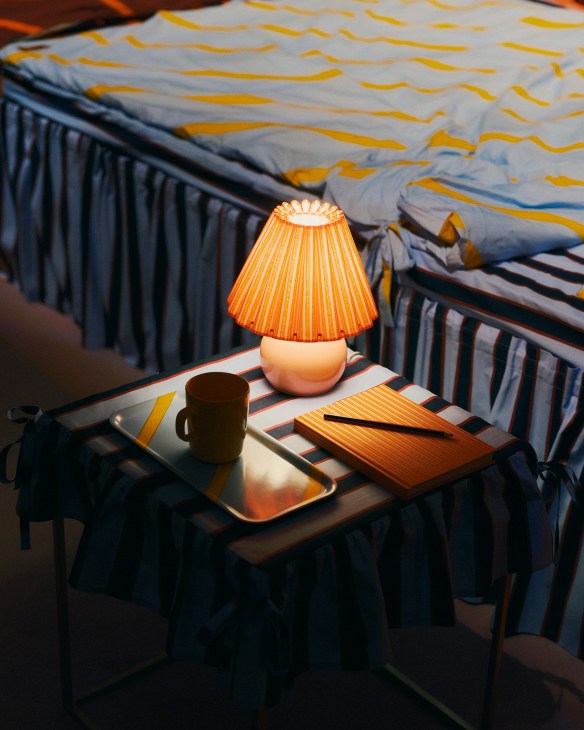
Projects that have jumped out at me in recent months include a sleek, new camera by Japanese brand Sigma, aimed at making it easier to document the world around us. Fellow Japanese retailer Muji created an inspiring pop-up home using upcycled furniture and homeware that highlight potential ways to reduce environmental impacts, without the “hippy” look so often associated with repurposed furniture. UK-born Lulu Harrison has created beautiful glasses from waste products, cleaning up the local ecosystem and making smart pieces in the process. Meanwhile, Milan-based designer Keiji Takeuchi has curated a collection of walking sticks that, rather than taking the usual clinical or medical forms, are crafted from high-quality materials and feature distinct details that give dignity to the user – from hand grips made from woven rope to in-built baskets for carrying objects.
These works show that products that encourage a good life are rooted in serving users and making them more comfortable. It’s a vision that sums up what designers, from developers to architects, should be attempting to achieve in their work – and what everyday punters should be looking for. The best works of design – whether a sofa, a home or even the bed in which you were conceived – are uncompromising in their quality while putting service at their core.

Monocle’s rundown of the top 20 thrilling new design discoveries to experience now
1.
Centre de Congrès
Rabat
At the heart of the Université Mohammed VI Polytechnique campus in Rabat is a conference centre that combines grandeur with a warm welcome and the spirit of intellectual inquiry.
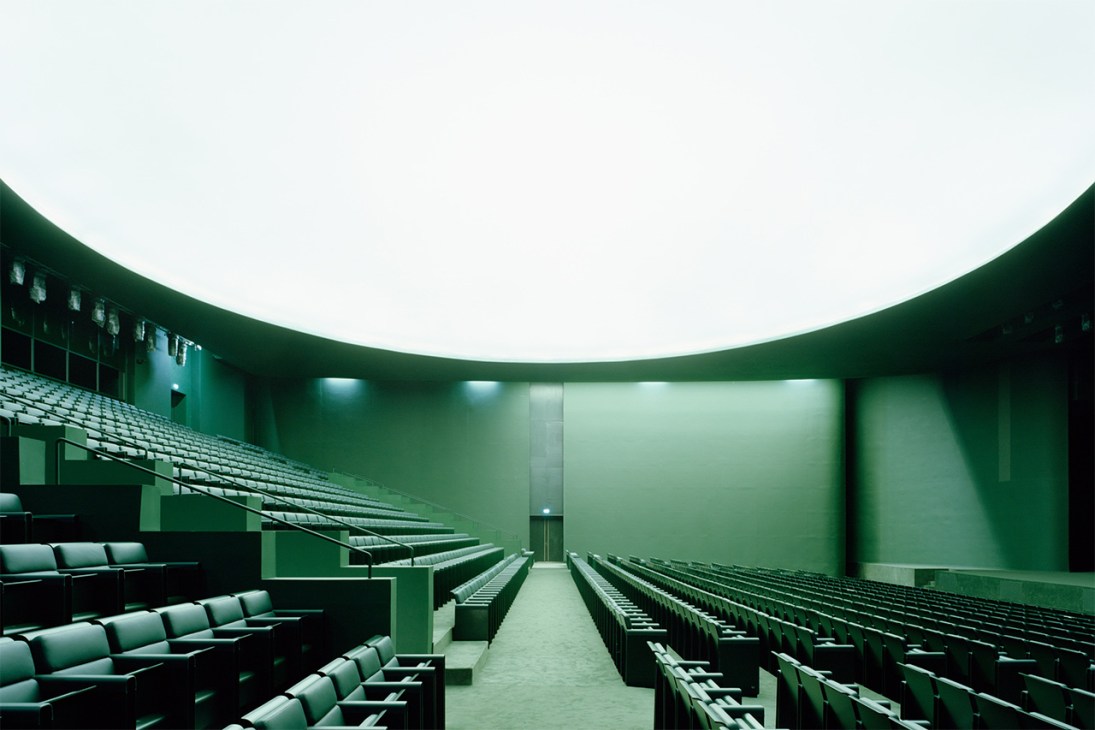
Conference centres can be sterile, unimaginative spaces. An outstanding exception is the new Centre de Congrès on the Université Mohammed VI Polytechnique campus in Rabat. Designed by Barcelona-based Bofill Taller de Arquitectura, it’s a benchmark for the creation of inspiring meeting spaces. While the building’s exterior – with its sweeping stone arches and grand, angular porticoes – makes a striking impression, its interiors are calm and welcoming. The auditorium has deep emerald walls and matching upholstered chairs, with the stage sitting beneath a white domed skylight, which diffuses a gentle glow in the space. The result is a facility that’s not only capable of hosting events of all kinds, from industry conferences to public performances, but quietly elevates campus life.
About Bofill:
Catalan architect Ricardo Bofill founded his practice, Taller de Arquitectura, in 1963, alongside a creative team of architects and engineers but also poets, philosophers and filmmakers. Through this unconventional firm, Bofill helped to shape the postmodern architectural landscape in Spain with a socially minded and colourful approach to design.
2.
Space House
London
The eye-catching, Grade II-listed former home of the UK’s Civil Aviation Authority is now flying high – revived after a three-year revamp that has brought it firmly into the future, deliberately flaunting its classic brutalist features.
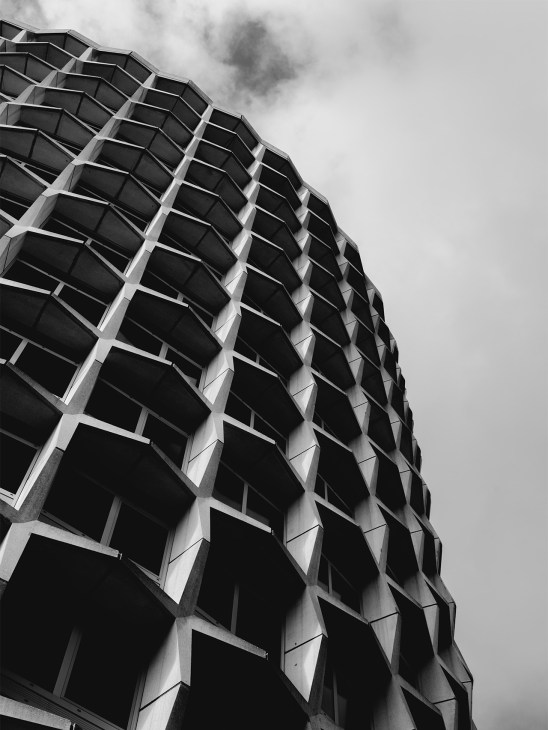
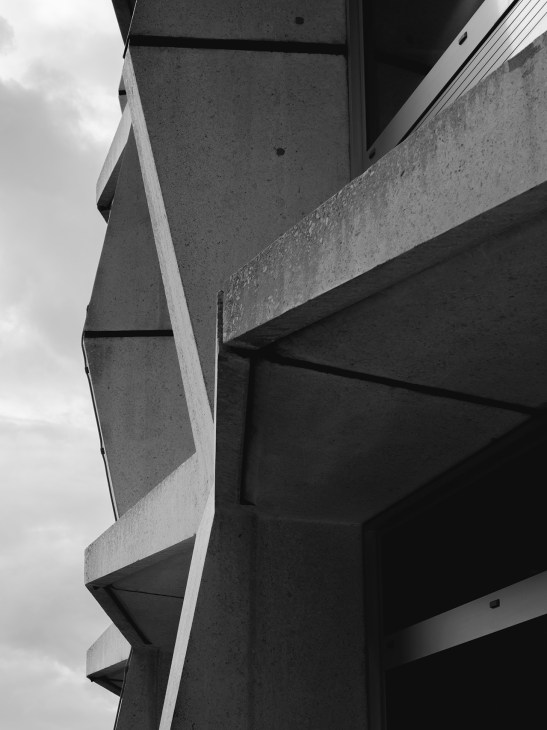
On the fringes of London’s Covent Garden, amid an entanglement of retailers and university buildings, stands Space House – a monolithic, beehive-like 16-storey building. Though it’s hard to comprehend today, the towering brutalist office block was largely overlooked by the public’s undiscerning eye when the building was completed in 1968.
It was architect George Marsh, who was then working at R Seifert and Partners, who radicalised this plot of land. Marsh and his team set out to create a structure with a circular floorplate and 360-degree views that stretch from the Houses of Parliament and the Thames to the BT Tower in Fitzrovia. The result was a concrete behemoth that was in keeping with the period’s burgeoning brutalist movement (think the now-iconic Barbican housing estate in central London and the National Theatre on the South Bank).
From 1975, Space Home served as the home of the UK’s Civil Aviation Authority. But when the government body vacated the premises at the end of its lease in 2019, it was time for a pep up. Property developer Seaforth Land obliged when it purchased Space House in 2022. “The building is magnetic – there’s an incredible optimism in the architecture, almost absorbed by the future-facing sentiment of the period,” says Tyler Goodwin, Seaforth Land’s CEO. “It was an opportunity that we couldn’t pass up. We wanted to maintain that beauty, which is far more appreciated now than it was then.”
When it came to the three-year renovation, the building’s Grade-II status and 23,700 sq m of floor space meant that careful consideration of the existing structure was paramount. Squire & Partners, the architecture firm leading the redesign, shifted the main entrance to create a grander, more welcoming south-facing foyer. New lifts with fluted-concrete interiors were designed in keeping with the building’s visual language. Sustainable implementations saw a complete overhaul of its internal heating and cooling systems to meet modern standards. “On a project such as this, it’s the authenticity that’s important – uncovering it and then celebrating it,” says Goodwin. “That’s the real joy of refreshing original properties.”
spacehouse.london
Brutalist Britain:
The UK’s love affair with concrete dates back to the 1950s, when a postwar reconstruction effort called for a type of architecture that was low-cost and utilitarian. Thus emerged brutalism, a style that evokes grey, bare-bones and angular façades – and continues to polarise popular opinion.
3.
PAL 1 BT by Tivoli Audio
Boston
A charming throwback to a simpler time that’s packed with modern features.
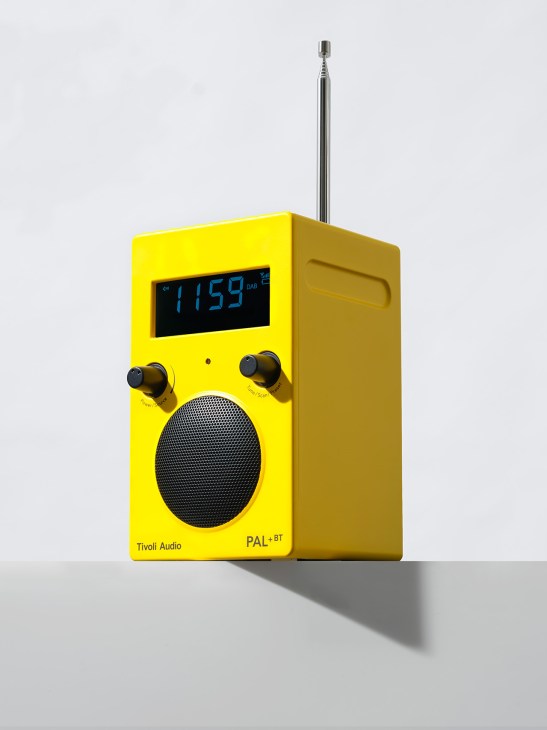
Want to stay in the know with a podcast or play the latest tunes on the go? Then Boston-based Tivoli Audio’s portable Pal 1 BT radio is your ideal companion.
Though it evokes the reassuring solidity and feel of a 1950s wireless, it doesn’t skimp on technological prowess. This new iteration of the design features both a Bluetooth-supported speaker and a DAB and FM radio, all while offering a well-balanced sound. It’s available in a range of colourways, including this particularly loud yellow – a reminder that great sound is worth shouting about.
tivoliaudio.com
4.
Eames House
Los Angeles
Having survived January’s Los Angeles wildfires, the mid-century home of Charles and Ray Eames has reopened to visitors – and now offers access to the designers’ studio.
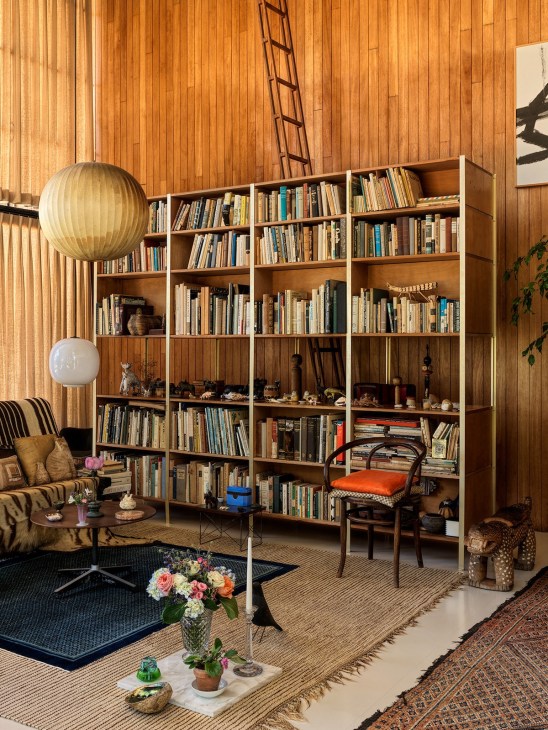
The wildfires that ravaged LA came perilously close to destroying the Eames House – the former home of mid-century designers Charles and Ray Eames and now a museum. After avoiding catastrophe and undergoing smoke restoration, it’s ready to welcome visitors once again. For the first time in its 76-year history, this includes the adjacent Eames Studio, where Charles and Ray worked on everything from furniture prototypes to film editing. “People know them mostly for their chair designs but by coming here you also learn that they were graphic designers, artists, industrial designers and filmmakers,” says Eames Demetrios, the designers’ grandson.
eamesfoundation.org
5.
Golden Avenue
Brisbane
A new multi-level restaurant by J.AR Office transports the cool and calm of a Middle Eastern courtyard to the heart of Brisbane’s commercial district, serving as a lush oasis with its climate-responsive design.
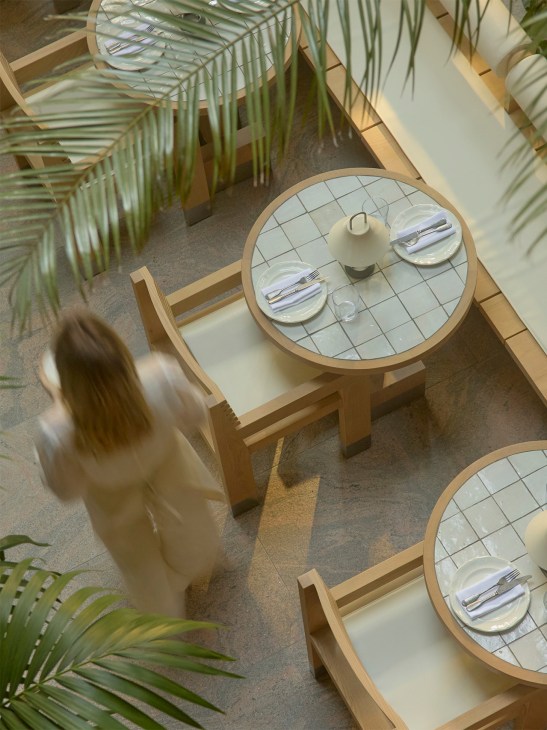
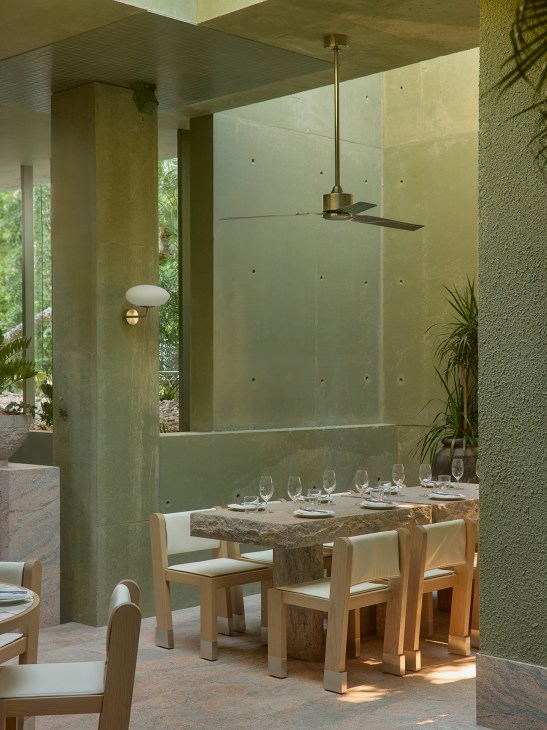
Designed by architects J.AR Office, Golden Avenue is a new restaurant from Brisbane’s Anyday group. Its defining feature is a central space with an adjustable roof and shutters that let in sunshine on cool days and diffuse heat when it’s warm. “In Middle Eastern architecture, this courtyard typology is valued for the air, light and refuge that it provides,” says J.AR Office’s Jared Webb. Combined with the building’s thermal mass, additional shading and passive air circulation, it ensures that the restaurant doesn’t have to rely on air conditioning. “We wanted to emphasise the feeling of being outdoors and embrace Brisbane’s climate,” says Webb.
anyday.com.au
6.
Los Angeles Bus Shelter
Los Angeles
The bus shelter has been given a long-overdue revamp, offering real-time arrivals information, plus some very welcome shade.
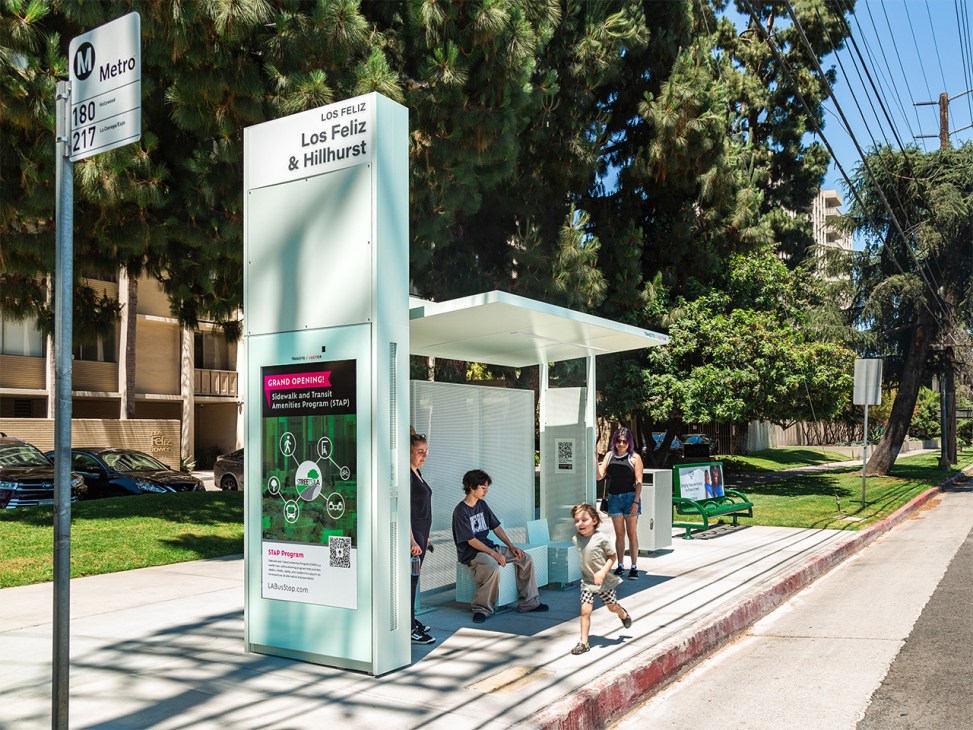
“Bus shelters have long been an underappreciated feature of city streets. Now, Los Angeles is tapping their potential with a network of modular bus stops inspired by Californian modernism. Designed by Skidmore, Owings & Merrill with the help of Designworks, Studioneleven and Tranzito-Vector, the shelters serve various needs. Every model features digital displays with real-time arrival times, weather information and alerts. Some will also feature e-scooter racks and e-lockers.
So far, the city has installed 150 units, with a total of 3,000 planned over the next decade. As climate change drives temperatures to unprecedented heights, the structures also provide shade in areas that lack tree cover.
som.com
Olympic effort:
Ex-Los Angeles mayor Eric Garcetti is championing 28 infrastructure projects set to be delivered before the city hosts the 2028 Summer Olympics and Paralympics.
7.
Miramonti Boutique Hotel
Merano
The beloved hotel’s new cabins promise a soothing stay among the trees.
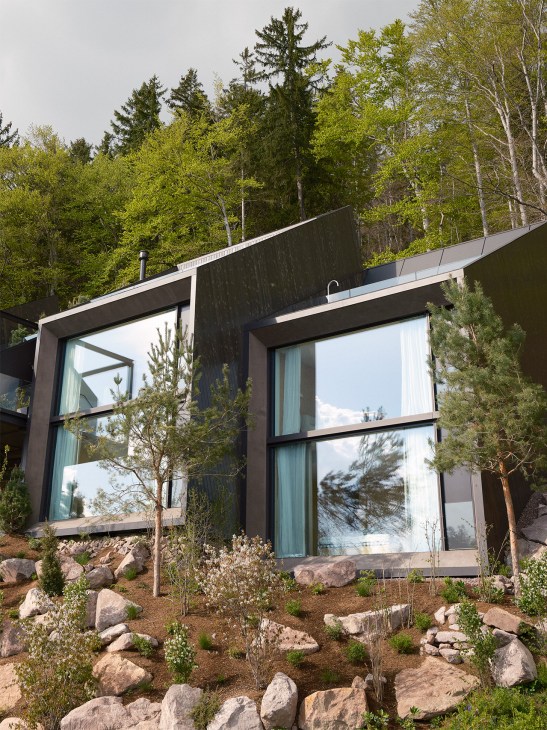
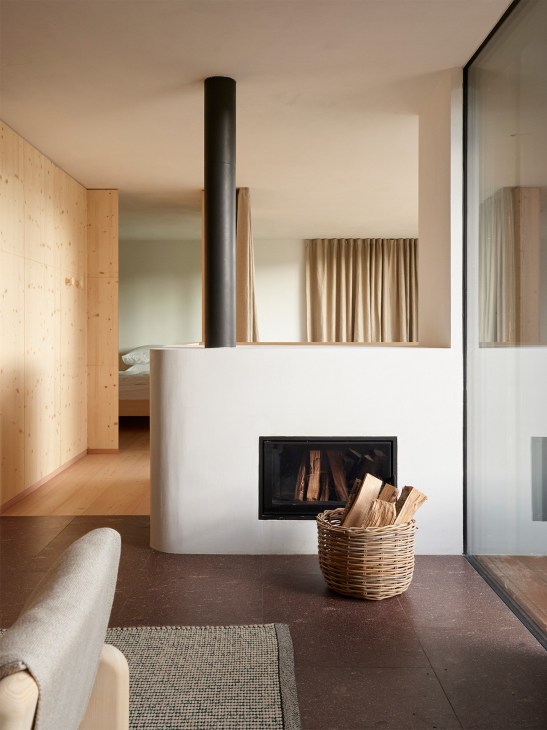
Merano’s Miramonti Boutique Hotel has expanded its offering with three new cabins adjacent to the property, renovated under the direction of designer Harry Thaler. The project, he says, is about “simplicity, quiet and character. I developed Monti as a contemporary forest retreat that respects the heritage and the unique energy of the place.” To bring the project to life, Thaler worked with Tara architects.
The residences are designed to blend with nature: think muted tones, plenty of wood and floor-to-ceiling windows. Best of all, the rooftops feature steel tubs for cold-water therapy and warming wood-fired saunas. “Each house is like a different chapter in the same book,” he says. “It’s a story of retreating into the forest and finding balance.”
hotel-miramonti.com
8.
Valentyns
Köln
Designed by celebrated German architect Thomas van den Valentyn, the Köln-based company’s new workspace offers well-appointed rooms, evening wellness options and plenty of natural light. Small wonder the employees seldom take sick days…
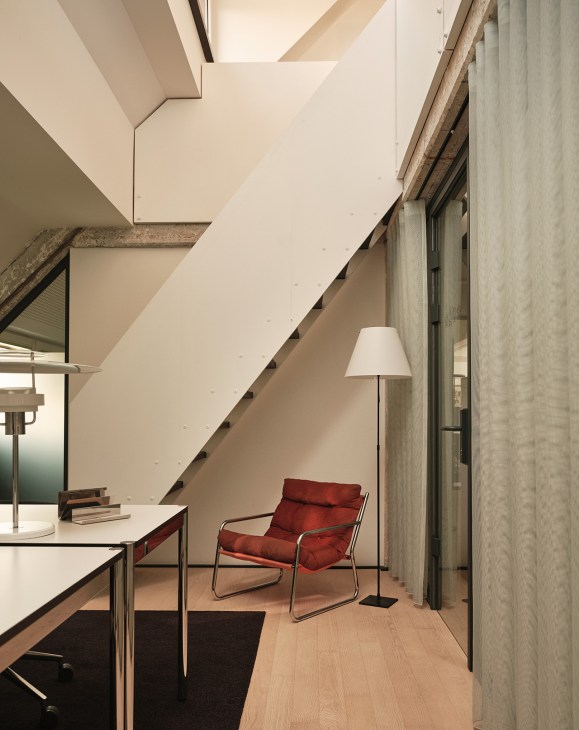
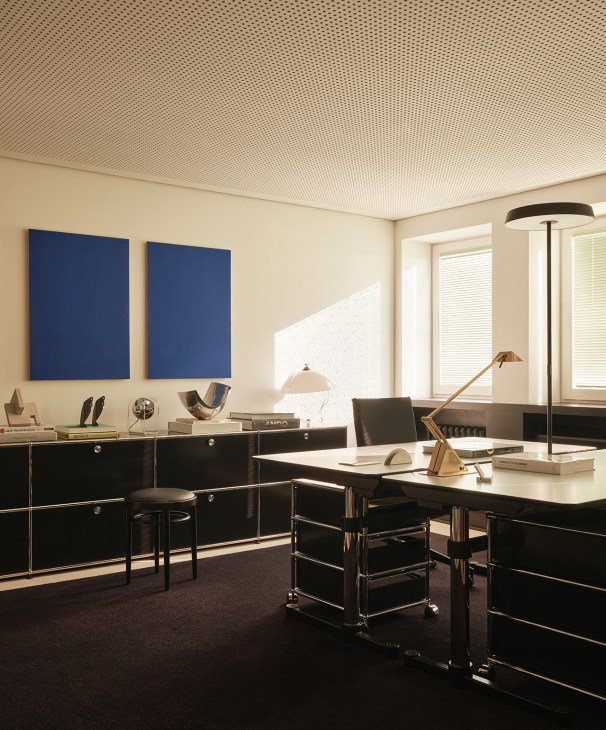
Architects and designers don’t typically utter the words work and wellness in the same breath. But Valentyns’ new office set-up in a 1960s modernist building in Köln proves that this doesn’t have to be the case. Designed by German architect Thomas van den Valentyn – best known for his restoration of Berlin’s Presidential Palace, as well the Beethoven Haus Archive and Chamber Music Hall in Bonn – this workspace overlooking the Rhine riverbank is equal parts business and pleasure.
During the day, members and employees in the 43 private offices can work in well-appointed rooms equipped with pieces by the likes of USM, Le Corbusier and Fritz Hansen. In the evening they can indulge in a host of wellness offerings, from Finnish and infrared saunas to custom-made ice baths and workouts using Technogym kit. Natural light floods most of the building’s spaces, creating an inviting and creatively stimulating atmosphere. It’s the kind of place that feels intimate and welcoming without trying too hard to emulate a home: it’s sleek but not impersonal. Valentyns claims that there has been a 30 per cent decrease in sick days since moving in – a reminder that when it comes to effective design, constructing an environment that makes people feel good is often just as important as prioritising what looks best.
valentyns.com
Thomas van den Valentyn:
The Köln-based architect founded his namesake firm more than three decades ago, after studying under famed Austrian architect Hans Hollein at the Academy of Arts in Düsseldorf. Van den Valentyn has designed buildings around Germany, from the Max Ernst Museum in Brühl to the T-Home Campus office space in Bonn.
9.
Barista by Monoware
London
Upgrade your home-brewed espresso with this collection of UK-designed, Portuguese-made stoneware coffee cups.
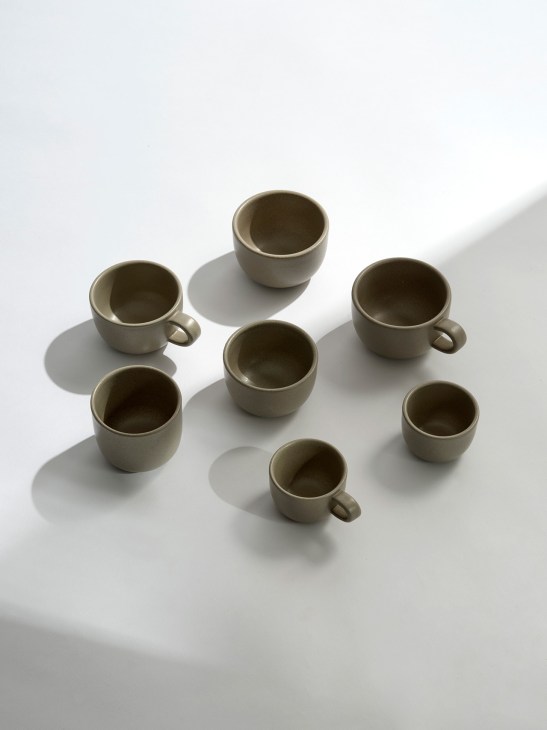
“Looking for the kind of crockery worthy of the buzziest cafés? Then take your pick from London brand Monoware’s latest collection, made in Portugal from matte glazed stoneware. The cups’ soft, round shapes make them an attractive addition to any kitchen.
monoware.com
About Monoware:
Founded in 2019 by Swiss creative consultant Daniel Baer, Monoware creates tableware with enduring appeal.
10.
Surat Flyover
Surat, India
A neglected space under a flyover has been transformed into a sports facility that’s accessible to all.
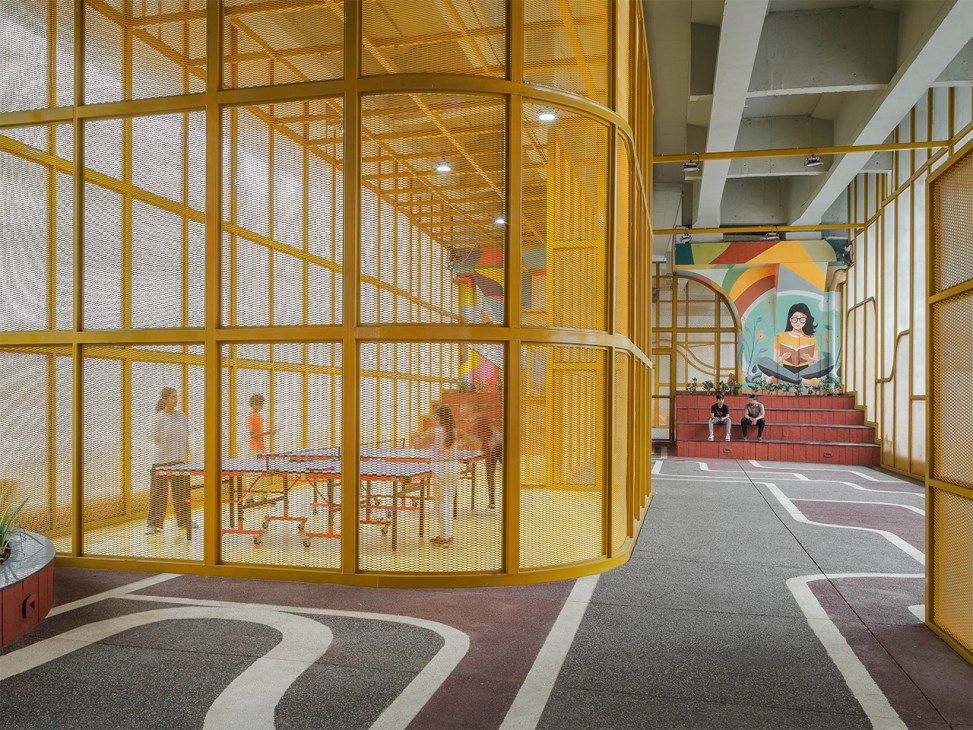
Like many cities, Surat in the Indian state of Gujarat has plenty of underused urban pockets and not enough accessible spaces for recreation. To address this, the Surat Municipal Corporation asked architecture firm Aangan Collaborative to reimagine the void beneath a flyover as a sports facility and community hub. The design unfolds along a pedestrian spine, with a series of enclosed micro-cement courts offering durable, high-performance surfaces for various activities. Encased within a skin of aluminium mesh and polycarbonate, the facility offers security and acoustic insulation from traffic.
“The project is a break from the exclusivity of clubs and gated institutions, making sports accessible to everyone,” says Niti Shah, a senior associate architect at Aangan Collaborative. “The city’s urban voids hold immense potential to be transformed into vibrant spaces. The project is a prototype demonstrating how Indian cities can make the most of them.”
aanganarchitects.org
11.
Casa Montelongo
Fuerteventura, Canary Islands
An artfully designed micro hotel in Fuerteventura where tradition meets modernity offers the chance to slow down and connect with the island’s charming vernacular.
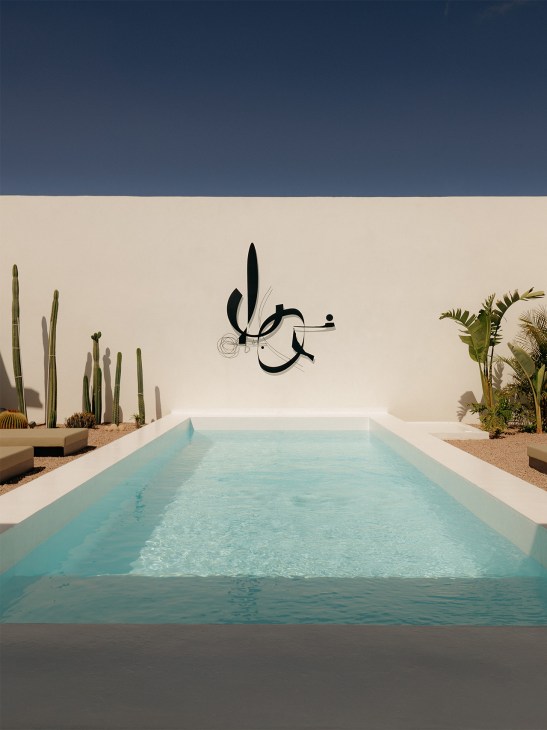
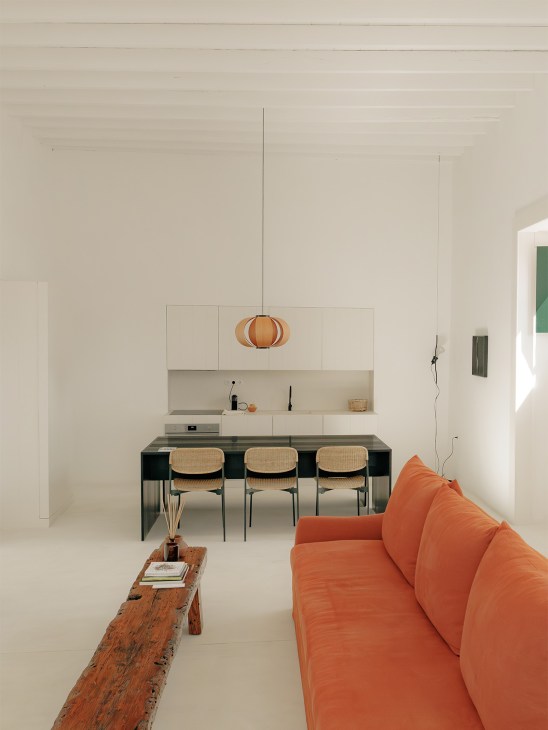
Close to the northern shores of Fuerteventura, a 19th-century family home in the town of La Oliva is enjoying a renewed purpose as a two-suite micro hotel. Casa Montelongo, designed by Lanzarote-born and Berlin-based architect Néstor Pérez Batista, reinterprets Canarian vernacular with a deft, subtle touch. While Fuerteventura features no shortage of sprawling resort complexes, Casa Montelongo’s revival centres on the blending of traditional island materials – volcanic stone, lime and clay – with contemporary elements. Skylights and clean-lined interiors seamlessly integrate with thick stone walls and wood accents that regulate heat while creating a tactile, inviting atmosphere.
Guests are gently nudged to engage with the architecture as much as the island. “We want Casa Montelongo to become an artful alternative to generic, mass hospitality,” says Batista. As a tasteful, small-scale counterweight to other hotels on the island, the casa quietly proves that slowness and cultural memory can still set the pace.
casamontelongo.com
12.
Folding Torch by Snowpeak
Japan
Going on an excursion into the great outdoors? Then go prepared with this elegant torch that combines utility with a minimalist Japanese aesthetic.
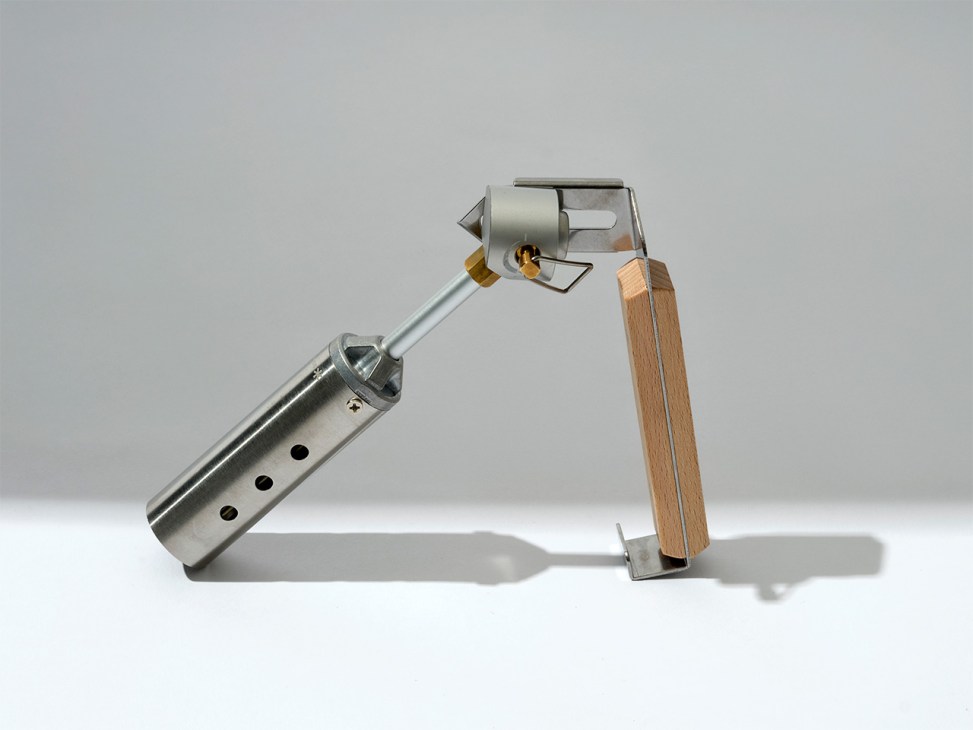
Planning on pitching a tent but determined not to sacrifice style for unwieldy camping supplies? Japanese brand Snow Peak distils generations of technical mountaineering know-how into this compact folding torch that screws straight onto a portable gas canister. With an attractive natural wood handle and a robust stainless-steel frame, this flambeau will add plenty of fuel to any campfire.
snowpeak.com
13.
Gunia Project
Kyiv
For its new shop in the Ukrainian capital, homeware brand Gunia has created an immersive space that incorporates elements of its location with its own gentle outlook.
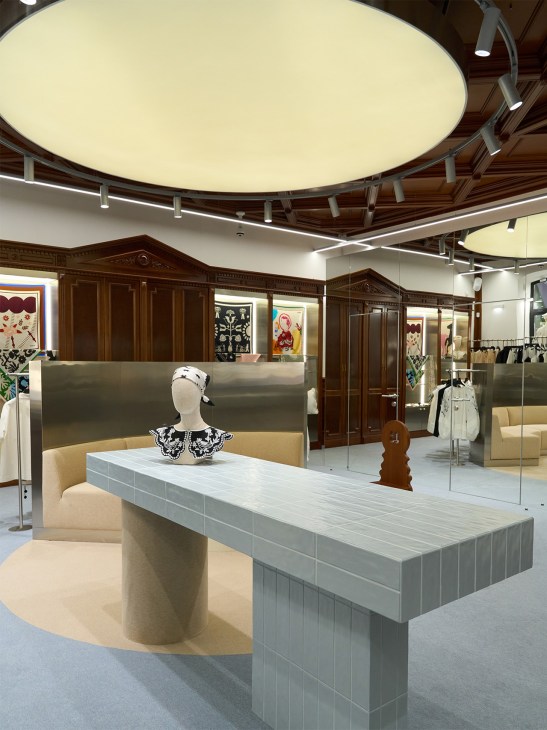
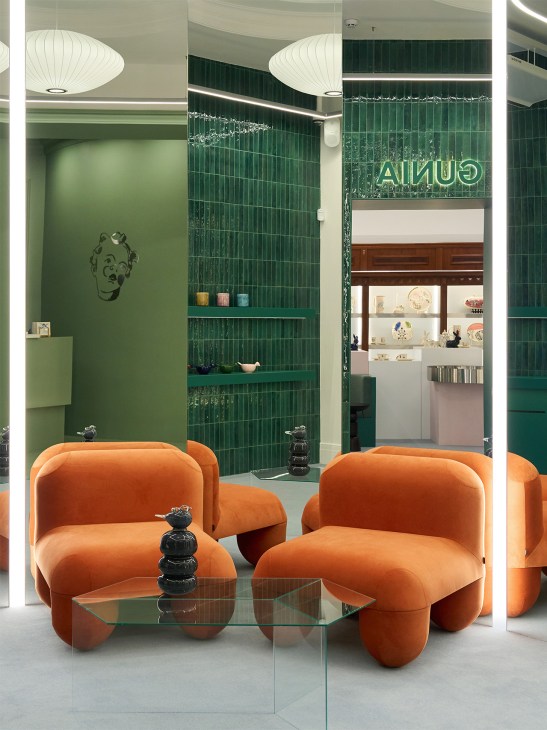
For its new shop in Kyiv’s Golden Gate district, fashion and homeware brand Gunia decided to take a fresh approach. “We wanted to create a space where all of the aspects of our brand could coexist,” says Maria Gavryliuk, who co-founded the company with Natalia Kamenska in 2018. “It was about immersing visitors in our universe.”
The duo hired Anastasiia Tempynska’s architecture studio Temp Project. “The inspiration was Gunia itself,” says Tempynska. “The brand evokes a sense of innocence, like the feeling of drinking tea in a garden or walking through a quiet village.” Inside the former Panamanian consulate building, carved wooden panelling is offset by green tiling and soft blue carpets, while metal and glass contrast with the pastel effect. The shop also brings in aspects of the neighbourhood. “The wood’s chocolate brown and the blue echo Saint Sophia Cathedral.”
guniaproject.com
14.
Langelinieskuret
Copenhagen
Studio David Thulstrup’s new wine bar, in a landmark 1902 customs building, gives patrons a taste of the site’s rich history.
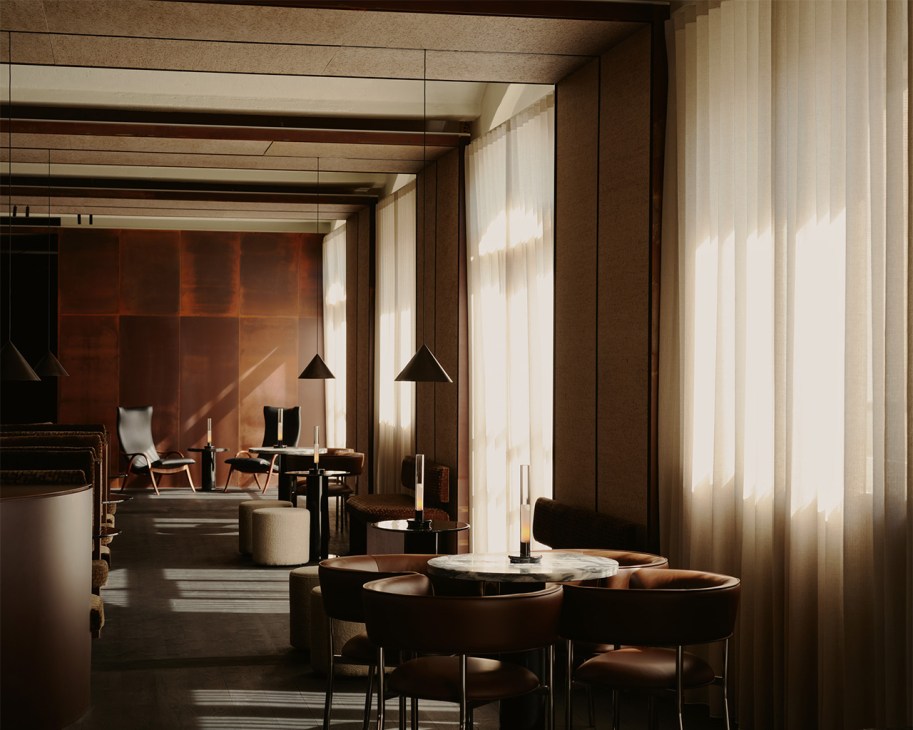
The Langelinieskuret has long loomed large in the collective memory of Copenhagen’s residents. Designed by architect Vilhelm Dahlerup, the building was completed in 1894. Its 350-metre-long façade and rooftop promenade served as a loading bay for ships transporting goods through the Danish capital’s port until the late 20th century. Now, it has been transformed into an event space and wine bar by development firm Karberghus. “This was originally a very popular place for the public to come and watch the harbour,” says Karberghus’s CEO, Andreas Karberg. “Today it can be a place where people come for a glass of wine after work.”
This vision was brought to life by Copenhagen-based Studio David Thulstrup, which revamped the interiors using materials referencing the building’s existing industrial aesthetic. Polished versions of Ølandstone have been deployed for selected counter tops, patinated steel clads the bar, structural walls have been lime-washed and the existing wooden floor has been retained and stained black.
“I always investigate a place and look at what the building is made from,” says Thulstrup. “I want to see how I can use that materiality in my work.” The Danish architect broke up the building’s cavernous interior by installing hanging panels and screens throughout the space – interventions that didn’t compromise the structural integrity of the listed structure. “We had to protect and celebrate the building mass,” adds Thulstrup. “At the same time, we needed solutions that could ensure that it can function now.”
Other additions by Thulstrup have also enhanced the building’s contemporary functionality. Full-length dark-brown leather curtains add warmth, tactility and acoustic padding, while also concealing wine storage. Font chairs, designed by Thulstrup and produced by Møbel Copenhagen, are upholstered in Savanne brown and burned grey Sørensen leather; these flank smoked grey float glass and Norwegian stone tabletops. It’s a hospitality space that perfectly fits Just Karberg’s brief and stays true to the vision of Dahlerup’s original structure.
davidthulstrup.com
15.
Stainless-steel cutlery from Millimeter Milligram
Seoul
This cutlery set by a South Korean retailer brings plenty of character to the table.
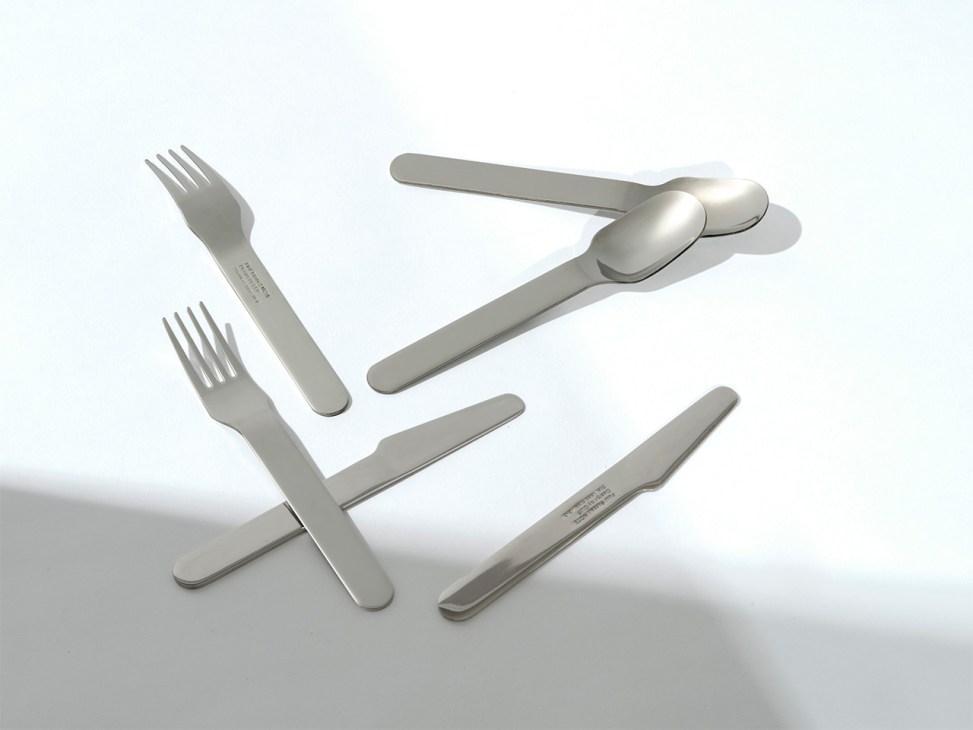
This cutlery set is sure to be a conversation starter at any dinner table. Made from stainless steel, its flat form is reminiscent of the knives, spoons and forks found in first-class cabins during the golden age of aviation: think Raymond Loewy’s mid-century cutlery set for the Concorde or Arne Jacobsen’s work for SAS. Stocked by South Korean retailer Millimeter Milligram, it’ll make a delicious addition to any cutlery drawer.
mmmg.kr
About Millimeter Milligram:
Since 1999, South Korean design brand Millimeter Milligram has upheld the idea that small but carefully designed objects can elevate our daily lives. From ceramic teacups to glass flowerpots, the company manufactures its wares in small ateliers in Seoul’s historic downtown area.
16.
Schafbergbahn Station
St Wolfgang, Austria
Austria’s steepest cogwheel railway has been given an upgrade with the award-winning revamp of a station designed to strengthen the connection between its users and the natural environment.
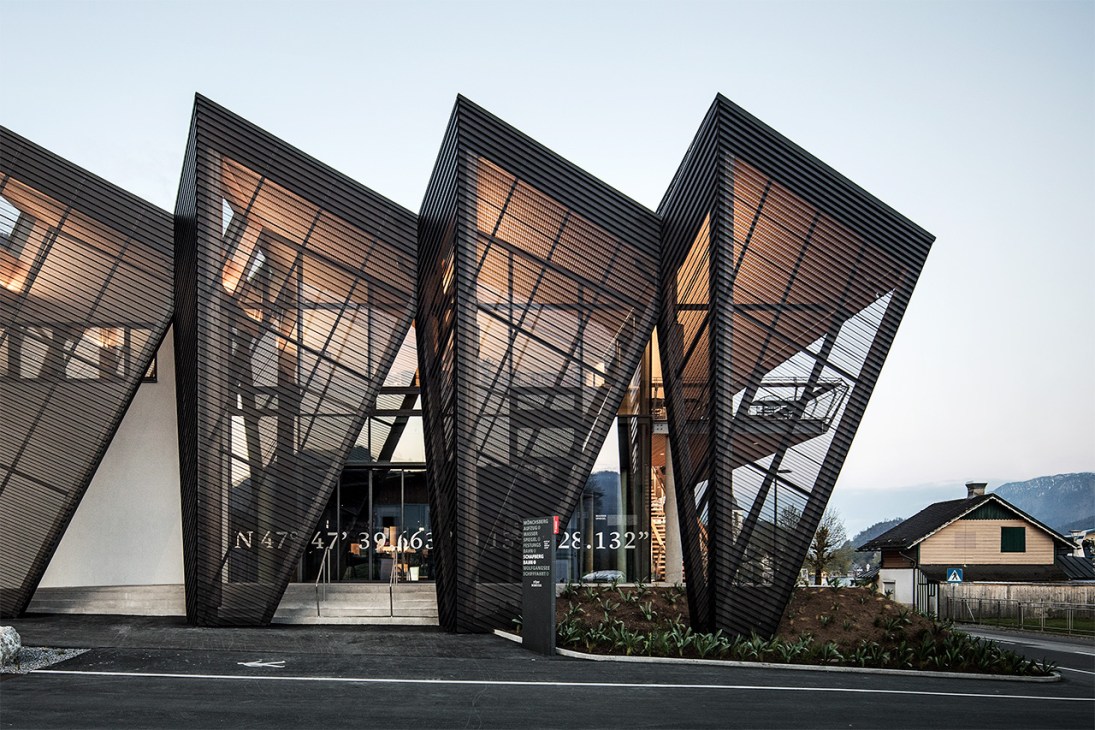
Best known for its hiking and skiing spots, Schafberg in Salzburg is also home to Austria’s steepest steam-rack railway. The design of its terminus, Schafbergbahn Station in St Wolfgang, recently won a Prix de Versailles architecture award. “I had to google what that was,” says Mario Mischelin, managing director of the railway owners, laughing. “The landscape is protected so we tried to integrate the building with the surroundings,” says Michael Höcketstaller of Salzburg-based practice Dunkelschwarz. The architects created a jagged wood-and-steel roof, breaking up the building’s scale, while installing panoramic windows to take in the grandeur of the landscape.
dunkelschwarz.com
17.
Bidadari Park
Singapore
The reinvention of a park in the city-state has brought residents not only much-needed recreation space but a first-of-its-kind flood defence system.
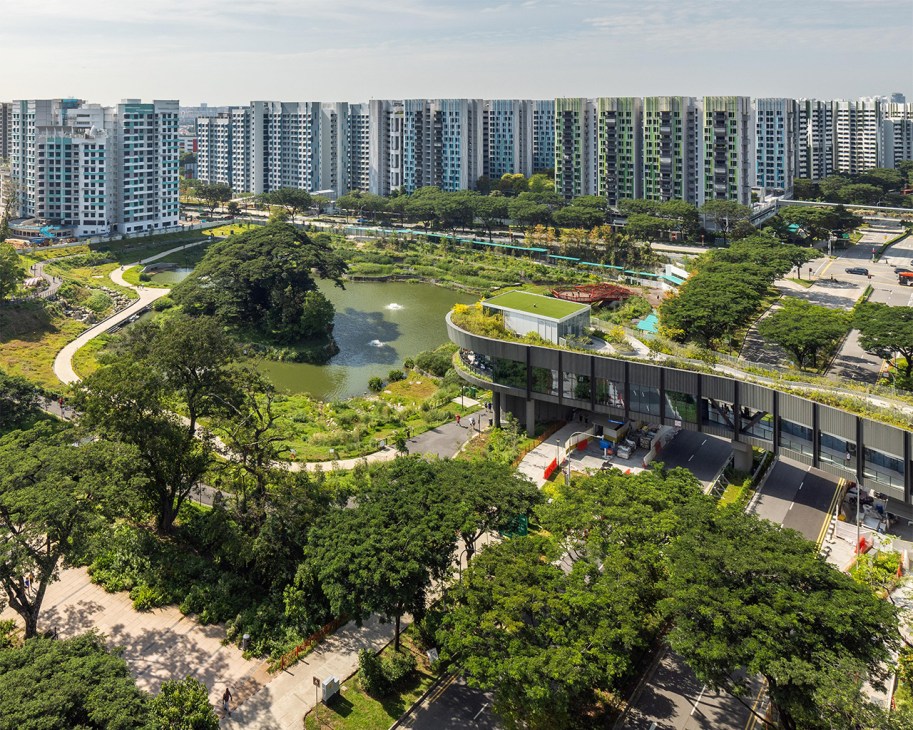
Singapore’s Bidadari Park was home to a cemetery until the 2000s. Seeking to transform “the former place of rest into a restful place”, design studio CPG Consultants, together with Henning Larsen’s Singapore studio, decided to take a leaf out of AA Milne’s Winnie-the-Pooh stories, says Caijin Huang, its vice-president of architecture. The designers created their own take on its Hundred Acre Wood, implementing play areas, winding boardwalks and log piles that foster a sense of joy and discovery.
The team also enhanced the park’s flood protection, adding terraced wetlands, marshes and an artificial stream, as well as Alkaff Lake, which doubles as a stormwater retention pond. With floods increasingly common, this system is more essential than ever.
cpgconsultants.com.sg; henninglarsen.com
18.
Another Country & Goldfinger
London, United Kingdom
A socially minded union showing the way to a sustainable design future.
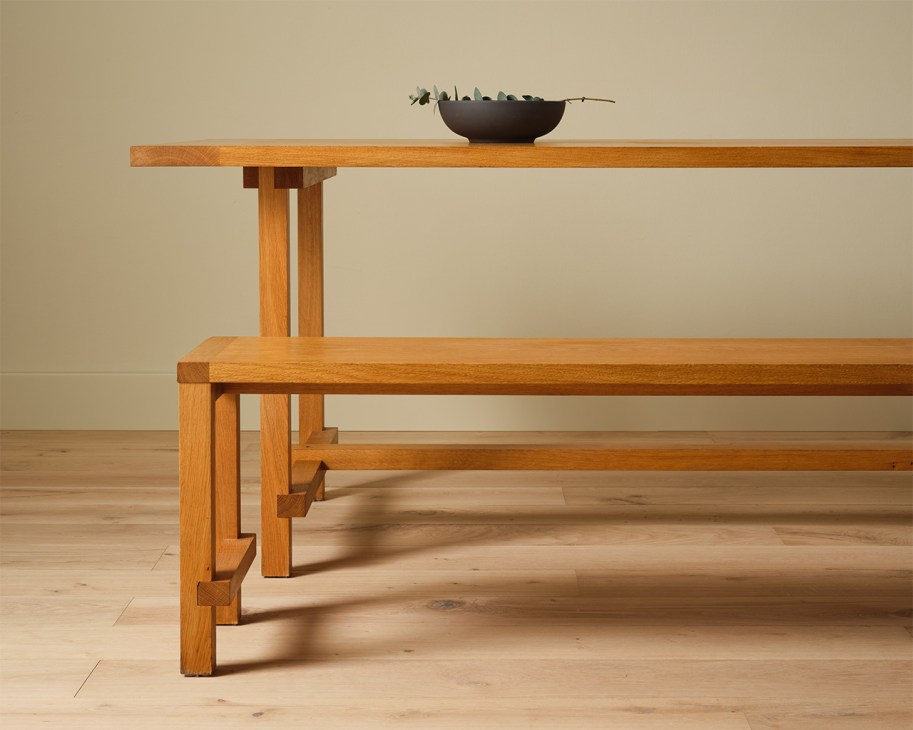
British natural furniture brand Another Country recently acquired Goldfinger, a London-based design studio known for bespoke commissions, tree-cycling and community programmes. A reminder that there’s strength in numbers. anothercountry.com; goldfinger.design
19.
Tala Wake lamp
London
Ease into the day with a lamp that adjusts its brightness to your natural circadian rhythms.
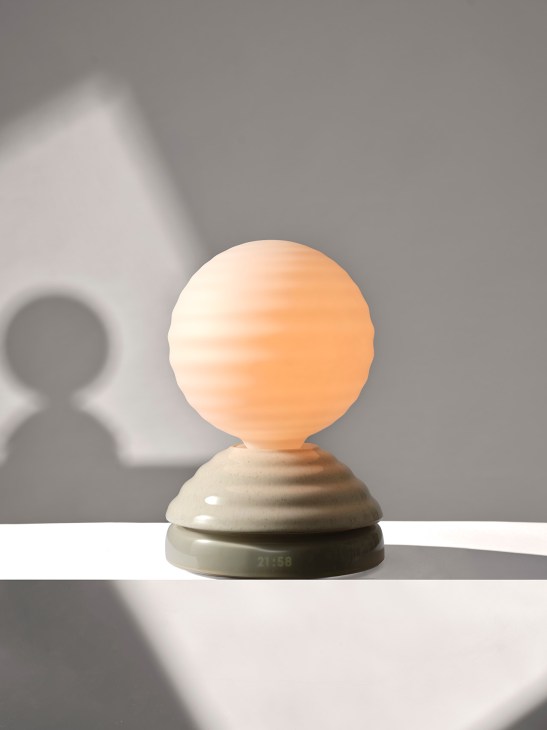
Owning the correct bedside lamp can help make getting up in the morning a genuine pleasure. London-based lighting company Tala’s Wake model features a hand-glazed base and a custom-made bulb that mirrors the sun’s luminosity to work with your circadian rhythms. The result? A soothing soft glow in the evening and brighter, energising illumination in the morning, reinforcing your natural sleep patterns. Its distinctive globular design makes it an eye-catching addition to any bedside table.
tala.co.uk
20.
Between the covers
Global
Looking for a deep dive on the work of an outstanding architect or design movement?
Here’s our pick of the bunch.
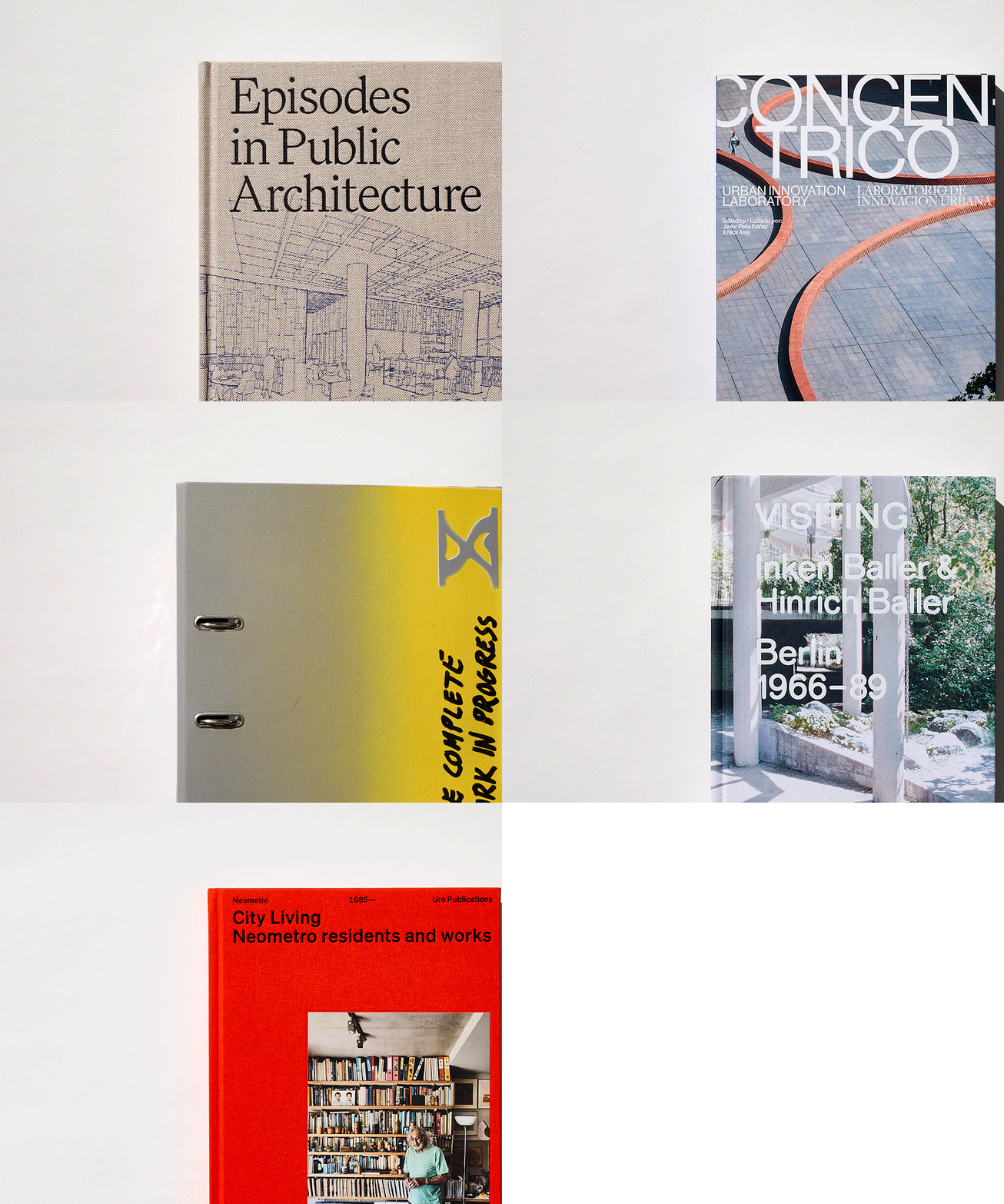
Published by Park Books, Visiting examines the high-quality affordable housing of mid-century German architects Inken and Hinrich Baller. Also from the Zürich-based publisher is Concéntrico, which documents 10 years of the titular urbanism festival. Oro Editions’ Episodes in Public Architecture by Canadian architect Andrew Frontini is an exploration of civic projects, while City Living from Australia’s Uro focuses on the residences of Melbourne-based developer Neometro. Rounding out the selection is The Complete Work in Progress, a lever-arch file containing sheets celebrating the portfolio of Danish design firm Spacon. The binding method allows it to be updated as the practice grows.
What makes a good design monograph?
Design writing can often feel dry or inaccessible. So what does an exceptional monograph offer? In our opinion: clear text, compelling layouts, and an abundance of sketches, drawings, photos and blueprint illustrations, as well as the odd personal essay and contextualisation within a broader sociopolitical landscape.
The unlikely parallel between Rome’s eternal architecture and the Las Vegas Strip
Las Vegas is feared and loathed as possibly the kitschiest place on Earth. But on a recent trip to Sin City, a designer reminded me that there’s wisdom to be gleaned from this desert madhouse. This is thanks to architects Denise Scott Brown and Robert Venturi, who in 1972 published Learning from Las Vegas, a book that sought to upend classist urban design and architecture sensibilities. “Las Vegas is to the strip what Rome is to the piazza,” they wrote.
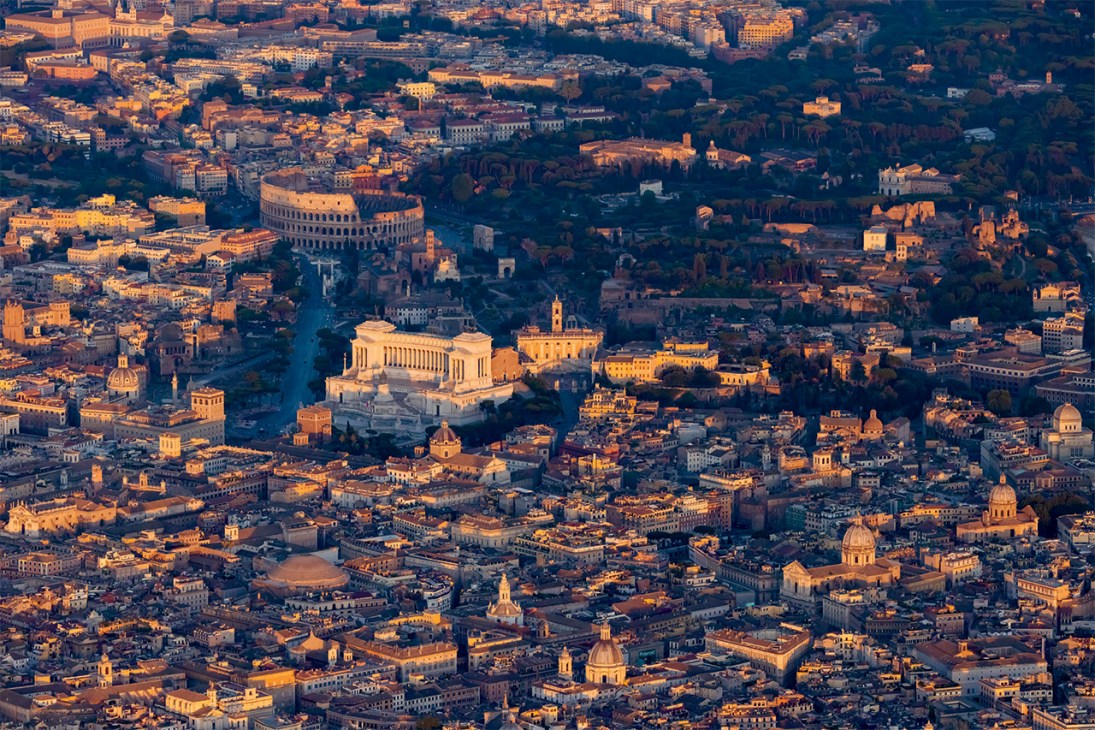
More recently, the US city has captured the attention of Iwan Baan, one of the world’s leading architecture photographers. The Dutch snapper, in partnership with Zürich’s Lars Müller Publishers, released a tongue-in-cheek book, Rome–Las Vegas: Bread and Circuses, exploring the relationship between the two cities. His street photography from both cities is laid out across its pages, often side by side. The comparison might seem preposterous. Rome, after all, is known as the Eternal City for a good reason. In Vegas, almost all of the buildings photographed 50 years earlier by Scott Brown and Venturi have already been replaced by gaudier versions.
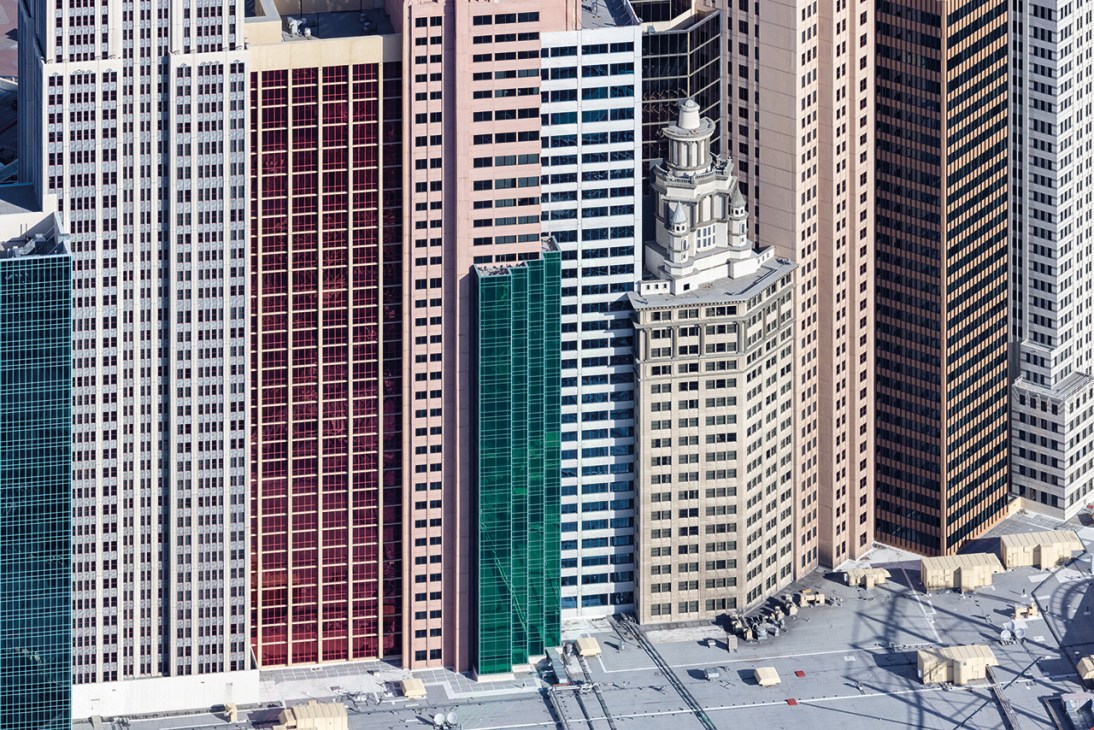
Today on the Strip, pavements swerve in and out of casinos and shopping malls as pedestrians are subjected to terrible music. It feels far from the dolce vita. But Baan, like Scott Brown and Venturi before him, has a point: the two cities have striking similarities. Both have Disney-esque streets, flip-flop-wearing tourists and Doric columns. In Rome, some of my favourite details are modern touches fashioned to appear as though they were hundreds of years old. Take the Bose speakers inside St Peter’s Cathedral, carefully painted to resemble marble.
Scott Brown and Venturi wanted readers to be open-minded, appreciating that while cities are often not the utopias that planners hope for, they are the places where we learn how people actually use urban spaces. The similarities between the remarkable in Rome and the ready-made in Vegas are a reminder of this. On my last night in Sin City, I looked up at Caesars Palace – a 130-metre-tall casino and hotel topped with a pantheon – and pondered whether this was exactly what the Romans would have devised, had they been asked to envision 21st-century architecture. They might also have ordered a margarita and headed to the blackjack table.
Mexico’s fantastical fortresses: From a nearly invisible structure to a concrete cube in a forest
A desire to feel secure and out of view is a common theme in the design of Mexican homes. It explains why so many of them are complex and have an air of mystery. Pablo Landa, an anthropologist and the director of Museo Experimental El Eco at the National Autonomous University in Mexico City, says that the work of Luis Barragán is a case in point. “You have to go inside his buildings to fully understand them,” says Landa of the famed architect, who has been the benchmark for architectural excellence in the country for decades.
There is also a romantic component to this design ethos: a belief that a Mexican residence should not only protect but also enrich the occupants’ interior world, nurturing their dreams. “It’s all about the modulation of light and space, the balance of containment and openness, with patios, gardens and vegetation,” says Landa.
It’s with this in mind that Monocle has set out to assess the modern Mexican home, starting in the outskirts of Morelia, the capital of the central state of Michoacán. Here, a residence rises gently from the tall grass and merges with the verdant landscape, becoming almost invisible. This disappearing act isn’t just for aesthetic reasons, says HW Studio’s Rogelio Vallejo Bores of the building, poetically named The Hill in Front of the Glen. “The client wanted to feel safe,” he explains with a sigh. “Unfortunately, in Mexico, violence persists.”
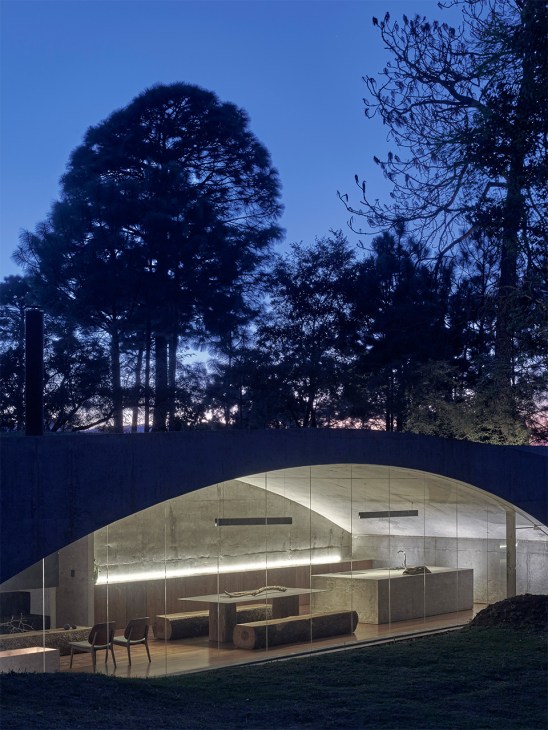
Bores takes an unusual approach to clients: they must first pass a psychological test before his studio takes them on. “It’s a friendly test,” he says. The assessment has been devised by his long-term partner, neuropsychologist Vera Sánchez Macouzet. “Vera is essential to the process,” he says. “We need to understand our clients before deciding whether we can truly help them.”
Born and educated in Morelia, Bores is rooted in the city, proudly identifying as a Mestizo, someone with European and Indigenous heritage. HW Studio deliberately keeps a small portfolio, taking on just four projects per year. “It’s vital for us to maintain human contact – with our clients, the builders and, above all, with ourselves,” he says.
One day, says Bores, a man wandered into his office, curious about his studio, which is based in a white building attached to a disused factory. “We didn’t discuss architecture at first,” he says. “We just became friends.” Later, the man mentioned buying a plot in the countryside and asked Bores to visit. The psychological test revealed that he and his wife were unusually open to new experiences and well-suited to HW Studio’s collaborative way of working.
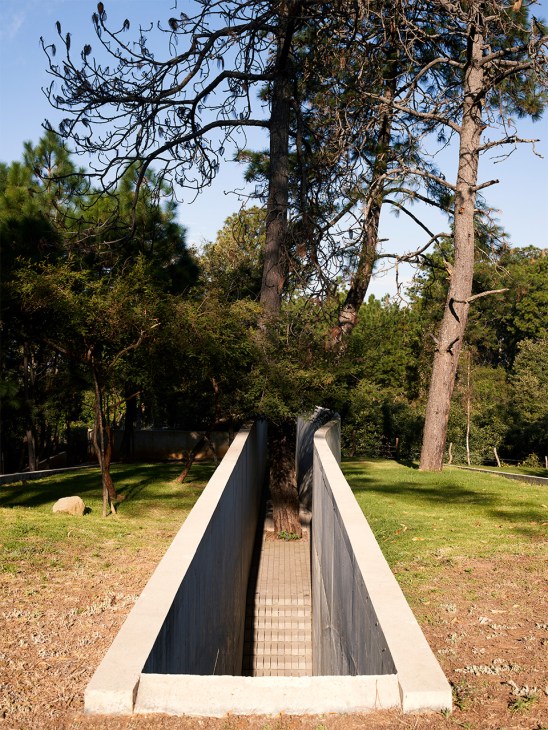
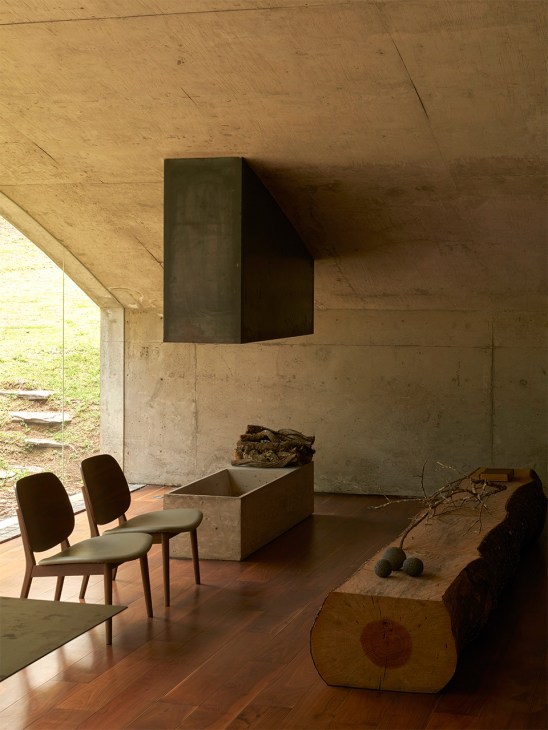
The result is The Hill in Front of the Glen, which is entered through a narrow groove cut into an artificial mound, just wide enough for one person. A path curves around a tall tree, descends a few steps and finally reveals the home. To the left of the entrance, an open-plan kitchen, dining and living area frames forest views beneath a saucer-domed concrete ceiling. To the right, three bedrooms sit side by side. A narrow terrace shields them with a high concrete wall, while letting in natural light. The living room is sparsely furnished. The dining table – an unpolished metal sheet on chunky pine blocks – becomes the focal point, while the benches are raw logs, with their bark intact, cut flat for stability. The coffee table is a pine trunk. On both tables, a single branch has been carefully placed. Bores calls himself an “essentialist” rather than a minimalist. “Minimalism is too European,” he says. “Essentialism is about balance.”
It’s an approach to work that can also be seen in Fernanda Canales’s pared-back portfolio of work. An architect with a doctorate from Escuela Técnica Superior de Arquitectura de Madrid (The Higher Technical School of Architecture of Madrid), Canales is based in Mexico City and echoes Bores’s belief that security is important and that people should feel safe in their own homes. She is renowned for her public projects in underserved border towns and she understands the importance of promoting security while balancing her designs with a sense of openness. Her family’s weekend house, Casa Terreno, in Valle de Bravo, is a case in point. The house has a four-sided plan with four patios. A patio at the entrance, with a curved concrete wall, acts as a transition from the wild landscape to the vestibule. The central courtyard is split into two zones – the first paved, storing a cistern below, the second left to vegetation. The final patio is reserved for the guest wing.

Casa Terreno features an undulating rooftop along one edge of the quadrangle, echoing the surrounding mountains and the Nevado de Toluca volcano. Four bedrooms and a study occupy this wing, each crowned with a curved concrete ceiling and furnished with a wood-burning stove. Lightwells punctuate the bedrooms’ en suites, while partition walls of broken bricks rise like sculptural elements, separating sinks, toilets and showers. Sliding doors open onto small patios, connecting every room to the landscape beyond. Framing views is very important, says Canales, because once we get too used to our environment we stop looking. “By framing certain views, we can get people to notice more, to engage more with their surroundings.”
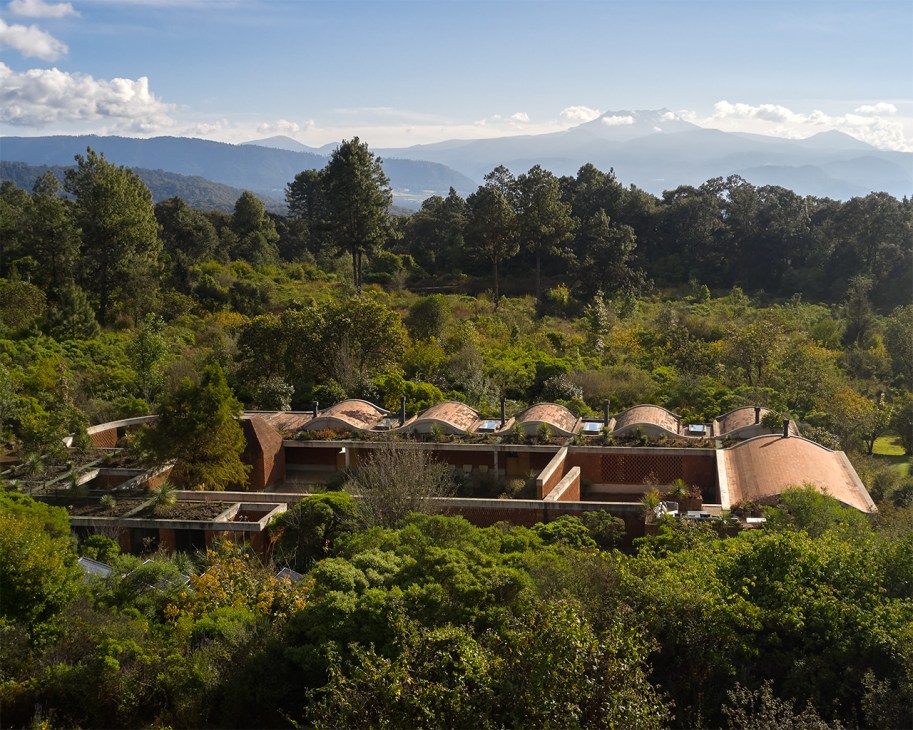
As a protected nature reserve, La Reserva Peñitas enforces strict building regulations. Only 5 per cent of purchased land can be developed; perimeter walls are prohibited. Structures may not exceed six metres in height and white paint is banned. “The use of natural, preferably locally sourced, materials is encouraged,” adds Canales. “Bright lighting is restricted at night too, under the area’s dark-sky policy.”
All of the houses in La Reserva Peñitas are built off-grid. Rainwater is collected into a cistern on the site so residents “must be careful about what kind of soap is used”, says Canales. “It must all be organic.” Solar panels provide electricity; a composter processes organic waste. “We are respectful to nature, to the animals that live there,” she says.
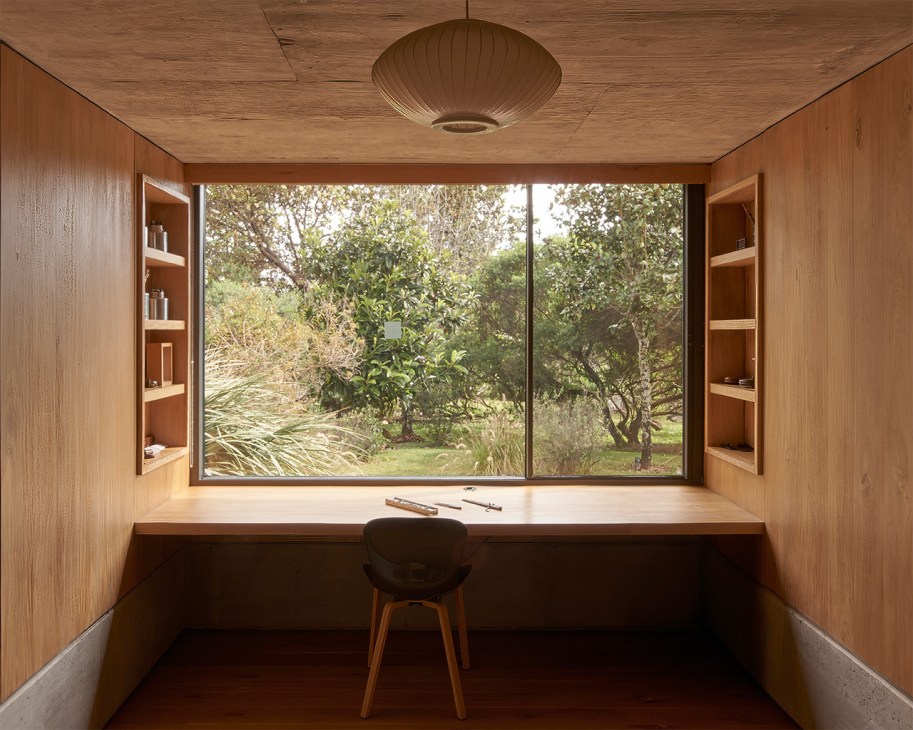
The house embodies a contradiction. “It’s both open and enclosed,” says Canales. “The environment here is rugged. We have snakes, heavy rainfall and extreme temperatures: hot by day, almost freezing by night. I wanted the interior to feel cosy and comfortable.” Outside, a rough façade of jagged bricks adds raw texture, while inside, marble flooring in the loggia and oak flooring in the bedrooms lend a smooth, refined counterpoint.
Surprisingly for a house amid wild terrain, there are no steps inside. “This is the first time that I’ve got to do this in a project,” says Canales. “You never encounter any divisions between different areas of the house, even in the courtyard. This changes our perception, creating a sense of continuity.” The entrance is topped with a pyramid-shaped roof and Canales cites the ancient Mayan city of Uxmal in Yucatán as an influence. A celosia (lattice) wall hints at the existence of a courtyard inside the house. The steel gate, which functions as the front door, is also perforated. Throughout the house, Canales punctures the interiors with celosias to connect the indoors with the surrounding wilderness beyond. They also help to create a microclimate within the enclosure, encouraging the movement of air while keeping the house cool and protected.
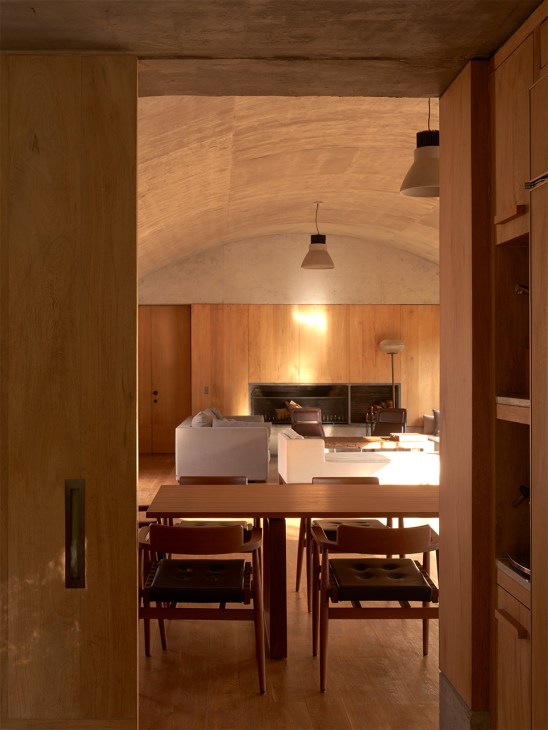
“Our society is built upon different cultures,” says Canales. “We have layers. These consist of the Spaniard layer and the Indigenous layer, as well as the layer made from international influences. Historical legacy informs Casa Terreno in a symbolic way.”


This celebration of differences, this embracing of “the other”, is also seen at Casa Cometa in Oaxaca, designed by Taller Rocha Carrillo. Perched on the Punta Cometa peninsula – the southernmost point of the state of Oaxaca – it comprises an eclectic mix of towers and pavilions. Built for the owner of the Grupo hotel company, two tall pillars, clad in local stone, rise above the dense forest. According to Gabriela Carrillo, then a partner at Taller Rocha Carrillo (she has since gone on to establish her own namesake studio), the towers reference the medieval architecture of San Gimignano in Italy. “We worked on it for many years,” she says.
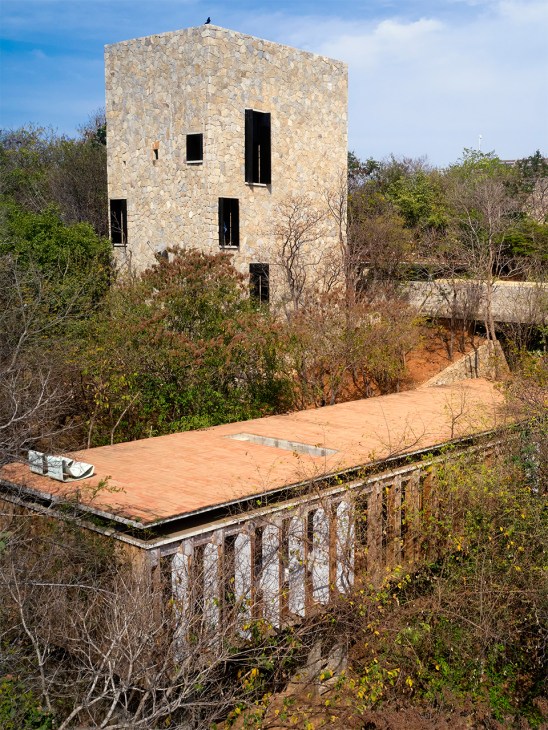
One tower contains the client’s double-height bedroom, whose interior is also clad in stone. Underneath this space, a void has been carved out to create a semi-outdoor kitchen and dining room that opens out to a terrace. The other tower contains a studio and a spa with a Japanese bath. From the rooftops of the towers, you can see both sunrise and sunset. Windows are sparsely but intelligently placed to make naturally ventilated air-conditioned rooms.
“Architecture has to do with generosity,” says Carrillo. “You are working with things that are essentially free – light, air, wind, water – and you are articulating space using these elements. We architects also bring ambiguity. We are different from estate agents or politicians in this way. It’s not all about making money. We retain the freedom to experiment. That is an important part of being an architect. It’s a big responsibility.”
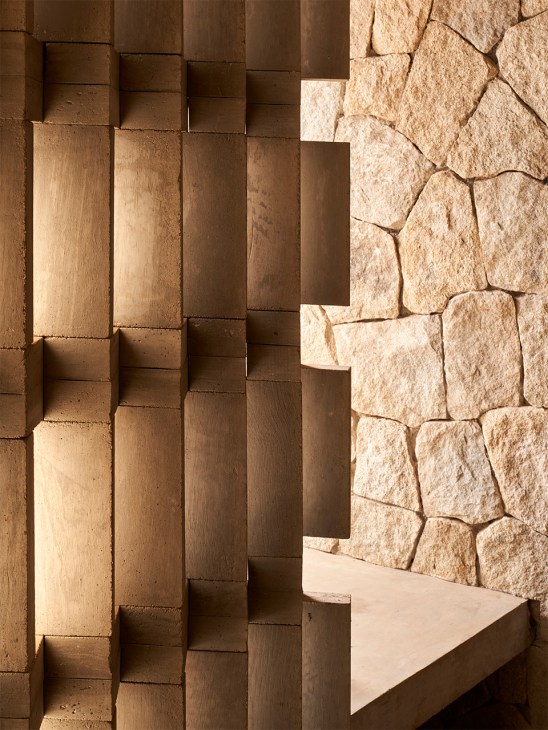
A timber-framed palapa, a covered outdoor living space – a prominent feature in Mexican houses in this region – comes with a thatched roof. A raised terrace, which intersects with a long, rectilinear swimming pool, connects the palapa with one of the towers. Another terrace runs parallel to the first, emerging through the underside of the swimming pool, extending out to become a roof over four additional bedrooms and a living room that hang below it. These rooms are then accessed through an opening on the terrace with a set of floating stairs.
Carrillo says that the “hanging wooden rooms” came about because of the need to create extra space within the dramatic topographical incline of the site but also because the architects were interested in using timber structurally. These rooms hang at up to eight metres above the ground with windows that can pivot wide open to the elements.
Working with local artisans was also crucial. The ceramic tiles on the terraces were made in the region, as were the bedsheets. “We asked women weavers to match the quality of sheets from France and they ended up producing something that’s even better,” says Carrillo.
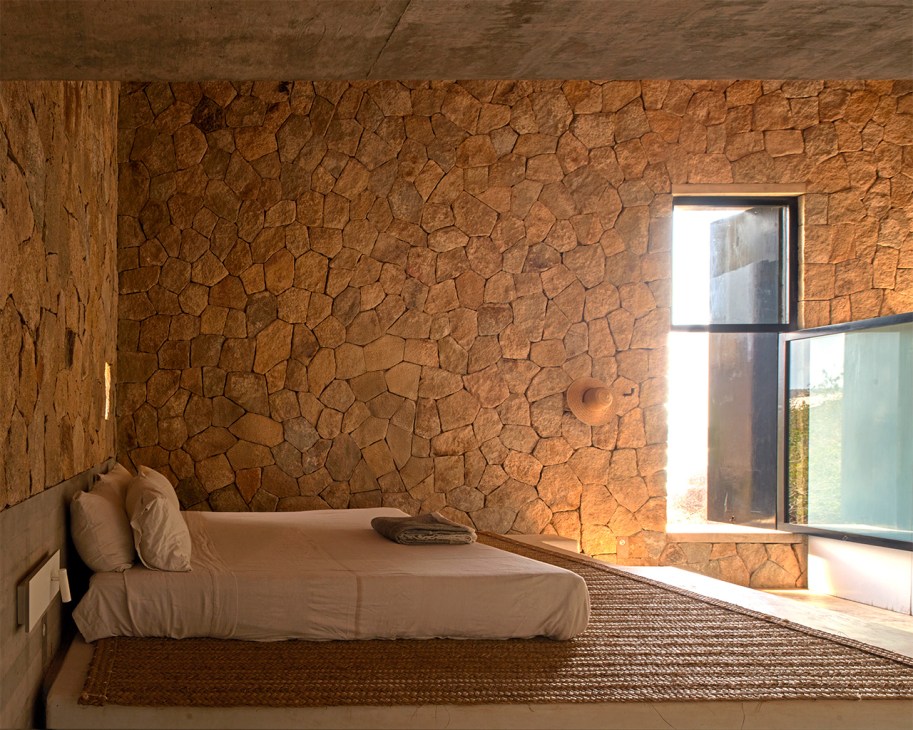
Carrillo’s appreciation for the handmade is shared with Ludwig Godefroy, a French architect based in Mexico City. “Everything in this country is handmade,” he says. “You work closely with the artisans. The process is industrialised in Europe and, with that, you lose freedom.” Godefroy is aware that things often don’t go smoothly here but, he says, “You have to take that risk because the upside is that almost anything is possible in Mexico. When you have an idea, no matter how crazy it is, people will always tell you, ‘Yes, of course we can do it.’”
“The labour-intensive way of working is not unusual in Mexico,” says Landa. “Labour is still cheap here and the process is not fragmented like it is in the West, where you have a consultant for everything and the architect does the envelope, defining the general concept and floor plans.”
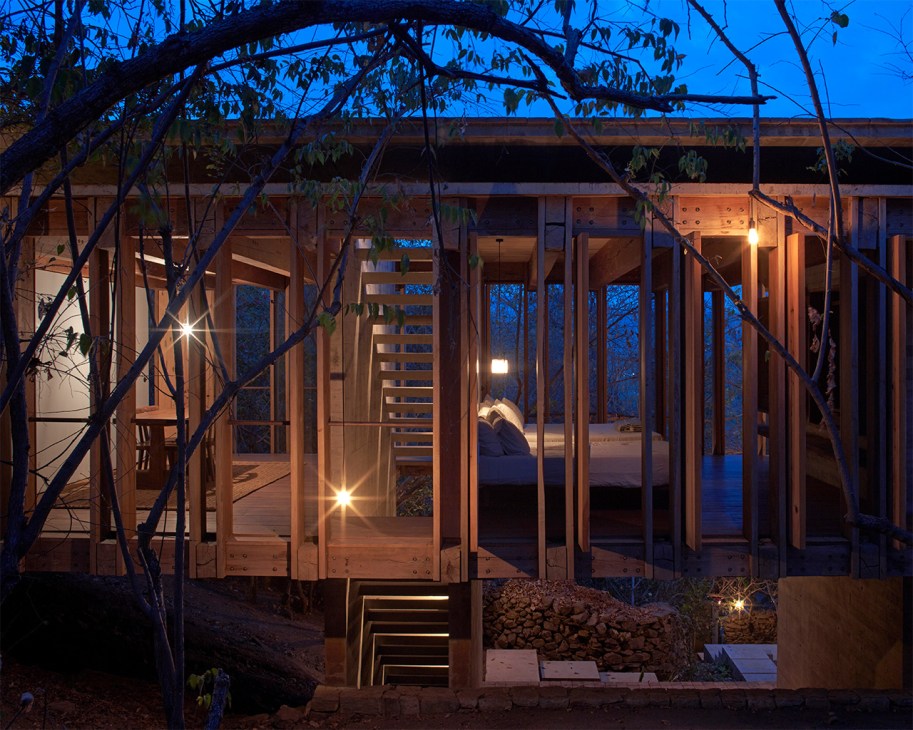
By contrast, says Landa, Mexican architects have a more intimate understanding of the site and project, from the space requirements for an elevator to the workings of a sewage system. “There is an integration of the process, which means Mexican architects have a greater influence over a project.”
Casa Alférez, designed by Godefroy, stands tall in a pine-forest clearing less than an hour from Mexico City. Its cubic concrete exterior belies a complex interior dominated by a zigzagging staircase, from which cantilevered floor plates jut in multiple directions. Sunlight streams through the gaps, reaching the sunken living room below, which features a wood-burning stove with a six-metre-long flue. The ground floor also houses two bedrooms, while the first flight of stairs opens onto a kitchen and dining area. Both the concrete worktop and dining table appear to float.
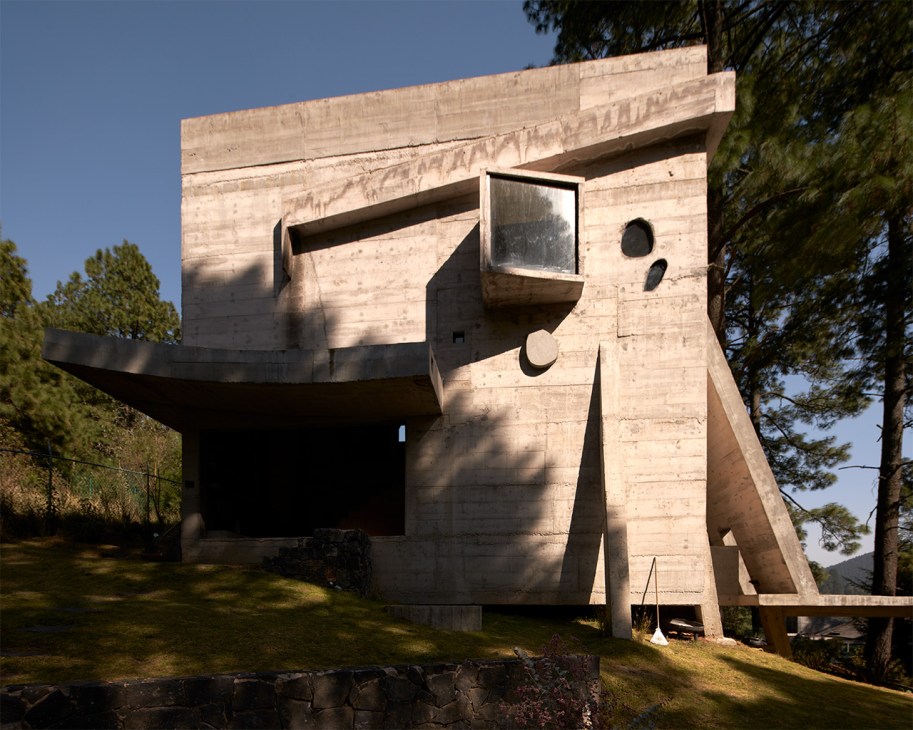
Casa Alférez is a holiday let. “The house is like another trip inside your holiday trip,” says Godefroy, who grew up in Normandy, playing in and around Second World War bunkers. After studying architecture in Paris, he took jobs in Spain and the Netherlands before heading to Mexico City, where he worked with Tatiana Bilbao. He remained there for several years, then founded his own studio four years ago. “Compared with Europe, I experienced so much in Mexico and learned more in a few years than I expected,” says Godefroy.
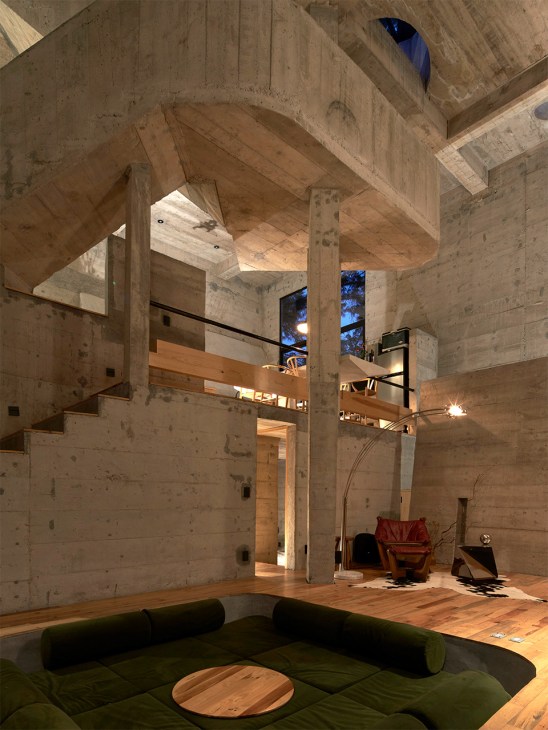
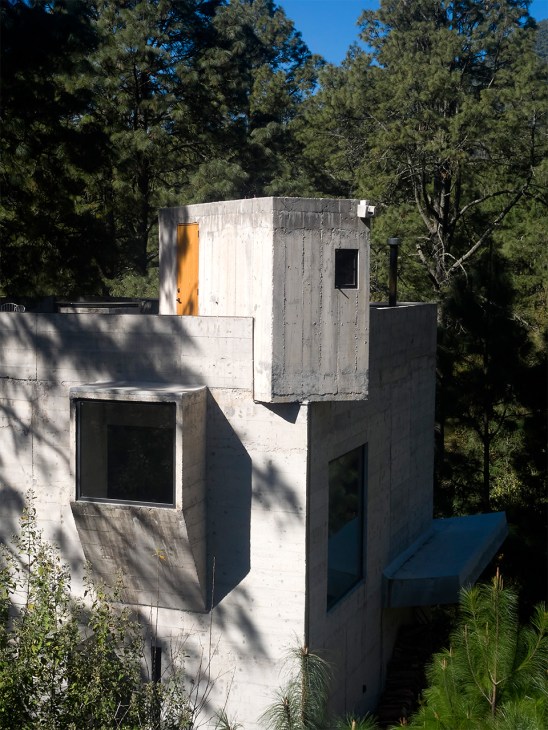
Despite the steep learning curve in Mexico, architectural practices are greatly respected in the country. It’s part of the reason why practitioners – from Bores and Canales to Carrillo and Godefroy – are given both time and space to experiment and dream. Architects here also draw on diverse cultural influences from home and abroad – but they are not copycats. They are comfortable in their own skin, with a focus on the people who will inhabit their houses. The cream of the crop considers comfort and how occupants and visitors will feel in the space.
It’s an outlook that means Mexican architects are keen to ensure that the fit is perfect for every client. And if some of the resulting homes flirt with the fantastical, it’s perhaps because they embody a yearning for a parallel world – one that is more peaceful than the real one outside. And while this longing isn’t unique to Mexico, the architectural expression of this pining is always distinct.
Thaddeus Stevens College of Technology is bringing prestige back to the trades and helping America’s skills shortage
In 1835, a packed Pennsylvania legislature nearly voted to repeal the state’s fledgling free education system after opponents labelled it too expensive and gathered 32,000 signatures. Enter Thaddeus Stevens, a fiery 43-year-old lawyer who was raised in poverty in rural Vermont and paid for his Dartmouth College tuition with the proceeds of his mother’s sale of the family farm. He delivered an impassioned defence, arguing that public schooling was both economically sound and morally imperative – its repeal would be “an act for branding and marking the poor”. His speech elicited cheers and swayed the legislature, making Pennsylvania a global leader in free education. Nearly two centuries later, the state is again pioneering educational innovation through an institution bearing Stevens’s name.
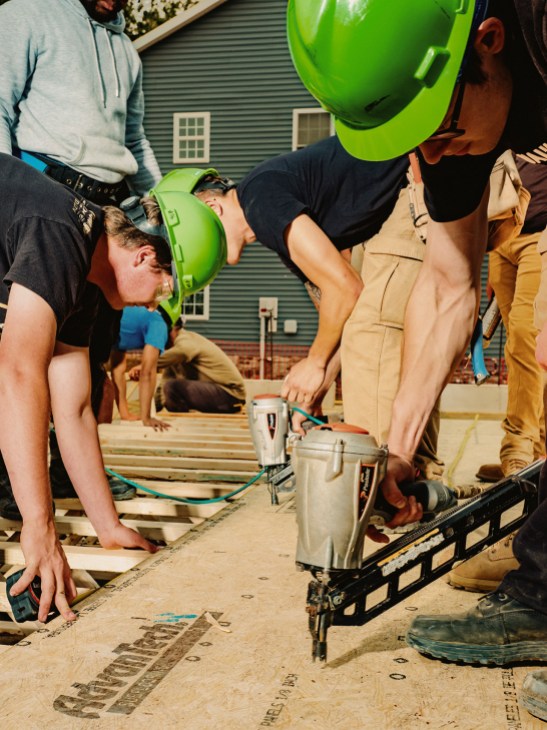
Thaddeus Stevens College of Technology is a trade school, where students learn skills such as carpentry or masonry rather than earn a degree in economics or philosophy. The concept isn’t new – the nation’s first school of this kind opened in Boston in 1881 and European guilds have been teaching trades through apprenticeships for centuries – but the college’s time-tested approach is an ideal fit for the current moment. US higher education is in flux, while the construction industry is desperate for skilled workers.
Established in Lancaster in 1905 with funding from the estate of Thaddeus Stevens and the Pennsylvania government, an hour’s train ride west of Philadelphia, it seems like a traditional college campus, with a vibrant student life and well-rounded course offerings. Students might spend more time wielding tools than reading books but they still live in residence halls and cheer on the school’s American football team (nicknamed the Bulldogs). The end result is designed to overcome classist stigma around technical education and careers. In the popular imagination, such two-year trade schools result in dead-end blue-collar jobs, which is seen to be inferior to four-year undergraduate universities that theoretically lead to a white-collar career path. But as the latter loses some lustre, the former is poised to shine, with renewed attention from parents and education professionals alike.
“Thaddeus Stevens has disproven the binary,” says Pedro Rivera, a former Pennsylvania secretary of education who became the school’s president five years ago. “You don’t have to sacrifice one for the other.” Borrowing a metaphor from the hospitality industry, he argues that with a Thaddeus Stevens degree, “you can be prepared for both the front and the back of the house”. A prime example is the architectural technology programme, which is one of 24 associate degree offerings. Students learn the ropes of drafting software that will make them immediately employable in an architecture firm. They also have an ace up their sleeves in terms of soft skills that will make them useful beyond the desk: sharing classrooms and dorm rooms with future carpenters and welders who will be tasked with converting an architect’s vision into reality. As a result, graduates of this scheme are prepared for a professional design setting while speaking the language of tradespeople. “I’ve often seen a traditional architect butt heads with contractors,” says instructor Jana Belack. “The open lines of communication aren’t there.”
Belack is a Thaddeus Stevens alumna who went on to pursue an architecture degree and earned her licence. She worked for firms in Boston for more than a dozen years before returning to teach at her alma mater, while retaining a part-time remote job that helps her bring real-world construction questions into the classroom. While Belack’s students are mostly hunched over computer screens, the bread and butter of a Thaddeus Stevens education is the “back of the house” – such as the pile of crushed stone and aggregate the size of half a football field that greets Monocle in the civil engineering construction technology programme.
Inside a warehouse-like facility, students get their boots dirty as they lay rebar in a lattice on top of the pile. Instructor Mitch Kauffman provides a group with a loose set of drawings to prepare the rebar grid, a core component for stabilising concrete bridge decks, floor slabs and runways. They spend an hour talking over the assignment before the physical element: rebar stakes are piled in wheelbarrows and a dusty smell perfumes the air.
That ratio of laboratory to classroom time won over second-year student Ryan Beppel, who transferred to Thaddeus Stevens from Pennsylvania State University, the state’s flagship institution with an enrolment of 89,000, where he studied engineering. “I liked everything about Penn State, except it wasn’t what I wanted to do with my life,” he tells Monocle after class. “I didn’t want to make the drawings; I wanted to build them.” Beppel is the grandson of a tool salesman and collaborated closely on home remodelling projects with his father. He knew that he wanted to work with his hands and wasn’t sure if he needed to pursue higher education in lieu of on-the-job training. But in a secondary-school culture that still prioritises college preparation, he followed a more traditional path to Penn State and enrolled in civil engineering, which was the closest field to construction.
The courses were held in large, impersonal lecture halls. It wasn’t Beppel’s preferred style of learning but he ploughed through five semesters. About halfway through his four-year degree, he says, “I saw the light at the end of the tunnel and it revealed that I would be more in the office and not working with my hands. That’s what led me to Thaddeus Stevens.”
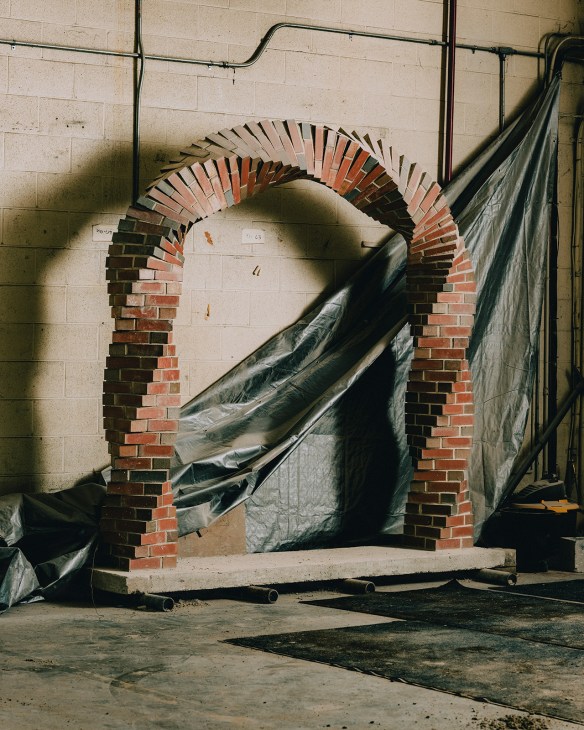
The other factor that led him to the college was his employer at the time. Beppel was an intern for Allan Myers, the largest civil construction firm in the mid-Atlantic region. It sponsors the school’s civil construction technology programme. The company’s banner hangs from the rafters and the equipment and skills in the lab align with what its employees use in the field. That imprimatur was enough for Beppel to choose Thaddeus Stevens over rival trade schools.
On the day that Monocle meets him, the 22-year-old has just signed an offer letter to start as a full-time field engineer, making $75,000 (€64,000) per year. He sees a viable career path to becoming a foreman and can imagine spending years at Allan Myers, which, he says, encourages its employees to learn new skills and move into different roles. “I don’t like doing the same task every day,” he says.
Well-paid, secure employment is Thaddeus Stevens’s calling card. While it initially opened its doors to serve orphaned boys willing to learn a trade and acquire an academic education, it now teaches Pennsylvanians of any gender or income. The school became accredited in 1991 and today there are nearly 1,500 students who are almost guaranteed to find a suitable job.
In the class of 2024, 91 per cent had jobs at graduation and 6 per cent went on to additional education. Programmes are vetted based on demand for graduates and earning potential; if there aren’t enough job vacancies and a given field pays below a living wage, it doesn’t make the cut. For example, there’s no web design programme, even though related fields such as graphic communications are offered. Additionally, courses at Thaddeus Stevens cost markedly less than a “traditional” university education, so the ability to graduate with little or no student loan debt – a $1.81trn (€1.54trn) albatross round the collective necks of US college graduates – is a key part of the school’s value proposition.
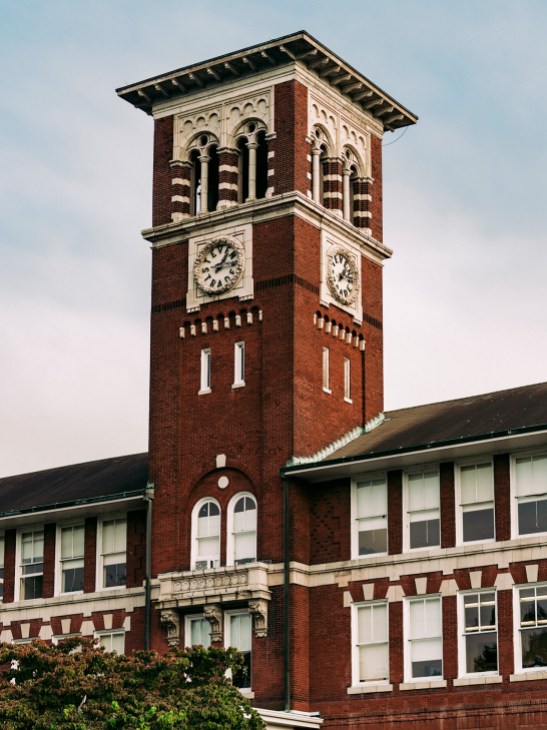
The maths added up for first-year masonry student Caden Stone. Both of his parents went to college. His father wanted his son to follow in his footsteps and become a lawyer. But in secondary school, seeking to “toughen up” his son, Stone’s dad found him a summer job working with a mason. Unexpectedly, he enjoyed the work. Stone anticipated studying accounting in college but the prospect of being stuck at a desk instead of working outside was a non-starter. Then a teacher ran students through an exercise in his last year of secondary school: envision the lifestyle that you want to live and ask what you can do to make it happen.
“In seconds, I saw the life that I wanted for myself and I thought of what masons bring in,” he says. “There’s a traditionalism that I feel like you could achieve. If you work hard, you can support a family that way. The old American dream is still possible in the trades.”
Stone and his classmates are part of a growing wave among Gen Z students and their families whose traditional faith in a college education is starting to crack. Trade-school enrolment is at its highest level since 1992. According to a survey in the 2025 Blue Collar Report, sponsored by contractor software firm Jobber, only 16 per cent of Gen Z’s parents now believe that a traditional four-year college degree guarantees long-term job security. At the same time, the cultural pressure to attend college is high – in those same surveyed families, three-quarters of Gen Z students still plan to attend a four-year school.
Rivera, the Thaddeus Stevens president, acknowledges his complicity in perpetuating that culture. During his time as a teacher and school district superintendent, before his five-year stint in charge of public education statewide, he enthusiastically pushed students to study for four years. “Thaddeus Stevens opened my eyes,” he says. “It’s no longer about being a traditional tradesman. We’re teaching you the skills that you need to be really good at your job but also building the competencies in you to be a lifelong learner.”

That is the pitch that Rivera gives the more than 1,000 parents and prospective students who are now packing the school’s twice-yearly open houses to browse the career and technical offerings, while noting with approval that there’s still coursework in composition, history, economics and even literature. Compared with commuter-style trade schools and community colleges that feel more like clocking in and out of a job, Thaddeus Stevens has the trappings of the traditional college experience.
After quietly existing for 120 years, the school is now receiving wider attention. Its faculty will begin teaching in Philadelphia next year and Rivera says that he fields regular queries from across the US about how to replicate the college’s success. As higher education gets swept up in changing political currents, trade schools could soon experience a windfall. One proposed use of funds from White House settlements with Ivy League universities is financial support for new and existing trade schools.
Beyond the current administration’s stated preference to encourage more domestic manufacturing and industrial might, there is a potential fringe benefit to trade education – one that might soften the country’s culture wars. On the Thaddeus Stevens campus, there is a notable absence of polarised political activism. Given that classes start at 07.30, just as students’ future jobs might, there perhaps isn’t the time or energy for political theatrics.
Instead, students focus on physical work that also pays civic dividends. For more than 70 years, the capstone for students across the construction-related degree programmes is the home project. They design and build a house from scratch, then turn over the keys to an estate agent; some of these homes are designated “affordable housing” and are sold at below-market-rate prices. While professional firms take on some crucial tasks such as pouring the foundation, students are involved in everything from drawing blueprints to acquiring permits from the local planning authority. When Monocle visits the project site, students in hard hats and Carhartt jackets are busy firing nail guns into wood beams, as country music plays from a speaker. It looks like a construction site – because it is one.
The complexity involved in home construction, especially when students themselves call the shots and aren’t just taking orders from a foreman, disproves outdated notions about manual labour. Back in the masonry lab, Caden Stone chats next to an ornate fireplace, the handiwork of last year’s students. “You’re not the brightest bulb in the shed,” he says, mimicking snobby misconceptions of trade-school students. But the Gen Z future mason brushes aside those stereotypes. “We need plumbers,” he says. “We can’t all be influencers.”
How an Italian lighting brand is keeping Ingo Maurer’s anarchic charm alive
“A company whose name consists of the first name and surname of its founder will have a hard time moving on without them,” says Carlo Urbinati, the founder and president of Veneto-based lighting brand Foscarini. “It’s an almost impossible mission.” This was briefly forgotten when, in 2022, Urbinati heard that the company of Ingo Maurer, one of Germany’s most beloved lighting designers, was on the market. Given the chance to bid on the legacy of a trailblazer he had long looked up to, Urbinati couldn’t resist and brought it under the Foscarini banner.
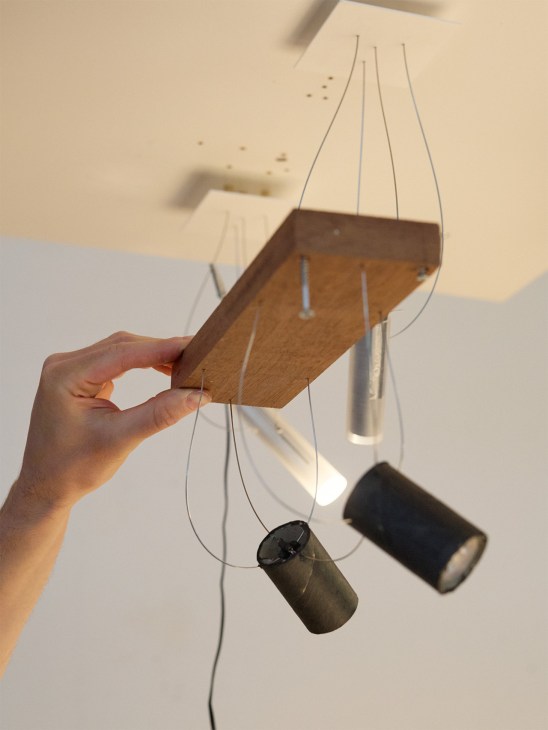
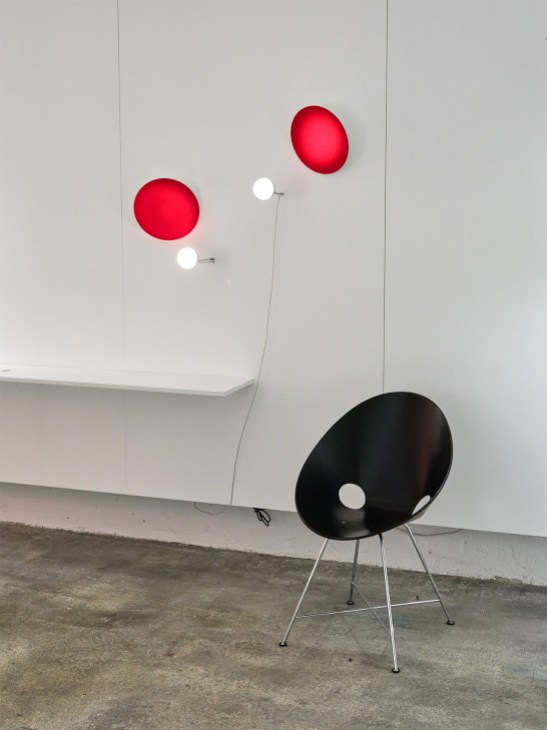
Founded in Munich in 1966, Maurer’s namesake company is famed for its witty, irreverent pieces that helped to define the zeitgeist for decades. Its first key design was Bulb, an oversized light bulb that became associated with the pop art movement. In the 1970s, there was Uchiwa, a wall sconce made using a bamboo and rice paper fan; in the 1980s, the YaYaHo, a spindly tension-wire system; and in the 1990s, the Lucellino, which gave an incandescent bulb some feathered wings.
Merging cutting-edge technology with an affection for objets trouvés, Maurer produced inventions that have become industry standards, including the first lighting system using low-voltage wires. The designer worked until his death at the age of 87 in 2019, leaving behind 40 people based between an office in central Munich and a factory at the city’s edge.
“The heritage of this company is infinite,” says Urbinati. “It was based on an almost anarchic liberty to create things.” During his lifetime, Maurer took pride in eschewing all German rules of business management and running the workshop like an artist’s atelier. Everybody in the team worked directly under Maurer and his wife, Jenny Lau, with no hierarchy. There was no distribution network and no marketing department. Because everything was made in-house, it was never a problem that the company might only sell a small number of a product that had been developed from scratch.


“The goal here was never to make money,” says Axel Schmid, who became the company’s design director after Maurer’s death. “It was to keep making things.” This became an issue when the firm lost its driving force, prompting Maurer’s daughters to sell. Foscarini won the bid. “We are investing a lot of time and money in reorganising the business, all while respecting what there already is,” says Urbinati.
Shortly after the purchase, Urbinati organised a workshop with the existing staff to understand Maurer’s design approach. One of the tasks was to construct something that was a characteristic Ingo Maurer piece. “The team ran down to the workshop and took whatever they could find,” recalls Schmid. After a few minutes, the designers had outfitted a large light bulb with 3M earmuffs, which became the Shhh! lamp, launched in April 2025 at Euroluce, the lighting section of Salone del Mobile, the world’s biggest furniture fair.
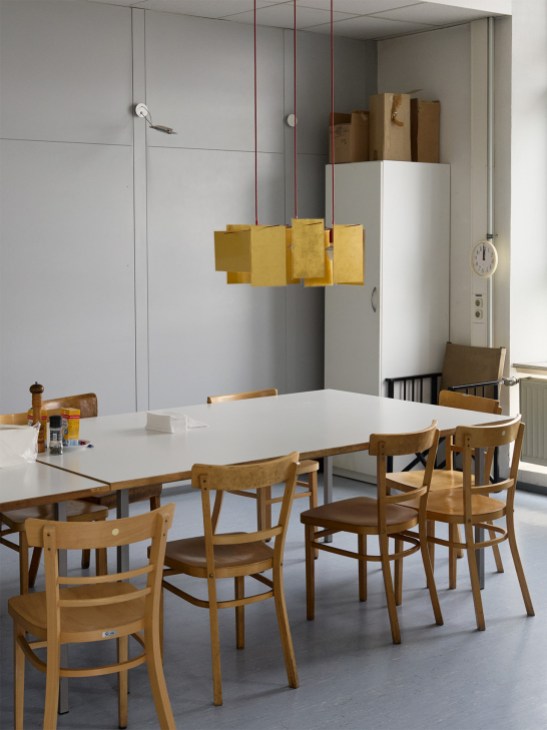
After visiting the workshop and factory, where boxes of old prototypes are still stashed, Urbinati asked the team to rummage through the archives and present some of what they found. “We didn’t even remember what was inside the boxes,” says Schmid. Maurer’s creative process involved travelling across the globe and bringing back objects and impressions, from erotically shaped Thai porcelains to toy racing cars. These often ended up boxed with the dozens of models that they inspired. Among the findings presented to Foscarini was a tiny LED light hung from a USB-C charger – an idea that Schmid had tinkered with years ago before forgetting it in a drawer. This became Strange Little Thing, also launched in 2025.
In the Ingo Maurer design department, housed in a former stable in a leafy courtyard in Munich’s Schwabing neighbourhood, Monocle finds Schmid, Sebastian Hepting, Julian Auch and David Engelhorn tinkering with a happy jumble of works in progress. Miniature prototypes and sources of inspiration, from fishing baits to confectionery ribbons, are hung from the lamps above the desks. Crowded in one corner are dozens of iterations of Bruce Springsteel, a new adjustable lamp. The team members work as they have always done, with each looking after one product from beginning to end. The difference, under Foscarini, is that they now judge the results collectively.
The influence of the new Italian owners has also gradually seen some organisational structures introduced to the company, including a stronger sales network and more respect for EU certifications, while trying to keep the magic that Maurer weaved. It’s too early to say whether Urbinati was wise to defy his own better judgement – the company remains far from lucrative – but the Venetians are playing the long game. “The team is perfectly capable of working on ideas à la Ingo,” says Urbinati. “Yes, Ingo is dead but his method and his teaching still have a lot to say.”
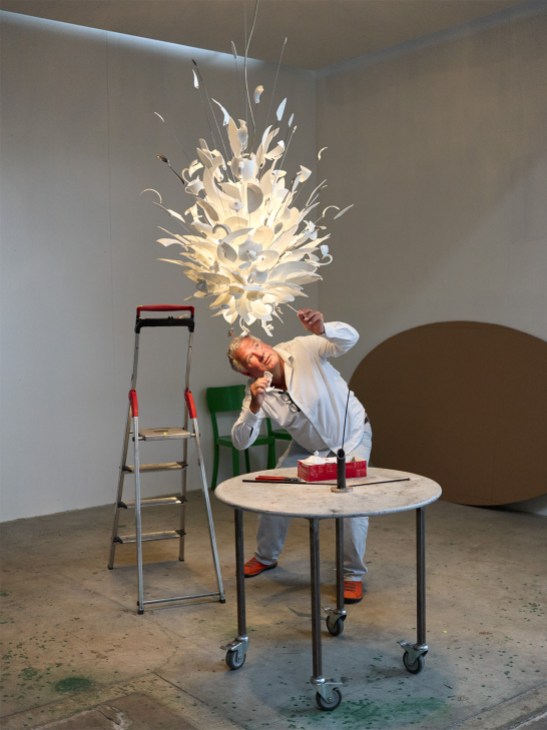
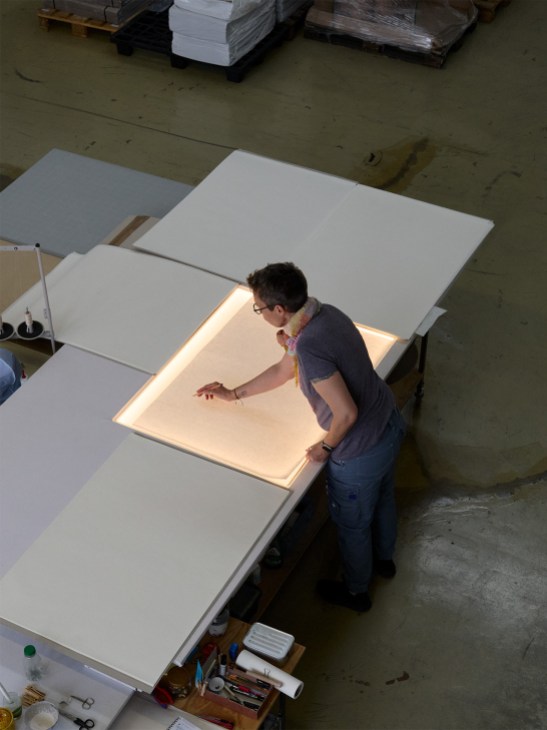
What can postwar monuments teach us about the role of architecture in shaping nations’ memories?
To encounter a spomenik is to experience design’s ability to foster a state of contemplation. Dotted throughout the former Socialist Federal Republic of Yugoslavia, these concrete or steel memorials are often monumental in scale, brutalist in style and symbolically abstract. They resemble relics from a dystopian future or the result of a time warp that took place exclusively in what is now Bosnia and Herzegovina, Croatia, North Macedonia, Montenegro, Serbia and Slovenia.
Spomenici – Serbo-Croatian and Slovene for “monuments” – were built between the 1950s and 1990s as Second World War memorials. They commemorate unspeakable horrors: a period of occupation by Axis powers, mass killings and the imprisonment of political opponents (partisans and communists), and a genocide committed against ethnic Serbs, Jews and Roma people. In the decades immediately after the war, the question of how to acknowledge this history while forging a path forward resulted in a nationwide programme to build spomeniks – from the mountains of Montenegro to the Adriatic coastline of Croatia. Though precise numbers are unknown, it is estimated that between 20,000 and 40,000 structures were erected as part of this state-led effort under the administration of Josep Broz Tito, the Yugoslavian communist revolutionary turned dictator.
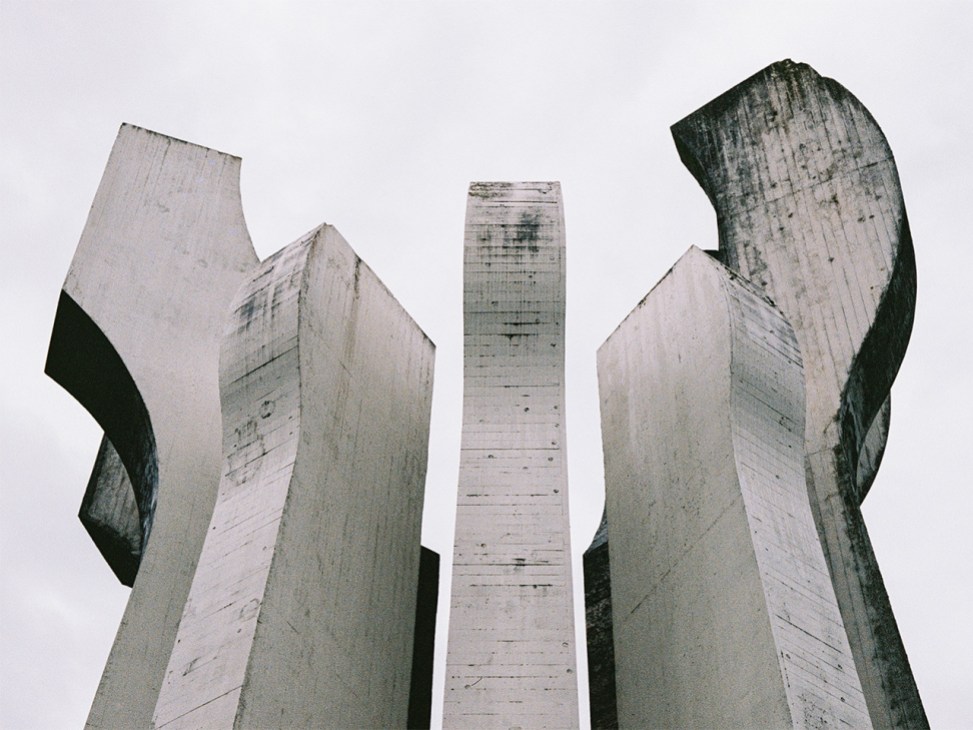
While the principal purpose of these spomeniks was to preserve memory, the programme was equally an exercise in manifesting the spirit of a new nation, defined by the socialist values of unity, equality and welfare for all. The process of selecting designs for these monuments involved competitions organised by regional and local authorities; for many young architects, being chosen to build a spomenik represented opportunity.
“It was a period ablaze with enthusiasm,” says Ljubljana-based architect Marko Mušic. “We were able to realise our architectural visions – and all of the participants were fuelled by the prestigious nature of the task.” Now one of Slovenia’s most revered designers, Mušic launched his career in the 1960s working on commissions to build memorial complexes (spomen-doms) in the towns of Kolašin, Bitola, Bosanski Šamac and Nikšic. “Though I was only in my twenties at the time, the political representatives who led these projects would respect the architect’s authority,” adds Mušic. “Sometimes, we even had the privilege of purchasing foreign products, which was otherwise prohibited by law in those days – for example, the large, dark-blue glass panels for Nikšic.”
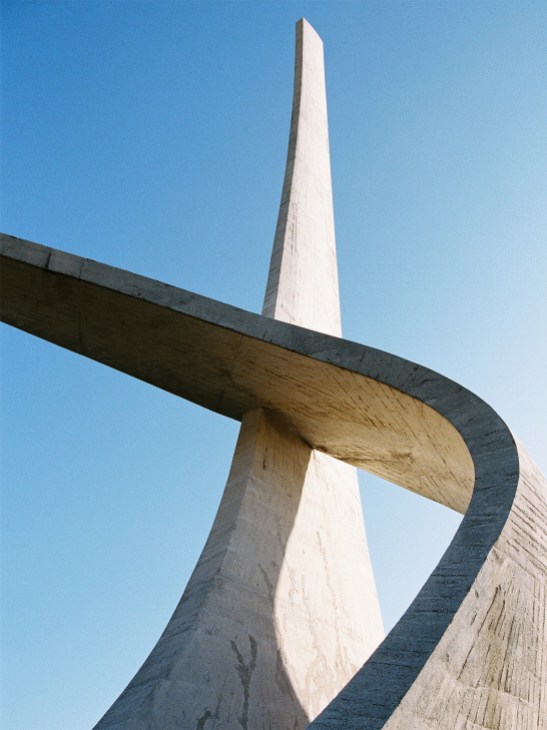
By involving regional authorities, the spomenik programme encouraged the disparate identities that existed within the borders of Yugoslavia to come together. Though the events that are commemorated all took place during the Second World War, what a specific spomenik honours varies widely. In Croatia’s Brezovica forest, the Sisak spomenik is an ode to the elm tree that sheltered a meeting of the partisan youth brigade that took place there. The winged monument in Tjentište, in Bosnia and Herzegovina’s Republic of Srpska, sits dramatically on the crest of a hill where Tito outsmarted German battalions by escaping through the mountains during the 1943 battle of Sutjeska.
Elsewhere, history is harder to confront. Serbian architect Bogdan Bogdanovic’s Flower Monument in Jasenovac, Croatia, sits on the site of a former concentration camp run by the Ustaše militia of the Independent State of Croatia. Instead of literal depictions of the pain and suffering that took place on these grounds, Bogdanovic opted for a stylised flower that recalls a lotus – a symbol of forgetfulness in Greek mythology but also awakening in Buddhism and Hinduism. The towering concrete lotus possesses an unexpected gentleness. But leading up to the memorial is a path made from railway sleepers repurposed from the track that carried those facing their death to Jasenovac.
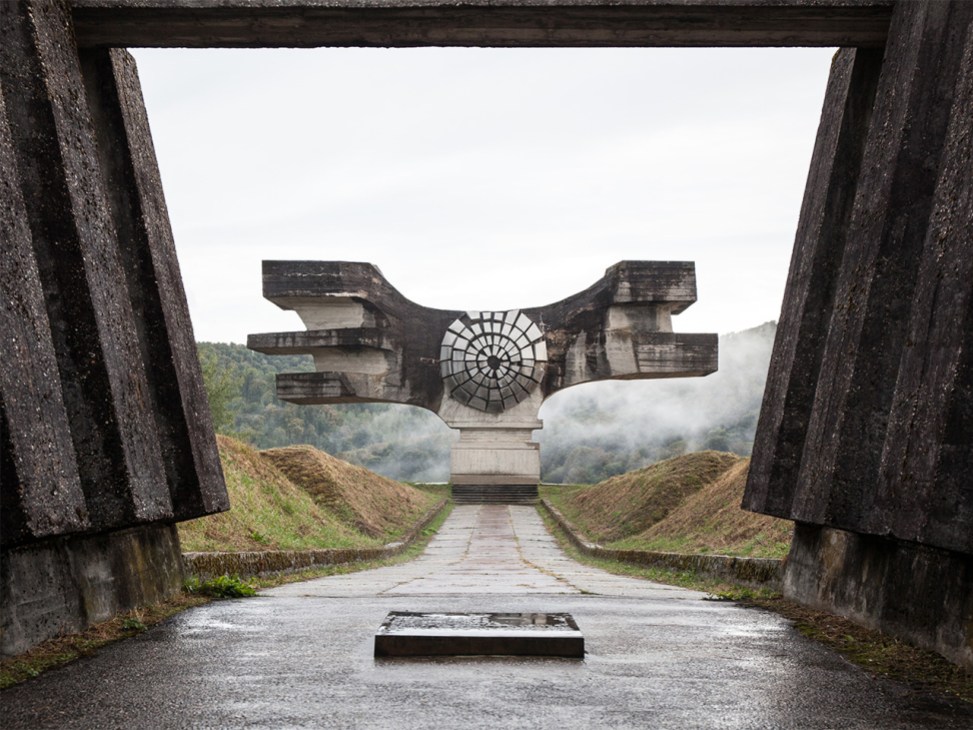
Sometimes, a museum or an archive accompanies a spomenik. Many of the structures were intended as spaces for education, hosting vigils, events or school trips in an effort to pass down stories of the war to the next generation. In some cases, such as at Petrova Gora in Croatia, little remains of this educational component. Others are better maintained, though most spomeniks display the unforgiving signs of time, exacerbated by the chaos of the Yugoslav wars. At times you see efforts to cover graffiti with white paint; at other times not.
For contemporary visitors, these structures have a tragic undercurrent. They were erected to ensure that the horrors of the Second World War would never happen again – but history repeated itself in the 1990s with further bloodshed. After Yugoslavia’s implosion, the spomeniks became almost dormant, artefacts from a failed social experiment. The focus shifted from unification to the redrawing of borders.
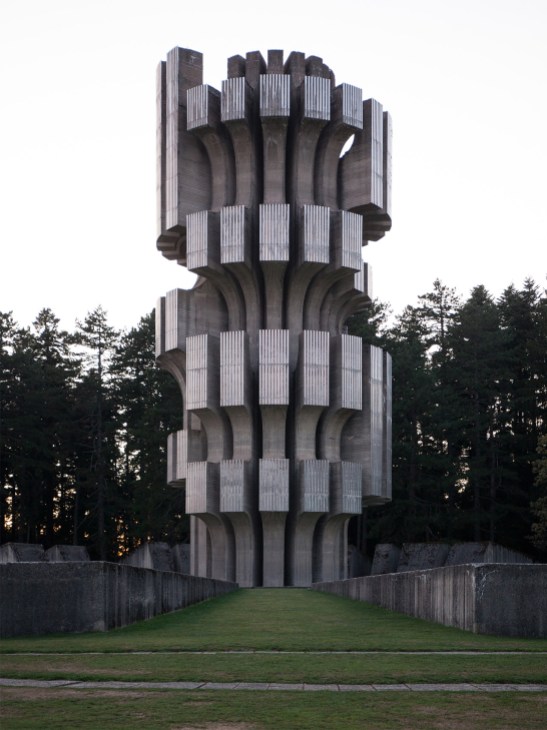
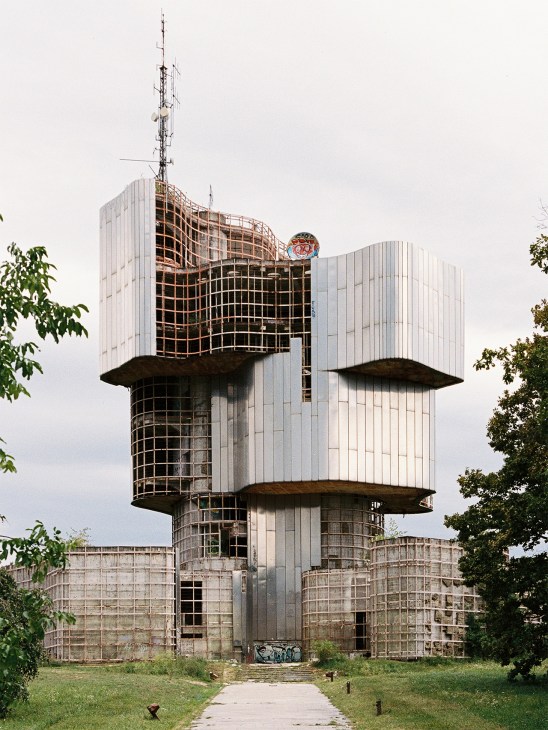
This period was followed by growing international interest, culminating in the 2018 exhibition Toward a Concrete Utopia: Architecture in Yugoslavia, 1948-1980 at New York’s Museum of Modern Art. Suddenly, spomeniks were the subject of articles bearing inane headlines such as “No, these are not made by aliens!” Meanwhile, US historian Donald Niebyl wrote The Spomenik Monument Database, a comprehensive guidebook. His research moved the conversation beyond mere aesthetic curiosity and towards an understanding of the significance of the spomenik programme.
“It’s interesting that spomenici have become a topic of objectification or Western fetishisation,” says architect Vernes Causevic, who works in the UK, Bosnia and Herzegovina, and across the Balkans. “The conversation has been more about their visual appeal than what they symbolise, which is more important: the anti-fascist movement of the Second World War. These structures aren’t just objects. They also provided regular educational programmes to build a unified state. To see them as mere structural forms is a limited way of looking at them.”

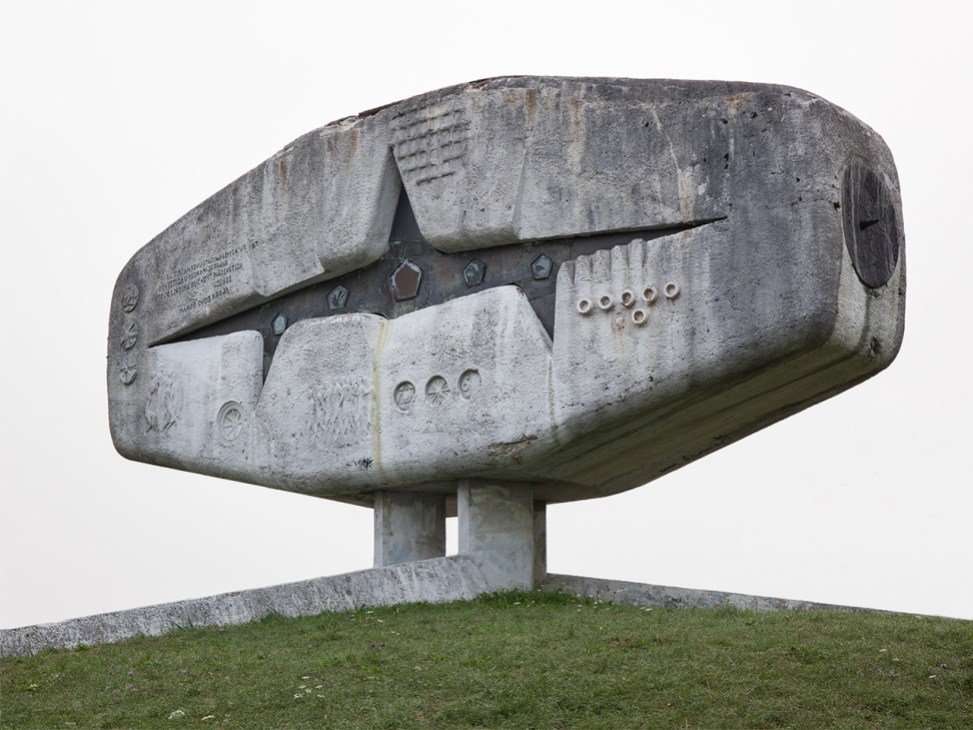
With his partner, Lucy Dinnen, Causevic runs Project V Architecture, a practice that weaves layers of history into its projects, be it the Most Mira peace centre in Bosnia and Herzegovina or a residence in Sarajevo. “Political context matters,” says Dinnen. “We talk about architecture as a methodology for peace-building. At Most Mira, we’re bringing together engineers and builders from different parts of the country and mixing building materials that include earth from sites in divided communities in the area. It’s a message to start anew, to find a way forward by working together.”
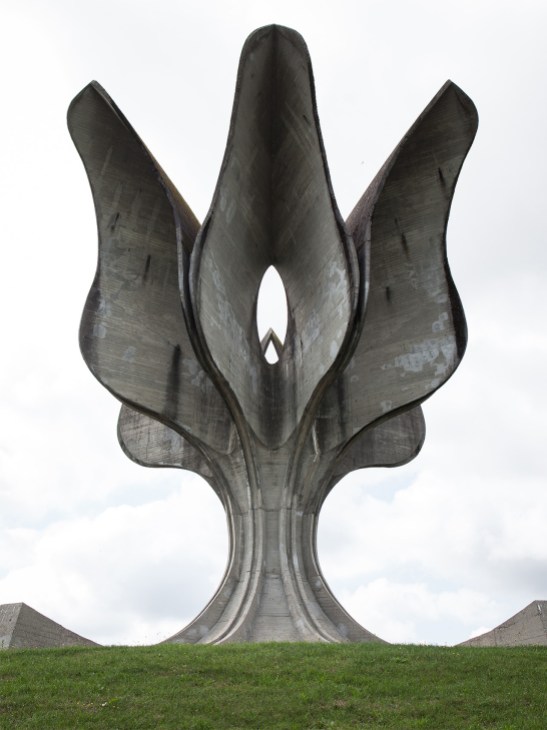
It’s an approach to architecture that echoes the idealism of the spomeniks. Today, their future remains uncertain as the issue of preserving them moves in and out of public consciousness. Though their fate is in limbo, the lessons that they offer remain relevant at a time when overcoming societal division is becoming a greater priority in the Balkans and beyond. “Forgetting a memorial is tragically ironic,” says Causevic. “The abandonment of the spomeniks is disappointing because they are a crucial part of our heritage.” Of course, the Tito regime that sought to commemorate the struggle against a murderous ideology itself became brutal. But the need to contend with the history that these monuments embody remains urgent. As they have always done, the spomeniks contain stories of hardship and peace, horror and forgiveness – the past and the future all at once.
Here are the key designs defining the interiors of the revived Space House

Soft touch
With its clean lines and balanced proportions, Muuto’s three-seater Outline Sofa is the epitome of Scandinavian cool. It’ll anchor a room without overwhelming it, while its cognac leather will elevate any space.

Low-slung living
Flos’s Toio Led floor lamp is the perfect companion for B&B Italia’s generously proportioned, modular Tufty-Time sofa, which can be adapted to suit changing lifestyles. Nordic Knots’ Grand rug provides a grounding, woolly presence.

Leading light
London gallery Béton Brut stocks
this Model 387 Lamp that Tito Agnoli
designed for Oluce in 1954. A metal
pole rises from a travertine base and
is crowned with a “hammerhead” bulb,
creating its striking form.

Red alert
Designed in the 1950s, Jean Prouvé’s
Antony chair soon found its way into
homes and offices across the globe.
Now, Vitra is releasing this limited-edition
version in partnership with retailers such
as Aram, in this striking original colour.

Roll with it
Swiss modular systems meet British
hospitality in this collaboration. The
Side Cart retains Münsingen-based
USM’s signature chrome-plated steel
engineering, while embracing Buchanan
Studio’s sleek London aesthetic.

Wave theory
These 20th-century icons are a reminder
that the best of the past still has a place
in the present. Pierre Paulin’s F300
armchair for Gubi and Alvar Aalto’s
Screen 100 (on loan from Aram) for Artek are timeless additions to any contemporary space.

Seats of power
Your choice of chair can affect everything
from your posture and your productivity
to your enjoyment of a meal. Among our
favourites are Craeton’s Tank Dining
Chair, Eero Saarinen’s Tulip Chair for
Knoll and the Spindle chair by Porro.

Clear the decks
Suffering a spot of writer’s block?
Then try working at Italian firm
De Padova’s Scrittarello home
office desk. With its planar shelves
and light proportions, it’s an artful,
utilitarian object that’s sure to inspire.

In glowing terms
The No 1 Common Around Table and
Stool by UK designer Andu Masebo, in
partnership with AHEC, sets the stage
for contemplation, complemented by
Nedre Foss’s Måne bowl and Marset’s
portable FollowMe lamp.

Top of the line
The rotating design of Andu Masebo’s
On the Round Shelving addresses the
need for flexible storage configurations.
Its clean, geometric lines and flexibility
make it an eminently functional
architectural statement.

Timeless comfort
A comfortable place to perch and good
lighting are essential ingredients of a
book lover’s haven. Settle down with
two mid-century icons: Børge Mogensen’s
low-slung Hunting Chair for Frederica
and Eileen Gray’s 1927 Tube Light (on loan from Aram), set on the Agra rug in thistle (on loan from Armadillo).

Bolt from the blue
Static yet appearing in motion, Rotate
is a side table designed by Space
Copenhagen that allows for ever-changing
compositions. Produced by &Tradition,
it proves that storage can be both
practical and poetic.

Eternal forms
Good design requires beautiful forms
and exceptional functionality. Embodying
these in equal measure are Hans J Wegner’s
CH008 Coffee Table for Carl Hansen & Søn
and the Mario Bellinidesigned Amanta Sofa for Hay.

One of a kind
There’s a particular appeal to owning
a one-off piece and Faye Toogood’s
Roly-Poly Stool offers just that. With
its soft lines, every fibreglass piece is
hand-cast, making each unique – a
museum-worthy piece for any home.

Act of devotion
The name Monk was bestowed on
this chair by Afra and Tobia Scarpa
for Italian furniture firm Molteni&C to
reflect its pared-back simplicity. A taut
leather seat and backrest over a timber
frame create an elegant silhouette.

True as steel
To mark its 50th anniversary, Zara has
partnered with 50 designers on the
creation of 50 objects. This Vertical
Bookshelf by Sarah Andelman of
Parisian concept shop Colette will
elevate the books that it holds.

Captain of industry
The boxy design of Copenhagen-based Frama’s aluminium Rivet Case brings
industrial aesthetics into domestic
spaces. Its clean, geometric form makes
it a good fit for any space, offering
practical, thoughtful storage solutions.

Gathering place
Spanish architect Patricia Urquiola’s,
Oru Table for Andreu World is an
ideal gathering place for meetings or
meals. Three curving legs subtly splay
under a rounded tabletop, made from
responsibly sourced timber.

Side helping
UK designer Rose Uniacke’s beautiful
Double Floating Side Cabinet
champions the natural beauty of burl
wood. Carefully proportioned, it can be
used in a variety of ways, from side table
to weightless wall-mounted credenza.

Upon reflection
Lincolnshire-based designer Matthew
Cox’s Newlight Mirror is a subtle work of
precision. Its sculptural form is the result
of a combination of manual expertise
and skilful machine use – a reflection of
the importance of contemporary craft.