The Entrepreneurs
Havana’s neighbourhood hotel revival is transforming its hospitality scene
On Sunday mornings, the tinkle of piano keys can be heard on the streets of Havana’s artsy Cayo Hueso district, between the 16th-century Old Havana and Vedado. After the hospitality sector opened up to private and international operators in 2016 (when Cuba’s socialist government relaxed its regulations), a new crop of hotels has been helping to revitalise once-forgotten neighbourhoods for locals and visitors alike.
The source of these particular neighbourhood melodies is the large, high-ceilinged café at the Tribe Caribe hotel, which opened a year ago in a grand, finely restored former apartment building that dates back to the 1920s. In the 1940s and 1950s, it housed one of Havana’s most storied jazz bars.
“It feels like a bit of a miracle that we were able to restore a building so important to the musical history of the neighbourhood,” says co-founder Andrés Levin, a Grammy award-winning Venezuelan-German musician, producer and songwriter who has lived in Havana for almost 30 years. He undertook the hotel’s revival alongside his business partner, Canadian investor and property developer Chris Cornell. Given how young Cuba’s private hotel sector is, Levin adds, the role that hospitality businesses can play in their parts of the city is still in flux. “We wanted to restore the building to the glory of what it once was,” he says. “But we also wanted to create a ripple effect throughout the neighbourhood.” It has begun to draw visitors to a part of the city that was often sidestepped by the million or so people who travel to Havana every year, he tells Monocle.
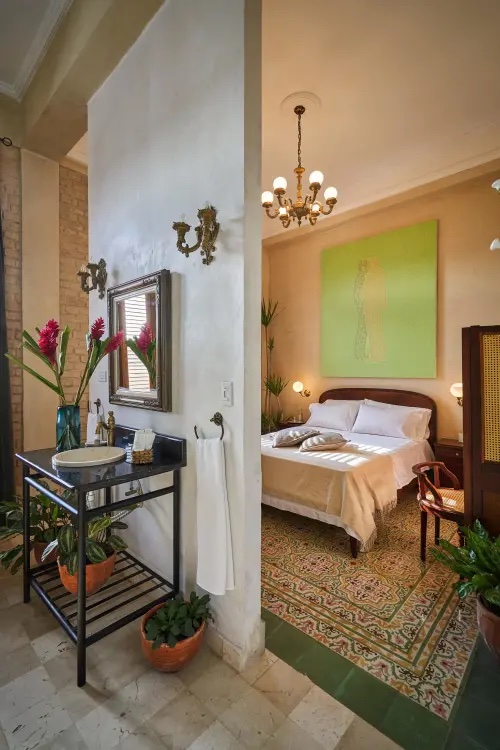
“We knew that we wanted the hotel’s public spaces to pay homage to the city’s musical and cultural heritage but also to generate opportunities in the neighbourhood,” he says. To do so, a dedicated exhibition space, The Black Box, was incorporated into the ground floor, which hosts performances by emerging Cuban musicians, contemporary art exhibitions and film screenings.
A portion of the revenue from the 11-room hotel, which has been furnished with work by contemporary Cuban artists and antique fixtures and furniture, will be invested nearby. That includes the proposed revitalisation of a historic park and a long-term plan to restore Havana’s international jazz festival and invest in local talent.
“We want this to be a model that can be replicated in other parts of the city,” says Levin. “We hope that other businesses will see what we have done here and take it as a starting point for themselves.”
tribecaribecayohueso.com
Boys and their toys: What happened to the playthings of the yuppie office?
In the corporate world of the 1970s and 1980s, when businesspeople were businessmen and lunches were liquid, the executive toy was one of the essential markers of bossdom. The executive desk might not yet have boasted any computing power but it surely would have sported a Ballrace (a chrome Newton’s cradle) or a sleek black Mercury Maze – a puzzle game whose goal was to coax a silver blob into the centre of its small labyrinth. It might also have featured an Aquabatics puzzle filled with the ingredients of said power lunch: champagne, caviar or Perrier.
These distracting office decorations and dozens more like them were dreamed up by impish English art-school pals Richard Loncraine and Peter Broxton, whose creations are now being celebrated in a new book named after their firm, Loncraine Broxton.
“I rather dislike puzzles,” says the somewhat mischievous-sounding Loncraine. “I had a background in making kinetic sculptures out of all of the postwar rubbish that was still lying around in the late 1960s. I wondered whether we couldn’t make these things smaller and shinier, and sell them as toys for adults.” Thanks to the burgeoning market for gifts bought on corporate expense accounts, Loncraine Broxton’s star rose, with a yearly turnover of about £8m (€9.5m) in the 1980s and a staff just shy of 100 people.
“It was great fun,” says Loncraine. “Research and development consisted of us having a drink at the end of the day and asking, ‘What shall we do tomorrow?’” The toys were all possessed of a wit that lightly mocked the go-getter culture while happily feeding on it: the Decision Maker allowed the busy yuppie to scribble, say, “buy”, “sell” or “golf” on a plinth beneath a swinging ball, which would randomly land on a word.
At this time, Loncraine was also directing television commercials and branching into feature films (including the 1982 adaptation of Dennis Potter’s Brimstone and Treacle, starring Denholm Elliott and Joan Plowright). He and Broxton bowed out of making executive toys in the late 1990s. As Loncraine puts it, “Secretaries were no longer wondering what they could buy their bosses for Christmas.” The book is a charming look at the ingenious minds that allowed entry to the yuppie club for less than the cost of pinstripes or a Porsche.
‘Loncraine Broxton: Innovations & Executive Toys 1969-1997’ is published on 30 November by Four Corners Books.
The Welsh mill securing its future by becoming an employee-owned enterprise
From the outside, the whitewashed stone workshops nestled in the Welsh countryside look remarkably similar to how they appeared a century or so ago, when the Melin Tregwynt wool mill was established. But step inside the facility, where some of Wales’s most striking fabric designs are made, and you’ll see that a quiet transformation has taken place – and a new yarn on how to overhaul the business model of a heritage brand is being spun.
Melin Tregwynt’s 40-plus employees recently became the mill’s indirect owners, when it was transferred from the Griffiths family’s ownership to that of a trust for employees. “They weren’t quite sure what they were letting themselves in for,” says Eifion Griffiths, the third generation to run his family’s mill. “We knew that we were getting ready to retire,” says Eifion, who took over the company from his father with his wife, Amanda, in 1986.

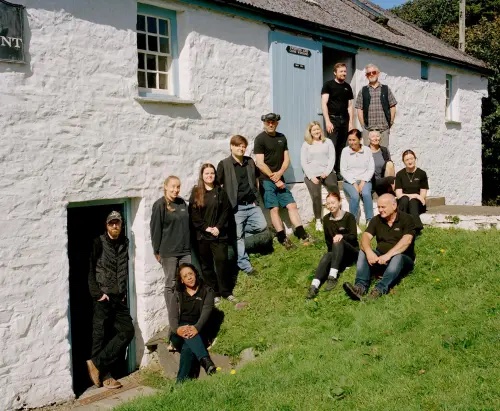
“We don’t have children so we haven’t got anybody to pass it on to,” he says. “It is a big deal passing a family business on.” Selling the company outright felt like the wrong decision. “It would have been very difficult to see it being run by somebody else,” says Amanda. “This is a sparsely populated area so we are a focal point in terms of employment. We’re knitted into the community.”
The restructuring has allowed production to continue uninterrupted (five looms produce more than 1km of fabric per month), while ensuring that there is flexibility and time to develop new designs, collaborations and additional products, such as a collection of premium Melin Tregwynt yarn for home-knitters to weave with, which is currently under development.

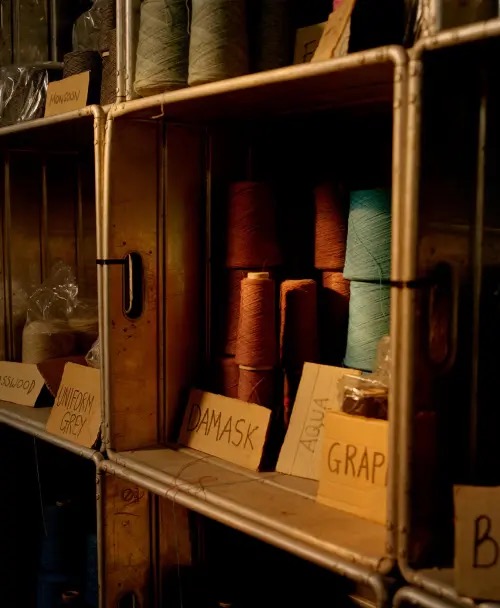
“It is very important to evolve all the time because you don’t ever want your business to turn into a museum piece,” says Eifion. “In the world of smaller businesses such as ours, there has to be some room for natural growth and this feels like a better, more modern way of passing our business on.”
melintregwynt.co.uk
Interview: Going undercover with Dougan Clarke, CEO of parasol-maker Tuuci
If you have ever sought shade on a veranda or a windy shoreline, there’s a good chance that you have sheltered beneath a Tuuci. The Ultimate Umbrella Co Incorporated (or Tuuci for short) was founded by entrepreneur Dougan Clarke in 1997 and has since ballooned into a paragon of parasol production, with outposts in Florida, the Netherlands and Vietnam. Its founder’s story, meanwhile, is a masterclass in doing what you know best.
“After flunking out of college, I took a job selling patio furniture,” says Clarke, from Tuuci’s Miami HQ. “I noticed that the umbrellas that we were selling would fly away or would break and were very hard to repair.” Having grown up around boats and working summer jobs in a boat-repair yard, Clarke applied his knowledge of rigging topsails to create umbrellas that would last. “The thinking was that if we could build an umbrella that was tough enough to go on a boat, it would have a long and serviceable life in a hotel or in somebody’s backyard.”
If you have ever sought shade on a veranda or a windy shoreline, there’s a good chance that you have sheltered beneath a Tuuci. The Ultimate Umbrella Co Incorporated (or Tuuci for short) was founded by entrepreneur Dougan Clarke in 1997 and has since ballooned into a paragon of parasol production, with outposts in Florida, the Netherlands and Vietnam. Its founder’s story, meanwhile, is a masterclass in doing what you know best.
“After flunking out of college, I took a job selling patio furniture,” says Clarke, from Tuuci’s Miami HQ. “I noticed that the umbrellas that we were selling would fly away or would break and were very hard to repair.” Having grown up around boats and working summer jobs in a boat-repair yard, Clarke applied his knowledge of rigging topsails to create umbrellas that would last. “The thinking was that if we could build an umbrella that was tough enough to go on a boat, it would have a long and serviceable life in a hotel or in somebody’s backyard.”

best for: The garden table
2. Bay Master M1 Classic
best for: The hotel terrace
3. Ocean Master Max Zero Horizon Cantilever
best for: Poolside clubs
Most of Tuuci’s parasols and its newer range of cabanas are made in Miami, where the firm employs 500 people, including “shade gurus” who keep the designs and silhouettes looking sharp. Clarke is certainly bullish about the brolly. “The sun is always shining somewhere,” he says. “And we’re happy to bring a little shade.”
What time are you at your desk?
As early as possible – 07.00 or so. I find that I learn more about this company early in the day or in the later hours.
What’s the best way to prepare for leadership? On the job or an MBA?
I’m not an MBA guy and didn’t excel in that world. The most powerful thing to look for in people is entrepreneurial spirit – being able to spot opportunities and capitalise on them.
Is it better to be liked or respected?
Both. That said, you’re not out to be liked but people appreciate leadership that is fair.
Do you read management books?
No, but I read a lot of magazines and I’m across the news.
What does your support team look like?
My journey as a leader has been about learning how to be more process-driven and to get people around me to take on responsibilities. You can’t do everything – no one can. I have a PA whom three or four of us at the top of the company share; I also have a clutch of right-hand people.
What technology do you carry on trips?
I have my iPhone and a back-up because I’m often near the water and these phones too often end up going for a dip. I also bring along a laptop and an iPad for visuals in meetings.
Who should make the decisions?
The CEO can’t be making every decision. They need to put the right people in the right positions to make things happen. It’s down to the leader of each organisation to recognise that talent.
tuuci.com
The top 9 smartest workplace furniture pieces designed for comfort and collaboration
Offices should be comfortable and inspiring, allowing for moments of both individual focus and group collaboration. As such, they need to be fitted out with furniture that facilitates this, from smart industrial shelving and ergonomic seating to chic planters and even exercise equipment. By doing so, companies can help everyone from ceos to interns stay on top of their game. Here, we survey the smartest pieces. —
bar trolley
‘WM Brown’ Bar Trolley
Another Country, UK
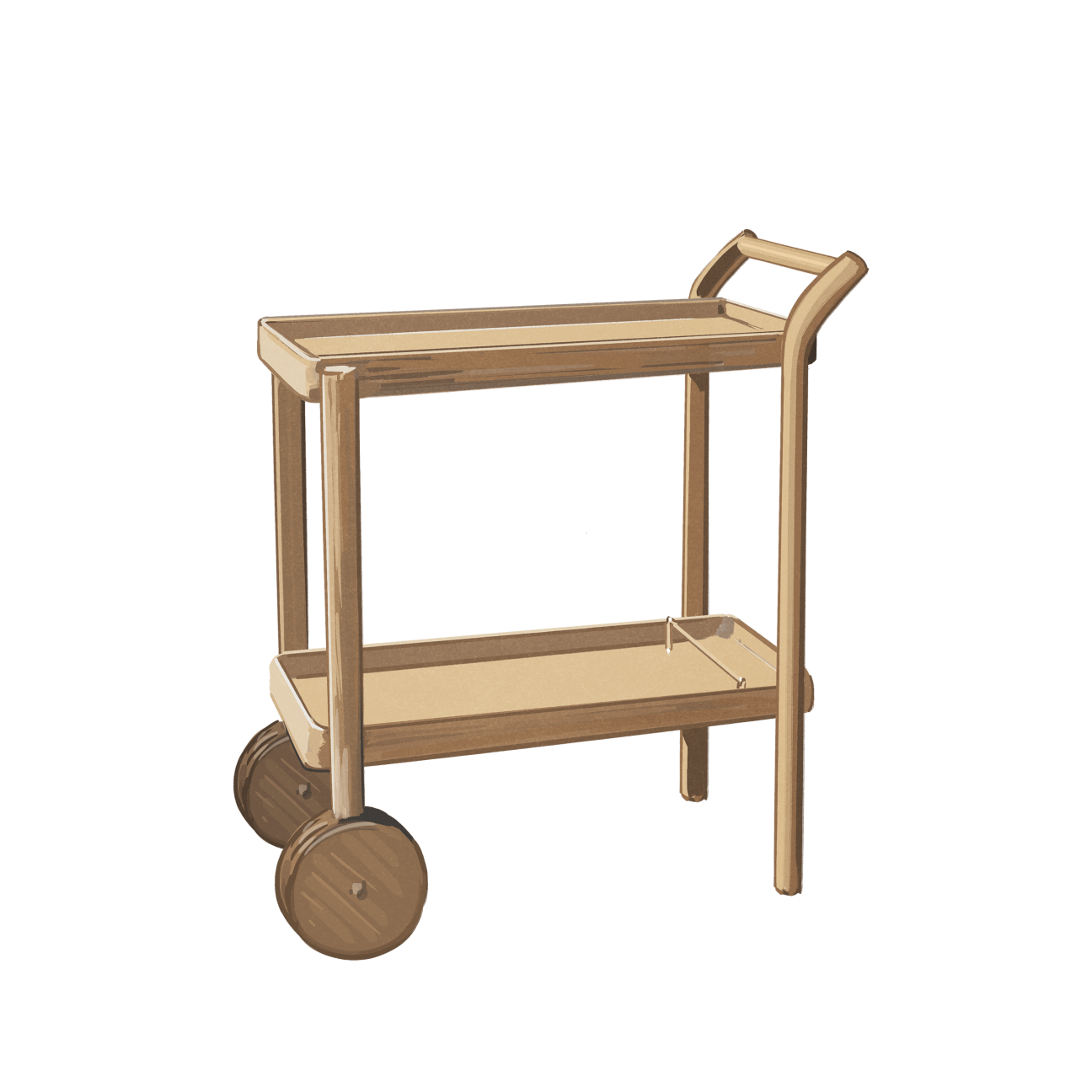
To celebrate his love of adventure, Matt Hranek, founder and editor of men’s magazine Wm Brown, created a bar trolley in partnership with Another Country – a UK furniture firm that draws inspiration from the Shaker movement, Scandinavian aesthetics and Japanese woodwork. Made from oak-veneered plywood, it’s ideal for serving a midweek apéritif.
anothercountry.com
work desk
MDL System
Unifor, Italy
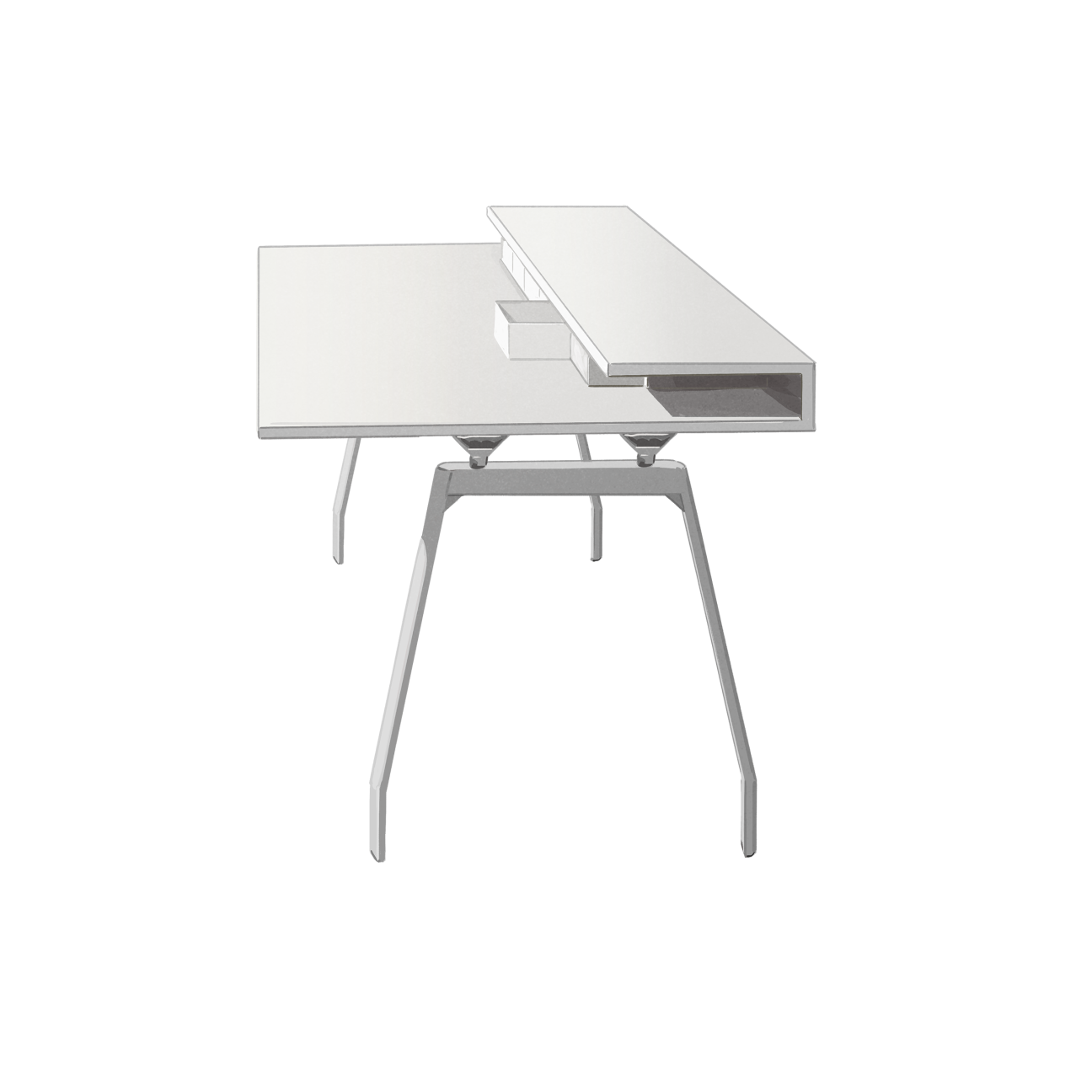
Lightness of touch characterises the design of the mdl System, a furniture collection that features desks and workstations in various shapes and sizes. Its fastening system allows it to be positioned as required, making it useful for workspaces where seating layouts might shift from project to project. Cable-management accessories, shelves and dividing panels complement this desk, which perches on industrial aluminium legs.
unifor.it
planter
GrowWide
Squarely Copenhagen, Denmark
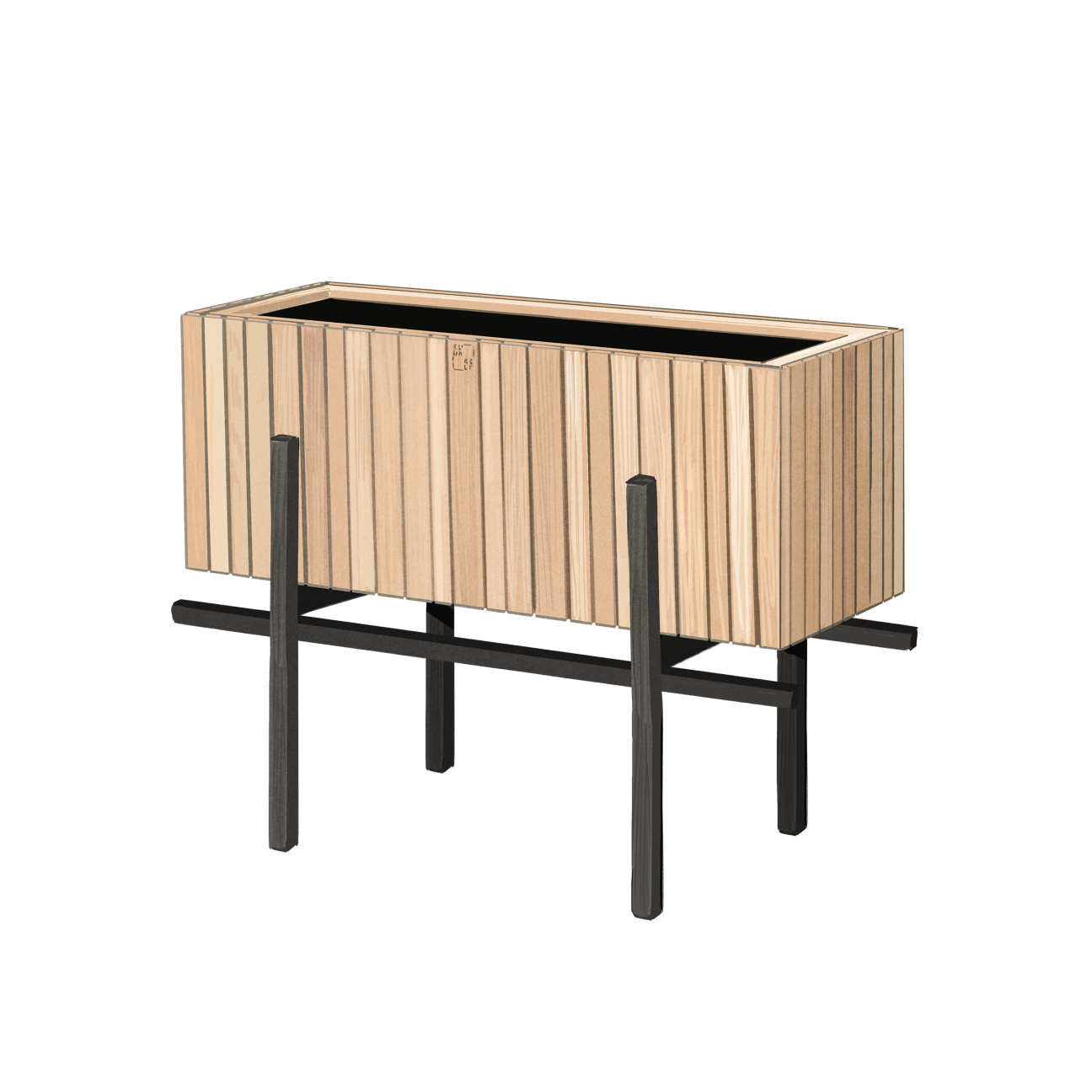
This ash planter is suitable for almost any location, from outdoor terraces to conference rooms. The self-watering tub will keep plants happy with minimal human input.
squarely-copenhagen.com
desk lamp
Aspide
Gubi, Denmark
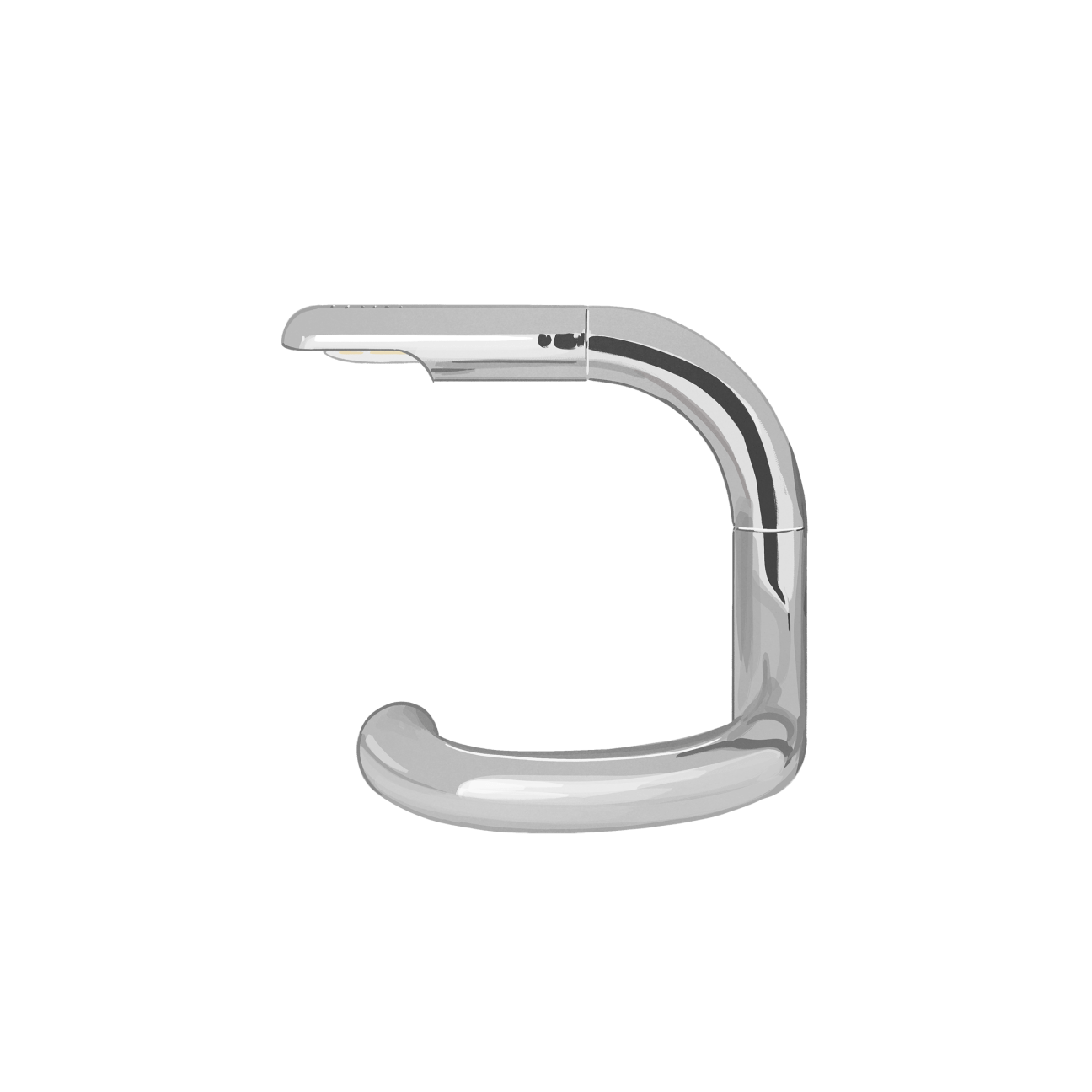
Designed by Gianfranco Frattini in 1970, this luminaire is named after the Italian for a type of poisonous snake: asp. It can be twisted to create direct light for working and reading or turned towards the wall for a gentler glow.
gubi.com
waiting-room sofa
Kite by GamFratesi
Porro, Italy

This chic sofa by GamFratesi has a slender yet sturdy tubular construction that supports plump down cushions and elegantly shaped armrests. The soft contours and generous proportions make this a welcome addition to any waiting room. Complement it with GamFratesi’s Kite armchair, with its distinctive enveloping backrest.
porro.com
office radio
Techniradio 4 IR
Technisat, Germany
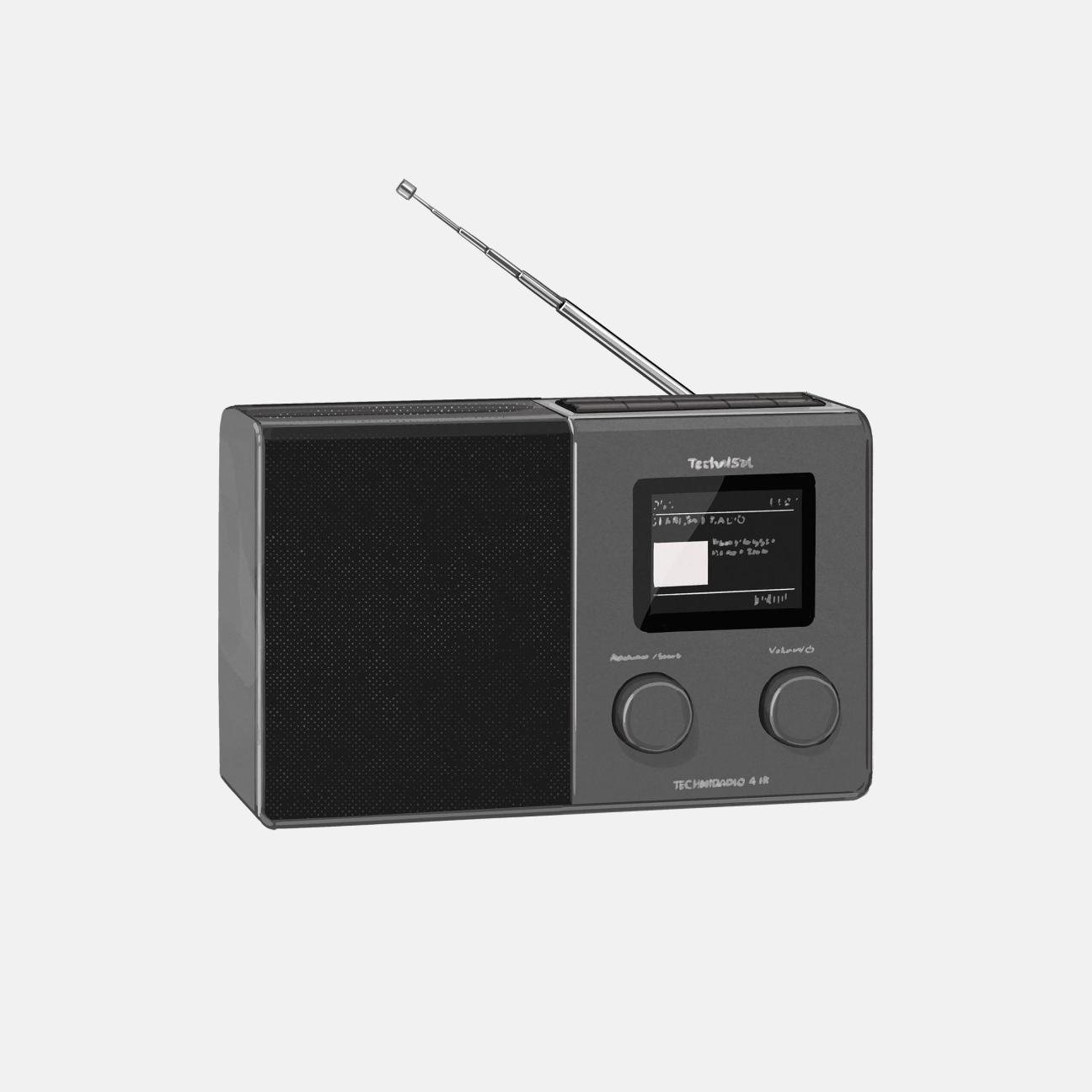
This compact radio receives FM, digital dab1 and internet stations. It’s also easy to operate, using the two knobs on the front and the neatly aligned buttons on the top.
technisat.com
rowing machine
Skillrow
Technogym, Italy
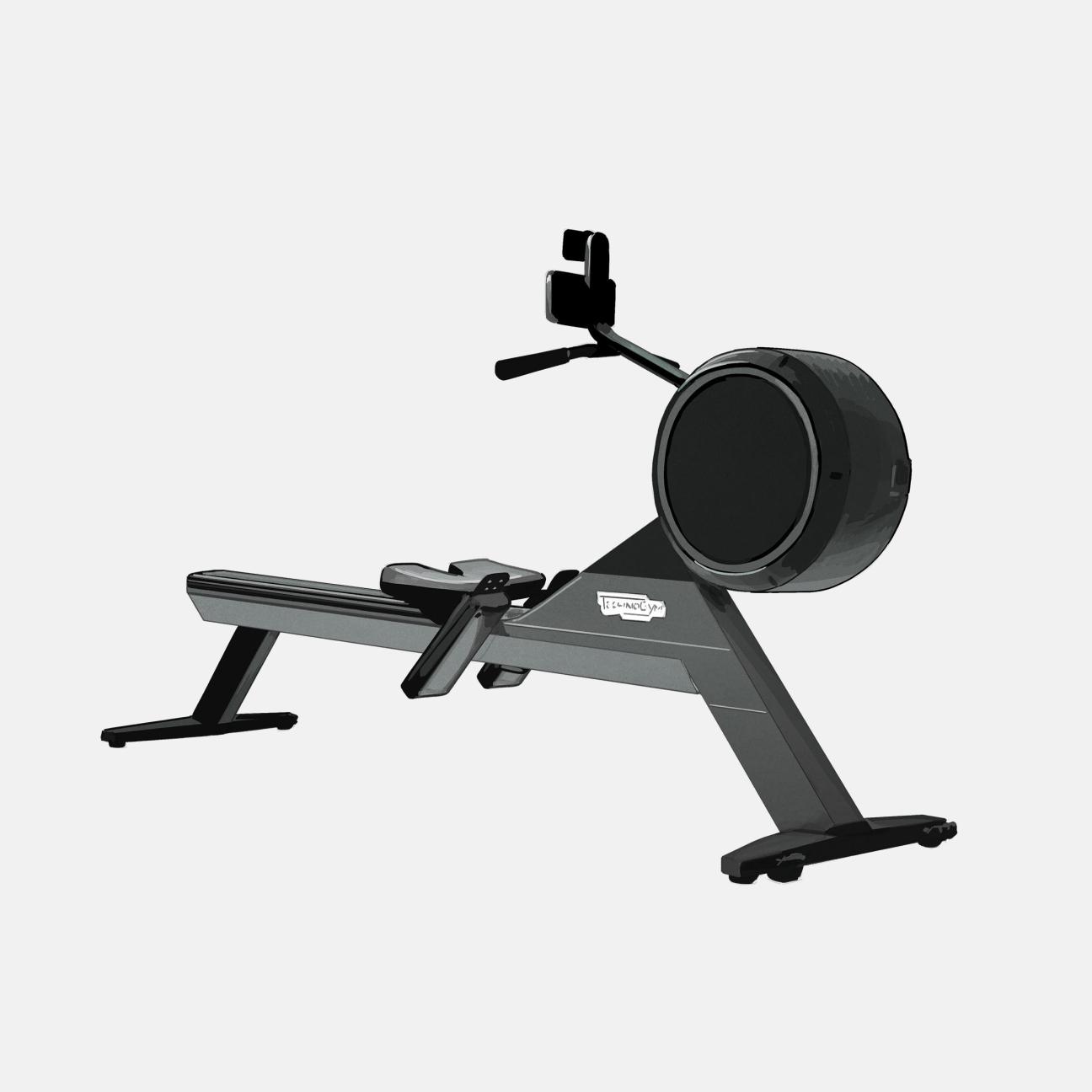
A great alternative for those who can’t get out onto open water on their lunch break, Technogym’s Skillrow machine helps to build up endurance with its Aquafeel technology, which mimics the feel of actual rowing.
technogym.com
room divider
Center Center
String X Form Us with Love, Sweden
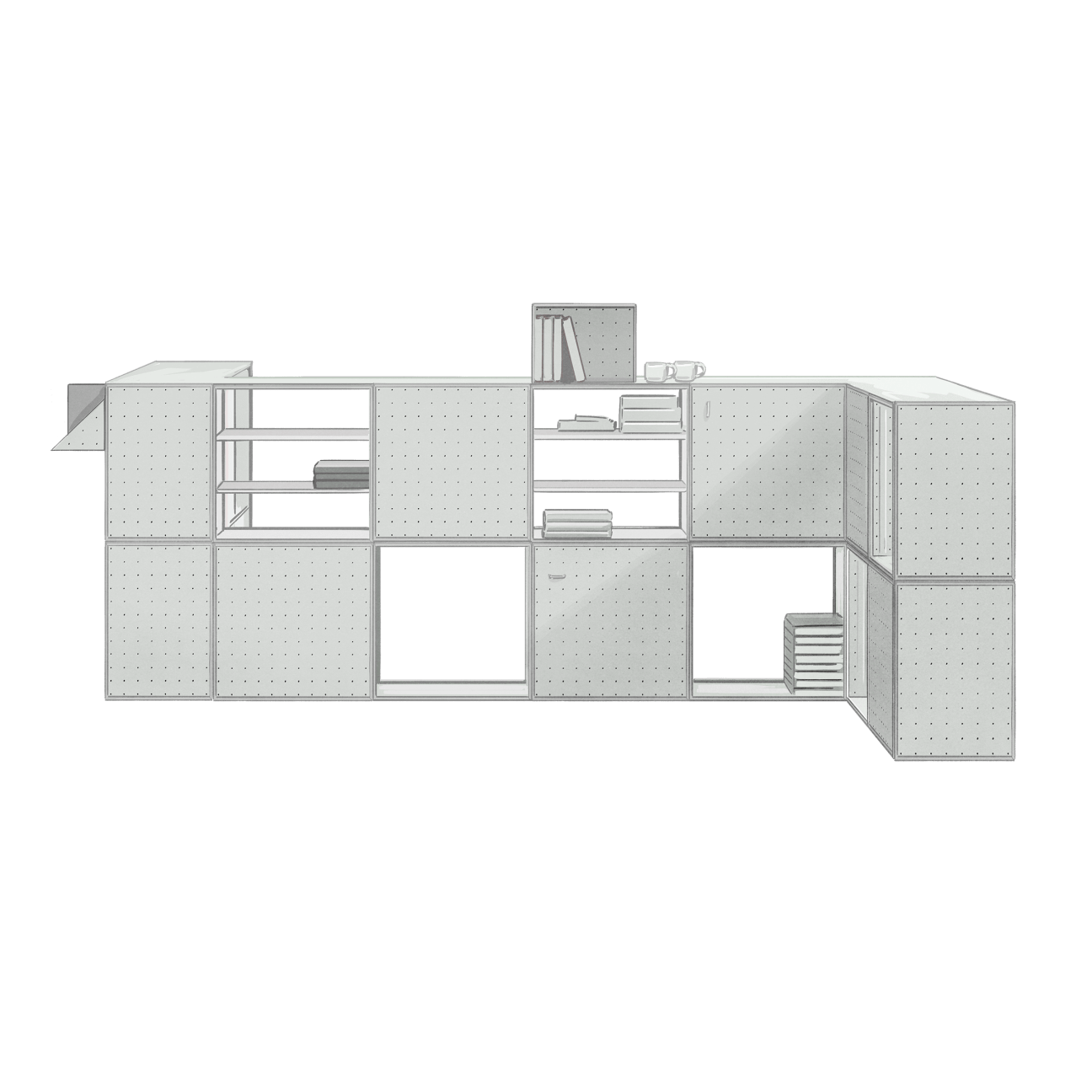
Composed of metal boxes made from perforated sheets, this modular system comes with in-built storage and can be cleverly deployed to break up an office floor plan.
formuswithlove.se
task chair
Pallo
Kokuyo, Japan
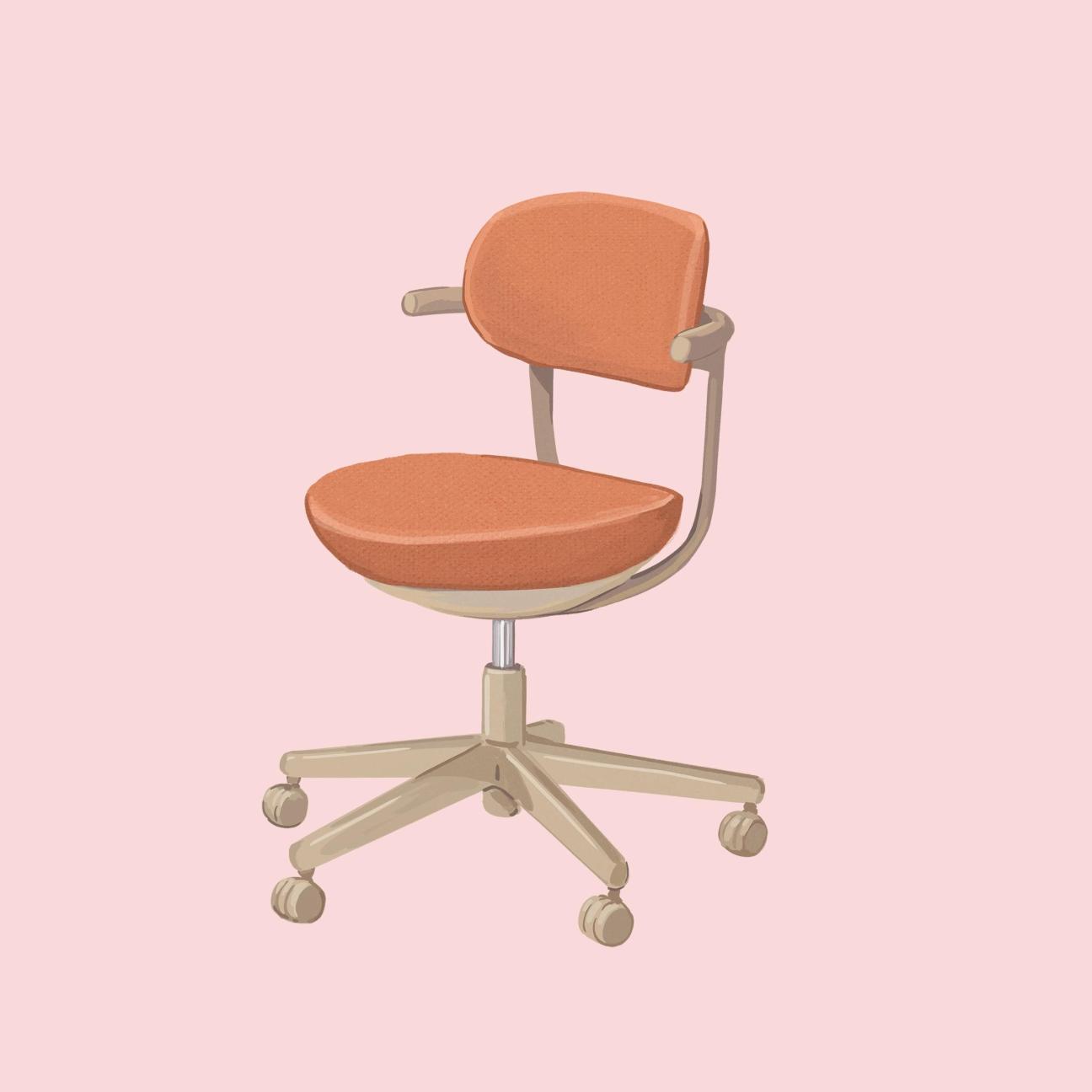
Storied Japanese furniture firm Kokuyo’s Pallo chair has short armrests, allowing the seat to be pulled close to a desk, while its rounded form keeps its footprint small. It also adjusts its locking strength to match the weight of the sitter, meaning that it won’t budge should you put on some extra kilos after a few trips to the izakaya.
kokuyo-furniture.co.jp
The late-in-life entrepreneur: How designer Fujiwo Ishimoto started afresh after retirement
For some, retirement is an opportunity to take a well-earned rest. For 83-year-old Japanese textile designer Fujiwo Ishimoto, however, it marked the moment when he decided to change the course of his life and launch a new business. After nearly five decades in Finland, much of it spent working for lifestyle brand Marimekko, Ishimoto upped sticks in 2020 and moved to Matsuyama, a city of half a million people, in Ehime prefecture on the island of Shikoku. It wasn’t far from where he had grown up. Life had come full circle.
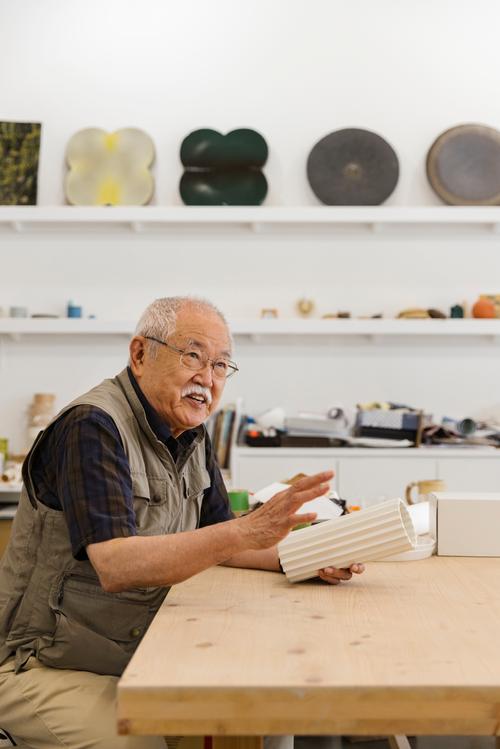
“I always thought that I would come back to Japan,” he says. “I don’t have family in Finland. Eventually, I realised that I had nothing to keep me there.” After designing some 400 textile patterns for Marimekko, he started afresh with his own brand, Mustakivi, which means “black stone” in Finnish. He built a small studio and showroom on a sloping street leading up to a temple in the Dogo neighbourhood – the home of what is said to be the oldest hot spring in Japan. Today he spends his days there designing at a large table and exhibiting his vibrant textiles and ceramics.
“I thought about basing myself in Kyoto but it was too expensive and I didn’t know anybody there,” he says. “In Matsuyama, I’m close to Tobe, my hometown, where I can source clay for my ceramics. My sister and her family live nearby too. Plus, it’s about the same size as Helsinki so the scale feels very familiar.”
Marimekko, which was founded in Helsinki in 1951, has always had a strong audience in Japan. Ishimoto had encountered some of the best Finnish design by the likes of Kaj Franck at a department-store exhibition in Japan in 1964. He started working in graphic design and advertising but left in 1970 to travel, stopping in London, New York and Copenhagen before landing in Finland. “It was November so it was white with snow,” he says. “It rarely snows in Ehime so it was exciting.”
After a few attempts (and rejections), he was hired by Marimekko as a textile designer in 1974 and ended up staying for 32 years. In 1989 he also started working for ceramics brand Arabia, where he built up an impressive body of work with a tightly woven mix of Japanese and Finnish influences. His products and textiles have Finnish names but feature Japanese motifs drawn from nature and are suffused with the two cultures’ shared sense of practicality. Kuppi is a simple ceramic cup for everyday use that would work equally well for green tea as for coffee. The Tuuli cup borrows its design from grass swaying in the breeze. Keiryu is a vivid blue towel inspired by the flow of a mountain stream and manufactured in Imabari, the centre of Japanese towel making, which is also in Ehime.
Many of Ishimoto’s Marimekko designs seem to travel between his homeland and Europe, with influences ranging from Japanese flowers to decorations of village houses that he saw in rural Poland. Nature is still his biggest inspiration – the citrus that grew in his family home or the flowers he noticed alongside a railway track.
In Tobe, a town famous for its porcelain, Ishimoto is now working with ceramics using his own electric kiln. This past summer he covered the showroom walls with ceramic magnolia flowers and exhibited bowls whose brightly coloured hues were inspired by kamifusen, traditional Japanese paper balloons.
Mustakivi has allowed Ishimoto to revisit some of his earlier designs too. On the studio table, there’s a vase that was once rejected for being too complicated to make. A striking tenugui cotton cloth on sale in the shop is printed with an old design that was originally turned down by Marimekko. Another black-and-white cloth features a drawing of a carnation that Ishimoto used on a plate 30 years ago.
The shop is popular for its towels, tote bags, cards, ceramic tableware – made by a factory in Tobe – and cloths printed with his many designs. Despite his achievements, Ishimoto is self-deprecating and seems genuinely surprised by the level of interest in his creations. He likes to work in peace, pursuing the designs that he cares about. As for the future, he is open to offers. He says that he wants to focus more on pottery these days. “Working like this with my hands is keeping me healthy.”
mustakivi.jp
Daeyang Jamsu: The bespoke wetsuit manufacturer that’s keeping Busan’s freediving traditions afloat
Daeyang Jamsu is preserving a vital part of South Korea’s cultural heritage in a quiet corner of Busan’s Yeongdo Island. At this family-run shop, Yong Bookie and his wife, Her Mi-Ok, produce hand-cut wetsuits in their studio for the haenyeo, female freedivers who have harvested the seas for generations. The divers know that investing in tailored gear gives them the edge in the water, so they choose trusted specialists over cheaper, mass-produced alternatives.
For centuries, the haenyeo have hunted for shellfish and other sea creatures along South Korea’s coast. Historically, skills were passed down from mother to daughter but demand for such abilities has fallen; today, 90 per cent of them are aged over 60. Divers used to descend into the depths in white cotton bathing suits, using hot stones to stay warm for longer. Recognising the challenges facing these women, Bookie’s grandfather sought a solution. More than 50 years ago, he welcomed a group of Japanese wetsuit craftsmen to the island, who returned with a suitcase full of neoprene, leading to the opening of the area’s first wetsuit shop. Bookie and Mi-Ok work with three employees who specialise in carving precise lines in the rubber and stitching it together. Everything is cut by hand, leaving little waste. Whether a finger on a glove or a toe reinforcement on a boot, it’s all made to measure. “We don’t make small, medium or large,” says Mi-Ok. “Instead, we make something that fits precisely.”
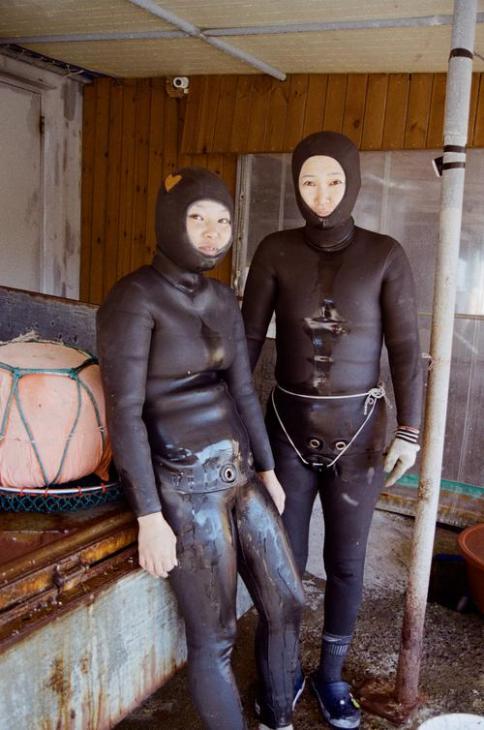
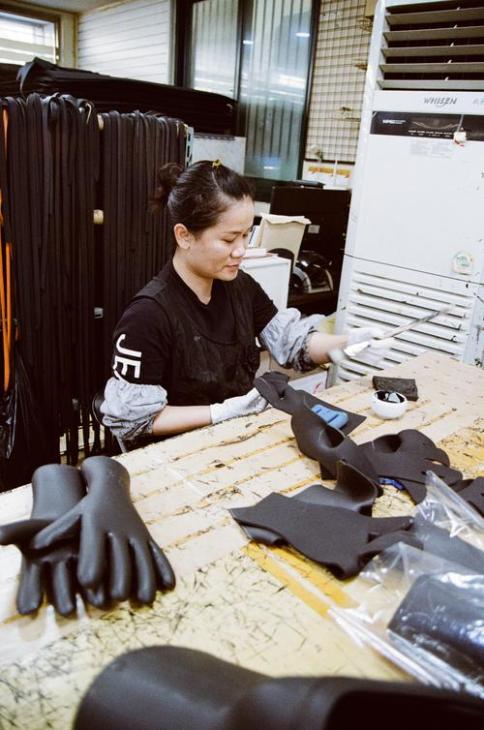
The key to Daeyang Jamsu’s success is in maintaining a close relationship with the haenyeo and knowing their measurements and their wishes. Instead of online orders, divers contact the shop by phone or visit annually to buy a new suit or have adjustments made. “In the old days, divers used their suits for three years before ordering a new one,” says Bookie. “But these days they change suits every year.”
A 5mm- or 6mm-thick freediving suit typically costs 400,000 won (€270) and the team here produces more than 500 of them per year. “When I was young, many divers couldn’t pay us in money, so they paid us in seafood,” says Bookie. Fortunately, the situation has improved despite dwindling numbers of haenyeo. As one of the few remaining specialists – and with a small number of young women still keen to keep the tradition alive – business for Daeyang Jamsu looks watertight.
94 Hansarang-gil, Yeongdo-gu, Busan
Andrew Tuck on knowing where to look for opportunity
Sand, sea and summits
If you’ve sampled the culture of Sharjah, the Abu Dhabi art scene and the sky-stroking towers of Downtown Dubai, it might be time to make the UAE a more permanent residence. Living here means hard work for many, but its inhabitants also know how to relax – often rather luxuriously – and make the most of their country’s great and diverse outdoors. What about the beguilingly beautiful, ever shifting sands of the Rub’ al Khali (“Empty Quarter”)? How about seeking cooler climes (and some headspace) in the Hajar mountains or laying low in a lesser-known cove along the shimmering coastline? Here are a few ideas for getting off the well-trodden track and discovering a better work-life balance. From the shores of Khorfakkan to desert spas and high-altitude outposts, the UAE has it all.
Mountains

The Hajar (or “rocky”) mountain range more than surpasses its simple moniker in splendour and boasts some of the highest peaks in the Arabian Peninsula. The range juts out between the eastern border of the UAE and neighbouring Oman. Jebel Jais, in the range’s northwest, within Ras Al Khaimah, is the UAE’s highest point at a whisker under 2,000 metres above sea level (which is more than double the height of the Burj Khalifa). These surprising lesser-known sierras of the nation’s eastern frontier are a far cry from life below and conceal plenty of pleasant surprises. Nestled between peaks is the seemly Hatta Terrace, a four-bedroom villa with an infinity pool that’s a show-stopping base from which to explore the area’s countless diversions, from hiking and horse-riding to kayaking on the eerily beautiful blue-green lake of Hatta Dam. Biking is also big business in the mountains and many firms, including Hubbers, offer rental bikes on which to explore its rugged trails.
Hatta address book
1.
Hatta Terrace
A bolthole two hours’ drive southeast of Dubai. Even the journey across the desert to get here feels like an escape.
hattaterrace.com
2.
Hubbers bikes
Pick your difficulty on the green, blue, red or black bike trails that criss-cross the mountains.
hubbers.ae
3.
Hatta Honey
The nation’s largest honey producer makes 20 tonnes every season.
hattahoney.ae
4.
Hatta Dam
A perfect picnic spot with views of soaring summits and iridescent waters.
visithatta.com
5.
Hatta Heritage Village
Expect some of the UAE’s oldest finds, including Bronze Age burial sites.
visithatta.com
Desert

To really understand the UAE requires taking the time to reckon with the seemingly endless desert that ensconces the nation’s cities. That needn’t mean mounting a camel, spending a night under the stars or “dune bashing” in an SUV (though all are options). Instead, consider how Emirati culture was forged – through hardship and with ingenuity – and how far the country has come. Some 60 years ago, it seemed inconceivable that such places might soon feature air conditioning and water, never mind a world-leading spa. Luckily, today the deserts and oases, such as Al Ain and Liwa, have more than their share of spots in which to contemplate and unwind. Even the range of accommodation demonstrates the extremes. For a project that exhibits all the profound beauty of the desert while also embracing its heritage, we suggest Al Faya Retreat, for which three 1960s single-storey stone structures – a shop, a clinic and a filling station – were transformed into a modernist outpost at the foot of Mount Alvaah, amid the reddish sands of Sharjah. Bab Al Shams is a closer-to-town alternative – and a more mainstream take on the spa concept – near Dubai’s city limits. It’s been a favourite with residents looking for an escape since it opened on the edge of Al Marmoom Desert Conservation Reserve in 2004.
Five retreats in which to escape the city
1.
Al Faya Retreat
A tasteful redraft from Jonathan Ashmore’s Anarchitect shows that the region can do contemporary modernism with the best of them.
myskhotels.com
2.
Bab Al Shams
A lavish luxury resort with charming courtyard gardens and private terraces, plus excursions.
babalshams.com
3.
The Ritz-Carlton Ras Al Khaimah
Located in a nature reserve, this site isn’t to be confused with its sister hotel at Al Hamra Beach.
ritzcarlton.com
4.
Tilal Liwa Hotel
Near to the towering Moreeb dune, this Zayed City hotel feels a long way from everywhere else.
danathotels.com
5.
Al Wathba, Desert Resort & Spa
A luxe option with 103 guest rooms (and villas) in the desert just beyond Abu Dhabi.
marriott.com
Sea
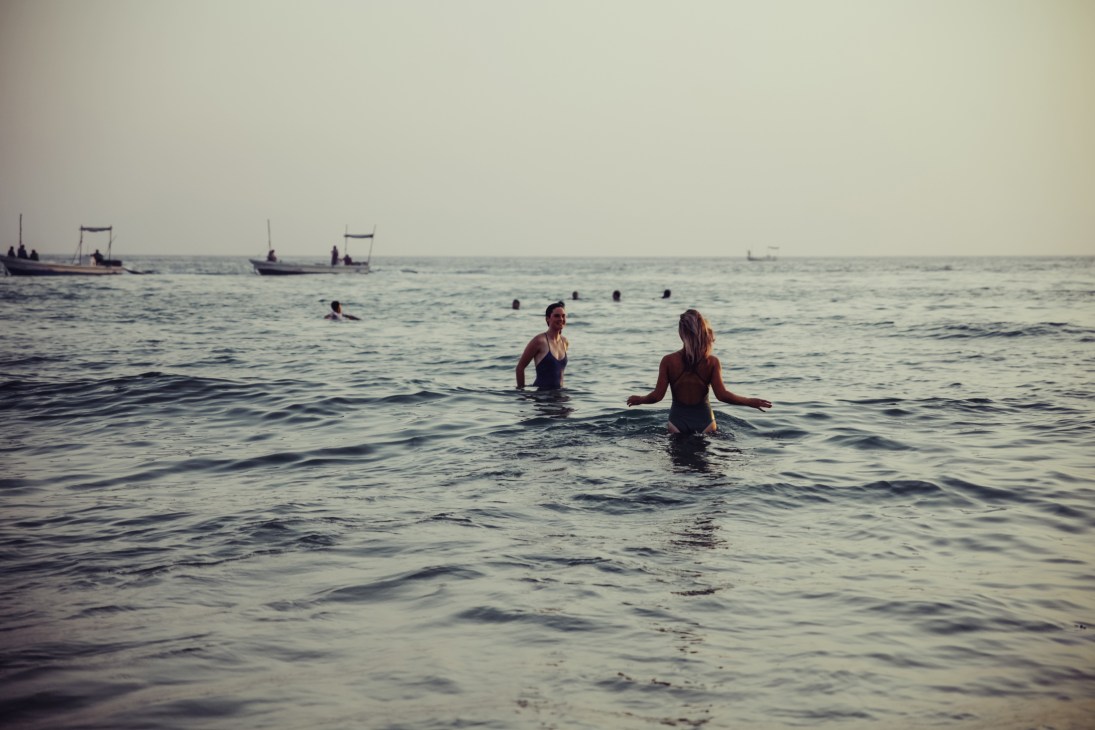
The UAE has more than 700km of coastline: 90 per cent faces the Gulf, while a 70km sliver to the east is lapped by the Indian Ocean. What’s more, the sea has always connected the UAE with the world beyond it. Before the country was a centre of global trade and aviation, the Gulf was a productive fishing ground and the core of the pearl-diving industry (the tradition dates back thousands of years). In a story of decline and revival, that market was destroyed by the emergence of Japanese cultured pearls in the early 20th century. Little did the Gulf’s divers know that within a century their hunting grounds would support some of the world’s most prime real estate, boasting beach clubs, hotels and restaurants that tempt millions of visitors a year. There are diversions to tempt you too: from boat trips to night swimming and surfing, best enjoyed in the cooler months between December and March. Here are a few of our favourite places to clock off and dive in.
Five beaches on which to cool off
1.
Khorfakkan
The UAE’s east coast boasts some of the country’s most breathtaking natural beauty. This 3km crescent-shaped bay faces the Indian Ocean and is as quiet as beaches come here.
2.
Al Aqah
Fujairah is an emirate best known for its nature and undisturbed marine life. Just 45km away from the capital, you’ll find cerulean waters, soft white sand and picturesque views.
3.
Al Hamriya
Ajman is sleepier than its counterparts but the city has one of the most beautiful beaches on the Gulf coast, perfect for surfers and sunbathers alike.
4.
Al Sufouh
Dubai’s beaches are many. For the most undisturbed option, make for Al Sufouh, a short drive from busy Kite Beach and complete with views back towards the city’s famous skyline.
5.
Mirfa
About 90 minutes by car from the centre of Abu Dhabi is the village of Mirfa in Al Dhafra. This serene spot is descended upon every April when it hosts a 10-day water-sports festival. For the rest of the year, it’s a hidden gem.
Eureka moments
What makes a formidable founder and where do such eminent folk find their inspiration? While you’re unlikely to meet a lazy entrepreneur, there’s no singular quality that defines success. So perhaps the best way to maximise your chance of steering a venture to prosperity is to listen to as wide a range of voices as possible. Here we present a selection of light-bulb moments that sparked into life some of our favourite brands, as told to the team at Monocle Radio’s ‘The Entrepreneurs‘.
Hit the road – you never know where it will lead.
Sweet dreams
Sameer and Neena Vaswani, co-founders, Prodigy, London

A roadtrip in Italy inspired husband and wife Sameer and Neena Vaswani to establish a plant-based chocolate brand embodying the ideals of environmental responsibility and health-consciousness.
Eureka moment:
“We were driving across Italy, stopping off at petrol stations and little shops. We wanted to buy our children snacks for the journey but couldn’t find anything that we were happy to let them put into their bodies: everything on offer contained too much sugar or too many processed ingredients – and that’s not to mention plastic pollution.
It dawned on us that we should create a business that could figure out a new way of doing things in the food industry. We are both chocoholics, so we thought, ‘OK, why don’t we start a chocolate brand that is fit for today’s world?’ That’s what consumers are looking for. We also wanted to help the next generation.
So we invented Prodigy, which seeks to reimagine the classic chocolate bars, snacks and biscuits that we all grew up with and love, making them better for both the planet and our bodies. We wanted it to cause less harm to people and communities – and, of course, to our health.”

You can find inspiration anywhere – including at the bottom of a glass.
Brewing up a storm
Hector Butler and Matt Brunault, co-founders, Shima, London
Hector Butler and Matt Brunault were living in New York when they stumbled upon a modest neighbourhood bar in Brooklyn. There the friends fell in love with saké. A few years (and several trips to Japan) later, they successfully launched Shima, the ready-to-drink canned saké that is shaking up the hard-seltzer market.
Eureka moment:
“We met in Georgetown, where we were at university together. After graduating we moved to New York. For a while we were Brooklyn clichés: earning no money and living in a sort of box apartment. Then we noticed that these craft saké breweries were popping up in the area. After just scratching the surface, we fell in love with it – the range, the choice, the depth.
Fast-forward a couple of months: I visited Matt’s apartment and saw buckets, vats and other equipment all over the place. I said, ‘What’s going on here?’ It turned out that he was brewing his own saké. Shima is our love letter to the beverage. We make canned saké spritzers; we launched three flavours about a year ago. At its heart, the brand is all about our passion for saké and making it a little more approachable for a Western audience.”
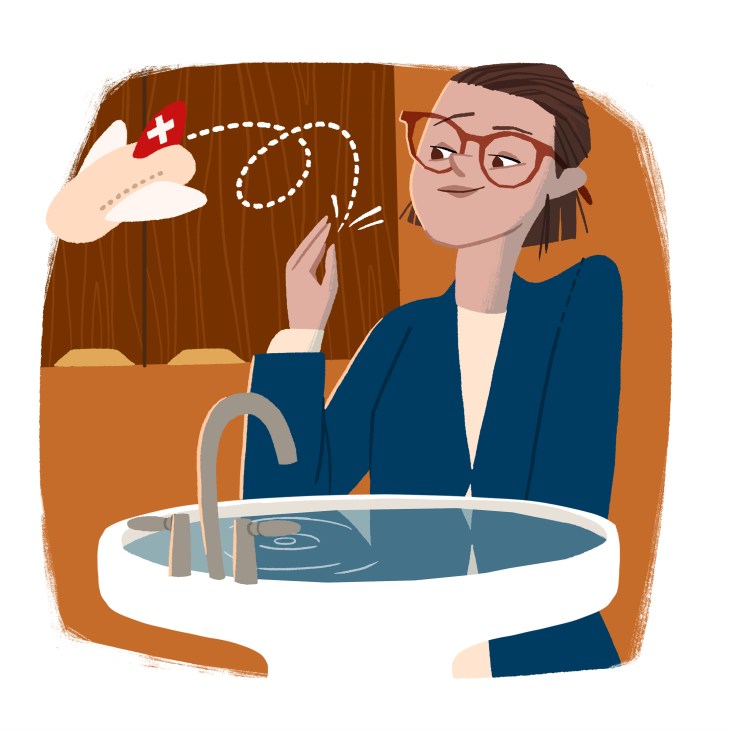
Think both local and global – and partner with people who can help your ideas soar.
Taking flight
Hanna Olzon Åkerström, co-founder and creative director, Soeder, Zürich
In 2013, multi-talented Hanna Olzon Åkerström co-founded Soeder, a Zürich-based natural soap company with a sustainability-led approach to luxury bath and body products. Åkerström’s aim was to bring a more environmentally responsible approach to the sector. The brand manages every aspect of its production process all the way to distribution and its partners include Swiss International Air Lines.
Eureka moment:
“With Swiss, we are getting to work with people who are putting faith in us and also pushing our limits a bit further and faster than we might have done otherwise. We have had many interesting conversations about where we could expand product lines and how we could change the way that Swiss works with them.
For instance, we are now introducing refills for the airline’s onboard products (we introduced refills for its lounge range a long time ago). I don’t think that there are many other airlines that reuse their lavatory bottles in this way. It’s very important to have a partner that we can grow with and that listens – and also wants to give us the chance to change things in its field.”

Amazing things happen when you put family first.
A family affair
Chitra Stern, co-founder, Martinhal Family Hotels & Resorts, Lisbon
With her husband, Roman, Chitra Stern created Martinhal Family Hotels & Resorts, which has reimagined luxury family holidays. She tells us about her latest project, Martinhal Residences.
Eureka moment:
“I’m British and Swiss, and of Indian origin. I have lived in Singapore too. We moved to Portugal in 2001. I have always been able to see things with different eyes. It comes down to the people and how open, tolerant and liberal they are. We’re not robots; we want to feel welcome – that’s one of the great things about Portugal for entrepreneurs seeking to start a business. Lisbon is well connected and good for families too.
When people start having children, they don’t suddenly stop wanting to be part of the excitement of a city. We help families to enjoy all the bustle, while providing things that make life easier for them, such as stools for children to enable them to step up to a sink and brush their teeth. We have cots, baby chairs and even a baby concierge service so that parents don’t have to lug all of their stuff. We call our front office a ‘family concierge team’ – it’s there to assist not just small children but the entire family, including grandparents.”

Trust bricks and mortar, whether you’re transforming a heritage brand…
Open for business
Alex and Mathieu Cléon, co-managers, Kleman, La Romagne
Brothers Alex and Mathieu Cléon head up French footwear brand Kleman, whose heritage goes back to 1945, when shoemaker René Cléon formed a team of apprentices and bought his first stitching and assembly machines in postwar France. The third-generation leaders recently launched Kleman’s first flagship shop in Paris’s Le Marais neighbourhood. They tell us why they prioritise investment in French manufacturing.
Eureka moment:
“Not long ago, we opened our first flagship shop in Paris. It was a significant step for us. Next, we’ll be developing our brand further while promoting the ‘Made in France’ idea worldwide. French know-how is an important part of our dna. When we entered the fashion world about seven years ago, we decided to develop new ideas while still basing it all on the brand’s heritage.
We have created new kinds of soles. Sometimes it’s not easy for a heritage brand like ours to invent novel styles. We really want to add environmentally friendly objectives to the creation of our collections too. We work only with locally sourced materials, with ‘local’ meaning European – or French in particular.”
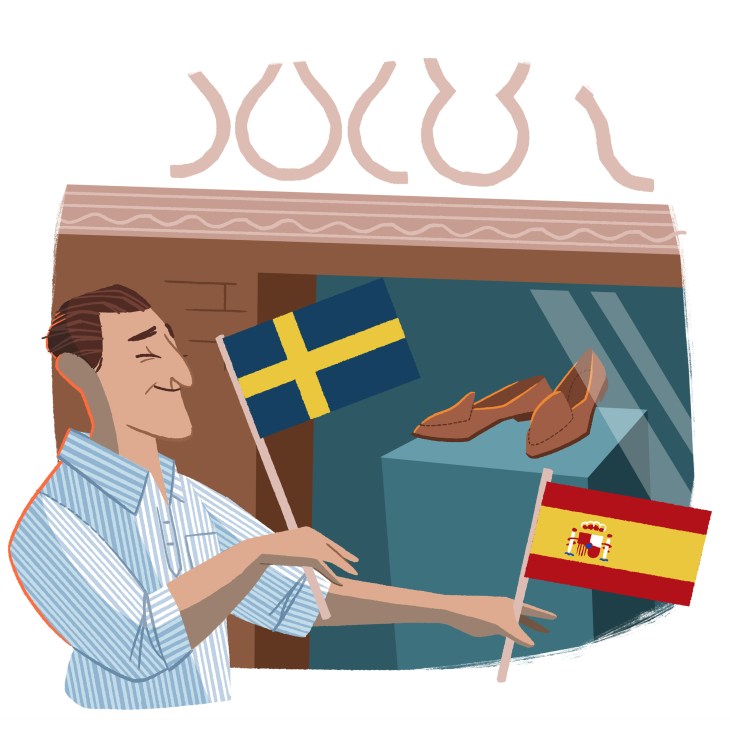
…or you’re just starting out on your journey.
When worlds collide
Henrik Berg, founder, Morjas, Stockholm
Henrik Berg is the founder of Morjas, which creates men’s footwear and leather accessories with a timeless aesthetic and has an unusual Spanish-Swedish heritage: Berg’s grandmother was an urbane Madrileño, while his grandfather was an outdoorsman from remote Vårmland. Morjas now has a beautiful shop, Casa Morjas, in Stockholm.
Eureka moment:
“My grandfather was a charming man who enjoyed wildlife, hunting and fishing. My grandmother was used to the hectic lifestyle of Madrid and going out in high heels. But they fell in love and he convinced her to move with him to Sweden. I wanted Morjas to have that combination of opposite worlds.
Some brands that honour timeless aesthetics can become a bit boring. That’s a big no-no for us. I appreciate that they’re trying to make seasonless, trend-free products that live forever but I need some kind of edge that makes jaws drop or heads turn. Whether it’s a product or a photo shoot, we always try to make things sharper and more exciting. That’s noticeable in our use of materials, in how we work with silhouettes and content. The brand, the packaging and now the physical shop – these are all touchpoints with a customer.”
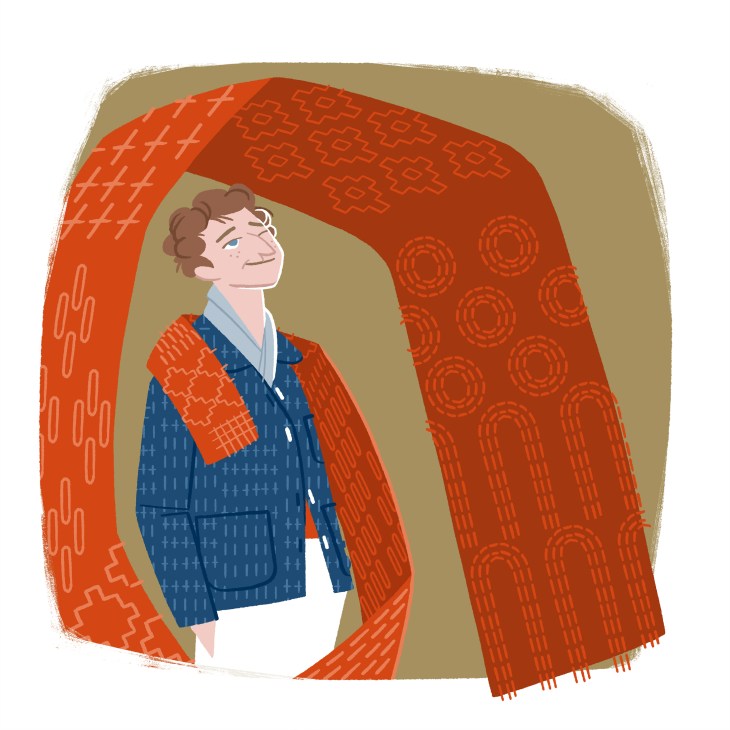
Reimagine the very fabric of your sector.
Thinking bigger
Borre Akkersdijk, co-founder, Byborre, Amsterdam
Borre Akkersdijk co-founded Dutch textile company Byborre with Arnoud Haverlag in 2015. His background as an industrial designer and passion for textiles have helped him to develop techniques for creating modular, sustainable garments that blur the boundaries between fashion, art and technology.
Eureka moment:
“I had been innovating in textiles for more than seven years, travelling the world and diving into the nitty-gritty of the industry. But when I met Arnoud in 2015, it went from me in the supply chain to us building a company. You can innovate for years with people giving you their thumbs-up, being flown around the world to give talks, while still being unable to afford your groceries. I thought, ‘How can I be working with these amazing brands but not getting paid much for it?’
That was the beginning. We created Byborre textiles and said, ‘These are things that we have designed and you can use.’ They’re good for interiors and fashion, and you can buy them, whether a small amount or 100 metres. We looked at some of the big textile companies and thought, ‘Maybe we have to step up and not be a company that just does the small, innovative things.’”

Clean up your act. Your business could go galactic.
Reaching for the stars
Linda Rosendahl Nordin, co-founder and CEO, Pure Effect, Täby
Linda Rosendahl Nordin co-founded Swedish brand Pure Effect in 2015. Its cleaning products, based on active bacterial cultures, are so stellar that they have attracted the attention of Nasa.
Eureka moment:
“A personal health crisis inspired us to start Pure Effect. We were having trouble conceiving our second child and I learned about all of these things that could affect our endocrine systems, making it harder for both animals and humans to have babies. A professor in Sweden told me that people were putting too many toxins into the ecosystem. These toxins enter our bodies through food and water – they’re everywhere – and they accumulate.
There are industrial biotech solutions that have been around for at least 20 years for professional use, a way of letting bacillus spores degrade organic matter. We thought that this could be used for household cleaning and decided to launch a version for consumers. One day I received an email from a firm working with Nasa, asking us, ‘Could you please share the evidence?’ I hope that they evaluate the technology because they obviously have a problem with laundry up in space. They need to travel light and our solution could help.”

Never be afraid to challenge preconceptions. Or traditions.
In good spirits
Annabel Thomas, founder, Nc’nean Distillery, Morvern
Annabel Thomas is the founder of organic whisky distillery Nc’nean on Scotland’s west coast. Here, Thomas reflects on her decade-long mission to change perceptions of the spirit, reach a more diverse customer base and innovate production through sustainable practices.
Eureka moment:
“We had a family dream to set up a whisky distillery on my parents’ farm, which had some old disused buildings on it. But before I quit my job in order to make this a reality, I went to do some research and said, ‘Look, I’ll write the business plan because otherwise we’re just going to talk about this and never do it.’
The first thing that I did was visit a few distilleries. What struck me was that so many of them were very traditional, doing things in the way that they had always been done – which is not always a problem in a traditional industry.
But there was no one doing anything else. In particular, I noticed that there was a lack of focus on sustainability across the sector. I realised that someone needed to do something about this. And that was the moment when Nc’nean Distillery really got going in earnest.”
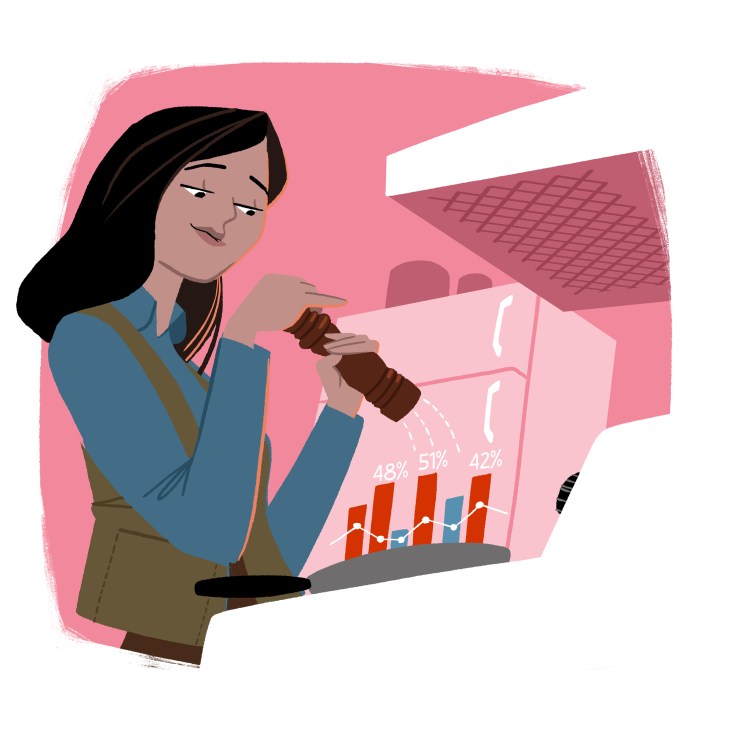
No problem is too big – and starting young is an advantage.
Coming together
Namrata Sandhu, co-founder and CEO, Vaayu, Berlin
Namrata Sandhu, the woman behind innovative carbon-tracking platform Vaayu, tells us about how real-time data is empowering retailers to be more sustainable and reduce their environmental impact.
Eureka moment:
“When I was growing up in Mumbai in the 1980s and 1990s, it was very polluted: the beaches were dirty, the city was dirty. My friends and I thought, ‘This isn’t OK – we need to do more.’ So we started a kind of charity when we were 13 and set up the city’s first recycling programme. Much later, after I had been working in the climate and sustainability field for a long time, I noticed that a lot of retailers were keen to do better and wanted to know how they could make a positive impact. But nobody had the data; everyone was doing this individually. I thought, ‘Can we do it differently? Can we scale it? And can we help people effect that level of change and reduce their carbon footprint?’
In a way it was very strange because I had been doing this for such a long time. But there was a moment when it all clicked and I knew that I needed to solve this, by connecting with retailers and brands, and helping them to track and cut their carbon emissions.”
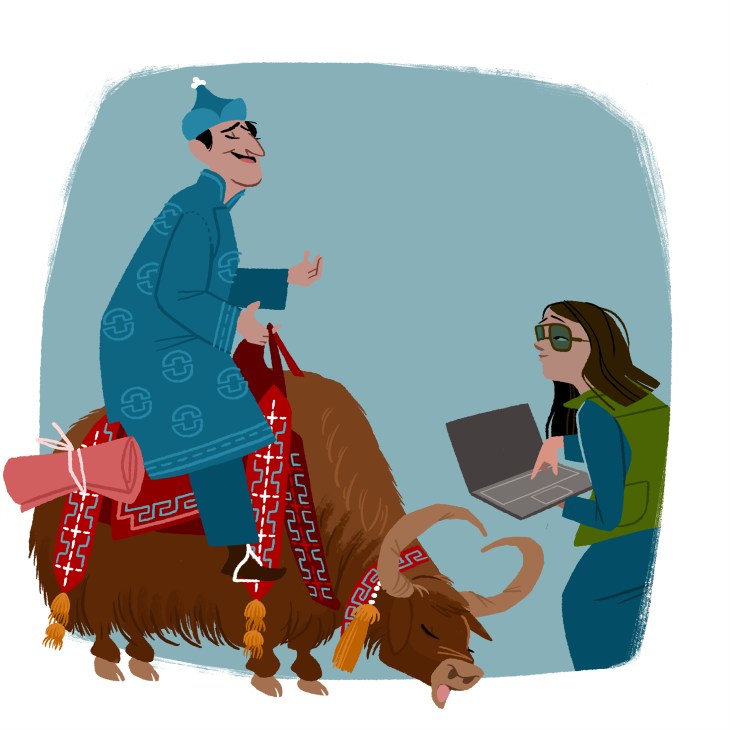
Broaden your horizons and learn from real nomads (not the digital variety).
Out of tradition
Khulan Davaadorj, founder, Lhamour, Ulaanbaatar
Khulan Davaadorj is the founder, director and chief technologist of Mongolian organic-skincare brand Lhamour.
Eureka moment:
“I did my master’s degree at Columbia University in renewable energy, management and policy. After living abroad all my life, I returned to Mongolia to work for the country’s first wind farm. The extreme weather here affected me so badly that I developed allergies. Doctors suggested that I should live more healthily and use natural products, especially for skincare. So that was the starting point. Then I looked around and couldn’t find anything here. I thought, ‘Why is nobody making organic skincare in this amazing country, with its vast countryside and all these natural resources?’
Whenever I create a product, I try to include traditional materials: for example, the milk that we use is part of our nomadic culture. Organic is nothing new to the nomads; it’s their way of life. We have something called sheep’s-tail fat that we use on babies’ and elderly people’s skin. It contains so much collagen. Mongolian sheep have it in their tails because they have to survive our harsh winters. In nomadic culture, this is so normal.”
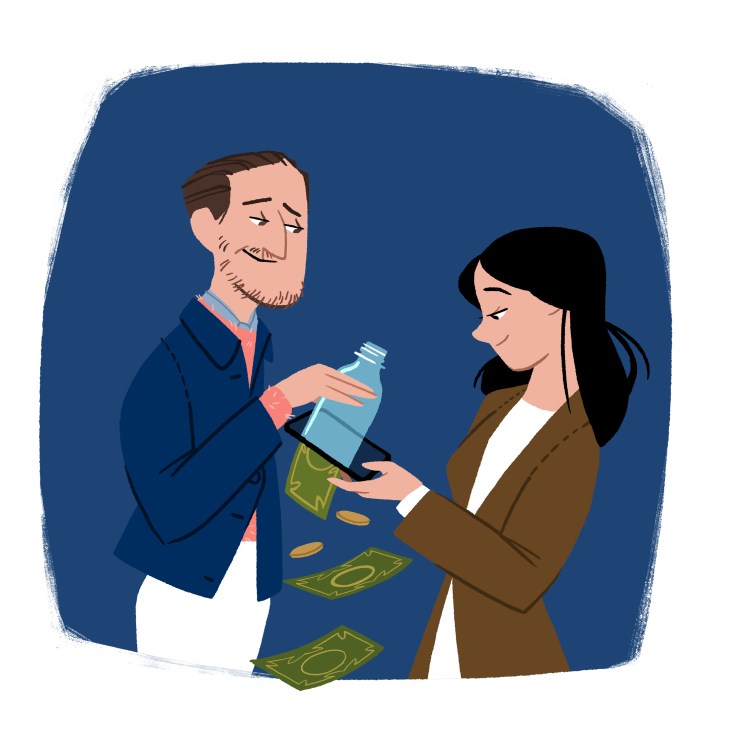
No more trash talk – see value in everything.
Clean up your act
Suwar and Berfin Mert, co-founders, Bower, Stockholm
Suwar and Berfin Mert are the brother-and-sister team behind Swedish app Bower, which rewards users whenever they recycle everyday waste items. They tell us about fundraising for global expansion and why there’s no such thing as trash any more.
Eureka moment:
“When you recycle plastic bottles and cans in the Nordics or in Germany, you can receive money for it. Our company started with that idea. I had a lot of reusable cotton bags that I would always forget to take to the shop. So I thought, ‘Why not have a similar deposit system for these bags as well?’ We explored this concept and pivoted a few times before we came up with the solution that we have now.
We realised that the way forward was to make the recycling part a no-brainer and reward people: you scan the item that you want to deposit and bring it with you to the nearest recycling point. Once you have done so, you are awarded points, which you can redeem for money or discounts on various products, or alternatively you can donate it to charity. We want to show that all packages have value and that nothing should be dismissed as trash. That’s where Bower comes in.”

You can have your cake (or bagel) and eat it.
Going with the grain
Aimee Yang, founder and CEO, BetterBrand, San Antonio
Aimee Yang’s innovative food start-up uses “grain-changing technology” and plant-based ingredients to provide healthy, delicious alternatives to carb-heavy foods, such as bagels.
Eureka moment:
“My life has always revolved around my diet and healthy eating. I used to be on a roller-coaster ride of craving something and then wondering whether I should eat it. If I did, I’d feel guilty; if I didn’t, I’d feel deprived. It consumed so much of my mind and caused me so much anxiety. I used to dream of a world where we could simply eat what we wanted and never had to worry about gaining weight or suffering negative health consequences. I thought that it would be so exciting, so liberating. Then I started looking at health and nutrition statistics and all of the dots connected. I said to myself, ‘This is what we’re going to do. We will make this dream world a reality.’
That initial excitement still fuels my journey with BetterBrand. We started with the Better Bagel because it’s the most carbohydrate-heavy food. What better way to showcase our innovation than by transforming something like that into the net-carb equivalent of two slices of banana?”
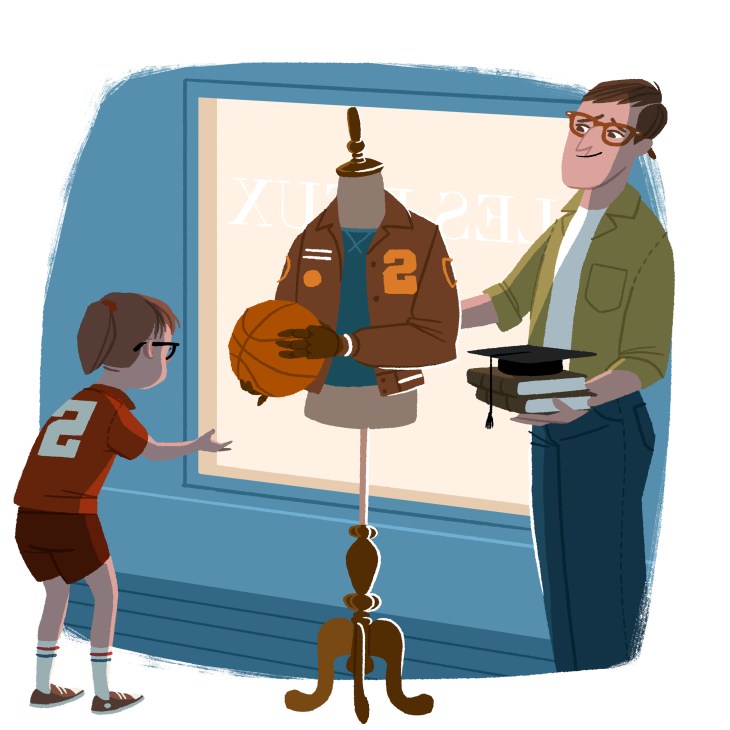
Ensure that you bring everyone along with you.
Passing it on
Andreas Von Der Heide, co-founder, Les Deux, Copenhagen
Andreas Von Der Heide was studying law at the University of Copenhagen when he co-founded Les Deux in 2011, which is now one of Scandinavia’s leading menswear brands. He also engages in a wide range of charity work, both personally and through his csr platform, Les Deux Legacy.
Eureka moment:
“We have built a fashion company but I see it as a platform for doing good things in the world. We have a social responsibility wherever we are doing business in the world. Whether it’s putting children through school or building basketball courts, we want to be part of the community – and part of changing the world. People are afraid of talking about being profitable but we couldn’t do this if we weren’t. People want to interact with the brand and our employees love it; they feel part of something bigger. We are proud of what we are doing.
I always had a dream. My father died when I was two. I wanted to leave behind a company that would ensure that I had a legacy. I need to show my three children at home what their dad and the company that he was a part of were capable of. One day they can look at it all and say, ‘OK, we can make a difference.’ That is what I’m teaching them.”

Keep learning from the best.
Sound advice
Tom Edwards, host of ‘The Entrepreneurs’
One constant in the testimonials that we hear on The Entrepreneurs is the great value of guidance, the defining contribution that insights from those who have already blazed a trail can make to businesses at the start of their journey. So, our final word to the wise and piece of advice for aspiring entrepreneurs out there is to keep listening to the fabulous founders who are kind enough to share their stories on Monocle Radio. In every episode, people reveal how career switches, unexpected ideas and a little luck took them in fresh directions that they might never have imagined otherwise. And it’s OK to have questions. Most founders don’t quite know where the next venture might lead them; many have moved mountains (as well as country) to try something new for just this reason. And no matter where you end up, success remains subjective if you’re your own boss – and sometimes there will be hurdles along the way. So, whether it’s from a social enterprise changing perceptions about purpose or a technology company that can incorporate traditional values, you’ll hear essential advice and unrivalled insights every week. The very best idea you could have right now? Tune in. Your own eureka moment is just a twist of the dial away.
Monocle.com/radio