The Entrepreneurs
Partnership: Owning the future
The UAE wants to be a leading nation in the field of artificial intelligence (AI) by 2031. As this AI Office, UAE x Monocle partnership reveals, the work to hit that target is long underway – and already paying dividends.

1.
Introduction
The road to now
Whether you view it as a boundless force for good, a potent existential threat or something broadly in between, one thing’s for certain: artificial intelligence (AI) will change the world.
From the roll-out of automated robotics in storage facilities to the machine-learning algorithms helping healthcare professionals provide more accurate diagnoses, the development – and popularisation – of AI technologies is quietly transforming operations across various sectors. “Big four” accountancy firm PwC predicts that it could contribute up to $15.7trn (€14.8trn) to the global economy by 2030.

For the UAE, a nation that embarked on a journey of digital transformation at the turn of the century, the opportunities are abundant. In 2017, shortly after announcing a national strategy for AI, Omar Sultan Al Olama was appointed minister of state for AI. Aged just 27 at the time, he was the first person to hold such a role anywhere in the world. His Excellency’s objective? To identify and invest in new tools, then spearhead their application across different sectors. His remit was later expanded to reflect the importance of the work: he now holds the title of minister of state for AI, digital economy and remote work applications.
His Excellency is one of countless Emirati success stories and the AI office has helped the UAE to keep pace with the technology through a combination of investment, infrastructure and legislation: there are golden visas for coders, research centres for testing, accelerator programmes for startups and much more. While the strategy is far reaching, the UAE’s ultimate goal is clear: to become a world leader in AI.
2.
Q&A
Leading the way
Omar Sultan Al Olama, Minister of State for Artificial Intelligence, Digital Economy and Remote Work Applications

With a pioneering governmental role, His Excellency is perfectly positioned to understand AI’s benefits and challenges.
What was your brief as the world’s first government minister dedicated to AI?
The post came out of our leadership’s belief that AI will be one of the most important technologies going forward. My brief is not to be optimistic or pessimistic about AI, it is to be neutral. My job is to maximise the opportunities and minimise the challenges by being proactive rather than reactive. What we’ve done in the UAE on the AI front is a few things. The first is build the infrastructure necessary to ensure that we have an advantage compared to other countries. The second stage now is to translate this infrastructure and talent into tangible outputs.
The are calls for a global framework around AI. Can the UAE take the lead?
I just came back from speaking about this at the United Nations. We are a neutral country: we work with everyone, we are quite pragmatic in our approach and we understand the challenge of AI for what it is. Sometimes you speak to government officials in other countries and they cannot grasp what AI can and can’t do, or what the risks are. There is a need for us to play a role in that. The UAE has, over the past decade, built the infrastructure and ecosystem required to create the unicorns and digital economy companies that we needed.
You are the world’s first AI minister. Do other governments need to get with the programme?
So, it was a very lonely post. However, to my pleasant surprise, there is another AI minister in Spain. So now we are two; hopefully, we’re going to multiply. But I will say this: historically, if you look at technological trends, government portfolios were created to match technological trends, albeit later.
Let’s talk quality of life. What does that look like over the next few years when it comes to AI in this country?
I don’t think anyone can forecast the future accurately. Today your life is indirectly dependent on AI. Every question you have is answered by AI. It’s called Google, right? When you get lost, you depend on AI through Google Maps. When you want to buy something, you use AI with Amazon and other platforms. When you want to watch content, you go to YouTube. AI is a big component of quality of life. So, you think about where AI can improve government offerings. Why does a person need to ask for a service? It makes absolutely no sense. The government needs to be so smart that, before a passport expires, it tells you that your passport is near to expiry and provides you with a new one.
I’m sure you talk with Silicon Valley companies all the time. What do you tell them about coming to the UAE?
The conversation has changed, we don’t need to sell the UAE. You see very, very few Tesla adverts or Rolls Royce adverts; when you have a very, very good product, you don’t need to sell it. I think the world has seen us and paid attention to us. But we cannot grow indefinitely so what we’re focusing on now is quality of interaction. At one point in time, we wanted quantity, we wanted to go and invite anyone and everyone who has worked in this sector. Today we want to become a country where we have the highest quality of talent and the highest quality companies because that is what’s going to ensure that this becomes sustainable.
What are the benefits of basing a company in the UAE?
Companies can operate in the global market from here in a way that they can’t do anywhere else. Firstly, you are in the perfect time zone: you can wake up in the morning and serve Asia, you can serve Europe at noon, you can serve the US in early evening and get a full night’s sleep. Secondly, you have incredible connectivity. You can get on an aeroplane and fly to any city in less than a day and attend your meetings. And finally, safety and security here is paramount. When you are an entrepreneur building a business that is going to change the world, it’s not about how much more money you generate. What will matter is the fact that you can leave your family at home, attend your meetings and travel abroad without worrying about their safety and security.


There are concerns surrounding what AI might become. Do you ever worry?
I don’t think that there is any change in the world that doesn’t bring with it an element of fear. The region has already been at this juncture. From 813 until at least 1515, the Middle East was the beacon of science, technology and innovation. Today we’re not ahead, so what happened? Fear got in peoples’ heads. And the fear was a technology that had the same capacity for disruption as AI – or less even – and it was embraced by every civilisation in the world except the Arab Muslims. That was the Gutenberg printing press. It was banned in the Middle East for years. And why was it banned? If you look at the conversations, they are very similar to the ones that I’m having today: the calligraphers were worried they would lose their jobs, the religious scholars were worried about it corrupting society, and the leaders were worried that they were going to lose power because people were going to be enlightened.
If we want to learn a lesson from that, it is that technology creates leaps and bounds for those who embrace it – and limits those who don’t. The UAE wants to embrace it for good, that’s why our motto is “building a responsible artificial intelligence nation”.
3.
Case study
State of the nation
From renowned education institutions to blossoming businesses, the plan to accelerate AI in the UAE has resulted in a number of success stories across different sectors and spaces.

Ideas and innovation
Ebtesam Almazrouei, TII
The UAE boasts a roster of research institutions developing solutions to real-world problems with a global impact.
“We are a small country in terms of size,” says Ebtesam Almazrouei of Abu Dhabi’s Technology Innovation Institute (TII). “But we have a lot of capabilities in terms of what we can deliver.”
As co-founder, acting chief researcher and executive director of the applied research organisation’s AI cross-centre unit, Almazrouei is one of the driving forces behind Falcon, a large language model (LLM) that just launched its most powerful iteration, Falcon 180B. Almazrouei sees generative AI transforming the likes of healthcare, engineering and coding with its ability to analyse data, automate tasks and more. It’s why TII ensured that Falcon 180B is accessible royalty-free for research and commercial purposes, making it the world’s largest openly available LLM. It’s a real statement of intent – and proof of the UAE’s commitment to shaping the sector on a global scale.
tii.ae

Ambitious infrastructure
Khalifa Al Qama, Dubai Future Labs
For people to flourish, they need dedicated space and resources. A robotics lab in a repurposed retail hub is just one example of that.
When you think of creating space and infrastructure in a city such as Dubai, the mind immediately jumps to newness: fresh commercial developments, shiny skyscrapers that tickle the clouds. So to learn that the Dubai Future Labs (DFL), an applied research lab focused on robotics and AI, exists in the repurposed lot of what was previously a Hakkasan restaurant and bar is something of a nice surprise. “When we started, we called the project the ‘robot kitchen’,” says DFL director Khalifa Al Qama. “The building that we’re in was a mall; now it’s an ecosystem of innovation.”
Built in 2020, DFL serves as proof of concept for the UAE’s ability to develop robotics. Its researchers and scientists build solutions for challenges facing both the government and private sectors, working with partners that range from logistics firms to automotive brands and watchmakers, all while developing their own technologies to take to market. What binds these streams of work is a deep-rooted belief that these tools will improve peoples’ lives. “We’re creating useful tools that humans need,” says Al Qama. And it’s in the robot kitchen that he and his team refine these recipes.
dubaifuture.ae


Developing talent
Dina Fares, Ajman Digital Government
The UAE is growing as an AI destination by attracting the world’s best experts and also supporting homegrown talent.
To establish itself as a top AI destination, the UAE placed time and resources into attracting expertise from overseas – for example, issuing 100,000 programmers with golden visas that grant long-term residence. Just as important are efforts to develop homegrown talent. Dina Fares was part of the first graduating class from the National Program for Artificial Intelligence, a scheme launched in 2018 to equip participants with the knowledge and skills required to successfully adopt AI in their respective field. As the director of Digital Transformation at the Department of Digital Ajman, Fares used the experience to develop and launch a new tool on the Ajman One government services app, which allows users to feed back on their experiences directly. “AI is touching every aspect of our lives,” she says. “If the landscape changes, you must be brave enough to change with it.”
ajman.ae


6.
Teaching moments
Dekyi Liang, MBZUAI

The world’s first AI university is more than just a place to educate students – it is aiming to increase AI literacy for all.
Amid the construction sites and eco residences of Abu Dhabi’s Masdar City lies the Mohamed bin Zayed University of Artificial Intelligence (MBZUAI), the world’s first research-based AI university. Its president, Eric Xing, has assembled a world-class faculty here, aided by his chief of staff, Dekyi Liang, who relocated from Beijing, buoyed by the institution’s potential. “There are so many opportunities to build a business, but you find very few opportunities to build a university,” she says.
With a background in everything from investment funds to sportswear, Liang can see beyond the often-narrow purview of academia. She has been instrumental in organising events and incentive programmes to engage with decision makers and increase AI literacy across the region. “A university alone cannot be called an ecosystem,” she says. “Our mission is to support and foster both the startups and the transformation of local organisations.”
MBZUAI has already collaborated with governmental departments and played a key role in the recent launch of the world’s first Arabic LLM but it is still early days: the university has only just employed an alumni officer after its first class graduated in December 2022. Nevertheless, Liang is enjoying her newfound responsibilities: “We want to make sure that we are not only training good scientists and technologists, but also training good human beings.”
mbzuai.ac.ae


7.
Sustaining success
Right at home
A business leader reveals how he has benefitted from a dynamic, enterprising climate – plus two more success stories.

In May, Checkout.com became the first global-payments platform to secure an acquiring licence from the Central Bank of the UAE. It’s just one instance of a leadership committed to supporting businesses and the digital economy at large. Checkout.com founder and CEO Guillaume Pousaz praises the country’s dynamic mindset. “For entrepreneurs like me, this means an incredibly stable, open and business-friendly environment, where challenges are resolved quickly so that everyone can benefit,” he says. Further examples include Omar Al Mheiri, who founded online workspace platform LetsWork after serving as “entrepreneur in residence” at Emaar Properties’ in-house innovation lab. Meanwhile, in 2022, UAE University graduate Eman Al Shamsi joined Amazon Web Services as chief digital advisor, demonstrating the nation’s commitment to producing talent that can contribute on a global scale.
Looking ahead
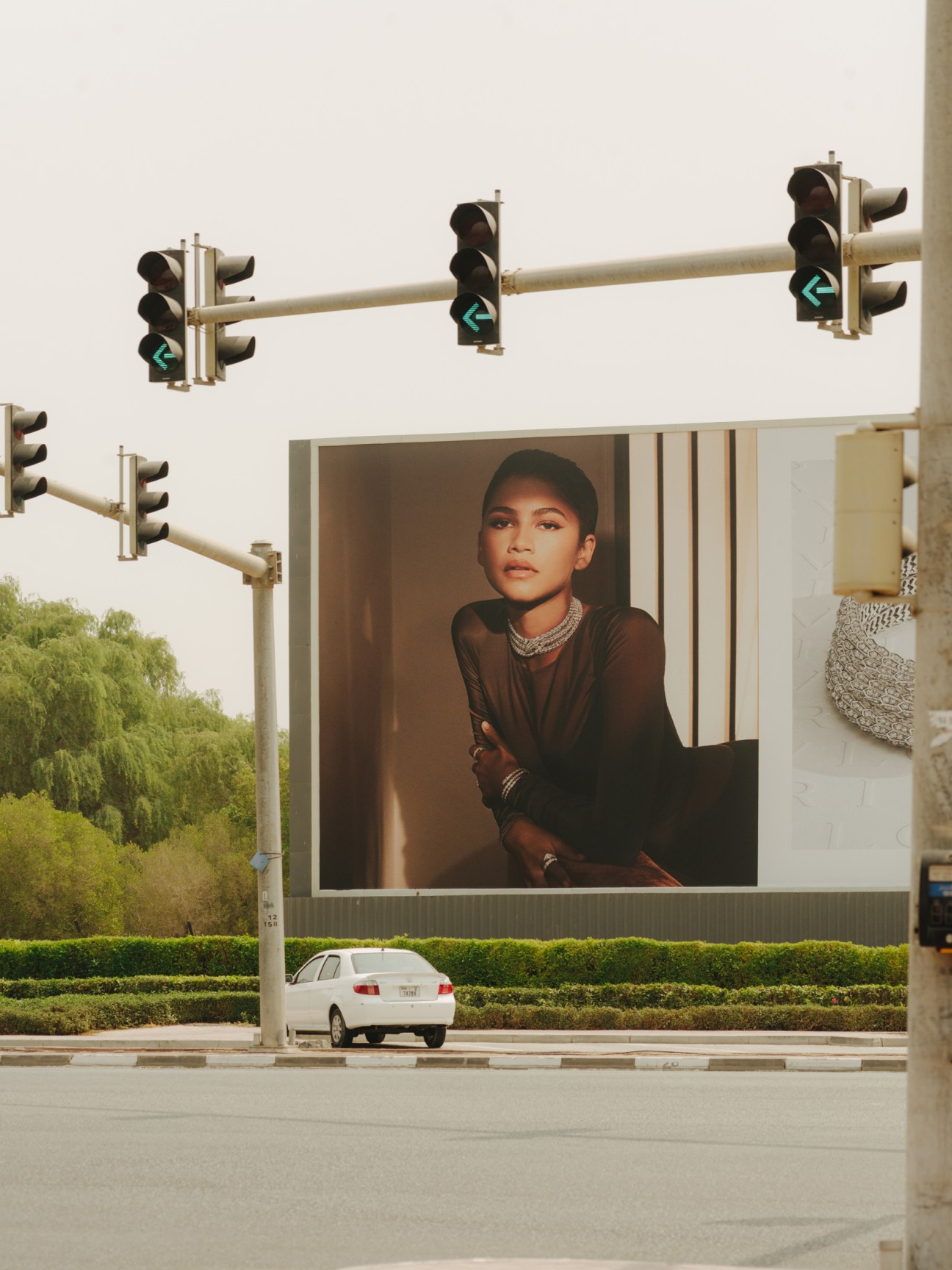
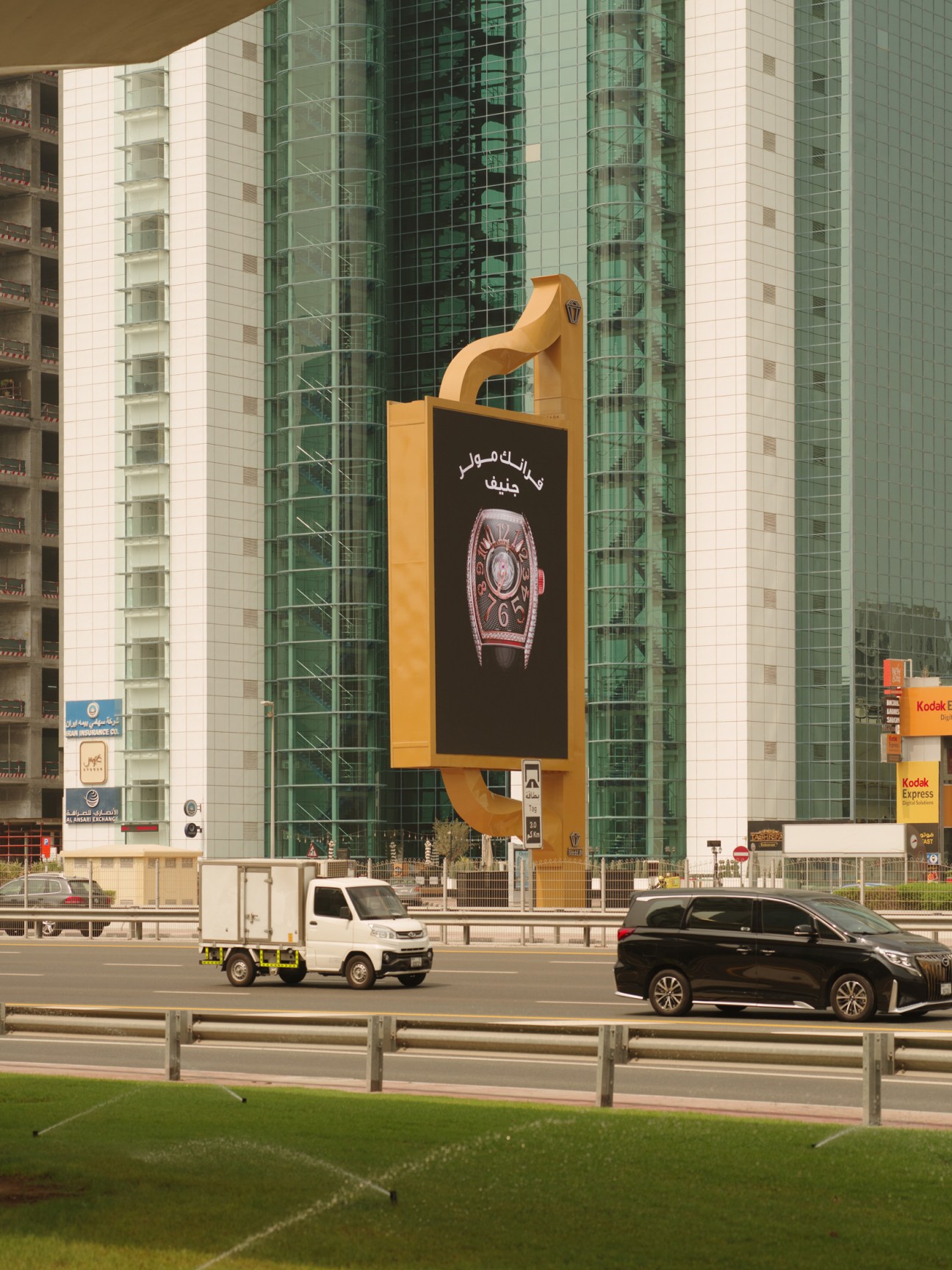
Beyond 2031, the UAE has its eyes on another significant milestone: 2071, the country’s centennial. With this in mind, the government has laid out a roadmap consisting of four key pillars: future-focused policymaking, excellent education, a diversified knowledge economy and a society that is both happy and cohesive. As AI continues to evolve at a rapid pace, it is clear that the technology will shape all of these focus points in various ways. Spend some time in the UAE and you might observe signs, billboards and the like that feature a quote attributed to His Highness Sheikh Mohammed bin Rashid Al Maktoum, the country’s Vice President and Prime Minister: “The future belongs to those who can imagine it, design it and execute it.” For many, AI is that future. As it moves, the world will move with it.

Partnership: Shaping our digital world
The Dubai Chamber of Digital Economy (DCDE) is dedicated to strengthening the city’s reputation as a digital business hub. Monocle has partnered with the DCDE to explore this forward-thinking organisation’s key offerings and long-term vision.
As part of his remit, Omar Sultan Al Olama heads up the Dubai Chamber of Digital Economy, a body dedicated to strengthening the city’s reputation as a digital business hub.
The Dubai Chambers building is situated next to the glistening waters of the city’s creek. To one side, a cluster of dhows hark back to its maritime history and status as a regional trading hub. To the other, the iconic skyline that represents its present – and future.
Ahmad Bin Byat, founding chairman of the telecoms provider Du and former managing director of Dubai Holdings, remembers swimming in the creek as a child. On his way to school he’d pass the British embassy overlooking the water, where he’d trade dates with the children of diplomats, receiving biscuits in return. Over a glittering career, he hasn’t just witnessed Dubai’s transformation but actively shaped it. “But people don’t think about history or what you’ve done before,” he says. “They live now.”


As vice chairman of the Dubai Chamber of Digital Economy (DCDE), one of three entities under the Dubai Chambers umbrella, he plays a leading role in the city’s evolution. The DCDE continues to attract emerging tech companies to the city and create an ecosystem in which they can thrive. “We are preparing the ground for digital companies and entrepreneurs who wish to set up or move here so they have a good system and infrastructure. Secondly, we know that the majority of companies in Dubai will transform into digital one way or another. We want this to be easy and efficient for them.”
1.
Key offering
Hard at work
Do you have a big idea for a digital business? Here’s how the DCDE is making Dubai the place to be.
Education
The DCDE oversees a number of educational and research drives that not only help people better understand the digital economy but also help them become part of it. The recently launched Emirati Training Academy is part of a wider initiative to encourage the development of apps in Dubai, providing participants with a foundational understanding of mobile application development. Elsewhere, reports are regularly made available for those looking to furnish their understanding of digital enterprise in the city.
Events
Meeting entrepreneurs in person is a key component of what the DCDE does, from intimate workshops with industry leaders to larger-scale summits. The pinnacle of these is Expand North Star, an annual four-day tech show that is part of Gitex Global and connects forward-thinking start-ups with ambitious investors. This year’s edition welcomed about 50,000 visitors and 1,800 start-up exhibitors. The goal? To demonstrate Dubai as a gateway to the rest of the world.
Initiatives
The aptly titled Business in Dubai Program helps firms to secure in-country funding and assists with setting up once they arrive, from banking to housing. But in its bid to empower the city’s next generation, the DCDE also oversees schemes that seek to galvanise interactions with the digital economy more broadly. The App Olympics, a six-monthly city-wide competition, launched in October 2023 with a view to challenging participants to create the world’s best apps in Dubai.


2.
Vision
Why Dubai?
DCDE vice president Saeed Al Gergawi on what the city has to offer for entrepreneurs and business owners.
1.
Safety and security:
“To operate a business, raise a family and do what you need to thrive, you need this foundational aspect. Dubai has that.”
2.
Bang for your buck:
“The competition for talent elsewhere is costing businesses. With Telegram, they were able to compete with Facebook or WhatsApp with a tenth of the team.”
3.
Quality of life:
“We have some of the best schooling systems, infrastructure, retail and leisure. Companies are able to move their families and their businesses.”
4.
Complete connectivity:
“Emirates Airlines and FlyDubai operate direct flights from Dubai to almost everywhere. The geography allows people to cater to clients from east to west within working hours.”
5.
Freedom to fail:
“People can experiment here. The attitude is, ‘Go and try – if there’s a positive outcome, it will happen.’”

Long-term ambition
Looking ahead, the DCDE is committed to amplifying the success of Dubai’s digital ecosystem – and positioning it as one of the most agile hubs in the world. With priority sectors that include cybersecurity, e-commerce and fintech, plus dedicated strategies that enable emerging technologies such as virtual reality and blockchain to thrive, there’s a clear plan to showcase how Dubai is not only a testbed for new tech but also a welcoming environment for businesses that are brave enough to execute it.

Soft-power dressing
Arpenteur × Monocle Contour wool jacket
€425
Arpenteur is run by two cousins from Lyon who bring an unfussy, modern feel to traditional workwear. With every item of clothing made entirely in France, the brand seeks to spread the history of French menswear with references to utilitarian workwear, outerwear and sportswear. This jacket, made in Lyon from boiled Pyrenean wool, has a stand collar, raglan sleeves and neat, angled side pockets.

Material: Wool.
Colour: Grey.
Made in: France.
De Bonne Facture × Monocle knit sweater
€450

Before the textile industry decided that it preferred white wool owing to its dyeing possibilities, fibre from black sheep was the norm. Now they are outliers. But one passionate New Zealand breeder wants to celebrate their wool, which comes in a range of luminous undyed hues, from bronze to ebony. Parisian menswear brand De Bonne Facture has turned this soft, fine-gauge pecora nera (Italian for “black sheep”) wool into a gorgeous tawny sweater. Wear this and you’ll stand out from the flock.
Material: Wool.
Colour: Tawny.
Made in: Italy.
Porter × Monocle zip tote with pouch
€365

Our most versatile bag is now available in limited-edition olive. It’s fitted with multiple interior pockets, a detachable pouch, a top flap, two zippered pockets for quick access to necessities and a detachable shoulder strap.
Material: Cordura.
Colours: Olive or black.
Made in: Japan.
Bally × Monocle curling boot
€435

Bally has been linked with curling ever since it kitted out the Swiss team for the 1956 Olympics. Back by popular demand, our collaboration with the luxury Swiss brand puts a spin on its beloved, high-performance, water-resistant boot. The rubber-coated leather upper, comforting wool lining and sturdy Vibram sole makes it perfect for mountain hikes and city strolls alike.
Materials: pvc-coated leather (upper) and wool (lining).
Colour: Olive.
Made in: Switzerland.
Valstar × Monocle Milano raincoat
€795

Valstar was the first Italian company to make water-repellent raincoats. We’ve teamed up with them to produce a slim-fitting trench with a detachable goose-down insert for chillier days.
Materials: Cotton and polyester.
Colour: Olive.
Made in: Italy.
Mühlbauer × Monocle Traveller hat
€265

This dramatic, lightweight fur-felt creation from Mühlbauer, Austria’s master milliner, will have you turning heads for all the right reasons. As the hat’s name, Traveller, suggests, this headgear will see you travel-ready with its flexible shape and narrow brim making it comfortable for all-day wear. Gone is the need for a bulky protective hat case as the Traveller hat, available in either a brown or grey, can be dented, moulded, folded and packed into any travel bag.
Material: Felt.
Colours: Grey or brown.
Made in: Austria.
Treuleben × Monocle envelope folio
€245

This A4-sized folio will keep all of your important documents handy and secure. It’s made from Italian full-grain cowhide and fitted with viscose lining.
Material: Leather.
Colours: Navy or tan.
Made in: Italy.
Treuleben × Monocle credit card caddy
€95

Treuleben is a German bookbinder and accessories-maker with more than 100 years of experience. This caddy has two inside nooks, outside envelope pocket and slots for credit cards. It’s handmade from full-grain Tuscan leather.
Material: Leather.
Colours: Navy or tan.
Made in: Italy.
Doppler × Monocle carbon-steel umbrella
€140

Olive-and-blue check canopy with a carbon-steel frame and automated open-close. You’ll be hoping for the odd shower.
Materials: Carbon-steel frame with polyester canopy.
Size: 31cm length closed, 100cm diameter canopy.
Colour: Olive-and-blue check.
Made in: Austria.
Treuleben × Monocle passport caddy
€145

Treueleben’s full-grain Italian leather passport caddy in navy or tan has compartments for cash, credit cards, boarding passes and a back envelope pocket that enables your passport to be scanned without being removed.
Material: Leather.
Colours: Navy or tan.
Made in: Italy.
Rier × Monocle fleece overshirt
€545

Rier founder Andreas Steiner puts a fashionably youthful spin on traditional Alpine craft. A Paris-based Tyrolean designer who cut his teeth at Prada, Miu Miu and Louis Vuitton, he now works with artisans across Austria, Italy and France to create elegant unisex designs. This fleece overshirt is ideal for when the summer linens have been packed away but it’s not yet chilly enough for a coat. Made from Austrian natural wool fleece, it’s lightweight and biodegradable. Throw it over any casual outfit to smarten your look or, for a more relaxed vibe, leave the horn buttons undone.
Material: Wool fleece.
Colour: Natural brown.
Made in: France.
Photography & styling: Lock studio
Top 25 entrepreneurs to watch
Small, medium and large. Third-generation and fresh starters. Technology players and fashion rethinkers. But all with one thing in common – they are proud entrepreneurs.
Below we introduce you to 25 businesses driven by people who, at some point, decided to be their own boss and plot their own path through business. Sure, there might have been stumbles, the equivalent of scraped knees, but in the end they knew that had to tap into Frank Sinatra’s useful entrepreneurial rallying cry and do it “my way”.
We have chosen to highlight people we admire and who we think have some lessons worth sharing. They are also people who might encourage you to take the leap – to become an entrepreneur. Read on and, who knows, perhaps next year you could find your face staring out from these pages.
1.
Adriana Domínguez
Adolfo Domínguez
The artist who’s brought a painter’s eye to her family’s 45-year-old company.
Even for the fashion sector, naming an artist as CEO is a bold move. But Adriana Domínguez’s sensitive and sanguine approach arrived at just the right time for Spanish fashion house Adolfo Domínguez. She was tapped to help her father’s financially flailing firm in 2017 and her swift decision-making, financial trimming and captivating marketing campaigns have helped to bring the company back from the brink. In 2020, the 45-year-old was named chief executive, continuing the brand’s bold restructure during the pandemic, while shoring up the house’s identity as both idiosyncratic and pioneering.


“In such a commoditised fashion landscape, differentiation is a key asset,” says Domínguez. “I often find myself in strange company at the top,” she adds, referencing the lack of women and younger faces in the upper echelons of Spanish business. “But my ‘quirkiness’ is a source of strength.”
Founded by her father in 1976, the brand became part of Spain’s cultural vanguard by embracing modernity with free-flowing forms that excited a country emerging from a dictatorship. Early success led to international expansion and today there are 343 shops in 17 countries.
Star recruits from the automotive and the technology sectors have reflected a push to innovate beyond the fashion industry status quo. A recently launched personal-shopper service, for example, combines algorithms with human specialists, while a focus on near-shoring has increased production in Galicia and Portugal from nothing to 23 per cent. Notably, more than half the company’s board are female.
“As a family we share resilience, a capacity for change and courage,” says the CEO, whose sister, Tiziana, is creative director. “Seeing how the previous generation dealt with stumbling blocks is a source of guidance to confront future crises.”
adolfodominguez.com
Lesson learnt: Creativity is currency in a crisis. Domínguez brings her deep-veined brand knowledge to the board table – but her artist’s mind is also inspiring the entire company to think outside the box.
2.
Barnabé Fillion
Arpa
The perfumer combining scents with electronic music and original sculpture.

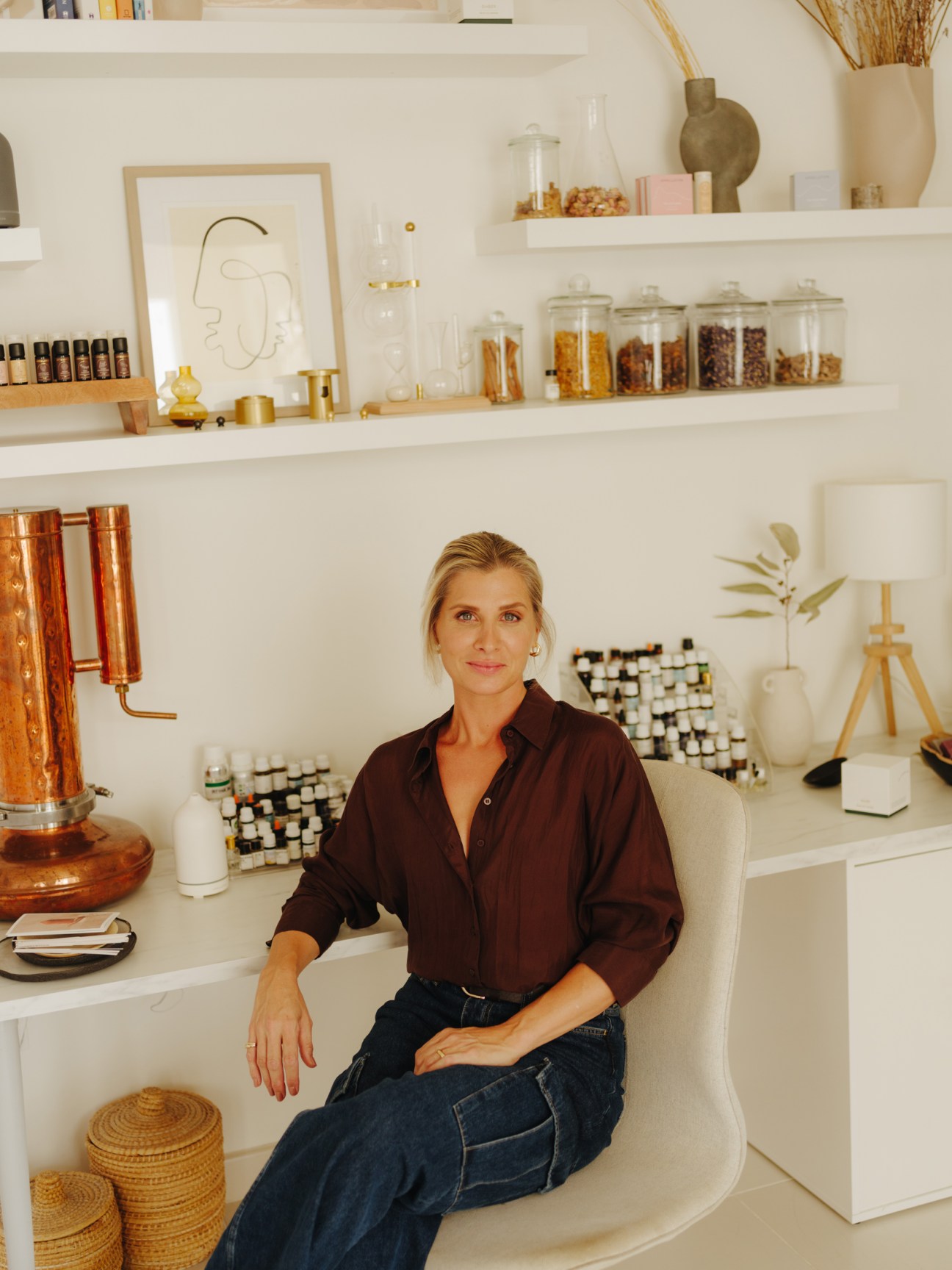
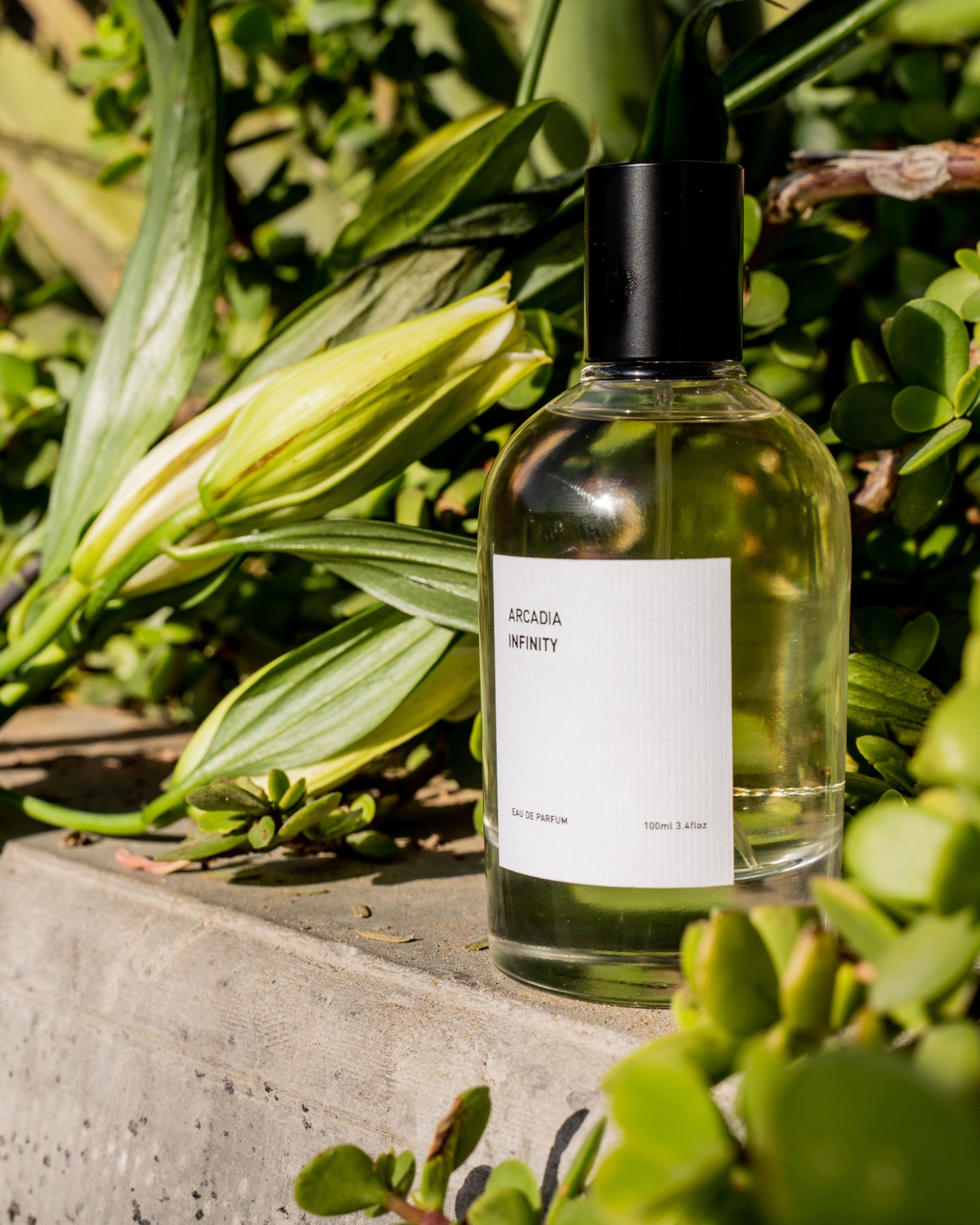
Paris-based independent perfumer Barnabé Fillion tries not to think too much about the giant fragrance businesses that his small company Arpa will compete against. Having established his business creating scents for brands such as Aesop and a major show at New York’s Guggenheim Museum, he’s made the brave decision to launch a “cultural brand” this season. After 10 years learning about the industry and building connections, Fillion looks to follow in the steps of niche labels, such as France’s Serge Lutens and London’s Perfumer H, with Arpa. He says that the company’s aim is to stimulate all of a customer’s senses. As such, its initial three fragrances come with a vinyl LP featuring electronic music inspired by each scent.
How will Arpa separate itself from competitors in the fragrance industry?
I always try to work with collaborators that I share a mutual respect with. Of course, the financial success of the company is important but this will be a very curated brand that doesn’t make compromises on quality. In many ways I actually have to protect myself. You can almost compare the modern perfume industry to the pharmaceutical industry, where the creation of new ingredients can lead to more profit. There are a lot of elements in this industry that I want to veer away from.
And how will you do this?
We’re not talking about building a niche perfume brand but a multi-sensorial project. We’re trying to curate a coherence around the fragrances, music production and the commissioning of sculptural work.
How do you plan to build a global community around your brand?
I’m excited to see how it can live online. We’ll have a part of the project where people are engaging with us digitally and the other part where they come together. This physical side will manifest as events and exhibitions in Paris, Mexico and Kyoto. In combining the digital and the physical, we’ll create an offering where people are comfortable buying our fragrances online. But if they’re not convinced, we can send a sample first.
arpastudios.com

Lesson learnt: Finding your place in any industry often begins with establishing a community of like-minded people. Arpa’s commitment to multi-sensory experiences has helped the small fragrance company carve out a distinctive identity.
3.
Cindy Spiegel and Julie Grau
Spiegel & Grau
The publishers defining the cultural moment with their independent imprint.

Cindy Spiegel and Julie Grau (pictured, on left, with Spiegel) have been working together for more than 25 years. As editorial directors of Spiegel & Grau, which was originally part of Penguin Random House, they oversaw titles by writers such as Ta-Nehisi Coates, Trevor Noah and Suze Orman. When the publishing giant was restructured in 2019 and closed their imprint, Spiegel & Grau decided to resurrect it independently.
“We built our careers on discovering new voices,” says Spiegel. “We realise what books can do; that’s what drives us.” This innovative spirit also led Spiegel & Grau to become a multi-platform publisher; though books remain at the heart of what it does, it works across audio, video and print. It is now co-producing podcasts with Lemonada Media and there’s a deal with Amazon Studios to develop projects from its roster.
Still, the success of the new venture depends largely on the duo’s reputation as exceptional talent spotters. Colleagues followed them from Penguin Random House because they believed in the mission. Big investors such as William R Hearst iii and the Emerson Foundation bought into the project; the enthusiasm was such that the pair found themselves with far more money than they initially hoped to raise.
This backing has let them be selective. “We’re excited about giving resources to our books and we can do this by keeping the list small,” says Spiegel. “Fifteen to 20 books at a time is our sweet spot. That’s the number we feel confident we can publish with our full attention.” The imprint’s first release, published in July, was Fox and I, a memoir by Catherine Raven, a debut author whom Spiegel met at a conference in late 2019. It was this encounter that gave the duo the idea of having a platform “to get an amazing project out into the world”, she says.
Their greatest skill is finding titles that speak to the cultural moment. “We’ve seen our books change the conversation: The Kite Runner changed it about Afghanistan; Orange Is the New Black made incarceration very personal,” says Spiegel. “We want to make money and we have been very profitable. But we also want to publish with integrity.”
spiegelandgrau.com

Lesson learnt: Don’t let external structures determine your professional destiny. If you’re confident in your abilities, disruptions can provide the impetus you need to go your own way.
4.
Manfredi Catella
Coima
The developer investing in the long-term health of Milan’s communities.
“Normally with real estate, you think that someone will want a house or office so you build it, you sell it – next,” says Manfredi Catella. Over lunch at Ratanà restaurant, the CEO of Milan-based developer Coima explains how his experience has been the opposite. “By developing a larger-scale part of the city and operating it, we learned a lot about people. So that makes you have a different approach when you develop next.”


Catella is referring to the vast Porta Nuova development beside Ratanà. A decade in the making, it includes a landscaped park and accompanying cultural calendar, retail space and sparkling office blocks. Crucially, Coima also manages the site and organises events through its foundation. But while the regeneration of this former wasteland near Garibaldi train station might be well known, Coima isn’t stopping in its bid to transform Milan. Over the next few years, it is set to develop two new chunks of the city – railway depots in Porta Romana and Farini – which will continue to make the city a benchmark for urban reuse. The Porta Romana project near Fondazione Prada includes a park and housing, part of which will initially serve as the Olympic Village during the 2026 Winter Games. “At Porta Romana, the fundamental layer is at ground level,” says Catella. Thinking about how people move is an integral part of development, while the firm takes sustainability “very seriously”, according to Catella’s US-born wife Kelly Russell, who has worked alongside him for 20 years.
As well as further ambitious building around Porta Nuova with architects including Stefano Boeri, Diller Scofidio 1 Renfro and Norway’s Snøhetta, Coima is also eyeing Rome. Catella says it would be a “lost opportunity” if the Italian capital didn’t open up to smart redevelopment. “We will move forward in doing what we love where we are loved.”
coima.com
Lesson learnt: Being invested in what happens after a project is finished – and how its users react to it – makes you a smarter, more sensitive developer for the future.
5.
Johanna Stein
Gato Sem Rabo
The bookseller shining a spotlight on women’s literature in Brazil.
As an art student, Johanna Stein was carrying out research for her degree when she realised that finding books written by women was frustratingly difficult in São Paulo. No physical space that gathered their voices existed in Brazil. So, after graduation, she started a bookshop devoted exclusively to literature by female authors. Gato Sem Rabo opened in May 2021 in one of São Paulo’s oldest districts. Stein says she hopes that it will help to broaden people’s understanding of female perspectives, “especially those from the global south, like me”.


Women struggle for equal billing in South America. More than 70 per cent of Brazilian books printed between 2005 and 2014 had male bylines, according to a University of Brasília study. But at Gato Sem Rabo, minimalist wooden shelves showcase about 2,800 titles by more than 1,400 women, ranging from non-fiction and poetry to illustrated books. Demand is high; lines of shoppers formed around the block when the shop opened. “It’s been a huge surprise [to see] what sells,” says Stein.
This early success is testament to Stein’s good entrepreneurial instincts. Though a dedicated reader, she had never worked in bookselling before. She called in the services of publishing consultants Marcelo Zanon and Maria Borin but her freshness to the sector allowed her to take risks with her choices at a time when the high street was struggling.
“People trust our curation. We’ve tried to reintroduce classics that echo themes shared by younger Latin American authors,” says Stein. She is proud that her hunch about the importance of opening a physical space in São Paulo turned out to be correct. “The more things become digital, the more readers and authors will demand a proper meeting place,” she says.
That’s why she has organised book-themed debates and has also opened a café in the shop, with further seating outside. A 1970s structure that had been abandoned for years, it sits beside a busy overpass and was redeveloped to host Gato Sem Rabo and other businesses, including an art gallery and a rooftop restaurant. Their arrival is allowing the whole neighbourhood to turn over a new page.
Lesson learnt:
Projects with a specific focus needn’t be niche in their appeal. There is plenty to be gained by championing new or marginalised perspectives.
6.
Greg Lundgren
Museum of Museums
The curator breathing new life into Seattle’s homegrown cultural scene.

Looking out of a second-floor window of his Seattle art space, the Museum of Museums (MOM), Greg Lundgren notices that someone has tossed a rag onto an installation on the roof of the extension below. The 51-year-old curator makes a mental note to scamper down there himself and remove it before opening to the public for the day.
Such tasks aren’t beneath Lundgren, who spent much of the past two years transforming a derelict medical office into a prototype of what is possible for art in a city with as much wealth, technology and creativity as Seattle. “mom is a low-budget example of what an art centre can look like,” he says. “It was largely self-financed because I wasn’t willing to hold my breath for a billionaire to call me up [and help].”
Lundgren secured the three-storey building for the nominal sum of $1 (€0.80) a year from its owners, who were eager to see improvements to what had become a graffiti-covered eyesore. He invested $400,000 (€340,000) of his own money into its refitting and cleared 50 tonnes of rubbish and rubble with his small team.

The building now features large-scale installations as well as smaller pieces. “Our mission is to increase the artist population of Seattle,” says Lundgren, who wants to encourage young people to see art as a career rather than just a hobby. He also recognises the importance of keeping artists in the state. “If we want to fix the art ecosystem in a city, we need to have a conversation about collecting,” he says. “Not only collecting the work of blue-chip artists from New York but also the artwork from your region. That’s how you get them to stay: by supporting them financially.”
Lundgren hopes one day to transform the block into a creative campus, offering cheap housing for artists, studio spaces and a sculpture garden. “I put out ideas that I can’t afford to act on but that are important to the city,” he says. If a billionaire philanthropist walked through mom’s door, Lundgren would be ready with a pitch. “My hope is that mom seduces our wealthy community to engage in a more significant, longer-term way,” he says. “This building is designed to inspire [people to believe] that we can be a great art town.”
museumofmuseums.com
Lesson learnt: Supporting an art scene outside a cultural capital takes a lot of work. Having a mission that goes beyond an investment return will help you put in the work when things get tough.
7.
Stephen Burks
Stephen Burks Man Made
The designer and gallerist championing real representation in design.

Stephen Burks Man Made is the studio of New York-based designer Stephen Burks. Its aim is to produce work connecting tribal and artisanal craft techniques with contemporary aesthetics.
Tell us about your work championing diversity in the design industry.
For us, it is not a topic: it’s our life. I use the studio as a vehicle to create a more pluralistic vision of design. I talk to my clients about the lack of diversity as I tend to be the first and only African American with whom they’ve ever worked. It’s important that we not only lead by example but that we also educate and find new ways to communicate and accept one another.
How do you use design to communicate ideas about sustainability?
We want to make objects that people want to keep. In terms of sustainability, we like to work with noble materials and think about how we’re always in the service of the customers buying our work.
stephenburksmanmade.com
Lesson learnt:
Burks finds motivation in causes that he passionately believes in. Use your position within your industry to change it for the better.
8.
Spandana Gopal
Tiipoi
The designer dispelling stereotypes surrounding traditional Indian craft.
Spandana Gopal’s design brand Tiipoi was born of a frustration with stereotypes about Indian craftsmanship. After leaving her native Bangalore to study in London, Gopal became aware that consumers often romanticised traditional craft techniques. “I wanted to create handcrafted products that were more functional and less like souvenirs,” she says of the company that she started in 2013 and now has 16 employees.


She enlisted designer Andre Pereira to develop a range of products including brass candleholders, glass jars and stainless-steel teapots, all made by the brand’s craftspeople in Bangalore. “We try to keep as much as possible in-house because it gives us a lot of control over the quality and the working conditions,” says Pereira. “We have two master craftsmen, a metal-spinner and a ceramicist, each of whom has a team.” Tiipoi has expanded its offering to include colourful home textiles, vases modelled on Bangalore’s brutalist structures and traditional Longpi ceramic cookware.
“I kept thinking, ‘Why isn’t there an Indian version of Muji?’” says Gopal. “There are lots of stereotypes around Indian craft and much of it is based around nostalgia.”
It wasn’t always smooth sailing when it came to making the products, explains Pereira. “There’s a big ‘yes’ culture when it comes to manufacturing in India,” he says. “People will tell you that they can make something without having the know-how so you really have to explain what you want. At the start we had to push to visit manufacturers’ facilities to see what they could actually do.”
tiipoi.com
Lesson learnt: While Indian craftsmanship may not have the best reputation, Tiipoi used its techniques to develop high-quality products, supporting the craft system in the process.
9.
Nick Shelton
Broadsheet
The founder of an independent media company that’s taking on the big guns.

Of the many threats facing independent media, one of the most dangerous is social media’s advertising landgrab. In most countries big players such as Facebook have gobbled up marketing budgets and other people’s content without anyone trying to control them. Australia has made headlines by forcing the social media company to make deals with the country’s main news organisations but smaller titles have been left out. Some aren’t willing to sit in silence.
Melbourne-based lifestyle-focused company Broadsheet has decided to pick up the fight. “There’s still a swath of independent publishers that need to be supported,” says its founder, Nick Shelton. “We’re talking with government, making sure we’re getting through to the right people. We’re pushing.” If he succeeds in this David-versus-Goliath fight, it could have global consequences. “Australia is a test case,” he says. “It’s going to be used as a precedent around the world. It’s important to us as a business but I think it’s important beyond that too.”
Fortunately, Broadsheet has a business model that makes it a solid venture. Started in 2009 as a one-man operation, it launched as an online guide to the best spots to eat in Melbourne. Its remit and team soon grew bigger; it now has editions in Sydney, Brisbane, Adelaide and Perth, with stories covering everything from culture and sport to music and retail. “Our role is to inform our readers about all the wonderful things we do as a city,” explains Shelton. “We see ourselves as news journalists. The rigour behind everything we publish is top tier.”
Over the years, Shelton has experimented with quarterly newspapers, a book-publishing imprint, pop-up restaurant collaborations, a branded content studio and framed editions of photographs; a forthcoming membership service offers early access to events, openings and shows. This might seem like a mixed bag but Shelton says that these offshoots are simply different expressions of the same brand. “You have to have a clear vision so you can adjust, change and evolve,” he says. “It’s about not accepting conventional wisdom. The world changes so we need to challenge our ideas. We need to experiment.”
broadsheet.com.au

Lesson learnt: A solid brand is made by the consistency between its many different products but also by its core values. Don’t be afraid to stand up for yourself when the time comes.
10.
David Neeleman
Breeze Airways
The airline entrepreneur helping smaller cities to take off.
Aviation hasn’t had a good 18 months, with the industry nursing losses of more than €250bn in 2020. That might make the idea of launching a new airline sound like commercial suicide – but not for David Neeleman. “When coronavirus hit, I could have just said, ‘No I’m not going to do this,’” says the serial entrepreneur. “But I had already hired 55 people at the airline. Those people were dependent on me so I said, ‘What the heck; we’ll make it work.’”
Neeleman, a Brazilian-American based in Salt Lake City, is referring to his latest venture, Breeze Airways, which started flying in May with 39 routes to 16 US cities. Yet it’s his track record that speaks volumes. He has launched four other successful airlines, including New York-based JetBlue and Brazil’s Azul. And that explains the current investor interest: in August, Breeze raised a further $200m (€170m), adding to a pot of more than $100m (€85m).


Breeze’s model is based on low-cost airfares but it’s usp is that it runs what the airlines calls “under-served routes” that link smaller cities and towns without having to route via a hub. “Say you live in Hartford, Connecticut, and you want to get down to Charleston, South Carolina,” says Neeleman. “You can do it with us for half the price – and twice as fast.”
The airline head says that – alongside smaller planes that cost less to run – he is banking on technology and app-based customer service as the keys to success. Currently flying Embraers, Breeze has ordered a fleet of fuel-efficient Airbus a220s, which it hopes to start rolling out from the second quarter of 2021.
Breeze plans to stay nimble too, being flexible on routes and partially pivoting to charter in the winter when demand is lower. “I don’t think size matters,” says Neeleman. “It’s just creativity and structuring it.”
flybreeze.com
Lesson learnt: Do something that others aren’t. Breeze’s Neeleman has succeeded with five airlines by finding gaps in the aviation industry where competition is low or non-existent.
11.
Hao Tran
Vietcetera
The media company celebrating a richness of views in a single-party system.
Every successful start-up eventually finds an office to match its ambition, allowing the team to draw a line under a restless first few years of rapid growth and frequent relocations. That was the case for Vietcetera earlier this year when the Vietnamese media company moved into a new address, its fourth since it was founded in 2016, on a quiet street in the centre of Ho Chi Minh City. The four-storey building in District 3 marks an important moment for CEO Hao Tran (pictured, on left) and his team of 80 employees.


Vietcetera’s main source of income is turning popular articles on its flagship Vietnamese-language website into audio content that is then sold to sponsors. Tran cites The New York Times’ “Modern Love” newspaper column about relationships, which was turned into a TV series, as inspiration. Mastercard, Nestlé, drinks producer Diageo and insurance firm aia are some of the top advertisers using Vietcetera to tap into consumers from Vietnam’s emerging middle class. But governments of countries, from the US to Australia and Italy, are keen to get involved too. Even Vietnam’s communist government is spending marketing money on Vietcetera.
The publisher, which only received its official media licence earlier this year, occupies a rare position as a private media company in a single-party system in which almost all of the news is state-controlled. Journalists have to stay away from political coverage and they choose to avoid covering celebrities and entertainment. Vietcetera does, however, tackle socially taboo topics, which makes it a valued source of information in a conservative country. Sex education has been an early hit, both editorially and commercially. Also attracting plenty of interest is its coverage of personal finance, higher education and mental health.
Later this year, Vietcetera’s visual and audio content will be created in new studios: soundproofed recording rooms with green screens are currently being built on the same road as the new headquarters. It might sound as if the company is already running out of space but it’s most definitely not short of ideas.
vietcetera.com
Lesson learnt: A new, bigger office can also be a statement about your commitment to the city that you’re based in – and the role that your business plays in it.
12.
Saeed Abu-Jaber and Mothanna Hussein
Turbo
The hometown heroes putting Amman on the map by hosting events at its adaptable city-centre office.
In a refurbished split-level studio in downtown Amman you’ll find two designers refashioning the Jordanian design scene. Small but ambitious branding agency Turbo was founded in 2015 by Saeed Abu-Jaber and Mothanna Hussein (pictured, Hussein on left) after their paths crossed in Beirut. “We were both big fans of posters and we liked each other’s work, so we decided to partner up,” says Abu-Jaber. “Small design studios are quite scarce in Amman so we knew there was a gap in the market here.”

The brand’s office is imprinted with Turbo’s logo but its offering goes beyond branding: while the mezzanine is used for the agency’s design work, it hosts events including exhibitions, print sales, workshops and lectures on its ground floor. The pair also values its freedom to run projects as they see fit. “We like the flexibility to choose how to deal with certain situations,” says Abu-Jaber. “The office has given us the opportunity to expand on what a design studio can be. We wanted it to play a part in the cultural scene of the city.”
turrrbo.com
Lesson learnt: Hussein and Abu-Jaber saw a niche and filled it – but kept things small despite their success. Remaining nimble and being a duo has kept them agile.
13.
Matt Alexander
Neighborhood Goods
The London-born CEO who reinvented the American department store.
There was a time when department stores were inspiring places to be, where thoughtful lighting and smartly presented wares made them the perfect places to browse rows of pressed shirts or buy a new pair of shoes with the help of a willing attendant. But over the past few decades, these shopping meccas have lost their sheen: formulaic business strategies, compounded by lazy salesmanship, the rise of online shopping and, more recently, the effects of the pandemic, have left many conventional department stores reeling and their selections looking decidedly drab.


For London-born Matt Alexander, who is now based in Dallas, Texas, it was clear that it was time for a different approach. “I wanted to create relevant, community-driven retail that would offer something vibrant,” he says. So Alexander launched Neighborhood Goods in 2018. “When my co-founder [Mark Masinter] approached me, he wanted to see if we could create a more permanent version of my previous project Unbranded [a pop-up market for small brands].” It opened its first department store in Plano, Texas, with the aim of providing a physical space for independent designers who wouldn’t otherwise have a base from which to sell their wares. The spaces also host events.“We care about community,” says Alexander.
This initial store worked so well that two more spaces followed, first in New York City and then in Austin, Texas; more are planned. While bricks-and-mortar stores struggled during the pandemic, Neighborhood Goods continued to thrive by expanding into groceries, opening a new sales section. Its food and drink aisles, much like those for clothing and homeware, are stocked with brands that would never have made it onto the shelves of conventional supermarkets.
Neighborhood Goods is a reminder that success doesn’t always require reinventing the wheel. Sometimes all an entrepreneur needs is the simple realisation that an established business model, like that of the department store, needs a slight correction to get things back on track.
neighborhoodgoods.com
Lesson learnt: Alexander brought modern, community-minded ideals to the department store. A new approach to an established idea can be a rewarding strategy.
14.
Pedro and Agustín Otegui
Lanas Trinidad
The father and son proving that some old methods can be timeless ones.
In the countryside just north of Uruguay’s capital, Montevideo, is a family-run wool-processing factory where old and new techniques are blended in a closed-loop production process. The fourth generation at Lanas Trinidad, founded in 1916, uses rainwater to clean wool and traps methane gas to power its facilities. It is keeping old traditions alive while turning raw materials, sourced from the region’s flocks managed by gauchos, into the highest-quality wool top, a semi-processed fibre for spinning into yarns and fabric.


Following this strategy, the company is picking up new clients in the form of mills and weavers that are looking for sustainable suppliers. “There is a different attitude among my generation,” says account manager Agustín Otegui, great-grandson of the founder. “More people now support the original concept behind Lanas Trinidad.” Otegui works alongside his father, Pedro, who runs the company and has built a reservoir on its land in which rainwater is collected to wash the wool. This water is then kept, treated and used for irrigation.
In the early 2000s, the family spotted an opportunity to capture greenhouse gases released during the manufacturing process and convert them into heat and light for the factory. Natural by-products such as lanolin, a refined wool that can be used in cosmetics, are also collected and sold on. These innovations have helped Lanas Trinidad secure some standout environmental certifications in recent years, turning the company into the biggest and most sustainable supplier of wool top in Uruguay.
But being socially responsible is nothing new to the Otegui family. “There was always an understanding that we had to do things well: be competitive but do it well,” says Pedro. What is changing is that manufacturers and mills are placing more value on fabrics that are environmentally friendly than in the past.
Lanas Trinidad’s work, then, is a reminder that in a fashion industry that is often preoccupied with newness, there is still room for established players with skills honed over more than 100 years to set the pace for change.
lanastrinidad.com
Lesson learnt: Heritage and progress are not mutually exclusive. Combining experience with new expertise can be a winning combination. Lanas Trinidad shows that you can teach an old (sheep) dog new tricks – and when you do, it’s mighty impressive.
15.
Ia Adlercreutz
Co-founders
The Finnish consultancy bringing new creativity into the art of business.
The notion of hiring a company to help you use culture to improve your business’s operations might conjure up the image of a team-building salsa class but that couldn’t be further from what Helsinki-based consultants Co-founders offers. The firm uses art forms such as creative writing, acting, dance and photography in a more expressive and abstract manner as it provides its services to some of Finland’s leading brands. “As a strategy consultancy we work with companies’ top management and help them develop their businesses in a very holistic way,” says the firm’s founder and CEO, Ia Adlercreutz.

“[Art] can reveal a company’s internal culture to management in a way that no questionnaire can,” she says. “It can help to unify different ways of working when two companies merge; it can also help staff to internalise a new brand promise.” In practice, that means workshop attendees, both leaders and employees, either creating artworks or observing artistic performances. “A piece of music or soundscape has been proven to bring up feelings that reveal people’s sense of purpose and set of values, which show whether they connect with the purpose and values of the company as a whole,” says Adlercreutz. It may sound a little complicated but it seems to work, judging by the number of clients that Co-founders has.
The company was launched in 2018 and consists of Adlercreutz and a small team. It works with a network of advisers and professionals on a case-by-case basis, keeping its core staff minimal. It has enjoyed steady growth since its launch and is aiming to reach a turnover of €500,000 this year. Most members of the team have extensive business experience: Adlercreutz has managed renowned brands such as Kekkilä and Fiskars, while strategist Max Mickelsson has worked in top leadership positions for most of his career. This has helped the company to reach the right audience for their services. Often, however, what attracts new clients is that Co-founders’ methods have their basis in science. “This helps us convince some of the more engineer-driven companies that art works,” says research and insight manager Sonja Lahtinen. “Companies tend to view the world in objective terms but both consumers and other companies are made up of subjective human beings. Art can change and reveal the narratives that they use to frame their reality.”
co-founders.com

Lesson learnt: Don’t be afraid to bring some flair and creativity into your business. Not everything can be neatly explained with hard numbers.
16.
Eva Chen
Qdy magazine
The editor bringing print media to young Taiwanese in the digital era.

Qdy magazine (or Qiudaoyu) is an award-winning lifestyle magazine that covers Japan and Japanese culture from a Taiwanese perspective. The colourful quarterly is produced by a small team in Taipei and is written in Chinese. Each issue whisks its young Taiwanese readership through the latest in Japanese fashion, music, design, cuisine and travel. Most of its readers are aged between 20 and 35 and share a fascination with Japan.
Editor in chief Eva Chen is one of Qdy’s founders. She jumped into the magazine business straight out of university at an interesting time for publishing – especially for those who were enterprising in terms of securing funding. “We were recent graduates and we secured funds through online crowdfunding, advertising sponsorships and a youth entrepreneurship grant,” says Chen of the modest €6,000 that she and her team secured for Qdy’s first issue.
By the early 2010s, digital technology had begun to disrupt traditional media business models in earnest but was creating new opportunities for plucky independent publishers that were entering the market.


After experimenting with a few ideas, Chen and her colleagues settled on Japan as their editorial focus. Within four years Qdy magazine was turning a profit and being lauded at Taiwan’s annual media awards.
“When we established Qdy the publishing industry was at a turning point,” says Chen. “Consumers were looking for even more rapid and interactive information. In the face of this we try to emphasise the virtues of printed matter.”
qdymag.com
Lesson learnt:
Going against the grain can work. Even if everyone is telling you to go online, there might still be space in the market for an opinionated print-based magazine. (That said, we might be a little biased in this regard.)
17.
Laura Pujol and Zineb Britel
Zyne
The two Moroccan co-founders using footwear to keep ancient traditions alive.

Sustainability is now perhaps the biggest buzzword in fashion. It is bandied about in reference to everything from material choices to production methods. While this is ultimately a good thing, there is also something to be said about using fashion to sustain and reinvent traditional manufacturing cultures.
This is what Moroccans Laura Pujol and Zineb Britel have achieved with their footwear brand Zyne. After stints at Louboutin and Dior in Paris, the duo founded the brand in 2016. Zyne preserves traditional Moroccan manufacturing methods and footwear styles by using a neglected female workforce to craft contemporary versions of the traditional babouche slipper.


“Most artisans in footwear in Morocco are male,” says Britel. When she founded Zyne with Pujol, the sophistication in finishing and attention to quality needed to make their designs didn’t exist in the region’s labour market. Recognising an opportunity to start afresh by training women in Moroccan weaving and shoe-detailing methods, they built up a team of female petites mains, artisans with the dexterity required for elegant craftsmanship. These women now use ancient techniques to knit raffia, tinted using dyes made from vegetable scraps and spices, into modern versions of traditional shoes. “It can take between 13 and 26 hours to make a pair of our raffia slippers,” says Pujol. It’s time-intensive work that seems to have paid off.
Over the past five years, the pair have seen their atelier in Casablanca become self-sufficient and have a client list that ranges from fashion-savvy locals to royalty. Despite wholesale trade being put on hold during the pandemic, sales have continued to increase, thanks to e-commerce partners such as Matchesfashion.
“The brand appeals to a conscious buyer,” says Pujol. “That means people who are inspired by the convergence of cultures, who have a taste for handcrafted and comfortable luxury and who want to help Moroccan women thrive.” On top of this, wearers of Zyne’s shoes can walk easily in the knowledge that they’ve played a part in sustaining a traditional craft.
zyneofficial.com
Lesson learnt: Turning to their Moroccan origins helped Pujol and Britel appreciate still-valuable traditions. The duo realised that there is no need to invent a new product: a clear vision, new hands and a modern touch will do the job.
18.
Mark Richards
Grand Banks
The boat-maker who steered his firm against the headwinds of a pandemic.
Many businesses have found themselves on choppy waters during the pandemic but not Grand Banks. The boat-maker, which has offices in Singapore, Australia, New Zealand, the UK, the Netherlands and the US, recorded an increase in net profits of more than 300 per cent in June, largely as a result of a spike in demand for luxury yachts from US customers.
Much of the brand’s success can be attributed to its CEO, Mark Richards, a boat-builder and a skilled competitive yachtsman who took the helm when Grand Banks acquired his boutique brand Palm Beach Motor Yachts in 2014. The past 18 months have been the busiest of his life: Grand Banks launched a new sales division in Australia and took on three years’ worth of custom yacht orders.
The coronavirus pandemic isn’t the first crisis that Richards has steered the 64-year-old company through. When he joined as CEO, the Singapore-listed firm was beset with production inefficiencies and had a stagnant workplace culture. It was also losing money. In his first week Richards took the bold decision to cut ties with yacht dealers and bring sales in-house, eliminating the 25 per cent commission that the firm was shelling out to contractors. He overhauled the management team and revamped the product line.
He spent most of the next six years overseeing production on the factory floor in Johor, Malaysia, and working to expand the firm’s US presence in Florida. He is now eyeing European expansion and a new facility in Malaysia. “I’m CEO but I’m still very hands-on,” says Richards, who designs the yachts himself “from the keel up”.
Aside from running a company, Richards skippers a maxi yacht called Wild Oats XI. “It’s very similar to running a business,” he says. “You can’t sail a boat like Wild Oats without a fantastic team and you can’t run a business like Grand Banks without the same.”
grandbanks.com
Lesson learnt: Don’t seal yourself in the C-suite. Seven years after becoming CEO of Grand Banks, Richards remains involved in every stage of its operations, from designing its yachts to finding buyers.
19.
Shiho Umemori
Ume
The innkeeper offering urbanites a chance to reconnect with nature.

“I used to think that working in a skyscraper and wearing high heels were cool,” says 33-year-old Shiho Umemori, laughing. Lured by country life, Umemori left her job at an IT company in Osaka to help her parents run their sushi business in Nara city. Soon, however, she saw an opportunity in the rural community of Yamazoe, a village of about 3,330 residents in the northeastern corner of Nara prefecture. She started a small but beautiful inn, where she supports the area’s farmers by paying higher than the market price for their fresh produce to serve to her guests. “There are Yamato-cha green tea and forestry industries here,” Umemori says. “That’s about it.”

Things began when Umemori’s parents introduced her to farmers in the village, from whom they were buying wasabi leaves. When she moved to Yamazoe and got to know its people, she discovered that its way of life – from homemade pickle recipes to the traditional skills practised by its elders – was at risk of disappearing. “I thought that these precious things could be lost if nobody sheds light on them.”
So Umemori started tea-picking classes and inviting people to the village, which turned into the idea of opening a three-room inn. It has been a long journey of planning and earning the support of neighbours. For her, it was essential that the business was accepted by the community of seven houses right below the inn.
A stay at Ume inn, which was renovated by Kyoto-based architect Satoshi Takijiri, is about getting back to nature and a slower pace of life, from chopping firewood in the front yard to planting herbs in the garden before a trip to the sauna. “I want to create harmony,” says Umemori. “I want to create a circle to give back to the people in the village. And I want to do it working with nature.” And luckily for Umemori, there’s not a high heel in sight.
ume-yamazoe.com

Lesson learnt: Relocating to a new place can bring fresh opportunities. Umemori’s decision to start afresh in a small village resulted in a more enjoyable pace of life.
20.
Joshua Millard
Joshua Millard
The womenswear designer whose farm-to-fashion label doesn’t follow the flock.

A sheep farm in Dorset in the UK is perhaps an unlikely place to find a high-end womenswear designer but Joshua Millard, who founded his eponymous label in 2016, is a regular visitor to these 1,000 lush acres that are home to his very own flock. It’s the fleeces from these sheep that will be spun into the wool used for his label’s tailoring. Millard has recently opened a studio-shop in London.
Where did the idea for your own farm-to-fashion supply chain come from?
My family are tenant sheep farmers, so I grew up in and around flocks. I wanted to get back to a more honest way of production; to connect with the product, including the cloth. We have become so lost in our habits of over-consumption.

How difficult was this idea to implement as a business?
My supply chain for the shearing, spinning, dyeing and weaving is done in the UK. It’s slow: the process of making the cloth can take four to six months. It was hard when I was starting out as there is no contacts database [for British manufacturers]. I spent a lot of time on Google.
Tell us about the business benefits?
This is a transparent supply chain, which cuts out middlemen and reduces transportation air miles. It supports British industry and skilled artisans of dying crafts. We know that our animals are treated fairly. And we’re also utilising a biodegradable material which today usually goes to waste because shearling is worth so little in the UK. My customers really appreciate our backstory. We have a unique offering and a homegrown British product. It adds to the brand’s ethos.

Why did you decide to open a shop?
It was a natural progression. I moved away from the relentless cycle of ready-to-wear and shifted my focus to bespoke tailoring. Having the atelier below the shop helps carry that message of transparency; it means I can work directly with the seamstresses on customisation.
Having a garment made to measure is a luxury that requires face-to-face fittings, which also allow clients to touch the cloth. I’m not trying to be a Savile Row tailor; that doesn’t interest me. What I’m offering instead is a fresh approach to English tailoring for women.
joshua-millard.com
Lesson learnt: Ethical fashion brands might be preoccupied with the ethics of their supply chains but few have invested in creating their own, as Millard has. Taking a good idea to its limits can make your business a unique proposition.
21.
Yarden Gross
Orca AI
The CEO using machine learning to make the seas safer.

Water has always been a big part of life for Yarden Gross, who grew up by the Sea of Galilee. In 2018 he and Dor Raviv co-founded Orca AI, a software company that works with shipping operators to reduce accidents caused by human error. Costs associated with shipping mishaps are high: “One blockage can disrupt the entire global trade system,” says Gross.
Orca’s system, which automatically spots dangerous obstacles with smart sensors, helps captains to recognise problems earlier. “Our product lowers the overload of information and enables fleet managers to have a more comprehensive picture,” he says. Its AI-powered algorithms also continuously analyse a vessel’s environment, becoming smarter as it gathers more data. The company has been trialling an autonomous vessel with shipping company nyk.
Pulling in $13m (€11m) in funding in April alone, Orca is growing. “We’re building a team of talents in deep learning, AI and system engineering,” says Gross, who hopes that Orca’s system will one day be on “every vessel in the world”.
orca-ai.io
Lesson learnt:
Gross figured out a way to modernise an old yet enormously lucrative industry, which resulted in waves of investment. Sometimes it pays to make another business easy sailing.
22.
Marly Manku
La Clinique du Jean
The French tailor bringing Savile Row precision to vintage denim repair.


Unable to find a repair shop that could maintain the distressed effect of his beloved jeans while fixing their malfunctions, French tailor Marly Manku took matters into his own hands. “When I found that a service that could do this didn’t exist, I decided to launch it,” he says. So he started La Clinique du Jean in 2012. Today it provides a lifeline for all kinds of vintage and much-loved jeans with which his clients – collectors as well as passionate denim-wearers – cannot bear to part.
Following his training with a Savile Row tailor, Manku cut his cloth at Levi’s before settling in his studio just outside of Paris in Ivry. With his Union Special sewing machine he stitches tears and enlarges or shrinks jeans for a bespoke fit. An expert at reviving clothing from military gear to workwear, he offers tailored customer service too: he will not only collect a garment but also deliver it a week later looking almost as good as new. Though a hard worker, his advice to entrepreneurs is: “Take a break – you’ll be more effective.” When he started his business, Manku explains, he “barely stopped for several years. Even when I wasn’t working I was thinking about the business. I thought that kind of dedication was good but I ended up making mistakes because I was exhausted.”
He is also proud to have kept the company manageably small. “[I like] the ability to make quick decisions,” he says of being his own boss. “You don’t have to get approval from lots of different people before you do something.”
lacliniquedujean.com
Lesson learnt: Not every business needs to completely change the world but if every fashion firm or new venture had Manku’s sustainable credentials, then that world would be a better place.
22.
Nada Debs
Nada Debs
The furniture-designer with a positive vision of modern Arab identity.

When Nada Debs moved to Beirut in 2000, she discovered that there was a lack of furniture made there that honoured the area’s rich craft heritage. The Lebanese designer, who grew up in Japan, where her family runs a textiles business, filled this gap with a new aesthetic in which clean lines and extravagant patterns collide. “I look at the region’s beautiful craftwork and apply it to contemporary forms,” says Debs. “My furniture gave me the answer to my identity crisis, which was torn between Japanese and Arab cultures.”
Debs’s studio in a large 1930s mansion block had to be completely overhauled after the 2020 port explosion. The building, with its Carrara-marble flooring and terrazzo tiles, is now back in a shape that’s empathetic to her work’s character. “Designing furniture has shown me that you can apply opposing elements and the hybrid will work,” she says. “I want to push the boundaries of craft in my region.”

What was the idea behind your studio?
By the time I had moved to Beirut, my work was instilled with the importance of heritage in design. I was curious about Middle Eastern craft and experimented with it, ultimately creating a new identity in Arab design that I call “neo-Arabian”.
Who are your customers?
We have many different types of customers. My clientele tends to be cosmopolitan: I sell to expats and foreigners who love the idea behind the brand. I also work with embassies, government offices and institutions, because for them this represents the idea of the modern Arab identity.
Why has it been important for you to continue to produce in Lebanon?
The skills involved in Lebanese furniture- making are a dying craft, so we must bring the craftspeople work to keep it going.
nadadebs.com
Lesson learnt: Pursuing her own aesthetic inclinations that were forged by her cosmopolitan upbringing, Debs has come up with a new style that captures modern Arab culture. You don’t need to be a purist to create something authentic.
24.
Kristin Hjellegjerde
The gallerist who made a splash by taking the path less travelled.

Stories of industry outsiders who go on to run internationally renowned galleries aren’t frequent in the art world. But ever since she opened her first outpost in Wandsworth, south London, in 2012, Norwegian-born Kristin Hjellegjerde has gone against expectations. “People were, like, ‘Good luck down there,’ but it was all I could afford,” she says from her airy space in London Bridge, her second outpost in the city, which opened in 2019.
Hjellegjerde studied literature, criminology and history and worked jobs ranging from modelling to property sales in New York, Los Angeles, Singapore and Bangkok before moving to London. It was here that she finally decided to pursue her passion for art. “If I worked for somebody else I would have had to start at the bottom so I decided to open my own gallery,” she says. “I had worked in real estate in New York so I knew I was good at selling.”

This no-nonsense approach has helped her to amass 41 artists, many of whom have stayed with her since day one. Hjellegjerde specialises in up-and-coming creatives and her shows now frequently sell out within days. But money was initially tight; it took about six years for the business to become profitable. “Nobody knew who I was,” she says. But her perseverance paid off. “If I had allowed myself to have a plan B, I would never have succeeded.”
While many of her competitors are experimenting with pop-ups in locations close to holiday destinations for the wealthy, Hjellegjerde has decided to invest in two new ventures that are not on the art map. First, she has taken over a derelict German castle. “The whole place was run down. But it was a win-win situation because the owner needed us and we needed him,” she says. Then, last summer, she transformed a former shrimp factory in Norway into another new space; the opening show sold out before she could even hang it and the gallery now receives about 100 visitors a day. “I just want to build great connections: it’s about having a great life and my artists having a lot of joy when they present their work,” she says. “Be nice and generous and something good will come out of it.”
kristinhjellegjerde.com
Lesson learnt: Don’t let a seemingly tough-to-crack industry scare you off. If you are determined and brave, you can carve out your own space. Sometimes it’s the least predictable ideas that yield the best results.
25.
Dan Keeling and Mark Andrew
Noble Rot
A magazine has grown into restaurants, a wholesaler and a shop.

In 2006 Dan Keeling was managing director of Island Records. He was based in an office on London’s Kensington High Street but found himself spending a lot of his time in the nearby wine shops. Mark Andrew, a Mancunian whom Keeling describes as having “more front than Blackpool Pleasure Beach”, was working in one such establishment and the pair bonded over their love of wine. Neither knew at the time how their meeting would influence their careers but their shared passion led them to found a magazine in 2013 with the stated aim to “de-twattify wine”.
That magazine, Noble Rot, swiftly grew into a business that includes a restaurant on Bloomsbury’s Lamb’s Conduit Street, which opened in 2015, and another in Soho that launched in 2019. By telling the stories of the wine-making community in their magazine and in their book, Wine from Another Galaxy, published in 2020, the pair forged strong bonds across the industry. This allowed them to start a wholesale company, Keeling Andrew & Co, which now supplies the trade and provides lesser-known wine-makers with a platform for selling their bottles in London’s best bars and restaurants. But they weren’t done there.

“The pandemic spurred us into action,” says Keeling, explaining their decision to open a new wine shop called Shrine to the Vine, close to their first restaurant on Lamb’s Conduit Street, earlier in 2020. “It was a good time to negotiate and we love old buildings.” The pair signed a lease on a former bike shop in June, before tapping Steven Saunders of London-based interior design practice Fabled Studio to transform it into a more welcoming space.
Despite their expertise and passion for learning about wine and meeting the people who make it, Keeling and Andrew wear their knowledge lightly and still fizz with enthusiasm when discussing an old Latour or a punchy Umbrian sagrantino. “Opening a restaurant taught us to cater to everyone,” says Keeling. “That means both the 80-year-old who just drinks claret and the 20-year-old hipster who wants to try natural wine.” As for the pair’s own preferences? “We’re still exploring,” says Keeling.
noblerot.co.UK
Lesson learnt:
You don’t always need a plan. This pair quit stable jobs to start a passion project that grew from publishing to restaurants, a wholesale business and a shop. Their good taste and enthusiasm helped to guide the expansion. “We just love wine,” says Keeling.
Insider knowledge
1.
Dare to be vulnerable
by Adi Goodrich
Designers are expected to have all the right answers, all of the time. Yet the most rewarding collaborations require humility and an acceptance of uncertainty.

It’s 15.00. In an hour I’ll have a meeting with a client about the interior design of a creative office for between 40 and 60 employees. I’m racing to put the final touches to my presentation.
Fifty minutes left. I think to myself, “Why did I rush into having this meeting?” In all fairness to ourselves, we have been pushing hard to get everything together in time but our ethos at the studio is to leave room for collaboration.
This project came to me via text: “Adi, I’m such a big fan. Will you design my new retail space?” The message was from a dream client, the kind you simply don’t turn down. So I agreed and then daydreamed and night-dreamed about the magic that we would create together. “Together” – that’s the most important word. This is also a huge project for a tiny creative studio like mine.
Thirty minutes left. Deep breath. We can do this. Interior design requires a lifetime of interest in materials and construction, as well as an education in how to build things first so that you can design them second. It’s the outfit that a room wears to present its best self and the backdrop to life’s key moments: falling in love, the big work meeting, a child’s memories of the home they grew up in.
It’s go time. The client is calling from Australia. For the next 40 minutes I present my ideas. In the social-media age, people often share their thoughts as soon as they think them but I believe in mystery and surprise so I’ve kept mine close. The client is anxious to see what I’ve been working on and now is the time to reveal how I’ve distilled months of conversation into a plan for a physical environment.
I don’t give options in my presentations. I choose one colour for the walls, one couch for an office, one pendant above a stairwell. I have sifted through thousands of choices; it’s my job to present a single vision. This leaves me open to criticism but that’s precisely when I thrive. This is the magic moment when collaboration happens. By presenting ideas that could miss the target, I will get to the true essence of what my client wants.
Designers who come into situations such as this with huge egos do so because they assume that they need to have all of the right answers. I disagree with that approach. It’s true that designers are hired to make good decisions but we are also here to serve as an interface between the client and the project. We facilitate creativity by presenting our ideas to be dissected.
Collaboration is ultimately a conversation and we all know that the worst kinds are one-sided. So I encourage everyone in our industry to be a little less certain, to take a few more risks and to make it known to your clients that you’re working through your ideas. Allow yourself to be vulnerable and let yourself be embarrassed. Don’t wait until you’ve landed on perfection. Instead, be confident in your uncertainties. Presenting bad ideas will sometimes lead you to the best ideas you’ll ever have, especially if you leave room for others to join in.
This rather counterintuitive ethos is summed up by one of my favourite quotations from French film-maker Michel Gondry, which has been taped on the wall beside my desk for about a decade. “Every great idea,” he said, “is on the verge of being stupid.”
About the writer:
Goodrich is a Los Angeles-based artist and spatial designer who specialises in large-scale set design, site-specific installations, sculptures and interiors. An alumnus of the School of the Art Institute of Chicago and the Sorbonne in Paris, she is a co-founder of Sing-Sing Studio.
2.
Education, education, education
by Ruchika Sachdeva
Being the creative force of a business doesn’t excuse you from number-crunching. Keep on top of all aspects of your brand and never stop learning.
While I was studying at university, my friends and I would joke that financial struggles were a sign of creative genius. By this we meant that if your creations were commercially viable, you probably weren’t original enough. But how do you run a successful business and come up with ground- breaking designs? This was my biggest dilemma when I started my clothing label Bodice 10 years ago. Little did I know that it’s the cushion of cashflow that gives you the freedom to take risks, hire great talent and experiment.
Fashion is a creative field that thrives on ideas but in the end it’s a business. My guiding principles are data and planning. Data analysis sounds intimidating but it can be as simple as keeping a diary. Record information such as who your customer is, why they’re buying your product and how. Small details such as these can deliver valuable insights.
Running your own business requires you to educate yourself constantly. A university degree is wonderful but you need to keep learning when you step out into the real world. Entrepreneurs should know about the entire ecosystem of their business, from managing employees to accounting. You can hire people to do these things but no one knows the larger vision better than you. I’m a creative director but most of my time goes into setting up systems for other departments. I have a great team but when they’re stuck, it’s my job to step in.
No matter how well you do your homework, however, being an entrepreneur is a risky business. You should save up for rainy days and you can take loans when you need to but it’s important to have contingency plans for when everything else fails. If this happens, you’ll need to persist, find creative solutions and take tough decisions. Success is often attributed to finding a winning idea but in reality it largely depends on the execution. So always be prepared for challenges.
About the writer:
Winner of the 2018 Woolmark prize, fashion designer Sachdeva is the founder of Delhi-based luxury clothing brand Bodice. Sachdeva, a graduate of the London College of Fashion, founded Bodice in 2011 with the aim of taking minimalist Indian fashion worldwide.
3.
Don’t wait for the green light
by Ben Page
Polling shows that the global public wants bolder action on climate change. For it to happen, however, governments and businesses must take the initiative.
The climate is getting hotter. It’s not just scientists who believe this: consumers do too. According to leading market-research company Ipsos Mori, global concern about climate change has risen over the course of the pandemic. Even in the US, a country with strong undercurrents of climate-change scepticism, 73 per cent of people now believe that we are heading for disaster if we don’t act urgently. Meanwhile, 83 per cent of Germans think so; in China the figure is as high as 92 per cent. In the UK, following another summer of floods and fires around the world, spontaneous concern doubled in a few weeks from 16 per cent to 32 per cent.
If we interpret these polls literally, people all over the world are ready to act. The vast behavioural shifts that occurred over a few weeks in 2020 in response to a respiratory disease that had then killed a tiny proportion of the global population show what humanity can do when it feels threatened. Yet the challenge with climate change is that many people feel hopeless or cling to the hope that governments or technology will come to the rescue without requiring them to fundamentally alter their lives.
One problem is that we overestimate the benefits of relatively easy actions, such as recycling and reducing packaging, while underestimating the positive effects of more difficult ones, such as flying less, reducing our driving and having fewer children. Giving up meat and taking up a plant-based diet would make far more difference to an individual’s carbon footprint than eating locally produced food; however, 57 per cent of people around the world believe the opposite.
Despite consumers’ good intentions, most are also unwilling to pay more for environmentally friendly products. They expect businesses to provide them at the same price. And brands and industries don’t make it easy for us. If you go to a supermarket in the UK hoping to buy products that are less damaging, you’ll be faced with more than 85 different types of eco labels. Globally there are about 450 different eco labels.

All over the world the public wants action but is often waiting for business and political leaders to take it. The evidence suggests that there is latent permission for governments to make transformative changes but if they hold off until people vote for them, these changes will come too late. Since 2003, London has had a congestion charge: motorists must pay £15 (€17.50) to drive in the city centre. Ken Livingstone, who was mayor when the scheme was launched, introduced it without a referendum or a public vote and the idea was initially unpopular. Yet not long after it came into effect, Livingstone was re-elected with 55 per cent of the vote. The measure was seen as fair and it worked in reducing traffic. Plastic bag taxes have also been introduced all over the world with barely a murmur.
The changes that we need in the 2020s to hit net zero are more daunting: decarbonising transport and replacing gas boilers in millions of homes will be far more difficult than schemes involving plastic bags or recycling. Governments will have to step up. The question is whether they will.
About the writer:
Page is chief executive of Ipsos Mori. A visiting professor at King’s College London and a fellow of the Academy of Social Sciences, he also sits on the economic and social research council at UK Research and Innovation and is a council member of the Confederation of British Industry.
4.
Image management
by Megan Gibson
The post-Zuckerberg generation of entrepreneurs may have cracked the code of projecting success – but what ultimately matters is your brand’s performance.
For years, aspiring entrepreneurs looking for successful role models have consistently been offered two options by the media: the “tech bro” and the “girlboss”. The former, exemplified by Facebook founder Mark Zuckerberg and other Silicon Valley wunderkind billionaires, was initially lauded for what he was not: a slick corporate type following the yuppie path. Tech bros were portrayed as visionaries who broke dress codes (think Zuckerberg’s grey hoodie) and forged new ways of funding and building companies. Venture capitalists, it seemed, couldn’t throw their money at them fast enough.

The girlboss evolved as a kind of counterpart to the tech bro a few years later. Pioneered by Sophia Amoruso, founder of the fashion line Nasty Gal and later Girlboss Media, the girlboss was almost always the head of a millennial-focused brand who leveraged both the ideals of second-wave feminism and the power of social media to sell themselves first and their product second. Like the tech bro, the girlboss was young and ambitious. Unlike the tech bro, however, she was almost always polished and camera-ready.
But as entrepreneurs sought to inhabit these roles, seemingly putting as much effort into crafting personal celebrity as they did into building their companies, glaring flaws became apparent in the glossy façades. The more eccentric and notorious of the tech bros, such as Wework’s Adam Neumann or Uber’s Travis Kalanick, publicly wilted as they were confronted with bad press and difficulties in turning an actual profit. A slew of girlbosses stepped down from, or were pushed out of, leadership positions in their own companies as torrents of employee complaints revealed everything from mismanagement to abuses of power and racial bullying. Too often, it seemed, publicly projecting successful personae had become the primary goal and the job of successfully running companies had been neglected.
The lesson for aspiring entrepreneurs is this: make it about the business. That’s not to say that you can’t or shouldn’t act as the face of your company: doing so could be a smart move if it makes sense for your brand’s image. Neither does it mean that you shouldn’t look to examples of success for inspiration. But rather than looking for a CEO-turned-celebrity you’d like to emulate, think instead about which businesses you would like your company to take after. Few people want to run a company that is in chaos, could collapse at any moment and has a reputation for being built on smoke and mirrors rather than results.
So don’t follow the trend of focusing on how to sell yourself as the latest iteration of the entrepreneurial success story. Your time would be better spent first ensuring that your company has all of the elements it needs to thrive: a target market, a product that you believe in, a cracking business plan and the right team. Once your brand begins to grow, so can your profile. But rather than being an imitation of those who have come before you, you’ll be able to forge your own path and paint a new picture of a successful entrepreneur.
About the writer:
Gibson is senior editor (international) at The New Statesman. A graduate of Columbia’s Graduate School of Journalism, she was previously Monocle’s foreign affairs editor and a staff writer at Time, focusing on business, politics, diplomacy, defence, urbanism and global relations.
5.
Slow and steady
by Ana Andjelic
Quick fixes and fast cash won’t elevate brands into lasting cultural institutions. What consumers crave is a more meaningful, longer-term investment.

Like genetically modified food, GM brands are monstrous, tasteless versions of the real thing. They show up out of nowhere and grow rapidly, thanks to the steroid effects of venture capital; they reach outsized proportions before imploding or rotting away. And they follow the Silicon Valley playbook of “rapid brand-building”. This is when a company funnels its venture capital funds into a brand’s aesthetics and its tone of voice, which are then pushed relentlessly via witty blasts of PR (and are supported – equally relentlessly – by the business media). But this isn’t enough to build a lasting brand, let alone lasting brand loyalty. Everyone from budding entrepreneurs to those trying out a new venture should remember the following.
Tone of voice is not a brand
Being chatty, clever and approachable can mask the missing cultural link that ensures a brand’s durability. It can also mask the missing unique value proposition. GM brands don’t compete on the actual business value, such as technical innovation, design or product quality. US mattress company Casper’s popular riddle adverts, placed in stations across the country, did little to improve its lacklustre IPO. Tone of voice by itself is not a real, durable advantage.
Don’t confuse having a lot of followers for having a cultural voice
A cultural voice is built over years and through experience. It’s not just about telling a tale. “In the early 1990s, we were all rooted in some sort of subculture,” says Erik Brunetti, the designer behind Los Angeles-based clothing label Fuct. “For example, there was skateboarding or graffiti or punk rock. Compare that to some brands today that aren’t rooted in any subculture; they sort of appeared out of nowhere.”
PR doesn’t build brands
PR agencies aren’t in the business of brand-building, no matter how much they’d like to be or claim to be. They might optimise the brand for a cultural moment and engage in the modern version of propaganda – repeat, repeat, repeat – but they don’t have the strategic and creative know-how that is necessary to build iconic brands.
A well-executed media blitz isn’t a creative campaign
A perfectly planned rollout creates momentary awareness but rarely makes lasting brand associations. In contrast, great creative work stays with you for decades: think of vintage Coca-Cola ads, Apple ads from the 1980s and 1990s (from “1984” to “Think Different”) and Lego campaigns from any time. Their appeal is in their craft; sometimes even their art. They provide an infinite number of references and myths that assume a life of their own.
Delayed gratification is a feature, not a bug
Performance marketing and paid social-media carpet-bombing, no matter how well targeted, do not create the kinds of human connections that all truly durable brands have. A quick rush of sales after a social-media campaign or a stunt should be interpreted not as a sign of a positive return on investment but as an inverse measure of brand loyalty.
A successful brand has genuine empathy for a particular group
Many brand founders – for example, those of Dôen, East Fork and Fly by Jing – are members of their target audience. They respond to the gap that exists between what this audience looks for and what the market is offering. The outcome is that people recognise the brand as unique.

A good brand asks what would be missing if it didn’t exist
Often the answer to this question redefines a category, expands it or creates a new category altogether. If cosmetics brand Fenty Beauty didn’t exist, many women and men wouldn’t have access to a foundation that exactly matches their skin tone. Companies with a clear idea of their role in the world, such as Fenty, Ikea and Veja, can achieve a far larger growth in brand value than companies that are focused purely on profit generation.
GM brands ultimately do very little for the wider culture or for their company’s long-term business. Without its cultural connections, Coca-Cola is just carbonated water and syrup. Today’s venture- capital time horizons make it difficult for the next generation of Coke-level legends to emerge and establish themselves. What we get instead are equivalents of Coke Life: churned out, gimmicky and quickly forgotten.
About the writer:
Named as one of the world’s most influential cmos by Forbes magazine last year, Andjelic is a brand executive and the author of The Business of Aspiration. She specialises in building modern, brand-driven companies and runs a weekly newsletter called The Sociology of Business.
6.
In it for the long haul
by Pete Davis
Keeping our options open has become a way of life, but the magnitude of the challenges we now face demands a sustained commitment to our goals.

It’s an experience that we’ve all had, especially during lockdown. Night falls and you start browsing Netflix, looking for something to watch. You scroll through different titles and even read a few reviews but you just can’t commit to anything. Suddenly you realise that it’s been more than 30 minutes and you’re stuck in infinite-browsing mode. So you just give up. You’re too tired to watch anything now. You cut your losses and go to bed.
Infinite browsing is an apt metaphor for our time, which is the age of keeping our options open. Polish philosopher Zygmunt Bauman called it “liquid modernity”: we never want to commit to any one identity, place or project, so we remain like liquid in a state that can adapt to fit any shape.
Browsing and the flexibility and novelty that it brings can be thrilling. But we should be careful. Keeping our options open for too long will lead to unhappiness. Nobody wants to be stuck behind a locked door but equally nobody wants to live in a hallway either. It’s great to have options when you lose interest in something but, as American psychologist Barry Schwartz notes in The Paradox of Choice, the more options we have and the more times we jump from possibility to possibility, the less satisfied we are with any given option. And the experiences we ultimately desire the most aren’t rushes of novelty but deep, simple joys: the perfect Tuesday dinners with old friends, the quiet afternoons honing a craft, the feeling of creative flow when you hit your stride at work.
We encourage the young to keep their options open, particularly when it comes to their careers. Yet the people who end up earning our respect are often those who ignored that advice. It’s the long-haul heroes, those who have taken the radical act of committing themselves to particular projects over an extended period, who capture our admiration. Nearly everything that we cherish today originated in an effort that was sustained over many years. Healing a community, rectifying an injustice, revitalising a town, solving a tough puzzle, launching a start-up: all of these things come slowly. Meanwhile, the singular moments that Hollywood likes to celebrate – the epic speeches, the dramatic confrontations, the sudden flashes of insight – rarely move the needle in the real world.

There might be a cinematic moment at the end of some long hauls but it often looks less like waving a sword at a dragon than a well-tended garden finally blooming. Folk singer Pete Seeger liked to talk about long-haul projects through the parable of a large seesaw. One side of it is planted firmly on the ground, weighed down by heavy boulders. The other side is in the air with an empty basket on top. A small group patiently works to fill the basket with sand, one teaspoon at a time. A crowd of people who are watching scoff because nothing seems to be happening. But the whole seesaw will one day flip, not little by little but suddenly. People will ask, “How did it happen?” The answer, Seeger explains, is all those teaspoons over all those years.
Despite our admiration for people who have clicked out of infinite-browsing mode, many of us have difficulty following suit. Three fears seem to account for this hesitation. First, we have a fear of regret. We worry that if we commit to something, we’ll later regret having not committed to something else. Second, we have a fear of association. We assume that if we commit to something, we will be vulnerable to the chaos that this commitment will bring to our identity, reputation and sense of control. Finally, we have a fear of missing out. We are afraid that the responsibilities that come with commitment will prevent us from being everything, everywhere, with everyone.
If you choose to let such fears dominate you, you might be fine – at least for a while. You might even make flashy headlines for riding the waves of liquid modernity, surfing from one hot new thing to another. But our time calls for courage. There are so many big problems to solve, institutions to rebuild and breaches to repair today. And perhaps the biggest barrier to tackling these challenges is that there are simply not enough people willing to set forth on and sustain the decades-long journeys that are necessary to address them. To put it another way, our increasingly liquid world needs more solid people.
But here’s the good news: long hauls aren’t necessarily ordeals. Dedicated people will tell you that on the other side of the fear of regret is the serenity of purpose; on the other side of the fear of association is the comfort of community; and on the other side of the fear of missing out is the power of depth. Good work gets deeper and deeper, sweeter and sweeter, with every day in and day out, year in and year out.
There’s no better time than now to click out of infinite-browsing mode. This is the moment to begin to experience what American poet Jack Gilbert once called “the beauty that is of many days, steady and clear… the normal excellence of long accomplishment”.
About the writer:
Davis is a writer and civic advocate from Falls Church, Virginia. He is a co-founder of Getaway, a start-up company that designs and provides cabins for woodland escapes, and the author of Dedicated: The Case for Commitment in an Age of Infinite Browsing.
7.
Out of adversity
by Kunlé Adeyemi
Nigeria might not be renowned as a business hub but it offers plenty of opportunities for entrepreneurial growth – especially if you’re an architect.
Doing business in Nigeria’s biggest city can be challenging. Lagos is congested and competitive and there’s always a lot of resistance when you’re trying to get anything done. For example, you might expect there to be some minimum infrastructure to help people get on with their lives but that’s not the case here. Instead, you’re constantly having to deal with a variety of simple challenges.
When I explain this to people who are unfamiliar with the city, I say, ‘Imagine waking up to find that there’s no power.’ You try to turn on your generator only to realise that you’re out of petrol. So you go out to buy some but the petrol station is closed. And when you try to make a phone call to fix the situation, you find out that the network is down.
Lagos is huge and highly competitive. There’s a scarcity of the kinds of infrastructure that you might take for granted in many other parts of the world, such as transport, health, education and technology. These factors, together with all the small day-to-day challenges, have encouraged people to find ways of going around things. They have to make the best of what they have.
This has built resilience in the people of this city. You’re always thinking of multiple solutions to every problem. Lagos is not about making fixed plans and then executing them. It is about analysing possibilities and trying to make the right choices as you go along. While that isn’t guaranteed to make you a good businessperson, it will at the very least make you tenacious.
All of this generates vibrancy and fosters ingenuity. And it creates an environment in which you can truly innovate. Working as an architect, you see this in the way that people here use space. Public space is sometimes treated almost as though it were privatised and seemingly every inch of the land is used in one way or another. There’s no waste.

If you look at my work on “water cities”, which began in the lagoon-side Makoko community in Lagos, you will see how the people there have occupied such a zone. A scarcity of land in the area has led people to adopt watery spaces as places of urban living. While some would consider the idea of living on the water in this way to be a problem, we saw it instead as a challenge – an opportunity to innovate and to create something that would improve the existing situation, all while learning from those who had already built hundreds of homes in the area.
Lagos, then, is a place where we can still add critical value in a way that would help to spur development and make better forms of civilisation. We have a rich history in Africa that we can tap into but we have also seen what has been successful and what has failed in developments in the West. There is potential here to learn from other parts of the world and make improvements.
In many cities in the West, development is often about reappropriating and rethinking what has already been built. In the global south, there is more focus on the new built environment. Lagos now has the option of doing something new. But, hopefully, we’ll do it completely differently.
About the writer:
Nigerian-born architect Adeyemi studied at Lagos and Princeton universities before going on to work for Rem Koolhaas at oma. This gave him a foundation in research and design that allowed him to launch his own practice, nlé, in 2010. He is based in Amsterdam and Lagos.
Images: Nikolai Senin (Parkol Design)
From the ground up
Liz Dunn
Founder, Dunn & Hobbes, Seattle
Canadian Liz Dunn was 10 years into a software career in Seattle when she realised that her passion was for bricks and mortar rather than bits and bytes. So she launched a property development firm in 1998, specialising in mixed-use developments. Her best-known project, Melrose Market food hall, opened in 2010 and sold in 2019 for $15.5m (€13.2m). Dunn now has a staff of 10, managing a portfolio of 10 buildings that span nearly 14,000 sq m, with two developments in the pipeline.
Chophouse Row, her flagship address in Seattle’s Capitol Hill area, was completed in 2015. Combining handsome apartments, office space with shops and courtyard music, it has hardly missed a beat throughout the pandemic. Here, Dunn lays out her approach to renovations, retail and the return of the office.

“Programming drives foot traffic. Investing in a team for cultural programming has a huge pay-off over the long run but few developers are willing to do it because they operate on a short-term timeframe.”
What do you look for in a building?
There’s always something I can do with even the ugliest building: cut the back off; cut a hole in the roof; stick storeys on top. I’ll do whatever it takes to leverage the bones of the building in a way that is relevant to its new use.
Can you give an example?
That’s how Chophouse Row’s courtyard happened: we cut the back off two buildings. You have these old landlocked warehouses that go to the centre line of the block with no natural light. If you cut the back off those buildings, you lose space but you’ve created new, valuable, light and bright retail frontage.
Outdoor spaces have been key recently…
I lived in London and Paris, and I have been influenced on my travels by amazing urban spaces carved out between buildings in cities such as Melbourne. Seattle doesn’t have many examples of those intimate outdoor alleys that I’ve been carrying around with me my entire adult life.
Is tenant curation an art or a science?
Both. Property development is a people business and the right tenant won’t always be the most experienced. Sometimes it’s their first endeavour so we scrutinise them a little more. I’ve become smarter about looking at those elements because I don’t want to take their money if they won’t become successful; that’s heartbreaking to watch.
Is the future of the high street all about F&B?
We are holding the line and maintaining a certain amount of retail. It’s challenging in this world of Amazon and e-commerce so we look for a hybrid model and things that justify having a retail footprint. For example, my tenant Good Weather is fundamentally a bike shop: it builds custom bikes and runs a repair shop. But it also serves beer, wine, sandwiches and espresso.
How have you balanced longer-term tenancies with short-term pop-ups?
Capitol Hill has bounced back quickly from all the challenges but the restaurant and retail environment is still unstable. Of our three pop-up spaces, we’re not pushing anyone to convert into a long-term lease because we care about having vitality. We want the place to be full.
What do your investors care about?
We are aligned. The goal is to keep independent, small businesses in their spaces. Back when I started work on Chophouse Row, I was picky about investors. There are 45 and they are all community-minded. After Melrose Market, I had a number of people who said, “Call me.” By the time I needed to raise money again, I had a long list.
Are they calling now to check on their money?
None of them represents more than $300,000 [€250,000], so it won’t make or break their portfolio. I like to experiment and don’t want to have to ask for permission. They have to trust me.
Beks Ndlovu
CEO, African Bush Camps, Cape Town
Beks Ndlovu is walking down a narrow hippo path. “There are animals moving through here,” he says with a smile, pointing to a pair of eyes blinking in our direction from the treeline. “Can you see that giraffe looking at us?” he adds, slipping back into his former career as a safari guide. The founder and CEO of African Bush Camps (ABC) is in Botswana’s Okavango Delta, where he’s set to build his 17th safari lodge. abc’s newest site wasn’t easy to obtain but the land was well worth the wait. All around, there’s nutritious grass for animals to feed, trees to shade the tents where guests will stay and water channels for game-viewing in mokoro (dugout canoes).

“People come to Africa because they want to learn about different cultures so we ask staff to come out of their shells and interact with guests. By doing so, conversations with guests become so much more meaningful.”
By now, Ndlovu knows exactly what to look for. The 45-year-old has spent the past 15 years opening lodges in and around national parks and reserves in Botswana, Zambia and his native Zimbabwe. “Coming from within the industry is one of my biggest advantages,” he says.
Ndlovu grew up in Lupane, a small village where animals were a legitimate danger: elephants raided crops and one charged at him when he was 10. He started working as a guide and later founded his own guiding company via stints in hospitality at home and abroad. The Cape Town resident vividly recalls the moment he decided to set up a small, 12-bed camp of his own. “I was on a game drive with guests and heard a camp manager shouting at another guide over the radio that he was going to be late because one of his guests had a spa treatment booked.”
Experiences with wildlife cannot be scheduled and, in Ndlovu’s mind, a massage shouldn’t come at the expense of an electrifying encounter with a cheetah. “I thought, ‘I have to change the narrative.’” He decided to switch the focus of modern safaris away from high-end amenities, such as private pools and Egyptian-cotton sheets, and back to the bush he knew as a young guide. “Luxury for me is about having one of Africa’s naturalists help you to understand the dynamics of the natural world,” he says.
But that is not to say that African Bush Camps are a low-budget option. Guests at Khwai Leadwood, which opened on the edge of Botswana’s Moremi Game Reserve in 2020, enjoy a sleek camp with six tented rooms shaded by leadwood trees, and an inviting plunge pool, which almost rolls into the river. Ndlovu admits that his original idea – to build a single camp in Zimbabwe – was naïve. Scale is important in the safari industry because tourists tend to move from one park to the next, often across multiple countries. Having a group of lodges allows abc to create more meaningful journeys for guests, retain custom and avoid partnering with other companies who might not share the same vision.
Expansion was made possible with the support of clients with whom Ndlovu had previously guided and gone on to build long-standing relationships with, and investors introduced by friends. Some abc shareholders are wealthy Africans who are working overseas but want to give something back to the continent. Others have wanted to make a quick buck. One financier tried to flip the business and then almost bankrupted the company by recalling loans. He has since been bought out. “His values didn’t align with mine,” says Ndlovu.
Shareholders in abc must buy into the company ethos and balance financial profit with a small environmental footprint. Investing in solar kits and waste-management systems that recycle water is expensive and abc has taken a leaf out of Patagonia’s book by giving 2.5 per cent of its gross turnover to community projects and conservation.
Further expansion is unlikely as the business focuses on its conservation work and its company culture. “One of the differentiating factors of abc is that it’s not a corporate machine; there’s a face behind the product,” says Ndlovu, who claims to know almost all of his 600 employees by name. Staff are visibly delighted to see the boss arrive; one shakes the boss’s hand as though he were greeting an old friend. Ndlovu wants to provide more managerial opportunities for local people and his star is rising in the safari industry, in which it is still rare to find black owners.
On a game drive the next day, a guide from another safari company passes and asks whether Ndlovu, who is casually sitting barefoot in the back seat, is, “Mr Beks from African Bush Camps”. He smiles at the compliment; everyone wants to work for him. Ndlovu then signals for our guide to take a different route to see a tree he loves – an ideal spot for a coffee and a chance to see some elephants. Ndlovu is the CEO but at heart he’s still a safari guide.
Yuichiro Hori
CEO, Stellar Works, Shanghai
What do Denmark’s richest man and the Japanese government have in common? They each want a seat at the table with Yuichiro Hori, CEO of furniture brand Stellar Works. Wealthy entrepreneur Troels Povlsen became the brand’s exclusive distributor in Europe and Asia in 2020 after selling his stake in Danish furniture brand Hay. Then, in quick succession, Hori’s home country became a minority shareholder through its Cool Japan investment fund. “We signed those two big deals during the pandemic,” says Hori, from Tokyo where he is stopping over en route to the US.

“I questioned why ‘Made in China’ products are not reliable and I found out that the reason isn’t the workers – it’s the owners. Chinese management doesn’t care about the workers because they are still in the mindset of mass production.”
Hori founded Stellar Works in Shanghai nine years ago. The Japanese entrepreneur has ambitions to double the business’s current revenue of $50m (€43m) a year by 2025. Furniture collections account for about half of turnover; bespoke hospitality interiors bring in the rest; and the pandemic has provided opportunities such as the chance to expand the brand’s retail footprint in New York.
“It’s important for us to have a beautiful showroom so people can come and feel our products,” he says, and rattles off a string of recent and forthcoming openings from Los Angeles to Singapore. “It’s impossible to sell furniture online, unless it’s cheap.”
Hori’s creative teams are spread across the US, Europe and Asia. They work with a growing roster of global collaborators and are expanding their product lines. The New York team is working with Departo, a lifestyle brand launched in partnership with Yabu Pushelberg, and the Tokyo outpost is planning a collection of mid-century Japanese furniture. Cool Japan has been a helpful calling card in discussions to reproduce iconic works by the likes of Sori Yanagi and Isamu Noguchi.
Sourcing, producing and designing in Japan is increasing but Hori is upfront about the brand’s regional heritage. “I’m Japanese, manufacturing in Shanghai, using plenty of Asian materials,” he says. Europe and the US are his biggest markets but the business in China is expected to jump to a third of overall revenue this year, in part because of the pandemic and also due to maturing consumer tastes. “The Chinese consumer mindset has changed; they hate buying copies,” says Hori, who first started a trading company in China in 2004.
Hori’s willingness to travel out of his comfort zone has been a hallmark of his success. One of his earliest business decisions was to convince gilded French furniture manufacturer Laval to open a high-end factory with him in China. Realising, after several bad experiences in China, that he needed to control his own production and employ his own workforce, he turned up at Laval’s Paris head office with an idea but without an invitation.
Their now co-owned workshop in Shanghai is home to some 400 staff, a mix of Chinese craftspeople, Japanese managers and French technicians, who turn out both furniture for Laval and every piece of furniture that carries the Stellar Works name. “Controlling the quality is our lifeline – we can’t outsource,” he says, sounding more like a Toyota executive than a trained interior designer.
Hori cuts a unique figure in the industry as the founder of a global design brand based in China. Although Stellar Works makes all of its own furniture, it took several years and some notable design awards to shake off the “Made in China” stigma. A key turning point came when European designers started approaching him. Italian architect Michele de Lucchi even turned up at Hori’s headquarters in Shanghai, eager to see production. Stellar Works launched a sofa collection with the Italian designer at the latest Design Shanghai and Hori hopes to debut a “very special” follow-up at the next Salone del Mobile in Milan.
These days the product speaks for itself. Troels Povlsen came across Stellar Works at a hotel where he was staying. The Danish businessman found out who created the furniture and invited Hori to a meeting in India. While investment discussions are ongoing, Povlsen’s company Nine United is in the process of converting Hay showrooms across Europe to Stellar Works.
The Nine United partnership is not only raising brand awareness on high streets, at tradeshows and online, it is also reducing three-month lead times – a perennial furniture industry headache. Stellar Works now has plenty of stock held in Europe and an upholstery factory has just opened; made in Shanghai frames will soon be finished in Lithuania.
Hori is committed to manufacturing in China and he is currently working on a new-look campus with architecture practice Neri & Hu. The designs include a small hotel, entirely furnished by Stellar Works, so designers and hoteliers making the trek to the out-of-town Jiading district can stay the night and experience the brand up close. “Our workshop is our real showroom,” he says.
Le Gammeltoft
Founder, Heartbeats, Copenhagen
When Le Gammeltoft quit her DJ gig at national broadcaster Danmarks Radio (DR), launching her own media company was always going to be an uphill battle. Denmark is a pioneer in many fields but media isn’t one of them. DR still dominates the TV and radio landscape, while print media has hardly changed in decades (and is funded in part by the state). All were very late to the podcast party. Heartbeats went live in 2014 and its Danish-language podcasts, videos and online articles have become a hit with young Danes. Topics cover cultural, lifestyle and social issues and attract some 150,000 listeners every month – impressive reach in such a small nation.
Aller Media, one of the Nordic region’s largest magazine publishers, acquired an 80 per cent stake in 2019. “We could do things that they couldn’t do in digital,” says Gammeltoft from her studio in Copenhagen, where the 43-year-old still gets behind the mic. The investment provided her with time to grow Heartbeats’ list of advertisers and the Heartbeats advertising agency, which produces content for clients such as Mercedes-Benz and Denmark’s state railway. “Lots of companies want to talk to younger people but we proved that we can reach them,” she says.

“I’m good at asking for help. You don’t need to pretend to know everything from the beginning. The steep learning curve is a big part of the fun.”
Why leave DR?
I was tired of playing Coldplay every hour. Cultural coverage was narrowing and the media industry was going the same way as the music industry, which I’d seen struggle with digitalisation and fail to create new business models. I realised that we needed to translate what journalists did for the modern user. If I’m on my bike, I’m not reading an article, I’m listening to a podcast.
Did you follow any business models?
Not really. We didn’t have many podcasts in Denmark and no one knew how content producers could collaborate with commercial partners. There are two types of entrepreneurs: the business-school graduate who sees a gap in a market to make a few million and there’s someone like me who does something they love. I was a literature graduate and a club DJ but I discovered that I was also a salesperson.
Where did your initial funding come from?
I put in my own money, about 500,000 kroner [€67,000]. Every krone we earned went back into the company and I kept on DJ-ing at weekends to earn a living. We started with a couple of unpaid interns and I hired my first employee in 2015. Now we have 35 people working here – our own in-house journalists, editors, sound designers, photographers and software developers.
What gave you a lift in the early years?
I had an insane network because of my work as a DJ. I don’t distinguish between work and my social life. That got me a great board, our first client and first investor. But after a couple of years, I needed more expertise, which is why I sold a stake to Aller.
Any major challenges since?
Lots of entrepreneurs think that when you get a big backer you’re off but you have to think of it as a marriage to a lot of people. It took time to adjust but Aller let us stay independent and this year our earnings are up 90 per cent; we will make our first profit.
How do you keep editorial and commercial content separate?
The teams are separate but even with branded content the client doesn’t have any influence beyond signing off on the idea, the host and the type of guests. That takes bravery but clients are now realising that this is what they need to do if they want to reach younger people. The advertising agency side of the business is growing very strongly and that’s what we are focusing on now. It’s fun to build a new company within the company.
What’s it like to run your own business?
You get a lot of alpha males who boast about sleeping under their desks and a lot of women are scared off by all the macho shit you see in Dragons’ Den. But I have kids and a lot of my employees have kids. Sometimes I have to leave at 16.00 but as long as we are productive, in our own way, that’s all that I care about.
How can the government encourage more entrepreneurship?
Danes can be lazy. The state gives them great security but that makes them entitled. At school I’d like to see kids taught how to make budgets, come up with ideas and follow through on a plan.
Club rules
1.
Nåpoleon Komplex
Berlin
It has been 24 hours since restrictions were lifted in Berlin to allow vaccinated clubbers inside venues without a mask. At Nåpoleon Komplex, one of the city’s newest nightlife spots, almost 1,000 revellers have come together to celebrate. They’re dancing in a euphoric haze as Whitney Houston’s “How Will I Know” booms across the courtyard of this former train depot.


The pandemic has posed an existential threat to clubs around the world, particularly in places such as Berlin, where nightlife is not only an industry but also a crucial part of the city’s identity. However, entrepreneurs are working to ensure that venues can survive and are pressing ahead with new openings to capitalise on people’s pent-up desire to party. Nåpoleon Komplex’s owner, Michel Niknafs, is one of them.
While other clubs in the city are marking the occasion with techno marathons, Nåpoleon Komplex is hosting a Cher-heavy pop night called Engtanz. “It’s the only trashy night that’s cool,” says Niknafs, who is bouncing about like an excitable pinball. Wearing red overalls and a black beret, he is effervescent as he greets guests, chats to staff and swings behind the decks to wrap an arm around the DJ.
Growing up in Berlin in the early 2000s, Niknafs developed a fascination for the city’s empty spaces and how they were being repurposed by creatives. One venue in particular sparked his imagination: the Kunsthaus Tacheles, an artist colony housed in a derelict department store. Sadly the venue shared the fate of many others: the building was sold to developers in 2014. “Tacheles had the spirit I wanted to capture with Nåpoleon Komplex,” says Niknafs.
After graduating from high school, Niknafs sold merchandise for legendary German band Die Ärzte. This led to a job in events management at Universal Music Group. His Spree-side offices were opposite the legendary Watergate club, where he often pulled all-nighters, rolling straight to his desk in the morning. At 22, he co-founded his first club, Prince Charles, in the former employee swimming pool of a piano manufacturer in Kreuzberg.
Two years ago, Niknafs decided that it was time for a new project. “I saw [Prince Charles] like a work of art,” he says. “I could keep adding touches here and there but it was already complete.” He sold the club and searched for a new venture. In late 2019 he signed the lease on a pair of former Deutsche Bahn warehouses in the Berlin district of Friedrichshain with business partners Jamina Stärke and Marek Spak. The venue opened under the name Neuzeit Ost but only managed to host a few events before closing in March 2020.


Niknafs wasn’t disheartened. A seasoned entrepreneur, he viewed the pandemic as a challenge to be overcome rather than a death knell. He put out an open call to the city’s artists, inviting them to use the empty warehouse as a studio. “I thought if I still had to pay the rent, someone might as well be using the space,” he says. “In the end we had more than 35 artists working here for free, doing everything from painting to performance art. It was a huge success.”
All the while, Niknafs and his team transformed the central courtyard into a beer garden that could hold live music events once restrictions were lifted. Since opening in June, the space has hosted events ranging from the launch of South Korean DJ Peggy Gou’s latest record to a warm-up party for electronic music festival Melt.
Despite the financial blow dealt by the pandemic to music venues, Niknafs sees a silver lining. “It re-energised the scene,” he says. “People have stopped taking nights out for granted and DJs are really happy to be playing again.” It also generated a stronger sense of community among those running Berlin’s clubs. “I’ve come together with the owners of places like Ritter Butzke, Kater Blau and Berghain because we’re facing the same problems. I’m happy about that.”
Optimistic about the bounceback of the nightlife economy, which could flourish into something not too dissimilar to a reprise of the Roaring Twenties, Niknafs is also opening a permanent club later this year in an adjoining warehouse. It’s called Exil Elba – a reference to the Italian island where Napoleon was sent after abdicating in 1814. “I love stories,” says Niknafs. “Our beer garden is named after another island that Napoleon was exiled to, Sankt Helena.”
Niknafs learned some valuable lessons in flexibility during the pandemic. The complex also contains 25 ateliers and spaces that are rented out to woodworkers, video-makers and others. It’s also home to the offices of Niknafs’s event agency Lå Boom, which counts Sony and Adidas among its clients. “I sort of see myself as Robin Hood,” says Niknafs. “Working with these bigger brands brings in money for the collective. We put it back into noncommercial events, such as art exhibitions.”
Niknafs believes that the survival of Berlin’s nightlife depends on this willingness to adapt to, rather than fight against, the bigger players in the city. “People who are building soulless buildings ask me how to give them life,” he says. “I’m always thinking about how we can work with these players and not just say ‘no’ because a ‘no’ doesn’t mean anything to them. Money always wins.” As long as the new projects look and feel as lively as Nåpoleon Komplex, many will be glad that he said yes.
napoleon.berlin
2.
Faye
Hong Kong
Hong Kong’s Lan Kwai Fong nightlife district has had its highs and lows in recent decades but now it’s firmly on the up. New nightclubs have opened in the past year, while some of the established venues have been remodelled or have moved to bigger spaces. Among the newbies is Faye, which welcomed its first revellers to the top two floors of the iconic California Tower in spring 2020. On Friday nights, office workers gather on the rooftop to clink cocktails as the sun sets. Then the space fills with night owls and dance music.


Faye’s founder and co-owner, Ray Ng, is best known for his late-night institution Volar, which closed in 2020 after 17 years. Without missing a beat, Ng opened his new rooftop space as soon as it was possible. “We moved up to the highest point in Lan Kwai Fong from the lowest point – the basement where Volar was,” says Ng. “We brought the whole thing to the sky.” He attributes the success of his new venture to “revenge clubbing”: revellers compensating for lost time. “Everybody was trapped for so long. People want to go out.”
Faye is also benefiting from a captive audience. Because of Hong Kong’s strict quarantine regulations, residents are effectively stuck in the city. “People would normally be travelling around Europe and Asia,” says Ng. Closed borders, however, pose challenges for a club in an international city. Non-residents can’t enter, including touring DJs. For now, Ng is taking the opportunity to feature homegrown acts.
Despite all of the recent disruptions, he remains undeterred. “Going into the nightlife industry was a total uncertainty but I’m glad that I did,” he says. “You have to love what you do.”


3.
El Silencio
Ibiza
It’s golden hour in Cala Molí and DJ Jaime Fiorito is electrifying a small dance floor. Ibiza’s raucous party scene may have splintered into smaller soirees during the pandemic but the energy on display this evening proves there’s a market for making people feel free. El Silencio, an offshoot of the Parisian nightclub designed by David Lynch, is offering people a place to feel just that.
But how do you start a new beach club on an island that’s so closely associated with superclubs? Silencio’s answer is to tone things down and explore connections with other disciplines. “Music has always fused with fashion and art on this island,” says Coralie Gauthier, director of exhibitions and programmes for the Silencio group, which operates six other venues, all in France. “This summer we’ve embraced intimacy and surprise.”
The club features a restaurant overseen by French chef Jean Imbert and a playful installation by artist Miranda Makaroff. The adjoining pool bar’s sunloungers are regularly used as theatre seats; storytelling workshops and concerts by the likes of Belgian singer Claire Laffut take place here.
Music still binds it all together but El Silencio’s arrival in Ibiza suggests that the island’s clubbing scene is ready for a change. Tourist numbers here were high this summer, even with most of the clubbing giants closed. Smaller venues have filled the void. “This season proved we can offer something new while still feeling like a safe haven,” says Silencio’s founder and owner, Arnaud Frisch. “People just need a place they know will make them feel good.” A quick glance at the revellers by the DJ booth suggests that he’s on to something.
elsilencioibiza.com

King of the mild frontier
If you drive through the plush Tokyo neighbourhood of Daikanyama, you’ll no doubt spot the embassies and boutiques, the coffee shops and well-groomed dogs. Amid this luxury you might also be struck by an unexpected cluster of log homes surrounded by tall cedars. These rustic dwellings belong to Bess, Japan’s number one log-house builder. At weekends, weary city dwellers pile in to gawp at the picture-perfect show homes and dream of another life, where they give up the daily grind and move to the country.

“Two-thirds of the people who come here to Daikanyama have no plan to build a house,” says Kozo Futagi, Bess’s charismatic 74-year-old CEO. “But even those who come with no intention of buying still see the houses, feel them and smell them. That experience may encourage them to purchase eventually. People often have a latent desire even they don’t know it.”


Futagi founded the company in the mid-1980s. “They were the bubble years,” he says. “We felt anything was possible.” He settled on log houses almost by chance when a friend asked for help to import a wooden cabin from Canada. He remembers being less than impressed. “It was a rough-looking house, hand-hewn, made from big round logs,” he says.
Still, Futagi’s interest was piqued, and when he discovered that the second-home market in Japan was wide open (only 0.4 per cent of households had a second home at that time) he saw what he thought was an unmissable business opportunity: Japanese log homes. “What was being imported didn’t have good taste or great design. I thought there was room to improve.”
Business was good but didn’t grow as fast as Futagi was expecting. “I quickly realised that Japanese people aren’t good at long holidays. If they go to a summer house, they spend the first day cleaning, have a barbecue on the second and go home on the third. The second home was never going to be a huge market.”


He came up with a new concept: the permanent summer house. The idea was a home with all the fun of a country house but somewhere that you could live full-time. “Japanese people like natural materials and wood particularly,” he says. “If we focused on function and good design then I believed that we could create something people would want.” It was a good call.
Today, 95 per cent of the 1,000 homes Bess builds every year are primary residences. People are moving out of cities to places beyond Tokyo, to Kanagawa, Chiba and Saitama and some as far afield as Hokkaido. The pandemic has hastened the shift. Bess is also building 30 “villages”, groups of Bess houses, around Japan. Like-minded Bess dwellers connect online. Bess owners, known as “Logway coachers”, tell others how to work a wood-burning stove and maintain a log house.
One of the first Bess houses, the Country Log, is still a strong seller and a barometer of changing tastes. Originally designed as a classic log cabin, this model is as likely to be built in the suburbs these days. The old brown logs now come in a more modern, grey wash. The D-shaped logs create interior walls with a flat surface that deters dust and is easier to furnish.
The collection has grown: the Wonder Device, the biggest seller, has been refined and typifies Bess’s idea of building open, flexible spaces (with plenty of room for desks for remote working). There’s a geodesic dome, not a huge seller, but totemic for the company. The most expensive house is the Hodo-hodo (“all things in moderation”), a dark-stained cedar house with a tatami room and enough space for three generations to cohabit.
A few years back, the company developed a small wooden cabin that costs about ¥1.1m (€8,500); many choose to build it themselves. A new version with wheels has just been released. “We’ve found that more and more people are looking for that freedom to move around,” says Futagi.
How the business operates is that Futagi comes up with the ideas and an in-house design team develops those ideas into realities. Beautifully styled ads in premium Japanese interiors magazines such as Casa Brutus whet the public appetite, presenting an accessible lifestyle that anyone can aspire to. Futagi is no ordinary businessman though: he takes a holistic, even philosophical, approach to housebuilding and is more likely to talk about mental health than square metres. He speaks about acceptance of ageing and imperfection, of enjoying life’s journey, struggles and all, as much as he does about the end goal and about the importance of being close to nature (“it brings out a softer, gentler side”). He rejects excess and says that people in Japan too often build new houses unnecessarily, simply out of boredom. He’s hoping that the Japanese concept of hodo-hodo as a design principle will become widespread among non-Japanese speakers.
“A wooden house should last a long time,” he says. “What we want is to create houses that don’t need to be rebuilt but can be passed on to new owners who will want to take care of them.”
bess.jp
Base lines
The fashion industry sometimes neglects the basics. With companies churning out designs seasonally, competing on the catwalk and aiming to set trends, the idea of creating timeless, long-lasting pieces can often be left behind. But consumers are now thinking more consciously about what makes a great wardrobe. In response, smart entrepreneurs are realising that slowing down the way that the industry operates can be good for business in the long term.
Some newer brands are focused on building businesses around basics – and doing so in a smart and sustainable way without leaving style behind. With competition from global players such as Muji, Uniqlo and h&m’s Arket, smaller firms have to work hard to carve niches of their own. We meet four that are getting the basics right.

Making sustainability the real deal
Unfeigned, Madrid
Spanish brand Unfeigned is an honest business. With a mission to merge smart and casual basics through sustainable production, the brand’s direct communication of its entire supply chain is what sets it apart from others. “Sustainability is the most important priority for us,” says co-founder Rafa Gómez. “Anyone starting a brand today needs to consider its carbon footprint in the most ecologically minded manner if they want to be truly successful.”
Gómez co-founded the Madrid-based brand with his sister Maria in 2018. “We wanted to mix fashion and functionality,” he says. Establishing a transparent supply chain from the offset, their basics are certified by renowned judges gots and grs. “It takes real commitment to achieve these certificates,” says Maria. “And we pride ourselves on it.” With two seasonal collections a year and a permanent range of basics, Unfeigned’s designs are dominated by neutral hues and clean cuts. Current standout pieces include a cream long-sleeved polo, a graphite-blue cardigan and a pair of loose, indigo jeans. From fabric providers to factories, all of its clothes are made between Portugal and Spain and the process for every product is outlined on the brand’s website. “What binds good businesses together is a transparent supply chain,” says Maria. “This is an essential ingredient for any new designer who really wants to contribute to change.” Through its classic pieces and environmental conscience, Unfeigned is a brand to watch for both consumers and those looking to build a sustainable business.


All down to a T
Lady White Co, Los Angeles
When Phillip Proyce launched Lady White Co, a Los Angeles-based menswear line, he did so without the typical long-term view, or the business plans or investors. “I just wanted to see whether we could make a T-shirt in California from start to finish,” he says humbly. As it turns out, he can. What started with his own personal curiosity about local manufacturing and supply chains has since become a bona fide clothing company with a robust global wholesale business, a flagship retail space in Los Angeles that Proyce opened four years after starting the company and a second shop, also in Los Angeles, that opened earlier this year.


For his first production run, in 2015, Proyce designed and fabricated 500 T-shirts. He was just 25. “I spent every dollar I had to make the 500 shirts,” he says. “Then, when I had them, I thought, ‘How am I going to sell them?’” He took a booth at a trade show, and when Japanese wholesalers spotted the T-shirts there, they bought the entire run. “That funded the whole brand, so I could then make the next 1,000 shirts,” he says. That thousand led to more and he has since guided the company through consistent growth over the past seven years.
He acknowledges that the market for basics is a crowded place. “Every company makes a blank T-shirt but a lot of brands that offered T-shirts were making them as an add-on or afterthought to their overall collection,” he says. For Lady White Co, though, T-shirts represent the very core of the business and Proyce sees opportunity for growth by keeping the brand squarely focused on its origins in basics.
The key to his strategy is quality. “One of the things we found is that T-shirts and sweatshirts have become easy, fast commodities, so for us, the main point is quality,” he says. To control that quality, Proyce has kept his supply chains local. Though he started by using California-grown cotton, drought conditions in the American West prompted him to partner with farms in North Carolina. Beyond that, the entire operation of cutting, sewing, dyeing and labelling is done within a 15km radius, which means that Proyce and his team can monitor the entire manufacturing process closely. “In one day we can make visits to every vendor we work with,” he says.
As to what lies ahead, the company is staying true to the focused simplicity of its founding spirit. “We don’t look too far into the future,” says Proyce. “We just want to get the new shop up and running and continue to ensure that the product is the best quality.”
ladywhiteco.com
Timeless versatility
Bassike, Australia
“Looking back, it’s easy to see that true style usually transcends trends,” says Deborah Sams, co-founder of Australian clothing company Bassike. This tells us something about her label’s core message; the name provides another clue. Since 2006, Bassike has created handsome staples in quality materials in Sydney’s Northern Beaches, embodying the laid-back Aussie lifestyle through T-shirts, linen shirts and more, typically in understated colours.


Though conceiving of a company that makes basic clothing well is easy, doing it is harder. “I wouldn’t necessarily even use the term basic,” says Sams. “It’s about creating timeless style. Our customers buy their clothes with versatility and longevity in mind.” That has meant sourcing the best fabric, including organic cotton from India and cashmere from Mongolia, and denim from suppliers in Japan. “Things such as using organic cotton, that was unusual when we started,” says co-founder Mary Lou Ryan.
It was important to secure supply-chain transparency, says Sams, as it has helped to ensure that goods are sourced responsibly and aided the company in achieving carbon-neutral certification. Bassike’s success is evidence that timeless doesn’t mean traditional, and it has paid for the company to stay ahead of the curve: it has a broad and loyal audience base across its eight shops.
This forward-thinking isn’t reserved to sustainability; it extends to design too. By keeping certain elements simple, Bassike has been able to add creative twists in interesting cuts or textures, making clothes that can be dressed up or down. “I love to pair my organic cotton jersey T-shirts with a tailored jacket for an elevated office or evening look, or with a soft cashmere knit and relaxed trousers for the weekend,” says Sams.
bassike.com
The slow grower
Sweden


Jakob Dworsky and August Bard-Bringéus, the co-founders of Asket, are fine with you thinking that their products are boring because what’s hot must, eventually, go out of style. “Our garments,” says Dworsky, “should be in fashion forever.”
Asket launched as a direct-to-consumer menswear label in 2015 and epitomises a basics brand at its most focused. There are 36 items in its line-up and no seasons; once added, a product is never removed. Before introducing something – chinos, a rollneck or a polo – the duo ensures that it has been “in demand for a few decades, without much fluctuation,” says Bard-Bard-Bringéus. “If you buy it today, it’s not going to be out of fashion in 10 years,” says Dworsky. They then produce that item in its simplest form, without prints, logos or pops of colour. A brand of dove-grey sweaters, white T-shirts, merino socks and raw-denim jeans, Asket seduces not through design flourishes but durable products, extreme supply-chain transparency and great fit.
Six years and two rounds of modest funding later, Asket employs 29 people and brings in more than €15m a year. In 2020 it broke even for the first time and in 2021 opened a flagship in Stockholm and launched a womenswear line and a repair and recycling service. Growing by 50 per cent every year, it is putting ever more people into unfussy, long-lasting clothes. “You can be boring and still wield influence,” says Bard-Bringéus.
It hasn’t all been smooth-sailing. The basics market is increasingly crowded and without exclusive drops or splashy branding it’s tough to stand out. But Asket has done its best to set itself apart. Before any money was coming in, it partnered with a creative agency who helped it to create a slick website and visual identity so that it looked like a “super-polished brand from day one,” says Bard-Bringéus.
The company has mostly grown through word of mouth, press coverage and social media. Unlike a fashion brand with vip shoppers splurging on collections, it relies on selling fewer things to a broader network of people. It has customers in 90 countries, although its biggest markets are Germany, the US and Sweden. Unsurprisingly, given that prices fall between high-street and luxury (a shirt is €90), most of its shoppers are aged between 25 and 35.
Asket has found a model that does away with many of the risks that plague other labels: it is not confined to tight seasonal windows or dependent on wholesalers who might slash prices on items that sell sluggishly. Nothing is ever discarded or put on sale. “It’s a much easier inventory to manage,” says Bard-Bringéus.
The compact range allows accurate sizing. All tops come in the standard five sizes and there are three lengths, short, regular and long. Trousers come in slim or regular “build”; the latter has more room in the thigh and backside. Dworsky calls this approach “mass customisation”.
Such fastidiousness extends to tracing the origins of every piece and its component parts in a bid to show customers exactly what they’re paying for (an approach pioneered by brands such as San Francisco’s Everlane). Asket’s organic cotton is sourced from Turkey, India and the US, and wool from Argentina and Australia. Its clothes are sewn in Italy, Portugal, the Czech Republic and Poland. But they want to go right back to the farms behind the raw materials (including the threads used in tags). Tracing cotton is very difficult; batches from different farms are sold in bulk. “Where is it extracted?” says Dworsky. “Where is it processed? How has it been shipped? We want to know everything.”
Currently, 91 per cent of the journeys of products are listed online and in the new shop on Norrmalmstorg, where installations let customers “smell the greasy wool and the indigo dye and touch the cotton in its different stages,” says Bard-Bringéus. Asket makes clear that “it takes so many monotonous steps, involving thousands of people, to create the clothes that we take for granted every day,” says Dworsky. It demonstrates that basic is not simple.
asket.com
Bright ideas
Attentive veterinary technicians cradle a “doodle”, a cross between a poodle and another dog breed. They’ve just induced it to vomit to extract any traces of xylitol, a chemical commonly found in chewing gum that’s harmless to humans but toxic for dogs. In some veterinary clinics an animal’s owner would sit anxiously in the lobby without knowing what was going on in the examination room. Not so at Modern Animal, where the doodle’s owner keeps a watchful eye on the proceedings through glass windows.

Pet smart
How a Californian start-up is reinventing veterinary care.

That’s just one of many thoughtful touches at this Californian start-up, which incorporates smart design and technology to reinvent the pet-care experience. It feels a world away from the usual noisy clinics filled with yapping dogs and screeching cats (not to mention the unpleasant odours that come with them). Here, natural light pours in from skylights, illuminating blond wood, a cool blue-and-white colour scheme and an assortment of succulents and indoor plants. Pet owners are soothed by a friendly host who greets them at the door and they often get to see a veterinarian who has known their animal since it was a puppy or kitten.
“The problems in the industry aren’t animal problems but human problems. The quality of the veterinary experience was never thoughtfully designed”
“The problems that the industry is facing are not animal problems but human problems,” says Modern Animal co-founder and CEO Steven Eidelman, who has raised $89m (€76m) in venture capital to turn this initial 325 sq m location in West Hollywood into a nationwide business. (A new outpost has since opened in Pasadena, with further expansion planned over the next year.) “From the front desk to the actual care, the quality of the veterinary experience was never thoughtfully designed,” he says. “The assumption was that the experience is for the animal, which led the industry to accept a low bar.”
The improvements made by Los Angeles-based firm Design, Bitches are visible throughout the clinic: quiet veterinarian’s offices, uncluttered workspaces, a private room for delicate consultations. In addition to regular examinations and vaccinations, Modern Animal can process lab tests in-house and offers an on-site pharmacy, radiology suite and operating theatre for some procedures, as well as dental care.
Eidelman entered the industry as co-founder of Whistle, a health-tracking company for pets. After Mars Petcare acquired it in 2016 and made Eidelman entrepreneur in residence, he shadowed practitioners at countless veterinary clinics. “I couldn’t believe what a veterinarian or technician had to endure behind the double doors,” he says.

Poor conditions, high debt burdens after graduating veterinary school and a commission-driven business model that generates overwhelming workloads all contribute to the profession’s alarmingly high suicide rate in the US, just as the workforce has become majority female.
“There is a lot of talk about mental health and wellbeing in the industry,” says Christie Long, Modern Animal’s head of veterinary medicine. “The functionality of our space lets doctors close the door and hear themselves think. Our industry has lost sight of how important the physical space is to the team.”
The beautiful and functional design is made possible in part by Modern Animal’s software innovations. All of the scheduling happens via an app, eliminating the need for a ringing phone at the front desk. Digitised medical records allow a seamless transition of cases between the clinic’s seven veterinarians, so a day off is truly a day off. Rather than fruitlessly trawling the internet for answers, pet owners can use the clinic’s round-the-clock telemedicine service. In turn, virtual care reduces the number of in-person visits, freeing up precious clinical space for urgent cases.
After Eidelman sold Whistle, he felt burned out and contemplated moving out of pet care. “When we started Whistle, I didn’t have the conviction that there was a real problem,” he says. But the thought of taking his pitbull-collie mix, Layla, to the vet, knowing the grim reality of conventional veterinary care for both its practitioners and pet owners, gave him all the insight he needed. “I finally had clarity around the problem,” he says. And out of that insight emerged Modern Animal, which is poised for wider success in an industry long in need of a shake-up.
modernanimal.com
Key takehome
Striking out into new territory might sound appealing the second time around but there is value in staying in a related field. The networks and knowledge gleaned from your first venture will prove to be invaluable.

Animal instincts
Go Fetch, UK
A decade or so ago a friend of Matthew Rogers asked him if he could help move a dog. Now Rogers’ company Go Fetch moves about 80 animals a week. Most are dogs and cats but one recent passenger was a 130kg tortoise.
Go Fetch, based in Chertsey, England, employs 26 people. “We’re quite strict when interviewing drivers,” says Rogers. “Most have worked with animals before: police dog handlers, animal-welfare charity staff.” All of the company’s 16 vehicles are custom-equipped at a cost of about £10,000 (€11,700) each; the vans have onboard kennels, climate control, water storage, first-aid kits and harnesses. “We’ve been as far north as Tromsø, as far south as Tenerife, as far east as Moscow and to the west coast of Ireland,” says Rogers.
“We’re quite strict when interviewing drivers. Most have worked with animals before: police dog handlers, charity staff”
As well as pets, Go Fetch transports zoo animals and police and military dogs. Asked for a sample price, Rogers quotes £1,200 (€1,400) to drive an average-sized hound from Madrid to London. Some customers prefer to send their pets by road for the flexibility this offers, says Rogers, while others do so to avoid airlines restrictions or because they “don’t like the idea of their dog being in a plane’s cargo hold”.
gofetch-ltd.com
Money matters
Ñeri, Uruguay
Over the past year a small, informal Uruguayan currency called ñeri has evolved from a playful way to trade marmalade and old furniture into a fully fledged digital currency that has caught the attention of the Uruguayan Central Bank (BCU). It was launched by a young entrepreneur called Juan Grunwaldt with the decidedly humble objective of helping him to trade home-made food and unwanted homeware with his friends. Soon, however, Grunwaldt found that more than 1,000 people had signed on.
Cut to two months later and transactions using the new currency had exploded to 6,000 purchases, piqueing the interest of the bcu’s governor, Diego Labat, and his team.
Ñeri’s rapid rise is a welcome reminder that if what you’re doing is fun, it’s likely to be good for business too – and that not all ventures need to totally rewrite the rule book.
nieri.uy
Listen and learn
Finnish agency Ultra Nordic’s sound advice.
If you’re a business owner, you will have given plenty of thought to your brand image. You have a nice logo, a colour palette and perhaps even your own typeface. But have you ever considered what your brand sounds like?
“Sound activates larger and deeper sections of the brain than visuals,” says Tommi Partanen, an adviser at Ultra Nordic, an audio experience design agency based in Helsinki. “We see so much visual marketing that we have become immune to it, whereas sound affects us in powerful ways.”
Though sound remains an underleveraged branding tool, businesses are increasingly starting to take note. Mastercard removed its name from its logo in 2019, focusing instead on a unique sonic identity across all brand touchpoints. Meanwhile, McDonald’s is perhaps as well known for its “I’m lovin’ it” jingle as it is for the Golden Arches.
With only a handful of companies focusing exclusively on sonic branding, the field has been left wide open for agencies such as Ultra Nordic. It has helped a Finnish hypermarket chain to boost its fruit and vegetable sales by creating a soothing nature soundscape, played via hidden speakers; it has also managed to halve the complaints at a busy passenger terminal for a cruise ship client with a soundscape that focuses passengers’ attention on the thrill of the sea journey.
Ultra Nordic’s highest-profile project so far was with Finland’s national carrier Finnair, which wanted to enhance its in-flight dining. High altitudes diminish our ability to register flavours but sound can change the way we experience what we eat. Ultra Nordic worked with Anu Hopia, a Finnish expert on molecular gastronomy, and Chinese chef Steven Liu to record a soundscape that would improve the taste of food on Business Class flights.
“It’s about understanding the emotions that different sounds evoke and connecting them with a brand’s attributes”
The result was not only a better customer experience but also an increased brand awareness in the Asian market.
An audio brand identity is about far more than a catchy jingle. Ultra Nordic works closely with its clients to gain a deep understanding of the brand, its target audience and its competitors. It then uses analysis to design what the company calls “SX-ID”, its sonic operating system.
Everyone involved with the company has a background in music: some were producers, while others were DJs or artists. “Many ways in which we interact with brands involve sound in one way or another,” says co-founder Antti Suomalainen. “We hear sounds in shops, in apps, on TV and in radio ads – even when we call a company’s helpline and wait for someone to pick up the phone.” Yet, as Suomalainen points out, most companies don’t have brand guidelines when it comes to sound.
“It’s about understanding the emotions that different sounds evoke and connecting them with a brand’s attributes,” says Suomalainen. And it doesn’t always have to be pitch perfect. Once, Suomalainen had to tell a trumpet player that he was playing the notes too well. “The client wanted its audio brand to reflect humanity, so it was OK to miss a few notes.”
Ultra Nordic’s approach is paying off. At the 2018 International Sound Awards, it won more awards than any other audio-branding agency. It has recently opened offices in both Singapore and Berlin. It sounds like we’ll – literally – be hearing more from this company.
Key takehome
Keep your mind open and your ear to the ground for innovative ways to market your brand. After all, there are more approaches than one to make your target market listen.

Q&A
Harpreet Singh Rai
CEO, Oura
Society is increasingly interested in our sleep and activity patterns; the market was valued at more than $37bn (€31bn) in 2020 and is forecast to top $100bn (€85bn) by 2027. Finnish company Oura, which was founded in 2013, has developed a lightweight ring that tracks and records such information, giving wearers detailed data about their health. We speak to the company’s CEO, Harpreet Singh Rai.
Tell us about your rise to CEO.
I worked in investment banking after I left engineering college. When I was in the job, I ended up being sleep deprived and in poor health but this improved when I moved to a hedge fund that had a focus on employee wellbeing. It spurred me on to order an Oura ring from Kickstarter in 2015. I realised that on the days that I wore it, I slept better, was more productive and in a better mood. By chance, I met one of Oura’s co-founders at a Whole Foods shop in New York. He saw my ring and said, “That’s the first time I’ve seen it worn outside my office.” We hit it off and spent six hours together. Four months later, I ended up personally investing in the company, put its Series A funding round together and joined the board.
Why did you decide to join a company that was untested at the time?
It was down to an alignment of interest and a belief in the product. If you talk to engineers and doctors in this industry, they would probably tell you about all the shortcomings of wearable technology. But Oura showed that you can simply measure that data on a finger.
What’s the biggest challenge for the company as it grows?
A lot of companies grow and tend to move more slowly. We want to create the right systems, tools, processes and environment to make sure that we still have the agility of a start-up and an open culture where everyone can share ideas.
Ecologyst’s urban factory
A Canadian fashion brand is bringing it all back home.
The Powerhouse, a handsome brick building on the edge of Victoria’s Old Town in British Columbia, has long been a symbol of the Canadian city’s evolution. Designed by architect John Teague, who later briefly served as Victoria’s mayor, the complex opened in 1892 as a power plant, lighting up the city’s first electric streetlamps and bringing the initial stretches of its public tram network to life. Since the beginning of 2021, however, the thrum of sewing machines has been heard at the building in its new guise as a manufacturing facility of ethical clothing brand Ecologyst.
“A lot of the manufacturing once done in Canada has moved offshore,” says Rene Gauthier, who founded Ecologyst in 2002. Nearby, needleworkers are finessing panels for a line of jackets made from sustainably sourced camel hair, a part of Ecologyst’s autumn collection. “That pushed us to open up our own factory here in Victoria to meet the demand. Our customers wanted it.”
Ecologyst opened its first factory in the city in 2018, a far smaller operation than this new facility in the Powerhouse. Here, the ground floor of the vast space also serves as a showroom where loyal customers and curious passers-by can peruse clothes from current and forthcoming collections, all of which are made in small batches to minimise waste. “In our industry, overproduction is a huge issue,” says Gauthier. “Companies often make too much so they have to discount it. But if they’re a more premium or luxury brand and discounting isn’t an option, they either burn products or put them in landfill, which is crazy.”
Ecologyst’s pieces are assembled at sewing stations arrayed around the vast space, which was designed by Victoria-based architect Colin Harper. Gauthier points to a set of sleek, unobtrusive floor-to-ceiling shelves, stacked neatly with white boxes. “That whole wall, it’s our inventory,” he says. “It has become this architectural feature. It’s one of the more interesting parts of the space.”


Gauthier has demonstrated a willingness to take risks before. The firm was initially named Sitka after a spruce tree native to the Pacific Northwest but rebranded as Ecologyst in 2019 to avoid a potential copyright wrangle with a similarly named US hunting-apparel company. That decision followed a comprehensive overhaul of its production processes three years earlier, when it abandoned plastic and synthetic fabrics in favour of entirely natural ones, severed its overseas supply chains and returned all of its manufacturing to Canada.


Banks and other lenders were hesitant about funding such a radical shift so Gauthier had to search elsewhere. “Then the light bulb went on,” he says. “We looked into the idea of enabling our customers to be the owners of the company.” Ecologyst now has about 600 small-scale investors who fund the purchase of high-quality fabrics, such as water-resistant cotton for its outdoor coats, while allowing the company to pay its small team of highly skilled in-house makers above-market wages.
“The demand for sustainable clothing is there but the supply isn’t. It’s going to take the newer players, like us, to meet it”
Gauthier’s goal is to replicate this manufacturing format in cities elsewhere in the Pacific Northwest. Plans for a site in Seattle are under way. “People understand

that they can vote with their wallet and that the purchases they make have an impact,” Gauthier says, referring to Ecologyst’s deliberately small lines and pricing model.
“My view is that the demand for sustainable clothing is already there but the supply isn’t,” adds Gauthier. “Large players can’t just completely rejig their supply chains overnight. That’s why it’s going to take the newer players who have been working on this for a while, like us, to meet that demand. I am confident that we are going to shift the pendulum the other way.”
ecologyst.com
Key takehome
Move your manufacturing closer to home and you could soon reap the benefits. A tight production run can pay significant dividends for the environment, the community and your business.

Flying high
Five grounded pilots who made their side hustles soar.
Everyone in Hong Kong seems to have a side hustle and the city’s pilots are no exception. When these first and second officers were grounded by the pandemic, it didn’t take long for them to get down to business. Hobbies and passion projects turned into start-ups and some are now second careers. As revenues start to take off, we check in with three of these transformations.
1.
Ash Clark and Alvin Lam
On the Wagon

Melburnian Ash Clark usually flies long-haul around the world but right now he’s on the 16th floor of a factory in Kennedy Town, a residential area popular with expats in western Hong Kong. The 30-year-old co-founded kombucha brand On the Wagon in January and its headquarters are full of bottle-stocked fridges and vats for fermentation. Three flavours are on sale at several neighbourhood cafés and a Michelin Guide-recommended restaurant: a rapid ascent for an idea that began in Clark’s home kitchen. His best-selling concoction, a mix of darjeeling and assam teas, is a favourite at food markets. “We were selling about 100 bottles a week when we launched but now we can do five times that,” he says.
He is flanked by his business partner Alvin Lam, an artist and former cabin crew member. Lam’s watercolour designs are on every On the Wagon label. Clark and Lam branded the company as an artisanal, non-alcoholic drink rather than as a health tonic because it helps them to broaden the customer base and differentiate their products. “It comes down to balance,” says Clark. “I’ll have a kombucha for every two beers.”
onthewagonhk.com
2.
Andy Littlewood and Sean Noreiks
K-Town Roasters

K-Town Roasters has set up shop just a few floors down from On the Wagon. The roastery was founded by Andy Littlewood and Sean Noreiks, who met a decade ago in Papua New Guinea while working for domestic carrier png Air. Both in their thirties, the pair of first officers, who have more than 30 years of flying experience between them, aim to provide locally roasted coffee at palatable prices.
Australian coffee-roasting veteran Noreiks had wanted to set up his own roastery in Hong Kong for years. So when the pandemic reduced his flying hours, he approached Littlewood, who had just been laid off by a regional airline, with a business idea. K-Town Roasters was started in April. As Noreiks and Littlewood navigate the ups and downs of obtaining a food licence, they are busy roasting and blending beans from Indonesia, Ethiopia and Guatemala.
During our visit, Littlewood makes a pour-over coffee, enthusing about the Japanese ceramics in his brewing kit. “At the beginning of the year, I would still have been drinking only flat whites,” he says. He hasn’t given up on flying a330s but he’s certainly on a high for other reasons too.
ktown.com.hk
3.
Antony Bunker
Quickdash

It’s not just Hong Kong’s Aussie pilots who are pursuing a second career: the city is full of Brits, Kiwis, South Africans, Singaporeans and, of course, Hong Kongers themselves who are starting up their own projects. Second officer Antony Bunker launched his own business in his hometown after seeing countless friends in the aviation industry struggling to promote their new businesses online. So, with flights on hold, the 25-year-old pilot sat down with more than 200 businesses in the city to find out precisely what they needed and Quickdash was born.
The app helps users, often physical-space retailers such as market stalls, to set up an e-commerce shop in minutes, with added features to help them manage orders and track inventories. It now has more than 300 users and 50 online shops, including several pilot-owned businesses.
Bunker plans to partner with a delivery service and expand further with the recently launched web version. Once a blueprint has been created here, he wants to target other countries in the region, with Singapore first on the list. But don’t expect this young pilot to taxi away from the runway just yet. “I’m keen to fly for as long as I can,” he says.
quickdash.app
Key takehome
When the pandemic put their day jobs on hold, these pilots wasted no time in taking advantage of their clear schedules. When life gives you lemons, make lemonade.
Only connect
How creative agency Bodega is reinventing the members’ club.
On a warm autumn evening, a dozen or so guests have gathered for dinner at Maison Bodega, a restored early-20th-century mansion on the leafy fringes of Minneapolis. Tonight’s meal is the first instalment of a new initiative of Bodega, a creative agency established in 2014 by Liz Gardner and Josef Harris.

Salonnière, named to evoke the salons of 18th-century France, is a modern take on a members’ club. For a monthly subscription that begins at $199 (€168), you can gain access to publications, an online hub and events such as tonight’s nine-course French dinner. This meal is part of a conceptual series called For the Corpse, created with Los Angeles- based photographer Aubrey Devin.
“In the process of bringing our 100-year-old building back to life, we discovered that it had been home to several matriarchs who had facilitated creative and civic conversations,” says Gardner. In the early 1900s, it hosted classes for women on managing their incomes; later it was a venue for readings of new plays and performances of pieces of jazz and classical music. “Salonnière felt like a natural extension of that history,” says Gardner.


Salonnière gives its events and subjects for discussion a theme that is updated every three months. Its membership largely comprises people from the creative and design industries but other sectors are also represented, says Harris. The goal is to start conversations and relationships. “We invite our audiences to spend time mulling and meandering,” he says. “We felt that there was an opportunity to bring more information to the trends we’re seeing. That would allow designers, business leaders and others to make better decisions.”
“We felt that there was an opportunity to bring more information to the trends we’re seeing. That would allow designers, business leaders and others to make better decisions”
The members’ club has helped Bodega to reach a wider audience and find interesting projects. “It is crucial for entrepreneurs to understand new opportunities and it’s vital for us to be multidisciplinary,” says Mad Lenaburg, a designer at Bodega. “The relationship between Salonnière’s digital hub and its events has allowed us to better understand our ideas. We hope those conversations and connections will ultimately move the culture forward.”
bodegaltd.com
salonnierepaper.com
Key takehome
Don’t just start a business: start a community instead. By bringing people together through your brand, you will improve your project pipeline and develop your ideas further in the process.
Q&A
Gabriela Hearst
Fashion designer
Hearst is the founder of two successful fashion brands: Candela, which she built from scratch while a 28-year-old in 2004; and her own namesake label, which launched in 2015. She is also the current creative director of Parisian label Chloé. Having grown up on a ranch in Paysandú, Uruguay, Hearst’s rural roots continue to inform her work.
Tell us about the influence of your upbringing on your career.
I grew up, off the grid, on a ranch where my family has been living for 170 years. When I was a child, the power came from a generator that would be switched off at night. Growing up in such a place, you’re connected with nature and understand that you belong to it – and that nature doesn’t belong to you. It taught me about sustainability because we had to make things to last. It was about quality from a utilitarian point of view and not from an opulent point of view.
How does this experience influence the work that you do now?
In the next year I want to be using 80 per cent non-virgin materials. The goal is to make the highest quality possible while having the lowest impact on the environment. We’re looking at our relationships and time schedules, trying to work them in a better way so that we can ship by boat and not freight by air.
It certainly feels as though it’s a different approach to fashion.
I don’t feel that what we do is like fashion. Rather, I feel that what we do is closer to cooking; I have friends who are chefs and they find that their work is very similar to ours. In both cases it’s about ingredients and how they are sourced. With clothing, as with food, there are things that might look good but don’t necessarily make you feel good. Your skin is your largest organ and you’re putting these things on top of it, so we really need to think about it.

Perfect pitch
A Dutch tent company’s commitment to quality.
When the pandemic struck, many of us traded in adventures abroad for sojourns closer to home. This left aviation in turbulence but triggered a rise in demand for camping gear. Earlier this year sports retailer Decathlon announced that its tent sales had surged by more than 70 per cent.
But not all tents are created equal. “You can only use many cheap ones for five or six weeks,” says Marc Takken, managing director of Dutch brand Karsten Tenten. “Ours last for 25 to 30 years. We make lifetime tents.”
Made in the Netherlands, Karsten’s products have sold particularly well in Asian countries such as Japan and South Korea, where demand for European-made tents has been high. Recently, Karsten has started customising and exporting its goods to the South Korean navy and army rescue corps.
Founded in 1981 by Takken’s father, Karsten has had a loyal customer base for decades but the brand could never have predicted its recent success. “2020 was our best-ever year,” says Takken. He is confident that sales won’t suffer significantly even as travel restrictions ease and demand for holidays on home shores wanes. Once people try camping, he says, they tend to stick to it – at least, if they have the right tent for the job.
karstententen.com

Form and function
The architecture firm that insists its employees dress to impress.

Paul Noritaka Tange is chairman of Tange Associates, an architecture firm founded by his Pritzker prize-winning father, Kenzo Tange. The studio is famed for public buildings from Japan to Mexico, and has also become known for its dress code, which requires employees to wear a suit and tie. Tange tells us why.
“Wearing a suit and tie was a tradition at the firm started by my father in the 1940s and it’s one that we maintain today. As architects we are not just artists, we are service providers and we are businessmen. In Asia, and Japan especially, all of our clients wear suits and ties to work. As we are serving them, we have to respect them and not offend their work culture. This means it’s important that we look as though we mean business when we go to meetings. So keeping the suit and tie shows respect to our clients and our profession.”
Key takehome
Think about what your clothes are saying about you when you are working with clients. Trying to be too fashionable can make your services look slack and send out the wrong message entirely.

Making progress
Craftwork is booming as we pursue tangible skills.
A few years ago, craft workshops might have been the domain of retirees with time on their hands or those seeking a weekend hobby. But recently a significant shift has taken place in the UK. Professionally run short courses in everything from basket weaving to chair caning now command six-month waiting lists.
“A lot of jobs are computer and office-based and people are missing making something tangible and real,” says Rachael South, who teaches modern and traditional upholstery courses at the London Metropolitan University and runs a series of classes on crafting chair seating with cane, rush, willow and cord.

South’s workshops are full of people from all walks of life. Although many of them aren’t necessarily looking to profit from their new skills, some see it as an opportunity for career growth. “They’ll come to train first and they have to practice quite a bit because when you learn you’re much slower,” says South. “But once they’ve sped up and caned, say, 450 chairs, it starts becoming something that’s potentially lucrative.” According to South, many of those who see her courses as a jumping point for a career in craft get part-time jobs while they’re still finding their feet – or establish collectives and studios with other like-minded craftspeople who are also taking their first entrepreneurial steps.
It’s a more organic and less linear approach to business than getting an mba but it might pay off. After all, people aren’t only increasingly interested in making craft; they’re buying more of it too. A report from the UK Crafts Council revealed that the number of people buying artisanal wares in England rose from 6.9 million to 31.6 million between 2006 and 2020. So if you’re thinking of trading in the mouse and keyboard for a caning needle, now might be the time.

Sectors to invest in now
The past 18 months have posed profound challenges for businesses. But they have also thrown up new opportunities and revealed some truths about what’s essential to our economies and the communities we live in. As many businesses bounce back, there are a host of possibilities to be harnessed by entrepreneurs who have learnt lessons over the past year. Here are five openings that we would put our money on.
Companies with short supply chains
The precariousness of global supply routes has been laid bare by the pandemic. It’s a development that has made it more appealing to manufacture closer to home and is why smaller independent makers in specialised centres, such as shoe brands Unmarked and Miles & Louie in the Mexican footwear capital of León, have been able to keep up with demand despite slowdowns elsewhere.
The neighbourhood shop
It’s a case we’ve been pushing for years but the importance of the neighbourhood shop has never been more evident. Many became cornerstones of their communities and city economies in the pandemic. They proved their flexibility and boosted offerings, with bakeries becoming miniature supermarkets and cafés turning into bottle shops.
Green energy suppliers
Some environmentally savvy energy suppliers have seen their share of the consumer-energy market climb. London-based renewable-energy company Octopus, founded in 2015, doubled its UK customer base in the 2019 to 2020 financial year to more than two million people. It shows that demand for green energy is growing.
“Our employees now volunteer at food banks, clean up parks and hang holiday lights along the main streets”
City infrastructure planners
Building cycleways, bridges and other infrastructure is a central plank of efforts by governments worldwide to kick-start their economies. Playing your part as an architect, engineer or investor will bring benefits to your city – and your bottom line too.
Independent delivery services
Many consumers are becoming aware of the cut that food-delivery giants take from the small, independent businesses whose goods they transport. Targeted, locally owned delivery services can crack that stronghold. During the pandemic, Toronto’s Annex Market sold goods produced nearby and delivered them within the city – and customers have since stayed loyal.

Toast of the town
Three contemporary companies that have spawned communities.
Company villages or towns were a popular concept with industrialists in the late 19th and early 20th centuries. The idea was that a corporation could build an urban environment – complete with housing, markets, parks, schools and social programmes – in which its employees would live, work and play, thus improving their quality of life while also attracting other associated businesses and infrastructure to the area.
Although the model resulted in some notable successes – including Hershey in Pennsylvania and Bournville in the UK – the number of such schemes has dwindled. But that doesn’t mean there’s not some merit to the proposal. Indeed, it’s why the likes of Google and Facebook build campuses for their workers, and why many Italian villages have set up programmes with the aim of enticing ambitious and visionary entrepreneurs to their enclaves.
Here we spotlight three companies from more recent times that have provided large-scale employment and given back to their communities. In some cases they’ve done it so successfully that we think a municipal name change should be on the cards.
1.
Zoho, Silaraipuravu
India
Technology company Zoho first established an office in the village of Silaraipuravu (population 2,100) in 2011. Its initial six-member team has since grown to 500 employees. During that time, surveys have shown that over 60 per cent of Zoho’s employees believe that livelihoods have improved across the community. This is largely thanks to Zoho’s revamp of schools, investment in hygiene and waste infrastructure, and establishment of a farm to provide employment for field workers from the village.
2.
Insitu, Bingen
USA
Nestled in the Columbia River Gorge in Washington, Insitu, an unmanned aerial vehicle company, has earned Bingen the nickname of “Dronetown”. Founded in 1994 (and a subsidiary of Boeing since 2015) it is now the area’s largest private employer, with 900 workers from the small town and its surrounding areas.
Over the past 20 years, Insitu has attracted investment to the region, with former employees forming more than a dozen other drone-related businesses nearby. But it’s not just the economic boom that’s significant. “Giving back has always been part of our culture,” says Jennifer Beloy from Insitu’s communication team. “Our employees volunteer at food banks, clean up parks and hang holiday lights on the main streets.”
3.
Iitate Power Company, Iitate
Japan
For generations the mountain village of Iitate, which has a population of 1,400, in Japan’s Fukushima prefecture had been home to farmers who supplied the country’s finest beef and rice. But this changed in 2011 when, following the disaster at the Fukushima Daiichi nuclear-power plant, the village’s future looked to be uncertain. Enter Iitate Power Company. Established as a solar-power producer and financed by 43 villagers, it has introduced a new industry in the village, creating jobs for young people and welcome income for the farmers who host the panels.
Key takehome
While we’re not suggesting your business plan should include proposals for a whole new town, an awareness of the positive effects your company can have on its employees and environment is an important first step.
Are you ready for the country?
‘Ruralmind’, Spain
Reality TV has long covered the ups and downs of contestants’ entrepreneurial pursuits. Whether a programme is about home renovations or restaurant kitchens, however, showrunners have largely focused on city life, rarely tackling the pursuits of rural entrepreneurs.
New Spanish series Ruralmind seeks to change that. In the programme, which begins in October on streaming platforms Twitch and Youtube, 40 participants will compete to launch successful businesses from small villages.
While its producers hope that this will help to tackle rural depopulation, reactions from residents have so far been mixed. Given that reality TV isn’t known for its fidelity to the facts over a good story, who wouldn’t be a little suspicious?
But let’s hope that Ruralmind’s contestants spot genuine opportunities for long-term development so the benefits can last long after filming has stopped.