The Entrepreneurs
Toon town
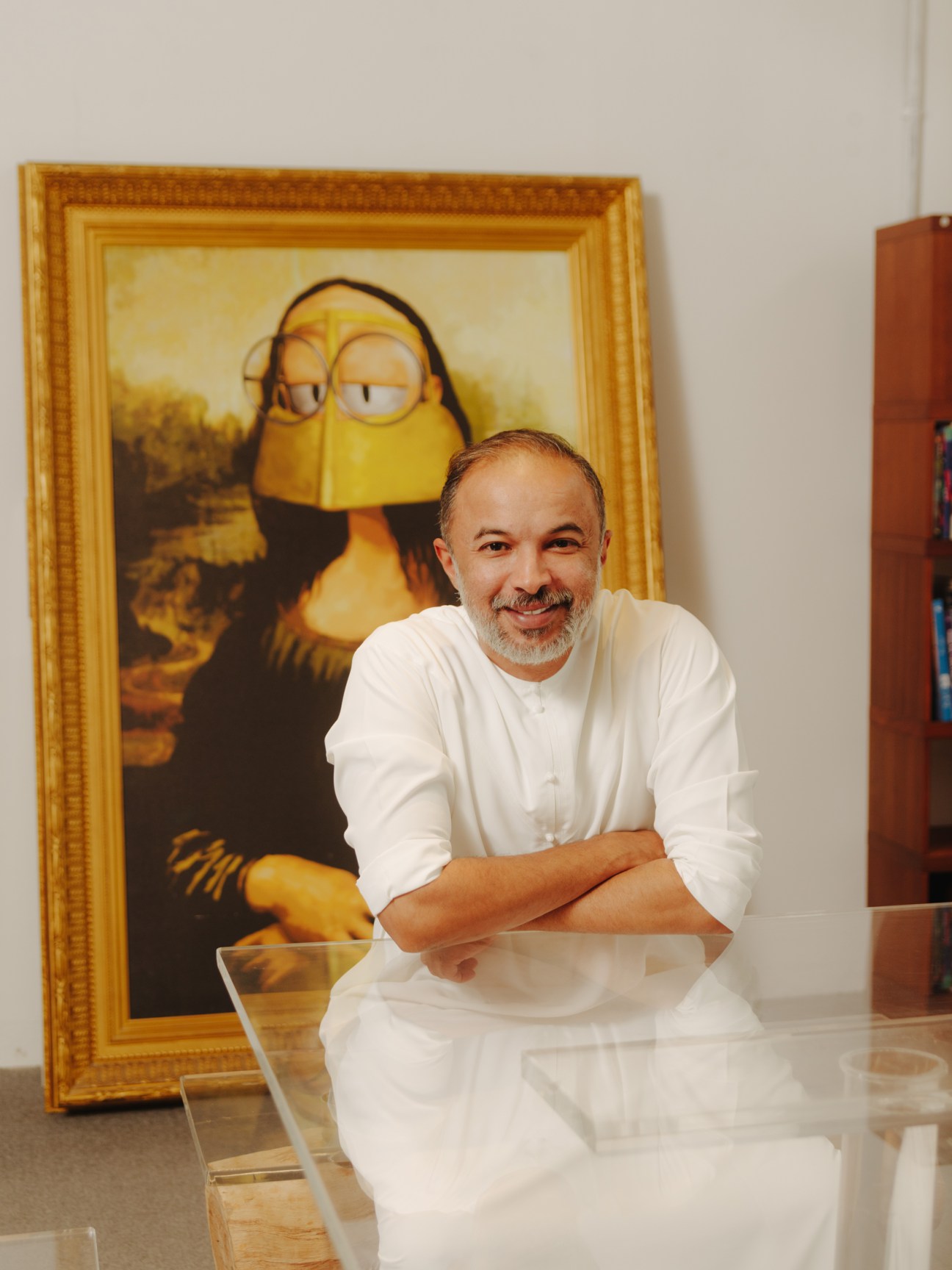
Mohammed Saeed Harib was working in marketing and dreaming of bigger things when he got his break. Harib, who had studied arts and animation in Boston, had recently returned to the uae with sketches of characters drawn from the culture of his homeland. But he wasn’t quite sure what to do with them. “We grew up watching Japanese and Western dubbed shows,” he says. “Nobody knew how to make an Arab animation.” That was about to change.
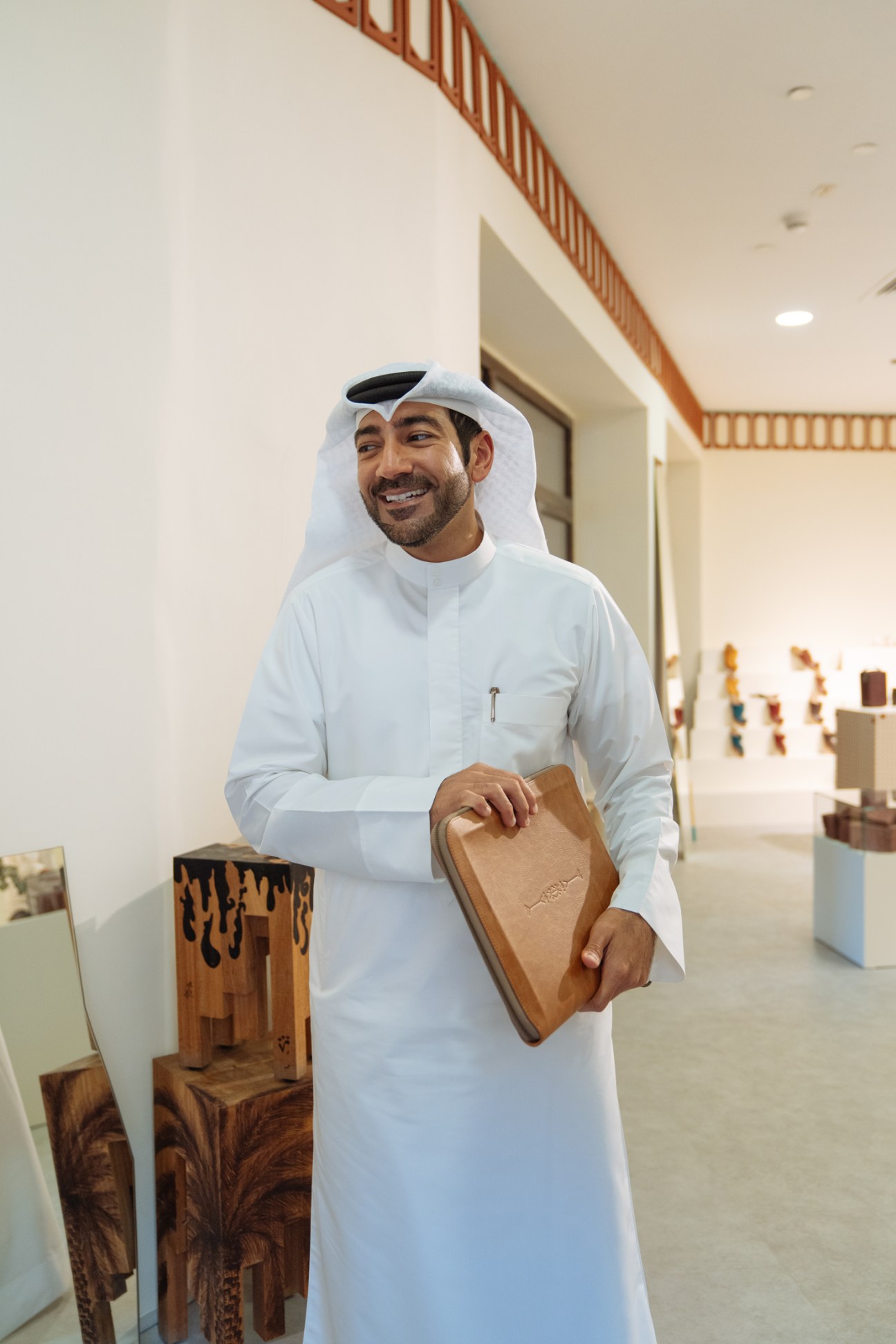
Harib founded Lammtara Studio in 2005. Based in a warehouse in Dubai’s Al Quoz area, a formerly industrial neighbourhood that now houses a host of creative companies, it is initially difficult to locate. There are no signs outside and a nearby business points Monocle in the wrong direction (at one point, we find ourselves in a yoga studio that’s full of people doing the downward dog). Once we finally make it through the internal car park and into the offices, Harib, dressed in a sparkling-white kandura, greets us and tells us more about his backstory.
Though his ideas were initially quite raw, they were exciting enough to grab the attention of Abdulhamid Juwa, the then-head of Dubai Media City, in whose marketing department Harib had been working. Juwa encouraged him to develop his characters into an animated series and seek funding. What followed was a challenging five-year process that tested Harib’s entrepreneurial skills and powers of persuasion. Doors were hard to open as it was an expensive idea in a country without much of an animation industry. He also didn’t have any relevant experience.
“I hadn’t directed anything,” says Harib. “I was in marketing. So people would ask me, ‘Why should we give you that kind of money? Where is your team? Do you even know how to direct? Do you have a business plan?’”
However, Harib’s perseverance paid off and he secured funding from the Dubai sme organisation and local telecoms giant Du, which agreed to sponsor the first three seasons of his comedy show, Freej (meaning “Neighbourhood”). “It’s one thing to get the loan and cover your costs but it’s another thing to prove that you’re an artist and for the programme to go on to be a cultural phenomenon,” he tells Monocle.
Harib isn’t exaggerating when he says that Freej, which first aired on Dubai TV in 2006, was a phenomenon. It resonated not just with Emirati audiences and those in the region but also with people further afield. “It went to Japan, becoming the first-ever Arabic animation there,” he says, proud of exporting his work to a market whose animations he avidly consumed as a child.
Freej‘s success largely comes down to the characters that Harib finessed over the show’s five-year incubation period. It focuses on the lives of four Emirati grandmothers, all of whom wear traditional burqas that accentuate their large eyes. Harib felt that such women’s stories were seldom told and, when they were, they were often misrepresented. “The grandmother was never portrayed in the right way,” he says. So he decided to celebrate them for their strength, wisdom and quirks.
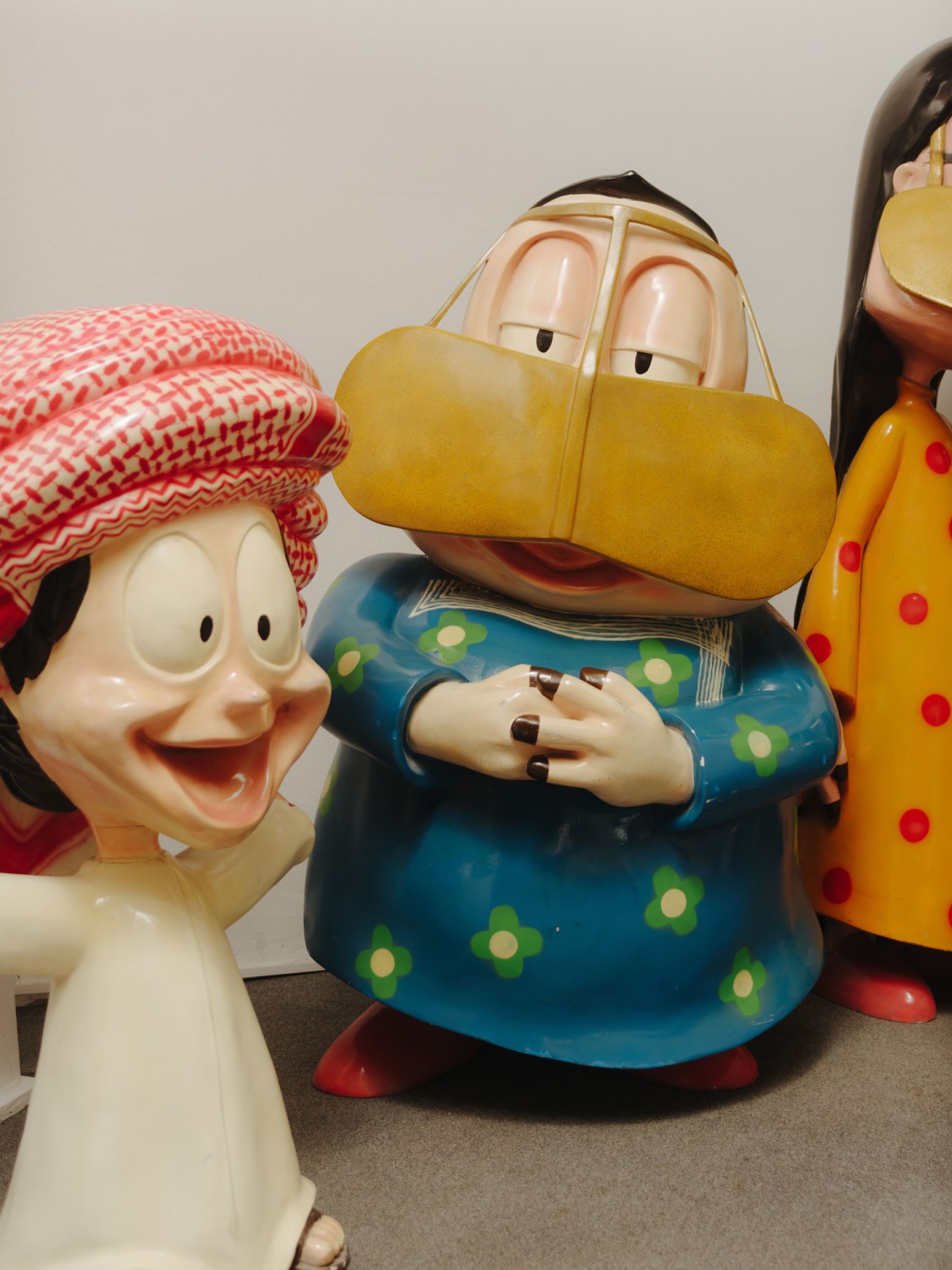
The leader of the quartet is Um Saeed (“Saeed’s mother”), who is a coffee addict and likes to recite poetry to her friends. Um Saloom, meanwhile, suffers from memory loss. Then there’s Um Allawi, who is tech-savvy and speaks several languages. The final member is Um Khammas, the most rebellious of the grandmothers, who has been widowed three times.
Harib hopes that his show will one day be viewed as an Emirati answer to Disney’s Mickey Mouse cartoons but The Simpsons might be a better comparison, given its appeal to multiple generations, serving up adult jokes while aiming at 15-to-35-year-olds. The release of Freej was also a watershed moment in the uae, where presenting women as leading characters in films or TV series was previously considered taboo. Harib says that he probably only got away with it because it was animated. “We used to glorify our grandfathers who go on pearl-diving trips [but] never talked about the mothers who stayed and raised these kids who are now astronauts and ministers.”
Over the course of the show’s five seasons, Harib helped to build an animation industry in the uae from the ground up. Story writing and both pre- and post- production were done in-house, while the studio looked overseas for the large numbers of staff that it needed to provide the animation firepower (many of Freej‘s team of about 500 were hired from Singapore).
The show has been off the air for 10 years now but the grandmothers certainly haven’t gone away. Judging by the merchandise strewn all over Lammtara Studio, they are alive and kicking. Indeed, they have gone on to feature in a safety video for Fly Dubai, one of the projects that Harib has subsequently worked on, alongside the likes of culture-focused television series Mandoos (“Treasure Box”) and a segment in Roger Allers’ animated film The Prophet.
Harib has also moved into other fields. He produced the mascots for the Dubai Expo and made a foray into live-action film-making with the 2019 comedy Rashid & Rajab, produced by Image Nation. “I diversified because I wanted to learn,” he says. “From everything that you create, you can take a small bit of knowledge and mix it with something else that you’re creating.”
Despite all of the other work, Harib acknowledges that he has never quite escaped the success of Freej, which he jokes probably came too early in his career. As we talk, he drops a bombshell: the animation will be returning for a new season during Ramadan in 2024 on regional streaming giant Shahid, giving it a chance to resonate with a whole new generation of viewers. “I’m a bit rusty but the team has been over the moon,” he says, grinning. “They have been itching to do the show.”
lammtarastudio.com
In on the action
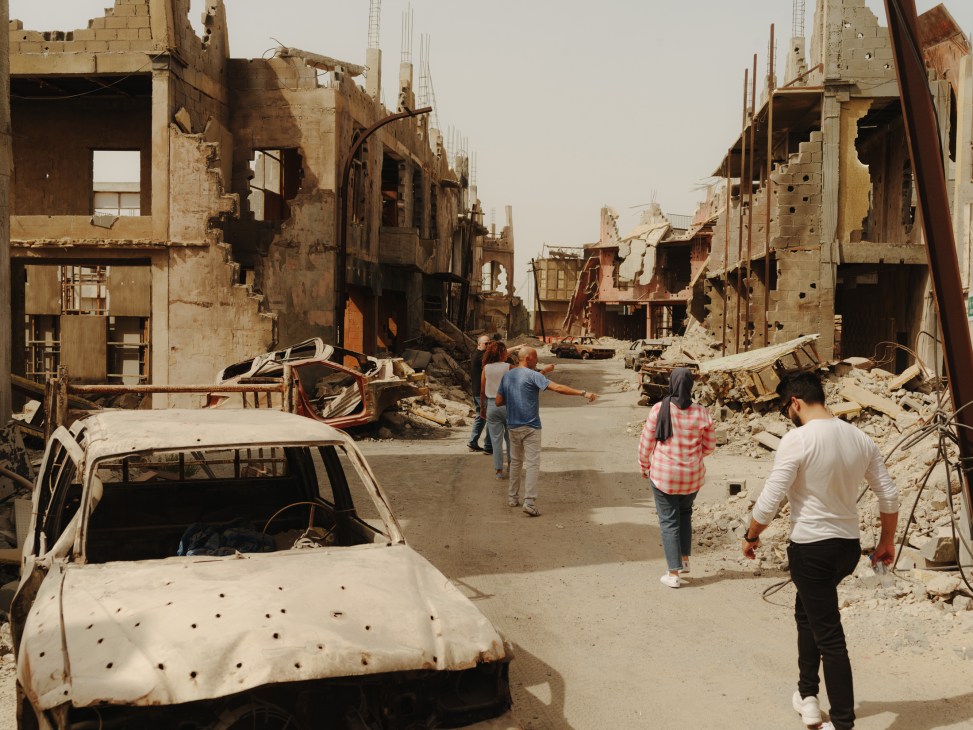
The devastation in front of us is overwhelming. Cars have been reduced to charred shells, signs have been ripped from shopfronts and buildings are skeletons with exposed columns. Bits of flooring dangle perilously over the street below. There are piles of rubble everywhere we turn. Except, on closer inspection, the grey chunks turn out to be made from painted Styrofoam rather than concrete. “Movie magic!” says Derek Hall, with a grin.
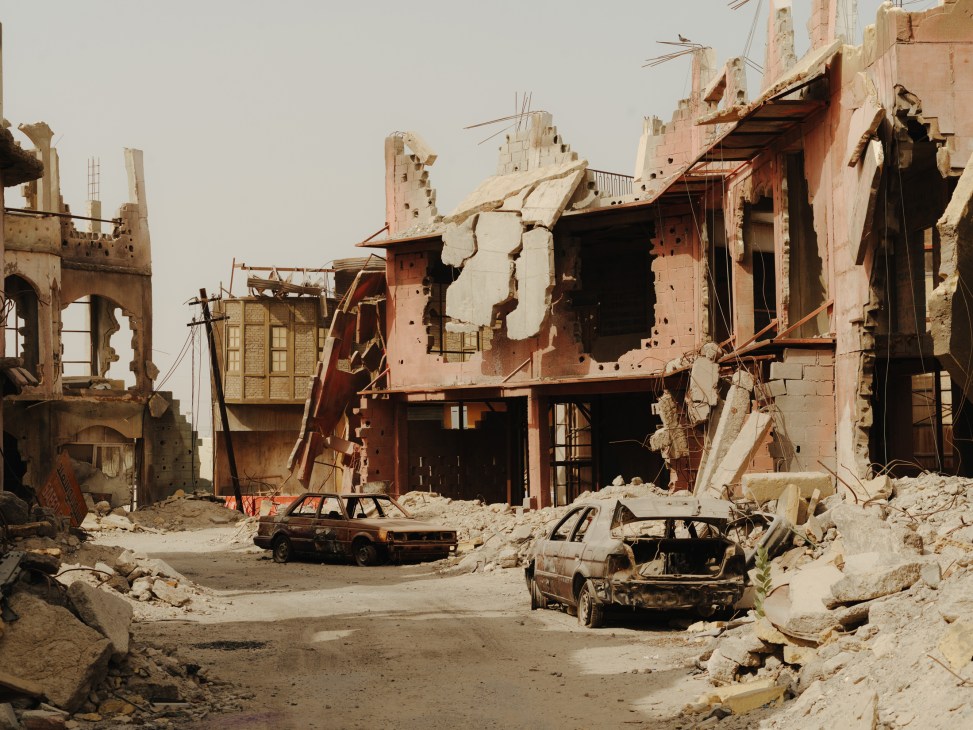
We are not actually in the middle of a war-torn city. Instead, we’re out in the United Arab Emirates’ scrubby desert, roughly a 20-minute drive from Abu Dhabi, at one of five outdoor standing sets in a backlot belonging to multimedia company Twofour54. Hall, an affable Australian who is the firm’s acting chief of studios, has been charged with giving Monocle a tour of the 300,000 sq m complex.
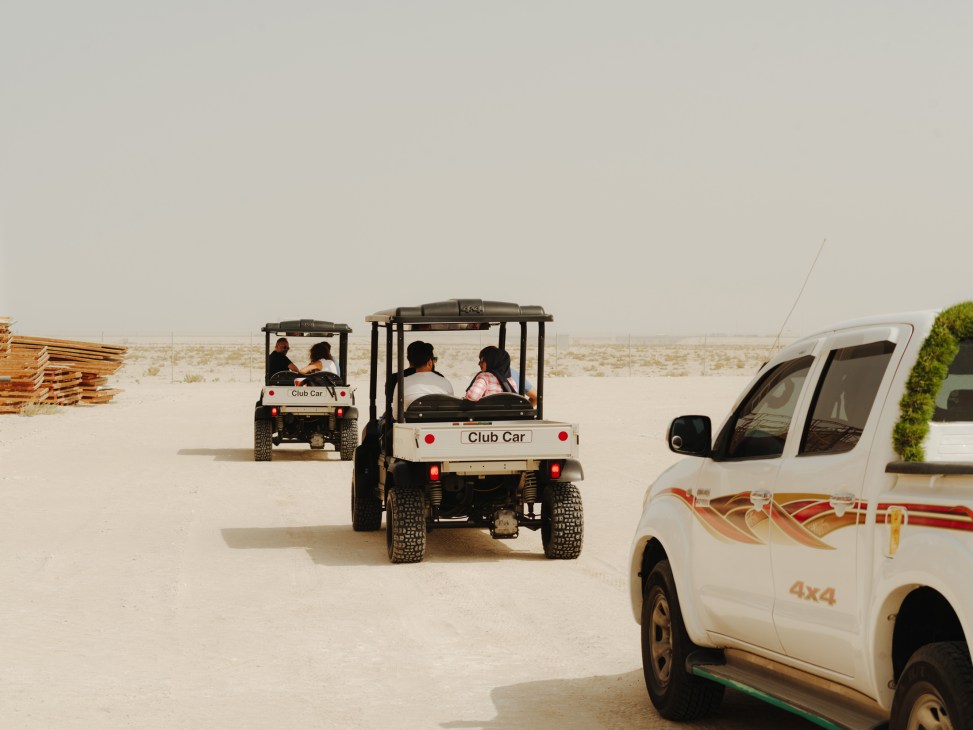
We jump in an electric buggy with Hall at the wheel. In the back is a cooler loaded with ice-cold bottles of water to keep us hydrated in the intensifying morning heat. We gently manoeuvre our way around the different worlds. One moment we’re on the streets of Mumbai; the next we’re in the warren-like alleys of old Damascus, which with a few tweaks could easily look like Venice. At a set known as The Crossroads, we’re shown the spot where a gas truck flipped over a tank in the Bollywood movie Tiger Zinda Hai, causing a huge explosion. We pass a covered prop from Hollywood film Dune: Part Two, which was partly filmed in Abu Dhabi. The backlot, meanwhile, has welcomed productions including Mission: Impossible – Dead Reckoning Part One.
The backlot is the epicentre of the uae’s bid to be a major player in the film business, as it seeks to attract foreign talent while cranking up its own content too. In terms of the latter, the market is growing rapidly – both the uae and neighbouring Saudi Arabia, where cinemas were only reintroduced in 2018, are set to join the top-10 moviegoing markets by 2030. Coupled with the uae’s desire to diversify its economy, the creative industries are set to play an ever more prominent role.
However, we have not seen everything yet. Hall points to a chunk of desert beyond a chain-link fence, opposite a building housing the backlot’s one existing soundstage. It’s here that Twofour54 will soon break ground on a new studio set to rival those of Europe and the US. Due for completion by 2025, it will have a further 10 soundstages and six standing sets. Its rather breathless PR blurb describes it as a “futureproof, virtual-production-ready, metaverse-enabled and fully fledged production destination”. What’s clear is that its aspirations are global.
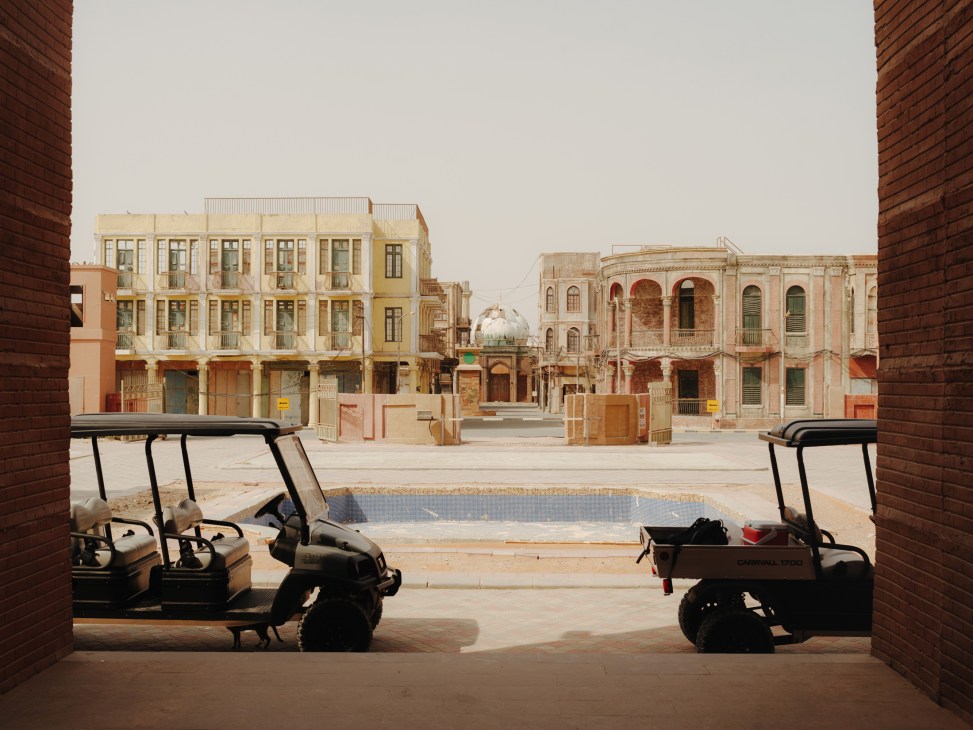
“We see ourselves as really trying to put Abu Dhabi on the map,” says Twofour54’s towering British CEO, Mark Whitehead. “We are focused on developing a large studio that can be world-class, with a size and scale that can attract Hollywood, Bollywood or big European films to be based here for a longer period.” In other words, instead of productions coming to the backlot to film a smattering of scenes over a few weeks, the uae is hoping to lure them to come to film in the country from the start of a picture to the finish.
We have left the desert behind for the welcome air-conditioning of the company’s headquarters on Yas Island. Here, Twofour54 hosts a much bigger project within a vast complex of metal-and-glass buildings dominated by four towers. Completed in 2022, its Yas Creative Hub is essentially an incubator for television, film, media and gaming, and includes podcast-recording studios and television production sets. About 1,000 freelancers are based in Yas, many of whom use a co-working space where a neon sign declares, “Ignite your spark.” There are some 800 companies and organisations on campus, from CNN and Vice to the Korean Cultural Center.
“We have a very clear mandate to develop and grow the industry,” says Whitehead. “We create the support across the board and that’s everything from office space and community-hub areas to television studios, film studios and the backlot.” The firm is both a provider of facilities and a facilitator of other services. Its Tawasol agency, for example, helps to book flights and hotels for crews, as well as tackling any paperwork should you wish to, say, flip a truck over a tank and blow it up.
There are obvious economic benefits to encouraging foreign productions to come and spend time in the uae. As in several other places around the globe, tax incentives play their part – Abu Dhabi offers a 30 per cent cashback on production spend. This is based on the assumption that the money will be recuperated through trickle-down benefits for the likes of taxi drivers, hotels and restaurants who will all have more work as a result.
But jump-starting local industry has its own set of benefits too. Film is a big soft-power tool for a nation that wants to have a bigger role on the world stage. Just as the US brought stonewash jeans and the American Dream to the world through Hollywood, so the uae wants the chance to tell its own stories on a global platform. Getting the industry to where it is today has admittedly happened in fits and starts. Some lament the fact that the future studio wasn’t built earlier (Saudi Arabia has now got in on the act, having announced in 2022 its own mega-complex, near the city of AlUla), or the fact that the Dubai International Film Festival, which was a beacon for the region, ended after the 2017 edition. But the uae seems determined to look forward rather than back.
Star of the show
Film and TV production might be getting plenty of attention in the uae but the original multimedia success story in the Emirates was a streaming service called Starzplay. Launched in 2014 and partially funded by Lionsgate, it has a user base across the Middle East and North Africa (MENA) region, with 2.9 million subscribers. CEO Maaz Sheikh, speaking from his Dubai office, says that the company had to build fintech within its platform to solve the conundrum of low credit-card penetration in the region (it teamed up with telecoms companies to make payment possible via mobile phone numbers). He adds that the diversity of the uae necessitated a range of different content, while also finding “the one common denominator that cuts across all segments of the market”.
Though the likes of Netflix and Saudi Arabian streaming giant Shahid now also have a foothold in the region, Starzplay has continued to expand, moving into live sports and original content. Recent hits include Egyptian film Harley and horror series Kaboos, a collaboration with Image Nation featuring talent from the uae, Egypt, Kuwait and Saudi Arabia. “The ability to build bridges with other countries and other markets but still create content from the uae is our ideal mix,” says Sheikh.
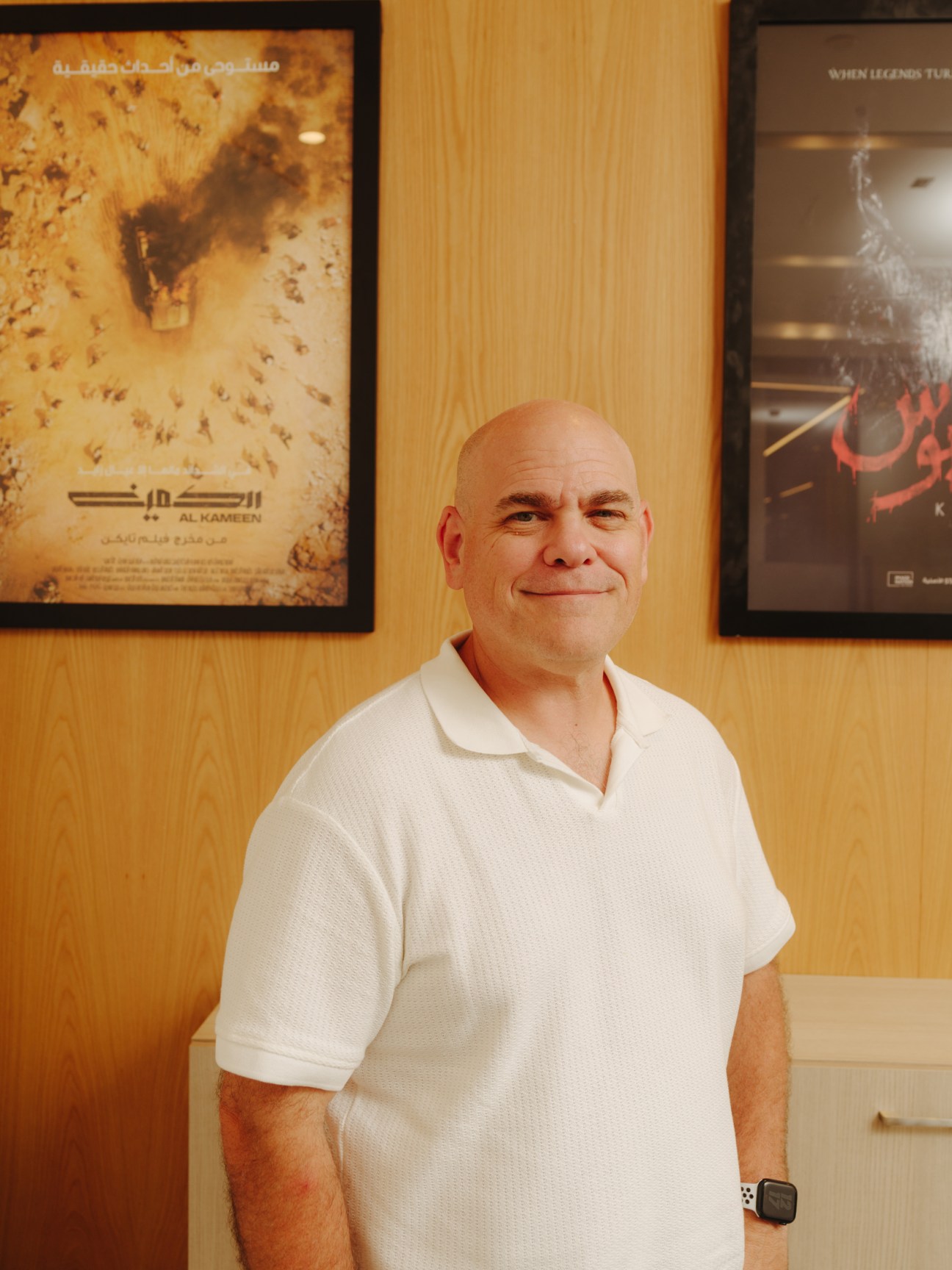
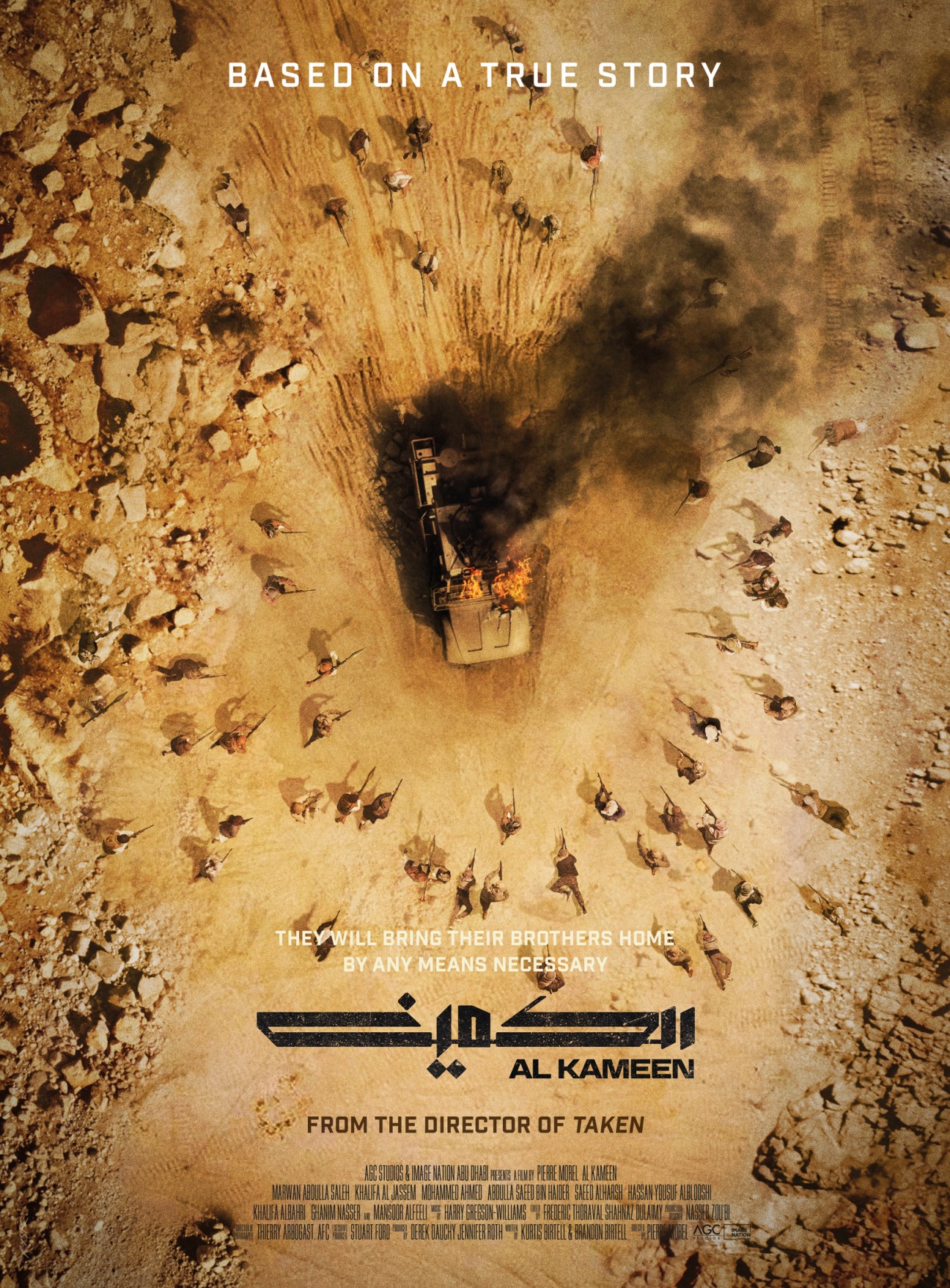
A turning point for uae film was 2021’s Al Kameen (“The Ambush”), a sort of Emirati Black Hawk Down, which tells the true story of a rescue mission to save uae soldiers trapped in an ambush in Yemen. The most successful uae film ever, it was produced by government-backed production company Image Nation, which is based on the same floor as Twofour54 at Yas Creative Hub.
For former Hollywood studio executive Derek Dauchy, Image Nation’s head of content, the film could be “a tide that raises all ships” – a real watershed moment. “That became the new standard for us,” he says at his office, which is covered with posters from recent productions. “If we’re going to do a large-budget action film, it’s got to be like that – we have established the bar. Every time out, we have to do better.”
Dauchy says that there are clearly financial benefits to producing films that might pique the interests of international tourists enough to visit the uae for its landscapes or cultural offerings. But at the end of the day, he’s about content. “I look at this as a similar sort of golden age to the one that Hollywood went through,” he says. “This is a very young country; there’s a whole new generation of film-makers who want to tell authentic stories from the region.”
A homegrown industry is nothing without talent, something that almost everyone we talk to agrees is not quite there yet. But Dauchy says that this is changing, thanks to people gaining valuable experience at Hollywood or Bollywood shoots on Twofour54’s backlot, as well as Image Nation’s Arab Film Studio (AFS), which trains the next generation of talent through courses and workshops.
Dauchy says that more than 350 film-makers have emerged over the past 11 years. He cites an example of a recently completed uae film that he won’t name. He says that the idea came from an afs writing programme; the screenplay was then written by an afs graduate and a novice female film-maker was given the task of shooting a scene. Image Nation was so pleased with the results that it drew up a budget and handed her the entire film to make.
Abu Dhabi-based film-maker Nancy Paton, originally from Australia, agrees that experience is the key to the future of the uae’s film industry. Paton is something of a rarity in the Emirates: an indie film-maker reliant on private funders. Though there are some limited funds, such as a short-film grant from Sharjah Art Foundation, Paton thinks that helping get independent film off the ground is something that the country can and will improve on in coming years.

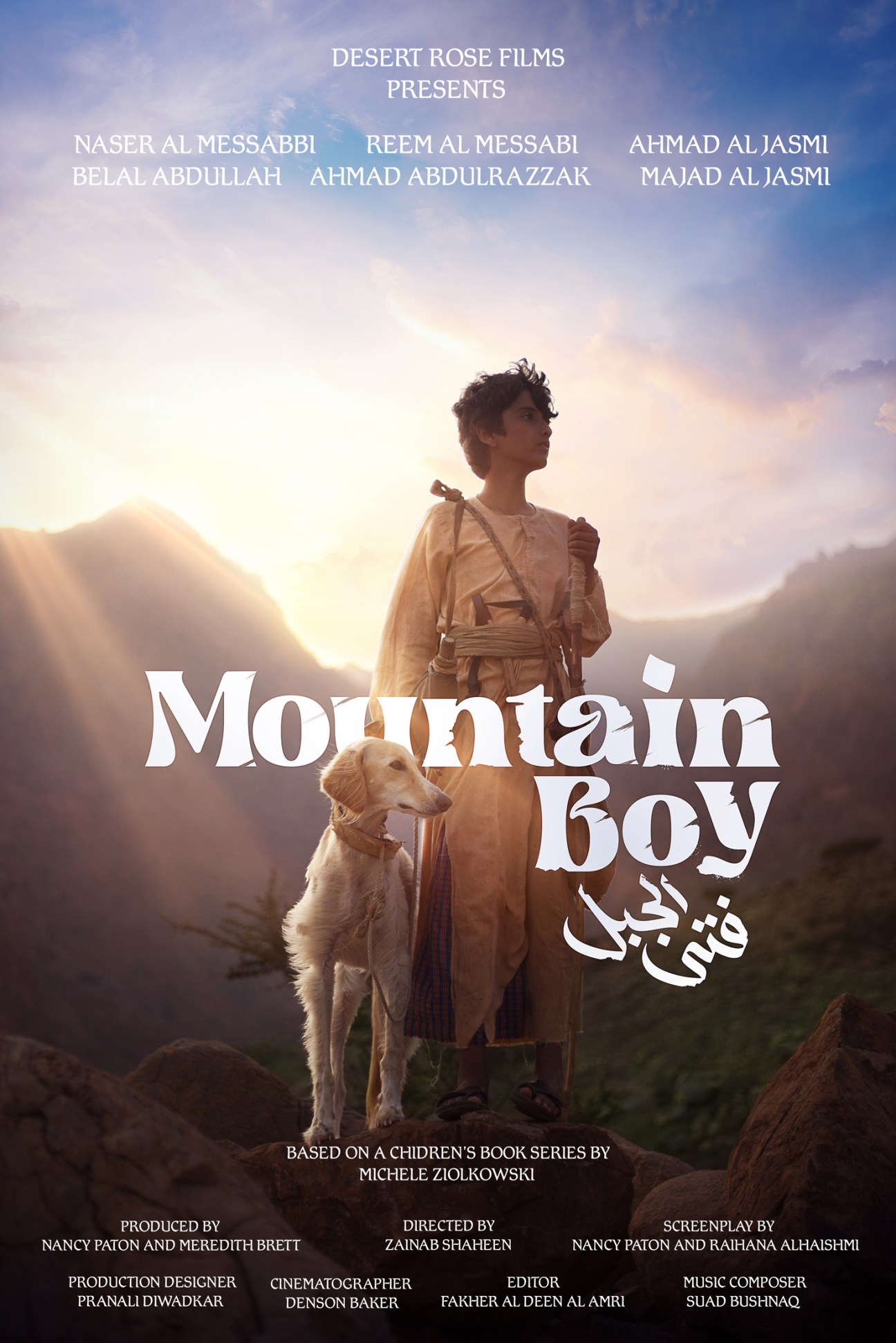
Paton’s Desert Rose Films tells unusual stories from the region with the goal of getting more women into the industry. She has recently wrapped up a new feature called Mountain Boy, a family-friendly movie about an autistic boy’s adventures, filmed in Fujairah, Dubai and Abu Dhabi. It was also the debut of female director Zainab Shaheen. Though she won’t give too much away, Paton says that there is going to be a further government push in entertainment soon, calling it “an exciting time for talent”.
However, alongside any support at the top, Paton argues that there needs to be a mentality switch away from solely thinking in terms of big-budget blockbusters. “We need to make a lot of medium-budget films to sustain the ecosystem of the film industry, constantly driving the whole machine,” she says. With such a goal, the uae could be making more films and potentially employing thousands of production staff every year.
“We’re working with local film-makers,” says Image Nation’s Derek Dauchy, back in his poster-filled office. “And the goal is that they can tell their kids, ‘Hey, getting into the entertainment business here is a real job now.’” One gets the feeling that this is an industry that’s only getting started.
UAE film in numbers:
15: feature films shot in Abu Dhabi with cashback incentives on production spend (2022 to September 2023)
20: TV shows filmed in Abu Dhabi with cashback incentives on production spend (2022 to September 2023)
400,000: size of the planned Twofour54 studios in sq m
112: employees at Twofour54
6,000: employees at Yas Creative Hub
400+: crew for Al Kameen
3: locations used in Al Kameen
3,200: detonators used in Al Kameen
170,000: Al Kameen‘s first-week ticket sales (UAE)
100: local crew for the film Mountain Boy
4: international crew for Mountain Boy
50: musicians in Dubai’s Firdaus Orchestra, which provided the Mountain Boy soundtrack
Sartorial start-ups
Sole goals
Tamashee
Mohammed Kazim’s knowledge of the Emirates is encyclopaedic. Ask him anything about petroglyphs, the history of the pearl trade or an obscure local recipe and the chances are that he will have an answer. As co-founder of Tamashee, a Dubai-based brand making sandals worn across the region, he’s also making strides in the commercial world.
“When we looked at old pictures of sheikhs in the UAE and around the Gulf, they were always wearing these,” he says, gesturing to his sought-after sandals. Tamashee was launched by Kazim and co-founder Muneera Al-Tamimi in 2013 to bring back the traditional silhouette of the sandal with comfort and style. Featuring soft leather and bold colours, from fuchsia to olive or mustard, these items of footwear for men and women work just as well on a beach in Bali or the cobbled lanes of Mykonos as they do in the UAE.
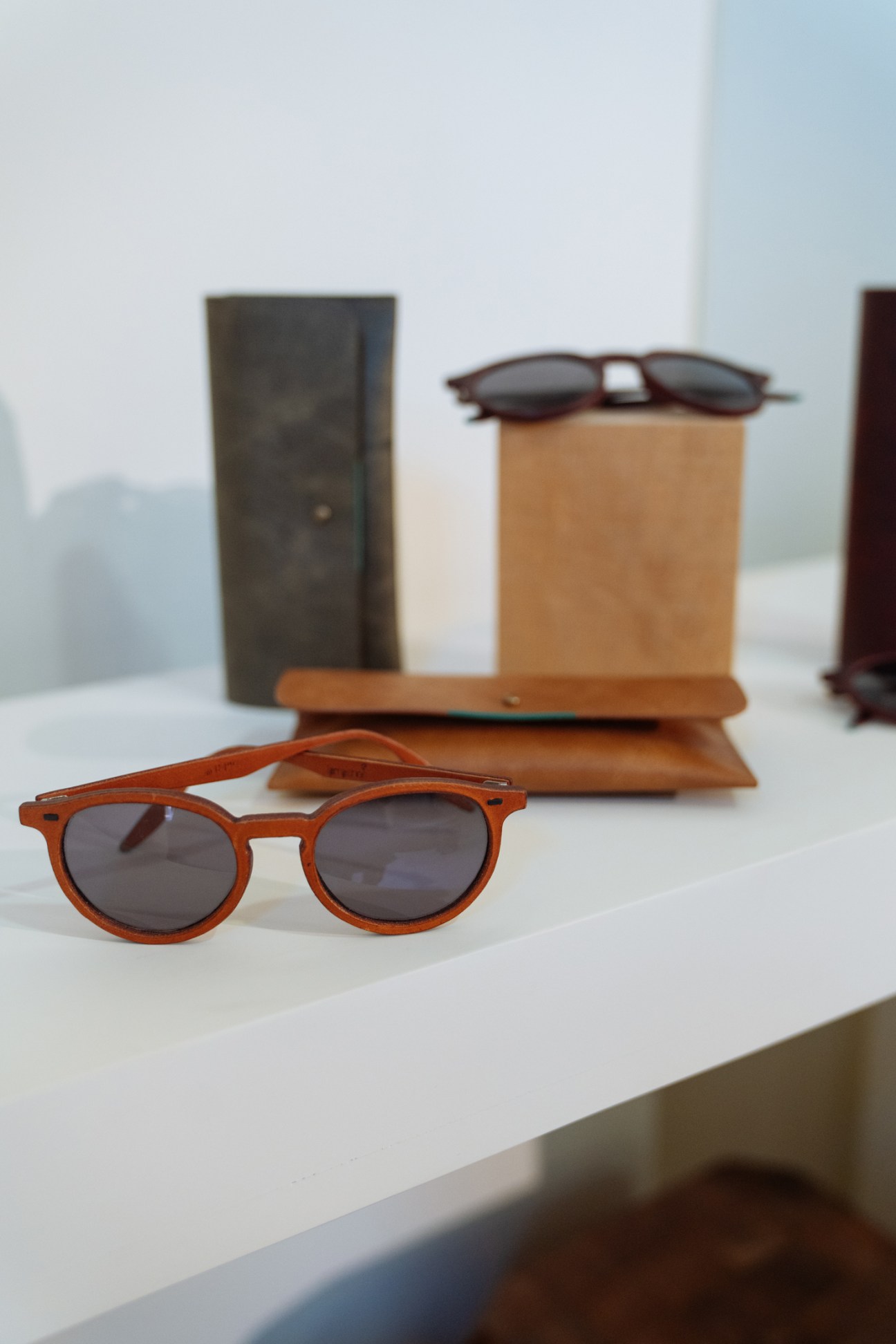
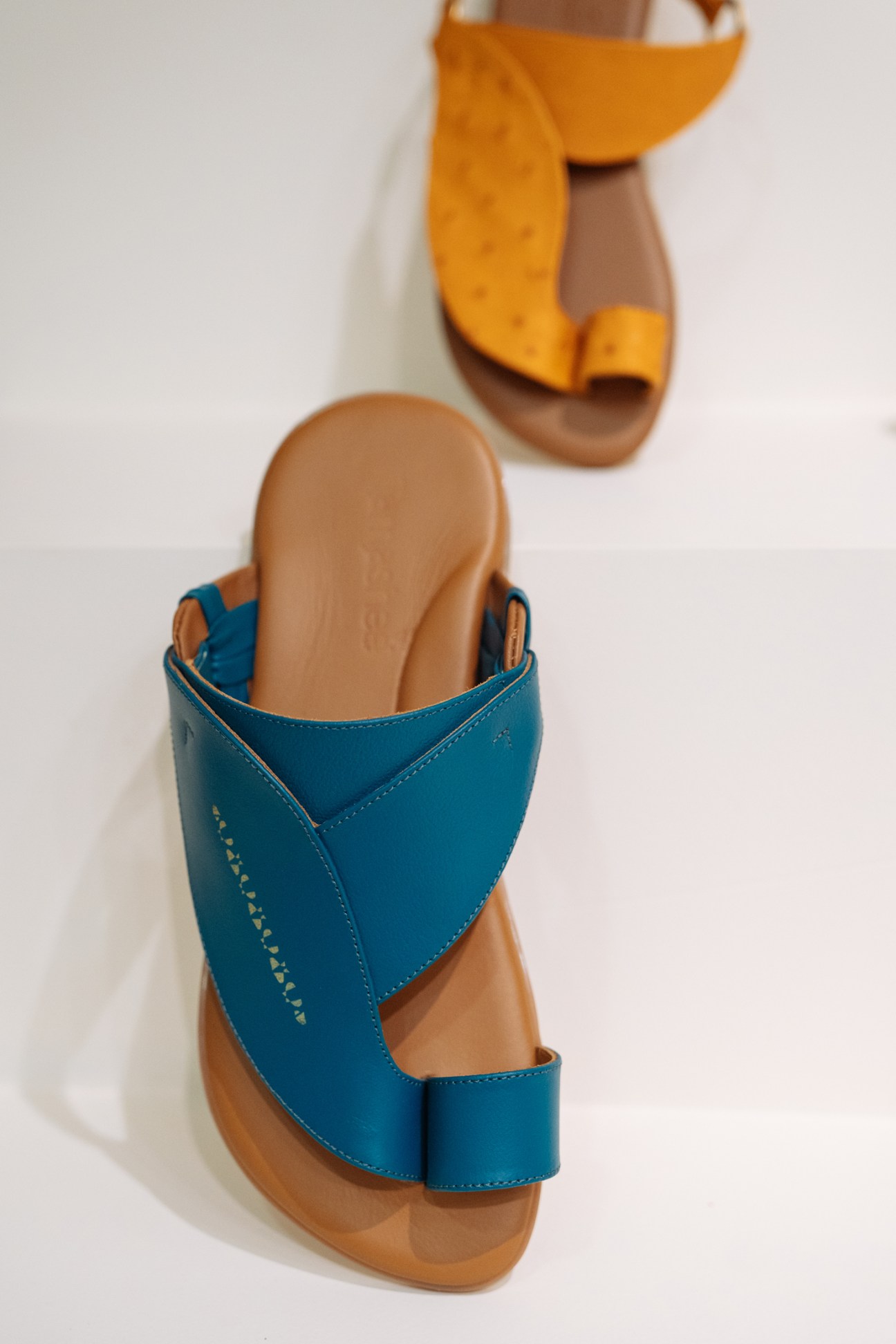
Kazim takes inspiration from his country’s mountains, oases and coastline, each of which has given birth to its own cultures, patterns and visual elements that have made their way onto Tamashee’s sandals. Different collections feature subtle design choices based on the regional topography and even movements from tribal dances, along with the year of production in the Islamic Hijri calendar, which is stamped onto each pair. Many designs include a metal ring used to hold the sandal’s uppers to the outsoles, a nod to the rings traditionally used to tie khanjar (daggers) around the waist.
While Tamashee’s first products were manufactured in Spain, production has now moved to the UAE. “Our quality standards are even better than before,” Kazim tells Monocle with pride. He’s now looking to expand across the region. “We have a huge diversity of topography and culture in the UAE, even though it’s just a small country,” he says. “Imagine how much diversity there is across the entire Arabian Peninsula. That’s what inspires us and pushes us forward.”
tamashee.com
Bags of potential
L’Afshar
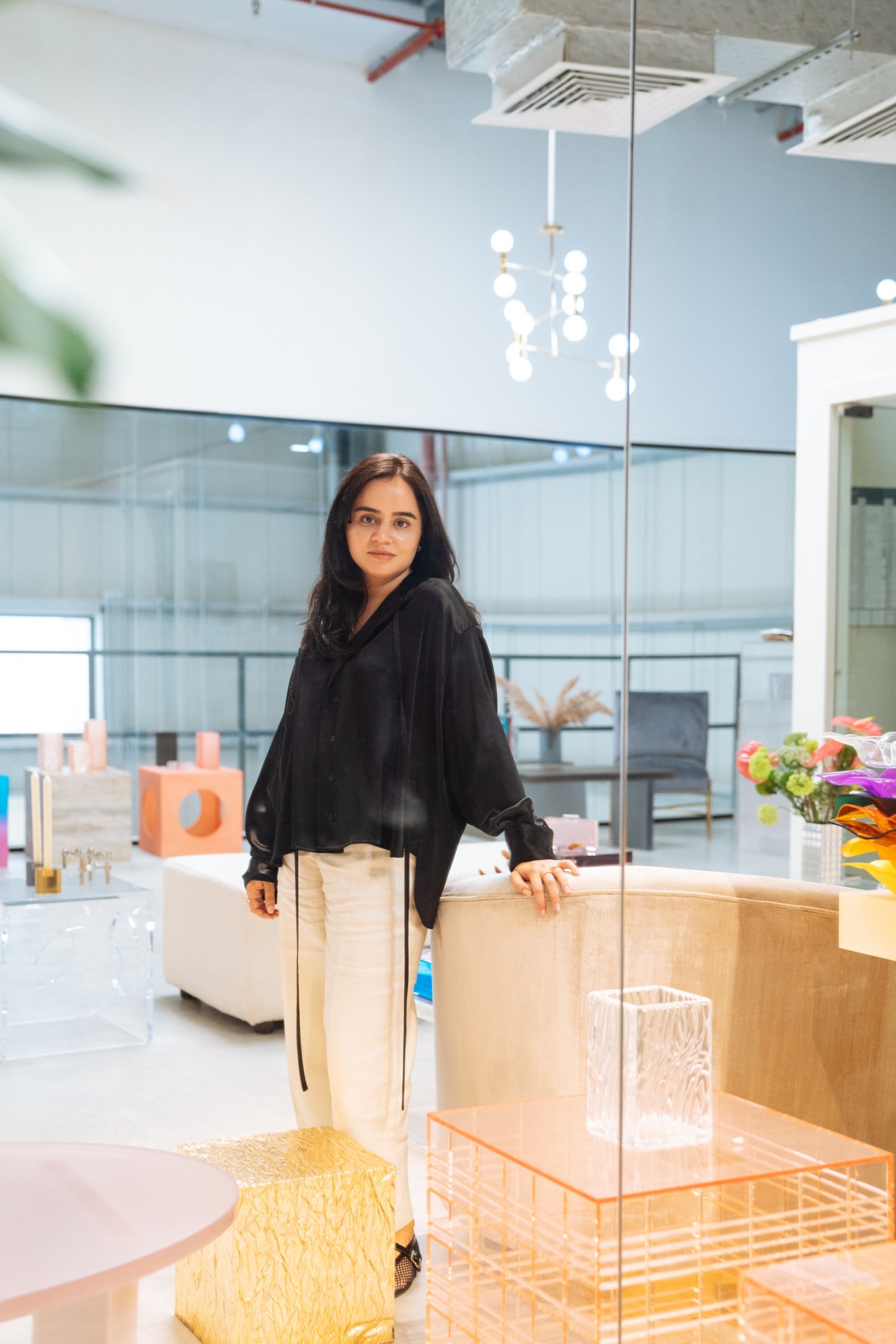
L’Afshar knows a thing or two about how to make a statement through simplicity. The handbags and accessories brand, founded in Dubai in 2014 by British-Iranian Lilian Afshar, has been propelled to global popularity due to its innovative use of a maligned medium: acrylic. “There’s something very interesting about acrylic because it’s not traditional,” says Afshar, as she shows Monocle around her workshop and showroom in Al Quoz, one of Dubai’s industrial neighbourhoods. “Each time I feel as if I’m taking a raw jewel and sculpting it into an eye-catching accessory.”
There’s an almost architectural approach to the design of each handbag: boxy shapes are complemented by unexpected textures and the combination of acrylic with either metal or leather. “I’m inspired by the mid-century aesthetic and the art nouveau period,” says Afshar.
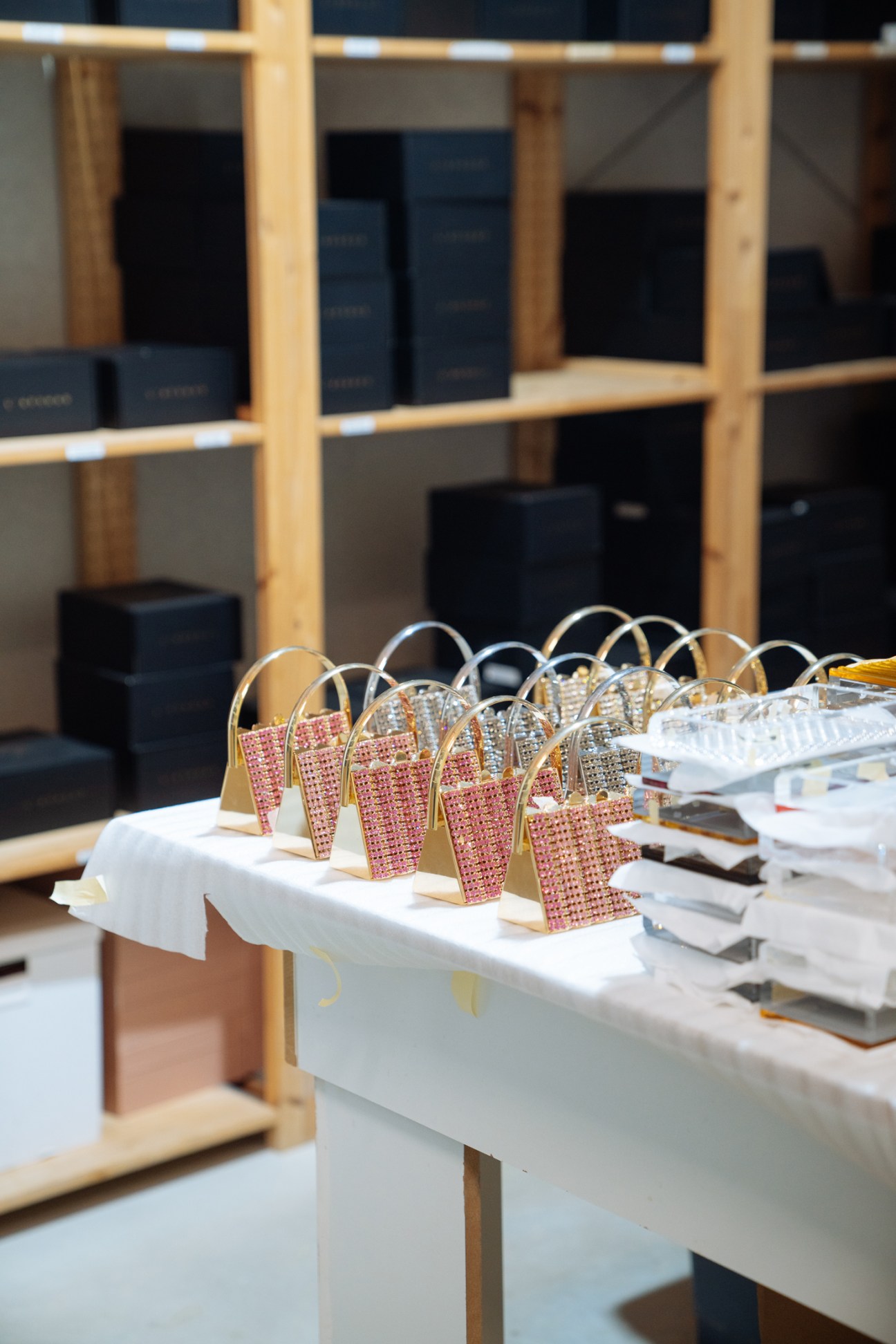
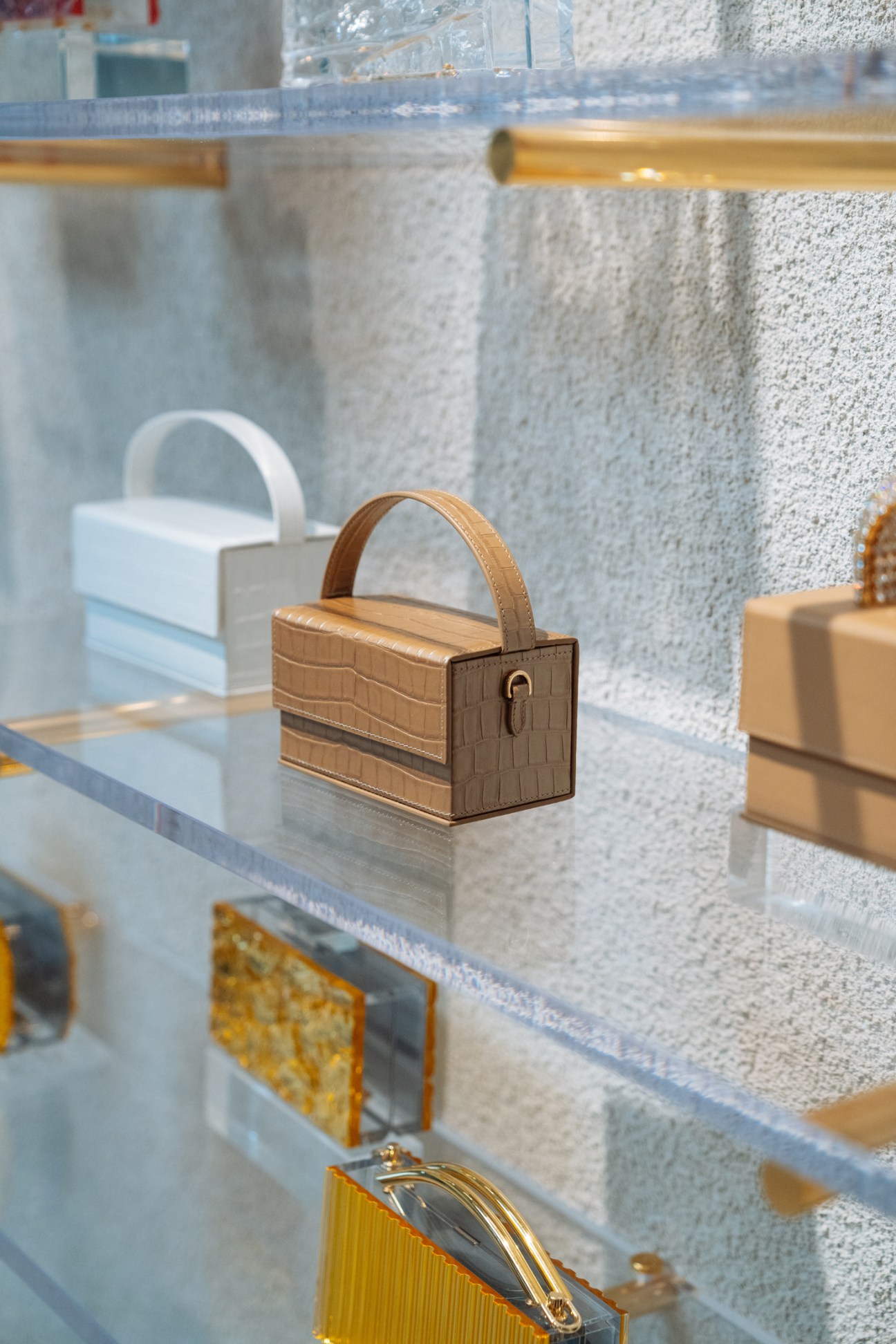
It’s unsurprising, then, that the brand’s playful approach to classic styles stretched into homeware in 2020 as L’Afshar Studio. “It was about extending my love for acrylic into homeware,” Afshar says. “It complements my universe and helps people understand the brand better.” She is also proud of her sustainable credentials. “I make sure that any waste is repurposed into something else. A lot of the off-cuts we have from the acrylic sheets are turned into coasters, for example.”
As the label approaches its 10th anniversary, Afshar is gearing up to open a bricks-and-mortar retail space in Dubai. “Being in a place where growth has been the main factor over the past 40 years makes you push boundaries,” she says. “This is a city that inspires you as a designer.”
lafshar.com
Multicultural visions
Qasimi
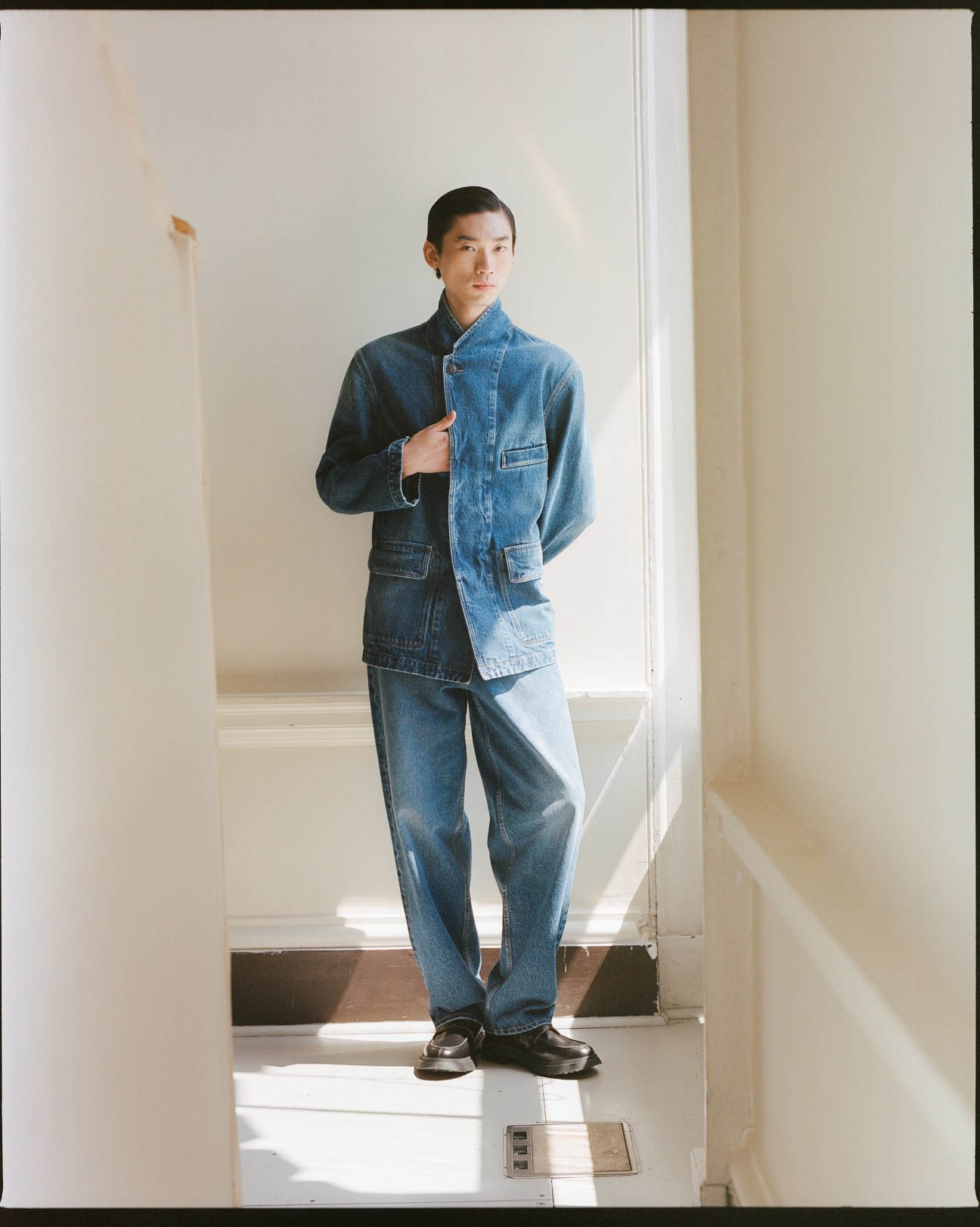
Fashion can be ephemeral but what we wear can also be a powerful tool for dialogue and connection: that’s the ethos behind the brand Qasimi. “It’s really about being inclusive and bringing people together,” says Hoor Al-Qasimi, creative director of the eponymous label and president of the Sharjah Art Foundation. The brand was founded by her twin brother Khalid in 2015; when he passed away in 2019, Hoor took over. “It was important to continue his vision: designing for an urban nomad going between Sharjah and London.”
Their upbringing between the two cities informs designs in the mens and womenswear lines. Nods to traditional Arab drapes and woven handbags are found across the collection. “We’re rooted in multiculturalism,” says Hoor. “Sharjah is a very mixed society. It’s not just about Arab heritage; I grew up next to a lot of Southeast Asian and North African influences too.”
This year, Hoor launched Qasimi Rising, an incubator programme for emerging talent. “The idea was to create a community to support young designers with mentorship,” she says. “For London Fashion Week, we shared our slot with the mentees. All of us showed designs there, rather than just Qasimi. That can make a big difference.”
qasimi.com
Who we’d hire
1.
Tariq Khayyat Design Partners
To build a home
The UAE has no shortage of empty land but it has filled its skyline with high-rise buildings to house its growing population. British-Jordanian architect Tariq Khayyat says that he wants to do things differently and create human-scale communities that are “a bit more horizontal” in their design.
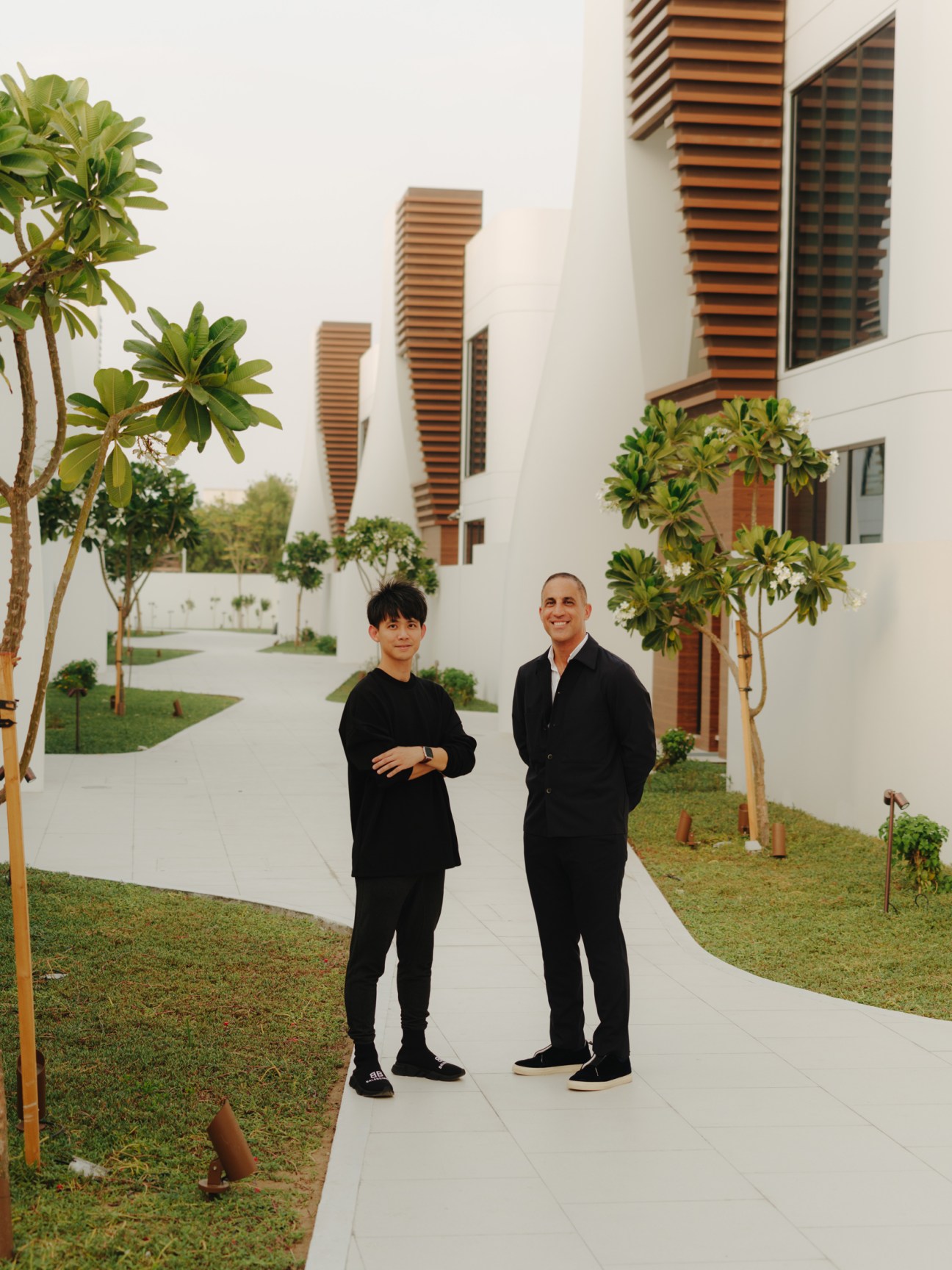
Khayyat came to Dubai in 2016 to set up Zaha Hadid’s Middle East office at a time when the late British-Iraqi architect was taking on projects across the region. In 2019 he began Tariq Khayyat Design Partners (TKDP) with business partner Xiaosheng Li (pictured, on left, with Khayyat). Their latest project, The Fold in Jumeirah, Dubai, is a group of 28 villas that evoke rows of silk-white tulips. Louvred balconies offer space and privacy, while every home has a rooftop garden with views of the Gulf.
The Fold’s defining feature, however, is a leafy plaza that zigzags between the homes and is designed to be shared by the residents. “We wanted to mimic the courtyards that you find in old Arab houses in Damascus or Beirut, where households gather,” says Khayyat. “This central spine is a place for people to hang out, have barbecues and get to know their neighbours.”
A communal space of this kind wouldn’t be particularly remarkable anywhere else but villas in the UAE tend to have high walls surrounding them and gates that open directly onto the main road. Privacy might be important but such an arrangement also gives neighbourhoods a cloistered feeling. According to Khayyat, tastes are changing; clients, he says, are seeking a more urban way of living and the market is less smitten with the ostentation of previous periods in the city’s history. People are now prioritising quality and depth in architecture and that is bringing plenty of work to the firm’s door. “Ten years ago, Dubai was like a hotel lobby, in the sense that you would often hear people saying that they were just going to stay for a while and then move on,” says Khayyat. “The situation has changed and people have become more brave about investing in a long-term future here.” This shift is reflected in the newer residential architecture: it’s as though the city is at last lowering its shoulders and becoming more relaxed with itself.
The firm recently completed a mixed-use project called The H Residence, also in Jumeirah, which turned an old strip mall into cafés, shops and flats. At the centre of the property are spacious, shaded gardens; like The Fold, it’s a building that was designed with the community in mind. “What’s next for the UAE is a lot more residential offerings that encourage connection and being sociable,” says Khayyat. “We’re living in an advanced digital age, especially here in the UAE, and our role as architects is to create spaces for human interaction.”
TKDP is casting its net across the region and now has projects planned in Saudi Arabia. “They’re looking for uniqueness over there,” says Khayyat. “The word ‘iconic’ is so overused but I do think that we create profound architecture.”
tkdp.one
Know your neighbourhoods
Developers have shaped the major cities across the UAE. Here are some addresses to know.
1.
KOA Canvas
Developer: Mohammed Zaal/KOA
Built: 2018
A verdant enclave just outside Dubai that’s a creative community with a co-working space.
2.
Mamsha Al Saadiyat
Developer: Aldar
Built: 2019
A clutch of low-rise, Gulf-facing apartments just a short stroll from Louvre Abu Dhabi.
3.
Dubai Hills Estate
Developer: Emaar
Built: Under construction
At its centre is a vast, Central Park-style green space, with room for markets and cafés.
2.
Agata Kurzela
To build an HQ
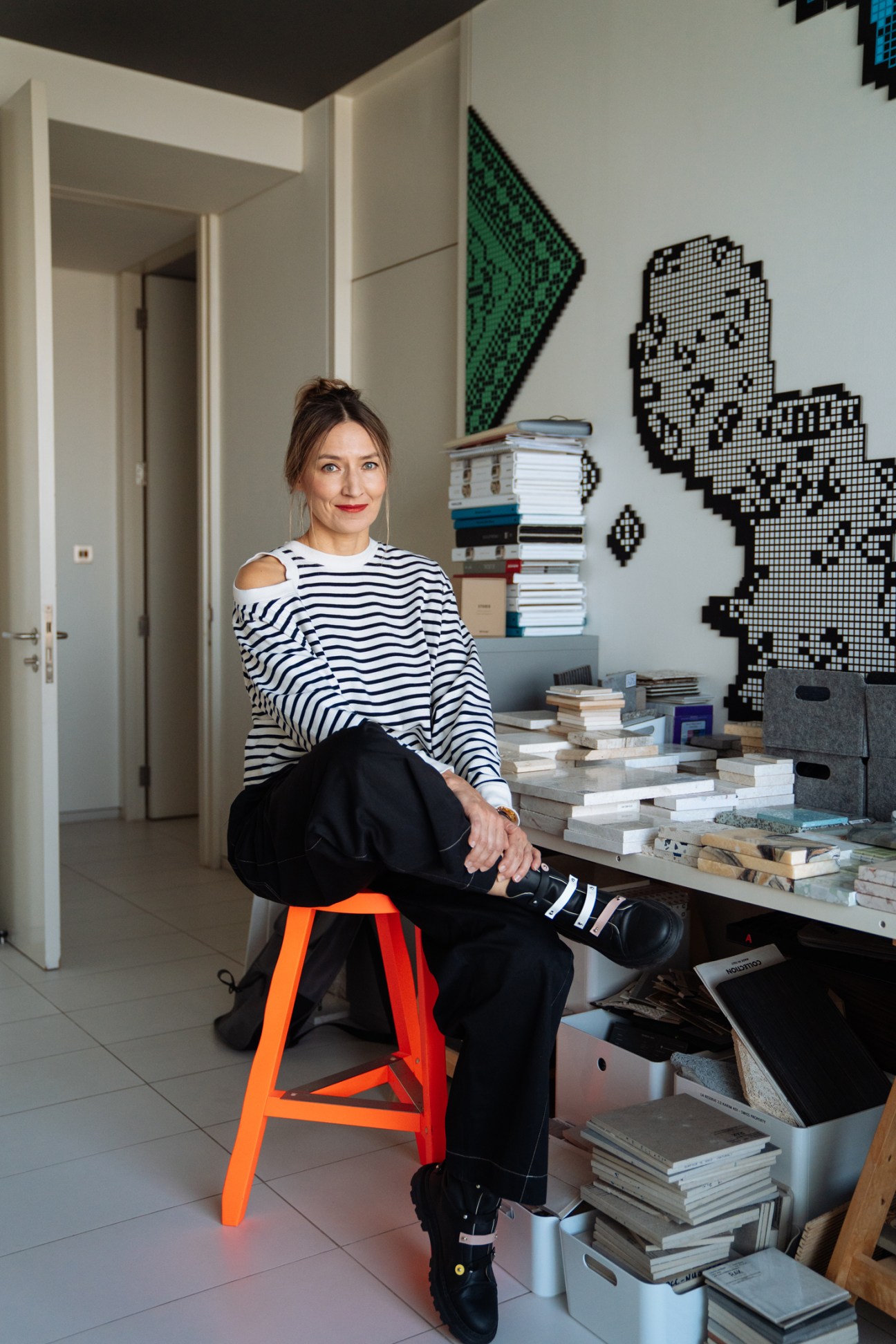
Agata Kurzela (pictured above) has carved out a niche by creating original, ambitious office spaces that never stray into cliché. With so many businesses pitching up in the UAE, there’s plenty of work for practices that are prepared to design offices which are both distinctive and pleasant to work in. The crucial thing is to cut through all of the “bread-and-butter corporate” designs, Kurzela tells Monocle. “It’s a land of opportunity right now but you have to be able to bring something fresh to the market,” she says.
Her most recent project is for the UAE government: she was commissioned to create workspaces inside a 1990s-built officers’ club in Abu Dhabi. “The existing space was reminiscent of jfk International Airport’s twa Terminal and already inspiring,” says Kurzela, who is from Gdansk and worked for Roar Design Studio under Pallavi Dean before setting up her own practice four years ago. “It was a matter of redefining that canopy and trying to bring logic back to the space.”
While the bones of the building were in excellent condition, modifications had been made over the years, including during the site’s spell as a storage space. Subdivisions and structures had been added that obscured the simplicity of the original design. “It was a process of stripping and peeling away,” says Kurzela.
To return attention to the dome, she brought in sparse lighting by Davide Groppi and introduced warm, inviting materials to keep this dune-like interior from feeling too austere. “We made sure that there was good lighting, excellent acoustics and a floor that logically works,” says Kurzela, adding that it was important that this space could function both as an office and as somewhere to exhibit grand plans.
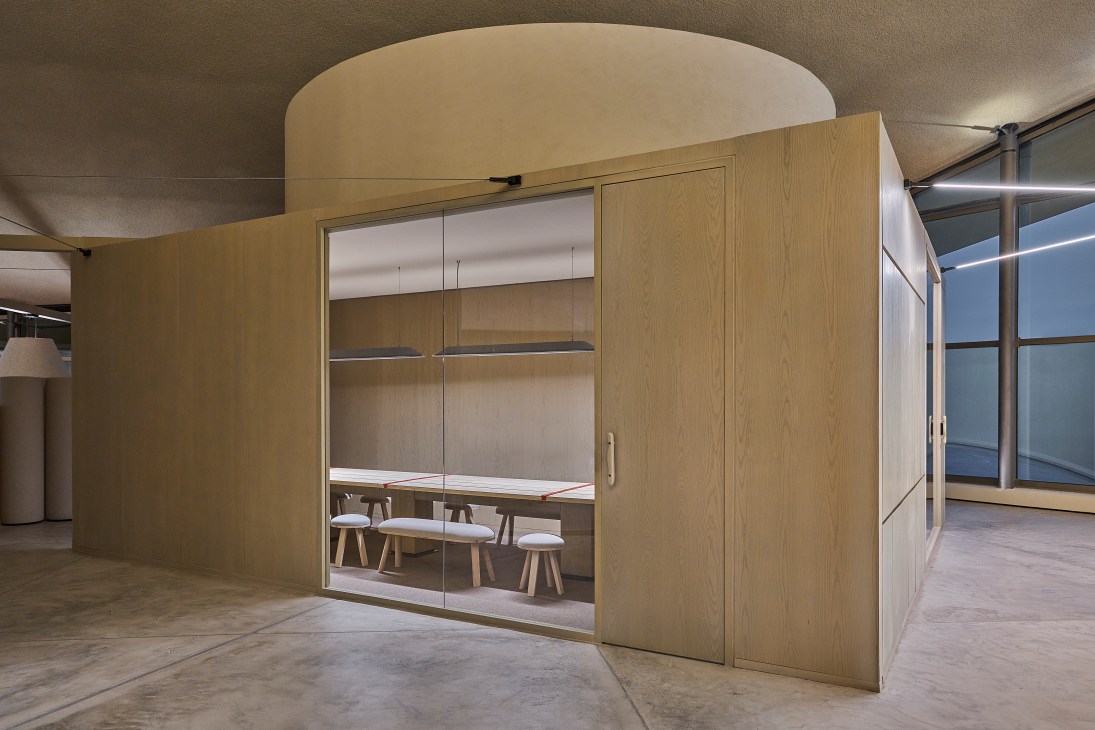
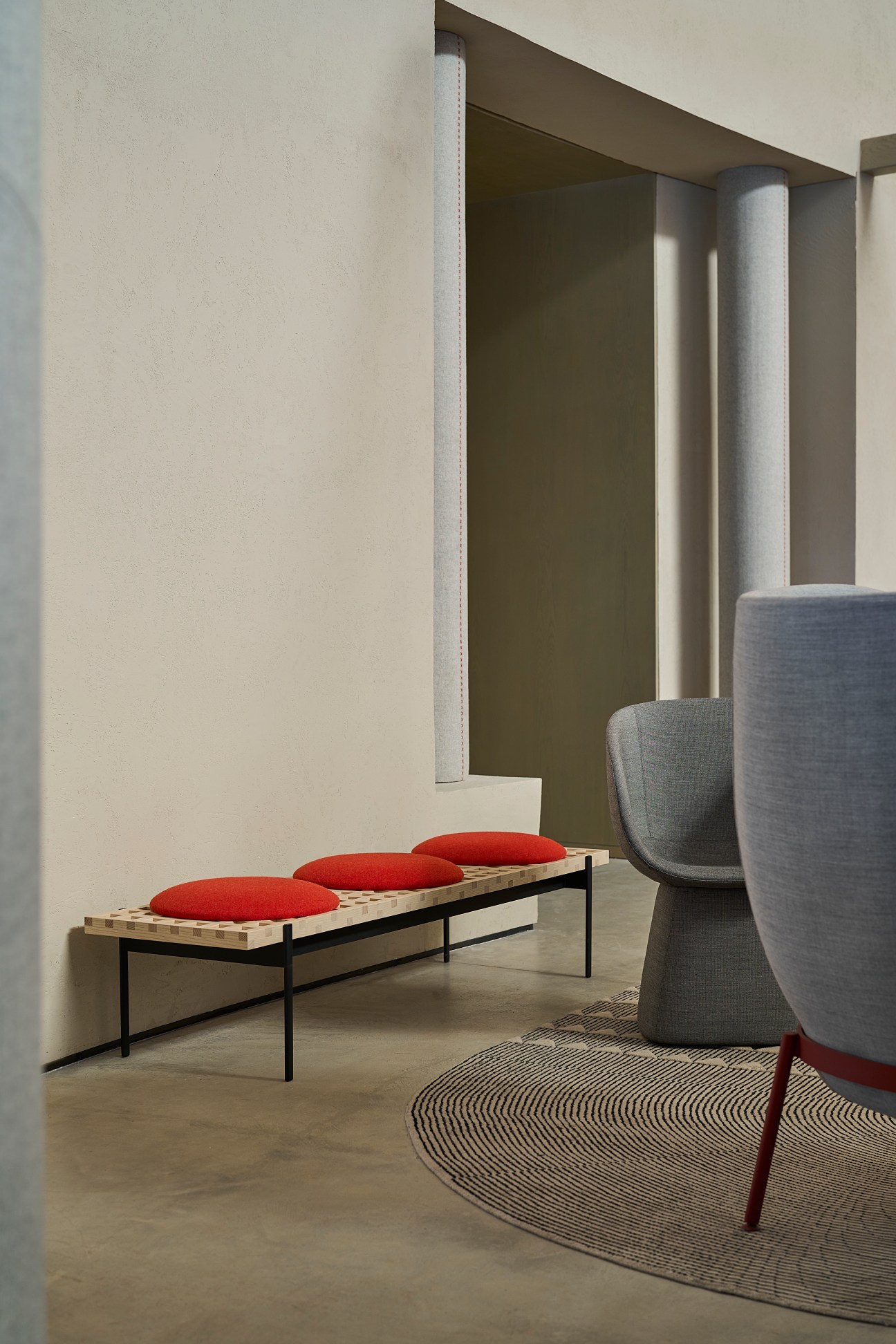
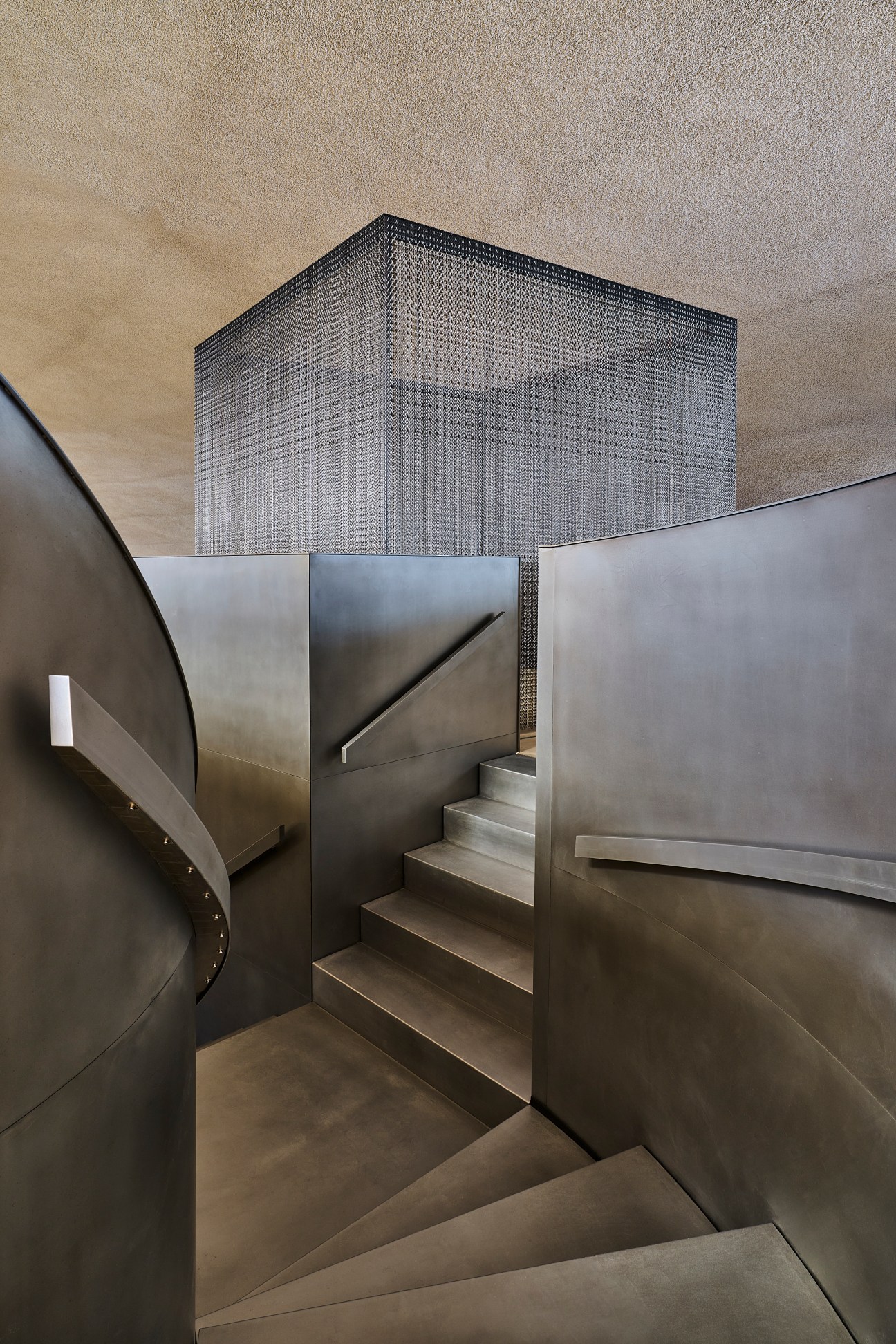
Though Kurzela worked with designers such as Latifa Saeed on the furniture, she also created many of the boardroom tables, desks and chairs herself, including an extraordinary travertine table that adds a tactility and texture to the space that complements the smooth curves of the roof.
Breathing fresh life into old buildings has become a hallmark of Kurzela’s studio. Currently under construction is a residence in Abu Dhabi’s coastal Al Nouf neighbourhood, overlooking a mangrove-filled beachfront. She has transformed an old chalet and added pavilions with living areas that embrace the sea. Her furniture work – including a carpet based on the proto-AI “Game of Life” algorithm designed by mathematician John Horton Conway in 1970 – will be exhibited this year as part of Dubai Design Week. Despite acknowledging the importance of technology, Kurzela worked with Afghan craftswomen, via an organisation based in Dubai’s Design District, to complete the pieces.
Identifying reliable collaborators is essential for success in the UAE, says Kurzela. “Relationships are priceless here.” Asked what advice she would give to those who want to set up a practice in the country, she says, “It can be difficult to parachute in but find the people who you want to work with and go from there.”
kurzela.com
Three ambitious UAE HQs
1.
Dubai Petroleum
Dubai
Built: 1978
A modernist gem by Arab-American architect Victor Hanna Bisharat that fuelled Dubai’s rise.
2.
Cultural Foundation
Abu Dhabi
Built: 1981
This building combines Arabian brutalism with grand tiled arches.
3.
Siemens
Abu Dhabi
Built: 2013
The choppy zigzag façade offers smart external shading and helps to keep energy use down.
3.
Anarchitect
To build a hotel
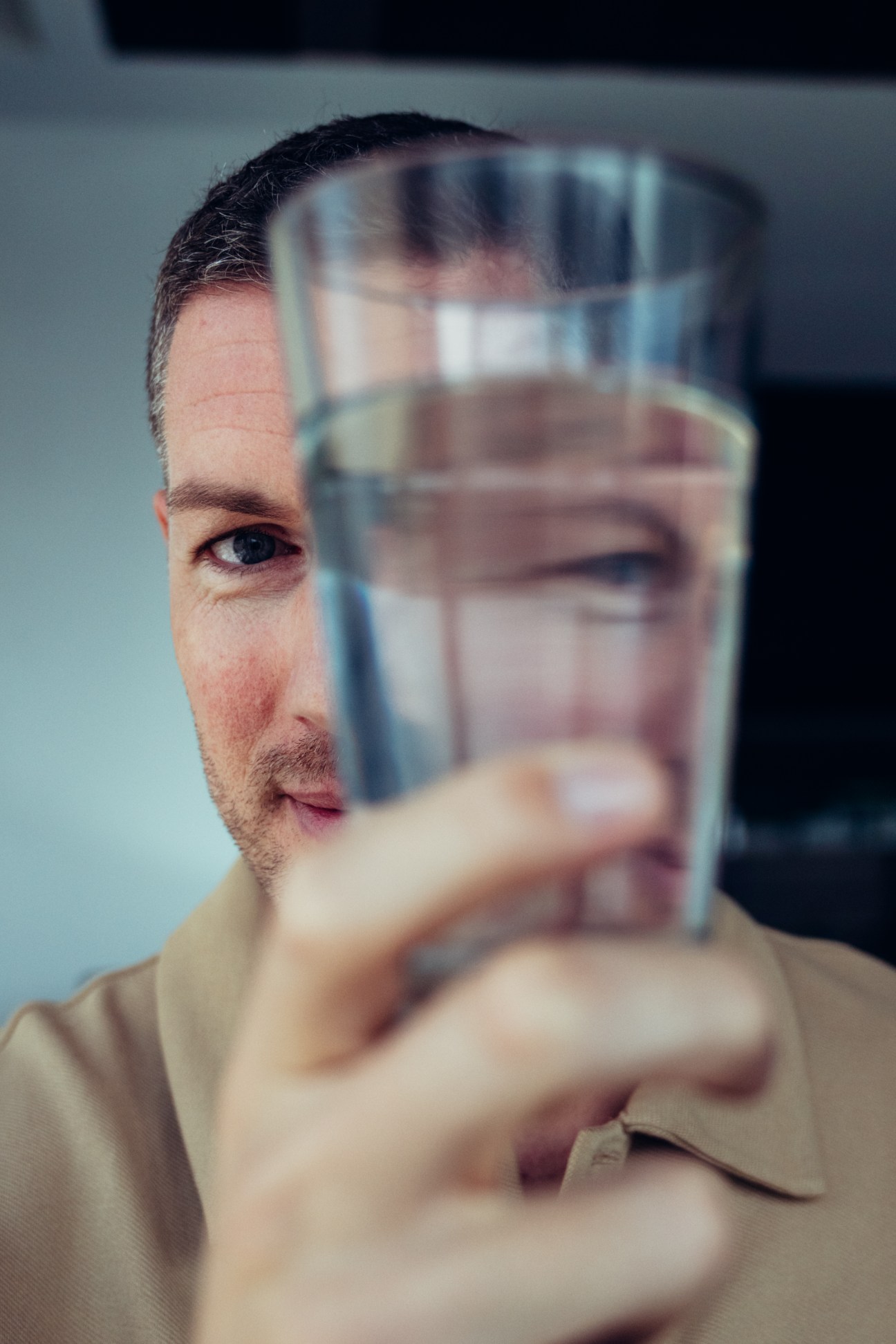
Architecture in the UAE can often seem extravagant but hotels with colossal façades, marble interiors and far-too-shiny finishes don’t have a monopoly. Anarchitect was started by British-born Jonathan Ashmore in 2013 and has since been turning heads with its tasteful, smaller-scale take on hospitality. “We are the anthesis of all of that,” says Militza Ashmore, the firm’s executive director and Jonathan’s partner. While bigger practices stretch budgets by rushing in to add floors and baubles, Anarchitect is eager to put forward a slower, far more understated take on hospitality.
Jonathan moved to Dubai in 2009, planning to stay for only a year in order to pay off his student loan. Militza joined him nine months later and neither has looked back. Soon, they started garnering lofty residential projects.
“One of my first commissions was a 750 sq m triplex on top of the Index Tower by Norman Foster, overlooking Burj Khalifa,” Jonathan tells Monocle from Anarchitect’s studio on the 29th floor of the Marina Plaza Tower. “I felt that there was an opportunity here: there was a disconnect between architects and interiors, and what we wanted to do was overlap the two.”
The design-savvy residents of Dubai who followed design fairs such as Design Days and Downtown Design helped to influence tastes and the market of people who appreciated a subtler, more pared-back approach steadily grew. Anarchitect’s ability to deliver this has helped to make it a go-to for hospitality projects.
Today the studio has big ambitions but the team remains relatively small at 13 people. “There is an efficiency that gets lost in larger practices,” says Militza. “Here, you cannot hide.” Part of the firm’s success stems from its fluency in adapting to international design languages. With bureaux in Dubai, London and Belgrade, its staff members are well travelled and forced to reckon with different design sensibilities and cultures on most projects. The result is a practice that is as confident with Balkan brutalism as it is with British tradition or Emirati ambition. “In Dubai, clients from the Middle East or Africa feel comfortable that we know where they are coming from,” says Jonathan.
Following the success of Al Faya – a transformation of a 1960s grocery shop and clinic with a petrol pump into a desert retreat and spa beneath Sharjah’s Mount Alvaah – Anarchitect reimagined another heritage property in the northern emirate. Comprising of two 1950s family houses, The Serai Wing hotel was once the home of pearl merchant Khalid Bin Ibrahim. This inner-city sanctuary opened in July and is designed to be flexible: acting as either individual rooms or an entire, rentable palace.
Giving buildings a new life requires plenty of thought. “Simply rebuilding isn’t enough,” says Jonathan. “It needs to have a clearly defined usage, whether that’s a spa, winery or wellness retreat.”
anarchitect.com
Three design-minded stays
1.
Al Faya Retreat
Sharjah
The UAE’s oldest petrol pump and a desolate shop and clinic have been transformed into a modernist-inspired hotel, restaurant and saltwater pool.
2.
XVA Art Hotel
Dubai
Just a few minutes’ walk from Dubai’s historic Creek, xva Art Hotel provides a shaded courtyard and welcoming Persian-style architecture.
3.
The Chedi Al Bait
Sharjah
Traditional woodwork frames the preserved historical homes at The Chedi Al Bait. Heritage design and classic Emirati hospitality equals a warm welcome.
4.
H1A Architects
For a private hospital
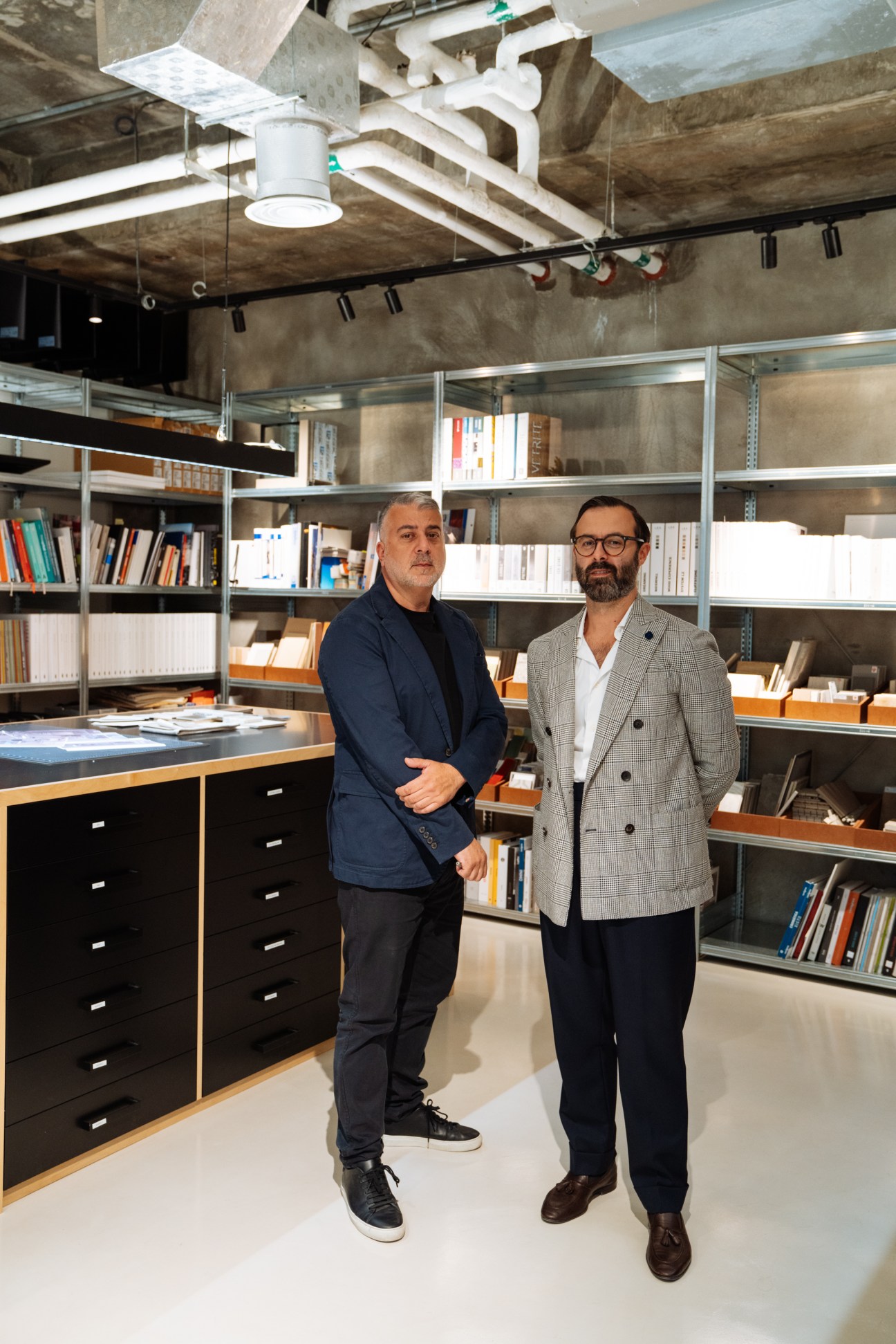
“We’re designing the buildings that nobody wants to go to,” says Stas Louca, (pictured on the left above), one half of Dubai-based H+A Architects, a firm that is rethinking how hospitals and healthcare should look and feel. “We’re interested in how principles associated with hospitality can reduce the anxiety of going to these places.” After working at regional outposts for major international firms, Louca and H+A’s design director, David Lessard, set up their own practice in 2017. It recently moved into a new office in Dubai’s Al Quoz district and has been attracting clients in Saudi Arabia, Sri Lanka and the Seychelles.
A remodelled hospital in Dubai and a new oncology centre in Sharjah embody their ideas about making medical facilities feel less clinical. “It’s about natural materials, intimate spaces and good acoustics,” says Lessard, who is from the US. “If you squint, they almost have a spa feel.”
More than 647,000 medical tourists came to the UAE seeking treatment last year and this $270m (€253m) industry is only expected to grow. Hospitals are competing to give patients not only the best treatment but also the most comfortable stay. “Hotels have been talking for a long time about the experience but healthcare hasn’t taken a ‘guest-first’ approach,” says Lessard.
According to the architects, the biggest opportunities might lie in spaces that blur the lines between health and hospitality. H+A has been appointed to work on a 60-key hotel in Cairo with a detox and weight-loss clinic attached. “The biggest trends will be around mental health,” says Louca. “Many new clinics are serving patients who want to take a break and focus on themselves.”
h-a.global
Where’s the opportunity?
Dubai Healthcare City, a cluster of facilities that were built with medical tourism in mind, are about to undergo a facelift of their own.
5.
Nada Debs
For the furniture
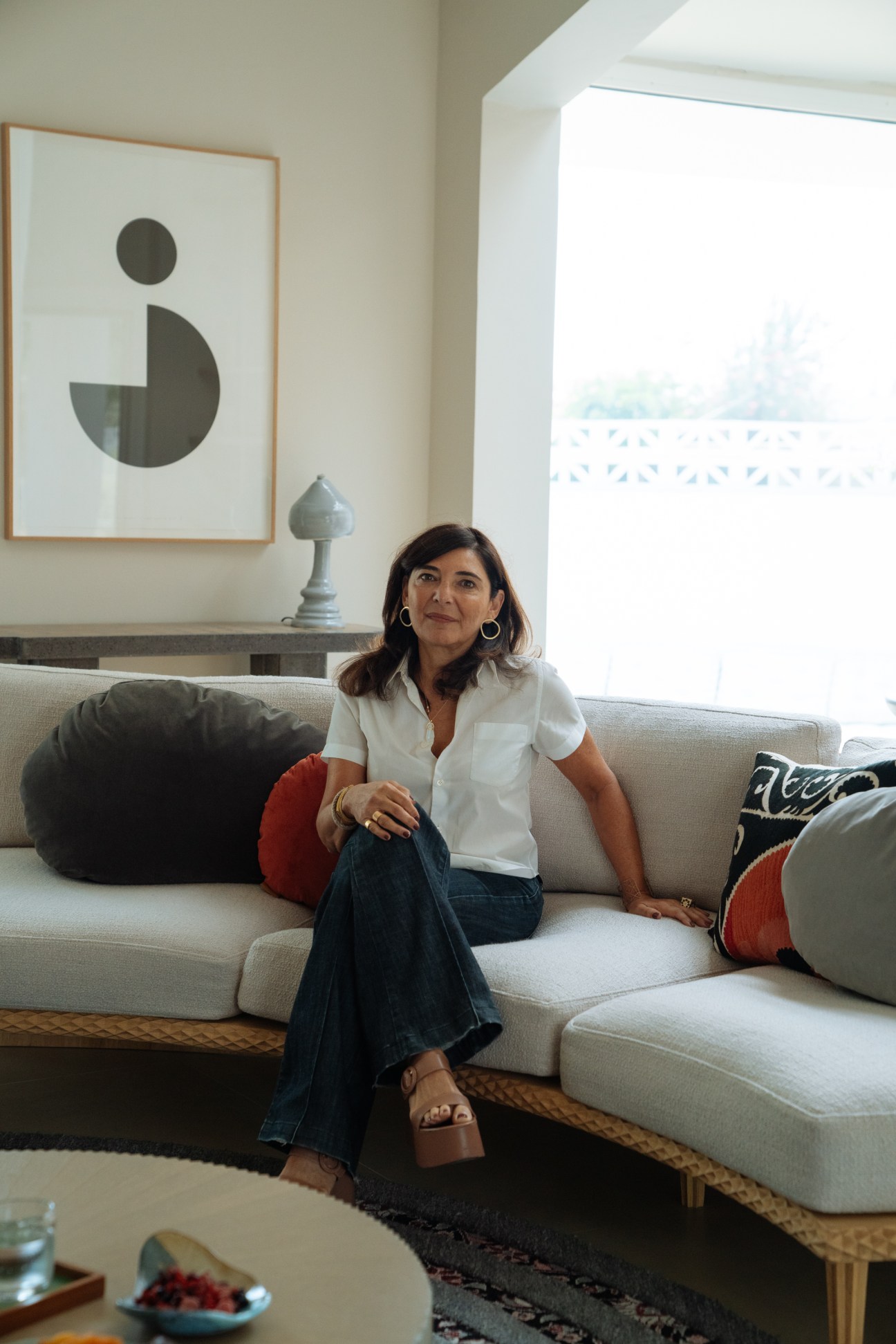
“We’re aiming to be the Hermès of the Middle East,” says Lebanese designer and studio founder Nada Debs, whose firm is renowned for dovetailing high-quality craft with considered cultural references and detailing. It’s this knack that landed her commissions to renovate the Arab League Hall and the UAE’s Mission to the United Nations, both of which combine traditional methods with a modern finish. Following the 2020 port explosion in Beirut, Debs decided to look east for a safe setup and opened a studio in Dubai. When Monocle visits her villa in Al Safa, by the Dubai Water Canal, she tells us about her mission to make craft and heritage the crux of home-making in the UAE and beyond. “My home has become a showroom,” says Debs, who admits that many still need convincing to favour the well made over the well known.
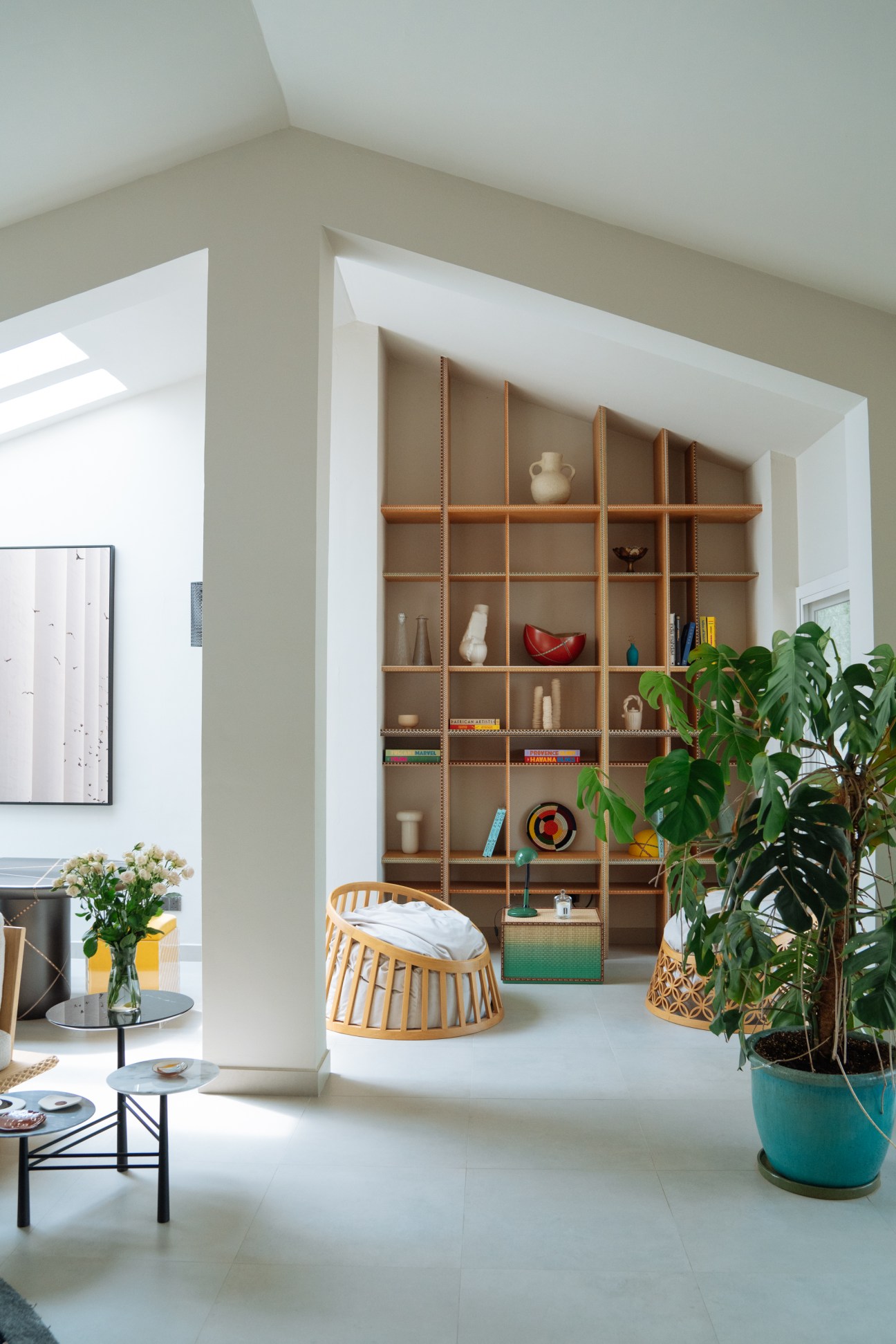
At her tranquil home, light floods in through large windows and skylights. Rugs meet marble and wood pairs with textiles; there’s an unapologetic abundance of material. The forms of her furniture have an almost Scandinavian-style simplicity, meticulously balanced against Debs’ tendency to deploy striking patterns and colour from Middle Eastern design. Every piece holds clues to its handcrafted back-story: a telling scrape of a chisel or a carefully sewn bead. “Just as food tastes best when it’s cooked slowly by someone you love, craft captures the energy of a person,” says Debs. It’s the time and consideration spent on every object, as well as its balance of form and features, that give a home a true sense of serenity.
nadadebs.com
What we’d buy
Debs’ upcoming furniture range Retro Couture features a cane cabinet. She has been working with Palestinian refugee women in Beirut camps who have added traditional stitched motifs.
What is the big idea?
Baharash Bagherian doesn’t want you to think of urb as a traditional design firm. “It was essentially started to help accelerate the world’s transition towards sustainable developments,” says the CEO from a meeting room in the Dubai Design District, where his company is headquartered. “We knew that we couldn’t do that by just operating as architects.” A start-up that has been in business for only two years, urb views itself as more of a hybrid. Among the services that it offers are planning, development management, landscape design, architecture and consultancy. As if that wasn’t enough, it also recently launched an incubator for young companies seeking to scale in green technology.
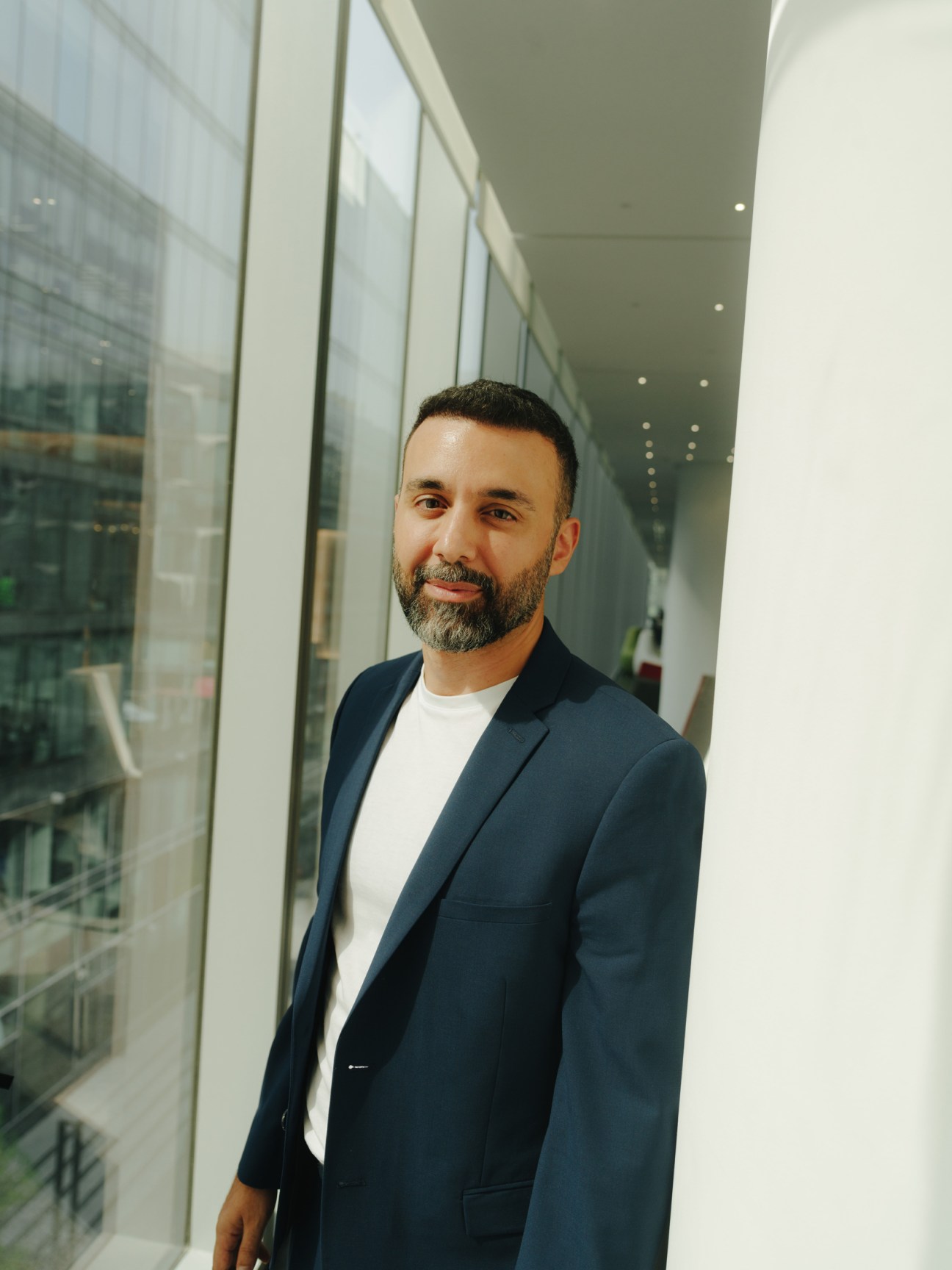
Wearing a blue suit with a T-shirt underneath and flashing impressively white teeth when he speaks, Bagherian is a telegenic and eloquent ambassador for the idea of making the uae (and the world) a greener place. And he means business, even if the task that he has chosen is a colossal one. Bagherian says that if change is to come, we cannot simply “look at what exists in the market”. Developing and using new technologies to fix problems is crucial. Nor does he think that it’s all merely a question of attracting deep-pocketed venture capitalists. “Money is part of it but so is trying to create change within policymaking and finding the right partners,” he says. “And that really requires the public sector to be involved in the initiative.”
Since its formation, urb has designed a series of ambitious masterplans aimed at bringing about a “paradigm shift”. These draw on Bagherian’s previous experience as design director at Dubai’s Diamond Developers, the firm behind eco-friendly neighbourhood The Sustainable City Dubai and its other iterations. (Before that, he ran his own firm in London for 10 years.) urb’s renderings offer a glimpse of how the uae could be one day if Bagherian gets his way in terms of “bringing the urban agenda to the core of Dubai”. Take, for example, The Loop, a plan for a 93km, plant-filled, enclosed cycle and walking path that could encircle the city. It would use recycled water for irrigation and feature a running track with kinetic paving that generates energy.
Bagherian knows that these projects need to be financially viable if he is to get them off the ground, so everything from retail to wellness businesses are also part of his plans. The same goes for another futuristic concept, known as Agri Hub. Also an enclosed microclimate, its aim is to grow food and connect people with farmers in a nation that imports much of what it eats. “It wouldn’t just be a place for food security,” he says. “It would be a tourism destination too.” urb envisions it becoming the world’s largest agritourism attraction, creating 10,000 jobs.
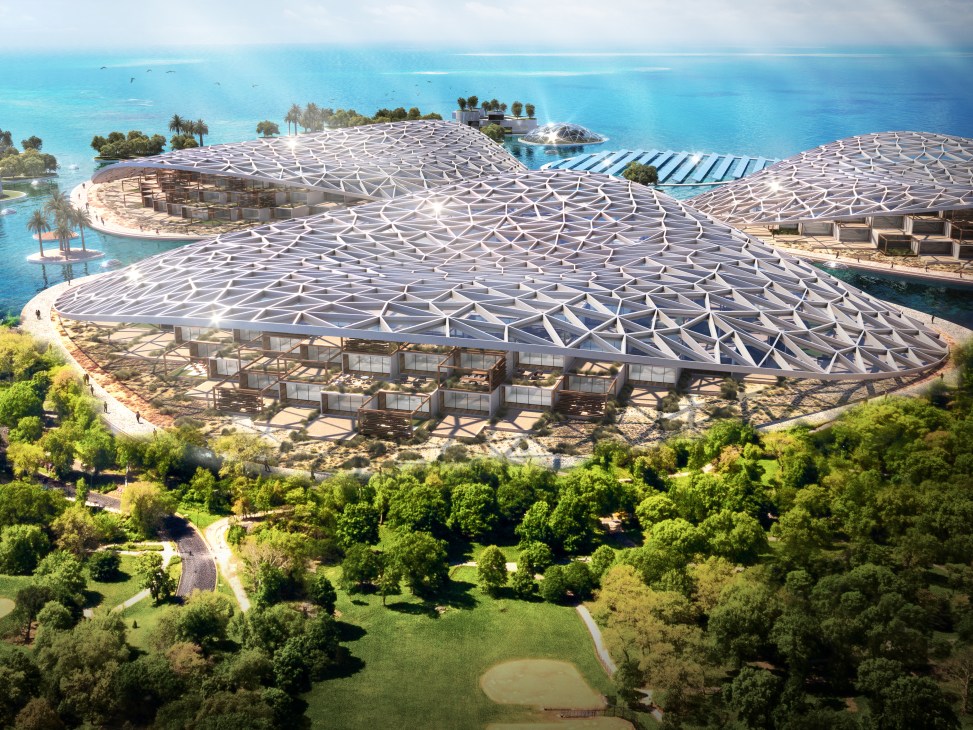
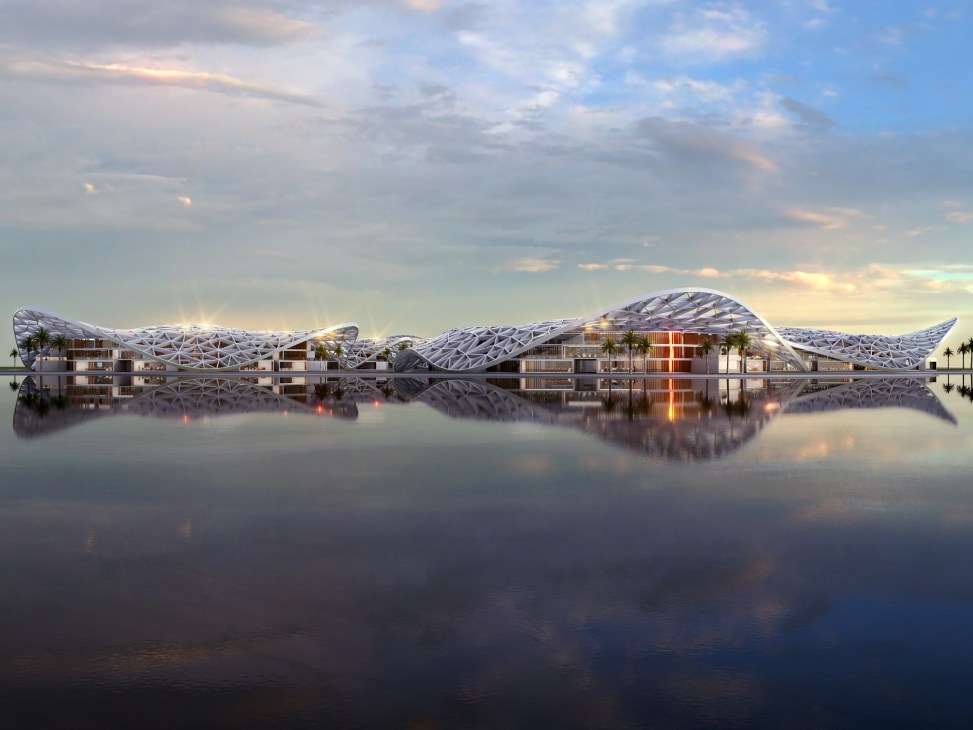
It would be easy to dismiss these projects as wishful thinking or utopian daydreams, given the leap that would be needed to make them happen. But Bagherian, putting on his developer hat for a moment, is adamant that the projects will be built and that Dubai will be unrecognisable by 2040 as a result of advances in urbanism and mobility. Like so many people who Monocle speaks to in the uae, he points to the rapid progress that the nation has already made and its receptiveness to innovation. “If you have strong leadership that has the urban agenda as part of its mandate, you’ll see change,” he says. “And that is what is really missing in places such as Europe.”
For all the uae’s environmental overtures – from hosting the Cop28 climate-change conference in November to its development of sustainable cities such as Abu Dhabi’s Masdar City – there is still an awfully long way to go. For one thing, Dubai feels like a sprawling series of cities within cities, linked by US-style spaghetti junctions where the car is king. How do you create smart urbanism in a place that requires so much work? “There’s no point connecting the big picture if communities don’t allow for walkability or cycling,” says Bagherian. In other words: start small and work your way outwards.
It’s safe to say that there’s a lot occupying Bagherian’s mind. For one, there’s the need to think of sustainability in terms of social equity, where a city is constructed for everyone. Plus, he says, we have to shift away from thinking about net zero and ensure that the cities of tomorrow are climate positive. And then there’s his lobbying of the government to give urbanism a more central position in the education curriculum.
His heavy to-do list would be enough to daunt less zealous entrepreneurs. But not Bagherian. “We’ve started something that a lot of people want to be part of,” he says. “And that’s the exciting part.”
urb.ae
URB projects in the pipeline
Dubai Reefs
A sustainable floating community for marine research, regeneration and eco-tourism that aims to create as many as 30,000 jobs in the green economy through an artificial reef.
Agri Hub
An agritourism hub that could offer the chance for farmers to sell directly to consumers, as well as offering a retail and entertainment space.
The Loop
urb is mapping out potential infrastructure for Dubai, including a climate-controlled 93km walking, running and cycling track powered by renewable energy.
Movers and shakers
Faisal Toukan
Co-founder
Ziina
Four years ago, a chance meeting in San Francisco was the catalyst for Faisal Toukan, his sister Sarah and Andrew Gold (pictured, on right, with Sarah and Faisal) to co-found fintech start-up Ziina – a simple but much-needed app to easily send payments between users. Thanks to a shared interest in cryptocurrencies, Faisal hit it off with former Apple and Coinbase engineer Gold. Sarah entered the fold from London with a pedigree in fintech product development. With Gold in the engine room and chief executive Faisal – a natural storyteller – steering, the timing and regulatory environment were right as the trickle of venture investments became a torrent in the region.
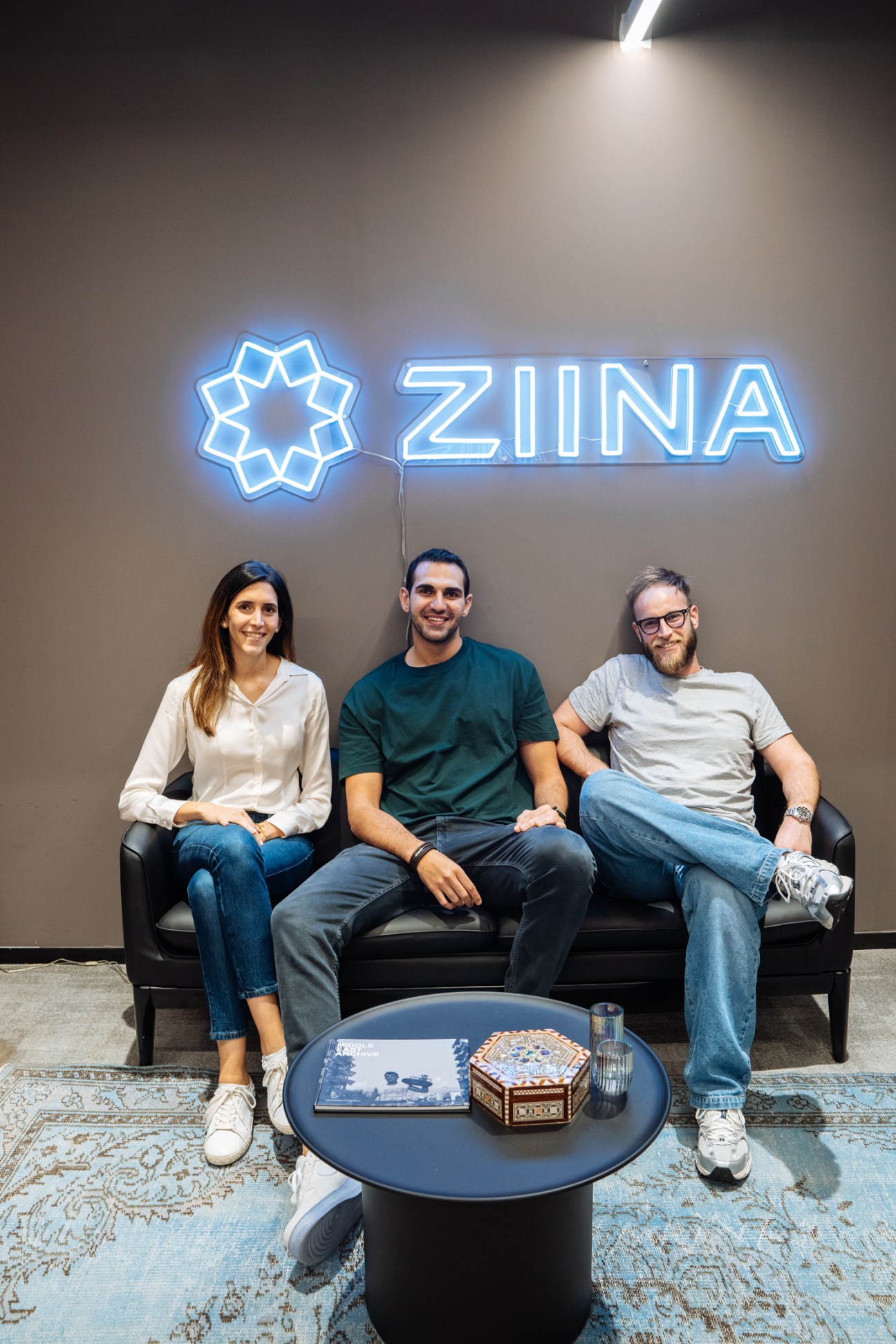
Ziina has since evolved from an app that lets friends split the bill at a restaurant into a tool that enables small and medium businesses to receive payments. A two-year process of fine-tuning resulted in what Sarah describes as a “one-stop shop” for managing money, whether you want to “save up for your kids’ education” or “work hard, retire at 45 and travel the world”.
ziina.com
Upcoming transactions
“The Middle East is not as cut and dried as the West, where people are more transactional about their finances,” says Faisal. “We have to build an application to cater to this nuance.” Ziina’s upcoming card programme is trying to make the movement of money less transactional by channelling funds towards art and social projects.
Hala Al Gergawi
Founder
Tea Before Noon
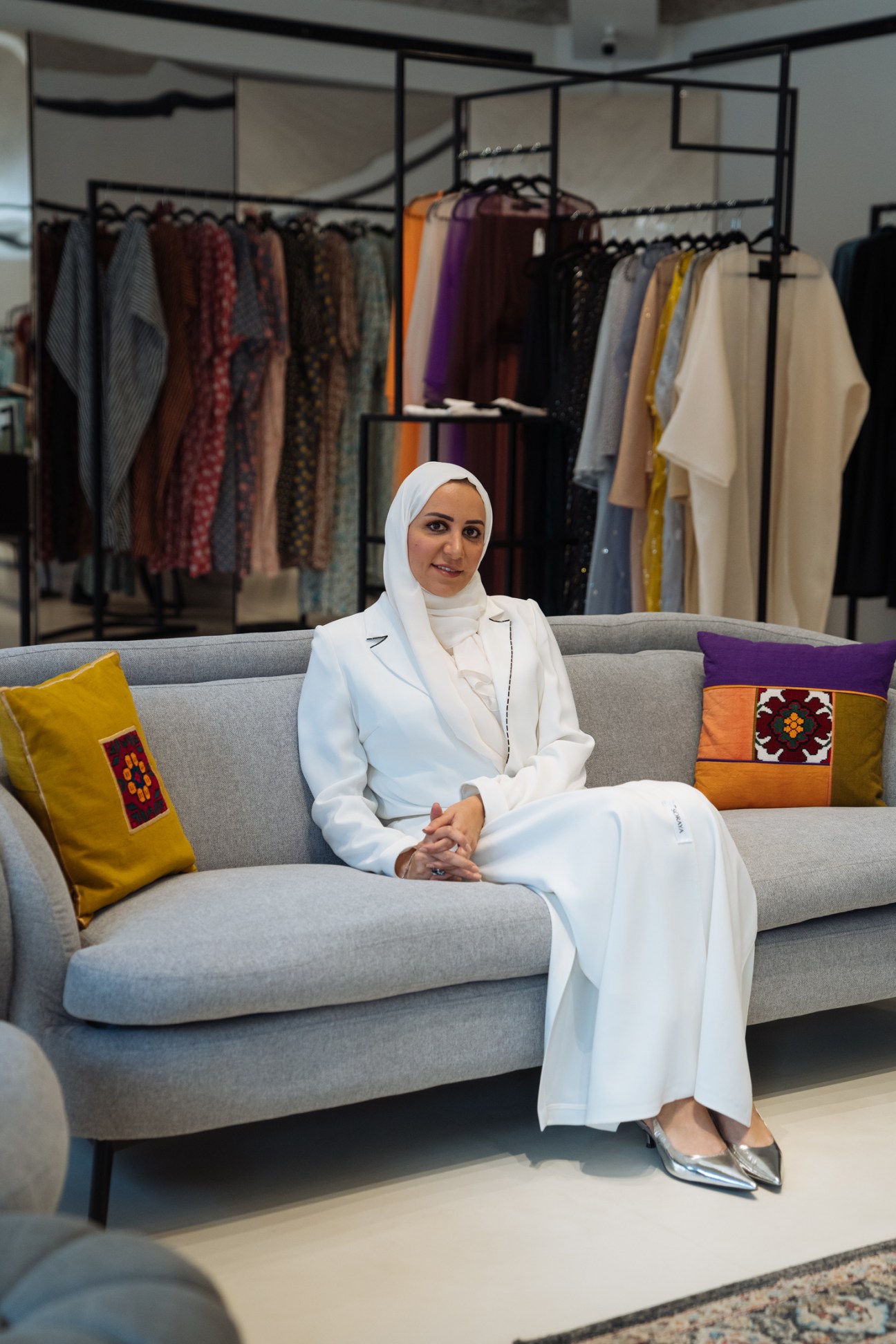
Hala Al Gergawi has cracked the code of the Emirati consumer. From serving as the editor of Zahrat Al Khaleej, a high-end Abu Dhabi-based womens’ magazine, Al Gergawi left her day job to set up a consultancy, Tea Before Noon, which helps foreign luxury brands engage with buyers across the GCC. “It’s about localising a brand’s story to make it relevant to its target clientele,” says the Emirati entrepreneur, who has worked with storied brands such as Burberry and Dior to create convivial encounters (and value).
Al Gergawi has turned her deep insight into a string of businesses with a bright future. In 2021, she founded Elevenish, an online shop that sells abayas by Gulf designers, as well as local fragrances and accessories. That has grown into a bricks-and-mortar boutique in Dubai’s Jumeirah neighbourhood and Al Gergawi is considering openings in Abu Dhabi or Qatar.
The crux of her business is, simply, knowing her market. “This is my secret recipe,” she says.
teabeforenoon.com
Get it together
Al Gergawi has turned her understanding of the Emirati market into a service that she can sell. Her shop makes that know-how physical and serves as a majlis-like gathering place for her customers: somewhere to drink tea, try out new brands and keep learning about what women in the Gulf want. It’s a reminder that retail is, at its best, about coming together and being a good host.
Audrey Nakad
Founder
Ostaz
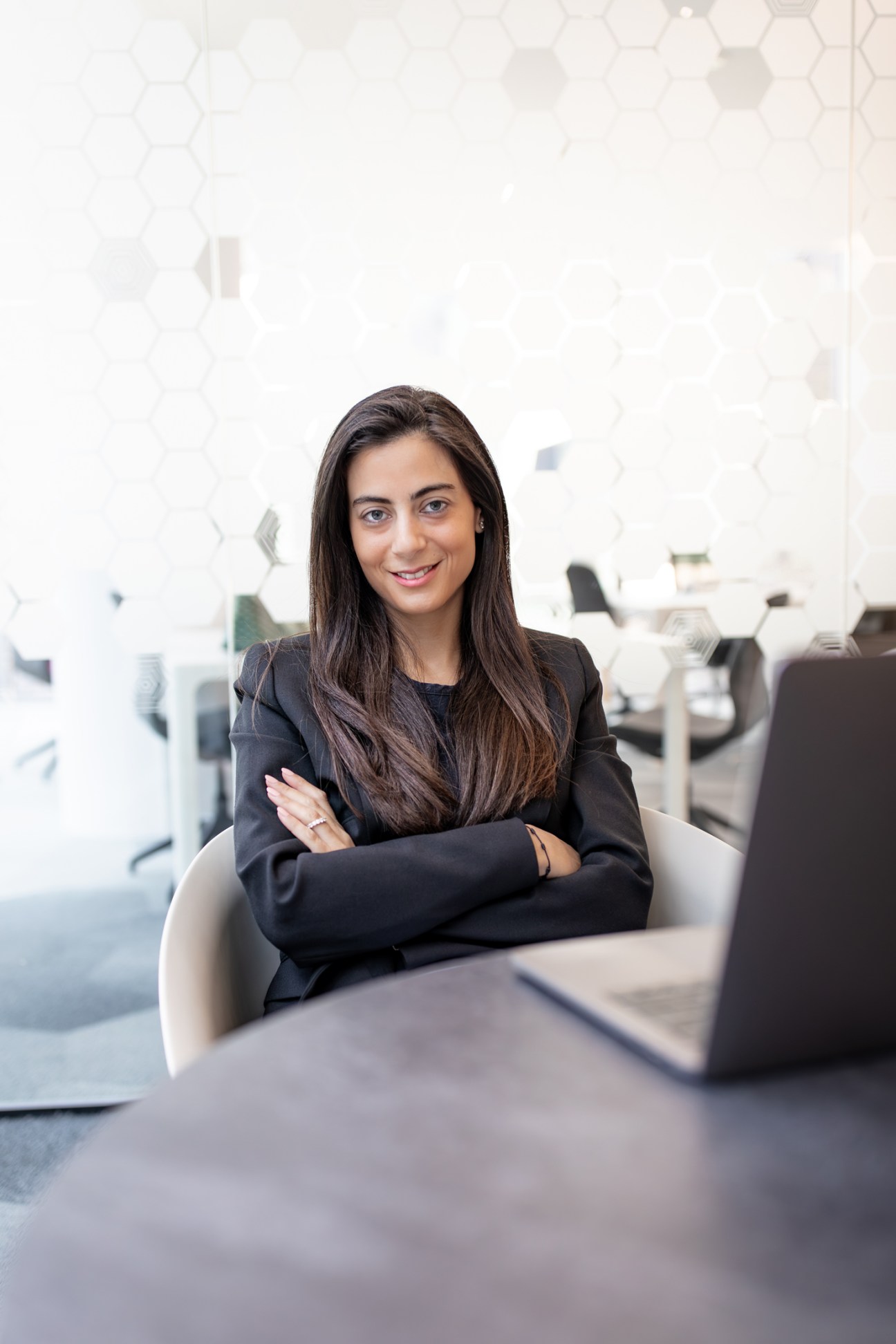
In trying to solve a problem that she experienced at first hand while working as a private tutor in Lebanon seven years ago, Audrey Nakad has enabled 60,000 students in dozens of countries to connect with the best teacher for them. She co-founded online platform Ostaz, which streamlines the process of finding a tutor, whether in person or virtual, and is embracing AI as it scales up.
“Parents are coming to us because they’re fed up with spending a lot of money on education and not seeing results,” she tells Monocle. “Ostaz is their insurance company when it comes to educating their kids.” Hundreds of job opportunities have also been created to meet demand for teachers from parents and students in the UAE, Saudi Arabia, Lebanon and beyond. “We have two types of teachers,” says Nakad. “Either brilliant university students and fresh grads or existing teachers looking for a second income.”
The evolution of technology, including generative AI such as ChatGPT, is helping affordable education become more accessible to all. “Honestly, it’s the best thing that happened to us,” she says. Thanks to rigorous testing, Ostaz can onboard the same number of teachers in a few hours that it might have taken years to do without it. It can also use data to help match teachers with students.
ostaz.com
Lessons learned
Ostaz, which means “teacher” in Arabic, is focusing on expanding into new markets in the Middle East and North Africa. “We’re going to introduce group sessions and AI tutoring assessments,” says Nakad. “We’re also going to introduce courses to attract more people.” The aim? To have 10 million students on the platform in the next five years.
Jonathan Hasson
Founder
UBQT
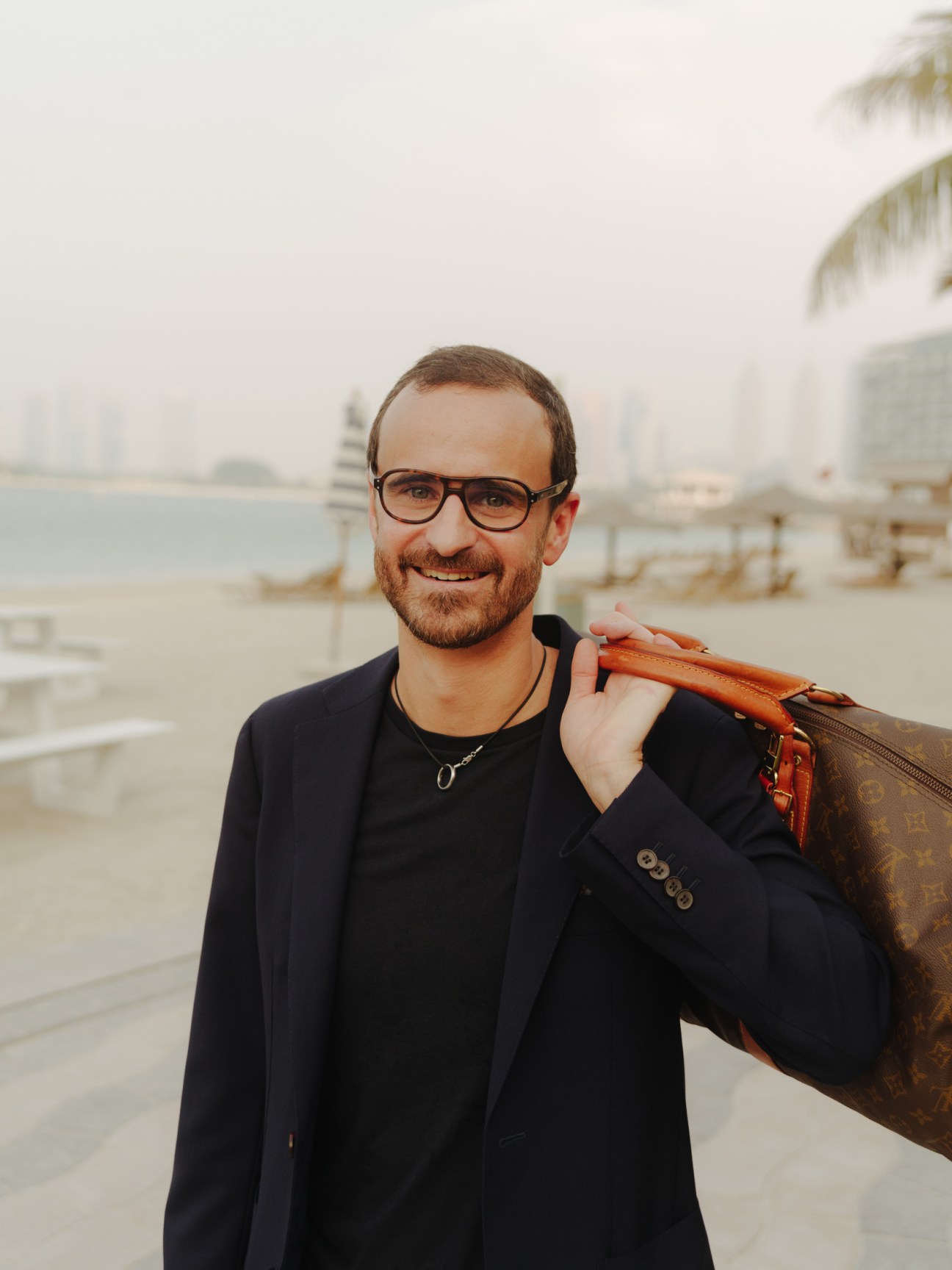
“We’re in the business of selling catch-ups,” says Jonathan Hasson, founder of the platform UBQT, which he describes as being “anti-social media”. The premise is simple: keep abreast of where friends and contacts are in the world, find out if they are about to jet into the same city as you and then actually meet up with them. “We’re about less screen time and more life time,” says Hasson.
UBQT was inspired by Hasson’s own peripatetic journey building businesses around the world, often finding out – sometimes too late – that he had passed an old friend in the departure lounge, unaware that they had both been in the same place until it was too late. The entrepreneur previously ran a textile business in Shanghai before developing a concierge service to show travellers the city’s hidden architectural history. After a stint investing in start-ups in Brussels, he moved his family to Dubai and assembled a crack team of international coders to help bring his idea to life.
The project is largely self-funded but Hasson is in talks with investors ahead of a full roll-out in November. He also plans to integrate a concierge-style function in future, which will use AI to spot gigs and other places where itinerant friends can connect. “We’ll consider ourselves successful if you spend little time on the app,” he says.
joinubqt.com
Want to connect?
For many of us, the digital world is simply a distraction from meeting friends and forging human connections in real life. Hasson’s app hits the right balance by allowing technology to bring people together – and to forget about their phones for a while.
Peter Ahn
Founder
Selectshop Frame
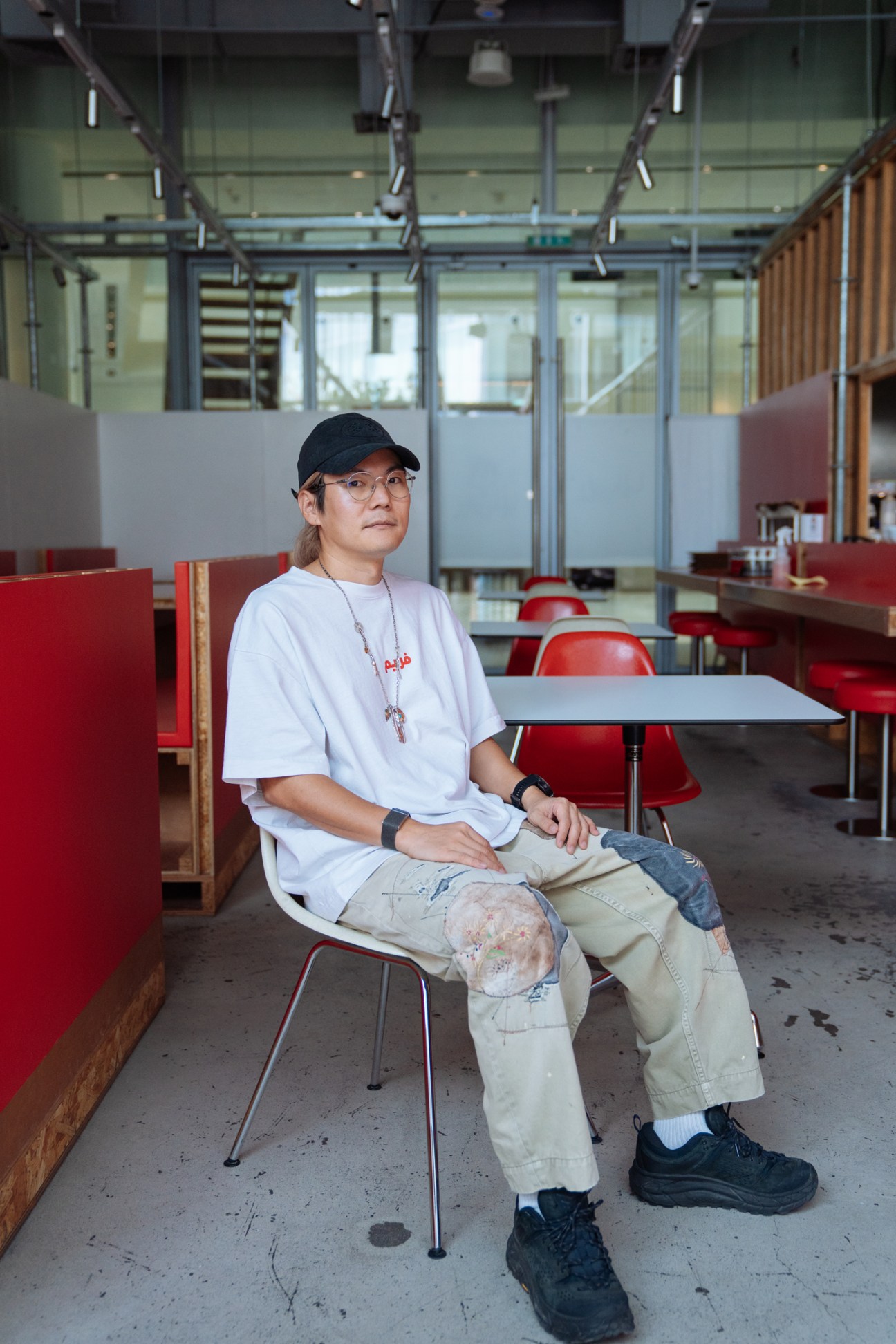
When Peter Ahn opened Selectshop Frame, it brought a youth-culture-focused retail experience to Dubai’s D3 Design District that still feels novel. In a city more familiar with shopping malls than concept stores, Ahn’s mix of books, clothing and more felt a little ahead of its time. But pioneering a concept wasn’t Ahn’s main focus. “It was part of a deep-seated desire to bring something close to my heart into existence,” he tells Monocle. “And give Dubai a taste of something refreshingly different.”
That same desire led Korea-born Ahn, a former Samsung employee, to open Teible in 2022. The restaurant in the Jameel Arts Centre cultivates relationships with local farmers, producers and suppliers, aiming to source 80 to 90 per cent of its ingredients locally. Along with executive chef Carlos Frunze, Ahn took a road trip across the country to meet farmers. “We showed them the respect their produce would receive at Teible, and how it would play a role in telling the story of the uae’s agricultural heritage,” he says.
Frunze’s dishes won a Michelin Bib Gourmand just three months after opening, and a Michelin Green Star last year.Coming next is a cultural space aimed at nurturing the creativity of youth. “The foundation of my entrepreneurial journey is my family, and my vision extends to fostering a UAE that has a diverse and vibrant cultural scene,” Ahn says. “I want a nourishing environment for my children to grow up in.”
selectshopframe.com
Brave new world
In retrospect it may feel like the UAE was just waiting for a smart new shop or restaurant concept but Ahn took a risk – and fought back when requests to rent space were refused. Resilience is vital when trying something new.
Kathy Johnston
Chief chocolate officer
Mirzam
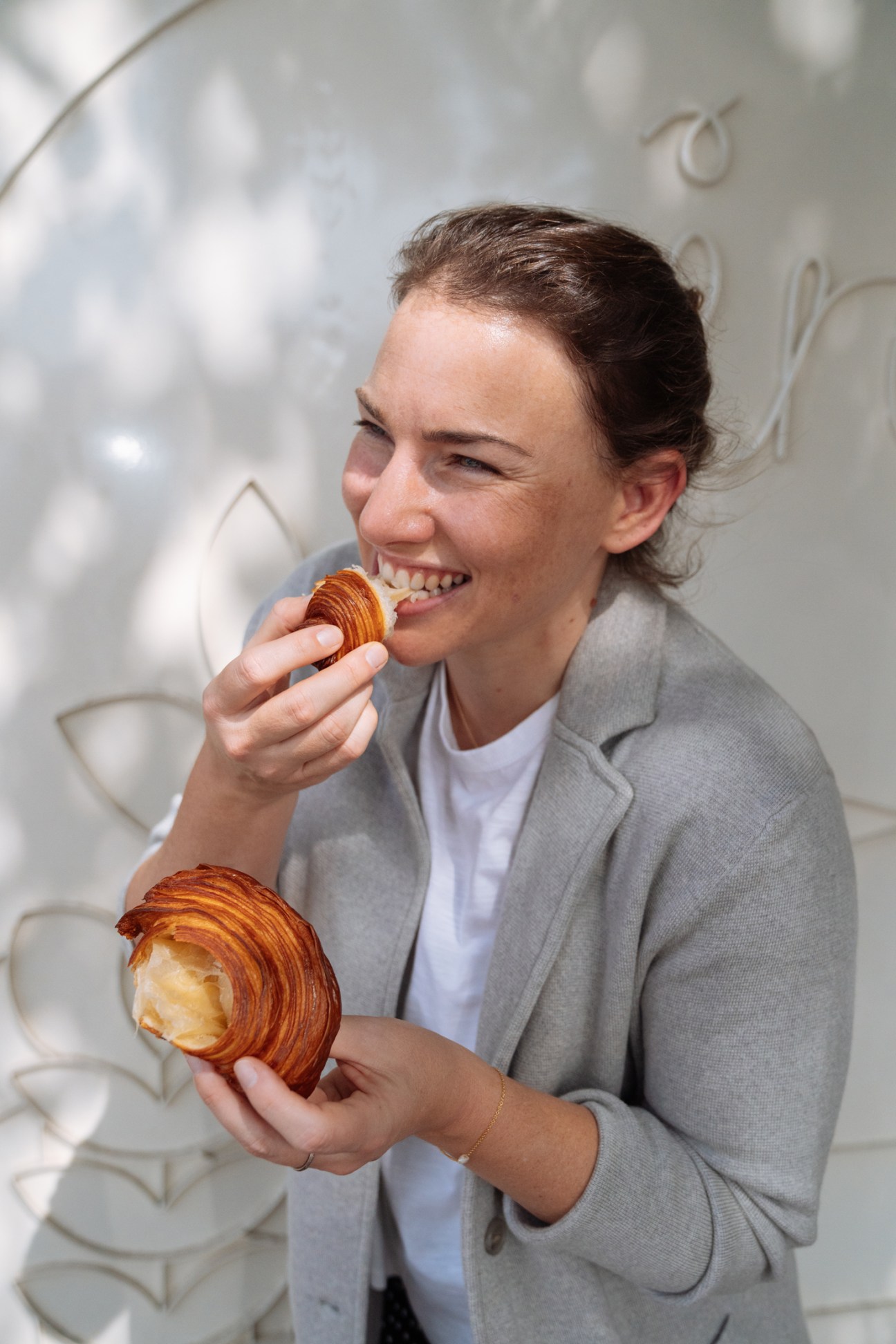
As head of Emirati-owned bean-to-bar chocolate company Mirzam, Kathy Johnston’s days are filled with dreams of cocoa, spices and the next great recipe. Along with the stories of ancient Arab spice routes that are at the root of the company’s story, New Zealand-born Johnston approaches her products with a very clear entrepreneurial vision. “We’re all about quality, authenticity and obsession,” she says. “Fifty per cent of my role is leading our commercial teams and our factory, and the other 50 per cent is creative development.” Mirzam approaches each new chocolate collection as a fashion house might, considering seasonality, storyline, suitable ingredients and packaging. A new range of gift items is currently under development, highlighting the brand’s “made in the UAE” values.
In late 2022, Johnston’s role expanded to cover the sourdough bakery Birch, which shares Mirzam’s biodiversity principles and ingredient-sourcing approach. “All of our flour comes from Wildfarmed, a wonderful farming community in the UK, who are always evolving and improving as they learn more about soil regeneration, planting cereals and legumes together and allowing pest and weed populations to short themselves out,” she says. “Birch has a wonderful spirit.”
mirzam.com
The secret ingredient?
While the UAE has long imported ingredients, there is now a shift towards using local produce. Mirzam occupies an interesting and potentially lucrative middle ground. The company finds the best ingredients from abroad and combines them with local flavours in its Dubai-based facilities.
From firefighting robots to artificial islands – what’s made in the UAE?
“This is the best environment in which to start your business,” says Mohammed Islam, founder of robotics start-up FFbots, who says that initial costs in the UAE might be high but efficiencies, such as the speed with which he can get products from overseas, mean that recuperating overheads is quick. It’s fair to say that the Egyptian businessman, who has only been working on his company since 2021, still operates a micro enterprise. All the welding and painting happens in Dubai’s Al Quoz neighbourhood, before the assembly takes place at the small plant in Jebel Ali where Monocle meets Islam today. He is the maker of a yellow robot vehicle on continuous track wheels, armed with a red canon that can spray water at high pressure. It’s designed to assist humans in dangerous tasks such as firefighting and, to date, six have been made, with another four to follow.
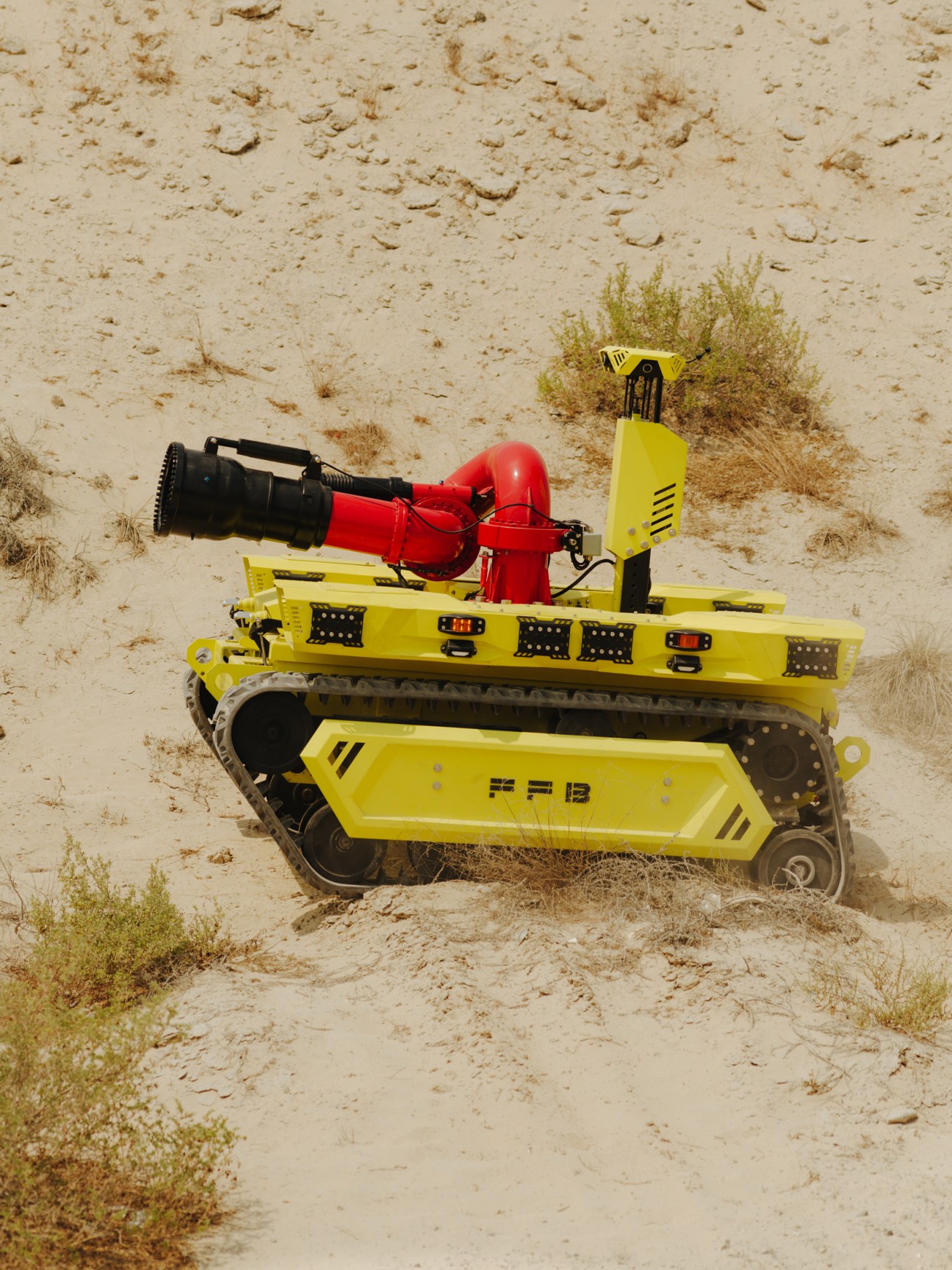
Islam started his robotics company in his apartment, where he built a miniature prototype. Despite having a product that was yet to be market tested, he tried his luck with Dubai’s civil defence, showing up unannounced and empty-handed at a local office. “I knocked on the door and said, ‘I want to make firefighting robots,’” he says. He was asked to leave a number and told someone would call him back. Rather surprisingly, a high-ranking officer did so within an hour; a meeting led to a collaboration and now FFbots’ machines might soon assist human firefighters in the UAE. In recent weeks Islam has been teaching the force how to use his contraptions. “If they hadn’t encouraged me, maybe I would have given up from the beginning,” he says.
FFbots might be a small player but it doesn’t aspire to be mass-market; it sees itself as an advanced manufacturer, producing a bespoke product for each client. With plans to move to a consolidated facility, Islam says that pre-Series A funding (funding to grow operations, develop his product and prepare for Series A funding) is coming shortly. Crucially, FFbots has an important technology element in the form of AI, which Islam says he plans to release next year. Once activated, the robots will be able to locate fires on their own and then autonomously select the agent (foam or water) and other variables, such as hose pressure and flow.
In a tax-free industrial park not far from the UAE’s eastern border with Oman, you’ll find the centre of the nation’s ambitious bid to become a major global aerospace player. Established in 2009, Strata is an advanced manufacturing hub specialising in aerospace components with billion-dollar contracts from the likes of Boeing and Airbus. Like FFbots, Strata focuses on bespoke production. The aerospace company has an R&D innovation centre partnership with Abu Dhabi’s Khalifa University that focuses on everything from VR to robotics, while inside the hub, workers in grey jackets, many of them women, are inspecting plane parts. In many ways it is the biggest surprise in the “made in the UAE” story. And it could be playing an ever-greater role in the nation’s future.
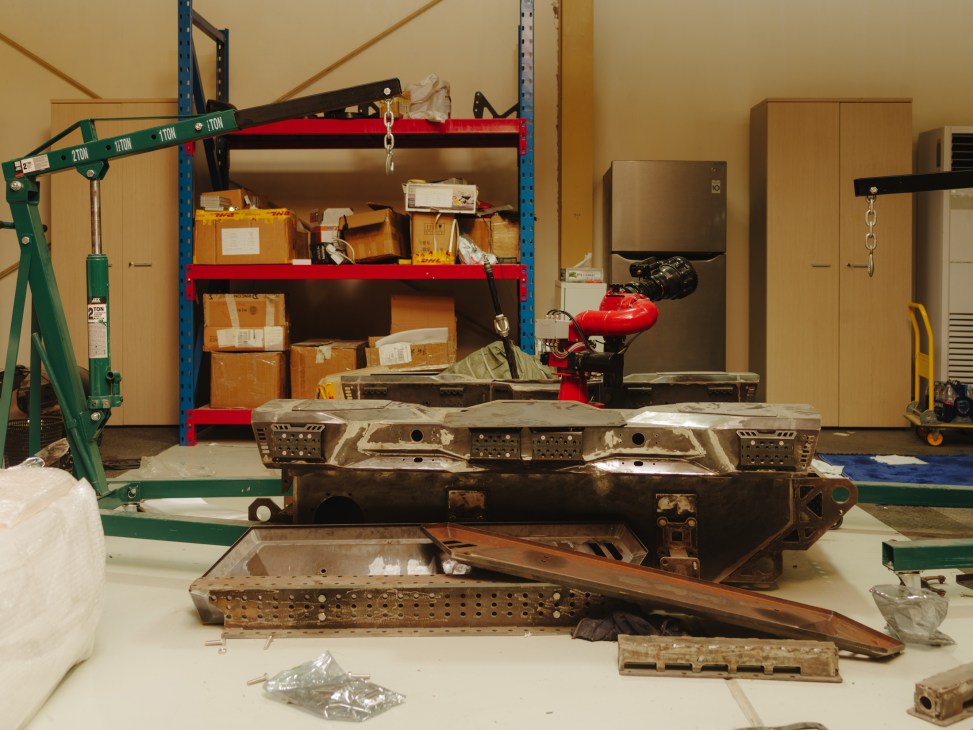
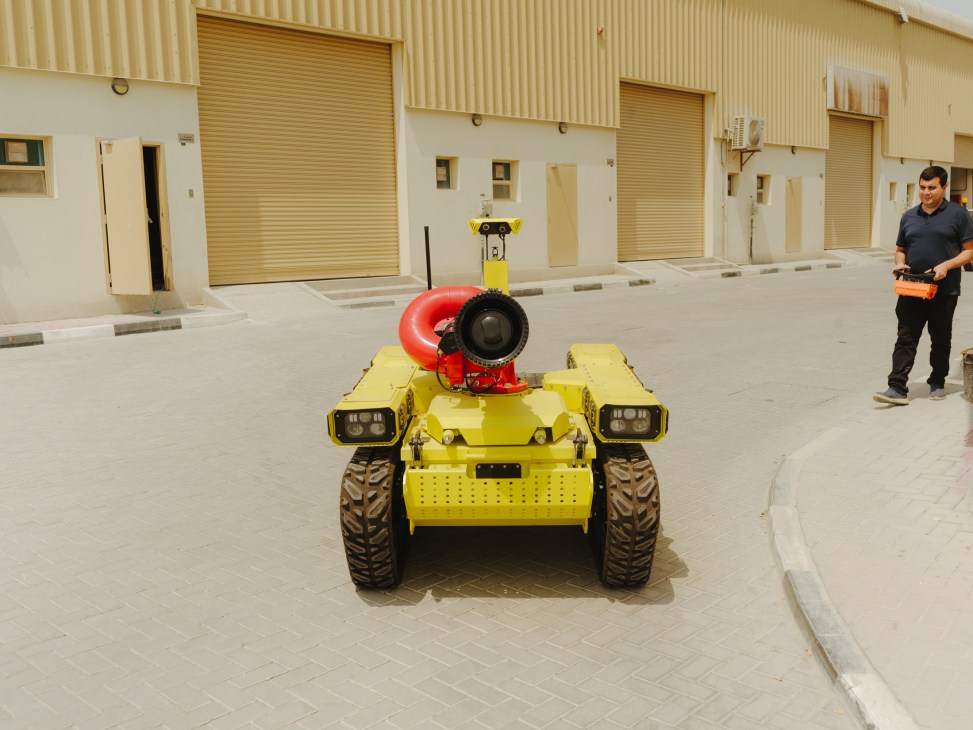
It’s no secret that the UAE wants to industrialise as it starts to wean itself off fossil fuels and diversify its economy. In recent years it has rolled out so many different plans, from the National Agenda 2021 to Vision 2030, that it’s hard to keep up. It also wants in on the so-called Fourth Industrial Revolution in which technology will help to overhaul manufacturing, and industries such as aerospace and pharma will rise to the fore. The UAE is pushing for its industrial sector to be worth AED300bn (€77bn) by 2031, almost triple its value today.
Strata might be delivering tens of thousands of component parts – from rudders to tail fins – but look a little closer at the UAE business ecosystem and you’ll find scores of small and medium-sized companies that are tapping into the Emirates’ entrepreneurial spirit and taking advantage of its increasingly attractive setting from which to launch a start-up. These are the cogs in a sector that often gets overlooked in favour of energy or tourism.
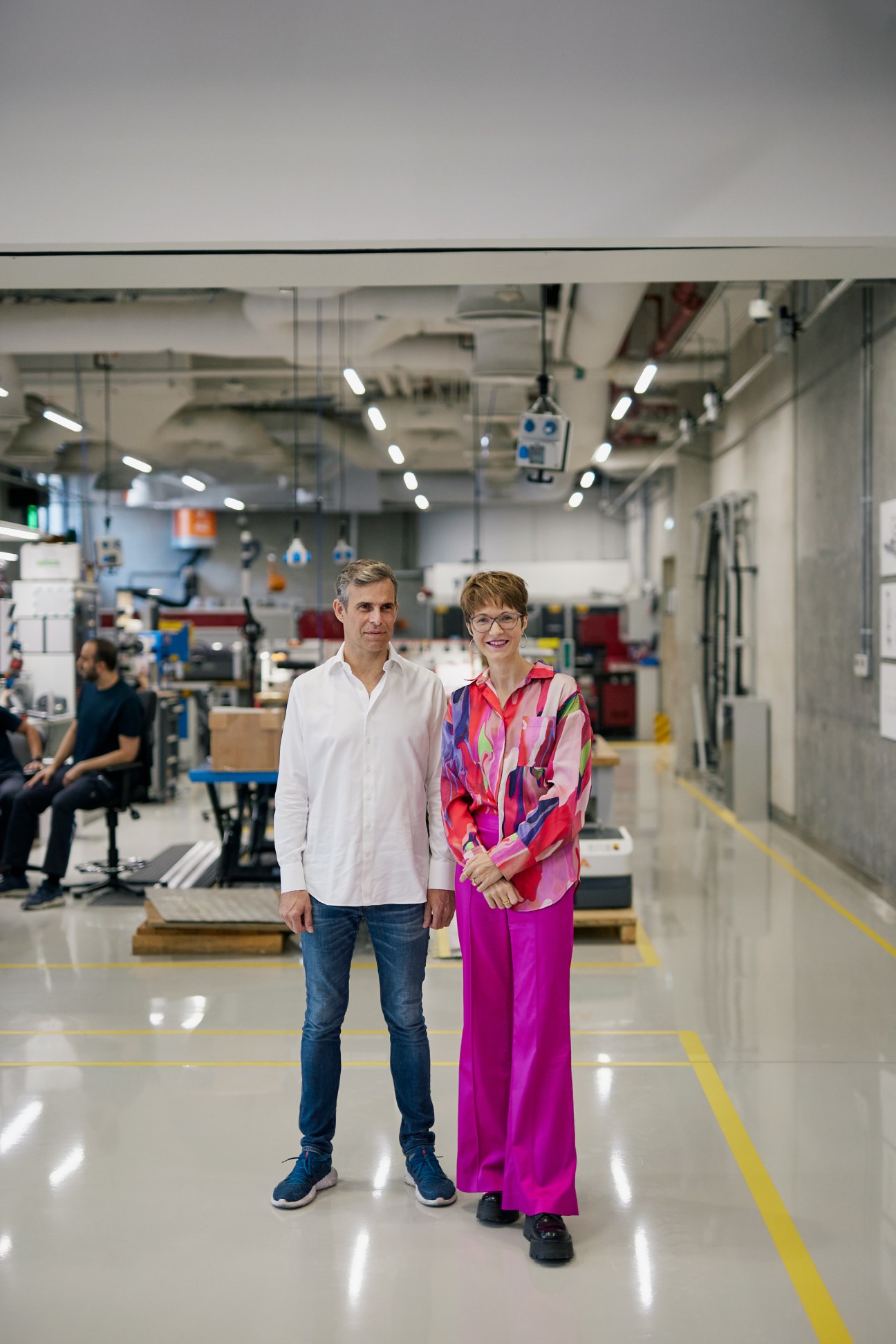
Over on the ground floor of Emirates Towers in Dubai’s downtown, Josefine Lissner and Lin Kayser, co-founders of Leap 71, are sipping coffee at a café near the Dubai Future Labs space where they work. The pair, who are originally from Germany and met in Munich, have called the UAE home for the past year. “We had to decide where to set up our company,” says Kayser, who is dressed in an untucked blue shirt, slacks and sandals. “Singapore has become so bureaucratic and slow. The UAE is cosmopolitan and a breath of fresh air.”
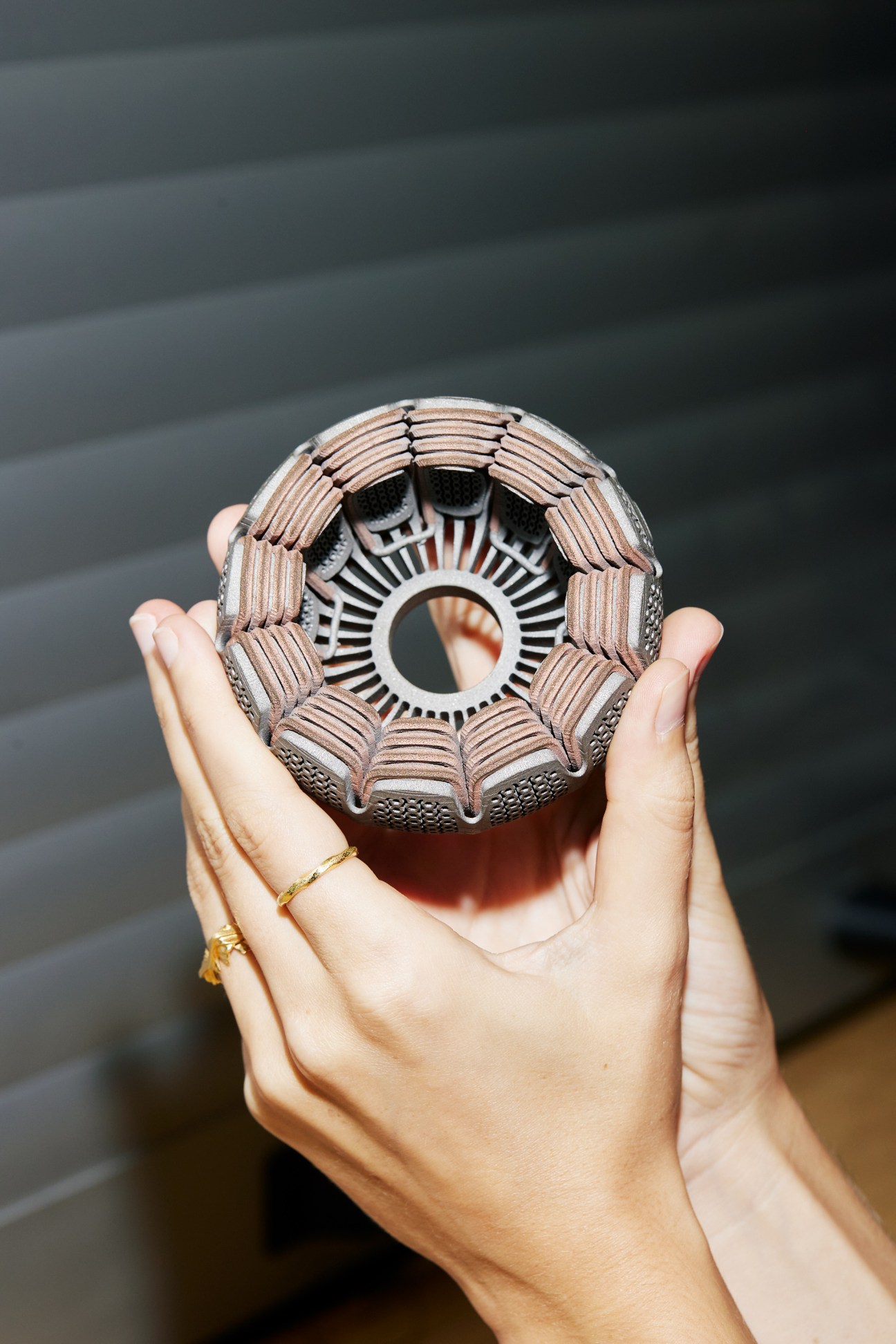
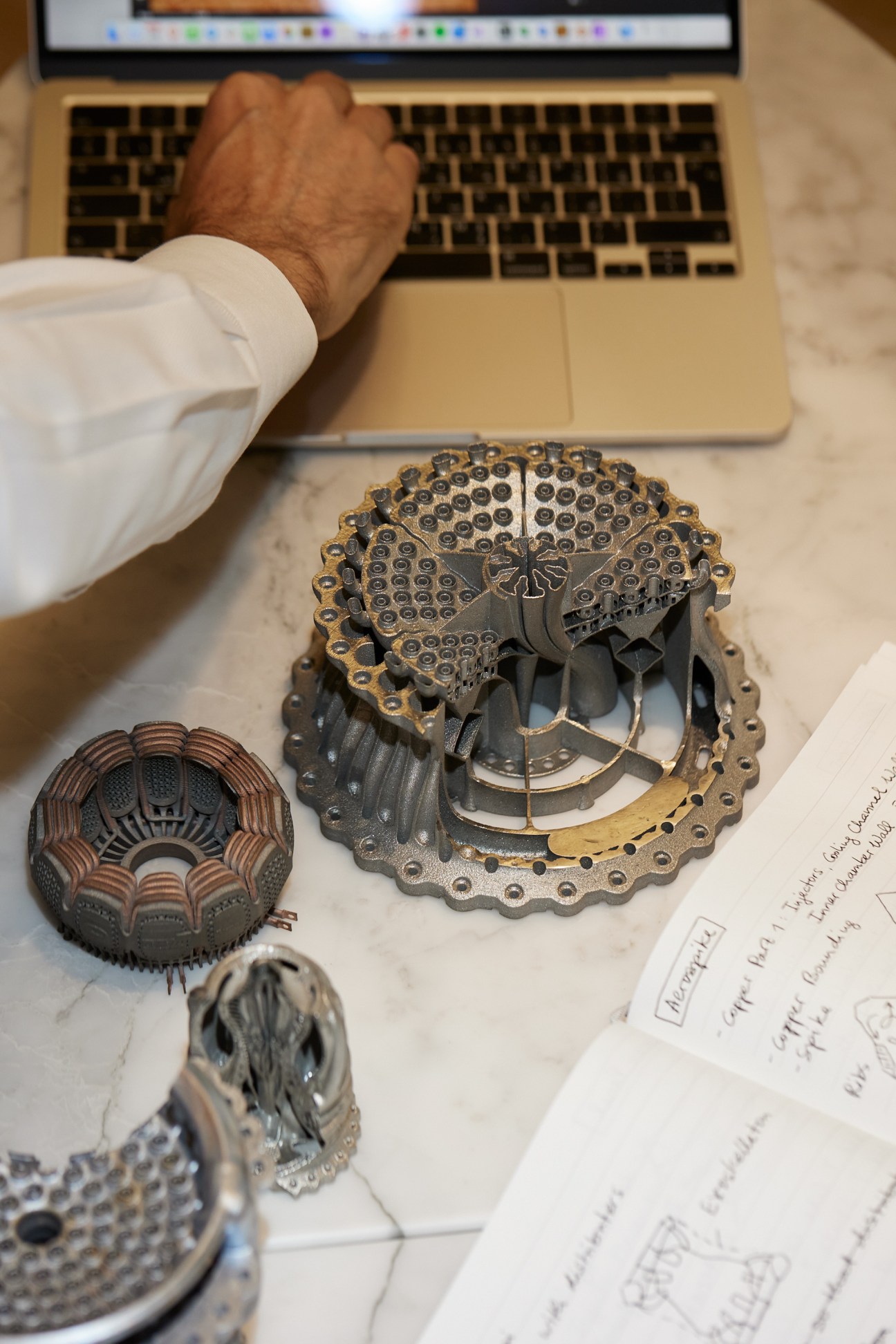
Lissner and Kayser’s start-up isn’t a manufacturer but its focus is on software and intellectual property aimed at revolutionising the design and manufacturing process. Lissner, an aerospace engineer, and Kayser, a software engineer, have come up with an algorithm that automates the laborious manual work of an engineer, which normally involves months of human-drawn iterations to get to a final version of a product. Lissner calls Leap 71’s breakthrough “a tremendous departure” from what currently exists, with the power to generate a design in anywhere from five to 15 minutes. In theory, it can be applied to anything engineered.
The company is now applying its technology to help make rocket engines. In September, Leap 71 announced a partnership with The Exploration Company (based between Munich and Bordeaux) to help design propulsion systems to be 3D printed and eventually used in rockets; there are plans to test the engines next year.
For now, when it needs to test its software, Leap 71 does much of its 3D printing overseas as the infrastructure isn’t there yet in the UAE. But Kayser predicts that will soon change, given the pace at which everything else seems to move, as the UAE continues to focus its industrialisation efforts on highly-skilled, high-tech work.
“An agile group of engineers in a dynamic environment, unencumbered by legacy technology, can outperform much larger countries when it uses AI and automation,” says Kayser as we gaze over some of the start-up’s sample printed engine parts, which look like contemporary art sculptures. He insists that the aim isn’t to replace humans but actually make their lives easier. “By investing in modern manufacturing infrastructure, especially 3D printing, the UAE can set itself apart,” he says. Soon a “made in the UAE” rocket engine might be joining those firefighting bots and plane parts.
Made in the Emirates
Aluminium, architectural glass and artificial islands are among the products now proudly manufactured in the UAE.
1.
Weaving and embroidery
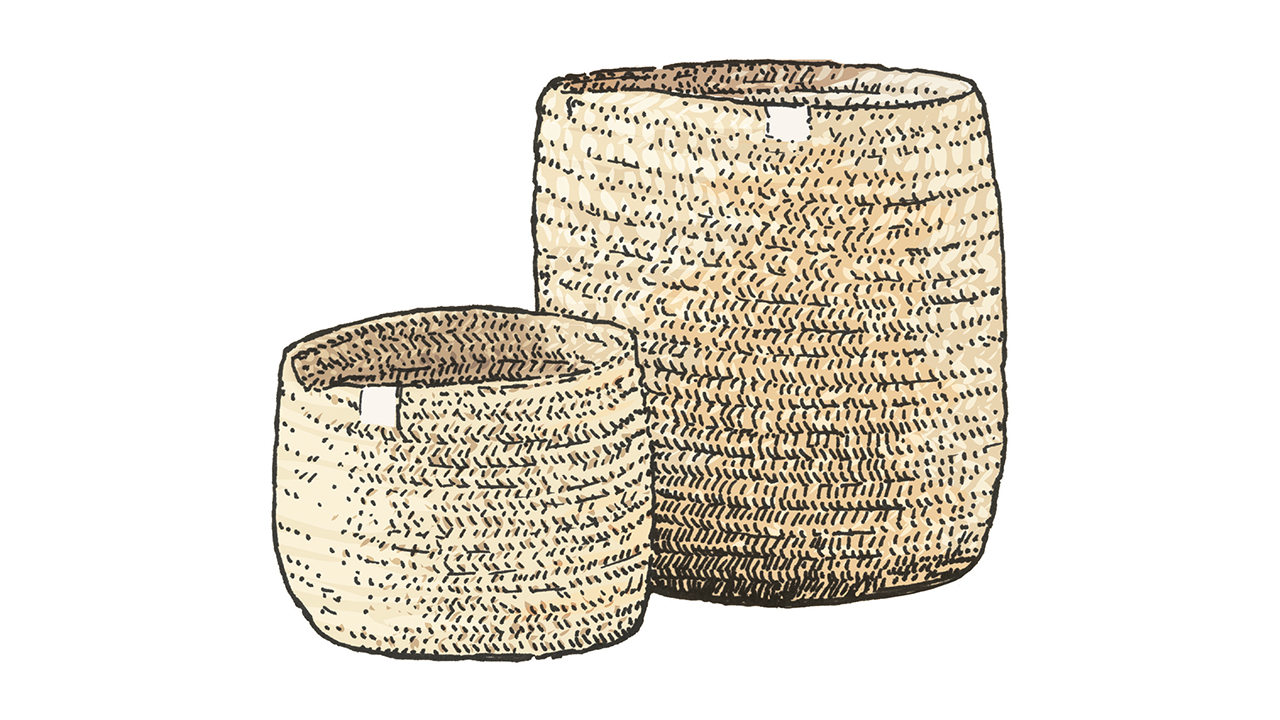
These ancient practices are woven into the nation’s Bedouin backstory. Today the non-profit Al Ghadeer uae Crafts works with 250 craftswomen across all seven emirates to create clothing, homewares and accessories using traditional weaving and embroidery techniques including sadu, talli and khoos.
alghadeeruaecrafts.ae
2.
Masks
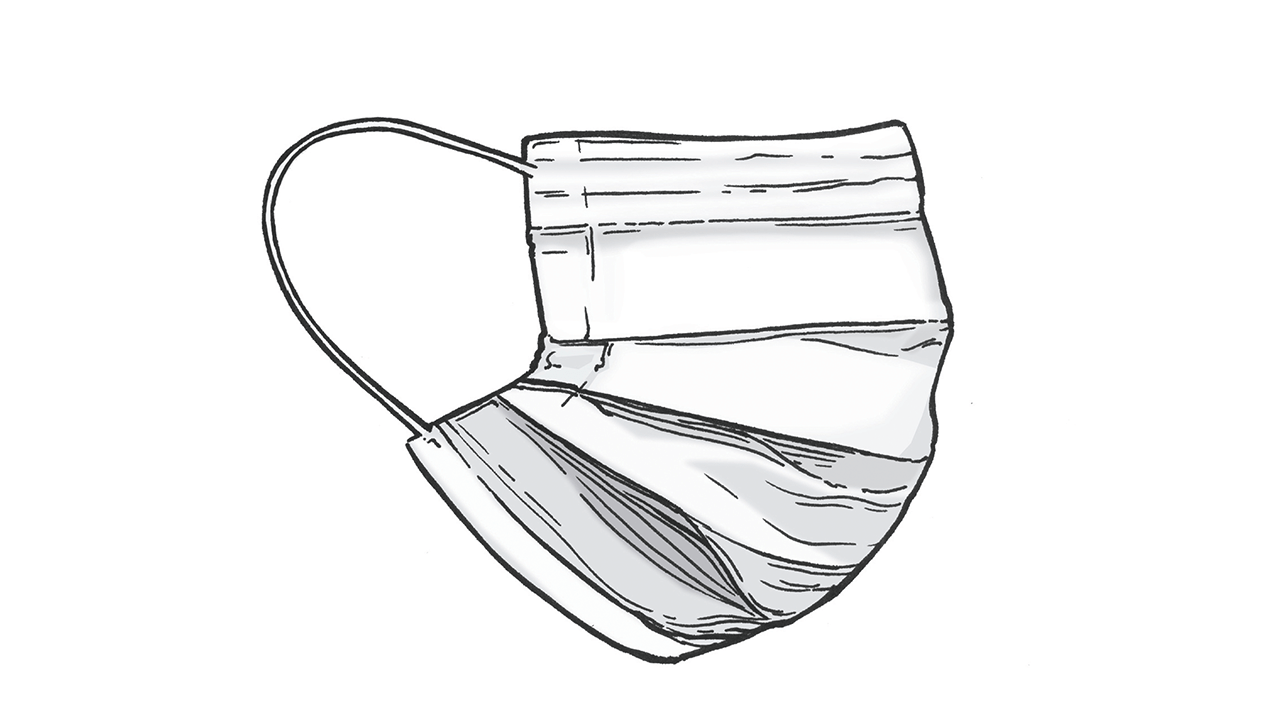
Face coverings are here to stay – partly because the average plastic mask takes 450 years to biodegrade. That said, you can breathe easy knowing about the canny Navamask project by the smart souls at Khalifa University. Made from a bio-based compostable polymer, this new mask keeps out bacteria, sand and all manner of nasties.
ku.ac.ae/navamask
3.
Artificial islands
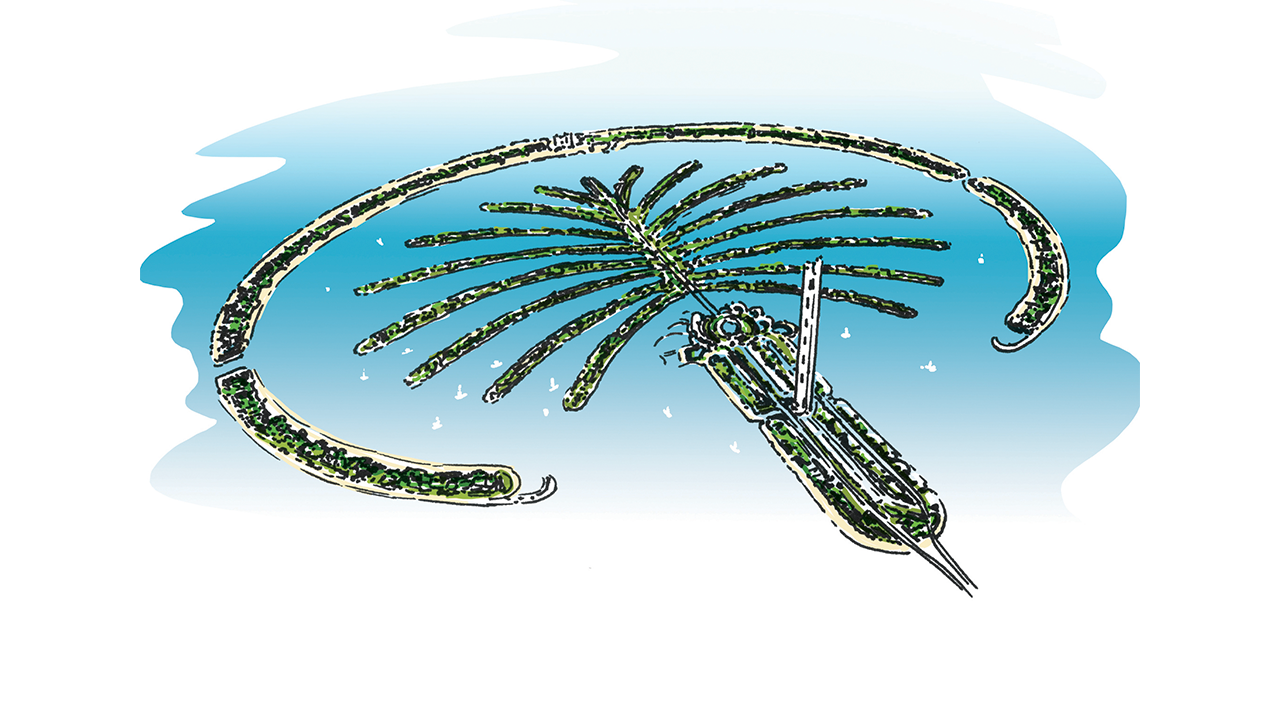
A lack of waterfront space? Real-estate developer Nakheel simply built more. Some 7 million tonnes of rock and sand were used to build Palm Jumeirah, the first of two artificial islands in the shape of palm trees – chosen to maximise the beaches. Today Palm Jumeirah is home to luxury hotels and 80,000 people.
nakheel.com
4.
Aeroplane parts
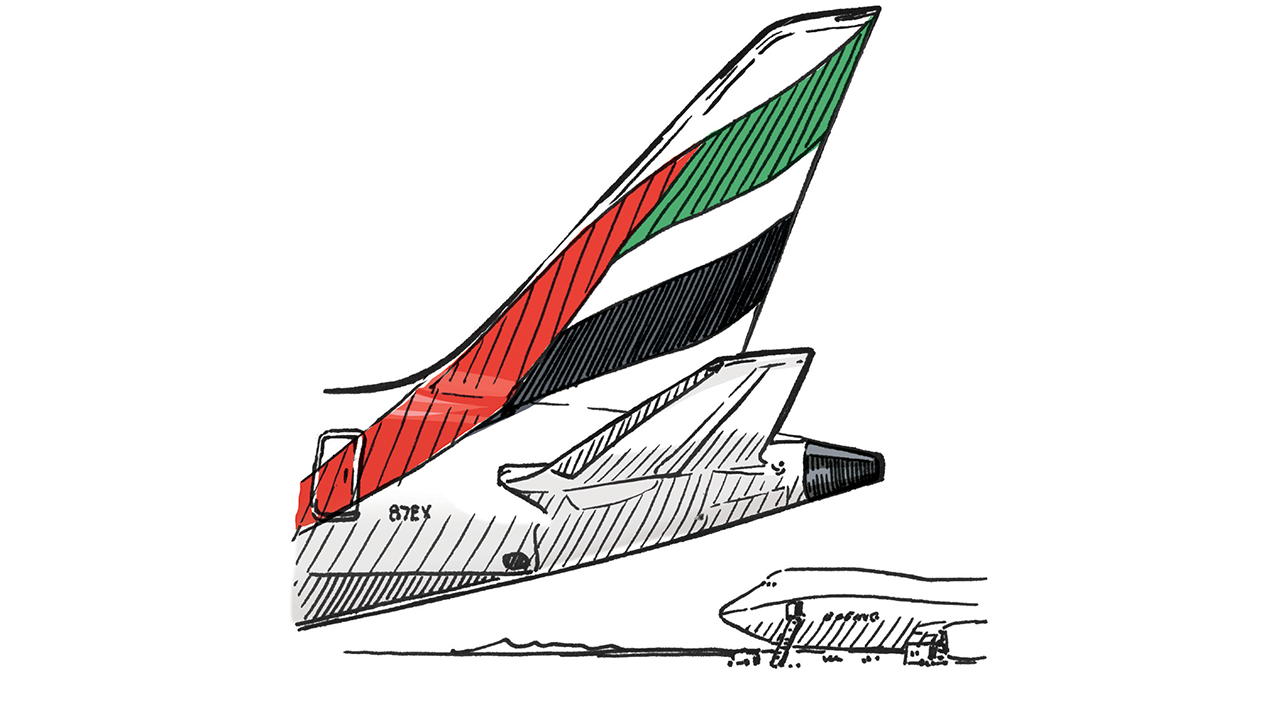
You might be able to spot the empennage of a great Gulf carrier but did you know that Strata has made some 60,000 aeroplane components since the Al Ain-based business took off in 2010? With clients including Airbus, Boeing, Pilatus, Leonardo and Saab, the sky’s the limit. What’s more, the uae’s hope of becoming an aerospace hub seems a little closer.
strata.ae
5.
Camel-milk chocolate
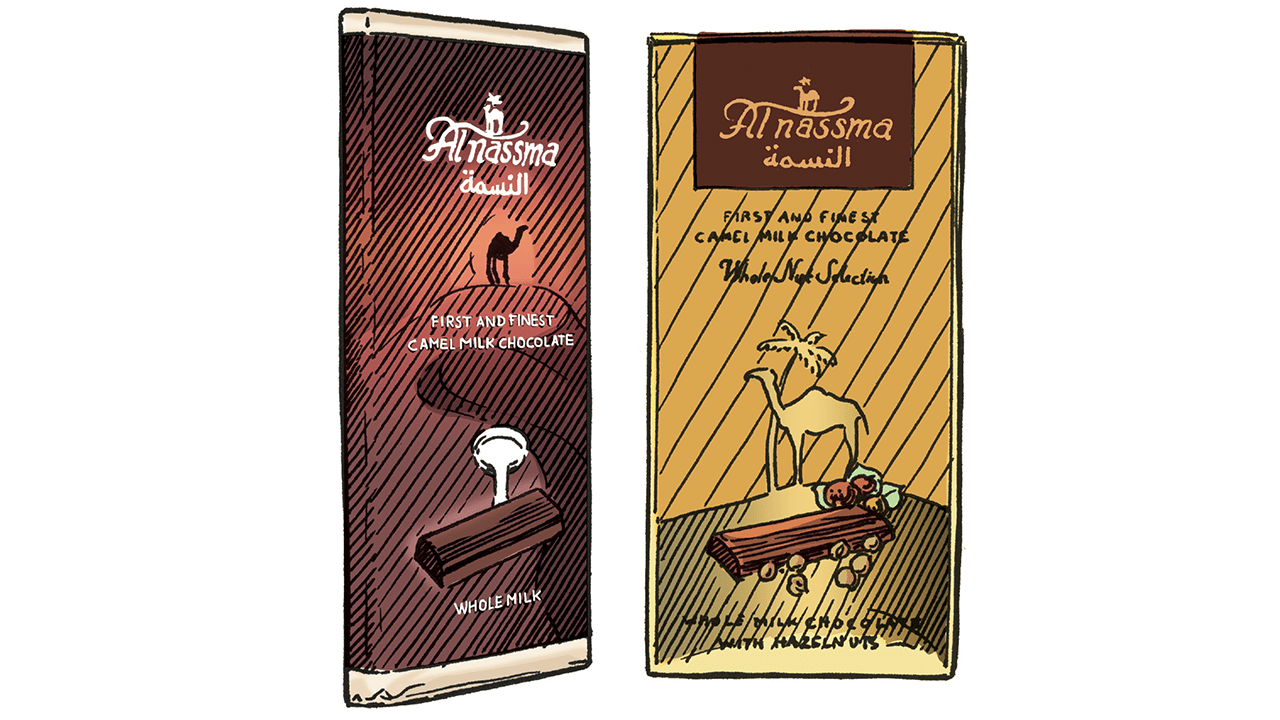
Since 2008, Dubai-based Al Nassma has made just the treat to get you over the hump: the world’s first – and, according to founders Martin Van Almsick and Hanan Ahmed, finest – camel-milk chocolate. The bars are stocked across the country (including in the brand’s Deira flagship), as well as in Australia.
al-nasma.com
6.
Pasta
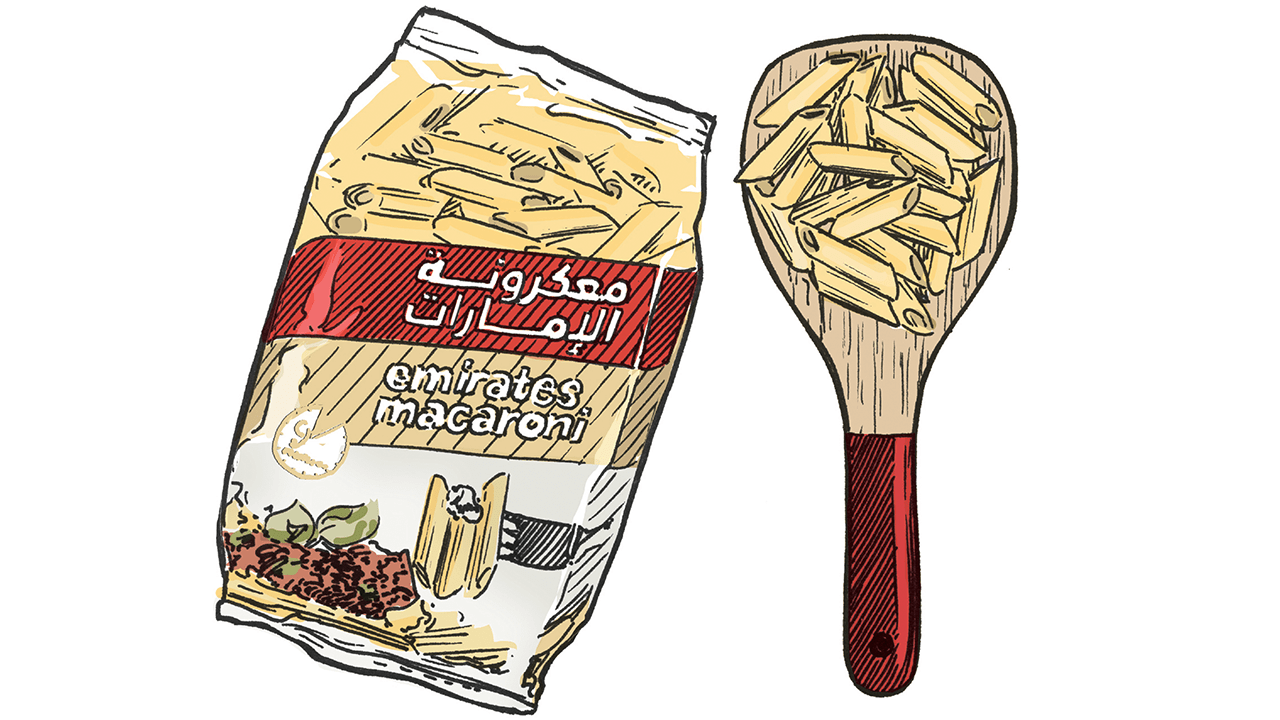
The Emirates Macaroni Factory in Dubai’s Al Quoz neighbourhood has been busy making and exporting dried durum-wheat pasta since 1979. Today it produces about 200 tonnes every day, which it sells in 38 countries across five continents.
emiratesmacaroni.com
7.
Aluminium
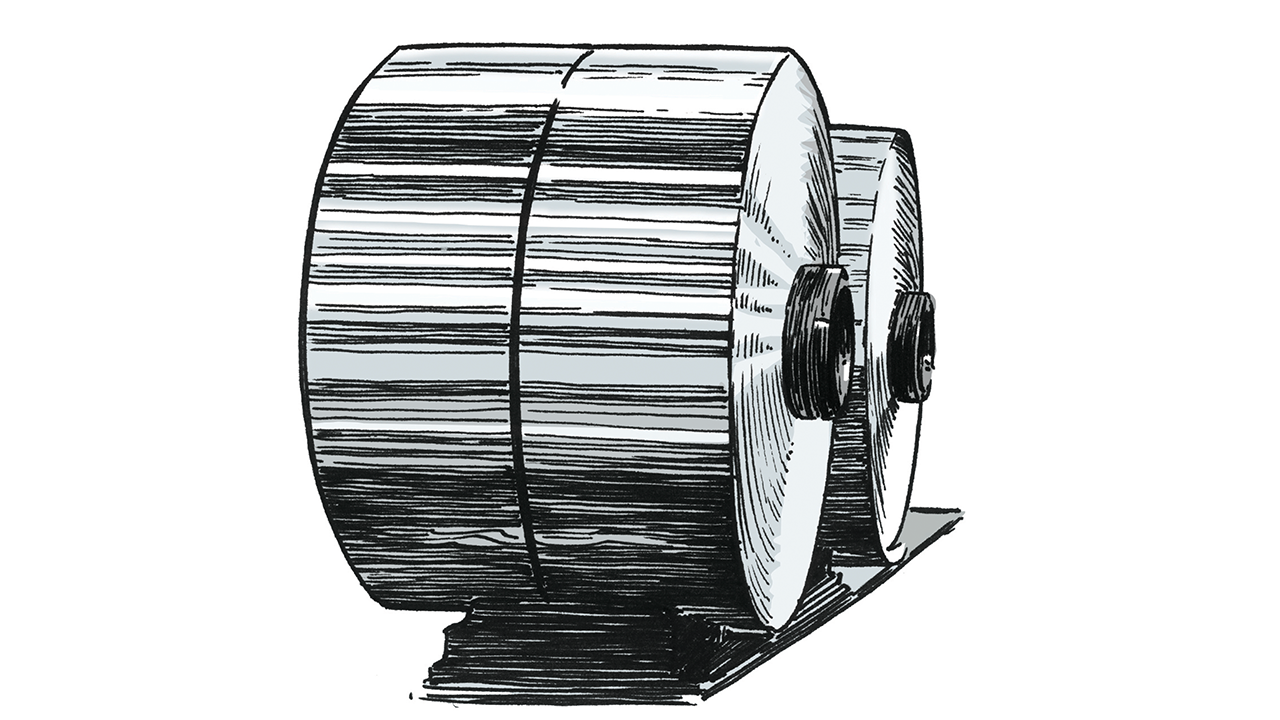
Few associate the uae with heavy industry but it’s quietly become a global player in aluminium production thanks to government-backed firms such as Emirates Global Aluminium, which employs about 7,000 people. Today Emirates Global Aluminium accounts for 4 per cent of global production – something to reflect on.
ega.ae
8.
Tote bags
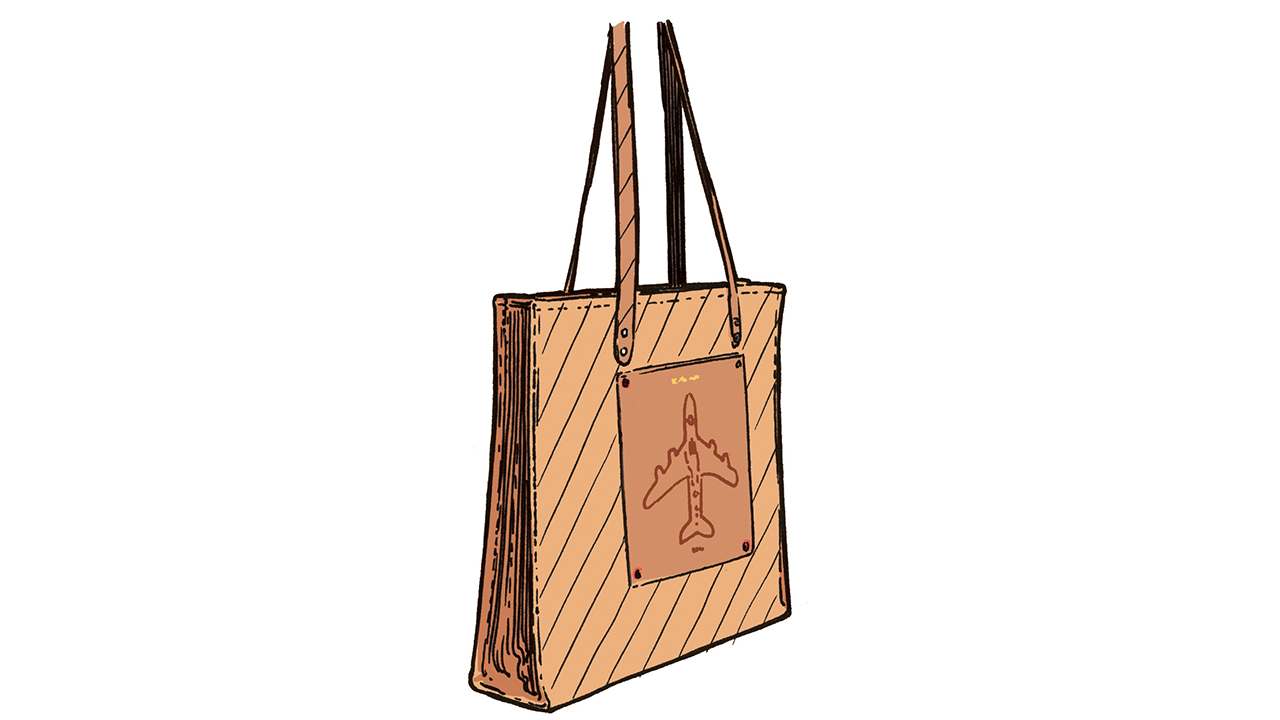
Sustainability comes in many guises and, for Peahead.eco, that means swooping in to stop those old Etihad seat covers and lifejackets from hitting the scrapheap. These laser-engraved totes are handmade in Dubai and come in different styles courtesy of artist Christine Iris Wilson. Reusing products and adding value through design has bags of potential.
peahead.eco
9.
Architectural glass

Emirates Glass saw a window of opportunity during a construction boom. The firm started in 1997 and has developed innovative materials for its EmiCool series to protect against the desert heat. Emirates Glass has also created lighter and easier-to-transport varieties, as well as a bullet-proof glass.
emiratesglass.com
10.
Coffee cups
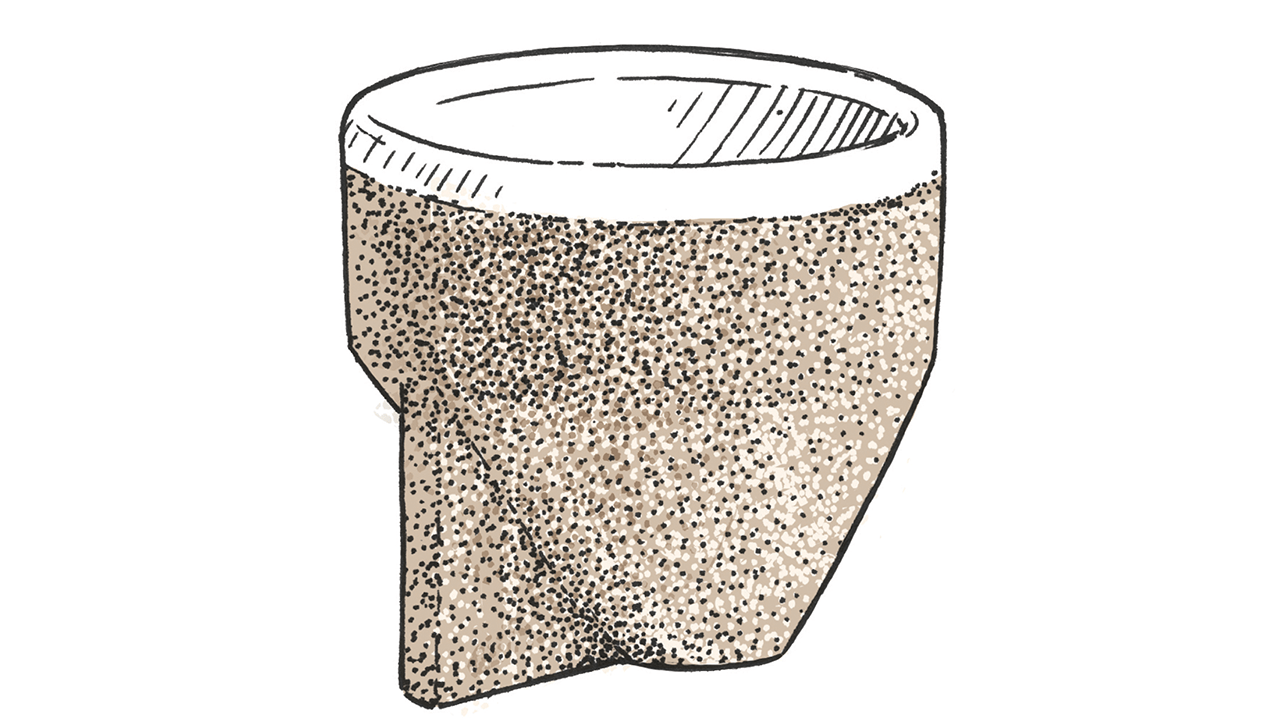
Design agency Tinkah set up The Foundry to give its designers the space to experiment with sustainable new materials. It came up with Ramel: a mouldable substance made from the nation’s abundant desert sand. These handsome coffee cups, inspired by Bedouin life, were launched during Dubai Design Week.
+971 4 385 2211
11.
Yachts
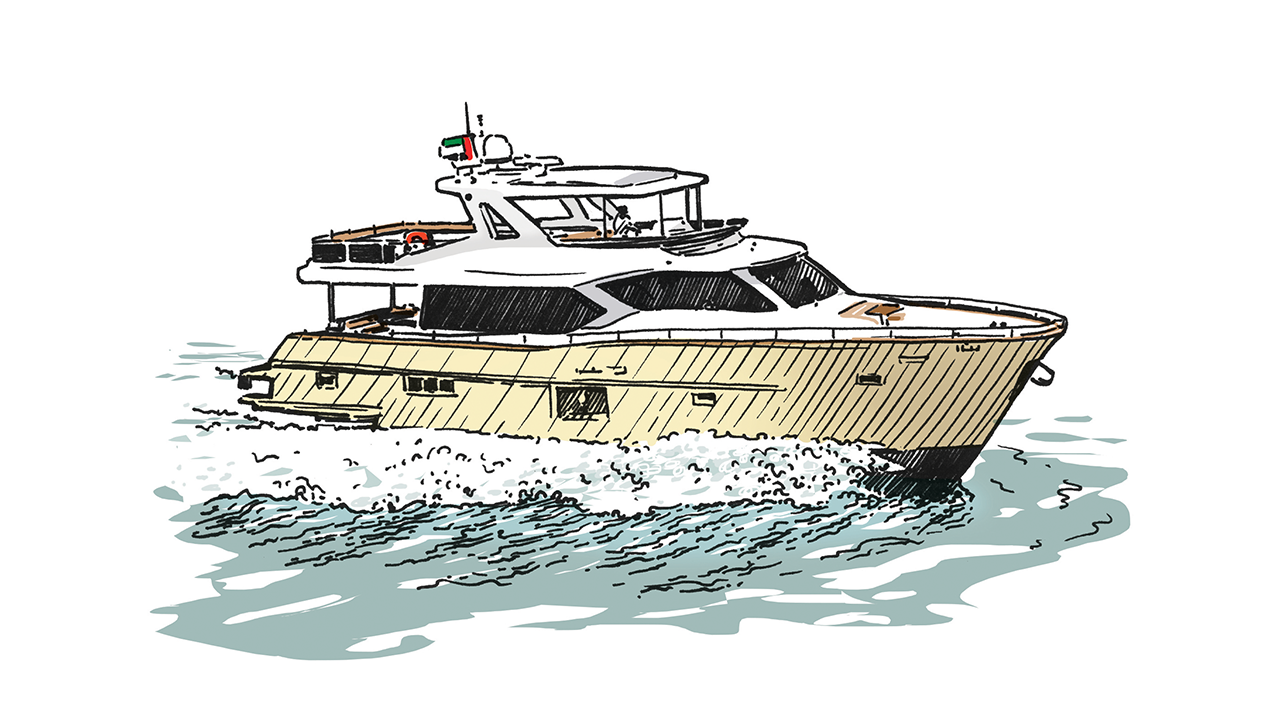
Umm Al Quwain-based shipbuilder Gulf Craft has made waves in the yachting world since 1982. It runs two shipyards in the uae and one in the Maldives where it makes high-performance vessels beloved by boat enthusiasts from the Gulf to the Med. While never going overboard, the Nomad range is the most luxurious.
gulfcraftinc.com
12.
Bikes
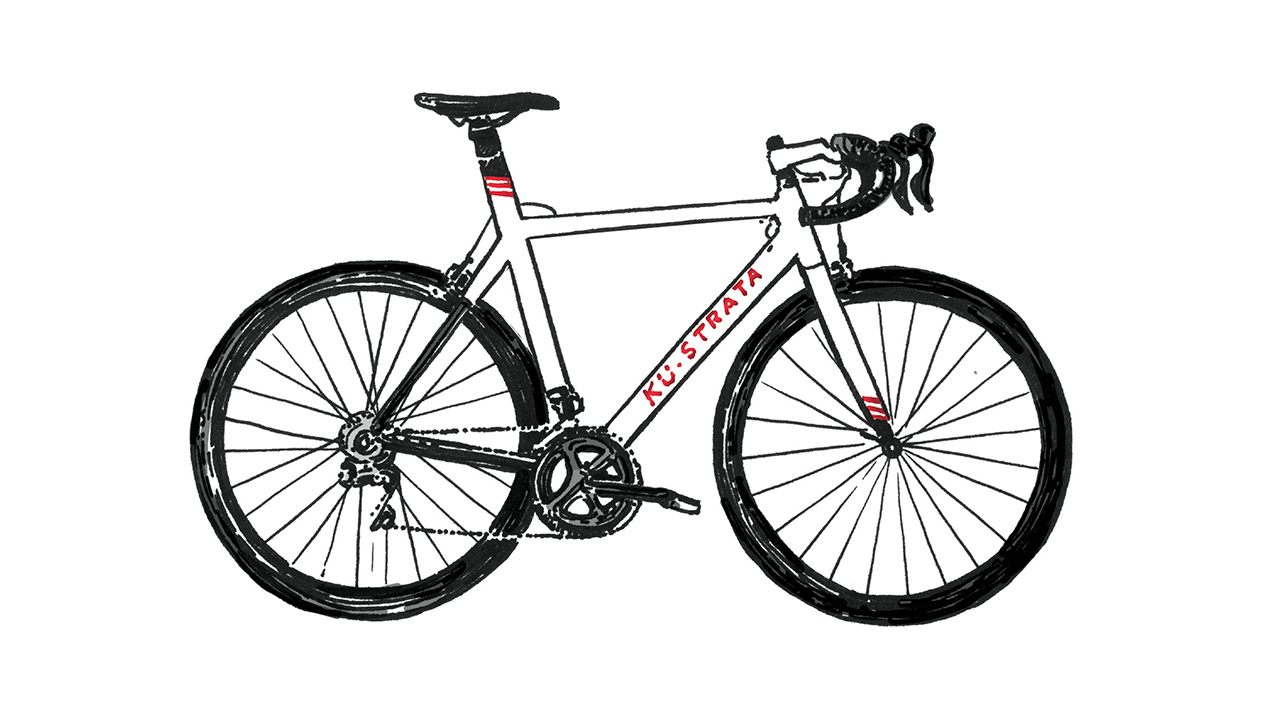
Khalifa University worked in tandem with aerospace manufacturer Strata to give old plane parts a new lease of life. The result? The Ku-Strata: a custom-made, carbon-fibre bicycle with a titanium saddle. While the project was academic rather than commercial (only six were made), we can see a space in the market for a well-made cruiser.
ku.ac.ae
13.
Burrata

Italfood moved its production from Naples to the Gulf to help its export businesses. The factory in Ras Al Khaimah works with milk farms in the uae to produce burrata, mozzarella and ricotta, as well as regional treats such as labneh. The nearby port handling millions of tonnes of freight each year is a bonus when it comes to distribution too.
italfoodshop.com
14.
Toilets
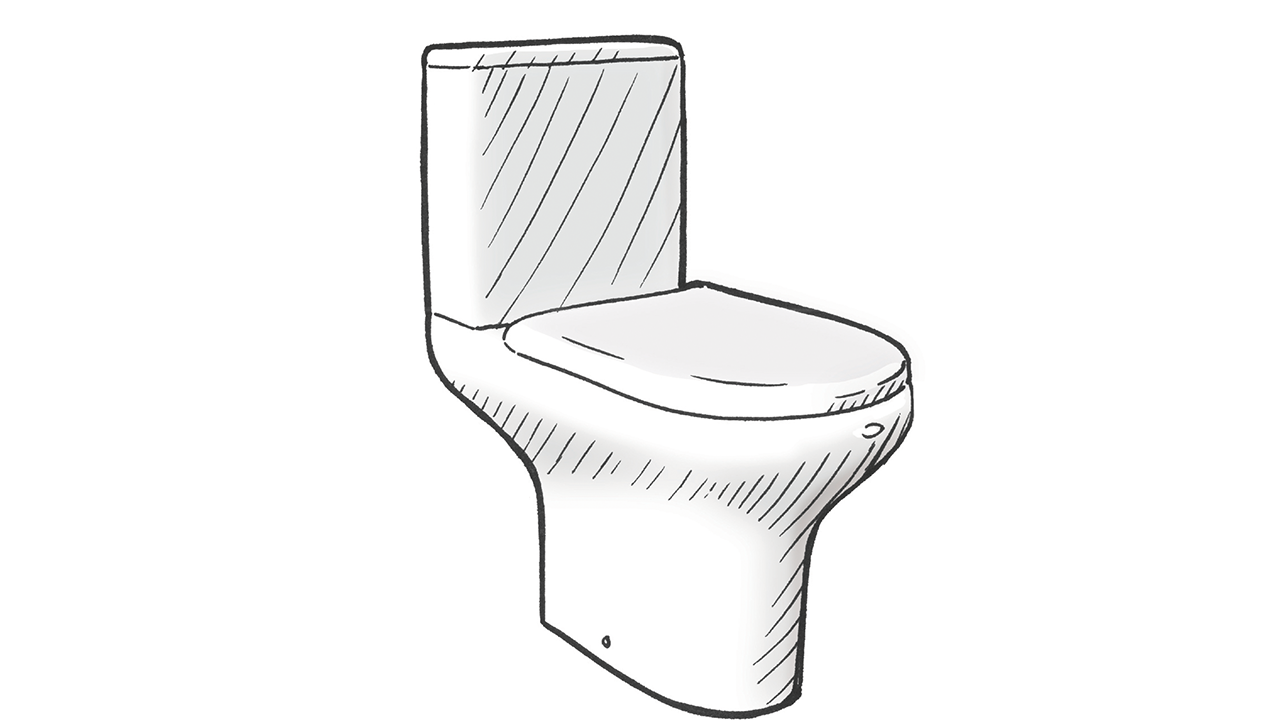
Ras Al Khaimah-based RAK Ceramics is one of the few uae firms that many around the world will know intimately: each year it makes 5.7 million pieces of sanitaryware (think toilets, sinks and bathroom fittings). Founded in 1989, the company is flush with ideas, employing 12,000 people and selling its wares in more than 150 countries.
rakceramics.com
15.
Ice cream
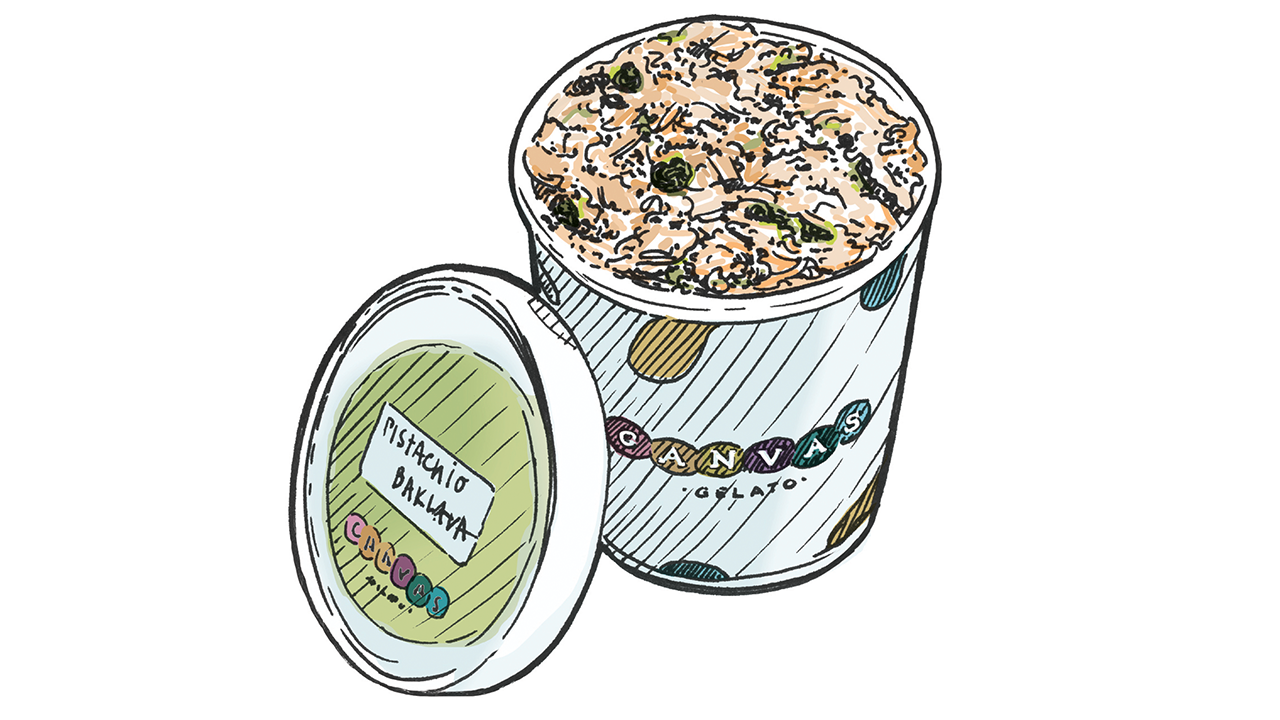
Founded in 2017 by Emirati Ahmad Al Marri, Canvas Gelato has become a Dubai favourite despite not having a permanent parlour. It has excelled thanks to doorstep delivery, partnerships with homegrown restaurants and imaginative, often-changing flavours such as karak tea and biscuits or orange blossom.
+97 1 52 999 3565
Clean sweep
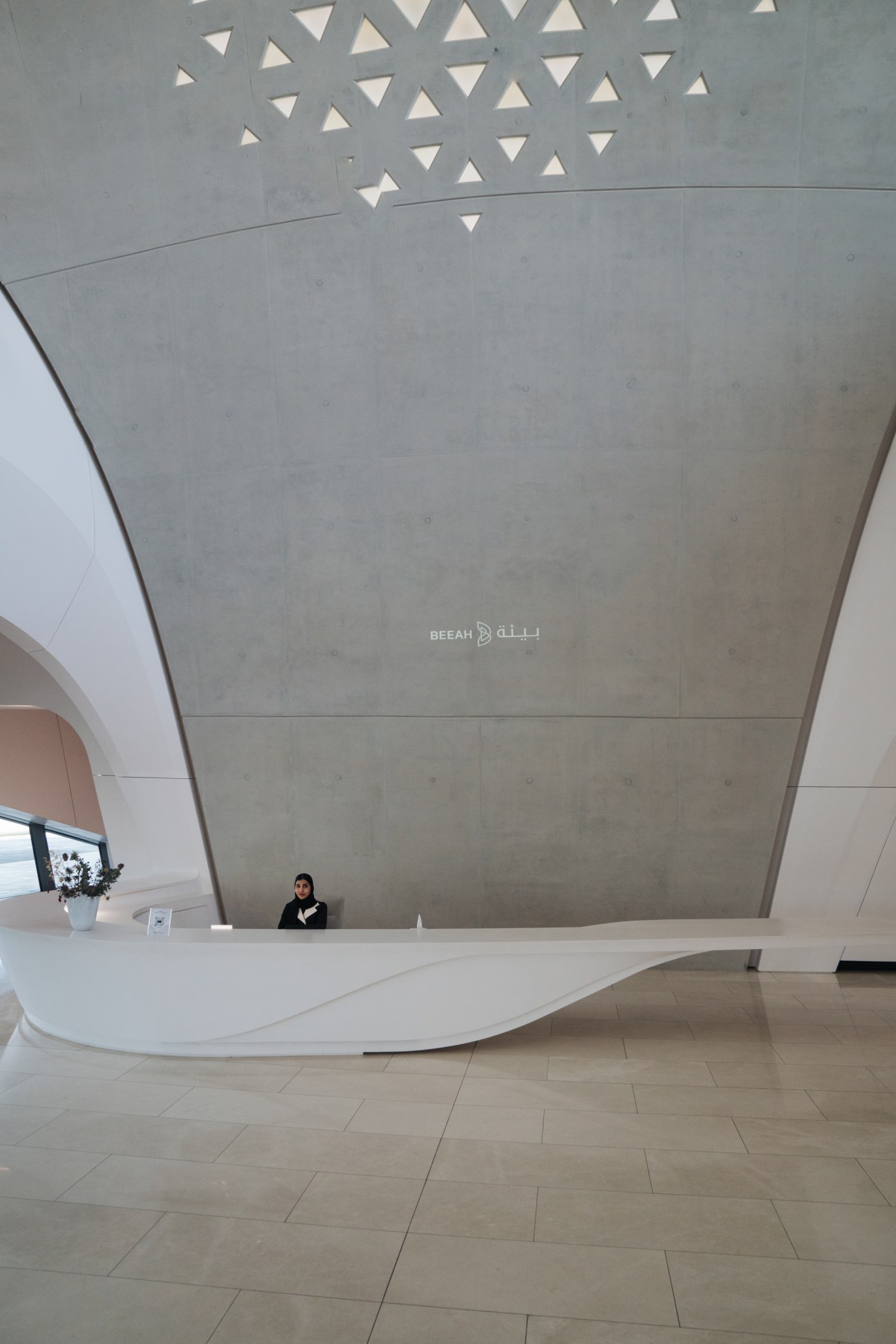
Does your headquarters feature an “abstract immersive experience” in the form of a teeming rainforest where you can tout your green credentials to visitors and get clients in the mood to do business? Perhaps it should. There’s something charming, if a little eccentric, about the recently opened HQ of Beeah, a waste-management and green-energy behemoth, based in the desert suburbs of Sharjah. Built between 2014 and 2022, the building is one of the last designed by the late Zaha Hadid. From the sloped, tent-like ceiling of the managerial majlis (sitting room) to the furniture designed by Hadid, there is an admirable, almost obsessive fealty to the architect’s original vision. Behind the scenes, it’s bolstered by artificial intelligence (AI) and smart systems that ensure that operations are kept green and clean. Impressive? Certainly. But does it work as a day-to-day office?
Growth strategy
Beeah is not your typical waste-management company. The public-private firm was founded in 2007 and initially served only the emirate of Sharjah, collecting domestic and commercial garbage and running education programmes to encourage people to recycle. Its efforts paid off. Today the city diverts 90 per cent of its waste from landfill, which goes instead to waste-to-energy plants, reclamation yards and wider repurposing procedures – all processes owned and operated by Beeah. The Gulf Cooperation Council nations are among the world’s largest generators of waste per capita but Beeah is turning that around – and reporting a tidy profit along the way. Its blue rubbish trucks and wheelie bins can now be found all over the uae, as well as Saudi Arabia and Egypt’s newly built administrative capitals. In the past few years, it has expanded into a group of companies spanning healthcare, property and investments in digital technology.
Base of operations
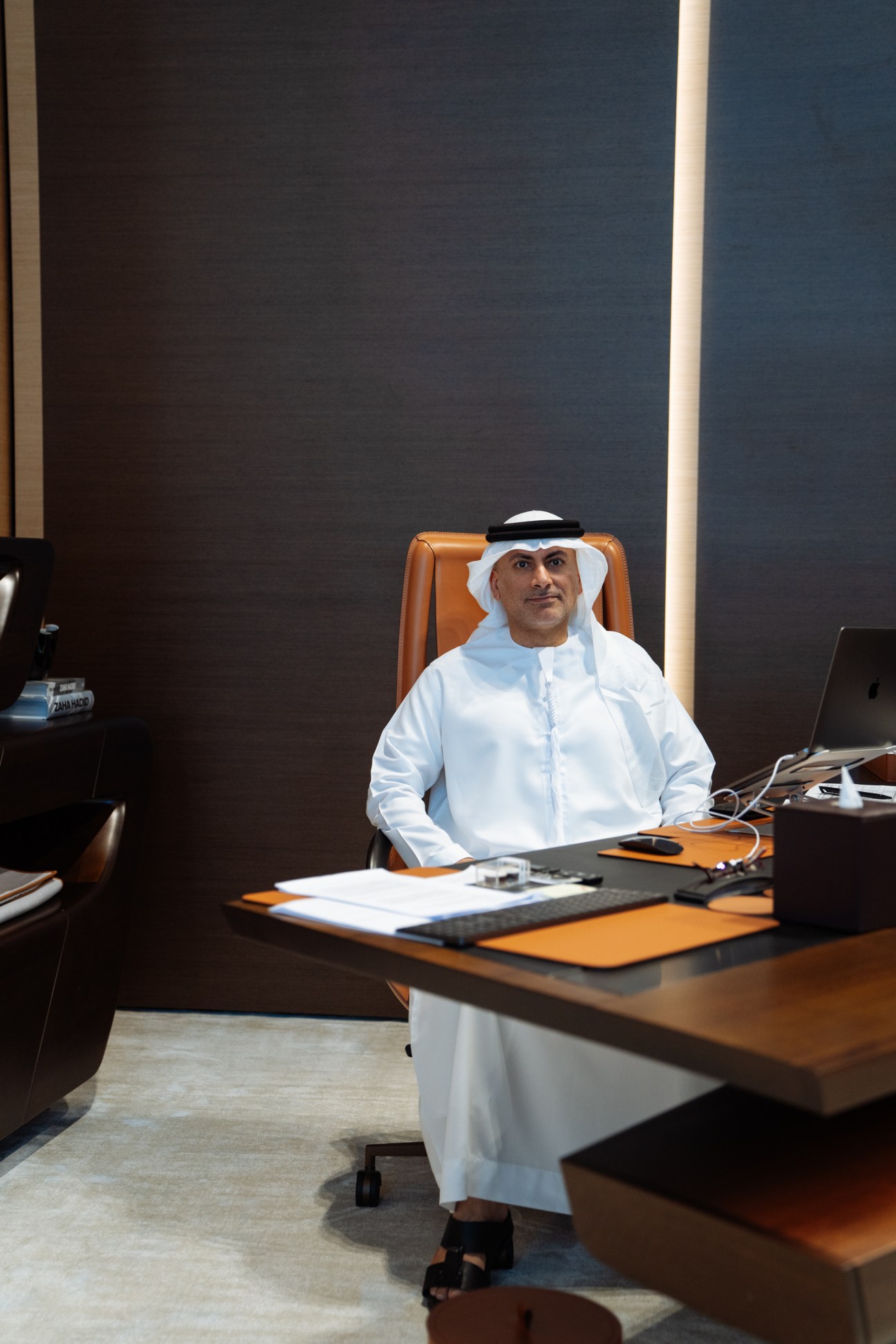
In 2013, Beeah set about creating a home that could match its global ambitions. “At a certain point, we had to make a statement as an organisation,” says group CEO Khaled Al Huraimel, who built the business from the ground up. Despite the grandeur of his office (and his custom Hadid-designed desk), Al Huraimel is a modest, rather self-effacing Emirati who had long harboured the idea of building something that could embody what he calls the “city of the future”. “But if we had talked about this when we started 15 years ago, people would have said, ‘What are you doing? You’re garbage men.’”
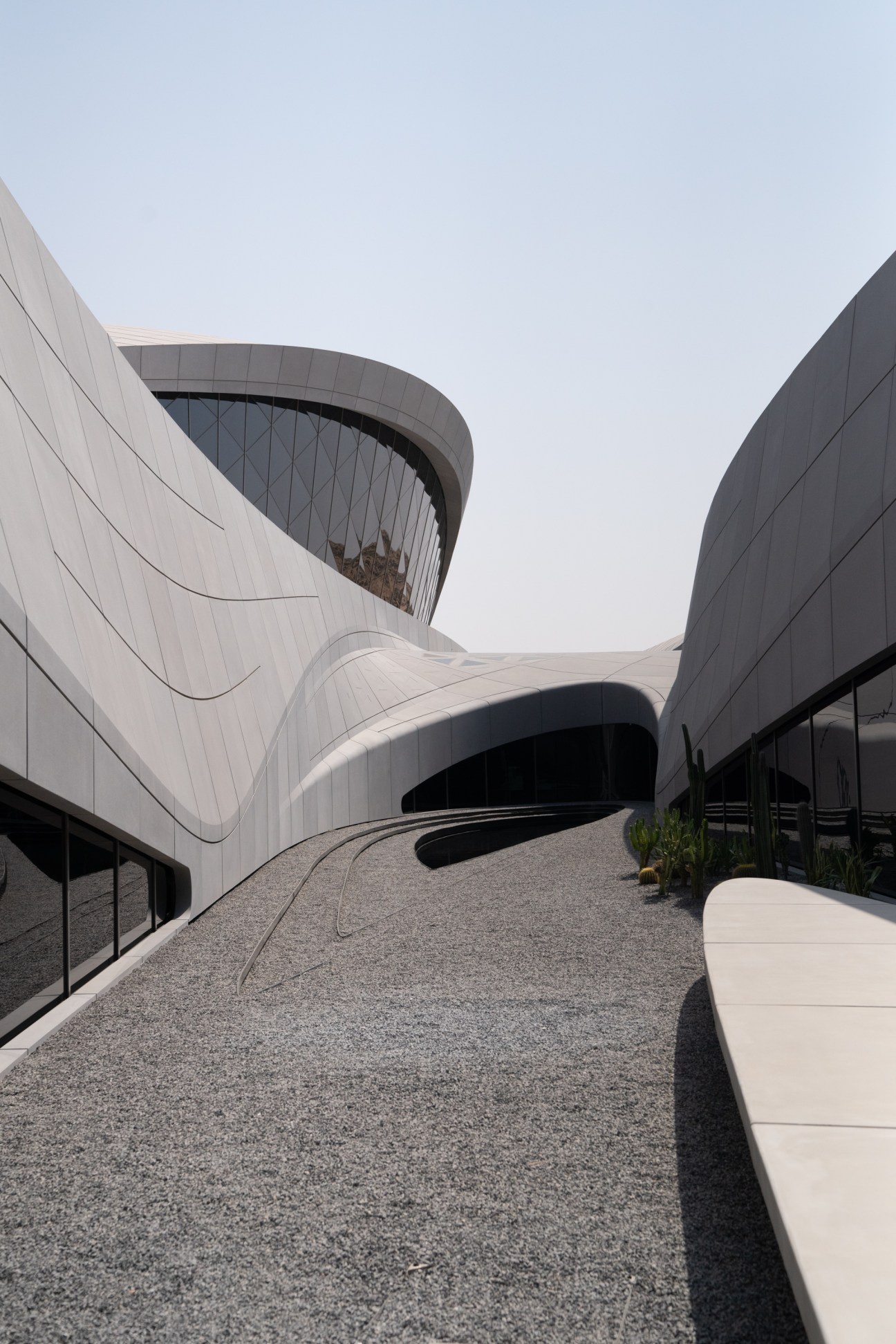
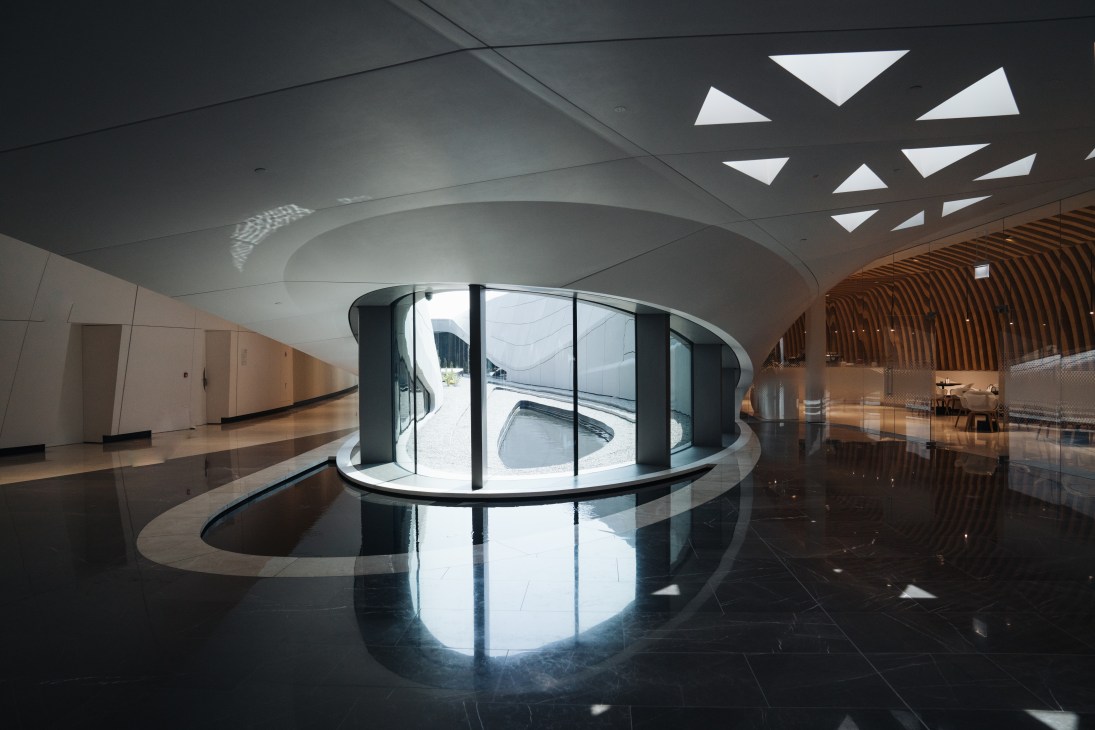
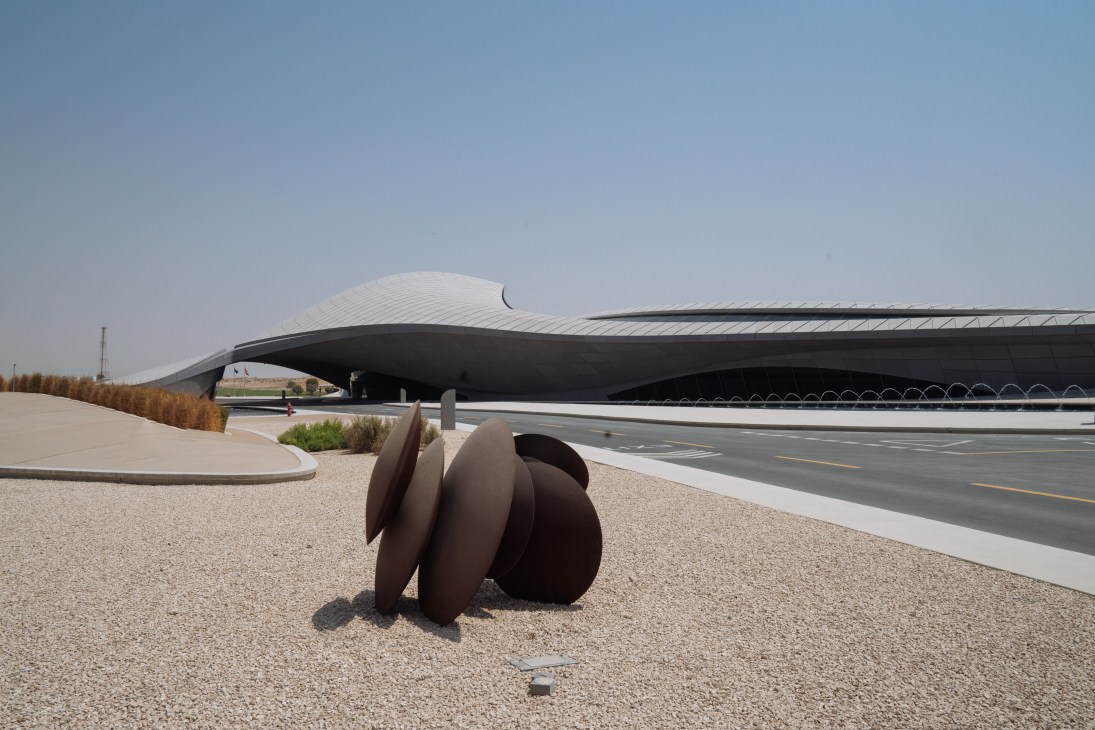
The building resembles an abstract sand dune or perhaps a conch shell sunk into a manicured patch of copper-coloured desert. The roof is made from glass-reinforced concrete, while waste water irrigates the cactus gardens. An on-site solar farm powers parts of the building, which is kept cool by sophisticated AI that also monitors energy use. Curved concrete structures shield the glass windows of the offices from hot winds and exposure to the sun.
As Beeah grew, Al Huraimel sought to create a building that could communicate the business’s core values to a team of 13,000 people spread across the region. “When our employees walk in here, I want them to feel inspired about a more positive future,” he says. At the core of this is Beeah’s increasing use of AI: the company’s trucks and public bins, for instance, are now fitted with sensors that relay data to HQ and monitor collection trucks in real-time. Meanwhile, back at the base, the boardrooms have been set up to “listen” to meetings when they begin, automatically drafting and sharing minutes at the end. That might sound strange but Al Huraimel concedes that Beeah is yet to fully implement all of these AI features.
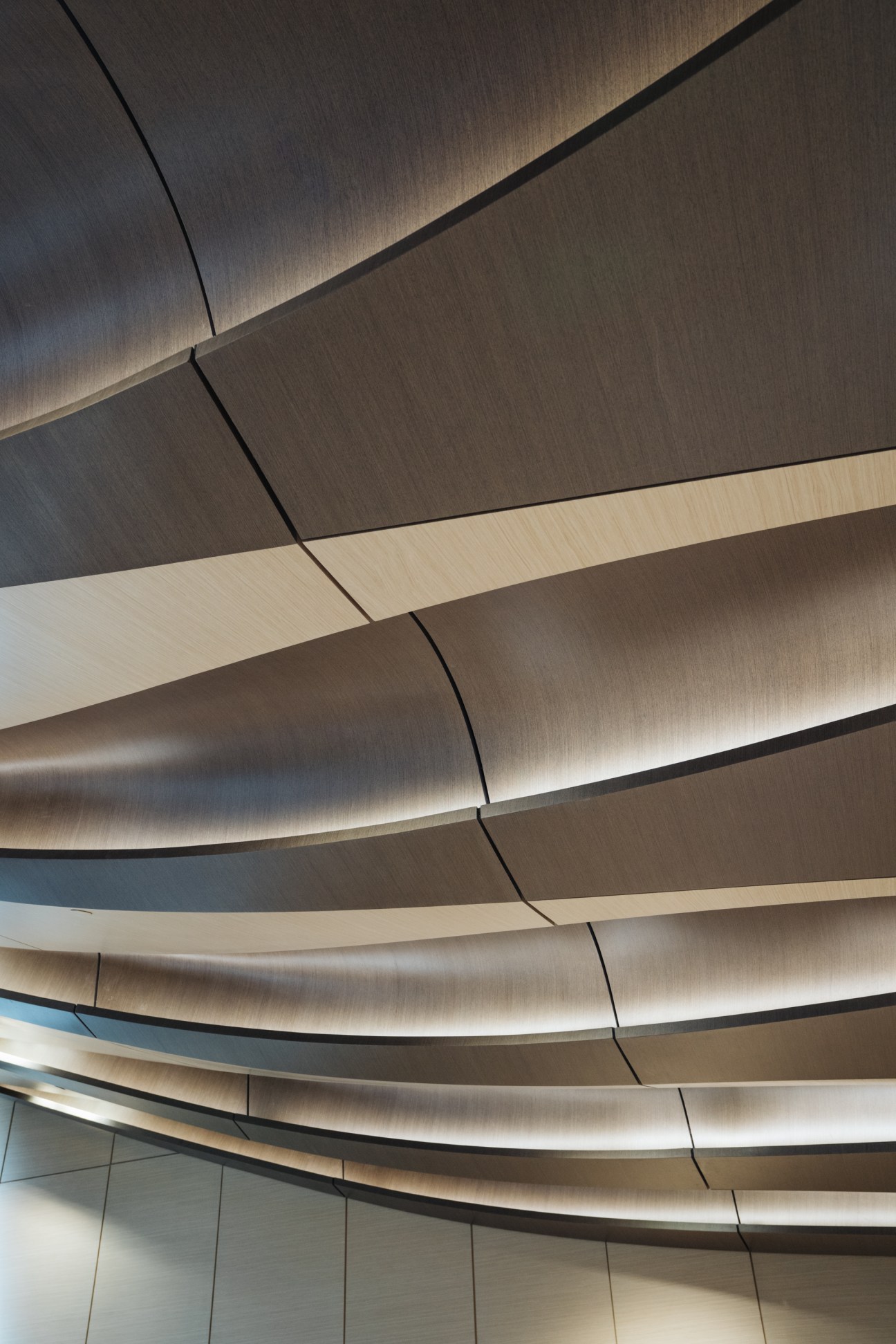
Though fastidious in terms of materials, the HQ’s design is emblematic of the principles that informed Hadid’s best-known works: organic in form yet eerily futuristic and fiercely resistant to uniformity. It apparently took a dizzying number of fabricated panels to form the building’s curved, arterial corridors. “We tried as much as we could to take the design intent all the way to the end, which is so often lost in construction,” says Nada Taryam, Beeah’s chief real-estate officer and an architect by training. The HQ took eight years to build and Taryam kept things on track even when the project’s UK contractor, Carillion, went bankrupt in 2018, halfway through construction. “I always wanted to work for Zaha so I feel like I manifested this building [into existence],” she says.
Inside intelligence
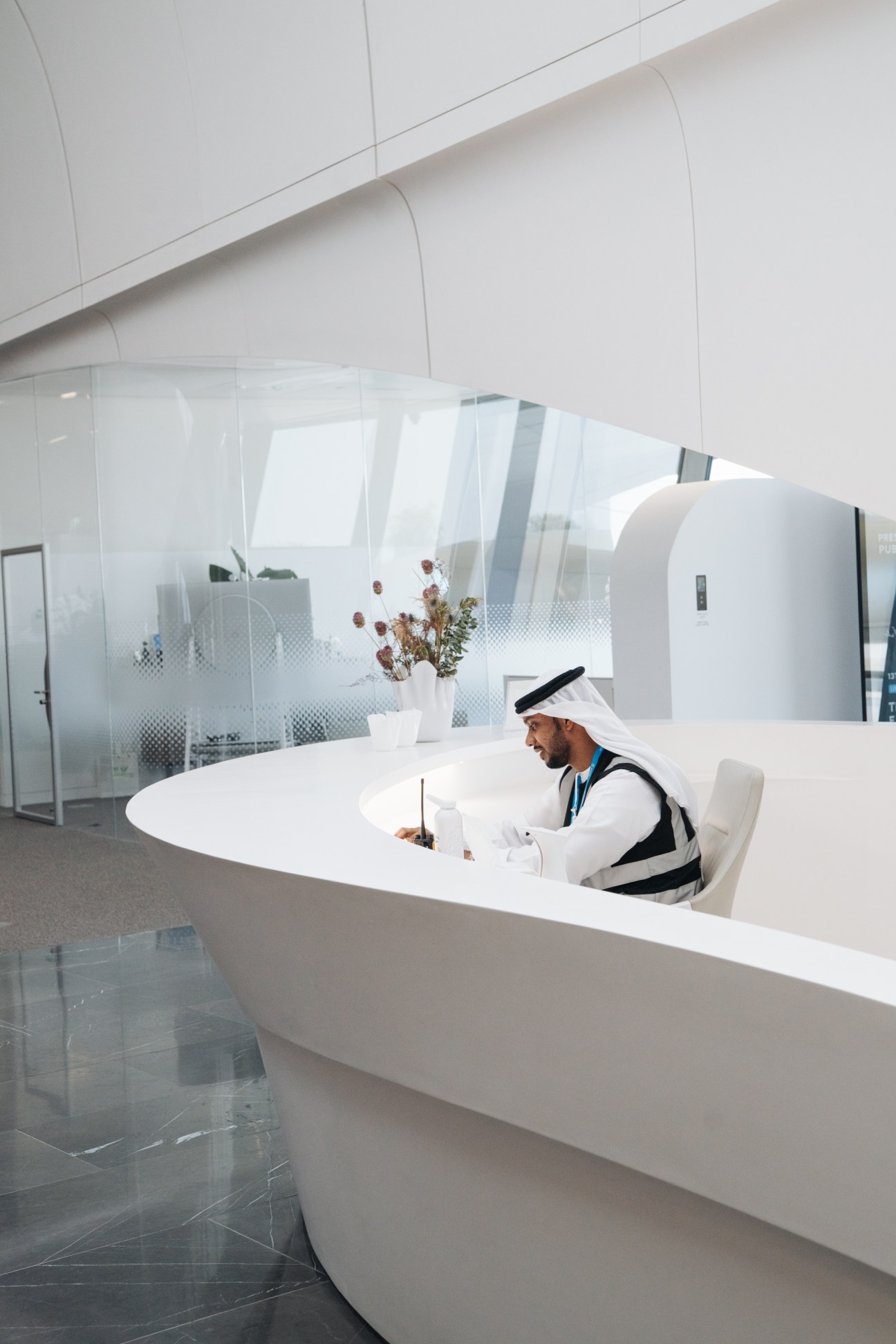
Entering Beeah HQ is a little like stepping into an planetarium: you are greeted by a celestial ambient soundscape that sets an elevated, futuristic tone. On the morning of Monocle’s visit, however, the virtual concierge – a large screen equipped with a camera that can apparently recognise visitors, direct them to meetings and even order them coffee – isn’t particularly co-operative. Instead, we are greeted by a smiling receptionist. “I have really come to love the music,” she tells Monocle.
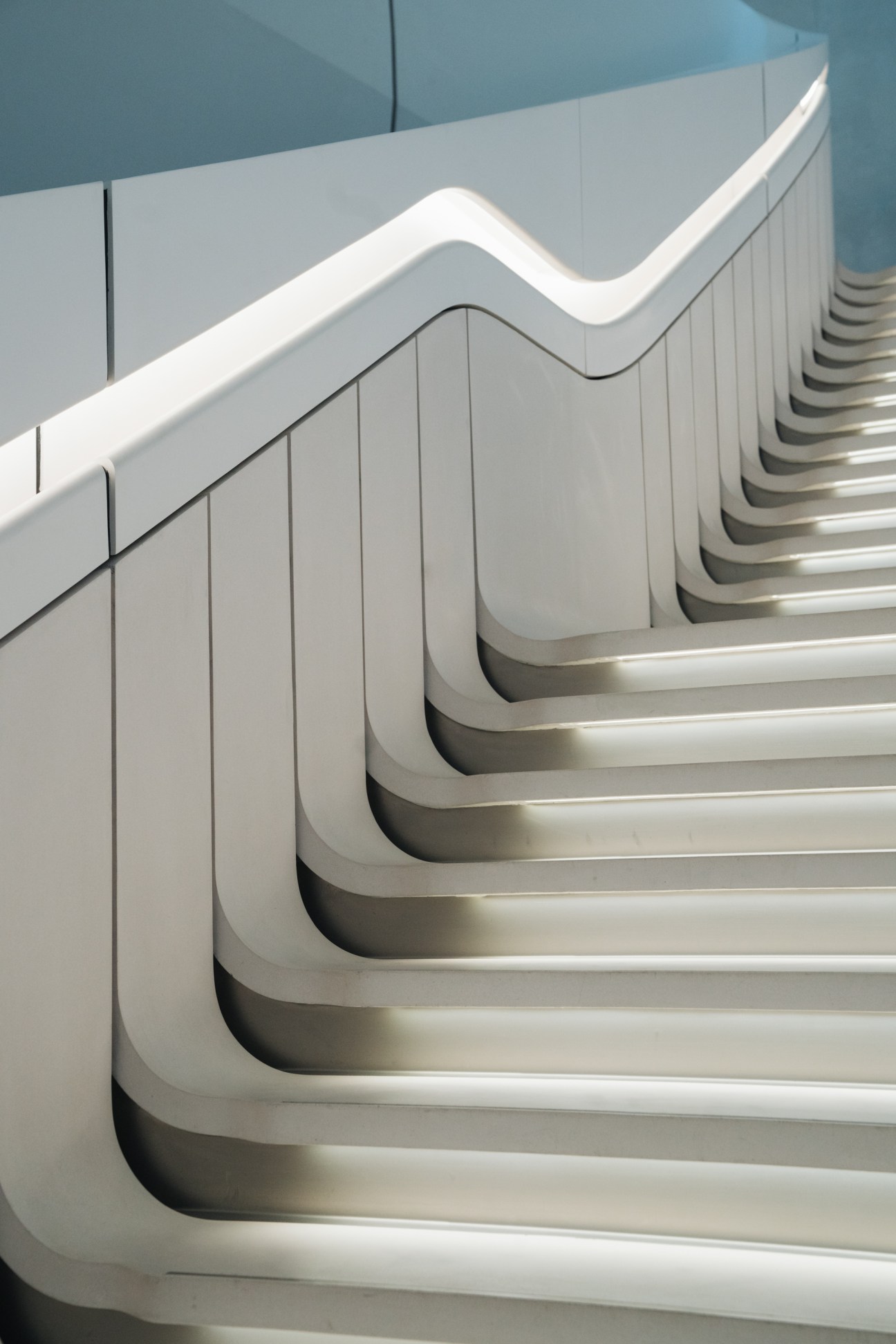
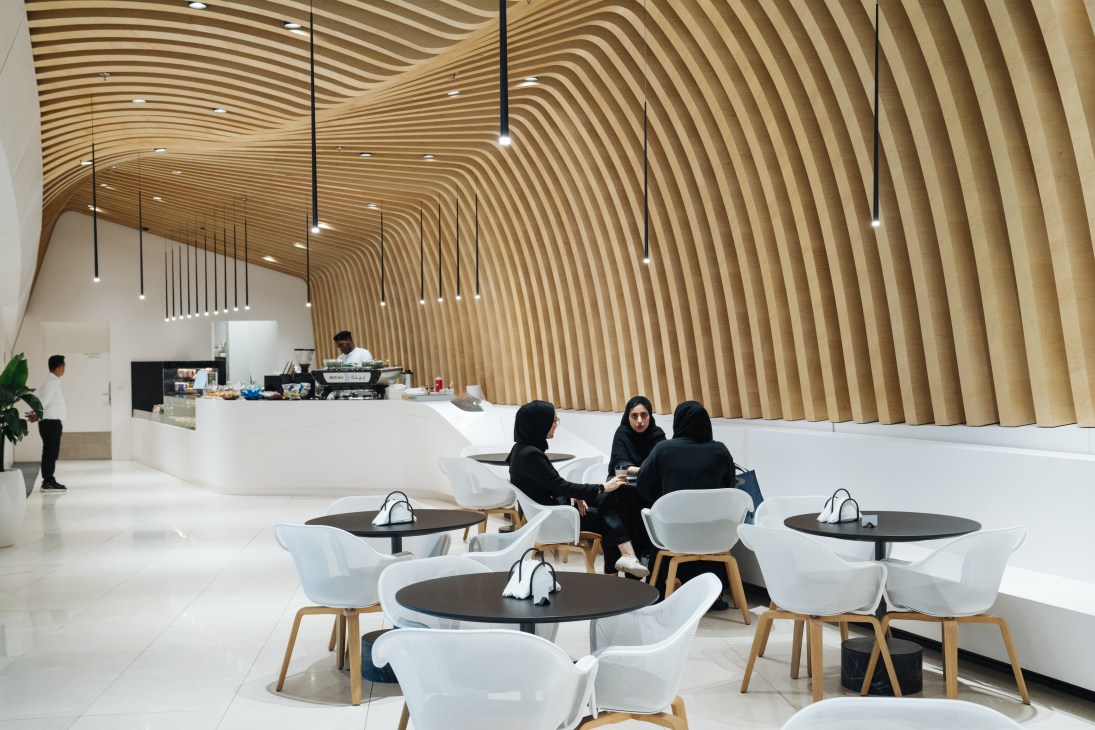
The attention to detail verges on extravagant. From the doorhandle housings to the ashtrays – yes, ashtrays – in the managers’ majlis, everything subtly references dune-like contours. The lobby is filled with a variety of furniture and each piece is starkly black or white, which appears in tune with the predominant colour scheme of dress among the staff. A grand, almost muscular staircase extends up to the managerial floors, while an oscillating ceiling leads employees to the main offices (which comprise sales, operations and marketing) and a cave-like canteen, where wooden beams span the ceiling. Sharjah-born HR executive Abeer Mohammed is on her coffee break. “I like that you can actually see people at many different levels of the company and interact with anybody,” she says, referring to the open, glass-fronted offices of management. “That’s inspiring to me.”
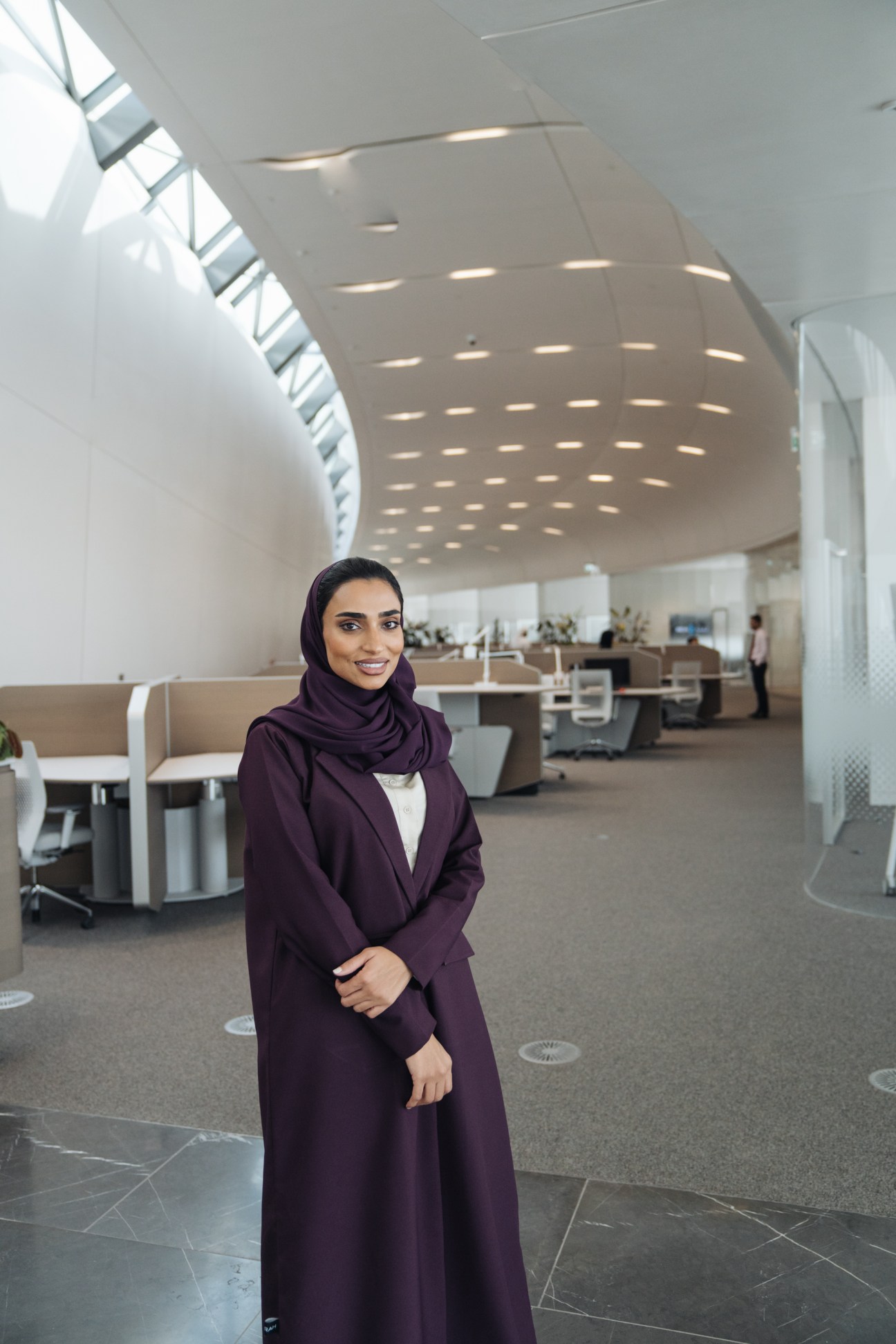
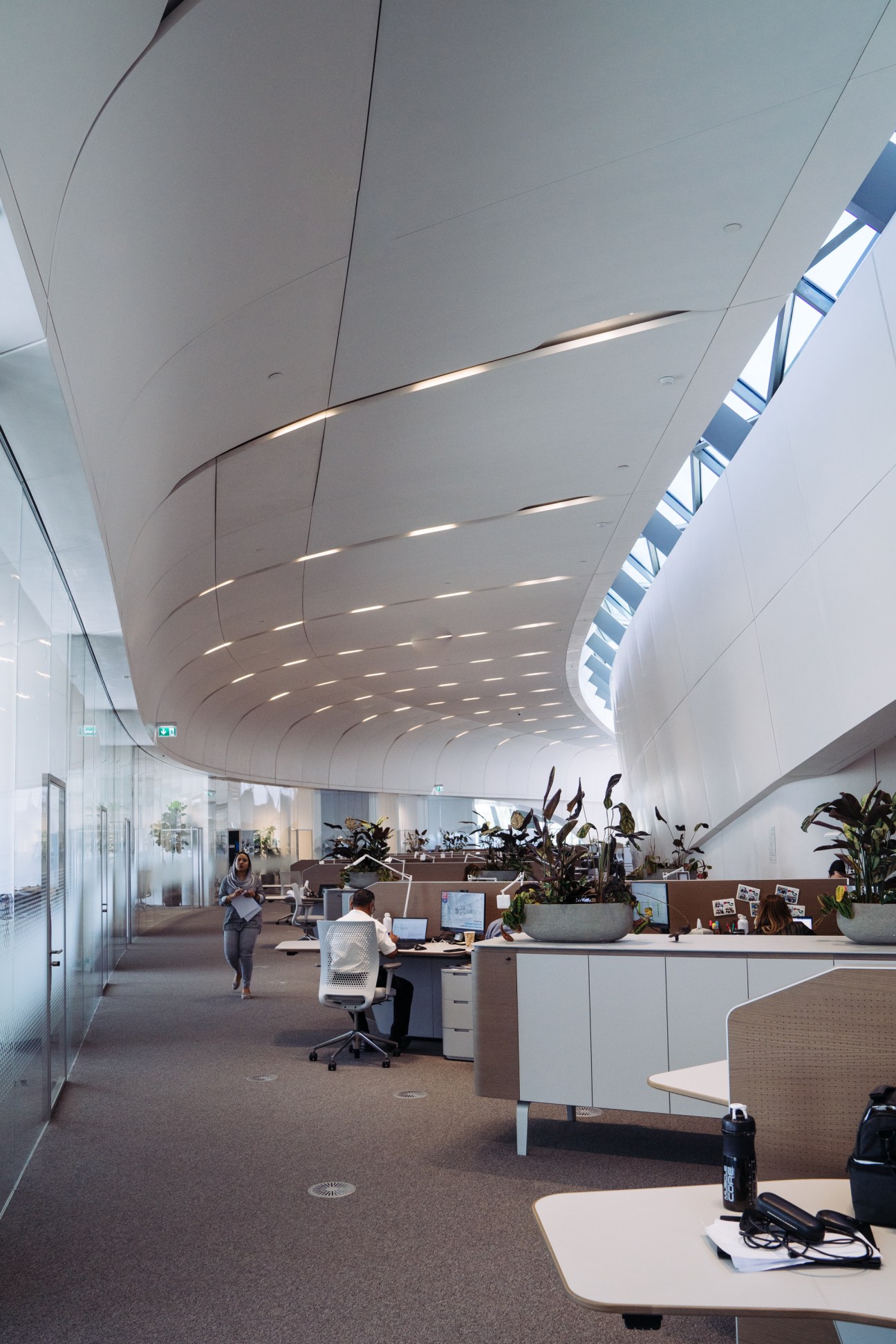
The main offices are serene and illuminated by indirect sunlight. Custom-designed desks by Milan’s ACPV Architects can be adjusted for standing work and these hot desks are intended to allow staff from Beeah’s other regional offices to drop in and soak up the atmosphere for a day. “It’s calming in here, certainly,” says events officer Dana Al Khalili, whose duties include setting up the public feasts that are served nightly on Beeah’s grounds during Ramadan. “But not everyone here is used to working in an open-plan office. You have to keep in mind that everyone can hear what you’re saying.”
Setting the bar
You have to hand it to Beeah: it’s easy to talk the talk on corporate sustainability and design ambition but this HQ really walks the walk – and cleans up after itself too. It’s already a landmark for Sharjah: given that it sits on a dusty highway lined with desert shrubs and petrol stations, its smooth contours appear on the horizon like a mirage. The place might feel stark and otherworldly on the inside (employees say that it can be a bit like walking into an elaborate 3D render) but it is also the antidote to the region’s identikit corporate offices and sets a new bar both in terms of vision and the willingness to pull out the stops to make a statement about sustainable design. With it, Beeah has drawn a line in the sand.
Beeah in numbers
Founded: 2007
Size of HQ: 9,000 sq m
Employees: 13,000 across the uae, Saudi Arabia and Egypt
Bins emptied daily: More than 100,000 of the 123,546 bins deployed – and the public, solar-powered ones are fitted with wi-fi
Rubbish trucks: 1,512 vehicles operating in the uae
Time to deliver
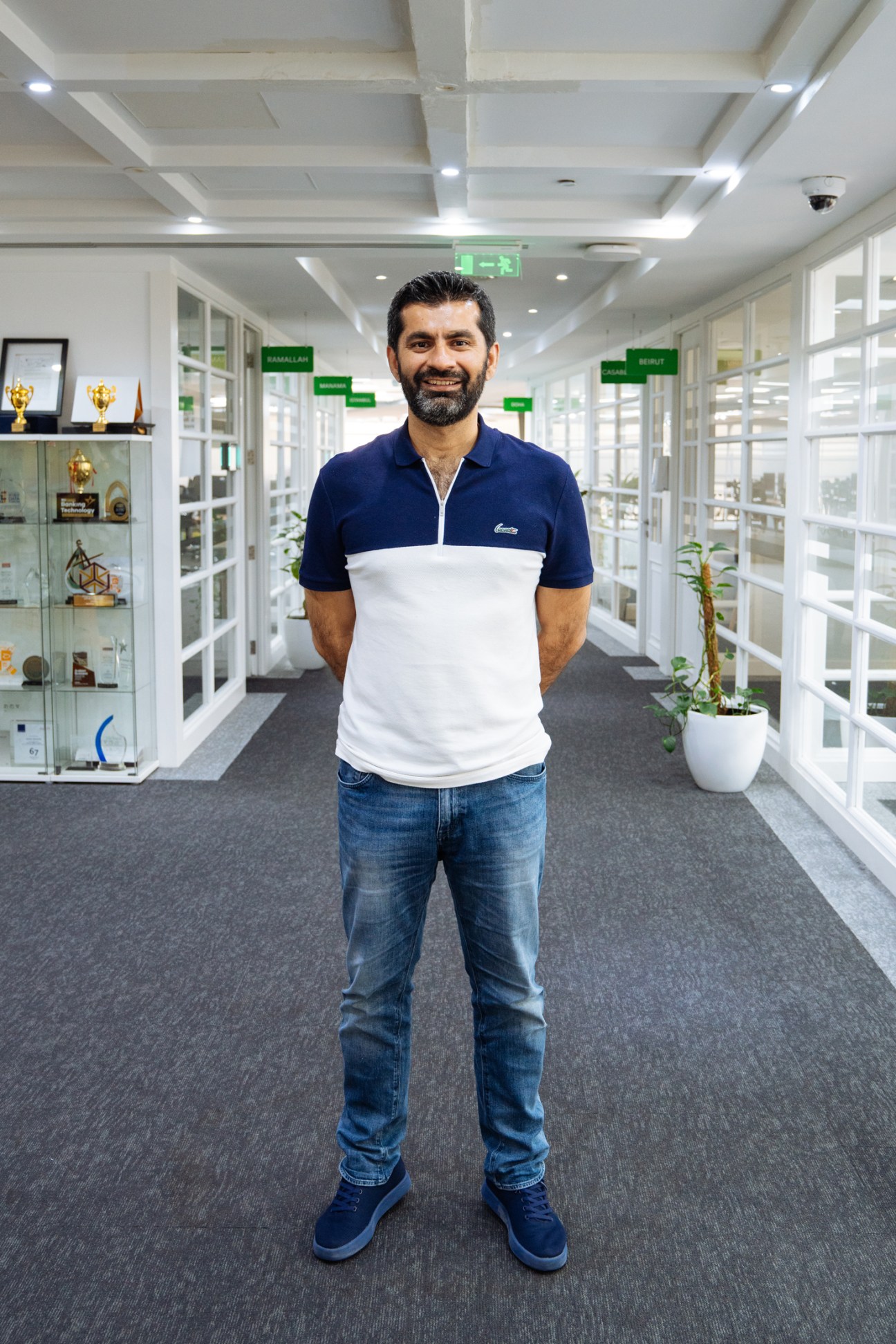
When Mudassir Sheikha and Magnus Olsson decided to launch a new business, all they knew was that they “wanted to build something big and meaningful”. What they ended up with was a ride-sharing and delivery platform that’s worth billions of dollars. Having met while working at consultancy firm McKinsey, the duo looked to Sheikha’s home region as a starting point for where they could make a difference and drive change. “We got the idea from an ex-colleague who suggested that we look at transportation,” says Sheikha, who hails from Pakistan and is the CEO and co-founder of Careem. “It wasn’t until we got close to the drivers that we realised that their life is full of uncertainty and a lot of hardship. That inspired us to create something that would make a difference and would be a good source of income for them.”
Careem was launched in 2012 in Dubai as a corporate car service. Having looked back at their own experiences as consultants who regularly had to travel around the Middle East for business, they knew that they had tapped into something worthwhile. “The quality of ride-sharing and delivery services back then was pretty low,” says Sheikha. “We had a real problem going from one place to another in a foreign city.” The arrival of services such as Uber drove Careem to develop similar technologies to keep up. “We realised that our business would be disrupted by this innovation that was starting to take over the world. So we had to move quickly and proceed from being a car service to launching our app.”
That was just the start of the journey for what is today one of the Middle East’s biggest technology success stories. In 2020, Uber acquired Careem for $3.1bn (€2.9bn), making it the Middle East’s first technology unicorn – or “unicamel”, as Sheikha calls it, with a laugh. “That was a landmark deal for the region. It created a lot of confidence and self-belief, which didn’t really exist before,” he says. “Ten years ago I remember talking to entrepreneurs and founders, and there was always a question mark around whether they could build $50m (€47m) businesses. But now, everyone feels that it’s almost their birthright to build a unicorn. That confidence is here now. And when it is, it leads to manifestation.”
Careem in numbers
Founding year (in Dubai)
2012
Number of employees
1,750+
Number of captains (drivers)
2.5 million+
Number of users
50 million
Cities served
70
Across 10 countries: UAE, Saudi Arabia, Jordan, Egypt, Iraq, Kuwait, Bahrain, Qatar, Morocco and Pakistan
Number of services in Dubai
12
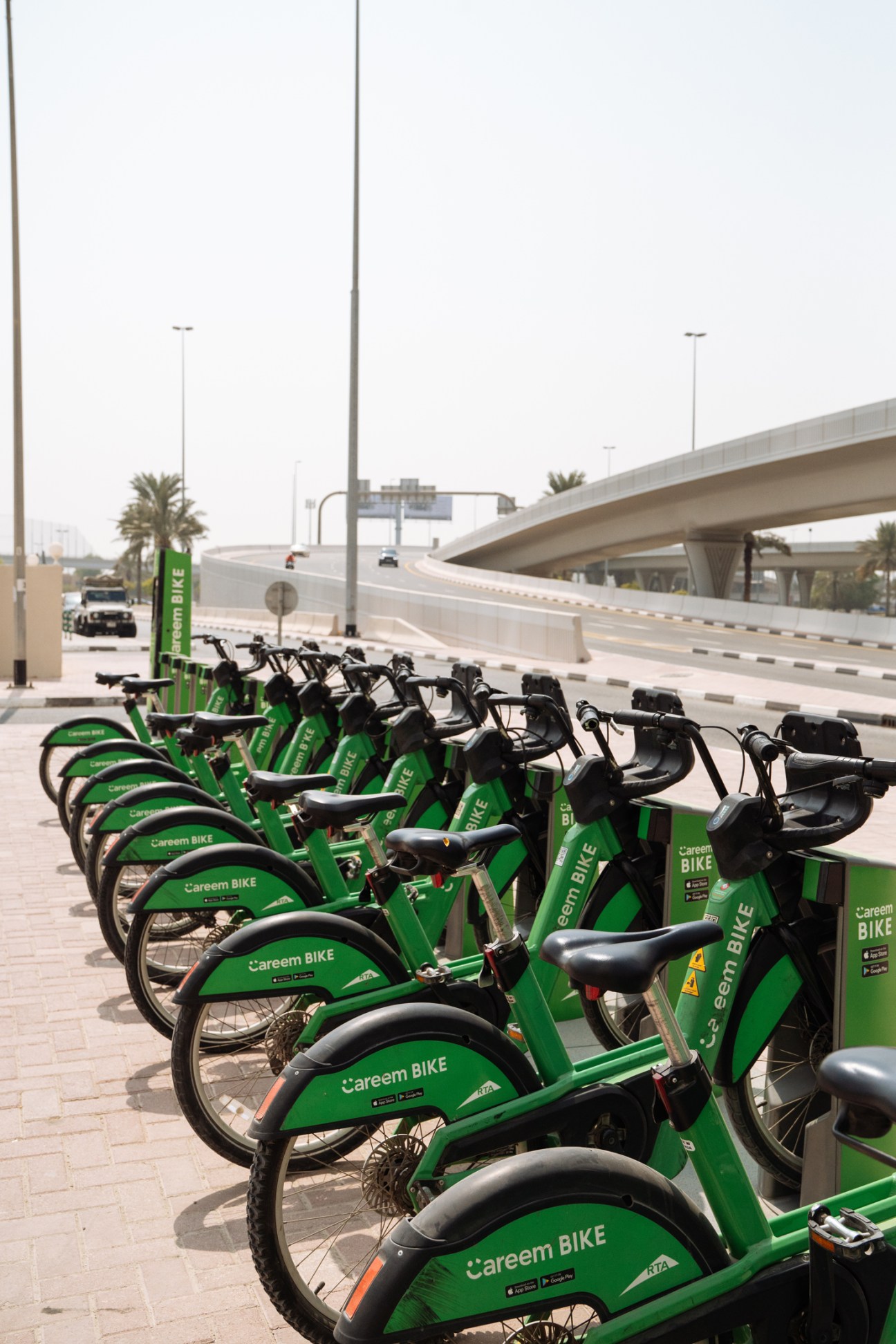
Includes ride-hailing, food delivery (Careem Food), groceries (Careem Quik), payment (Careem Pay), micro-mobility (Careem Bike), F&B discovery and discounts (Careem DineOut), laundry, home cleaning, car rentals, tickets and more
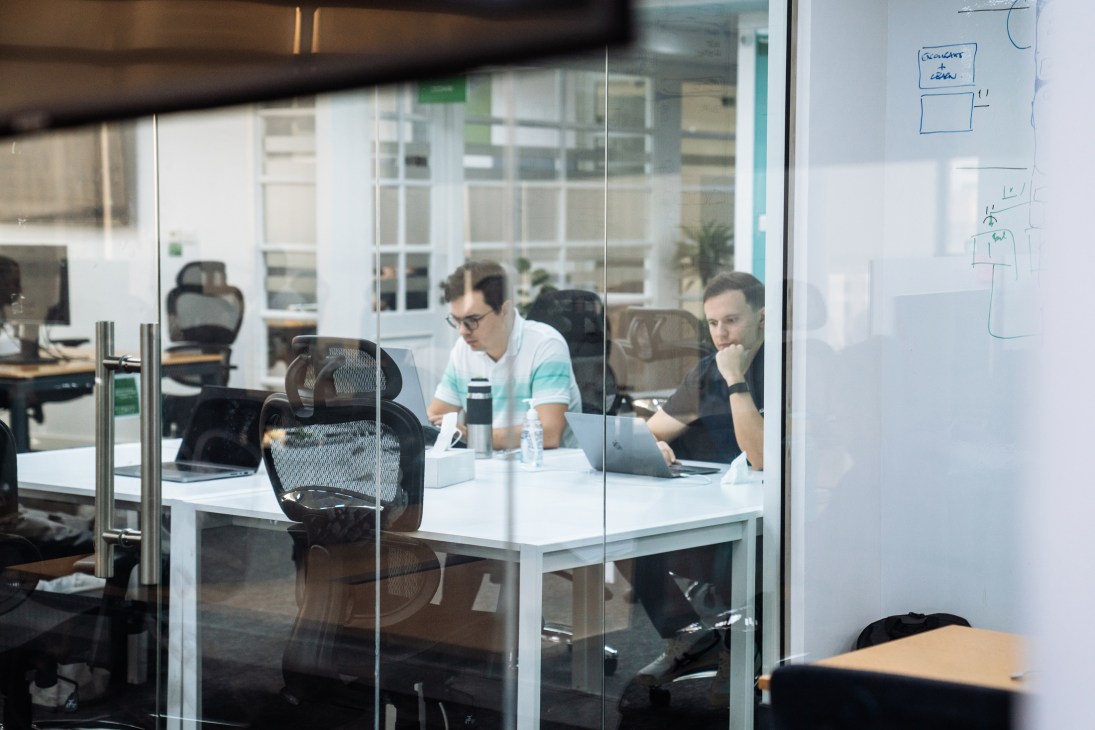
Fast-forward 10 years and Careem is a fully-fledged platform, providing everything from ride-hailing services and digital payments to food and grocery deliveries. “We saw all of these different services opening up and it started to become a little overwhelming for customers, because they needed multiple log-ins across different apps for various services,” says Sheikha, explaining the decision to broaden Careem’s scope. “We knew that there was a far better way for people to use these services. That’s why we decided to create our ‘everything app’ – we’re calling it an everything app instead of a ‘super app’ because it offers all of the services that you might need for your daily life in one place.”
Careem is all about making life better and easier for people, whether they are customers or “captains” (what Careem calls its drivers). “We feel a responsibility towards them,” says Sheikha. “We want to make sure that they benefit from being part of this platform. We have done different things across the region and beyond. In Pakistan, our team negotiated discounts with schools for the children of captains. And during the pandemic, we created a fund to support them and raised almost $1m [€950,000].” Last year, delivery drivers from several platforms in Dubai went on strike over pay and working conditions. None of Careem’s captains joined the picket line.
Before we leave the company’s HQ in Al Shatha Tower, Sheikha offers Monocle some parting advice from his journey with Careem. “The reason that we survived when pitted against significant competition was that we were here on the ground, learning and solving local problems,” he says. As for what comes next, Sheikha believes that Careem is “still very early in our journey”. “About 500 million people live in the region between Morocco and Pakistan – that’s the area we call home. We are serving only a fraction of them today, so there’s a lot more to be done.”
careem.com
Beyond business class
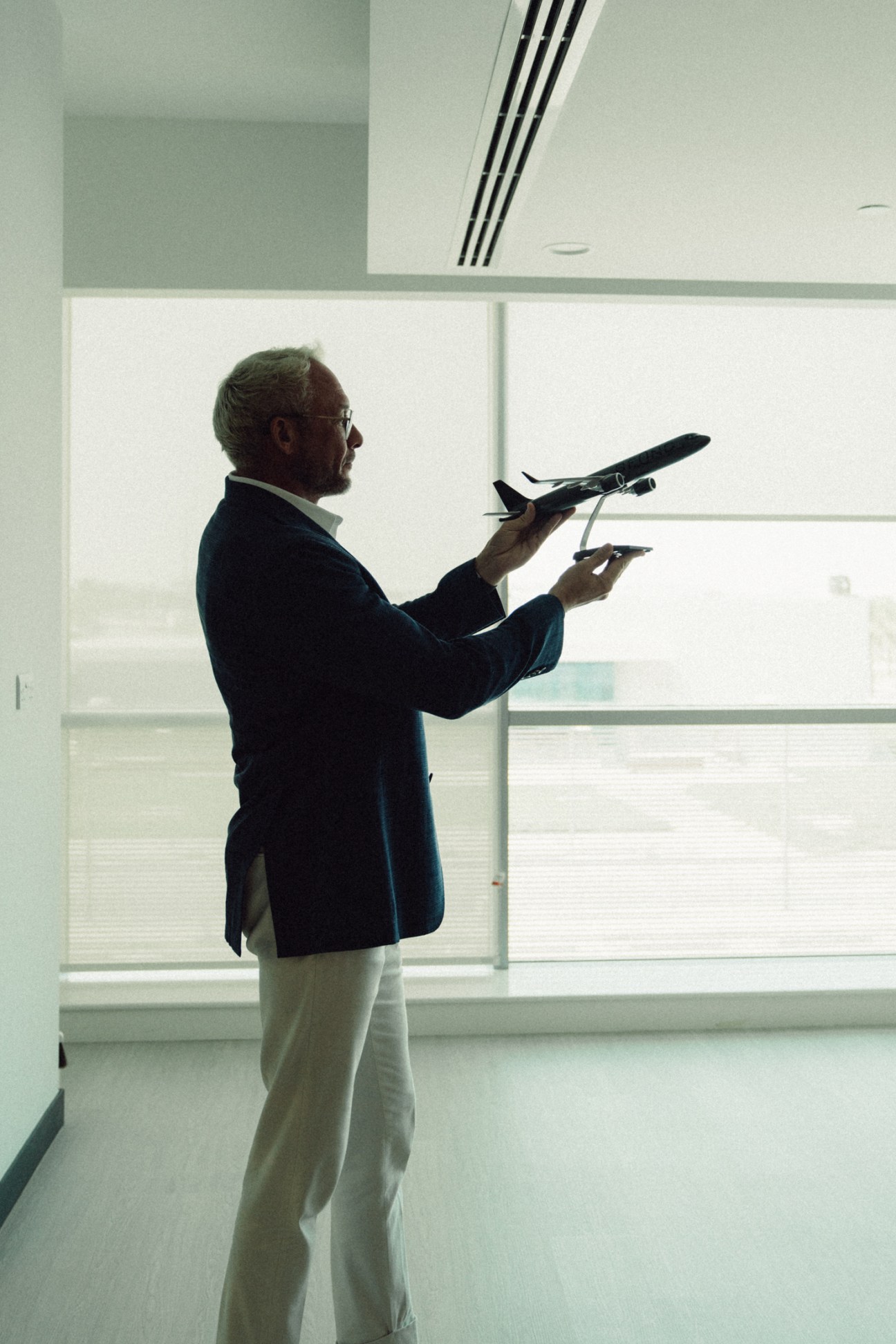
When three aviation industry veterans banded together to launch a premium- only airline, it made sense to base themselves in the uae. When Monocle visits its HQ in Dubai South, Beond is just weeks away from its inaugural flight. We buckled our seatbelts and spoke to co-founder and CEO, Tero Taskila, about Beond’s sky-high ambitions.
How did you meet your co-founders, Max Nilov and Sascha Feuerherd?
We were working at Lufthansa in the early 2000s. We worked on its consultancy arm, which developed new ideas for the Lufthansa Group and other airlines. We created a company called Private Air, which was like what we do now but solely focused on business travellers. After that project we all went in different directions: Max went to work with aircraft manufacturers, Sascha for iata, and I went into C-suite positions with airlines around the world. Three years ago, we got back in touch and decided to do something together.
How did the decision to launch Beond come about?
Max saw very early on that there was a new plane coming, the Airbus A321xlr, which was a narrow-body aircraft but ultra-long haul – we could fly up to 11 hours non-stop. So, we thought let’s make this fully business class and fly longer than anyone has ever flown before in similar configurations. When we started looking deeper, we saw that some European companies had tried something akin to this but had all failed or gone bankrupt. That’s when we realised: everyone was chasing the same customer. Whether it’s American Airlines or British Airways, they were going for the frequent-flying business traveller. But this sort of traveller doesn’t tend to make their own decisions. They often have long-standing corporate deals with airlines or change plans at the last minute and need flexibility, so it was difficult to grab them as clients.
So, what makes Beond different from those failed attempts?
That period of research coincided with this emergence of luxury travel, so we thought instead of going for business-class cabins, let’s go with premium cabins. This means that we are after a customer travelling for leisure. They are actually a better yield than corporate customers because leisure flyers are willing to pay the full fare for that premium, unique experience. So we were good to go: we had the plane, refined the concept and knew the target market.
You’re a uae-based business but your main destination is the Maldives. Why?
We canvased premium markets around the globe, showcasing our concept and seeing which ones would fit best. That’s where the Maldives came in: it’s one of those once-in-a-lifetime destinations and experiences for many. At the same time, other than private jet customers, which are only 5 per cent of those landing in the Maldives, everyone else has to connect in the Middle East. So, we had a clear opportunity to deliver hassle-free luxury from the region.
How crucial is Dubai as a base for your operations?
Dubai is important for two reasons. One is that having it as our headquarters gives us the flexibility to travel more easily to other hubs and markets. Second is the access to the workforce. There are more than 100,000 aviation professionals in Dubai, from pilots to maintenance and crew, so that pool of talent can help us design the best possible airline. From a business point of view, the tax benefits of the Middle East were also attractive to support that growth.
Speaking of design, Beond has a distinctive dark livery and brand identity. What does the inside of one of your aircraft look like?
One thing that we wanted to make sure was that we were addressing the needs of our clients, who are typically environmentally conscious. It was important to have an aircraft that is low on emissions. By using electronic flight packs, we save up to 3 per cent of fuel compared to other airlines. For the seats, we hired Optimares, a boutique manufacturer in Italy that created an extremely light seat in a classic design. The carbon-fibre shell is designed by Ferrari using the same Formula One technology to reduce weight. Instead of built-in seatback entertainment – which can weigh up to 30kg – we are kitted with iPad Pros. It’s all designed to reduce weight and lower our emissions.
What has been the most challenging part of this venture so far?
This is my seventh start-up and each of them had its own challenges. Running a business is like a roller-coaster, you need to keep frustration and excitement in good balance in order for it to work. But a particular issue is the state of the aviation environment, which is driven by several factors. The pandemic grounded a lot of planes and it takes time to make them fit to fly again. Also, the geopolitical crisis, driven by Russia’s war in Ukraine, has heavily impacted the aviation sector. We don’t get the same access to raw materials due to all the embargoes on trade deals, and more than 700 aircraft – worth $20bn (€19bn) – are stuck in Russia; they are unable to fly due to all the bans and have essentially been rendered useless. So, it has been difficult to find aircraft – we are getting them but not at the pace that we’d like because the bigger players get priority. But luckily, we have partners who believe in us and want to embark on this journey with us.
flybeond.com
Beond in detail
Founded: Dubai, 2022
Aircraft types and configurations: Airbus a319 (44 premium seats) and a321 (68 premium seats)
Inaugural flight and route: 9 November 2023 – Riyadh, Saudi Arabia to Malé, Maldives
Average return ticket price: $6,500 (€6,200)
Launch cities: Riyadh, Zürich, Munich and Malé
Inflight tableware: Dinnerware designed by William Edwards, cutlery by Robert Welch and place settings by Chilewich