The Entrepreneurs
Make a meal of it
Lunch? Perfect. The business lunch will endure because it’s the second-best bit of doing business and lunch happily serves purposes oh-so-far beyond sating the belly. The restaurant is the boardroom for grown-ups and lunch is the real meeting. In fact, lunch is where you find out just who you’re doing business with. Lunch tells. What does he order? How does she treat the staff? How’s the chat? Are their eyes attentive or intent on something behind you, someone maybe, bending over to pick up a fork?
Lunch isn’t a date or a hand of poker but it reveals character, candour, sense and sensibility, humour and humility. But somehow, easily. Pick a place where buzz beats clamour and the laughter belongs to both sexes alike. Suits sweating over steaks is the pits. Share a bottle, raise a toast, prepare to treat or be treated. Take a chance and shake on it over a lazy susan and a nice Meursault.
90/100
Best for a belt-loosening feed
Tony’s, Houston
There’s a certain deal-clinching confidence in naming your restaurant after yourself. I mean, just imagine the welcome you get from Tony when you’re a bit of a regular at Tony’s and Tony himself is in the house. There’s a lot of “you look great” and “what are we celebrating?” In a good way. Tony Vallone has served quality northern Italian and Mediterranean classics for decades, tweaking them just a little for a Texan appetite. You’ll still look great after three courses, though, whatever you’re celebrating. Oh, and the thick carpet helps muffle the inflated figures you’re talking about.
tonyshouston.com
91/100
Excellent for pasta alfresco
La Matricianella, Rome
In a winding lane off Piazza di Spagna, La Matricianella has been serving classic Roman cuisine since 1957, alongside a biblically long wine list. Its umbrella-sheltered street-side tables have become the city’s open-air dining room for deal-sealing businessfolk and post-work get-togethers for the neighbourhood’s smartly dressed denizens to enjoy forkfuls of pecorino-rich cacio e pepe and guanciale-flecked spaghetti carbonara. The hallmarks of this genre of Italian restaurant are everywhere from the red-chequered tablecloths to the jovial bow-tied waitstaff. It also doles out the best pasta in town despite the city’s stiff competition in that area. Italy’s had a tough time but business in the Bel Paese is still customarily sealed over the dining table with a glass of red in hand.
matricianella.it
92/100
For unapologetic power lunchers
Knoblauch, Frankfurt
Well, for some stupid reason that we won’t mention, Frankfurt’s few-and- far-between power-lunch spots are about to get just as uproarously busy as those in the City of London are going to get quiet. Your best bet by the Main is this charming old stager, well-loved for ferrying French-ish classics to small-ish tables of diners for whom time is literally money. Expect speedy service, good Gewürtzraminer and to wonder if you’ve accidentally gone to St Moritz – the wood-panelling is intense. The tables are a little close together for spilling secrets but who knows who else’s you’ll hear?
Staufenstrasse 39
93/100
New spin on a classic
Maximo Bistrot, Mexico City
Chef Eduardo Garcia of Maximo Bistrot has opened this second restaurant with the chops to become a classic in the same Roma Norte neighbourhood. The new space is a lot grander than the original, with soaring brick walls, an arched ceiling and wooden booths – more for quieter meetings. The addition of chequered lampshades and wicker couches in the lounge area ensure that the homey feel (for which the original restaurant is known) wins out. The food, naturally, remains superb, with familiar dishes including octopus ceviche and a highly recommended mushroom risotto.
maximobistrot.com.mx
94/100
Best time-tested table
Roberto, Geneva
Roberto – named for the senior Carugati who started small before inviting most of the family to join the venture – is a lesson in serving exquisite Italian in an elegant room. Roberto’s grandson is now head chef, sending out saltimbocca, osso buco and ravioli di manzo to an intriguing crowd of classy folk: ladies lunching, deals toasted with nodded congratulations, long- lunchers reminiscing over grappa. In a courtly land of chandeliers, well-spaced tables and the sort of starched napkins that put most freshly-pressed suits to shame, few things can go wrong.
Rue Pierre Fatio 10
95/100
Try Greece’s best French fare
L’Abreuvoir, Athens
L’Abreuvoir takes the title as the oldest French restaurant in Athens rather seriously. After working as a chef in France, Marseille-raised Alexis Kotsis decided to return to his hometown and open a restaurant of his own in Kolonaki, downtown Athens. “We’re a short walk from many embassies and offices, so we [still] get reservations for business lunches and dinners,” says Kotsis, explaining that many diplomats and shipowners often dine here. With its smart white tablecloths and formal silverware, the space has remained virtually unchanged since opening in 1965. “The majority of our ingredients and wine list are sourced from France and there’s never been a time when coq au vin or steak tartare have been missing from the menu,” says Kotsis, who is now passing the baton to his son and daughter, the former of which trained as a chef in Lyon under late chef Paul Bocuse. Don’t miss the leafy garden, which is open year- round but best enjoyed in the summer.
Xenokratous 51, Kolonaki
96/100
For Floridian flair
Mandolin, Miami
Under the trellises and vines and amid the white-painted walls at Mandolin, oh – squint and you’re in Santorini for a sweet second! This “Aegean” restaurant hedges its geopolitical bets by serving both Greek and Turkish food beautifully and quickly – but then allowing you to take your time over that second bottle you didn’t know you wanted.
This was the first great restaurant in Miami’s Design District and remains the best. Unless you happen to be an octopus, in which case, you should be heavily disguised or very afraid.
4132 NE 2nd Ave
97/100
For a riverside reviver
Jua, Bangkok
Bangkok’s Japanese bars and restaurants cater first and foremost to Japanese business travellers and trade in providing old-country excellence with a nod to the exotic. The best izakaya-style food in town is at Jua, Charoen Krung’s most poised take on yakitori-and-more. The blurring of Japanese food and drink (you’ll have Suntory highballs coming out of your ears) and Thai service is beguiling. And blurry. Jua is next to the River Chao Praya, so be careful how you go, Joe.
672/49 Charoen Krung 28
Work in progress
1.
Take the gentle approach to business
By Sophie Grove
In our adrenaline-fuelled world, it’s easy to get swept up in the race. But it pays to be the tortoise rather than the hare.
Why go into business? Is it to secure a global brand, brave the slings and arrows of venture capitalism and create a market monopoly? Or is it based on a quite different impulse entirely: a yearning to create something that will propel you out of bed in the morning; to build something that does good, that will give you purpose and fulfilment – and even a palpable sense of joy?

There will always be that business archetype, the suited CEO who’s hellbent on chasing unicorns. Or the sleek, single-minded leader intent on flipping a profit. And there’s no doubt that cutting corners can offer quick rewards. Yet many entrepreneurs are choosing to nurture close-knit businesses and expand them at a more gentle pace. They are creating projects that are anchored in communities, with the aim of restoring pride in neighbourhoods. Rather than voracious growth, these enterprises are a slow-burn, happy to do one thing well. Whether it’s retail, hospitality or design, they’re led by a robust set of values rather than complex consumer research and spreadsheet projections.
A sense of altruism is no barrier to profitable success – quite the reverse. Rather than clouding business acumen, a clear sense of ethics brings a galvanising clarity to a new venture. “If you have a really strong set of corporate values, then strategic decision-making actually becomes very simple,” says Celia Moore, professor of organisational behaviour at London’s Imperial College Business School. “That efficiency drives sustainability and profitability. There’s a lot of waffling that happens when you want to look ethical but you really want to cut corners. You end up doing this wiggle – trying to thread a needle that really doesn’t exist.”
Circumventing the waffle is easier then it appears to be; a clear mission can be as good as any complicated business plan. “I set out to revive a factory,” says Corinne Jourdain Gros, who gave up her job as a publicist in 2014 to buy Digoin ceramics, a sprawling factory complex in rural Burgundy. The company’s brown, glazed stoneware was once a firm fixture in many French kitchens. Digoin employed hundreds of locals to produce the vessels that are used for making cassoulet and commercial mustard. They’re also utilised by butchers when cooking terrines. Plastic resulted in the demise of Digoin’s fortunes and the company had been shuttered when Jourdain Gros stepped in.
Her vision for the business began with an urge to save skilled jobs in the regional community and preserve a way of life that she feared might disappear. “In France there used to be a specific dish for every regional speciality,” she says, adding that her reimagined Digoin stoneware is now stocked by everyone from The Conran Shop in London to Merci in Paris. “There’s a new generation that wants to use our vinegar-making urns or our pots for preserving cornichons. This is part of a movement.”
A strong mission statement is a steady steer for expansion when a business starts to grow. “It’s about doing things that feed the mission, and that mission feeds the business,” says Lucie Basch, who co-founded the anti-food waste app Too Good To Go in 2015, and now runs 15 offices with 600 employees across the world. Basch admits that she never planned to run a global company. When her platform took off, the company fell back on the strength of its conviction as a guide. “A lot of people think and then do,” she says. “We went for it.”
Now that the brand’s teenage growth spurt is behind it, Basch says that the team have spent time defining their philosophy and integrating it into every strategic decision. “Now, because we’re growing so fast, it’s particularly important for us to work on our values,” she says.

There’s a growing sense that a strong, benevolent philosophy, which puts a premium on employee wellbeing, can reap many rewards for businesses. “Working somewhere that does good and is good feels good,” says Imperial College’s Moore. “Research shows that if you have an organisation with a strong social mission, you can get excellent employees who’ll stay for longer and have higher levels of commitment. Leaders who are courageous recognise what a powerful force this can be.”
Clever business owners also realise that the wellbeing of their staff is key. Companies are investing in space and resources to give their employees room for contemplation away from the clatter of keyboards. These range from rooftop vegetable gardens to in-house yoga facilities. This isn’t just about designing a base that offers beanbags, or even architectural talking points. It’s a question of liberating employees from their desks and allowing them to talk, sit outside and feel good about work.
Umberto Napolitano, who co-founded the Paris-based lan architecture studio, believes that there is value in encouraging staff to contemplate in beautiful surroundings. He opened a new Paris headquarters in 2018 and designed two thirds of the space to feel like a home. Although there are desks in rows on one floor, above them is a sitting room with indigo sofas, a kitchen, a refectory, a lush courtyard and some big sunny rooms with no stated purpose. Above that, there’s a flat roof that’s furnished with outdoor seating. “You have to invent the way that you use the space and that freedom brings creativity,” says Napolitano, who admits that unshackling the staff from their desks took some time to reap rewards. “In the first period there was a lack of concentration. It’s a bit like a Montessori education: we have this freedom, now what do we do with it? But step by step, people have become very reactive. After a year, I can see the results.”
Napolitano has created a way of life for himself and his 34 employees. His Parisian practice, like many offices, workshops and factories, is a cause, a calling and a reflection of his and his partner’s ideals. With some iconic projects under his belt, he feels that now is the time to consolidate rather than expand. “Society has been driven by the idea of progress and capital gain but now we’re thinking about an alternative kind of life,” he says. “How much time do you want to spend with your family? How do you want to live?”
The challenge for him, as for many successful business owners, is how to preserve the practice’s size and unique dynamic. It’s a philosophy that’s not about growth but the quality of every working moment. “Now there are deep and complex questions: ‘How do we experience this level of architecture without becoming a machine? How do we keep in context with the world without being in our own prison of results and economy?’”
Napolitano’s answer? To open a Sicilian restaurant, Pianoterra, on the ground floor of his practice. Rather than adding more staff, this project is about widening scope and engaging with the neighbourhood. “It’s the idea of creating an ecosystem that allows us to eat well or meet over a coffee in a public space,” he says. “It will also be an art gallery.”
Preserving the humanity, joie de vivre and authentic essence of a business is as challenging as rolling out a global franchise. So perhaps it’s time to raise a glass to those gentle, perfectly balanced businesses that have plotted a careful path to expansion. And perhaps it’s time to join them.
About the writer:
Grove is Monocle’s senior correspondent and for our pages has interviewed everyone from top ceos to start-up heads. After stints in Istanbul and Paris, she’s attempting a gentler pace of life in East London.
2.
It’s time to disperse
By Deborah Talbot
The age of the metropolis has not yet passed but sharing out the big-city resources would be to everyone’s benefit.
Are we about to face a mass exodus from cities? The rise of flexible and remote working has left many observers predicting that our future might not be urban after all. Yet they might be speaking too soon: perhaps this moment is more about the dispersal of urban life than about its actual disappearance.
It’s true that there is nothing that’s inevitable about concentration in urban areas. The modern Western city came about fairly recently, driven by the industrial revolution and, later, the development of banking centres. In the global south, according to urban economics academic Alexandra Panman, urbanisation is a consequence of poor conditions in rural areas and inadequate transport links. “Only a very small minority have the option of working from home,” she says.
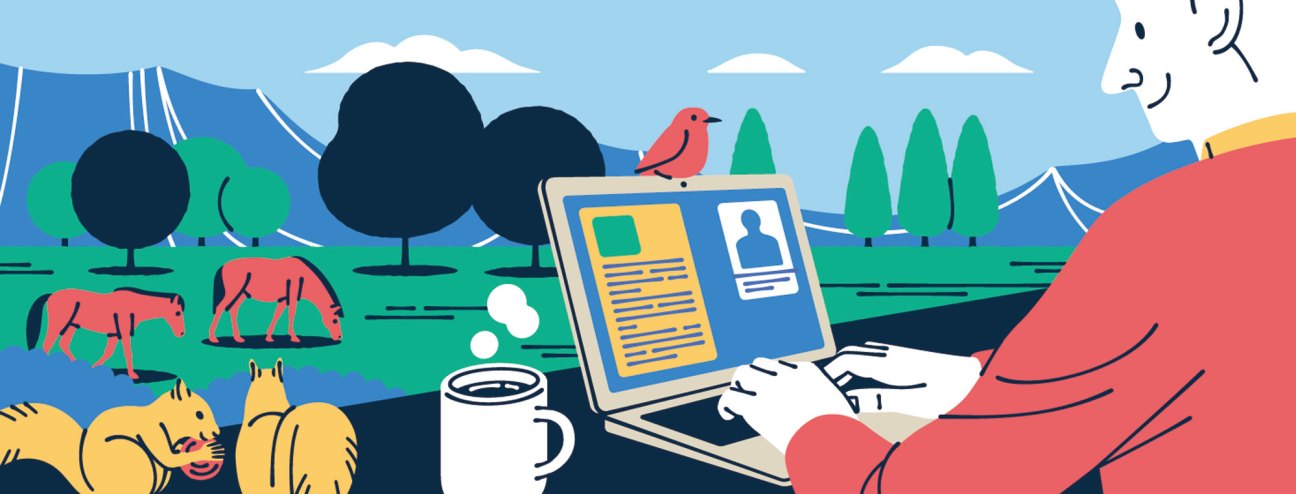
Most of all, urbanisation has been driven by the economic power of cities. Figures from the UN suggest that 68 per cent of the world’s population will live in cities by 2050. The number of megacities (places with populations of more than 10 million) has grown from three to 31 in just over 40 years.
Today it seems as though the changing nature of work, technology, climate change and the likelihood of novel viruses causing disruptions to ecosystems are all conspiring to push us in another direction. But whereas remote working might be popular for those with the right jobs, it has the downside of isolation and stress – hardly conducive to productivity and innovation. Is there a middle ground?
Naji Makarem, a lecturer in the political economy of development at Bartlett, University College London, says that we aren’t necessarily looking at a reduction in the economic power of all cities. Instead, we’re looking at the “urbanisation of more places”; a decentralisation that is still connected to – and feeds off – larger cities. Technology can support this, he says, by allowing “people and firms outside the urban core greater access to urban interaction and consequently productivity and innovation”.
It’s a concept that should be supported by the corporate world. Companies are rushing to find new configurations for collective working, such as flexible workspaces, suburban satellite offices and co-working. Workplace app developer Desana, which recently launched Cityworks – pairing office-less workers with desk space – says that the time for suburban and rural co-working has come.
New ways of working have opened up opportunities for groups such as the disabled, carers and parents, particularly women. Yet even for those who prefer to work remotely, creativity requires a community nearby. Suburban phenomena, from punk to community shopping malls – or the reorientation of the creative consciousness to nature and the green economy – all show that different environments can inspire innovation. Employers could be freed from the geographical boundaries of the talent search, while highly skilled people living in smaller cities and rural locations can enhance the wealth of their localities (what academic Andrés Rodríguez-Pose calls the “places that don’t matter”).
We’ve always thought of the city, suburb and village as distinct places. But with our workspaces dispersing from city-centre offices into rural hubs, our ways of working, and our understanding of urbanism, is about to become much more fluid.
About the writer:
Talbot is a journalist, author and researcher specialising in urban and rural development, and sustainability. Her latest book is called Who the Hell is Jane Jacobs?
3.
Should I stay or should I go?
By James Chambers
Hong Kong’s harsh new security law won’t drive away the entrepreneurs enticed by mainland opportunities.
One of my first proper conversations about Hong Kong’s national security law was discussing a small-business owner’s contingency plans. To protect his identity – an indicator of where things stand right now – let’s call him Robert. His chief concern, as co-owner of a content-marketing company, was what would happen if mainland China’s great firewall were to be extended to Hong Kong, cutting off access to Google, Whatsapp, Dropbox and all of the other US software that he and his two business partners rely on to run their company.

Back then, in early July, the possibility of this happening sounded ludicrous. “That’ll be the end of Hong Kong,” I remember declaring. A few months later, internet censorship has become a genuine concern. Robert’s short-term solution has been to invest in a virtual private network but the business is also building up a parachute office in Singapore; part of the company had already been registered there last year before the pro-democracy protests began, to serve its client base on the island.
The next major business decision that Robert will have to make will be which one of the founders has to leave Hong Kong for the Lion City. As it turns out, there are plenty of reasons why Hong Kong is an Asian business hub, beyond its low tax rates, language skills and free port (it doesn’t levy customs tariffs and has limited excise duties). What’s more, the upsides to living in this city have become even more apparent and appreciated during the pandemic, including the waterfront backdrop to our discussion over a Friday post-work beer as we watched the sunset over Victoria Harbour.
Robert’s debate about whether to stay or leave is one of many being had in this city of 7.5 million. I’ve spoken with a dozen or so entrepreneurs about the security law and their opinions vary. For every founder who is waiting to see, there is another who’s not the slightest bit fussed. Digital firms are sending their data storage overseas, whereas traditional bricks-and-mortar businesses see the security law as a good thing: a return to stability and safety.
Those with firm plans to leave tend to be doing so for family reasons – so their children can attend a certain school or grow up with a garden. Entrepreneurs with long memories view the security law as the latest chapter in the city’s colourful history. “Hong Kongers have never been in charge of their own destiny, so this doesn’t change anything,” said a property professional. “Once there is a resolution, it’s usually back to business as usual.”
Deep connections with Hong Kong are one unifying factor. Entrepreneurs are entwined with their businesses and often embedded in a city, so upping sticks and leaving is not as simple as a multinational moving a regional head around Asia or a laptop-carrying freelancer floating away on the wind. Most founders worth their salt will have invested heavily in Hong Kong and all are loath to suddenly throw their life’s work away at a steep discount.
Businesses in Hong Kong have been hit harder than most. Politics has been playing tag with the pandemic and, for the time being, it is impossible to separate the two disrupters. An event company I called in on said that a promising 2020 pipeline had been killed, wrecking years of hard work. The founder had actively supported the protests but the commercial realities of dealing with Chinese sponsors had brought his advocacy to an abrupt end. As a result, they had just finished a shareholder meeting with only one thing on the agenda: why are we continuing? The answer: to keep fighting for business survival, if not for democracy.
To get the full answer to this question from entrepreneurs, we will likely have to wait for a coronavirus vaccine. Unlike much of Europe, Asian borders remain closed, providing convenient cover for collective can-kicking. “Where would I even go?” is a popular refrain. It’s both a comment on Asia’s worsening record on freedom of speech and the deterioration of Western governance. The pandemic has highlighted a laundry list of problems in other parts of the world, dampening any mass exit.
Salaried workers (and some outspoken political activists) are among the first to leave. They are a mix of locals who fear losing freedoms and foreigners who have lost fat expat packages during the downturn. But many entrepreneurs are here to make money from Hong Kong’s close ties to the mainland. It serves as a conduit to China and the security law is seen as an added cost of doing business with the continent-sized country of 1.4bn people that’s not going anywhere this century.

There is a feeling that, after a rough few months, even years, Hong Kong’s reward will be a return of mainland money. That’s why this city went on a bull run after the Sars epidemic in 2003 and made a lot of entrepreneurs – who took big risks and bet on this city during its darkest hour – very rich. It helps, of course, that your average founder is politically cold-blooded and blessed with natural optimism.
Even entrepreneurs in Hong Kong’s hard-hit hospitality industry are prone to positivity. Several view a mooted influx of mainland talent and an outpouring of white-collar expats with rose-tinted glasses. Modern Chinese are growing in sophistication, they say, demonstrating a greater appreciation for design and sustainability than their Hong Kong counterparts. Word-of-mouth reviews via WeChat can help a brand expand on the mainland.
Would banning Google and Facebook change this? It depends on the industry. My own concerns in the media are not the same as those of someone working in property or coffee. Rule of law – or trust in an independent and international standard judiciary – is often cited as the biggest red line. Lose it and Hong Kong is just another Chinese city, so you might as well be in Shanghai. But while the legal system will be tested to the limit as judges begin to hear criminal charges under the security law, the commercial courts and arbitration centres will continue to operate for all of the foreign companies that want to do business with China. Those with Chinese experience are less likely to be put off.
The real cost is likely to be the countless new overseas investors and curious entrepreneurs that never decide to touch down in this city in the first place. Can Hong Kong attract new talent? We will have to wait and see. People have short memories and Beijing has made noises about extending the “one country, two systems” arrangement beyond 2047. So Hong Kong’s special status – or whatever is left of it – might even get a new lease of life.
In reality, most of the founders I spoke to have yet to draw up any definitive plans. “The spread of local-government corruption would be a red line for us,” said one brewery founder. “That’s why we didn’t set up in China in the first place. I don’t want to have a good ‘relationship’ with a politician to be able to run my business free from harassment.”
I had a follow-up chat with Robert in mid-August. He was meant to have a contingency-planning meeting just before we spoke but it had been postponed because the founders were all too busy with new work. Hong Kong’s political framework might have fundamentally changed this year but the business of making money still goes on.
About the writer:
Chambers is Monocle’s Hong Kong bureau chief and Asia editor at large. Born without an entrepreneurial bone in his body, he is inoculated against the city’s zeal for buying, selling and building, despite living in Hong Kong since 2014.
4.
Retrofitting for ‘the new normal’
By Chris Smith
Coronavirus is going nowhere fast so our workplaces must be adapted to minimise its impact. Here’s how.
“This is definitely the weirdest virus I’ve ever had to deal with,” my colleague informs me. At least I think that’s what she said behind her obligatory nhs employee’s surgical mask, and I nod my agreement. But it’s hard to understand each other, especially when you’re two metres apart. There’s background noise and you can’t pick up the usual prompts from someone’s face. We’re waiting in the queue for the coffee shop at the hospital where we work. The layout is, of course, a legacy of the old normal and is totally unfit for the new. The line, marked out with black-and-yellow tape, snakes through what used to be the seating area. I find myself wondering how we’re supposed to have those “water-cooler conversations” that once spawned world-changing scientific and medical insights when we can’t even chat properly over coffee?

Let’s face it, we all hate this and we’re desperately hoping it’ll soon end. But the bad news is that it’s not going to. All the evidence points to Covid-19 remaining a thorn in our social sides for many years to come. It took 15 years of concerted global effort to declare smallpox finally eradicated. Polio is taking even longer. And, perhaps most damning, in 2018 there were 10 million cases – and 150,000 deaths (that we know of) – from measles, for which there has been a very effective vaccine available for decades. What this adds up to is the conclusion that the much-anticipated arrival of a coronavirus vaccine is not guaranteed to deliver the panacea – and a return to the “old normal” – that we all crave, and certainly not instantly. The best guess I’ve heard is that the disruption is set to last for years yet, and the “new coronavirus” is destined to become “the old coronavirus” and circulate forever.
What this means in practical terms is that, for now, the only weapons we have at our disposal are the age-old but nevertheless tried-and-tested techniques of public-health medicine, which is what we’re calling “physical distancing”. This intervention works by breaking the chain of transmission of the virus. But the realisation that we’ve created toxic working, commuting and shopping environments has come as a shock to many, especially if, like Google, you’re putting the finishing touches to a new huge London HQ that was almost certainly designed with the normal we used to know in mind rather than the present reality. The recent trend had been towards designing buildings that subconsciously usher you into the lift (by making the stairs impossible to find) forcing you to share air with the other occupants for as long as it takes to reach the 15th floor. Often there are no windows you can open, while open-plan working packs in as many employees as possible. All of this means that many offices are perfect crucibles from which to forge infectious outbreaks – and not just of coronavirus.
But this sombre wake-up call does have a silver lining: it is prompting researchers and architects to rethink the way that we “do” airflow in buildings, in order to minimise the spread of disease. Take a hospital ward, for example. With better control over how air moves around the patients’ bed spaces, you can create currents that carry away most of the infectious particles that a person coughs or sneezes and guide them safely into floor ducts. Coupled with air-purifying systems that filter and disinfect the air they eject, patients can be cocooned inside “bubbles” of clean air that keep infection away.
A similar approach can be applied in the office or even to the train that gets us there, to minimise the transmission of infections between workers. This is good news for industry because, according to the UK’s Office for National Statistics, more than 140 million working days are lost to ill-health in the country every year. It’s tempting to speculate that a significant proportion of those illnesses are picked up at work. So if we make the workplace healthier, we can look forward to better productivity and fewer sick notes.
Other bright ideas include installing ultraviolet light sources in ceilings to blitz bugs that drift past on air currents. Although the prospect of an array of UV lamps overhead sounds alarming and might conjure images of an office staffed by workers that look as though they live permanently on the Costa del Sol, it’s quite safe. Researchers have found that one very short wavelength of UV, called far-uvc, does not travel any appreciable distance through air and cannot penetrate human skin. But it deals a deadly blow to the genetic material inside viruses, bacteria and fungi, instantly disabling them.
For surfaces and places that people tend to touch frequently, building designers are also switching to alternative materials that are easier to clean or, thanks to in-built tricks of chemistry, are automatically anti-microbial in their own right. Copper door handles, for instance, originally ditched in favour of cheaper plastics, are making a comeback since scientists discovered that the metal has powerful microbe-killing powers. There are also spray-on chemical treatments that self-assemble into anti-microbial coatings when they land on a surface. Some of these even claim to work for weeks at a time and even on human skin, although the evidence is still quite sketchy.
The really good news is that all of these interventions don’t just work for coronaviruses. The same strategies will also protect us from outbreaks of flu, winter vomiting bugs and even the common cold. So coronavirus could be the catalyst that we need to clean up our act across the board.
Ultimately, as uncomfortable as it is, this all adds up to the fact that, because the new coronavirus will be with us for a long while yet, we are all going to have to change the way we do business. Some buildings will need a refit and certain industries just won’t be viable – but opportunities will burgeon for some sectors that couldn’t compete previously. Personally, I won’t miss the commute but I am definitely mourning the demise of my regular “normal” coffee break.
About the writer:
Smith is a consultant clinical virologist at Cambridge University. He has served as Monocle 24’s health correspondent during the pandemic and also presents The Naked Scientists podcast and Five Live Science on BBC radio.
5.
Are you decoupling already?
By Nader Mousavizadeh
As hostility between China and the US grows, business leaders would do well to plan their strategies to suit.
China, for all its faults, is having a moment. The pandemic has accelerated a number of trends that play to the Asian economic power’s strengths, both in its domestic economy and its global influence. These are trends such as digitalisation, automation and cashless commerce. But perhaps the most significant shift is in the relationship between it and the US. Although the view that China is an adversary and no longer a competitor precedes Donald Trump’s spell in office (and will succeed him too), the unavoidable question for business leaders in the new normal of US-China relations is: are you decoupling already?
The companies best able to navigate the frayed relationship will be those that can leverage deep roots in both countries and have the market strength to propose new structures that can satisfy leaders on both sides. But the escalation of US-China tensions is also leading management boards of global businesses to consider alternatives. That includes making radical changes to their capital, corporate and governance structures if they hope to thrive in the key geographies of the US, China and Europe.
Just as in the (now arguably defunct) “one country, two systems” approach to Hong Kong, global companies might need to adopt a “one business, two countries” strategy to operating in the US and China. This could mean “designing out the threat” of a collapse in the US-China relationship by ensuring that factories, entities, teams and value chains are reworked to operate in China in a way that is sealed off from US reach. In a post-coronavirus world, this could involve separating the supply chains of specific sectors, especially pharmaceuticals and biotech, to ensure that the US regains what it perceives as the “supply chain leverage” that it lost to China. While there will be different approaches to such a reconfiguring, the momentum is there across a number of industries and regions.
JPMorgan Chase CEO Jamie Dimon said it memorably in his annual letter to shareholders this year: “Entering into a crisis is not the time to figure out what you want to be.” But when it comes to US-China relations, this moment is forcing companies to do exactly that.
About the writer:
Mousavizadeh is the founding partner and CEO of Macro Advisory Partners and was a special assistant to former UN secretary-general Kofi Annan.
6.
The future of small business in the US
By Tomos Lewis
Entrepreneurs can flourish in turbulent times but well-aimed economic policies and incentives must add support. —
You don’t have to flick too rigorously through the chronicles of recent US economic history to find that, when the economy slows, a spurt occurs shortly after. Entrepreneurship tends to flourish as the economy contracts and people search for new opportunities. Start-ups and fresh ideas fuel the rebound.
But in the febrile atmosphere of a divisive presidential election campaign – one that is taking place in the context of a pandemic, a cratered national economy and ongoing demonstrations against systemic racism – the opportunities for rebuilding an economy in a meaningful way, from the ground up, seem to have a particular energy this time around.

“To me this is an opportunity. It is a reshuffling of the deck in ways that you very rarely see in one’s lifetime,” says Ryan Wilson, CEO of The Gathering Spot, a members’ club that he co-founded in Atlanta in 2016 to facilitate relationships between the owners of the city’s small- and medium-sized black-owned businesses with Atlanta’s broader commercial and creative communities. “The best entrepreneurs understand that, even during a crisis, [it’s] the best time to solve new problems.”
The Gathering Spot’s membership runs the gamut of Atlanta’s business and creative sectors. Its youngest member is 22 years old, its oldest is 88. Its doors reopened early post-lockdown – in the wake of the killing of George Floyd in May – to give its members a safe space in which to meet, debate and organise amid the anti-racism protests that swept across the country.
All of this gives Wilson a surprisingly positive outlook. “Although I’m not comfortable with our current political climate, I’m optimistic too,” he says. “We’ll do what is necessary over the next few months to try a different course. And as it relates to small businesses and entrepreneurs, we will be a part of crafting what that new world will be.”
Every four years, the US economy is the hub from which the spokes of any US presidential election campaign fan out. Incumbents tend to do well if the economy is strong – and poorly if it is in trouble. Both sides typically offer sweeping, overarching views of the economy writ-large: boosting the middle class, reimagining manufacturing, revamping national infrastructure. But these big ideas gloss over the nuances, the nuts and bolts that make a national economy vibrant and ripe for growth.
What are those nuts and bolts? That would be the small-business economy. And for that to flourish, the question is just how open the door is to entrepreneurs who are seeking to set up their own firms. “We know from research that, during economic downturns, the rates of entrepreneurship generally increase,” says Danny Kim, an assistant professor at The Wharton School of Business at the University of Pennsylvania, whose research specialises in the roles that entrepreneurship and immigration play in economic growth.
Entrepreneurship ascends during a recession for two reasons, says Kim; opportunity costs and necessity. The latter is the product of hiring freezes, companies closing their doors and contractions by larger employers during a recession. All of this reduces the number of jobs on the market (the unemployment rate in the US stood at 10.2 per cent in July). “This is going to be an important time for many to consider starting [their] own businesses,” says Kim. “And we haven’t yet seen enough efforts in catalysing this next generation of entrepreneurs.”
Kim’s assessment that entrepreneurs need more help and support isn’t unique to the current moment. “I didn’t have a lot of help; there weren’t a lot of resources,” says Danielle Ribner, creative director of Loup, the women’s fashion house she established in New York a decade ago.
Ribner says that it has been easiest to keep things small and to work on her own rather than relying on outside help. “I started the company with the idea that I wanted it to be this big clothing brand. But I realised that there weren’t a lot of benefits to that if you want to stay independent and have any control.” Making your own mistakes on a path that you have forged yourself for your own business has its benefits, she says.
Many entrepreneurs simply strike out at opportunities on their own. But there are several things that the next incumbent of the White House could do to help them gain a footing, particularly if the economic terrain remains rocky. The first is a simple acknowledgement of the oversized role that small business, and entrepreneurship more broadly, plays in the US economy. The Small Business Administration (SBA), a federal body, reported this year that there are nearly 32 million small businesses (companies that employ 500 people or fewer) operating in the US, accounting for nearly 50 per cent of the country’s annual GDP. Loosening the barriers to entry, especially for minority-owned businesses, should be a priority for the next president.

“Access to capital is the biggest hurdle,” says Moddie Turay, a property developer in Detroit. “I’m first-generation, born here in the US, so you don’t have that friends-and-family money that people tell you to raise when you’re starting out.”
It’s why Turay established the City Growth Partners (CGP) development firm in 2018 with the goal of redeveloping many of the city’s neighbourhoods in a more inclusive way, a counter to other projects that have – in the eyes of many residents – left them out of the city’s rejuvenation.
“Gentrification is something that is [often] done to you; but it’s something that has to be done with you for it to be done well,” says Turay, noting a current construction of 228 apartments that cgp is undertaking in Detroit’s historic Brush Park neighbourhood. The retail spaces in the pedestal of the development will be occupied by businesses that the neighbourhood’s current residents have said that the area needs. “For our neighbourhoods in Detroit to grow in the way that they should, it’s not just the people living in them who need to be diverse,” says Turay. “The people who have a seat at the table, who are helping to open new opportunities in those areas, they need to be diverse as well.”
That’s a call that resonates beyond Detroit. And it plays into the current structures of entrepreneurship more broadly: “I would love to see more from existing, traditional venture-capital firms,” says Kim of the Wharton School, noting that 93 per cent of partners in US-based VCs are male and 76 per cent are white, which “might lead to blind spots in terms of implicit bias”.
The tone set by the White House – and the overarching values set out for entrepreneurship – will be crucial as the economy continues to recover and recalibrate in the coming years. “[Your decisions] are tied into policy and what’s happening in government,” says Christine Hoffman, who founded the Twin Cities Flower Exchange flower wholesaler in Minnesota in 2017. “Do I pay attention to it? Absolutely. But do I directly base things on that? No. The past few months have been a reminder to always be nimble. As entrepreneurs, we need to pay attention to how we move forward, because we’re in a very different world now,” she adds. “And the election will certainly affect that.”
About the writer:
Lewis is Monocle’s Toronto bureau chief and is serving as our US elections correspondent for 2020. He has lived and worked in North America since 2015.
The Monocle shop
Every item of clothing by De Bonne Facture acts as an homage to French design and high-quality craftsmanship. Pair these pieces with those created by Trunk and Monocle.
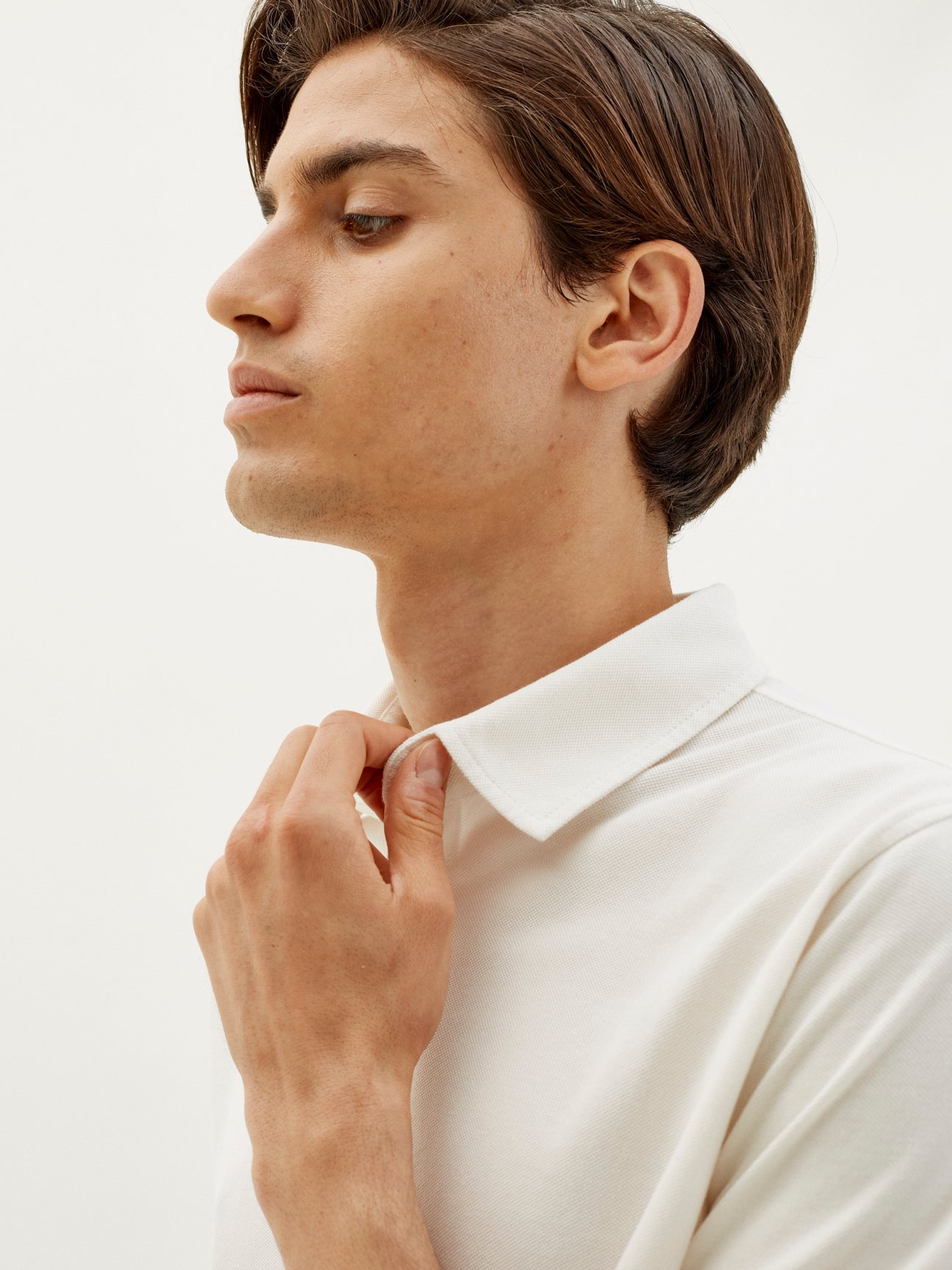
Pique polo shirt by Trunk x Monocle, £80
Shop now
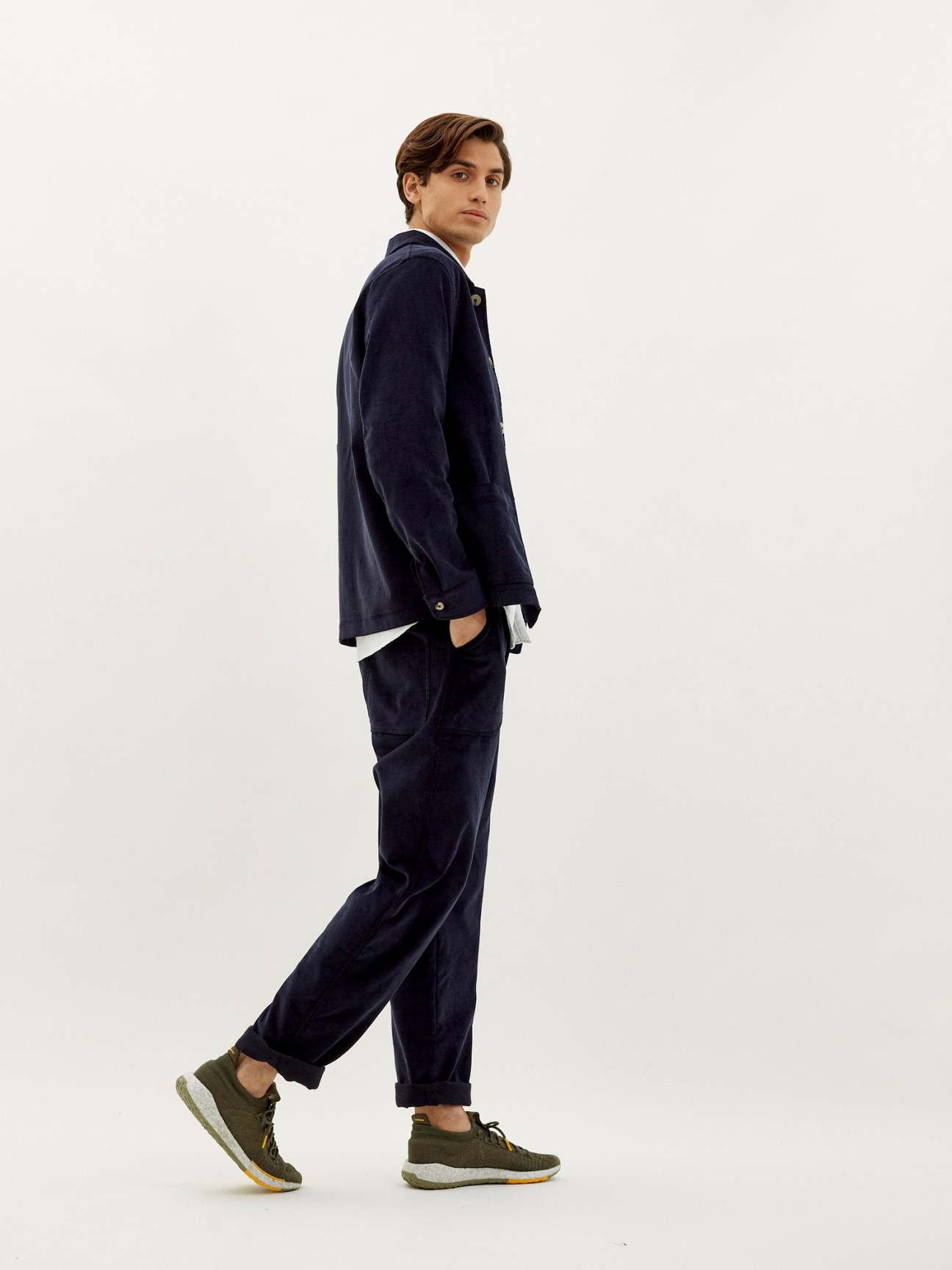
Fine corduroy work jacket by De Bonne Facture x Monocle, £480
Shop now
Fine corduroy work trousers by De Bonne Facture x Monocle, £280
Shop now
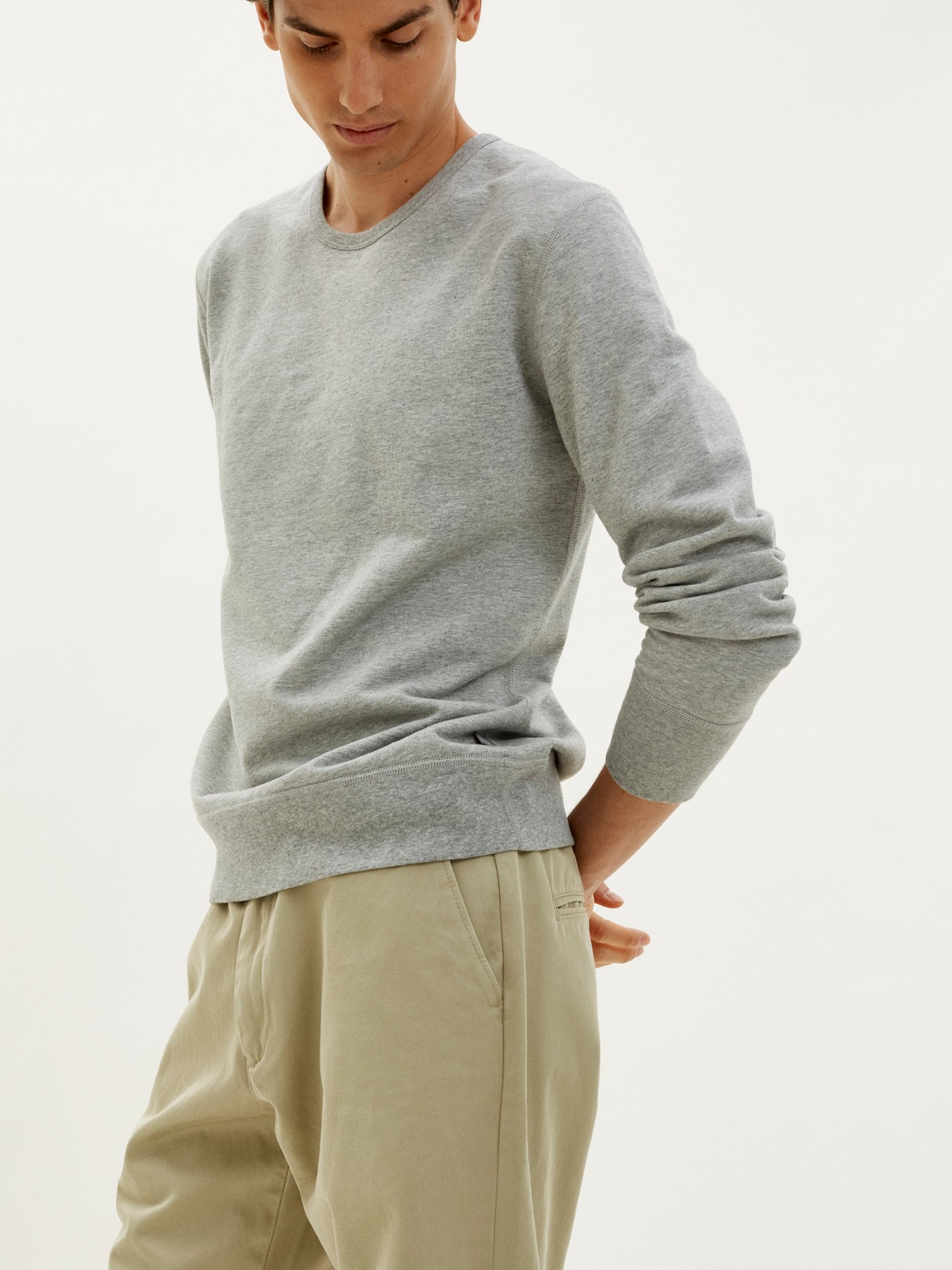
Round neck sweatshirt by Trunk x Monocle, £115
Shop now
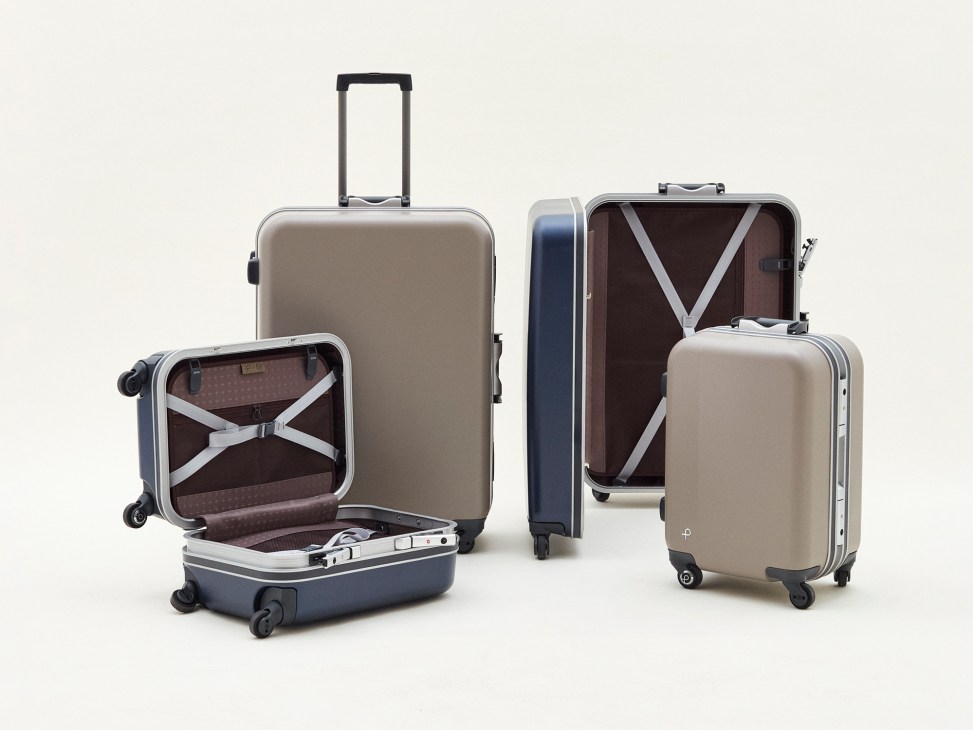
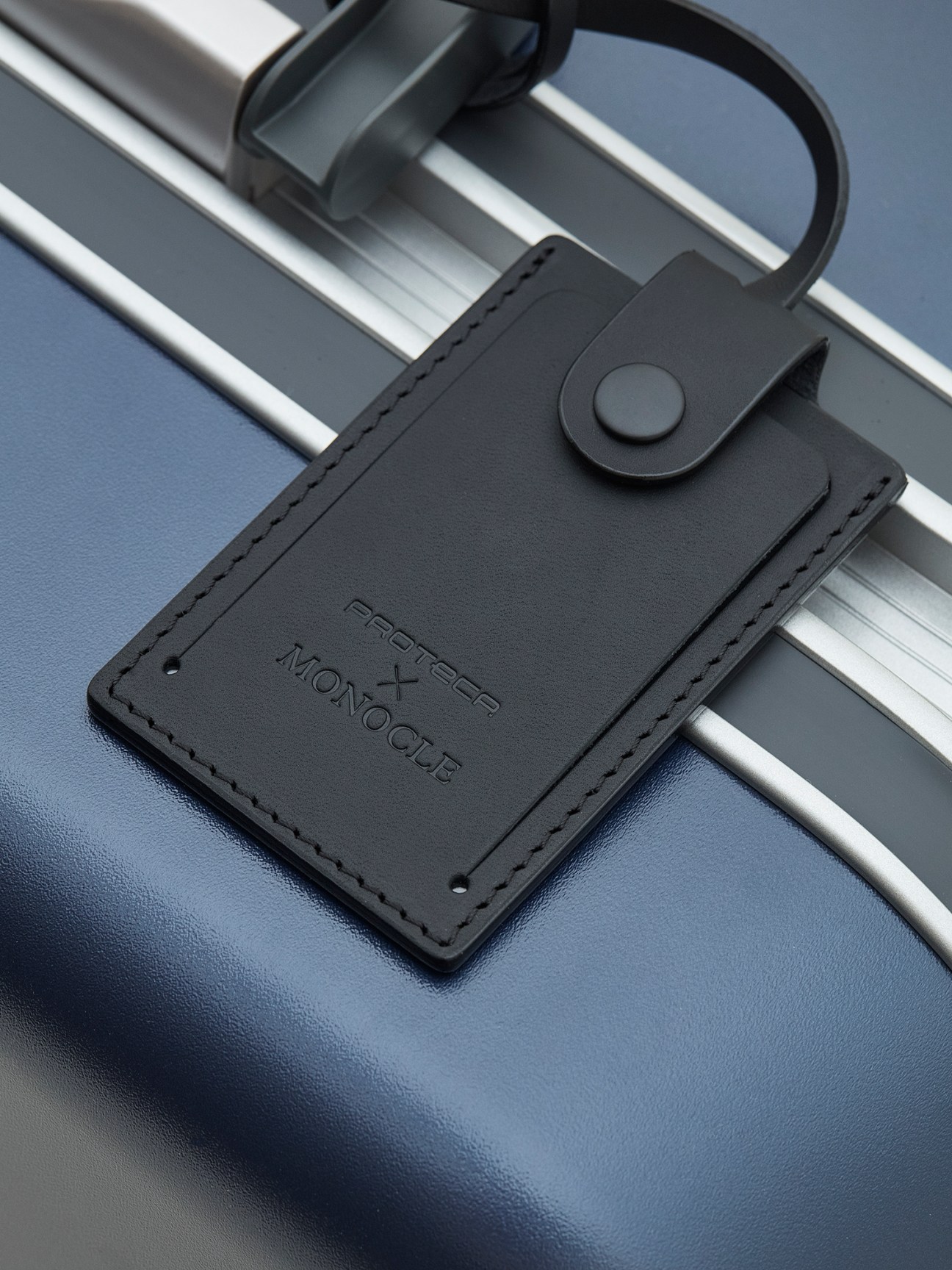
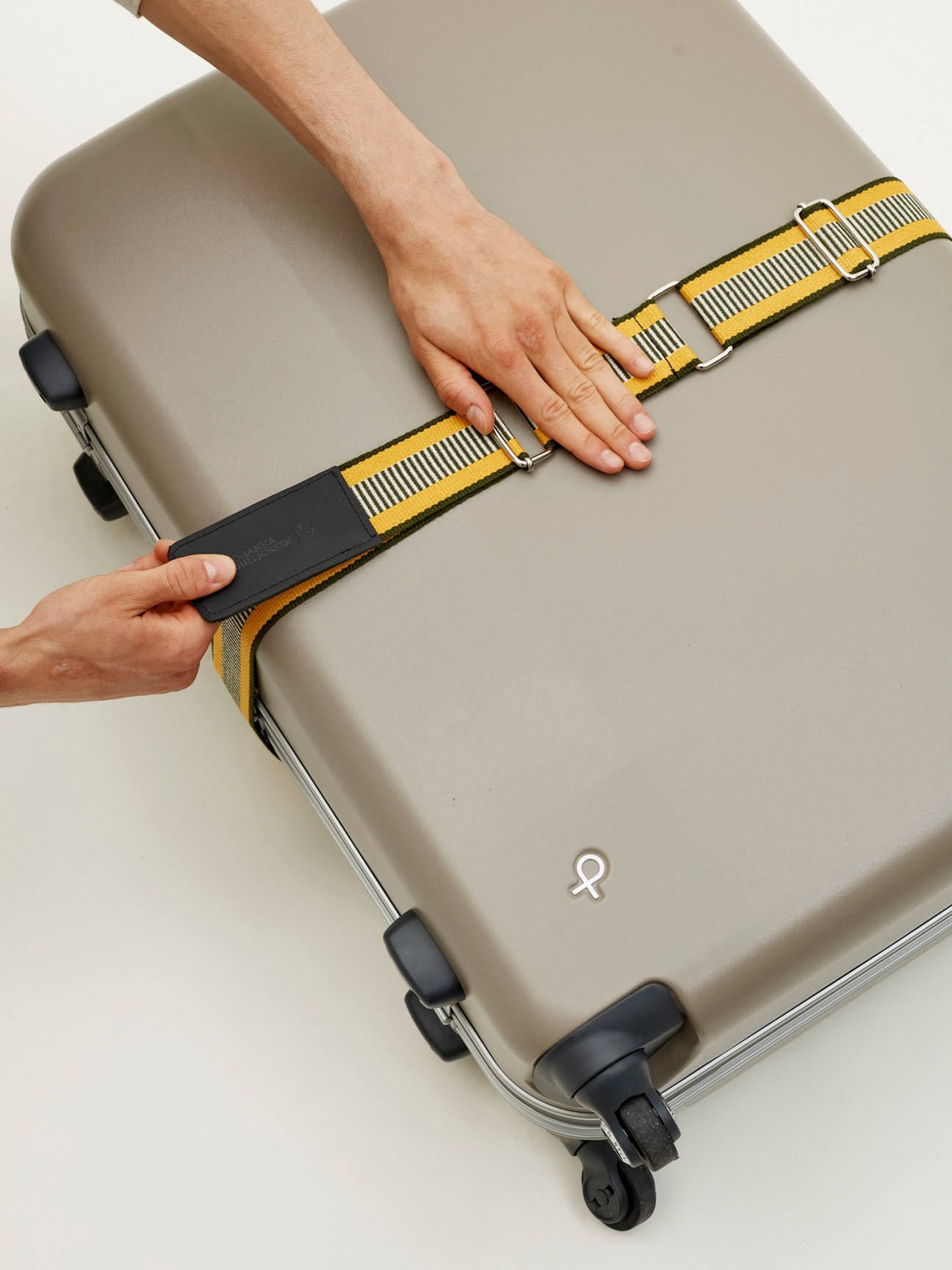
Equinox light u check-in suitcase by Proteca x Monocle, £640
Shop now
Equinox light u carry-on suitcase by Proteca x Monocle, £560
Shop now
Luggage belt by Johanna Guillichson x Monocle, £95
Shop now
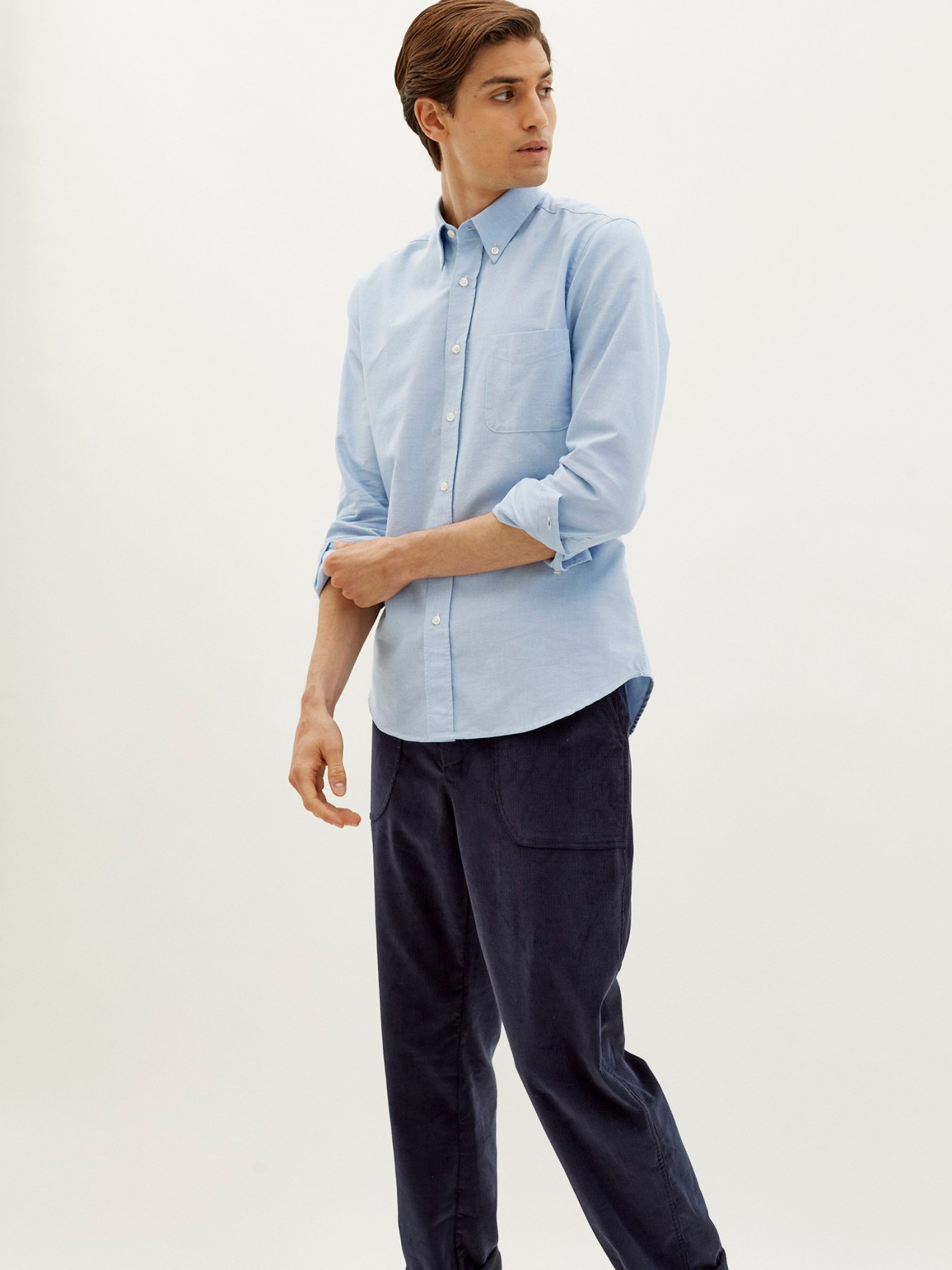
Cover the basics with one of these pared-back classics: a trench coat, trainers or button-down shirt.
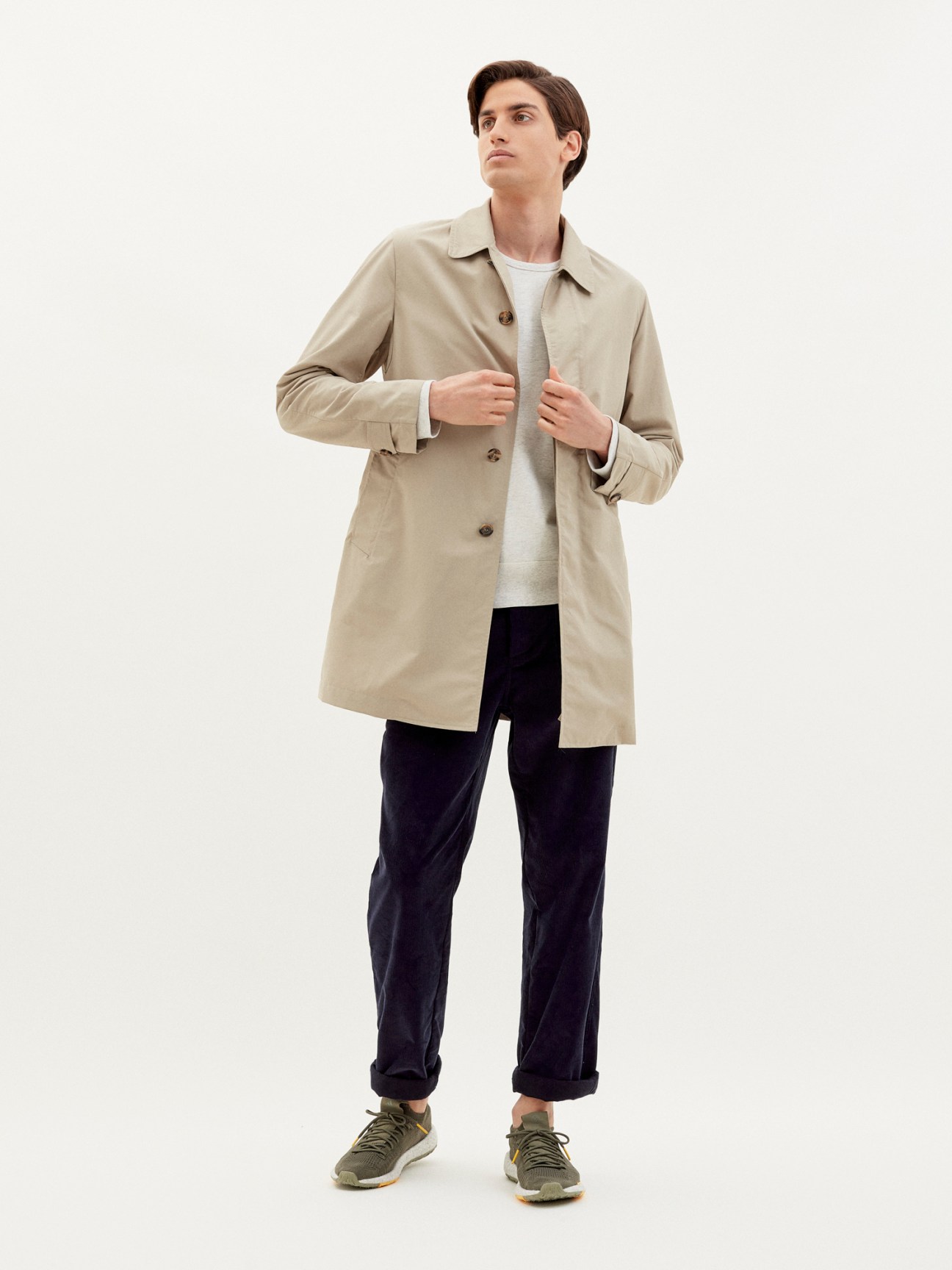
Unlined mac by Valstar x Monocle, £510.
Shop now
Pulse boost hd trainers by Adidas x Monocle, £260
Shop now
Button-down classic shirt by Trunk x Monocle, £150
Shop now
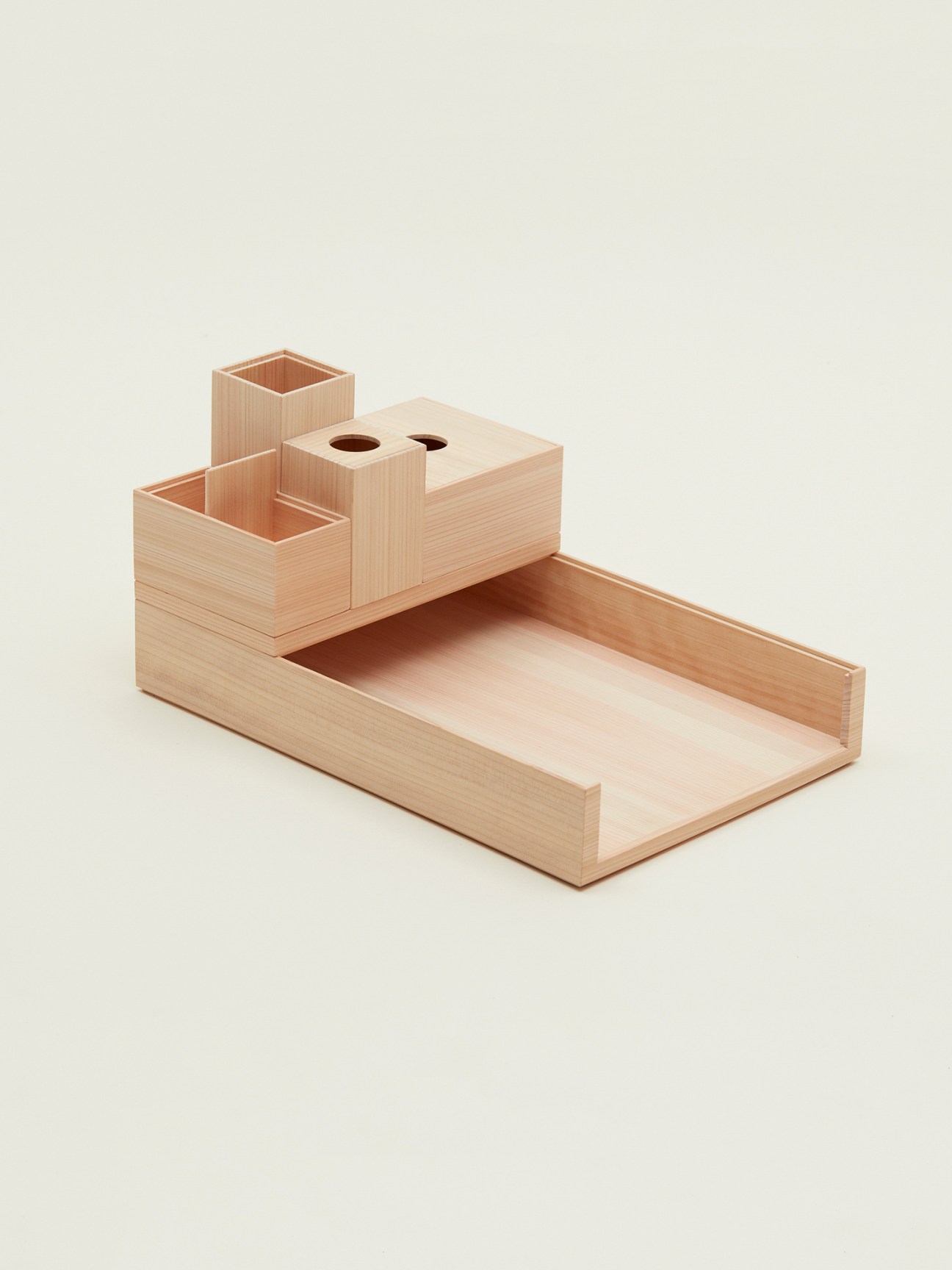
Desk organisers, fine nibs and some on-the-go accessories.

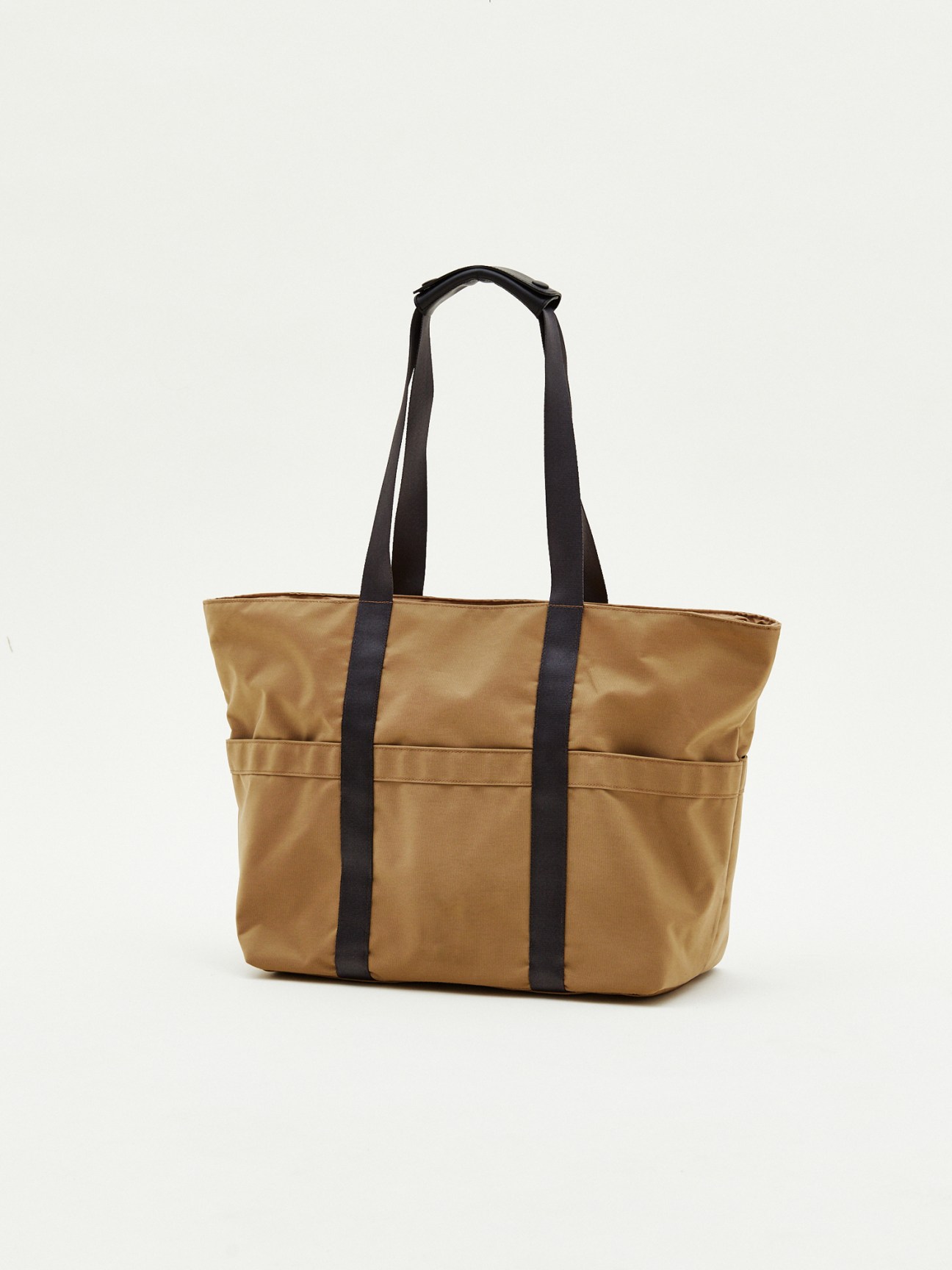
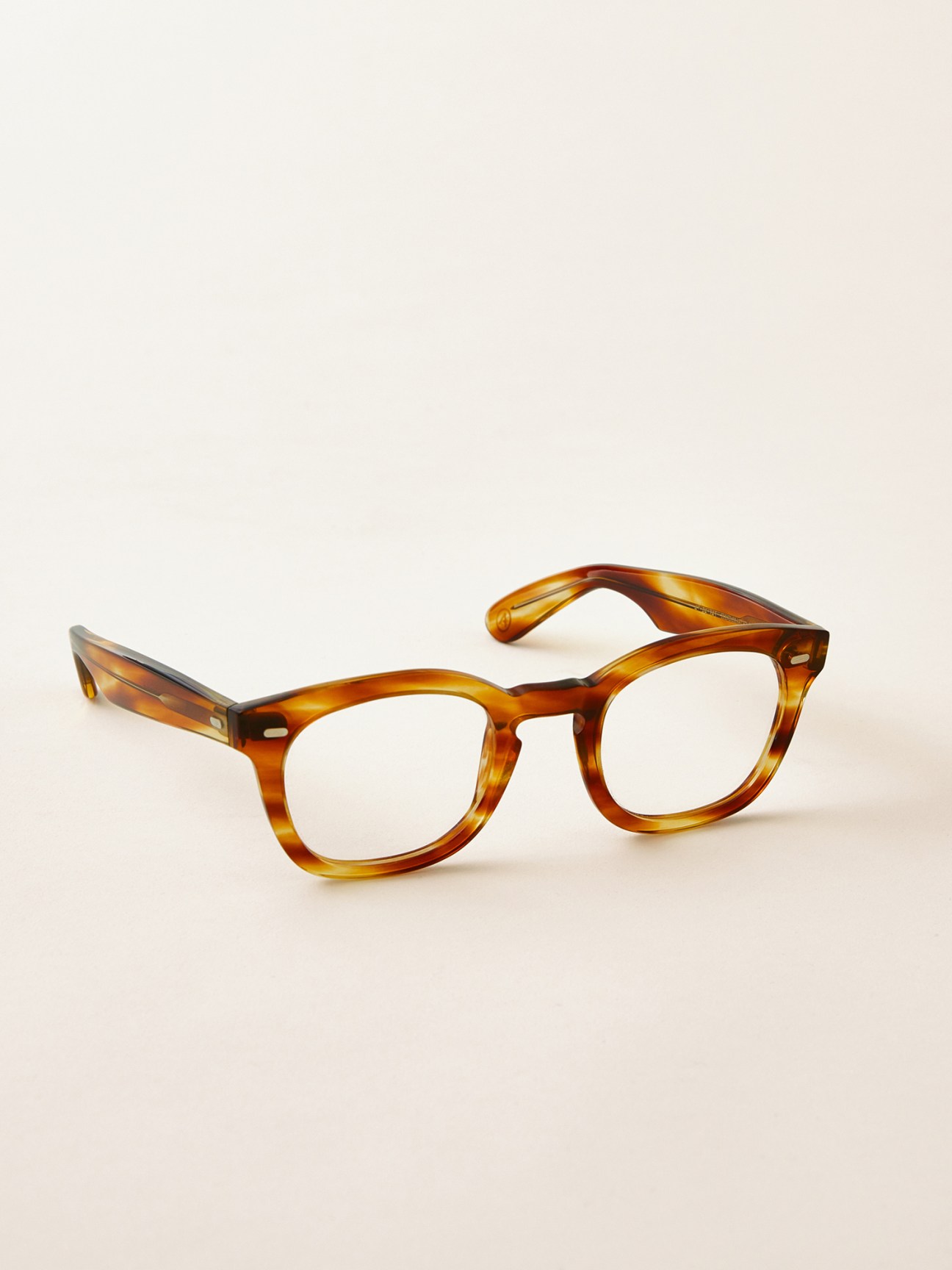
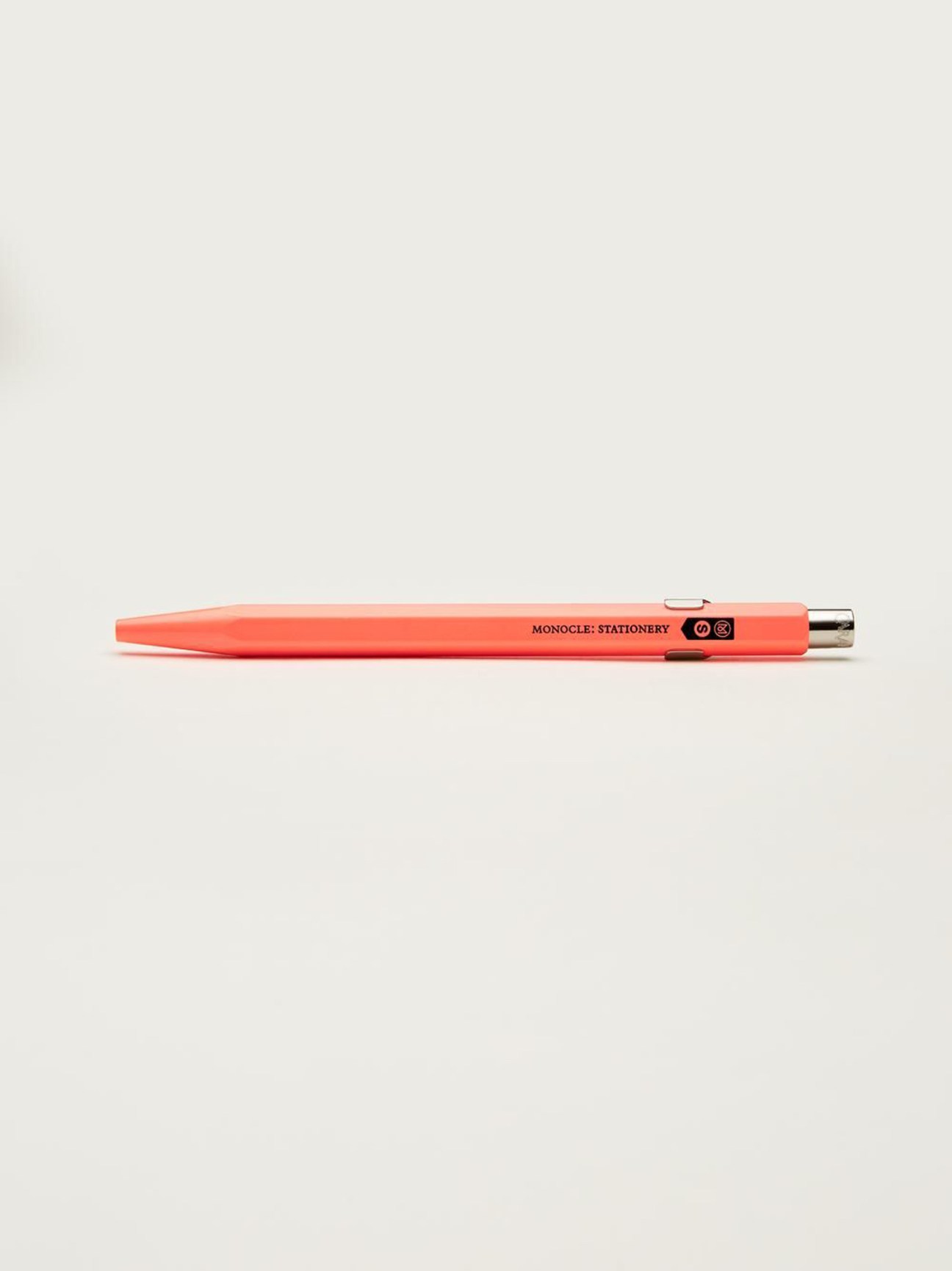
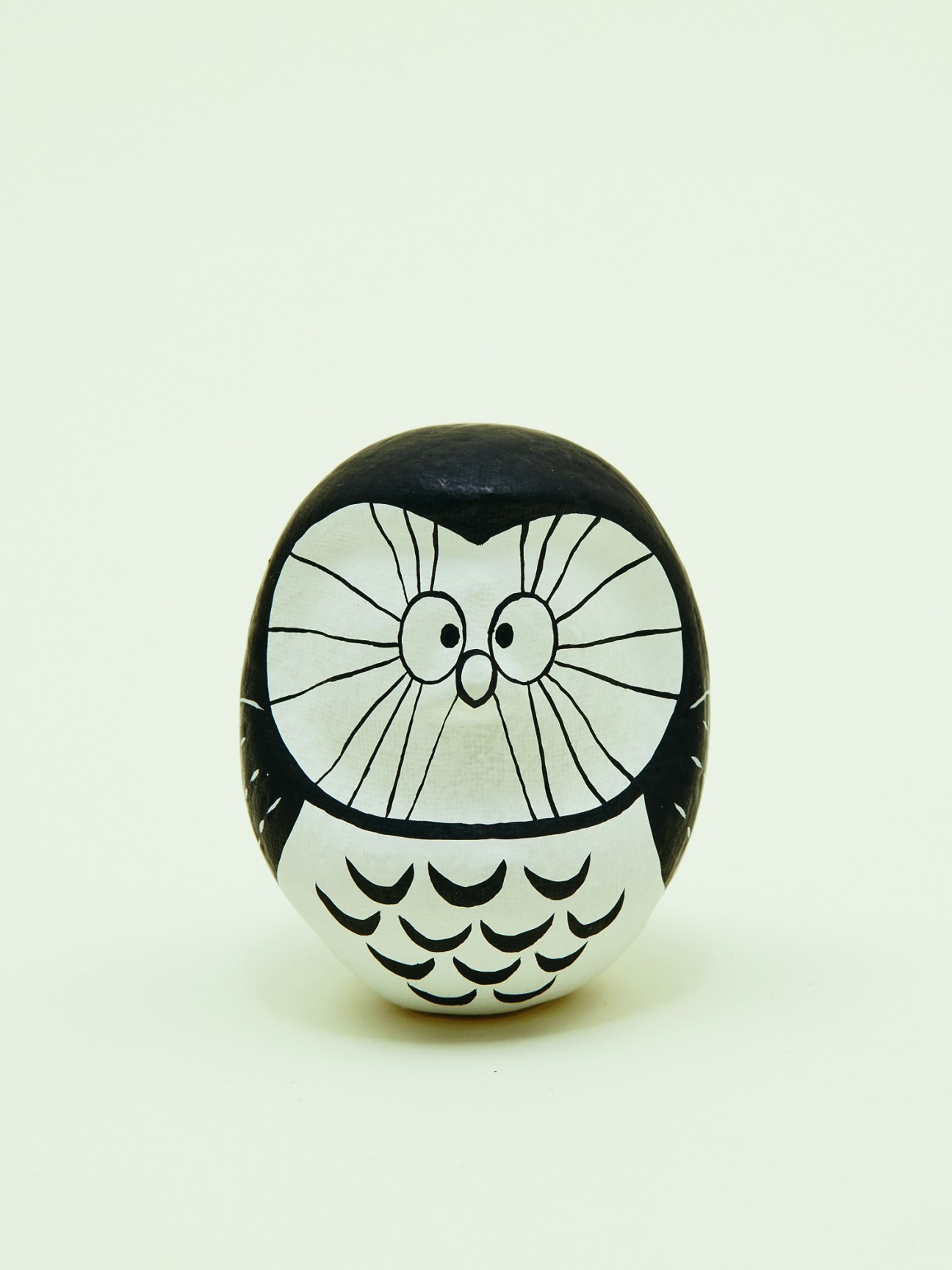
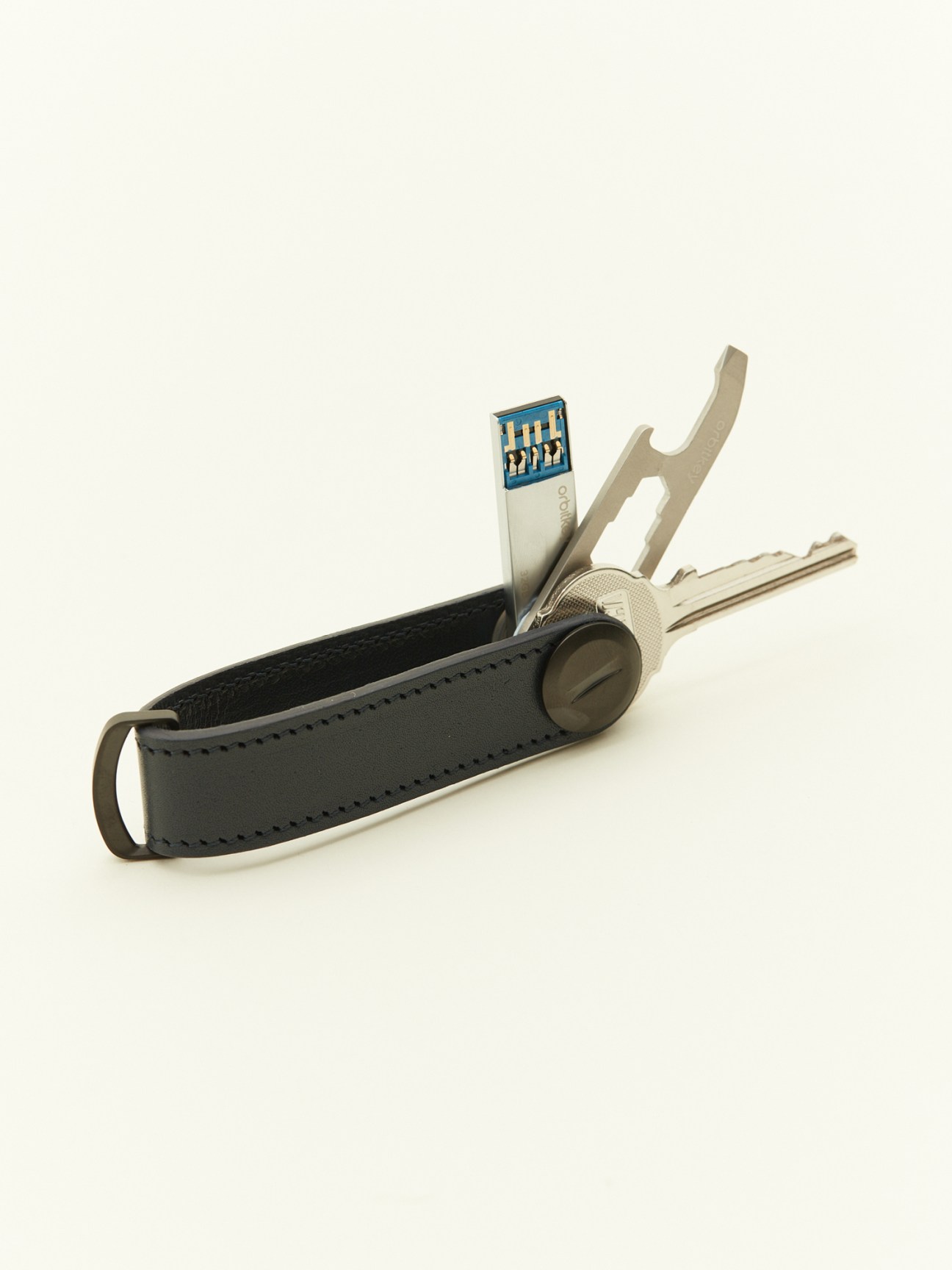
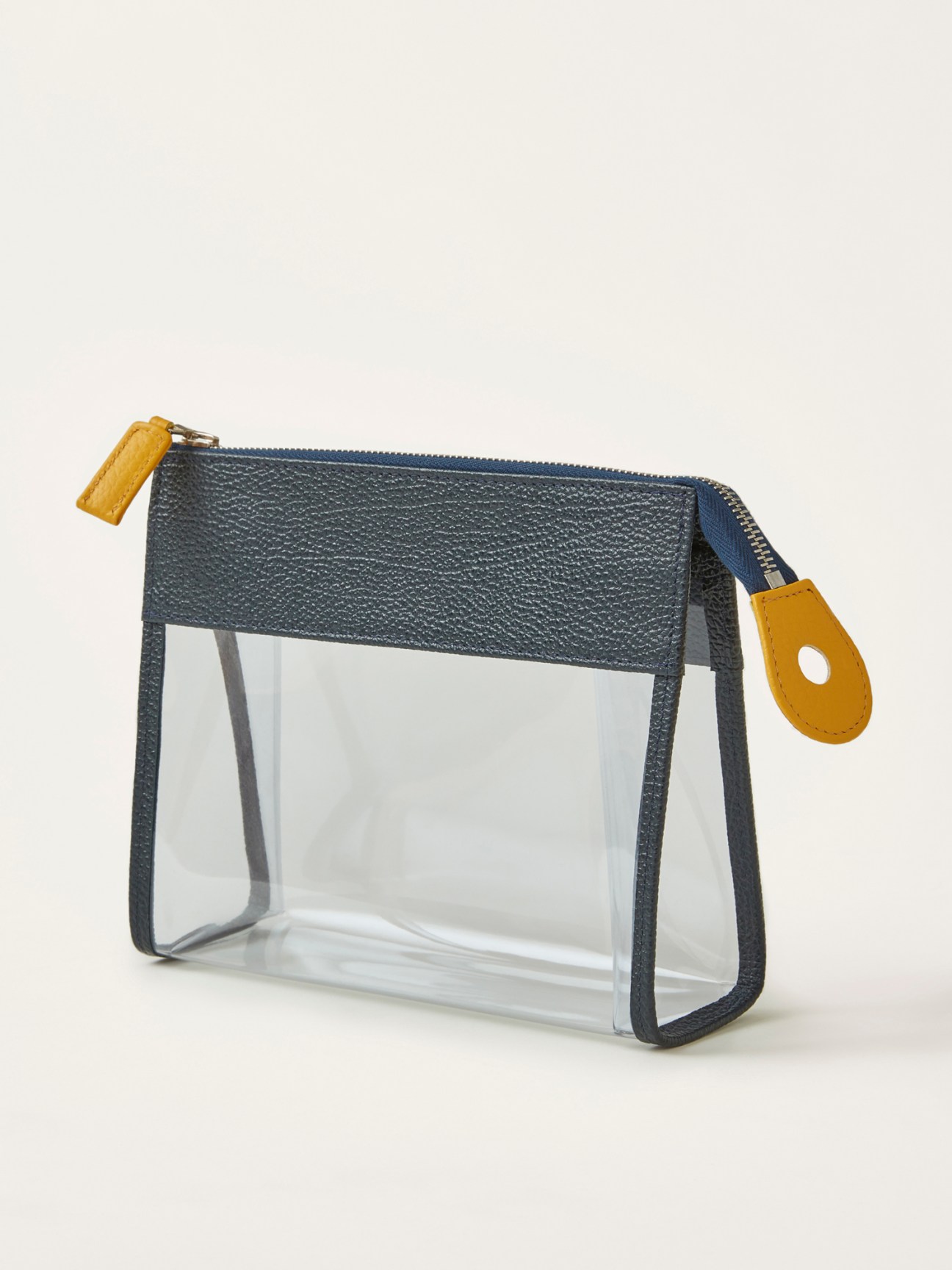
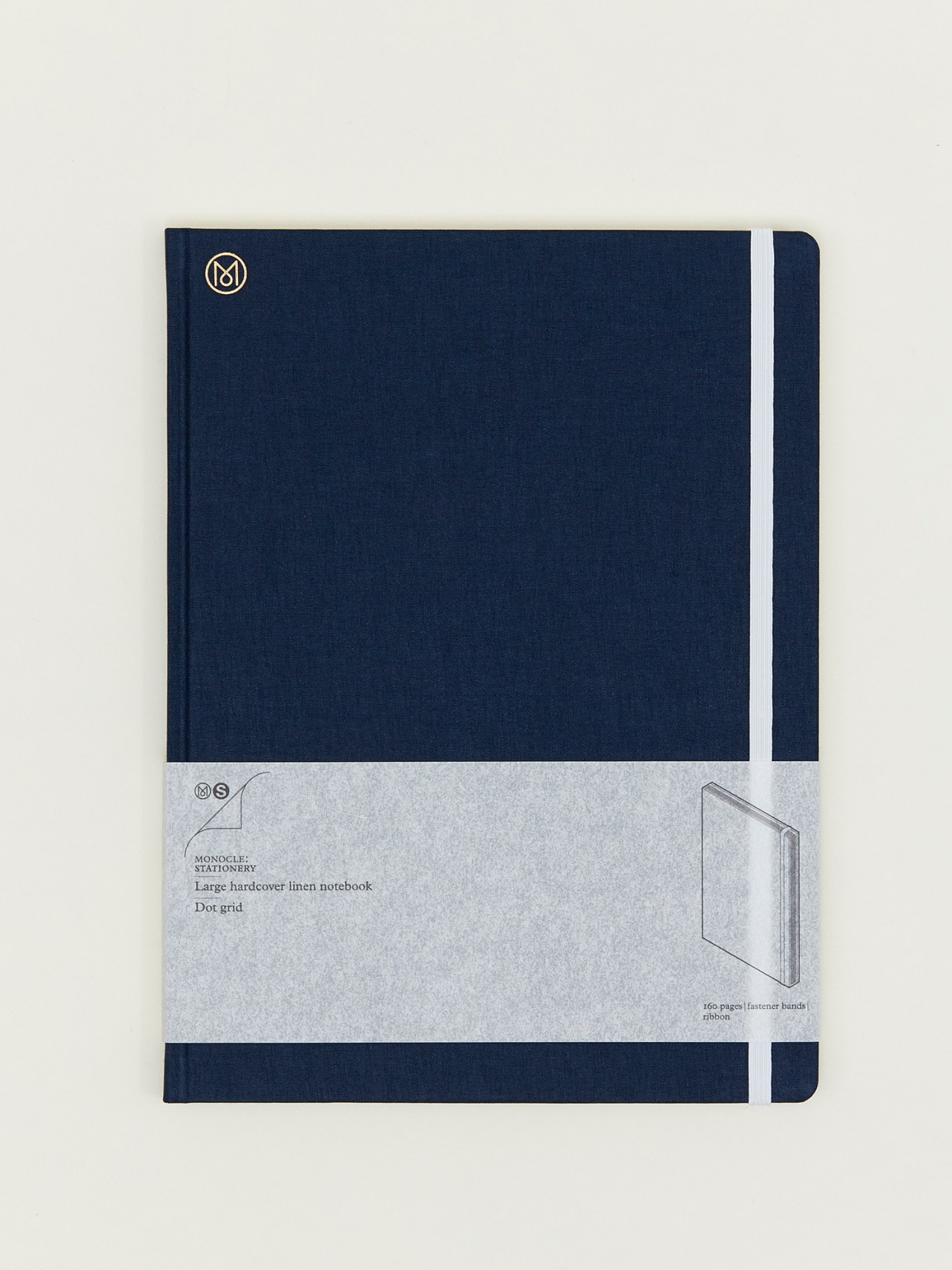
Go go gadgets
Technology is changing the way we work. The right gadgets can enhance focus in noisy situations, help you arrive punctually at your destination and ensure you have everything you need, wherever you are.
If you’ve spent any time working remotely you’ll know that staying connected is more important than ever and that your desk space, wherever it is, benefits from efficient, appealingly designed objects that improve the experience of work. If a gadget is ugly to look at or clunky to use, you’ll tire of it quickly. But if it’s convenient, helpful and easy on the eye, it can become indispensable. The best innovations save time and effort and streamline a process you previously found annoying.
Read on for our round-up of the best ways to improve your working days.
75.
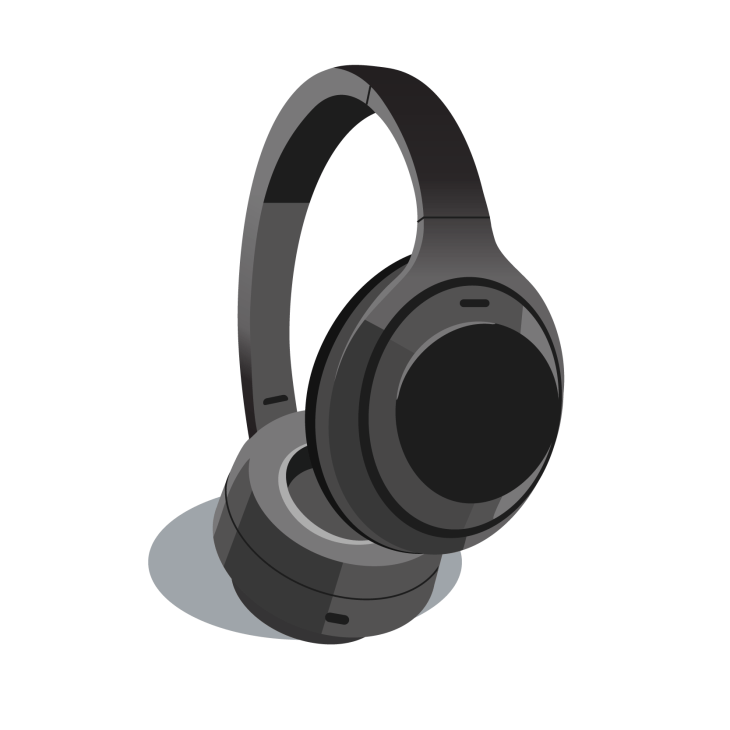
WH-1000XM4 headphones
by Sony
Noise-cancelling headphones aid concentration while quelling the sound of your surroundings – even if you’re not listening to anything. The latest offering from Sony perfectly puts the world on mute, and sounds sublime when you are playing music. Plus, whenever you start a conversation, the microphone pauses the audio.
76.
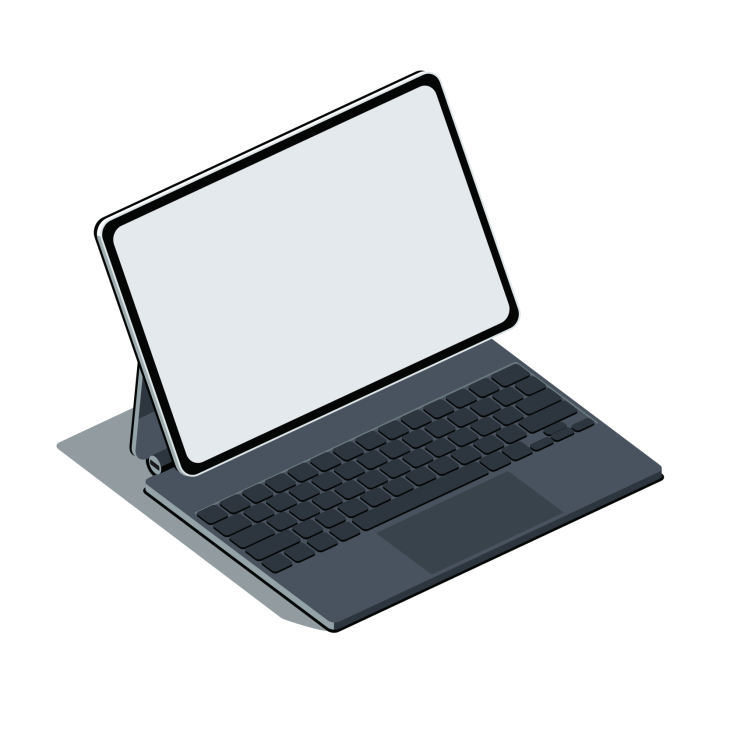
iPad Pro and Magic Keyboard
by Apple
Attach the latest keyboard accessory to Apple’s top-flight tablet for a winning combination – and a lighter alternative to a MacBook. The keyboard is comfy to use, with a good range and keys with an adjustable backlight. The latest iPad software allows for multiple active windows and clever interfaces make the experience seamless.
77.
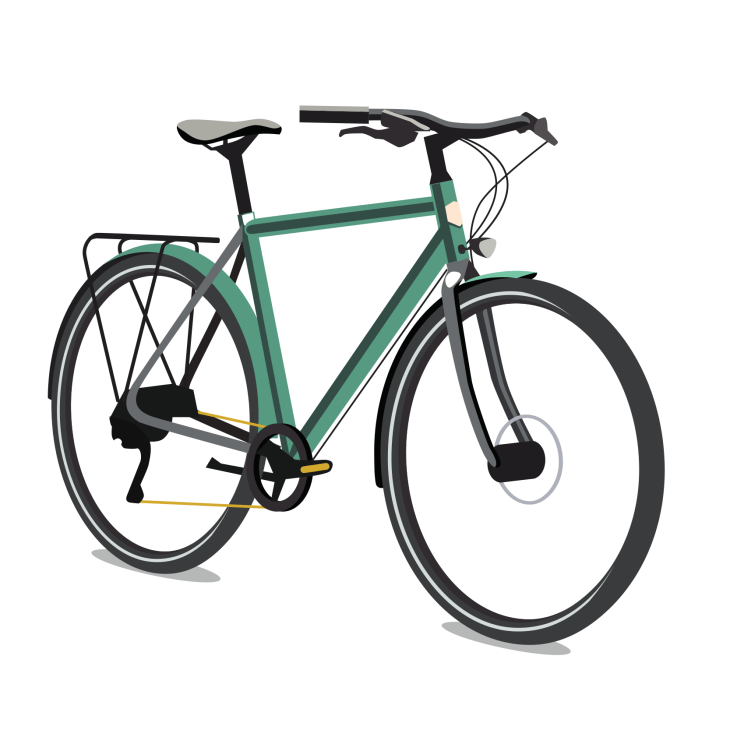
Stout electric bike
by Ampler
This is a pedal-assist bike, so you have to do some of the work but it’s enough of a help to mean you move off easily from a standing start. The battery is hidden in the frame so it looks like a regular cycle – ideal for zipping to meetings. And far from being a cheat, studies show that electric bikes (sometimes) make you cycle more.
78.
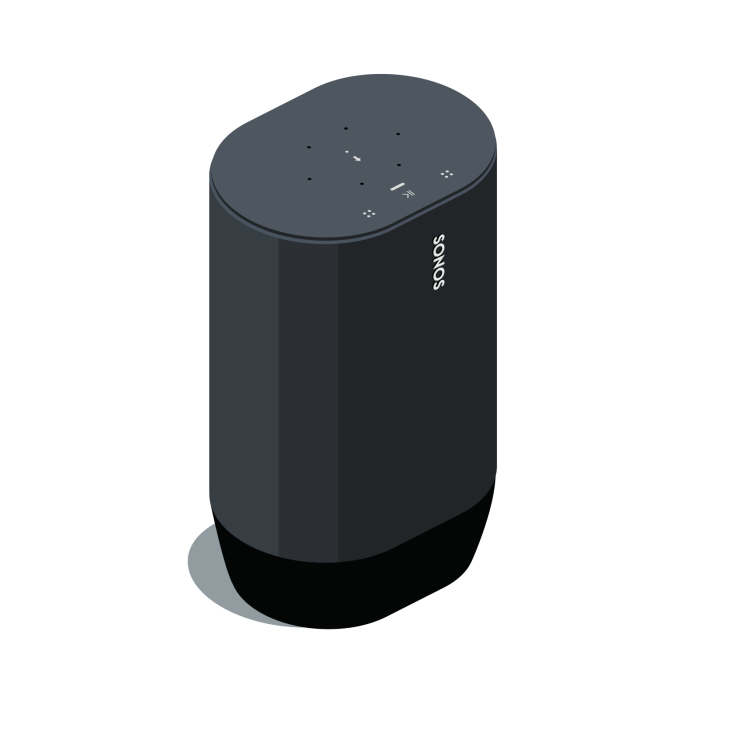
Move portable speaker
by Sonos
This is the first portable speaker from Sonos and it has the same intuitive set-up as its others. Leave the home office and you can take your music with you; if your wi-fi network doesn’t reach to the bottom of the garden, say, you can use the Bluetooth connection instead. Most importantly, it sounds fantastic, with clear vocals and beefy bass.

79.
Lumix DC-GH5 camera
by Panasonic
Smartphone cameras can’t beat the ergonomics of a dedicated camera that fits snugly in the hand and has an analogue zoom. There’s also no phone with a sensor this size that takes better pictures. This camera is more compact than a traditional slr as its electronic viewfinder removes the need for a mirror-reflex system.
80.
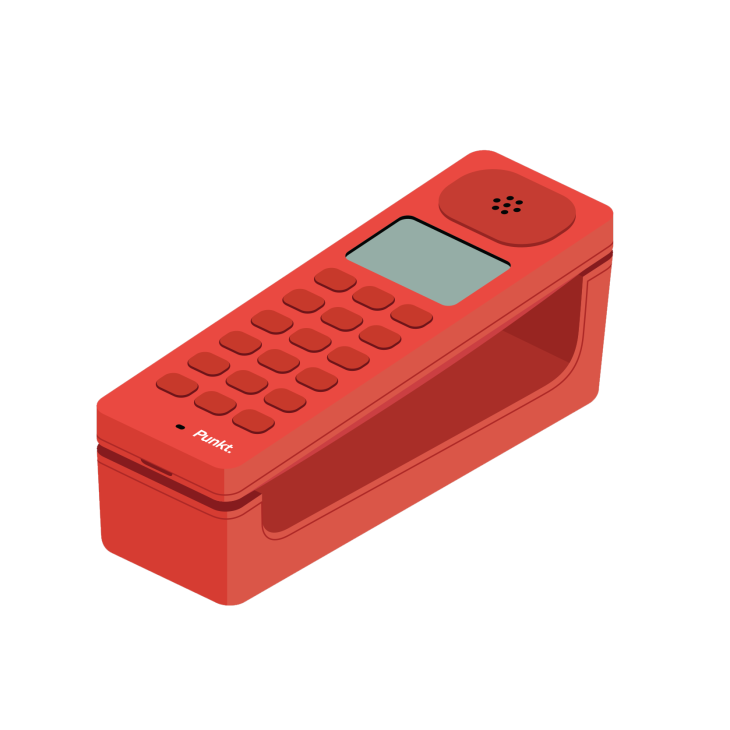
DP01 landline phone
by Punkt.
A neat desk phone not only looks good but is great to use, meaning that you’re happy to answer it when it rings. With its tactile finish, clear monochrome display, pleasing analogue buttons and excellent audio quality, picking up this handset is enjoyable. And when it’s not in use, it sits firmly in its cradle, whether that’s on the desk or the wall.
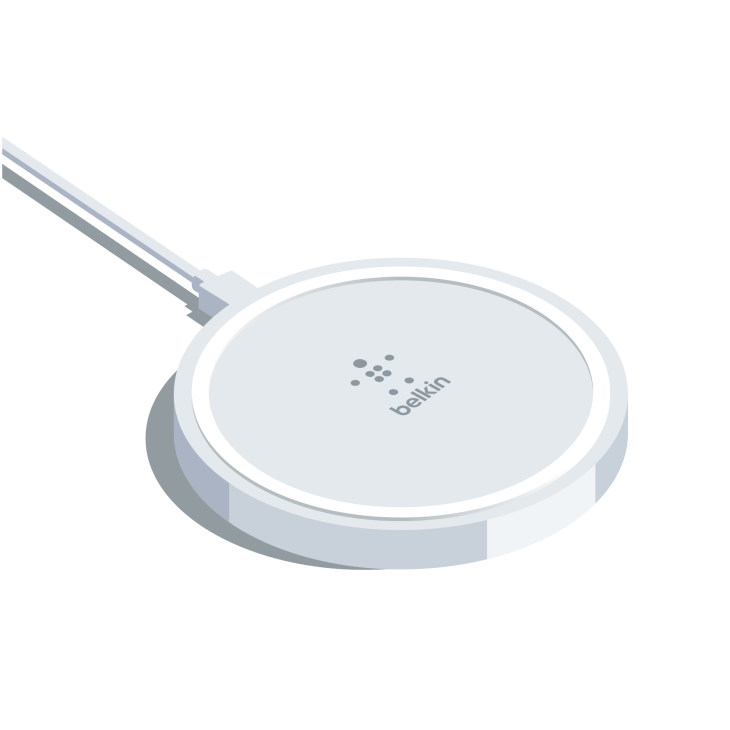
81.
Boost Up wireless charging pad
by Belkin
Instead of plugging your phone in to charge its power for that investor chat, go wireless. You’ll need a wireless-chargeable phone such as a recent iPhone, Samsung or Huawei. Wireless charging is slower than wired but the sense of freedom that comes from simply grabbing your phone more than makes up for it.
82.
AirPods Pro
by Apple
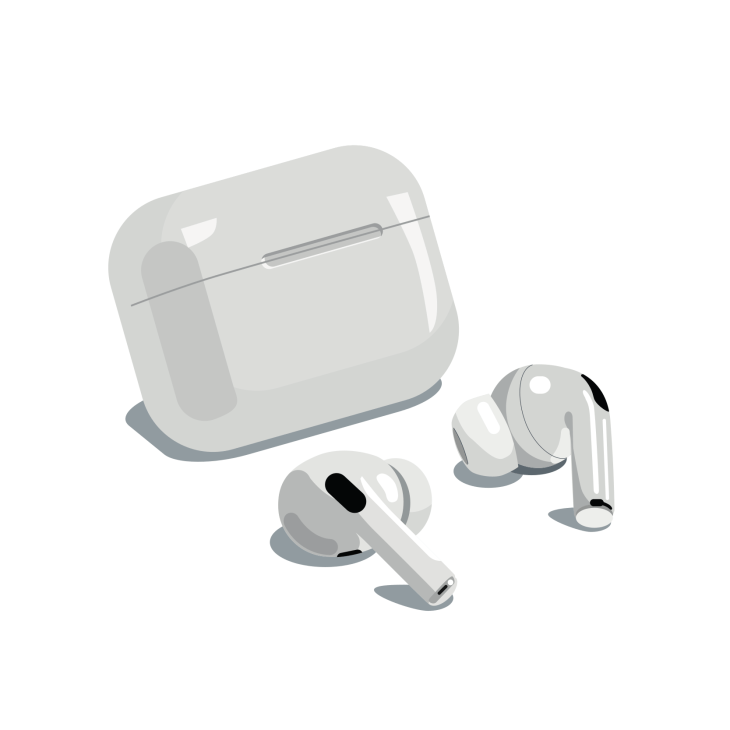
Still easily the best true-wireless, in- ear headphones, the Apple AirPods Pro have first-rate noise-cancelling and stay in your ear securely. There’s also a neat trick: take one bud out of your ear and the music pauses. The headphones have multiple microphones, which means they’re great for hands-free phone calls too.
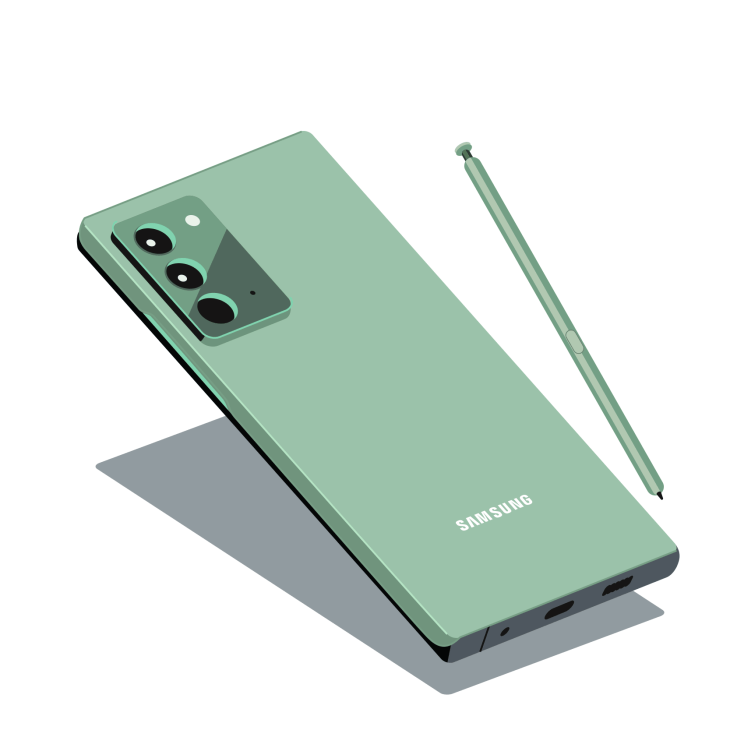
83.
Samsung Galaxy Note 20 Ultra 5G
by Samsung
Samsung’s latest phone has a screen that’s big enough to write on but small enough to handle. It comes with a slim stylus called the S Pen, which pops out of the bottom of the phone ready to take notes and draw up plans, and a 108-megapixel camera for sharp pictures, plus two other cameras (one with a 503 zoom) for good measure.

84.
Jump1 wireless powerbank
by Native Union
When you’re on the move, the last thing you want is for your gadgets’ power levels to dip – especially that of your phone. This well-crafted battery has two outputs, traditional usb and a faster modern usb-c. There’s also a wireless charging panel: put the phone on top to charge and the silicone-covered case means that it won’t slip.
The view from here
72 /100
Architecture
Alexandra Hagen
Role: CEO, White Arkitekter
Location: Gothenburg, Sweden
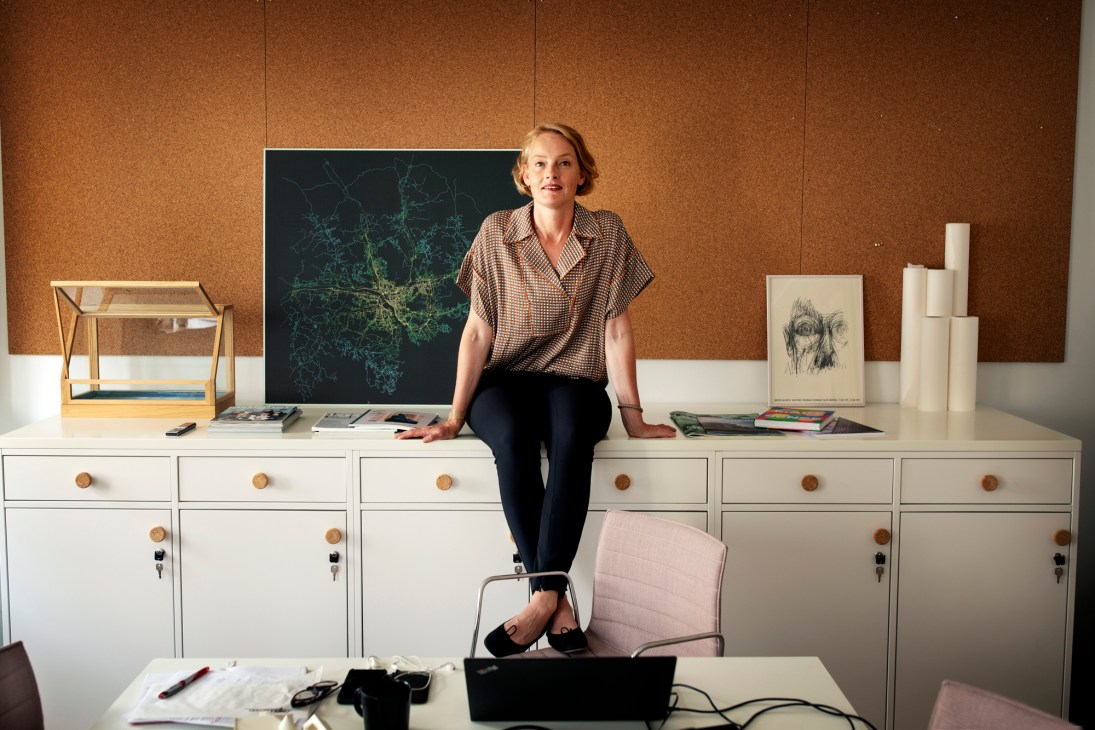
White Arkitekter has grown from its humble beginnings in Gothenburg in 1951 to become one of the largest practices in the Nordics, with a staff of about 800. It’s an employee-owned company, an ethos evident in CEO Alexandra Hagen’s choice of workspace. “We’re not a practice of corner offices,” she says. “The best space in the studio is always available for everyone. There are others who spend much more time in the studio and need space. I travel a lot, so I don’t have my own office.
The company’s chief, who took the role in 2018 after 17 years with the firm, works from a conference room revamped by the practice’s interior designers. “They gave me a wall for pin-ups and a wall for writing, and a desk in between, which they found in the building’s basement. They replaced the top, which was in bad shape, and refurbished the legs.”
The resulting space is popular with her colleagues too; it’s almost always full when she arrives. “It’s exceptionally clean at the moment but normally there would be sketches, papers and books, and designers sitting in here reviewing things.” This, Hagen says, is a good thing: it feeds creativity, encouraging chance encounters and discussions about the work. “It’s hard to be creative by yourself. You need someone who has a different view. Creativity emerges from that collision between different perspectives.”
73 /100
Hotels
Sharan Pasricha
Role: CEO and founder, Ennismore
Location: London, UK
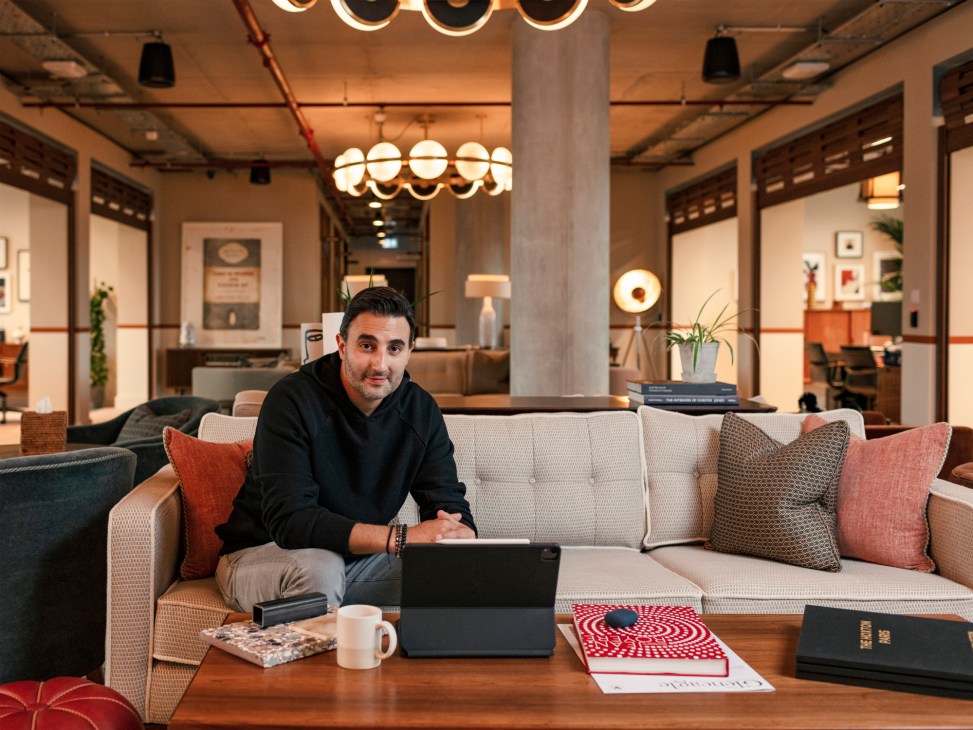
Sharan Pasricha doesn’t have a permanent office. The hotelier and developer works from Ennismore’s restaurants, co-working spaces and hotels, including The Hoxton. You’ll often find Pasricha, and his designers, working in the lobbies. “By spending time with our guests and getting a sense of how they interact with our brand, our people and our physical spaces, we can better understand what we can provide,” he says
Mostly, though, Ennismore’s team of 120 are based at Working From, one of his co-working spaces in London’s Southwark. The residence-inspired space has a pantry kitchen, a generous living room, a mix of offices and open-plan seating at desks and high tables. It’s homely, for good reason. “I’ve always wanted every person who works for us, and with us, to be the best version of themselves. Creating an office environment where people feel at home accelerates that.”
So where does Pasricha pitch? “I love to sit next to our graphic design team, or sometimes the investment team,” he says. “I’m one of those entrepreneurs that needs to be in the middle of the action.”
74 /100
Education
Rama Kayyali
Role: CEO and co-founder, Little Thinking Minds
Location: Amman, Jordan
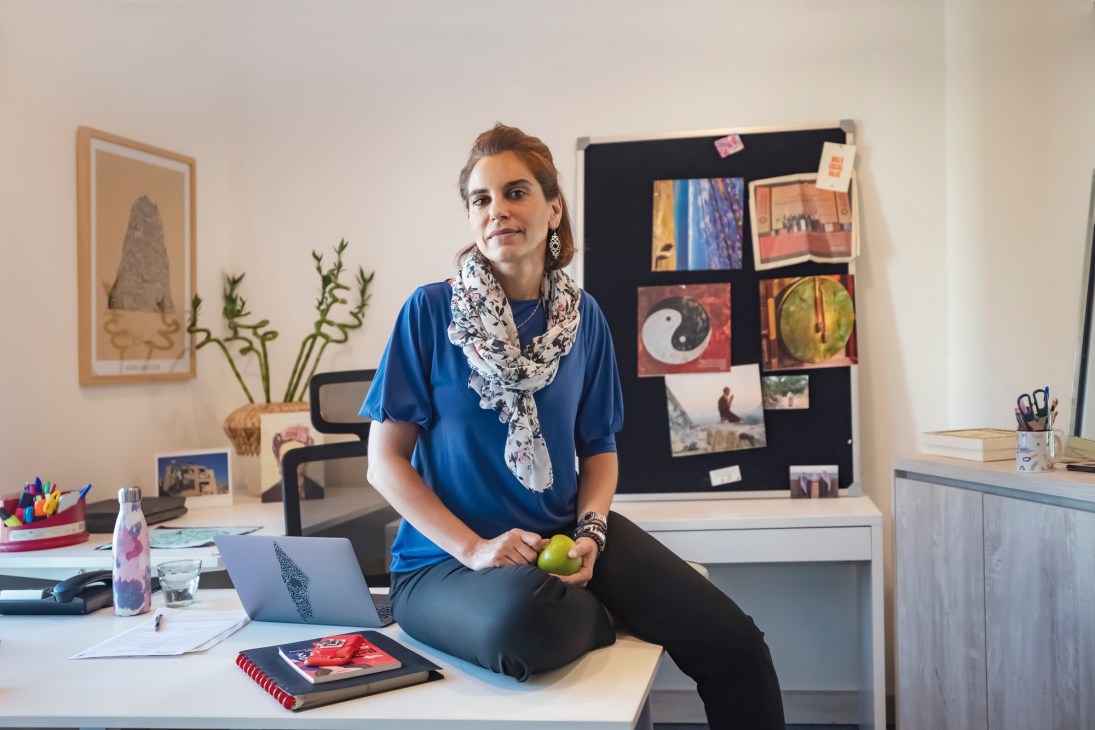
Over the past three years, Little Thinking Minds has grown rapidly to become a leader in Arabic-language education. Its online courses and assessments are used by 200 schools and 80,000 students across the Middle East, North Africa and Europe. Rama Kayyali’s team has also grown rapidly. So when fitting out a new headquarters earlier this year, she ensured that her office was centrally located, with glass walls. “I wanted to feel part of the team and for the team to feel that they could approach me.” The desk is a relic from a previous office fit-out but it suits the CEO’s personality. “It’s really big, so we can easily have meetings or lunch at it, which helps me to stay involved,” says Kayyali. “I’m a bit of a scattered person too, so I need a wide area to spread my notes and papers.”
Space exploration
For small-business owners and heads of growing start-ups, a well-designed office to call one’s own has long been an essential part of building the brand. Although recent events have led to noisy calls for a remote-working revolution, we believe that a physical base is key for companies of all sizes. This is particularly true in the creative sector, which requires multiple good minds to be working together, under the same roof. Yet emerging brands in these industries are often prone to slim profit-margins and can be constrained by budgets. Thankfully, in the design industry, no challenge is without a solution. With this in mind we’ve sought out three new studio set-ups that didn’t break the bank. Theirs is a lesson in how your firm could stand to benefit from innovative architecture and thrifty business thinking.
69 /100
Interior design specialist that put a quick twist on a dance hall
Esrawe Studio, Mexico City
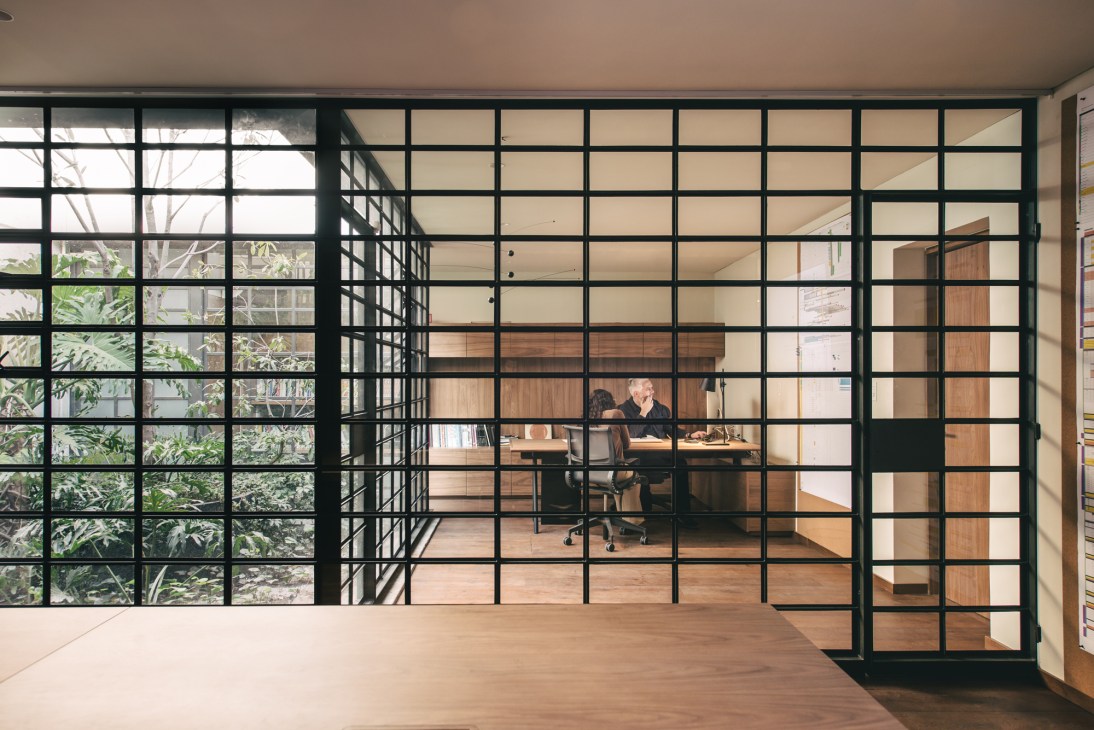
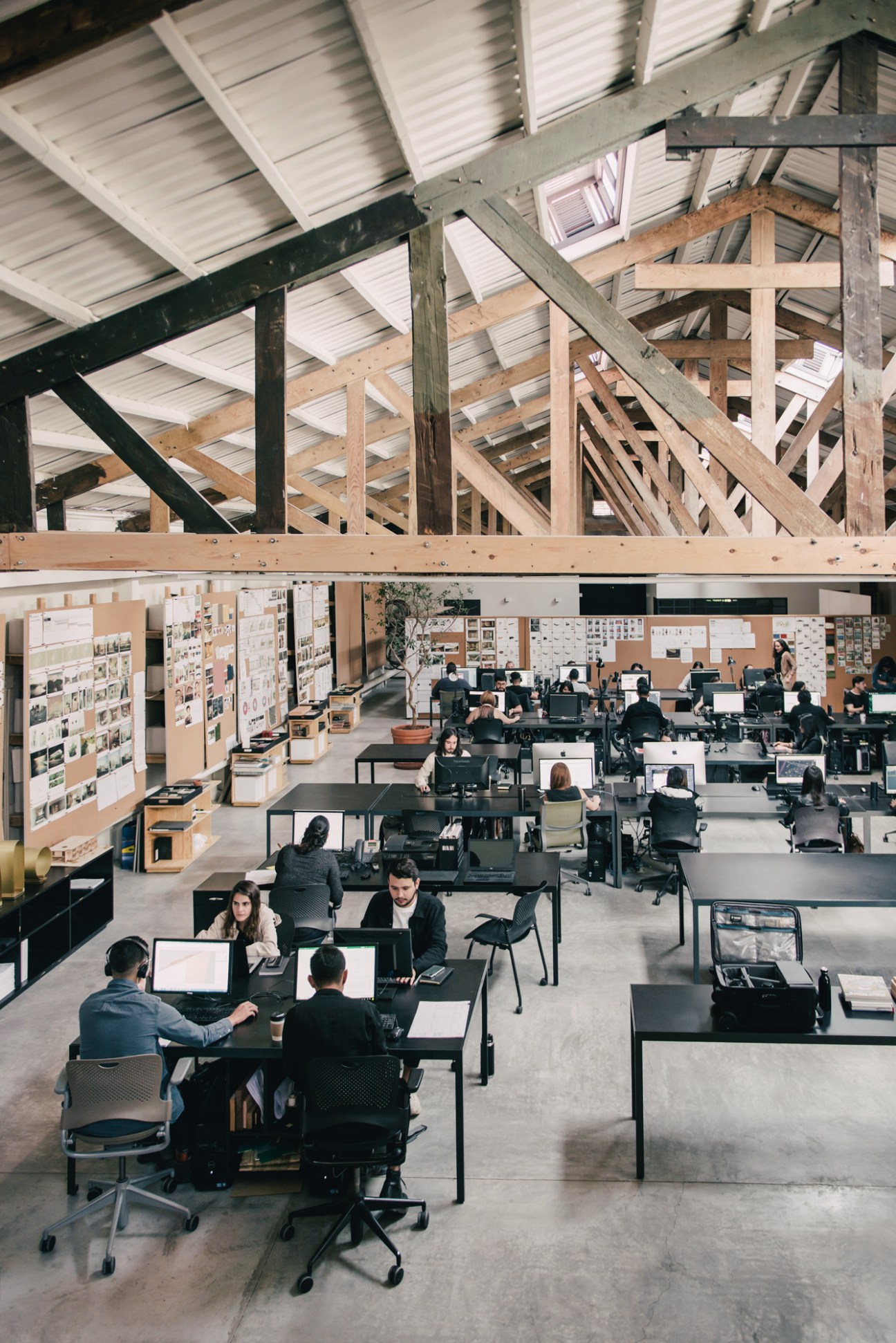
A multi-disciplinary architecture, product and interior design firm, Esrawe Studio recently moved into a new headquarters on a leafy street in Mexico City’s Roma Norte neighbourhood. Here, practice founder Hector Esrawe has overseen the transformation of a rundown 1950s dance hall into a breezy open-plan studio. According to the designer, its delivery on a small budget and its success as a workplace is all down to its efficiency. “Every project is contextual for us,” says Esrawe. “This project – our studio – revealed that we needed to express the most out of the least.”
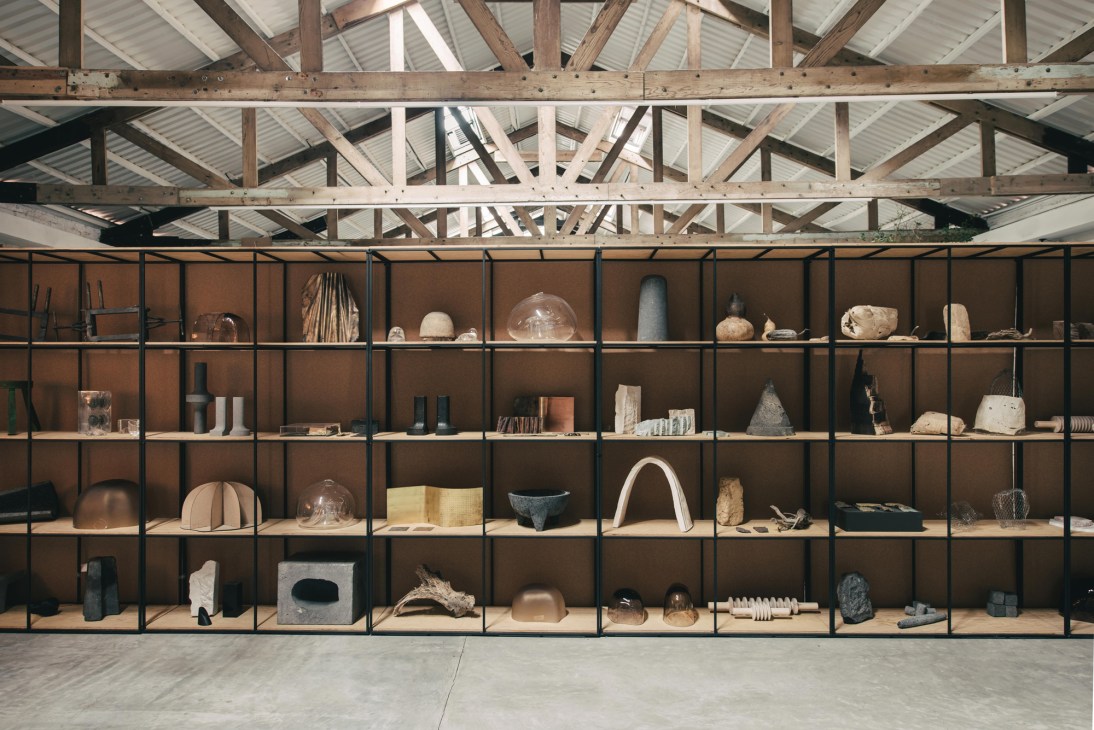
In terms of build, this meant retaining the structure’s timber frame while removing a false ceiling to reveal an existing wooden one above. Additions have been minimal too: new concrete floors and a handful of concrete beams were introduced for essential support. The walls were freshly painted white and skylights were also added to allow natural light to pour into the space, improving the building’s overall energy efficiency (the team need only turn on the lights as the sun sets).
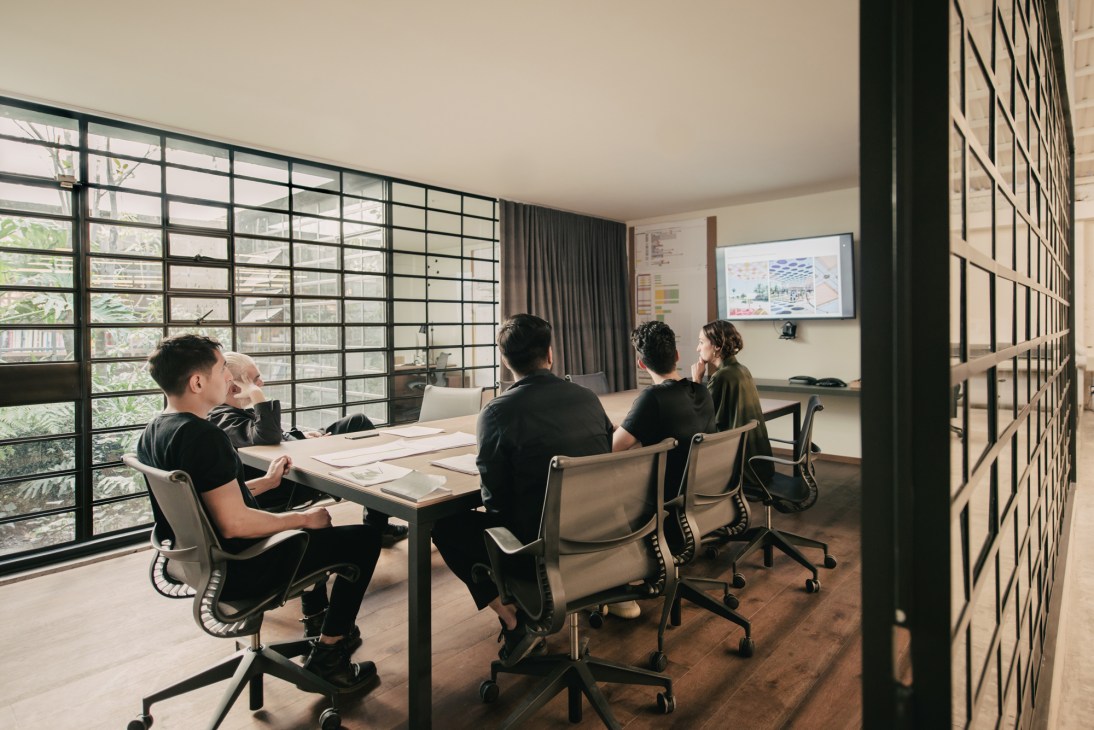
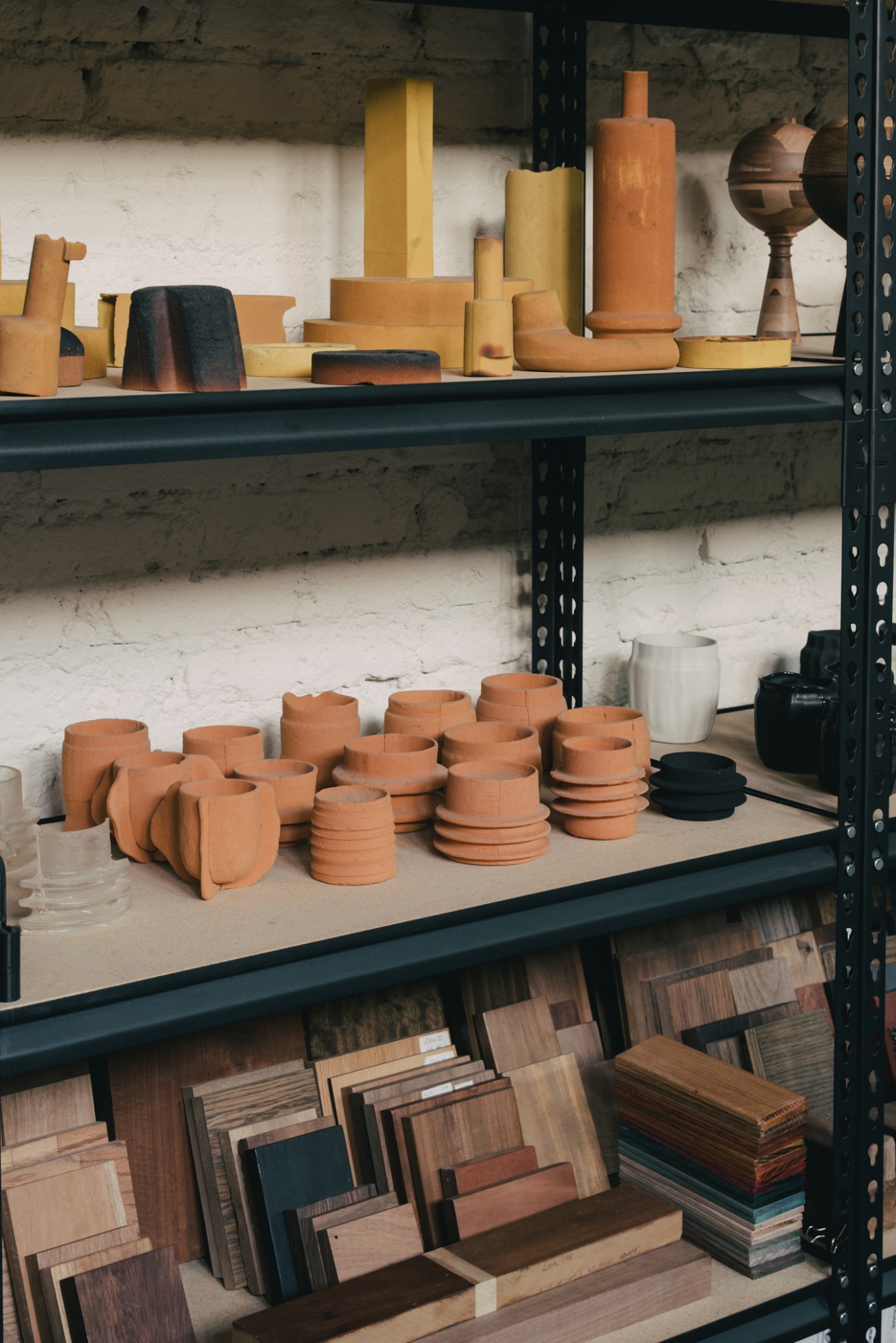
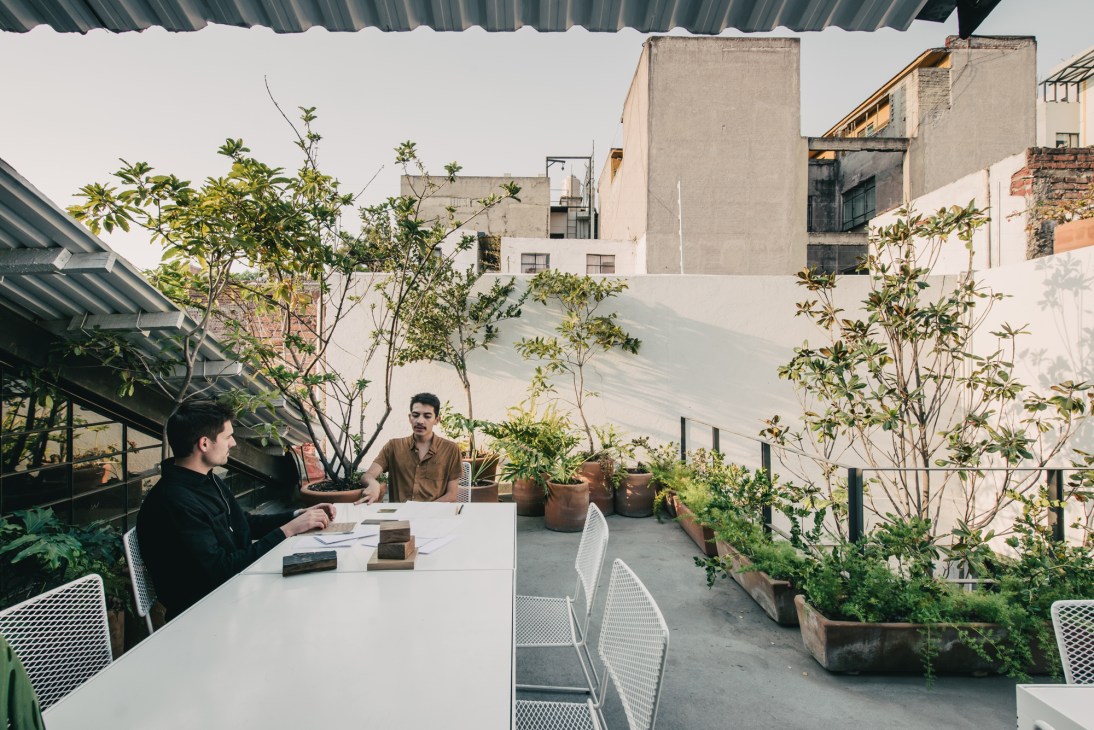
Perhaps the most significant initiative has been the creation of a plant-filled outdoor area on the ground floor, as well as the establishment of a lush rooftop terrace. Both have enhanced the team’s output. “We don’t believe in staying in a single spot for the whole day,” says Esrawe. “The garden allows our teams to have informal meetings and to expand their areas of work.” This is crucial for a company such as Esrawe Studio, whose designers thrive on the cross-pollination of ideas. For a small investment, these outdoor spaces now play an important part in the employees’ daily workflow.
“Sometimes the perception is that adding nature will involve a bigger expense but that’s not always the case,” says Esrawe. “Through smart planning you can integrate open areas and nature, and really create a more efficient workplace.”
70 /100
Design agency that can switch in an instant with modular furniture
Bureau Borsche, Munich
For Munich-based Mirko Borsche, owner of branding and design firm Bureau Borsche, the key feature of its workplace is a simple modular-furniture system. But the D2 – which he developed with German furniture company Wagner, Berlin architects aas Gonzalez Haase and industrial designer Stefan Diez – is nothing ordinary. “We asked what the office of tomorrow will look like,” says Borsche, showing us the space that his 12 staff members occupy. “The answer? Sustainable but also futuristic.”
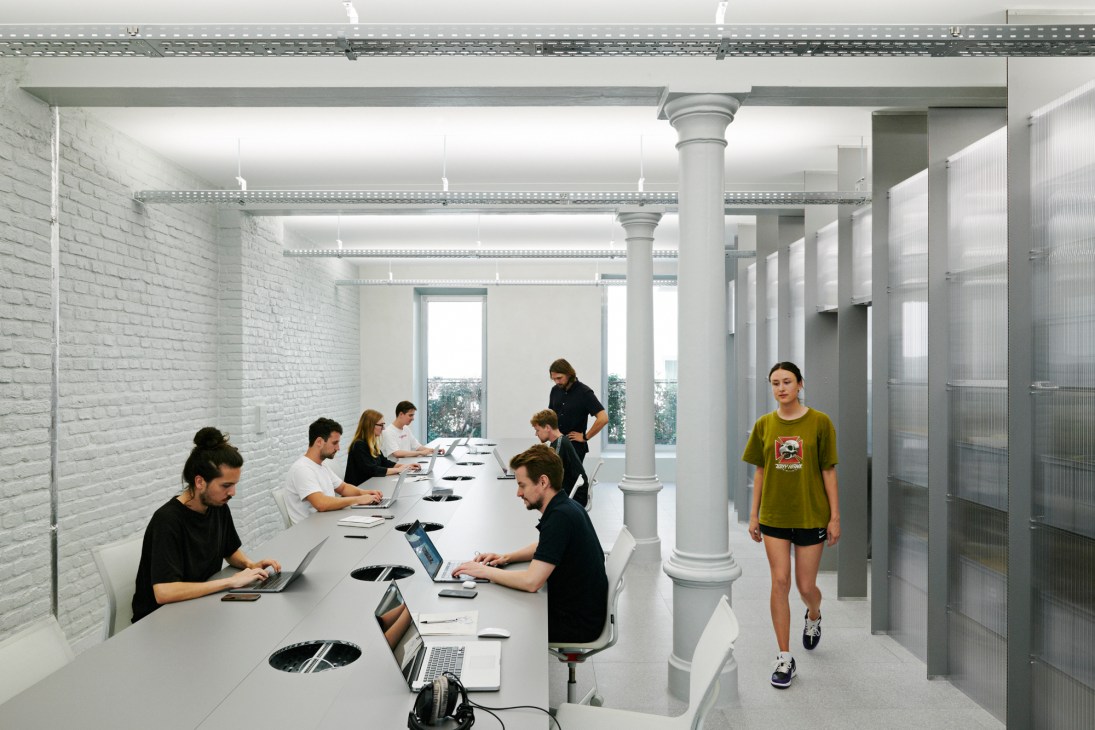
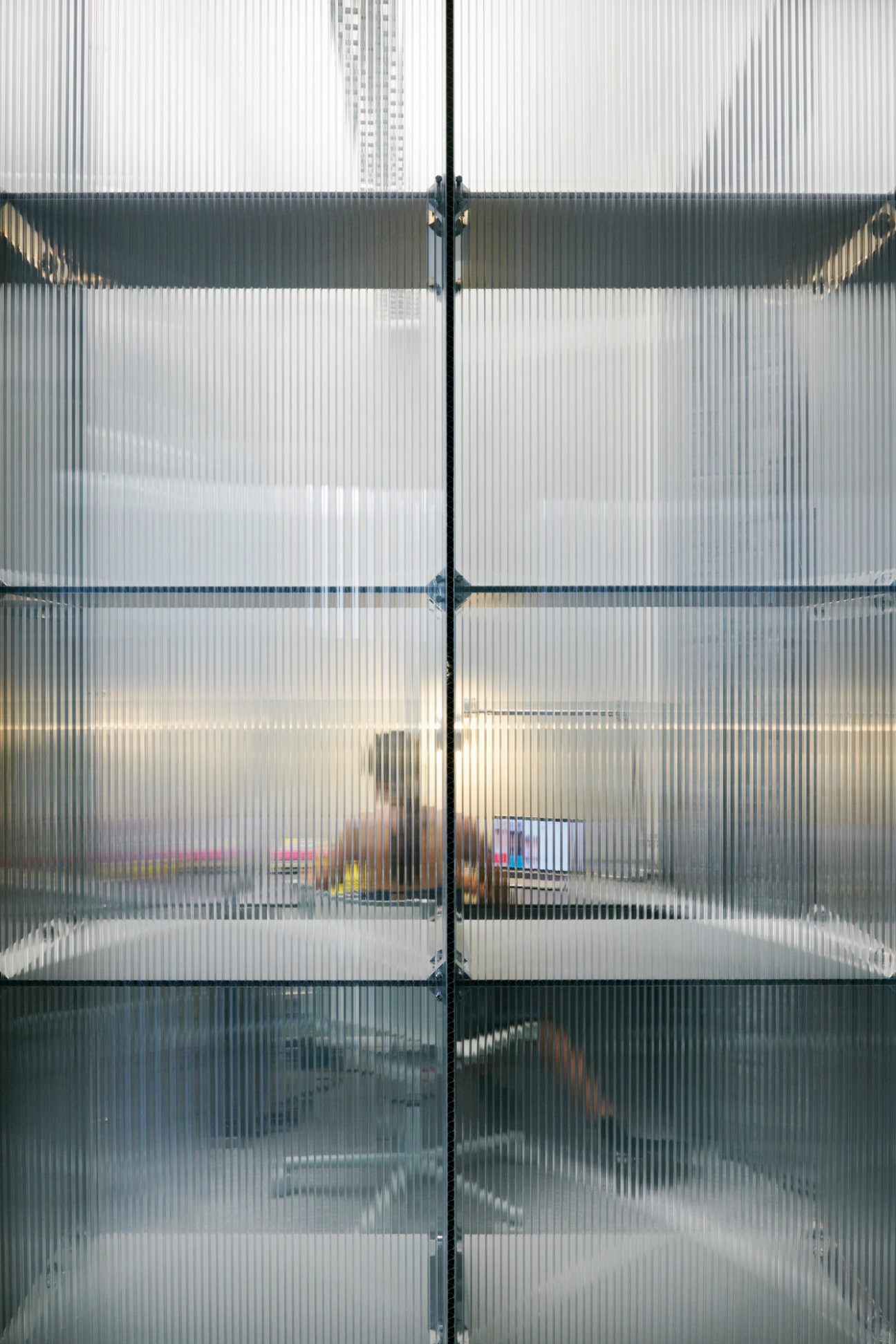
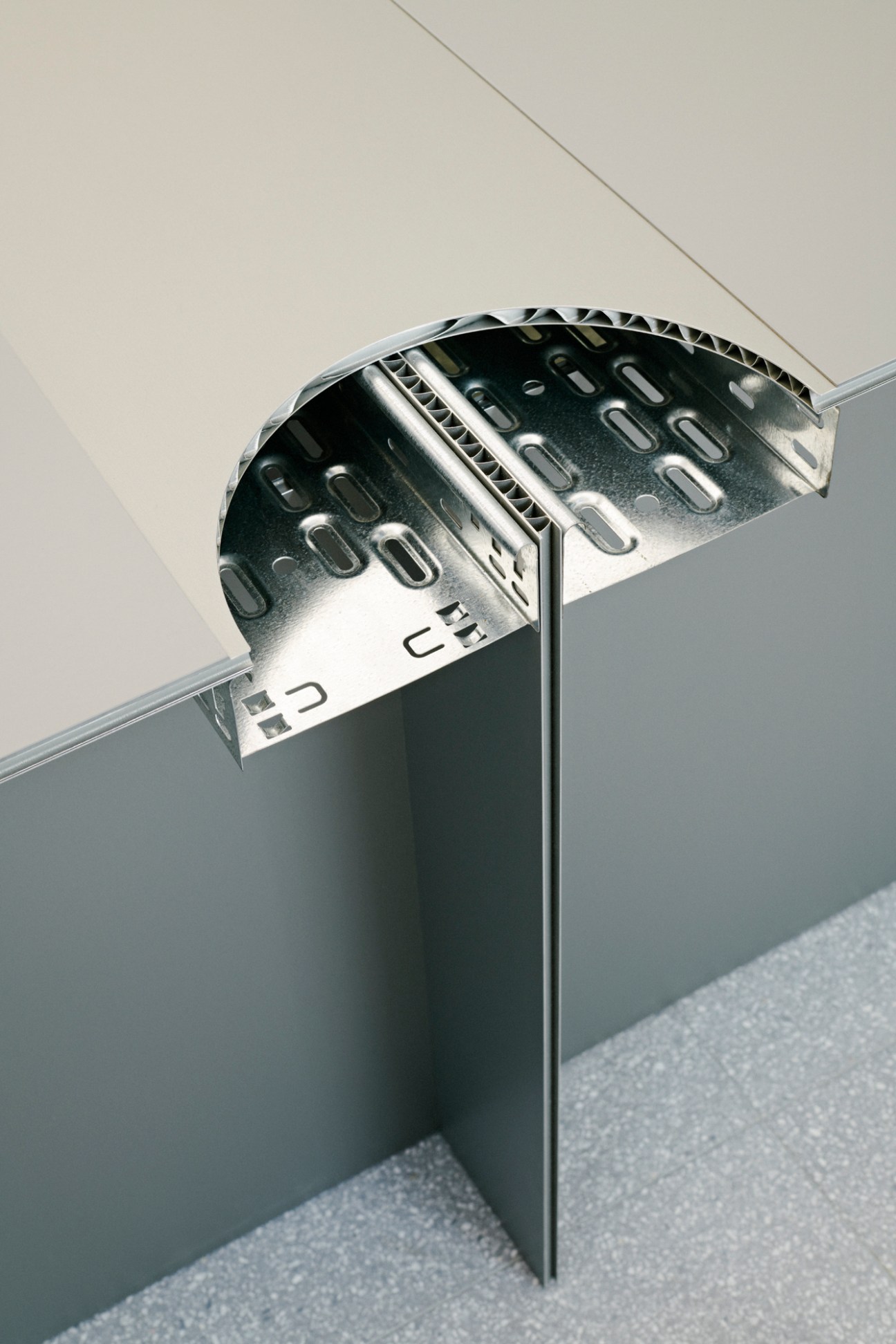
The D2 system was used to build the central island desk and the huge shelving units that rise to the ceiling, which also divide the space. Formed from aluminium components and grey fibreglass plates, D2 fits together “like Lego” to create a flexible interior design solution. “It helps us to maximise the space because every square metre in Munich is expensive,” says Borsche. The office is a reflection of the modern, minimalistic aesthetic that the firm deploys on projects for fashion brands such as Balenciaga, Nike and Etudes, and Borsche’s fastidious attention to detail is stamped across the space even when things have been done on a budget. aas Gonzalez Haase helped him to transform a series of rundown rooms. The results include an airy retail space and a sleek metal-caged outdoor area, where vines will shade alfresco lunches.
Yet it’s the studio that’s at the business’s heart. Because the D2 sits in a neutral base, the interior design can evolve alongside the firm. “So much interior architecture is material-based – and materials date,” says Borsche. Here, due to the system’s exchangeable elements, the aesthetics and the form will move with the times.
71 /100
Architecture practice that makes its staff feel at home in the office
Hojo Sanci, Kamakura
Although it has its advantages, working from home is not always an option, particularly in Japan where living spaces can be on the small side. One project in the city of Kamakura, only about 50km from Tokyo, offers an ingenious compromise: a fully functioning office that feels more akin to a stylish home. Hojo Sanci (pronounced San-chee) is in a leafy residential district of the easy-going city, which was once the capital of Japan. The old wood-framed building, situated on the quietest of back streets, was previously a home. Jo Nagasaka and his studio, Schemata Architects, transformed it into a shared working space for creatives.
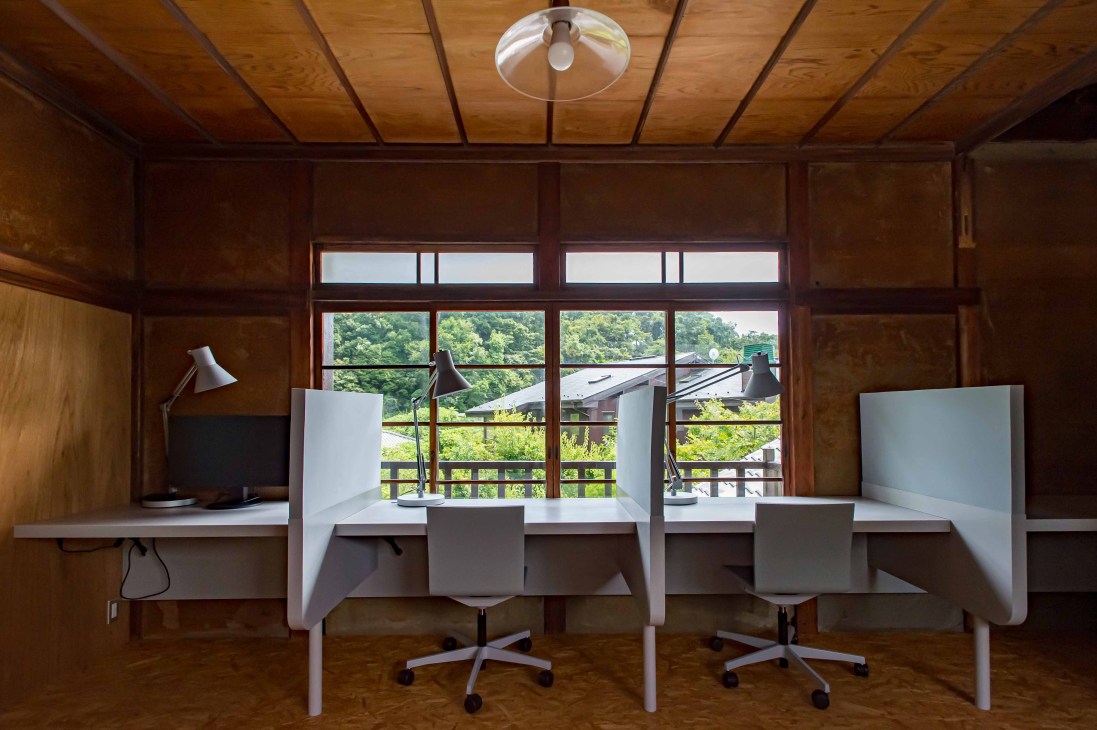
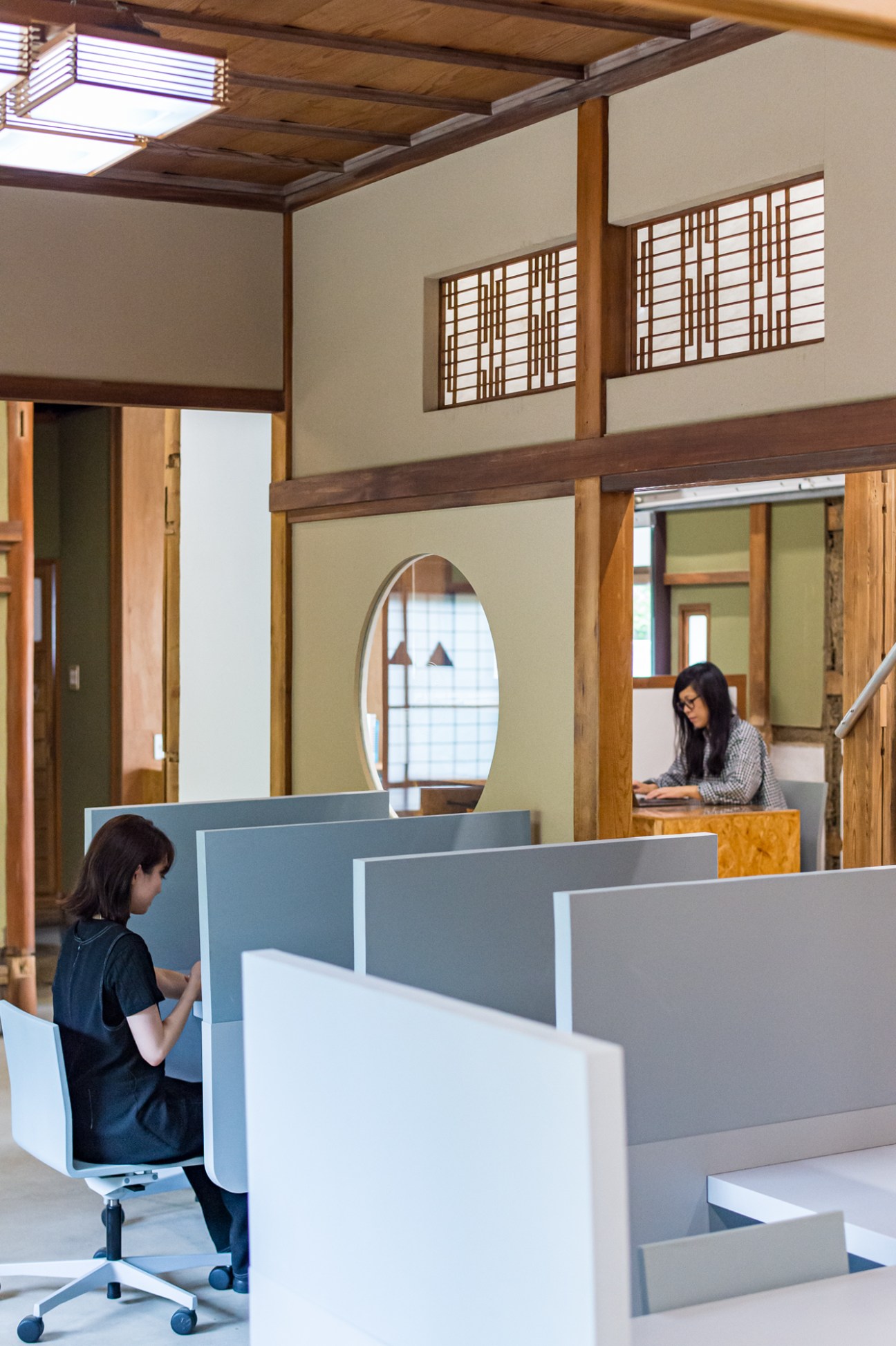
Nagasaka’s work is often characterised by a raw, industrial quality but here he has performed a light renovation, keeping the existing structure intact and exposing the traditional building materials of wood, plaster and earth. By simply removing the sliding doors that once divided the interior, Nagasaka immediately opened up the space. The wooden roof is now on show and all the original features are largely just as they were.
“The existing wall and ceiling finishes of the 90-year-old house had a distinct beauty that evolved over a long period of time,” says Nagasaka. “I decided to keep the finishes as they were while partially exposing the structure underneath in places.”
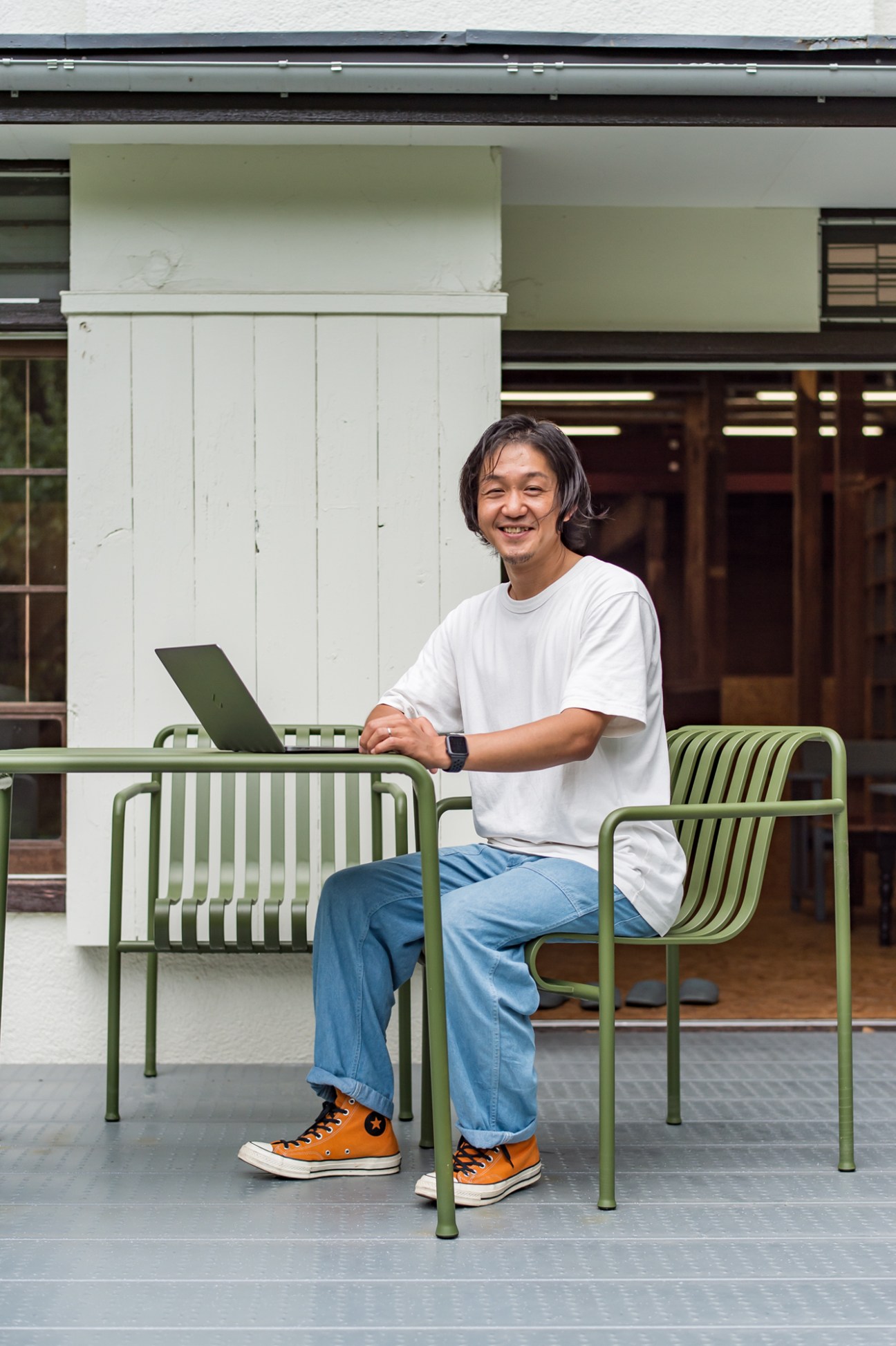
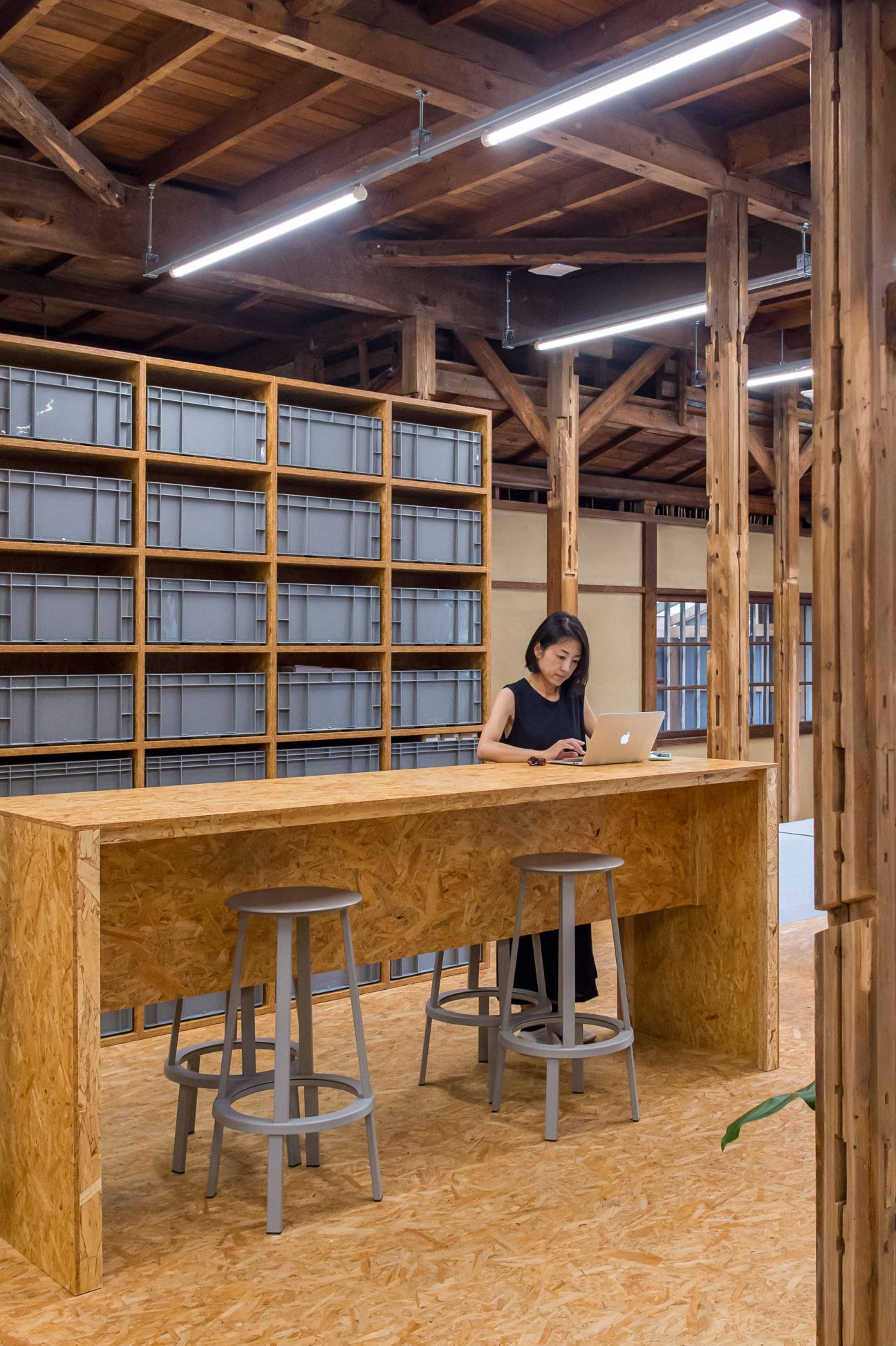
Different spaces are gently defined by varying floor heights. The garden, planted with maples and hydrangeas, is beautifully tended. A table is set up on a terrace, where the only sounds are those made by cicadas and birds. Electric bikes are available for tenants who wants to make the trip into town. Lockers and a photocopier are discreetly hidden behind a wall of storage boxes and there is a neat open kitchen.
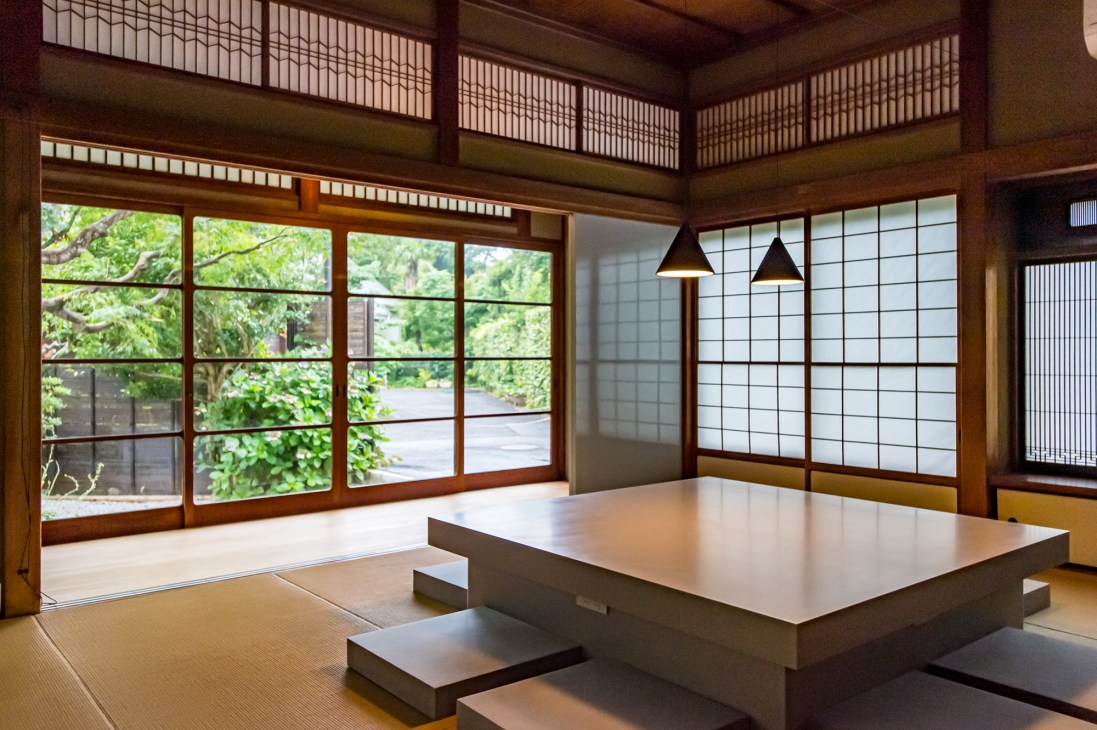
There are also two meeting rooms. One of these is a tatami-floored garden room with a low table and a flat-screen television in the tokonoma (alcove), where a painted scroll would usually hang.
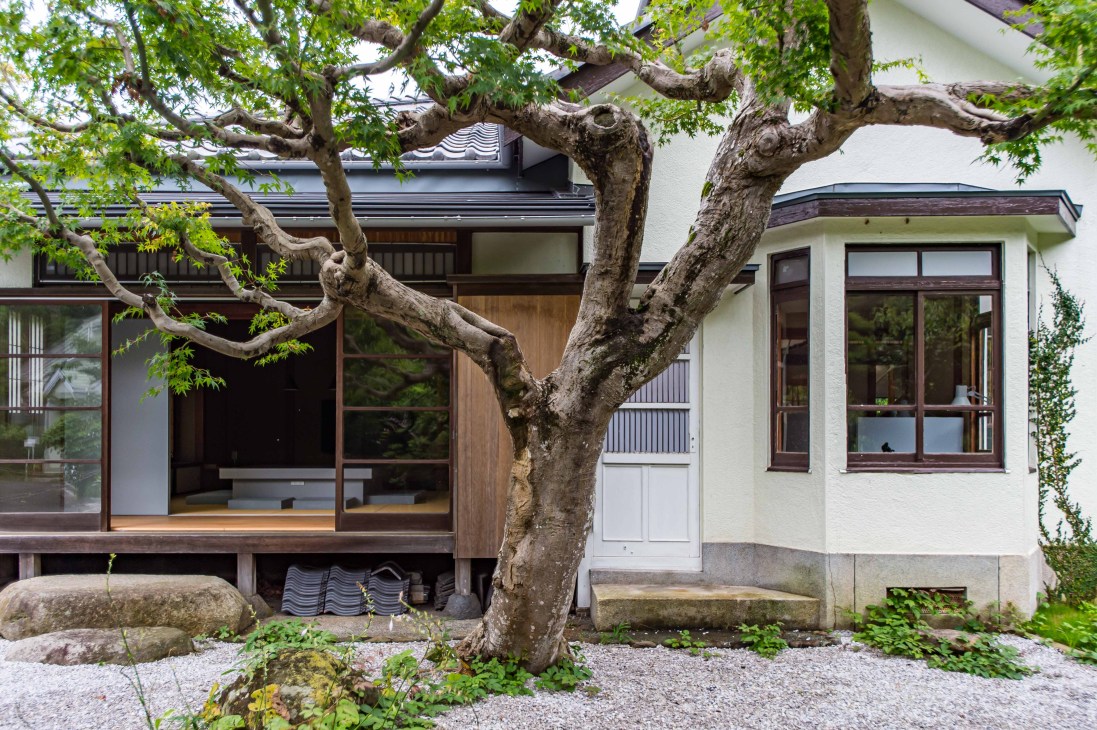
The tenants are a select group, drawn by word of mouth. Tomohiro Kaji, a former creative director at Uniqlo, runs his brand agency Tomodachi from Hojo Sanci. “I moved here from Tokyo last year,” he says. “I’m interested in helping Japanese brands go global by telling their stories. A friend said, ‘If you like surfing, history and local culture, Kamakura is perfect.’ I enjoy the trip to Tokyo too: it only takes an hour and it’s easy to work on the train.”
Akiko Yamamoto, another former Tokyo resident, runs a business distributing aroma diffusers to hotels, shops and offices. “I have a young daughter and I wanted to change my working environment,” she says. “Now I live only a two-minute walk from the beach and I can cycle to work in about 10 minutes.”
Events are held in the office from time to time and the garden is a great spot for an evening drink. Hojo Sanci is an inspiring example of what the office of the future could look like – and it’s been formed with the gentlest of renovations.
Three getaways
98
The place to splash out
Danube Bend, Hungary
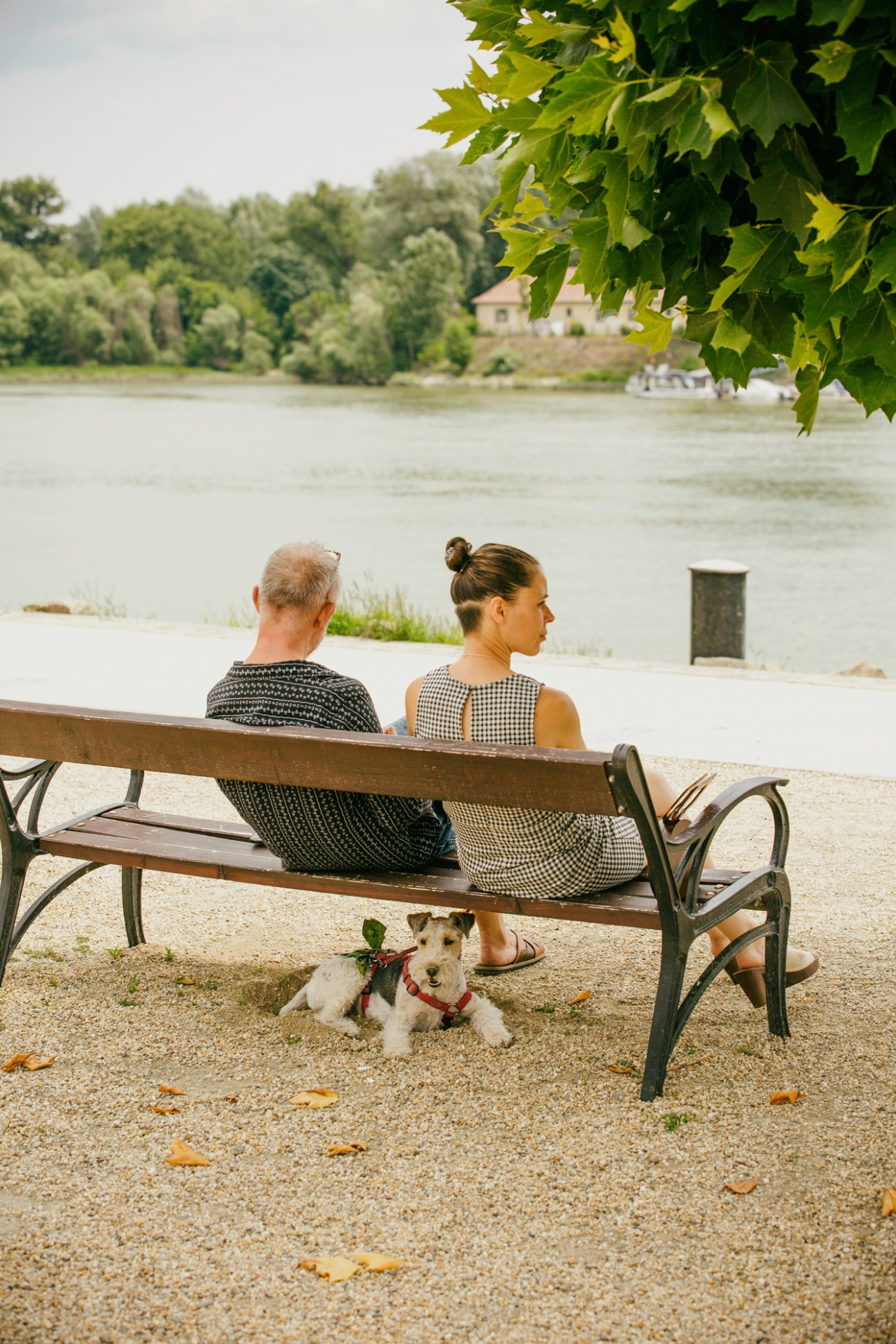
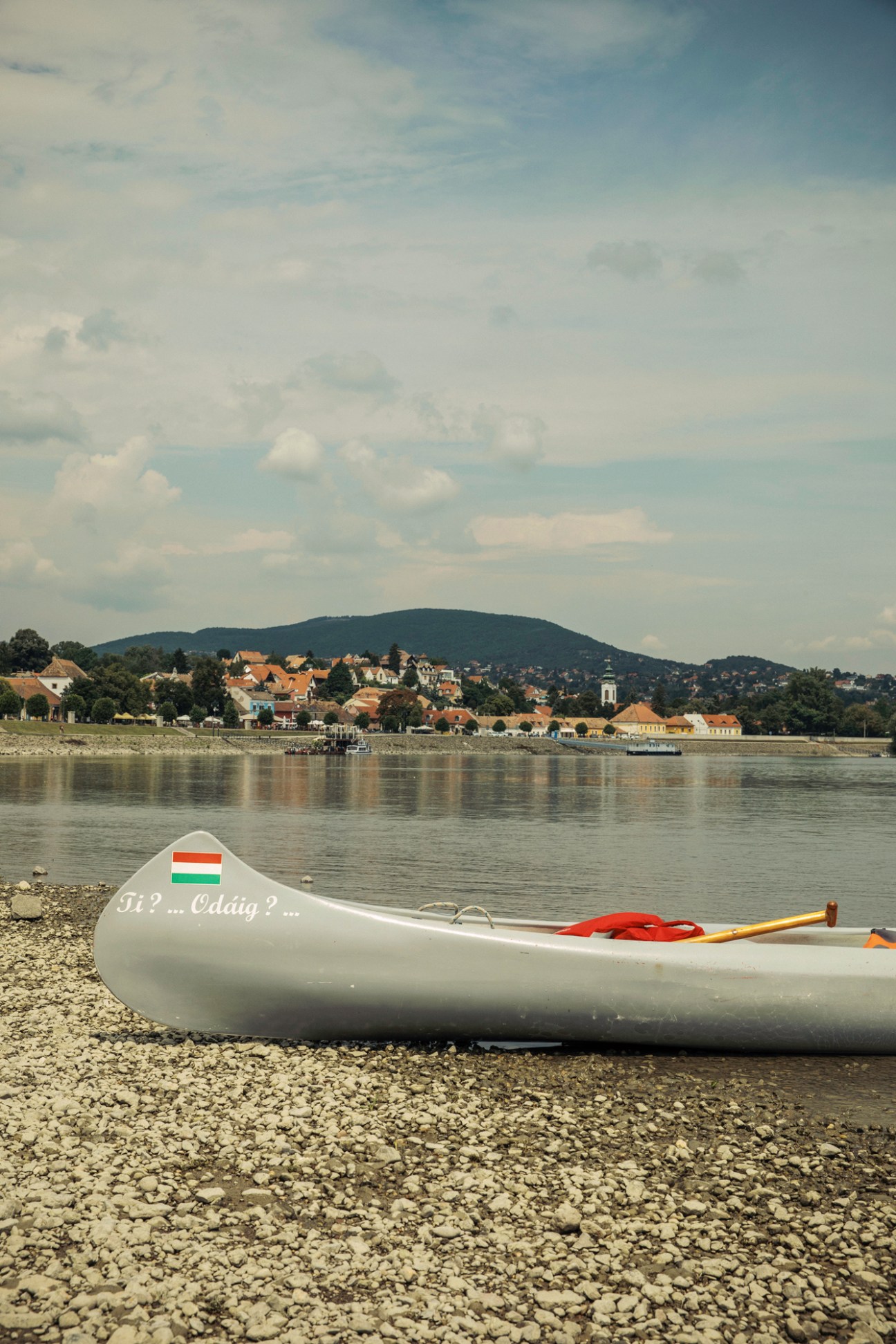
When busy folk in Budapest need to recharge or rethink their business, there’s a good chance you’ll find them relaxing in the vicinity of the curving swathe of real estate known as the Danube Bend – the Dunakanyar to Hungarians. Just 25km north of the country’s capital – within reach of eastern Austria and southern Slovakia – the area is anchored by the river and bookended by forests and a breathtaking valley on either side. Close to the banks of the Danube, there are quaint towns with scenic promenades for a productive stroll to get the mind working. In Szentendre, which has long been a refuge for artists, cobblestone streets lead to spaces such as the Mank Gallery, with its sculpture garden, and the ArtMill, where contemporary work can stimulate one’s own creative process. The region offers opportunities for a head-clearing swim or canoe ride down the Danube where one can admire sights such as the medieval Visegrad Citadel.

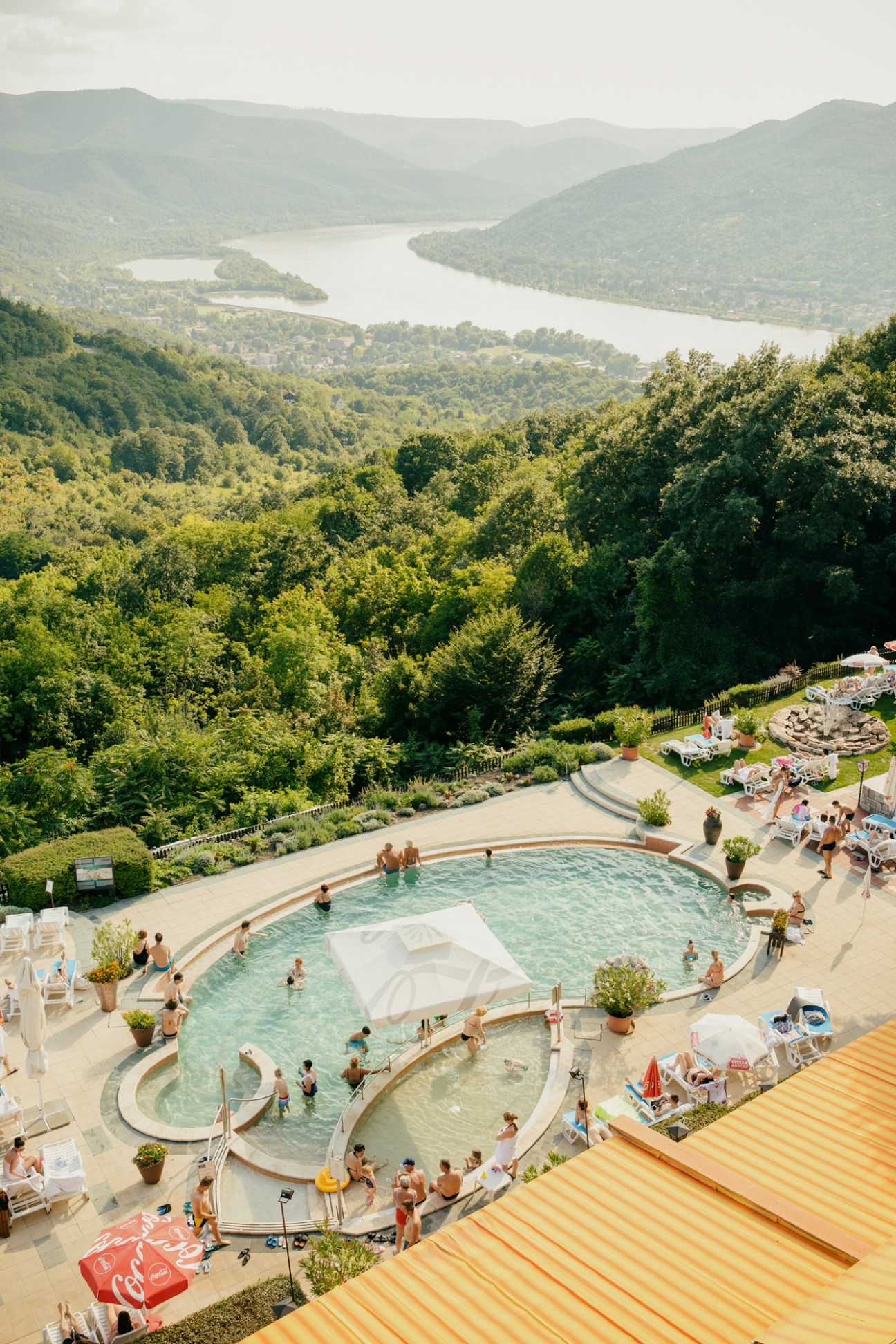
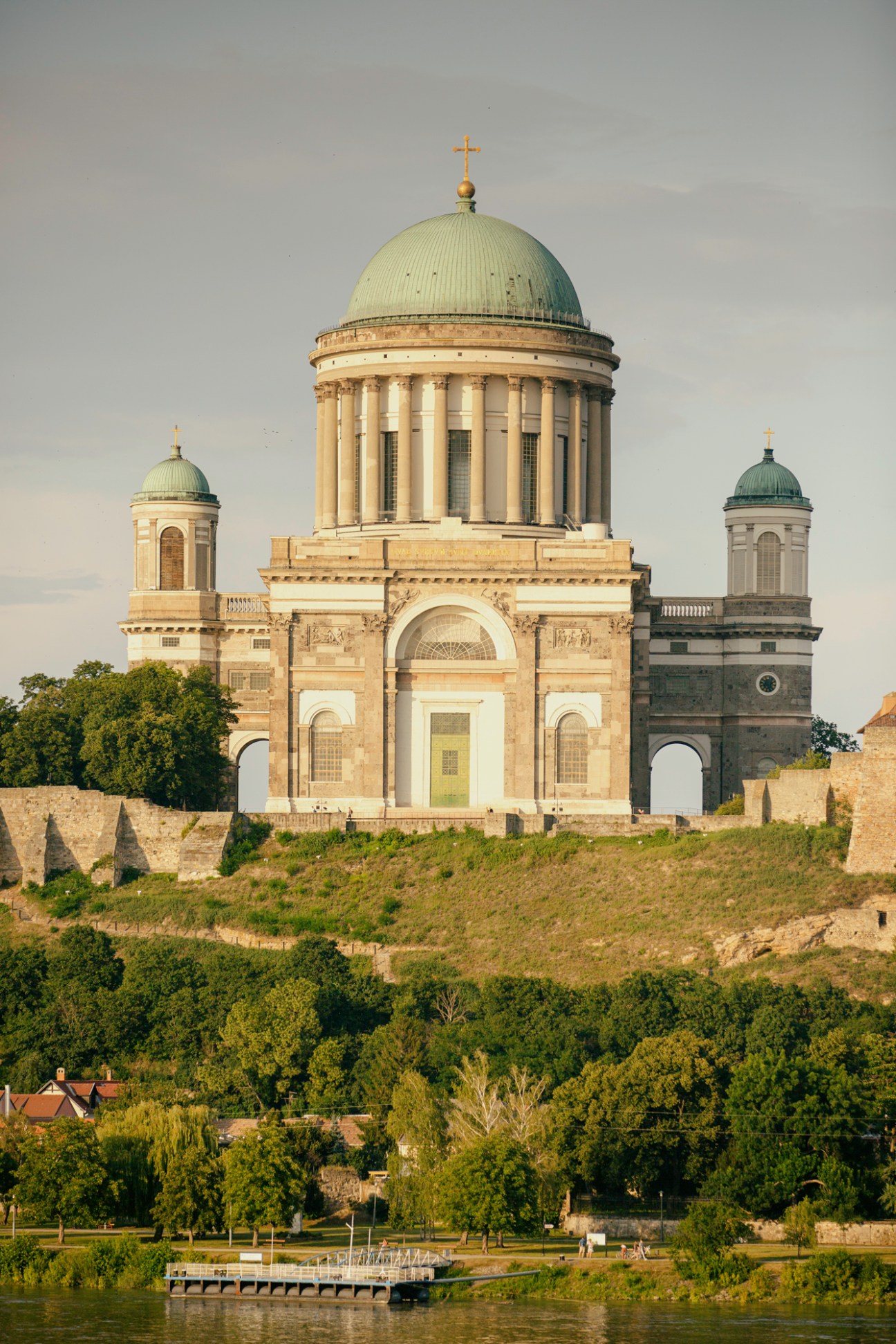
To unplug further, there are trails to the Borzsony mountains, the westernmost section of the North Hungarian mountains. Its tallest peak, Csovanyos, provides a spectacular view of the Bend. Begin the journey at riverside town Nagymaros, with its Catholic church and its varied collection of stained-glass windows. From there, head into the Templom Valley and a shady beech forest along a path to an old lookout tower on the mountain of Hegyes-teto, where one can admire vistas of the sinuous river and the Visegrad Citadel. This section of forest is part of the 1,000km plus network of walking routes that make up Hungary’s National Blue Trail, extending west to east across the country’s northern reaches. Pushing on, you’ll encounter streams, an ancient spring, the pristine Halasto fishing lake and Castle Nograd ruins.
For a more leisurely outing, opt for a ride on the narrow-gauge Kiralyret Forest Railway, arriving at the old hunting grounds of the Hungarian aristocracy. For more sights, the Bend is home to a collection of rustic and contemporary cottages and cabins, where patrons can bed down for the night before continuing their journey.
‘Dunakanyar’ directory:
Hotel Silvanus
Built in the 1970s on a panoramic perch above Visegrad, the retro Silvanus and its spa is the perfect business retreat to get staffers back on track.
hotelsilvanus.hu
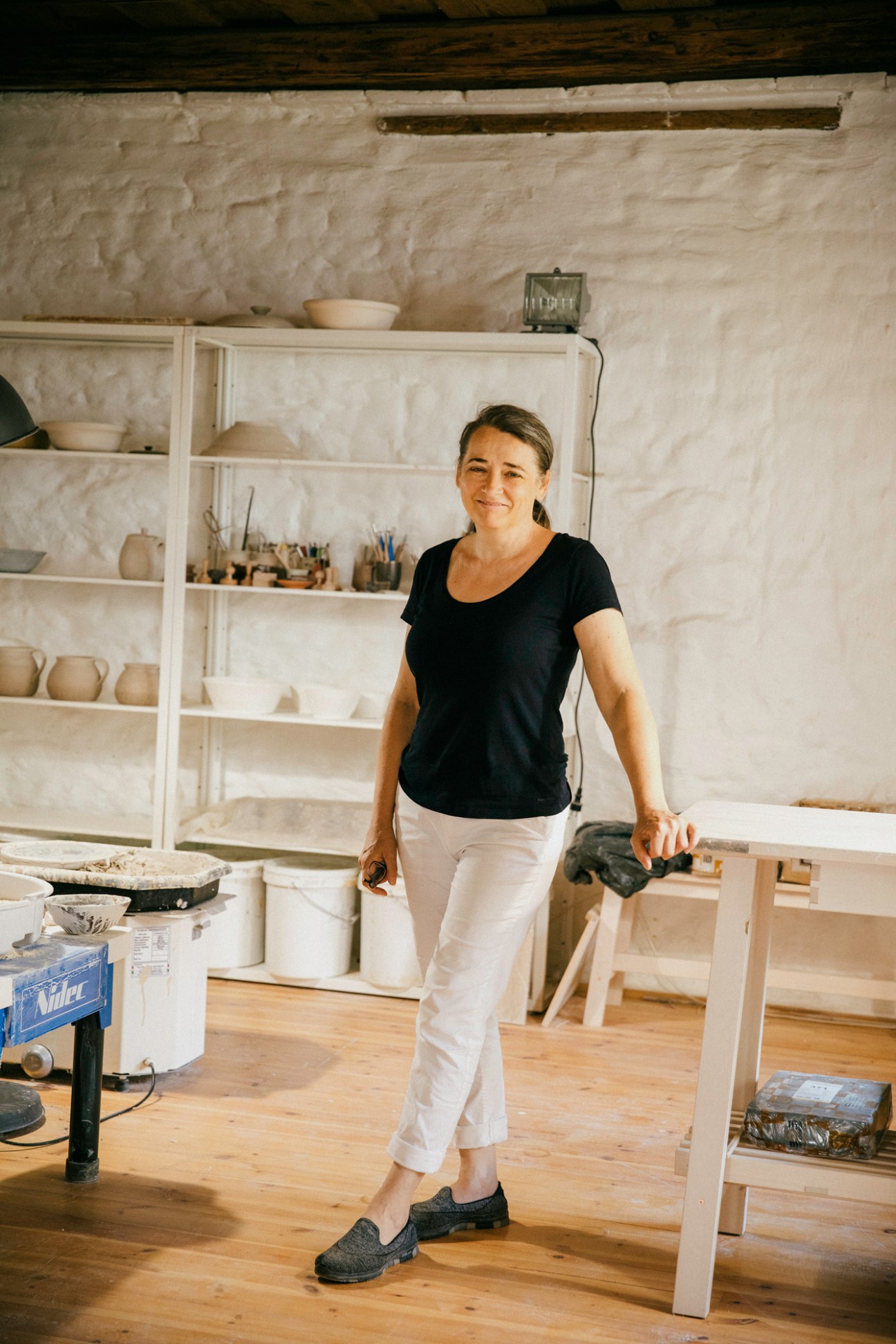
Krisztina Szente
Szentendre is a sanctuary for artists of every stripe. At her studio, ceramicist Szente turns out pieces that bring together both traditional Hungarian and contemporary influences.
szentekrisztina.hu
Natura Hill
This eight-room hotel has a top-rated kitchen that sources ingredients from nearby farms. Its scenic lawn provides the ideal spot for an intimate company lunch.
naturahill.hu
Mihalyi Patisserie
After a bit of team building, such as biking the area, reward your staff with sweet treats from this Habsburg-style pastry shop in Vac.
Vac, Koztarsasag ut 21
Piknik Manufaktura
To unwind with colleagues after a productive brainstorming session, pop into Piknik Manufaktura for some beer, comfort food and a spot of live music.
Nagymaros, Hunyadi setany 2
99
The place to prospect
Menorca, Spain
Of all the major Mediterranean islands, Menorca has been relegated beneath the swagger of Sicily, the sparkle of Sardinia and the frisson of danger that Corsica holds. As its Balearic brethren battled for mass attention, Menorca quietly developed lasting relationships with discerning visitors. That’s the beauty of the place, beyond its protected architecture and terrain, deserted coves and abundant wildlife. Traditionally favoured by wealthy Catalan families, it later played host to the British sailing set, with their wind tans and jaunty neckerchiefs. The island still feels like a secret, an implausible time capsule that provides refuge from the overactivity that besets many a modern holiday. A place to take a vacation from the vacation.
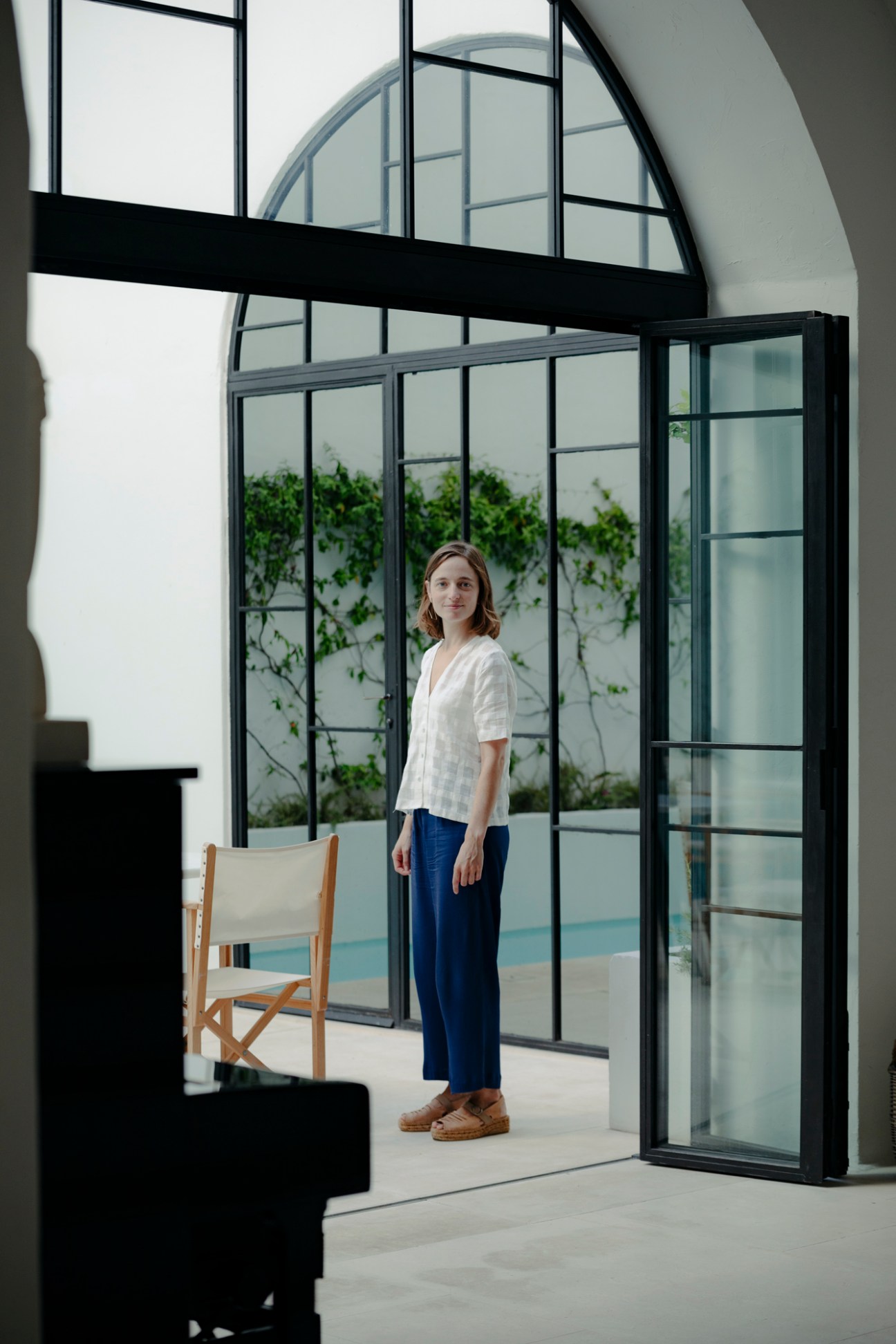
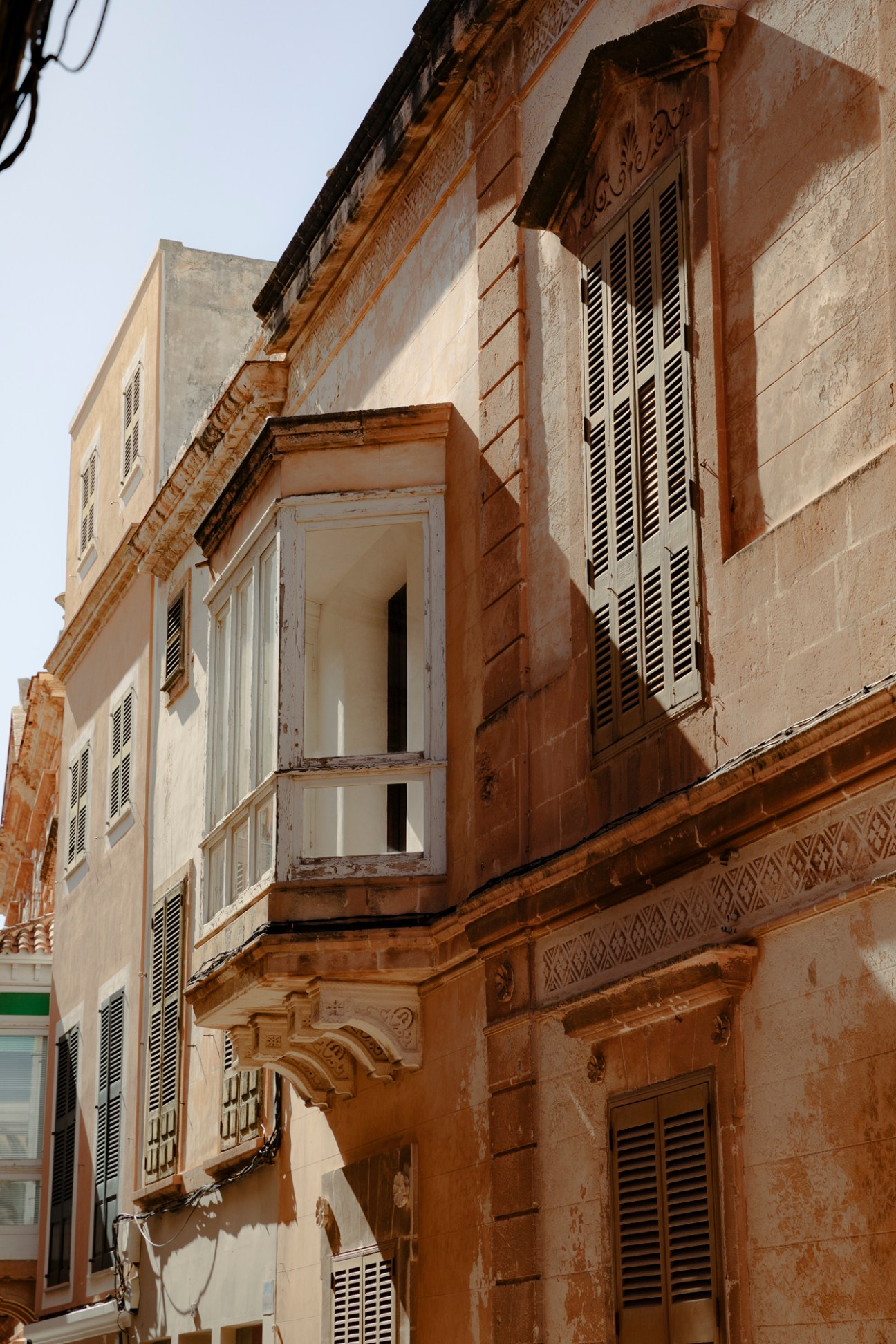
Recently, though, the French scent of hospitality development has mixed with the island’s herbal fragrance, wafting through the towns and wilderness. Mercifully, Menorca is militant in upholding its award as a Unesco Biosphere Reserve and the French are rather good at sympathetic renovation.
In the past two years, the island has received serious investment. French gallerist Guillaume Foucher and former retail executive Frédéric Biousse recently opened the hotels Torre Vella and Santa Ponsa, Menorcan outposts of their Domaine de Fontenille Provençal country inn. A stone’s throw from Torre Vella, the French investors behind the Hôtel des Grands Boulevards in Paris and the Henrietta in London opened Menorca Experimental last year. And to the north in Fornells Bay, a Swiss investor has acquired the Ses Salines salt flats and is restoring the farm and its artisanal production.
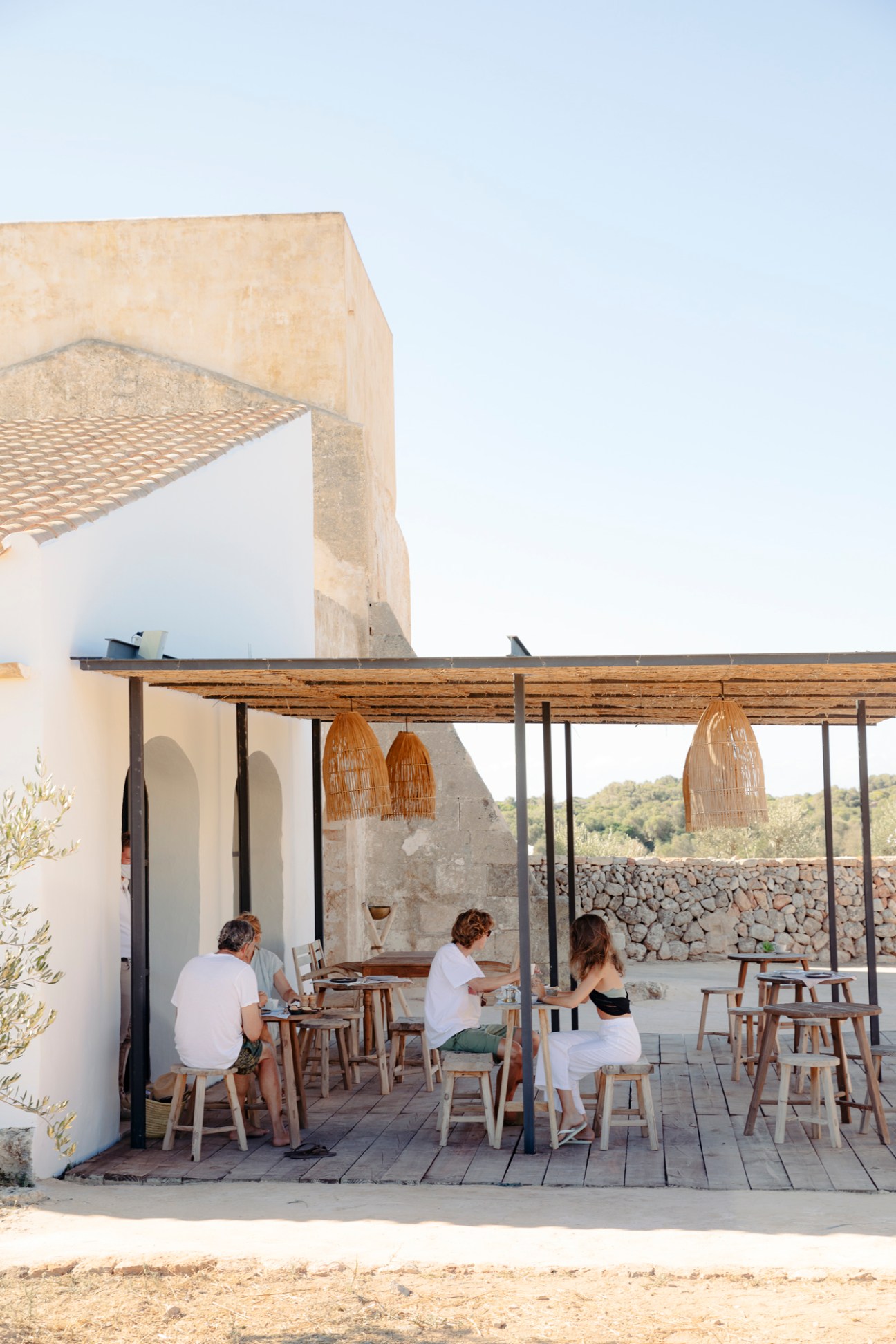
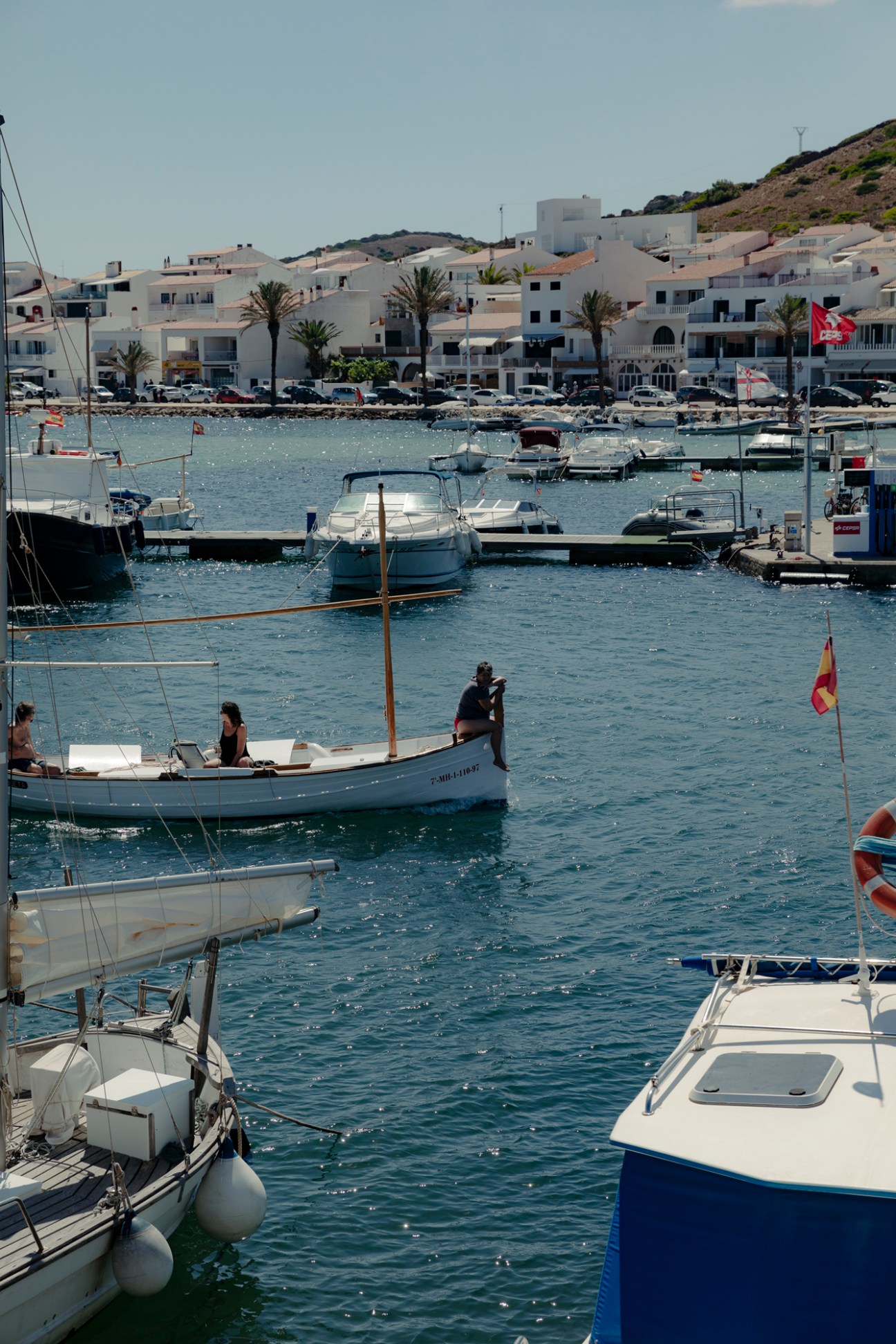
Good places to eat have opened and old favourites have upped their game. The Binifadet winery restaurant has grown from tables with tapas into quality haute cuisine paired with exceptional wine. And the Torralbenc agriturismo hotel opened a pop-up sushi bar called Kabuki from Michelin-starred chef Ricardo Sanz, a sure sign that a destination has come of age.
Menorca remains a humble place to unwind and recharge. It’s not cheap, it’s not overrun and it’s not fashionable. Yet.
Menorca directory:
Torre Vella
This finca offers house-made wine, massages under the olive trees and dinners on clifftops.
fontenillemenorca.com
Sa Llagosta
The best restaurant on the island for seafood. Book in advance.
Carrer de Gabriel Gelabert, 12
Menorca Experimental
Sip cocktails by the pool before dinner, prepared with the hotel’s own-grown ingredients.
menorcaexperimental.com
Ciutadella
Menorca’s second-largest city. Poke around the streets near the Tres Sants and Can Araya hotels.
100
The place to unwind
Tomo, Japan
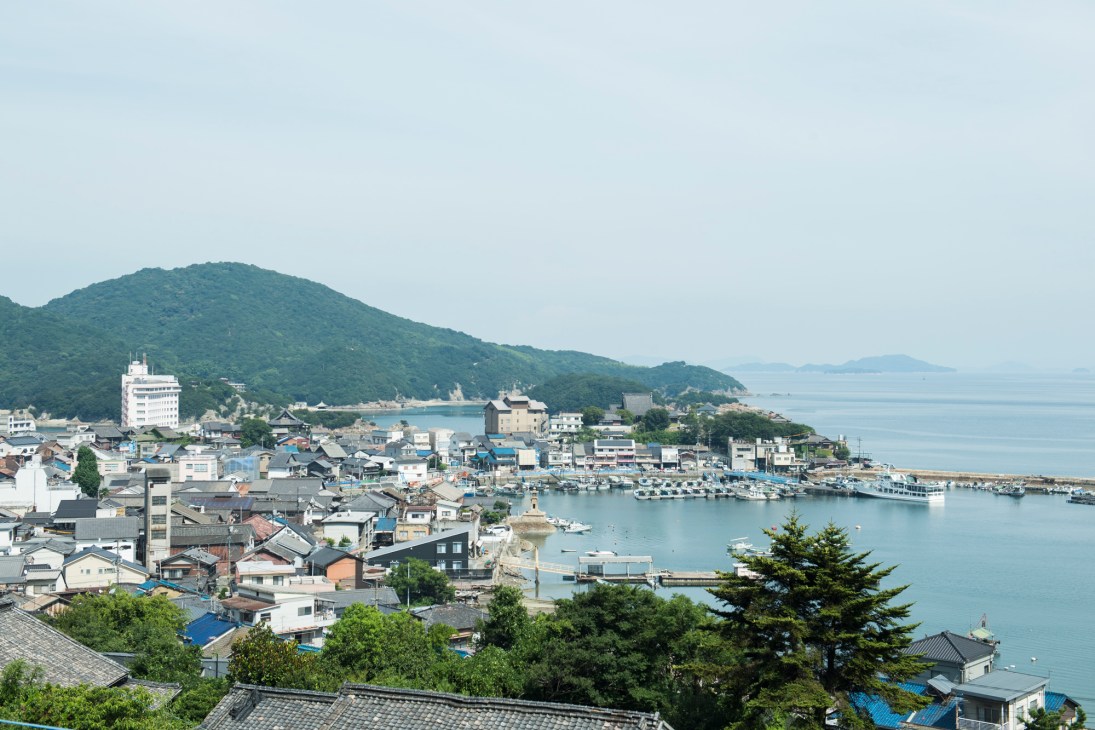
Tomo, in Japan’s Hiroshima prefecture, is full of ways to slow down and reflect on running a small, meaningful business. Tomo (or Tomo no Ura) is a centuries-old port town on the Seto Inland Sea. Its 3,800 residents have preserved its historic sites and traditional wooden buildings while resisting transport proposals that would have increased footfall but eroded the community.
En route to Tomo Port from Fukuyama on a distinctive green bus, you pass old beauty salons, tiny electronics shops and a photo studio, which show how untouched the area is by bigger brands. Instead, smaller, family-run firms can thrive here.
“Tomo is a tidal port,” says Yoshiyuki Okiura, who has run a beach house here for 40 years. “The tides from the east and west meet here at Tomo. For hundreds of years, the sea used to bring merchants and commercial goods from across the country.” Here, there are reasons to admire continuity.

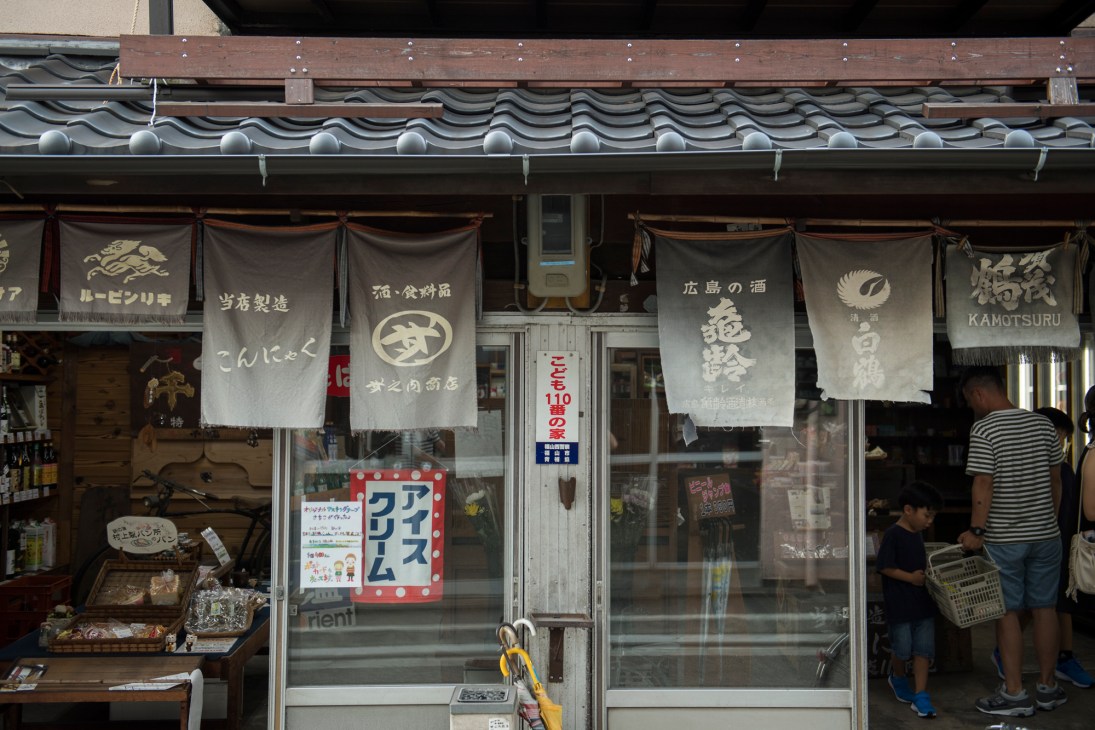
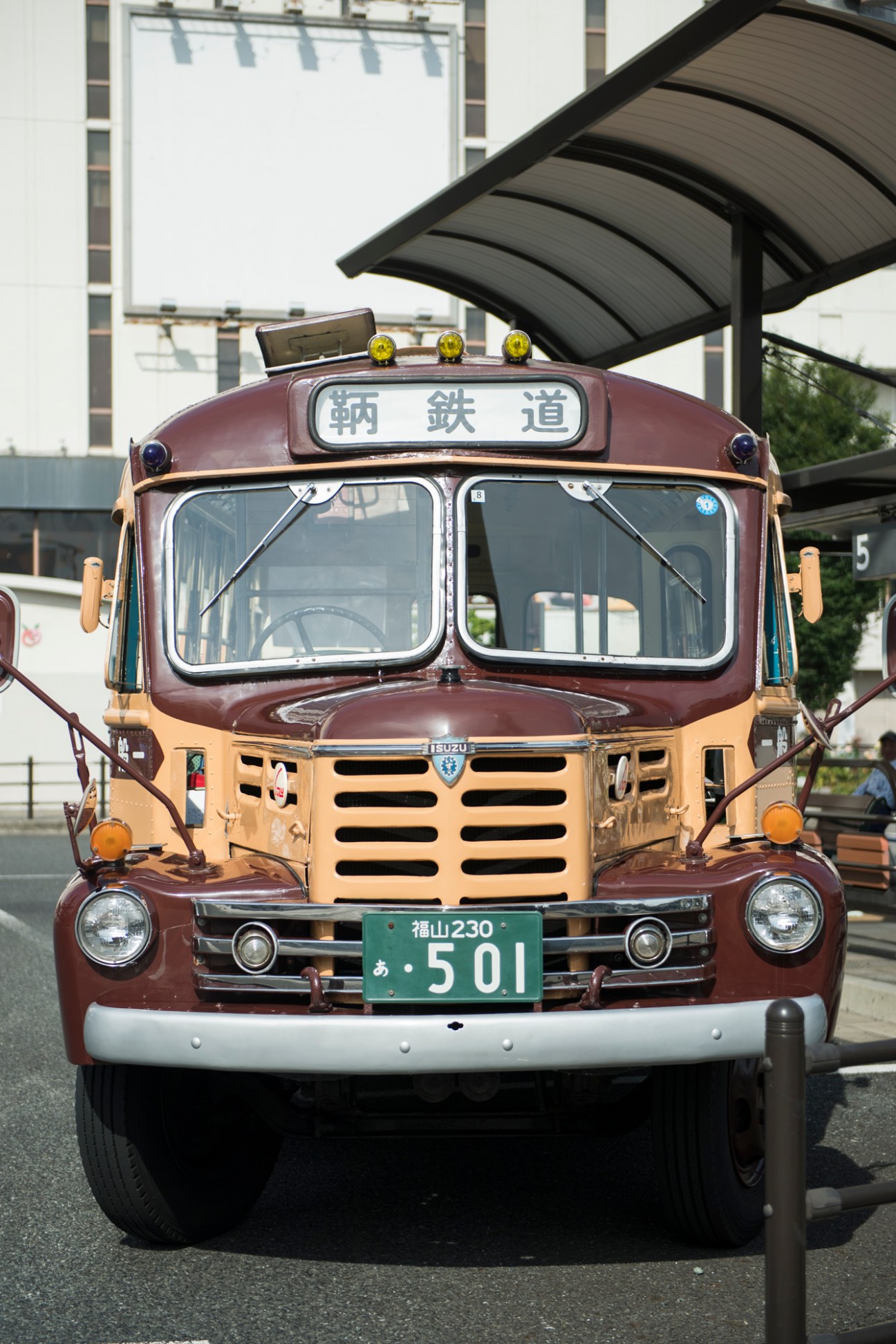
The alleyways of central Tomo have barely changed in 300 years, with their temples, shrines, small eateries and old machiya townhouses. On a hilltop is Sowakarou: a one-guest-per-night inn in a century-old Japanese house that shows businesses don’t need to be big to be bold. “Tomo fell behind [the nation’s] economic growth,” says Kaneko Kikkawa, who tends the garden. She refers to the waterfront development and road-expansion plans that met strong opposition. “People said ‘no’ to protect the historic landscape.”
A stroll is all you need to appreciate Tomo; it’s filled with friendly conversations with locals, rich architecture and the option of a dip in the sea. We recall what Okiura said earlier on the beach: “Being a local, it’s hard to tell what’s good about Tomo – but I like the old-fashioned vibe.”
The homely office
54 /100
Fritz Hansen
Little Friend
(Denmark)
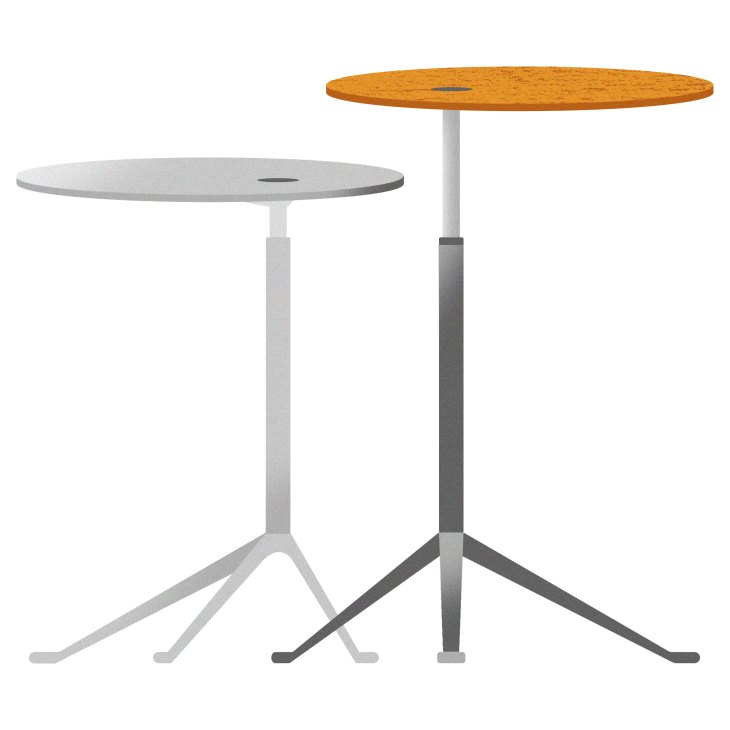
This dainty adjustable side-table has enjoyed a surge in sales this year thanks to its flexibility. It’s equally useful as a spot on which to plop your laptop as you work from the sofa as it is a place to keep your coffee close while you pore over the papers.
fritzhansen.com
55/100
Kann Design
Strat Long Storage
(France)
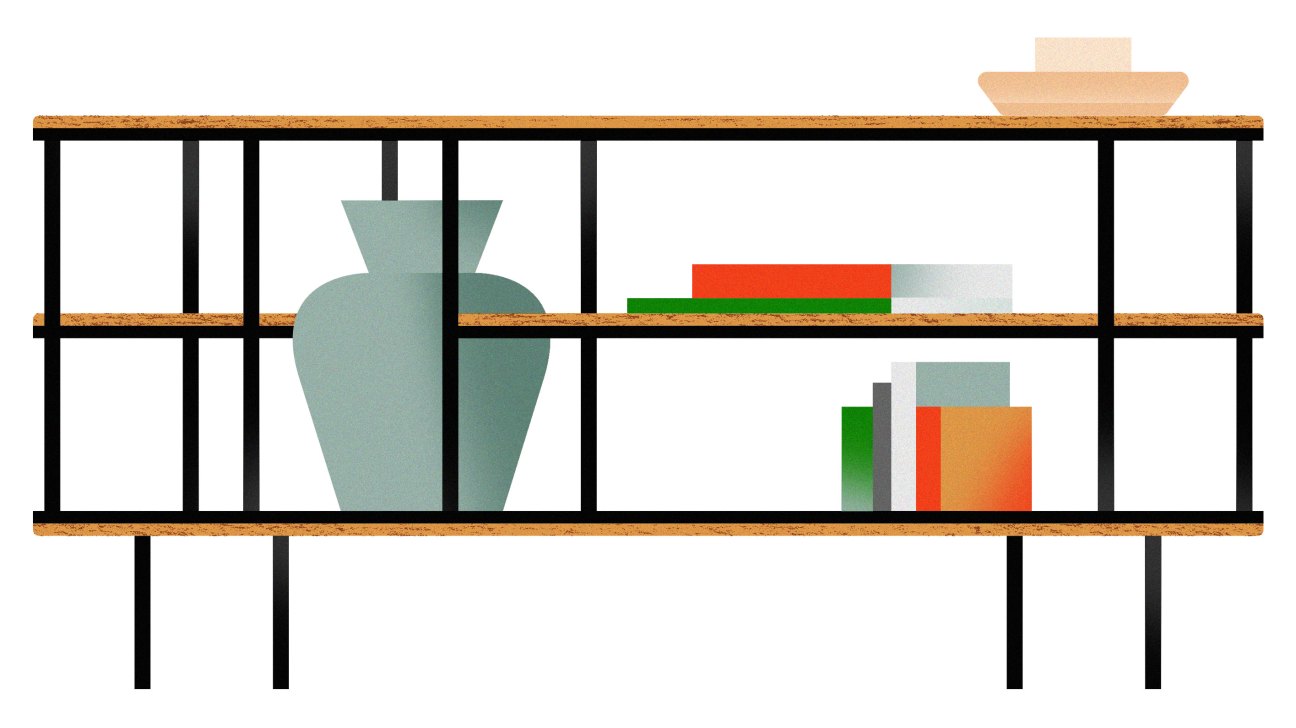
With its workshop in a Lebanese mountain village, Kann Design is an increasingly global player in the contract-furniture market. Its elegant steel-and-timber pieces fit equally well in a commercial or a domestic setting. This storage unit adds a touch of refined taste to the books, objects and documents arranged atop and inside it.
kanndesign.com
56 /100
V-Zug
RefreshButler
(Switzerland)
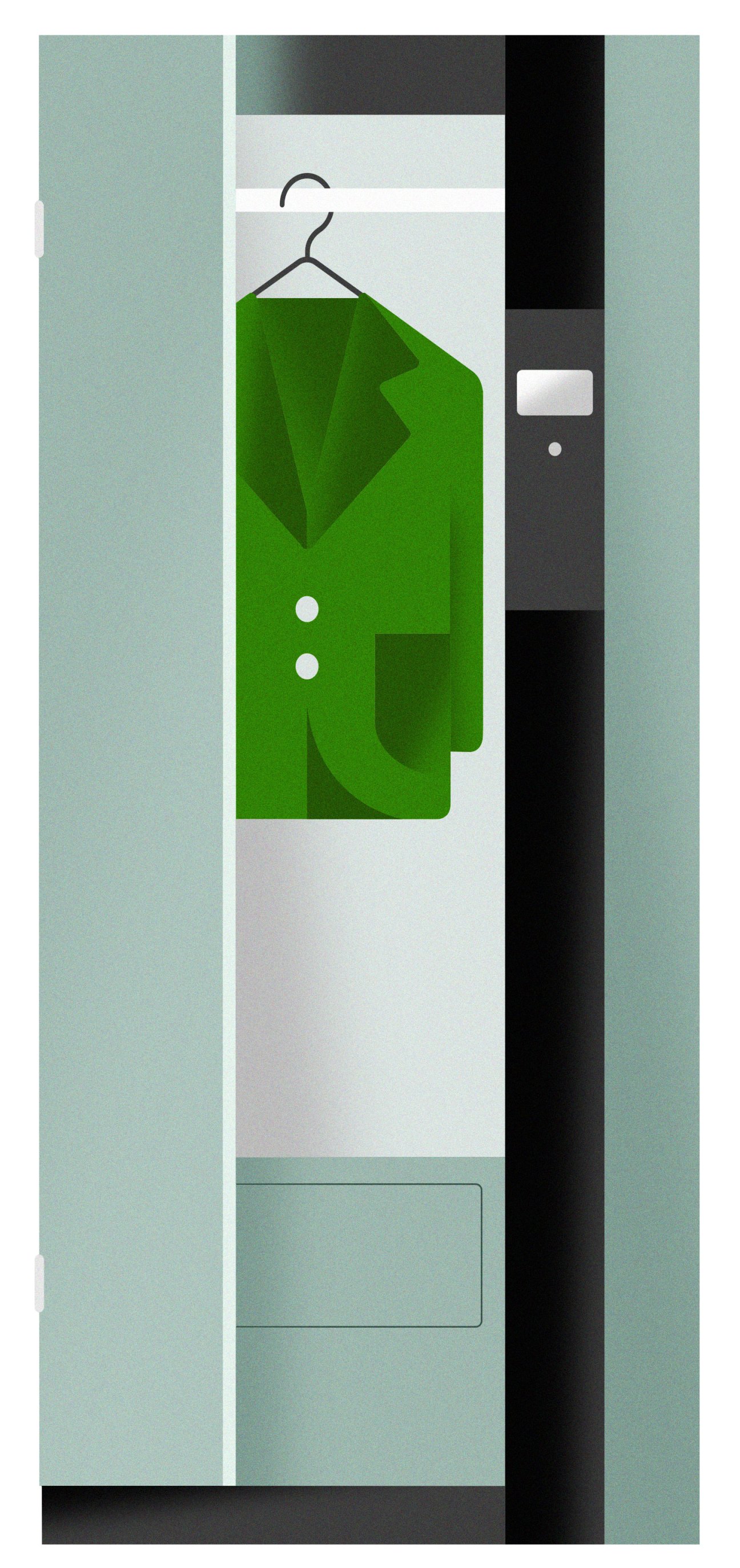
A blazer hung for a few hours in this closet-like device is gently cleaned and steamed to remove all germs and bacteria. The result: a more hygienic office, ever-fresh employees and a true treat for sharp-looking staff members.
vzug.com
Ideal for impressing visiting clients
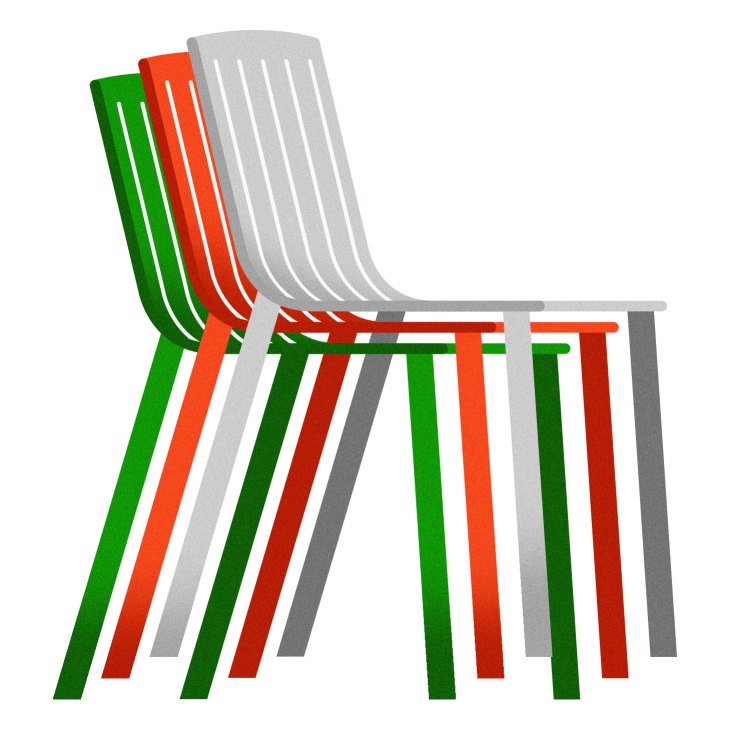
57 /100
Magis
Plato
(italy)
Your collection of wipeable, stackable and portable Plato chairs from UK designer Jasper Morrison can grow alongside your staff headcount. The powder-coated aluminium indoor-outdoor seats come in many colours too.
magisdesign.com
Ideal for spaces with a small footprint
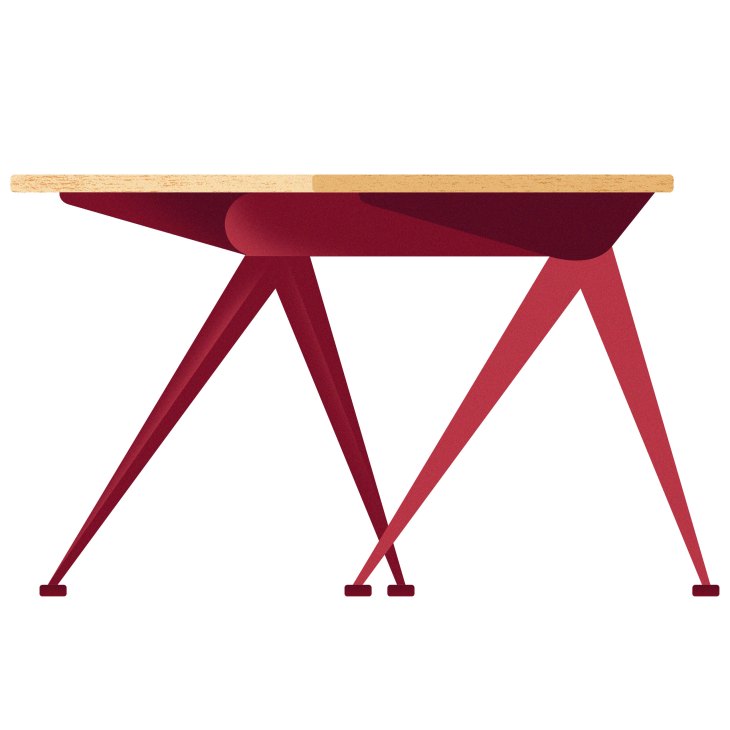
58 /100
Vitra
Compas Direction
(Switzerland)
The simple construction and cleverly angled metal legs of French mid-century designer Jean Prouvé’s 1953 Compas Direction desk have remained popular for almost 70 years. It’s produced by Vitra in a variety of finishes.
vitra.com
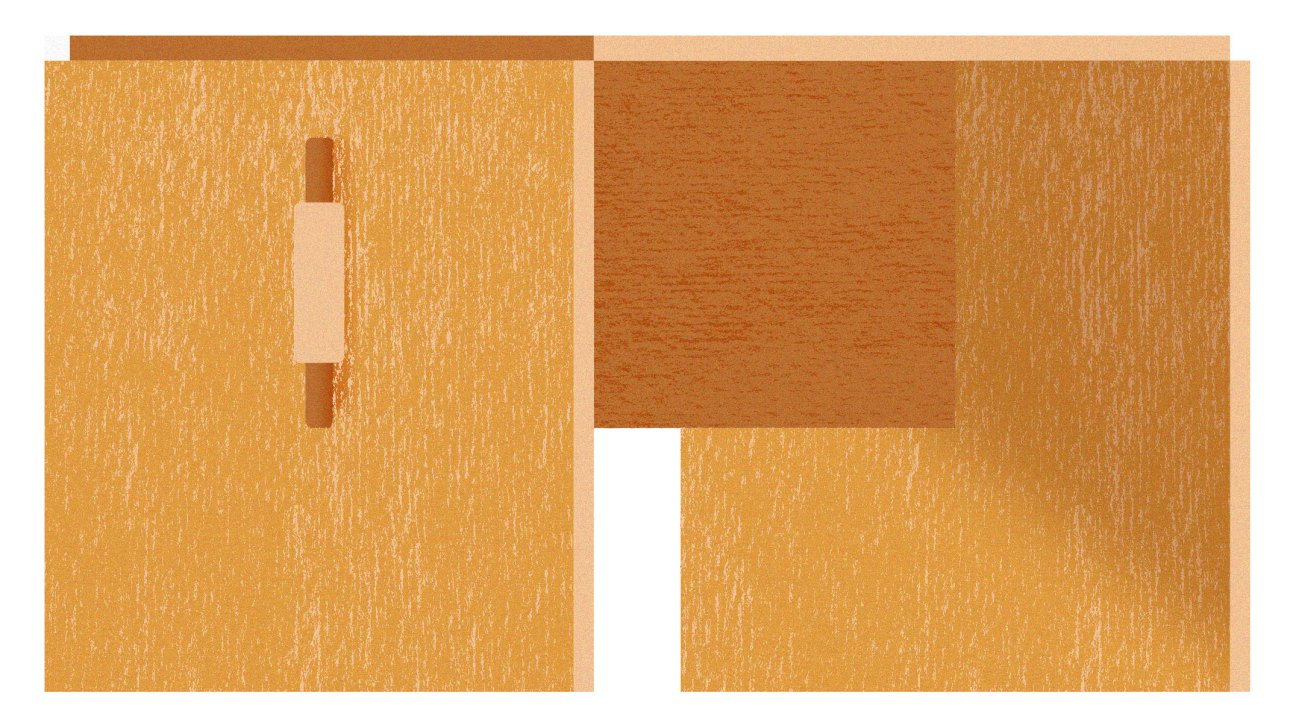
59 /100
Takt
Plint
(Denmark)
Designed by Copenhagen’s Cecilie Manz, this piece packs practicality and portability into one of 2020’s best furniture releases. It can serve as either a bench or a coffee table and, if space needs to be saved, it folds down quickly and easily.
taktcph.com
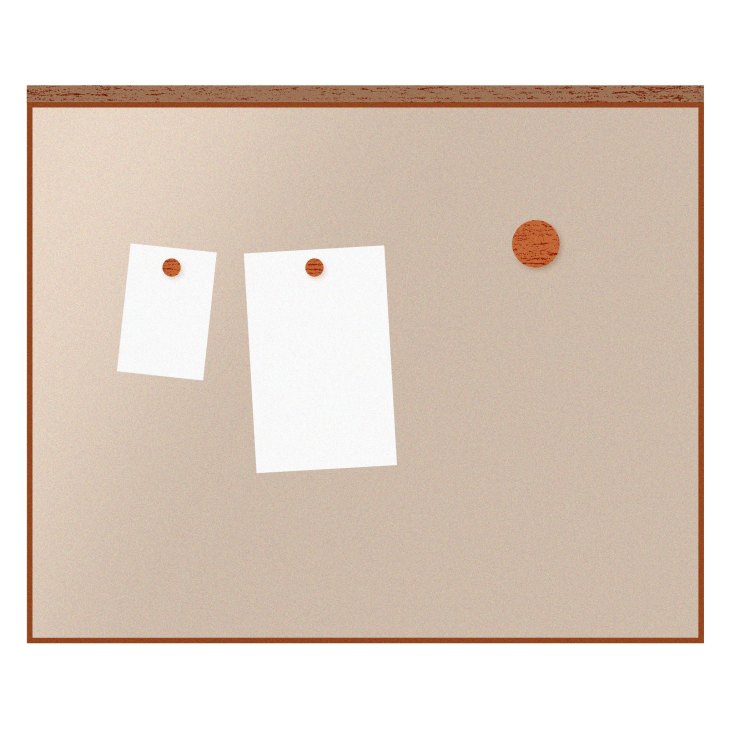
60 /100
Lintex
Area
(Sweden)
Who says a whiteboard needs to be white? This Swedish take, with its light beige screen, is more canvas than notice board and is made from tempered low-iron glass with a solid-oak frame. We hope that the ideas you post on it are equally smart.
lintex.se
61 /100
Loehr
DL1 Tangram
(Germany)
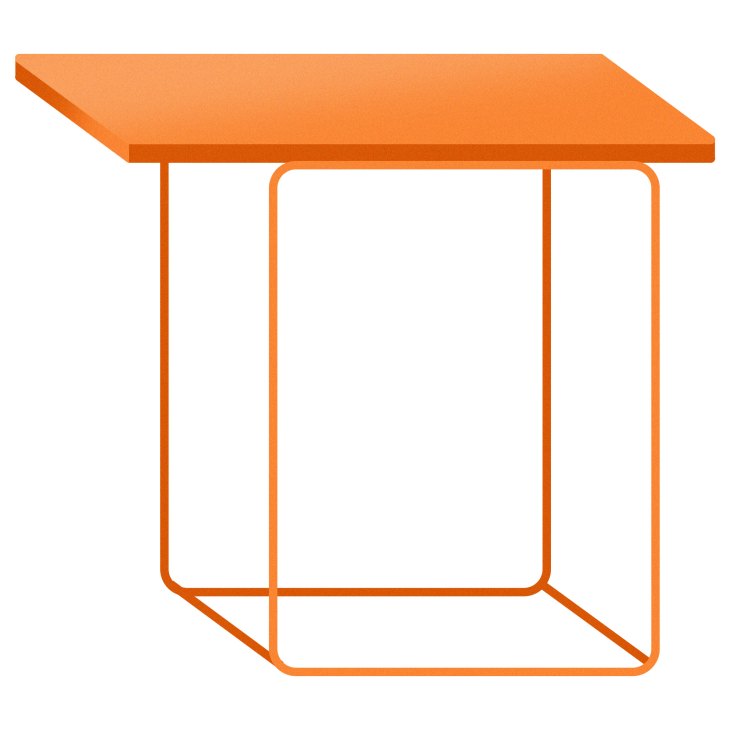
German furniture-maker Loehr is known for bringing both class and colour to the office through designs that don’t tend to date (or break) over the years. This practical tangerine-coloured side table will turn heads no matter your style of working environment.
loehr.co
62 /100
Modernica
Case Study Canine
(USA)
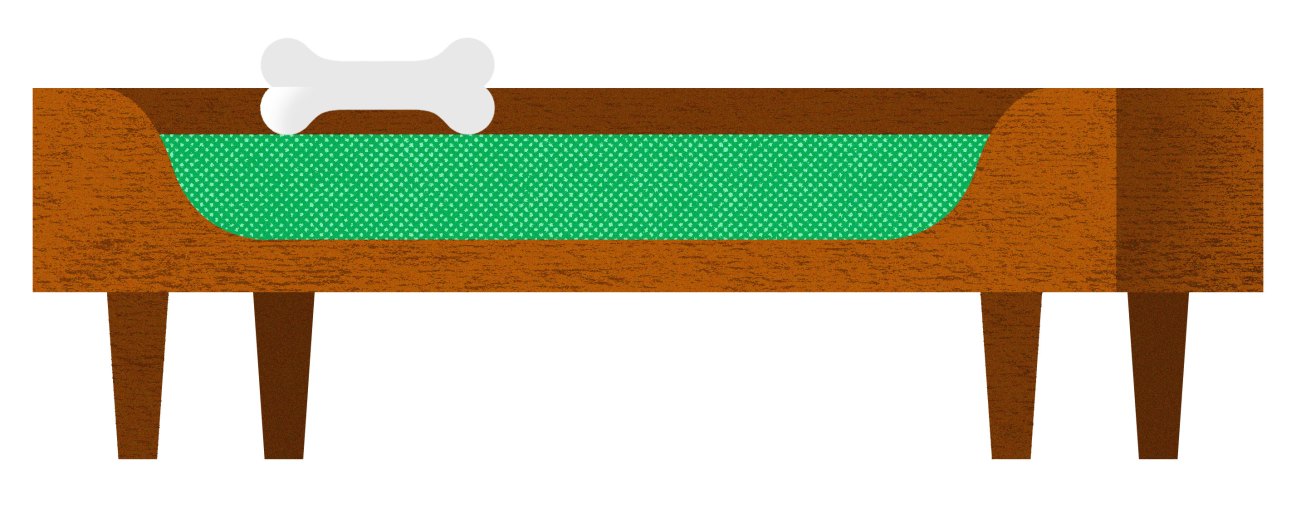
An office dog can increase staff wellbeing while melting the heart of the steeliest visiting client. Such a prized pooch deserves the perfect spot to rest. This daybed, with its plush, beautifully upholstered cushion upon a modernist-style teak-hardwood base, is the best in show.
modernica.com
63 /100
Wagner
D1
(Germany)
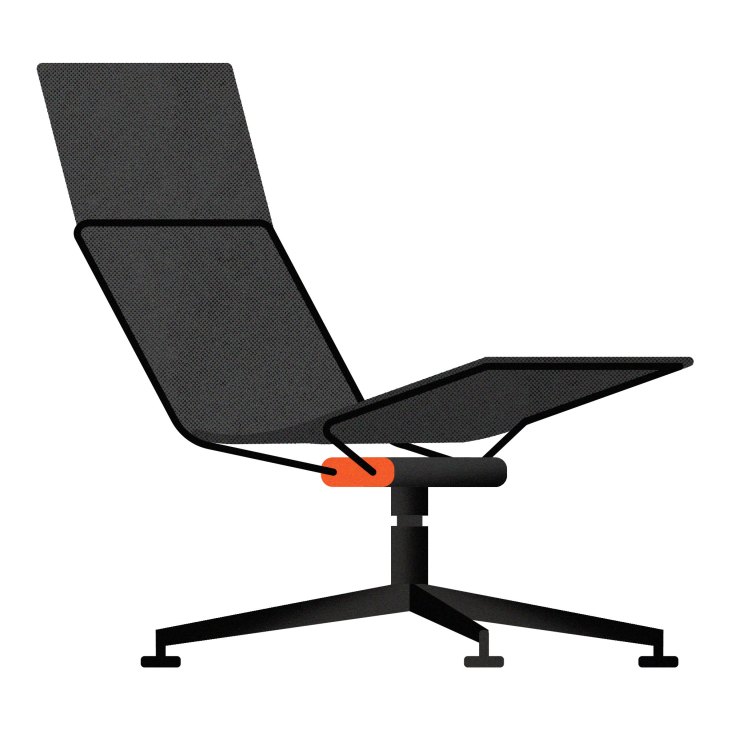
The minimalist D1 from German designer Stefan Diez stripped away all that was superfluous about the traditional desk chair and earned Wagner a raft of awards in the process.
wagner-living.com
64 /100
Mox
Kant
(Switzerland)
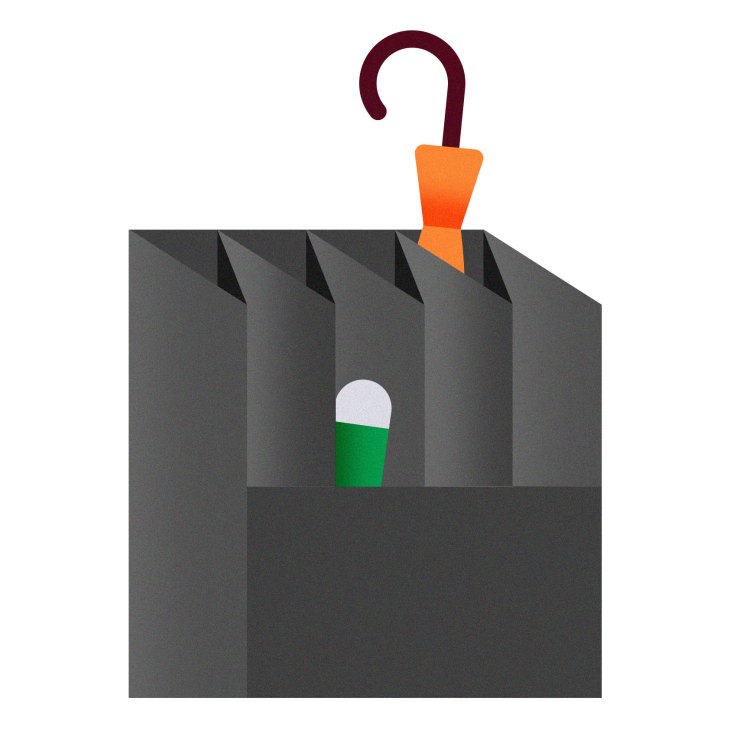
With its zigzagging holding compartment and sturdy steel exterior, Kant is an ingenious stand for soggy brollies by Nigerian-born, Zürich-based Charles O Job.
mox.ch
65 /100
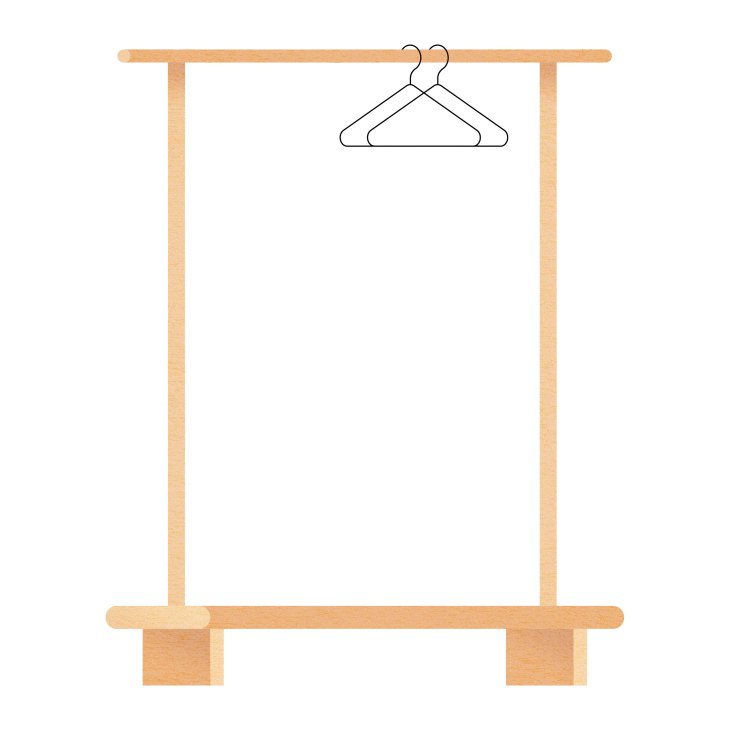
Kata Coat Stand
Ariake
(Japan)
The balanced proportions of this Japanese coatstand reference the Asian nation’s traditional kimono stands and make for a fine talking point as guests are welcomed to your workplace. For those home offices that are shooing away footwear, Kata has a platform that’s fit for shoe-storing purposes.
ariakecollection.com
66 /100
Kokiri
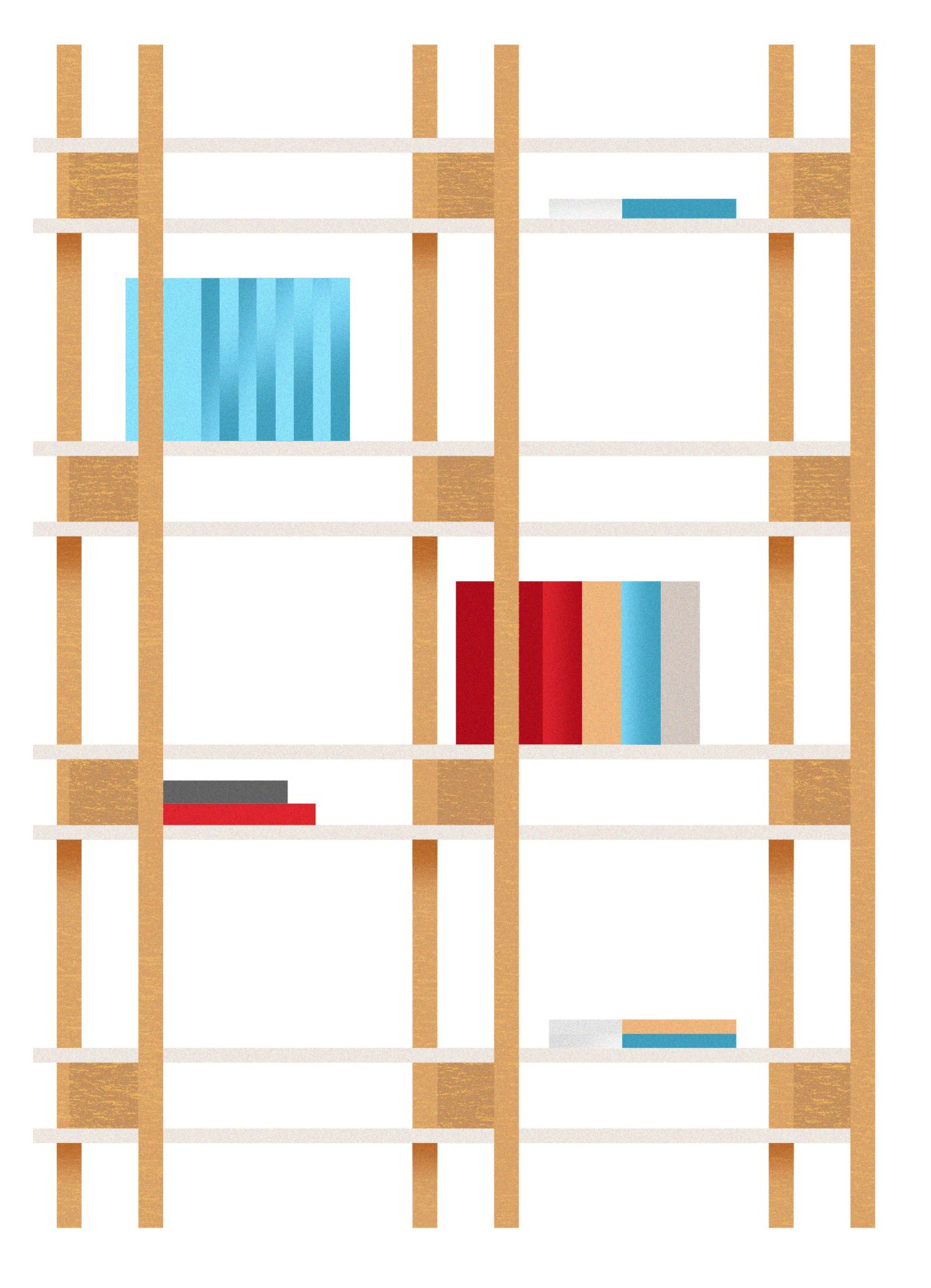
Railshelf
(South Korea)
A well-stocked office library can inspire and entertain. This South Korean shelving system provides the perfect platform to build one with. Its oak and birch timber elements are cleverly joined, allowing space for go-to titles to be creatively displayed with their covers facing out, while multiple shelf sizes mean that books of all dimensions will look good here.
theelephanttrade.com
67 /100
Gubi
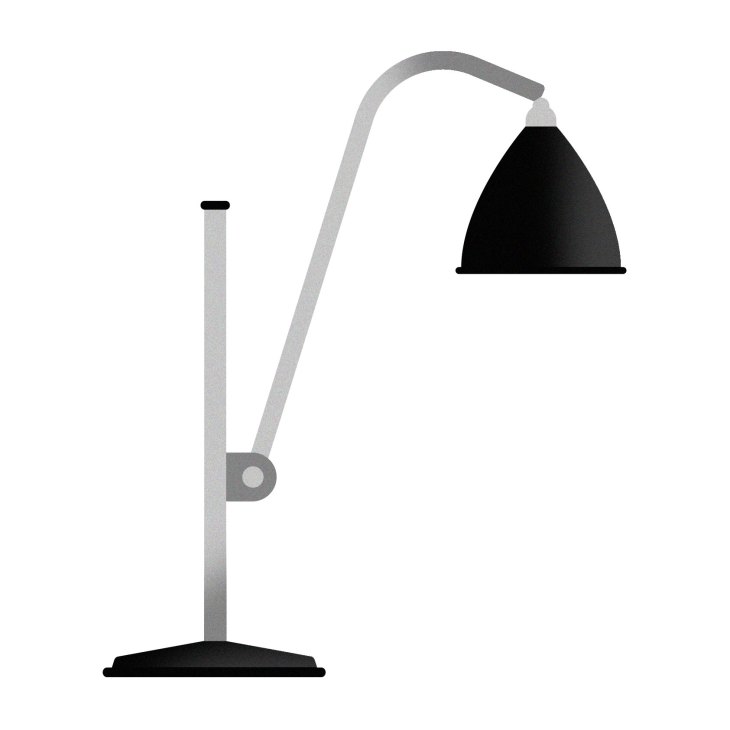
Bestlite
(Denmark)
Many a good idea has been penned under the soft glow of the stylish Gubi Bestlite – an office favourite in the UK – which celebrated its 90th birthday this year.
gubi.com
68 /100
Vipp
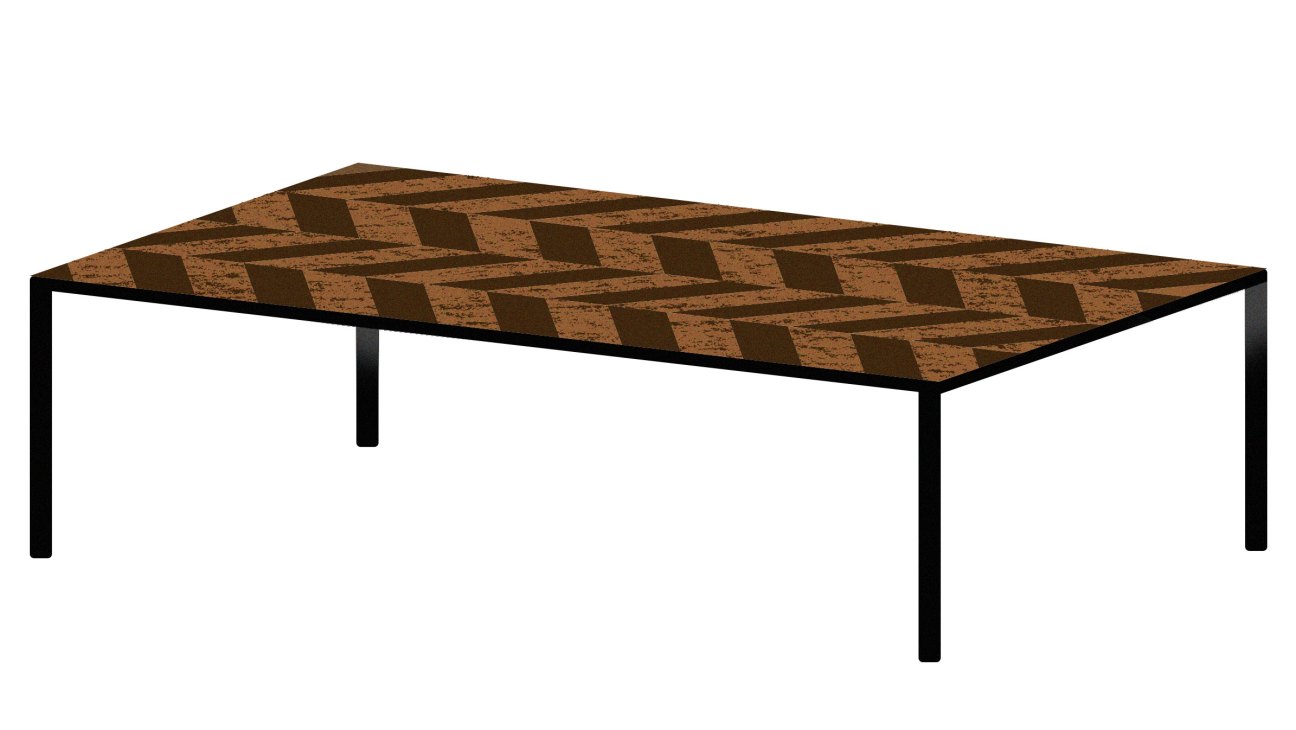
Table
(Denmark)
Vipp, known for its uber-functional pedal bin, is establishing itself as an original player among Denmark’s furniture-makers. This table exemplifies the simple tone of its sturdy designs and is a fine platform for a cosy (but serious) home office.
vipp.com
Notable purchases
53 /100
Cupboard essentials
Design
A covetable stationery line-up that staff will want to plunder.
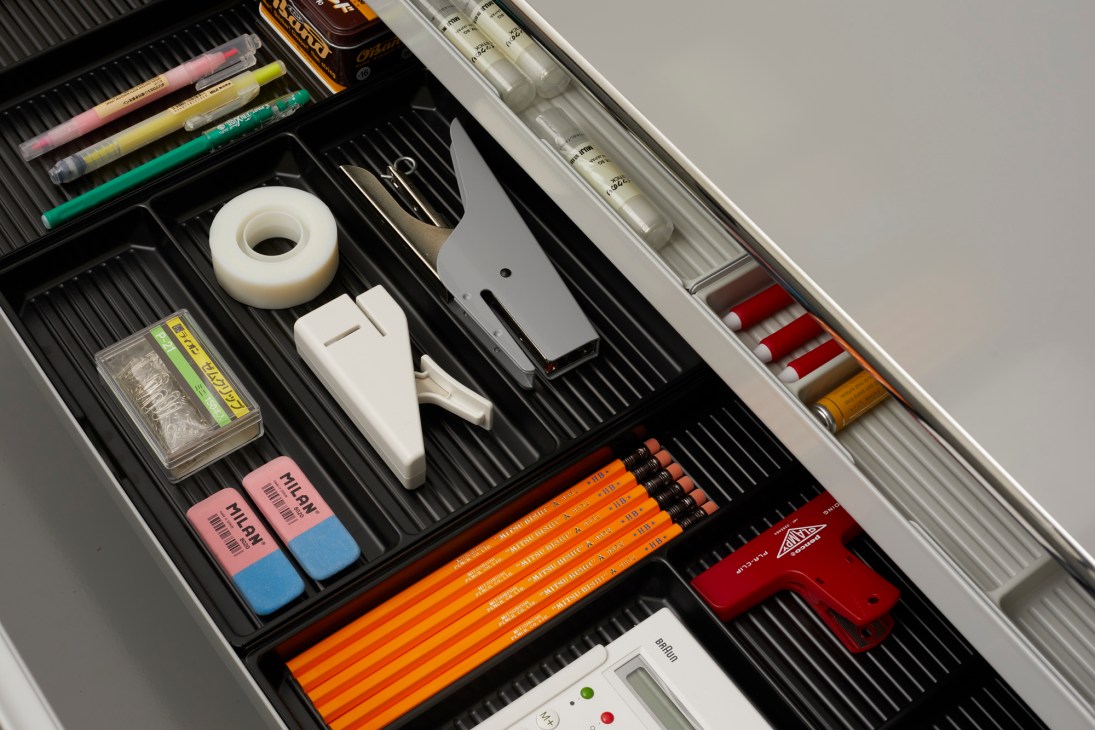
Band of rubbers: Rubber bands, Kyowa Ltd: This Osaka-based brand has been producing rubber products since 1923.
kyowa-ltd.co.jp
Fluoro fun: Highlighter, Muji: These fluorescent pens are retractable, so they don’t dry out too quickly.
muji.com
Design staple: Stapler, Ellepi: An Italian design classic, still made in Lombardy.
presentandcorrect.com
Erase and repeat: Rubber, Milan: Spanish rubber-maker Milan has been family owned since 1918.
milan.es
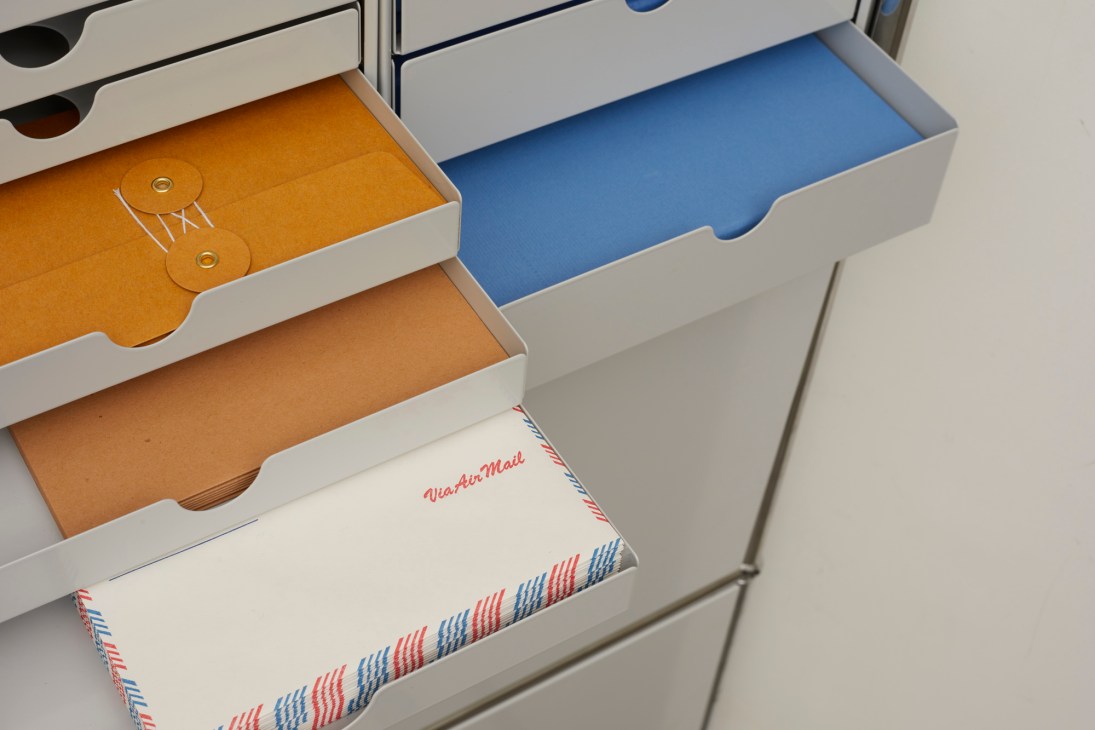
Highly strung: Washer envelopes, Present & Correct: These reusable envelopes have traditional string fastenings.
presentandcorrect.com
Par avion: Airmail envelopes, Present & Correct: Make sure your jet-set post arrives in style.
presentandcorrect.com
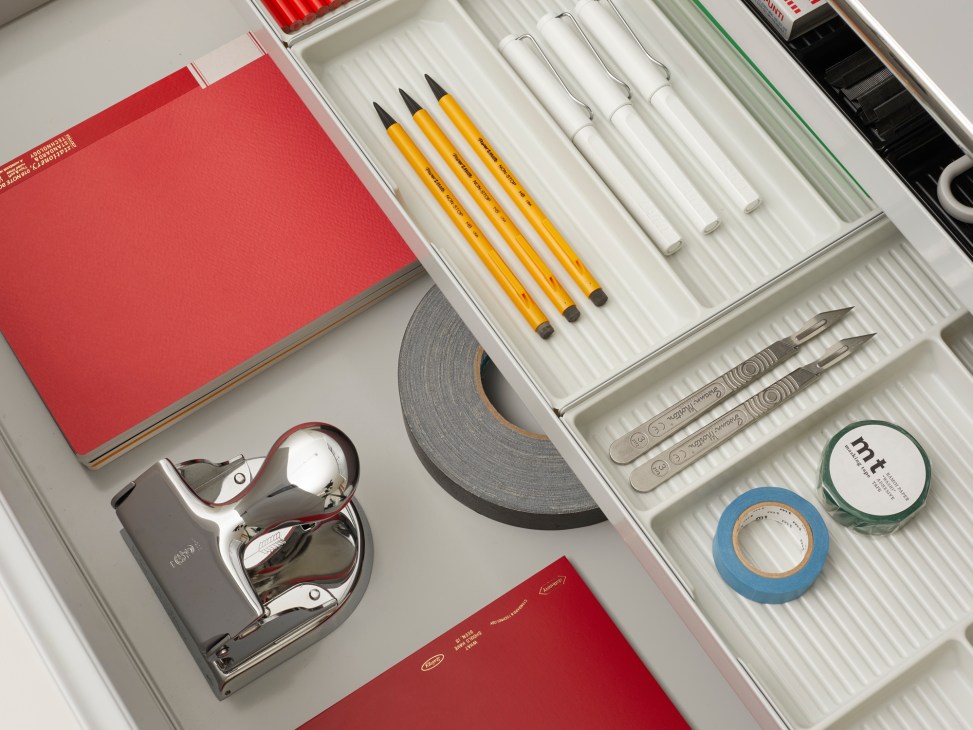
Pack a punch: Hole punch, El Casco: Once a firearms manufacturer, this Basque business turned its hand to holepunches.
el-casco.es; conranshop.co.uk
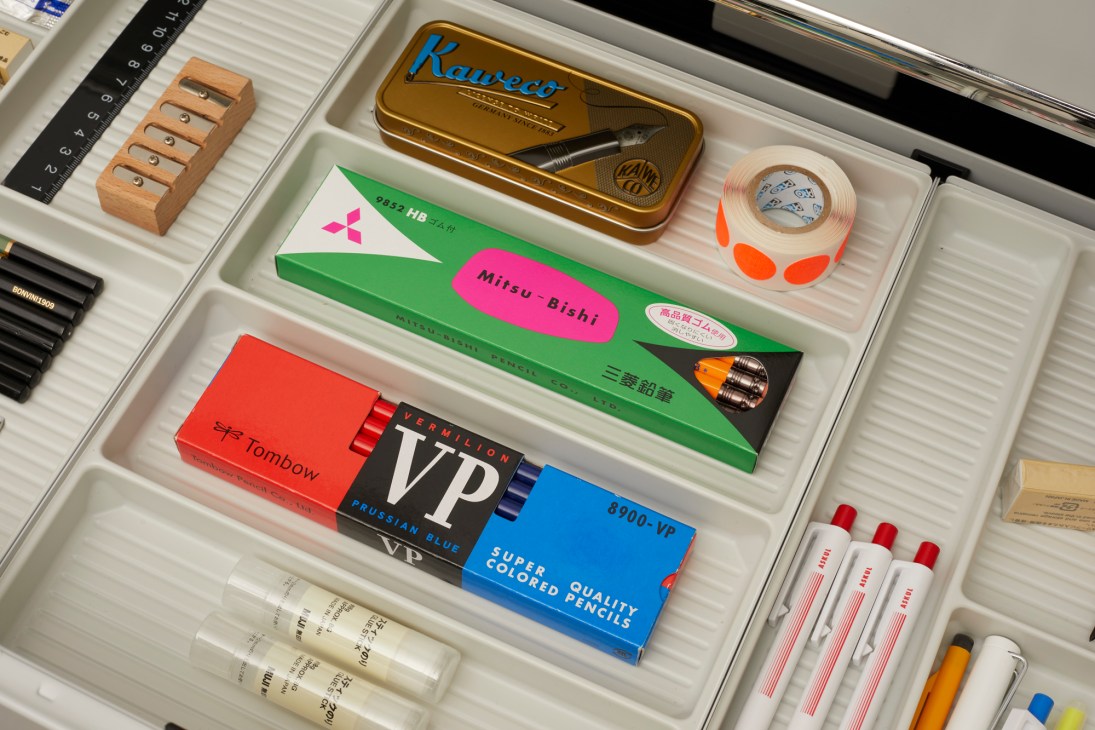
Inky pioneers: Fountain pen, Kaweco: Kaweco first began making stationery in Nuremberg in 1883.
kaweco-pen.com; trunkclothiers.com
Pencil pushing: Pencils, Mitsubishi Pencil Company Ltd: Mitsubishi was among the first in Japan to make European-style pencils.
uniball.com
Two-tone: Pencils, Tombow: These twin-tipped pencils write in blue or red.
tomboweurope.com
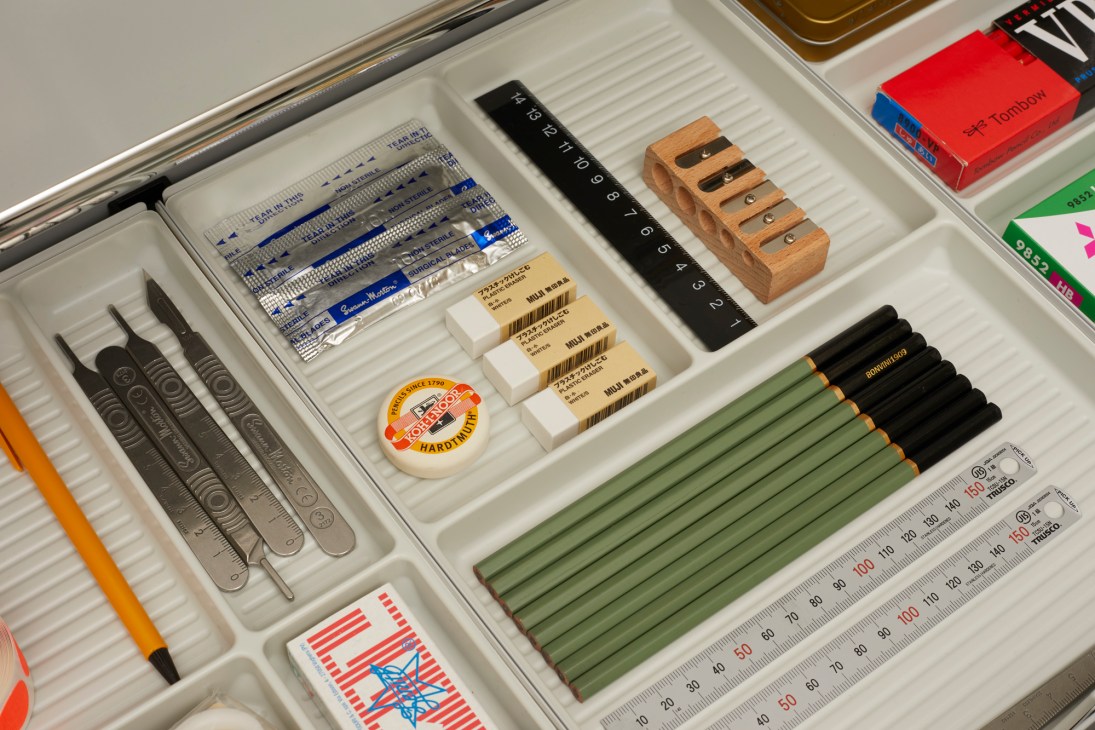
Look sharp: Pencils, Fratelli Bonvini: Milanese stationer Fratelli Bonvini specialises in vintage designs.
bonvini1909.com
Steel rule: Ruler, Trusco: Pocket-sized steel ruler made in Japan.
trusco.co.jp; labourandwait.co.uk
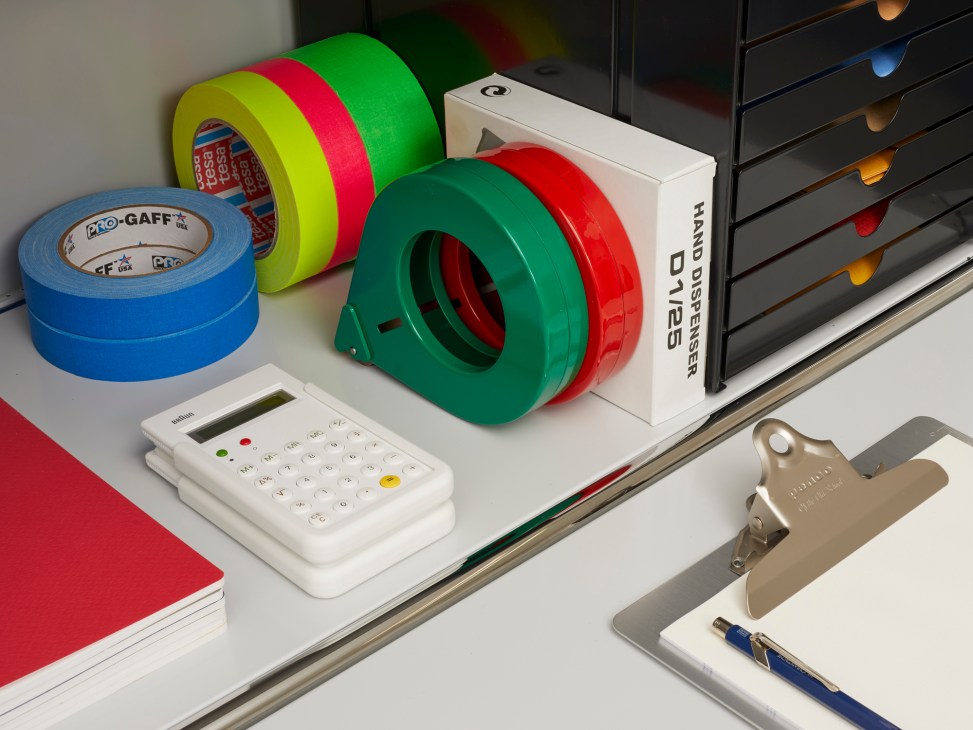
Red tape: Tape dispenser, Present & Correct: Make light work of taping with this hand-held design.
presentandcorrect.com
Finger on the button: Calculator, Braun: Keep adding to your collection with this Dieter Rams-designed doohickey.
braun.com; presentandcorrect.com
All in hand: Clipboard, Penco: A sturdy aluminium clipboard.
hightide-online.jp
Furniture: USM
Words of wisdom
44.
Julien Durant
Co-founder of Picture Organic Clothing
Recommends — The Lord of the Rings by J.R.R. Tolkien
“This book is about how to push yourself, about partnership, how to dream big, how to never give up, how friends are the key, how the team wins when you would lose alone, and how you can always adapt.”

45.
Horace Luke
Founder of mobility company Gogoro
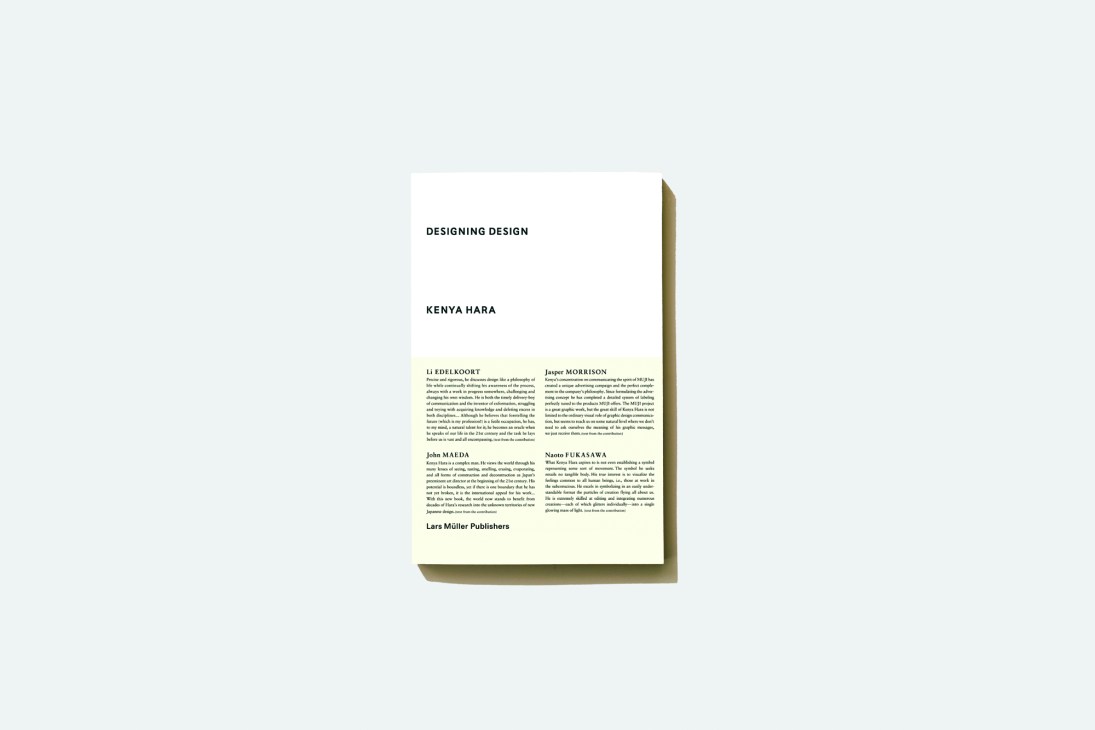
Recommends — Designing Design by Kenya Hara
“Think patiently, and deeper, to reveal the extraordinary in the ordinary. Hara’s approach is to move beyond reduction to achieve simplicity by investing more meaning in the essential.”
46.
Pip Jamieson
Founder of professional network The Dots
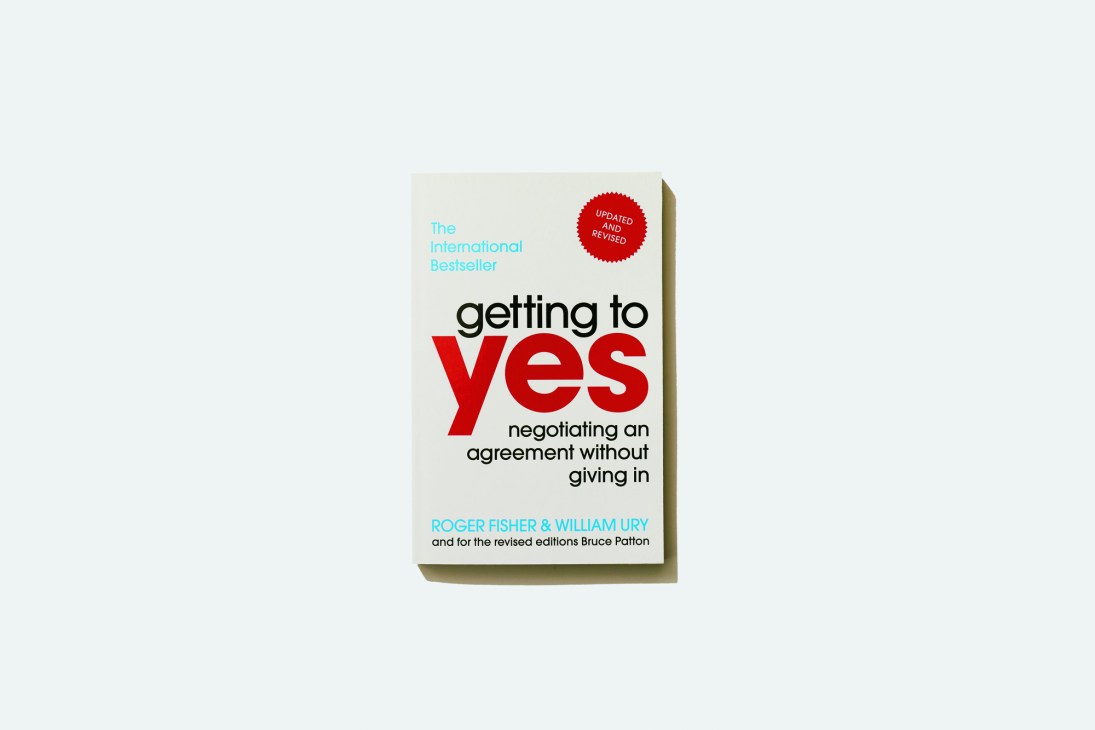
Recommends — Getting to Yes by Roger Fisher, William Ury and Bruce Patton
“I devoured this book before heading into one of the most important meetings of my life and it has transformed the way I negotiate. It’s full of useful tips.”
47.
Kathrin Hamm
CEO of blanket brand Bearaby
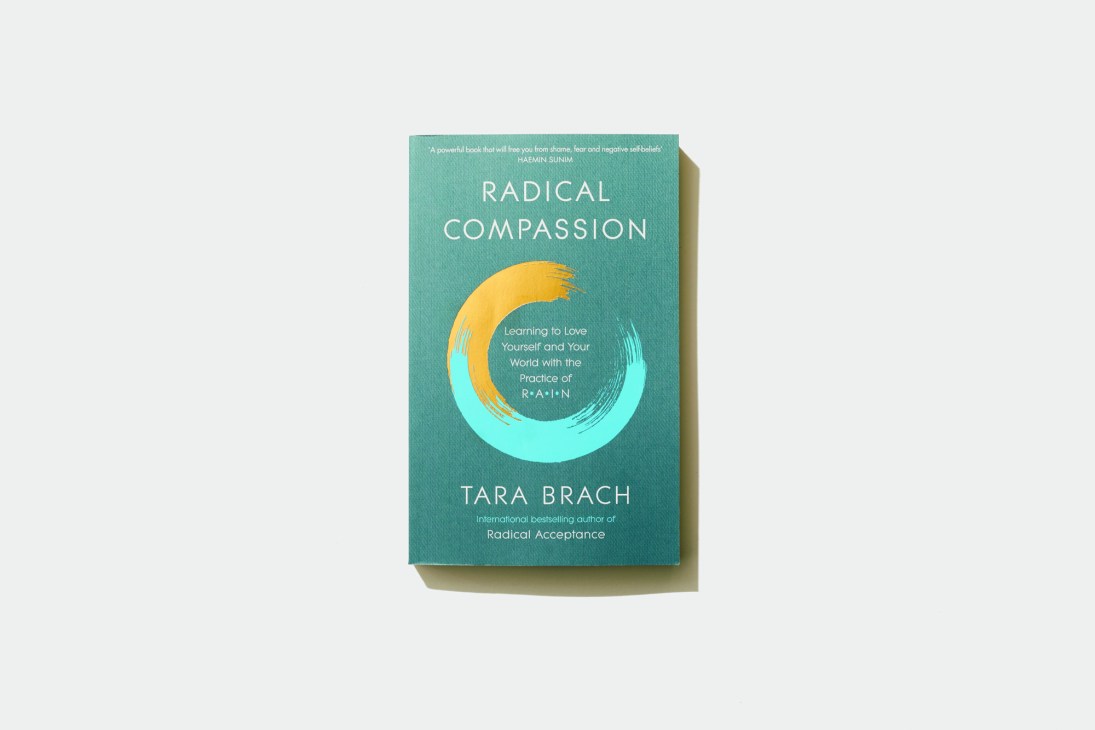
Recommends — Radical Compassion by Tara Brach
“I recommend it for anyone who wants to stop living life on autopilot, combat anxiety and take the leap into doing what they’ve always wanted to do. I’ve learnt to follow my intuition and it helped me start a new venture.”
48.
Alex Bennett-Grant
Founder and CEO of brand consultancy We Are Pi
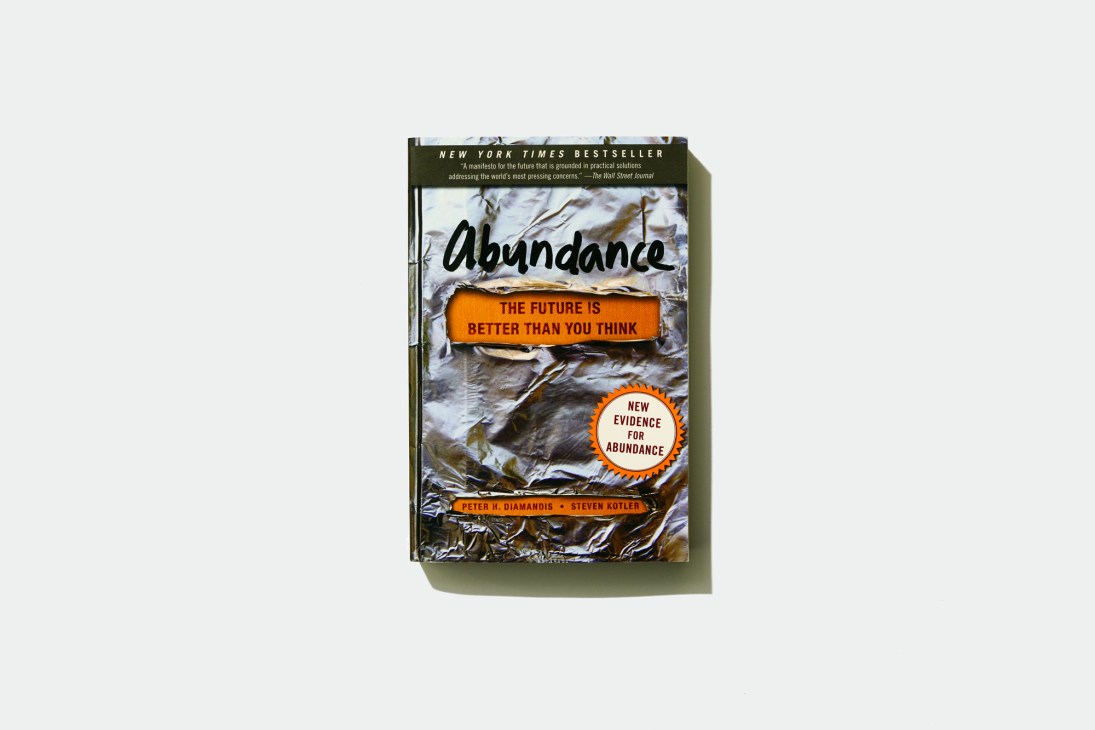
Recommends — Abundance: The Future is Better Than You Think by Peter Diamandis and Steven Kotler
“This book helped me rediscover the possibility in every problem, which is, after all, my job as a brand consultant.”
49.
Sarah Paiji Yoo
CEO of sustainable cleaning and personal care brand Blueland
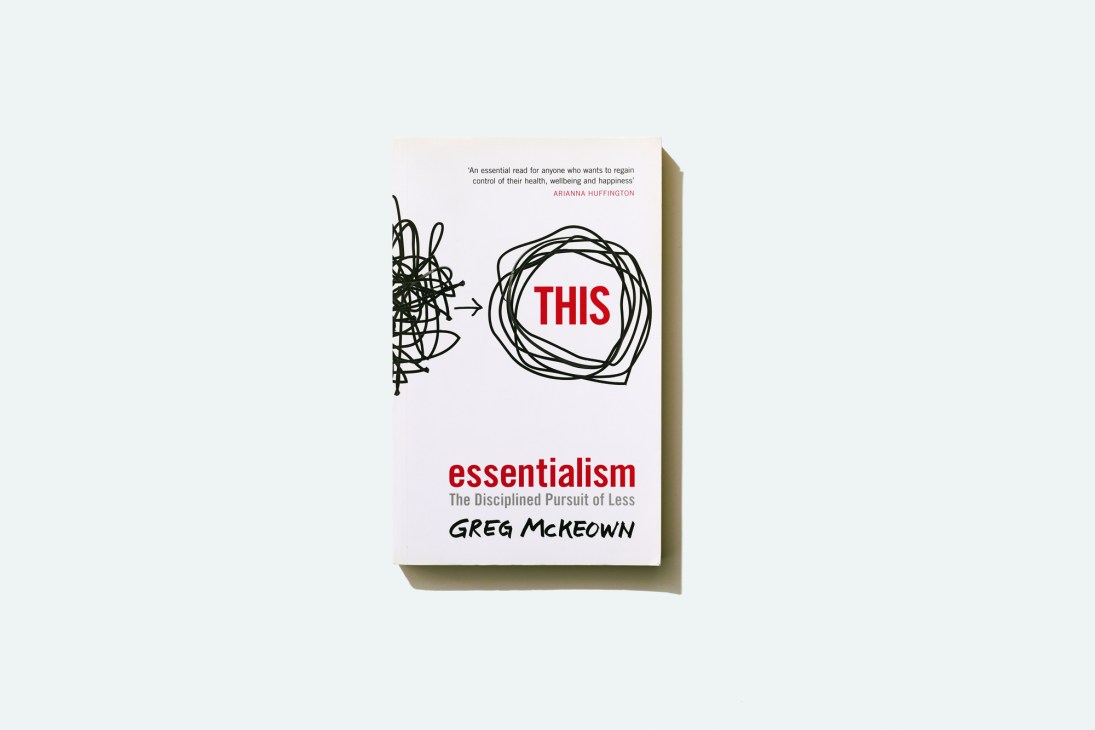
Recommends — Essentialism by Greg McKeown
“It’s about the disciplined pursuit of less, which is relevant since start-ups are always strapped for time, money and resources. Organisations must decide what’s essential in order to make an impact.”
50.
Julietta Dexter
Founder of brand-building company The Communications Store
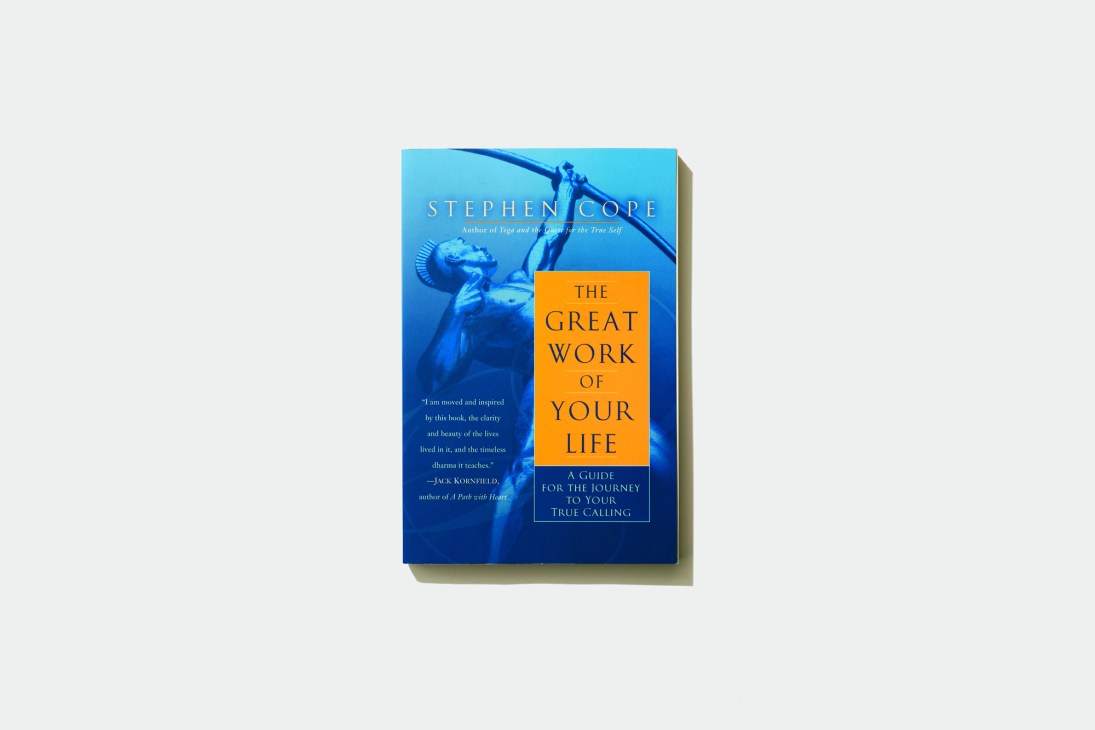
Recommends — The Great Work of Your Life by Stephen Cope
“This book is a real gamechanger. For 25 years I’ve been banging a drum for the business world being about more than a making profit. It is for anyone who wants to find fulfilment.”
51.
Seth Godin
Author of 19 business books
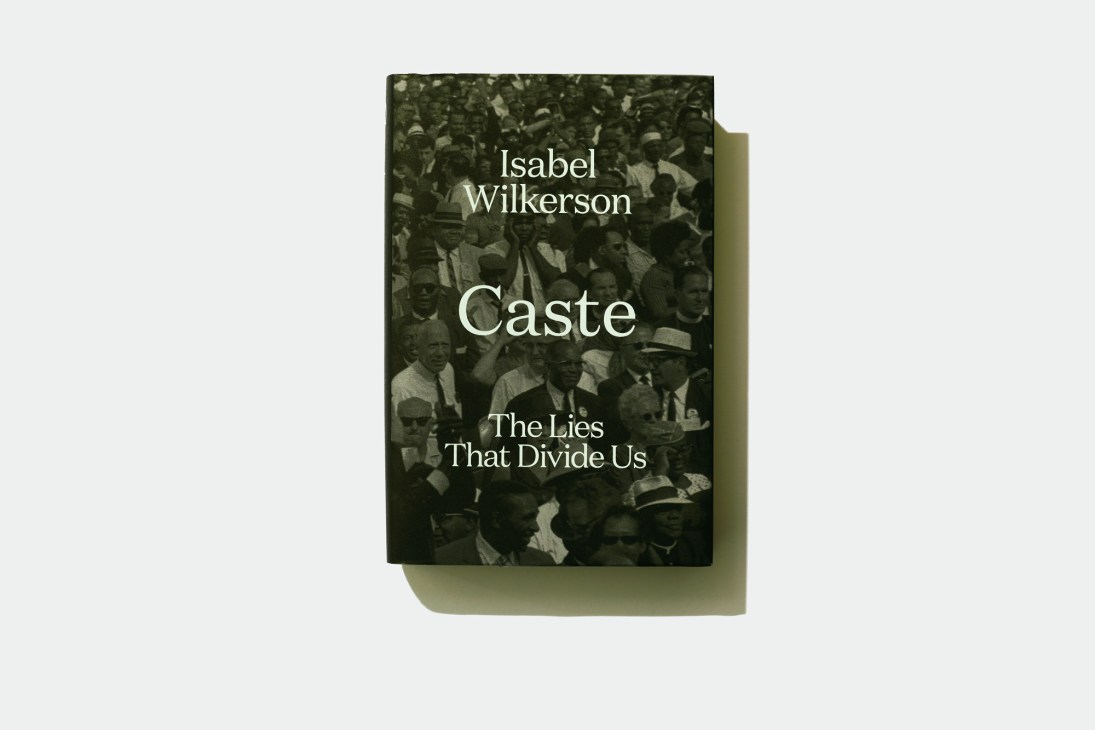
Recommends — Caste by Isabel Wilkerson
“If you want to understand culture, it’s important to see how it evolves. Wilkerson spent a decade chronicling institutional racism in the US. This book will help you see things you cannot unsee.”
52.
Minkyu Kim
CEO of rice wine company Boksoondoga
Recommends — The Communist Manifesto by Karl Marx and Friedrich Engels
“I’m not trying to show my political persuasion; I am not a communist. But this book offers a good indication of capitalism, from which I learn what to be mindful of.”