
The Entrepreneurs
The New York Wardrobe
Scott Birnbaum is the founder of New York-based venture-capital firm Red Sea Ventures and he’s betting his money on the shift in how we dress for work. Two of Red Sea’s successful investments are in Allbirds and Outdoor Voices, known, respectively, for a Merino-wool shoe-slipper hybrid (that has become the darling of Silicon Valley) and matte athleisure. “The boundaries between personal and work life have become so blurred, they’re almost invisible,” says Birnbaum on the phone from Manhattan. “As a result we’ve normalised the concept of casual wear across all environments.”
When it comes to work, those environments now include the traditional office but also hotel lobbies, cafés, the park and, for me on this call, a kitchen table at home in Japan at 23.00. I’m wearing pyjamas and Birnbaum is none the wiser. Not that he’d care. “Thanks to the internet, a lot of meeting time and relationship work can be done by email, phone and video conference,” he says. “That frees you to dress to make yourself happy and not necessarily anyone else.”
The “computer geeks” (AKA founders) of the first dot-com boom are credited (or blamed) for ushering in a relaxed approach to workwear. It was their adoption of khakis that shamed white-shoe financiers into embracing the concept of “casual Fridays”. The trend has picked up again as the second dot-com boom (led by social media and e-commerce) reverberates around the world.
Over the past five years the United States Society for Human Resource Management has found an 18 per cent spike in employers who permit casualwear any day of the week. In a 2018 survey by the workplace research firm XpertHR, of 477 employers in the UK across all sectors, 89 per cent said a short-sleeved shirt was acceptable – and more than half thought the same of jeans and T-shirts. Meanwhile relaxing dress codes in the western world has led to a noticeable decline in the sale of neckties over the decade, according to data from American market research firm IbisWorld; the firm has also tracked the demise of dry-cleaning shops for the same reason.
Despite the many reports of trainers in C-suites, especially in the technology industry, there’s another story to be told: in many sectors, norms haven’t changed all that much. Laura Thomas, a Sydney barrister, wears much the same thing from Monday to Friday. “My billable rate is hundreds of dollars an hour, thousands of dollars a day,” she says. “I have to look like I get paid this much money so I wear suits.” Women in finance and government also say that they wear a dress or trousers with a jacket and heels every day – and that they find plenty of ways to express themselves. Elizabeth Broderick, who was the Australian sex-discrimination commissioner from 2007 to 2015, says there’s more choice in suiting than ever. “When I think about my life as a junior lawyer in the 1980s, it was very much a case of women dressing to say, ‘We’ve arrived,’” she says. That meant power colours and padded shoulders. She loves that the look has softened. “There’s a lot more feminine energy now.” This idea is echoed elsewhere: in Thailand, for instance, female executives are known for wearing polished, ultra-feminine ensembles.

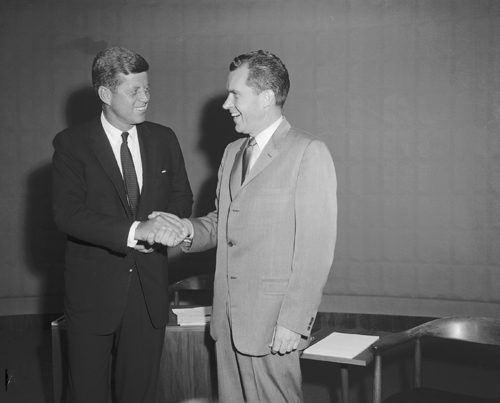
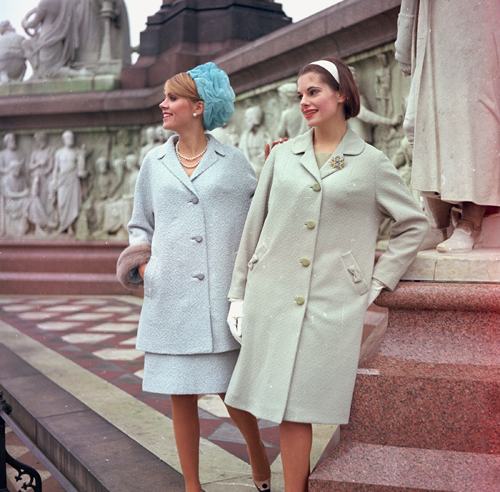
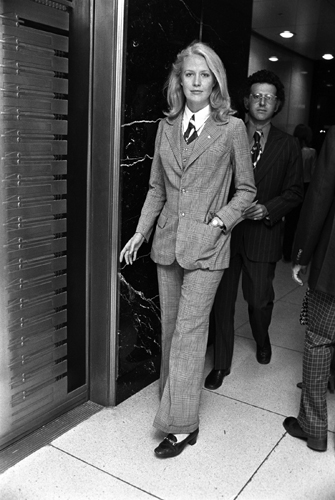


Of course, ever-proliferating options can also lead to anxiety. In March of this year, Goldman Sachs (following other corporate giants such as JP Morgan) announced that it was relaxing its dress code for all employees. Yet its company-wide memo was slightly cryptic: it said that employees must dress “in a manner that is consistent” with client expectations, which does not always mean casual gear, and must “exercise good judgment” in determining what is an appropriate wardrobe (which just seems to be piling pressure on employees to demonstrate their grasp of a particular work occasion through their clothes).
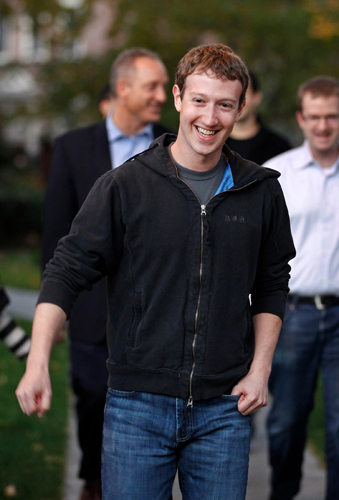
Facebook, meanwhile, with its hoodie-wearing CEO, doesn’t have a code at all – or at least, not officially. Unofficially it definitely does have a uniform: Allbirds trainers, white T-shirts (likely from a brand such as Everlane) and jeans. You could even argue that the informal tech-bro uniform is just as prescriptive as suits once were for bankers; casual should not be confused with flexible.
Dina Scherer, the owner of Modnitsa Styling, a New York-based styling company, says that the casualisation of work dress-codes “can be both good and bad”. Scherer generally advises female clients, many in creative fields, to assemble a work wardrobe that is “a more elegant version of their weekend one”. Still, she concedes that “creating a wardrobe that’s equal parts appropriate and put-together is becoming a challenge”.
For men the corporate uniform is no longer a given. Italian tailoring brands such as Boglioli, Orazio Luciano and Barena have built their businesses on the sort of unstructured blazers that young CEOs can throw over a T-shirt. Marco Pagani, creative director at Neapolitan tailor Orazio Luciano, told us that there has been a big change since 2010: now his brand sells far more individual blazers than full suits. Meanwhile, at the recent shows in Milan, Italy’s king of luxury menswear, Ermenegildo Zegna, presented a suit that could be broken down into different permutations with varying degrees of formality. The designer, Alessandro Sartori, said his intention was “to give people who have never worn tailoring a reason to”.
The late, great fashion historian Anne Hollander predicted this when she wrote that the suit runs contrary to “current millennial impulses tend[ing] towards disintegration, in style as in politics”. The suit is, she argued in Sex and Suits: The Evolution of Modern Dress, “neither postmodern nor minimalist; multicultural nor confessional”.
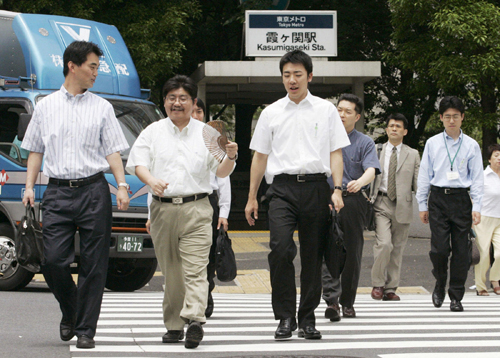
Perhaps because the suit is none of these things, it’s an item of clothing that has proven tenacious in parts of northeast Asia, where conformity with the group is often prized. The Japanese office worker’s uniform of navy suit and a white shirt is still so ubiquitous – and so inextricably associated with high status, white-collar work – that last year a Tokyo-based plumbing firm introduced a lightweight, quick-drying uniform that looks exactly like a business suit, all to attract more employees. “After our engineers wore the workwear for a year, we received a number of young applicants,” the firm’s spokesman told the Japan Times.
The insistence on suits in all work contexts can even be a health hazard. In 2005 the Japanese government launched the Cool Biz campaign, which allowed its bureaucrats to work without ties and jackets on hot summer days. Japanese women, too, pay a price for rigid dress codes. Yumi Ishikawa made headlines in June when she submitted a petition to the Japanese Labour Ministry with more than 18,000 signatures, demanding the government ban edicts from employers requiring women to wear high heels to work. Ishikawa, who worked at a funeral home in Tokyo, was tired of standing for hours each day in the black heels required by her employer. This kind of rule is not unusual in Japan but the pain, which radiated up Ishikawa’s calves while her male colleagues strode around in brogues, spurred her to action. Although the government has not yet announced any reform, the movement Ishikawa started on Twitter, #kutoo (a portmanteau of the Japanese words for shoes, kutsu, and pain, kutsuu) continues.
The conservatism of Japanese women’s workwear is reflective of the structural barriers they face: Japan is ranked 110th among 149 in the World Economic Forum’s 2018 gender-equality rankings. But another reason for the prevalence of formal clothing might be that the gig economy is yet to take over in the way it has in the West. Japan is known for its tradition of lifelong employment, reinforced recently by an extreme labour shortage as its population ages. By contrast a 2018 Gallup study in the US revealed that 29 per cent of all workers there are in an “alternative work arrangement” as their primary job. Including multiple job holders, 36 per cent have a gig work arrangement “in some capacity”. This amounts to about 57 million Americans.
Flexibility and freedom are often touted as benefits of independent work, along with the ability to wear whatever we please. When Birnbaum talks about “dressing to make yourself happy”, that sounds good. But when he says that the rise of athleisure in professional settings is partly because of our neverending workload and the need to “prioritise movement at any time”, it starts to sound a tad dystopian. Tailored dresses and buttoned-up jackets serve a valuable purpose: they delineate, physically and mentally, between work life and life-life.
As for men, they may be done with ties but Don Draper in a Patagonia fleece doesn’t have quite the same cachet. A sharply-tailored ensemble – a suit or separates – exudes professionalism. Yet time will tell whether yoga pants moisture-wick their way to sartorial supremacy. “We are going to see an emergence of a new style paradigm,” says Birnbaum. He adds that as it becomes even more popular, easy-wear clothing will become more elegant and “the idea will not be comfort at all costs but a better integration of comfort and style”. As he says this, your writer looks down at her bathrobe. It’s not stylish. But the fact that it can be worn to work, assuming the internet connection complies? That suits just fine.
Monocle Comment: We’re all for making an effort when dressing for work. That doesn’t have to mean going formal (although a sharp suit can give you a shot of confidence). A smart blazer and tailored trousers show you mean business. We’re not ready for office hoodies just yet.
Images: Getty Images, Shutterstock, Alamy
Born to do it
1.
David Neeleman
Co-owner, TAP Air, Portugal
In the cavernous maintenance hangar of TAP’s headquarters in Lisbon, the airline’s co-owner David Neeleman is standing beneath its latest delivery: an Airbus a330-900Neo. He tries to hop onto one of the engines; the turbine’s edge proves too high on first attempt but with a final boost he’s up. He has been even more nimble when it comes to running Tap. He bought into the Portuguese carrier during its 2015 privatisation and has been key to its turnaround. It’s his latest project in a career built on founding successful carriers, including JetBlue. Now he’s creating turbulence in the industry again having announced the launch of a new US airline in 2021.
“Exceeding expectations creates buzz,” says Neeleman. “So that’s what we do. We have to be efficient and we have to keep our costs down but we have to have really excited and motivated people serving customers and then be really innovative on where we fly and which planes we use.”
Neeleman is one of the most successful entrepreneurs in commercial aviation. Over his 35-year career he has co-founded Canada’s WestJet, Brazil’s Azul and aviation-technology firms that have shaped the industry. His reservations business Navitaire, which he sold to Amadeus for $830m, was responsible for some of the first steps into electronic ticketing. When he launched JetBlue in the US in 2000 it shook up the industry with its use of technology.
Here is a serial entrepreneur in a famously volatile industry in which start-up airlines rarely last more than a few years. “It’s an exciting business if done right,” says Neeleman. “It can create a lot of misery if you don’t do it right – you need to have a lot of things working in your favour to be successful.” But, he adds, the upside is the industry’s huge potential. “If you take JetBlue, add that to Azul and add that to Westjet, their value is more than $15bn [€13.7bn], which is more than Lufthansa’s trading at today. That was all created from scratch.”
Neeleman got his start in 1984 when, aged 25, he co-founded a small charter airline with June Morris, owner of a travel-agency business. Morris Air Service was based in Salt Lake City and eventually bought by Southwest in 1993; the deal netted Neeleman $25m.
Under his leadership Tap has replaced old planes, instituted a Portugal stopover programme and enhanced its reputation for customer service. Key to its comeback is segmentation of its product into offerings from budget to premium. As for the danger of diluting the brand with low-cost products, he says that the benefits outweigh the drawbacks. “The segment of the population that wants a low fare doesn’t really care about anything else,” he says. “Having choices is important. There’s a mix and match, a menu of items that technology allows you to offer.” If you don’t address that part of the market, he says, the Ryanairs of this world will eat away at your market share. Another game-changer, he says, is the new single-aisle airplanes that can fly long-haul. These are opening up new possibilities: costs for TAP’s Porto to Newark flight on the new Airbus a321lr are 50 per cent lower than on a widebody. “It’s the first time I’ve seen a small airplane that has a lower fuel burn per customer than a bigger plane.”
When it comes to his new US airline, Neeleman is coy. The plan is to run another new single-aisle plane, the Airbus a220, with lie-flat seats in the front and extra fuel tanks. Airline consolidation in the US, which has resulted in carriers concentrating on major hubs, has created an opening for direct flights between under-served cities. Neeleman says that the a220 will allow them to offer compelling fares on routes that no one else serves.
“There are a lot of cities that have been forgotten,” says Neeleman. “There’s one place in the US that’s got really great houses on a beautiful beach and there’s almost no air service there. My daughter said, ‘Dad, it’s a five-hour drive from where we can fly to; why doesn’t anyone fly here?’ So we started looking into it.”
Here lies perhaps the most important piece of advice for anyone wanting to start a business. “I don’t start airlines just for the sake of starting them – there has to be a reason for being.”
Monocle comment: Look for a gap in the market and plug it with a worthy product or service.
2.
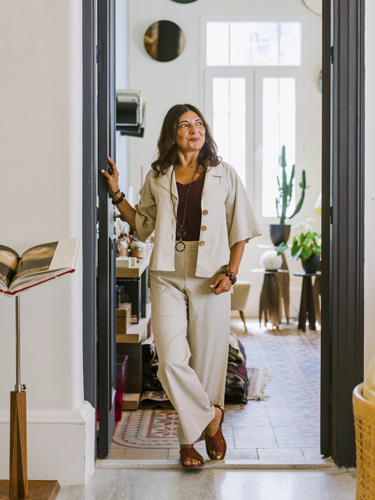
Nada Debs
Founder, Nada Debs
Growing up in Kobe, Japan, where her family ran a textile business, Nada Debs felt detached from her Lebanese culture. However, upon moving to Beirut aged 38, she was charmed by the craft heritage of the Middle East and incorporated the design aesthetics of Japanese clean lines and Middle Eastern patterns into one brand. She opened her studio in 2013 in the Beirut neighbourhood of Gemmayze and now her designs can be found across the region and beyond, from the lobby of the Bekaa Valley’s famed Palmyra Hotel to the homes of Jordan’s royal family. We visited her studio-cum-gallery space, where she showcases her furniture and product designs, to talk identity and inspiration.
Monocle: How is your dual identity reflected in your work?
NADA DEBS: I grew up in a society where craft is revered and the aesthetic is minimalist. The Japanese, when they want perfection, they meditate, removing all distractions. But in the Middle East it’s the opposite: it’s about repetition. So I take those two opposite principles and say, ‘How can we express that craziness through repetition but in a concise way?’ I created these very linear pieces and then I would apply the patterns onto them.
M: How does your studio factor into your business model?
ND: What I did was bring a gallery feeling into the central space – but it still feels homely. It’s a working studio so you can understand the process. There are some stores you don’t want to walk in to because they are intimidating and I wanted the opposite of that.
M: What is a key quality to have as an entrepreneur?
ND: There’s a lot of emotional intelligence in business. It’s not enough to just have knowledge; more than 50 per cent is about human relations.
Monocle Comment: Every business needs a USP; make sure yours is authentic to who you are.
3.
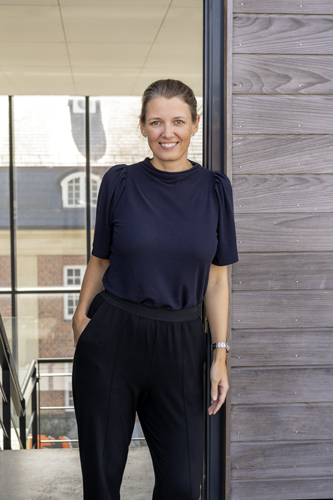
Mette Lykke
CEO, Too Good to Go
A bit of a legend has sprung up around how Mette Lykke got into the start-up game. When she decided she wanted to have more independence and make a bigger impact than her job at McKinsey allowed, there was an appealing offer to work for a former client. There was also the exciting –but less secure – prospect of striking out on her own. Which to choose? On the day she had to give her answer to the former client, she was on the street in New York and a fortune-teller ran over handing her a postcard printed with the words, “Whatever our wildest dreams may be, they only scratch the surface of what’s possible.”
She chose her own path. It turned out to be the right decision: Endomondo, the company that she co-founded with two friends in her native Denmark, produced the first fitness tracking and sharing app. It became a huge success: in 2015, when it was sold to US sportswear brand Under Armour for $85m, it had 20 million users. Two years later, Lykke became CEO of Too Good to Go, a Copenhagen-based platform that allows restaurants and supermarkets to reduce food waste by connecting them with consumers eager to purchase their surplus food. Under her leadership, Too Good to Go now employs more than 400 people in 13 European countries, works with more than 28,000 supermarkets, restaurants and other partners, and is looking to expand globally.
Monocle: Did you always know you wanted to be an entrepreneur?
METTE LYKKE: I grew up in a family that had its own business – my grandfather started a lumberyard chain in 1947. It probably impacted me in the sense that I saw it as normal to have the lifestyle that you have when you work for yourself. But Endomondo kind of just happened.
M: When did you know that the company was going to be a success?
ML: There wasn’t really a turning point, there was just a lot of hard work. It was just every day: come in, do your thing, get some sleep and do it again. The first three or four years were quite tough because the technology hadn’t caught up yet. Once the iPhone came out and Android started taking off, then we started to see traction.
M: You were one of the first two investors in Too Good to Go and then you came on as CEO. What was it about the project that spoke to you? ML: At Endomondo we had a strong purpose. The passion around that, for me, really was the driver. With Too Good to Go it’s a different kind of purpose because it’s small on a macro level but it’s such a big problem that we waste a third of all food. It just made sense to be a part of helping to solve it – and realising that we could do that in a way that leaves everyone winners. Both the stores and the consumers are better off and it’s a sustainable business model as well, which is quite rare.
M: Is Too Good to Go a disruptor?
ML: I think we are innovators. When you disrupt something you kind of mess it up a little bit. We don’t do that. It’s not like anyone needs to rethink their entire business model. It’s all positive.
M: You used to compete as an equestrian. Has that mindset carried over to being an entrepreneur?
ML: Yes, definitely! Business is a competition. You compete with whoever thought it couldn’t be done because you want to prove them wrong. That’s always been part of my motivation – that and the passion to see things happen.
Monocle Comment: Success doesn’t just rest on winning ideas. Tap into your most competitive instincts to get your business growing.
4.
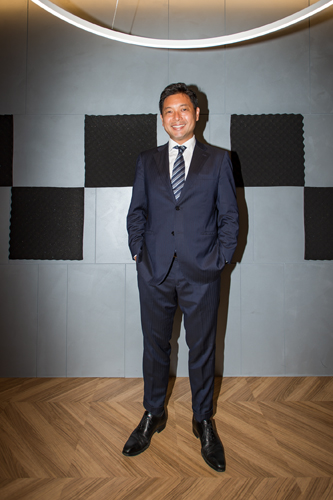
Nobu Okada
CEO and founder, Astroscale
Nobu Okada credits a midlife crisis for the birth of his company Astroscale. Back in 2013 he was 39 and a high-flyer with a stellar CV: elite Japanese university, finance ministry bureaucrat, mba, founder of two IT firms. “I started asking myself, what should I do in my forties?” Okada says. Then he remembered going to a Nasa camp as a student and falling in love with space.
After attending a space industry conference in 2013, Okada found his calling: cleaning up the estimated one million objects orbiting Earth that endanger satellites. Within days he had launched Astroscale with $200,000 of his savings. “No resources, just me.”
Since then he has raised more than $140m in five rounds of funding from the likes of Sumitomo Mitsui Trust Investment, All Nippon Airways, incj and a University of Tokyo innovation fund; he’s also opened offices in Tokyo, Denver and Oxfordshire in the UK. Astroscale is preparing a 160kg satellite for an upcoming test mission in 2020 – and there’s a lot riding on it. The firm is vying for business from governments that want to sweep up defunct satellites and private ventures such as SpaceX, Planet Labs and Blue Origin, which plan to launch thousands of satellites in the coming years.
Monocle: How bad is space debris?
NOBU OKADA: More than 95 per cent of objects in orbit are garbage: 34,000 of these bits of junk are 10cm long or larger and if you count all the smaller pieces of debris, the number jumps to one million. There are 2,000 functioning satellites flying around Earth and more satellites are needed. But if 10 per cent become defunct, how many new pieces of garbage is that?
M: Did you face scepticism when you started Astroscale?
NO: At a conference in 2013 I told people that I wanted to clean up space by myself. They said, “Nobu-san, there’s no proven technology; space agencies have started r&d and it’s not something a start-up can do. There’s no market. Who will pay the money? The regulations are too complex.” But now we are talking with high-level people. Before, we were thought of as an extraordinary outsider; now we are seen as a unique insider. That’s a big difference.
M: A rocket-launch failure doomed your first mission in 2017 but you’ve managed to raise more money since then. What lessons did you learn?
NO: Launch failures happen. I always think about risk now. I was worried that my team would lose motivation. But we are still alive and our team were robust enough to handle it. The 2020 mission is crucial – the space industry is watching us.
Monocle comment: There’s no avoiding risk so bring real passion to the endeavour.

5.
Scott Sternberg
CEO and founder, Entireworld
It’s not easy to build a fashion brand, particularly one that swiftly achieves a cult-like following. Yet designer Scott Sternberg, founder and former creative powerhouse behind clothing company Band of Outsiders, is a singular force when it comes to building an entire world around a brand. For more than a decade the label inspired loyalty among cool kids – Spike Jonze, Greta Gerwig – and fashion royalty alike.
But success can bring tough lessons as Sternberg found out when Band of Outsiders ran into financial trouble; he left the company in 2015. (clcc, a Belgium fashion fund, assumed ownership and relaunched the label with new designers.)
Sternberg is back with Entireworld, a democratically priced label rooted in high- quality basics. He invited us to his Los Angeles home on the hills above Silver Lake to talk about his vision for the industry and what he’s doing differently this time.
Monocle: What makes a brand work?
SCOTT STERNBERG: The ones with a singular vision, with a human vision behind them, are the ones that are pervasive; they become part of people’s lives. These days it takes longer to break through because there’s so much noise.
M: At its height, Band of Outsiders did $15m in wholesale. What went wrong?
SS: We took on investment a little too late and didn’t have a great infrastructure to scale. Every dollar we spent was so vital and some of it just wasn’t spent right. What’s really one of the larger points is that fashion is brutal.
M: What did you learn to do differently with Entireworld?
SS: So many things. Firstly, starting this company with investment partners from the beginning and with a small number of employees that are all participants in the business in terms of equity. I started Band of Outsiders as a one-man show so the founder’s syndrome was heavy in that case.
M: Do you consider yourself an ‘entrepreneur by birth’?
SS: I’m a specific type of entrepreneur by birth: it’s about having an idea and also having a little bit of arrogance and drive to get my hands dirty. I’m not the type of entrepreneur that has a sort of ‘new economy San Francisco, venture capitalist’ vibe. It’s much more personal to me.
M: What’s your brand-building advice?
SS: You have to figure out how you’re reaching people. How are you using this platform in a way that is unique to you and your brand? You have to be able to win people over, either their hearts or their minds – pick one. If your product is really good, maybe you’ll get both.
Monocle comment: Failure happens. Heed the lessons from the past while retaining what works.
They found a gap
1.
Tajfuny
Bookshop bringing Asian literature to Poland.
As a travel writer, Karolina Bednarz developed a deep interest in literature and society in Asia, particularly Japan. Returning home to Poland she discovered that she wasn’t alone and realised that there was a captive market for Asian titles translated into English or Polish. So in October last year she launched Tajfuny, a bookshop and publishing house that broadens the horizons of the literary scene in the Polish capital.
Recruit the obsessed.
Unless new recruits have a fervour for Asian literature that matches Bednarz’s, they might not be the best fit. “Tajfuny is about sharing a passion,” she says. “If you are not crazy about Asian literature and do not see yourself reading, editing and talking about it for years, this is not the job for you.”
Substance over size.
Tajfuny stocks just 200 titles for good reason: every book on display is loved by at least one member of staff. This means that the selection isn’t overwhelming for visitors. “Publishers send us books hoping we will stock them,” says Bednarz. “But if they are not good enough, we won’t.”
High-quality publishing.
For Tajfuny’s publishing arm, print quality is paramount. “We strive to make our series pop,” she says. “We also value long-term business relationships, working with the same printers and editors so that our books do not differ in quality.”
Connect with a community.
Bednarz built on her following as a writer to draw customers but she wasn’t satisfied with just doing so online. “Before opening Tajfuny I covered east Asia as a journalist and had a blog, so many of our first customers knew me,” she says. “Now we organise book-club meetings and other events.”
Be consistent in design.
Tajfuny has a unique aesthetic: Bednarz enlisted the help of her favourite Japanese design studio Tegusu. “It’s important that people know who we are,” she says. “The design has made it easier to plan our books, promotional material and website.”
What success looks like.
Tajfuny has published six Japanese books in Polish this year and currently stocks titles from 12 east Asian countries. Its mission is to bring Asian literature to a western audience. “People who visit for the first time might be a bit lost but they return and ask for another book,” says Bednarz.
In numbers
Growth: 15 per cent per month (in the past quarter)
Print runs: 3,000 copies(for the first 2 books)
Stock: 200 titles
2.
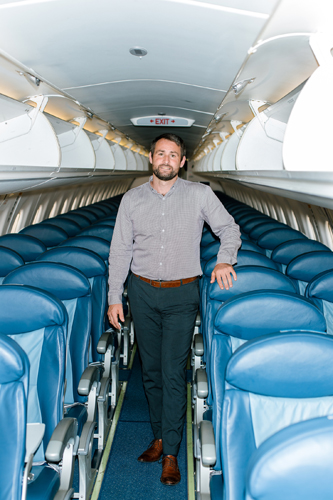
Great Dane
Airline helping Aalborg to take flight.
With a population of 205,000, Aalborg is Denmark’s third-largest city but its airport suffers from a lack of connections – certainly when compared to Copenhagen, which is 45 minutes south by air or five hours by rail. Great Dane, founded by aviation-industry veteran and former pilot Thomas Hugo Møller, intends to rectify this and prove the power of regional carriers.
Think small, be nimble.
Great Dane chose to fly Brazilian-built Embraer 195s, which seat about 100 passengers, after tour operators flying from Aalborg explained their difficulties in filling larger aircraft. “The Embraer was an important part of the business model,” says Moller. “It was the only aircraft that had the range but with the smaller load capabilities.”
Listen to customers.
Flying Embraer 195s has allowed Great Dane to forestall a common complaint: that nobody likes a middle seat. Embraers have two seats on each side of the aisle. “Scandinavian people are quite tall,” says Møller. “They wanted a longer pitch than normal airlines have.” Great Dane offers 79cm rather than the more common 74cm.
If there’s a good national brand, embrace it.
It’s not just the name that ties Great Dane to its homeland: its aircraft fly the Danish flag on their tailfins. This is an attempt to embrace the country’s generally positive image. “I want that ‘Made In Denmark’ feeling on the airline,” says Møller. “Those Danish values of a high-quality product with high-quality service.”
Have a back-up.
“I’ve been in the airline industry my whole life so I know that it’s important to have a plan B,” says Møller. For a while, Great Dane toyed with the idea of offering full service on only one of its two aircraft so that they could keep one in reserve; any perception of unreliability could doom a fledgling airline. Instead they instituted measures such as having a mechanic on board and nailed down agreements with workshops at airports.
Buy good kit.
Great Dane looked at Embraers being sold by a Russian operator. “They were in Warsaw but they had been there for nine months, which is not good for the aircraft,” says Møller. It eventually bought its jets from Stobart Air in Ireland; the planes had previously seen service with klm and Flybe. “We prefer to own the aircraft ourselves rather than lease them: it gives us more control.”
What success looks like.
The airline business is unforgiving: the past few years in Europe alone have seen the grounding of Flybmi, Monarch, Wow, Air Berlin, Primera and NextJet, among others. Survival is a clear benchmark. “We want to be a stable product that is still here in 10 or 20 years,” says Møller. “We’d like to have good profits, of course. But the fun part is getting the puzzle right. It’s also fun for me to see the employees taking pride in the new airline. It’s nice to feel like it’s not just a job for them.”
In numbers
Maiden flight: June 2019
Fleet: 2 Embraer 195s
Destinations: Nice, Dublin and Edinburgh, and seasonal charters to Mallorca, Rhodes, Crete, Varna, Naples and Bologna. More routes to come in 2020.
Employees: 50
3.
Anna Money
Financial firm with animal attraction.
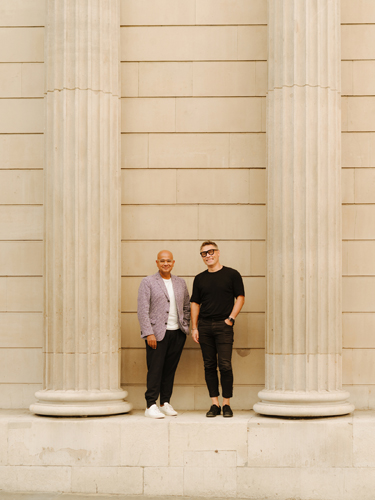
Entrepreneurs don’t usually leave salaried jobs to pursue their own ambitions because they want to spend more time doing admin. But owners of start-ups are often surprised by the amount of time they need to spend on invoicing, chasing payments and filing tax returns when they’d rather be getting on with the task at hand. Financial-technology start-up Anna Money (Anna is an acronym for “absolutely no-nonsense admin”) is a bank card and app that automates these tasks so that business-owners can devote more time to the fun stuff. Daljit Singh and Eduard Panteleev (pictured, Singh on left), who co-founded the company with four others, are banking on the rising numbers of freelancers and small firms in Europe and the US.
Know what differentiates you.
From the start the four co-founders were clear that Anna had to be design-led, which would help them to stand out from the competition. “Design is not something you associate with financial products,” says Singh. Everything from the user experience to the branding was designed to be memorable. Build a team of outsiders – and insiders.
Build a team of outsiders – and insiders.
While Anna has a core team of financial professionals, Singh and his team sought employees from different backgrounds and disciplines to avoid falling into a group-think mentality. Anna’s staff includes people who previously worked in fashion, film and even stand-up comedy. “This breadth of experience has helped us create something that feels different to how a traditional banking service would operate and speak to its audience,” says Singh.
Think laterally and evolve.
Anna started as a personal assistant for small creative businesses. But the team realised that its business accounts and invoice-management services could be used by others too. From gig-economy workers to “mumpreneurs”, the team has begun to consider how to cater to wider demographics.
A little humour can’t hurt.
Banking is notoriously straight-laced. “It has to be when you’re dealing with people’s money,” says Panteleev. But that doesn’t mean that your products must be staid. When customers pay with an Anna card, the accompanying app miaows.
Look to other markets.
Anna was inspired by the increasing number of people striking out on their own, either as freelancers or launching new small businesses. Two of the co-founders, Panteleev and Boris Dyakonov, had founded similar banking businesses in Russia before recognising that it was a global trend – and one that was growing quickly in the UK.
What success looks like.
Since launching its debit card and app in 2018, Anna has grown to 10,000 accounts; it now has 70 employees based in London, Cardiff and Moscow. Its initial campaign – “the world’s first miaowing debit card”, which included an audition video of cats trying to be the official miaow – received two million views on social media, resulting in a 72 per cent increase in sign-up rates.
In numbers
Funding: £15m, from two rounds of funding
Staff: 70 (up from 15 in 2018)
Accounts opened: 10,000 since launching in September 2018
4.
InGamba
Cycling tours with the perks of the elite.
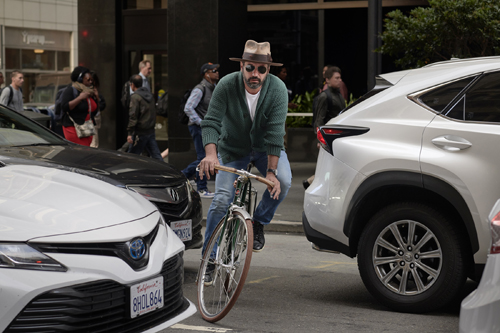
In 2010 Portuguese professional cyclist João Correia was winding down from a gruelling season. So what was the antidote to a surfeit of lactic acid and too many jolts to the collarbones? Jumping back into the saddle, of course. This time though it was for a leisurely ride around Chianti, with stops for food and wine. After an impromptu invitation via a tweet, four others joined him. Correia had unearthed a market for affluent cyclists craving a high-end, high-performance experience. InGamba now runs tours in Europe and North America from its Sausalito HQ. A seven-day, €7,000 tour includes everything from bikes to Lycra.
Prove the concept.
Correia tackled logistical problems as he would when preparing for a race: by getting help from soigneurs. “I never wrote a business plan,” he says. He spent two years fine-tuning the formula to ensure that participants would have an experience similar to professionals, with top hospitality thrown in. “I wanted to share the incredible places I had visited as a professional. We ran three trips over two years before the business formally launched.”
Know who you are and what you do.
“We were the first to have the same infrastructure as a pro team for recreational cyclists: professional soigneurs and the same equipment as the pros, including $15,000 [€13,500] Pinarello bikes,” says Correia. Support cars stop to repair flat tyres; clients wear the same high-end kit to instil camaraderie; and every ride ends with a rub down from expert masseurs. Stages retrace major road races and pro riders sometimes join in. “Once we cycled a Giro d’Italia stage a few hours before it began.”
Hire right and make sure people buy into it.
“You can teach skills but you can’t teach character and work ethic,” says Correia. Given his links with cycling – he is also a sports agent representing 25 pro cyclists – he is able to hire a crew with experience drawn from races such as the Tour de France. Clients have their racing kit and bike washed daily, with expert mechanics on hand for repairs.
You need to be authentic.
“If you provide an authentic experience, it connects with people,” says Correia. For lodging and eating, he and his staff look for places with genuine warmth: hotels such as rural retreat São Lourenço do Barrocal in the Alentejo or a meal at Castello di Ama, a Tuscan winery with a private art collection. “We go where we have great relationships with owners – one osteria has my jersey on the wall,” he says. “We are greeted as old friends.”
Start giving back from the start.
Seeing the positive impact that his excursions have had on his clientele has encouraged Correia to help people outside his target market benefit from the joys of cycling. “We started working with World Bicycle Relief, a charity that places bikes in Africa to increase mobility for students and others,” he says. “Getting to school quicker, bringing home water by bike, helps everybody.” Ingamba donates a bike for every guest and organises fundraising rides.
What success looks like.
InGamba is seeing double-digit growth and operates 50 week-long trips a year. Correia is particularly proud of the fact that 55 per cent of participants are return clients. His firm’s tours take cycling enthusiasts to picturesque locations such as the Dolomites, Pyrenees, Douro Valley and California coast.
In numbers
Founded: 2012
Staff: 20
Clients per year: 500
5.
King Somm
Wine bar that’s popping the cork in the suburbs.
In Australian suburbs there isn’t much in the way of amenities: bars, restaurants and night spots are usually found downtown. But architect Simone Robeson spied thirsty – and under-served – customers in Bayswater, Perth. So she opened wine bar and bottle shop King Somm with her partner Matt Hayes, photographer brother Dion Robeson and sister in law Alana (pictured, sitting, with, from left Dion, Simone and Hayes).
Keep it local.
Bayswater is an improbable location for King Somm, with its obscure wine and sleek fit-out. But the team sees this as a safety net, not a risk. “I don’t think I would have been brave enough to try this in the city,” says Simone Robeson. “There’s a lot of competition.” And rent is cheaper: the team spends about 2 per cent of its revenue on rent, much less than the usual 10 per cent.
Diversify your business.
Unusually for the Australian hospitality industry, King Somm has been granted a licence to both sell and serve alcohol. This has allowed it to generate multiple income streams, including a bottle shop, dining venue, takeaway outlet and an online store that specialises in small-batch wine. “The goal was to offset the risk of owning a bricks-and-mortar business,” says Hayes.
Provide consistency.
Another point of difference was the decision to hire most staff on a full-time basis. “In hospitality most people tend to have casual workers to give flexibility,” says Hayes. “But that creates a high turnover. Staff want consistency: they have families, they want home loans. We might have too many staff when it’s quiet but we get loyalty and dedication from people. They know we’re sticking with them.”
Cap your fit-out costs.
Given Robeson’s background in architecture, King Somm could renovate its heritage-listed space in a cost-effective way. “I could spend nights and weekends on it,” says Simone. “But we wanted to keep the openness and feel of the original billiards hall.” But expenditure on fit-outs can be huge, says Hayes. “We’ve gone for something that’s a lot more rustic so there’s less financial pressure.”
Think about the small things.
Every tiny detail of the fit-out was carefully considered and tested out. “We don’t want people to feel like they’re in a gallery,” says Simone. “So we spent a lot of time on those aspects that people might not notice.” A friend even built the acoustic sound system using components such as 1970s valve amps, ensuring the music filling the venue is easy on the ear.
What success looks like.
Repeat customers are the backbone of King Somm’s success: about 40 per cent of revenue is generated from returning clientele. Events such as wine tastings, quizzes and music nights sell out quickly. King Somm is on track to repay its initial investment – which Simone says was “comfortably less than au$1m” – by mid-next year.
In numbers
Founded: February 2019
Customers per day: About 150
Staff: 13

6.
Sleeep
Capsule-hotel firm opening customers’ eyes to sleep loss.
Founded by business-design duo Alex Kot and Jun Rivers (both pictured, Kot on left), Sleeep is a chain of capsule hotels in Hong Kong and Bangkok. Guests can reserve or walk in and use sleep pods for an hour or a night, making the business popular with both visiting tourists and hardworking locals.
Tackle a social problem.
Kot and Rivers entered a prototype of Sleeep in the Harvard Dean Challenge in 2014; the competition called for designs to alleviate problems tied to urban overpopulation. The duo say that people working in banking and the government sector are among Sleeep’s most frequent clients. “Some people are just looking for some ‘me time’,” says Kot. “They go back to their homes and sometimes it’s very crowded; they need to have their own space.”
Think outside the traditional business model.
When Kot and Rivers launched Sleeep they had eight capsules and no check-in system. The duo came up with a booking system whereby, upon arrival, guests scan a QR code that they receive after payment. “We couldn’t find a better existing solution out in the market so we invested our time and effort developing this ourselves,” says Kot.
Have a strong conviction.
“You can’t just fill a gap: you have to go through it and experience it for yourself,” says Rivers. Sleep deprivation has been an issue for both founders: Kot was diagnosed with sleep apnea as a teenager and Rivers experienced the lasting effects of staying awake for too long while at architecture school. “There’s an irony that architects are meant to create environments for people to improve their quality of life,” says Rivers. “But in that process we’re so negligent about our own health.”
Come up with another strand.
As well as providing cosy pods for visitors, Sleeep has a separate retail component for customers passing through. “We want to address the peripheral products that surround sleep,” says Rivers. “So we’re selling bamboo toothbrushes and comfortable T-shirts – this helps us to evolve as more than just a capsule-hotel business.” All of Sleeep’s merchandise is designed for the minimalist podhopper and is made from organic, sustainable materials.
Support your community.
While recent protests in Hong Kong have taken a toll on the city’s hospitality scene, Kot and Rivers see this as an opportunity to use their business for the greater good. “We’re trying to bring out a campaign called Recharge Hong Kong,” says Rivers. “There’s a lot of stress in society right now and we’d like to do a crowdfunding campaign.” Kot and Rivers hope that this will enable Sleeep to open its pods to anyone who needs them. “If we raise enough money we’ll open Sleeep up to people who are stressed, from work or for whatever reason,” says Rivers
What success looks like.
This has been an exciting year for Kot and Rivers; Sleeep recently opened a new branch of its capsule hotel in Hong Kong’s Causeway Bay. The duo also launched a four-storey centre in Central, featuring a specialised sleep laboratory, co-working space, café and 16 sleep pods. This month its first overseas venture will open in Bangkok. “In Thailand there’s an even greater sleep-deprivation problem,” says Kot. “We’ll be transforming the space into a Thai spa for sleep.”
In numbers
Founded: 2016
Branches: 5 (3 in Hong Kong)
Upcoming ventures: 1 pop-up in Baseland 1 branch in Bangkok
Cost of an hour’s nap: €17
Rip up the business plan
It’s 18.30 on a Wednesday in late August and the crowd on the fourth floor of London’s Aldgate Tower has a distinctly frantic atmosphere to it. Underneath exposed ventilation ducts and overlooked by screens reminding you of “meditation with Emma tomorrow” (well, it is a WeWork space), smartly dressed men and women clutch warm glasses of red wine as they anxiously make conversation. Everyone seems restless, circulating from one group to the next with brutal efficiency as they hungrily seek to connect with the right person in the room.
Is it a speed-dating night? Not quite, but it’s close. It’s an entrepreneurs and investors “meet-up”, part of a growing crop of events that provide space for people with ideas and people with money to meet, get a bit tipsy and, hopefully, strike it lucky.
Over the course of the night the 70 or so attendees patiently listen to three-minute pitches about a new proton therapy cancer treatment, a network of refilling stations for water bottles, machine-learning writing software for customer-service companies, a legal-technology platform for funding rounds and a computer program that instantly resamples vocal sounds as instrumental music. After it’s over, the room quickly reverts back to networking mode.
“Most venture capitalists in this part of the world are looking for million-dollar business-to-business companies,” says George Wright, with a sigh, as he scans the room. He is the 31-year-old founder of that voice program, Vochlea Music, and is looking for £200,000 (€222,000) as part of his second seed-funding round. “Angel investors are a different thing – let me know if you find any of those here!”
“There’s so much pressure to grow fast – we don’t want to raise too much too quickly or it won’t work,” says Richard Elmer. As the co-founder of Sipple he is taking on the bottled-water industry by building stations to refill on the go: the stuff from the tap is free or you can buy filtered and UV-purified water from 35p (40 cents). There are even Chilly’s-branded reusable bottles for sale in case you’ve forgotten yours. The firm has already raised £120,000 (€133,000) and is looking for another £75,000 (€83,000) to take it up until February.
Other than the cancer-therapy team, Elmer, a first-time founder at 44, is easily the oldest person pitching. He shrugs off the thought. “All the young people that get up are in technology. Anyone can set up something on a server from their bedroom – you need more experience to set up something bigger that requires infrastructure. I already work in a business; I can sit down at a table with 50-year-old plus investors. Age is an advantage.”
Who is the modern entrepreneur? This image of a middle-aged person running a relatively small-scale, slow-moving, do-gooding company feels a world away from the hoodie-clad, Silicon Valley technology whizz who’s focused on creating the next unicorn. Yet it is much, much closer to the truth of what the average company founder looks and acts like these days.
In the US, for example, that person is 42, according to a report in the Harvard Business Review. That figure rises to 45 when looking at the highest-performing companies (measured in staff growth). In the UK it’s 47, in Switzerland 39, Australia 42 and Japan over 45. You get the idea. (Perhaps less surprisingly, that person is also usually male, well educated and white – at least in western countries where data is gathered on the subject.)
These indicators are shifting to create a more diverse landscape but age is perhaps the least discussed – and therefore most surprising – part of the picture. “All of the emphasis when it comes to age is on the bad things,” says Wendy Mayhew, a 68-year-old serial entrepreneur who’s also a coach and speaker. Since 2016 she has run Wise – Seniors in Business, which provides support to those in her generation setting up businesses (Wise stands for wisdom, initiative, skills and experience). She also manages an awards ceremony called 50 Over 50. “I was asked to write an article on financing for older entrepreneurs in 2014 and I knew nothing about it. It’s only young entrepreneurs that you read about. I started researching it and realised it was the fastest growing group in the world but also the most underserved.”
She’s not wrong. As people work longer, want more from their professional lives, and the sanctity of lifelong corporate jobs fades, older people are striking out on their own. In 1996, about 38 per cent of entrepreneurs in the US were between 45 and 64, according to the Kauffman Index of Startup Activity. By 2016 that figure had climbed to 52 per cent. The same index showed that while the rate of entrepreneurship – how many new entrepreneurs there are each month – has declined in the 20-to-34 age bracket during that time, for anyone older it has risen. The European Startup Monitor found that between 2015 and 2016, the percentage of entrepreneurs aged 35 and older in the EU increased from 43.6 per cent to 50.5 per cent, with the figure for those over 55 nearly doubling.
With most major developed economies marked by ageing populations, it’s not a trend that’s likely to be reversed any time soon. “Nobody wants to talk about it but they’re all doing something and driving the economy,” says Mayhew. “I think senior entrepreneurship will become more pervasive.”
It feels self-evident that there are more entrepreneurs today than there have ever been. Surely even the concept of entrepreneurship is a modern invention? Not quite. “In some ways it’s always been around,” says Joe Carlen, author of A Brief History of Entrepreneurship. “One could argue that if there are resources being exchanged between tribes or peoples, there is some form of entrepreneurship. Let’s go back to Mesopotamia, which most people consider to be the cradle of civilisation. Back then it was about developing trade routes. Trading spices with the Indian subcontinent didn’t exist and then some entrepreneurs made it happen.”
Most people define entrepreneurship as creating or organising something new in order to capture more resources. Back in Mesopotamia that meant spices; today it mainly means money. For some there’s an extra layer to the definition that includes seeking growth and impact, which excludes freelancers and smaller “mom-and-pop” enterprises. Either way, the core idea is the same and, as Carlen’s book details, for millennia has been a powerful driver behind the development of human civilisation.
Yet while it may not exactly be a new concept, more people than ever are doing it. The potency of entrepreneurship has been growing ever since Austrian political scientist Joseph Schumpeter argued, in the 1930s, that such innovators were key contributors to the economy. Several decades later the explosion of Silicon Valley – and its many world-changing products and services – cemented the idea.
“Up until the early 1970s, entrepreneurs were people who were seen as slightly sketchy and outside the mainstream because they didn’t have a straight job,” says Marc Ventresca, an economic sociologist specialising in the subject at the University of Oxford’s Saïd Business School. “Part of the legacy of Silicon Valley, and our fascination with the technology world, is that 12-year-olds now say they want to be an entrepreneur instead of a firefighter. It’s become a recognised category of economic life and a plausible ‘career’. This is a big change.”
And things are still changing. Today being an entrepreneur is not just an economic activity: it’s also about engaging in some of the biggest challenges facing society, from the environment to healthcare and housing. “We’ve had an overly narrow view of someone making magic with technology,” says Ventresca. “I think we’re seeing a new era of entrepreneurship that is much more focused on solving problems for people. People like [PayPal founder] Peter Thiel and others are saying, ‘Surely we should be aspiring to more than another app to deliver pizza?’”
Cut to Lebanon, where a string of small-scale boutique hotels and guesthouses in carefully restored Ottoman houses host people looking to explore the country. All are run independently but bookings and their web presence are taken care of by L’Hôte Libanais. “Our mission is to help travellers get under Lebanon’s skin,” says Orphée Haddad, who founded L’Hôte Libanais in 2003 to promote slower, more sustainable tourism outside the big cities. “Each host, each piece of furniture and each homemade dish served at breakfast tell a story about Lebanon and its people,” he says. “We’re putting the spotlight on lesser-known destinations and making sure that residents are benefiting from the market.”
Haddad has succeeded in not just providing jobs and incomes for rural communities but also in helping to change the narrative around how to travel in Lebanon, making “going local” far more desirable. But it is also a business – and a profitable one at that. It has recently expanded into Syria, adding four hotels in Damascus to its roster, and is looking to grow in other “fragile” countries where it sees the opportunity to offer something different. “At the beginning we had an option of creating L’Hôte Libanais as an NGO or a company,” he says. “We chose a company because the goal was not only to do good things for the community but also prove that sustainable small-scale businesses can be profitable.”
If it feels like everyone is a social entrepreneur of sorts, that may reflect the way we now view our jobs: they need to be meaningful as well as providing an income. “There’s a general trend of people looking for purpose, either as an employee or by running their own business, and I see that continuing,” says Nicola Steuer, managing director of London’s School for Social Entrepreneurs. The school’s network supports about 1,000 people a year in the UK and internationally, and has helped launch or scale more than 200 start-ups in the past 12 months. It began 20 years ago in east London and has witnessed the growing interest in the field first-hand.
Steuer says that social entrepreneurs are also driven by that desire to find opportunities to trade, sell and generate profit but with one key difference: “The purpose that sits behind it. Social entrepreneurs want social and/or environmental change and they have decided that an enterprising approach is the best way to achieve that and sustain it.”
Another reason entrepreneurship feels more meaningful is because it offers freedom from the more structured world of a company job. “It’s enabling and ennobling at a personal level, you create your own destiny,” says Ventresca. “Entrepreneurs are people who organise the world according to what they care about and believe in.”
In many ways Jan Garde is a typical founder. He ended up in hospital three years ago and found himself staring at the ceiling for days on end, wondering whether his cosy executive job with Deutsche Telekom was taking him in the right direction. Now 37, he is in the middle of his first seed-funding round for his new Zürich-based company, The Embassies, which aims to provide high-end, dignified co-living options for over-sixties (full disclosure: Monocle’s parent company has shares in it).
“I definitely see this as a purpose-driven enterprise,” says Garde, who has wanted to tackle the problem of depressing old-people’s homes ever since seeing his grandparents in one. “Just because we get older doesn’t mean we don’t care about quality of life. It’s partly coming from a deeply egoistic place. When we say we want to make things better for tomorrow, we mean we want to make things better for us for tomorrow. But there’s also a huge gap in the market – there’s an opportunity there.”
Money, obviously, remains a major motivation. But for most entrepreneurs today it’s far from the only driver. “If you want to start a business you have to feel so deeply about that problem you’re solving and connect to that customer,” says Nidhi Kapur, the founder of US bespoke direct-to-consumer furniture company Maiden Home. “I want to create a tremendous amount of value for my team, my investors and myself. But having done that for a few years, I believe it’s not enough to get you through the challenges associated with early growth companies. It has to be something deeper and more emotional for you. That’s definitely a pattern I’ve seen among fellow entrepreneurs.”
Yet all the purpose in the world isn’t enough if the conditions in a country make it difficult to set up or scale a business. Entrepreneurship obviously happens all over the world, from the streets of India to the Côte d’Ivoire, and you can argue that more economically challenging countries engender more entrepreneurial approaches out of necessity. It’s true that if you’re solely measuring the quantity of start-ups then African countries tend to come out on top, as a project started in the 1990s called the Global Entrepreneurship Monitor discovered.
But there’s another way to measure countries: the Global Entrepreneurship and Development Institute (Gedi), which seeks to look at the quality of start-ups by factoring in data about the country’s institutions, be it business freedoms, the ease of negotiating a contract or transparency. The results are very different. The top five countries in the latest ranking (2017) are: the US, Switzerland, Canada, the UK and Australia (see boxes).
“I think there are two things that matter for this index,” says creator Zoltan Acs, also director of the Center for Entrepreneurship and Public Policy at George Mason University. “Does the country let you do it and are the people smart enough?”
Acs believes the world is operating at about 50 per cent of its entrepreneurial capacity, with countries such as the UK closer to 80 per cent and others such as Egypt, around 40 per cent. “So then the question is: what should lower-scoring countries do? Gedi says we should have fewer start-ups, more people working in factories, better education, better rule of law and better protection of private property.”
The only thing missing from this calculation, he says, is any discussion of technology and, as a result, he is working on a new index called the Digital Entrepreneurial Ecosystem that will eventually replace the gedi. Yet the foundations he mentions for what allows larger scale, high-quality entrepreneurship to flourish are the same. It’s become a core area of focus for governments, most of which now have special policies in place to encourage start-ups, but it’s also increasingly important to established companies.
“A traditional corporation is [made up of] competing ecosystems,” says Philip Anderson, the Singapore-based director of business school Insead’s Centre for Entrepreneurship. “The one thing you need to do to beat the competition is attract the best entrepreneurs to your ecosystem. So even if you’re going into a traditional company, the ability to understand these entrepreneurs has become very important.”
As a result, companies are investing in what is being called “intrapreneurship” as a way of grabbing a slice of that entrepreneurial pie. For example, Unilever has The Foundry, which encourages collaboration with start-ups, and Deloitte has the Center for the Edge, which looks for fresh business opportunities. “If large companies do not find ways to foster this kind of entrepreneurship they will risk being trapped in a diminishing-returns business model,” says John Hagel, co-chairman of Deloitte’s Edge. “But fundamental transformation will be required. Leadership approaches will need to shift from a focus on having all the answers to focusing on framing powerful questions that can inspire others within the organisation to explore new areas of opportunity.”
It’s all part of the changing profile of the modern entrepreneur, says Hagel. “For decades we tended to think narrowly of entrepreneurs as people who were determined to build billion-dollar businesses with significant venture-capital funding. Now there’s a growing awareness that entrepreneurs may simply want to build very profitable small businesses with modest investment. There’s also that growing sense that large companies need it within their ranks to thrive in a rapidly changing world – this is no longer just about start-ups.”
The entrepreneur is dead. Long live the entrepreneur.
Best countries for entrepreneurship
1.
The US
Small businesses remain the backbone of US entrepreneurship. Half the private workforce is employed by about 30 million small businesses. However, President Trump’s nativist policies have hit entrepreneurship among immigrants, which has historically been a crucial economic driver. A start-up visa to attract global talent could help remedy this.
In numbers:
$19bn in venture-capital investment in Silicon Valley from 2017 to 2018, a 31% jump.
1,821 US-based businesses were launched by women each day in 2018.
6.3% of Americans (15.5 million people) identify as entrepreneurs.

Best countries for entrepreneurship
2.
Switzerland
Switzerland boasts extraordinary levels of investment in research and design (two of our favourite things). Excellent universities and technical schools help, as do world-leading infrastructure and a high quality of life. Access to funding means it is relatively simple to set up a business. However, enhancing the perception of entrepreneurship as a career option would be helpful.
In numbers:
3.4% of GDP invested in research in 2017.
99% of Swiss companies are made up of 250 people or fewer.
2% of businesses are closed every year, half for “positive” reasons.
Best countries for entrepreneurship
3.
Canada
Small and medium-sized businesses make up half of Canada’s GDP and employ seven million people. Entrepreneurs can access CA$26bn (€17.5bn) of federal incentives, while prime minister Justin Trudeau’s Women-Entrepreneurship Fund is expected to double the number of female-led start-ups by 2025. Most federal funding still goes to cities so rural investment could be improved.
In numbers:
CA$38m (€26m) unveiled in August for young entrepreneurs.
CA$24m (€16m) for entrepreneurs through the Canada Music Fund.
300-plus immigrants have used the Start-Up Visa Program since 2018.
Best countries for entrepreneurship
4.
The UK
Ideal conditions for entrepreneurship in the UK are driven by the country’s digital sector, which has benefited from an increase in investment. There’s strong support for those who pursue their own business interests. More facilities that link entrepreneurs with academia and industry, such as Heriot-Watt University’s Global Research, Innovation and Discovery unit, would be welcomed.
In numbers:
£4.4bn venture-capital investment in the UK in the first half of 2019.
£39.4bn combined public and private spend on r&d in 2018.
1 in 5 people engaged in (or planning on) entrepreneurial activity.

Best countries for entrepreneurship
5.
Australia
Australia has one of the world’s most stable economies. Its citizens are some of the world’s richest and their readiness to spend indicates a ripe market for small businesses. However, government assistance only reaches 15 per cent of small enterprises. More state-led leniency on licensing and a shift away from the resource sector would sweeten the pot.
In numbers:
8 major government-support programmes for entrepreneurs.
33% of Australia’s GDP is from small businesses, which employ more than 40 per cent of the workforce.
43.5% refundable tax offset for R&D spending.
Meal deals
Bureau F – Vienna
Bringing the high life to the office.
Viennese design agency Bureau F consists of just three people but its office in the Austrian capital’s outlying 15th district is always bustling with activity. This is partly because the firm likes to meet its customers on home turf and, perhaps equally, because the team enjoy having friends over for a post-work barbecue on the building’s spacious rooftop.
“We invite every prospective client to the terrace for a coffee and, in the evenings, we like to kick back here with a bottle of wine,” says Philipp Stürzenbecher, who runs the bureau with his partner Fabienne Feltus and their other employees, including Katharina Chalupsky.
This communal space is also good for morale: the trio often discuss ideas over languid lunches. When too tired to cook, they order a takeaway from a restaurant downstairs. “The rooftop always gives you this feeling of escape and calm, especially with a view of the mountains,” says Feltus.
The menu:
To eat: Sausage, halloumi, assorted vegetables and kringel (bread rings with sesame seeds). Plus drinks from the fridge.

Reinhard Plank – Florence
In food, as in life, toppings are important.
A millinery and a kitchen might have more in common than is first apparent – certainly that’s what Reinhard Plank thinks. The South Tyrolean hat-maker built a base just outside Florence where, like a chef, he tinkers with the ingredients that go into his handsome headwear, including felt, lapin and wool.
Plank’s hats take their form through the application of heat and elbow grease – not unlike the process of cooking a meal. At lunchtime he and his team apply the same principles to the raw components that make up a meal.
The menu:
To eat: Pasta with peppers and rigatino – a kind of herb-cured Tuscan pancetta with a higher-than-usual fat content.
Agrarian Kitchen Eatery – Hobart
If the staff love it, the customers will too.
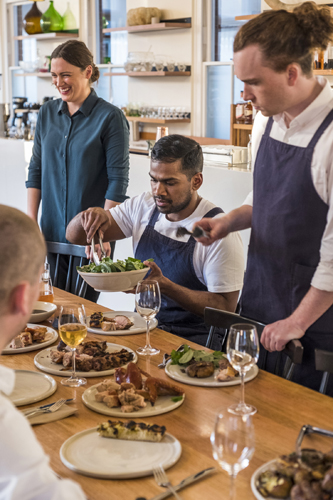
As the final paying guests wind up their long lunch at Tasmania’s Agrarian Kitchen Eatery, the chefs are already preparing for the staff meal that follows. Head chef Stephen Peak and his team are grilling locally found guinea fowl over coals and roasting rooster in the open kitchen.
The late-afternoon meal is shared by staff at the restaurant, which is set in a historic former mental asylum north of Hobart. It is frequently an opportunity for ingredients and dishes to be trialled alongside new wine that is about to be added to the wine list.
But the staff meal here is much more than a tasting. “Eating together goes a long way to helping create the right mentality and building team spirit,” says co-founder Rodney Dunn. With the last rays of sunshine streaming through large windows, the team sit down to enjoy an unpretentious meal. A selection of natural wine accompanies the feast but the free-flowing conversation suggests that the group require little excuse to chat and joke with one another.
The menu:
To eat: Guinea fowl and rooster with roasted potatoes; broad-bean leaf salad with goat’s cheese; and house-baked focaccia.
To drink: Selection of natural wine.
Cobe – Copenhagen
Opening the door to meet the neighbours.
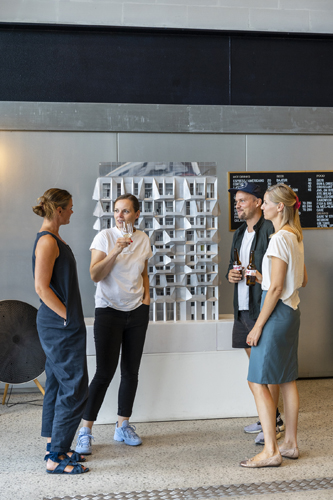
Having embarked on the mammoth task of creating a masterplan for Copenhagen’s Nordhavn district, architecture studio Cobe decided to move its 150-strong office there to see how its vision is taking shape. Transforming the reception of its headquarters into a lively social space felt like a logical step. “We decided to do what we’re trying to make everyone else do: open the door to the neighbourhood,” says founder Dan Stubbergaard.
Throughout the week residents and architects gather around an oak table for informal meetings, snacks and strong coffee; on Fridays, after-work drinks sometimes develop into impromptu parties. Visitors can inspect intricate models of Cobe’s latest projects, peruse specialist publications or buy posters and planters for their homes. “It feels great to create such a space,” says Stubbergaard. “People are dropping by and smiling at me when I arrive at and leave the office.”
The menu:
To eat: Pastries, smørrebrød and skyr.
To drink: Coffee, lemonade, craft beer and wine.
Here Design – London
Putting the products it creates to good use.
Much of what east London-based graphic-design studio Here Design does is about food. From packaging to branding, the team have worked on projects for the likes of restaurant Palomar and chef Yotam Ottolenghi’s dining spot Nopi. So it seems natural that lunch here should be a big deal.
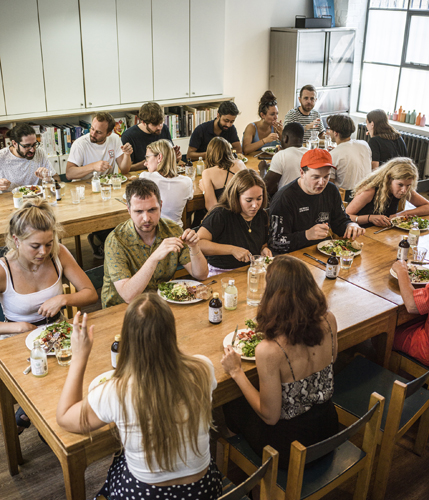
The company’s ground-floor kitchen is used daily but every Friday it hosts a company-wide banquet cooked by a rotating roster of colleagues. The tradition began in 2006 during the early stages of the agency’s existence, when the three founders worked at partner Caz Hildebrand’s house. But as the business grew and moved to London Fields, a hip and foodie neighbourhood, the habit endured.
Catering for 40 people is no easy feat but doesn’t seem to be a chore. “This is my favourite thing about the job,” says senior project manager Olivia Rawlinson. A budget of £175 (€190) per meal goes a long way. Whether inspired by one of the recipe books the team have designed or a celebration in a staff member’s home country, menus change constantly; there have even been Midsommar and Thanksgiving-themed Fridays.
The menu:
To eat: Tomato, onion and sumac salad; cucumber and lamb’s lettuce salad; baked rice with pomegranate seeds, walnuts, olives, feta and pomegranate molasses; lentil, rocket and fennel salad; burrata and pesto; edamame-and-pea hummus; classic hummus; and bread.
To drink: LA Brewery Kombucha.
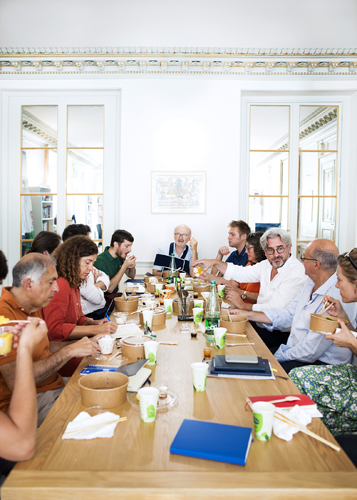
Le 1 – Paris
From the dining table to the front page.
Every Monday the team behind French weekly newspaper Le 1 make a point of gathering around a table to share lunch. Together with retired journalists, correspondents who have returned from the frontline, poets and illustrators, they discuss the themes of upcoming issues to ensure that the coverage is as impartial as possible. “It was hard for us at the beginning but we knew we had to talk to people outside mainstream media, otherwise we’d be heading in the same direction as everyone else,” says artistic director Natalie Thiriez.
The grand feel of this Parisian flat in Pigalle might evoke images of bourgeois liquid lunches but don’t be fooled: the days of knocking back wine on a deadline – and in between – are long gone. That said, Thiriez does have fond memories of the staff canteen at Paris Match. “We prefer something healthier now – and we drink water.”
The menu:
To eat: Korean salad bowl with a choice of salmon, chicken or tofu.
For dessert: fruit salad and matcha cheesecake.
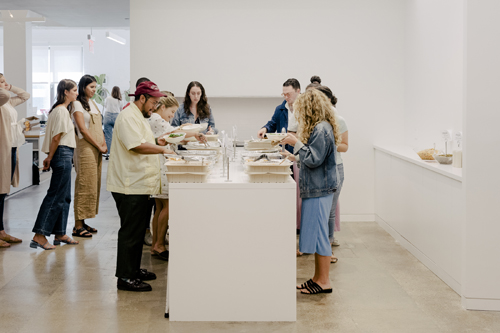
Warby Parker – New York
Weekly lunch reflects eyewear firm’s vision.
In 2010, Warby Parker shattered the eyewear industry. The company, which began by selling affordable glasses online, was among the pioneers of the then fledgling direct-to-consumer retail model. Today it has more than 90 shops and, earlier this year, the company was said to be valued at $1.7bn (€1.5bn).
Despite the firm’s growth – it now employs more than 2,000 people – eating together remains a part of life at its Manhattan headquarters. Every Tuesday the company has a meal catered for its staff. Larger headquarters often have their own canteens but they can come at a cost, preventing investment in businesses on the doorstep. But Warby Parker partners with nearby restaurants to devise its menus. When we visit, the food comes courtesy of Inday, Basu Ratnam’s Indian restaurant. Judging by the calm, convivial atmosphere, it has the recipe for staff satisfaction.
The menu:
To eat: Charred chicken curry; chicken-and-turkey meatballs; miso salmon; falafel; cauliflower rice; basmati rice; quinoa; sweet potatoes; yoga lentils; salad with lemon, turmeric and vinaigrette; and corn salsa.
Back to school
So you want to start your own business and feel like you should go back to school for a bit first? The $1,000 question (literally) for many is: do you shell out for an MBA? While a formal business degree sounds impressive, opinion is split on whether it’s worth the money and there are a plethora of more tailored alternatives out there. If you’ve ever thought of starting a bakery, a furniture company or, well, any company at all, read on for a lesson from the schools that are giving you the tools to succeed at a fraction of the cost.
1.
Jolt
UK & Israel
Founded: 2006
Teaches: Finance, economics and marketing
Cost: £175 to £295 (€190 to €325) per month depending on number of classes
Best for: Anyone who wants to understand the nitty gritty business side of start-ups
It’s 21.00 in the basement of a co-working space in London’s Soho and author and executive coach Bill Jensen is giving out homework to his Jolt class. Sitting around a long wooden table, eight students scribble their assignment down in branded purple notebooks. “Find a disruptive hero mentor,” says Jensen over a video link. Someone “who breaks the rules faster than you do”.
Founded in 2006 by CEO Roei Deutsch, Jolt is an Israeli education technology start-up that earlier this year opened two locations in London. It bills itself as a business school for self-made people, offering an alternative to MBAs for the next generation of aspiring founders. “The workforce and learning need to go hand in hand,” says Nitzan Cohen Arazi, Jolt’s co-founder and chief revenue officer. “Learning should become a habit.”
Rather than pay tuition, students pay a monthly membership of between £175 and £295 (€190 and €325) for immersive classes at the London campuses. The company says that the whole programme should not cost more than £5,000 (€5,500) – a fraction of the price of a traditional business degree.
Attendees have already gone on to start businesses: current Jolt student Lotus Qi recently started Nishani, a sustainable office-clothes label for women. Qi started taking classes while she was still working at an ad agency. Jolts, which range from 90-minute sessions to longer mini-courses, are designed to fit around full-time jobs.
“When you start out as an entrepreneur you have to be jack of all trades,” says Qi. “Jolt offers entrepreneurs the option to get a general understanding of many areas of business so you can avoid making costly mistakes.” A class on social-media growth, for example, helped her prepare her online strategy, while a session on product market fit reinforced her business plan.
“A lot of the teachers are start-up founders so when you ask them questions, they really get it,” says Qi. The role of the teacher has changed, confirms Jolt’s Arazi. “It’s no longer, ‘I know and you don’t’ but rather, ‘How do I make this relevant to you?’”
For Qi the fear of starting her own business was alleviated by the practical skills she learnt; she quit her job in July to go full time with Nishani. “It helped prepare me for the emotional roller coaster that is entrepreneurship.”
2.
École Internationale de Boulangerie
France
Founded: 2005
Teaches: Organic artisan baking, business skills
Cost: €13,500
Best for: Anyone who wants to set up their own bakery or café
In their previous lives they were bankers, pharmacists, photographers and engineers. Now, in a training centre tucked away in the mountains of Haute Provence, they are watching teacher Matthias Arbion knead pumpernickel bread dough. He rolls it into a log shape, places it in a baking tin and covers it in clingfilm to let the sourdough rise. “You’ll see the result tomorrow,” he says before telling the students to go back to their work tables and repeat the process on their own.
“We give life to something; it’s a simple but satisfying pleasure,” says Kaëlig Desaize, one of the 10 students in the room. “I no longer wanted to sit in front of a computer all day.”
Desaize used to work at a bank but like his classmates, he has decided to embark on an intensive 645-hour training programme at the École Internationale de Boulangerie, or EIDB, to equip himself with everything he needs to start his own organic artisan bakery. The numeracy skills from his banking days come in handy though because the EIDB is not your typical bakery school: one fifth of the programme is spent in the classroom, where students learn the IT, accounting and management skills needed to run a successful business.
As a result the school’s courses are rooted in the real economy. “When you learn to make a new type of bread, you can’t do so without calculating its production costs first,” says Thomas Teffri-Chambelland, the director of EIDB. “We constantly move between the business and product side of things.”
Students need no prior baking experience to come here; the only entry requirement is to have an entrepreneurial project waiting to be brought to fruition. “We never move far from a student’s initial business idea and budget,” says Teffri-Chambelland. “Our job is not to say that starting a bakery with €500 capital is impossible – instead we give students all the tools necessary forfinding a model that works really well for them.”
After the three-and-a-half-month course, which includes a six-week internship at a working bakery, students leave the school with a fully fledged business plan, complete with financial projections, market analysis and a comprehensive product range.
Since the training centre was launched in 2005 more than 100 artisanal bakeries run by EIDB alumni have opened around the world, from bread-by-bike delivery services in Geneva to bricks-and-mortar shops in Bogotá. The degree-level course is taught in French but the school also offers shorter, one-week introduction sessions in English and Spanish, as well as tailored options and off-site masterclasses, organised in conjunction with the San Francisco Baking Institute and the Estella patisserie school in Tel Aviv.
“I looked at several schools in the US and France but none offered quite the same package as the EIDB,” says Camilo Holguín, a graduate who launched the Bogotá-based panadería El Brezo in 2017. “The course gave me a 360-degree understanding of the baking business. I learnt what it means to be a baker and an entrepreneur, which is crucial in my day-to-day job.”
3.
Haystack Mountain School of Crafts
USA
Founded: 1950
Teaches: Arts and crafts
Cost: $1,500 (€1,400) for a two-week session
Best for: Anyone whose business involves a design or artistic element
An architectural marvel sits at the end of a winding coastal road on Deer Isle in Maine. Cut into the forest are 36 cedar-shingled buildings designed by modernist architect Edward Larrabee Barnes; they seem to float above the island’s lichen-and-moss covered floor, which slopes down to the Atlantic.
Haystack Mountain School of Crafts was founded in 1950 (it moved to its current location in 1961) without any set curriculum, teaching faculty or student body. Instead, every summer hundreds of students – from recent college graduates to retirees – descend on Haystack for two-week workshops in ceramics, weaving, woodworking, metalsmithing, glassblowing or printmaking. They are taught by a rotating roster of experts. “The most radical thing about this place is that its entire tenor changes every two weeks,” says Paul Sacaridiz, Haystack’s director since 2015. “It was never an attempt at a traditional school.”
When we visit, studios remain lit late at night as students finish their projects. Among them is Anna Krist, a Brooklyn-based office worker who sells her stoneware vases, jugs and planters online. “I daydream about doing pottery full time and I came to Haystack almost as a test,” she says. “If I have the ability to do nothing but this for two weeks, will I still want to do it? Will it still feel special?” The answer is a resounding yes, although striking out on her own remains an aspiration.
For more seasoned artists and craftspeople, two weeks of uninterrupted studio time is a gift. “In Chicago I’m getting pinged all day by my cell phone; I’m never fully locked into what I’m making,” says Dee Clements, a textile artist. Clements founded Studio Herron in 2010, making fashion accessories and home goods for clients such as retailer CB2 and Chicago’s Freehand hotel. But by 2017 she was feeling stuck in a rut. She came to Haystack to teach a class on rug weaving and ended up experimenting in its digital-fabrication lab and woodworking studio. “My whole practice changed at Haystack; it was an incubator for my ideas,” she says.
Many of the US’s most important craftspeople have come through Haystack; some as students, some as teachers, many as both. Among them are weaver Anni Albers, glass artist Dale Chihuly and ceramicist Toshiko Takaezu. It is a place where the rigidity of academic institutions dissolves, which is just as crucial for artists as it is for entrepreneurs.
In recent years school director Sacaridiz has seen a pattern at Haystack: more craftspeople are taking intensive workshops in place of attending graduate school, where a year’s tuition can cost about $50,000 (€45,500). By contrast Haystack’s sessions are a more affordable $1,500 (€1,400) and more than 150 scholarships are available. “For a lot of people, Haystack represents a possible next step,” says Sacaridiz.
How do you run a business school?
Frederico Contente opened the Portugal-based Steer school earlier this year to teach people how to become self-employed traders and regain control of their working schedule. Students can attend either a five-month programme or a week-long immersion course. Contente has been refining the idea for several years; here are his tips for running a successful business school.
1.
Create a programme that reflects your values.
“I truly believe in our courses. From the content – which reflects the best of all that I’ve learnt in my career – to the teachers we work with and the way we schedule the programme.”
2.
Invest in the best staff.
“We don’t cut costs on our teaching staff and only work with people who live what they teach. All our teachers make a living from their speciality.”
3.
Be ready to adapt to what students need.
“We can teach in Portuguese, English or Spanish and we are flexible in how we deliver the programme to make sure it works for students.”
4.
Think beyond the core programme.
“We teach trading techniques but also psychology. It’s not just about making money, it’s about encouraging students to understand themselves and their aims in life.”
5.
Location, location, location.
“We vary the locations of our short courses to cater for people who also want a holiday and structure the programme to give plenty of free time. They can learn something new and discover a beautiful part of Portugal at the same time.”
20 Ideas to steal
1.
Meat Alternatives
Yenn Wong
Founder, hospitality company JIA Group
“I would invest in alternative protein or ‘clean’ meat. Though I’m not a vegetarian, the environmental impact caused by beef and other meat production is a problem too big to ignore. We are seeing more and more customers who are reducing their meat intake for health and sustainability reasons. I foresee this space growing exponentially in the next five to 10 years.”
2.
Supply-Chain Logistics
Molly Goddard
Co-founder, sleepwear brand Desmond & Dempsey
“We need modern communication tools between factories and e-commerce brands. I would invest in developing the systems that automate the ordering and manufacturing process, giving clear visibility on data and order statuses for both ends. If we can cut out all the back and forth in between placing orders and determining volumes, the whole process could become a lot more efficient.”
3.
Sport-Tech Start-Ups
Matt Taylor
CEO and co-founder, running-wear company Tracksmith
“I’ve recently been mentoring a handful of companies in the Techstars Sports Accelerator, based in Indianapolis. The process has really taken me back to the early days of Tracksmith: the excitement, the hope, the doubts. I’ll never forget how much of an impact it had to have people believe in my dream. I’d disperse my investment across a handful of these start-ups in the sports technology space. Those kinds of early investments can make a meaningful difference in getting some diverse entrepreneurs and great ideas off the ground.”
4.
Sustainable Initiatives
Taco Carlier
Co-founder, high-end bike company VanMoof
“There is only one place left to invest and that’s sustainability projects. I personally would invest in Follow This. It’s an organisation that buys Shell shares in order to change it into a sustainable company from the inside out. We need to get rid of the carbon economy as soon as possible.”
5.
Vintage Cars
Alain Marhic
CEO and founder, watchmaker March Lab
“I’d invest in a green Porsche 911 Targa from 1969. Porsche cars may be the best investment these days as vintage editions have a fast-growing price. That would combine pleasure and investment: the perfect match.”
6.
Cryptocurrencies
Andrew Peek
Co-founder,Toronto’s The Annex Hotel
“With the world approaching another era of quantitative easing I’m not sure I can put much faith in anything that isn’t an alternative to global currencies at this point. If you’re not comfortable with crypto then I would lean towards gold. That said, cryptocurrencies have many properties that make them a better store of value. If you can find a solid operation – look for experienced investors with deep networks in tech – then you’re likely to see greater upside.”
7.
Cannabis 2.0
Rebekah Hall
CEO and founder, soft drinks brand Botanic Lab
“I see cannabis as one of those once-in-a-lifetime industries; it’s much more than a trend. The heritage and history of cannabis, and intertwined societal stories, combined with the broad spectrum of recreational and therapeutic uses, make it a unique investment opportunity. My personal interest – and where I would invest – is in the branded end of the spectrum, where there is the opportunity to create cannabis 2.0 for the 21st century.”
8.
Authentic Brands
Simon Mottram
CEO and founder, cycle-wear brand Rapha
“Brands that go deep with a niche audience will have the authenticity and focus to win in the long run. Some of my current favourites that fit the bill are Noble Rot for wine drinkers, Glossier for cosmetics and Aesop for beauty products. If the purpose of the investment is to catch a wave and get a quick return I would look at any business that’s early into using cbd oils. If that’s too racy then men’s skincare is definitely having a ‘thing’.”
9.
Children’s Education
Ronald Akili
CEO, lifestyle and hospitality group Potato Head Family
“I would invest in a children’s camp based around instilling a sense of ownership in the environment. Using interesting and interactive sustainable design, the camp’s purpose would be to subtly ingrain mindful practices and sustainable thinking so that the children develop into environmentally conscious adults. Ultimately, if we invest in inspiring the next generation to be better than we are today, that is where the fundamental change that will protect our planet will come from.”
10.
Art
Boris Veldhuijzen van Zanten
CEO and co-founder, media and conference firm The Next Web
“Just like it made more sense to invest in bubble wrap when e-commerce took off, or shovels during the Gold Rush, my strategy is to look for what happens on the side of the current tech wave. I see potential in everything that’s the opposite of technology. The more we’re digitally connected, the more we’ll want to find a balance and complement our digital lives with analogue things. So invest in art – the more human, organic and random the better. Art will bring balance to the world.”
11.
Food That Travels
Tom Marchant
Co-founder and owner, The Black Tomato Group
“The ability to eat healthily – be it passing through airports or train stations, or actually on planes and trains – is abysmal. I would invest in businesses that create genuinely attractive, high-quality and healthy meals that have a long shelf life, making them ideal to be stored and taken on longer journeys. The consumer is becoming more discerning and health-focused so the interest and opportunity in this area will grow and grow.”
12.
Design
Isabelle Dubern
Co-founder, furniture website The Invisible Collection
“We have noticed a shift in the perception of collectible design over the past few years, with people investing heavily in particular designers, eras of design (ie, mid-century) and iconic pieces, such as Pierre Yovanovitch’s Asymétrie chair. These icons of design have been retaining value and continue to be in demand globally. If I had to invest I’d be looking at pieces like José Zanine Caldas’s iconic ZC desk, designed in the 1950s; or, in contrast, a piece by Jeremy Maxwell Wintrebert, a rising young star who freehand-blows the most unique glass lighting.”
13.
Environmental Clean-Ups
Tony Papas
Co-founder, roastery chain Allpress Espresso
“I would invest in support of a campaign to clean the region where I live in southern Italy. Puglia has recognised it has a problem with the disposal of rubbish and the pollution of its beaches and landscape with plastic. As a citizen of the region I believe that a little bit of awareness could turn this dire problem around. Funding a carefully planned campaign may well make Puglia pristine again and set an example to other regions, or indeed other countries, on how to clean up their acts.”
14.
Isolation
Patrick Grant
Creative director,menswear line E Tautz
“A croft in the Scottish Highlands. Solitude and self-reliance might well be the only sane life choice.”
15.
Books
Carla Sozzani
Founder, concept shop 10 Corso Como
“I would invest in publishing. It is still an integral part of my life and something I continue to enjoy doing and sharing in a variety of ways. With a book, everything in your hand is there to present sensations of beauty and harmony through the touch of paper and the smell of ink. Books were supposed to die. They haven’t. They continue to grow because people still want them.”
16.
Independent Companies
Prue Freeman
Director, London-based café chain Daisy Green
“I would back independent businesses. There are some really interesting opportunities in our space, from artisan non-alcoholic spirits to thoughtful companies promoting more ethical sourcing and sustainability with the future in mind. There is definitely an opportunity to back some fantastic people who can really deliver change on a grander scale, which is especially important in light of the ever-increasing demand for transparency in supply chains.”
17.
Influential Science
Ara Katz
Co-founder and co-CEO, consumer health company Seed
“When I invest I define ROI as not just a return on investment but a ‘return on impact’. I would invest in synthetic biology, microbial technologies, ethics-based artificial intelligence and women’s health. Essentially, technologies and solutions that offer sustainable models and that have downstream impact beyond their direct customers or users.”
18.
Sustainable Clothes
Josh Wyatt
CEO, co-working space provider NeueHouse
“As a CEO I feel that we have a responsibility to put our corporate and personal dollars behind brands and products that address climate change and sustainability issues. I would invest in clothing brands and manufacturers that are integrating sustainability principles into their business strategies. Modern Meadow, Yatay, Bode and other entrepreneurs in this space should be rewarded with capital.”
19.
Local Artists
Petra Barran
Founder, street-food company incubator Kerb
“I would invest in some of the incredible homegrown talent coming out of New Orleans right now. New Orleans generated $9bn in cultural sales last year but the ones who create the juice that keeps its flavour flowing don’t see the benefit, and are instead used as wallpaper to sell the city. My money would go towards the collective House of the Young, which is creating content that takes back the narrative, empowers local artists and builds cultural and financial capital from within.”
20.
Better Funding Models
Kshama Fernandes
CEO, microfinancing company Northern Arc
“I would like to invest in a VC fund that promotes unusual pursuits that may not create immediate wealth but could eventually leave us richer. It’s not a new concept. Indian kings were known for promoting sculptors and musicians who got a dependable livelihood but the work itself belonged to the kings. European explorers enjoyed the patronage of royal houses that financed their ocean expeditions. We need ambitious venture capital that has a longer fund life and a wider investment thesis that goes beyond the obvious.”
The name game
First, a confession. I recently became the last person in the world to realise that The Beatles is a pun. It’s a weird one but I just never cottoned on to its incorporation of “beat”. It’s a revelation all the more embarrassing given that it’s my job to identify and understand the intricacies and subtleties of what makes a great name. Having come to terms with my mistake, I have decided that it represents something more than humble absentmindedness: it tells us something rather interesting about naming.
I would wager that most people don’t notice the finer points of a brand name. They won’t care where the words came from and they won’t think about etymology, mythology, psychology or any other ’ology that served as inspiration for the name. Does anyone (who isn’t Danish) know that Lego means “play well” or that Uniqlo is a portmanteau of unique and clothes? Does anyone out there really care that Nike is the Greek goddess of victory or that Ikea is an acronym of Ingvar Kamprad (its founder), Elmtaryd (the farm where he lived) and Agunnaryd (the village he grew up in)? Some will probably be able to tell you that Coca-Cola comes from coca leaves and cola berries but fewer will know that Pepsi gets its name from dyspepsia – another word for indigestion.
Yet the origin of these names is important. Along with market positioning and communicating the brand’s narrative and values, they create the cohesive story that serves as a foundation for all future work. Beyond that small matter, they also help staff understand the organisation’s culture, history and vision for the future. So when it comes to naming your business, you need to know that your name can do two things: attract attention and give you space to grow. A good place to start is to lay out all the names of the brands in your sector and look for the gap in the market. Branding is about telling a story that nobody else is; if everyone is calling themselves Something & Something, why not call yourself The Something Company? At this point, if you want a name that lasts, you’ll need to consider the trickier part: instilling your name with meaning.
We humans invest an awful lot in names. Whether it’s your beloved Italian greyhound, trusty fold-up bicycle or favourite kitchen succulent, assigning personality to things both living and inanimate comes naturally to us. So, naturally, the names of the brands we choose must hit the right notes.
Generally we want to feel a sense of honesty and integrity; that there is a certain provenance and an understanding of a wider purpose. Choosing something descriptive and straightforward might reduce your marketing budget in the short-term but, alternatively, that heavily marketed abstract name could help you build a brand that people remember. The name will influence the life and success of a business. Getting it wrong could leave you open to ridicule or as Peter York, co-author of The Official Sloane Ranger Handbook, says, “You don’t want your brand to get into the national joke factory.”
Naming a business is an emotional and financial investment, which is why trying to decide on a name can induce a form of business-halting paralysis. Perhaps it’s best to take inspiration from some of the biggest names in business. Jeff Bezos decided against calling his online retailer Cadabra and instead chose Amazon as it was closer to the beginning of the alphabet; Apple was named after Steve Jobs came back from a trip to an apple farm; and Häagen-Dazs was a name made up in 1961 by its founders to convey old-world tradition and craft. So there really aren’t any limitations apart from your imagination and ability to convince your colleagues of a name’s merits. But tread carefully: for every industry-defining winner, there’s a Thai Tanic (restaurant), Analtech (pharmaceutical company) and Big Beaver Stump Grinding (by all accounts a highly rated tree removal service in Massachusetts) waiting in the wings.
Today you need look no further than the adverts on your city’s metro carriage for the emerging moves in naming. Where space is cheap and visibility high, start-ups and those without asteroid-sized budgets can get some healthy exposure. On the London Underground the current tendency is for made-up words and a cavalier approach to spelling. That’s all very well as a way of guaranteeing domain space online but trends are fleeting and most of us remember words we can say – and spell.
Two bits of advice to leave you with. First, objectivity is your friend. Second, keep a naming brief to check back on. But the general rule is: if it feels right, it probably is. And if you change your mind you can always rename it. After all, Google was originally called BackRub; there’s hope for us all. Now what did you say your name was?
About the writer:
Yeoman is a writer, strategist and head of copy at Winkreative, Monocle’s sister design agency.
Golden rules of naming:
1.
Start wild
There will be time for safe ideas later so cut loose and go on a creative safari. At this point every idea should be welcomed, no matter how whacky.
2.
Head down the rabbit hole
You’re only ever one idea away from your Apple, Orange or BlackBerry so explore the fruit section at your supermarket. And don’t forget to have a read of that Old Norse dictionary. You never know where the perfect words might appear from.
3.
The eureka moment is rare
Good names can be slow burners. Don’t decide too quickly: the right name will often need time to percolate.
4.
Be lucky for more than just some
Sure, you want to be big in China but have you picked a number or a colour as part of your name? If so you should be sure to have a leaf through those numerous resources devoted to Chinese mythology to learn about what is lucky – and what is not so lucky.
5.
Beware grandma’s cat syndrome
Remember Iris, the angry half-Siamese that used to scratch your hand off every Christmas? Chances are that Iris isn’t a name you’re ever going to warm to. Everyone has objections to names based on personal experience so bear that in mind when discussing a newly minted one.
6.
Check before you buy
People get excited about names. They fall in love and they can’t move on. But make sure your name isn’t taken by an Indonesian telecoms giant. You’ll be disappointed and – even worse – you’ll have raised the bar for the next idea.
7.
Trends don’t last
Don’t plump for a name that fits the latest fashion if you want it to age gracefully. Name for keeps.
8.
Don’t box yourself in
Always choose a name that allows for an expanded business, service or product line. At one end of the scale you have overly descriptive names; at the other are the empty vessels. The best ones often lie in the middle.
9.
Don’t worry about URL availability
Modified urls can work just as well. It’s sometimes helpful to split naming ideas into types or constructs so that you’re ticking all boxes: abstract, simplistic and descriptive.
10.
If in doubt, make it up
This is generally a good idea if done with care. The trick is to take a word with positive associations that are relevant to your business then change a letter or two – and bingo. Or Bipgo. See? Easy.
Get a move on
1.
Annecy
“There’s room for everything here,” says Julien Latil, sitting on the terrace of his coffee shop Brumes. Whether he is referring to the dozens of small-batch coffees on sale at his café or to the many shops lining the streets of Annecy is unclear – but he probably means both.
Business in this French alpine town is thriving, with traditional Savoyard restaurants and ski-wear shops rubbing up against smart brunch spots and design-focused concept stores. “People in Annecy have a certain buying power,” says Latil, a reference to the many commuters living on Swiss salaries. “When I started out three years ago there was already a growing demand for niche products.”
Annecy is now home to a crop of handsome businesses that wouldn’t look out of place in much larger European cities – often because they are run by ex-Parisian or Lyonnais owners who moved here to find a better life at a lower cost and slower pace. “We came to Annecy for a weekend because we were looking to relocate and start a restaurant,” says Jérôme Bigot, a Parisian-born painter-turned-chef who runs restaurant Kamouraska with his Québécoise wife Marie-Hélène. “My wife was drawn to the lake, the mountains and the climate, which reminded her of Canada. And when we saw an artist’s studio for sale behind the cathedral, we knew that if we didn’t do it, someone else would move here and do what we always wanted to do.”
Three years ago the tiny alley that Kamouraska sits on had no other shops. These days its neighbours include a good florist and a zero-waste lunch canteen, also owned by Bigot. Luckily, being just off the main tourist drag has helped commercial rents remain well below the monthly city-wide average of €3,750 per 100 sq m. Similarly, residential rental prices generally drop by a quarter just a 10-minute cycle ride from the Alpine-style houses of the pretty Old Town.
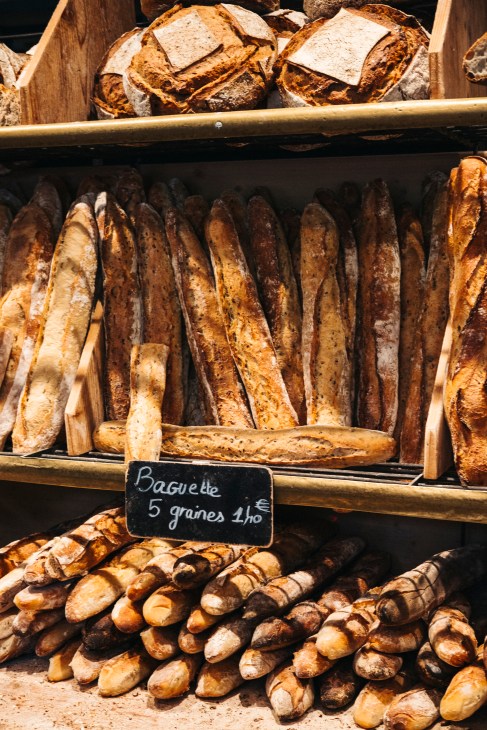
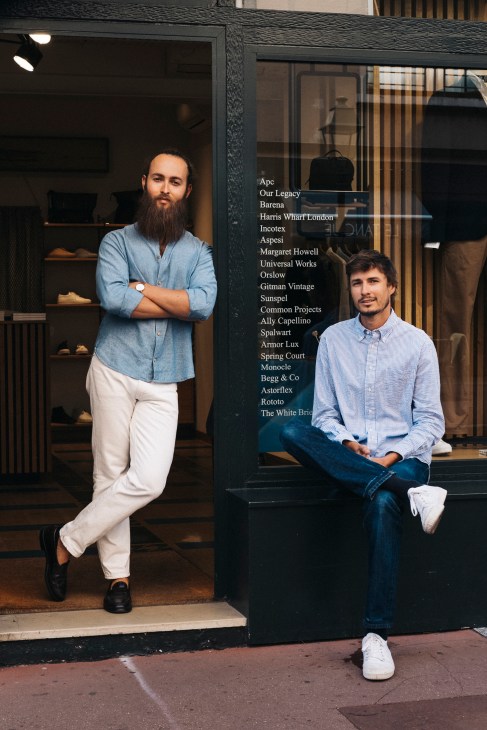
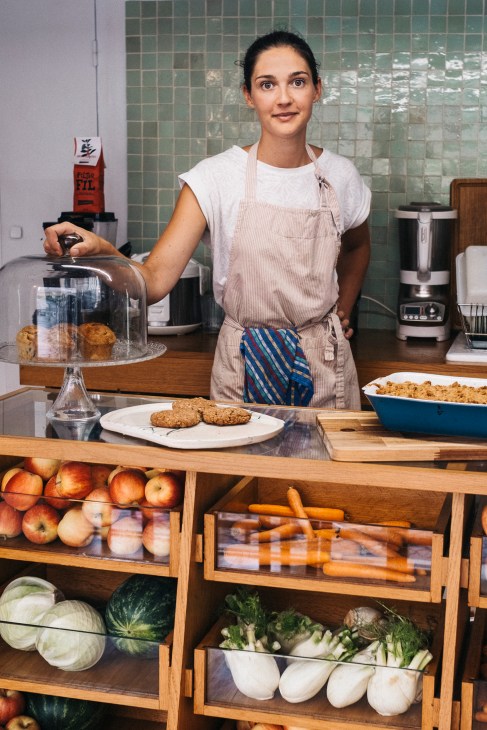
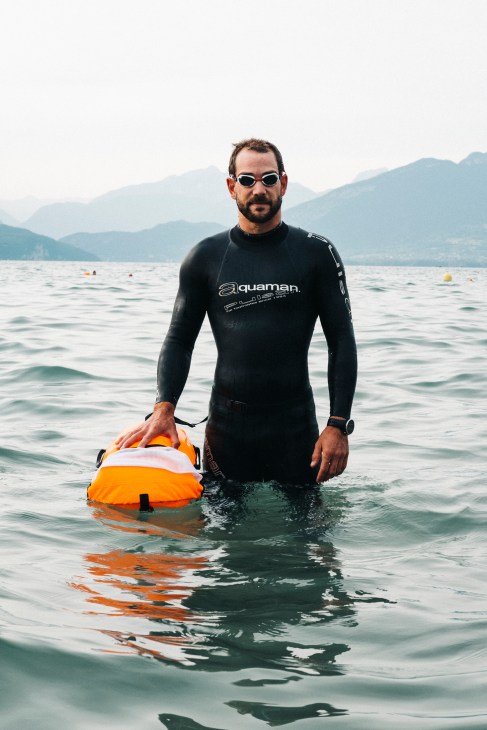
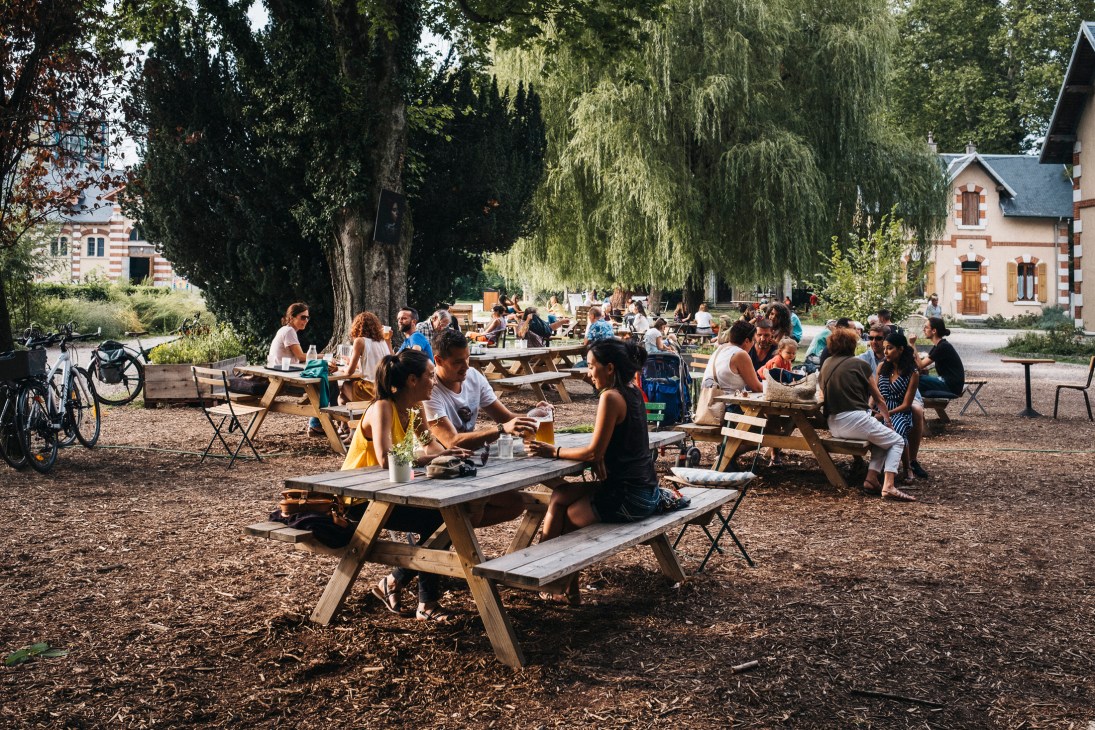
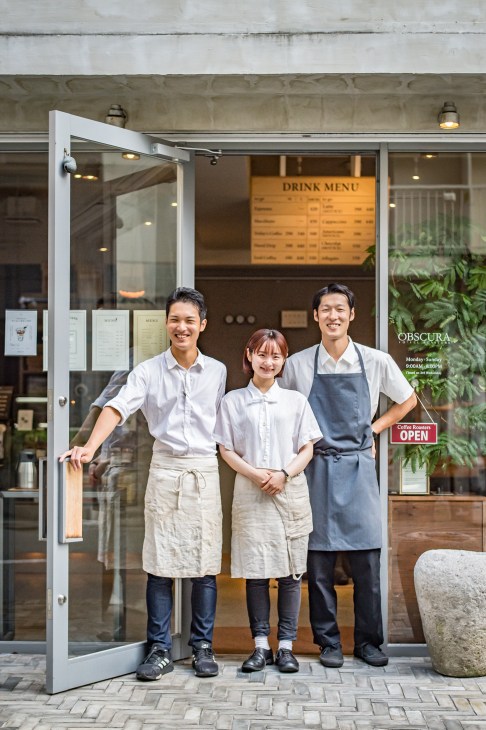
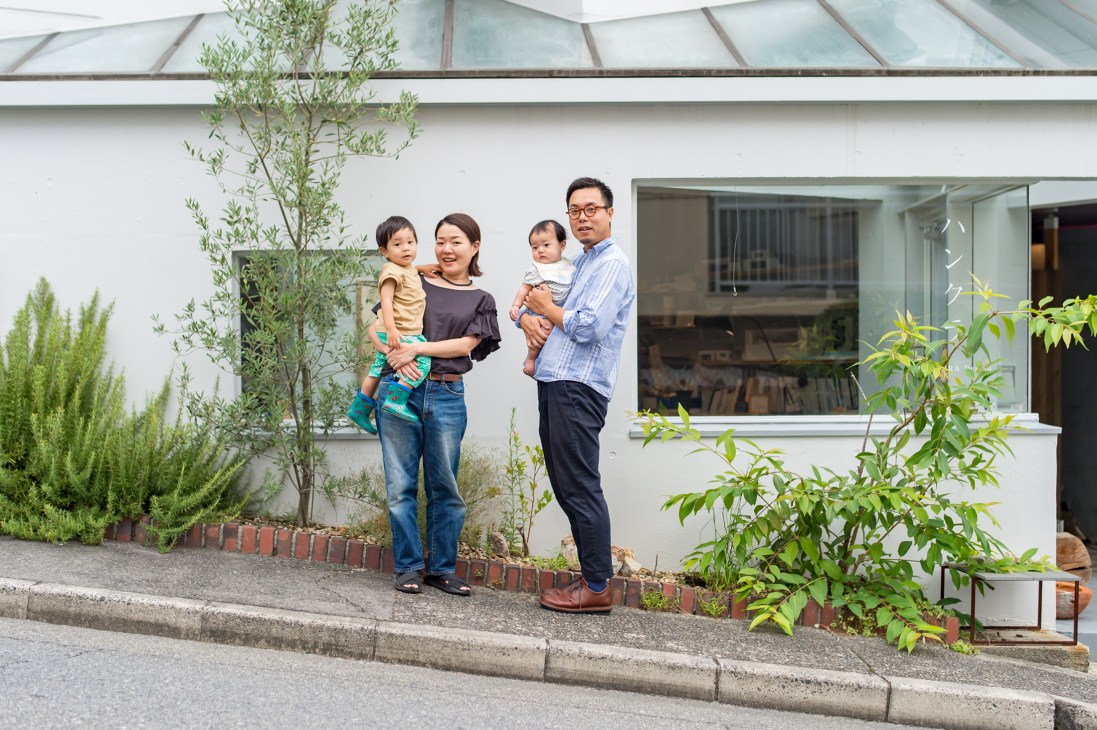
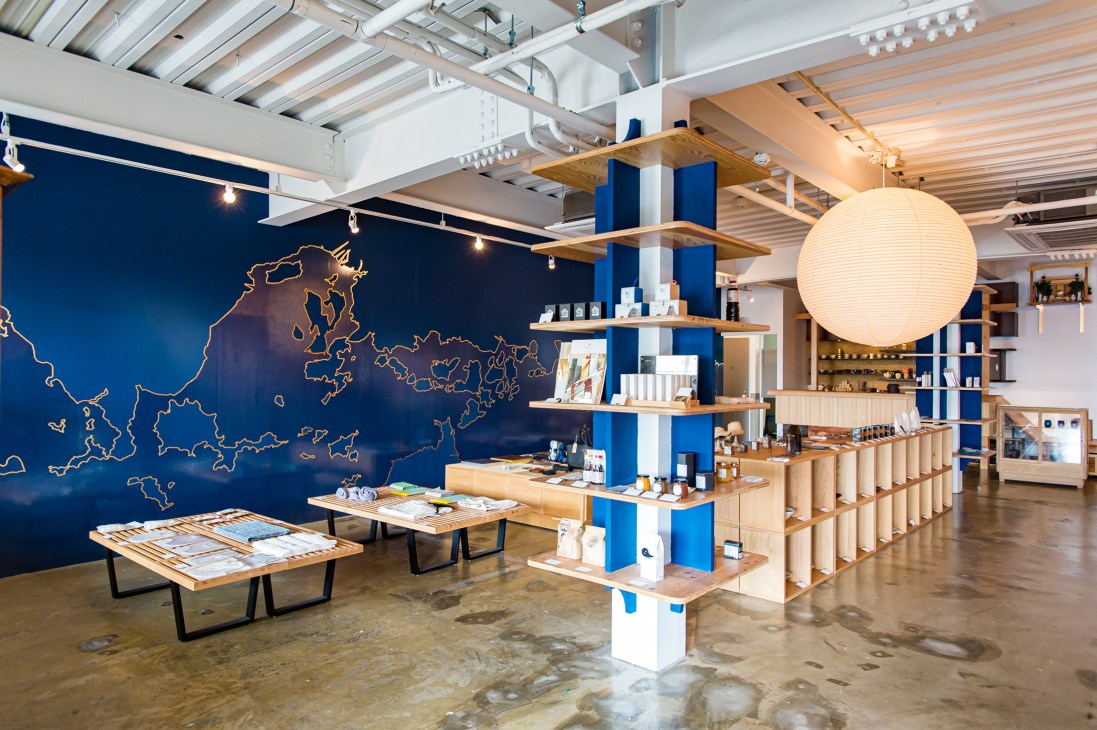

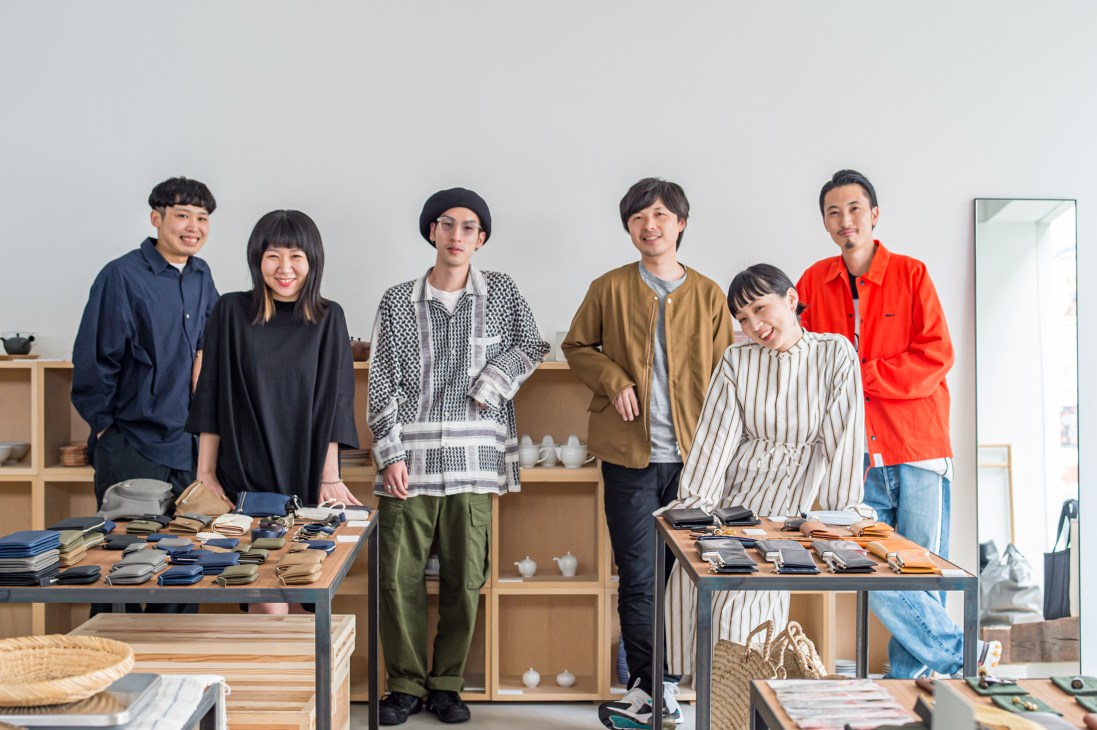
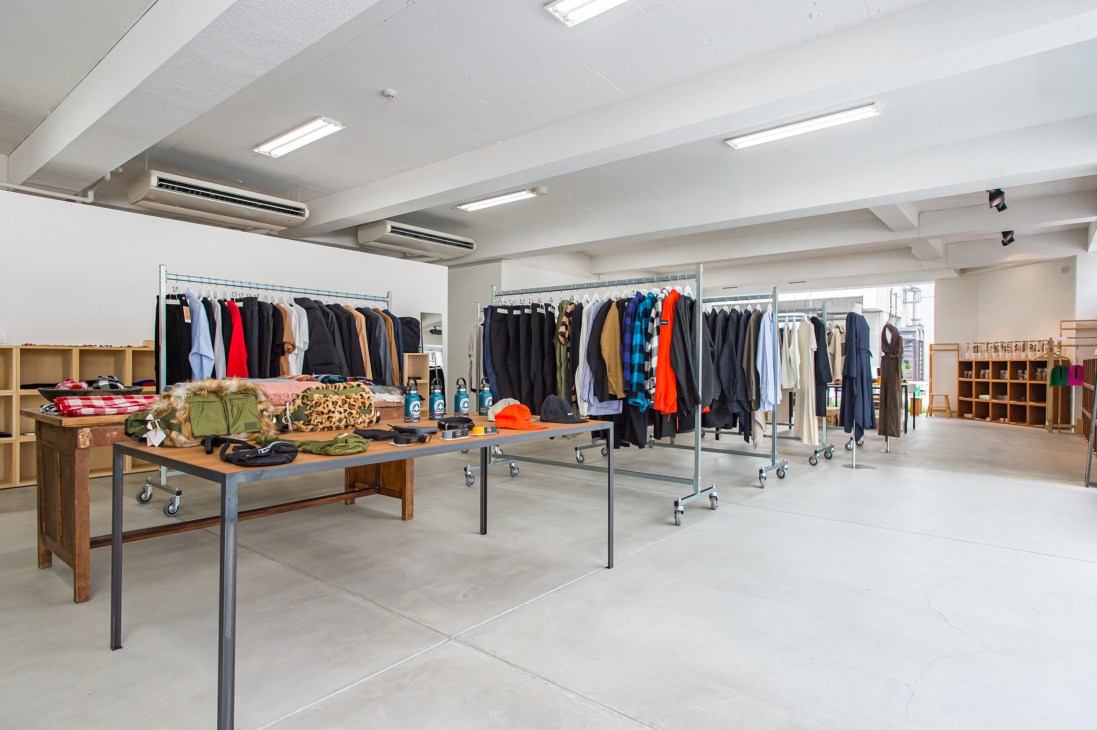
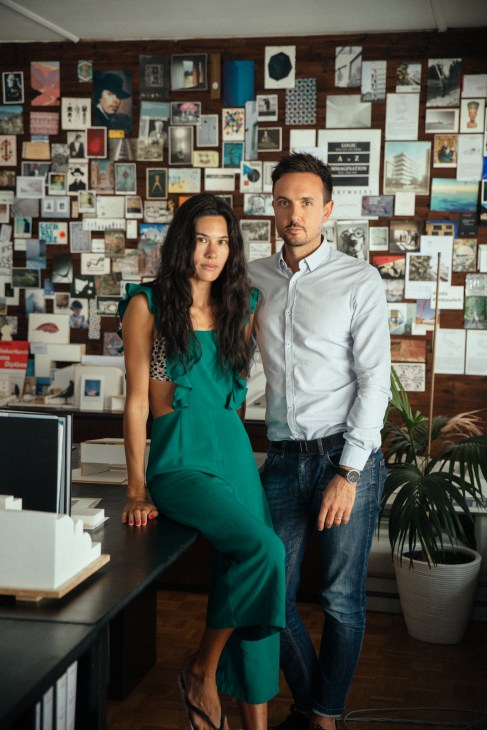

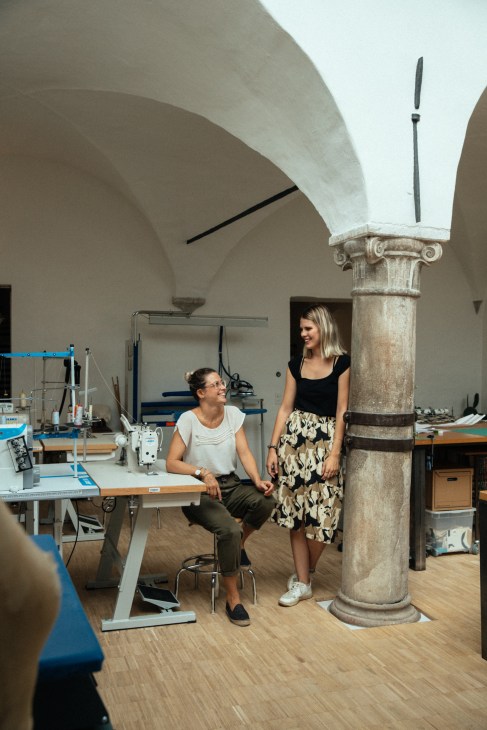
Then there’s the option for business owners to enjoy the great outdoors during working hours, such as a lunchtime picnic by the town’s lake. Commuting to Switzerland for higher pay is still popular but more and more often, residents are choosing to work in Annecy instead of spending hours in traffic on the motorway to and from Geneva every day.
“I can take my bike and go cycling in the mountains before starting work,” says Germain Reinier, an Annecy native and the owner of menswear shop St Germain. “Annecy is a good compromise between city and nature.”
The wood-and-metal shelves in Reinier’s well-appointed shop are filled with Margaret Howell workwear jackets, Common Projects trainers and Ally Capellino backpacks, reflecting this mix of city and country living that the town embodies.
Annecy also boasts a decent cultural calendar, fuelled by an annual animated-film festival. Alice de Montalivet came here from Paris this spring to work for the festival. “Considering the size of the city there are so many cultural activities,” she says, gesturing to the nearby Haras building, a space for temporary exhibitions that will undergo extensive renovations from 2020 to house a film centre, galleries and a food hall.
“A lot of people are moving to Annecy after stints in Paris or abroad, realising that life here is sweet. Besides, Geneva airport is not far away,” she adds with a smile. “If you want you can be on a plane to see something different in almost no time.”
Why it works
With strong links to Switzerland and Geneva, this overlooked corner of France has a more buoyant economy than might be expected. That, paired with reasonable rents and a small city centre, has created the perfect storm for a growth in independent shops and new businesses. Thanks to a booming cultural sector and the Alps being on their doorstep, residents are never bored.
Starting out
Population: 130,250
Average residential rent: €850/month for a 50 sq m flat in the Old Town
Average salary: €3,500 per month
Nearest airport: Geneva serves 49 international destinations
Time needed to register a new business: About 4 working days
2.
Hiroshima
From the window of his second-floor office in downtown Hiroshima, Kengo Nakamoto has a view of the spot that put his city’s fashion-retail sector on the map. Six years ago in Fukuromachi Park, Nakamoto organised a two-day open-air market called Trunk that brought together fashion and stationery brands, chefs, coffee roasters, architects and record shops. It was a pivotal moment for an area that had previously been best known for its multilevel carparks.
“A decade ago nobody wanted to touch this neighbourhood,” says Nakamoto, who moved Ref, the first of seven clothing and lifestyle shops, to this low-rise area of overhead power lines and narrow streets in 2008. “People from this region used to travel to other cities to shop. We changed that by building a street-level retail culture here.”
The Trunk Market is now a biannual event with 60 stalls that attract crowds of more than 20,000. Its success helped Nakamoto persuade APC, Undefeated, Atmos, The North Face, Patagonia and others to open shops near the park.
Hiroshima is an outlier. It’s far from Tokyo – four hours on the Shinkansen – and the nearest major international airport (Kansai, near Osaka) is a three-hour train ride away. Perched on a delta that empties into the Seto Inland Sea, the city has a population just shy of 1.2 million. Its lack of density makes it manageable and everything moves slowly: the old-fashioned trams, the traffic, the pedestrians. The buildings could use a spruce up, the riverbanks are a little overgrown and even the okonomiyaki (Japanese pancakes) – Hiroshima’s soul food – are a messy hodgepodge. Yet these qualities lend charm to a place that sees no need for breakneck development. This – and its history (it’s one of two cities on which the US dropped an atomic bomb) – is what 13 million visitors come for each year. Entrepreneurs looking to get a start in the hospitality business couldn’t ask for a better set-up.
Two such people are Toshiyuki Ochi and his business partner Keiichi Moto, who set up shop and restaurant Engawa a year ago in a former warehouse in the city’s busy industrial port. Ochi, who has a construction business, and Moto, a professional photographer, have done wonders with just ¥2m (€17,000) in low-interest public loans and funding from banks, creating an elegant space of private tatami-mat rooms and wooden furniture. “We are targeting people who are looking to discover something new,” says Moto. To fill the shop they scoured the region for little-known artists and brands and picked their favourites: knitted scarves, sun-dried soba noodles, ceramic bowls, green tea and honey. “We wanted everything to fit the lifestyle, terrain and climate of the islands and the towns bordering the Seto Inland Sea,” says Moto. “People from all over the world come to Hiroshima. Its port is the gateway to the inland sea region. We are trying to connect the two.”
Elsewhere, in the city’s northern foothills, live Masafumi and Sumire Shimatani, the founders of Hankura Design. They got together at university but only decided to launch their own business in 2013 after a decade of working for others. Their four-person operation has produced many handsome shops and restaurants, coffee kiosks and homes around the region.
The Shimatanis are about as rooted here as anyone you’ll find. Masafumi, from nearby Onomichi, has never been abroad and doesn’t have a passport, while Sumire is a Hiroshima native. For them this is a dream location. “It’s convenient to work on projects almost anywhere in Japan’s western region,” says Sumire. It’s also a great place to be an architect thanks to 560,000 hectares of cypress, cedar and red-pine forests and some of the country’s most skilled carpenters, woodworkers and furniture makers.
The Shimatanis laud Hiroshima’s efforts to support entrepreneurs with subsidies and a downtown office with a library, workspace and printing machines, plus a backroom for seminars. But what they really want is somewhere to meet other young creatives and urban thinkers. They’ve created a proposal for a private lounge that will be part of a downtown hospital-cum-hotel renovation project opening before the end of the year. “There isn’t anywhere like this in the city at the moment,” says Masafumi.
For some it’s the proximity to nature that makes Hiroshima such an attractive place to live and work. Coastal diving spots, pristine fishing holes and forest hiking trails are all within an hour’s drive. Farms and orchards blanket the northern mountains and neighbouring islands, while the coastline is Japan’s top oyster-producing region.
At what might be the city’s most hidden breakfast spot, Home Run Shokudo (you get to it by climbing the stairs at the back of a garage on a residential side street), Kana Akutagawa is busy serving pescatarian meals with okayu, a rice dish.
She opened in 2017 and uses ingredients mostly from farms and producers around Hiroshima; her shelves are crammed with jars of pickled plums and peppercorns, homemade miso and preserved fruits from past years’ harvests. “I rely on a small vegetable dealer near where I live. The elderly couple who run it get their produce from farms just north of here. I love going there because they have taught me a lot about how to prepare and preserve vegetables.”
It’s the kind of story that you’re likely to hear in small towns and villages around here. “What I love about Hiroshima is that it’s a city but with just enough of a countryside streak running through it,” says Kana.
Why it works
The slower pace of life is a gift to anyone looking to do business slightly differently, with plenty of gaps waiting to be filled by savvy entrepreneurs. A reliably high visitor count means that there are always new customers to win; housing stock is slightly neglected but has plenty of potential. The ease of access to nearby coastline, forests and farms is hard to beat and provides plenty of chances for work and play.
Starting out
Population: 1.2 million
Average rental price: ¥61,200 (€520)
Average salary: ¥4.6m (€39,000)
Nearest airport: Hiroshima Airport serves 5 domestic and 7 international destinations
Time it takes to register a business: 1 week
3.
Locarno
When you picture a Swiss city, images of trams gliding through an urban landscape punctuated by prim and proper façades will likely come to mind. Then you visit Locarno, a sun-kissed lakeside settlement of palms and piazzas where winding streets lead to pastel-coloured palazzi filled with old-world charm.
For Canadian Marc Brosselard it wasn’t difficult to decide where in Switzerland to settle once he caught sight of the place. Unspoilt valleys, mountain peaks and the deep-blue waters of Lake Maggiore frame this corner of Canton Ticino, the lone state in the Helvetic confederation where the language of Dante is the dominant tongue.
“Buongiorno,” says Brosselard in a booming voice as patrons enter his tea shop, La Casa del Tè, which is nestled on a pedestrian lane in the heart of Locarno’s old town. Customers reply by calling Brosselard by his first name and long chats ensue. “It’s what makes this place great,” he says. “It’s a small tight-knit community where you know the other merchants and you have a regular following of clients. Being from Ottawa, I also don’t miss out on the snow – but here there’s the advantage that it stays on the mountaintop.”
Locarno’s microclimate is a big draw, helping to bring in a healthy number of tourists from Swiss-German cantons. The mild winters and 2,300 hours of sunshine a year mean it is frequented by a steady stream of second-home buyers and retirees with disposable income to spend in shops.
Fashion designer Lisa Pomari runs her slow-fashion label LP4 Studio out of an atelier on a quiet side street. “We have seasonal tourism but still have a good number of residents coming in to buy,” she says. “And being a small community, word of mouth gets out quickly when new things pop up.”
A Locarno native, Pomari studied fashion in Milan but chose to return to her hometown after graduating. “It’s the perfect base,” she says, pointing to the fact that Zürich is less than three hours away by train and Milan less than two. “You are right in between these two different worlds yet you can come back to your laidback life on the lake the same day.”
The living is good here. The waterfront provides plenty of space for cyclists and pedestrians to roam, while bright-red benches are strategically placed throughout the town for those wanting to take a breather and watch the world go by. Those eager to get wet have beach access on their doorstep. There’s also the sprawling Lido Locarno complex, which has a collection of indoor and outdoor pools, including a soothing thermal bath and spa.
Despite being home to fewer than 16,000 people, Locarno rivals major European cities with an envious cultural calendar. The undisputed star is the Locarno Film Festival held in August, which sees the main piazza converted into an open-air cinema that screens mainstream Hollywood productions as well as independents. The event draws an A-list crowd who come for the relaxed approach that’s light on glitz. Music festivals and performances are also common during the year.
“There’s a lot to see and do for a small town, while still being close enough to the big city when you need it,” says Zürich-native Susan Engelhard Herdeg, owner of Villa Novecento hotel. She and her husband had previously been guests at the 19th-century structure – which has leafy gardens and panoramic lake views – and fell in love with the area so much that they decided to take over the business.
For Matteo Inches, an Italian-born architect and longtime Canton Ticino resident, it was the scale of the town that drew him in. After living in Australia, he and his German wife Nastasja Inches-Geleta, also an architect, opted to set up their own practice in Locarno. They enjoy the mix of independent family-run shops, such as grocer Suini and pastisserie Marnin, known for its candied-pineapple panettone. “In Locarno there’s the Italian influence but with a Swiss quality of life,” says Inches. “It’s the perfect balance.”
Why it works
This is Swiss living but with an Italian twist, offering the winning combination of nearby Zürich and Milan. Residents have high spending power and like to enjoy the finer things in life, making this a great place for starting out in hospitality or retail. Add in a strong arts offering, an almost Mediterranean micro-climate and plenty of options for enjoying the outdoors (even within the city) and this becomes a standout place to live and work.
Starting out
Population: 16,000
Average rental price: CHF2,000 (€1,850) per month
Average salary: CHF4,700 (€4,350) per month
Nearest airport: Lugano is 40 minutes away by car. It has 4 flights to Zürich daily and connections to more than 100 destinations worldwide
Time it takes to register a business: Individuals with commercial activity of at least CHF100,000 (€92,500) in turnover must register. The process takes 2 working days
Hot desking
Both classic and contemporary design pieces should define the office of a sharp entrepreneur. Furniture selection reflects your brand values and we advise you to keep it tasteful, well organised and generous when it comes to kitting out your space. This will be appreciated by staff and clients alike and have a positive impact on your bottom line. Invest in pieces that are hard-wearing and think about systems that can adapt to your company as it scales up. Finally, you’re going to be spending much of your working day with these wares so keep things warm and cosy to soften those hard hours. Here are our office-furniture essentials.

Slatted bench
Twentytwentyone
A classic bench brings people together and placing one in your public space – whether that’s on the street in front of your shop or in the waiting room – shows a generosity that works wonders for your brand image. This walnut classic, from UK designer Robin Day, will never go out of fashion.
twentytwentyone.com

Stool
Benchmark
Foster + Partners’ Ovo timber-furniture collection for Benchmark focuses on pared-back pieces that blend in seamlessly to varied environments. A growing office will therefore welcome this stool, which will age gracefully alongside your firm.
benchmarkfurniture.com

Steel pipe drinks trolley
Cappellini
Come Friday afternoon, a well-stocked drinks trolley rewards you and your staff’s hard work. This steel version, reissued by Italy’s Cappellini, was designed by Shiro Kuramata in 1968 – a glorious year for office drinking.
cappellini.com

Table/system
USM
Swiss furniture brand usm remains synonymous with good office furniture and the modular nature of its pieces, supported by a hardy chrome-plated steel-and-brass system, means your collection can grow alongside your company.
usm.com

Co chair
Menu
One of the biggest constraints for a young company is space (or lack of it). Stackable chairs are essential in the early days and these, designed for London’s The Office Group (and now available commercially) by Norm Architects, are practical and smart.
menu.as
Kevi chair
Engelbrechts
The Kevi chair by Danish architect Jørgen Rasmussen has been serving entrepreneurs’ behinds since 1958. With its curved backrest, corduroy seat cover and discreet height adjustor, it’s a smart long-stay in a world of chairs that tend to be over-designed.
engelbrechts.com

Magazine holder
Fritz Hansen
A well-organised waiting room reflects a well-organised company. Fritz Hansen’s magazine holder keeps things neat while providing clients with a welcome distraction. Just make sure the latest Monocle has pride of place in this meshed-steel piece.
fritzhansen.com

Billy TL (Ilse Crawford edition)
Kalmar
A desk lamp will be your companion well into the wee hours so you want yours to be both warmly designed and reliable. Ilse Crawford’s rosewood-and-brass Billy TL will brighten up your desk, while its Austrian mechanics won’t let you down. kalmarlighting.com

Erei daybed
De Padova
We’re of the firm belief that a good power nap can improve productivity. Comfier than a couch and more discreet than an actual bed, De Padova’s plush Italian daybed will sit snugly in your corner office. A truly peaceful piece.
depadova.com