The Forecast
Changing of the guard
1.
Boniface Mwangi
Kenya
Burned out and exhausted, Boniface Mwangi began 2020 by trying to take a break from Kenyan politics. The photojournalist- turned-activist-turned-political-candidate left Nairobi to spend some time at his rural home in Machakos with a few goats and some chickens. That was until the release of Softie, the documentary that follows his campaign to win a parliamentary seat in the 2017 general elections, which won a documentary special jury award for Editing at the 2020 Sundance Film Festival.
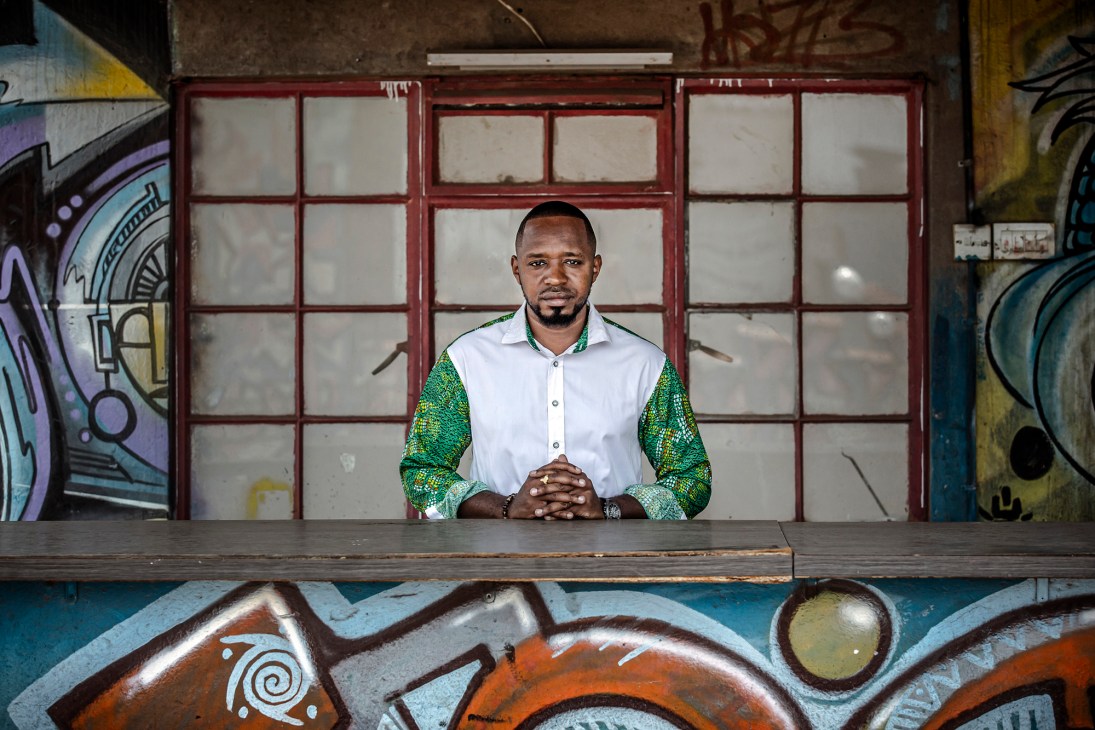
“We showed people that you can actually run a clean campaign without bribing voters,” says Mwangi, who wears a ring in the shape of the African continent. “And that it’s possible for things to be different.”
Growing up as the second youngest of seven children in Starehe, a low-income neighbourhood in the Kenyan capital, Mwangi worked as a roadside vendor, selling books with his mother. As he grew older, he became inspired by the work of Kenyan photojournalist Mohamed Amin.
Fast forward a few years and Mwangi began working for The Standard, a national newspaper. It was there that he got an assignment that would change the course of his life. Sent to cover the violence that followed the 2007 election, Mwangi captured images of Kenyans brutalising one another over tribal divisions that were stoked by presidential candidates. The tipping point came two months later when the very politicians who prompted the fighting shook hands and declared a truce, bearing no responsibility for more than 1,000 lives lost.
Mwangi quit journalism and became an activist. He rallied supporters on social media and publicised protests that he organised, including one outside parliament where MPs were portrayed as greedy pigs. It was provocative but effective and Mwangi quickly established a following.
Yet it was not until 2017, when he co-founded the Ukweli Party (the name means “truth”), that Mwangi decided to run for office, aiming to represent his native Starehe as its member of parliament. His message was simple: to bring transparency to politics and to make social services universal. According to Mwangi, his campaign was completely crowdfunded, receiving a total of $160,000 (€135,000) from individual donors, via an average donation of $1 (€1.85).
Ultimately, Mwangi was defeated and he was “heartbroken” for some time afterwards. But he believes that change is incremental not incidental. “The only way to change politics is by introducing clean candidates, in much the same way that you can purify a river by adding clean water,” he says.
His followers remain passionate. On social media, where he has more than 1.5 million followers, citizens turn to Boni – as Mwangi is affectionately called – over elected members of parliament, sharing their problems with him daily. He believes that beyond the next election, candidates will have to do more than just sell tribal politics; they’ll need to offer real solutions. He hasn’t confirmed whether he’ll run again but says that the Ukweli Party is likely to field a female presidential candidate in 2022.
“We’re setting an example,” he says. “We believe that if you show people the way, they will follow us. I’d rather quit politics than lose my idealism.”

2.
Bobi Wine
Uganda
In 2018, Ugandan rapper and activist Bobi Wine was arrested and severely beaten. It happened after the presidential convoy of Yoweri Museveni, Uganda’s iron-fisted 76-year-old head of state, was allegedly stoned by opposition supporters.
Wine had been elected to Uganda’s parliament the previous year, representing the impoverished slum where he lived in Kampala, the country’s capital. The 38-year-old was already well known among young Ugandans for his politically dissenting song lyrics but his detention and the subsequent outcry transformed him into an international cause célèbre. Wine has become a key figure in the new vanguard of young African leaders who are seeking to overhaul a political status quo that’s increasingly out-of-step with the continent’s youthful population.
In 2019, Wine formally announced that he would run for president in Uganda’s impending general elections, slated for February 2021. His aim is to unseat Museveni, who has ruled for 34 years. In a country where more than 75 per cent of the population is under 30, Wine, the self-styled “Ghetto President”, has struck a chord with young and disenchanted urban Ugandans.
Wine has continued to face arbitrary arrests and other underhanded attempts to curtail his rising political influence. But this has only served to emphasise the threat that he poses to Uganda’s entrenched and aged political elite. Every new affront will bolster his support base further.
3.
Ilwad Elman
Somalia
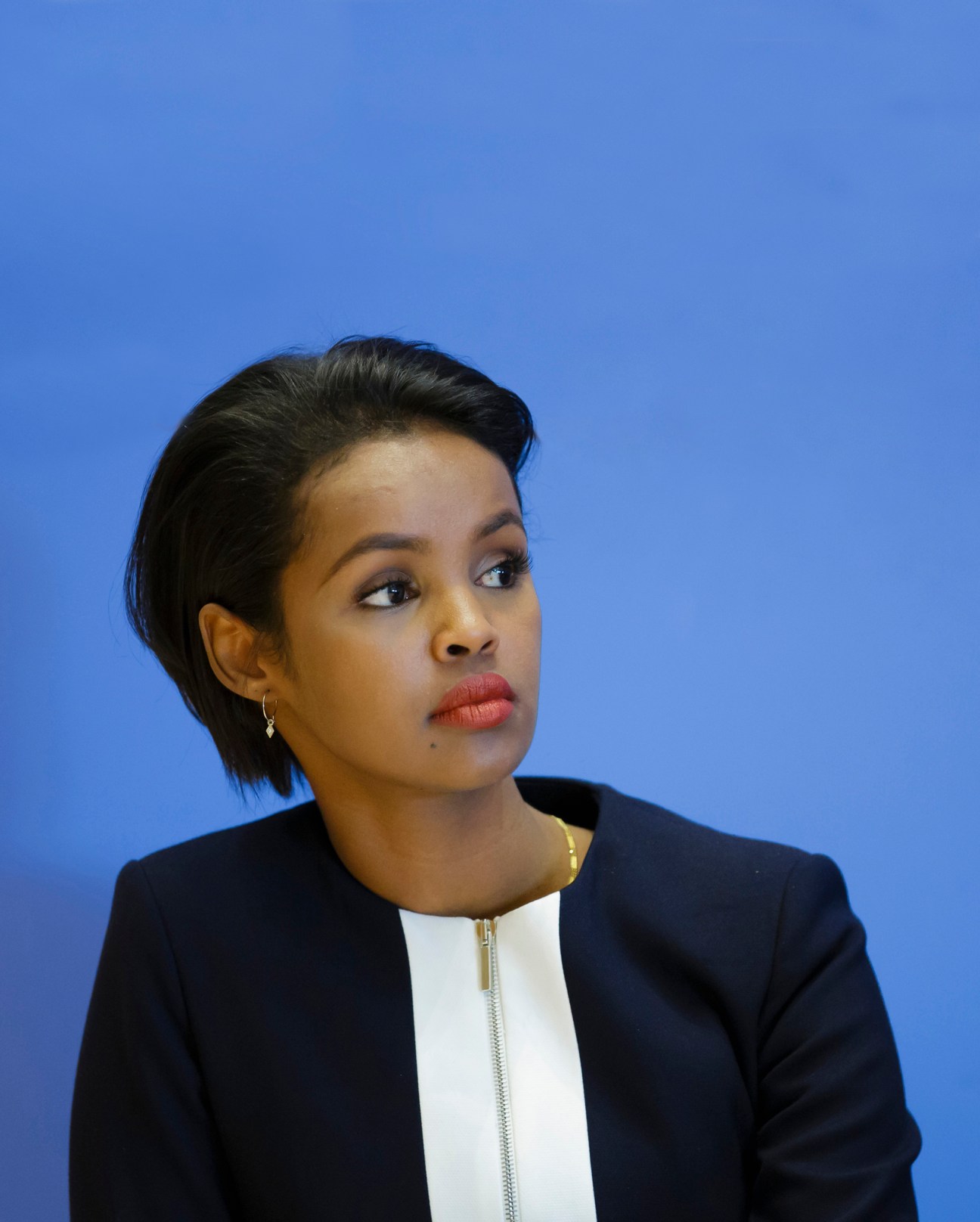
Like so many of her country’s brightest hopes, 30-year-old Ilwad Elman was propelled from Somalia by war. She became an infant refugee in neighbouring Kenya before finding safety – and later citizenship – in Canada. As Somalia’s long civil war finally began to ebb a decade ago, Elman returned to Mogadishu, where her peace activist father Ali Ahmed had been assassinated in 1996. She took up his mantle and now runs the Elman Peace and Human Rights Centre with her mother, Fartuun.
Her work remains risky: the current iteration of the country’s conflict pits al-Qaeda-aligned militants against an internationally backed government, and is punctuated by devastating bomb blasts, armed attacks and deadly hotel sieges. In 2019, Elman’s elder sister, a diplomat, was killed in the capital.
As a prominent woman with a particular focus on rehabilitating child soldiers, she often finds herself unpopular with armed men on both sides. She pushes hard for women’s rights and has established Somalia’s first safe house for victims of rape and sexual assault, crimes that are dismayingly common in her fragile, patriarchal homeland where aggression and weapons have long lined the path to power.
Elman’s work reverberates beyond Somalia. She has advised UN secretary-general António Guterres, addressed the Security Council and worked with the Kofi Annan Foundation. In 2019 the Peace Research Institute Oslo tipped her for the Nobel Peace prize for her activism.

4.
Vera Daves
Angola
When 36-year-old Vera Esperança dos Santos Daves de Sousa, commonly known as Vera Daves, was appointed Angola’s first female finance minister in October 2019, she took on one of Africa’s toughest jobs. In a macho political arena still dominated by aged military generals, she was tasked with restructuring an oil-based economy suffering its worst recession since the end of the country’s protracted civil war in 2002.
Daves’s rise had been swift. A star economics student at the Catholic University of Angola in her native Luanda, by the age of 28 she was head of research for a bank and a frequent commentator on regional news programmes. That was how she caught the interest of Archer Mangueira, then head of Angola’s Capital Markets Commission, who she would replace in 2016. The following year, Mangueira, who had gone on to become finance minister, hired her as secretary of state for treasury.
In her new role as finance minister, Daves has spearheaded the introduction of vat and the digitisation of tax collection, the latter in a bid to increase transparency in a country routinely beset by corruption.
As oil prices continued to plummet amid the pandemic, Daves reiterated her determination to diversify Angola’s economy as well as reduce the state’s influence on the oil sector. It’s a tall order but in a country ranked 125 out of 149 nations in the World Economic Forum’s 2018 gender-gap report, she’ll be familiar with the notion of challenging a stubborn status quo.
5.
Fred Swaniker
African Leadership University
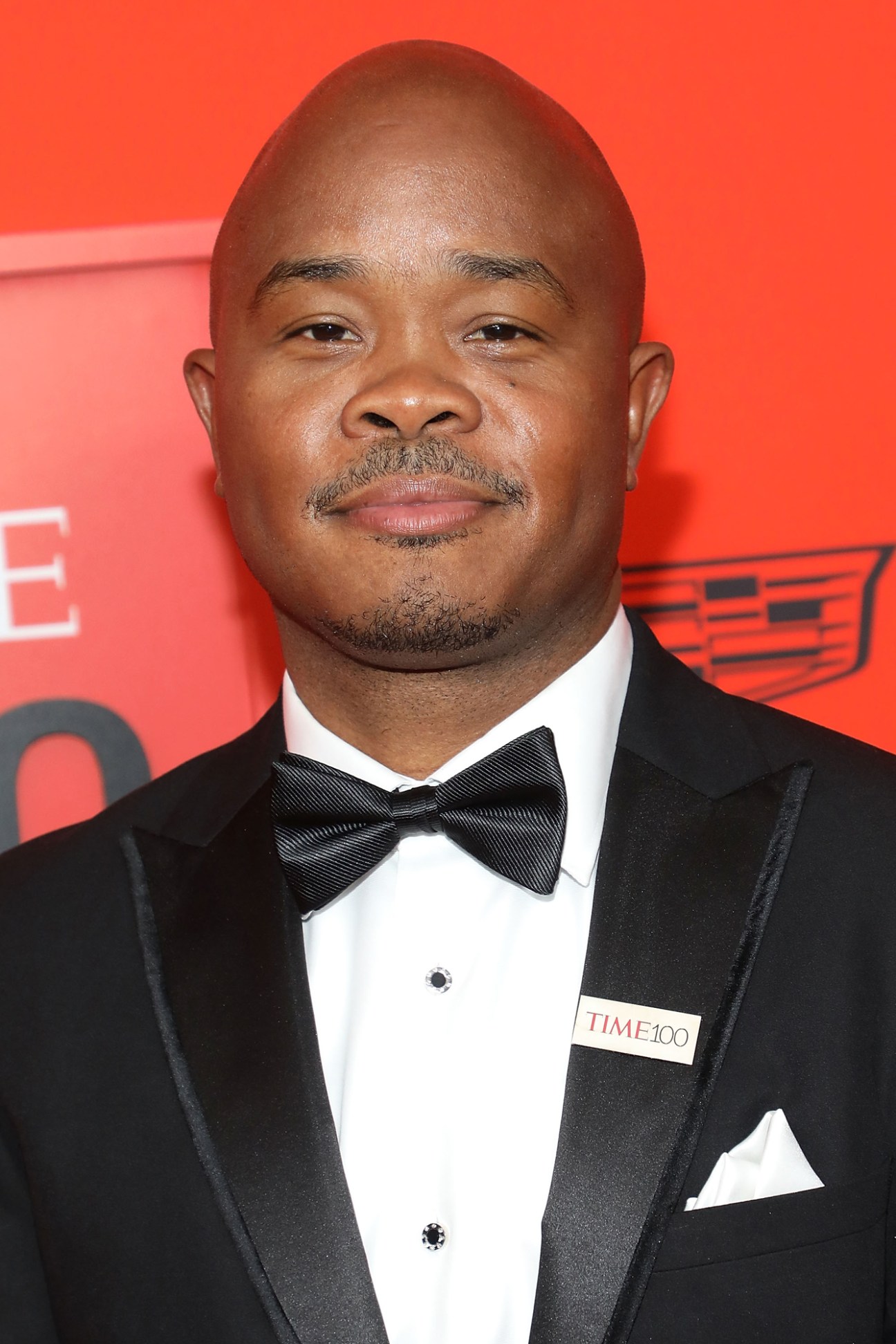
Fred Swaniker has staked his career on the question of what makes a good leader. Born in Ghana in 1976, he moved to Minnesota to study before taking a job at consulting firm McKinsey & Company in Johannesburg. He returned to the US to earn an mba at Stanford, with an idea already blossoming in his mind: to reinvent education in Africa.
His first venture, the African Leadership Academy, a secondary school just outside Johannesburg, opened in 2008. Its aim was to offer Africa’s bright and ambitious the tools to win places at the best universities in the US and Europe. The academy made a splash: Swaniker was named a Young Global Leader by the World Economic Forum in 2012. Yet it wasn’t long before he realised the problem in his mission: too often, those bright and ambitious students didn’t come back. So the African Leadership University opened in Port Louis, Mauritius in 2015. It was with alu that Swaniker fully executed his vision of a place that could harness Africa’s youth potential – 60 per cent of its population is under the age of 25 – and craft a savvier, smarter generation of leaders.
Yet alu doesn’t take an ivory-tower approach to education. Courses are structured around real problems facing African nations, such as climate change, urban expansion and migration. Students are expected to think critically before presenting real-world solutions.
In 2017, Swaniker opened a second campus in Kigali, Rwanda, and has ambitions to expand across the continent.
Images: Getty Images, Angola Ministry of Finance
Streets ahead
1.
Concept: A shared approach to cultural capital
Example: Vilnius, Lithuania
The past year has encouraged many to keep their distance but neighbourhoods shouldn’t shy away from sharing their resources. Lithuania’s capital, Vilnius, has taken the idea to another level with its extended library service.

When Lithuanian literary critic Jurga Mandrijauskaite-Ruskiene saw a mobile library in Linz, Austria, a few years ago, she decided to donate something similar to Vilnius, her home city. “I wanted to give people the joy of reading and the discovery of new authors,” she says. Vilnius Skaito (“Vilnius Reading”) was quickly embraced by residents who were happy to have free access to some of the latest book releases in several languages.
Every summer 1,000 neatly stacked books line the shelves of a stand in central Lukiskes Square. Beanbags, deckchairs and hammocks are scattered in the shade of mature trees to form a relaxed alfresco reading room, and when the weather turns cold there are two smaller branches indoors that remain open year-round. The books are donated by publishers, authors and even ambassadors, who offer literature from their countries. The line-up is curated anew every year. In 2020 a shelf was given over to self-help titles to help readers deal with anxiety caused by the pandemic.
“The reading room is visited by up to 800 people a day,” says Mandrijauskaite-Ruskiene. “People tell me that they like being in the city centre, on the grass, under the trees. They say that there is a good energy here and call this place the heart of the city.”
2.
Concept: Design individual housing from existing stock
Example: The Netherlands
The response to housing shortages in many of the world’s cities is often to demolish and rebuild. But there is another way: utilising abandoned or run-down buildings. For an example of how this can work, look to The Netherlands.

Every city has its defunct churches or prisons, bankrupt shops and empty office blocks, as well as countless residential plots in a state of disrepair. Rather than just being eyesores, these buildings can represent an opportunity for councils that can offer them as low-cost housing to young people and families. This can boost urban density in a gentle, sensitive way and provide an organic route to regeneration, pulling in people from different socio-economic backgrounds to counter the ghettoisation that can occur in poorer parts of cities.
The Dutch klushuizen (diy houses) programme involves a partnership between local authorities and homebuyers who are seeking a challenge. In return for inexpensive, structurally sound property, residents start from a blank slate and renovate with funds taken entirely out of their own pockets. Unsurprisingly, the scheme often attracts architects and designers looking for a space to make their own.
The model was pioneered in Rotterdam in 2005 and has since been picked up and rolled out all over the country, with hundreds of unique apartments created out of empty lofts and old classrooms, sometimes scooping up design awards in the process. Groups of strangers often club together to buy larger sites and forge whole new communities, something that’s also happened in a similar model in Germany known as Baugruppen (building group). Tenants or owners have even built shared communal spaces such as kitchens and workspaces in addition to their own living quarters. The smart alternatives to constructing from scratch show that, with a little creativity, there’s still room in our cities for high- quality homes.

3.
Concept: Encourage street commerce
Example: North America
Cities should make space for kiosks, pop-ups and restaurants on the pavement, encouraging permanent structures while trusting venues and citizens to keep safety in mind.
North American cities embraced alfresco dining in 2020. New York and Toronto are among those to have converted streets, traffic lanes and parking spaces into outdoor patios, providing a lifeline for businesses.
Some of these new outdoor spaces are haphazardly thrown together but others are more professional and intended for the longer term. Brooklyn-based studio Fantástica has designed a series of smart, modular outdoor structures that can safely seat and serve customers in parking spots or street lanes while protecting them from oncoming traffic. Meanwhile in Chicago, the Winter Design Challenge is an open competition asking residents to conceive plans to make outdoor dining feasible despite the city’s frigid winters.
Good cities aren’t born of car-centric streets; they should cater for people and outdoor commerce too.
4.
Concept: Animal-friendly infrastructure
Example: Australia
Global lockdowns emboldened wildlife living near our urban centres, from dolphins in the Italian port of Cagliari to pumas in Santiago. Cities would do well to ensure this wasn’t a one-off.
How do we encourage city wildlife? For starters, existing animal habitats need to be protected: trees should be planted along roads, rocks and logs added to parks, and bird boxes installed. Construction needs to change too; indeed, the US is altering its building codes to protect birds, millions of which die every year when they fly into windows.
Another way to help animals is to link these habitats. For evidence, look to Australia, where the federal government is supporting an initiative to create animal crossings under and over busy highways. Taking the form of bridges and tunnels that are bedecked with native plants, the crossings “become a living part of the wider ecosystem,” says Darryl Jones, a behavioural ecologist from Queensland’s Griffith University. The crossings form a connection between the wild and the urban, “which is exactly as it should be,” he says.
5.
Concept: Keep it at eye-level
Example: Frederiksberg, Denmark
Tall towers reduce the vitality of streets. Developments on the lower floors offer better opportunities to connect buildings to the buzzy street below. Consider a stoop or a courtyard – and more trees to improve the view.
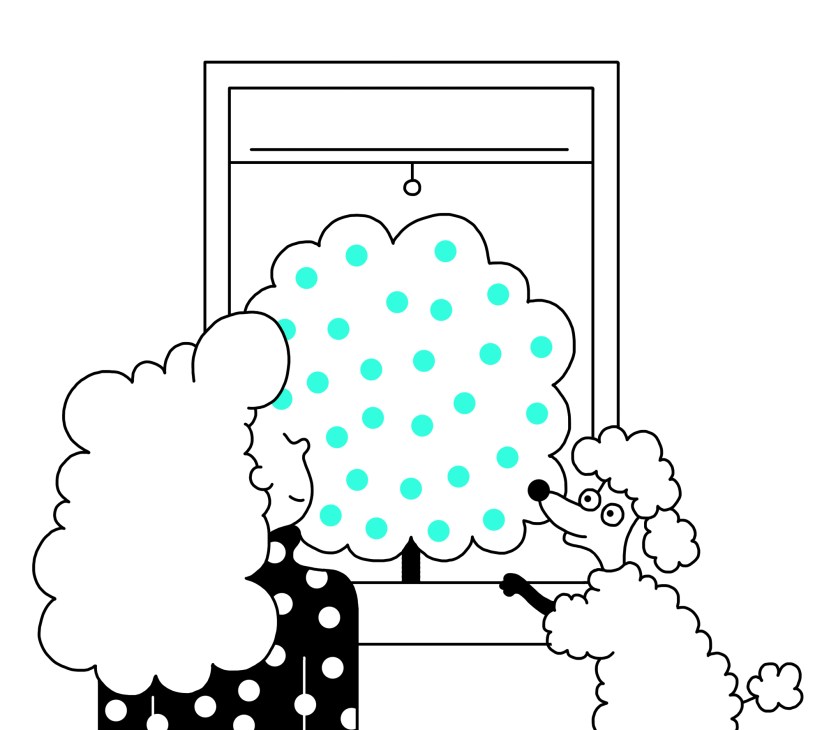
Frederiksberg is Denmark’s most densely populated district but this autonomous municipality in Copenhagen is also dense with trees: more than 6,000 line its streets. In fact, a sixth of the area is covered in greenery.
To improve the wellbeing of its residents while adding a touch of green beyond its many parks, Frederiksberg decided that every household must be able to see a tree. “We are the capital’s green heart,” says the district’s mayor, Simon Aggesen, who is proud of the policy that his predecessor introduced two years ago. He encourages citizens to contact the local authority if they are not able to see a tree from their window.
Aggesen says that planting saplings on Frederiksberg’s roads is not only an aesthetic exercise. “Planting trees contributes to biodiversity and helps to decrease urban heat.” The policy requires that only a maximum of 15 per cent of new trees belong to the same species and it offers protection for all trees older than 25. The mayor is counting on nature to keep the community healthy. “It is the greenery that makes Frederiksberg what it is.”
6.
Concept: Mark history with those who felt its impact
Example: Berlin
Memorials aren’t just about marking a past occasion, they can be cherished community spaces. New uses for historical monuments should reflect the wishes of those who were affected by the event.

How we remember the past, be it through statues or memorials, was a contentious theme in 2020. Berlin, where history is everywhere, is a good place to look for some solutions. The latest example is the Mauerpark, a stretch of land that ran between the two walls separating East and West Berlin, which has been transformed into a lively community park with a weekend market.
What started in the 1990s as a community-led initiative soon developed into a more ambitious city-aided regeneration project designed by Berlin architect Gustav Lange. It aims to reflect “the many different layers of history that come together here,” says Christoph Schmidt of the Grün Berlin foundation. Complete with a new playground, sculptured benches and a flower garden, it’s a sign that history is best preserved when tailored to the preferences of those who lived it every day.
7.
Concept: Listen to all citizens
Example: Dar es Salaam, Tanzania
Though our cities must be designed and built by experts, their work should involve robust engagement with the community. City officials, planners and architects should listen to all of their constituents.

Dar es Salaam in Tanzania is a city in which children are injured on roads at a rate that’s twice the global average. To address this, the non-profit Amend and its Sarsai engagement project pairs schools with councils and road engineers who work together to create footpaths, zebra crossings and speed humps to make the streets safer. This work wouldn’t have been carried out without Amend representing the community’s interests, says programme director Ayikai Poswayo. “We provided the link between the community’s needs and the people in offices who make decisions.”
By listening to Amend, authorities gained a better understanding of the challenges facing its citizens and, in making the changes, helped to gain their trust. It’s a lesson that all cities could learn; if your own isn’t home to an organisation that champions public interest, perhaps it’s time to start one yourself?
8.
Concept: Bridge the generation gap
Example: Japan
Aside from the practical help that having relatives close at hand offers the elderly, multi-generational living is good for the young and working parents too.
Rather than shunting the elderly off to live alone, surely it’s better to involve them in society.Japanese design studio Nendo recently built Stairway House in Tokyo for three generations of the same family. It’s a dramatic proposition: a three-storey building with a glazed façade and a broad concrete stairway running through the middle of the house. The grandparents have the rooms on the ground floor, while the upper floors are for the younger couple and their child. The two households are independent, yet the open staircase keeps them connected. Nendo describes the house as a “space where all three generations [can] take comfort in each other’s subtle presence”.
Other architects have come up with alternative answers to the question of finding privacy in a shared space. It’s a sign that multi-generational living – and caring for the elderly – can be applauded and encouraged.
9.
Concept: Take a temperature check
Example: Ljubljana
As cities get hotter, we’ll need places to cool off. City planners should consider providing shades, awnings, fountains and somewhere to take a dip – as well as buildings that favour a breeze over air-con.

Slovenia’s capital, Ljubljana, faces a serious challenge in keeping its cool. A study in 2019 by the Swiss Federal Institute of Technology in Zürich suggested that its summer temperatures would be 8c hotter by 2050, which is a greater leap than any other city in the world. Ljubljana’s own projections are slightly less extreme, forecasting a 2.5c rise. Either way, the city needs to take action now to avoid overheating in the future.
Appropriately the municipal authorities are looking to water for solutions. Stand-up paddleboarders, kayakers and rowers already enjoy the picturesque Ljubljanica river that winds its way through the city’s historical centre. And they might soon be joined by swimmers diving off the riverside terraces as a city project to improve sanitation coverage should make the Ljubljanica clean enough for swimming in before 2025.
Even on dry land, thirsty types are never too far from a water source. A smartphone app points the parched towards dozens of drinking fountains in the city centre. And just to prove that it is still a truly green capital, Ljubljana now makes tree planting and “green roofs” a condition for many construction permits. After all, finding a place in the shade is wonderful at any time of the year.
10.
Concept: New ways to keep streets clean
Example: Bangkok
Keeping the streets clean should involve the whole community. What about offering jobs to the homeless and including volunteers in the process? That’s what’s happening in Bangkok.
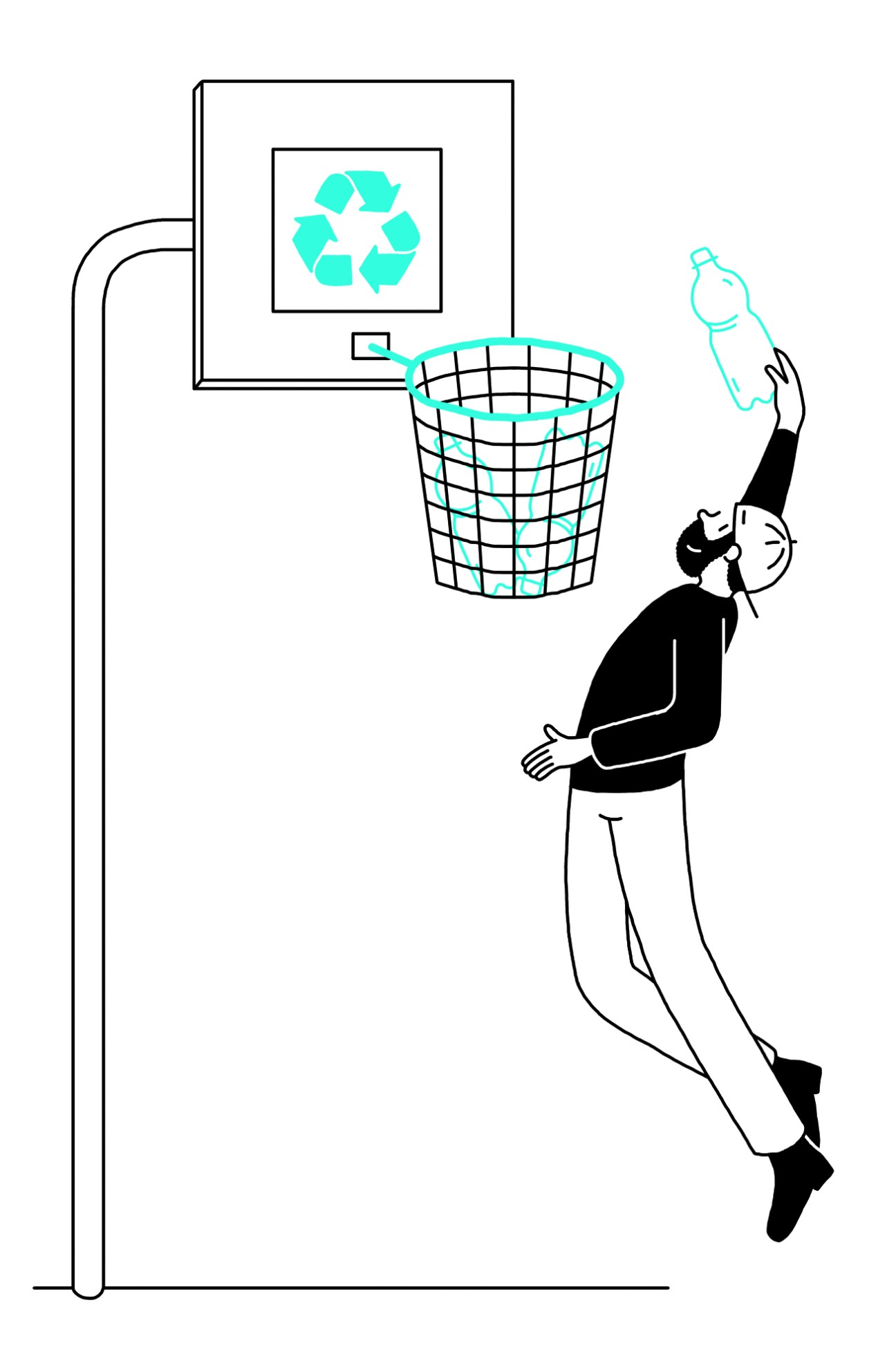
With their bright yellow aprons, hard hats and pastel-coloured brooms, teams of elderly Thais are cleaning the elevated pavements around Bangkok’s Victory Monument. They’re part of a growing group of homeless people employed by the Mirror Foundation, one of Thailand’s leading charities.
Under a new scheme called Hire Me, the foundation gathers individual donations through a fund, then pays homeless people to clean streets and public buildings. Programme head Benjamas Pangam says that the idea arose from street work that the foundation did with homeless people. “Many of them kept telling us they wanted jobs; asking if there was any work they could do for us. Most are over 50 and lack specific skills, so we thought about simple work, such as cleaning.”
Having launched in July, the foundation’s growing roster now numbers about 80 people. Many of them tidy facilities for civic government but there is growing demand from the private sector too. “It seems many people want to hire elderly homeless people to clean their places,” says Pangam. Even if a daily income of 400 to 500 baht (€11 to €14) might not be enough to cover housing, “it gives them a chance to buy food and essentials, along with encouragement and a reason to live their lives,” says Pangam.
Shape of things to come
1.
Itonde Kakoma
Director for Global Strategy
Crisis Management Initiative, Helsinki
Uncertainty and instability will characterise 2021: our multilateral structures will face severe challenges in responding to international peace and security matters. Shared geopolitical spaces that lack robust security co-ordination mechanisms – such as the Red Sea, eastern Mediterranean, Sahel, South China Sea and the Arctic – will face serious political and military competition.
However, major breakthroughs could be driven by external factors: climate change, social pressures, economic shifts or the retrenchment of democratic systems. My hope is that clear, stable and representative leadership, combined with a strong global convening authority, can still emerge in time to steer the next generation in a positive direction.
2.
Isabel Hilton
CEO and Editor
China Dialogue, London
China will become a market leader in low-carbon technology. Unlike the US, it recognises the opportunity that stems from climate change and will dominate the market for solar, batteries and hydrogen in a way that nobody else can. China’s pledge for its co2 emissions to peak in 2030 and be carbon neutral by 2060 was a sign.
I’d hope that China could use its capacity to build renewables as part of its development practice, instead of dumping its excess fossil-fuel capacity on other countries. The Belt and Road Initiative is a disaster in this regard; a way of keeping industries going that have exhausted their market at home. China could be a renewable soft power – but that’s a hope rather than an expectation.
3.
Tetsuo Kotani
Senior Fellow
Japan Institute of International Affairs, Tokyo
As 2021 starts to unfold, coronavirus vaccines and therapeutic drugs will be developed. China and most advanced economies will begin offering them to their citizens, although they will not be widely available across the rest of world. The Tokyo Olympics and Paralympics, after being postponed for a year, will finally get underway in something of a hybrid manner. These events will set a new standard for the world’s most popular sports festivals, with athletes competing in Japan and the audience watching them virtually, symbolically demonstrating that humankind can overcome the novel coronavirus pandemic.
4.
Maha Yahya
Director
Carnegie Middle East Center, Beirut
With the erosion of multilateral approaches to global challenges, conflicts will intensify in the Middle East, along with calls for governance systems that recognise differences, be they geographic, ethnic or sectarian. This will usher great instability, particularly in less cohesive states. Meanwhile, as the dislocation generated by economic and political instability intensifies, authoritarianism is rising and people are being asked to choose between stability and freedoms. As Lebanon teeters on the brink of an economic and political abyss, the ripple effects of its collapse will be felt far beyond its borders. The only silver lining is the admirable resolve of its people and other like-minded citizens across the region to maintain their struggle for a better future.
5.
Karen Donfried
President
German Marshall Fund of the United States, Washington
There are two partners in the transatlantic relationship; more than two if you count the individual European countries. The relationship will not return to a status quo ante. There has been a lot of water under the bridge over the past four years: there are questions and scepticism on the European side but the US administration will also be asking its European partners to contribute more. There will be continued pressure on Europeans to spend more on defence and to co-operate with the US across a host of areas where the policies are not necessarily common. So the future of this relationship does depend on the US administration. But it also depends on our European partners – what they see as the future and what they’re willing to invest in that relationship going forward.
6.
José Alfredo Graça Lima
Vice-chairman
Brazilian Center for International Relations, Rio de Janeiro
In 2021 most Latin American countries will hopefully be in a position to better integrate their economies – both regionally and globally. This will depend on the success of their own fiscal policies as well as on efforts to resist protectionist pressures at home. In particular, those economies relying on the production and exports of natural resources must invest more in their infrastructure, health and education if they want to provide more and better jobs, and become more competitive. With that, the foreseeable future should offer a new opportunity for Latin America’s market-oriented economies to develop sustainably.
7.
Jean-Dominique Senard
President/vice-president
Renault & Institut Montaigne, Paris
Globalisation is not going to stop but it will have to be governed in such a way that the independence and cohesion of the European nations is ensured. Responsible capitalism must be at the heart of the reconstruction of the EU. The year ahead will require a new deal between every EU member state and its companies, with the notion of responsibility at its core. In 2019, France approved a law that pushed the country’s corporations to define their social and environmental objectives, as well as their raison d’être. This initiative serves as a clear illustration of the kind of legal framework that Europe should put in place to help accompany its firms in their transformation.
8.
Elizabeth Sidiropoulos
Chief Executive
South African Institute of International Affairs, Johannesburg
Three countries in this region will continue to face significant economic and political challenges: Zambia is defaulting on its debt; Mozambique has an insurgency spreading in the north; and Zimbabwe’s political crisis will continue as the government clamps down on the opposition. This means that South Africa will have to deal with more migrant flows, which will further stress the economic and social fractures in its society and give fuel to the xenophobia that is never far from the surface. So the region, which has generally been more stable than other parts of Africa, will face greater instability in 2021.
9.
See Seng Tan
Professor of International Relations
Rajaratnam School of International Studies, Singapore
The Asean [Association of Southeast Asian Nations] region will continue to serve as “ground zero” in the conflict between China and the US. Although the China-US trade war has benefited some Asean countries, any further deterioration of Sino-US ties, if left unmanaged, will harm the region and undermine its centrality in Asian regionalism in the long run. The US administration is unlikely to improve things given the bipartisan promises to “get tough” with China. With Xi Jinping seeking to further consolidate his rule ahead of the Communist Party leadership contest in 2022, pressure on the Asean states to choose sides is likely to intensify.
10.
Chris Smith
Consultant Medical Virologist and Lecturer
University of Cambridge
When it comes to coronavirus we need to have strategies in place that enable us to live with it because there’s a very large population of people who will remain unvaccinated. Younger people in particular will be impacted in many more ways than just economic – delays to their education will affect them through the rest of their lives. And we know that the best determinant of a person’s health in the long term is their wealth: if you have more money in your pocket you make healthier lifestyle choices, you lead a better life and therefore you will live longer. People are being invited to see this virus through the lens of six months – and no one can blame them – when actually what is happening has massive long-term implications and impact.
How to be a modern spy
Anybody reading this article is probably able to find out more about individuals, governments, corporations and countries than the most diligent and pervasive intelligence agency of just 40 years ago could have dreamed of. Suppose, as recently as the mid-1980s, you were a lowly agent of a Nato intelligence service instructed to discover the top speed of a particular Russian-built armoured personnel carrier – the btr-80, say. Disinterring this single mundane fact might have taken weeks of patient espionage. It can now be gleaned in seconds by any clown with a laptop – it’s 85km/h, give or take – and so can a great deal else.
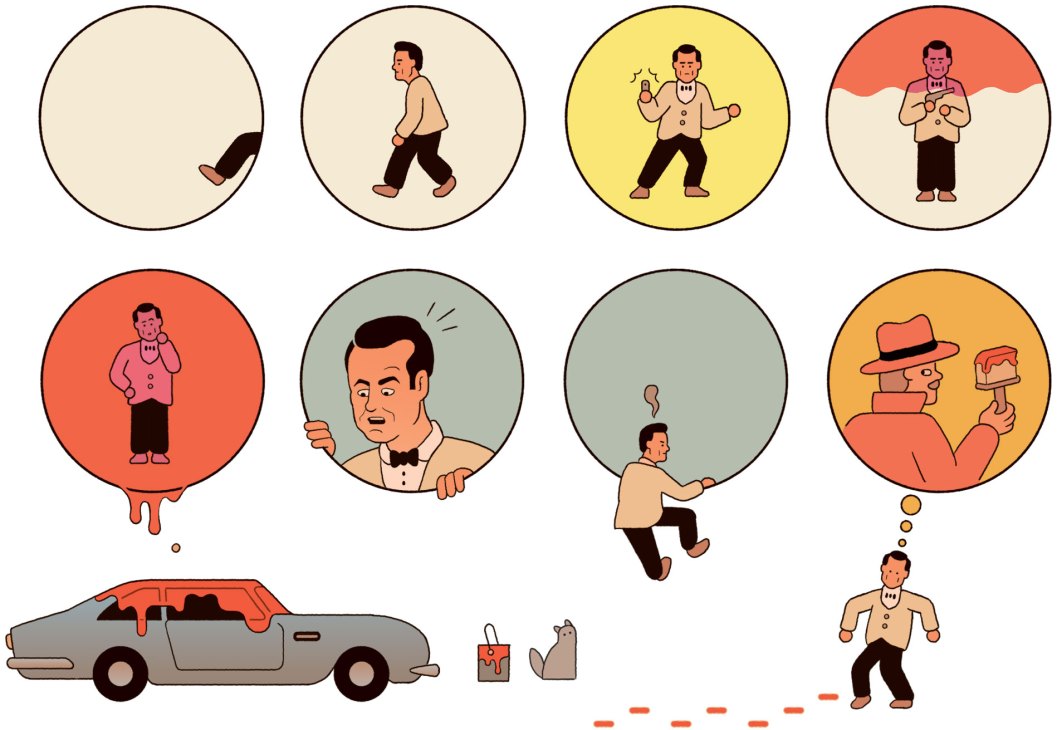
“We shouldn’t give up on the old style completely,” says Yossi Kuperwasser, former head of the research division of the Israel Defence Forces. “But the way we approach this changes dramatically. You can reach everybody all the time. You can see a lot of things happening. Maybe in the past you needed a human source to understand the relationship between Bashar al-Assad and his family member Rami Makhlouf. Today they fight openly. But you can understand it better if you have someone standing in between them.”

While the online realm has clearly made finding out some stuff much easier, it has made the mechanics of finding out other stuff – of actually getting between or, indeed, next to targets – much more difficult. The difficulty with almost everybody knowing almost everything is that almost everybody knows almost everything.
“The physical interaction between two people – an intelligence officer and a source of information – I’m not prepared to consign that to the dustbin of history,” says Doug H Wise, former deputy director of the US Defence Intelligence Agency and, prior to that, a long-serving CIA officer with extensive experience as a field operator. “But it’s going to be nearly impossible to do two things: to remain anonymous for any period of time and to travel undetected.”
It’s not just that everyone now leaves a trail of digital breadcrumbs wherever they go and whatever they do; it’s that this is now so fundamental a fact of life that few actions arouse suspicions more than going quiet. One of the clues that led American analysts to Osama bin Laden’s compound in Abbottabad in 2011 was the anomaly that such a large residence had no internet connection or phone line.
“It’s possible that small improvements in safety and security aren’t going to be sufficient [to allow us to continue] everything that me and my colleagues did in the past to generate clandestine intelligence through personal interaction,” says Wise. “We might have to rebuild human intelligence from the ground up, in terms of tradecraft. What’s going to change is the alias business: you’re not going to be able to do anything except what you’re able to do within your real existence. Good luck with entering China without the Ministry of State Security knowing more about you than you know about yourself.”

Without wanting to tempt fate, there is agreement that the scale of the threat of Islamist terrorism has diminished due to intelligence agencies getting better at disrupting plots and potential terrorists losing interest. The focus of the future appears to be a return to competition between rival states.
“Perceptions of threat will be wildly different,” says Ciaran Martin, chief executive of the UK’s National Cyber Security Centre, which is responsible for protecting government communications. “Going into this decade, it was clear for the first time in a long time that terrorist threats coming from fragmented states are less strategically important than they have been for quite a while. Great power competition played out in the modern sphere of a highly networked society is where it’s at for intelligence services.” That great power competition involves – most significantly and most obviously – the US, China and Russia. While this is a statement that could have been made for much of the past 50 years, the nature of the rivalry has evolved. During the cold war, the US was not economically enmeshed with the ussr, the latter was attempting to export a global ideological revolution and China was principally focused on its domestic development. None of those statements is now true.
“There’s a fashionable phrase going around that Russia is very bad weather and China is climate change,” says Martin. “We tend to sometimes lazily talk about Russia and China as though it’s a double act but they’re very different. Russia has a desire to project power but is not seeking to dominate the western way of life, so it will do things like seek strategic advantage for itself through cyberattacks and so on. Whereas China is a different model of organising a society, which the Chinese Communist Party believes in – and it intends to continue with [it] until China is the most economically and politically powerful force on the planet.”
“The Chinese want to own us and outcompete us,” says Wise. “So they’re looking for data that will support that strategic goal. The Russians want to destroy us. If you crawled through the US power distribution network searching for malware that is triggerable by the owner to damage the infrastructure, I’ll bet you wouldn’t find any Chinese malware whatsoever. For the Chinese, dropping the East Coast power grid means that Wall Street is out of business, so the ability of the Chinese to do global business is going to be seriously affected. That’s not in their interest. But you’d find a tonne of Russian malware.”
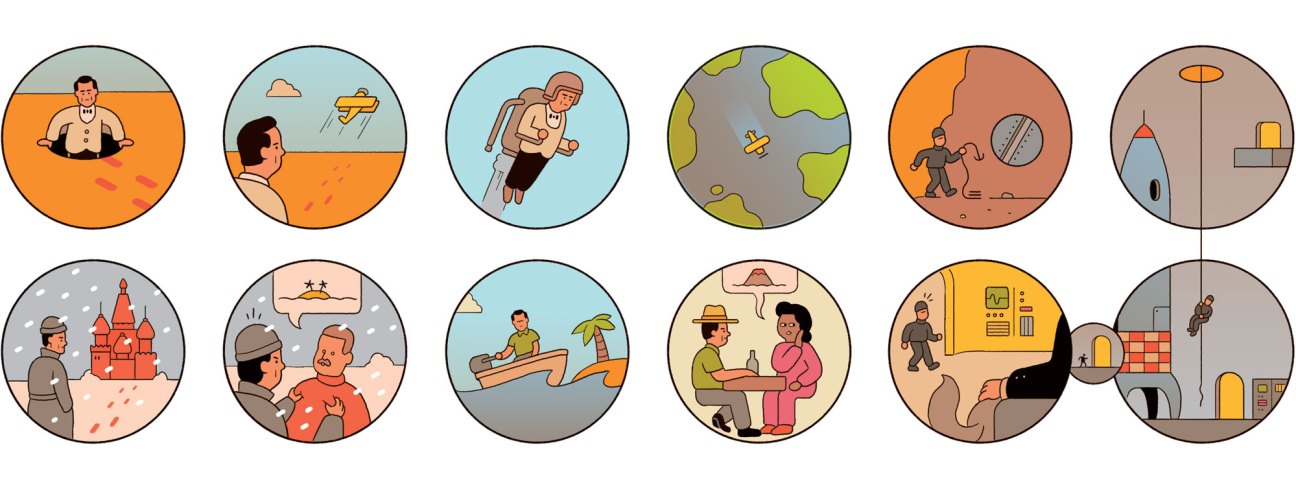
“People talk a lot of nonsense about how anybody can do a cyberattack; that’s not true,” says Martin. “Anybody can do a basic cyberattack but for a really lethal cyberattack, you have to have capabilities, money, skilled people, an operating environment where you can do that sort of work over time. If you’re a stateless terrorist group hiding from US and allied forces, you don’t have any of those things. If you’re a functioning nation state like Russia or China, you can.”
It seems clear enough that the intelligence operative of the future will spend a great deal of their working days squinting at lines of code on a screen, especially as artificial intelligence and quantum computing develop.
“We’re going through a shift in which collection and analysis, which used to be two separate elements in the intelligence cycle, are now getting closer together,” says Yossi Kuperwasser. “The analyst has to be much more involved in the collection effort and the collection agent should be much more attuned to the necessities of the analyst.”
Kuperwasser also believes that intelligence agencies need to be more expansive in who they recruit. There needs to be less emphasis on collecting information, of which there is no longer a shortage, and more on interpreting and analysing the infinite universe of data now available. Machines will be able to do some of that; they won’t be able to do all of it.
“The secret of intelligence is imagination,” says Kuperwasser. “There are a lot of professional skills you need for a successful intelligence agency but you’ve got to have some people around you who are artists. Intelligence is an art, and you need people who can perform artistic work. So you need a variety of people. This is where intelligence agencies fail because they don’t have imagination. Recently the uae and Bahrain decided to normalise relations with Israel. This is a huge change. And any intelligence officer would have told you for ages that this isn’t going to happen; that it would never happen. But it did happen. That is something for which you need an artistic, imaginative way of looking at things.”
This spectrum of abilities will be just as essential in the increasingly vital online realm: a buzz phrase of 21st century intelligence is “protecting the digital homeland”.
“As the technical sciences and humanities come together, so too will the skillsets needed to do the job,” says Professor Paul Taylor, director of the Centre for Research and Evidence on Security Threats. “We should expect to see more behavioural scientists who are skilled in coding and engineers who have a deeper appreciation of how the ways in which a user will use their technology. Of course, as with all sectors, there is a balance to strike between depth and breadth of expertise. One way of addressing both is to broaden the diversity of those doing the job, which is something that the UK agencies have been doing successfully for some time now.”

And all those machines will be built, directed and operated by human beings, with vulnerabilities that will still be required to be explored and exploited. “There will be more of a balance towards humans taking action via computers and digital means,” says Ciaran Martin. “But if you look at the history of cybersecurity, there’s an awful lot of human interaction in it – an awful lot of psychology, of understanding how human beings work. There are still things that have to be done by going to difficult or hostile places and seeing what you can find out.”
Who to spy for?
Here are some perks – and pitfalls – of the job to consider:
HQ
Germany’s bnd opened the world’s largest intelligence headquarters in Berlin in 2019. The exterior is decorated with fake palm trees, which German authorities confirmed were, in fact, merely fake palm trees, not listening devices.
Recruitment
The UK’s gchq has been known to run recruitment ads through Xbox Live, hoping to tempt couchbound fantasists into trying their video game swashbuckling for real – or attract potential boffins with a gift for decision-making. It has also published a series of official puzzle books.
Diversity
The UK’s Secret Intelligence Service – or mi6 – is keen to slough off the employee stereotype of private schoolboys. Their website urges the curious not to worry if “you think you aren’t ‘from the right mould’, don’t have the ‘correct’ experience or did not go to the right university (!).” The exclamation mark is theirs.
Motto
Most intelligence service mottos are bland, corporate-sounding mission statements. The Czech Republic’s Security Information Service (BIS) stands out with the elegant “Audi, vide, tace” – “Hear, see, be silent”.
Logo
It can definitely be said of Russia’s gru that they embrace the Bond villain schtick with gusto. The emblem of its special forces wing is the silhouette of a bat hovering over a radar screen.
Dramatic representation
While intelligence agencies of all kinds are catnip to screenwriters, few have been flattered quite like France’s General Directorate of External Security have been by television series The Bureau.
Gadgets
In September 2020 the CIA announced the launch of CIA Labs, an in-house r&d hub where officers will be permitted to keep 15 per cent of income generated by anything they invent. Israel’s equivalent, Mossad, operates its own technology investment fund, Libertad – which is seeking funding applications on areas from synthetic biology to personality profiling and robotics start-ups. They’re either building an actual Terminator or winding up the world’s conspiracy theorists.
Notoriety
Russia’s gru have lately been responsible for more than their share of headline-catching foreign operations. The downside is that those involved might be obliged to appear on television unconvincingly claiming to be cruelly maligned cathedral enthusiasts.
Case assignments
In July 2020, FBI director Christopher Wray estimated that the agency was pursuing about 2,500 active cases pertaining to Chinese espionage and opening a new one every 10 hours. “If you are an American adult, it is more likely than not that China has stolen your data,” he says.
Retirement options
Former US spooks have options that are the envy of their counterparts elsewhere: a ravenous media with hours of talking-head airtime to fill, films and television shows seeking the expertise and gravitas of former spies, even an entire Spy Museum in Washington. And the best part: if you’re making it all up, who is going to know?
Preparing for the worst
Fight fire with fire
The return of indigenous Australian methods
The sound of dry twigs crackling underfoot is the quintessence of the Australian bush. “We call this sick country,” says indigenous-burning practitioner Den Barber. “It hasn’t been cleared for 50 years so everything is a fuel source. If a fire comes through, it will burn hot and hard.” Barber is leading a group of landowners, academics and firefighters through a weekend workshop on a sprawling private property outside Canberra to learn about indigenous burning, a method practised for thousands of years by Aboriginal Australians.
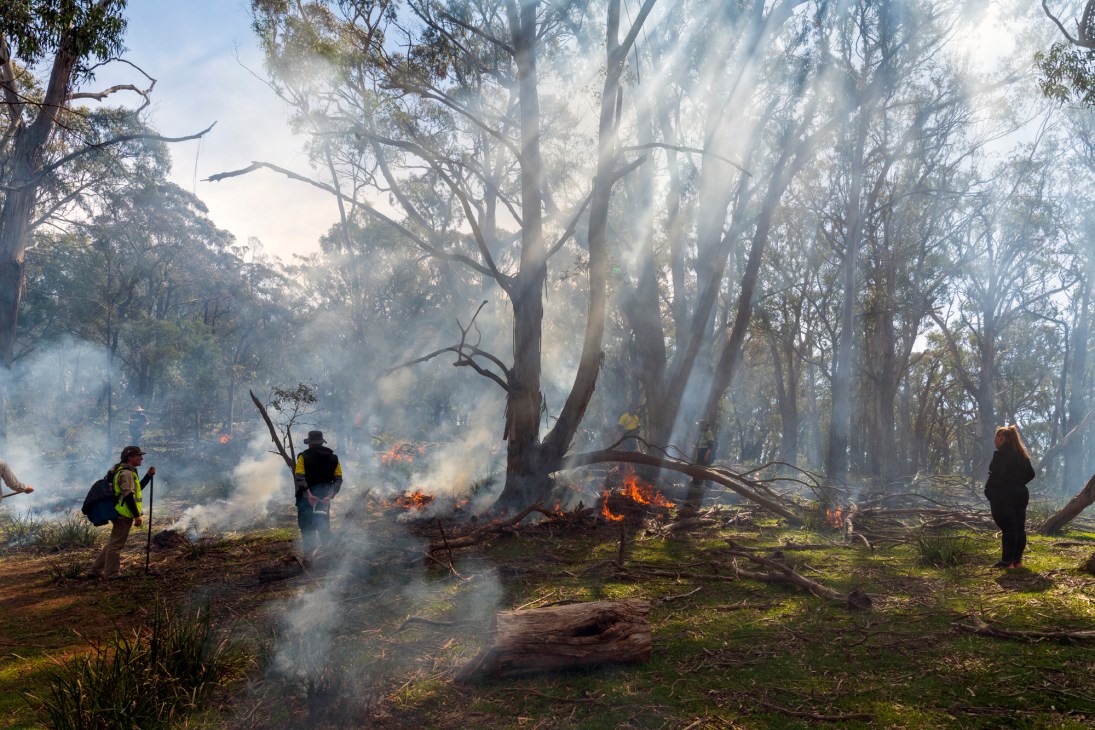
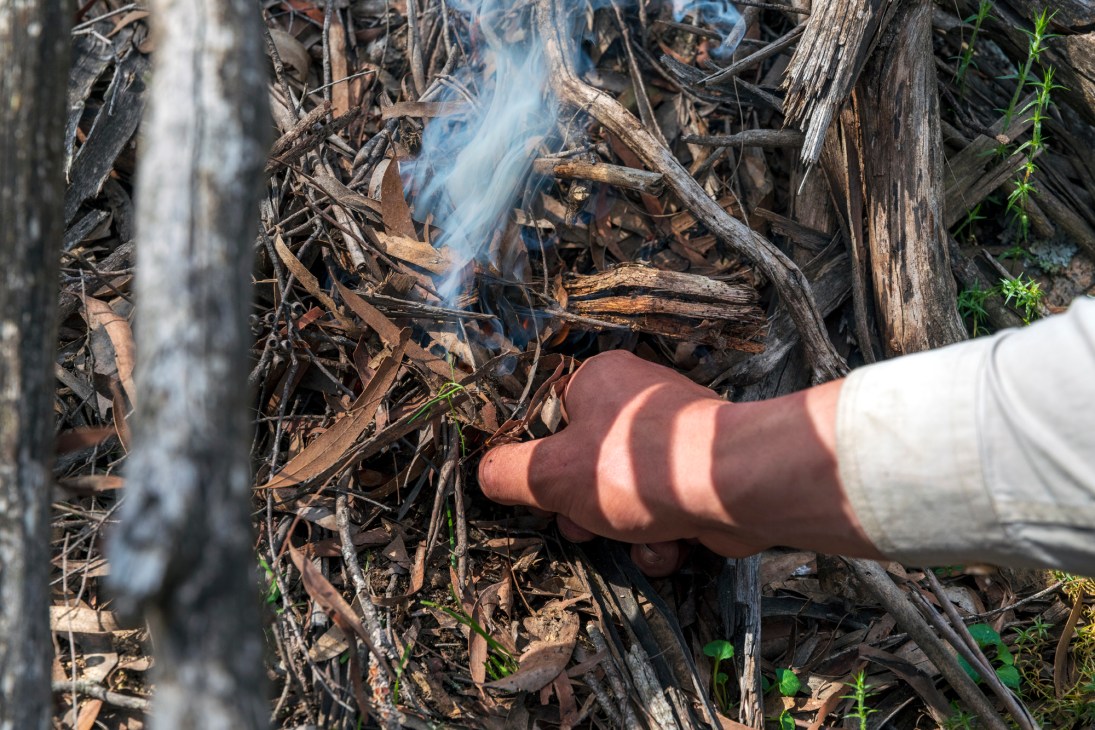
The 2019-2020 bushfire season destroyed about 3,000 homes, leaving Australians fearing that bushfires will be more frequent and devastating. While the country has satellites and thermal readers, many are seeking alternative ways to mitigate the threat. After reaching the burn site, Barber instructs students to fan out, light a fire with a match, stand back and watch. “The first time I did this, I watched as birds swooped in and small animals left the zone; there were people everywhere,” he says. An indigenous man and former fireman, he realised at that moment that he wanted to shift gears. His organisation, Koori Country Firesticks, is one of a growing number that conduct such burns for landowners. Burns are conducted in a mosaic pattern so that a fire goes out when it hits a burnt patch.
Barber says that he once faced scepticism over indigenous-burning’s efficacy from official quarters but some state governments are now listening. Western Australia has hired a full-time indigenous burning co-ordinator; officials from Victoria say that there is a need to harness the knowledge. The 2021 fire season is predicted to be different: a forecasted La Niña weather pattern will bring more rain and cooler temperatures but also a greater risk of fast-spreading grass fires.
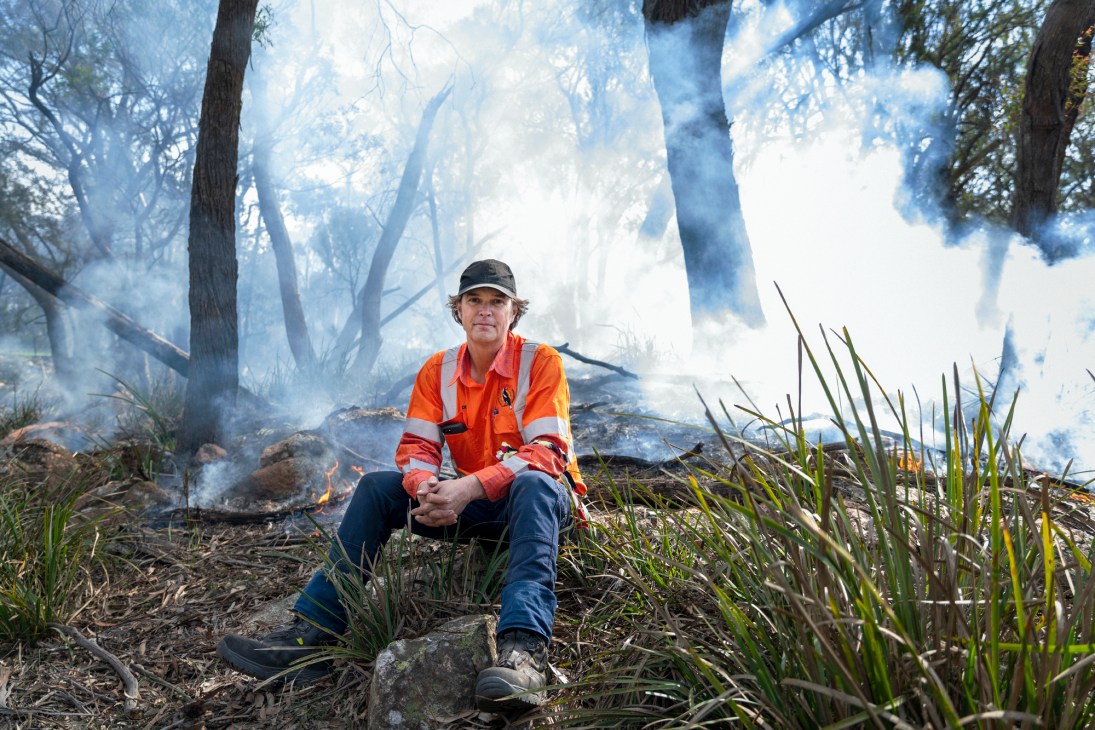
Research on the technical aspects of firefighting continues. Australia’s national science agency, CSIRO, has built a wind tunnel where researchers can light fires to improve their understanding of flame behaviour. “The last fire season got the creative juices flowing,” says CSIRO’s lead bushfire researcher Dr Andrew Sullivan. “But, of course, it’s about making them work.”
“This is about constant maintenance,” says workshop attendee Jim Osborne, a landowner from near the New South Wales-Victoria border whose land was badly burned. “That’s something that I’m now going to commit to.”
All systems go
An Austrian town prepares for worst-case scenarios
In the former Austrian mining town of Eisenerz, epidemics and other calamities strike with alarming regularity. That’s not because this town of 3,800 people in the picturesque state of Styria is fatally unlucky; it’s because Eisenerz is a hotspot for disaster-simulation exercises. In 2018, when its only hospital shut down, state authorities decided to repurpose it for emergency preparedness training. This became the foundation of Sim Campus, a sprawling complex designed to simulate all manner of accidents and catastrophes, both natural and man-made.
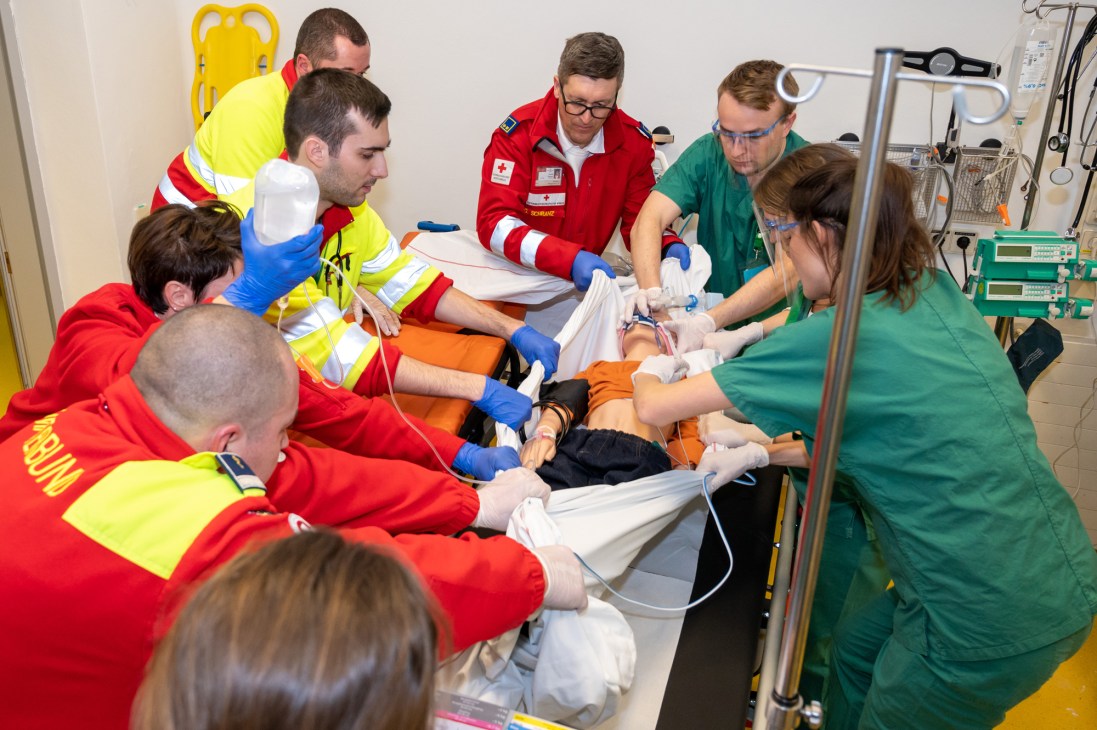
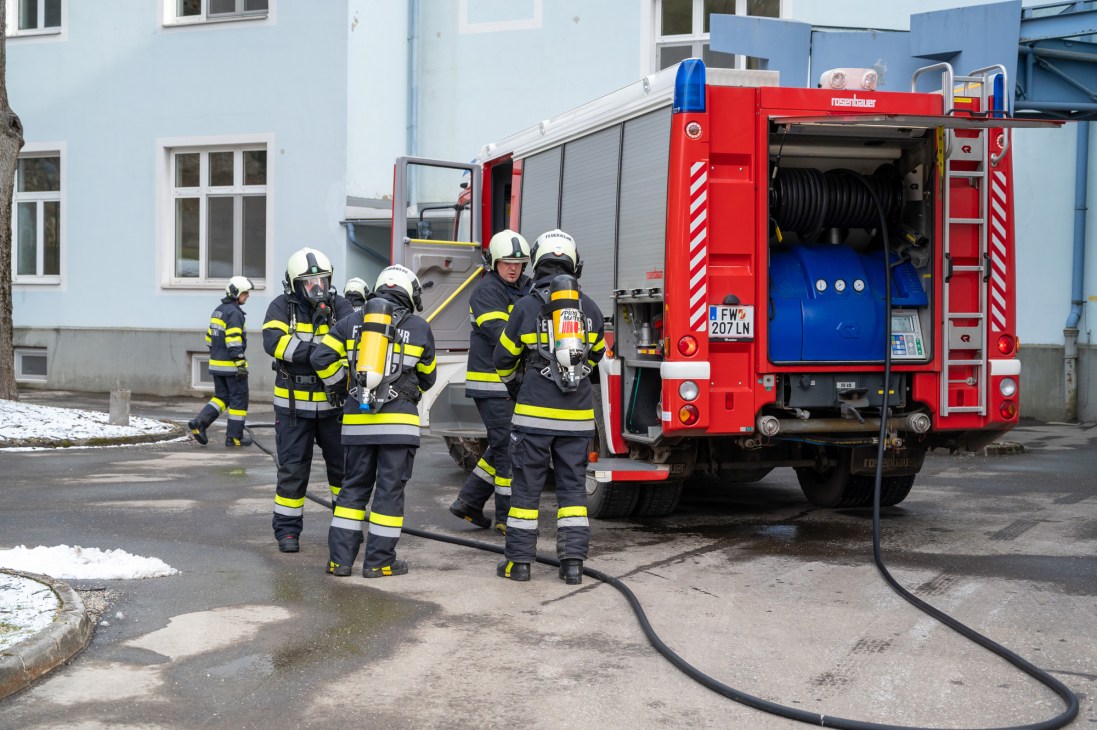
It’s this versatility that makes it unique. While most other such facilities are dedicated to a specific simulation scenario, Sim Campus specialises in “full process simulation, all in one place”, says Benjamin Roszipal, head of the Institute for Emergency Simulation. “For example, it could be the entire path of a patient, from the site of the accident to the patient’s transportation to an intensive-care unit.” The campus is scheduled for completion in 2025 and plans include a “tactical district”, comprising residential areas and key infrastructure, such as a school, bank and petrol station, as well as a “destroyed district” for search-and-rescue training.
There is some irony in the fact that residents now have to travel to the next town for hospital treatment. But the new campus has proven popular for the economic benefits it has brought to a region that has seen its population dwindle since iron mining came to an end. “The possibilities that arise from using the existing vacant infrastructure – empty factories, abandoned districts – can be seen as an advantage for Eisenerz,” says town mayor Thomas Rauninger.
Sim Campus is fully funded by the state of Styria. “It’s about exchange: we want people and institutions to tell us what sort of training they want to have,” says Roszipal. “And we will give them the opportunity to train here.”
Turning heads
Ten years ago, “revolution” was the word on everyone’s lips. From December 2010, citizens flooded streets across the Arab world in their millions to protest against the dictators and military regimes that had ruled their lives.
A decade on, the hope kindled during the Arab Spring has long since died out. Regime crackdowns have given way to civil wars; deposed leaders have simply made way for equally authoritarian rulers. Hundreds of thousands of pro-democracy activists have been jailed; countless citizens killed.
But while the Arab Spring has served as a disheartening lesson about the hurdles to achieving swift change, populations around the globe have continued to rise up against undemocratic leaders. There are success stories among them: Sudan’s 2019 uprising toppled Omar al-Bashir; Armenia’s 2018 Velvet Revolution ushered in a new government without any bloodshed. But what makes one revolution fail while another succeeds?
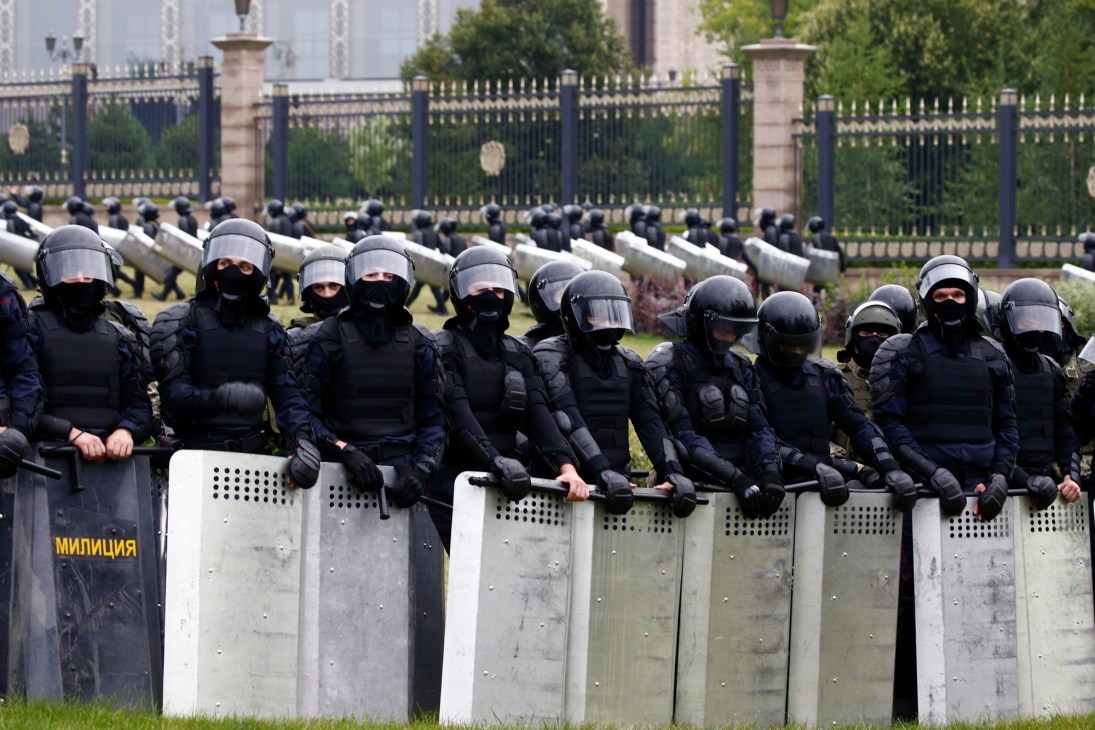
It’s a question that is surely weighing on the minds of Belarusians at the moment. After 26 years of authoritarian rule under president Alexander Lukashenko, August’s election – widely believed to have been rigged – proved the tipping point for a vast swathe of Belarusians, who took to the streets for months of largely peaceful demonstrations.

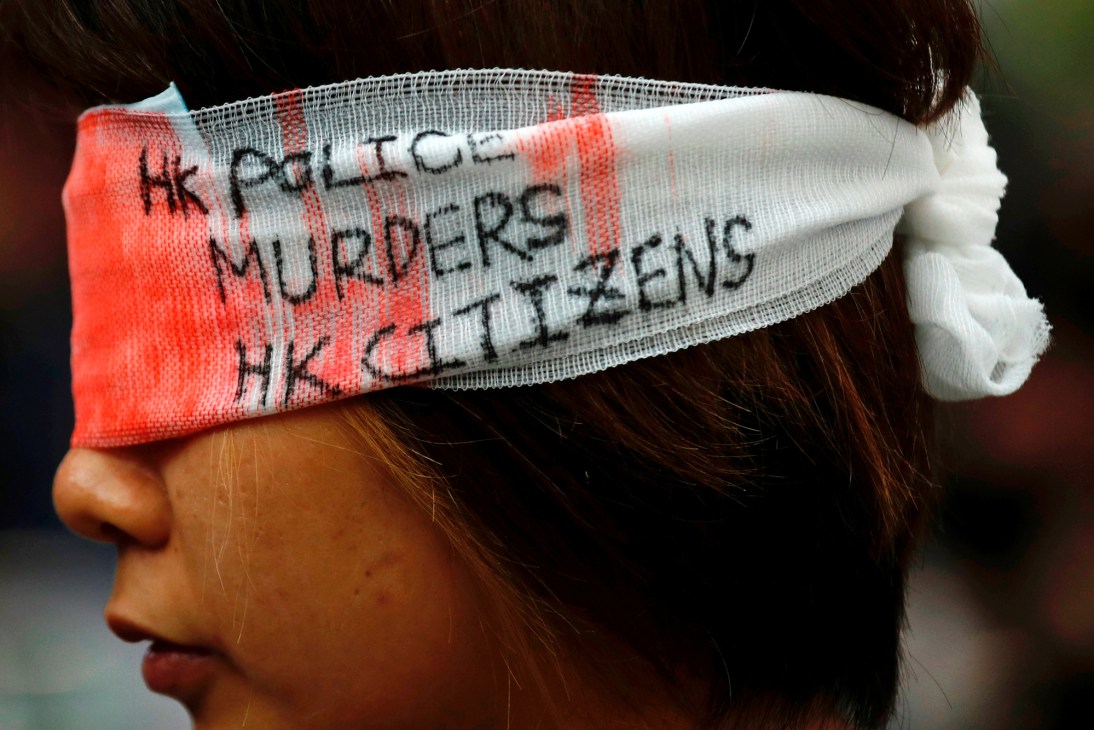
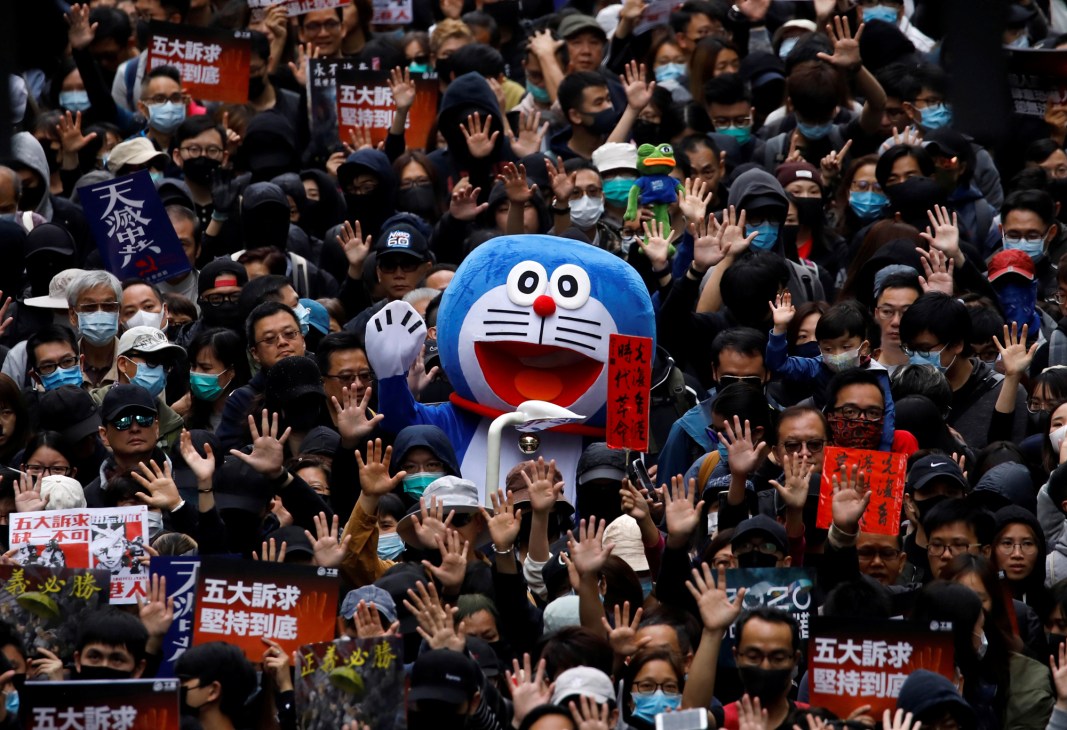
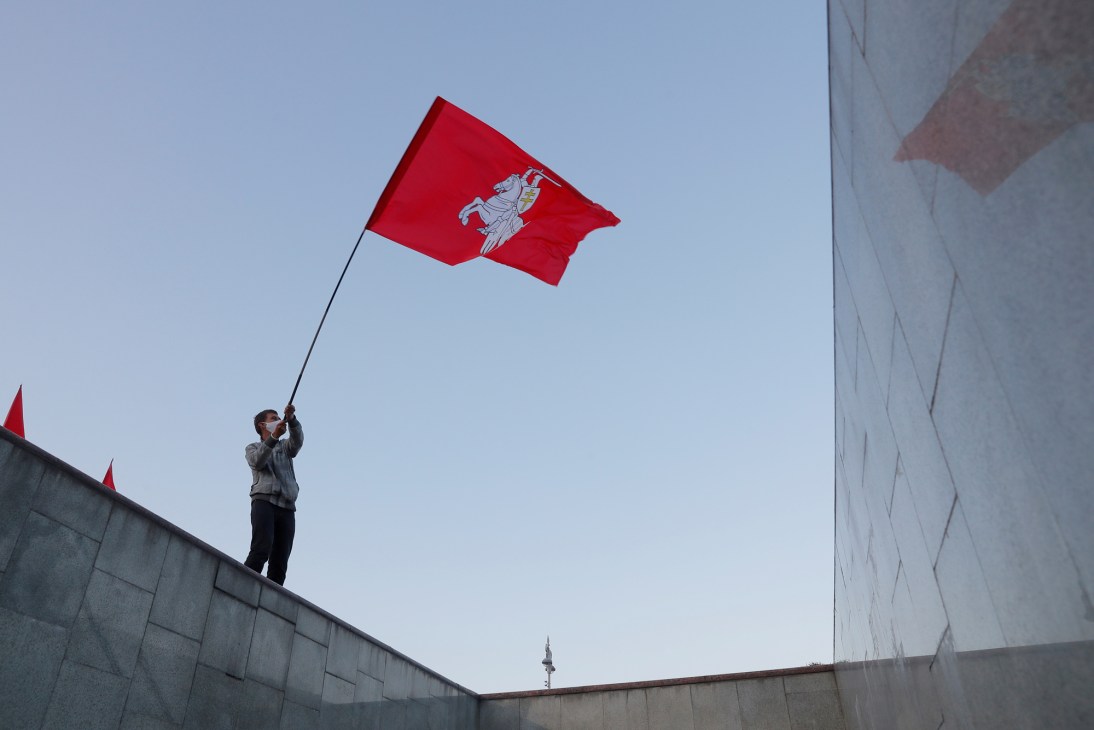
Belarus has already transformed political dissatisfaction and apathy into pro-democracy action – the first obstacle to achieving a revolution is starting. “Often the younger generation will become the vanguard of protest,” says Steve Crawshaw, the policy director of Freedom From Torture. Once a protest has the numbers, it’s about maintaining momentum. One of the foremost ways that can be achieved is by gaining international attention. With the eyes of the world watching, a movement not only receives further validation but authoritarian regimes are also put under pressure.
It’s a tactic that Joshua Wong, student activist and face of Hong Kong’s 2014 Umbrella Movement, knows well. As he told Monocle in an interview in early 2020 while protests once again flooded the city, he knew the power of putting a face on the fight for democratic change. “With my popularity and how under the spotlight I am around the world, it is part of my role to let the voice of people in Hong Kong be heard in different countries,” he said.
Yet sometimes even widespread international support isn’t enough, especially once fatigue on the ground sets in. “That’s the hardest thing when protests have been going on for a long time,” says Crawshaw. “The longer it goes on, when you have a specific set of protests and especially in a repressive context – the more difficult it is.”
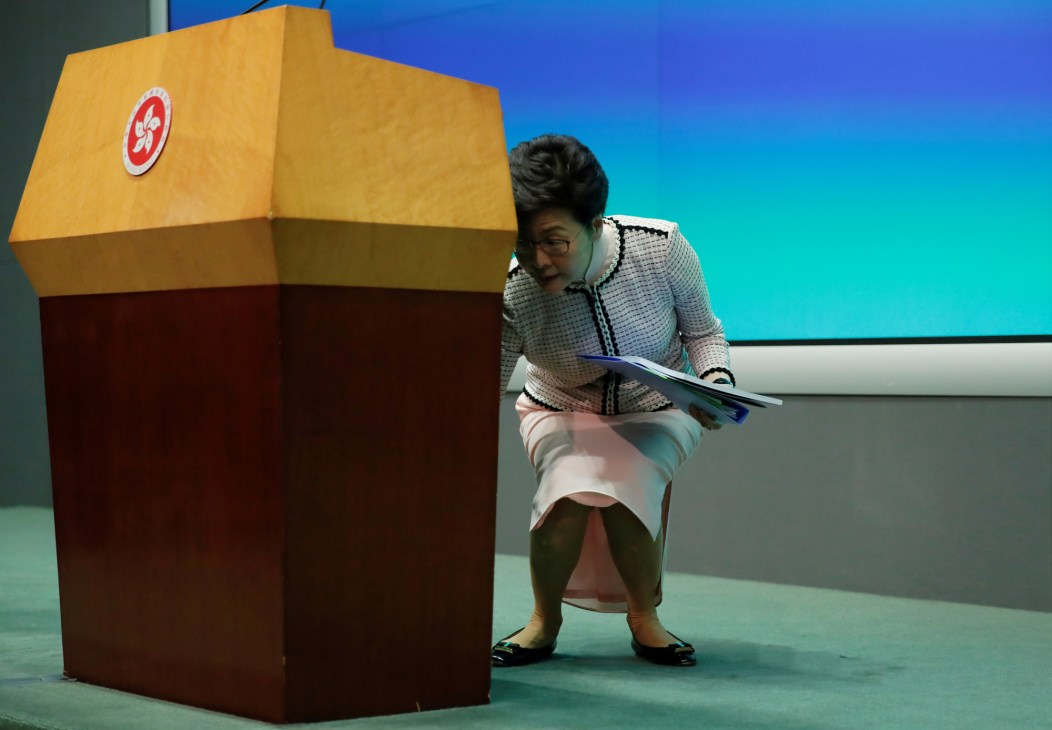
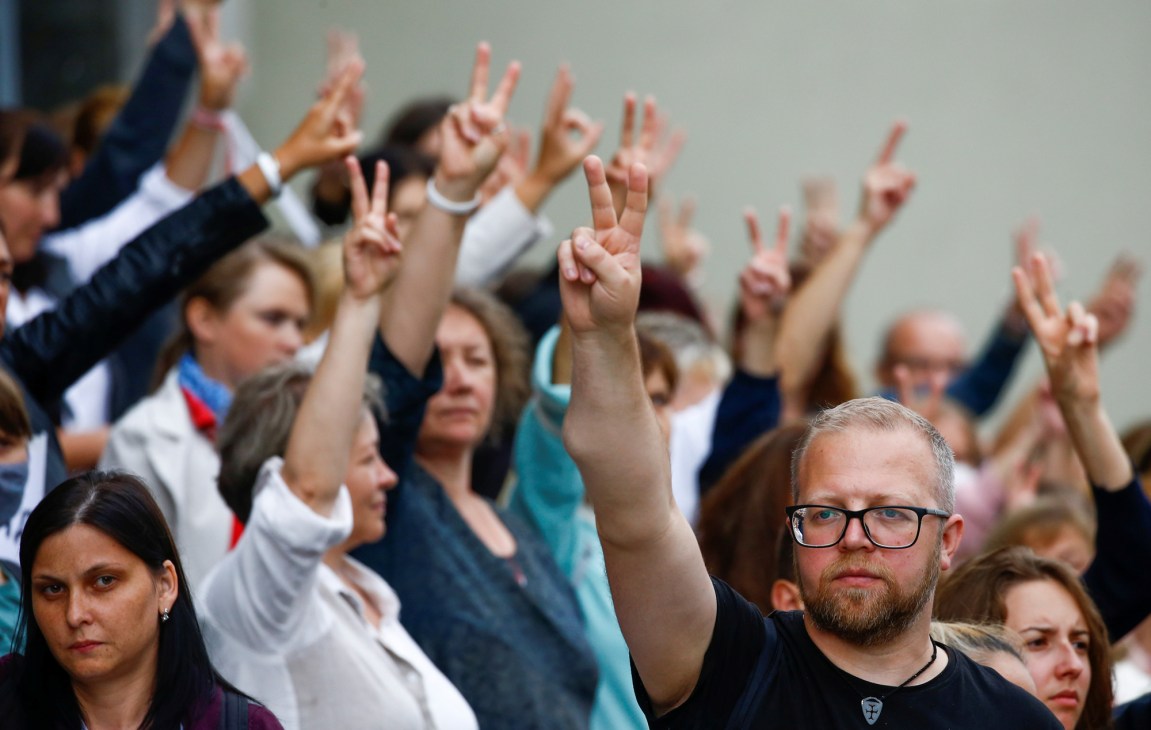
Oppressive states often resort to violence or police intimidation to help hasten fatigue. Yet doing so rarely strengthens their position. “The issue is: do they actually win through winning the battle that day?” says Crawshaw. “Do they win the war? History shows us repeatedly that the answer to those questions is no. If you kill 300 people, then probably fewer people will come out the next day. But that doesn’t help you very much in terms of trying to govern the country.”
What’s more, all too often violence can spiral out of control. Nowhere is this bloody lesson more true than in Syria, where Bashar al-Assad’s brutal response to the Arab Spring uprising in 2011 sparked a horrific civil war that has destroyed large swathes of the country, killed hundreds of thousands and displaced millions. Yet even if a violent crackdown on demonstrations doesn’t result in such all-encompassing destruction, it’s still likely to backfire. Not only does it bolster the public’s plight in the eyes of the international community, it can also help to galvanise citizens in their fight against the state.
Yet the past year has offered repressive states an alternative to violent clampdown. “Whether it’s in Hong Kong or Algiers, coronavirus has been authoritarian regimes’ best friend,” says Tin Hinane El Kadi, an Algerian researcher and political activist. “It has allowed them to have a strong argument to suppress protests and freedom.”
So with all the challenges that revolutions face in overthrowing a government and achieving a successful democracy, is there any reason for those on the ground to have hope? Yes, according to Crawshaw. Even if achieving freedom is still years or decades away, quelled uprisings shouldn’t be counted as failures, he says. “It’s just an unfinished story.” These hurdles haven’t yet had a deterring effect in Belarus, where protesters have continued to take to the street in the face of police violence, the detention of political opponents and a pandemic. As pressure mounts against Lukashenko, the spectre of revolutions’ most formidable hurdle looms ever larger: mistaking overthrowing a leader for overthrowing a system. While seeing a dictator fall might be cause for celebrations, it’s what follows that matters more. In undemocratic regimes, the apparatus of power isn’t a matter of bringing down one leader. Often a former ally is quick to step in; other times a sudden power vacuum sees a revolutionary take charge, only to later become corrupted by the undemocratic power structures that remain. Examples are myriad but Crawshaw points to recent uprisings in Zimbabwe or Egypt as instances where the new leader is just as repressive as the last, if not more so.

Wheel of fortune
Three revolutionaries on the successes and failures of recent uprisings in Algeria, Lebanon and Armenia.
1.
Tin Hinane El Kadi
Researcher and political activist
Country: Algeria
Revolution: Revolution of Smiles, 2019-2020
“Algeria has been an authoritarian regime, with the military controlling every aspect of life and social life, and since 1999, we’ve had a president in power [who] just didn’t want to leave the office. [In 2019, octogenarian Abdelaziz Bouteflika] was aiming to run for a fifth term. For many people it was a red line: it pushed many of them to the streets in February 2019. It was historic: millions of people [marched] between February and April. But even once the president officially resigned, people from his regime were stepping into power.
I think there are two levels of change. The uprising was successful in achieving its first aim, which was to stop a fifth presidential term. However, that was the only concession the political system was ready to make; real power-holders – the army – let the façade represented by Bouteflika go, while on the other hand keeping power. The core – the heart – of traditional power is very much in control. In that sense we haven’t yet succeeded in really radically changing the system.
Coronavirus has been hard for the movement. But I think the protest movements will resume incrementally. Even though politically, and institutionally, we haven’t yet made any significant gains – except from stopping [another term under Bouteflika] – we will hopefully be able to force the system to make some serious concessions.
We want a civilian representative and legitimate government that would be the result of transparent popular elections. I’m optimistic that things will change.”
2.
Obeida Takriti
Academic and political activist
Country: Lebanon
Revolution: October Revolution, 2019-2020
“People were not happy with the policies of the government, which were contributing to economic collapse. The protests were a reaction from the people – from all sides, all religions, gathering together – against the ruling authority.
There’s also a change in the discourse: you can hear people in a few parties who are talking about change in the system itself, to move from a sectarian system to a civil and secular one. There are some people who will be resistant because you are proposing something they’re not familiar with. Not every citizen in the country will be happy. And after the pandemic and the explosion in Beirut, people withdrew from the movement because they want to save themselves and their money, and to find a way out. I don’t blame anybody.
I think we are going in the right direction. There are coalitions forming and we are starting from a point where you acknowledge that we’re having an economic collapse; it’s not only about representation. The end phase of our plan is an election; it’s not the first phase.”
3.
Sos Avetisyan
Revolutionary-turned-MP
Country: Armenia
Revolution: Velvet Revolution, 2018
“We wanted to have a country that is democratic, one that respects human rights. [The president made] constitutional changes to steer the country into the parliamentary republic – which was a way of [having him] remain in power for longer. As a citizen, it was not acceptable for me.
Revolution is not a predictable event. With an increase in the number of the people on the street, it became more possible. Before, the public was sleepy. Once the public was mobilised, the rest was easy. One of the issues that we are facing now is corruption. We had to change the legislation accordingly; corruption was a way of governing. So you need to create effective bureaucracy. We also need to explain to the public that this is an investment in their pocket.”
Images: Reuters Pictures
Lay of the land
Sweden
Sniff of success
Truffle hunting
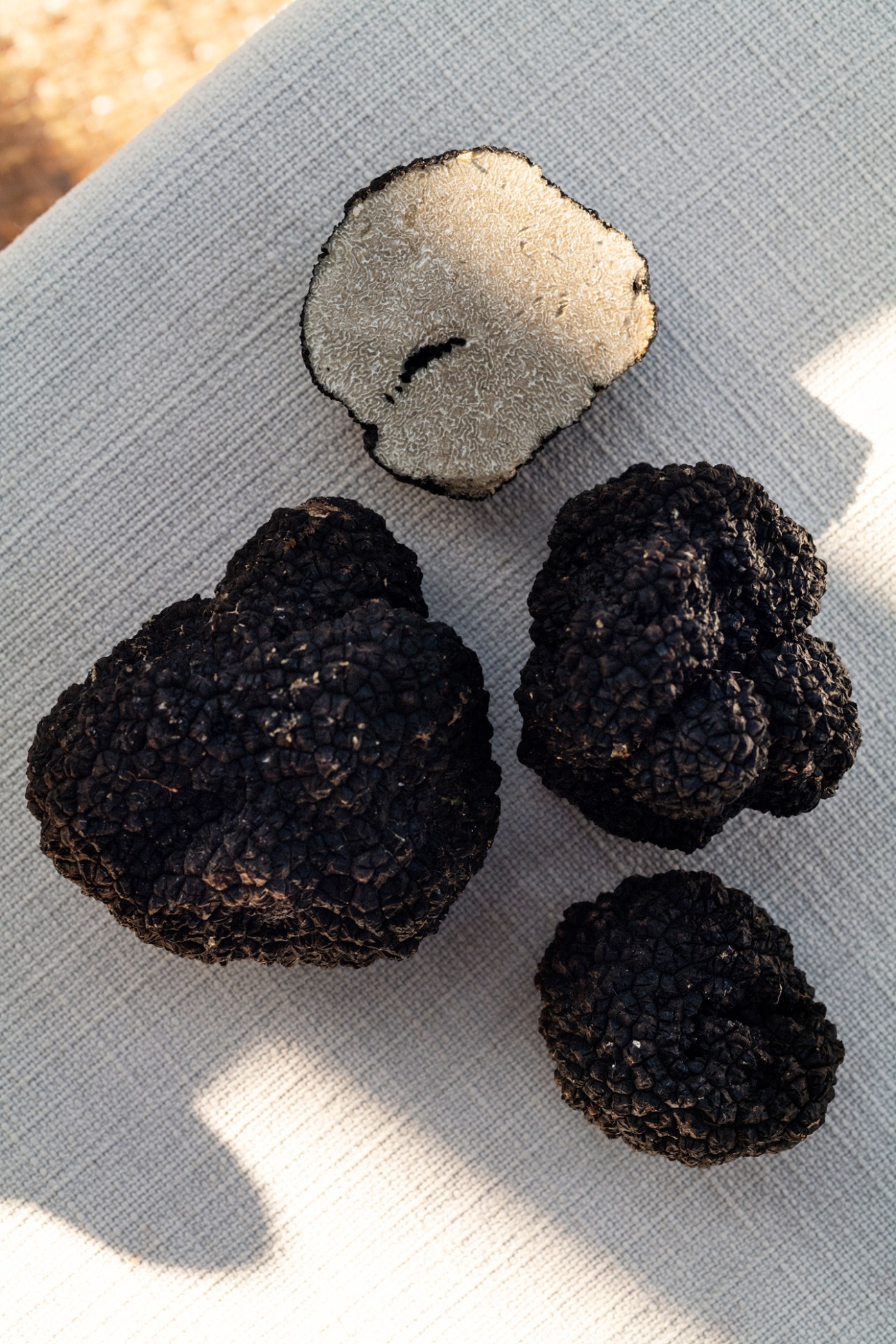
When Christina Wedén, a student of mycology (the study of fungi), received a call about unidentified “black lumps” on the isle of Gotland some 20 years ago, she could never have imagined that Sweden’s very own burgundy truffles would one day end up on the plates of Nobel prize winners. But that’s exactly what happened in 2013.
The Baltic island of 60,000 people is a hotspot for summer holidays but, until Wedén made her discovery, no one ever suspected its climate could host truffles. The aromatic delicacy grows among the roots of oak or hazel trees and is found with the help of specially trained canine companions. As climate change threatens many southern European states famed for their fungi, Gotland’s burgeoning community of truffle hunters is on the scent of a major breakthrough.
From October until December, truffle entrepreneur Susanne Welin-Berger works long days with her husband Olof Thomsson, their two dogs and 50 landowners across the island to harvest hundreds of kilos of truffles that are purchased by wholesalers, restaurants and individuals for about €0.50 a gramme. “The taste only holds for about three weeks so we have to ensure that it gets to those people as soon as possible,” says Welin-Berger. She does keep a frozen stash in order to make bespoke products such as salt, honey, whiskey and oil for Tryffel of Sweden, which was co-founded with two others in a cabin laboratory next to their sprawling orchard in the village of Östergarn.
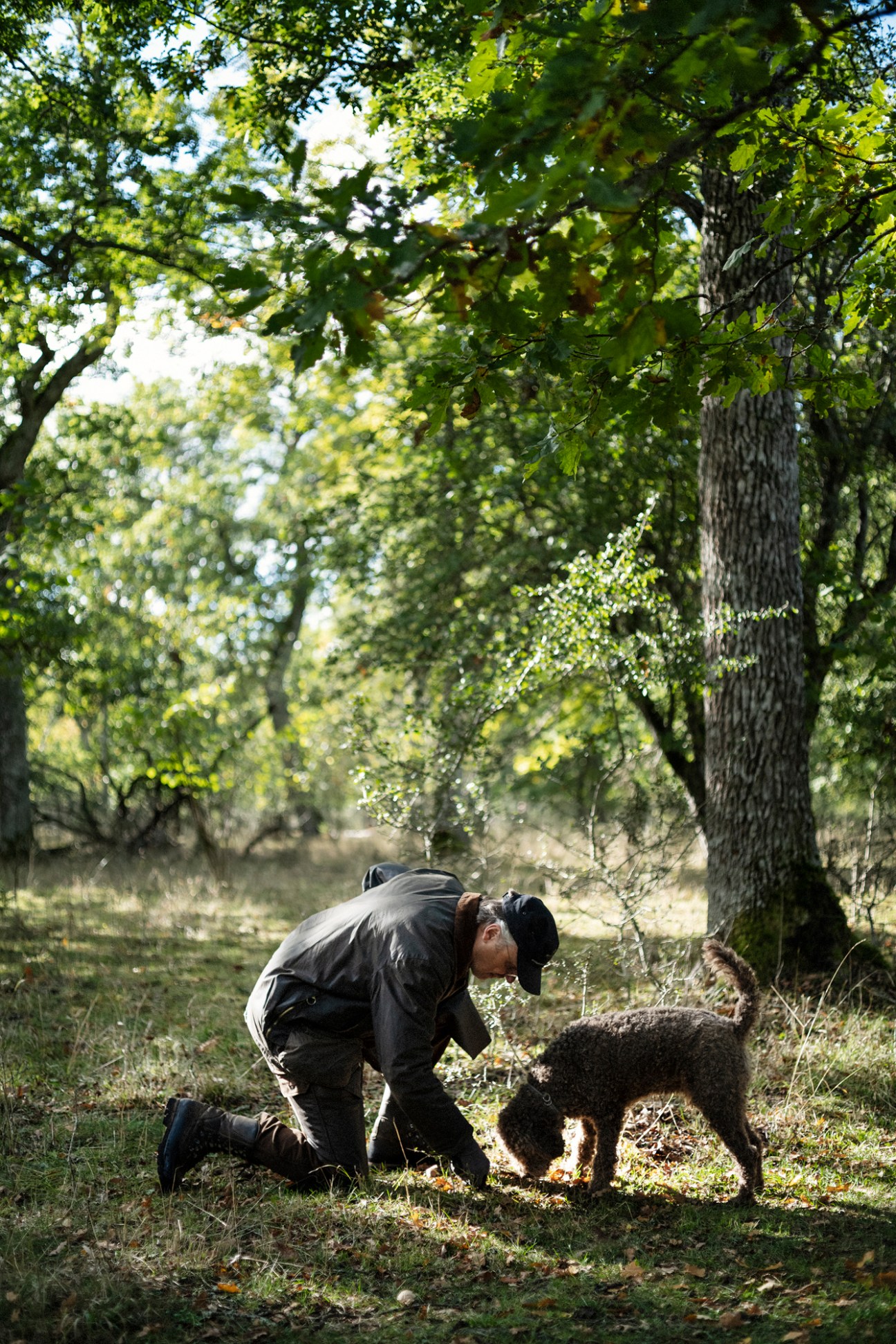
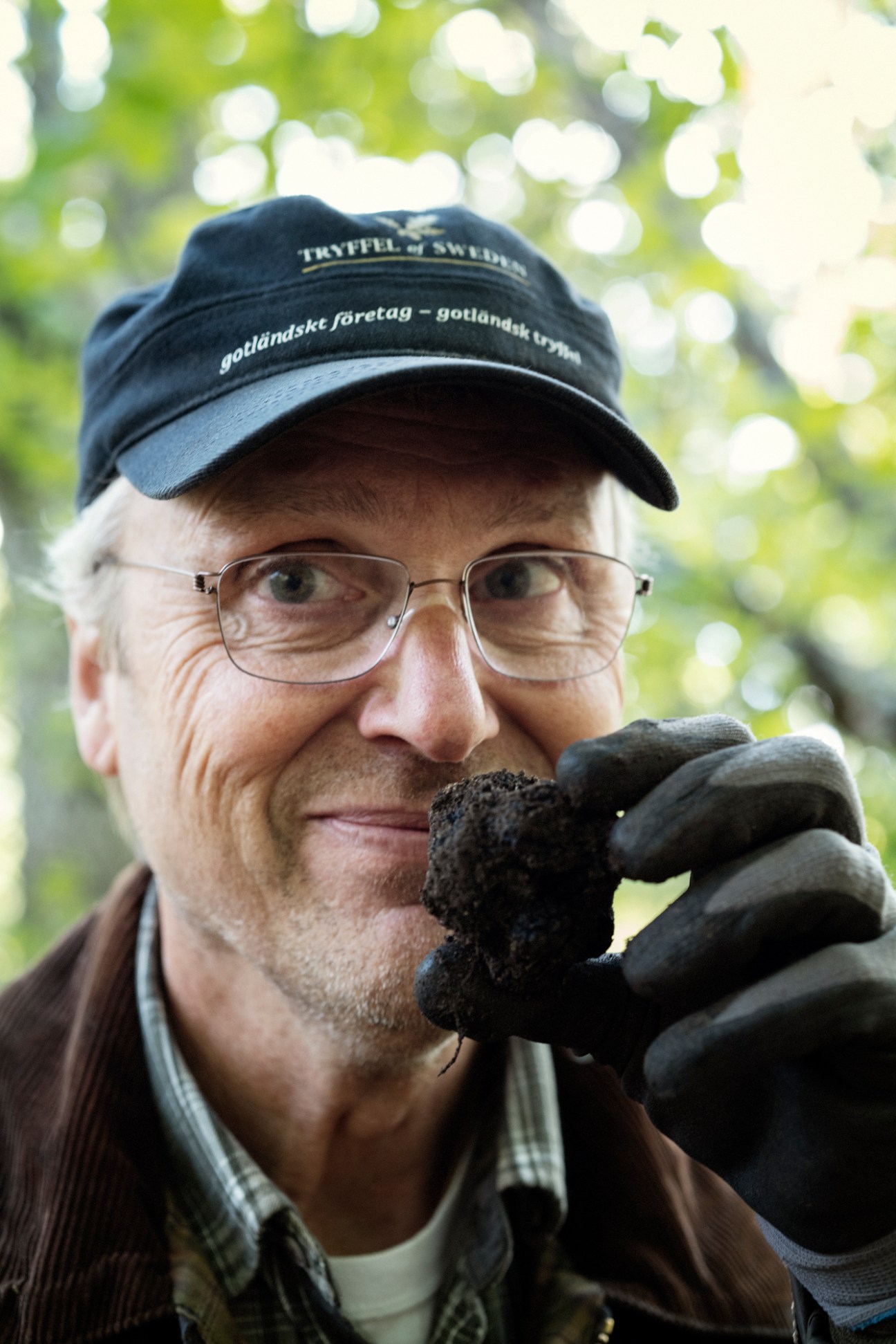
One of their occasional partners is Rickard Hasselblad, co-owner of Smakrike Krog & Logi restaurant in nearby Ljugarn. His menu is rich with truffle dishes, from risotto to purées and even crème brûlée. He also runs truffle safaris designed to show visitors the full harvesting process, from hunt to table, before serving a nine-course lunch. “At first it was hard because people didn’t want to talk about where the truffles were in case someone would come and steal them,” says Hasselblad. He tells tales of sniffer dogs being poisoned in Italy, where hunters compete for the fungi.
“At first it was hard because people didn’t want to talk about where the truffles were in case someone would come and steal them”
Thankfully, attitudes have relaxed in Sweden. Welin-Berger operates a more collaborative system, dividing profits equally among dog owners, hunters and landowners as a way of encouraging them to look after the island’s trees, where truffles can be found. With worldwide demand predicted to potentially hit a whopping $6bn (€5.1bn) by 2030, this sustainable approach might help Gotland capitalise on a sad reality: shrinking harvests in the Mediterranean. Academics fear that severe droughts caused by climate change could eradicate wild truffles in Spain, France and Italy (Europe’s biggest producers) by the end of the century.
Wedén, who now directs pharmacognosy studies at Uppsala University, has gone on to help develop truffle orchards not only in Gotland but in Estonia, Denmark and Norway as well. She believes that the isle could one day regain its medieval status as a key Baltic trading station for the Hanseatic League, “but as a focal point for truffles, which can spread from there and make the whole region stronger”.
Tokyo
Suite ambition
Hospitality school
Target failed to take off in Canada. Home Depot failed in China. And Starbucks famously failed to find its footing in Australia. Taking your brand overseas is no easy task. Doing so successfully often requires making clever tweaks to account for foreign cultures and tastes but international expansion can also lead businesses to lose sight of what made them successful in the first place.
Japan’s Hotel Okura Company, founded in 1958, has a smart plan to aid its international expansion efforts. It is launching a Tokyo-based hospitality course that will train its overseas staff (and other aspiring hoteliers) in an art that Hotel Okura has mastered: authentic omotenashi hospitality. Partnering with Tokyo Management College in Chiba, Hotel Okura’s two-year tourism and hospitality programme will teach the ins and outs of the business beginning in April, with an inaugural class of 40 students.
While most spots will be open to the public, three seats will be reserved for Okura’s overseas staff. The company already has 40 international outposts, from Amsterdam to Honolulu but it plans to raise that number to 50 by 2020. And doing so successfully hinges on providing Hotel Okura’s omotenashi hospitality. “Our mission is to provide an authentic Japanese service,” says Toshihiro Ogita, president of Hotel Okura Company. “We wanted to train our overseas staff in Okura’s Japanese-style hospitality as we expand globally.”
Some of the curriculum will be taught by Okura instructors, while students will have a chance to polish their skills with work placements at the group’s Tokyo flagship or its other Japanese hotels. But that’s not all. Hotel Okura has also partnered with Matsuda Culinary School for a one-year programme that will see a handful of its overseas chefs hone their skills in the kitchen before heading back out to one of the Okura hotels.
International expansion often waters down the values businesses were founded upon. But Hotel Okura’s investment, to the tune of ¥200m (€1.6m) over the next 10 years, offers smart lessons in how businesses seeking to expand internationally can do so without compromising their brand. And while Hotel Okura will cover most of the tuition fees for its selected staff, the rest of you aspiring hoteliers better crack open your piggy banks and get cracking on your applications.
Hong Kong
Concrete jungle
Construction boom
Hong Kong is a noisy place, there’s no denying it. My producer colleagues at Monocle 24 in London often wonder if I’m doing my radio check-ins next to a motorway. I’m not, I swear. Our bureau and shop actually occupy a “quiet” corner of Wan Chai. But single-glazed windows, a staple in Hong Kong, do little to insulate the sound of round-the-clock delivery lorries struggling up the hill, shaking chains and other loose bits of metal as their tyres screech, engines roar and horns blare.
The Hong Kong street soundtrack can make for an overwhelming playlist, especially when you factor in the constant air- conditioning, the general volume of Cantonese – commonly shouted rather than spoken – as well as an increase, of late, in sirens. Hotel reviews are full of advice to pack earplugs. Then there are the dreaded jackhammers. Many live in fear of these thudding construction tools that pound away at the ground, creating foundations for the city’s skinny skyscrapers. I spent my first few years in Hong Kong being stalked by this noise. Jackhammers followed me from house to house before I realised, when going around with estate agents, that I needed to check for signs of developments out of the window, rather than a mountain or harbour view.
After six years I have essentially tuned out this racket but one sound has been cutting through the white noise recently: drilling. Shopfitters have been audibly busier of late, stripping out old fixtures, putting in new shelving and transforming abandoned and boarded-up businesses into new ventures. This is particularly noticeable around our outpost in Wan Chai: a bustling mixed commercial and residential neighbourhood surrounded by small, independently owned shops selling everything from curtains to custard tarts.
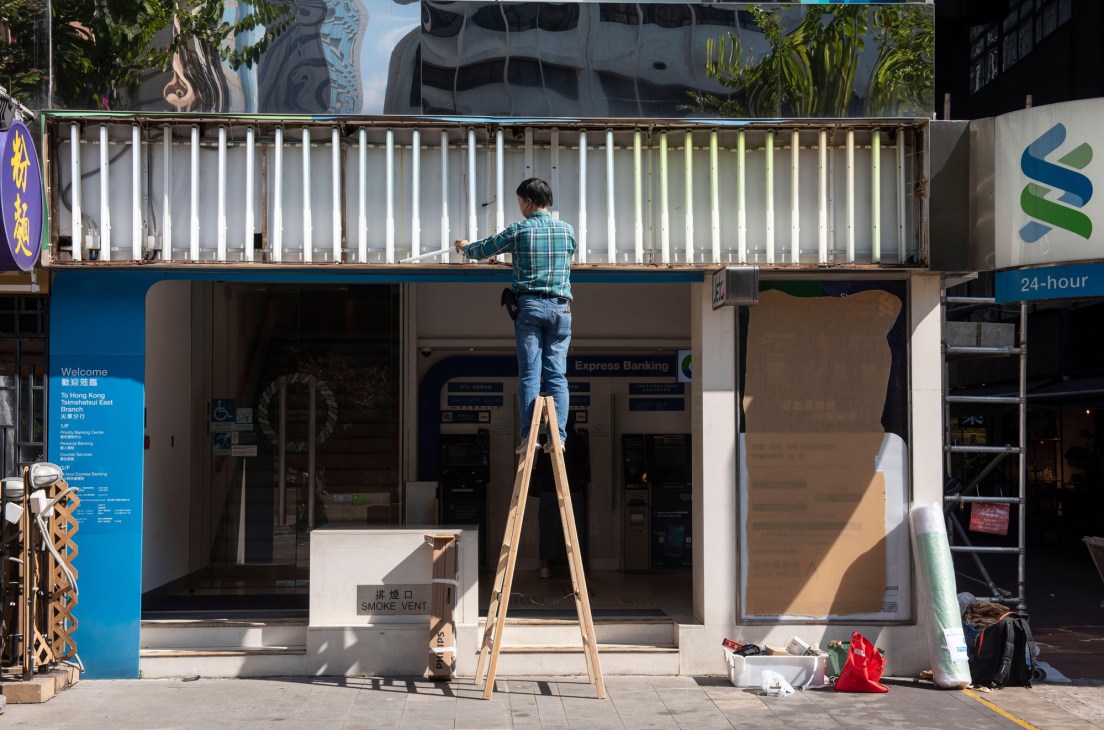

Right now, what passes for window shopping in the neighbourhood involves peering into these windowless cement shells, trying to remember what the empty shop used to sell and guessing what the dusty mess will soon become. Perennially shirtless shopfitters get on with their sweaty work at a frantic pace, minus any face coverings – perhaps the only people not wearing masks in Hong Kong, despite the evident health benefits.
There’s a lot of work to do. Businesses in Hong Kong have been walloped in 2019 and 2020 by the twin forces of political unrest and the coronavirus pandemic – bricks and mortar has been hit harder than most. Nonetheless, this city is built on trade and it has a deep pool of buyers, sellers, importers and exporters, ready to give their concept a go. Acoustic insulation would certainly be a sound idea.
I’ll admit it: my drilling index is by no means scientific. Sophisticated investors seeking an edge might still want to rely on reams of data or drone camera footage of the container lorries moving into and out of the port. Chinese money managers, meanwhile, will continue to place their stock decisions in feng shui and the invisible flow of energy. (The water-cooler chat on that front is that 2022 is going to be Hong Kong’s best year ever, so the next 12 months could indeed be an opportune time to secure a prime location at a favourable price.)
But from where I’m sitting there’s no substitute for on-the-ground information and there’s nothing more grounded than working in a shop – even if it’s a noisy business.
Finland
Causing a stink
Dogs that can smell coronavirus
ET, a four-year-old white Swiss shepherd, observes the four tin cans laid out in front of her with a mix of excitement and apprehension. Inside one of them is a skin sample from a person who’s been infected with coronavirus. Inside the others are samples from people without the virus. ET’s job is to spot the infected one. She gets a cue from her trainer and off she goes – straight into a photographer’s lap, whose long lens and gizmos ET finds far more appealing than the tin cans. “Let’s do this again,” says trainer Tommy Wiren. “From the way she pants, I can tell that she’s too excited. Her nose won’t work right.”
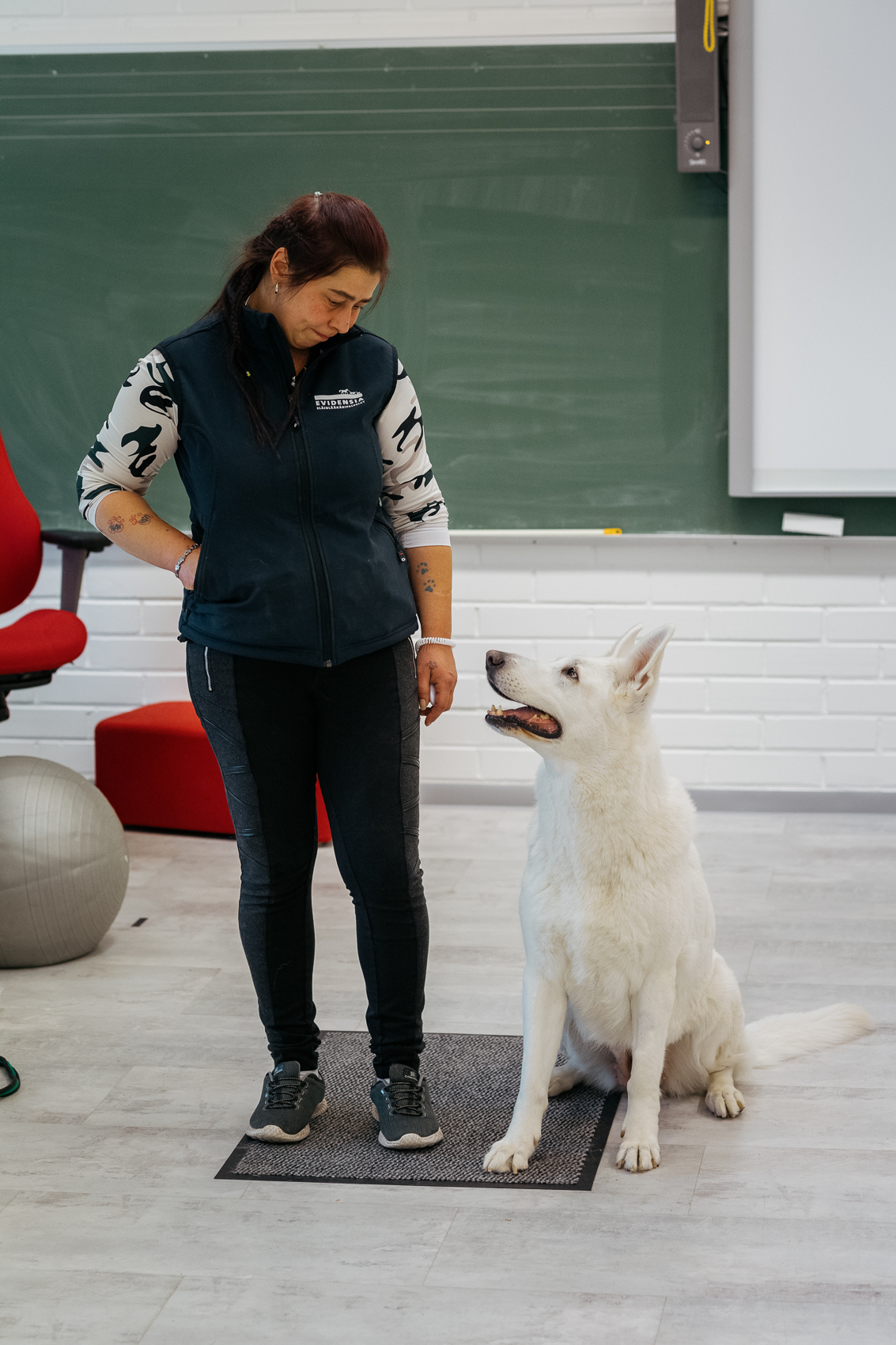
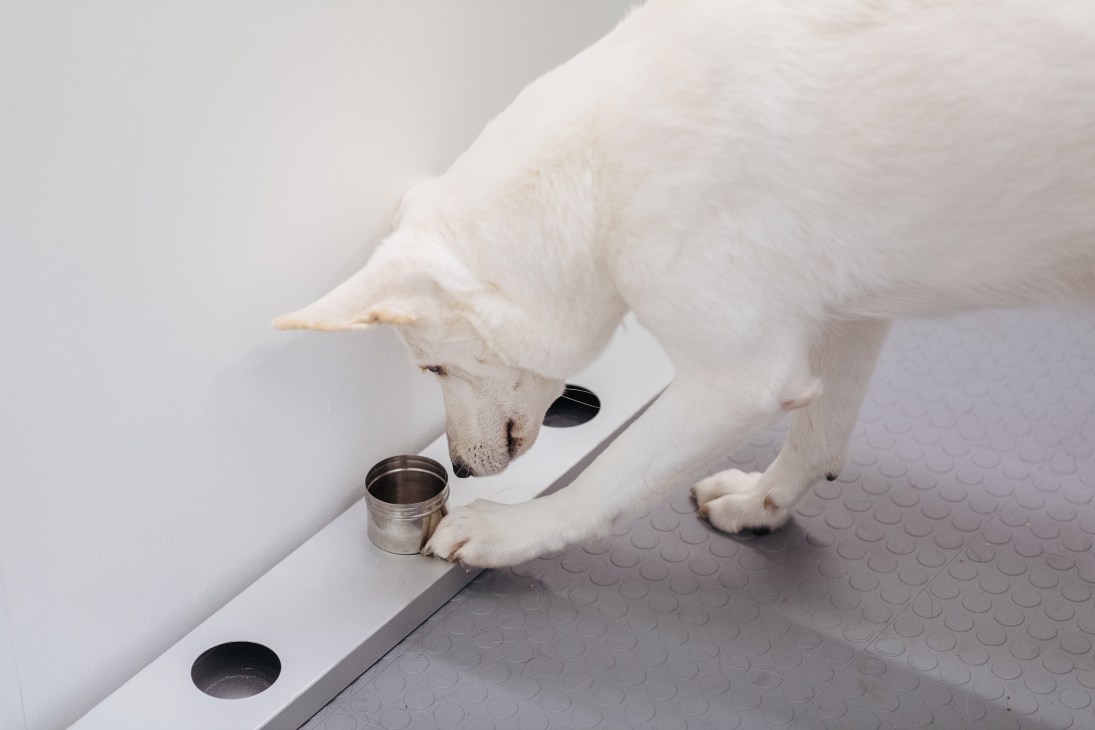
After overcoming her disappointment at not getting a treat, ET gets a second chance. Those present shuffle to the side with hopes of not distracting her. And she’s off. She smells all four tin cans and after a split-second decision starts to scrape the correct one. ET, like most of the dogs trained here in the Finnish city of Vantaa, has an almost 100 per cent track record in identifying coronavirus infections. Once you get her to concentrate, that is. “Not all dogs are cut out for this,” says Wiren. “Some don’t like being around crowds, others lose interest in sniffing humans after a while.”
Wiren is the chief trainer in a pilot project run by Wise Nose, a Finnish voluntary organisation specialising in training sniffer dogs. Sixteen of its pooches have started working at the Helsinki-Vantaa airport in an experiment that could transform international travel during the pandemic. Research from Helsinki University shows not only that dogs, whose sense of smell is roughly 18 million times stronger than that of humans, are close to perfect at spotting the virus but also that they are able to detect it before the patient develops any symptoms.
Back at the training centre, ET is blissfully unaware that she might one day save the world. She and her twin sister Leku are more interested in barking at Musti, a labrador, who has just arrived. Some of the dogs trained here are as young as seven months; others, such as Kössi, an eight-year-old greyhound, are seasoned veterans who know exactly what they’re doing. Kössi is somewhat of a media star in Finland and has lent his nose for the greater good of mankind for years. He can, among other things, smell if someone has cancer.
Helsinki’s canine coronavirus experiment is unparalleled in its scope. It has piqued the interest of much larger airports in countries such as Germany, the UAE and Australia. Imagine if we could travel freely again without being subjected to unpleasant nose or throat swabs and long antisocial quarantines. And all with just a little help from man’s best friend.
Marvellous noses:
1.
Frida, a labrador retriever and rescue dog with the Mexican navy, helped to save 11 children after a 7.1 magnitude earthquake struck Mexico City in 2017. She retired from duty in 2019, having taken part in more than 53 rescue operations.
2.
Murray, named after tennis pro Andy Murray, has used his nose to help combat poaching in Nepal’s Chitwan National Park. Partly thanks to its innovative use of sniffer dogs, Nepal is among the world’s best at fighting poaching, even achieving zero poaching-related deaths of tigers, rhinos and elephants in 2014.
3.
Sierra, a husky in Wisconsin, alerted her owner to ovarian cancer by putting her nose on her own owner’s stomach and making a fuss. Impressively, Sierra not only detected the cancer once but four times in all.
USA
Brave new world
Pivoting to survive
When the pandemic hit the US, design commissions for restaurants, hotels and offices vanished overnight – and designer and artist Matthew Moore found himself rethinking his company. Over the next few weeks, his team at Mateo Goods in Phoenix, Arizona, focused on developing an object to meet the changing working habits of Americans: a minimalist sit-stand desk. “It’s about serving what people need right now,” he says.
Available in Baltic birch, walnut or white oak, it was released on IndieGogo this summer and raised $250,000 (€215,000) in a month. “[2020] has been a terrible year,” says Moore. “But now is a good time to think about the basis for businesses, families, friendships – and make that more sustainable.”
“Now is a good time to think about the basis for businesses, families, friendships, and make that more sustainable”
It’s a message that resonates with Patrick Robinson, founder of sustainable clothing brand Paskho. Although the high-performance men’s and womenswear was already made to high environmental and labour standards in China and Laos, he wanted to do more. “As I watched the unemployment rates go up, the social unrest, the inequality, the people at food banks, I made a choice that we had to have a bigger social mission,” says Robinson.
He decided to bring back manufacturing to provide jobs for the thousands of highly skilled people suddenly without work, from Broadway seamstresses to factory workers. He is now working on creating a co-operative model so that his new employees can also have ownership of the New York company. “We call it a community because as makers we’re all equal,” he says. “We believe that the so-called gig workers should have more rights.”
Then there’s female-led filming hub Upriver Studios, which is hoping to provide jobs in upstate New York. It opened a massive soundstage mid-pandemic to provide a sustainable, coronavirus-secure option for new productions. “Questions of equity, justice and opportunity have been everywhere in 2020,” says Laura Callanan, founder of impact investing non-profit Upstart Co-Lab. “I think the creative economy has a big role in addressing them.”
Gibraltar
Path least travelled
Tales of the unexpected
If you’d asked me 12 months ago where I thought I’d go on holiday in 2020, Gibraltar wouldn’t have crossed my mind (writes Christopher Cermak). But as a British territory, it was exempt from the UK’s quarantine rules that applied to Spain, which is why my partner and I decided it was a good place to spend a week. It turns out that Gibraltar and I have a lot in common. Not only does it celebrate my birthday as its national day but it’s also linguistically and culturally confused. As an American-Austrian I throw German into my English and English into my German; Gibraltarians do the same with English and Spanish (which they call “Gibberish”). Throw in alluring beaches, hiking opportunities and dolphins, and I’d call this one of those fortunate decisions that remind you of the wonders of spontaneous travel. Planning to go where you always wanted is nice but you never know what you might find without looking. Gibraltar, I’ll be back next national day at the very latest, when the pandemic has eased and we can celebrate my birthday in style.
For more stories like this, sign up to the Monocle Weekend Edition at Monocle.com/minute.
Geneva
Rolling with the punches
Motor shows take stock
At the Geneva International Motor Show in 2019, the impending death of the format was as much a topic of conversation as the new cars being unveiled. Several notable manufacturers had decided to skip the event, including Jaguar Land Rover, Ford and Volvo. They had determined that the return on investment wasn’t worth it with so many cheaper ways to get media attention. Now coronavirus has, in all likelihood, hastened the demise of the traditional motor show. If Geneva does return in 2021 (the 2020 outing was cancelled as the virus spread across Europe) – far from a sure thing – we may see more car-makers opting to skip it.
“Recently we’ve seen a change in the importance of key European shows and have had to adapt”
It was at the 2019 show that Honda launched its delightful electric car, the E. Despite the show’s notable absences, Honda’s little car attracted a big crowd. Honda says that motor shows remain an important part of its marketing efforts but the company also acknowledges that the market is changing. “Recently we’ve seen a change in the importance of key European shows and have had to adapt,” says Nik Pearson, who as head of European PR for Honda Automobiles is in charge of a team tasked with addressing these challenges. “We’ve increased our attendance at events that are not traditionally associated with auto brands,” he says. In fact, shortly after the industry unveiling at the Geneva Motor Show, Honda held the official public debut for the E at Milan Design Week. As an urban car pitched at younger, design-conscious drivers, Pearson says it was the ideal fit.
A clear shift is taking place in the auto industry. Manufacturers are trying to pitch themselves as “mobility” providers, rather than simply car-makers, in an effort to open up the range of products and services that they can offer. As electric engines and advancing technology allow for different types of cars and new models of ownership, manufacturers want to broaden their horizons – and the range of people that they can sell to. Part of the move away from the traditional auto show is about creating some distance from the past.
With hopes of keeping pace, motor shows have begun to rebrand around broader mobility themes as well, positioning themselves as the place for top talent in mobility to meet, exchange ideas and present their visions to the world. The Detroit Motor Show has made a gear shift in that direction for 2021. Instead of taking place in January, as it long has, the show was rescheduled for September, which will allow for outdoor demonstrations of new technologies and mobility solutions, among other things. While many other motor shows are headed in the same direction, car makers might find that even as the big events modernise and adapt, they can still get more exposure at lower cost with a direct marketing campaign online where they control the narrative, or a surprise appearance at an unrelated cultural event.
So does that mean that every car launch will be held online from now on? Unlikely. There is still nothing quite like pulling back a sheet to reveal a brand new car to a packed crowd. “These events provide manufacturers with a unique opportunity to meet the customer face to face, capture their imagination and create a deep impression,” says Pearson. But hopefully what emerges will be events that offer a refreshed take on mobility and something more in tune with the needs of today.
Global
Only good on paper
It’s time to rethink the Human Rights Council
Ideas for reforming the UN are often made in bad faith and tend toward the simplistic. Here’s one that we offer with total goodwill: abolish the UN Human Rights Council. The UNHRC’s membership has been prompting mordant eye-rolling since its foundation in 2006. Nations that have served their statutory three-year term have included Eritrea, Bangladesh, Libya, Somalia, Egypt, Qatar and Afghanistan, among others whose only interaction with a human-rights organisation should be as defendants. In 2021, China, Russia, Cuba and Pakistan will take up seats. The UNHRC is such a grim joke that it put Donald Trump on the right side of history: his withdrawal of the US from the UNHRC stands as one of the few foreign-policy triumphs of his presidency. As for what might replace the UNHRC, here’s another easy solution: nothing. That’s $116m (€99m) a year saved right there. And maybe a few nations whose human-rights records actually merit respect could form their own organisation and advocate by example.
Global
Do we still need them?
The future of large facilities
Berlin’s new Brandenberg airport opened in October – at perhaps the worst moment in the past 50 years – amid the vast slump in plane passengers due to coronavirus. Meanwhile, Tokyo’s Olympic facilities are finished, despite concerns over whether the Games will actually take place and whether anyone will attend. Other megaprojects also face the prospect of quiet openings. What to do? Call the whole thing off?
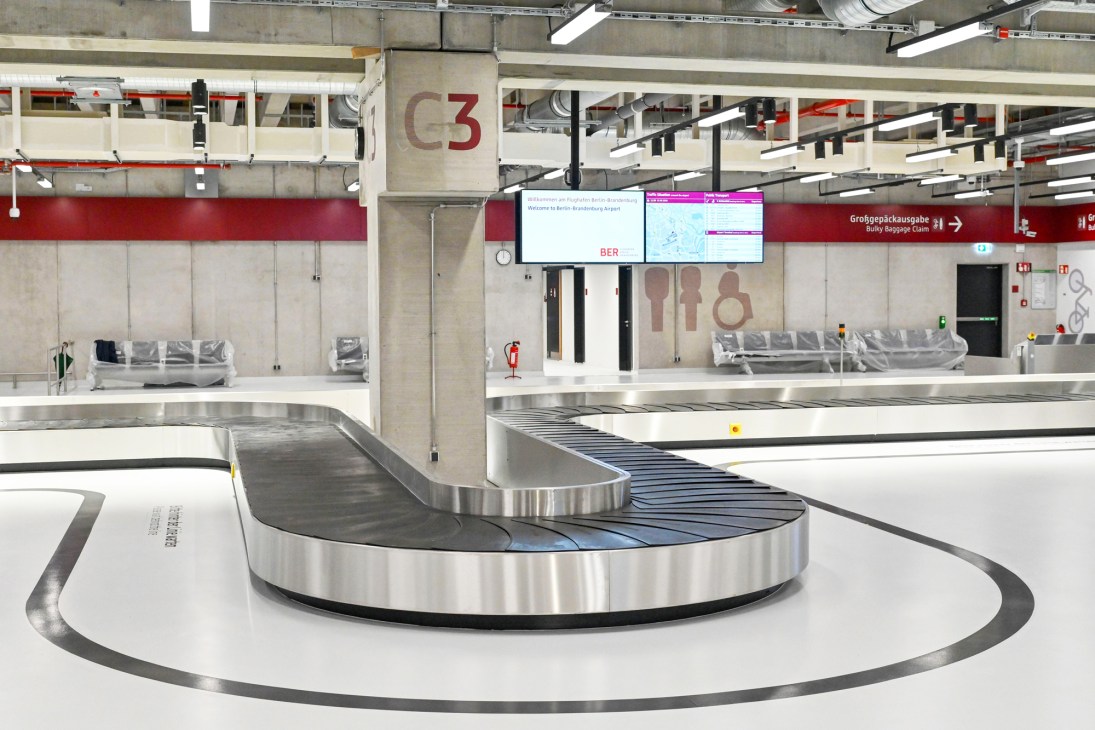
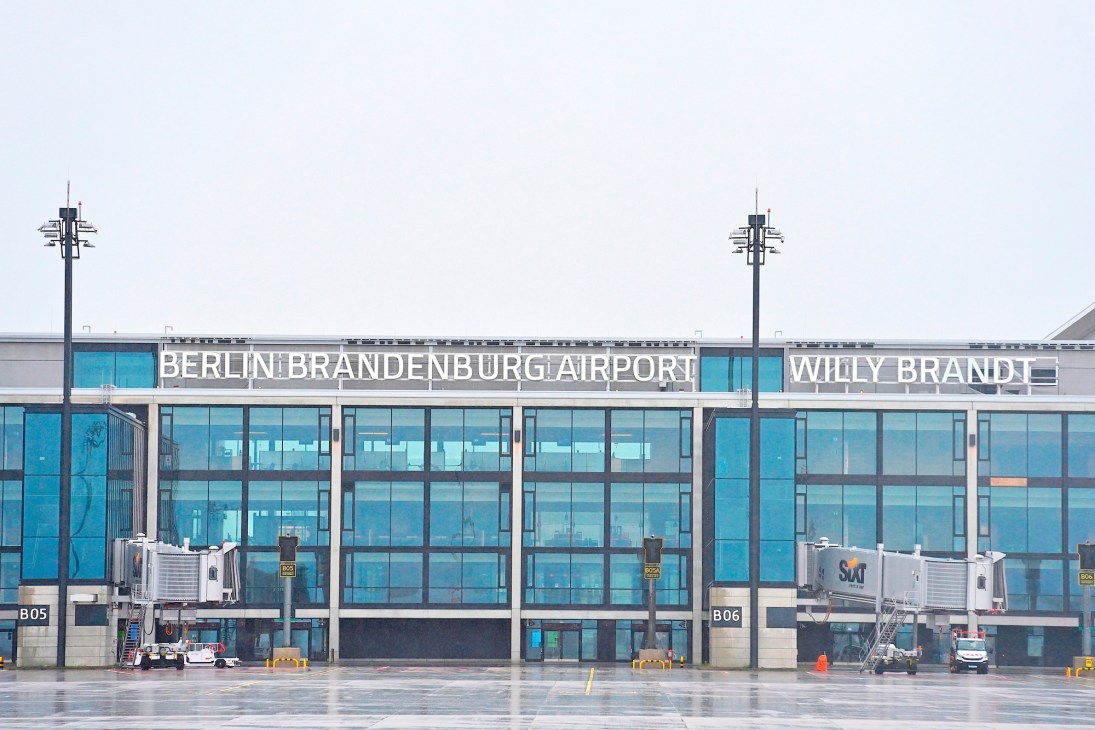
For projects where ground hasn’t been broken yet, this is possible. Several airport expansions have been canned, mostly because they hadn’t really begun. But for those underway, with contracts issued, or even recently completed, it’s a little more complicated. For airports, there’s some hope (despite dips in passenger numbers, cargo traffic has remained steady and is likely to increase) but most athletic venues under construction will be superfluous in their current form.
Tokyo has reused facilities wherever possible. Housing for athletes is easy to turn into housing for residents but the Athens 2004 softball field and the Beijing 2008 kayaking course still sit empty. The Lusail stadium in Qatar, for the 2022 World Cup, will be partially repurposed into housing and shops. Such facilities point to a question that we should be asking about expensive public buildings: if things don’t change, what else might we do with them?
Images: Alamy, Getty Images
Tyler Brûlé on why 2021 should be the year when we leave no one behind
We’ll start by coming clean on a glaring omission within our pages: you won’t find much in here about US leadership from January 2021 onwards. While some print-media brands have chosen to push their publication dates back to wait for a result, we decided to press on for a variety of reasons. First, because it’s a big, wide world and there’s more to focus on than the US. Second, there are more pressing issues and ideas that need airtime. And third, Monocle has other outlets better suited to reporting on the road to inauguration day: our daily newsletters (subscribe at Monocle.com/minute) and, of course, our round-the-clock radio service (tune in at Monocle.com/radio).
On the day we sent the forecast to press, I sat down with another president – a more empathetic, wise, measured and attentive type of leader. Simonetta Sommaruga is well known in the offices of other European leaders and in diplomatic circles but she’s not quite a household name, like New Zealand prime minister Jacinda Ardern. Nevertheless, as president of the Swiss confederation, she’s a confident, engaging and pragmatic force currently heading up one of the world’s most stable democracies. During our conversation in her spare but well-appointed corner office, she touched on a variety of topics that you will find in the pages of this magazine. But a key subject that we agreed on was the need for more responsible media, more funding for public-service news outlets and the need for a free press that allows for more debate and civic engagement. (You can read and hear more from Madame Sommaruga in our forthcoming Swiss-themed December/January issue and across our Monocle 24 programmes and podcasts.)
On the train back to Zürich one of Sommaruga’s comments kept ringing in my ears. “We want to bring everyone along,” she said. “No one should be left behind.” As we sped along, the simplicity of her statement made me think that others might also want to consider these words when looking at their business plans or policy documents.
Over the past 12 months, we’ve seen hundreds of millions of elderly people “shielding” and cut off from society; shouldn’t we be asking ourselves whether we’ve really done enough to bring the silver set along? In a year when so many business leaders have been celebrating their savvy digitisation moves, it took a panel of design and media experts on stage in Lugano to remind us how disconnected many over the age of 70 are. When asked about whether the digital divide is narrowing, every panellist referred to a parent who doesn’t know how to use their mobile phone, is bombarded with poorly worded “alerts” and is stressed or feeling inadequate because technology has moved too fast and there’s no one at the end of the phone or who can pay a visit to support them. It might work to move bank customers to a tablet, or public-transport passengers to an app, but we should remember that it doesn’t work for everyone. Just as there are provisions made for the visually impaired or for those with physical disabilities, there’s a need to consider the millions who have trouble working a fiddly touchscreen of tiny apps.
If 2020 was the year that finally showed the very real problems with the free-for-all that is social media (false hopes, fake cures, suicides prompted by schoolyard shaming, a beheaded teacher in France), then this theme needs to carry on into 2021 and the owners of these businesses must be held to account. It needs to not only hurt but stop. Likewise, we should have a very honest discussion in agms, boardrooms, parent-teacher evenings and on shop floors to highlight the very real problem of digital disconnection. There is much good that comes with digitisation but we shouldn’t be fearful of calling out something that’s sold to us as progress but is, in fact, little more than a cost-saving shortcut that fails the customer, the citizen and civil society.
Looking ahead, we hope that the essays, reports, interviews and products in these pages help to inform and improve your 2021 and beyond. As ever, we’ve gone the distance to challenge what you might be reading or watching elsewhere, while also addressing the topics that we feel require greater scrutiny or more than a walk-on part.
Having pulled off one successful, in-person event of scale in these times (see more on The Chiefs conference here), it is our intention to host an Asian edition as soon as possible – and we’ll be returning to St Moritz next September. Meanwhile, we look forward to seeing you in London, Zürich, Merano, Tokyo, Los Angeles and Toronto – or possibly at a new address. Wishing you a happy, healthy and prosperous new year. Cheers and thank you for your support.
The future of hospitality
There are many changes afoot in the hospitality industry. Although apartment-sharing apps have been gaining ground, nothing beats the service and sense of place of a good hotel. Opening one is now about engaging with the community rather than creating an ivory tower of comforts removed from the neighbourhood. It’s about the human touch, trained staff and good design. We speak to three general managers from around the world and ask what’s on their agenda for 2020 – and how hotels are likely to evolve.
1.
Downtown LA Proper Hotel
Los Angeles
General manager: Stephane Lacroix

LA-based Frenchman Stephane Lacroix has lived in the US since 1994. He’s worked in more than 11 hotels, from Hôtel de Paris in Monte-Carlo to Baccarat in NewYork. He now heads the Downtown LA Proper Hotel, opening in early 2020.
Why did you get into hospitality?
Growing up in France, I got used to good food and drink at an early age. I knew if I couldn’t make it in sports, I’d work in hospitality.There’s an artistry and ceremony to it; it’s a team effort.
How are you preparing for the launch of Downtown LA Proper?
The past year has been about building our team and ensuring our hotel caters to our guests, as well as the community. We’ve been knocking on doors and taking our neighbours out for coffee.
What sets the hotel apart?
A strong sense of identity. The building, dating from the 1920s, used to be a private club – we’ve kept the pool and basketball court and reinvented the spaces as guest suites. Our designer, Kelly Wearstler, knows the city well and looked to Downtown LA as her muse. We also partnered with a local f&b duo: Suzanne Goin and Caroline Styne. The area is one of those rare parts of LA where you can ditch the car and walk – and it has a great dining and cultural scene.
What constitutes good hospitality?
It should be genuine, welcoming and consistent. The focus should be on the comfort of the guests and a seamless experience from start to finish.
What are your plans for 2020?
Proper Hotels will have four hotels by the end of 2020: San Francisco, Santa Monica, Austin and Downtown LA. In 2021 we’ll open our fifth in Portland. properhotel.com
City picks
Lacroix’s essential LA stop-offs.
1.
The restaurant
Enjoy Suzanne Goin’s cooking at our hotel, with farmers’ market-fresh ingredients.
properhotel.com; thelucquesgroup.com
2.
The museums
Moca, Lacma and The Broad put on amazing exhibitions all year round.
moca.org; lacma.org; thebroad.org
3.
The fair
The second edition of Frieze Los Angeles will offer an amazing programme in February.
frieze.com/fairs/frieze-los-angeles
4.
The event
When the LA Lakers or LA Clippers play in the nba championships next year, the Staples Center will be rocking.
staplescenter.com
2.
Paramount House Hotel
Sydney
General manager: Eden Elan
Eden Elan began working for Russell Beard, Ping Jin Ng and Mark Dundon – the team behind Paramount House Hotel and Paramount Coffee Project, among others – as a waitress six years ago. Today she’s the general manager of the 29-room Paramount that opened its doors in Sydney’s eastern suburb of Surry Hills in 2018.
What does being a GM involve?
I love hospitality and enjoyed crossing over from restaurants to hotels. It’s not so different: it’s all about good service, being passionate about your industry and kind to your guests. As our hotel is small and independent, I do look after staffing and operations but find that my role is a bit more detail focused: I source new suppliers and make sure our guests feel at home.
What sets the Paramount House Hotel apart?
We’re a small team so we’ve started collaborating with like-minded brands and companies to round out the experience. For example, we’ve teamed up with the China Heights Gallery round the corner to obtain the hotel’s art installations and we’ve also partnered with the Golden Age Cinema and Bar in the building, which shows films in the former screening room of Australia’s Paramount Pictures headquarters.
How do you engage with the neighbourhood?
We’ve only been in the building since 2018 but several other tenants already have an established following, such as the Paramount Coffee Project. We’re able to tap into these communities so that guests come in and see a buzzing place full of local people. They feel part of the community and Sydney right away. This is the new landscape for hotels: finding a way to integrate into a neighbourhood.
What constitutes good hospitality?
The biggest thing is to pre-empt someone’s needs – being able to give someone something they didn’t even know they wanted is the key.
How are hotels changing?
We’re moving away from a rigid structure and the old definition of luxury. People are looking for more local and community-based hotels with service that’s more approachable. Creating a well-designed room isn’t the hard part: having intuitive staff who care is much harder. A hotel stay is a personal, intimate experience, so creating a connection with people, by taking the time to get to know them, is invaluable. Our hotel was designed by Breathe architects to get better with age – the copper façade will gain a patina – and that’s how we run the hotel. We want to improve with time.
paramounthousehotel.com
City picks
“As licensing laws are beginning to relax,” says Elan, “we’ll be seeing a more vibrant nightlife in the city.”
1.
The restaurant, Cafe Paci, a pop-up by chef Pasi Petanen, has opened permanently in Newtown. cafepaci.com.au
2.
The bar, Dear Sainte Éloise invites winemakers and young chefs to run the bar for a night. dearsainteeloise.com
3.
The shop, At Provider Store in Surry Hills, owner Tara Bennett makes most homewares herself. providerstore.com.au
4.
The gallery, Visit The White Rabbit for modern Chinese art. jnprojects.net/white-rabbit-gallery
3.
The Park Hyatt
Tokyo
General manager: Hervé Mazella
Provence-born Hervé Mazella worked at various top hotels, including Grand Hyatt Hong Kong, before joining Park Hyatt Tokyo, one of the most admired hotels in the world, in 2012. He’s been in his current role since 2016.
What’s the role of a GM?
A general manager brings energy and inspires positivity. It’s important to be out and about on the property, meeting guests and the team – to feel the pulse. There is no bad day, even when things are busy and stressful. I often tell people coming into our industry that to do this job you need to think with your heart. You have to care about things and love people. Everyone plays a part in a hotel. At all levels we are here to serve with humility. For me, this job is a lifestyle.
What constitutes good hospitality?
At a simple level, good hospitality is attending to and exceeding needs. There shouldn’t be any saying “no”. Above all, guests need us to get the basics right. We aspire to provide comfortable bedding, a calm atmosphere, a simple lighting system, easy connectivity and good water pressure. We can make a long list. From the earliest auberges to the hotels of tomorrow, people want comfort, a place to feel welcome, good food and somewhere that gets the basics right.
What should no hotel be without?
A soul, a personality, an identity. You want to be able to walk into a hotel and feel something. Good service means being devoted to people and requires a great deal of passion, empathy, care, flexibility and attention to detail. Technology has changed the business but the rules of hospitality remain. The show must go on: shoes laced, ties straight, smile in place, grooming impeccable. It’s like a performance, where each individual has a role to play. This ballet of doormen, receptionists, housekeepers, chefs and waiters is choreographed and runs like clockwork thanks to planning and care.
What does the future hold?
Some hotels try too hard and make things too complicated. Guests want us to understand what their needs are at that specific moment. Even if you profile guest preferences, people come to hotels at different points in their life and their preferences change. We’re all evolving and the team should be mindful of that.
Are you getting excited about the Olympics?
Of course. It is a great event and opportunity for Tokyo and Japan. However, we have to bear in mind that it’s three weeks out of 52. We’ve been operating for more than 25 years and we’ll continue after the Olympics.
hyatt.com
City picks
“Tokyo is in a constant state of change,” says Mazella. “I like to get ‘lost’ and explore areas where you can learn about the local culture.”
1.
The restaurant
Robataya is like live entertainment as the chefs grill the ingredients you’ve chosen from what’s on display.
roppongi-robataya.com
2.
The bar
New York Grill and Bar at Park Hyatt Tokyo on the 52nd floor has 360-degree floor-to-ceiling windows. There are live jazz performances every night.
restaurants.tokyo.park.hyatt.co.jp
3.
The gallery
Scai The Bathhouse showcases the best of Tokyo’s contemporary-art scene.
scaithebathhouse.com
We’re sold
Beige Habilleur
Paris
“We’re not into the fantasy of a guy from the 1930s wearing a complete tweed suit – that’s too extravagant for today,” says Basile Khadiry, co-owner of Beige Habilleur, Paris’s standout contemporary menswear boutique. “We have tailoring but we also have sneakers – as long as they are well made.”
Khadiry – who has previously worked for Louis Vuitton and Ami – and his business partner Jean-Baptiste Ménétrier started Beige Habilleur as an e-commerce business in 2015, before they opened the bricks-and-mortar location in 2018. It’s in a former sushi shop on a bustling road in the city’s 16th arrondissement. The bourgeois, family-friendly neighbourhood is undergoing a cultural boost thanks to influential residents such as artistic director Franck Durand, who opened Holiday café and its retail arm Holiday Boileau nearby and encouraged Khadiry to follow him. Durand worked on the art direction of Beige Habilleur alongside Paris-based architectural duo Lecoadic-Scotto. They outfitted the store with polished concrete flooring, pine cabinetry and a ceiling painted a David Hockney blue.
The modern, light-filled space feels right for this refreshing mix of menswear, which spans cool tailoring, sportswear and great knits. There’s an exclusive selection of UK brands such as coats from Grenfell and Mackintosh, sought-after Japanese names such as Cohérence and denim brand Resolute, and timeless styles from German knitwear line Heimat and US sportswear brand Camber. There’s also a concession store for Drake’s, which occupies a small corner space. The offerings extend beyond clothes: titles from leading French magazine distributor Les Editions du Kiosque occupy one of the walls.
Such in-store exclusives and personal touches, including a made-to-measure service for Justo Gimeno’s famous Teba jackets and an alterations service with local denim aficionado Super Stitch, has seen the brand transition successfully from an e-commerce presence to a destination store. Plus the neighbourhood, says Khadiry, is assuredly on the up. “Now a lot of people are moving back from the east of the city to the west, where they were born and raised.” Besides, he adds, shopping in the Marais just isn’t what it used to be: “Real people aren’t even living there anymore; it is just full of Airbnbs.”
What stands out most is Khadiry’s obsession with tracking down exceptionally made items with a unique sartorial history. They include the efforts of Irish shoemaker Padmore & Barnes, which made the original Wallabee for Clarks, and French tie-maker Boivin, which made ties for historic Parisian shirt-maker Charvet. “In each category we find the best in terms of quality and design.”
If there is something Khadiry can’t find he’ll probably just get it made in-house, as he has with a new line of shirts released under the Beige Habilleur brand. “We couldn’t find the right old Oxford shirt, like Brooks Brother or J Press in the 1960s with the six buttons and no lining in the collar or cuffs,” he says. The shirts are made in France in light, easy fabrics and Khadiry was fastidious about every element. “In the 1990s the logo was the message – now it’s more about how it’s made, why it’s made that way and where it is made.”
beigehabilleur.com
Basile Khadiry’s top picks:
1.
Doek shoes: Japanese deck shoes made from kimono fabric.
2.
Teba jacket by Julio Gimeno: An iconic Spanish item that’s a mix between an overshirt and a jacket.
3.
Camber mock neck: A true US workwear brand.








Lapo
Lisbon
Lisbon’s booming tourist scene has seen the inevitable upswing in restaurant and shop openings aimed at cashing in on the influx of travellers. Yet how many more stores selling tinned seafood or fusion dining concepts does the Portuguese capital need? Husband-and-wife team António and Bruna Guerreiro decided to address the issue head on by opening Lapo, a new shop-meets-gallery-meets-restaurant geared towards residents and visitors eager for a bite, good conversation and a bit of culture. “Talking with friends, we noticed going out had become a dull experience, with everything geared towards moving people through the door and treating them as numbers,” says António.
Opened this autumn in the Bica neighbourhood in central Lisbon, much of Lapo occupies a former bakery that has been tastefully converted into a shop; it sells clothing and accessories designed or commissioned by the couple and produced in Portugal. During renovation they uncovered a nook behind a stone arch and placed the cashier’s desk there. An original marble wall was retained, while the remaining space was painted in a soothing shade of navy. Patrons browse a smart selection of T-shirts, tiles, ceramic sculptures and prints, many of which feature playful black-and-white designs by Bruna herself – the gifted illustrator from Brazil studied at Central St Martins in London.
The twist in this easygoing retail model is the hidden attraction behind the changing room, which in the evenings is opened to reveal a low-lit room for dining, drinking and taking in a show. The tasting menu is not overly complicated, with dishes including duck breast in a pear-and-orange sauce. The entertainment varies from night to night, be it a jazz trio, stand-up comedy or performance art, where audience participation is encouraged. “We wanted to inject the arts into the equation and get people to interact, linger and just have a good time,” says António.
Upstairs the atmosphere is relaxed, with a café that serves tapas-style dishes and communal seating where patrons eat at wooden tables once used by bakers to knead dough. In adjoining rooms you’ll find a bar serving cocktails with names inspired by great thinkers (try the Carl Jung creation made with Lourinhã brandy, lemon juice, egg whites and Angostura bitters) and a relaxed lounge lined with books and vinyl where, on weekends, a resident DJ plays.
The owners are buoyed by the initial response, with locals and tuned-in holiday-makers eager to catch a show and browse Bruna’s designs. A fun take on the “concept store” formula, Lapo inspires a convivial atmosphere and doesn’t take itself too seriously. Adds António: “Culture is good for the soul. We’ve just reimagined it with retail and food.”
lapo.pt
What to buy:
1.
Illustrated T-shirts with catchy phrases
2.
Simple black-and-white prints
3.
Paintings and photographs by up-and-coming artists are for sale upstairs
Von Maur
Davenport, Iowa
It’s only November but in one section of the NorthPark Mall in Davenport, Iowa, Christmas has come early. The entrance to Von Maur – the original location of a department store chain with 35 shops, mostly in the Midwest – is graced by two large Christmas trees, with more visible inside, perched beneath garlands of pine needles hanging from the ceiling. The light is warm and inviting. There are two convincing replica fireplaces, plenty of elegant wood panelling and piano music wafting around, not from speakers but a Yamaha upright played by a woman with a pile of songbooks next to her.
As many US department stores go bankrupt, from the internationally renowned (Barneys) to the strictly regional (ever heard of Younkers?), Von Maur is not just surviving but thriving. It opened two new shops in 2019, with plans to open one or two more annually “for the next several years”, according to director of advertising and e-marketing Jessica Stoltz. The company, whose spaces tend to anchor big shopping malls, has experienced “steady growth, which enables us to continue opening doors in the measured way that we do”, adds Stoltz. The firm has been owned by the Von Maur family for 147 years; the family tends to avoid press (they declined to speak for this article) and don’t share sales data about their company.
That family ownership is key to the company’s success according to retail expert Nicole Reyhle, co-founder of the Independent Retailer Conference. “Because they are privately held they don’t have the same pressure from investors that places like Sears have,” she says, referring to another once-admired, now-bankrupt chain. “Von Maur’s values and perspective on business are a little different to those of a publicly traded company. As stores have concentrated on online, many have lost focus on bricks and mortar – but Von Maur decided to continue to focus on what I’d call old-school customer service.”
Staff at the Davenport store are attentive and helpful. When asked what they like about working at Von Maur, everyone mentions customer interaction first. Leona Hedquist, who has been at Von Maur for 30 years and works in the men’s department, says: “The Von Maur family are very good at hiring people who like people. If we cannot help a customer here we’re going to send them to a place where they can help you. And Sofia here,” she adds, gesturing to a colleague, “if you buy a dress shirt, she’ll steam it for you. I keep a stash of candy for the men, because men do not like to shop on the whole.” Many staff have been with Von Maur for decades and it is known to pay well compared to similar businesses.
Customers seem as happy as the staff. “They still do gift wrapping – a lot of stores don’t,” says shopper Kimberly Johnson. Von Maur also does free US shipping from its shops and there’s no time limit on returns.
Von Maur seems highly attuned to its markets too. It has ample selections from brands such as Kate Spade, Tory Burch and MZ Wallace, which are quite fashion forward in a city whose major employers are tractor brand John Deere and the US army.
No one would call Von Maur “directional” but the shop exudes a specific point of view in a way that department store chains tend not to. Goods reflect how locals shop: cashmere scarves and Chicago Bears hats are displayed near each other, since a man might need both. People wanting face creams will find a Kiehl’s store, rather than a generic Clinique selection.
“Retail is not dying, it’s simply evolving,” says Reyhle. “Consumers are demanding stronger experiences.” Which means some of Von Maur’s traditional tendencies – old-school service and live music – are a strength in modern times.
vonmaur.com
DMS’s single-item focus – a new direction for retail?
The opening of Dover Street Parfums Market in Paris offers a glimpse of a different retail direction. Rather than offering a wide range of categories, this multibrand space – which the Dover Street Market (DSM) brand calls a “satellite store” – homes in on fragrances and beauty products.
Owners Rei Kawakubo and Adrian Joffe have found success over the past 15 years with their six multibrand, multi-product DSM shops in London, Tokyo, New York, LA, Singapore and Beijing. It’s a an idea that has been copied by many but never bettered – and DSM remains at the forefront of fashion retail.
Dover Street Parfums Market focuses on one of the mothership’s bestselling and more accessible categories. And because it is a smaller boutique than the six DSM outposts, rent and overheads are reduced. These lower risks mean the model has greater potential for growth beyond the world’s shopping capitals.
The two-storey shop, just off the well-trodden paths of Le Marais, offers recognisable names alongside cult perfume brands and indie labels. Dover Street Parfums Market is the only place in Paris to discover Berlin botanical fragrance brand AER, low-fi natural beauty line Pure by Switzerland, and famed make-up artist Gucci Westman’s own line, Westman Atelier. Bigger names, such as Byredo, Gucci and Thom Browne, have designed their own display units.
Looking ahead there’s certainly room, says Joffe, to apply the single-product multibrand concept to other items, such as T-shirts, trainers and jewellery. “It’s where we can really work on the incubation of young designers, [where] we can give that Dover Street energy,” he says. It’s a refreshing contrast to the ubiquitous concept store approach seen in retail today. Bring on the age of single-item shopping.
Images: Alamy