The Forecast
Taking stock
New York doesn’t feel like the future. The subway is decaying and filthy; there are human-sized piles of rubbish on pavements; and fashion and music trends increasingly come from elsewhere. But activities at two Brooklyn warehouses – one under construction, the other a century old – show that the city is at the forefront of one key debate: the competing visions for our urban future.
The most visible impact of e-commerce on cities has been the decline of bricks-and-mortar shops. And there seems to be no end in sight to the decline: according to Swiss investment bank UBS, 75,000 stores will close in the US over the next seven years. But there’s another way that e-commerce will reshape cities: warehouses.
Online shopping is fuelling a warehouse real-estate boom. According to the Deloitte Center for Financial Services, demand for distribution centres and other types of industrial real estate increased by 81 million sq m between 2014 and 2018; similar growth is projected over the next four years. Amazon now occupies more than 27 million sq m of space globally, most of it warehouses; that’s equivalent to 5,000 football pitches. Net-a-Porter has distribution centres on four continents; Ali Baba is building multiple logistics networks at Hong Kong International Airport to meet demand from across China; and Blackstone Group has bought a network of US warehouses from Singapore-based glp for $18.7bn (€16.6bn) in what is being called the largest ever private real-estate transaction.
Warehouses and “third-party logistics centres” (known in the trade as 3pls) are being built from Slovakia to Singapore. So far they’re mostly in hinterlands or near transit hubs on the outskirts of cities. But their impact on urban centres might change with the rise of next-day delivery and increased demand for so-called last-mile services. “Without a doubt, the take-up of space within city limits will increase to meet last-mile demand,” says Sally Duggleby, a senior consultant at property manager Savills, who was previously head of property for Amazon in the UK and Ireland. Customers in major cities increasingly expect items bought online to be delivered a few hours later. For that to happen, those items must be stored nearby – and that brings us to Brooklyn.
Sunset Industrial Park is a handful of shabby squat buildings overlooked by the Brooklyn-Queens expressway. To the untrained eye it doesn’t seem likely to be worth hundreds of millions of dollars. But its location – within an hour’s drive of 13 million consumers in Manhattan, Brooklyn and beyond – means that it could be of tremendous value to an e-commerce company. That’s why developers Dov Hertz and Bridge Development Partners bought the 7.3-hectare site in 2019 for $255m (€226m). After construction, which starts in 2020, the site will have a 12-storey warehouse that spans the equivalent of 17 football pitches, making it the largest multi-storey warehouse in the US. But what’s most notable is that it’s within a few minutes’ walk of increasingly popular residential neighbourhoods.
As creative types have been pushed deeper into Brooklyn – into areas such as Gowanus and Sunset Park – due to rising rents, the idea of what constitutes the city’s “outskirts” is changing. In Gowanus, high-end restaurants and nightclubs now share space with autobody shops in a manner that resembles 1990s Manhattan. Whether a giant warehouse will enhance the area is debatable but these neighbourhoods’ longtime residents would see a warehouse as a boon for local employment.
Yet, given the rise in automation, it’s uncertain whether a warehouse can create dependable jobs for everyone who wants them. In California’s Central Valley at least one school has started offering classes on how to be “pickers”; a warehouse job (that robots can’t do) involving selecting items for shipment. But is that the best way to prepare students for the future? Companies that rely on warehouses are trying their best to make human workers obsolete. Amazon, for instance, is funding an annual competition to design a robot that can take over the role of a picker.
An alternative vision for warehouses exists five minutes up the road at Industry City, a vast complex mainly built at the start of the 20th century. When developers took over in 2013 their chief goal was to move Industry City away from warehousing towards high employment uses. It now has more than 500 tenants – many of them start-ups – running the gamut from graphic designers and cupcake-makers to manufacturers, film-industry suppliers and architects. The atmosphere is lively and the site currently has 7,500 jobs. But are any of them going to long-term residents? “We have an on-site jobs and entrepreneurship centre, run by a non-profit that has been in the neighbourhood for decades, geared towards local communities,” says a representative.
Industry City isn’t all about altruism. While the firm is aware that “the need for new last-mile facilities has dramatically increased over the past few years”, it is sticking to its existing model rather than taking the complex back to its warehousing roots. It wants the sort of money and security that having an e-commerce company as a tenant would bring but intends to get that by attracting office, retail and hotels instead. Industry City is bustling but, says the representative, if you change it to warehousing, “There’s no ecosystem; nothing’s happening.”
But in the future, how many landlords will take this route? Demand usually wins out in the property game. So while urban residents probably won’t want a warehouse as a neighbour, they might need to get used to it. Globally, e-commerce growth is expected to remain between 14 and 19 per cent annually for the next few years, which means that many more goods will have to be stored near customers. Market research firm Market Study Report LLC says that the value of the global market for last-mile delivery will grow by more than 50 per cent in the next five years. The Sunset Industrial Park warehouse won’t be the last of its kind. But while these facilities bring goods back into the heart of cities, they are unlikely to recreate the dynamism of high streets past.
Talking threads
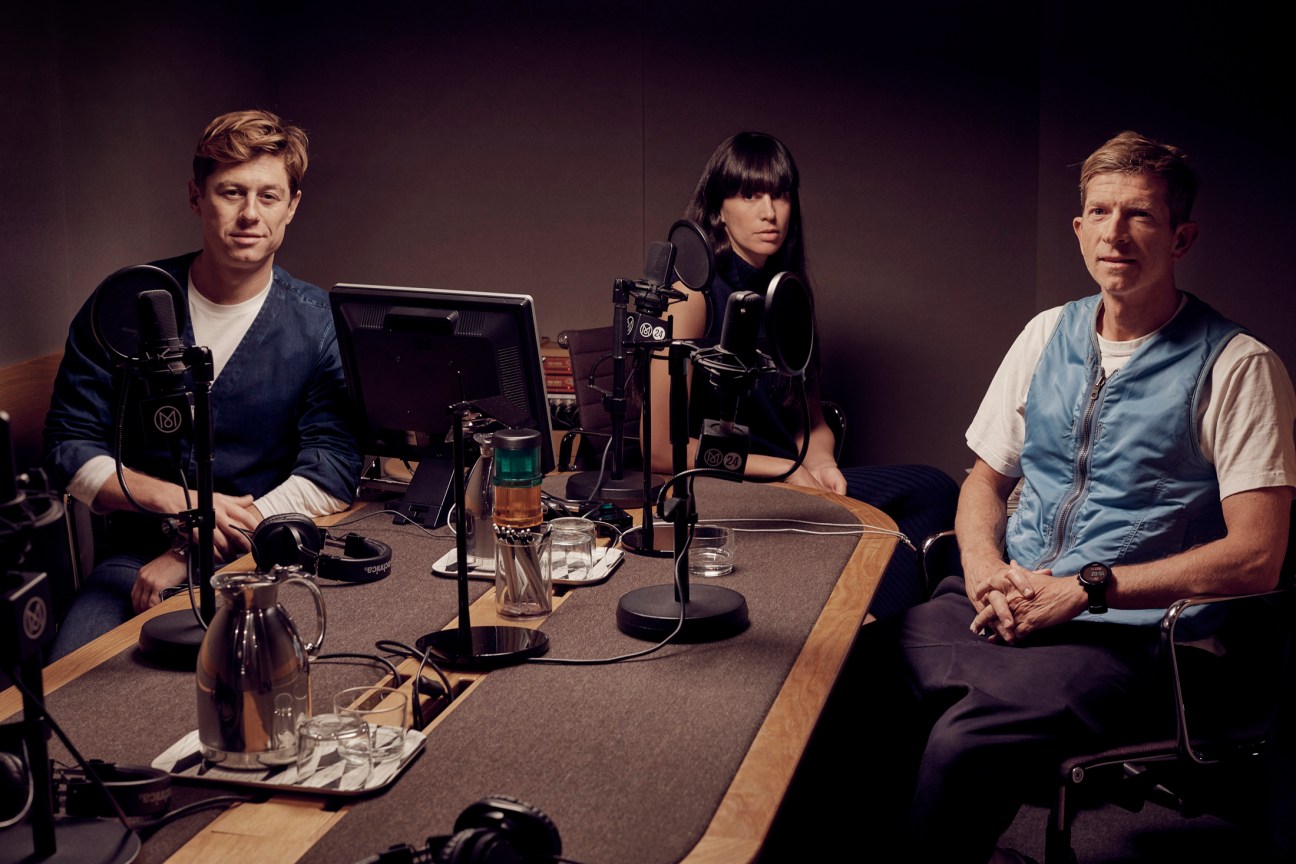
Sustainability, the fate of department stores, runway shows and our shifting shopping habits are perennial hot topics in the fashion industry. That’s why we gathered three experts in our radio studio at Midori House to gaze into fashion’s crystal ball and hammer out the big issues.
Our guests have contrasting backgrounds. Paula Gerbase, a Brazil-born, London-based fashion designer, was behind cult unisex label 1205, which closed in 2016; she also recently launched Gerbase, a brand offering women’s bespoke tailoring, jewellery and knitwear. In addition she’s the creative director of shoe-maker John Lobb.
Representing the buyers is Dean Cook. He previously worked in sales for Prada, Jil Sander and Versace and is now the menswear buying manager for Browns, the London retail institution that turns 50 next year and is opening a new flagship in Mayfair.
Adam Shapiro is our PR guru. The American was previously at Burberry and KCD, and is the founder of L52 Communications, a London agency whose clients include The Row, Bally and Dutch up-and-comer Wandler.
There has been a lot of discussion surrounding whether the traditional catwalk model will last. Paula, you did runway shows with 1205 – what do you think?
PAULA GERBASE: I started 1205 with a collection of 12 unisex, genderless pieces that got picked up in Japan and grew from there. When I started we didn’t do runway shows – I was very much against them. I just wanted to create clothing and my goal wasn’t to see it on vogue.com; I wanted to see it worn on the street. The Japanese are good at picking up brands without needing all the fireworks. It’s funny because I was based in London but we were Japan-centric. But when you start to sell to the West, other pressures come along. The way we judge success as an industry can be quite limiting: if you’re a brand and you don’t aspire to do shows there’s something wrong with you.
What convinced you to do them then?
PG: We got sponsorship from the BFC [British Fashion Council], specifically to do a show. It works for lots of brands but I think it also puts pressure on young businesses who could probably be using that money to, I don’t know, run their businesses. Because ultimately your goal is to have longevity. That said, the shows took us from being an underground brand to big retailers knocking on our door. All the department stores are suddenly interested in what you’re doing because you’re in this format that they understand. But I think also it draws a certain kind of customer that you don’t necessarily share values with.
Adam, you’re in the business of building brand awareness. Is a runway show still the best way to do that?
ADAM SHAPIRO: It’s not a one-size-fits-all mentality any more. For big brands, shows are critical. Because on top of the budget to do a special show they bring all their social-media might, all their press stuff, all their vip-dressing-influencer stuff. There are so many other elements of their communications strategy, which means that the show is one of the big peaks for them – but then it lives on for the rest of the season. Think about a really big recent show: the Versace womenswear show.
When Jennifer Lopez closed the spring/summer 2020 show in a replica of the famous Versace gown she wore to the Grammys in 2000…
AS: Not only are you getting huge attention at the time of the show, because of J-Lo, but you also have a conversation that builds for the rest of the season. But that is a mega-brand approach; they can afford to do something like that and they need to be seen, compared to their peers, as behaving in that sort of way. For a small or mid-level brand a show is a very different proposition. It depends on how much budget you have allocated, your creative process and your production timelines. All these things become important when you’re smaller because you have to allocate your dollars so that you get the most bang for your buck.
PG: But it’s not just about how you allocate your marketing budgets: it also comes down to values and what you want to say as a brand. The Versace example is interesting because I actually have no idea what that collection looked like. All I know is that J-Lo walked the finale and people were going crazy about it. But maybe it’s OK [that I don’t know about the collection] because it is getting attention to that brand at that moment.
Does the Versace example just highlight the fact that the goal of a fashion show now is to create a big Instagram moment?
DEAN COOK: Well, if J-Lo didn’t walk that catwalk, we wouldn’t be talking about Versace, would we? The razzmatazz has lifted the brand to another level.
AS: I do think there are younger designers for whom the show is genuinely a creative expression. And they use it as an opportunity to not only showcase the clothing but also build a universe.
DC: Do most young brands want to get to the runway?
AS: Many young brands would consider themselves a “runway brand” so they want to put on a show. But I work with other people that have zero interest in a runway show.
PG: But does that make them lesser than the runway brands?
AS: Not at all – it means they have a different approach to growing their business. A runway brand is growing its business through a much more niche fashion audience at the beginning, hoping to build coolness and exclusivity and have that filter out from there. Another brand might want a presentation, great digital content and a kick-ass social-media strategy. And maybe they have a stronger direct-to-consumer model versus a wholesale model. But I think the cleverer brands have something they’re working towards and use a runway show – or another format – as a means to get there.
PG: I think, as an industry, creativity and high-end means runway. And when we talk about not doing runway we talk about straight-to-consumer and more commercial strategies. I’m interested in expressing something that’s creative – but not a runway show. I’m interested in whether that’s actually more creative than always falling back on a runway show as the only form of presentation for fashion as a medium.
AS: I think there could be lots of interesting ways to present a collection that aren’t runway but ultimately there needs to be a commercial component to what you’re doing. Because if you’re going to survive and sell something you have to somehow disseminate the visuals of what you’ve created to a wider audience. So you need to think how can people buy it, where they buy it and what it looks like.
Paula, are you thinking of a format that could replace a runway show?
PG: I think about that all the time. I’m not saying I will never do a show but I’m asking, “Are there more interesting alternatives?” Maybe they are straight to consumer; maybe they are a press presentation that isn’t just people standing around. I don’t have the answer. But there must be ways that go beyond categorising “high-end” collections as being shown on runways, and “commercial” straight-to-consumer collections as being shown digitally. Because those boundaries are blurred. You know, the Versace moment was a digital moment…
AS: And let’s not discount the talent involved [with Versace]. I mean, from J-Lo’s perspective, she has a new movie to promote [Hustlers]. And, in the wake of its acquisition by Michael Kors, Versace wants to emphasise that the brand hasn’t changed – it’s still the Versace we know from the past. So it links together very cleverly from both sides. It’s a masterclass in collaboration.
PG: What does that have to do with fashion though?
AS: It has to do with commerce and awareness – I’m not sure it has much to do with creativity, necessarily.
PG: That’s what I find interesting. We talk about runways as being these moments of pure, unadulterated creativity but the show that we’re talking about from last season was a beautifully executed marketing exercise.
AS: The industry has changed so much. I mean, we can remember the McQueen shows, which were pure expressions of creativity. But it’s a very different world now because back then they didn’t have to sing digitally: they only had to engage the audience that was in the room and make them feel like they were part of something special. Now it has to translate digitally to a global audience too. The runway show has to do something different for today’s brands than when it could be a purely creative play.
Dean, as a buyer, how much attention do you pay to the runway shows?
DC: They’re super important for me because it’s what the consumer sees. A runway show is in all the magazines, on social media – everyone’s talking about it. Yes, I agree with Paula that it has become a bit of a circus but runways also give brands a chance to show what they’re all about. I think the runways are great.
PG: Another reason I couldn’t really justify runways shows in the end was the sustainability question. I have had arguments with friends who are producers. They’ve said, “Oh, but the benches are rented.” And I’ve said, “Yes but I know you binned that carpet.” Everyone wants beautiful printed invitations but then they throw them on the floor after the show. There are printed seating cards. There’s, I don’t know, icebergs being flown in. There’s such a huge amount of waste.
DC: I think we’re going to see a lot of change there though. Sustainability is the first thing that many brands are talking about now.
PG: I was quite frustrated last season because there was so much talk from brands about the importance of the environment. Meanwhile, look at the amount that is being produced – the fabric wastage, the shipping, the shows. It’s not enough to say it: the values need to be followed through.
DC: We have a whole sustainability department in the Farfetch office [Browns is owned by Farfetch] that’s looking at how sustainable brands are. If you’re a brand it’s about showing that you’re trying these things.
PG: But truly trying, rather than just talking about it.
AS: There’s no chance any brand can reach 100 per cent sustainability so it’s about doing the absolute best you can – within the means of your survival. Because it’s pointless to make all these moves if the brand is not going to stick around; sadly there has to be an element of the conversation that allows brands to be profitable.
Sustainability can feel like a buzzword.
AS: From a PR perspective it’s really cringey when you’re championing sustainability at the top of your press release. It needs to be a major pillar that underpins your business. But if it’s at the top of a press release it makes you question what the brand is up to.
It makes it seem like the selling point.
AS: And it shouldn’t be. It should be such a natural part of your day-to-day business that it doesn’t supersede anything else. But consumers can just rely on the fact that you’re doing the best you can with your supply chain. That’s the goal: for sustainability not to be such a unique thing that it sets a brand apart.
PG: I had an interesting online shopping experience recently. I spend a lot of time outside and there’s one outerwear brand at the forefront of talking about the environment: Patagonia. Their things are truly great quality. But I ordered a garment from their website and it arrived at my house in two layers of plastic. As a customer who felt like I shared the brand’s values, I found that shocking. That’s when I think about true values versus a marketing strategy to target millennial audiences.
There’s also this tension because the fashion industry is premised on selling lots of things, which is at odds with not creating waste.
AS: You have people saying, “OK, buy one fabulous thing that you’re going to wear forever.” That’s a slightly classist statement because there are people who can’t afford that one thing that will last forever. You have to engage the fast-fashion brands as well in terms of cleaning up their practices.
DC: But the fashion thing is not to have it last a lifetime. We’re doing a sneaker launch and then next week we’re telling you to buy another pair. We’re doing four drops a week. We’re telling you to buy as much as possible. It’s like anything: you want, you want, you want – you get. And then you get bored and you want something else.
PG: I actually don’t think “fast fashion” is a big ugly phrase. There’s space for all types of fashion but it’s about doing it with integrity. You can look at the way you manufacture things whether you’re at luxury or high-street level.
DC: The good thing is everyone is taking notice. I feel it’s come upon us very quickly. For me this is the biggest trend. Although I’ve noticed there are much more women’s than menswear brands that are engaging with sustainability.
PG: My worry is that it is a trend. That it goes away. That next season it will be something else.
DC: I don’t think it will.
There’s lots of chat now about Barneys and the future of department stores. Is this a concern?
DC: I don’t think you can put all department stores into the same category. Just look at Selfridges: it’s a hugely successful business.
AS: The American department stores are a specific thing unto themselves. There’s definitely some reckoning going on there. Here in London the department-store networks aren’t as large so they’ve managed to really focus on each store.
DC: If you think about our three biggest department stores [Selfridges, Harrods and Liberty], they’re so different from one another.
Whereas one of the criticisms levelled at Barneys was that it lost a point of view and became too generic.
AS: Totally. It didn’t feel like the unique place where you would go to find brands that you couldn’t find anywhere else. As an American transplant living in London, I think that the London department stores do a very good job of getting customers in and keeping them for a long time. At department stores in the States there’s less to keep you interested, by and large. Here you can spend the whole day in Selfridges, just like that.
Dean, what does a fashion shop need to do today to thrive?
DC: We sit around the table every week talking about this. For me the most important thing is product. Because why are you going to a boutique? You’re not going because it’s got a great staircase or a fantastic garden. You’re going to look at product – at things that are different from what you can get elsewhere. That other stuff is around creating an experience.
Everyone says shops need to create an ‘experience’. How important do you think that actually is and how do you deliver it?
DC: Every three to four weeks at Browns East [Browns’ Shoreditch outpost] we change the store, from the entrance to the pop-up area to the full brand mix. And every three months the café changes.
PG: It sounds exhausting.
DC: It is but it means that every time you go in you’ll see something different. We have pop-up areas with exclusive launches, capsule collections and art installations. We have a running club that goes from the store, plus music and parties. It’s about engaging the community as well.
AS: It’s clever the way Browns is an international name but you also localise the store. Plenty of stores rely on tourists and I think that’s to their detriment. You need to have a natural relationship with your immediate surroundings – to have locals coming in to shop.
Do you worry that online shopping will kill physical retail?
PG: Online is the norm now. But online is for picking your uniform: I’ll get socks and another six T-shirts. I don’t need to have an experience buying sports socks. When you go into a store you want to feel something, whether it’s about having a relationship with the people there or touching the product. Some products, like ski boots or bespoke shoes, are hard to buy online – you have to try them. These are based on a long-lasting relationship between artisan and customer. I don’t think the human side of those relationships will ever go away; I think we’re craving them more. Also, if I want to discover, I don’t know, a new brand from Argentina, maybe I check their Instagram and see that they have a pop-up at Browns. And then there’s a way I can interact with them in a very direct and human way, which is quite modern really. Most people think the digital sphere has distanced people but actually, in some ways, it’s given us the opportunity – as brands – to be closer to a customer. That’s a great thing. Communication has become easier and we’re more accessible to one another. I find it interesting when a customer just sends me a DM [direct message on Instagram]. That direct feedback is really heartwarming. I think that human connection hasn’t been lost – it’s actually been highlighted.
Tune in:
This conversation was also recorded for On Design, Monocle’s design-themed radio show. Tune in at monocle.com/radio/shows – or listen via iTunes, Spotify or wherever you get your podcasts.
Designed to learn: Three Swiss schools embracing the architecture of education
For many, memories of school involve drab corridors, cold classrooms and desks that had seen better days. Now, however, there’s a growing awareness that it’s not just how children learn that matters but where they learn. The surrounding shapes, colours and textures can help pupils to feel at ease or inspire them to be creative. Moreover, involving them in a school’s design can become part of the learning process.
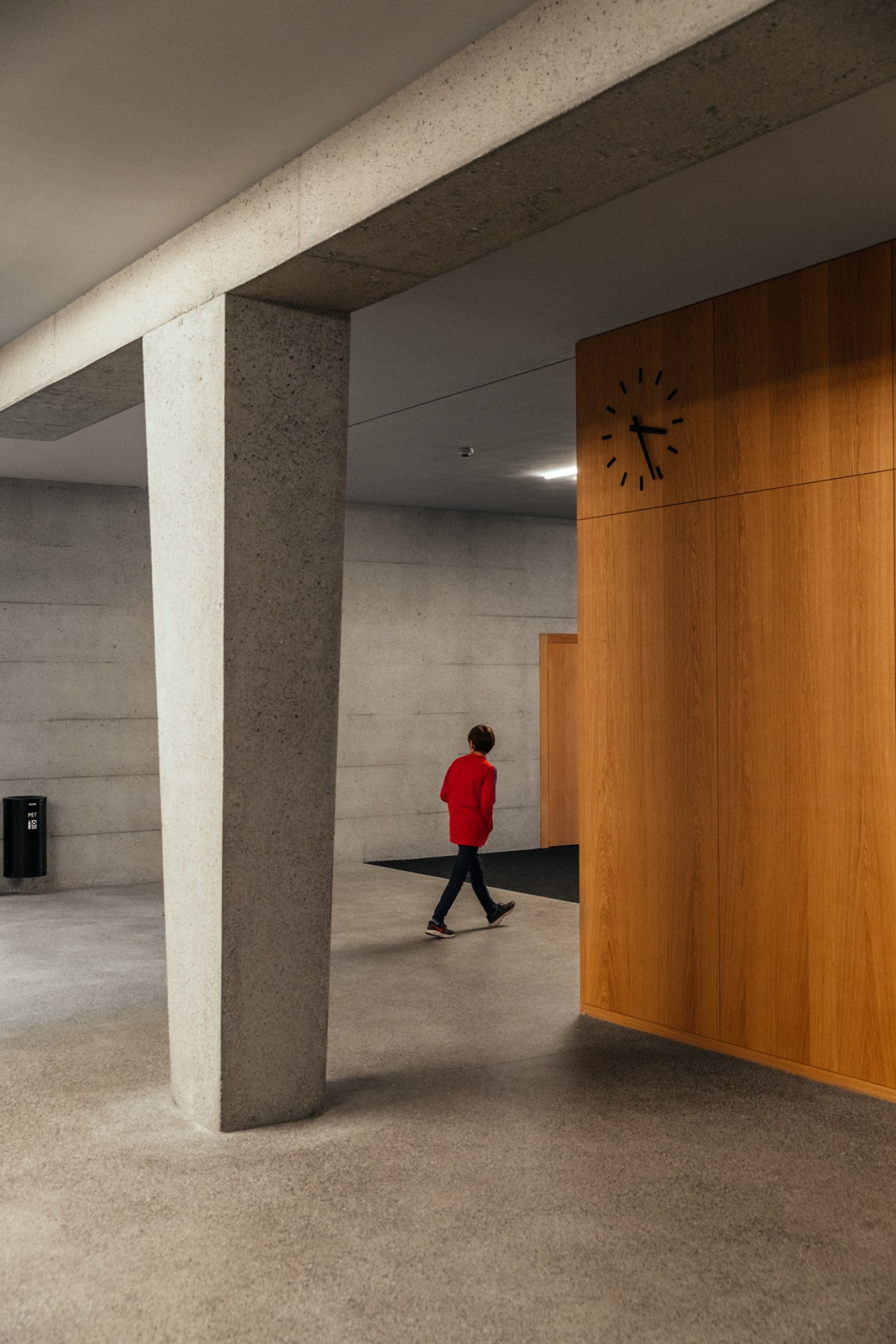
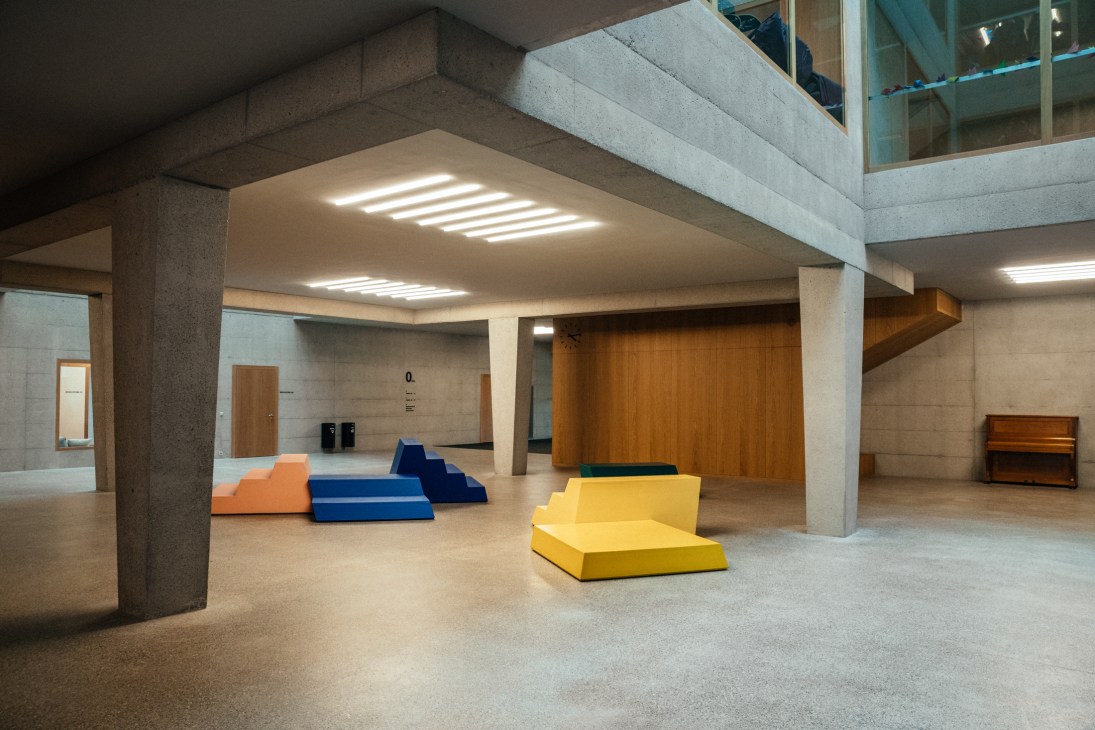
When you enter the primary school in Zofingen, roughly an hour’s drive from Zürich, you notice the step-like sculptures in the hall. In bold shades of blue, pink, green and yellow, they contrast with the modern concrete-and-oak interior. “The idea is to connect the static building with its moving inhabitants in a playful way,” says Zürich-based architect Sebastian Marbacher, perched on one of the sculptures. The young designer won a competition to provide an installation for the new school as part of the Kunst am Bau programme, which allocates funds for art in public buildings.
It resulted in six coated-foam objects (each of them big enough to be moveable only by adults) inside the school, while outside are 11 static works made with tinted gravel. “What I did not expect is that they are more of an obstacle to jump over than to sit on,” says Marbacher. As we watch, two small boys wearing rucksacks throw themselves onto some yellow steps. Minutes later a girl clambers over a blue structure on her way outside.
According to the designer, the objects encourage pupils to mingle and appropriate their new school building. “It can kill a lot of ideas if the rules are too strict,” he says, in relation to the architecture of a school. “This school’s approach is that kids can learn in any space; you don’t have to build fences everywhere.”

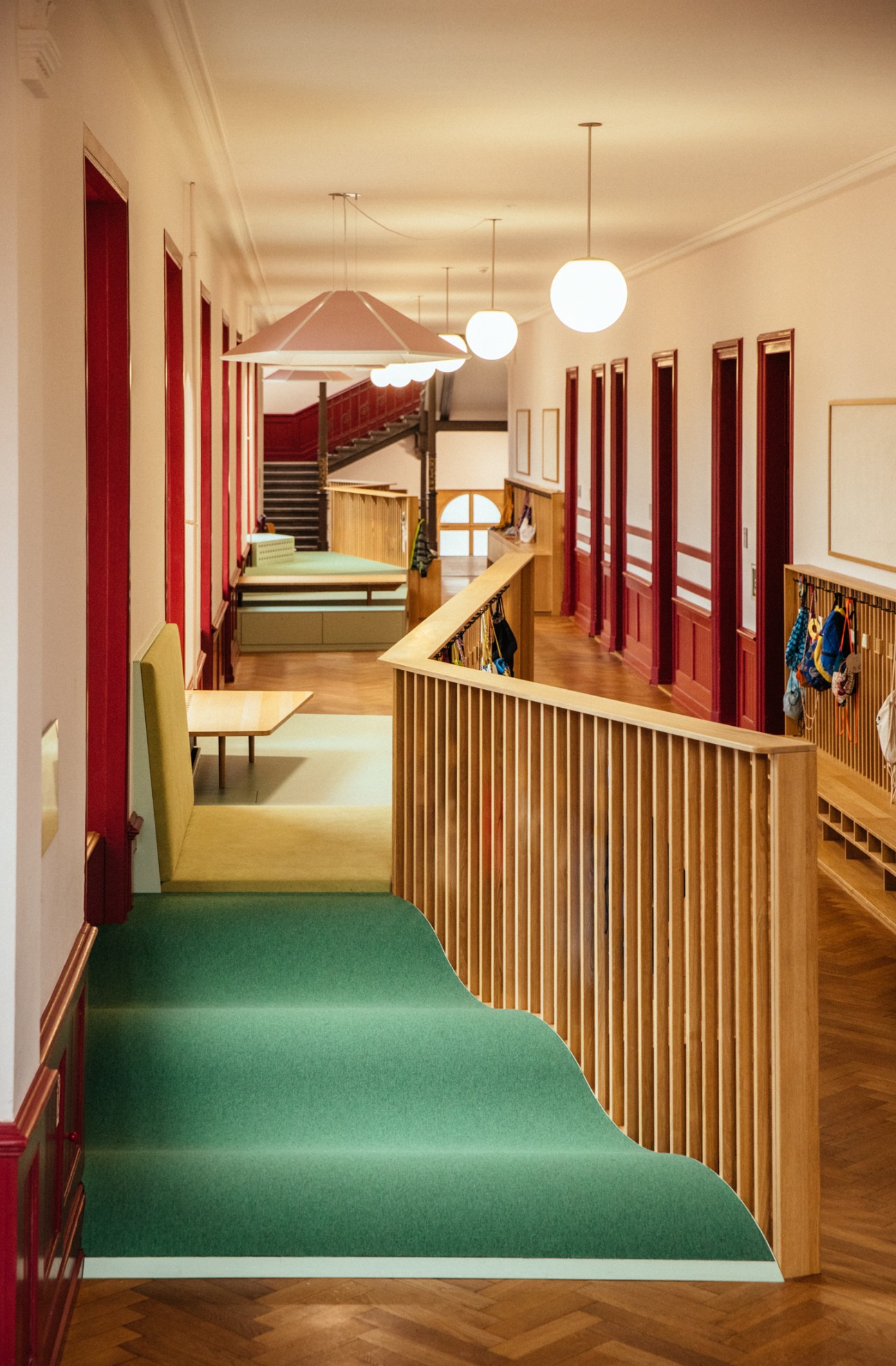
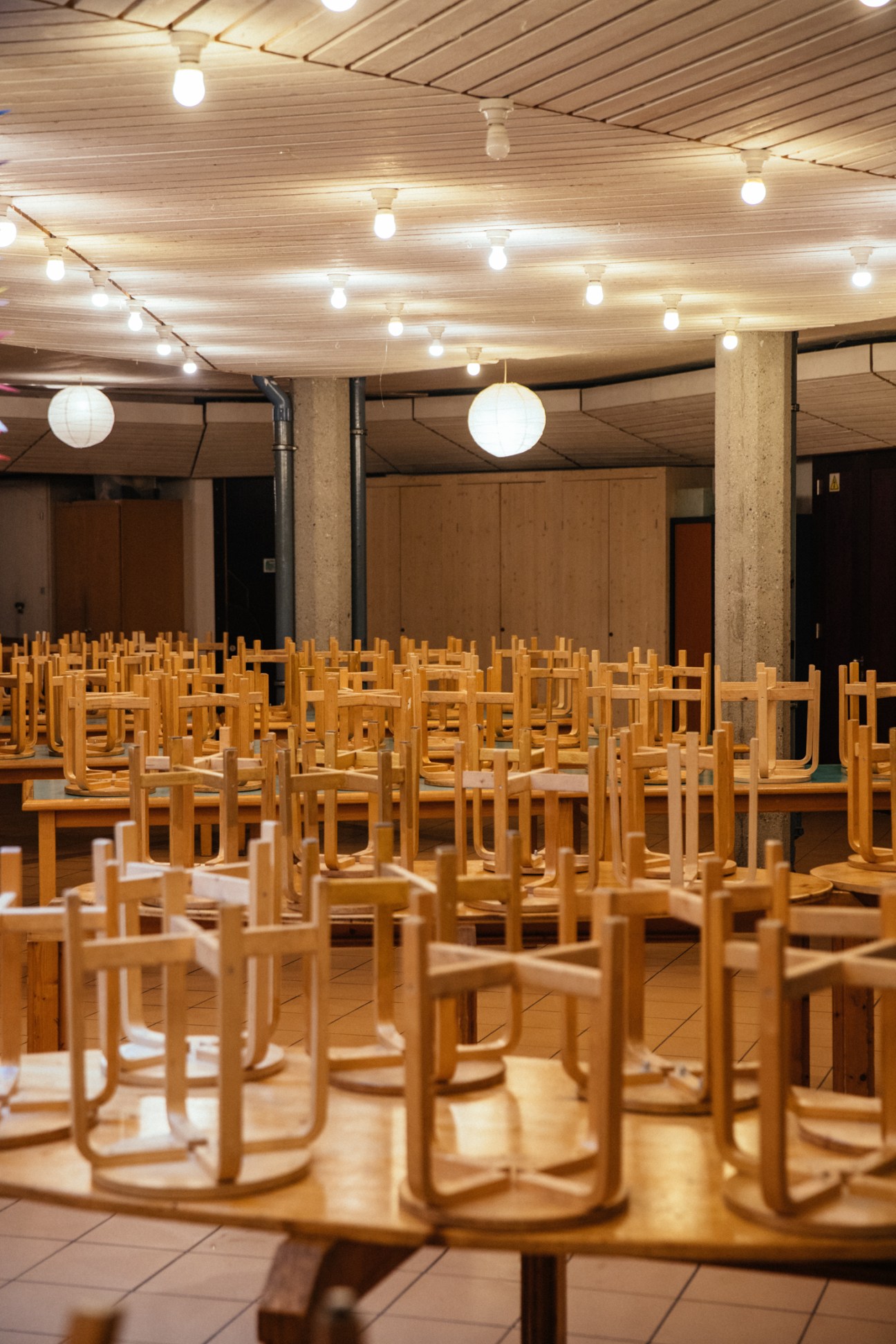
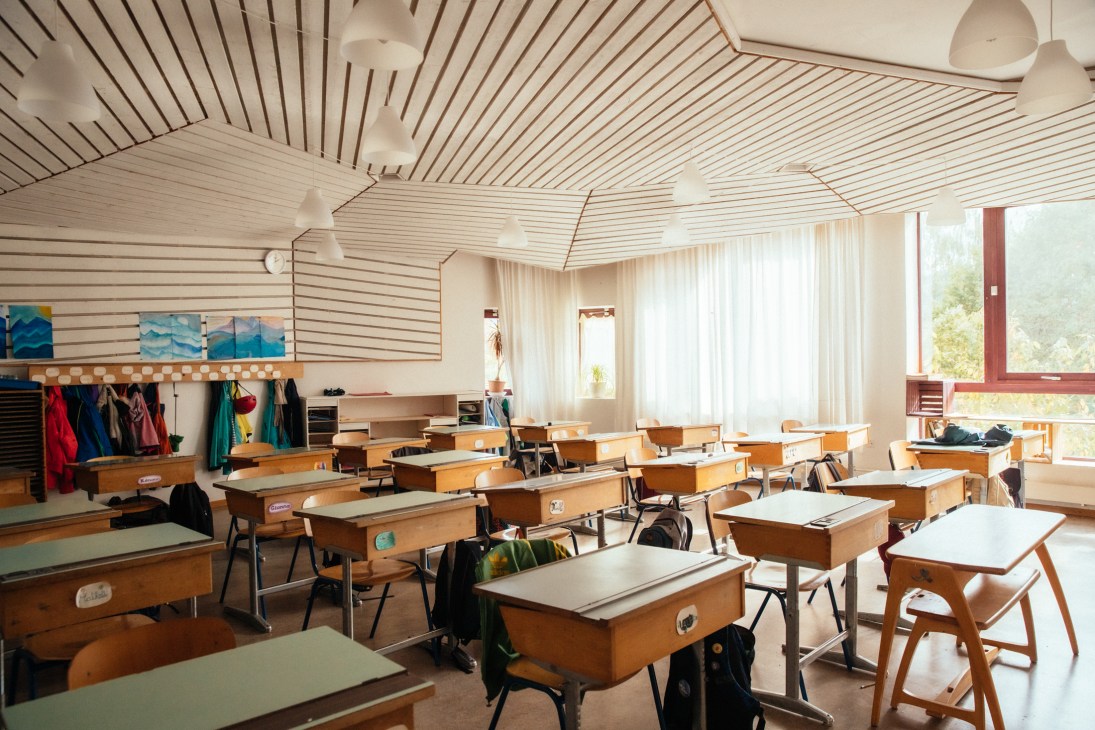
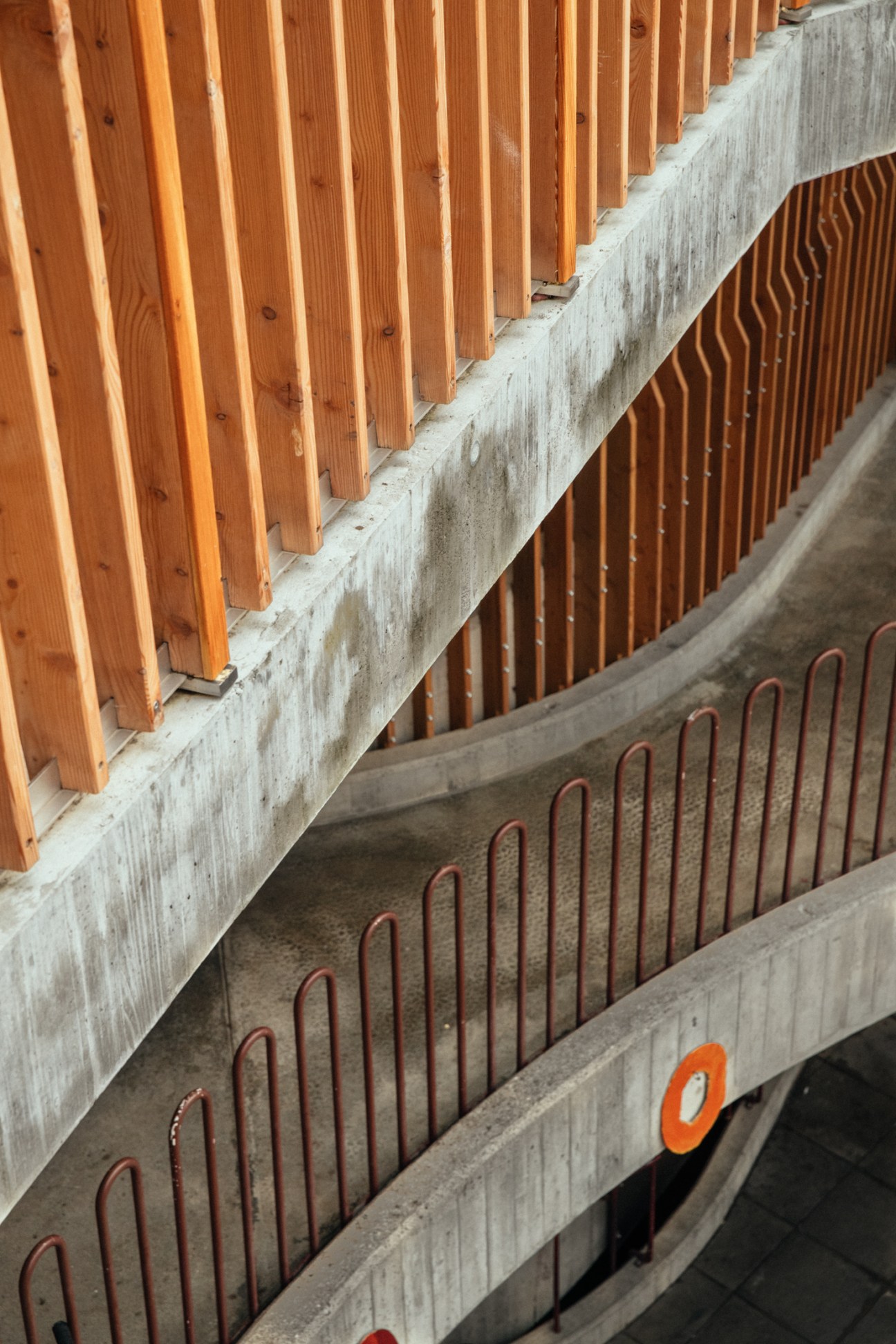
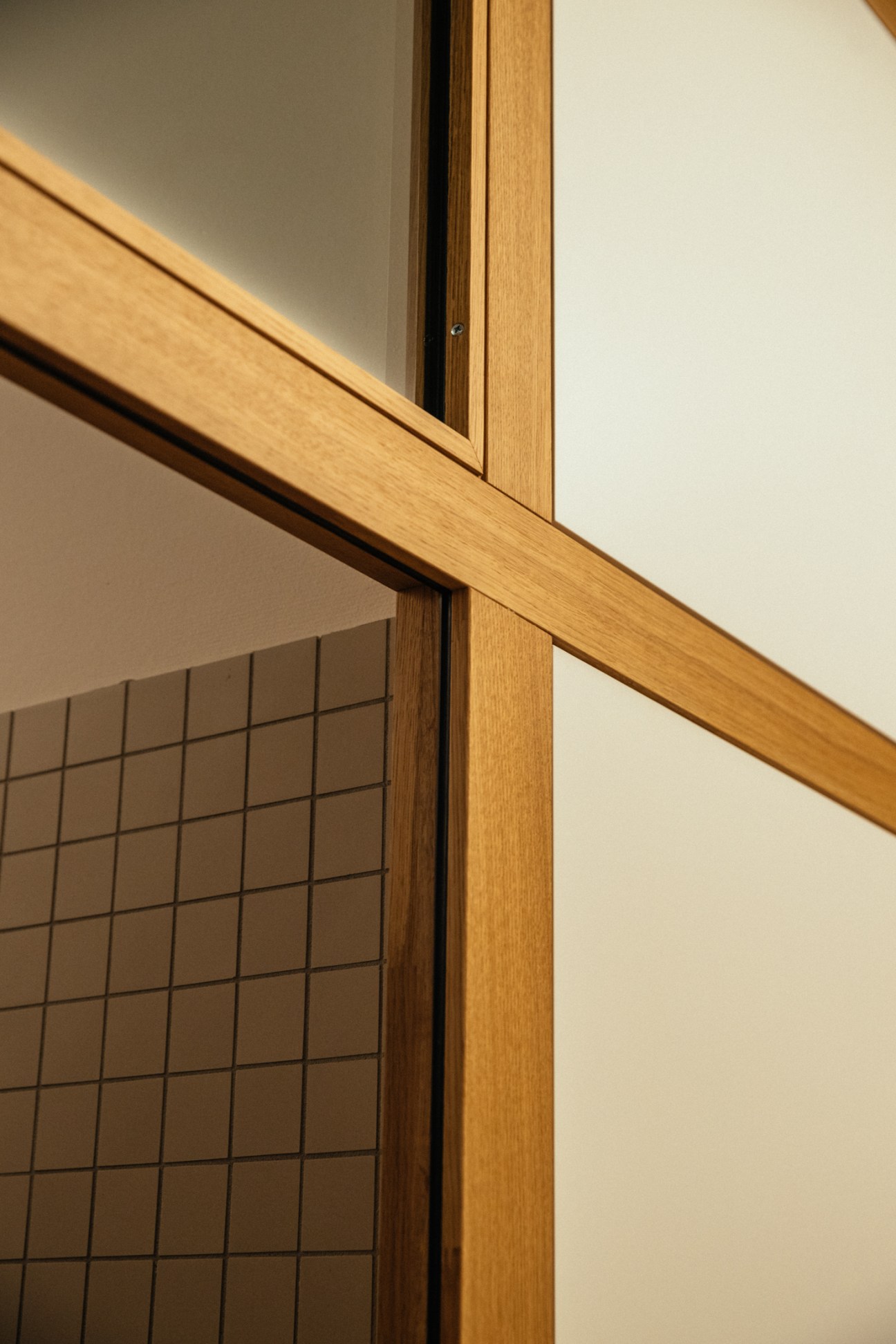
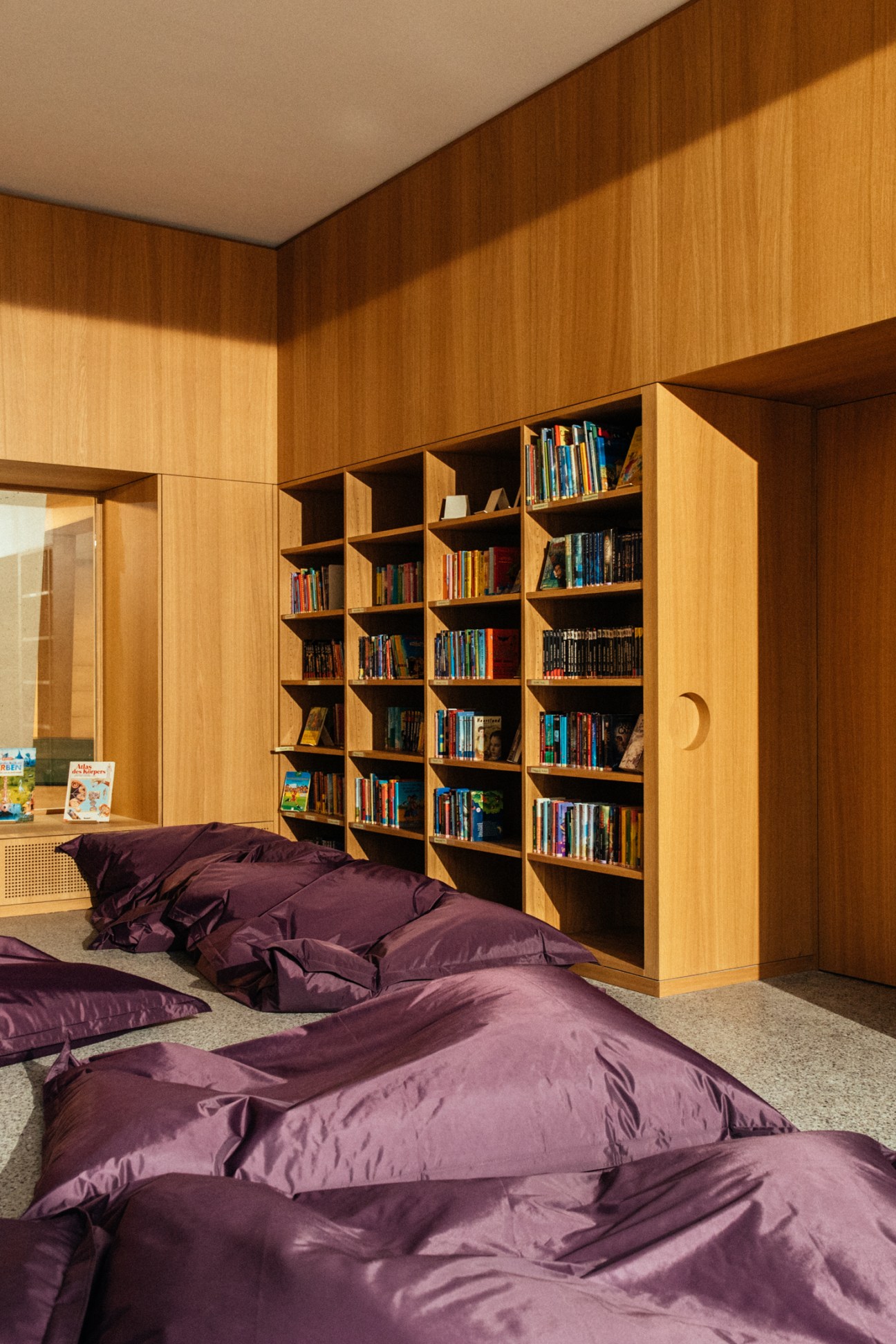
In Basel the spatial-design studio zmik developed its “learning landscapes” at the St Johann Primary School, an imposing building finished in 1880. During recent renovations, the educational authorities agreed on a budget for built-in furniture on the condition that the pupils were involved in the design process. The competition was won by zmik which created a combined cloakroom and learning space for the school’s corridors.
“The main idea was to create extra space to learn in or, rather, to learn in a different way,” says Mattias Mohr, a partner at zmik. “Our aim was to not just place furniture in the corridor but rather melt it with the building’s historical architecture,” he adds, noting the challenge posed by safety and fire regulations.
Displaying soft green tones, the installation resembles an abstract landscape, with slides, caves and perches for the younger children and group seating for the older ones. Some of the pupils’ ideas – such as lockers for the older students – feature in the final design. Mohr and his colleagues chose materials with a range of textures: painted timber, polished oak, linoleum, upholstered surfaces and grass-like carpeting.
“Pedagogical concepts are changing and influencing projects such as this,” says Mohr as we pass a group of pupils working at a table attached to the windowsill (part of the installation). “This space contrasts with the classroom, with its chairs and desks. It is more fluid – children can figure out how to use it themselves.” An echo of the modern workplace? “If you look at work today it’s very similar. You want different spaces and can be working even if it looks like you’re hanging around.”
The installations have fostered a sense of responsibility: the school’s cleaning service doesn’t include them, so pupils have been vacuuming them themselves. “This is a pioneer landscape,” says Mohr, who hopes the project’s success will encourage similar investments at other primary schools.
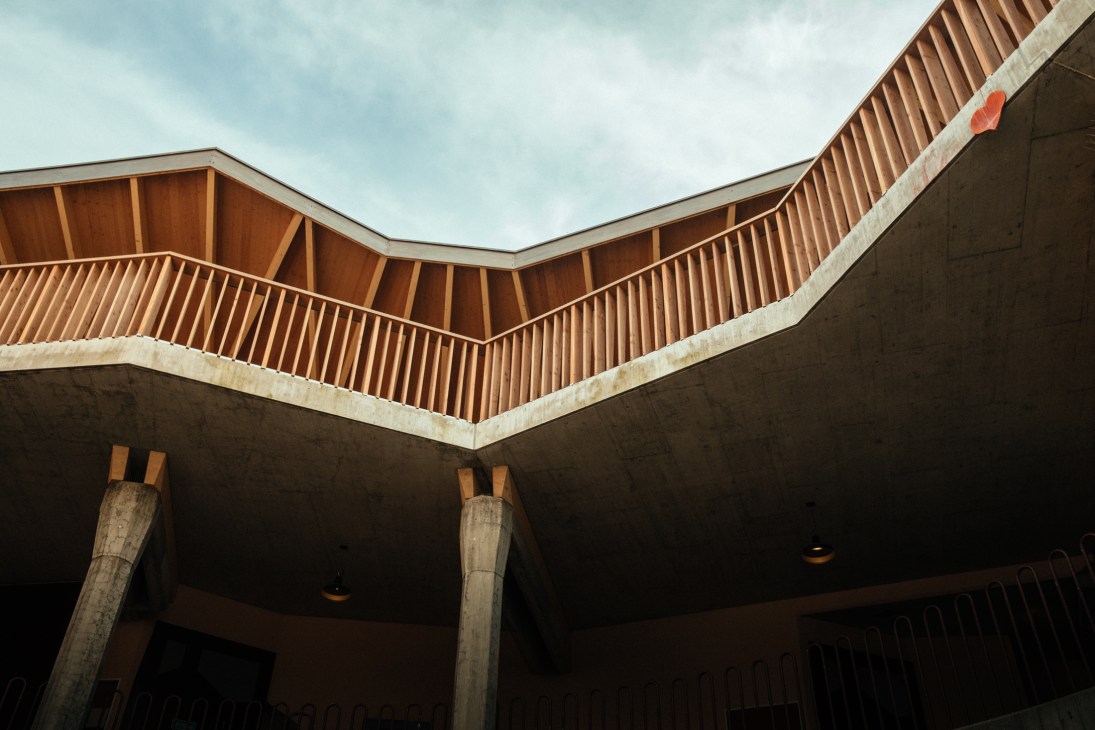
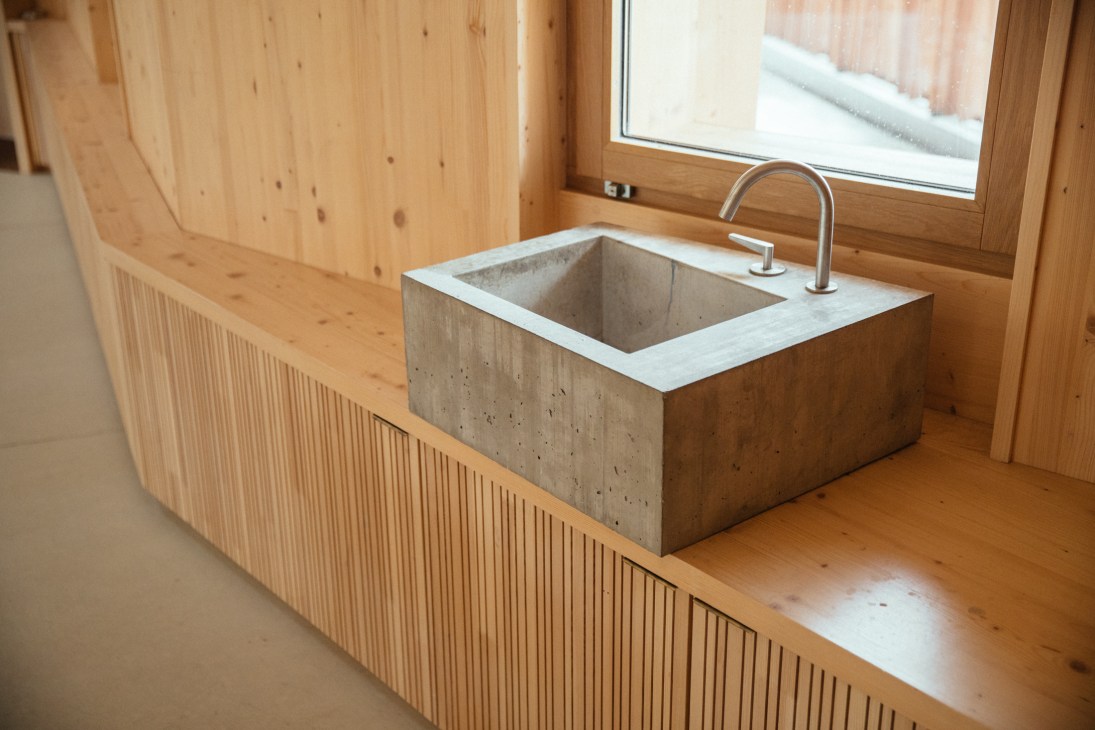
At the Rudolf Steiner School in Geneva, a private school based on the philosophy of the Austrian educator, which pupils can attend from early learning until university, architects brought the natural landscape right into the classroom. Built in the late 1980s by Jean-Jacques Tschumi, classrooms here are grouped around a central courtyard. In 2015, Lausanne-based architects Localarchitecture was tasked with expanding the school. It added a top floor where seven classrooms are connected by a partially covered walkway. Under existing concrete pillars, the firm also added a light-filled reception class. Combining traditional carpentry and 3D technology, Localarchitecture used weather-resistant larch outside and spruce for the interior. Again, participation was encouraged and pupils were invited to visit the new floor as it was being built, which helped them better understand the space.
“It’s part of the whole but a completely different world, connected with the sky,” says architect Antoine Robert-Grandpierre as we reach the top floor, where the teenage pupils have their classes. “You almost feel like you’re in a treehouse here.” Whereas the classrooms on the lower floors feel cocooned, the top floor offers the older pupils views of the Jura Mountains to the north and the Salève range to the south. Thanks to their skylights, pale wooden walls and simple desks and chairs from Vitra, the classrooms provide a serene space for learning. “When you enter the classroom, the atmosphere should be totally different from outside – it should be calm and light,” says Robert-Grandpierre.
These examples show that Switzerland is ahead of the curve when it comes to viewing school design as an investment in the next generation. Firstly, bright colours, engaging textures and flexible spaces support playfulness and creativity, especially among young children. Secondly, warm natural materials help pupils and teachers feel calm and focused in class, while making the space feel less like a prison.
Involving children in the design process encourages their sense of pride and ownership in the surroundings. Even without generous Swiss budgets, these are principles that schools around the world can apply, whether that means perking up their existing spaces or bringing in bright architects, such as this Swiss bunch, for the betterment of education.
Back to the future
1.
Make it all white
As global temperatures rise, painting rooftops white could help to cool our increasingly sweltering urban environments.
I recently had a phase of buying old furniture and then, armed with sandpaper, primer, brush and enamel, painting it all matte white. It was an attempt at minimalism, a reaction to the first five years of motherhood, which were filled with primary-coloured plastic and a lot of dirt. White, for me, was peace, visual clarity and maybe control, while across cultures and eras white has long symbolised holiness, purity, innocence, cleanliness and coolness.
In a less abstract sense, white reflects more light than darker colours, keeping surfaces cooler and hindering heat absorption. Zooming out from a burned-out mother’s private apartment and given the urgency of climate change, why not paint entire cities white – or at least the rooftops?
With 50 to 65 per cent of their surfaces in dark-hued materials such as tar and asphalt – which do not reflect light, but rather capture heat and radiate it back into the atmosphere – cities get much warmer than the surrounding natural landscape. The temperature difference can reach up to 9C. “This is called urban heat load,” says Dutch architect Ben van Berkel. Cities become “urban heat islands” in climate-control parlance and, on top of the discomfort of living in an oven (or paying too much for air-con), the dark surfaces can be significantly hotter than the surrounding air. Climate researchers and city-planners alike have been trying to devise multiple ways to reduce the load as cities grow – and green rooftops are perhaps the best-known example.
Another of their temperature-reduction initiatives is to simply paint rooftops (and, where possible, building façades or even roads) white. It’s not a new idea: think of the gleaming white cuboid houses on the slopes of arid Greek islands, or the mostly light-coloured rooftops and façades in historically hot cities such as Athens, Jerusalem, Beirut and Bangkok. The rest of the world, as it heats up, is catching on. In the past decade nearly 950,000 sq m of New York’s rooftops have been painted white through the CoolRoofs programme, which in part activates underemployed people and offers incentives to non-profits and landlords. Los Angeles is painting some of its asphalt streets white. Starting in 2015, Paris mandated rooftop environmental measures (either green roofs or white ones) and various Italian cities are running trials with white roofs.
Beyond conventional white paint, new coatings for super-cool rooftops and surfaces are also emerging. In collaboration with Swiss paint company Monopol Colors, Ben van Berkel’s Amsterdam-based UNStudio developed The Coolest White, a paint that’s ultra-durable; it launched in early 2019. Made of hi-tech polymers and lasting up to 30 years, it’s engineered to really reflect sunlight. Darker materials absorb up to 95 per cent of the sun’s rays and release them back into the atmosphere; normal white paint reduces this to 25 per cent. The Coolest White paint brings this value down to just 12 per cent. This hugely reduces the need for coolants and maybe even saves lives: the most dangerous factor in recent heatwaves has been night-time overheating. Buildings don’t cool down enough overnight for weaker or older people to recover from the physical stress of trying to beat the heat during the day.
The Coolest White can even be applied to steel, fibreglass and aluminium; the first applications will soon be underway. “We are doing a major master plan in India, a tech campus in Bangalore, where many buildings will have this coating,” says Van Berkel, adding that The Coolest White appears whiter or shinier depending on the angle it’s seen from.
Architect Martin Haas of Haas Cook Zemmrich Studio 2050 in Stuttgart – a member of the German Sustainable Building Council – also sees white surfaces as a step in the right direction. “In terms of climate change, it’s metaphorically five minutes to midnight, after all,” he says. “And we need to do all we can.” He’s still convinced that green rooftops remain the best option if they’re possible. “Whenever you have a flat surface, it’s better to not seal it. Stay in contact with Earth: make a green roof. It not only reflects, but also captures CO2 and works as a storm water-management feature,” he says. But if you have to seal a roof “then do it in a bright whitish colour”, he adds. Van Berkel also says that his office, as well as Monopol Colors, is starting to think about other “coolest” colours, like The Coolest Green.
Haas recognises the need for greenery and light colours to creep back into city life in order to not only curb heat issues but to help people slowly reconnect with nature and, metaphorically, lighten up. As for me, I imagine future cities that have streets and façades of pure white (like too much of my furniture) or light green, baby blue or powdery pastels; some of them with greenery spilling down, others with farms on their rooftops. It sounds divine: quirky like the pictures in my daughter’s old Dr Seuss books; a lot more soothing and certainly cooler than our sooty, dirty, hot roads and rooftops. Van Berkel remembers reading something that Andy Warhol said: “Wouldn’t it be great if all the streets were made in carpet?” In white, please.
2.
Arcade games
Largely abandoned in the 20th century, shopping arcades are back with the promise of an enticing consumer experience.
Walking through Paris’s Passage de l’Opéra at the start of the 20th century, the French surrealist writer Louis Aragon hallucinated that the shopping arcade was bathed in submarine green light, as if the whole structure was deep underwater. A skinny mermaid – naked “down to a very low waistline”, with a tail of steel or rose petals – swam between walking canes in a shop window.
They tended to get like that, the surrealists. But Aragon points, too, to the lost spectacle of the shopping arcade. In the 19th and early 20th centuries, these arcades revealed an intoxicating collision of commerce, debate, round-the-clock eating and drinking, dance and play, which created a sensation among Parisian flâneurs and the booming urban bourgeoisie.
With no zoning regulations and little policing, arcades across Europe hosted brothels, bedsits, public baths, art galleries, theatres, hairdressers, cafés and shops selling books, stationery, coins and spices.
Passage de l’Opéra, which captivated both Aragon and the cultural theorist Walter Benjamin, was the first internationally acclaimed 24-hour destination. Through the day it acted as an illicit stock exchange (the so-called La Petite Bourse), then an all-night eating spot, art gallery, dancing destination and an after-party location for post-opera masked drinking. Structurally it was never more than a shopping street with a roof of iron and glass, lit up during the night with gas lamps. But it was the most important architectural form of the 19th century, said Benjamin: the architecture that birthed consumer society.
No retail location today fires such hot and confused passions. Least of all arcades, which often represent the stuffiest, most sterile streets of uniform luxury. It’s time to imagine a way back.
The 20th century saw hundreds of arcades abandoned for department stores in London, Milan and Paris – including Passage de l’Opéra – or else preserved as museum-like curios. But early in the 21st century the raucous arcade makes business sense again, as shop-floor sales volumes become secondary to exhibitions and Instagram-bait wrapped around a consumerist conceptual “experience”.
Arguably the best-known surviving arcade was an early standard-bearer for such reinvention. Galleria Vittorio Emanuele II, a glass-domed behemoth in Milan, was restored in 2015 by an unprecedented collaboration between Prada and Versace. The arcade, owned by the Commune of Milan, had hosted playful placemaking as early as 2003 when artists Elmgreen & Dragset’s “Short Cut” installed a white Fiat Uno hatchback and caravan trailer, crashing through the decorative mosaic floor.
Since reopening, the Renaissance Revival giant has doubled down. Fashion runways, including Prada Resort in 2018, have come to the raised Osservatorio level; new hotels have opened up in the wings; Milan Design Week commissions have arrived in the thoroughfare; and open-air cinema screenings have been hosted on the roof. For the city, the restoration has paid off. In 2018, Saint Laurent offered to pay €1m a year to rent a shop with a single window in the arcade.
New arcades have followed. Beaupassage Paris, which opened in 2018, is a wellness-branded development of dining spots from celebrity chefs who cumulatively claim 17 Michelin stars. The arcade conspicuously evokes the golden age of Paris passages, carving a new route through a 17th-century convent, a garage from the 1960s and an odd 1930s building by architect Henri Sauvage.
Beaupassage inches closer to the round-the-clock destination that Paris once boasted with Passage de l’Opéra. It has become known as a world-class food court and somewhere to share a bottle of natural wine, amid installation art and a mini forest. But still, it is hardly Aragon’s “ghostly landscape of damnable pleasures”.
Excitement arrives, instead, in less orderly places. Two strangely shaped developments have recently incubated gentrification-threatened communities: Sewoon Sangga, a repurposed Brutalist mega-complex in Seoul, and Peckham Palms, a hangar-like hub for south London hairdressers, cafés, and beauty salons evicted by a nearby regeneration project. These are buzzy buildings, full of surprises, where longstanding retailers and entrepreneurs are provided affordable units.
In Thailand, architect Alice Dietsch describes al_a’s 72 Courtyard as “space to breathe” amid Bangkok’s hectic main drag, Thong Lo. The client, a nightclub manager, allowed the firm to leave space for a garden at the centre of the development to surprise and delight visitors – even if it this meant giving up rental income that could have come with in-filling that space with shops.
Both 72 Courtyard and its grass-roofed rival The Commons (across the street) consciously plumbed history, from arcades to Bangkok’s own “community malls”: open-air mini-shopping centres that are centred on green space. The aim was to provide an equivalent to the European squares in a city that lacks parks.
Dietsch explains that her client was “a guy with a really good sense of what people need to have a good time”. Built around his nightclub, the development was innately 24-hour and inextricably linked to the heaving street of bars outside.
European and Asian arcade redevelopments often put the over-riding emphasis on strict “curation” of visitors’ experiences. Thong Lo loosens such programming, in a return to some basic principles of the arcade. “The architecture is in the background. It’s much more about the raw spaces and that’s where interactions between people are made possible,” says Dietsch.
There’s open potential for city centres to go beyond this, as the business of trading goods vacates. But some space for excitement, darkness and invention must be carved out before they can become – to quote the patron saint of arcades one last time – “the true sanctuaries of a cult of the ephemeral”.
3.
Room to grow
Plants like to live in the ground. What if we went back to basics and let them stay there?
We need to put a plant in a pot because we have displaced it from its home in the ground. In a rather Victorian manner we keep it contained for our own pleasure; it’s wonderful to live among plants.
Keeping a plant alive in a container is a difficult task. Just ask the gardeners abseiling down the façade of Italian architect Stefano Boeri’s impressive Bosco Verticale in Milan. While you’re at it, why not glance over to the ivy-covered building next door, thriving with its roots in the soil, independent of human care.
At the Venice Architecture Biennale 2018 our practice, along with Linda Tegg, exposed the difficulty of replicating conditions in the Australian Pavilion: thousands of plants in pots grew under artificial lights. This displacement considered what’s removed when we clear land. The plants in pots had to be cared for constantly, revealing how difficult it is to replace something once it’s removed. Climate change played out inside the gallery, where temperature and humidity controls isolated the Australian plants from Venice’s humidity.
Reflecting on how hard it is to keep a potted plant alive might guide us in a less artificial approach to how we bring plants back to places where they have been removed through urbanisation. What if we just put plants in the ground where they can communicate with each other and share water and nutrients through their mycorrhizal networks?
Are we ready to allow plants to live on their own terms? “Weeds”, lichen and moss spontaneously grow in our cities. Urban environments are capable of remarkable diversity. If one can’t empathise with the contained plant then the growing body of evidence of the benefits of vegetation in urban development is compelling. They include an increase in property values, crime reduction, human health, urban island heat effects, storm-water management and mitigation of climate change events. Architecture and urban design simply need to make more space for plants to have their roots in the ground.
A guide for freeing plants:
1.
Set the plant free by putting it in the ground.
2.
Try to keep the soil of the area, rather than adding any.
3.
Try to make a space for multiple plants: they like to grow together.
4.
Let sun, rain and oxygen in.
Strike a pose


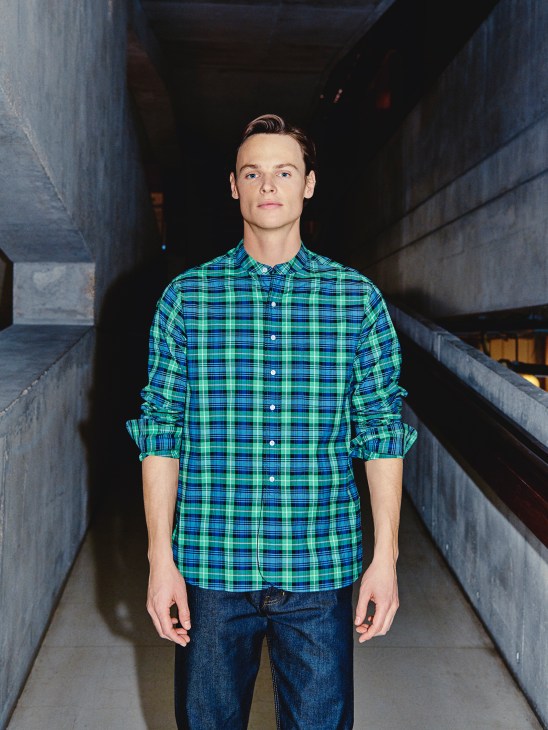
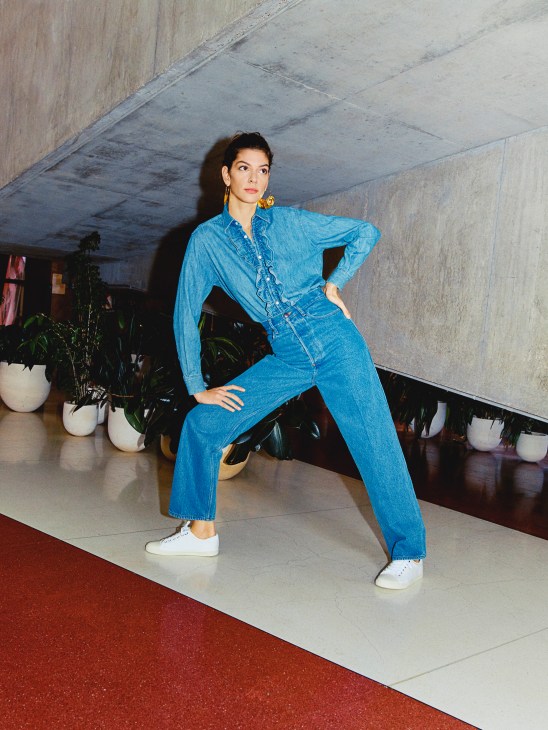
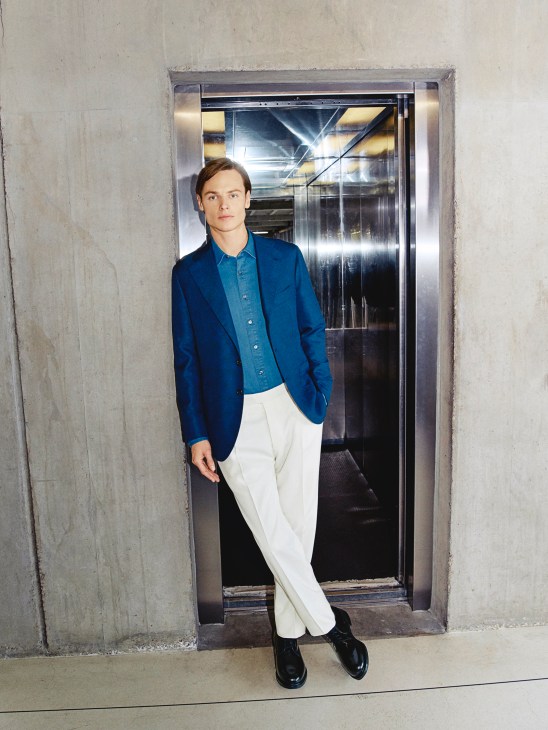
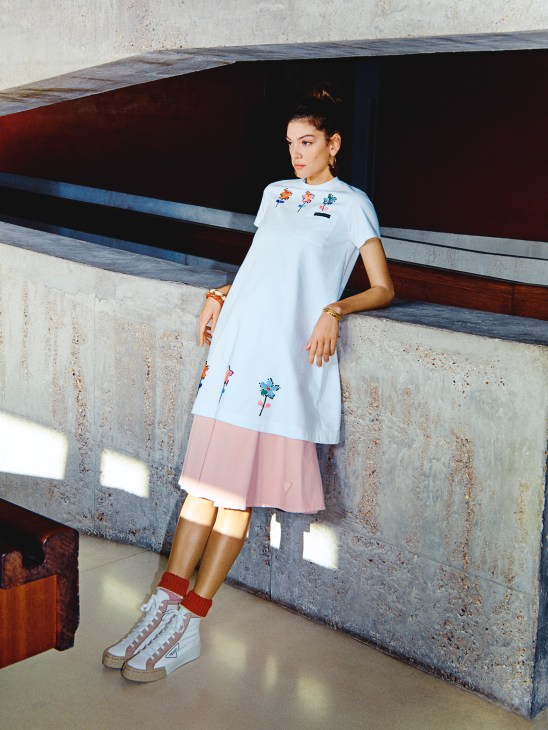
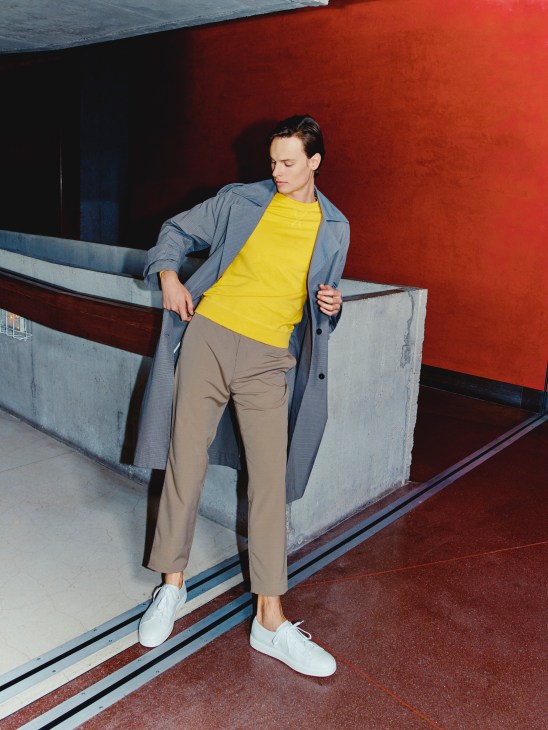
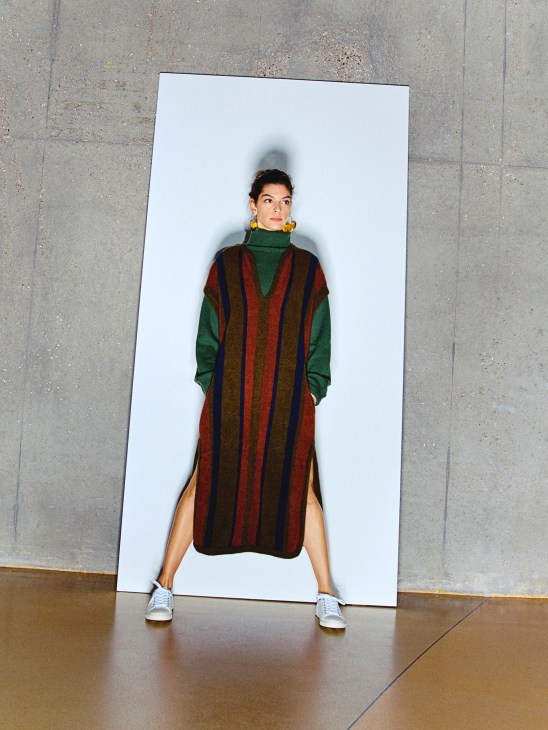
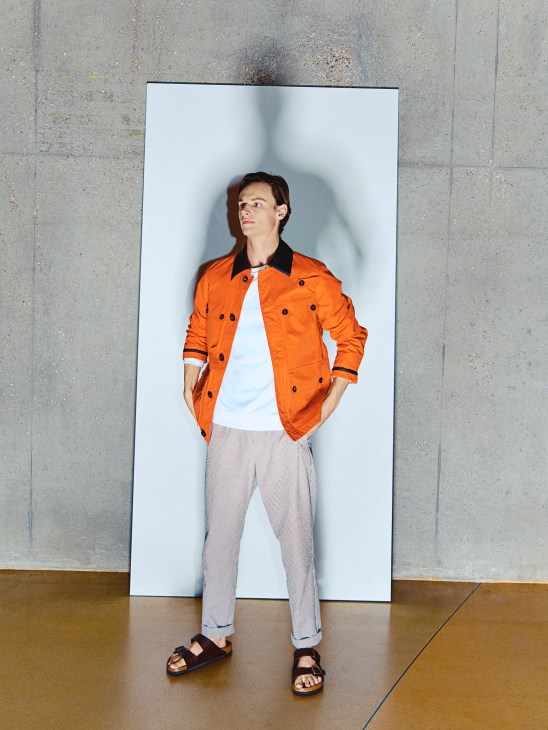
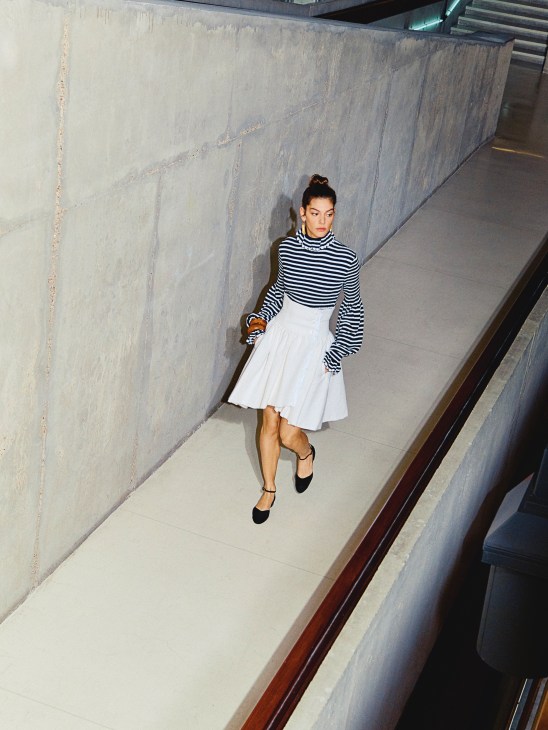





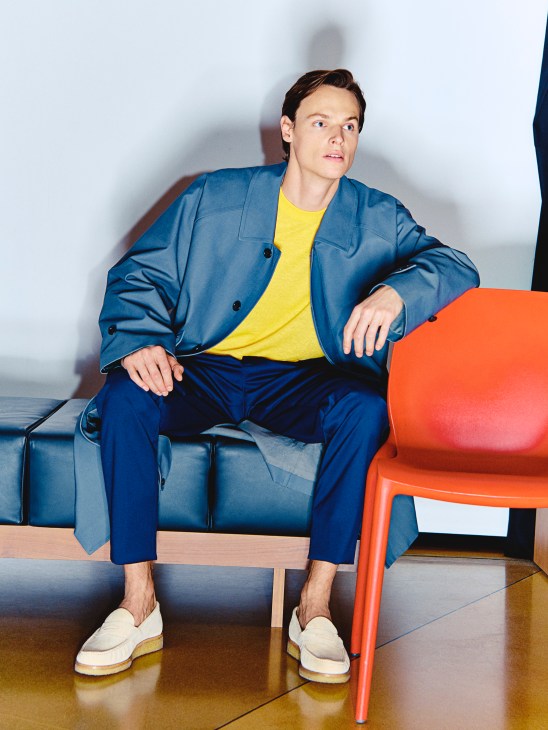
Women’s stylist: Daphné Hézard
Men’s stylist: Shun Katakai.
Hair and make-up: Yoana TG
Models: Christopher Poulter & Marta Ortiz
Location: Centre National de la Danse, Paris
Open book
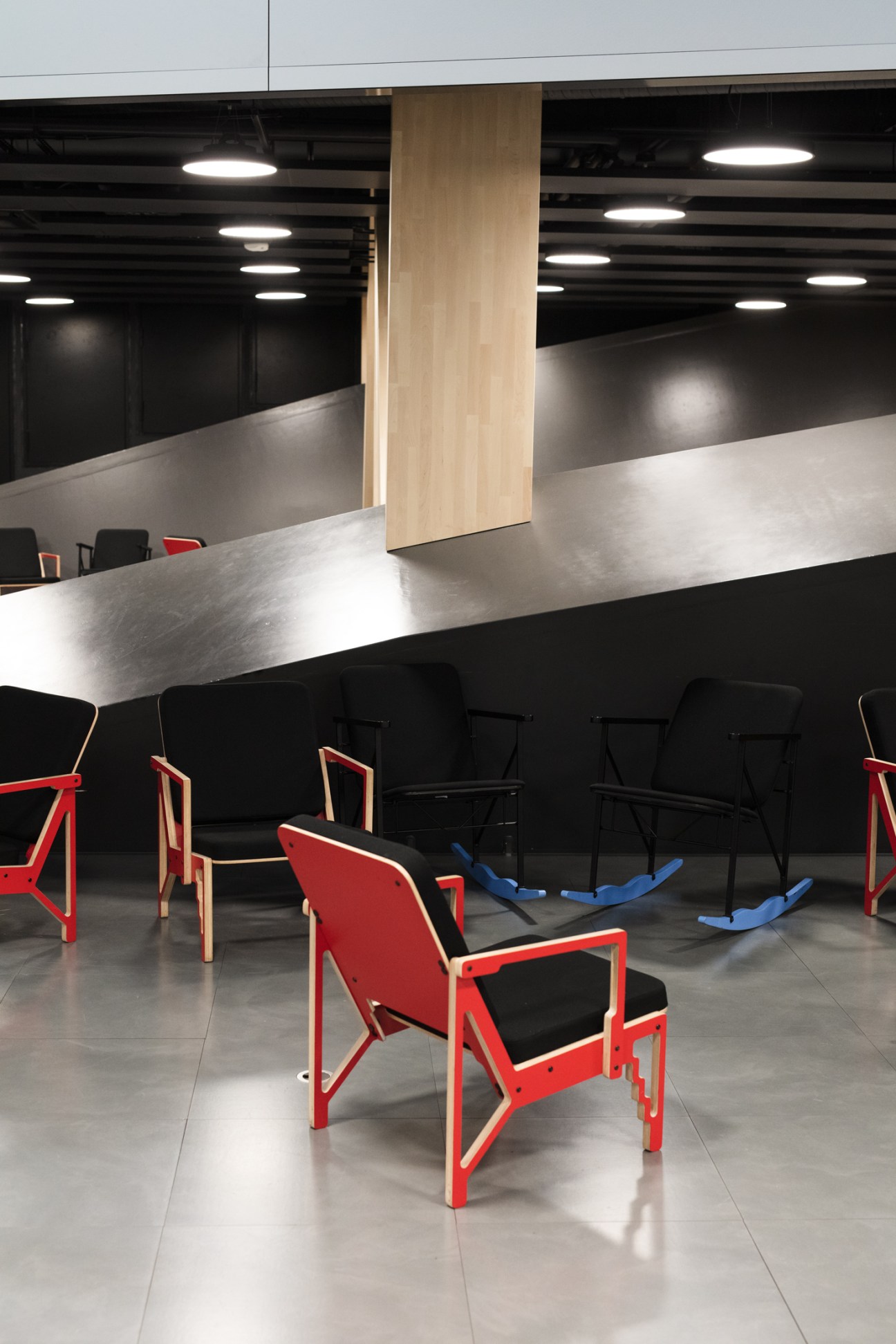
For the average Finn, a public library is much more than a stuffy spot you visit to borrow a book. Libraries have long offered cosy nooks for readers to escape the harsh, long winters, as well as providing important social centres. “It’s more of a village hall I suppose,” says Samuli Woolston from ALA, the architecture firm behind Helsinki’s new Oodi Library. This addition to the country’s 700-strong network of public libraries opened in early 2019 and welcomes 8,000 daily visitors. The building has three floors and houses a cinema, communal kitchen, editing suites, music-practice rooms and workshops kitted out with 3D printers, sewing machines and laser-cutters.
You won’t find any books until you reach the third floor – and even this isn’t the hushed environment of a typical library. A café sits in the centre of this open-plan space, while one end hosts a snug, padded cave where children can sit and have stories read to them by a librarian. It’s no wonder the library has been dubbed “Helsinki’s new living room”.
The library is the product of a century-long architectural tradition in Finland: the open, anonymous competition. Usually any practice can enter these competitions, no matter their level of experience, and they are judged on architectural plans alone. “The National Museum over there: that was the winner of an open competition,” says Woolston, looking out of the vast top-floor window over Kansalaistori Square. “Basically all of these buildings around us are: the Parliament building, the Helsinki Music Centre, Kiasma Art Museum.”
And it’s not always the big-name firms that win. “The young architects often put more of an effort in because for them, it’s more important to prove themselves than the established firms,” says Anni Sinnemäki, who as deputy mayor of Helsinki is responsible for city-planning and overseeing real-estate developments. “When ALA won in 2013, they had just started. There were more famous studios participating – ALA were the underdogs.”
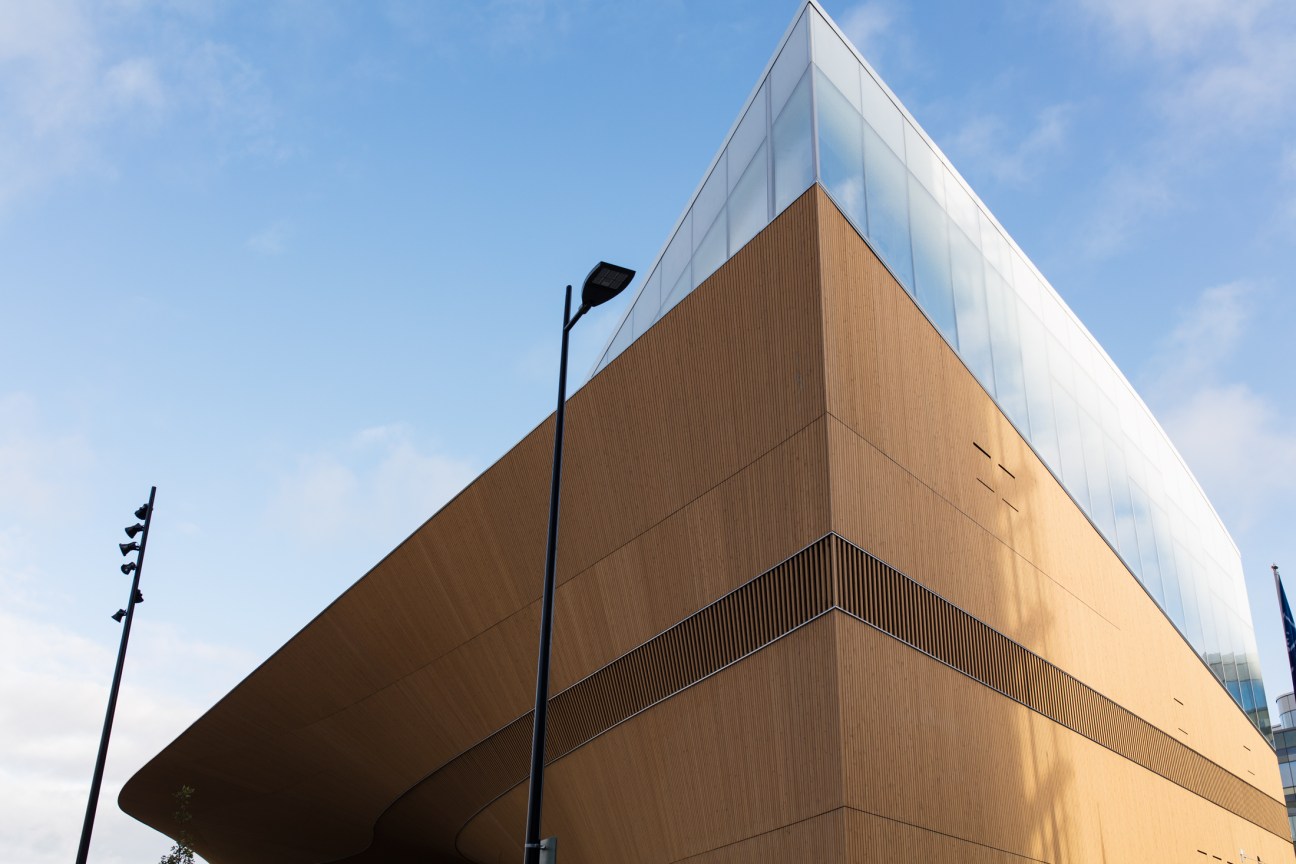
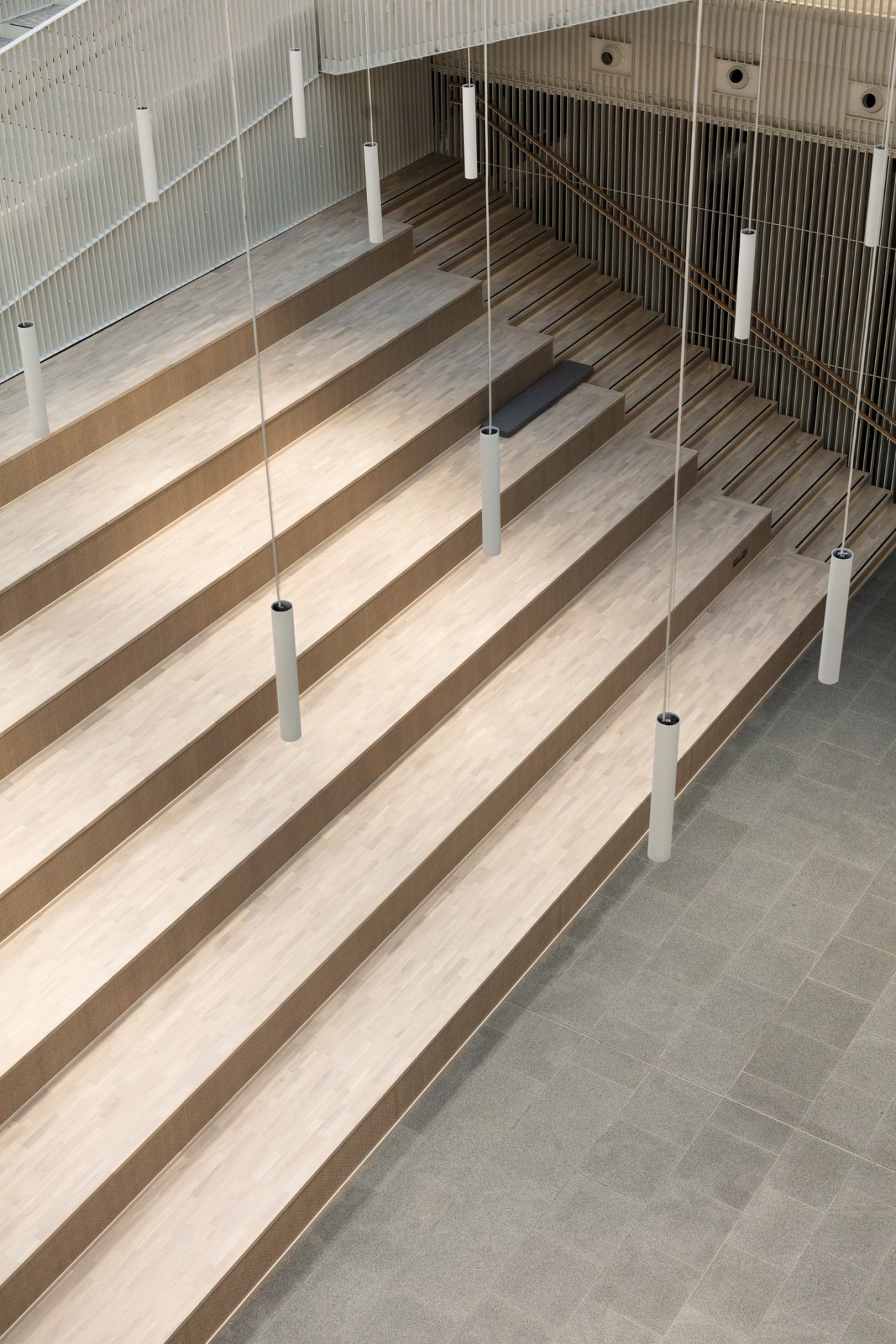
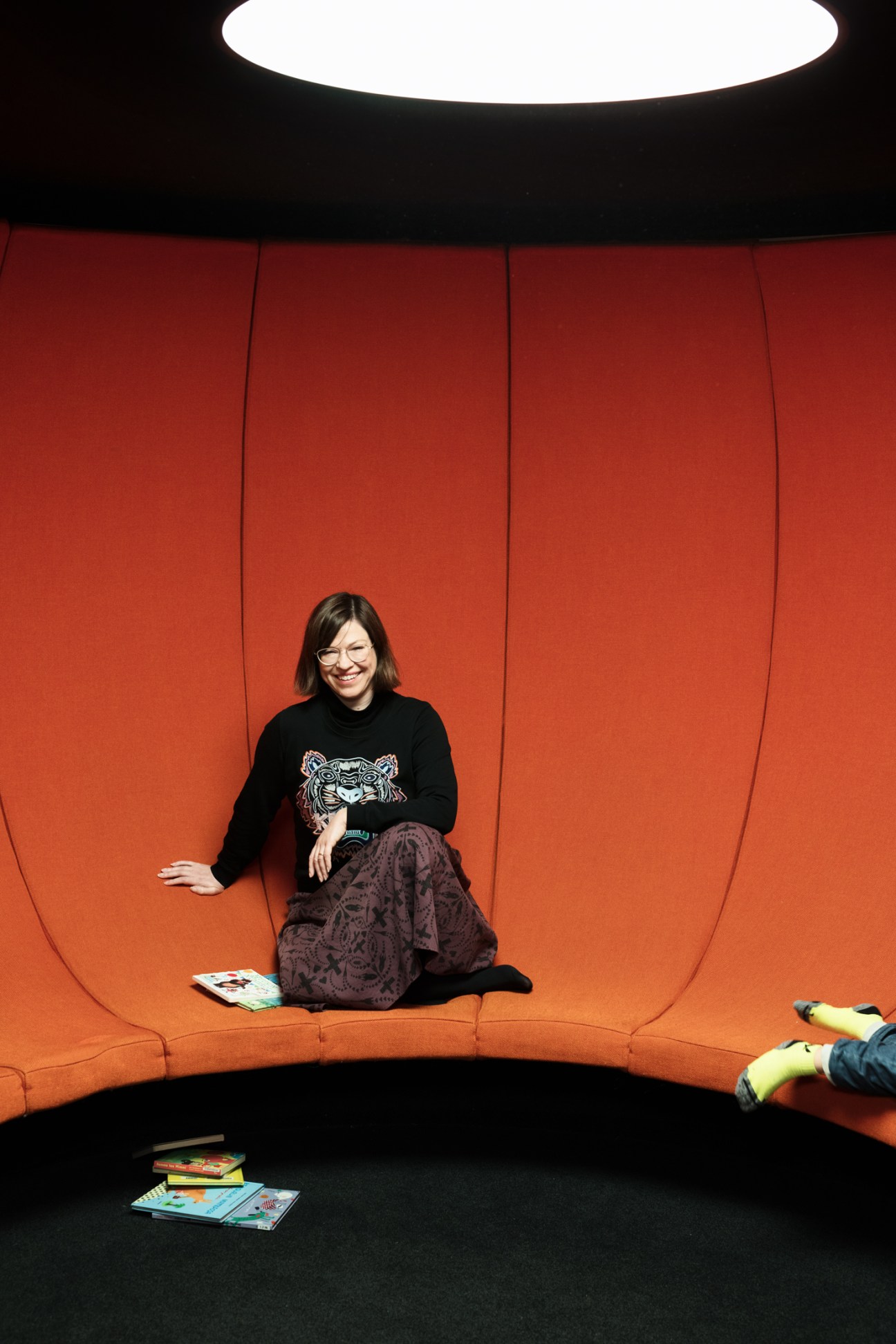



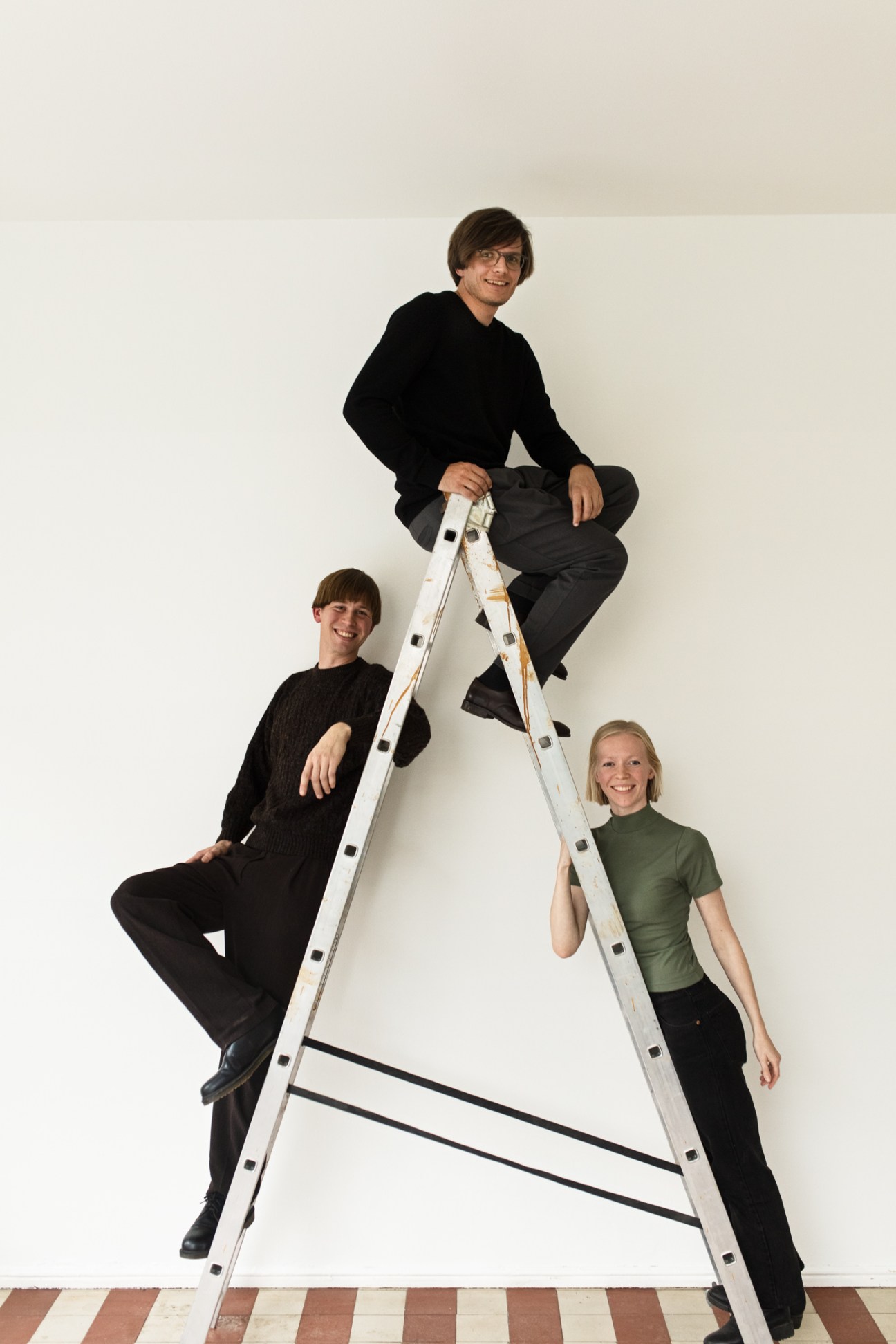
The city’s population has grown by more than 10 per cent over the past 10 years and catering to this expansion also helps to create work for Helsinki’s architects. “In a city where you build a lot, you simply have more opportunities,” says Sinnemäki. “As the city grows it’s not only housing that we build but new services like schools and kindergartens.”
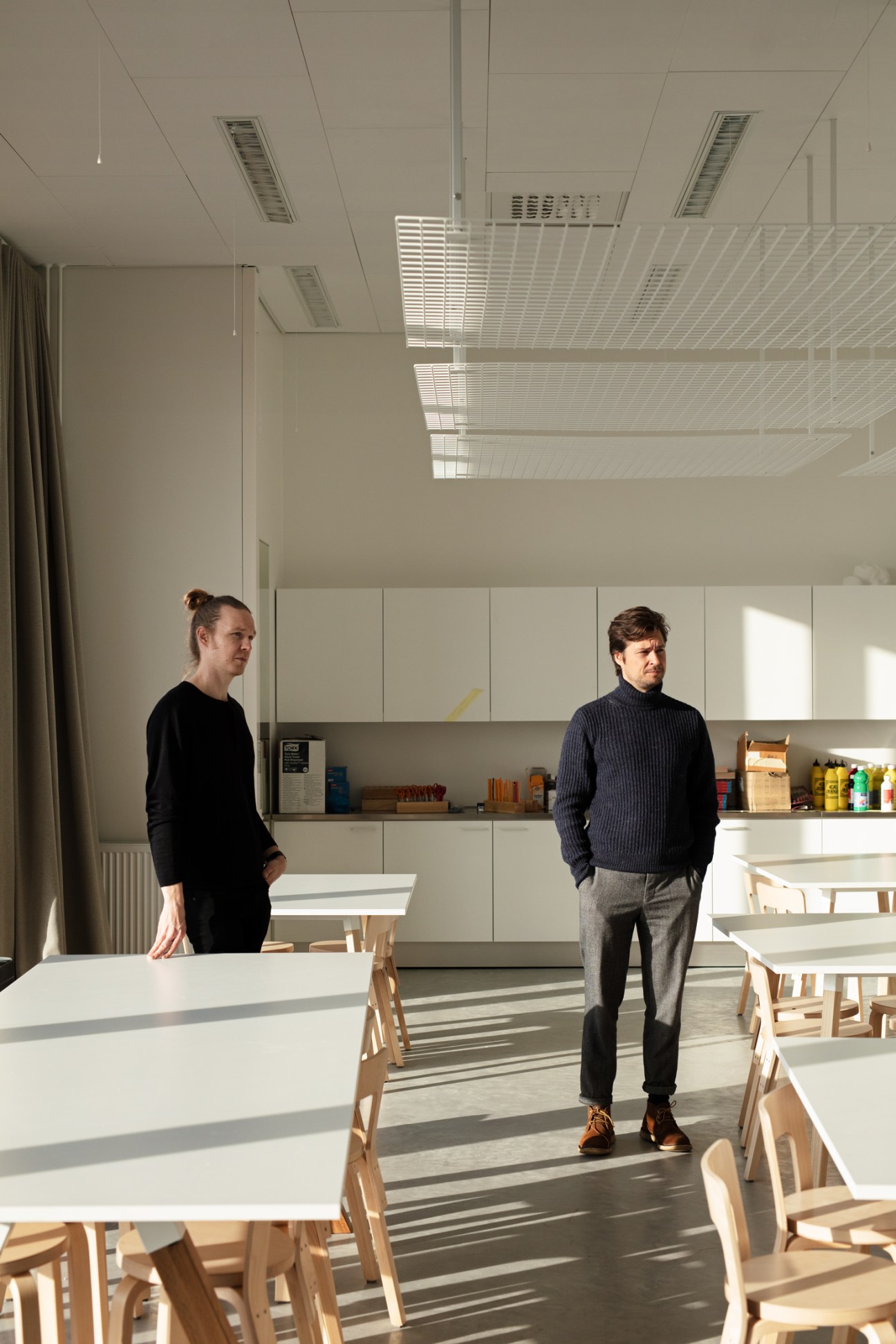
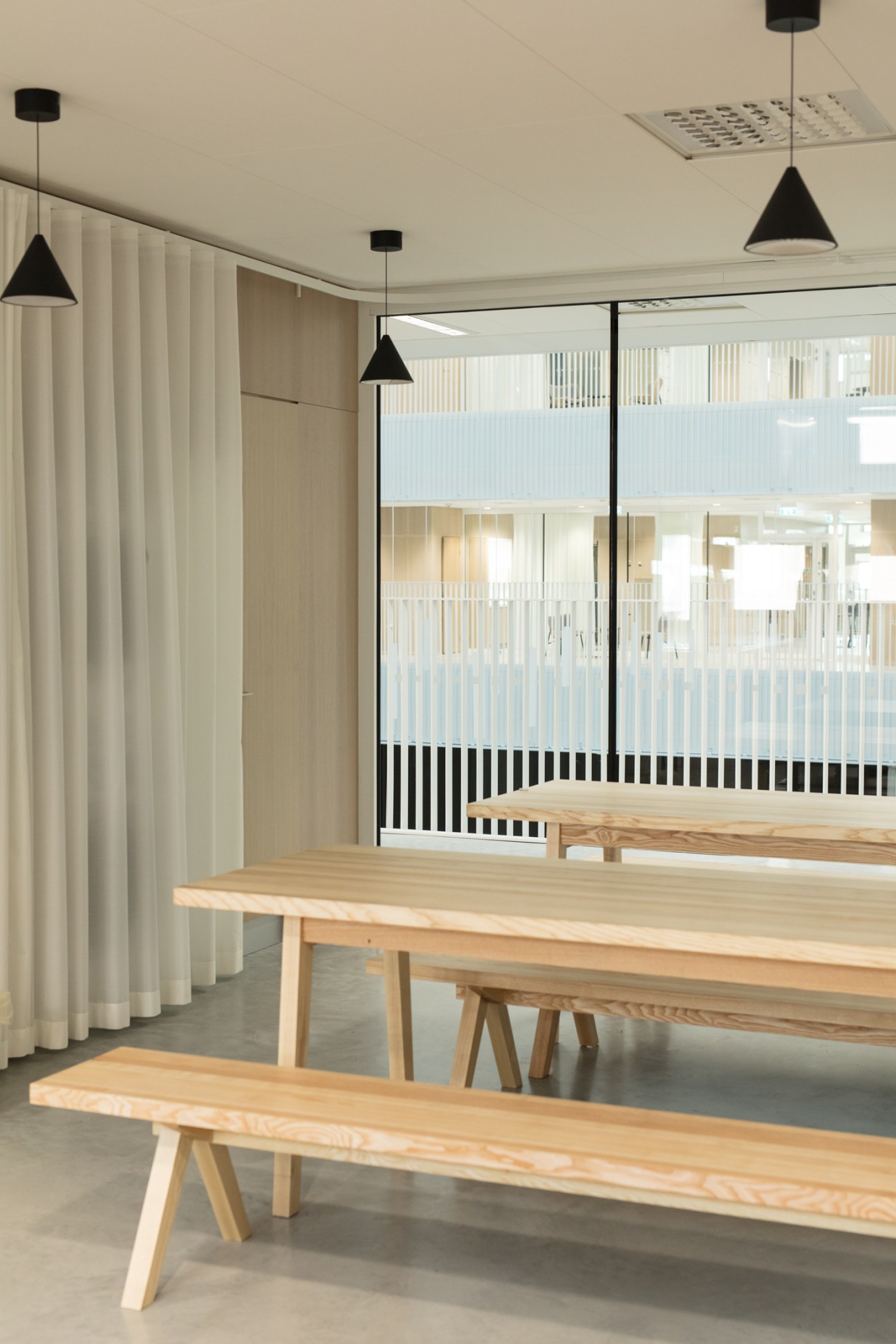
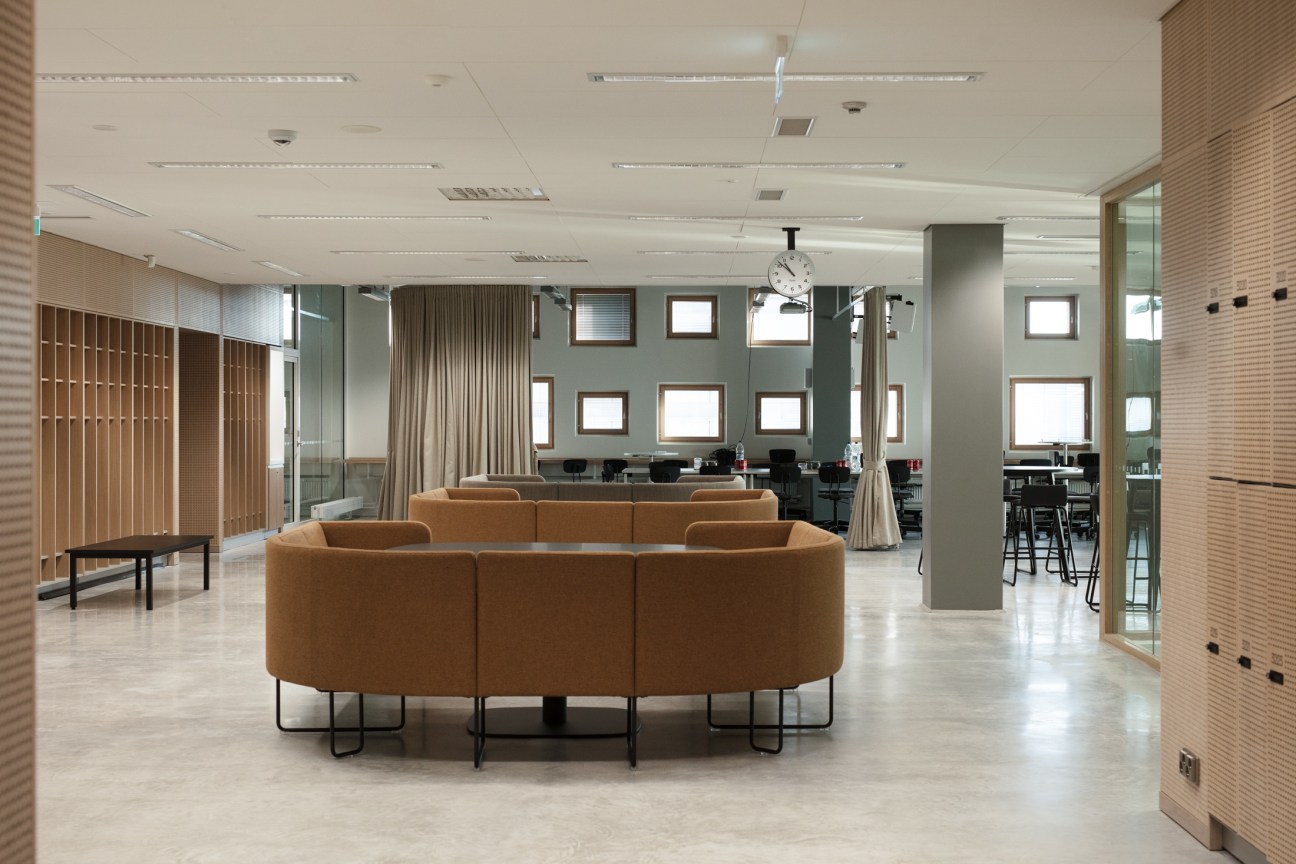
The latest school to open in the city was designed by young architectural firm AOR. Its winning design is a compact, boxy structure lined with square windows and vast angular balconies overlooking the enormous cruise liners docking in the harbour opposite. Built to accommodate 800 children, the building is more than just a new public service for the area: it represents a whole new system of education. In 2015, the year the firm won the competition to design the school, Finland approved a complete refresh of the country’s education system. “You can’t compare this to all schools in Finland because it’s been designed in a really different way,” says Arto Ollila, founding partner of AOR.
Lessons now have a more collaborative format, whereby children problem-solve in smaller groups while several teachers take large classes of mixed age groups together. AOR’s design had to suit this new system. “The main idea is to have a lot of spaces where children can move around,” says AOR architect Kuutti Halinen. “The spaces also needed to be flexible, with ways of adapting for larger and smaller classes.”
The school was the first competition won by AOR, which founded its practice only after its design was selected – just a month before the architects graduated from Helsinki’s Aalto University. “It may seem like a huge risk to make an open competition and have some really young architects win without even having an office or any references,” says Ollila. “But it’s the best thing for cities to do these kinds of architecture competitions because if they ordered such a large number of designs from some big consultant company, it would be super expensive.” The system is also a good way of stopping established firms resting on their laurels. “It keeps the older generation on their toes,” says Ollila. “The younger generation often win because they think about things differently and have a fresh perspective on design.”
Earlier this year, Ollila was also chosen to be on the judging panel for a competition to design a new school in the city of Lappeenranta. The winning design came from AS LL TK: a group of three recent architecture graduates, the eldest of whom only recently turned 30. The school is for 1,000 pupils, making it one of the largest in the country. “For a young architect, the size is almost overwhelming,” says Leo Lindroos, a partner at the firm. “But it’s amazing to be able to cut our teeth on a project like this.”
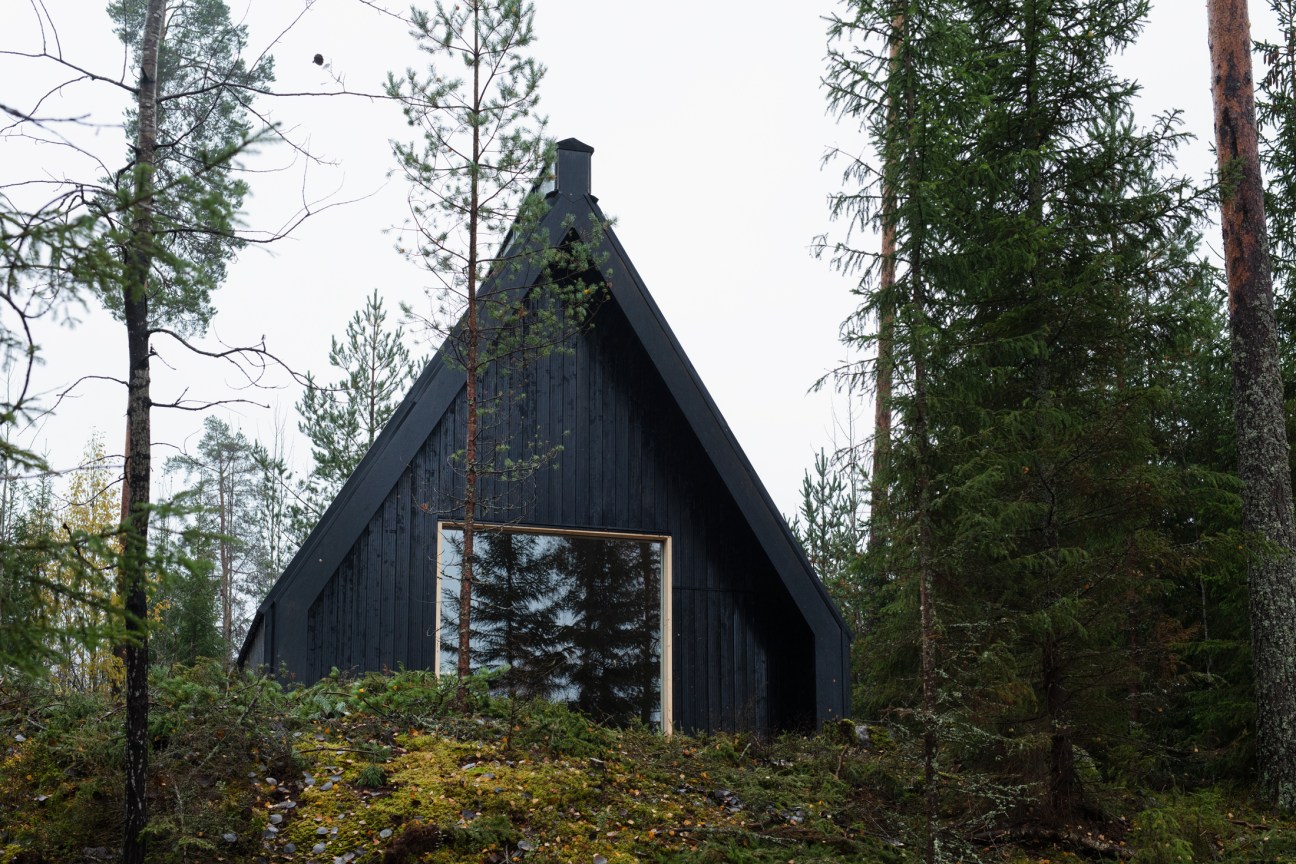
Another young practice to get its big break through the open competition system was Helsinki’s Noan. “Back in 2015 we won a big competition to design a new region for the city of Tampere, for 20,000 inhabitants; we got work from that for the next two years,” says founding partner Lassi Viitanen. When we visit, Viitanen is adding the finishing touches to a smaller-scale project: a remote wooden chapel beside a lake two hours north of Helsinki.
With a small budget, the chapel was commissioned by the local parish and has been constructed mainly by volunteers (one of whom is Viitanen’s own father). The result is an elegant space with a tall, vaulted ceiling patterned by curving spruce beams. “This project was my master’s thesis,” says Viitanen, who since recently graduating has gone on to work on projects around the country, from a new public pool in Rauma to a church extension in Lieto. “By entering these open competitions you get better and better all the time; you keep yourself sharp and keep yourself designing. Finland’s competition culture is something unique and it’s really important for us to maintain it.”
C’est chic
Bouillons predate the invention of the modern restaurant in the late 18th century – and the archaic venues are on the up again in Paris. Often set up next to butchers’ shops, they were originally stalls that served soup based on a stock made from offcuts and bones. As restaurants diversified throughout the 19th and early 20th centuries – with some serving haute cuisine and others becoming brasseries or bistros – bouillons became popular everyday canteens. These vast, noisy, bustling places served simple, inexpensive food to everyone from Édith Piaf to the workmen digging the Métro. Between 1850 and 1950 there were hundreds in Paris and other French cities. Many were operated as chains – the original fast-food joints – reaping the benefits of economies of scale and speedy service. And today they’re back.
Ten years ago only Chartier, in the 9th arrondissement, remained. As cavernous as a railway station, with nicotine-stained walls, brass luggage racks above the tables and tables cheek by jowl, it was a place where waiters in black waistcoats scribbled orders on paper tablecloths. The food was unremarkable but notable for its adherence to old-fashioned dishes, which included carrotes rapées, frisée salad with lardons, snails, Toulouse sausage with puréed potatoes and roast chicken with chips. It was a breath of fresh air when so many places had succumbed to trends: square plates, balsamic drizzles and burgers. Chartier was a throwback, a visit to a different century, as welcoming to Japanese tourists in search of authentic Paris as it was to students living in the quarter. It was the kind of place where the food didn’t really matter; there were plenty of other things to talk about.
Christophe Joulie and his father, who own more than a dozen restaurants in Paris, bought Chartier in 2007. “Everyone expected us to turn it into a brasserie,” says Joulie. For decades bouillons had been gradually upgraded and restyled from their humble roots into more upscale places. But Joulie and his father upped the ante, sped up the service and managed to get five seatings at a table a day rather than two. “We saved the bouillon,” he says. “The bouillon is part of our patrimony.” Chartier grew in popularity so much that there was a queue outside the door every lunchtime.
Then, in 2017, a rival, Bouillon Pigalle, opened in the city’s red-light district. Bouillon Pigalle respects the tropes – waiters in waistcoats, long banquettes – but the decor is clean and crisp: racing stripe red and white. There are racks overhead but the hip Parisian crowd are more likely to stow motorcycle helmets or tote bags than a valise.
“We wanted to go back to the food of our grandmothers,” says Bouillon Pigalle director Jean-Christophe Le Hô. The menu is nostalgic and homely: bone marrow and toast, tête de veau, navarin of lamb, blanquette de veau. Its chef recently won the prize awarded by the Association de Sauvegarde de L’Oeuf Mayonnaise (really) for the world’s best egg mayonnaise. The plates – modern and red-rimmed – arrive in droves as groups order several starters to share, tapas-style.
Most of the main dishes at Bouillon Pigalle cost less than €10; a typical meal for one, including wine, can be covered by a €20 note. It was an instant hit when it opened and today a queue still stretches past the McDonald’s next door. Le Hô says that the older people who dine here often thank him for bringing back dishes that have otherwise disappeared from restaurant menus. “This was the bourguignon we had when we were kids,” they say. On Wednesday afternoons, when schools finish early, parents bring their children here – and in the evenings, young people celebrate birthdays. “Tables compete with each other to sing loudest,” says Le Hô.
When we visit we’re surrounded by a group, spread over several tables, celebrating a birthday. As the lights dim and the waiters bring out profiteroles with candles in them, strains of “Happy Birthday” fill the room. “Thierry!” shouts one customer as a latecomer arrives, trying to make themselves heard above the din. Thierry then holds out his arms as if to hug everyone there. Café chairs are shuffled, room is made; young women at an adjacent table wave before Thierry bows and takes his seat.
Bouillon Pigalle has the kind of noisy atmosphere that encourages people to talk to their fellow diners; it’s the sort of place where a guest might send over a bottle of wine if someone is noticeably celebrating an anniversary. It’s also egalitarian: the menu is printed in nine languages. Once the restaurant even hosted a wedding reception for 60 people. The party didn’t reserve tables, Le Hô tells us; instead they warned the restaurant in advance before showing up at 18.00, when there would definitely be room. Le Hô tells me that he once saw a man and woman on adjacent tables meet, flirt, leave together and then return to the restaurant as a couple a few days later.
The height of the bouillon movement came in the early 20th century. After the Second World War, the establishments gained a reputation for being a bit down at heel; tastes changed and all but Chartier turned to fancier fare. Now they are being turned back to bouillons again. For decades Julien on the Faubourg St Denis was an embarrassment; the extraordinary soaring art nouveau space was almost devoid of diners. It served plain steaks garnished with a 1970s-style tomato carved into a rose. Now under a new owner, it has been restored to its bouillon beginnings and, once again, it’s doing a roaring trade. British designer John Whelan made his name updating the interiors of classic French brasseries. He says that when they scraped back more than a century of paint, they found the original shade. “It was this incredible bright sea-green,” he says. “This really gave us the faux legitimacy, if you like, to repaint the restaurant that colour.”
Bouillon Julien’s interiors are enchanting: nymphs and goddesses appear to hold up the high ceiling of green stained glass, the floor is covered with daisy-patterned tiles, mirrored walls reflect each other and globe lights glow like miniature moons. So why were these cheap restaurants so opulently decorated? “In 1906, when Julien was opened, entertainment was the theatre and dining,” says Whelan. “That’s why you see these extravagant interiors in theatres, brasseries and bouillons. They were like the Hollywood blockbusters of their day.”
The renewed popularity of the bouillon is growing. Joulie has turned a brasserie in Montparnasse, that was once a bouillon, back to its roots – and the team behind Bouillon Pigalle are planning to open another space in République. There are now also bouillons in Toulouse and Strasbourg, and even a joint venture between a Frenchman and a Czech in Prague called Le Petit Bouillon – a name that belies its size and grandeur.
For Whelan the reasons for the success of Bouillon Julien are obvious. “It’s popular because of the beauty of the place and, of course, because of the price point,” he says. “People come for family occasions because it feels grand and civilised and the young people come because they can afford it. There’s a democratic vibe.”
After decades of restaurants climbing higher and higher into the stratosphere of foamy, fussy haute cuisine, neighbourhood bistros have closed and the resurgence of the bouillon can be read as a down-to-earth reaction. Ask a French restaurateur what makes a good restaurant and they’ll mention the ambience. In the rush to appease trends – fermented and foraged innovation, Asian flavours, clean eating – some have forgotten what the French always knew: the purpose of restaurants is less about the food and more about congregation, congress and company. Cheap and cheerful is the new fine dining.
From the ground up
For more than three decades Darina Allen has been tempting would-be chefs and curious food folk from around the world to a single bucolic corner of County Cork in her native Ireland. The lure? Her world-famous cookery school Ballymaloe, which has trained generations of international chefs and food entrepreneurs from home and abroad. Her mission? To change our relationship with food, farming and the land for the better, one step at a time.
Allen has written 19 cookbooks, made countless television shows and steered the course of international cookery away from trickery, fuss and foam towards fresh ingredients, time-honoured techniques and sensible farming practices.
Her enthusiasm is undimmed and she’s got ideas – and answers – aplenty. Just don’t offer her a skinny latte.
Has the farm-to-fork movement changed our attitude to waste and given us better food?
Sadly not enough has changed because the message nowadays is that academic skills are important but practical skills aren’t. Big mistake. We’ve let at least two generations out of our houses and schools without equipping them with the life skills to feed themselves, which feeds right into the hands of the multinational food companies. We’ve handed over complete control over the most important thing in our lives really: our health. We’re failing in our duty of care to our children and the next generation.
So teaching hands-on cookery skills and where our food comes from should be higher on the agenda?
I mean, I could be teaching algebra or geometry or something. And of course that’s hugely important but you can’t eat a flipping maths book. I feel fortunate that I’ve found something that I totally love doing and feel like jumping out of bed every day at 71 years of age. Maybe not quite as fast as I used to but still.
What’s the first recipe that you share with students who attend your three-month certificate course at the cookery school?
Compost. I introduce them to the gardeners and the farm manager, and maybe I’ll have a bunch of carrots or something. I say, “Look at these lovely carrots. It took Eileen the gardener three months to grow these carrots so don’t you dare boil the hell out of them.” We go out into the fruit garden and Eileen will have a wheelbarrow full of soil there. And actually it’s humus [decaying soil]. They stand around me in a big semicircle wondering what’s happening and feeling a little awkward. I run my hands through the soil and I say to them, “Remember, this is where it all starts.” So they think I’m some aged hippie on a mission but I have to shock them out of thinking that food is something that comes wrapped in plastic off a supermarket shelf.
You’ve said elsewhere that you’d have liked to be a soil scientist. Why?
We’re totally dependent on the health of four or five inches of soil around the world for our very existence. Farmers are really worried about the diminishing fertility of the land because we’ve wrecked the soil with very intensive monoculture over the years. We can’t go on with business as usual – we have to go back. As a farmer I feel a strong responsibility to look somebody straight in the eye and know that that food is going to nourish them rather than make them ill, which is happening with a lot of food nowadays.
How has science helped us understand that relationship with food better?
There’s been an enormous amount of work done on the link between the health of our gut and our mental and physical health – and that’s obvious when you think of it. I’ve watched this over 30 years. For the past five, six, seven courses we’ve had at least one doctor, sometimes two; at the moment we have three doctors on the 12-week cooking course. These are medical professionals who tell me that they feel there isn’t enough training in nutrition but who are now demanding the proper information so they can answer their patients’ queries properly.
So many patients have conditions that can be at least helped, and often cured, by diet. But where do you get nutrient-dense food? A lot of people don’t have time to buy directly from farmers but there are other ways and alternative routes to market. In the UK you have Farmdrop, where the growers get 80 per cent of their price, which is fantastic. So many farmers are not being paid enough to produce nourishing, wholesome food: just 30 to 40 per cent if it’s sold through a supermarket. I’m always encouraging people to try to grow something themselves too.
How do you account for the rise in gluten and dairy alternatives?
There is so much misinformation. There is a sort of desperation and huge confusion. People are trying to make sense of all the different advice. There’s such emphasis on the plant-based diet now but the real problem is the whole cheap-food policy. There’s no such thing as cheap food. In health terms, in socioeconomic terms, it’s a complete and absolute disaster. In Ireland, 46 per cent of all food that’s bought in supermarkets is ultra-processed. We are destined to be the most obese country in Europe by 2030. Our health service can’t cope until a huge amount of money is spent on getting the message across that we need to eat real food.
So are people unduly concerned?
People are not imagining the food intolerances and the allergies. People are not imagining that they feel bloated or get rashes, or whatever, after they eat a very squishy slice of bread. For the first three years of the school, which opened in 1983, I’d never heard of coeliac disease. If you’re coeliac, you’re coeliac; that’s a disease and it’s lifelong. But today I suppose a quarter or a third of all the students will say they have some kind of mild intolerance. By the end of the 12 weeks I guarantee that nobody will be dairy free or have a gluten intolerance. That’s because they’re eating 48-hour fermented sourdough bread. They have the choice to drink raw milk. They’re eating a completely different kind of food and they cannot get over how different they feel. And so their big mission when they leave us [as either chefs or to their previous vocations] is to link in with local farmers. And, if they’re starting a business, to try and develop a network of small producers to buy from.
No oat milk in that flat white then?
I just want whole milk, please. If you go in for a coffee you’ve got this big, long spiel: “Do you want soy milk, coconut milk?” No. Just the real deal. That’s what we all need but it’s so hard to find.
Critical mass
1.
Helsinki
Less formal and fussy fare awaits diners in the Finnish capital but they shouldn’t ignore one of Europe’s finest restaurants.
The Helsinki food scene in 2020 will witness a shift away from fine dining towards a more casual style of cooking, even home-style dishes, as restaurants offer simple, no-nonsense servings at more affordable prices.
The New Nordic trend will continue but in a less dogmatic, more approachable style. This means that the restaurants will still focus on the provenance of their ingredients while taking inspiration from other cultures, as well as the Nordic styles of old.
A good example of this will be Lucy in the Sky Restaurant, my personal pick for 2020. Located in an enticing setting on top of a high-rise by the sea, it focuses on farm-to-table ingredients and wild herbs while drawing inspiration from Japan and Asia. Finnish and Japanese cuisine have many elements in common and the mix is set to be very interesting.
Visitors to Helsinki should try the Palace Restaurant. It is unapologetically fine dining and very pricey but it is one of the best European restaurants I have eaten in for years. I’d also recommend Grön, Inari, Penélope and BasBas for a more affordable and relaxed approach.
About the critic:
Mikko Takala is a Finnish food writer and author. He contributes to various Finnish newspapers and magazines and has written several cookbooks and travel guides.
2.
Hong Kong
The current volatility will impact on the city’s hospitality scene but you just can’t keep a good restaurant down.
Hospitality veterans in protest-hit Hong Kong are preparing for tough and uncertain times. But even as visitor numbers slump and some tables empty out, restaurateurs are putting on a brave face. What’s more, a fair share of investors and chefs are pressing on with new openings – and in a rather big way.
A sizeable corner of Tsim Sha Tsui, the touristy and well-trodden waterfront district, has been reborn thanks to homegrown property developer New World – The Rosewood Hotel and K11 Musea mall are among the new openings here. Dining options in the area are numerous and will continue to increase well into 2020.
The most anticipated of these is Bayfare Social, a glamorous, Spanish-inspired food hall conceived by Parts and Labor Design. In the same area, fêted baker Dominique Ansel is slated to open patisserie Dang Wen Li which, judging by the name, is eyeing expansion in China.
Yenn Wong, CEO of hospitality group JIA, has a knack of introducing Hong Kong to rising stars such as Jason Atherton and Julien Royer. Due to celebrate a decade in business, she has picked Mirazur alumnus Ricardo Chaneton to lead her new contemporary French fine diner Mono.
Many of the city’s best Cantonese restaurants are taking a more detailed look at the areas around the Pearl River Delta for niche ingredients and lost recipes. You’d do especially well to head to The Chairman, one of Hong Kong’s most celebrated Cantonese restaurants. Its new menu features a specific breed of goose from the city of Foshan, roe from estuary crabs and house-pickled chillies inspired by village recipes.
The city’s insatiable demand for meat was made embarrassingly clear when it was revealed during the Amazon fires that most of Brazil’s beef exports end up in Hong Kong. Advocates for a more sustainable way of eating are now more active than ever, with chef and founder Peggy Chan leading the way. Fresh from opening her fine-dining vegan restaurant Nectar she is launching a cooking school called Pollen Lab to inspire diners to graduate from beef to beets. There’s plenty to stew over in Hong Kong when it comes to politics; luckily, the food scene has provided us with lots to chew over too.
About the critic:
For the past decade, Janice Leung Hayes has been a food critic and writer for publications such as the South China Morning Post, Hong Kong Tatler and Travel + Leisure.
3.
Rachel Roddy’s Rome
The Italian capital excels in getting the best out of the basics and an increasing number of innovative venues are happy to play on that.
Fifteen years after ending up in Rome on a whim, Rachel Roddy lives in the Testaccio district and has become an important culinary voice when it comes to Roman restaurants. She has a weekly column in The Guardian and several books under her belt.
This London-raised writer can be held partly responsible for elevating the understanding and appreciation of la cucina romana in the Anglosphere. Her tastes and talent as a cook and writer are linked to home cooking and simple grub; things with which Roman cuisine are synonymous. “In its body Rome is a big city but in its stomach it is a little village,” says Roddy, describing the traditional rough-and-ready palate that dominates the Italian capital. It’s hard, therefore, for her to talk of trends but the subtle evolution of the quintessential trattoria into something contemporary is exciting.
One such “neo-trattoria” is SantoPalato, where young head chef Sarah Cicolini is “going back to her Abruzzo roots while being fresh and playful”, says Roddy. Here you’ll find tripe (a Roman delicacy) but also braised peas with egg and parmesan – a riff on traditional pea and pasta soup. The proliferation of pizzerias in the city fascinates Roddy. “Pizza is an incredibly successful formula for eating out,” she says, citing 180g Pizzeria Romana, Pizzarium Bonci and Trapizzino as worthy of hype. “At heart, Rome’s appetite is grounded in dough and tomato.”
About the critic:
Rachel Roddy’s next book, An A–Z of Pasta, which she attests will be about “far more than pasta grannies”, will be published by Penguin in 2020.
4.
Amy Rosen’s Toronto
The dynamism and diversity of Canada’s largest metropolis are reflected in its slew of bold and forward-thinking establishments.
Unlike the spoiled residents of Rome or Paris, Toronto natives don’t possess a storied culinary history or singular food stuffs that define their city. Instead its kitchens are propelled by youth and diversity: its residents come from more than 100 nations. “Borderless and unfussy, [Toronto is] young and free,” says food critic Amy Rosen, summing up the state of the city’s culinary scene.
“Casual settings with interesting wine cards that complement thoughtful shared plates are the common denominator,” says Rosen of the restaurants setting themselves apart in Canada’s largest city. She points to upscale French diner Aloette – the younger sibling of Alo, regularly cited as Canada’s best restaurant – for its wedge salad and lemon meringue pie. At Donna’s, a west-end snack bar helmed by a team of Momofuku veterans, “every table seems gifted with plump shrimp-salad sandwiches and ham-and-bread plates”.
The culinary scene is shifting – but with change comes opportunity. “Toronto restaurants don’t see it as a loss when forced to recalibrate,” says Rosen. David Chang’s Daisho and Shoto, for instance, have shut to give way to Kojin, Momofuku’s wood-fired steak joint. “The Black Hoof, arguably the pivotal player in igniting Toronto’s modern culinary scene a decade ago, has been reopened as Bar Vendetta by the same owners,” says Rosen. “With youth comes courage.”
About the critic:
Formerly the editor in chief of Modern Farmer and food editor at Chatelaine, Rosen also served as the first food critic for EnRoute¸ Air Canada’s in-flight magazine.
5.
Sydney
Expect a celebration of excellent seafood on menus this year, while the city’s nightlife is also set to get an overdue shot in the arm.
As the ongoing drought in New South Wales impacts on beef and lamb prices, restaurateurs are finding new ways to cope. Italian food, never far away, is a big growth area, thanks to its emphasis on pasta and pizza. Overall there’s a shift to coastal cuisine, including new uses for seaweed, sea urchin and sea succulents, as well as a lot of fin-to-tail among chefs such as Josh Niland of Saint Peter and the Fish Butchery. If all you want to do in Sydney is eat simple fish and seafood next to the water, make for Cirrus at Barangaroo, the reinvented Bathers’ Pavilion on Balmoral Beach or Fred’s on Oxford Street in Paddington.
We’re finally seeing Indigenous talent in our kitchens thanks to the National Indigenous Culinary Institute, which trains chefs with industry leaders such as Neil Perry of Rockpool Bar & Grill, and Guillaume Brahimi of Bistro Guillaume. I’m looking forward to The Gidley, a steak-and-martini concept from the team behind the very Florentine Bistecca. And it will be fascinating to see how Parramatta develops into a “second city”, with chefs wondering whether to head to the western suburb.
As Sydney’s barbaric licensing laws are finally repealed, Mary’s Underground is ready with live music every night of the week, and the Prince of York has installed a perfectly pink basement bar called Pamela’s with a permanently rotating disco ball.
About the critic:
As chief restaurant critic for The Sydney Morning Herald and senior reviewer for the Good Food Guide 2020, Terry Durack knows his way around Sydney’s dining scene.
Self awareness
The recently opened Asaya, on the sixth and seventh floor of the Rosewood in Hong Kong, provides a comforting, nest-like feel. Its outdoor courtyard and pools, surrounded by high whitewashed walls, contribute to a sense of a sanctuary in the sky, bathed in natural light and hidden from the hectic city. Meanwhile the hotel’s lap pool, bar and gym, connected to the wellness centre, offer endless harbour views.
Asaya’s Tony Chi-designed treatment rooms, bathhouses and beauty salon, plus two self-contained suites isolated from the Rosewood’s 413 rooms, reflect the importance of wellness to the high-end hospitality industry. There’s even a health-focused restaurant: the Mediterranean and Japanese-inspired Asaya Kitchen, headed by chef Renaud Marin.
“We are invested in your lifestyle, not just the next hour of your life,” says Erin MacNeil, Rosewood’s director of wellness. The Canadian expat wants to dispel the “yoga and granola” view of the concept by making it more accessible. She says it incorporates everything that makes us feel better: “Do you eat? Sleep? That’s wellness.”
The extensive offerings at Asaya range from an elevated take on massage packages (including a library of oils) to intravenous drips and minor cosmetic surgery; there’s expressive-arts therapy and consultations with the on-site naturopathic doctor. Your writer settles on 3D skin analysis and a men’s “anti-vice” facial. The diagnosis: my skin’s dehydrated. I must drink more water. MacNeil arrived in Hong Kong last year from Rosewood’s sister hotel in Beijing, where she was spa director. Whereas traditional spas have become transactional, wellness is more pervasive: packages have become programmes and the services permeate the rest of the hotel. As a result, taking responsibility for wellness across a hotel means liaising with other departments, from head chef to head of HR.
The wellness boom comes down to two main factors: affluence and technology. Access to more money means that people want to live the best life. Meanwhile, smartphones and the like are increasing mental stress and result in a need to switch off. Health-conscious consumers are a positive development for hotels: data shows that spa users tend to be high-spending guests. It seems wellness is becoming the hospitality industry’s holy grail.
Here to stay
Anticipated openings around the world in 2020.
Next year’s hotel-openings headlines will include the Nomad’s London landing and Rosewood hitting São Paulo but there’s a wealth of other openings to watch. Here’s our overview of some more addresses that you’ll want to check in to.
1.
Castello di Reschio
Lisciano Niccone, Italy
Come summer the Bolza family will open a 36-room hotel in the 11th-century castle on their Umbrian estate. Beyond the historic fortress, the estate encompasses 50 farmhouses (some now holiday rentals), stables, vineyards and olive groves, as well as architect Benedikt Bolza’s design studio. Bolza is working with local craftsmen to revamp the building, while food for the restaurants will be sourced from the estate’s farm. “We make five different wines, olive oil and honey,” says Bolza.
reschio.com
2.
Cheval Blanc
Paris
LVMH’s hotel collection, Cheval Blanc, opens its first Parisian property in spring. The hotel has 72 rooms and suites designed by Edouard François and Peter Marino. “With this view you can visit Paris in one glance,” says Olivier Lefebvre, head of LVMH hotel activities. Guestrooms are set up like apartments and the penthouse suite has a pool and terrace overlooking the Eiffel Tower. “We also want to welcome Parisians,” says Lefebvre, noting that the hotel will have a bar and two restaurants, one headed by Michelin-starred Arnaud Donckele.
chevalblanc.com
3.
Villa Copenhagen
Copenhagen
In spring the Danish capital’s former central post office will reopen as a 390-room hotel over the road from the Central Station and Tivoli Gardens. “The neo-Baroque building has been restored to appear exactly as it was at its inauguration in 1912 when the Danish postal service moved in,” says Villa Copenhagen’s general manager Peter Høgh Pedersen. “It remains a centre for communication; somewhere people connect in a historic setting.”
villacph.com
4.
Ace Hotel Kyoto
Kyoto
Ace Hotel’s first Asian outpost has been designed in collaboration with long-time partner Commune Design and architect Kengo Kuma. The hotel will merge eastern and western influences when it opens in spring. It will be the centrepiece of the Shin-Puh-Kan Redevelopment Project that is revitalising the old Kyoto Central Telephone Exchange and will include a ground-floor marketplace, among other amenities.
acehotel.com
5.
The Raffles
Bali
Following the restoration of two historic properties – the Raffles Europejski Warsaw and the recently reopened Raffles Singapore – the hotel company is opening in Bali. Located in Jimbaran Bay, the property will encompass a collection of villas with breathtaking ocean views. Over the next three years, Raffles Hotels & Resorts is looking to double its portfolio to 28 properties.
raffles.com
6.
Hotel Magdalena
Austin, Texas
Austin is having a moment. Not only has Proper Hotels opened its doors but Hotel Magdalena by Liz Lambert’s Bunkhouse Group will arrive in 2020. “The hotel, inspired by the 1960s and 1970s, is a love song to that part of Austin,” says Lambert. Designed by architects Ted Flato and David Lake, the 89-room property is a stone’s throw from Bunkhouse’s other hotels: the San José, Saint Cecilia and Austin Motel.
bunkhousegroup.com