The Forecast
Watch this space
Sitting kitty
Pet furniture
While prowling the streets of Zürich I noticed that the cat ladders that have long scaled its handsome housing stock have been given a revamp. These devices providing upper-level access for felines were formerly ramshackle creations but this year neighbours are competing with one another, with smarter, more slender styles made from expensive materials perfectly sympathetic to their homes.
Anyone who’s been paying attention to the world of cat furniture will have noticed more costly commissions spreading well beyond the streets of Zürich.
Kota Kurashige works for the city of Okawa’s government, which recently launched a campaign to promote cat beds and couches made by its master craftsmen. “These neko kagu [cat furniture] pieces are testament to our skill in working to clients’ specifications,” he says. International interest in the region’s industry has followed, with sales enquiries and commissions for both human and cat-sized furniture.
The design-led pet-furniture industry is about to boom: Ikea’s dedicated pet range rolls out in 2018; Zaha Hadid Architects has dabbled with sculpting a cloud-like dog bed; and upmarket pet hotels are commissioning interior designers for animal-friendly fitouts. “People are more attracted to designer pet furniture than what came before from standard pet-care companies,” says Julian Victoria, editor of Dog magazine. “We no longer have to compromise on beautiful furniture just because we have a dog.”
But furniture built with design in mind is still a niche market within the multibillion-euro pet industry. The real test of how far it can expand will be when Ikea’s Lurvig (Swedish for “hairy”) range hits shelves. The company has dabbled in animal furniture before but they have invested more effort and money into the line this time around.
“Today you see hairdressers for cats and dogs; we didn’t want to humanise the pets because they aren’t little humans,” says Inma Bermúdez, one of the designers Ikea commissioned. The depth of r&d that went into the collection led to working with fur-friendly fabrics and designing a slow-feed bowl to stop dogs from getting indigestion. “With this collection we wanted to help people learn to respect their pets even more, while adding further function to the home.”
Purrfect pieces
1.
Modernist Cat Furniture: Produced by Okawa’s fourth-generation maker Tateno Wood Art Co, these handmade pieces use American walnut and Japanese Paulownia.
2.
Alpine Cat Ladder: Stretching from the ground to higher apartment levels, these seem precarious by human standards but are perfect playthings (and walkways) for cats.
3.
Cat Scratch Mat: This wrap-around mat from Ikea clings to table legs, protecting furniture from wandering claws. It helps to maintain a minimalist vibe in a small apartment with its simple, clean design.
About: Nolan Giles is Monocle’s Design editor. His London flat is catless but he’s considering a Swiss cat ladder to attract lonely felines.
Death in cities
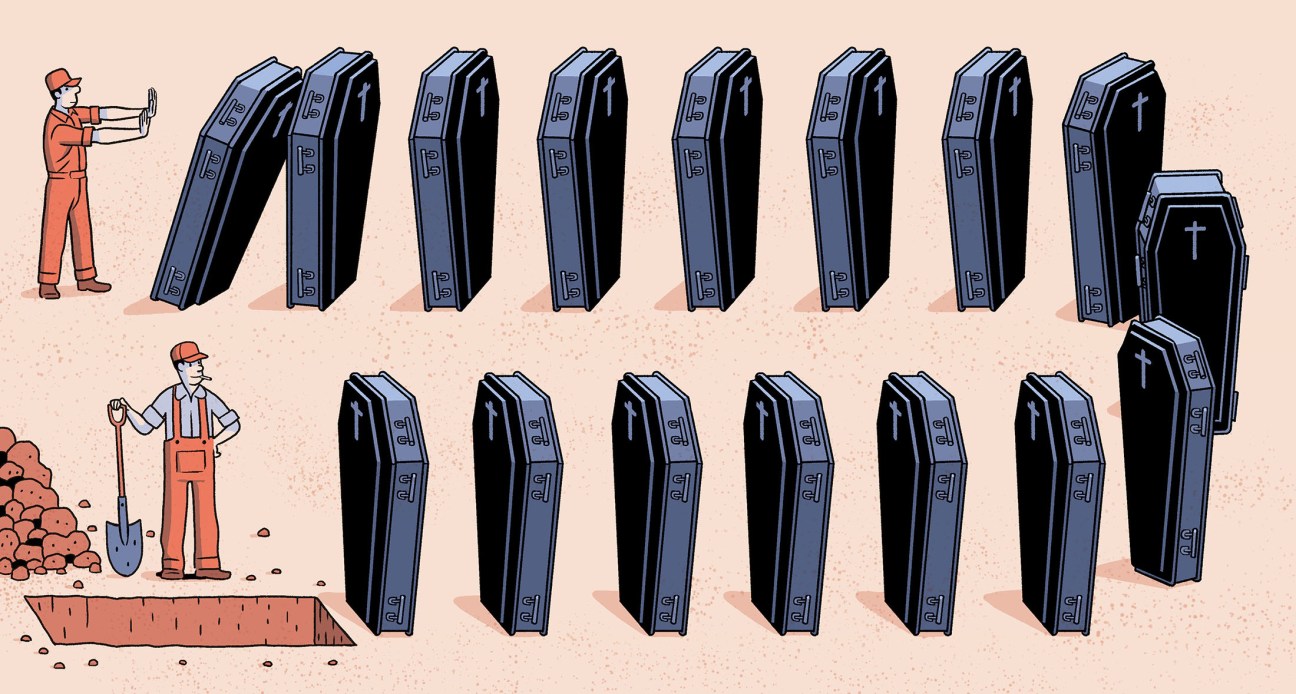
The grave lack of cemetery space
Gary Burks, a 52-year-old man dressed in a trim suit and a blue coat as thick as his east London accent, leads me to the sprawling beech tree that stands as a memorial to his parents. We are in the middle of the City of London Cemetery and Crematorium, where Burks is the superintendent and registrar.
The cemetery is so big that its paths are named, like streets. Our route takes us down South Gate Road, left onto Cheethams Road then onto Limes Avenue. But despite its size, the cemetery has come close to running out of space.
Cities have a problem with death: many of their cemeteries are full or filling up. It’s expected that only a third of London boroughs will have burial space by 2031. With populations rising, most are reluctant to allocate land for graves.
The City of London Cemetery solved the problem by embracing an unusual method: reusing its graves. Burks tries to find the descendants of remains that are more than 75 years old. If no one objects, he deepens the plot and buries someone else on top. Since 2007, this has created 1,500 new graves and Burks no longer needs to worry about space.
Legislation allows London cemeteries to reuse graves but no others have taken the plunge. An attempt in 2017 left local politicians in the borough of Southwark branded “grave robbers”. Elsewhere in England, grave reuse is banned. “It isn’t seen as attractive legislation,” says Burks.
Other cities use design to maximise burial space. Columbia University has a research facility known as DeathLab, which focuses on tackling the problem in New York, while engineers in Hong Kong have proposed a floating cemetery bobbing on the South China Sea. Twice a year during religious festivals it would sail into harbour so that people could visit the urns of the dead. Then there are solutions that do away with graveyards altogether: alkaline hydrolysis involves breaking down the body into its chemical components as an alternative to burial and cremation. Like grave reuse, these ideas have not been widely embraced.
But attitudes around death are changing quickly. Forty years ago, only a third of Hong Kongers were cremated; today it’s more than 90 per cent. Could traditional cemeteries become a thing of the past? Burks hopes not. Half a million people came to his cemetery every year, with the highest turnouts on Mother’s Day, Father’s Day and Christmas Day. Children learn about nature and biology on school trips. Dog walkers, joggers and cyclists exercise here, escaping the surrounding streets. Some people even live in houses in cemeteries, as Burks has done for much of his life (which took some explaining to his first girlfriend).
Few of us want to dwell on death but, with rising numbers living – and dying – in cities, only creative thinking will solve the shortage of burial space.
About: Matt Pickles is an Oxford-based writer. He usually covers education for the BBC; this was his first time reporting from a cemetery.
How to behave… in a hotel lobby
Our guide to avoiding silent public disapproval begins with your accommodation.
Don’t pad around in pyjamas
No one needs to see your rumpled sleepwear, no matter how at home you feel.
Mind the social-media snapping
You may “like” the swish lobby but do those checking in want to be online too?
Lose the luggage
Nothing kills the ambience like a pile of bags being held for of those who didn’t book late check-out.
A sheltered life
Cold War bunkers repurposed
“The toilet paper is original,” says Mirnes Bajic as he points out the period features of Atomska Ratna Komanda (Ark). Formerly a secret facility in the mountains that rise behind Konjic, an unremarkable town about an hour’s drive from Bosnia’s capital Sarajevo today Ark is at the vanguard of a trend for repurposing Balkan bunkers as attractions that attempt to make sense of the region’s turbulent history.
The Ark is not just a former nuclear shelter and Cold War relic but a museum and art gallery focusing on the era. As the co-ordinator of the project, Bajic spends his time sharing the history and secrets of the bunker with visitors.
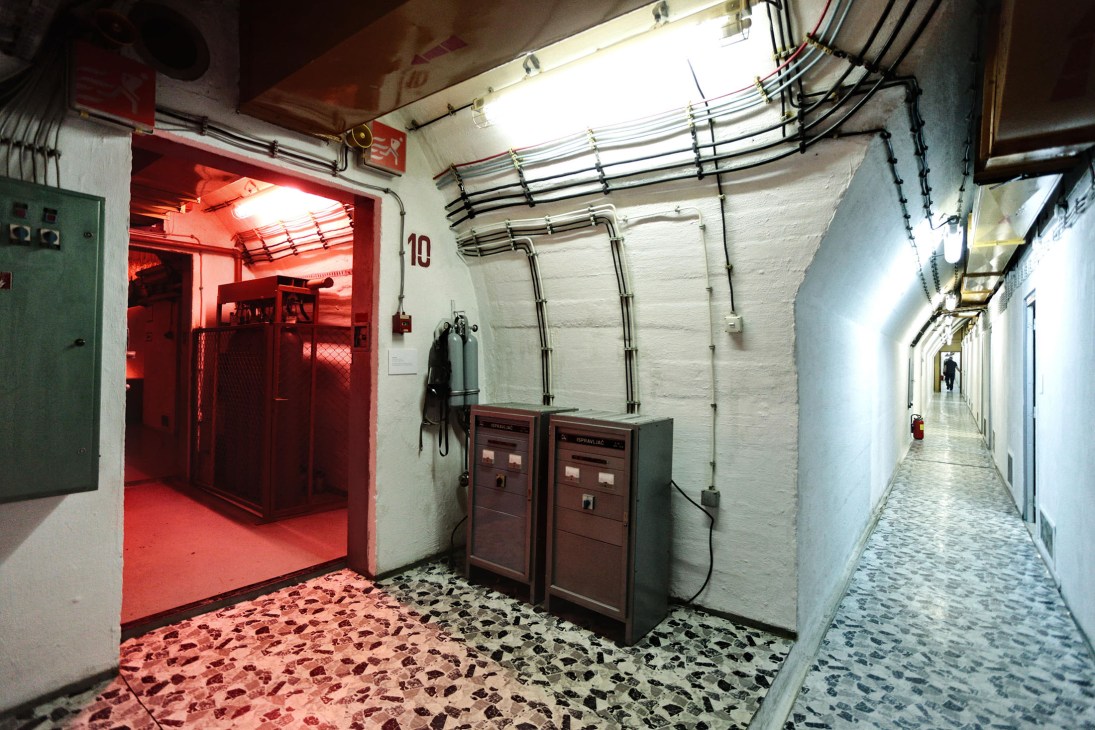
Getting to the Ark feels like an illicit excursion; despite its declassification, the site is very much off-piste. No signs mark the way so Bajic battles dodgy mobile-phone reception to talk visitors over rusty bridges across the Nevetna River, then along a track to a military checkpoint. Past the grumpy guard are three shabby houses concealing the entrance to the shelter known as Tito’s Bunker.
For the generation that grew up in the area during the Cold War, the Ark is a flashback to an era of constant background fear. If Yugoslavia had come under nuclear attack this would have been the country’s safest place. “The Ark was built for the 250 most important people in Yugoslavia, including President Tito and his wife, Jovanka,” says Bajic, gesturing to the first lady’s dressing table.
Luxury, however, was not part of the plan. Two kilometres of harshly lit corridors loop around a core of utility rooms that house the generators and water-processing equipment crucial to life underground. Dozens of cubicles open off the corridors, each equipped with a bunk bed, desk and chair. Considering the Ark took more than 25 years to build and had cost almost €3.9bn by the time it was completed in 1979, it is spartan.
All the expense was futile: Tito died in 1980 and Yugoslavia collapsed just over a decade later. Preparations for an external attack were no defence against the poisonous strains of nationalism, which consumed the country from within. Bajic shakes his head as he considers the grim irony the bunker embodies.
Others are following Ark’s example: Albania’s capital Tirana boasts two Bunk’Art museums set in facilities built for the paranoid dictator Enver Hoxha. Vis, once known as Croatia’s “forbidden island”, is using its bunkers and submarine tunnels to attract tourists.
They all synthesise traumatic times into poignant cautionary tales but none more so than Ark, a monument to hubris. By giving the bunker a second life, Bajic says it can confound the expectations of history buffs and art aficionados alike. “We have the chance to blow the minds of people only interested in history with art – and those only interested in art with the history of Yugoslavia.”
About: Work for Monocle keeps Liverpolitan Guy De Launey busy in the Balkans. Moving from Belgrade to Ljubljana revealed that urban cycling here needn’t be a bloodsport.
True calling
Sweden’s new name-change law
A beige 1950s office building next door to a convenience store holds the fates of countless Swedes. On the sixth floor of this unassuming property in Norrköping, a mid-sized industrial city about 160km from Stockholm, handlers at the Swedish Tax Agency’s naming and registration section keep track of the country’s births, marriages and deaths. Since last summer they’ve also taken care of change-of-name applications, which have increased markedly since July 2017, when Sweden introduced a more liberal naming law. In the first two months after it was enacted, a record 29,000 people applied to change their names. The Norrköping name section has had to employ several additional handlers to cope with the workload. “Applications increased by over 100 per cent,” says Margot Holm Almberg, manager of the name section.
Previously Swedes were prevented from having double-barrelled surnames or giving two siblings different last names. No more. Swedes can also change their first names as many times as they wish (for a small fee). “The previous law from 1982 had become dated,” says Anna Berg, a senior handler who has taken care of applications under both the old and new law. Her colleague Jennifer Larsson, one of the new employees, adds: “The old one had so many restrictions.”
The new law also includes a so‑called “free list” of about 500 common Swedish surnames, such as Andersson or Karlsson, that were previously off limits unless someone in an applicant’s family had them. Studies have shown that it’s easier to get a job in Sweden with a Swedish-sounding name and immigrants felt hindered. Under the old rules they were unable to remedy the situation.
Despite the boom in applications, working at the agency is not all paperwork. Many decisions are difficult and the handlers often sit down to discuss cases with each other or the section’s lawyers. They spend a lot of time on the phone, answering questions about the new law and explaining why some names can’t be accepted.
Some decisions take more time than others. Larsson is battling with an application from a woman who has 30 given names; she wants to change every single one. “Names are a very emotional issue,” says Larsson. “They are closely linked to a person’s identity. Often when people want to change their name, they want to leave a previous identity behind.”
Larsson believes that the new law is positive, giving, for instance, transgender people the possibility to align their name with their identity. Larsson herself is not planning to send in an application. “When I was growing up, I didn’t think Jennifer was a proper name. But today, I think it’s OK.”
“Plus, we have enough work on our hands,” adds Berg.
The name game
1.
Germany
Boys can only be given male names and girls female names – with the exception of Maria, which is acceptable as a second name for a boy.
2.
Iceland
A naming committee maintains a list of approved names. Recently this strict practice has been loosened and some new names, among them Eros, Angelína and Nala, have made the list.
3.
Denmark
Parents choose children’s names from an approved list. They can apply to get a new name passed but there are restrictions. For example, the names of cartoon characters or brands are banned.
About: Elna Nykänen Andersson is Monocle’s Stockholm correspondent and editor at content agency OTW. She’s only changed her name once.
How to behave… on the beach
Yes, the picture of you looking saucy on your sunlounger may get you lots of “likes” but it’s no way to be beside the seaside.
Don’t use drones
Men who fly their drones low over sunbathers are perverts. Put your toys away.
Don’t be a model
The whole beach is pained watching as you reject shot after shot taken by your exhausted boyfriend.
Don’t pose and flex
Sleep. Put your headphones on. Feel the heat. Swim. Eat. Turn your phone off and have a holiday.
Bright sparks
Rethinking the electric car
Albin Wilson stares out of the office window. The view isn’t glamorous, looking over an industrial estate’s muddy car park towards a dual carriageway. But Wilson adores it. “It’s inspiring because you see all the cars passing by and every single vehicle is a petrol or a diesel,” he says. “We’re fighting for something to change all that.”
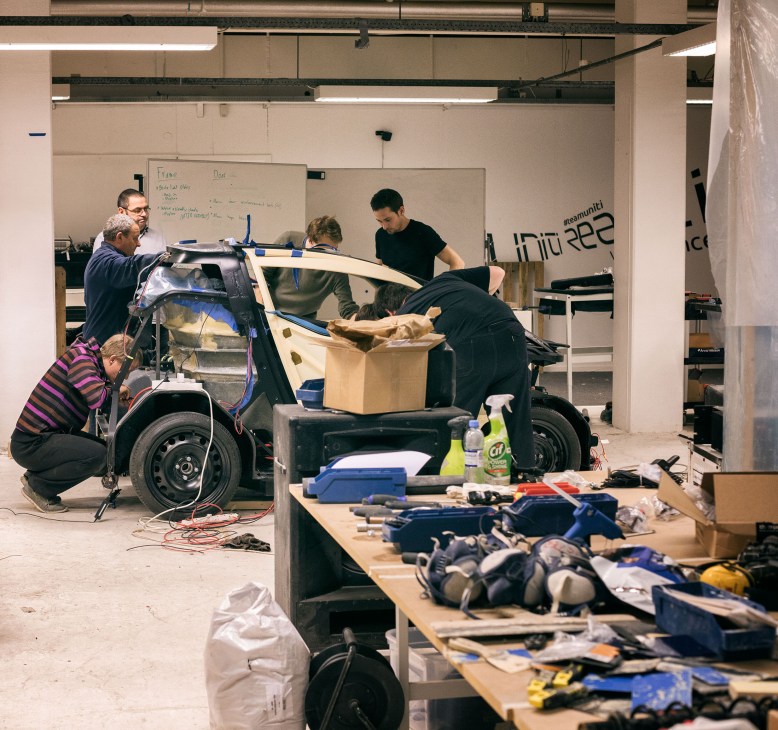
The office is in Lund, a charming but tiny university city in southern Sweden. On the surface it’s an unlikely home for a firm aiming to redefine urban mobility. But it was here that Uniti’s CEO Lewis Horne started a research project on electric cars and quickly converted it into a start-up with a team of 50. The goal is to create a light, hi-tech, sustainable city runaround aimed at the mass market.
Wilson, an engineer and former sea captain, was one of the company’s first recruits. Engineering runs in his blood: his father had a long career with Volvo and his great-grandmother was the first woman in Sweden to get an engineering degree. But he hated the idea of ending up in a big company where he would start out as “a no one” confined by a “structure and an old way of doing things”.
Instead, at Uniti structures and job descriptions are fluid. Wilson works as a lighting engineer but his official title is art director and he’s unofficially the face of the firm. He stars in and edits the YouTube videos that document the firm’s journey, including the initial funding round that valued it at €9.8m.
Wilson’s co-host is Isak Monrad-Aas, Uniti’s prototyping manager, who shares a workspace with blue-haired cognitive scientist Kim Johansson. “It’s chaotic here,” she says. “But everything somehow magically works out.” Uniti has partnered a Formula 1 racing team and Siemens to build its two-seater vehicle, which weighs 450kg and reaches speeds of up to 90km/h. It has a 300km range and comes with a compact external battery pack, designed so users can charge up at work or even in a coffee shop, and a smart heads-up display alongside autonomous driving features. The €20,000 flagship model is due for delivery in 2019.
Employees here don’t seem fazed by the competition from the likes of Nissan and bmw. “Making lightweight cars isn’t something the old companies have a tradition of doing,” says Johansson. “We’re using a lot of carbon fibre to keep the weight down. We’re designing for the Achilles heel of the electric car, the battery, and adapting from the start for automation. [Other companies] have a way of working that is old school, while we’re creating new ways of production and new ways of thinking from the start.”
About: Stockholm-based Londoner Maddy Savage is a freelance journalist. She moved to Sweden in 2014 after getting a taste for Scandinavian life while reporting there.
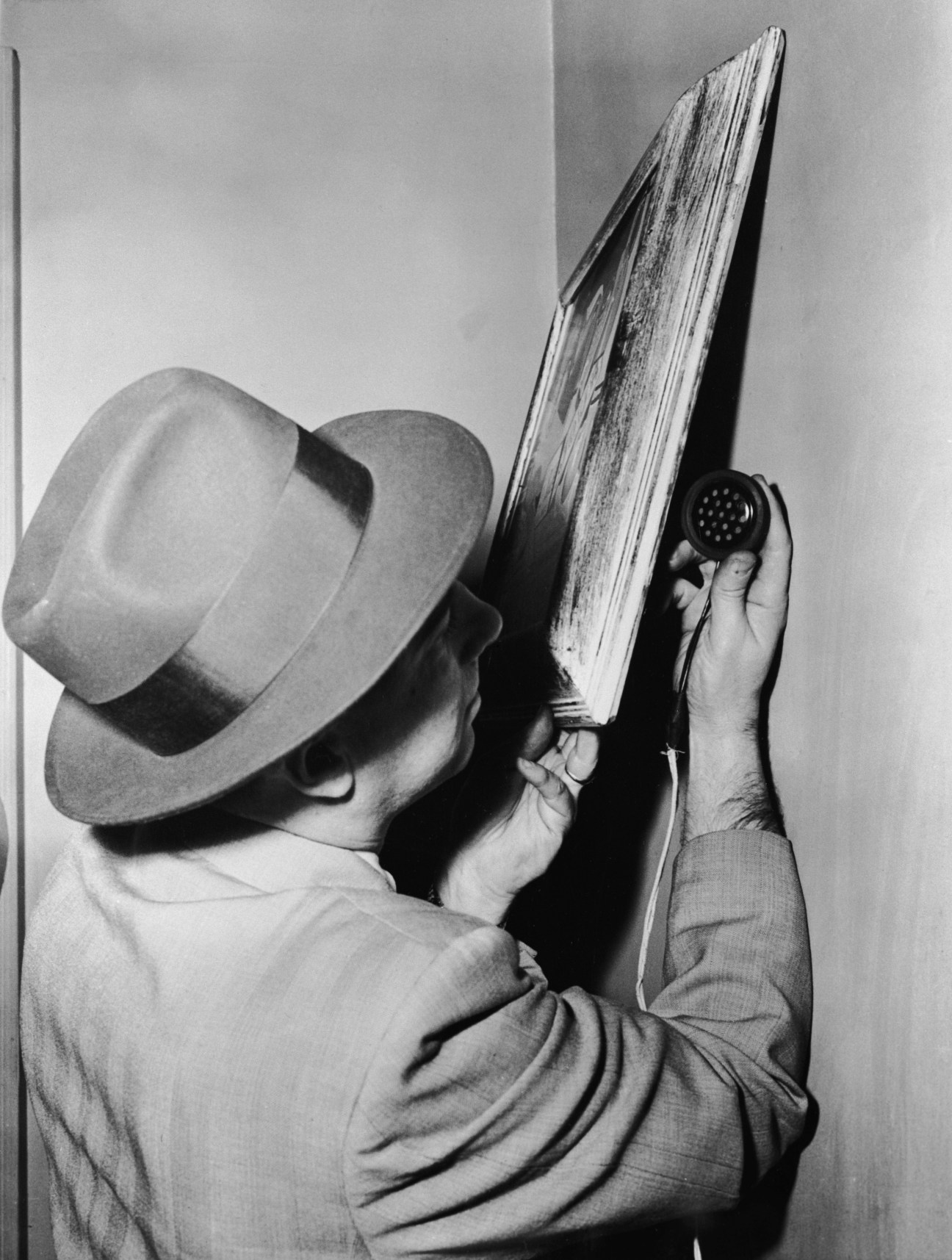
Peep show
The Manhattan museum of spying
Should you find yourself in an interrogation booth, in front of a camera and having to lie, don’t smile too much. It’s a telltale sign of fibbing, along with pursed lips and constant face touching. These are some of the facts to be gleaned when visiting New York’s shiny new David Adjaye-designed espionage museum, Spyscape. I also discovered that I’d smiled 30 times in four minutes when facing questions in the booth (one of the museum’s interactive elements), confirming I would make a lousy spook.
Spyscape was four years in the making and occupies Manhattan digs vacated by the now-defunct Al-Jazeera America. The timing couldn’t be better. At no point in recent history has the notion of spying been so prominent. With allegations over Russian meddling in the US presidential election swirling, and the hacking of the Democratic National Convention’s computers to boot, isn’t opening a museum about spying, by essence, political? “We just give the facts,” says its chief of staff Shelby Pritchard, affably sticking to script.
Spyscape is designed so that none of the seven exhibition spaces look the same. The Surveillance area, for example, is a circular, windowless room with cctv feeds on the walls. Interactive stations test your skill at spotting suspicious activity among the deluge of imagery. Or, through videos, photos, wall-mounted text and props, you can absorb the story of Edward Snowden or the journalists who used surveillance techniques to expose illegal fishing in Asia.
The museum also tells the story of famous espionage characters, from double agent Robert Hanssen in the Deception gallery to Second World War spy Virginia Hall in the Special Ops section.
But Spyscape is arguably most interesting when it looks at the fascinating and discomforting direction in which spying is headed. In the Hacking gallery there’s an eerie display of signed Anonymous masks, and the Cyber Warfare Gallery tells the story of Stuxnet. “There’s a new unchartered territory of spying and we’re interested in bringing it to the light of day,” says Pritchard, who says topical spy stories will be shown on screens.
Of course, there’s a chance that a few hours testing your aptitude in, say, a laser tunnel, may reveal you as a master mole. Or, like me, you’ll realise it’s not time to give up the day job.
About: Ed Stocker is Monocle’s New York bureau chief and, given his terrible poker face, is not about to be recruited by the secret service.
How to behave… at a dinner party
There’s an etiquette to follow if you want to be invited again – and we’re not talking about keeping your elbows off the table.
Don’t monopolise the music
Everyone’s a DJ now but step away from the stereo (unless you’ve been asked).
Put it out
Even when eating alfresco, don’t smoke at the dinner table – unless you lean very far back.
Know when to leave
Your host shouldn’t have to throw you out. When the subtle hints (or stifled yawns) start, head home.
Turning a page
Banca Tatuí newsstand
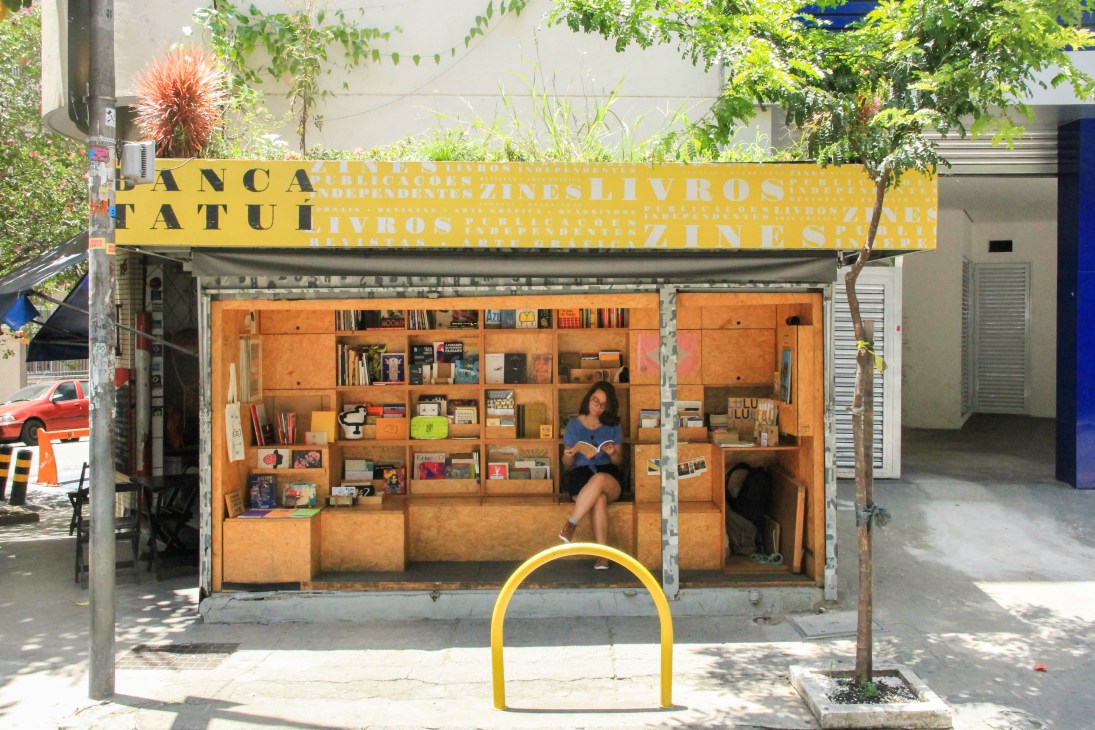
Not long ago the Rua Barão de Tatuí in central São Paulo was a no-go area to many. A particular spot to avoid was a dilapidated newsstand on the corner of Rua Inmaculada Conceição, which was used by drug dealers as a storehouse and meeting place.
Today, rather than illegal substances on sale, it’s books. The gloomy kiosk has been replaced by the Banca Tatuí, a newsstand touting work by more than 160 publishers from Brazil’s independent literary scene. Addicts looking for a quick fix have moved on, while couples and students craving more intellectual highs are moving in.
Mario Mellili, a septuagenarian who has lived on the block since he was nine, is one of the kiosk’s regulars. When we drop by on a sunny morning he warmly greets owner João Varella as he strolls up to the stand. “We needed a shop window of our own as well as for other small publishers,” says Varella, who also runs independent publishing house Lote 42 with his partner and Banca Tatuí co-owner Cecília Arbolave.
The Brazilian-Argentine couple have lived in the Santa Cecília neighbourhood since 2009. When the stand at the corner of their street was put up for sale three years ago, they snapped it up. But less than a week later thieves broke through its ceiling – only to find three reais (less than a euro) in cash.
“They didn’t even take any books, which actually made me feel sadder,” says Varella. So the pair hired architect Mario Figueroa’s firm to give the stand a much-needed facelift, fitting it out with shelves and seating, as well as a reinforced ceiling. The roof is now strong enough to use as a pop-up stage for gigs at book launches, when the Banca – with its fetching wood-panelled interior – becomes a de facto street-party venue.
“I think we’ve built a real affinity with residents,” says Fernanda Custódio, one of the newsstand employees. The kiosk’s popularity has even had a ripple effect: a selection of buzzy cafés and restaurants have sprung up nearby.
The Banca’s shelves are filled with colourful creations of all shapes and sizes, including comics, novels, children’s picture books and zines. Many of the works were painstakingly produced with specialist techniques including silk-screen printing, analogue typography and woodblock printing. Lote 42 typically works with print runs of 1,000 to 1,500 – a relatively large number in the indie publishing world. “Manual printing requires so much time and you never know what to expect,” says Arbolave. “But there’s an audience which is very interested in collecting these books.”
The couple believes that Banca Tatuí’s success has also demonstrated how art and retail can be used to catalyse urban change. Although he admits it’s not a panacea, Varella believes that establishing a friendly public space has made the community more relaxed because “people care for each other.
“We started believing that public security issues can be resolved without the police. Before, with the drug den, there was always a sensation of danger. People were worried about walking here at night but now it’s peaceful.”
About: Frederick Bernas is a journalist and filmmaker who uses culture to illuminate social and political issues across Latin America.
Here to stay
Six months after Adrian Zecha opened his Azerai hotel in Laos, the legendary hotelier is back in Luang Prabang with his architect Pascal Trahan for a powwow before the pair fly to Vietnam. The first Azerai, a 53-room, two-storey courtyard hotel, officially opened in April 2017; the second opened in December in Vietnam’s Can Tho in the middle of the Mekong – the same fast-flowing river that powers through Luang Prabang. “We are on a roll and can’t stop now; we will open a new one every six months for at least the next two years,” says Zecha with an energy that defies his 84 years.
In Luang Prabang, Zecha restored a French colonial building with Trahan in 2011, which now serves as his private residence. Today it sits between his old life and the future: nearby are both the Azerai and the Amantaka, one of the 32 hotels belonging to the Aman luxury chain he founded in Phuket 30 years ago. He sold it for $250m in 2007 and finally left his position as CEO in 2014 after a court battle involving the current owner.
The Azerai has been dubbed the “affordable Aman”. Smaller in scale and roughly a third of the price, it has a similar sensibility (guests are greeted as soon as they get off the plane pre-immigration) and some familiar staff. Australian general manager Gary Tyson opened Amantaka for Zecha a decade ago. It’s not in direct competition; that will come later.
Southeast Asia is the immediate focus for growing Azerai and two more hotels in Vietnam are on the way. Yet, if anything, Zecha’s horizons are expanding beyond the region. “In three years’ time will there be an Azerai in South America? Absolutely,” he says in his favoured fashion of answering his own questions with the confidence of a colonial governor.
Stories flow out of this former journalist over the course of two days and the tale behind the villa in Luang Prabang is classic Zecha. He first spotted the crumbling building while building the Aman a decade ago and managed to lease it from the owner, a penniless niece of the last king of Laos who now lives in a purpose-built modern house he built for her on the same plot. He’s been persuading royalty, politicians, dictators and old money to part with plum land on historic sites in parts less trodden ever since leaving publishing at 39 with a wedge of money. A year of skiing during early retirement came to an end when Marriott asked him to use his Asia connections to help with its international expansion. Zecha fell in love with hospitality almost immediately and has been pursuing this passion for the past four decades.
Opening an Aman in Bhutan – the hermit kingdom’s first foreign investment – remains his hardest deal to date. His first visit inspired a spontaneous road trip along the one stretch of tarmac running east of the capital, Thimphu, towards Bumthang, staying in roadside huts and surviving on a diet of boiled eggs and cognac. Thirteen years later, after the country had established its first banking system, the Aman opened. The rough-and-ready style of this and other such exploratory trips contradicts the public image of how one of hospitality’s biggest players should travel – but he doesn’t visit anywhere without an invitation.
Nowadays people know what sort of land Zecha is looking for so roughly half of all invitations end with a new hotel. It takes him five seconds to decide if a site is correct and what brand it should be for. “It’s a gut feeling; if you have to think about something, better not do it,” he says. “People in the hotel business make a big mistake when they tell you, ‘Location, location, location.’ That’s too simplistic because there are many elements.”
For Zecha, politics is a regular hurdle, given that his operations often take him to authoritarian countries. One recent invitation, which arrived at his office in Singapore, saw the ever-curious traveller call in on Crimea, at the behest of an oligarch to see Livadia Palace, the former summer retreat of Nicholas II and the site of the Yalta conference in 1945. A lot has changed since his first dealings with Russia took him to St Petersburg in the 1990s to sign a deal with then vice-mayor Vladimir Putin, which later collapsed. What happens in some locations, such as Iran and Cuba – two longtime favourites – depends on sanctions but other decisions are solely his. Zecha recently cancelled an Azerai contract in Bagan because of the failure of Myanmar’s leader, Aung San Suu Kyi, to speak up for the Rohingya.
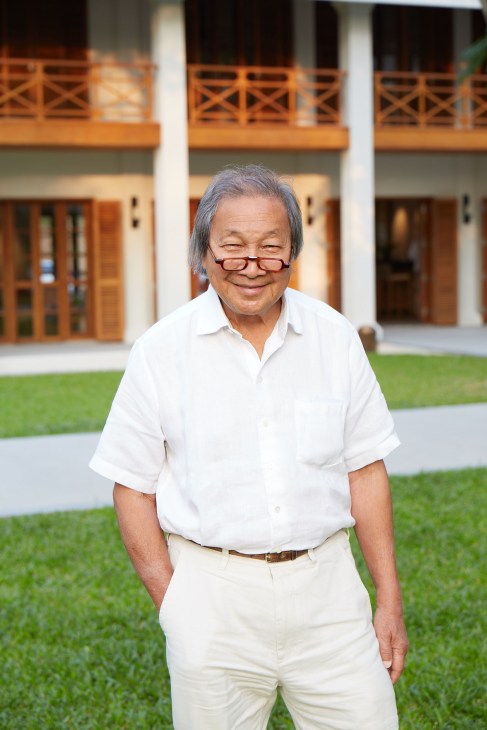
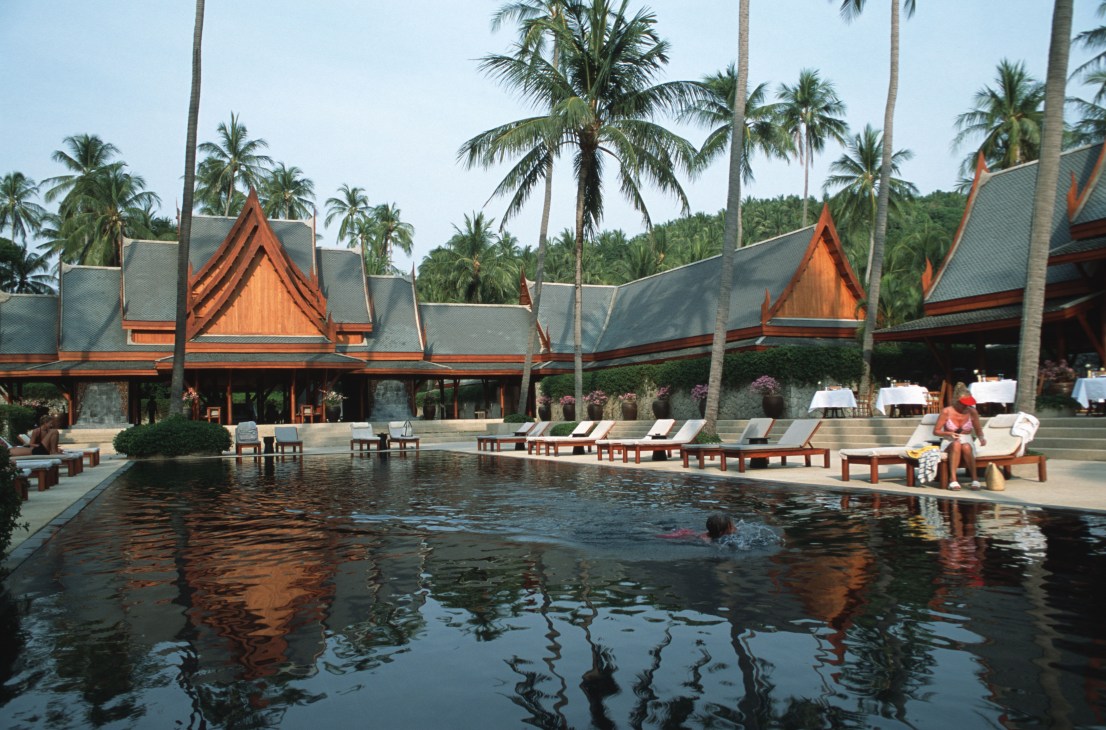
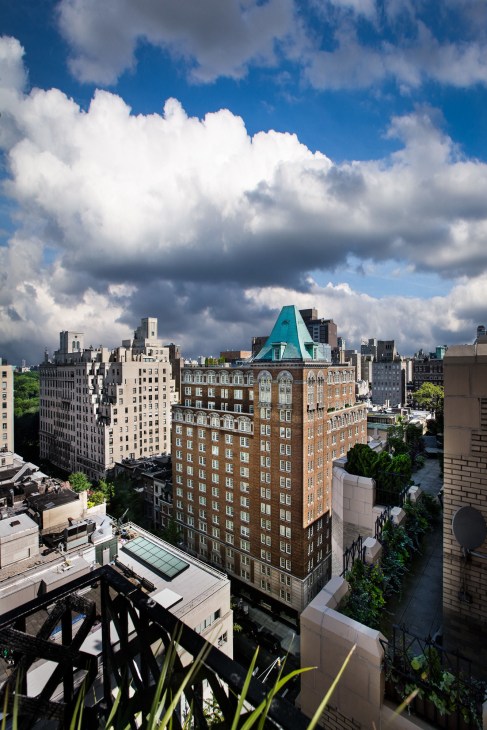
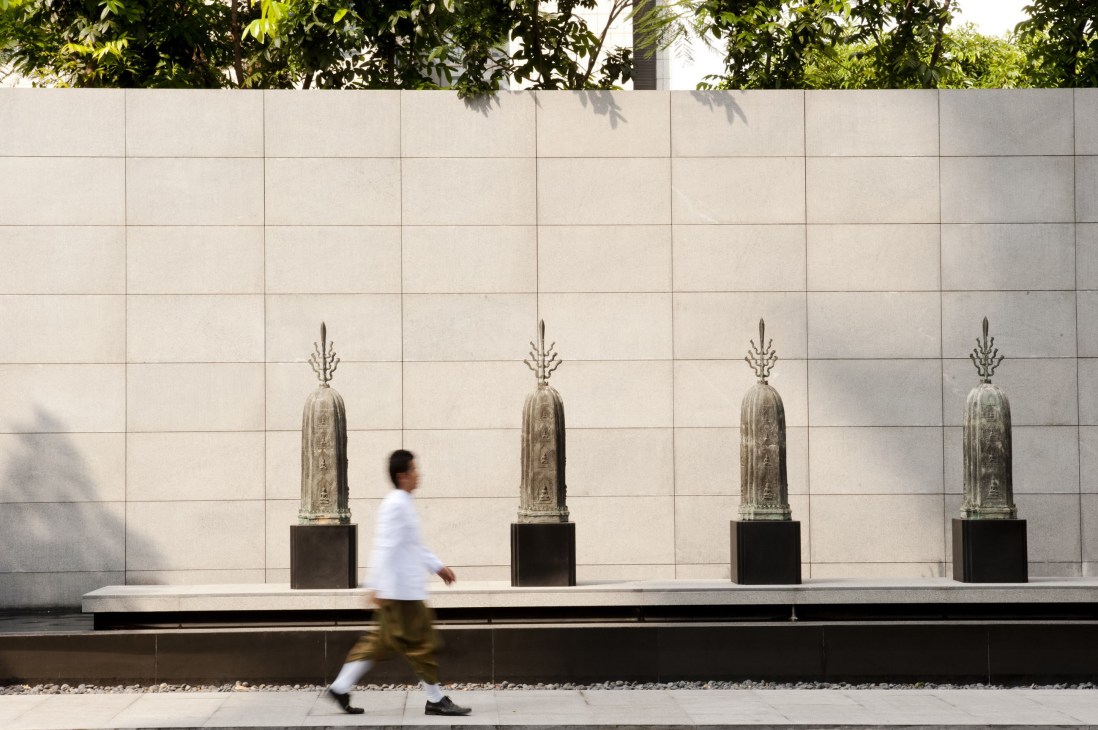
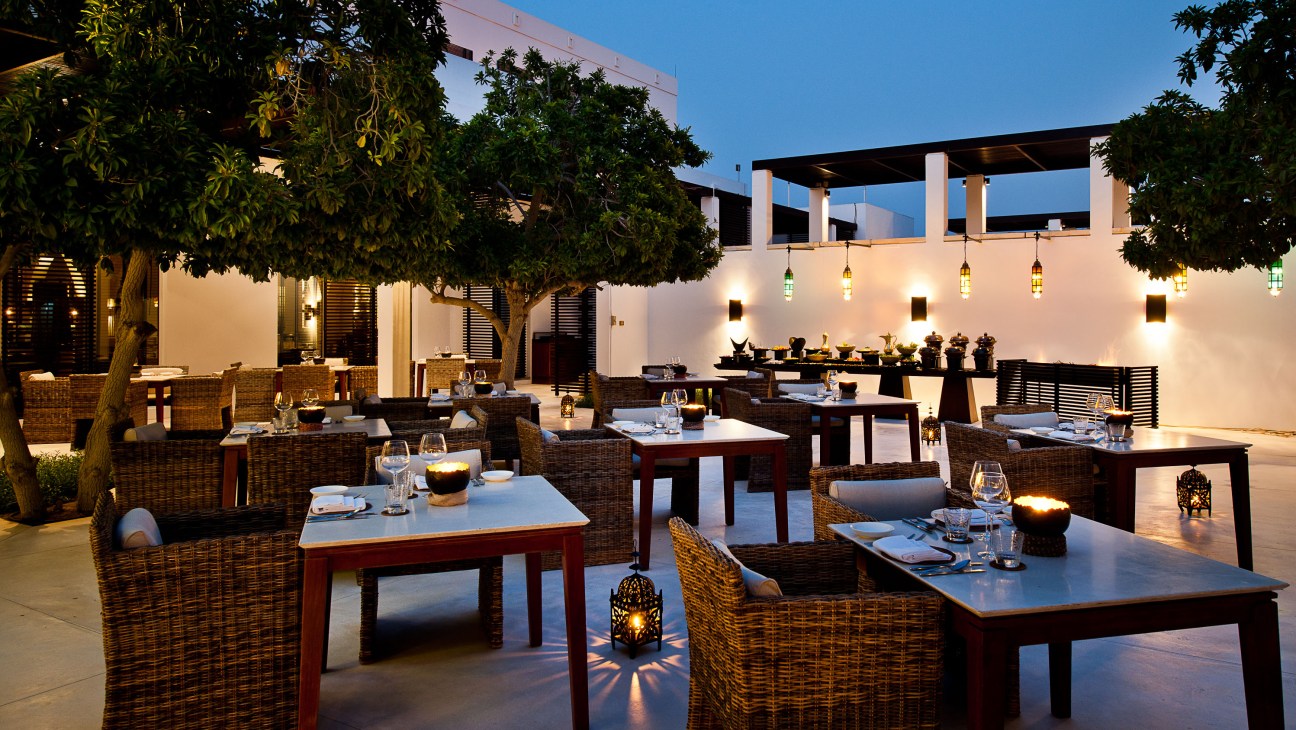
Zecha has cut plenty of ribbons across a career that has spanned the Regent, Southern Pacific, Orient Express, Beaufort and Rafael, not to mention Aman. His current responsibilities include being chairman of General Hotel Management (GHM), operator of Chedi hotels and partner of a new Chinese hotel brand called Ahn Lu. This joint venture with the state-owned Beijing Tourism Group has resulted in a third hotel in as many years and 10 more in the pipeline.
The idea for Azerai first materialised 16 years ago when Zecha discussed the possibility of creating an affordable Aman with his ghm partner Hans Jenni, who suggested that he create an experiment first. He borrowed land from a friend in Bali and developed The Serai, which nods to the roadside inns that used to dot the old Silk Road. “The purpose of doing that was to see whether even Aman junkies would like it,” he says, using the term to describe the global jet-set that fly between the luxury brand’s locations. Five years later Zecha sold the hotel to the landowner and worked with him on creating a whole new brand called Alila, taking a share in the business.
“I don’t follow trends. If I did, why would I have done Aman?” says Zecha, whose 40-room hotel Amanpuri in Phuket set a precedent for the size of each of his hotels since. “When I entered the hospitality business the mantra was that you couldn’t make money with a new hotel unless you had 500 rooms. We proved that wrong.” Every hotel he has opened has made money and he expects this to continue. Asia’s rapid development in the past three decades is providing an even bigger playing field for the emerging generation of Asian hoteliers who he is highly impressed by.
Over a simple lunch of fried rice and beer at the Azerai bistro, Zecha shows a childlike fascination for the Uber app, understandable for a man who carries around a basic voice-and-message-only phone in his pocket and that mostly stays switched off. With one breath he declares the taxi industry dead but with the next he is bullish about his own industry – or at least the segment he operates in – despite its similarly imitable model. “It’s the simplest business in the world,” he says, setting out the twin hospitality components of hardware and software, clapping his hands together to demonstrate their equal importance.
Getting this formula right is obviously where success lies. What annoys Zecha are industry friends who build beautiful hotels but don’t work tirelessly on the maintenance, the thinking being that people will get tired of them within five years anyway so they will need to create something new. “That’s a total misunderstanding of the business,” says Zecha, who admits to having a temper and low tolerance for stupidity; he can swear like an old sea dog when he wants to. “In any hospitality sector – hotels, restaurants, airlines – if you have to reinvent your customer base every year, I promise you that you won’t make it.”
The Aman is behind him now, quite literally: the rear entrance of his private villa in Luang Prabang backs onto the tennis courts of Amantaka. With Azerai Zecha has made his bed, for the immediate future at least, in the $250 to $350 (€210 to €300) a night bracket.
Discussions are underway about appointing a CEO to manage the business once the number of hotels gets closer to double figures. And that shouldn’t take long: the first Azerai took just 18 months to get off the ground. Will he compete at the high end again by attempting to open a rival to the Aman? “Why not, if the right location comes along?” he says, delighted with the question. And what brand would he use? “Well I’ll have to think of one,” he says with a telltale laugh and glint in his eye that suggest plans are further along than he is letting on (one thing he will confirm is that it won’t be called Zecha).
In February 2018 he will celebrate his 85th birthday. Now that skiing has been banned by his wife of 53 years (for fear of travel-restricting bone breakages), he gets his exercise by walking through airports deliberately carrying a suitcase without wheels. His mind, meanwhile, is sharp and his memory encyclopaedic. When he leaves Luang Prabang for Vietnam, is he flying south to check on the finishing touches to the new Azerai? Not a bit of it: in deal-making mode, he has just set off on his next intrepid journey.
CV highlights
1.
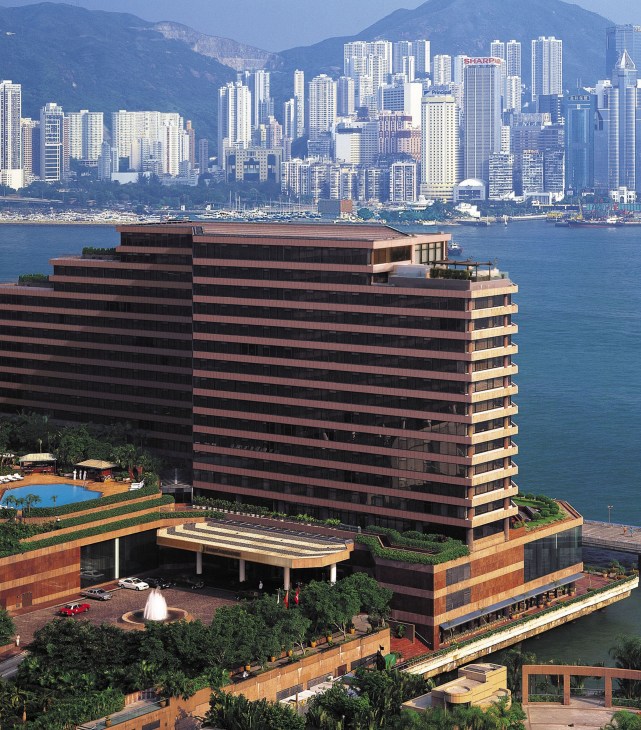
The Regent Hong Kong (now the Intercontinental)
Hong Kong
(1980)
Zecha swapped Hong Kong for Singapore in 1999 but this huge hotel stands as a reminder of his 35 years in the city.
2.
Amanpuri
Phuket
(1987)
What started out as a private retreat is currently celebrating its 30th anniversary.
3.
The Mark
New York
(1987)
Zecha helped Georg Rafael launch this Upper East Side classic soon after the two hoteliers sold their stakes in Regent.
4.
The Sukhothai
Bangkok
(1991)
This urban oasis opened under a new brand in the heart of Sathorn, which is now Bangkok’s commercial district.
5.
The Chedi
Muscat, Oman
(2003)
Considered one of the finest getaways in the Middle East.
Ghosts of the past
It’s 09.00 in the centre of Kinshasa and traffic is clogging the eight-lane Boulevard du 30 Juin. Crammed taxis – five-seaters and minibuses known as “les esprits de mort” – jostle for space with 4x4s ferrying expatriates and prosperous locals to their offices in the upmarket district of Gombe.
Just off this thoroughfare, Place du 27 Octobre has been thrumming for hours. Around a dense patchwork of parked vehicles, money-changers and women selling breakfast go about their trade. While most diplomatic missions are hidden away on leafy avenues behind high walls, the Belgian embassy is in the thick of the city. Built in the 1950s, in the decade before today’s Democratic Republic of Congo (DRC) became independent of Belgian colonial rule, this imposing block is about to be retired and its diplomats moved to a gleaming new home 3km up the Boulevard.
“We have an antiquated embassy here,” says Bertrand de Crombrugghe de Picquendaele, the Belgian ambassador. The exterior of the old building is studded with metal grills and air-conditioning units, while inside everything is low-tech: landlines, ancient elevators and refrigerator-sized printers. The peeling walls jar with the grandeur of the images that line them: photographs of Belgium’s royal couple – King Philippe and Queen Mathilde – and fine maps of the Congo in its various incarnations, from King Leopold’s État Indépendant du Congo to the present day via Mobutu Sese Seko’s despotic Zaire.
“Kinshasa is one of the most sophisticated relationships that Belgium has with a country – and one of the most historically charged,” says De Crombrugghe. Political relations have been in a deep freeze: the Congo’s president Joseph Kabila decided not to step down in 2016 at the end of his constitutionally limited two terms and the EU, with Belgian support, sanctioned 15 top government officials. Kinshasa has suspended military co-operation with Belgium and Kabila’s supporters accuse Brussels of neo-colonialism.
These travails haven’t put the brakes on the diplomatic rebuilding. The new embassy has cost about €11m and was designed by Belgian architecture firm A2M. The exterior is composed of sharp lines while, inside, a bright atrium rises to a vast skylight. The embassy is, as De Crombrugghe is at pains to point out, the first passively cooled building in Central Africa.
It seems counter-intuitive that Belgium would push ahead with such a costly project when relations are at such a low ebb. In Brussels, foreign minister Didier Reynders is under no illusions that it’s been a torrid few years since building began in 2014. “The Congo is an important place for Belgium and this is an opportunity to have good relations with our Congolese partners,” he says of the new embassy.
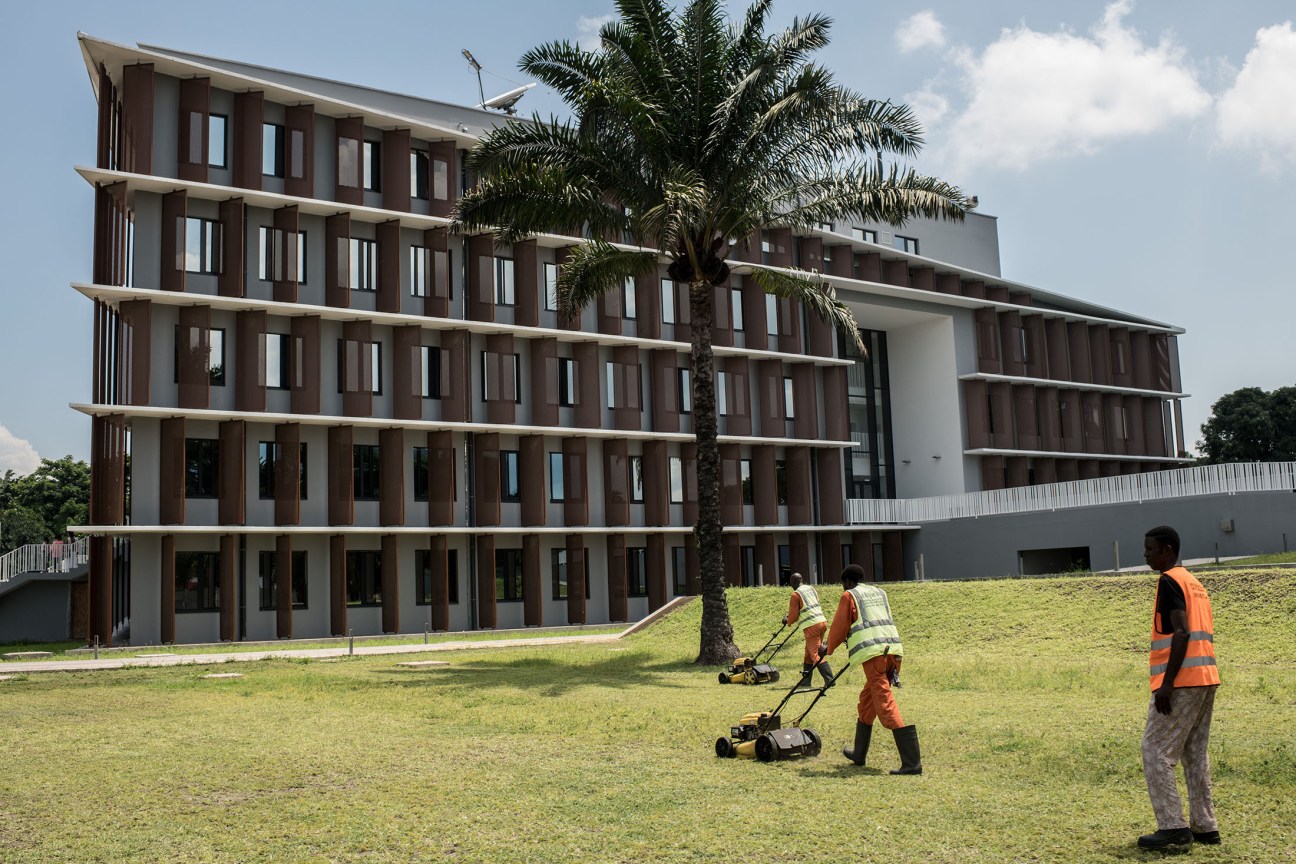
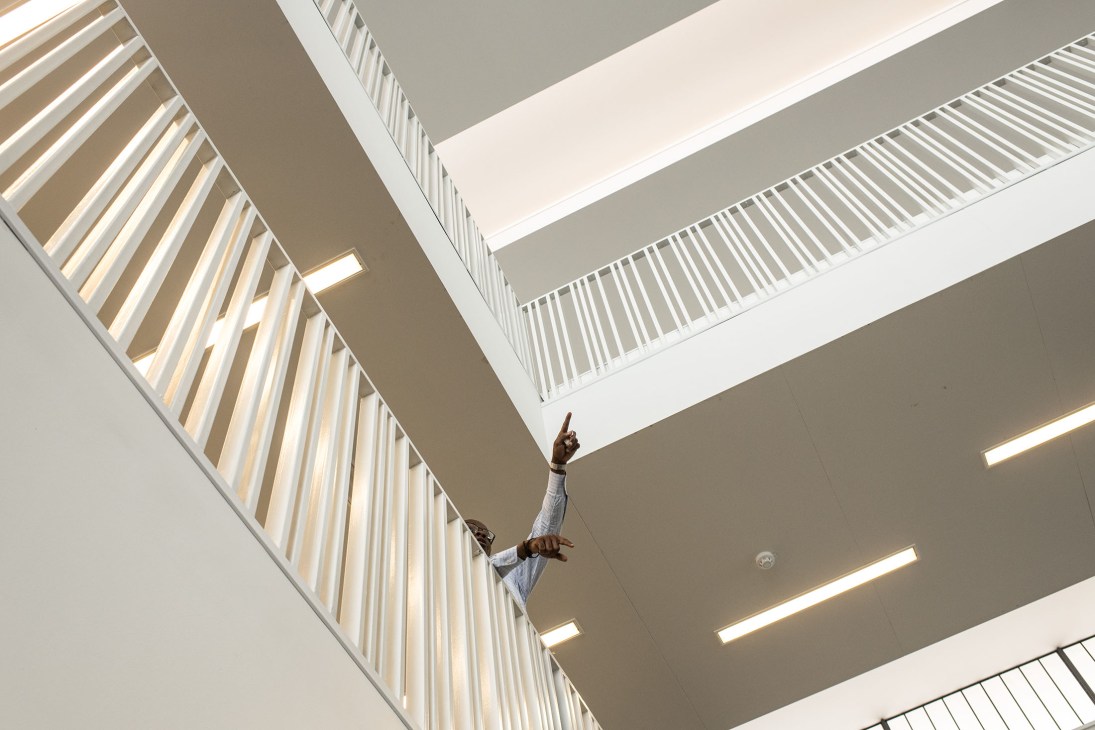
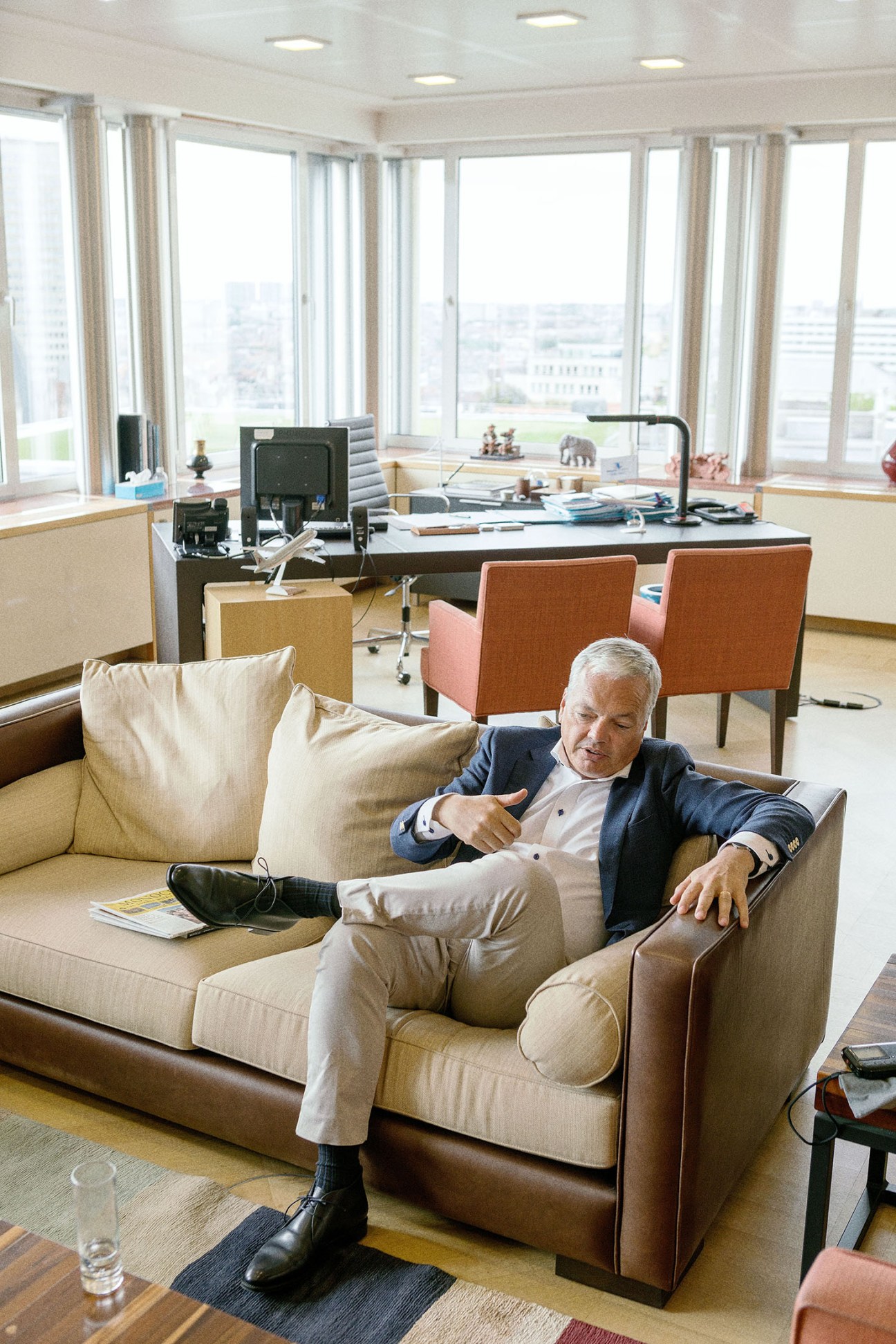
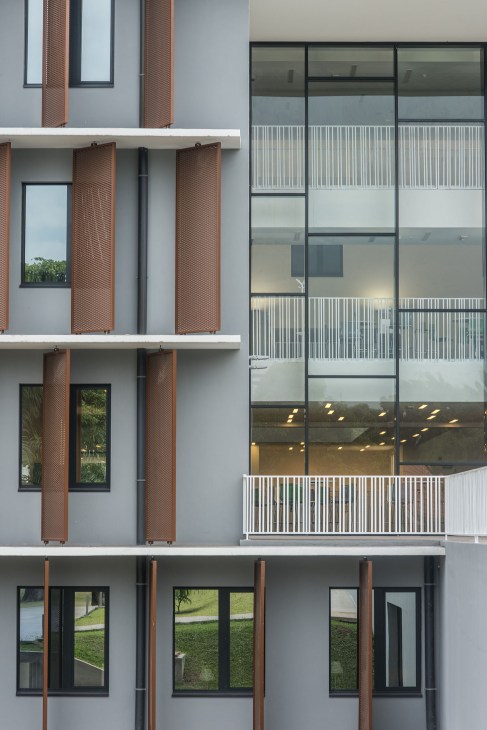
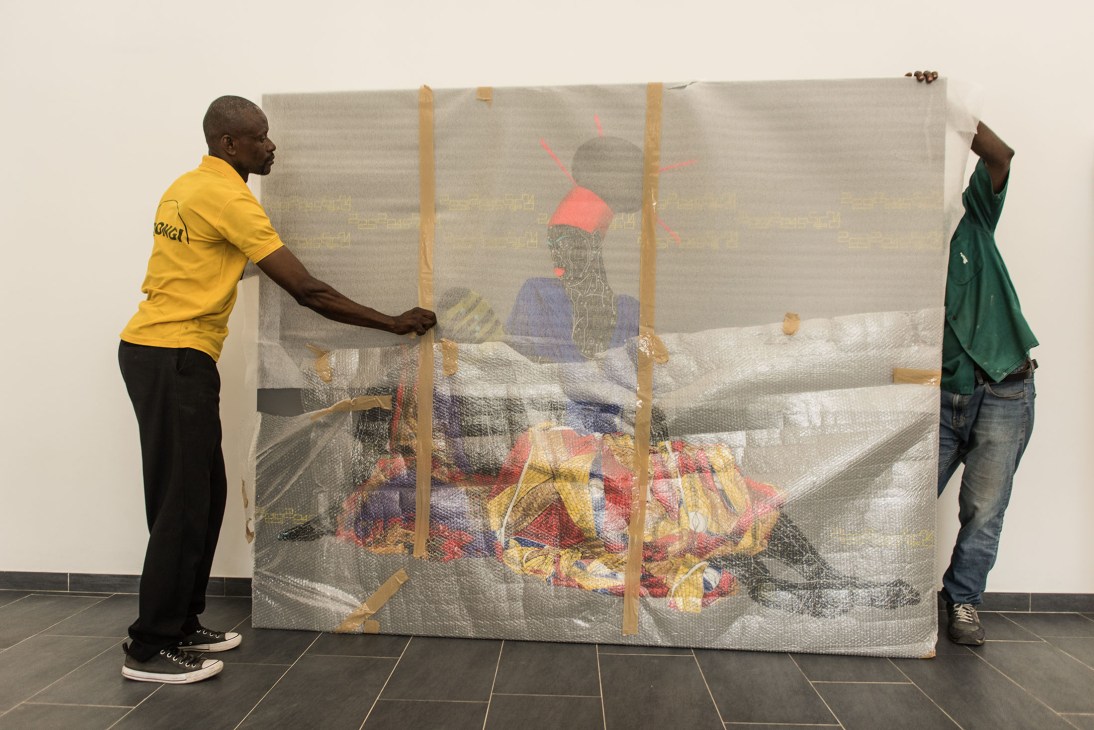
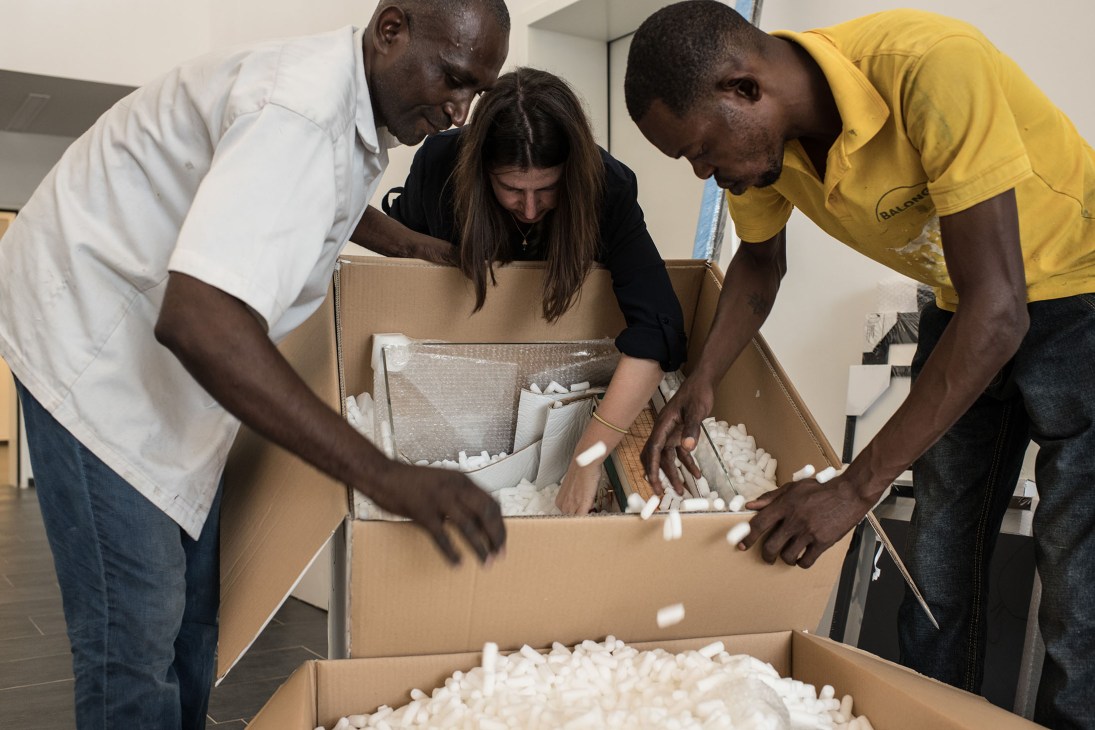
There’s also a broader diplomatic refresh happening in the halls of Belgium’s foreign service. Thirteen years ago Brussels decided it would open a new embassy in every one of the EU’s new member states. “Ten years later I closed those embassies,” says Reynders. As outposts were shuttered in Europe, Belgium was building and renovating embassies in South America, India and elsewhere in a bid to make greater use of its diplomatic real estate. “It’s more important to be present in a second in India than to be in Bratislava when you have another embassy over the river in Vienna. We need to be present outside the European Union.”
If the Congo returns to democracy, the minister observes that it could be a wealthy nation – and a useful partner to Belgium. The country is home to staggering quantities of minerals, including gold, diamonds and copper. The Congo is also the world’s leading producer of cobalt, an essential component in electric-car batteries. “It’s possible for DRC to be a rich African country, not just to fulfil the needs of the population but to help other countries in the region,” says Reynders. “The goal is to see better governance and the capacity to organise the correct exportation of its natural resources. To do that you need a transition to a real democratic process.”
Belgian pressure on Kabila persists but diplomacy in a former colony is a tricky business, especially so in the Congo where interpretations of shared history are contested. In 1885 the Congo was granted to Leopold II of Belgium by the European powers and was administered as the king’s personal possession for 23 years. He was forced to hand over the territory to the Belgian government in 1908, after which it remained a conventional European colony for more than half a century.
Leopold’s ownership coincided with a frenzied rubber boom and Congolese villages were violently conscripted to harvest the commodity. It is estimated that by 1920 the population of the state had fallen by at least half. As Adam Hochschild says in his book King Leopold’s Ghost, “Leopold’s men were looking for labour [and] if, in the course of their finding it and using that labour, millions of people died, that to them was incidental”. When Leopold’s great-grand nephew, King Baudouin I, ceded independence in 1960, there were fewer than 30 Congolese university graduates and not a single doctor, lawyer or engineer. There was, however, decent infrastructure and a world-class mining industry (which was still controlled by foreign shareholders).
Belgium’s government may dispute the author’s account but in June 2018, Brussels’ Royal Museum for Central Africa is due to reopen after a €66m renovation and it’s believed that the new displays will address Belgium’s troubled legacy in Africa. The museum was previously accused of anachronism and amnesia about goings-on in the Belgian Congo.
For Reynders the new embassy is a chance to open a fresh line of communication to Kinshasa – but history is a sensitive subject. The minister bristles at the question of what is to be done with monuments to a difficult past. “We need to listen to the requests coming from the people of the Congo rather than others’ comments,” he says. “The relationship is first of all between the Congo and Belgium.”
Back in Kinshasa, Jeannot Nsumbu has operated the telephones at the embassy since 1990 and from there witnessed much of the Congo’s unpredictable recent history. “I’m a doyen of the embassy,” he says. In April 1990, Mobutu proclaimed the end of the one-party state and heralded the advent of democracy. It was a false dawn: the promised elections never materialised. But the president did lift a ban on western-style dress that he’d introduced in the early 1970s as part of authenticité, his campaign to assert a post-colonial national identity. “I heard the diplomats shouting, ‘Mobutu has liberalised the country and the Congolese can wear suits and ties again,’” says Nsumbu. “I was the first Zairean, as we then were, to put on a tie and jacket.”
Nsumbu watched several of Kinshasa’s most violent episodes from the embassy’s windows. In 2006 the Congo held its first democratic elections in more than four decades and fighting broke out between troops loyal to the eventual winner and current head of state, Joseph Kabila, and his main rival. Nsumbu and his Congolese co-workers slept at the embassy for several days for fear of being hit by a stray bullet.
Over lunch at De Crombrugghe’s temporary lodgings (his residence is also being revamped), the ambassador explains that it’s not just the age of the embassy that necessitated the upgrade. “The building had lost its prestige and so when we celebrated the 50th anniversary of relations between Belgium and the DRC [the 2010 military parade in Kinshasa to commemorate Congo’s independence] the idea was to give back more than a new painting and renew our commitment vis-à-vis the DRC.”
The Belgian diplomats in Kinshasa are braced for an uncertain year. Elections have been scheduled in the DRC for December 2018 – only two years late, though most observers will be surprised if they happen. There are fears of a return to civil war as unrest grows in the east and centre of the country in response to Kabila’s continuing rule. Belgium, for its part, is making moves to look beyond Europe. The refurbished Africa museum in Brussels will be an opportunity to look again at what happened in its colony at the turn of the 20th century. In 2002, Belgium apologised for its role in the assassination of Patrice Lumumba, the DRC’s first post-colonial president, but the crimes of Leopold’s Congo remain under-discussed.
Nsumbu, having watched 30 years of rollercoaster relations, is philosophical about the current squabbles. “It’s like this,” he says. “Relations between the two countries are so fundamental that, whatever the problem, there’s always a solution.”
Just keep moving
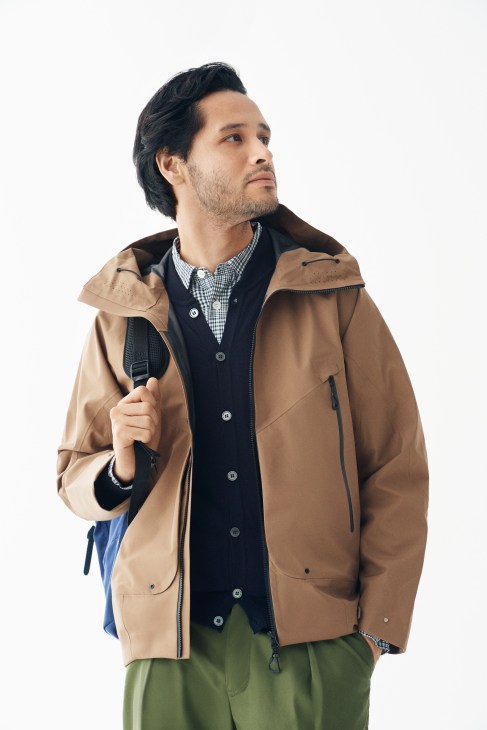
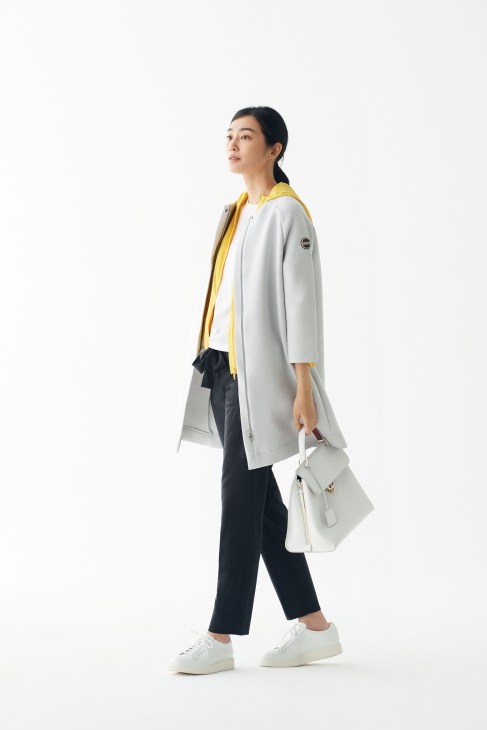
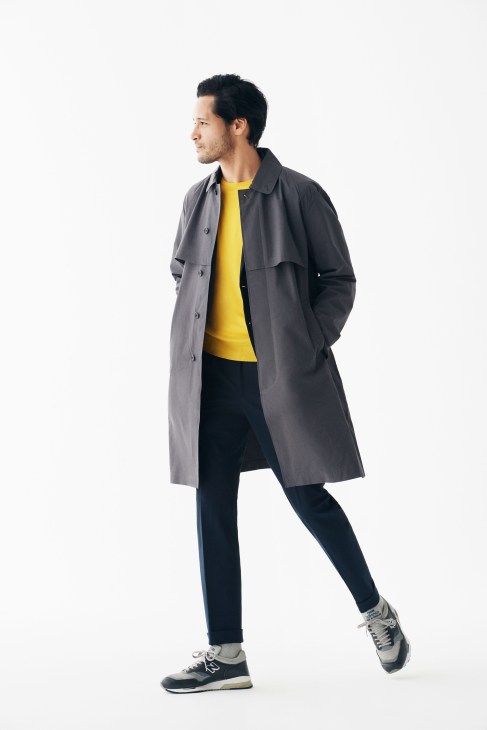
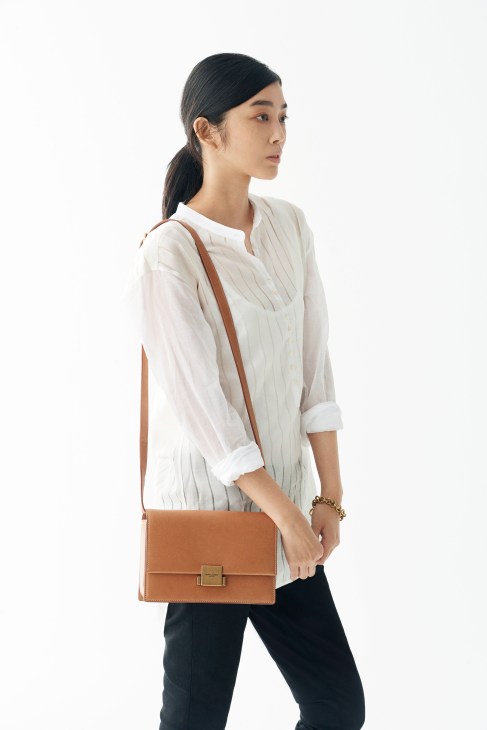
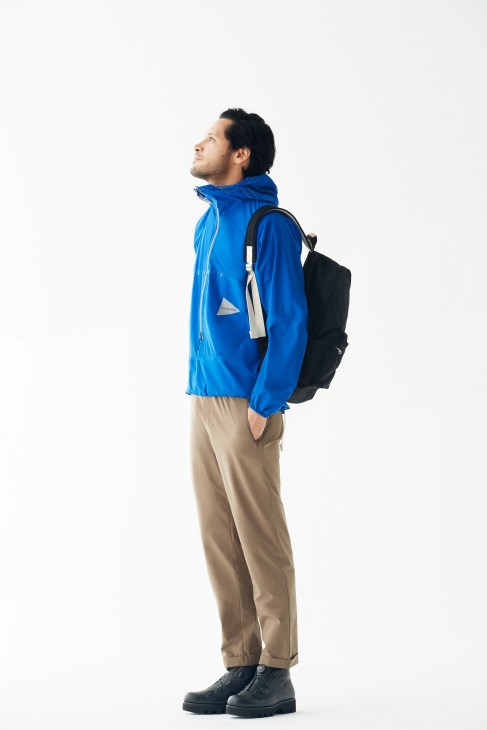
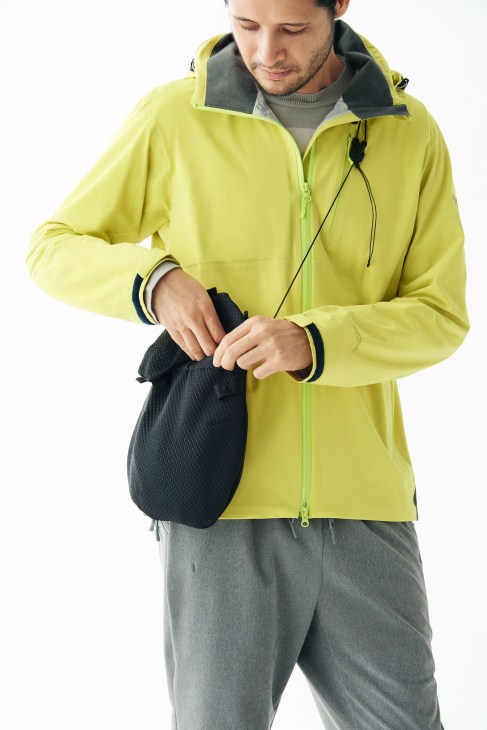
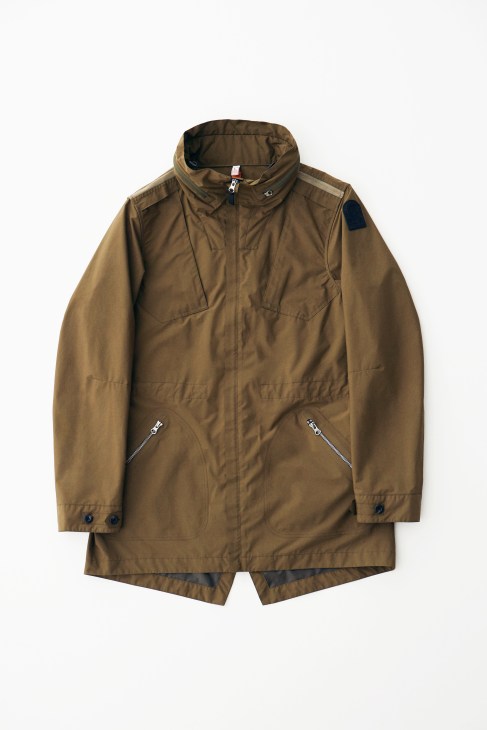
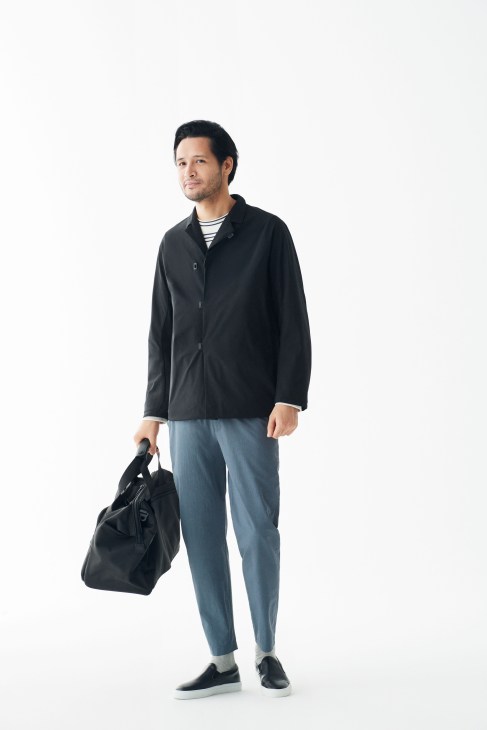
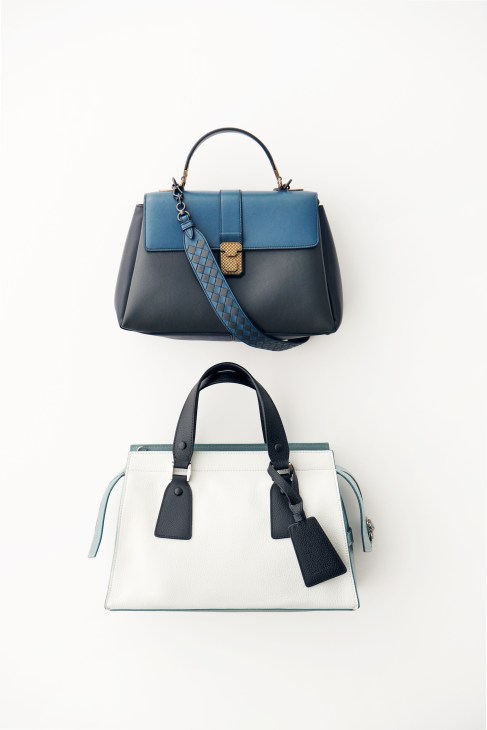
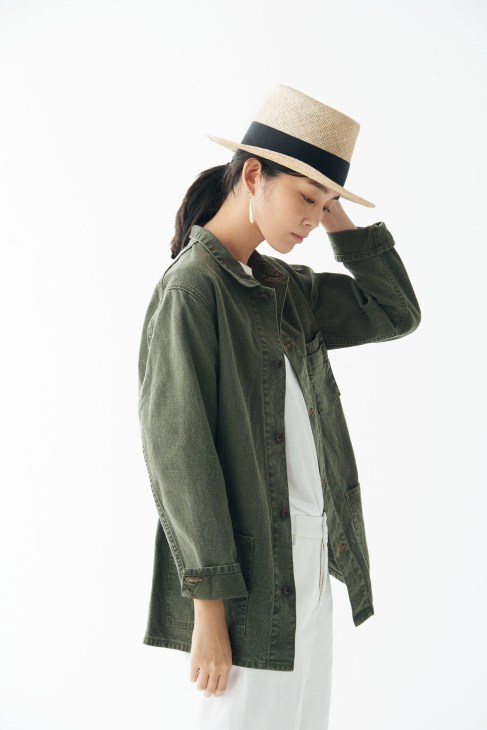
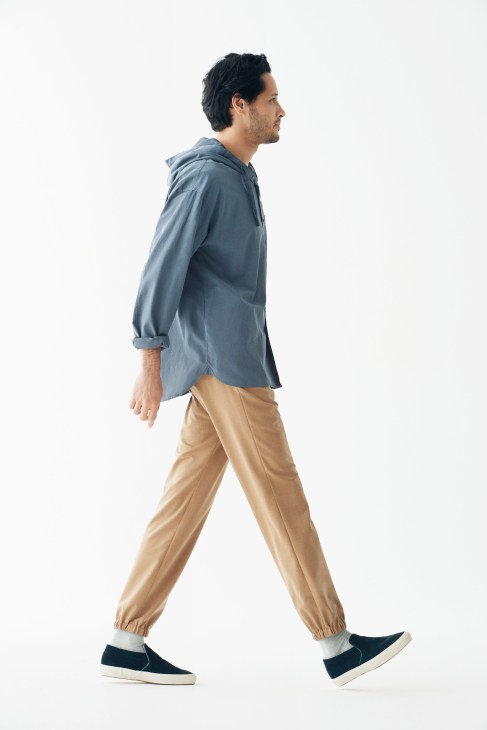
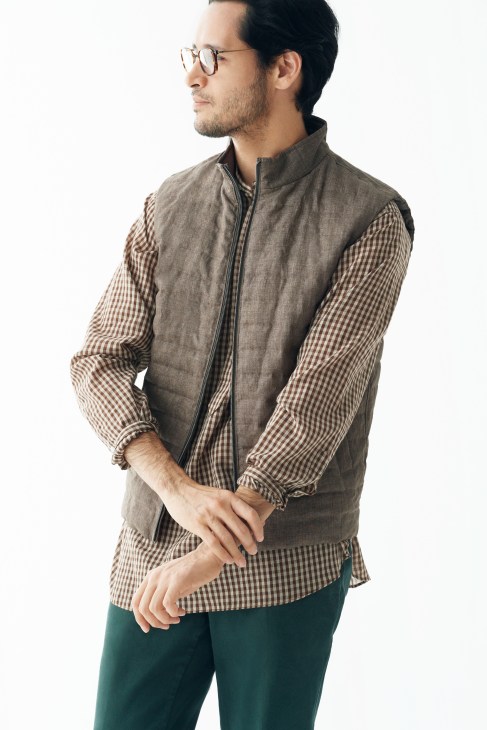
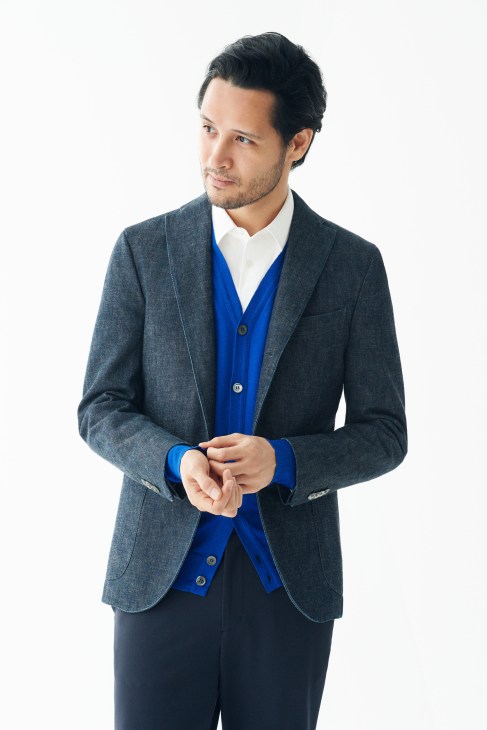
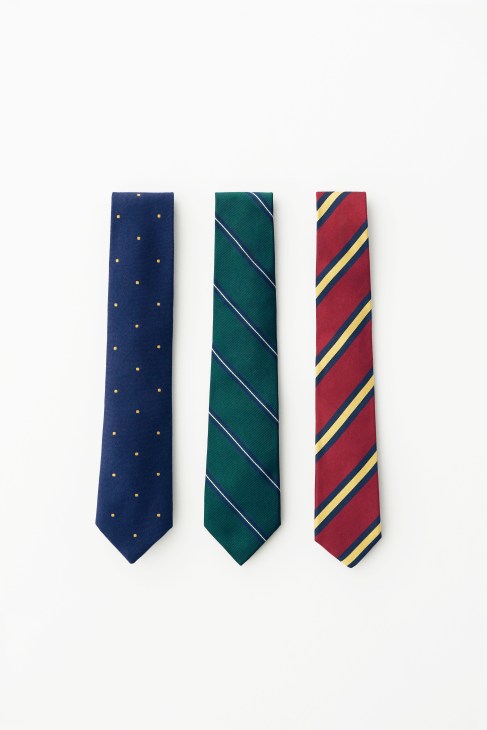
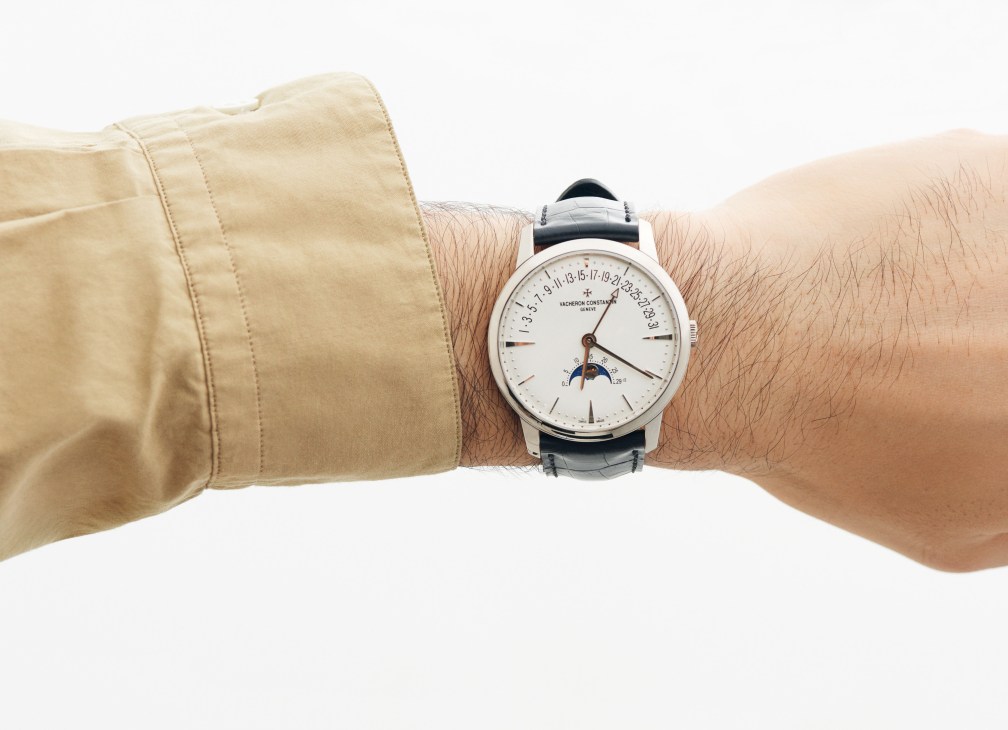
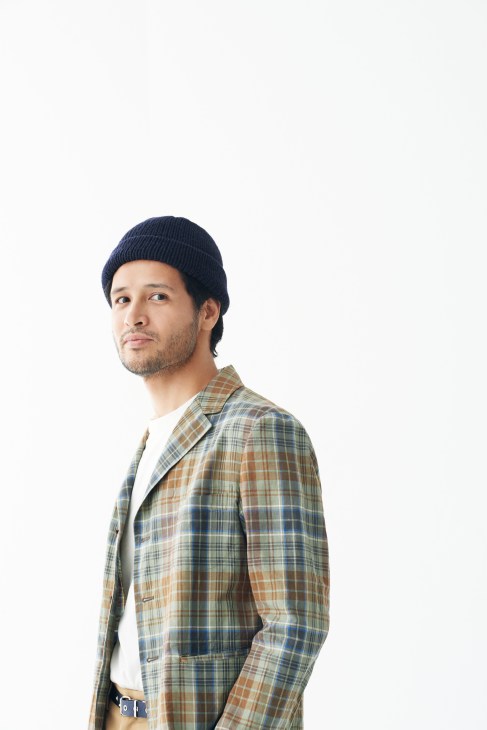
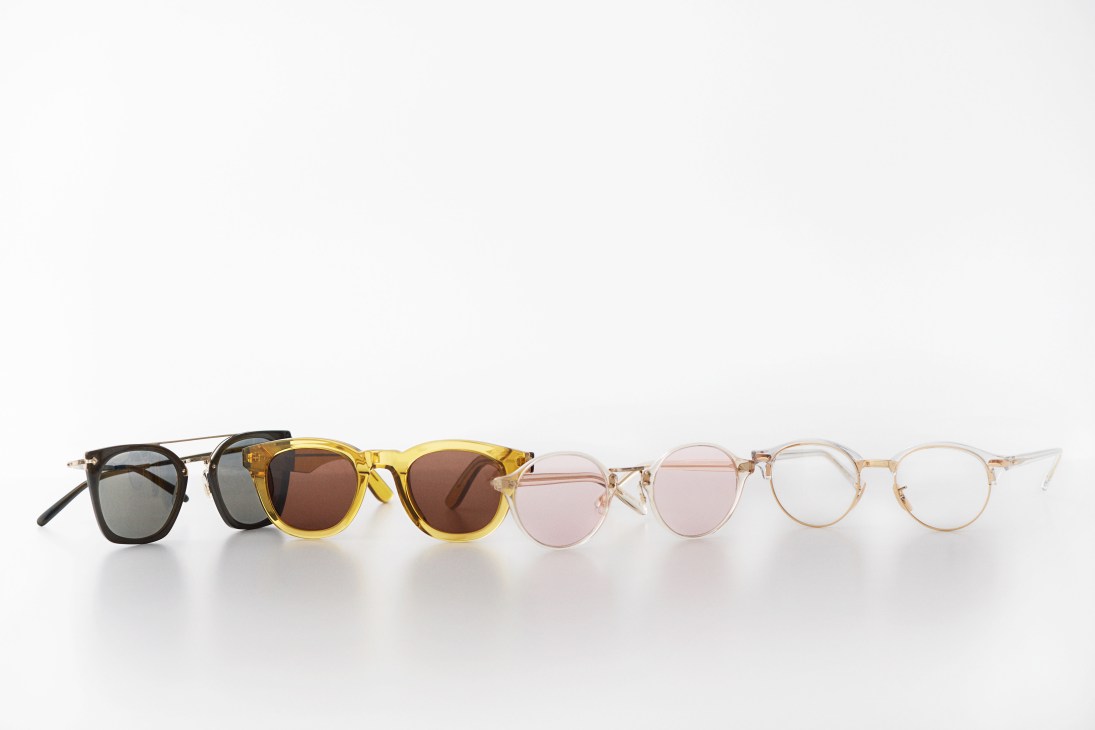
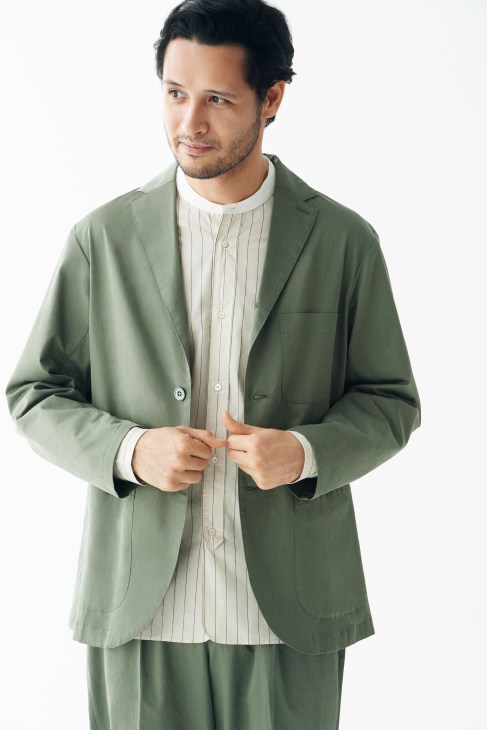
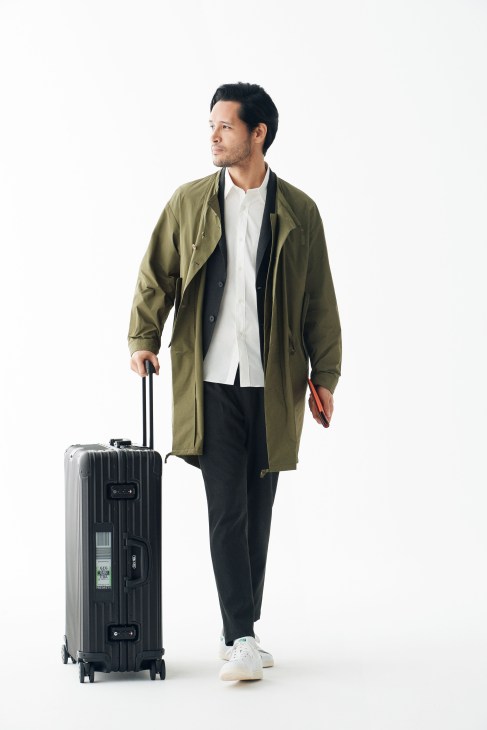
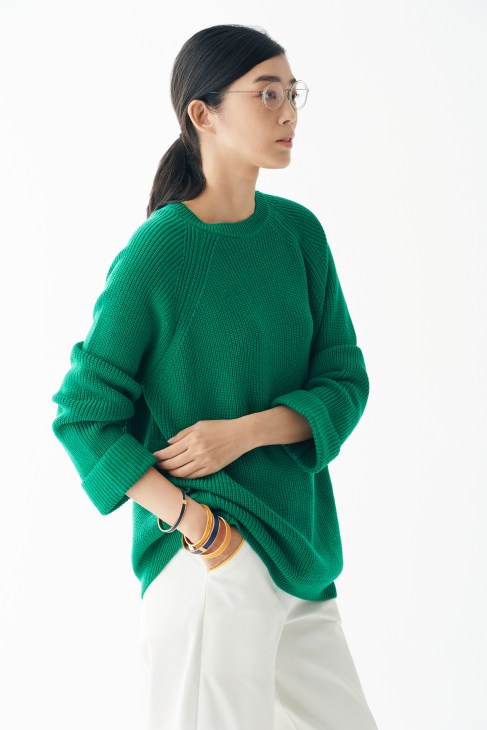
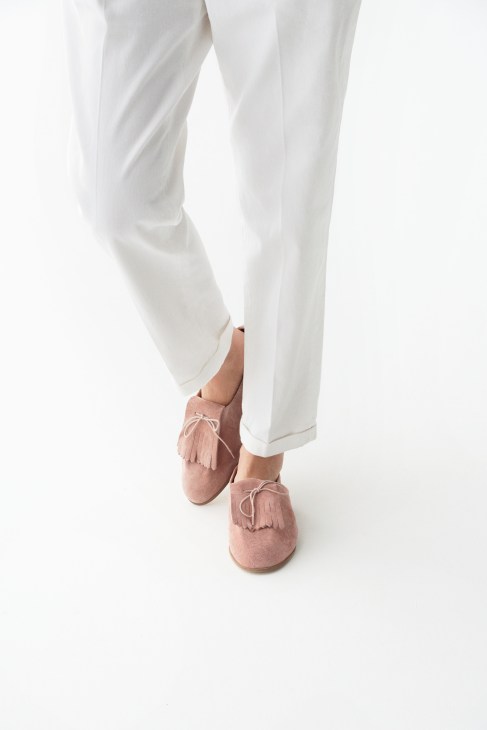
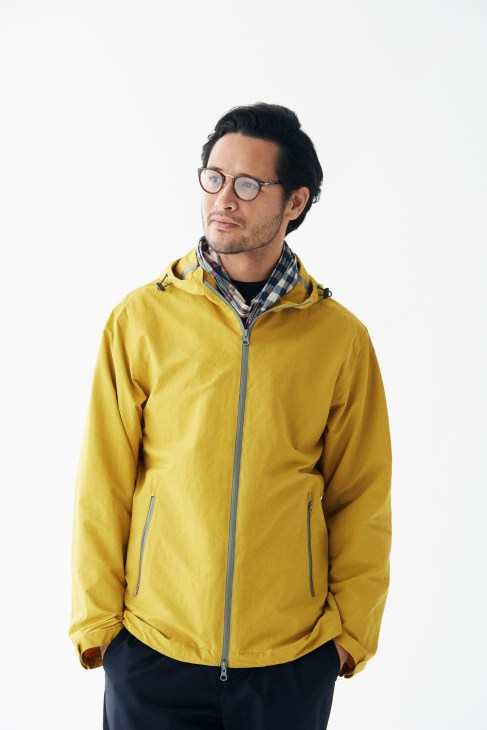
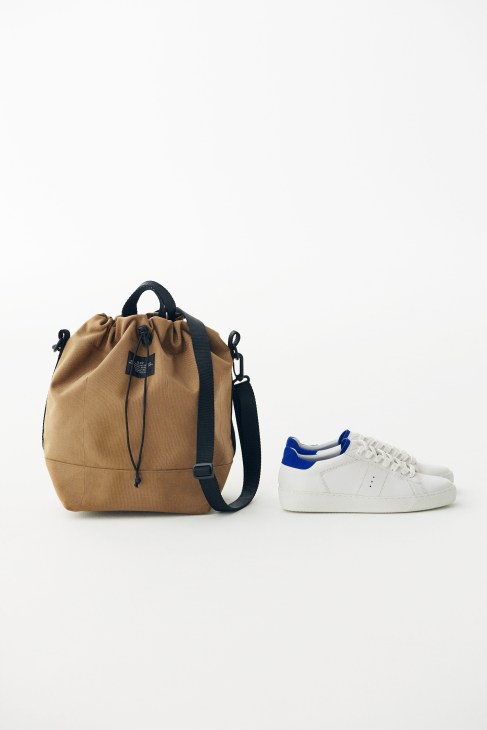
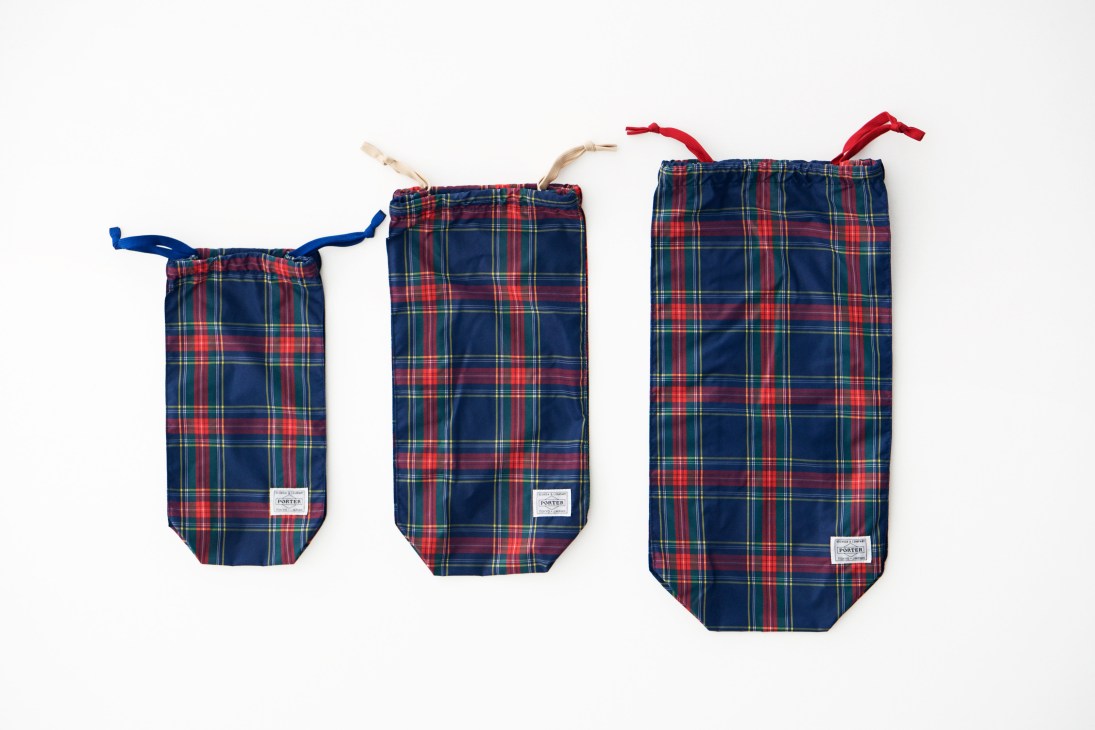
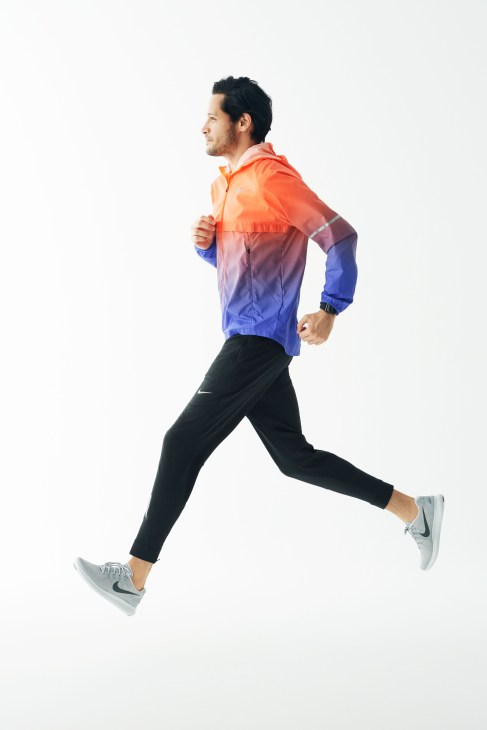

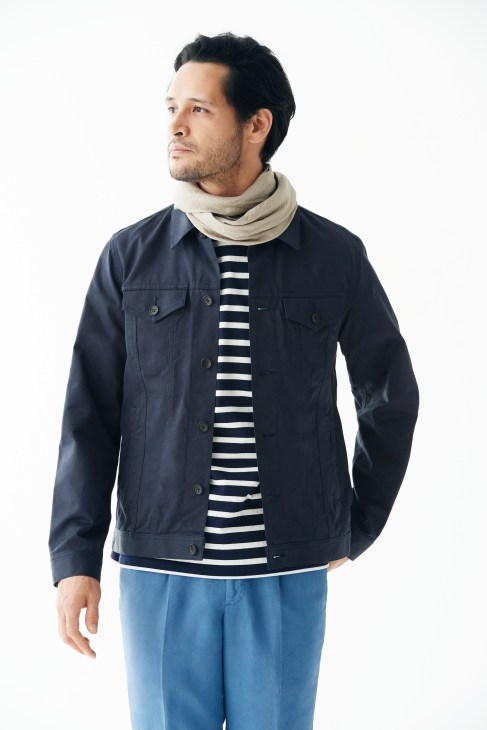
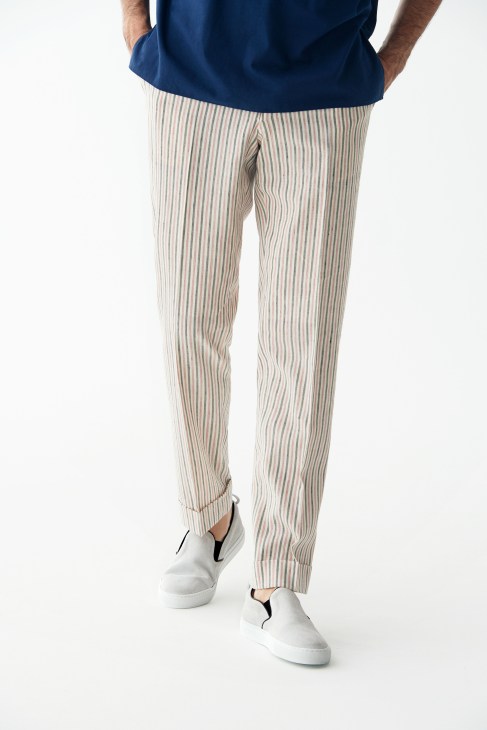
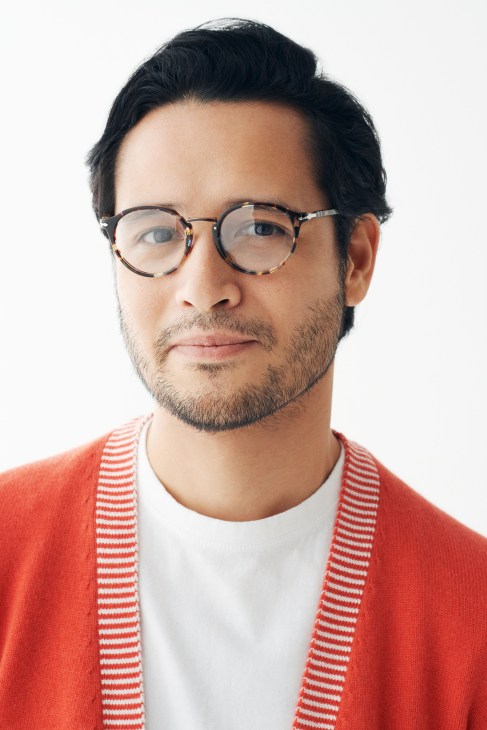
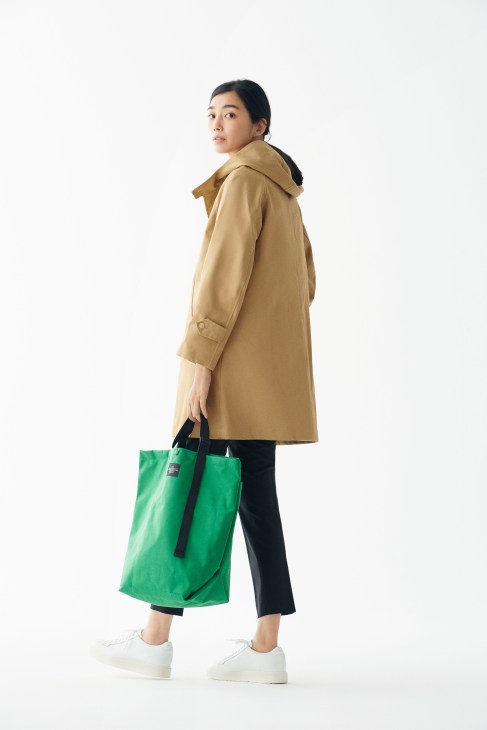
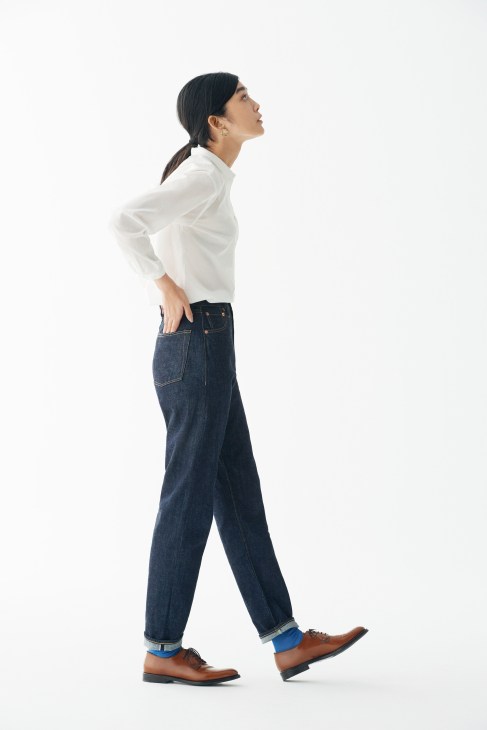
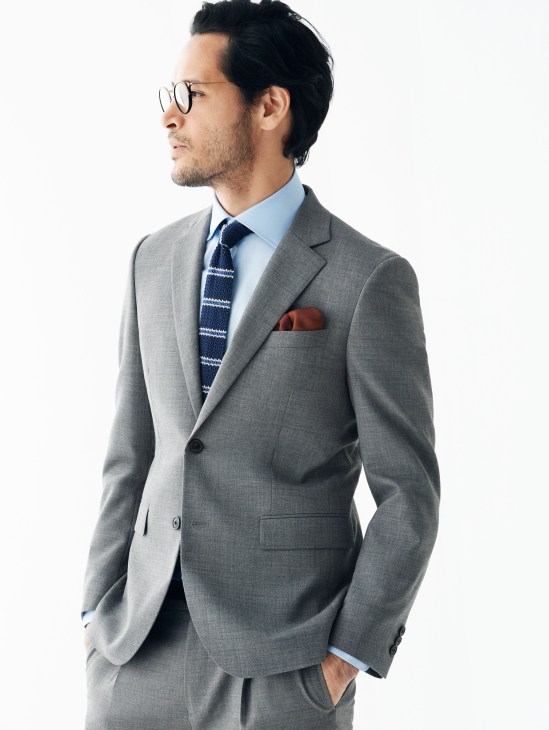
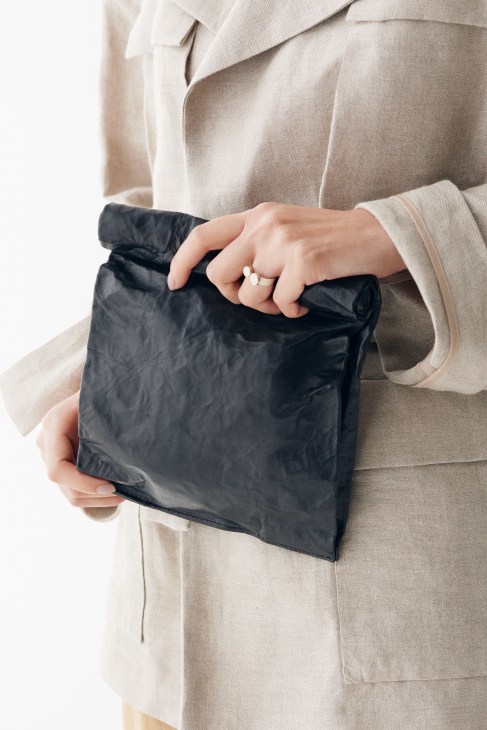
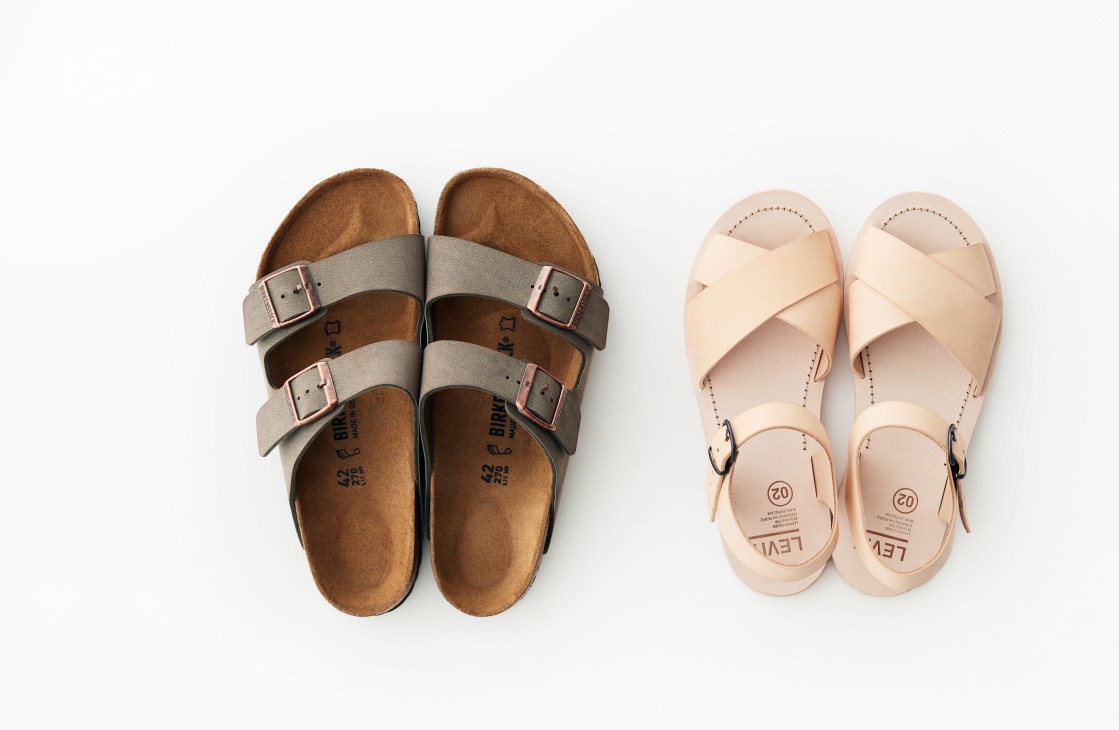
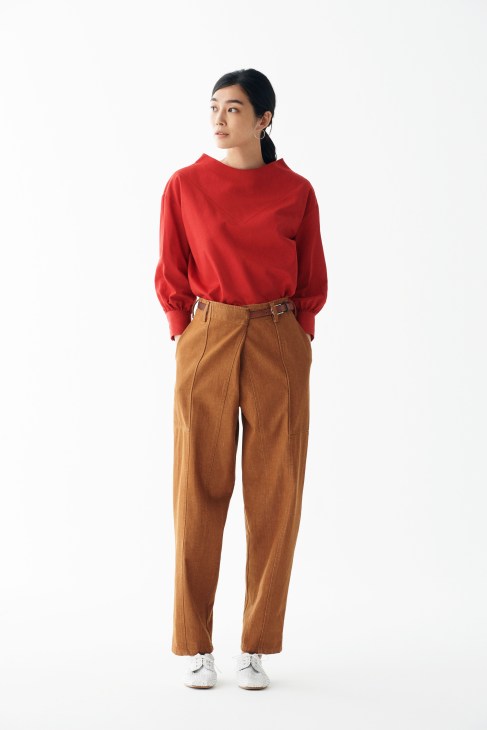
Styling: Shun Katakai & Kyoko Tamoto
Hair & make-up: Keita Iijima
Models: Rihito & Youki
The state of independence
If there was one word that told the story of 2017 it would be sovereignty. Over the past year, restive regions made destructive bids for independence. Nations began the process of breaking away from old friends. Others saw nascent regional rumblings become clear calls for separation. The renewed importance of sovereignty will underpin 2018 too, and so here we have a detailed diary of the events that led up to the Catalan independence referendum in October 2017. It comes courtesy of Stephen Burgen, an author and journalist who has lived in Barcelona since 2001.
The accidental president
If you picked a pivotal moment that led us to where we are now, with the once easy-going Catalans at each other’s throats, businesses fleeing the region, regional autonomy suspended and most of the Catalan government facing charges little short of treason, it would be the day outgoing president Artur Mas put his hand on Carles Puigdemont’s shoulder and said: “You’re my guy.”
No one could have been more surprised than Puigdemont himself. Always a bit of an outsider, he was never quite at ease with the old money and bones families of the Convergència i Unió party that had dominated Catalonia ever since Spanish democracy was restored in 1979.
Puigdemont is a journalist by trade. In 2004 he launched the English-language daily Catalonia Today and appointed me as editor. For him, everything revolves around Catalonia, its culture and history, and its repression by Spain. On his drive to work he used to listen to the right-wing, anti-Catalan cope radio station and would arrive at the office raging at its latest insults. I left the paper after two years, disagreeing with its increasingly pro-independence line. Not long afterwards, Puigdemont’s wife was appointed editor and he went into politics. But anyone who knew him realised he wasn’t really a politician: he was a missionary.
By the time he was anointed, though never elected, as president in 2016, secessionism was politically fashionable. But as recently as 2006, support for secession was a mere 14 per cent and then president Mas dismissed independence as “an antiquated and rather rusty concept”. Six years later support had reached about 44 per cent and Mas had become its messiah, telling Madrid, “We will have our independence, like it or not.” But unlike Mas, Puigdemont isn’t a born-again secessionist. He is something rarely seen in modern politics: a true believer, dedicated since boyhood to the mission of Catalan independence.
By 2012, Spain’s economic crisis, the dismemberment of Catalonia’s statute of autonomy by Spain’s constitutional court and an underlying suspicion of disrespect had pushed the independence movement to centre stage. Its strength has been its ability to mobilise its bases in vast, peaceful and spectacular rallies. Its weakness has been a tendency to hubris and it was through hubris that Puigdemont became the accidental president.
In January 2013, with Mas in charge, the pro-independence coalition initiated what it called “the process”: a series of steps towards a unilateral declaration of independence (UDI). From this point it behaved as though its slim parliamentary majority represented a popular majority, ignoring the fact there were as many Catalans opposed to independence as supported it. This proved a fundamental weakness because when it came to the crunch in October 2017, it gave Europe an excuse to side with Madrid.
The first step was to hold a referendum, something that Madrid refused to endorse. In the event some 37 per cent of the electorate turned out to vote on 9 November 2014, with 81 per cent opting for independence.
Dismissing the referendum as “propaganda”, Spain’s prime minister Mariano Rajoy said: “Mr Mas wants to impose a real referendum on me. I’ve already said that is impossible. If he wishes to modify the constitution to abolish national sovereignty he has every right to do so, but he evidently doesn’t have the necessary support.”
This would be Rajoy’s line throughout: the law is the law and the constitution is sacred. Both sides have insisted all along that they are open to dialogue but as one senior government minister puts it: “What is there to talk about? We’re not willing to discuss the break-up of Spain and they don’t want to talk about anything else.”
Unlikely bedfellows
Using the referendum result as a springboard, in 2015 Mas called a snap election fought on the single issue of independence. But the plan failed. Between them the pro-independence parties won less than 50 per cent of the vote and Mas and his coalition partner failed to win a majority of seats.





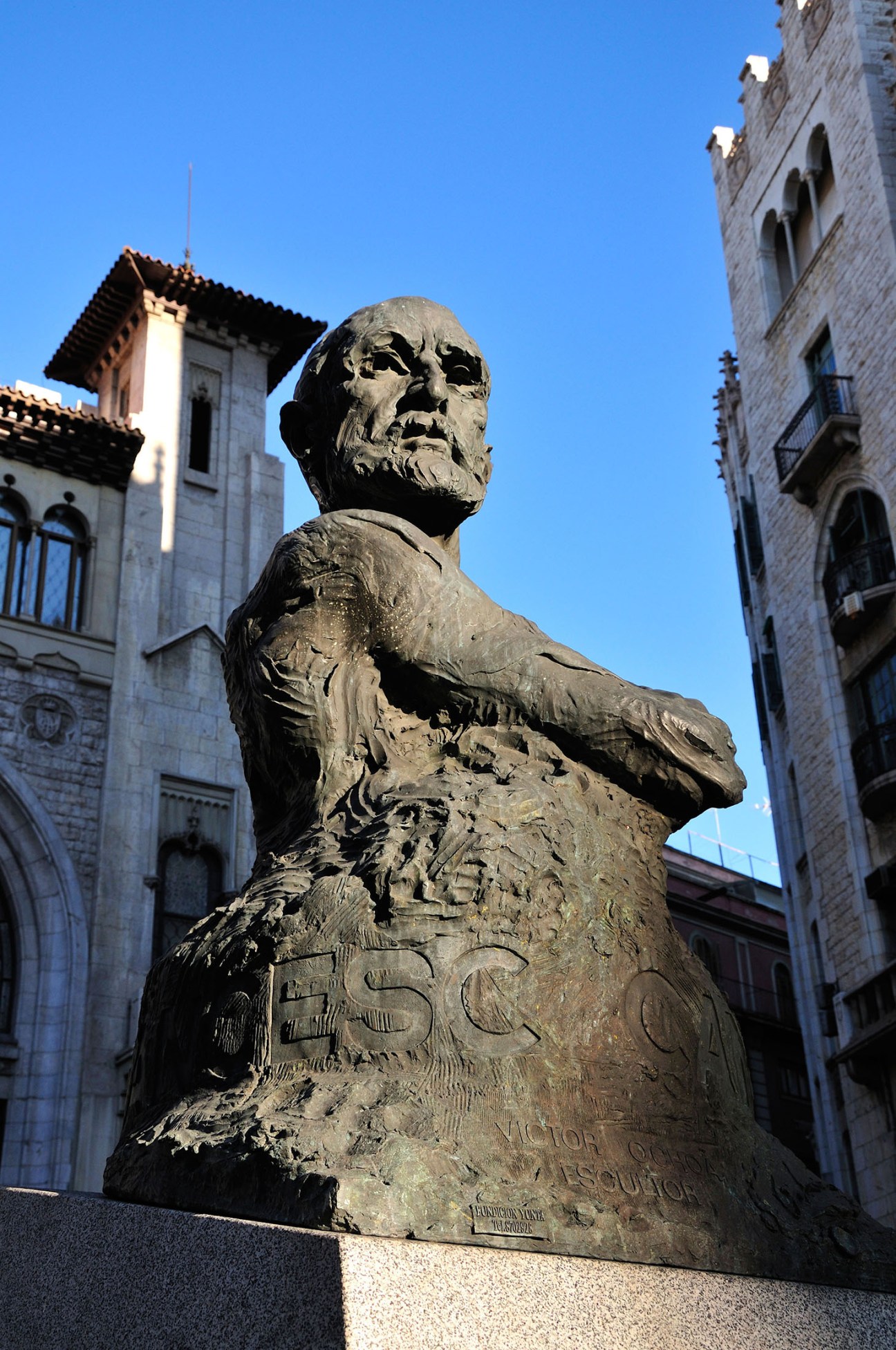
The only way Mas could get a majority was by persuading the pro-independence but anti-capitalist cup (Popular Unity Candidacy) to join his coalition. This the cup was keen to do but not with Mas as leader because of his party’s austerity policies and links with corruption. Anna Gabriel, a cup MP, said, “Mas has nothing to do with the values of the new republic.”
Mas agreed to step aside if a leader acceptable to the cup could be found. That person was Puigdemont, and his conservative government would now govern at the mercy of a tiny radical group with which it had only one thing in common: support for separation from Spain. They were unlikely bedfellows and photo ops of the dour Puigdemont making nice with the cup’s rabble-rousing Gabriel provoked much amusement.
When Puigdemont took power in 2016 he announced that Catalonia would be independent within 18 months. His government set about passing “disconnection laws”, assuming a majority voted in favour in a new referendum scheduled for 1 October 2017. These laws were rushed through parliament without allowing the opposition to comment nor amend them. The laws contravened both Catalonia’s own statute of autonomy and the Spanish constitution, and were immediately struck down by the constitutional court in Madrid.
Each step in the “process” was met with triumphalism by the secessionists and dread by the rest. Divisions deepened, people started falling out with friends, colleagues and family over the issue. Anyone who wasn’t pro-independence learned to button their lip. There was talk of selling up and moving away but where to? There are good reasons why more than a million people from around the world had chosen to live in Catalonia and now the message – from the government and the street – was if you’re not with us, you’re against us. An English friend says that her daughter, born and raised in Barcelona, was told by another child to “piss off home” because she was speaking Spanish in the playground.
The contention of Puigdemont’s government was that Spain was not sufficiently democratic to agree to a binding referendum, as the British government had in Scotland. Catalonia therefore had no option but to go it alone.
Puigdemont’s government continued to impose its agenda, ignoring the 50 per cent of Catalans who didn’t support it. This silent, and increasingly “silenced”, majority failed to find its voice and neither central government nor the Catalan opposition parties made any serious effort to court them.
“The attitude of the non-secessionist sector of society was to not cause problems with friends and family, until things went too far,” says Álex Ramos, vice-president of anti-independence umbrella organisation Societat Civil Catalana. It wasn’t until October, when the scc organised two million-strong demonstrations, that the division of Catalan society was laid bare.
Violence in Barcelona
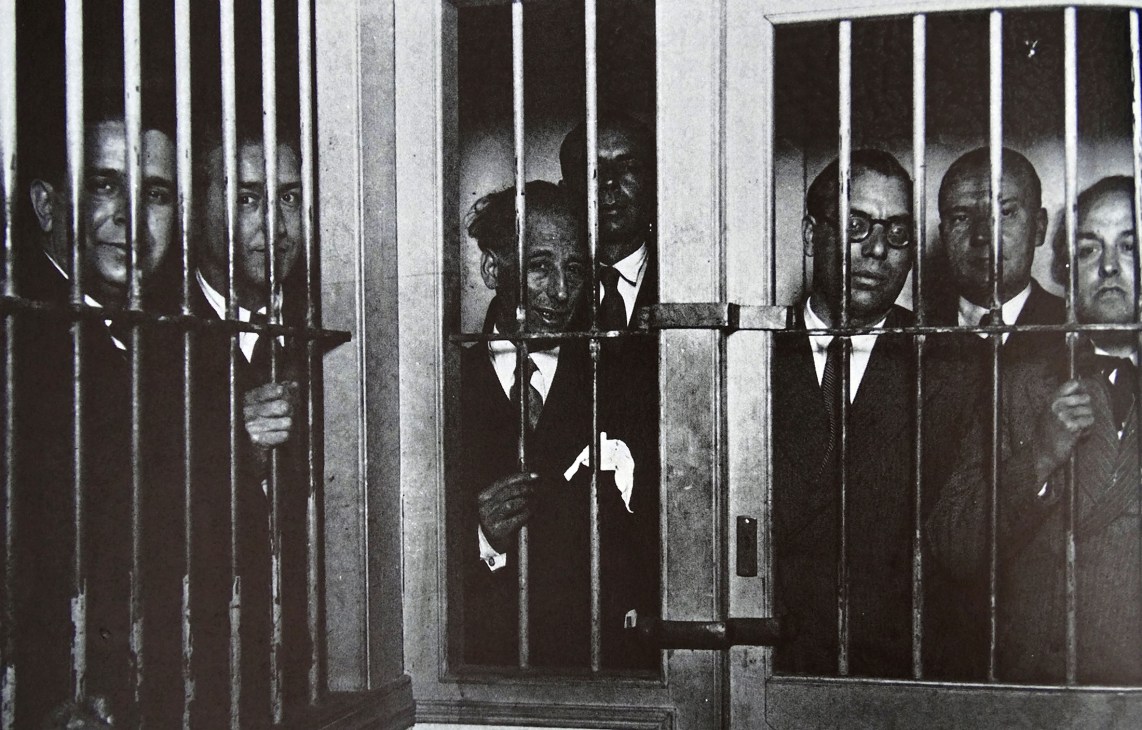
Rajoy’s government, meanwhile, played its part. Everything it did – stripping Mas and his associates of the right to hold public office, fining them millions of euros for organising the 2014 referendum, banning the 2017 referendum then trying to prevent it by force, jailing senior secessionist figures, dissolving the Catalan parliament, imposing direct rule and then jailing the leading members of the government – served to bolster the secessionists’ narrative of an autocratic, anti-Catalan Spain.
On the morning of 1 October 2017, Rajoy insisted that the referendum wouldn’t take place. Even as it was taking place in the midst of extreme police violence, Enric Millo, Spain’s highest representative in Catalonia, told journalists it wasn’t. But it was and, in a feat of clandestine planning worthy of the French resistance, supporters hid ballot boxes and papers in attics and garages and then delivered them to polling stations that had been occupied overnight.
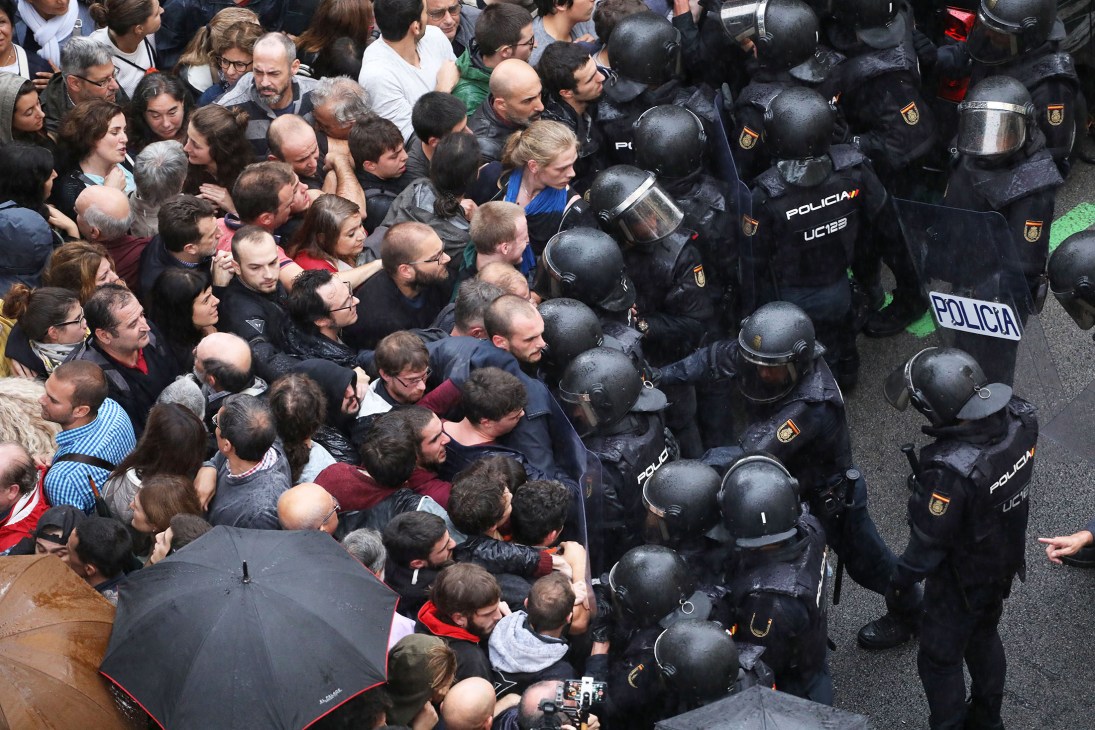
The police violence was random, extreme and counterproductive. If the idea was to scare people into staying home, it backfired. There had been fairly small queues of voters at Barcelona polling stations but once images of the violence hit TV screens people queued around the block in protest.
The violence in Barcelona stopped abruptly at 13.00. People queued for hours in the rain after the electoral roll website was sabotaged. The only people on the street were secessionists, a few puzzled tourists and riot police. Everyone else stayed home.
Given that Rajoy had dismissed the poll as irrelevant it’s hard to fathom why such violence was unleashed in an effort to stop it taking place. Images of riot police beating civilians and trashing ballot boxes dominated the news for days. It was a PR disaster for Madrid and the best possible result for the secessionists’ portrayal of Catalonia as a colonial victim of brutal Spain.
The result was a foregone conclusion. As in 2014, most No voters didn’t show up. Of the 2.3 million of 5.3 million eligible voters who cast their ballot, 90 per cent voted Yes, while organisers claim 770,000 votes were lost due to disruption. Close to 900 people were injured in the process.
Two days after the referendum, King Felipe VI of Spain addressed the nation. He didn’t mention the violence and castigated the Catalan leaders for “scorning the affection and sense of solidarity that have united, and will continue to unite, the Spanish people”. To people in Catalonia this wasn’t the king speaking: it was the government.
Things then moved quickly, if unpredictably. Illegal or not, Puigdemont had his mandate. On 10 October he declared Catalonia was an independent republic and then seven seconds later suspended the republic so negotiations could take place. But these negotiations were not to be. Rajoy gave Puigdemont a series of deadlines to confirm or deny that he had declared a republic, saying a failure to do so would lead to direct rule from Madrid.
Under pressure from a nervous old guard led by Mas, Puigdemont called elections to stave off direct rule. When news of this leaked out and colleagues began denouncing him a traitor, he backed off and allowed the secessionists to use their narrow majority to declare independence. An hour later, direct rule was imposed.
Puigdemont and six of his cabinet fled to Brussels and a few days later the remainder were remanded in custody on charges of sedition, rebellion and embezzlement. “We have been stripped of office in an illegal coup d’état,” Puigdemont told a news conference in Brussels. Madrid had earlier condemned the Catalan udi as a coup d’état.
Issues of independence
Lessons should be learned from this unedifying and ultimately fruitless experience. The independence movement was guilty of haste and hubris. If you only associate with like-minded people you can deceive yourself that everyone thinks as you do. Attending one of the huge rallies, it was easy to believe everyone wanted independence because those who didn’t stayed away. Now Catalan leaders admit that they were too hasty and lacked the support of the majority.
Others with dreams of independence, such as Flanders and Lombardy, take note: the EU will not rally to your cause. At every stage Europe has sided with Spain, to Puigdemont’s surprise and chagrin. EU leaders don’t want the community to splinter and member states such as France and Italy, mindful of their own internal divisions, shunned Catalan pleas for support.
The Spanish government called for Catalan elections on 21 December and the restoration of regional autonomy. Whatever the result, as long as the Catalan question remains unanswered, Spain’s constitutional crisis will not be resolved. For that to happen Madrid has to be open to dialogue and accept it can’t use the courts to solve a political problem.
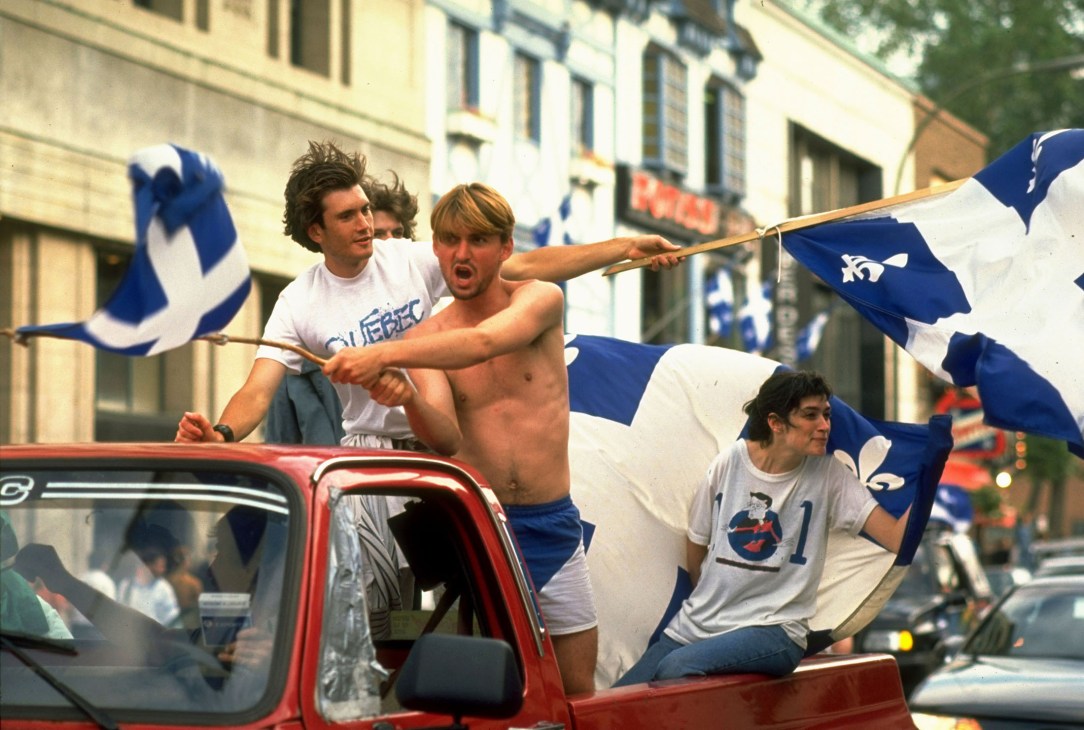
The Québec question
Why Canada’s French-speaking province has resisted all calls to strike out on its own.
In autumn 1995, as Québec was getting ready to vote for a second time on its secession from Canada, provincial premier and separatist Jacques Parizeau secretly arranged for the province’s public financial institutions to set aside ca$17bn. This was to be used to compensate any sell-off of Québec bonds following a secessionist victory.
The money was never spent as the separatists lost (by a razor-thin margin) but the anecdote is telling. Some Québécois “sovereignist” leaders knew that a favourable vote was only the beginning of the road to independence and that this road would be fraught with obstacles.
The business elite of Québec have always been against separation, fearing the economic shock of such radical change. They point to the exodus of tens of thousands of English-speaking Québeckers after the Parti Québécois gained power in 1976. They also lament the loss of prosperity and economic influence suffered by Montréal to the benefit of Toronto during four decades of political uncertainty generated by the separation debate.
The Québécois are a minority in their country and this carries with it legitimate frustrations. However, Canada is one of the world’s wealthiest, fairest and freest countries. Scenes of police forces disrupting a referendum or jailing members of a regional government are unimaginable. Whatever their grievances, Québécois know they are lucky to live in such a country. This is why, although they have been tempted, in the end they have always rejected a project which would be much costlier and trying than its proponents claim… publicly.
André Pratte is a Canadian senator and a former journalist.
Split decisions: more restless regions
1.
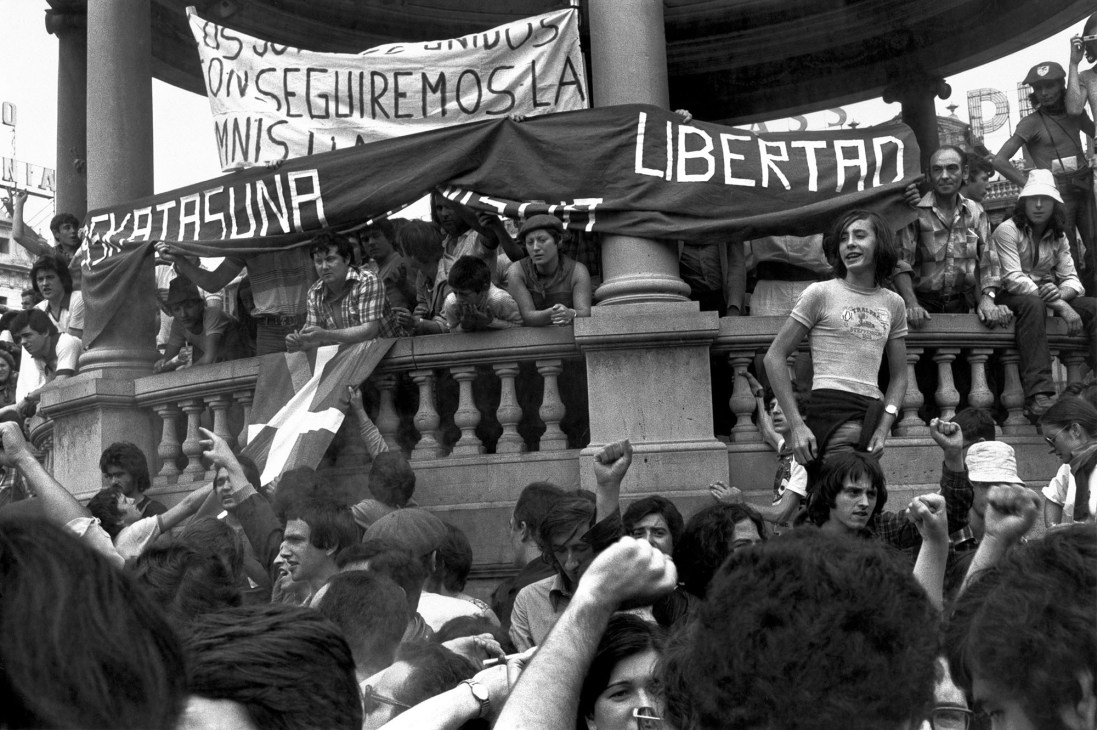
Basque Country
The violent campaign ended years ago but the dream of independence hasn’t. Thousands of Basques supported Catalonian independence and are keen for their own referendum.
2.
New Caledonia
One of France’s overseas territories in the Pacific, New Caledonia is holding an independence vote in 2018.
3.
Flanders
The mainly Dutch-speaking region in north Belgium aims to push for further gradual devolution after 2019’s elections.
4.
Lombardy & Veneto
In these economic powerhouse regions of Italy, more than 90 per cent cast their vote for more autonomy in a non-binding referendum in October.
5.
Autonomous Region of Bougainville
A poll on independence from Papua New Guinea is set be held in this part of the Solomon Islands before 2020. There is concern the vote will lead to violence.
Image: Getty Images, Josef Koudelka/Magnum Photos, Alamy, Reuters
Berth control
If businesses were just about numbers then Guntu – a new floating hotel that cruises around Japan’s Inland Sea – might never have been more than a fantasy project. An exquisite 80-metre-long boat designed by one of Japan’s best architects and hand-built by the finest carpenters from Hiroshima, it has only 19 guest rooms and can hold a maximum of 38 passengers with a crew of 46. Luckily its owner, Setouchi Cruise, wasn’t looking for a fast buck. Instead it wanted to make something that would bring people to the region and celebrate the heritage of local shipbuilding giant Tsuneishi, 100 years old in 2017 and the yard where Guntu was built.
“It’s true that as a business model it might seem unusual,” says Akio Jo, the president of Setouchi Cruise, who is in charge of business operations. A career-long shipping man who hails from the commercial side, Jo joined in January 2017, the same month that Guntu was launched from Tsuneishi’s picturesque shipyard in Hiroshima prefecture. “It’s a very unusual boat,” he says. “There is nothing like it in Japan. There just hasn’t been this kind of ‘river cruise’ boat here.” The team researched boat services everywhere from the Mekong to Kyoto to refine the idea of what they wanted to create.
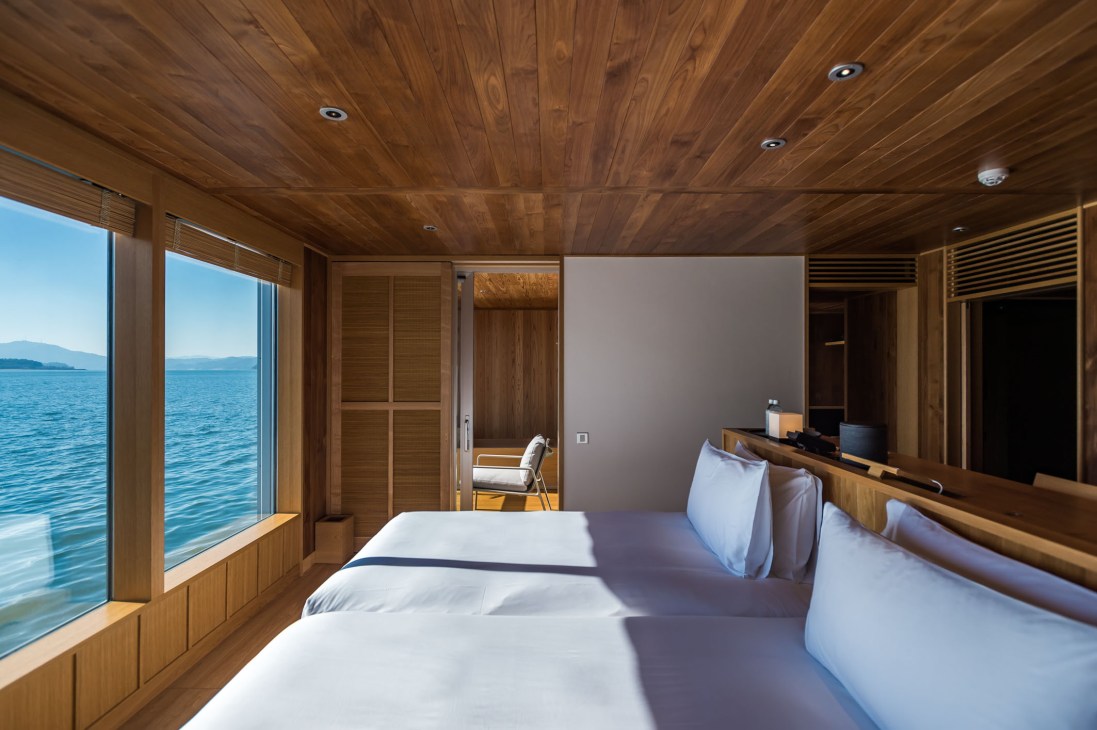
Guntu – pronounced “gantsu”, a local dialect word for a blue crab – started running in October, welcoming discerning passengers who pay upwards of ¥400,000 (€2,990) per night for the chance to glide along the Seto Naikai (also known as the Setouchi or Seto Inland Sea), a mesmerisingly beautiful part of Japan with blue waters and small green islets. Once on board, passengers enjoy spacious but snug wood-lined berths, cedar baths on outdoor terraces, an on-board spa and cuisine overseen by Michelin-starred restaurant Shigeyoshi. The boat even has its own tea master, Akihiro Nakamura, who was working in a Buddhist temple but now makes guests perfect whisked matcha and traditional rakugan, the hard sugar sweets that go with green tea. The promotion of native products is subtle but pervasive: the bar serves cocktails made with Setouchi citrus fruits, while the elegant souvenir stand sells Hiroshima tea and aizome indigo-dyed letter paper; the sushi counter serves freshly caught fish served with a sprinkle of kabosu citrus and the yukata robes in the rooms come from nearby Tokushima.
There are six routes – stretching from Hinase in Okayama, in the east, to Yanai in Yamaguchi prefecture to the west – and travellers who don’t know the area will be taken aback by its balmy loveliness. Chief mate Goro Nishina, who spent 17 years working on a cruise ship travelling everywhere from Alaska to the Caribbean, recalls learning of Setouchi’s plan: “I really wanted to join – I’ve been all over but this is one of the most beautiful places in the world.”
The captain, Hirofumi Ochi, has 20 years’ experience working on tugboats. He says that although the Inland Sea is sheltered it presents challenges: “The currents can be difficult here, fast and then slow. And there are some narrow stretches that regular boats can’t navigate.” Guntu had to go through a testing period before the Ministry of Land, Infrastructure, Transport and Tourism could give it the go-ahead. Luckily the 3,013-tonne vessel, which runs at a speed of 10 knots, passed with flying colours.
“It was a dream project,” says the boat’s designer, architect Yasushi Horibe, who has built 80 houses during his career and is renowned for his expertise in using wood. That he had never built a boat before only made the whole enterprise even more intriguing. “I’ve always been obsessed with transportation,” he says. The team at Tsuneishi knew how to make Horibe’s idea a reality and the final product has turned out remarkably similar to Horibe’s original sketches.
“My approach to architecture was the same as the client’s intention for the boat,” says Horibe. “We both wanted to showcase the natural beauty of the Setouchi landscape and culture.” The exterior is simple and unobtrusive, the roof shape a local style. Horibe used wood throughout: lightweight, water-resistant sawara cypress for the roof and walls, and chestnut for the floors; in the bedrooms he used red alder hardwood and textured ash for the floor.
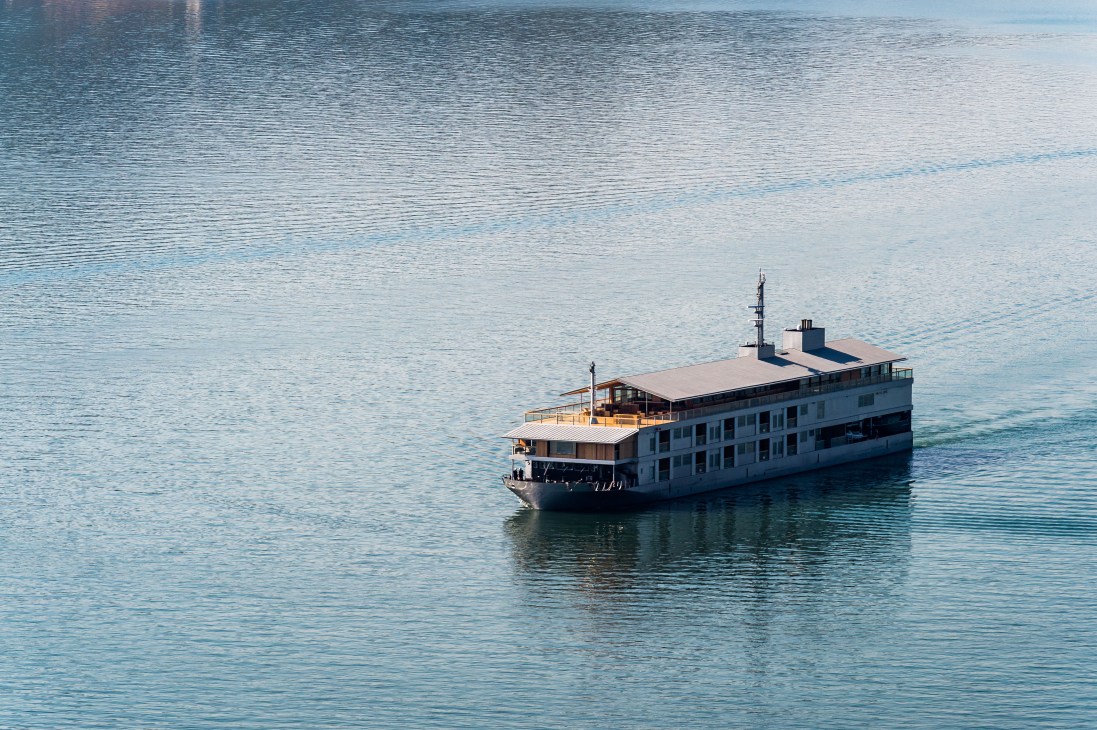
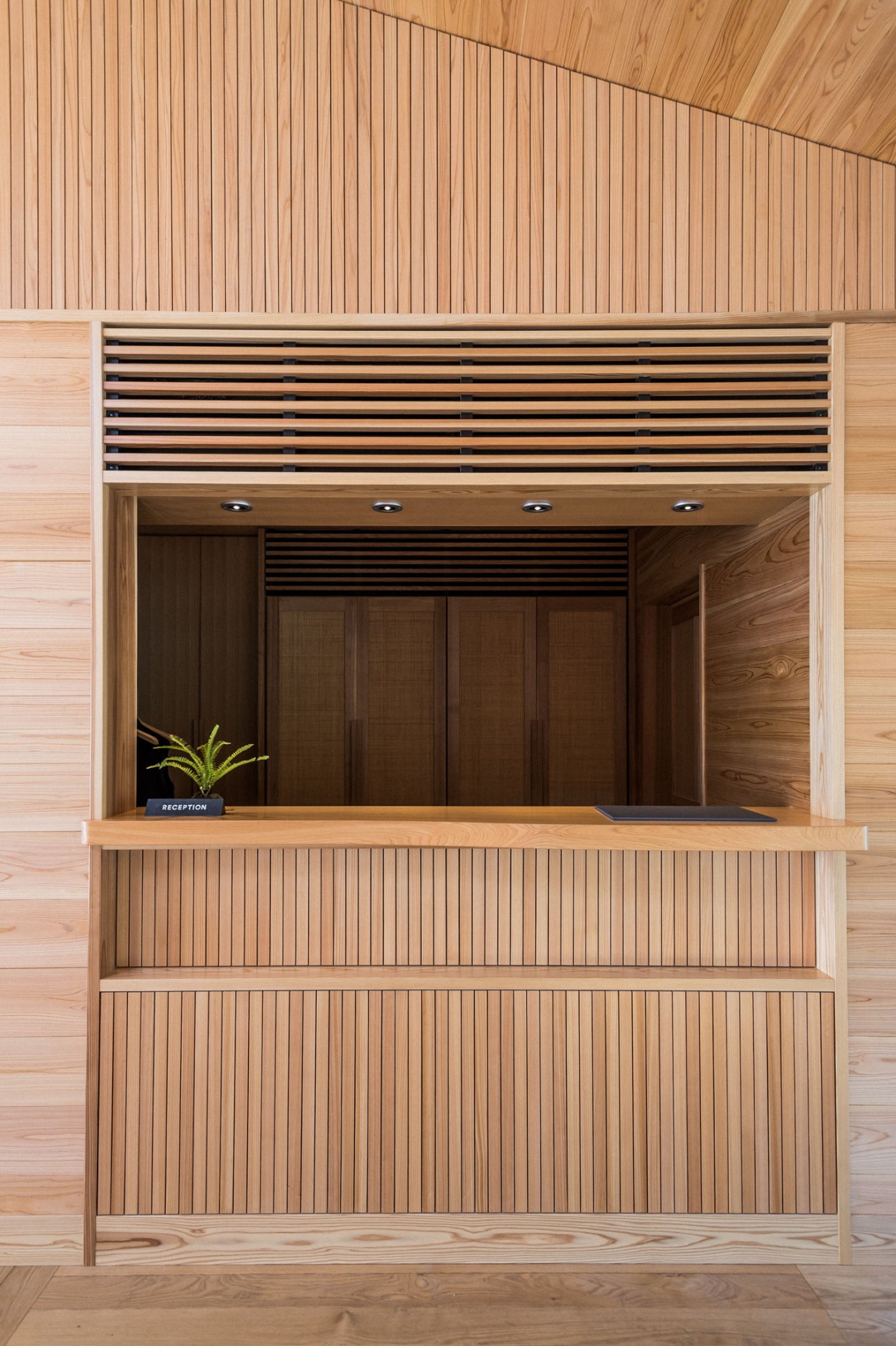
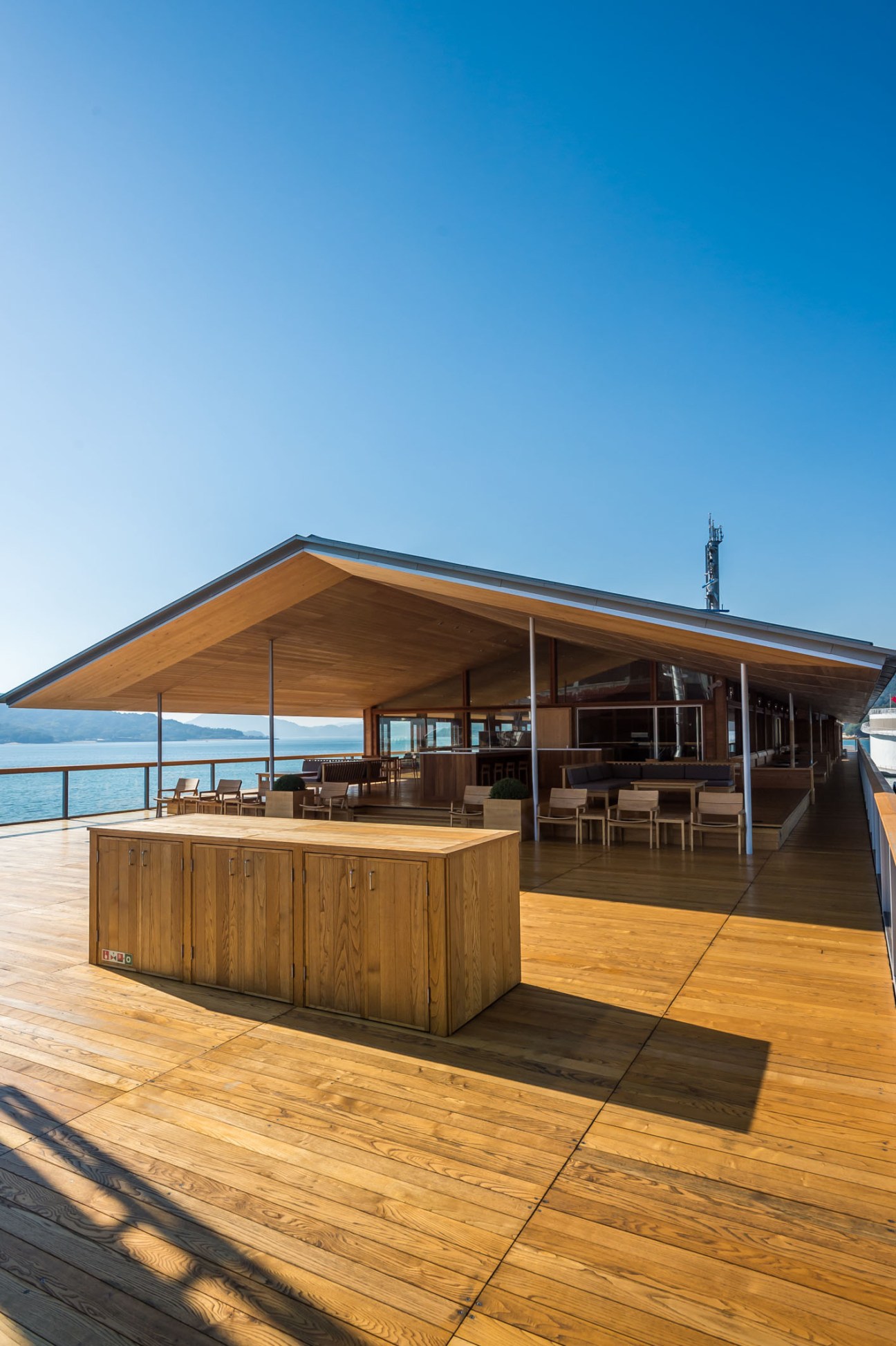
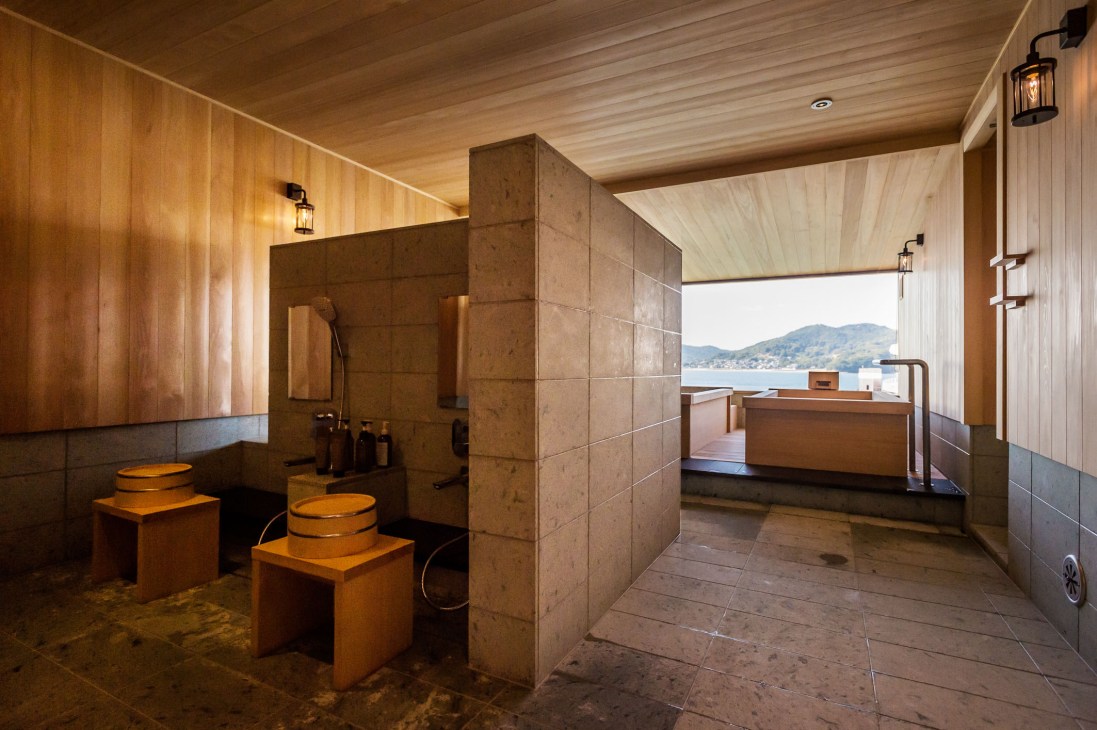
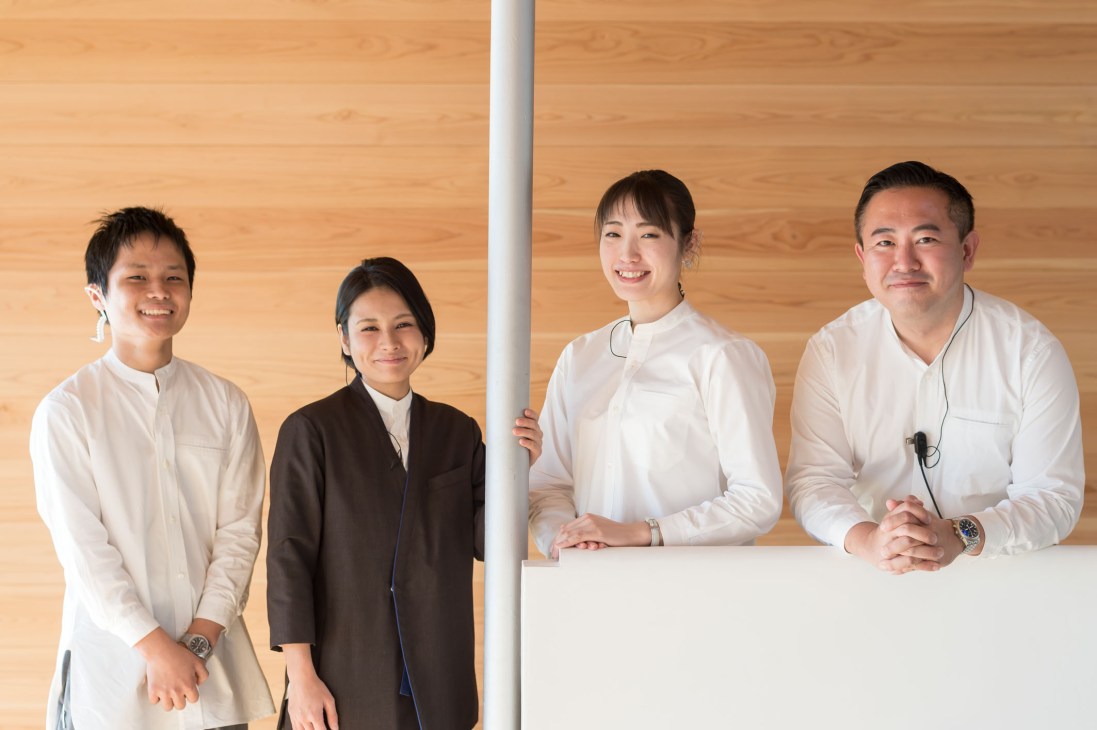
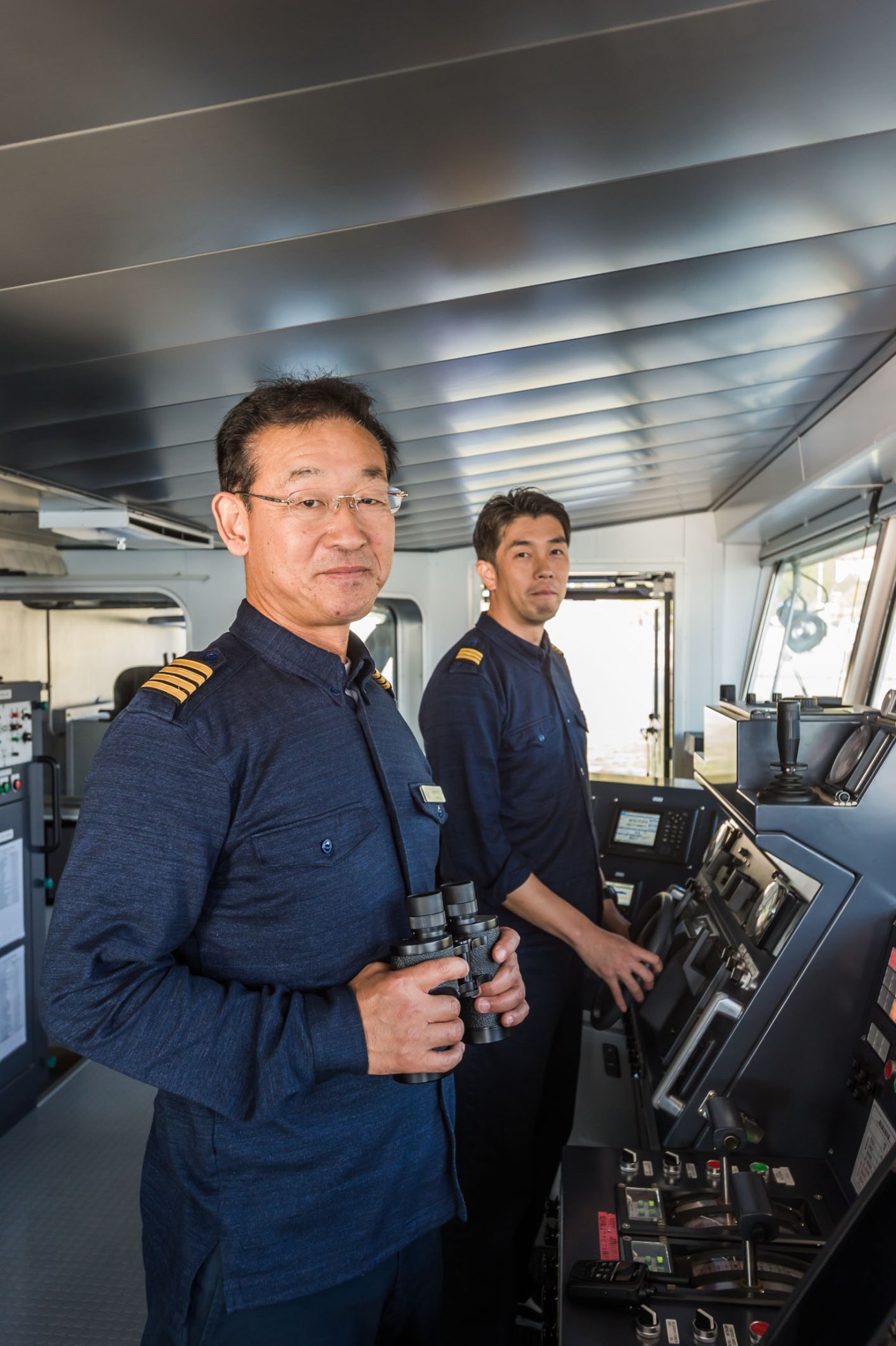
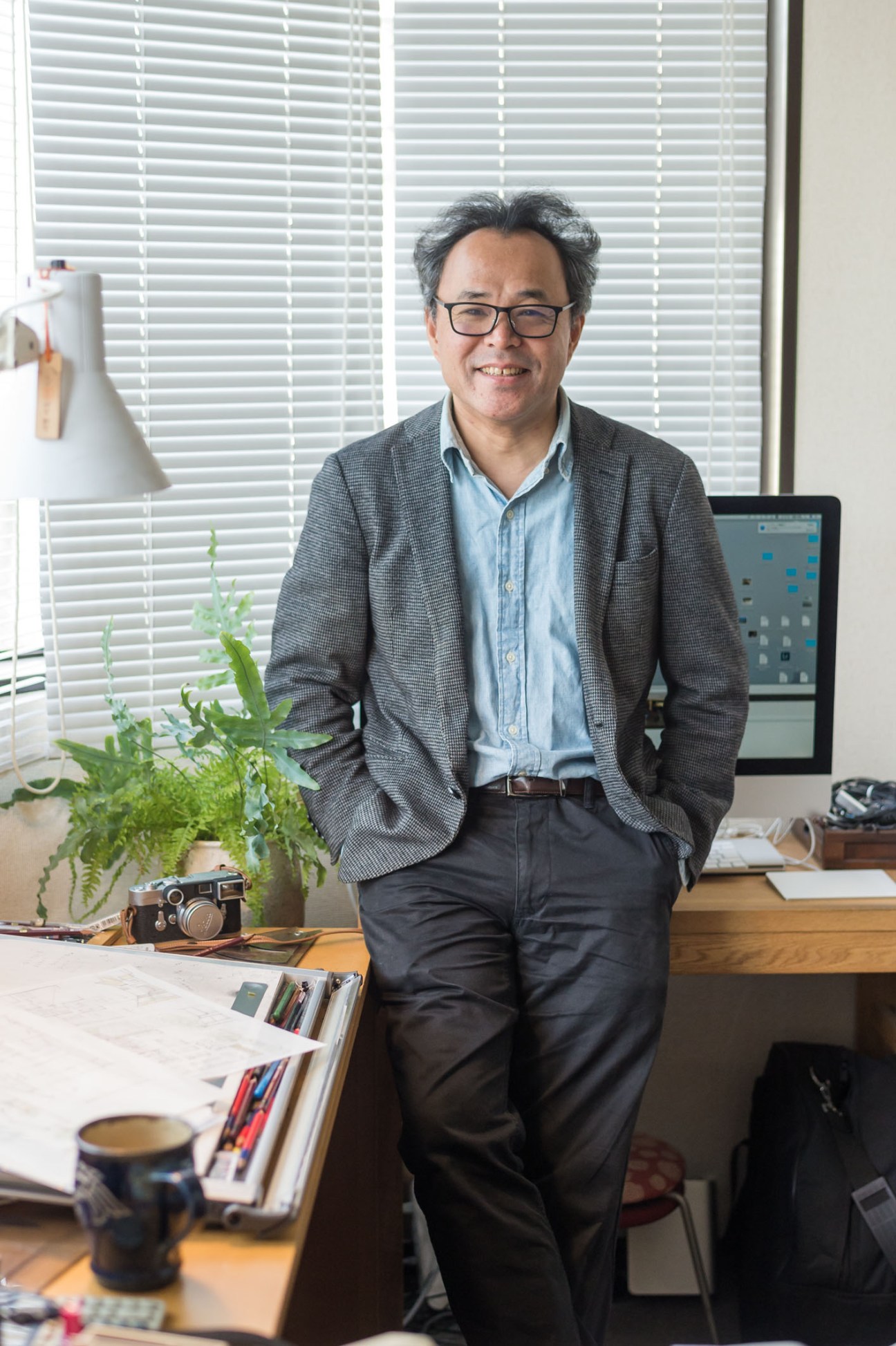
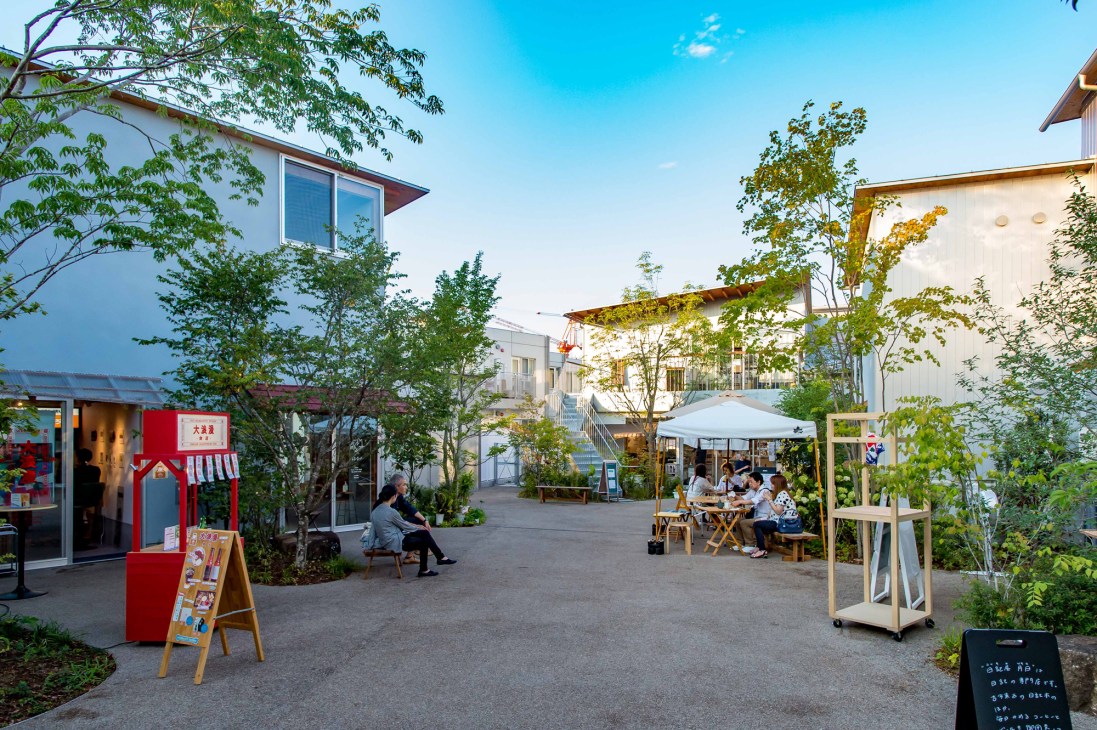
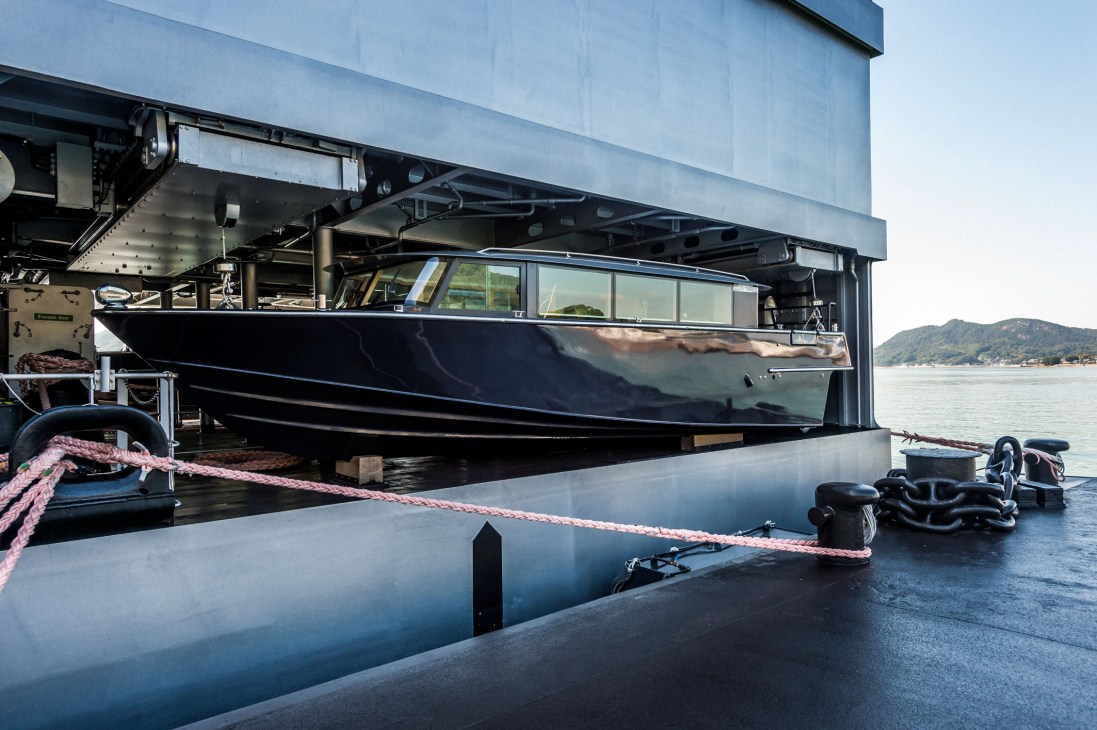
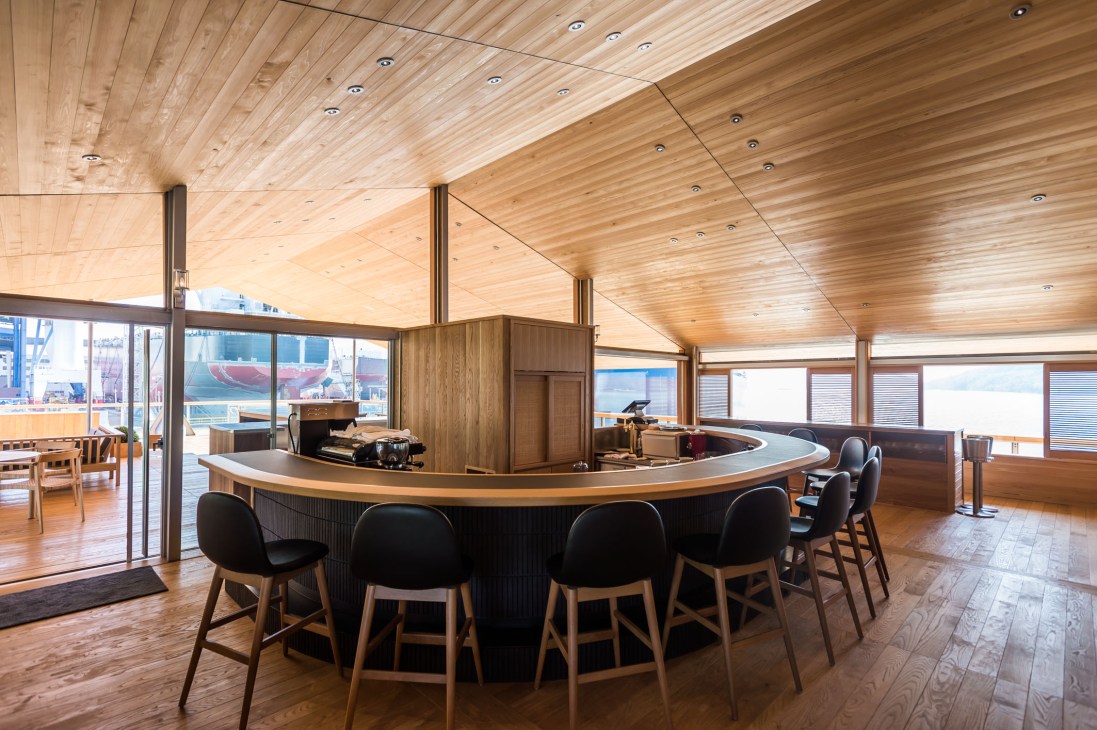
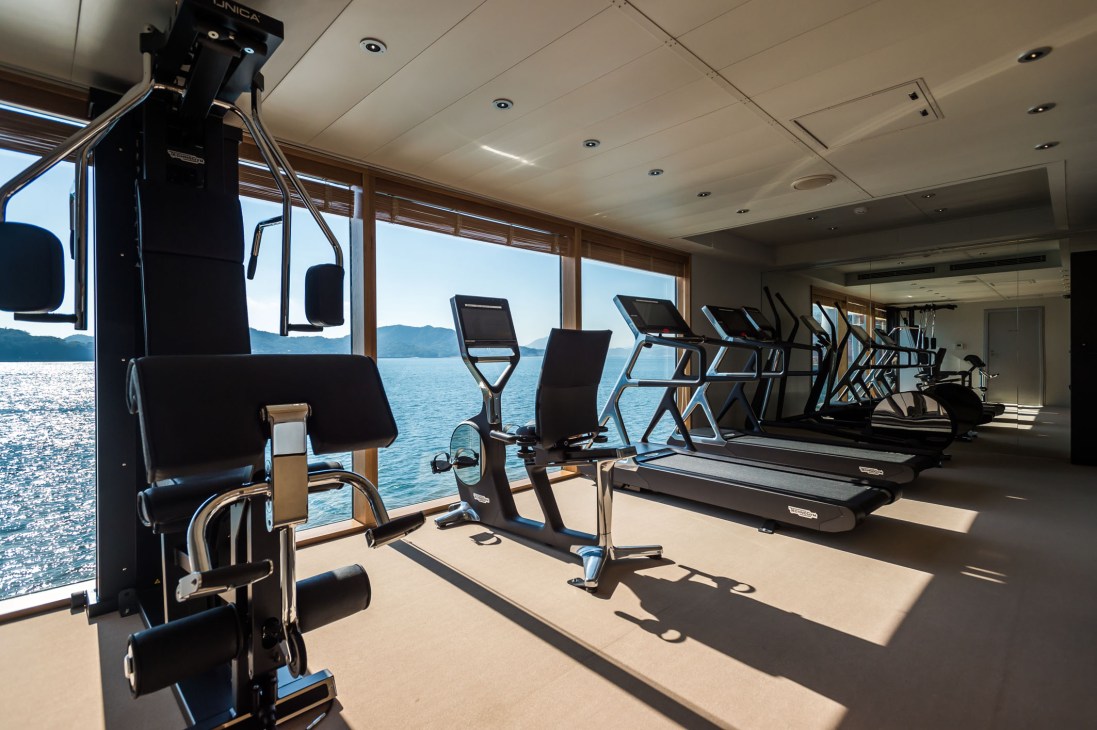
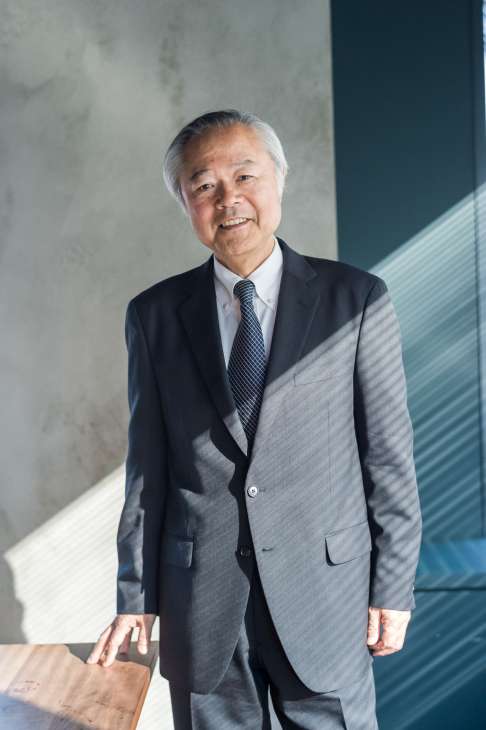
“I approached it exactly as I would a house project; I was given free rein,” says Horibe. The quid pro quo was a tight deadline and some extra design assignments that included two nine-metre-long charcoal-grey motor boats that tuck in at the back of Guntu for passenger outings (another first for the designer). The carpenters who were brought in were house-builders who had to adapt their considerable skills to the slant of a dry dock, as opposed to the level ground they were used to.
The bedrooms are large: 50 sq m for standard rooms and 90 sq m for the Guntu suite situated above the bridge. “All the work I’d done on residential projects helped me with the scale – how to make a large room feel cosy,” says Horibe. “One of the guests said that coming back to the boat was like coming back home, which was exactly what I wanted to achieve. I had wondered if the design might be too simple but once I spent a couple of nights on the boat I realised that the setting changes all the time, which changes everything else. The Seto Inland Sea exceeded my expectations. People spend a fortune on air fares – this way they can skip the fare and see something they might never have seen in Japan.”
The boat was a departure for Tsuneishi too, a company with sales of ¥154bn (€1.15bn) in 2016, 900 employees and shipyards in Hiroshima, the Philippines and China. At the original yard in the small town that gave the company its name, Tsuneishi’s core business is clear to see: the construction of tankers and bulk carriers for industry. They had never built a passenger boat. The shipyard dominates the local economy and the owners take that responsibility seriously. “Tsuneishi has always treated employees as family and has expanded its business to ensure continuing employment for them,” announces the corporate- philosophy statement. “Even when the shipbuilding industry was in a slump we did not cut any of our staff.”
Tsuneishi’s paternalistic approach to its workers now extends to looking after the wider regional economy. In 2011 a separate company, Setouchi Holdings, was founded by Katsushige Kamabara, the former president of Tsuneishi Shipbuilding, who hails from the shipbuilder’s founding family. The group’s aim is to revitalise an area that – like much of rural Japan – is feeling the strain of depopulation and an ageing society.
Setouchi Holdings’ dynamism is impressive. Apart from Guntu, its businesses include new air-charter service Sky Trek; Setouchi Seaplanes, which offers 50-minute tours around the islands or takes passengers to well-connected Hiroshima Airport in only 15 minutes; the popular Hotel Cycle in nearby Onomichi; and a denim project supporting another well-known local industry.
Setouchi Holdings’ activities are everywhere, from the Bella Vista Hotel that overlooks the Guntu dock to the shopping arcade in Onomichi. The construction wing of the company works with famous architects to bring quality contemporary architecture to the area. Aside from commissioning Horibe for the Guntu project, the company has worked with the likes of Kyoto artist Kohei Nawa on a vast meditation chamber for the Zen temple of Shinshoji, and with Hiroshi Nakamura to create a new wing for the Bella Vista. “The idea is to make the area more active, both socially and economically,” says Jo.
The ideas go beyond philanthropy: the company is trying to ensure the area’s future economic survival and so, where necessary, works with banks, other businesses and local government. Guntu will have its own knock-on effect for the economy as wealthy guests spend money in the area (many will stay at the Bella Vista before or after their cruise). “And we’re buying fresh produce – fish, octopus, fruit and vegetables – from local suppliers,” says Jo.
At the same time as contributing to the region’s economy, Guntu is also reinventing the whole cruise experience. It is perfect for anyone who thinks that cruises are all about naff cabaret singers, bad food and compulsory group activities. On Guntu, passengers are free to travel for just one night (the maximum is three nights). The boat doesn’t port anywhere – it leaves from a small dock next to the shipyard – but passengers can go on fishing excursions (hamachi caught on a recent trip were grilled in the boat’s restaurant) or to small islands such as Miyajima or Naoshima, travelling on Horibe’s smart motorboats. Soon they will be able to lounge on a classic yakatabune: a traditional cruise boat that has been renovated and brought to Onomichi by sea from Tokyo.
Jo’s challenge is to create a market where none has existed. “Railroad culture has prevailed in Japan; there is a lot of nostalgia for sleeper trains but not yet for boats,” he says. Plus Guntu isn’t exactly most people’s idea of a cruise. “The image of the cruiseship is dinner with the captain in a big dining room; our target audience isn’t interested in that kind of experience.” You could say that Guntu offers a more low-key kind of luxury. “When you get on the ship you can feel and smell the wood. There’s a good feeling; the air is fresh. There is so much in this area: different islands, different cultural sites, great food. Guntu is a chance to see and rediscover those things.”
At the moment most customers are sixty-something baby boomers from Japan, with a few from South Korea and Taiwan. But Jo believes this will change and from spring 2018 he is looking to extend sales into Europe. “It takes time,” he says. “Our target is not to make money this year or even next but to raise the boat’s profile in Japan and abroad.” This in turn will increase awareness of the region and what Setouchi is doing to revive it. The key is getting people here: “I always say that seeing Guntu in real life is 10 times better than looking at a photo – but travelling on it is 100 times better.”
Cruise control
When it comes to seaborne stays, luxury invariably means a gleaming steel hull, painted white or perhaps a garish red, and expensive-looking glossy interiors boasting mahogany veneers and a good helping of onyx. Private yachts are designed to attract attention so subtlety is generally in short supply. Meanwhile, so-called “luxury” cruises are, more often than not, mass-market affairs with enough berths to sleep a few thousand at a time.
Guntu demonstrates that softer materials, warmer textures and a less in-your-face aesthetic can provide a more arresting and lasting visual impact. Moreover, it proves that a truly luxury travel experience simply can’t be shared by thousands at a time; it needs to feel far more personal than that. From the mere size of the vessel to the high ratio of crew to passengers, Guntu offers those onboard a trip that feels more tailor-made than all-inclusive.
Japan has a habit of reimagining the possibilities of premium travel. East Japan Railway’s Shiki-Shima 10-car train launched in 2015 and comes complete with private sleeping quarters, lounges, a dining car and cypress-wood bathtubs; like Guntu, it cannot accommodate more than 40 passengers at a time. The rest of the world has been slow to catch up but in future we hope to see many more smaller vessels at the premium end of the cruise business worldwide. For those who can afford it (and granted that’s not everyone, by a long hop), such an experience is worth every extra penny.
Yoshoku, what’s up?
Mention Japanese food and sushi, soba and tempura will spring to mind. But what about omu rice, napolitan (pasta) and tonkatsu (deep-friend breaded pork cutlet)? These dishes belong to a style of Japanese fare known as yoshoku (western food) and they’re usually lumped in with kare (curry), croquettes and hayashi (hashed beef) rice.
It’s cooking that Japan imported by way of Europe and the US after the country ended more than two centuries of isolation in the latter half of the 1900s. Over the years chefs have tinkered with the recipes (and the sauces, which riff on demi-glace, Worcestershire and ketchup), making the dishes more palatable to a domestic audience and less similar to their western equivalents.
The culinary alchemy that took place in the transition from west to east is what makes yoshoku such a cut above the sloppy fast food it was cooked up to ape. The vinegary sauces and gloopy condiments that dress it and form its sweetish base are elevated and changed immeasurably by the addition of dashes of soy or sesame seeds.
What started as a trickle of change in the early 20th century became a tide that altered the diets of working men and women – particularly after the Second World War, when the ingredients became more affordable. And now? Simple, reasonably priced comfort food par excellence.
Classic katsu curry
Serves 4
Ingredients
2 tbsps olive oil
1 large onion, finely sliced
5 garlic cloves, grated
30g ginger, peeled and grated
2 tbsps butter
4 tbsps plain flour
3 tbsps mild curry powder
I ltr good-quality chicken stock
200g tinned chopped tomatoes
2 tbsps ketchup
2 tbsps Worcestershire sauce
2 tbsps soy sauce
1½ tsps honey
2 small red apples, peeled and finely grated
2 carrots, peeled and grated
For the chicken katsu:
200ml vegetable oil
4 small chicken breasts, butterflied
4 tbsps plain flour
2 eggs, lightly beaten
150g panko breadcrumbs
Salt and pepper
Japanese rice, cornichons, tiny pickled onions and a soft boiled egg, to serve
Method
1.
Heat a heavy-bottomed pan with olive oil, then add onion, garlic and ginger. Stir-fry on medium heat until they start to soften and caramelise (about 10 minutes). Reduce heat. Add butter and flour, cooking until mixture is a golden colour (about 5 minutes). Add curry powder and increase heat until spices release an aroma.
2.
Add 240ml of stock, mixing well to dissolve the spices, then add the rest of the stock. Add chopped tomatoes, ketchup, Worcestershire sauce, soy sauce, honey, apple and carrots. Bring to boil then turn down the heat. Simmer for 30 minutes, stirring occasionally.
3.
While the curry sauce is cooking, prepare the chicken katsu. First heat the oil to 180c in a medium-sized pot, then heat the oven to 100c.
4.
Prepare 3 shallow bowls, 1 with flour, 1 with eggs and 1 with panko breadcrumbs. Season each chicken breast, coat in flour (and dust with excess), coat in the egg mixture and then cover with panko.
5.
Shallow-fry the katsu until deep golden brown (3 to 4 minutes either side). When both sides are cooked, remove and keep warm in an oven.
6.
Season the curry, scoop the rice into a bowl and top with the sauce. Slice the chicken katsu and place on top. Serve with cornichons, pickled onions and soft boiled egg.
‘Omu’ rice
Serves 4
Ingredients
For the sauce:
200g tinned vine tomatoes
120ml tomato ketchup
1 tbsp Worcestershire sauce
For the rice:
2 tbsps butter
2 garlic cloves, crushed
1 small onion, finely chopped
200g chicken thigh, boneless, cut into 1.5cm cubes
6 button mushrooms, sliced
Handful of cooked green peas
900g cooked Japanese rice
6 tbsps ketchup
½ tsp salt
¼ tsp ground white pepper
8 eggs
4 tbsps milk
2 tbsps vegetable oil
Method
1.
To make the tomato sauce, mix tin of tomatoes, ketchup and Worcestershire sauce in a blender until smooth, then pour into a small saucepan. Keep warm and set aside.
2.
Heat butter in a frying pan over medium-high heat. Sauté garlic, onion, chicken, mushrooms and green peas for 3 minutes. Add rice; stir for 3 more minutes. Add ketchup, salt and pepper and stir until the ketchup is mixed through.
3.
Preheat a small or medium-sized frying pan with a little oil, evenly spreaded. Break the eggs into a large measuring jug and whisk until combined. Pour a quarter of the egg mixture into the pan; tilt it to coat the bottom and side. Move a spatula through the mixture in a circular motion until the egg is halfway cooked through.
4.
Place a quarter of the chicken rice in the centre of the egg mixture. Tilt the frying pan to the side a little and fold one side of the omelette over the rice. Push and slide the omelette to the other side of the pan. When it reaches the edge of the frying pan, flip it out onto a serving plate so that the other side of the omelette folds under the rice. Spoon the tomato sauce on top and serve.
Potato croquettes
Serves 4
Ingredients
For the tonkatsu sauce:
3 tbsps ketchup
4 tbsps Worcestershire sauce
1 tbsp Dijon mustard
4 tsps soy sauce
4 tsps light brown sugar
½ tsp lemon juice
40g toasted sesame seeds, ground coarsely
Pinch of salt
For the croquettes:
1.1kg floury potatoes
1 tbsp butter
1 medium onion, finely chopped
250g minced pork
250g minced beef
50g plain flour
2 eggs, lightly beaten
150g panko breadcrumbs
Salt and pepper
1 ltr vegetable oil
1 white pointed cabbage, finely shredded using a mandolin and kept in icy water
Miso soup and Japanese rice, to serve
Method
1.
Mix all the ingredients for the sauce in a medium bowl until well combined. Set aside.
2.
Place potatoes in a large stockpot and cover them with water. Add a large pinch of salt, bring to the boil then turn down to medium heat and cook until the potatoes are soft.
3.
While you’re cooking the potatoes, prepare the mince mixture. Melt the butter in a frying pan and fry the onion until transparent. Add the mince and cook until the pan is dry, then add salt and pepper and turn off the heat.
4.
When the potatoes are cooked, drain the water and cool slightly. When they are cool enough to handle, remove the skins with a knife and set aside the peeled potatoes (they should weigh about 850g).
5.
Mash the potatoes, keeping some texture, and add to the mince mixture. Once the mixture is cooled, divide it into 8 equal parts (about 80g each). Mould into cylinder shapes.
6.
Prepare 3 shallow bowls, 1 with flour, 1 with eggs and 1 with panko breadcrumbs. Coat each croquette in flour (and dust with excess), dip into egg mixture and then cover completely with panko.
7.
Heat oven to 100c. Heat oil to 180c and fry each croquette until golden brown and crispy. When cooked, remove with a slotted spoon and place on kitchen towel to drain the excess oil. Keep it in the oven while you’re cooking the rest. Serve with sauce, cabbage, rice and miso soup.
A little respect
The last time a devastating earthquake shook the city of Takamatsu, in western Japan’s Kagawa prefecture, was just after the Second World War. “The central government and seismologists say the next major one could come any time,” says Masaharu Kagawa. Responsible for the upkeep of the prefectural office’s building, Kagawa’s concern over an impending earthquake is valid. This, after all, is no ordinary office block. A hybrid of traditional temple-style architecture and beefy brutalistic concrete beams, it’s a 1958 masterwork from famed Japanese architect Kenzo Tange. When we visit, construction crews are digging up the surrounding garden and plaza. Over the next two years Kagawa’s department will burrow below the foundations of this eight-storey building and prop it up while installing underground shock absorbers. When finished, the ¥4.2bn (€32m) upgrade will make the building more quake-resistant. “We’ve never tried to do anything on this scale,” he says.
It’s a rare case of government officials choosing preservation in a country where tearing down old buildings is standard practice. But it’s also a sign of the times in Takamatsu, where works by Japan’s great modernist architects, such as Tange, are becoming increasingly recognised.
Many of Takamatsu’s landmarks were commissioned by Masanori Kaneko, Kagawa prefecture’s first postwar elected governor. Under Kaneko, who held office from 1950 for nearly 25 years, economic growth wasn’t the only item on the agenda: he worked with Japanese artists and designers on public buildings and furniture, and promoted the region as a cultural haven. His legacy is a treasure trove of monuments from an era of creative liberty that are woven neatly into Takamatsu’s urban fabric.
The prefectural office, the city’s tallest building at the time, wasn’t Tange’s only statement here. He also designed Kagawa Prefectural Gymnasium, a swooping concrete building that was opened in 1964, with a form that draws comparisons to the hull of a giant boat. Officials closed the gym in 2014 after ruling that its curved roof structure had become unsafe but designers are lobbying hard for its restoration. For decades the gym was a stage for the region’s athletes and advocates for sparing the building from the wrecking ball believe in its cultural and architectural significance. “Volleyball, badminton and table tennis teams in the region came here to qualify for the national level,” says Noriyuki Kawanishi, a Takamatsu-based architect and former high-ranking badminton player.
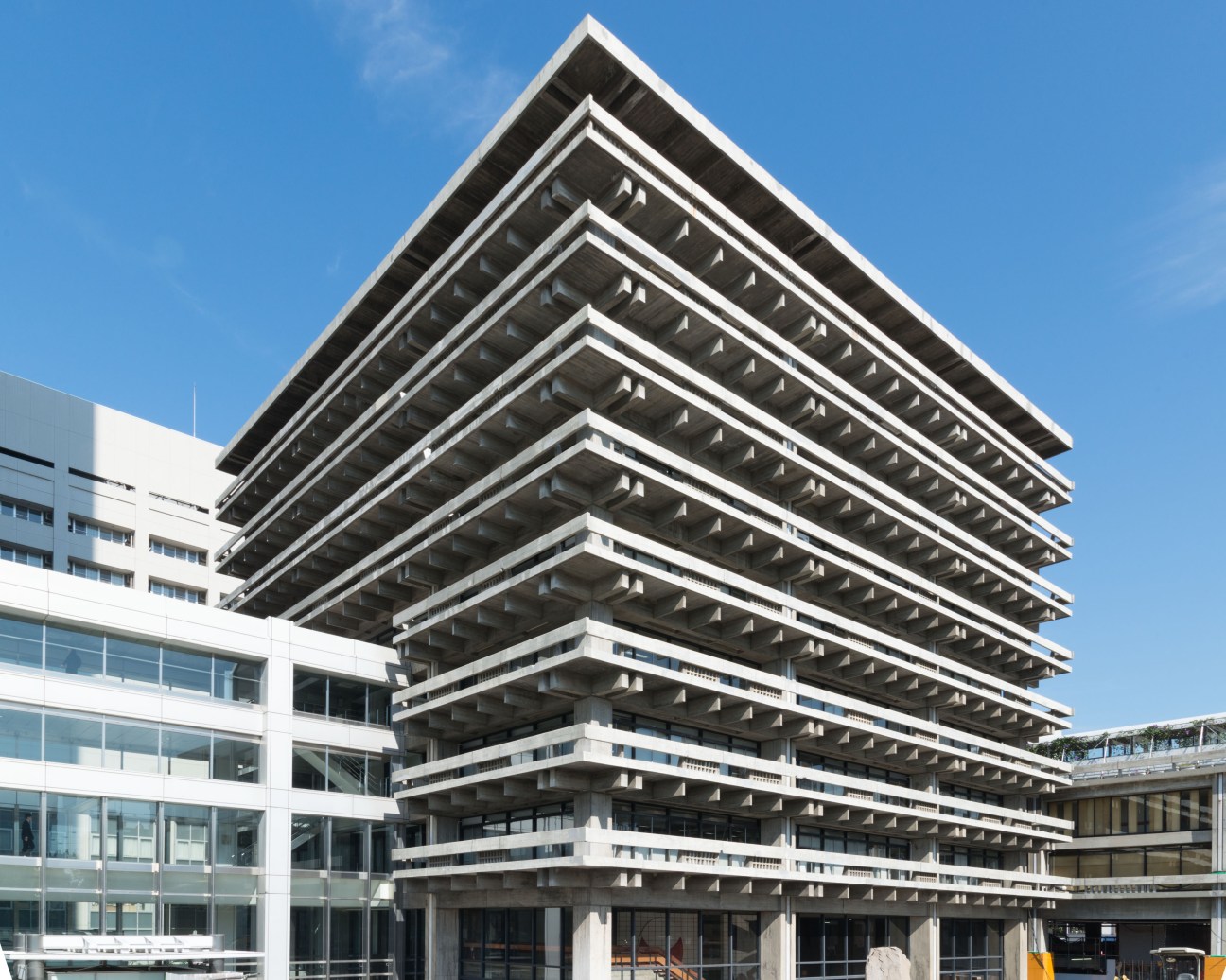
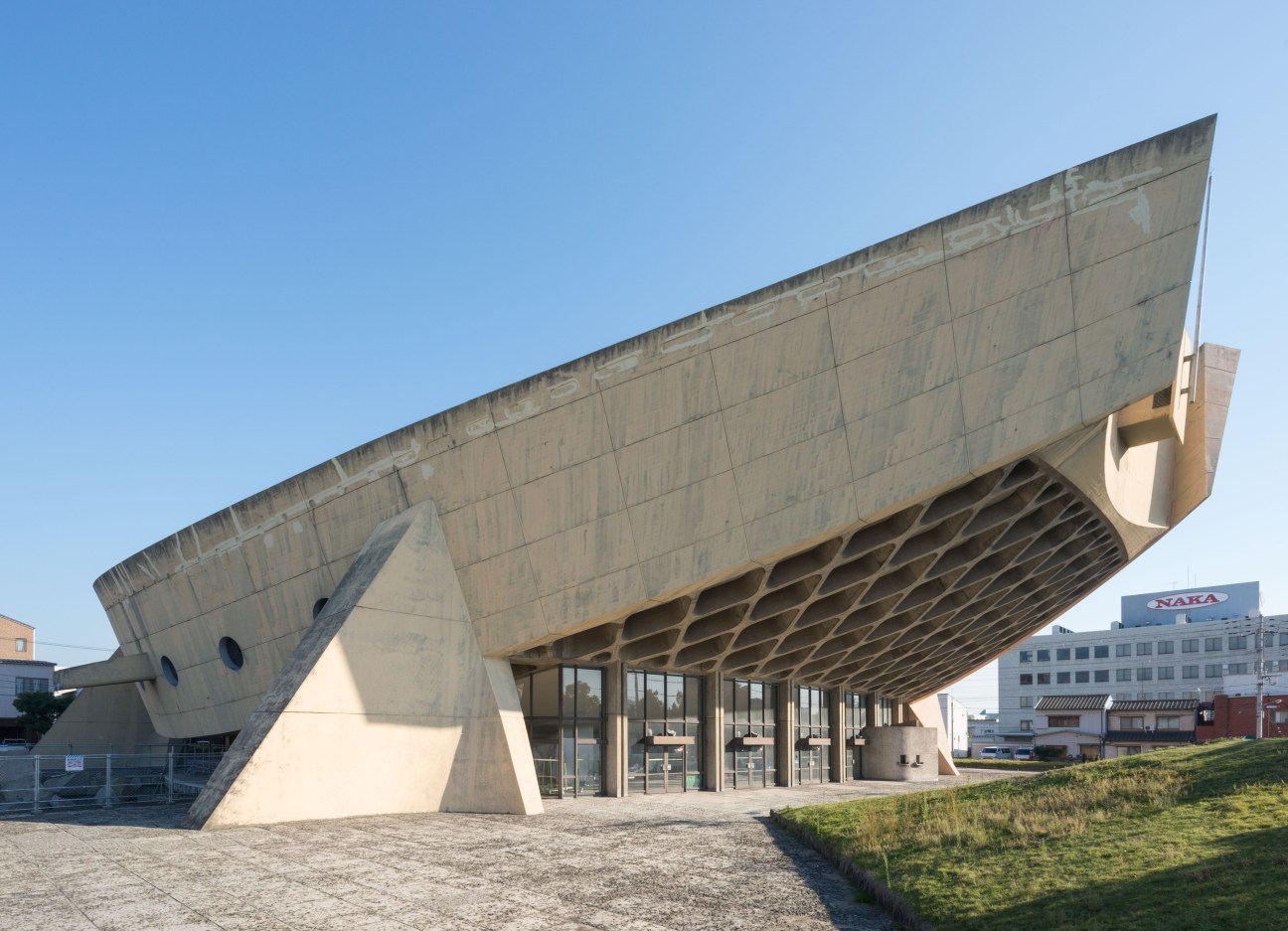
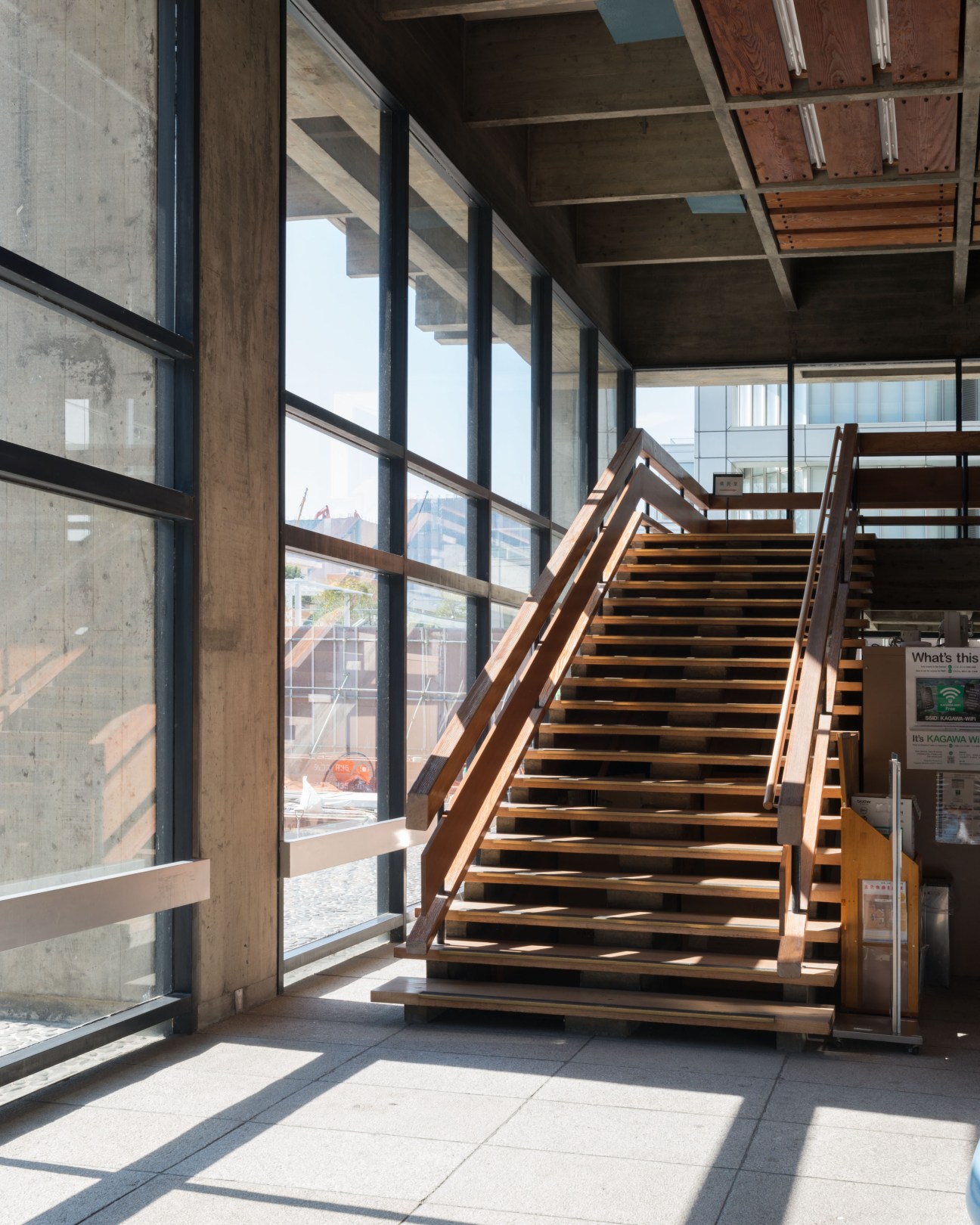
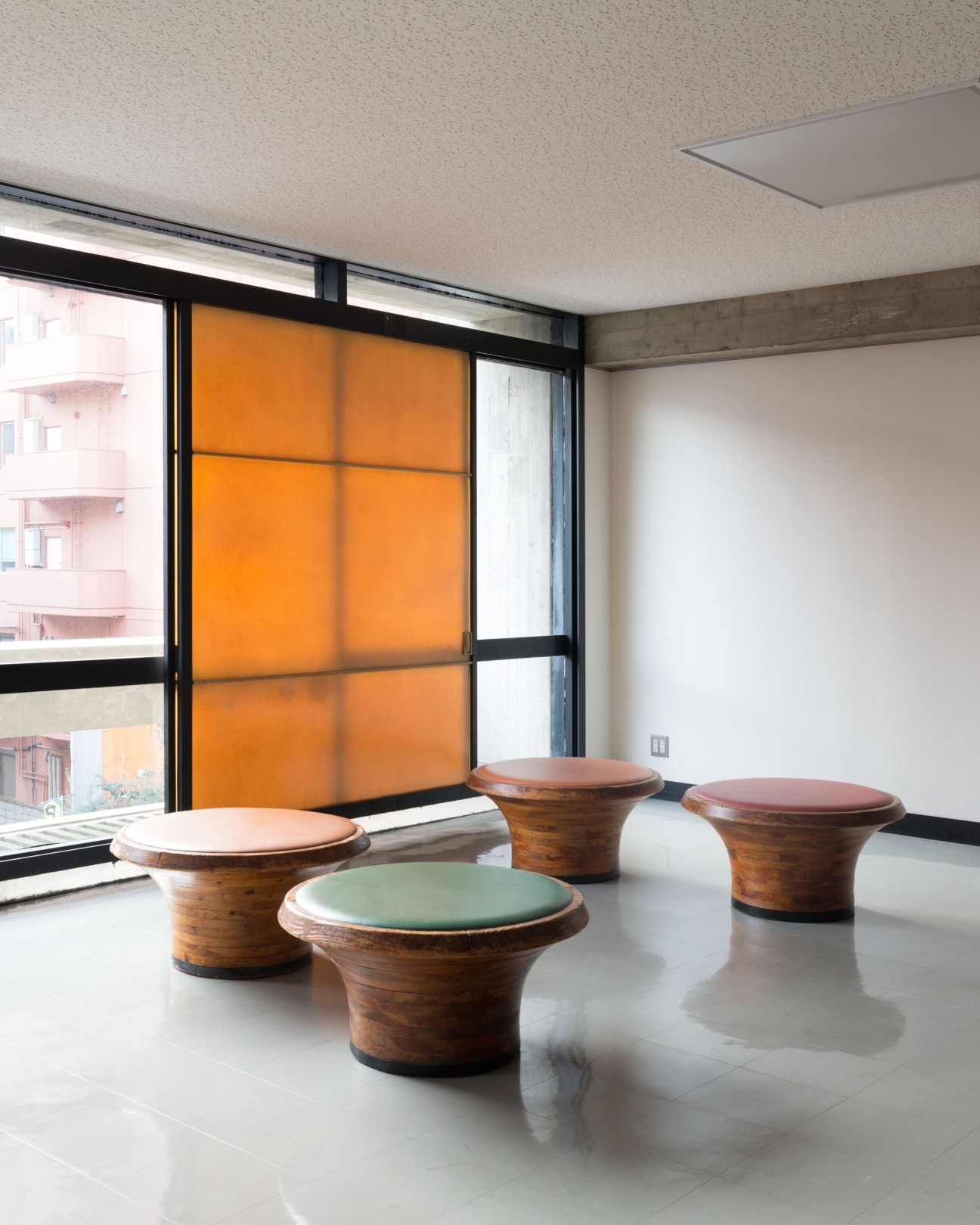
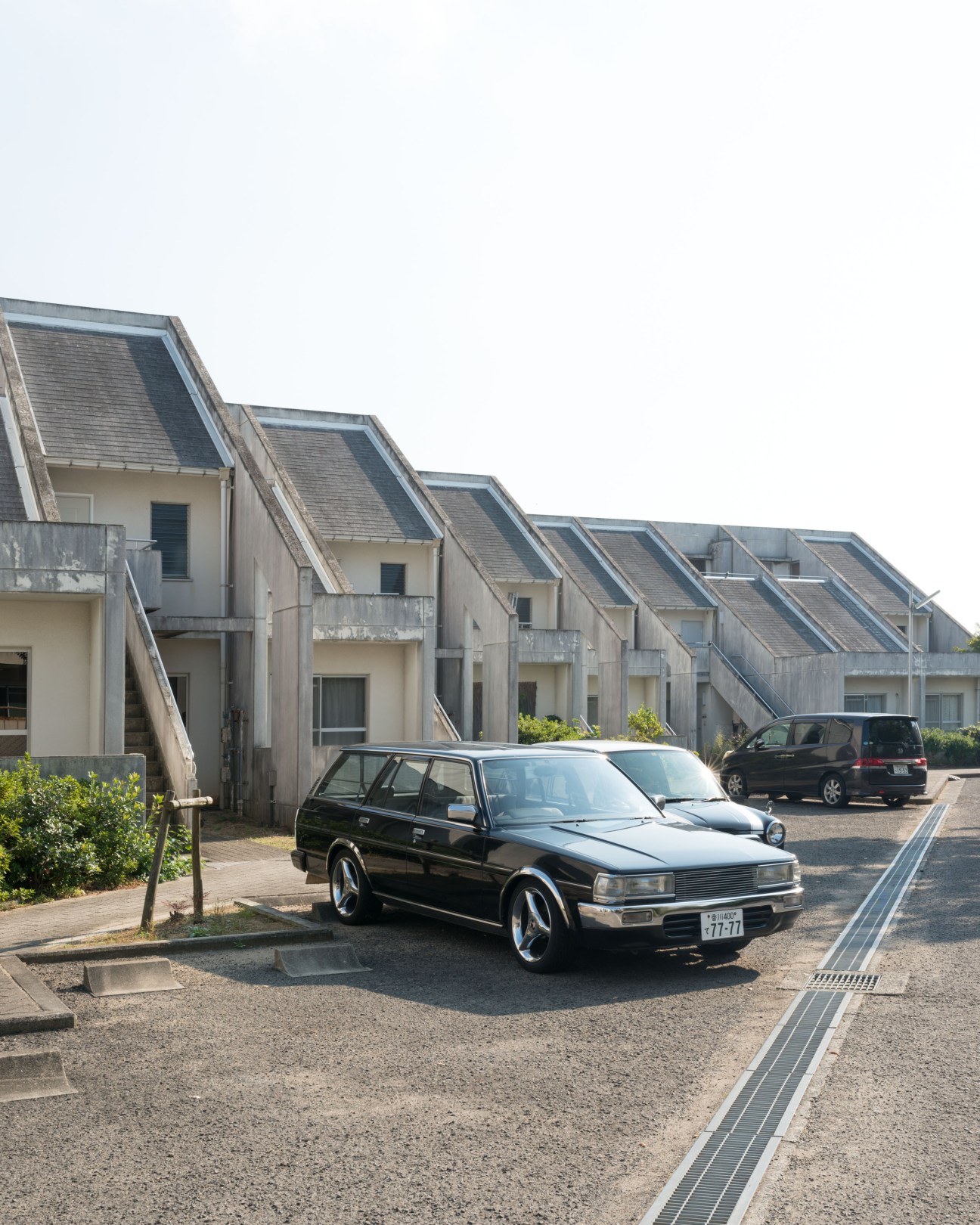
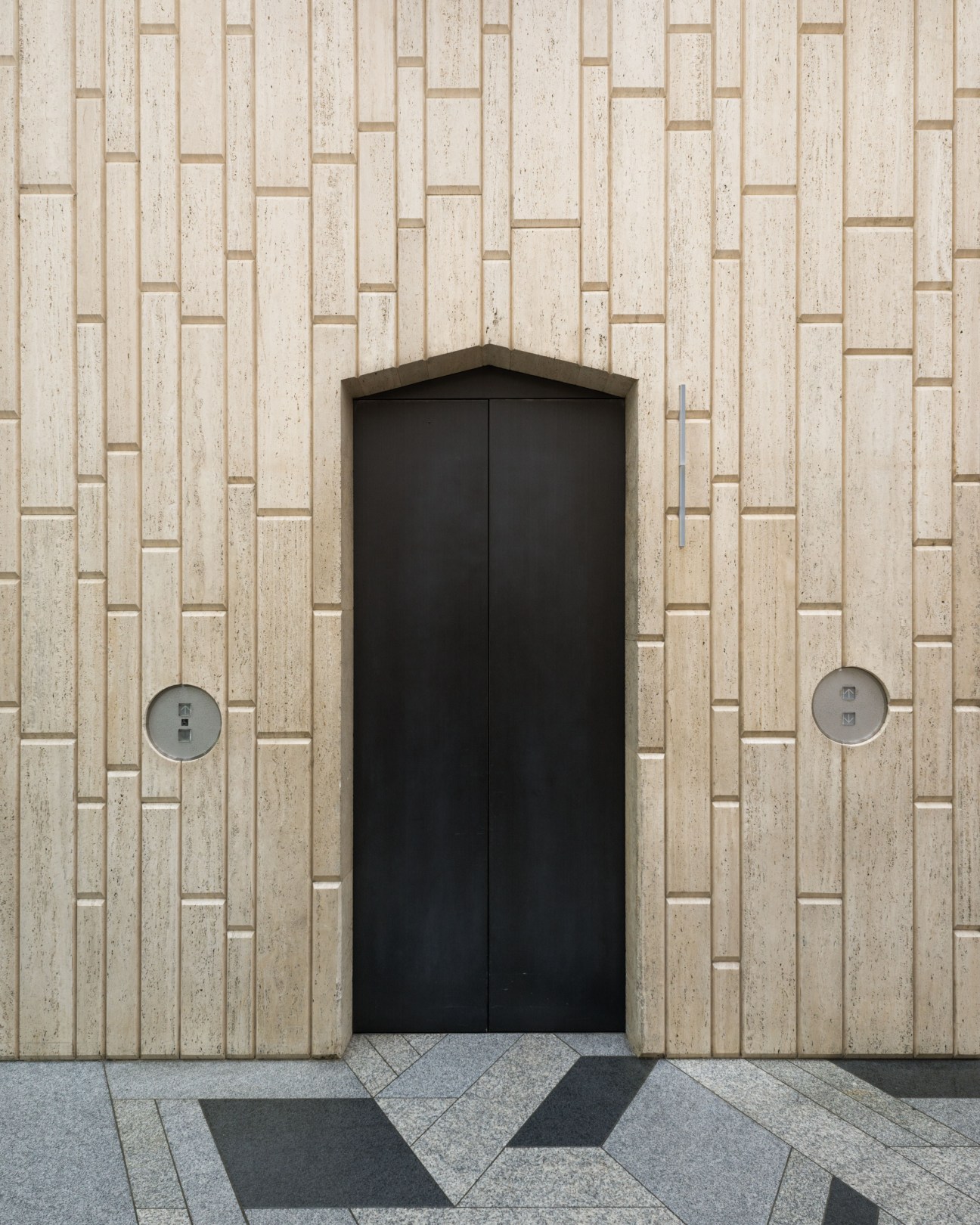
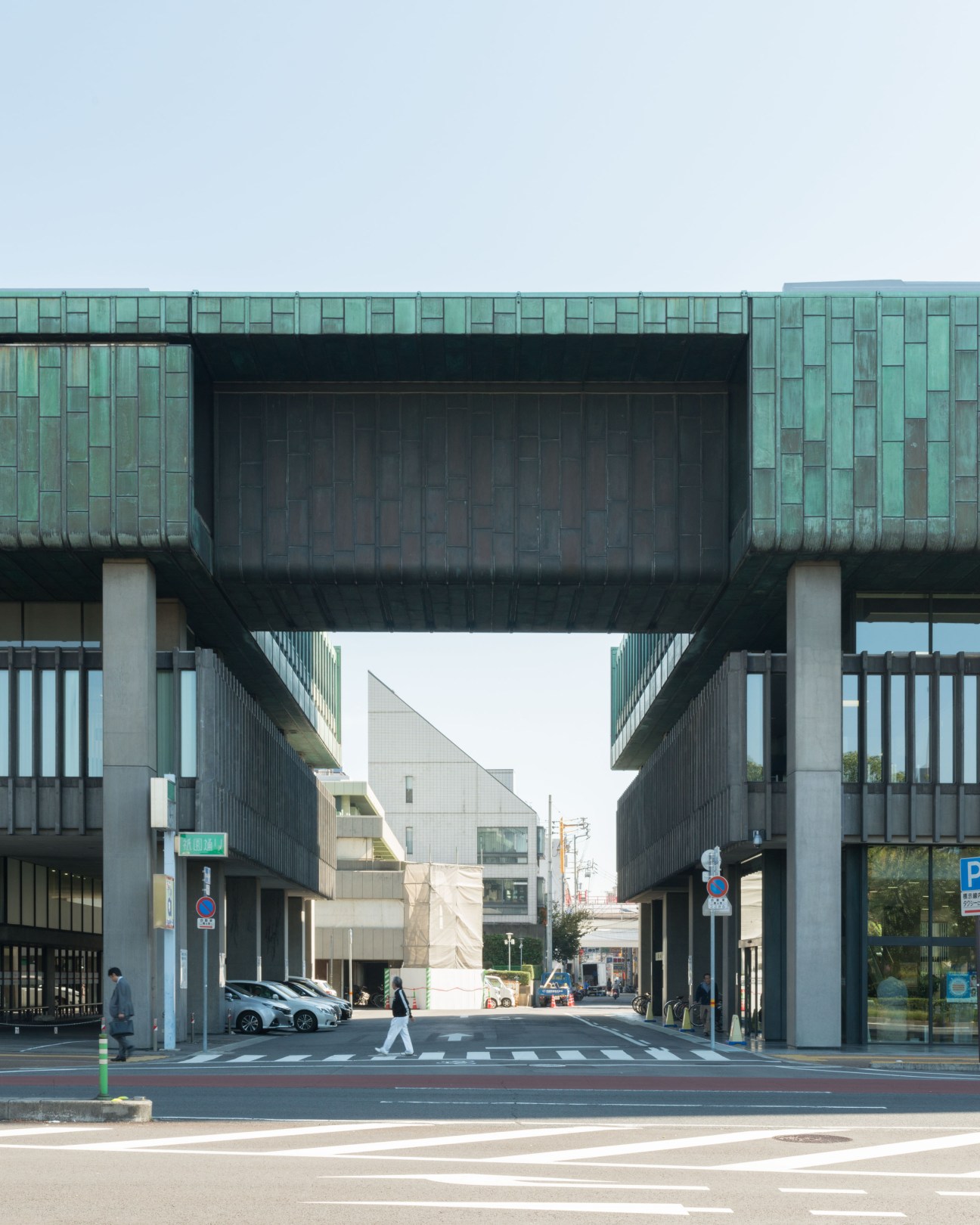
Within days of the gym’s closure, Kawanishi launched the Association for the Preservation of Kagawa Prefectural Gymnasium and began enlisting other architects to lobby officials and alert the public. In October 2017 the gym was placed on the World Monuments Fund’s 2018 Watch List of at-risk buildings – a positive sign, says Kawanishi. “It represents Japan’s highest level of building and design expertise,” he adds. He walks around to one side to show how the sloping roof channels water from the rooftop into a pond. “If I were the governor I would save it for future generations. It’s a waste not to.”
Kawanishi could easily be talking about Takamatsu’s other architectural highlights. In the early 1960s, Tange designed a housing complex for low-income families calledIchinomiya Danchi, which is still in use but in need of renovation. In the city’s Chuo Koen (Central Park), playground equipment designed by US sculptor Isamu Noguchi occupies a shady spot. And towering over the park’s western edge is 114 Bank from 1966, with its patchwork skin of oxidised copper plates, overlapping layers of concrete and glass, and a travertine-and-marble lobby by sculptor Masayuki Nagare.
Yet one of the odd facts about visiting Takamatsu is that the city’s architectural heritage is a mystery to many of its residents. Citizens will proudly tell you about Marugemachi Dori, the covered shopping arcade that is the longest in Japan. But few have heard of Shiro-no-me, a coffee house near the arcade featuring a 55-year-old stone wall that architect Kunio Maekawa built to test his design for the Japanese pavilion at the 1964 World’s Fair in New York.
At the Kagawa Prefectural Budokan – a 1961 martial-arts venue that is a concrete exaggeration of traditional wooden carpentry – we encounter two firemen who are practising kendo. They are wielding bamboo swords in an airy hall beneath giant lanterns of wood and washi paper. It’s a stunning arena for their weekly routine. Masashi Yamanaka admits to knowing little about the building. “I have been coming here since I was very young. I have no idea what the martial-arts halls in other places are like, I’m just thankful that we have a public venue to use.”
Takamatsu’s citizens may have learned to quietly live within a unique and inspiring urban environment but recent preservation efforts are starting to put the city on the global design map. This could prove helpful for a place that ranks poorly in tourism stakes. It’s not easy for Takamatsu to market itself when the Japanese mainly associate the city with udon noodles, bonsai trees and a ferry to Naoshima, one of the remote islands in the Seto Inland Sea. Yet it’s this same cultural set who head to the contemporary-art museums on Naoshima that may start to flock to the modernist gems of Takamatsu – if the buildings are given the right exposure. Hopefully the preservation movement by both the government and the more design-engaged residents here can create positive tremors that are felt well beyond the city.
Attracting attention
With a population of 420,000, Takamatsu is the economic and cultural heart of Japan’s western island of Shikoku – but far from a tourism hotspot. A former fortress town led by a powerful samurai clan in the 16th century, the city is perched among lush lava-formed hills overlooking the Seto Inland Sea. Yet Takamatsu isn’t even ranked among the 100 Japanese cities with the strongest brand, according to the Brand Research Institute in Tokyo. Takamatsu’s modernist treasures and their contemporary allure may, therefore, help boost its reputation among a culturally engaged audience.
Muddy waters
The Ocean Cleanup
Delft, The Netherlands
The Great Pacific Garbage Patch between Japan and the US is a vortex of floating debris caught in ocean currents. In fact it is growing at such a rate that it will soon be visible from space. Yet because the patch is far from any country’s territorial waters, no nation is prepared to take responsibility for it.
This is where Boyan Slat comes in. The Dutch entrepreneur became aware of the extent of marine pollution on a Greek diving trip in 2011. Two years on he founded The Ocean Cleanup to rid the seas of detritus, starting with that problematic patch of the Pacific. “Most things in the world are getting better but pollution is getting worse,” says Slat. “This is one of the biggest problems that technology has to solve.”
After years of planning, the Delft-based non-profit is ready to deploy 1km-long barriers around the patch designed to trap rubbish. Boats will collect waste to be recycled ashore. He estimates that his system will clear 50 per cent of the vortex within five years. Eventually systems in waterways might stop rubbish from entering the ocean. “Our promise is to clean the ocean. In 2018 we have to show it can be done,” says Slat, who aspires to be well on the way to achieving his goal by 2020.
theoceancleanup.com
Forecast comment: There are those who view the project as naive but it takes idealism to make something as big as this happen. Boyan Slat’s fearless enterprise is ingenious in its bold vision.
The Plastic Bank
Vancouver
Technology entrepreneur David Katz established The Plastic Bank in 2013. He was convinced that incorporating a commercial incentive to clear the oceans of plastic would encourage people in developing countries to view the material in a different way.
“We turn plastic into a currency,” says Shaun Frankson, the organisation’s chief strategist. “People can pick it up to pay for school tuition or health insurance. What we’re seeing is that the more plastic we can get into people’s hands, the less it’s seen as waste that gets thrown into waterways and the more it’s seen as something of value.” The model is intentionally simple: people are encouraged to collect plastic waste and take it to a Plastic Bank station. There the material is exchanged for cash or a commodity that the collector might want, such as sustainably sourced cooking fuel. The Vancouver-based organisation has 30 stations in Haiti and has launched in the Philippines, with projects in Brazil and Indonesia to follow in 2018.
plasticbank.org
Forecast comment: Not only is this international initiative tackling the issue of polluted waters but it’s also promoting entrepreneurship and offering a source of income for participants.
Ecoalf
Madrid
Words such as “waste” and “plastic” usually bring to mind landfill sites, a perception that Javier Goyeneche is trying to change through his sustainable fashion brand. “We don’t need to dig deeper for resources, we need to transform wasteful into useful,” says Goyeneche, who launched Ecoalf in 2009. The Madrid-based brand, with bricks-and-mortar shops in the Spanish capital and Berlin, sells everything from T-shirts to trainers. The diversity of its product range is reflected in the variety of recycled materials used to make the fabrics, including tyres, coffee grounds and plastic.
In 2015, Goyeneche collaborated with 160 fishermen in Spain to collect waste for his Upcycling the Oceans initiative, turning rubbish into clothing and accessories. Two years later more than 3,000 fishermen are involved, with recycling done locally to avoid creating more waste. The project is now launching in Thailand, where it will be implemented in Ko Samet, Phuket, Ko Tao and Ko Samui over the next three years.
ecoalf.com
Forecast comment: This business takes recycling to the next level and proves that sustainable clothing can be fashionable. Its manufacturing method is one that other fashion brands should imitate.
The world’s biggest beach clean-up
Mumbai
Since October 2015, lawyer and activist Afroz Shah has been spending several hours every weekend picking up rubbish from Versova Beach in Mumbai, on one of India’s most polluted coastlines. Shah’s efforts have quickly gained traction and have since attracted more than 3,000 volunteers largely recruited via word of mouth, from residents to politicians and Bollywood stars. Within the past few years the grassroots group has collected 9,000 tonnes of rubbish from the 2.5km stretch of beach.
Shah’s approach to dealing with the problem in the long term is simple: consistency is key. “Don’t make it an event,” he says. “When we clean our houses every day, do we make it an event? It’s a daily affair whether you like it or not. Cleaning and protecting the environment must also be like this.” He will soon be extending his efforts to include rivers and mangrove forests across India.
Forecast comment: Shah’s efforts show that even one person can make a big difference, especially when social media has made it easier than ever before to mobilise communities behind a good cause.
Project Aware
California
The motto of non-profit initiative Project Aware, formed in 1989, is “Don’t let your dives go to waste”. Its Dive Against Debris project runs in 50 countries and has collected more than 500,000 pieces of rubbish. “I never dive without a net,” says biologist Katerina Topouzoglou. “There’s always something to find.”
Danna Moore, director of global operations, adds: “We provide valuable information about the debris to inform policy change.” By analysing aquatic rubbish, Project Aware is bringing the uncomfortable truth to the surface, one dive at a time.
projectaware.org
Forecast comment: Project Aware brings together people from all around the world and provides everyone with the chance to play a part in freeing the ocean from debris.
Also making waves
1.
Bureo
Chile
This Santiago-based business makes sunglasses and skateboards from recycled fishing nets. As part of its Net Positiva project, fishing communities are offered financial incentives to drop off worn-out and broken nets for recycling at collection points, meaning the material can be reused while keeping the sea cleaner and safer for wildlife.
bureo.co
2.
Waste Shark
Netherlands
Ranmarine, a technology company specialising in aquadrones, has come up with a swimming robot that ingests rubbish: the Waste Shark (don’t fret, it looks nothing like a great white). This autonomous, zero-emission vehicle can swim for up to 16 hours at a time and collects any type of rubbish floating in a designated area. It comes in two different sizes: one for urban waterways and one for the open sea.
ranmarine.io
3.
Mr Trash Wheel
USA
Since 2014, more than 670,000kg of rubbish have been removed from Baltimore’s harbour thanks to a googly-eyed interceptor known as Mr Trash Wheel. Created by John Kellet of waterways clean-up firm Clearwater Mills, the contraption sits at the mouth of the Jones Falls River and uses the current and solar panels to rotate its metal wheel and remove debris. With 13,000 followers on Twitter, Mr Trash Wheel also helps raise awareness of waterway pollution.
baltimorewaterfront.com
Style council
The fashion world treasures newness above all else. But predicting the next big thing is not as simple or as arbitrary as declaring that, next season, red frocks are in and acid-washed jeans are out. The prominent and enduring trends – as opposed to fads – often tally with wider societal shifts. Designers don’t design and shoppers don’t shop without reference to the world they inhabit. The behemoth of recent years, the trainers and “athleisure” movement, is fashion’s answer to our era of healthy living: we eat ethically sourced food, drink green juices and wear fashionable running tops and trainers to the yoga studio (oh, and the pub too). But will this movement power across the next 12 months and beyond or will another trend take its mantle?
Athleisure has saturated the market and certain tastemakers may be ready to move on. But wearing trainers and tailored tracksuit bottoms is about more than how we look. These comfortable and functional clothes save us time and effort. We will not see trainers disappearing any time soon (just look at how the stuffiest luxury shoe brands are adding trainer lines) because we will not readily give up a style of dress that aligns with our active modern lifestyles.
Yet this “healthy living” movement is evolving beyond athleisure. Customers are increasingly concerned with the sustainable sourcing of materials and transparency of production. We want to know where the food we eat comes from and the same goes for what we put on our bodies. The new h&m brand Arket uses recycled wool and each item bears a tag naming the factory where it was sewn; independent brands such as Paris’s De Bonne Facture do the latter too. Mentioning a country of production won’t cut it anymore; we want specifics.
More conspicuously, Gucci recently declared that it was going fur-free. The decision – made in response to its customers’ demands – will have a definitive impact. It is a statement from the world’s most talked-about brand signalling that consumers and the younger generation (Gucci has a huge Millennial fanbase) want ethically sourced products. Other labels will have no choice but to hew to this narrative.
At the same time it is likely that we will see some sort of riposte to athleisure. Fashions yo-yo: historically, periods of casual dress have been followed by ultra-formal stretches. (The hippie bellbottoms of the 1970s were followed by the 1980s obsession with big shoulder pads.) Industry figureheads such as Pitti Uomo’s Raffaello Napoleone have observed that in Italy, twenty-somethings are dressing more smartly than their parents. Even if men are not ready to embrace three-piece suits just yet, the agenda-setters will be smartening up at least one aspect of their wardrobe: a double-breasted blazer from Raf Simons’ collection for Calvin Klein, say, or perhaps a pair of pleated Ami trousers.
In Japan, Hirofumi Kurino, co-founder and creative adviser of United Arrows, is noticing signs of a rebuke not to athleisure but the flashy streetwear phenomenon championed by Balenciaga and others. “Street luxury is on its way out in Japan,” he says, adding that he looks at what 22-year-old kids are wearing on the streets of Tokyo. “Young people have seen this style on too many celebrities in the US so they want to find something else. They are fed up of big logos.” Their solution is a return to the mix-and-match style of the 1990s: distressed jeans and vintage blazers are being donned as a tonic to the glut of skater sweaters splashed with luxury logos. This “post-brand” phase, as Kurino calls it, takes its cues from the city’s music scene. “In Tokyo there is currently a revival of early-1990s hip-hop. Music and fashion always come together here.”
According to Kurino contemporary designers who lend themselves to mix-and-match dressing are Japanese labels Undercover and Takahiromiyashita TheSoloist and UK brand JW Anderson. Each has a distinctive yet fairly low-key aesthetic, whether it’s TheSoloist’s rock’n’roll leather jackets or the “preppy British” feel of Anderson’s new collection, with its striped bags and chunky Aran knitwear.
As one of the key people at United Arrows, Kurino’s prediction that this trend will catch on is almost a certainty. According to Tokyo-based journalist W David Marx, “In Japan the directionality of trends is top-down: they go from the shops and magazines to the streets. So if a retailer such as United Arrows says a trend will happen, it will. They have huge power to direct consumers to items.” This power is easily explained: in London or New York the most influential retailer might be an individual department store or boutique, whereas United Arrows owns 88 shops in Tokyo. It is an omnipresent force.
Japan may have its idiosyncrasies but buyers in other markets share Kurino’s view about the defining look for the year ahead. Mehmet Deniz, menswear buyer at German department-store group Kadewe, also notes that 1990s-style clothing will be a major movement. However, he sees other shifts on the horizon too. As China’s growth picks up again and the country’s middle class prospers, designers and retailers will quickly respond. “There are more Chinese-style designs for the forthcoming season,” he says. “Some [European] designers have changed the length of the trousers or fits; they’ve adapted their pieces for this market.” On a recent tour of designer showrooms in Paris we noticed that certain rails were dedicated to Chinese buyers. Often they were signposted by big fur coats and ornate prints and were a marked aesthetic departure from the rest of a brand’s collection.
China’s renewed spending power is an opportunity for everyone. “We are already starting to see more Chinese customers coming to Kadewe,” says Deniz, adding that there are specific items in his collection that will appeal to Chinese shoppers in the year ahead, such as a scarlet Valentino bag.
Fashion trends have a certain arc. They start with individuals who are usually in their twenties, work in music or art rather than as hardcore fashion bloggers and have a knack for adopting a style before anyone else. Their look trickles down to the fashion crowd and then, after a period of time, hits mainstream audiences. If it chimes with something bigger – such as aligning with a popular type of music or responding to market forces – it will have legs.
Laugh all you want at claims that the next big thing will be 1990s grunge but there will come a time when, consciously or not, you will be filling your wardrobe with stonewashed jeans and flannel overshirts. By then the bright young trailblazers will have had their sights set on something else for some time.
What the experts say you’ll see in 2018
1.
Rhyton trainers by Gucci
2.
Short-sleeved camp shirt by Gitman Vintage
3.
“Cowboy-style” boots by Calvin Klein
4.
Plaid overshirt by Undercover
5.
Black jeans by Takahiro Miyashita TheSoloist
What we think you should buy in 2018
1.
Olive-green rugby shirt by Magill
2.
Constructed blazer by Atelier Saman Amel
3.
Chunky knit jumper by JW Anderson