The Forecast
Up the Andes
Nuns hurry across cobblestone streets towards Cuenca’s blue-domed cathedral as schoolchildren in pinafores cycle by. At first the city, which sits 2,500 metres above sea level and is the capital of the southerly Azuay province, appears isolated; a place time forgot. But the mountainous spot in the nation’s south is home to an increasingly global gathering.
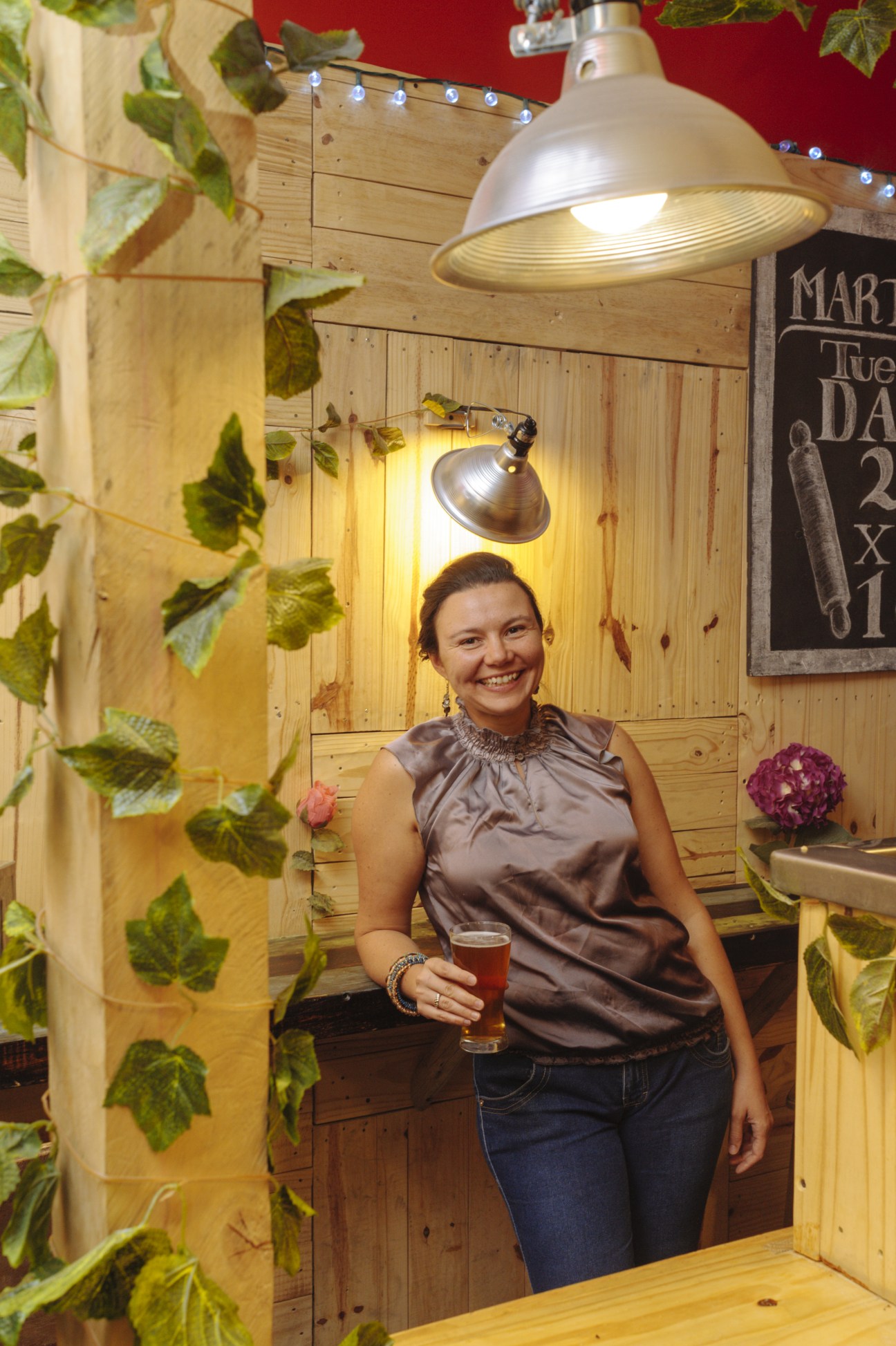
In 2013 Deborah Debas and her husband Mathieu, both from Montréal, established their craft beer brand in Cuenca rather than the capital Quito, which sits on the equator 450km further north. Nórdica ale is a hoppy number from a brewery a short drive from their home and the French Lycée, which their two children attend. The couple are part of a cadre of eight independent brewers in Cuenca – up from three when they came to market in 2014. “I like it here because it’s still very family orientated,” says Deborah. “People stop for lunch from one to three because they go home then return to work.”
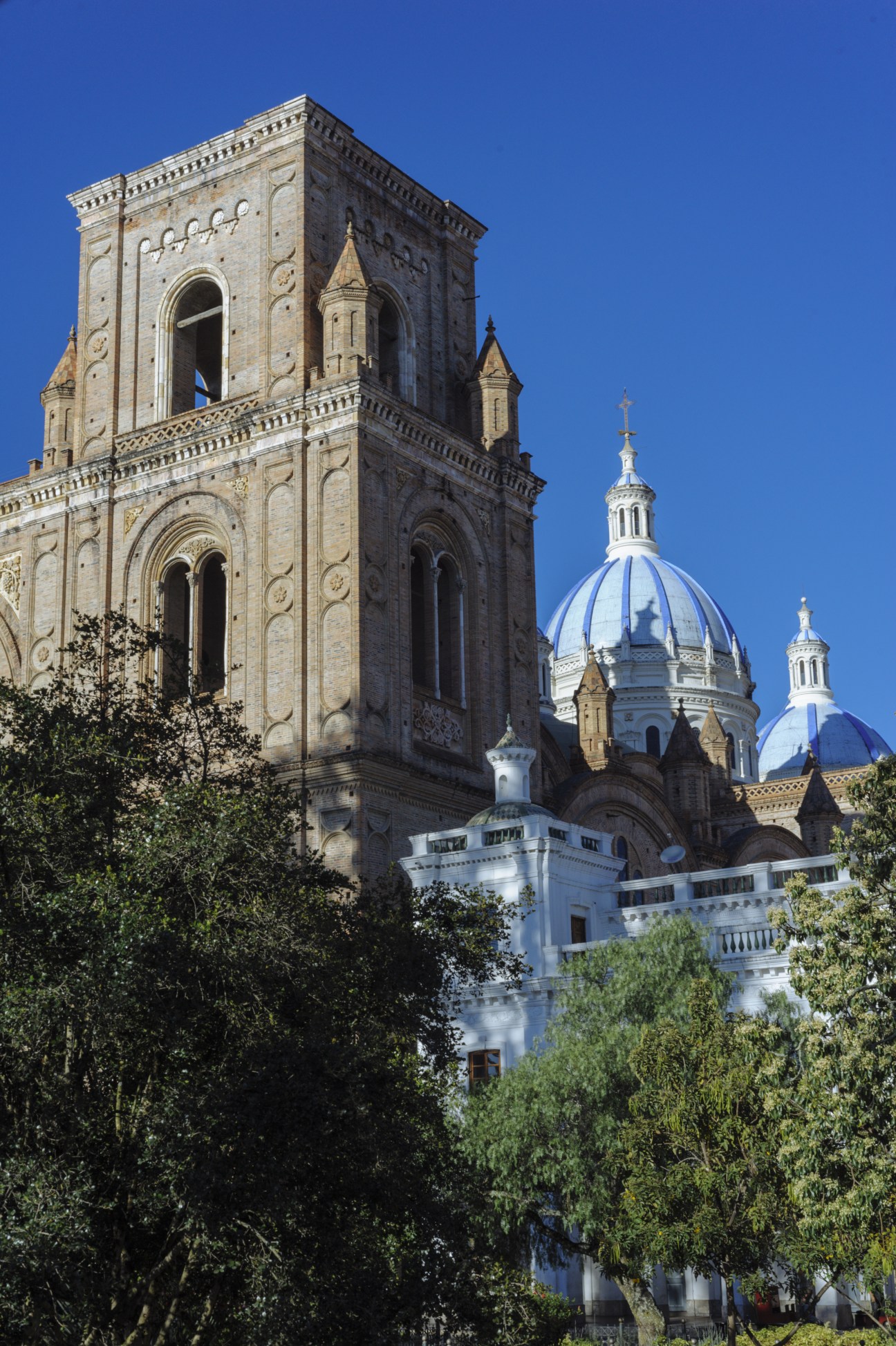
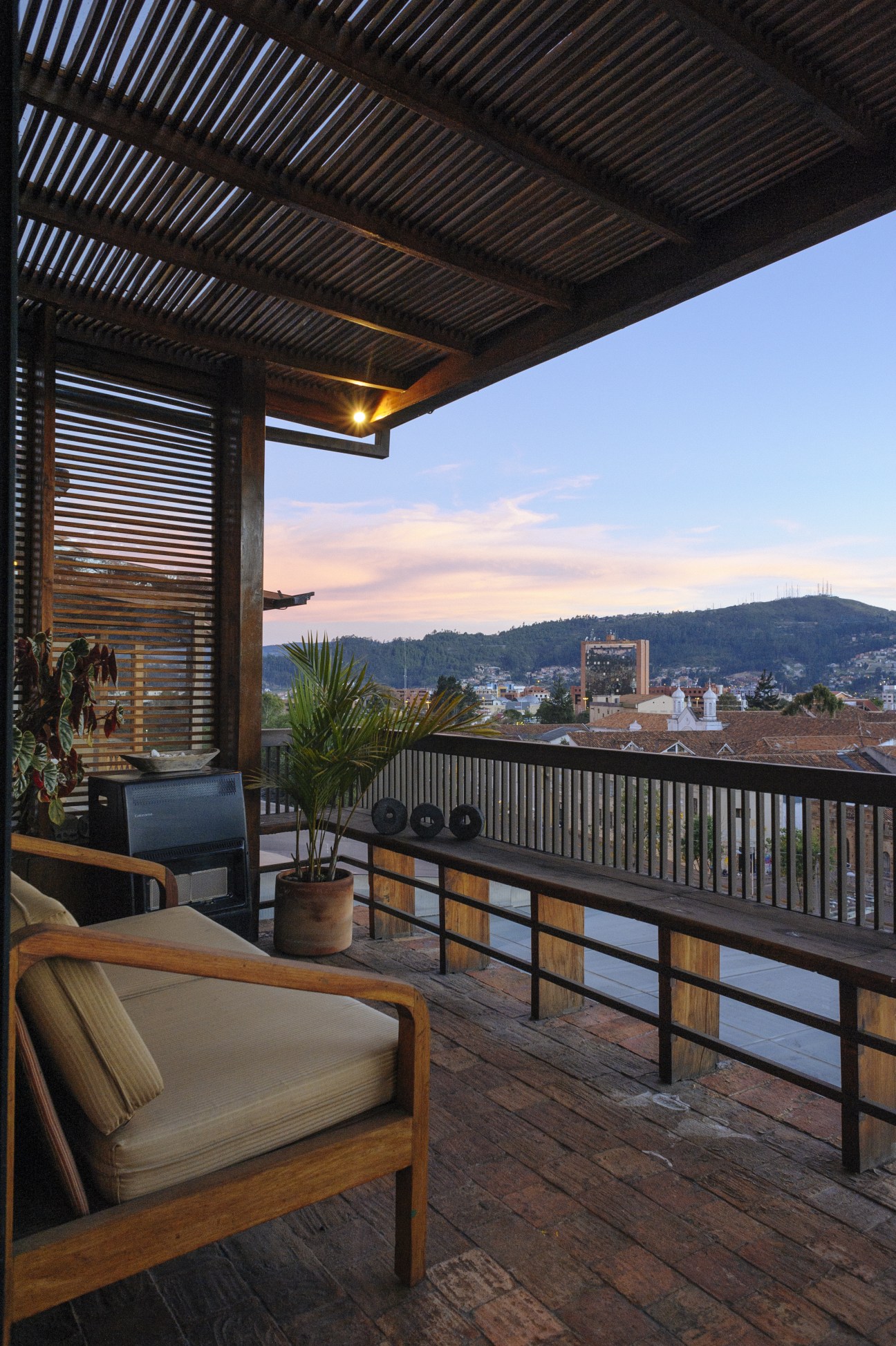
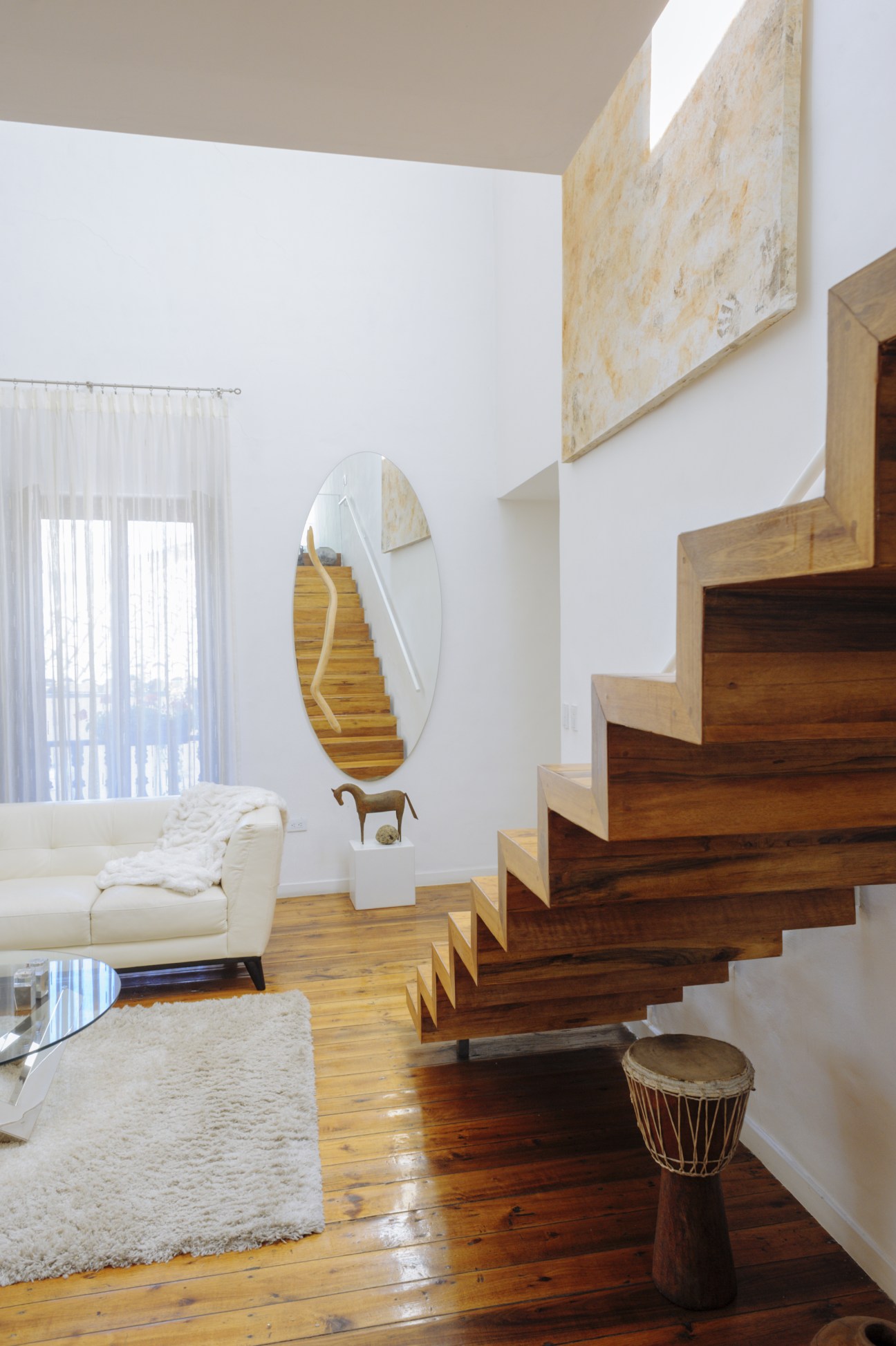
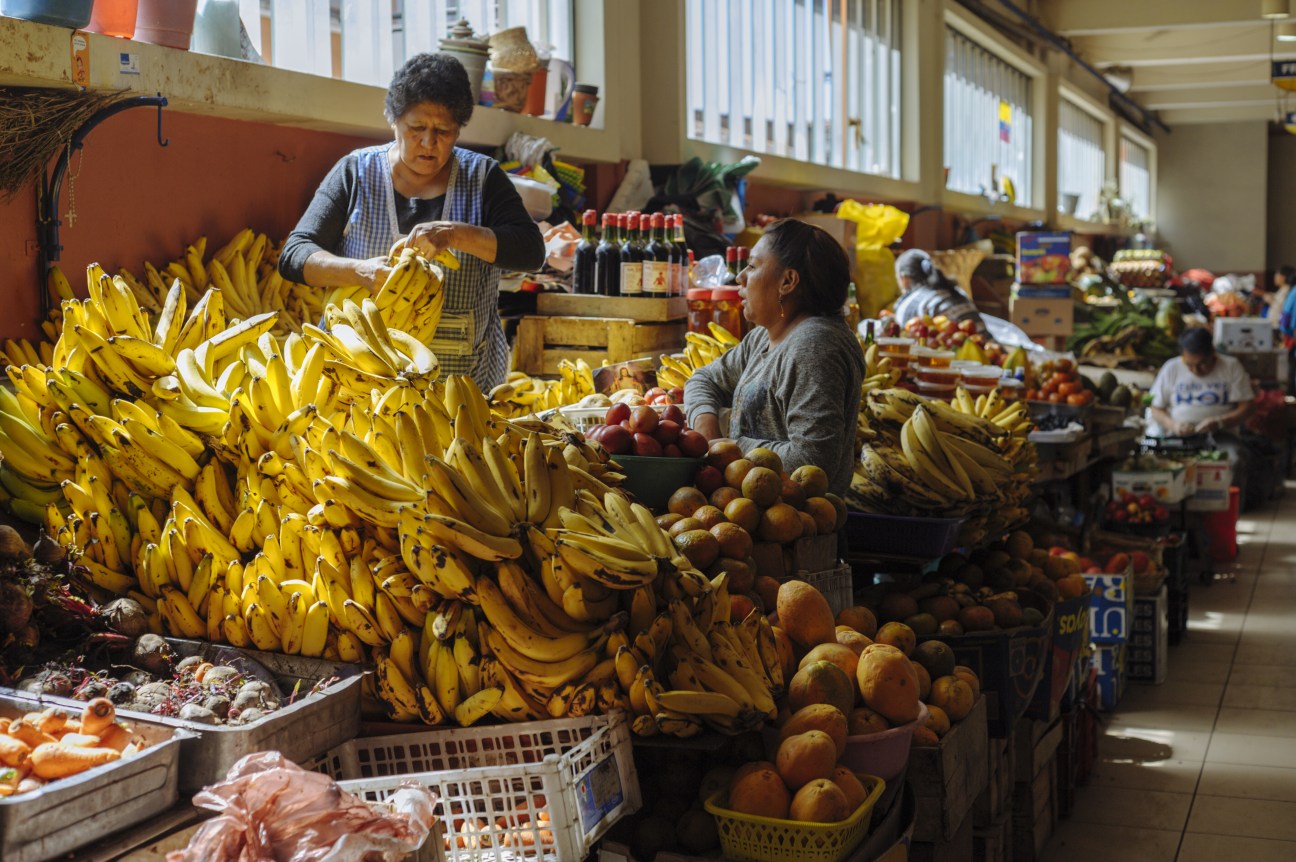
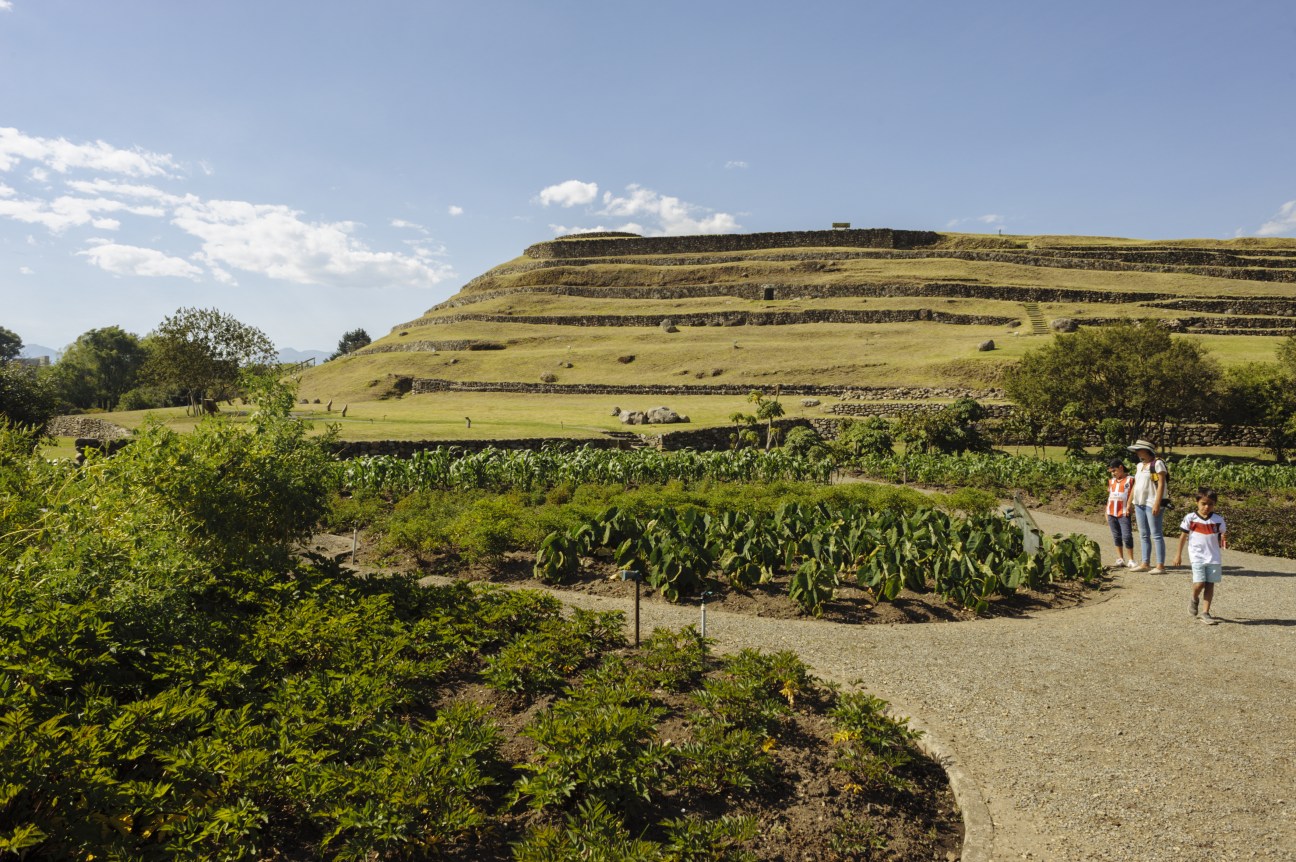
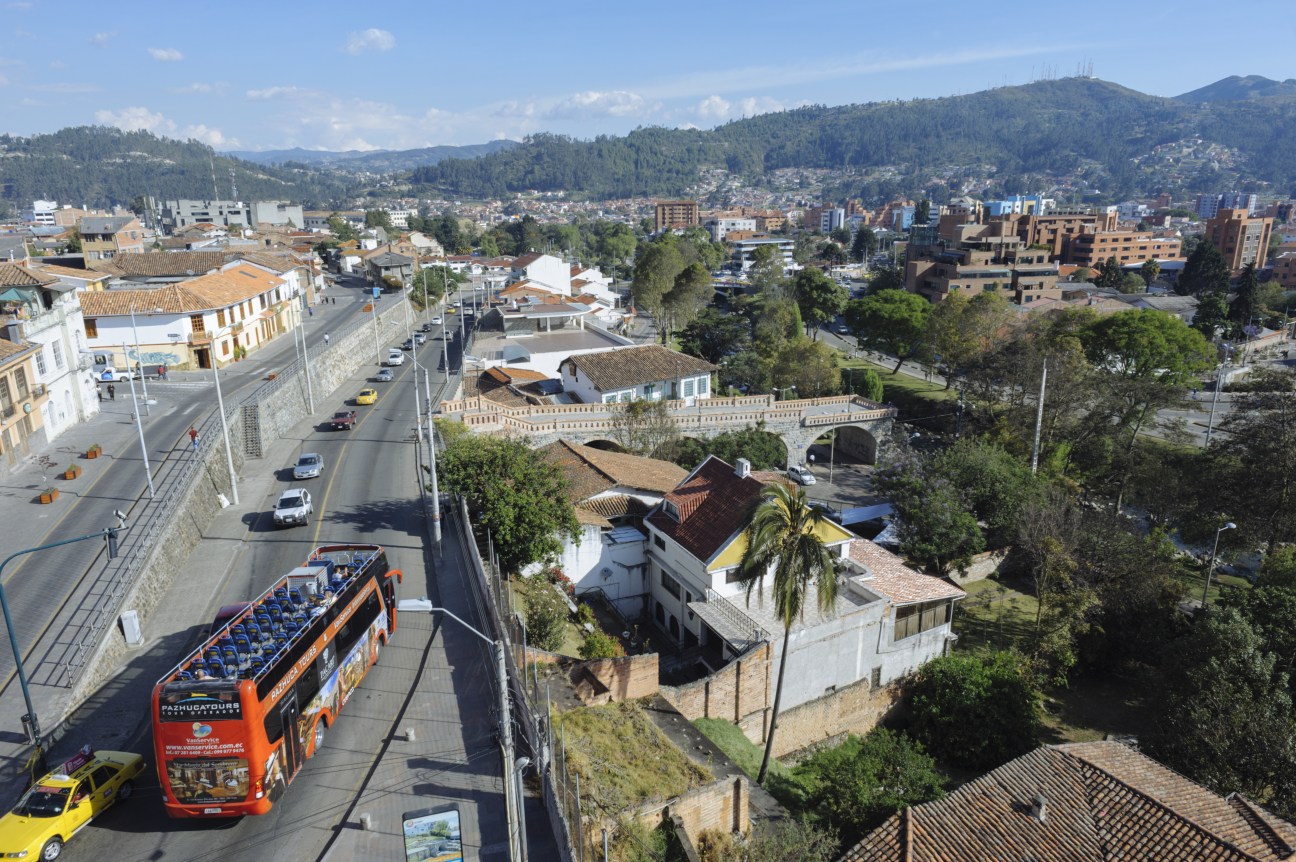
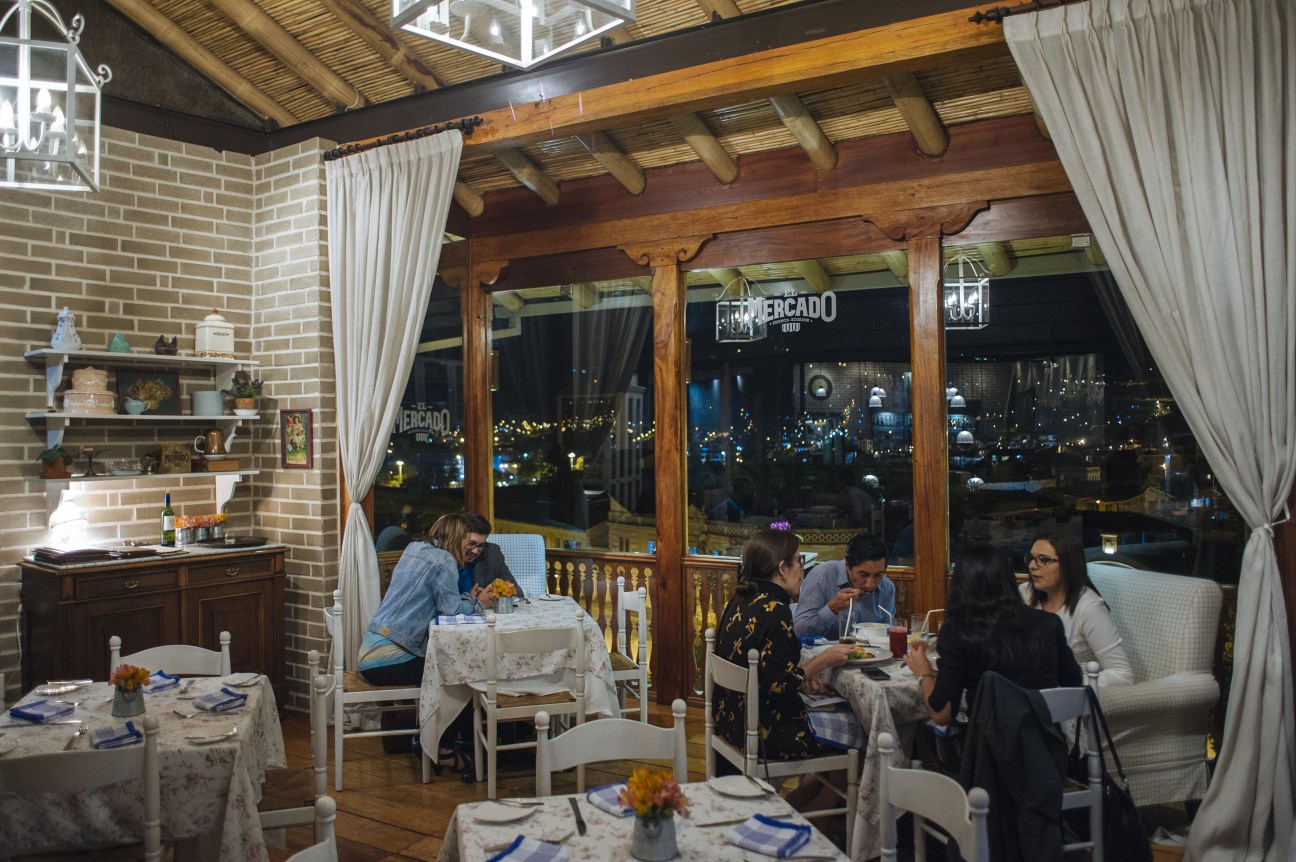
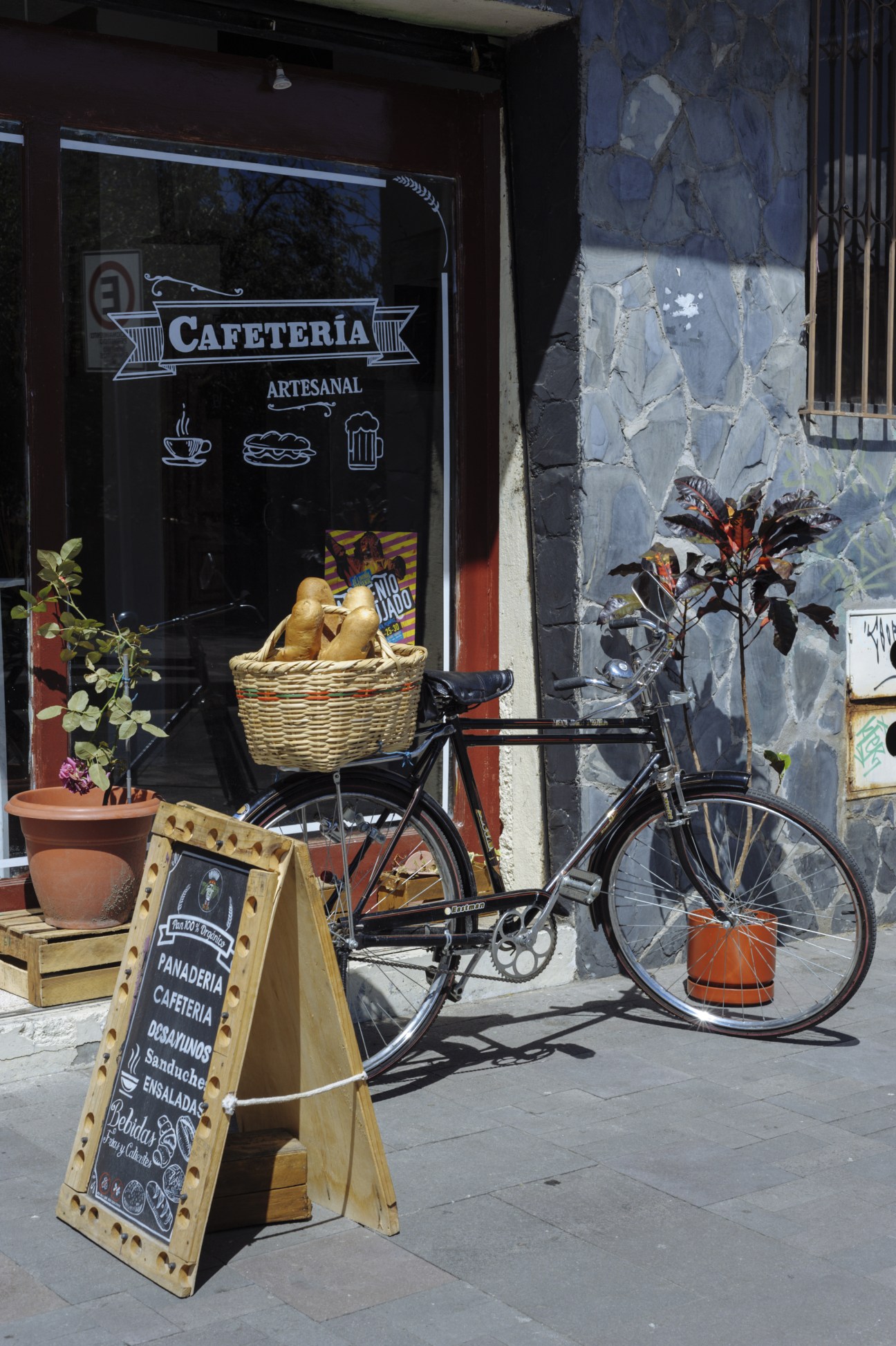
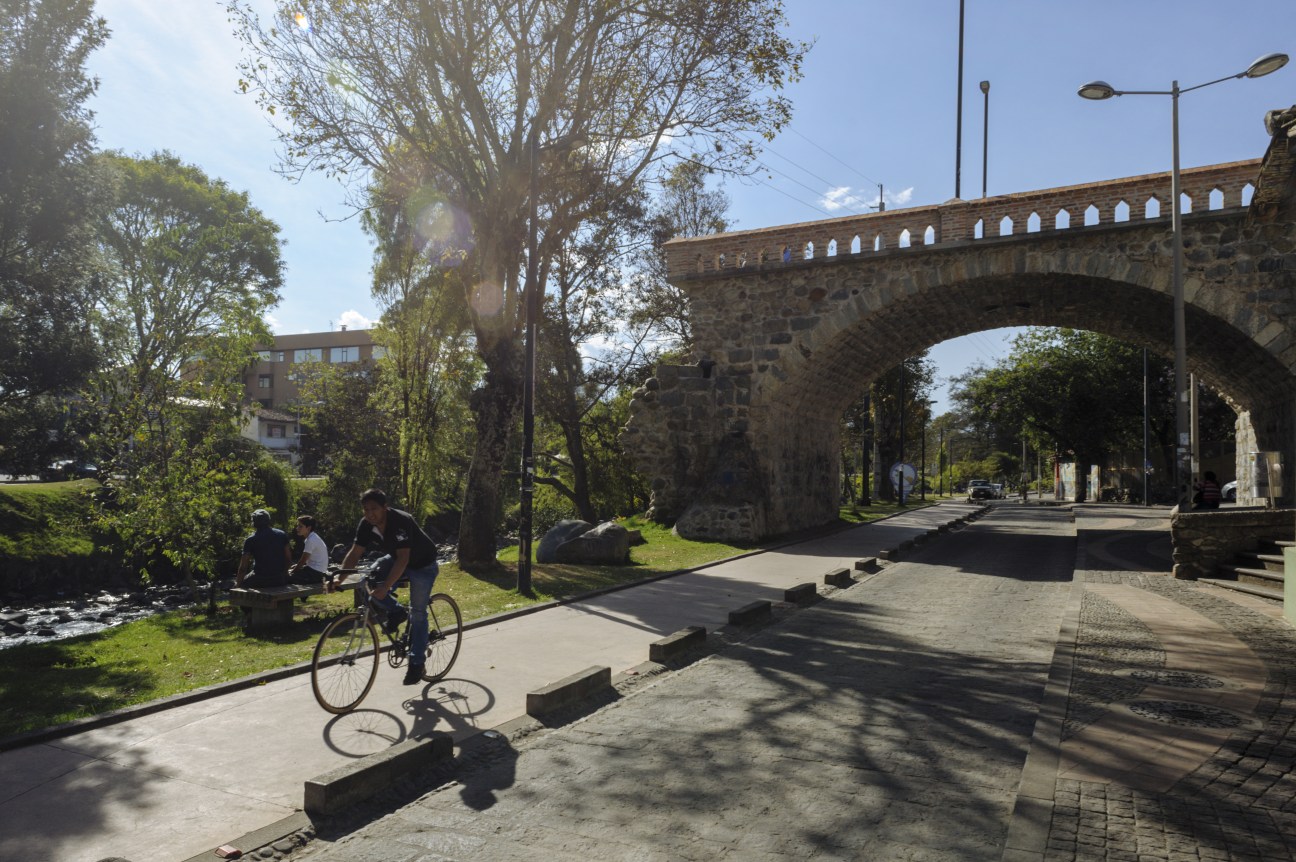

Residents are frequently found gossiping outside traditional whitewashed buildings, standing beneath cast-iron balconies that are laden with geraniums. The reddish roofs are a reminder of Cuenca’s Spanish colonial heritage. Other nations find it an attractive place to call home too: an estimated 5,000 North American and European expats moved here in the past six years.
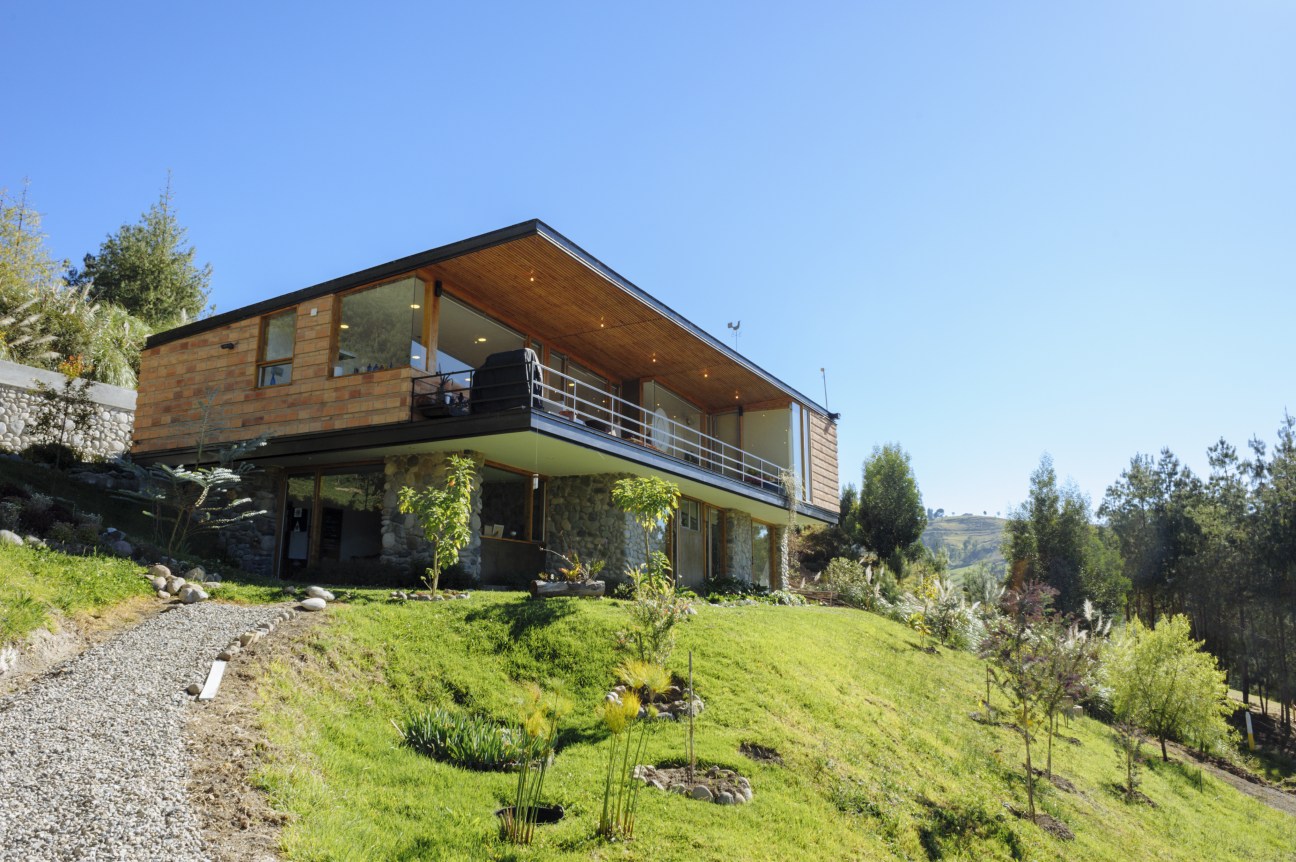
Quality housing, in the form of sturdy low-rise apartment blocks with communal gardens, has sprung up along the River Tomebamba in the wake of a devastating flood in 1993, as has a decent high-end hotel: the Oro Verde. Since then dozens of coffee houses and independent retailers have appeared and so developers have pumped big bucks into residential housing; more than 30 large projects were started in 2013.
Frequent flights to Miami and Fort Lauderdale take nine hours from Cuenca’s international airport, making it a potential sanctuary for anyone fleeing a Trump presidency; business hubs such as Bogotá in Colombia can be reached in four hours. Emigrating here is a fairly easy business too and there are clear benefits over other Latin American destinations: Ecuador uses the US dollar and does not tax Americans’ social security income, plus property taxes are low.
New business is not limited to foreigners. Xavier Martinez, founder of restaurant Anima, thinks the arrival of international diners is influencing what Ecuadorian entrepreneurs can offer. He and his brother Sebastian, who trained as a chef in Spain, also set up a high-end catering business in 2016. They belong to about 50,000 businesses in the Azuay province with fewer than 10 employees each.
Set across a simple grid plan, distances seldom exceed 5km from any point in Cuenca’s valley, although traffic is becoming an issue. An electric tram system to help alleviate congestion is currently under construction with a $232m (€215m) government investment. And despite the city’s altitude, temperatures rarely fall below 10c or rise above 21c. This milder climate, affordability and a busy calendar of cultural events continue to attract new faces from Quito and Latin America at large – not to mention the likelihood of a few canny US émigrés to boot.
Strange bedfellows
Airbed & Breakfast. Few would’ve guessed that the concept of crashing at a friend’s for a night and chipping in for a bottle of wine as thanks would go from pioneer to prospector and eventual mine owner of the “sharing economy” – the industry that has little to do with sharing and much to do with old-fashioned commerce.
But what is the hospitality industry doing to cope with this absurdly successful phenomenon, which is picking its pockets in plain sight? Well, not a lot if you are a multinational chain that relies on business bucks, a staple offering and clients who balk at the mention of Airbnb. Smaller-scale independents, however, are met with an enormous challenge when their property is being encroached upon by any number of Airbnb’s two million listed rooms in one of 34,000 cities across the 191 countries in which it operates.
Lukas Hirsch, co-founder of the soon-to-open Loro hotel in Rio de Janeiro’s Lapa district, is circumspect. “Local integration is key to tackling the growing Airbnb market. Hotels need to open their doors to the community around them,” he says. “We have moved beyond the criteria of cleanliness and service – these are a given. We put emphasis on proactive communication to help guests explore.”
“Don’t go there. Live there” is Airbnb’s strapline and if you’re the type who thinks that staying in someone else’s bed or getting stuck to their shower curtain is experiencing a city like a local, then the very best to you. But for the rest of us who understand that having a local experience is very different from living it, staying in a hotel with impeccable service and knowledgeable staff will always outdo the alternative.
Sadly, many hotels sap their surroundings of energy by cutting themselves off from residents. Property developers are starting to think twice before incorporating hotels into their buildings for fear that they will dull the vitality of a precinct. For it to function as an active ambassador for a city, a hotel must use its location and citizens to build an appealing portrait of the community.
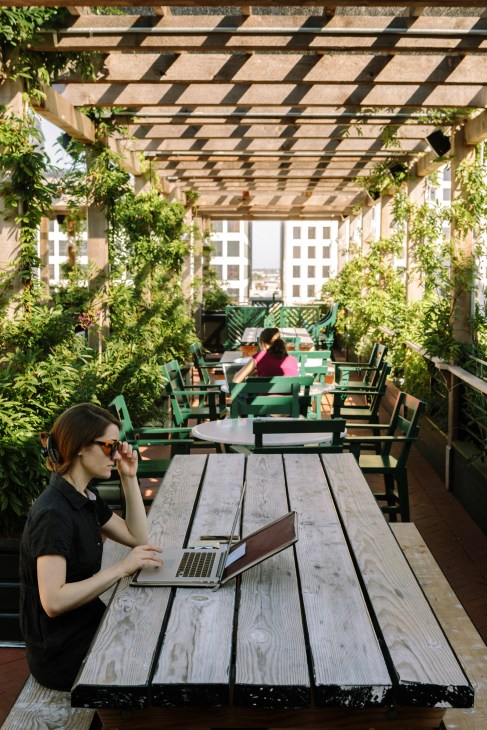
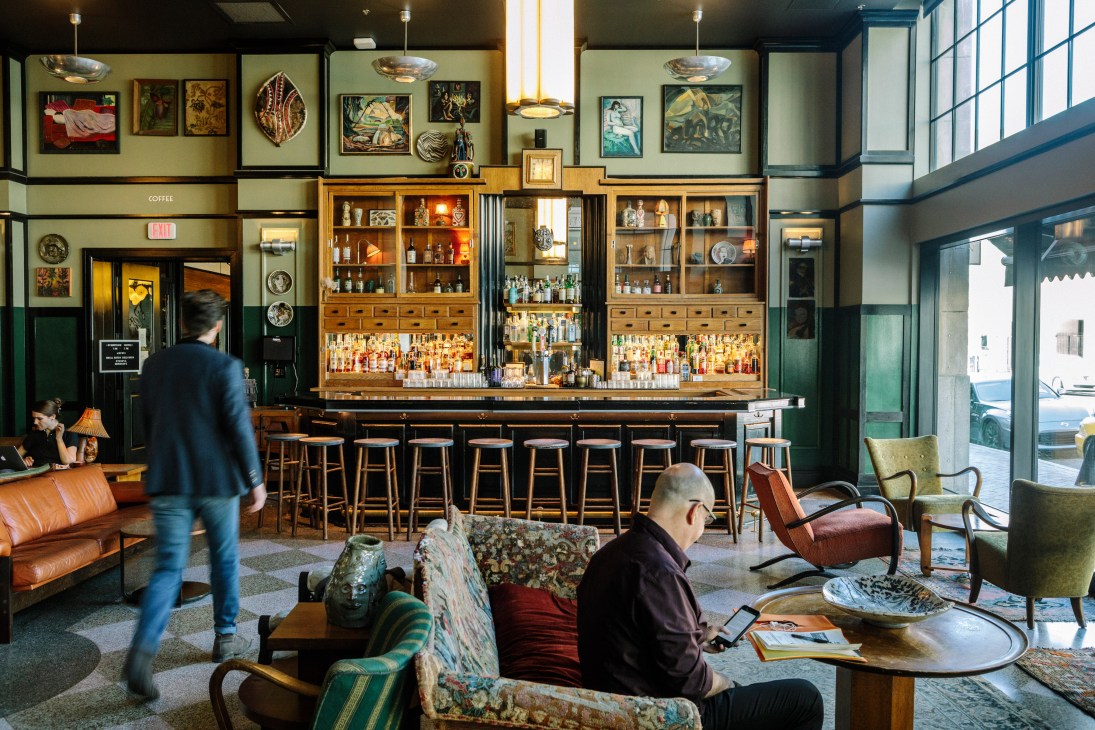

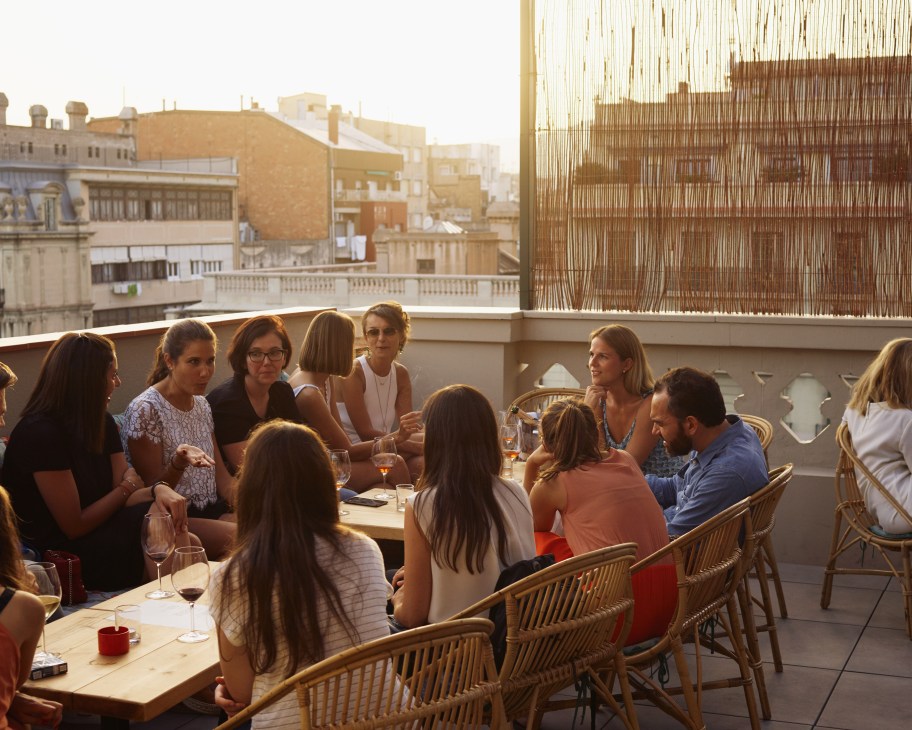

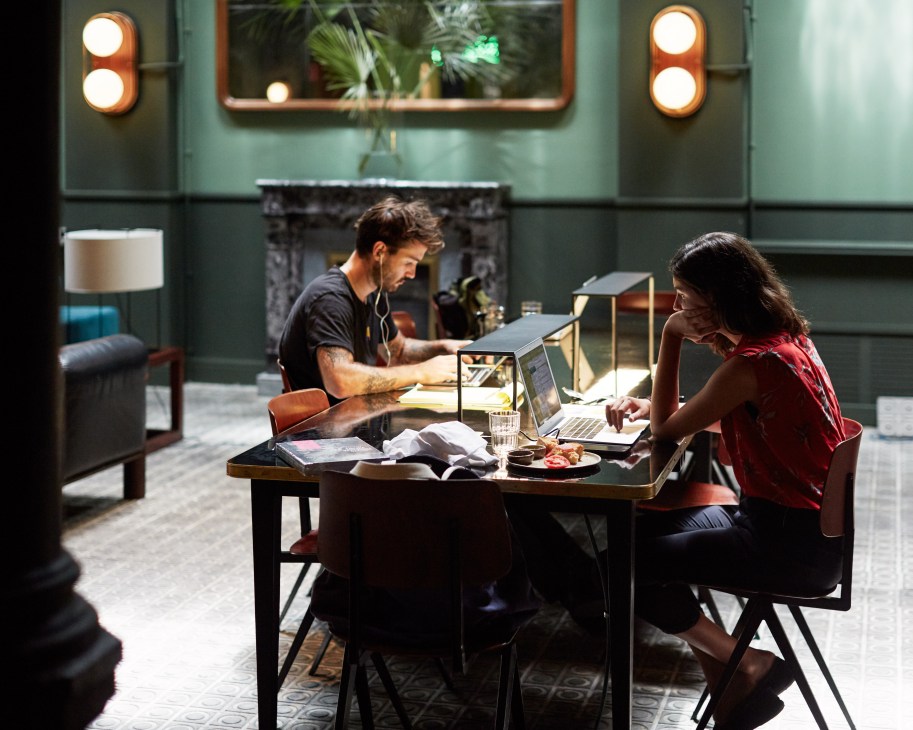
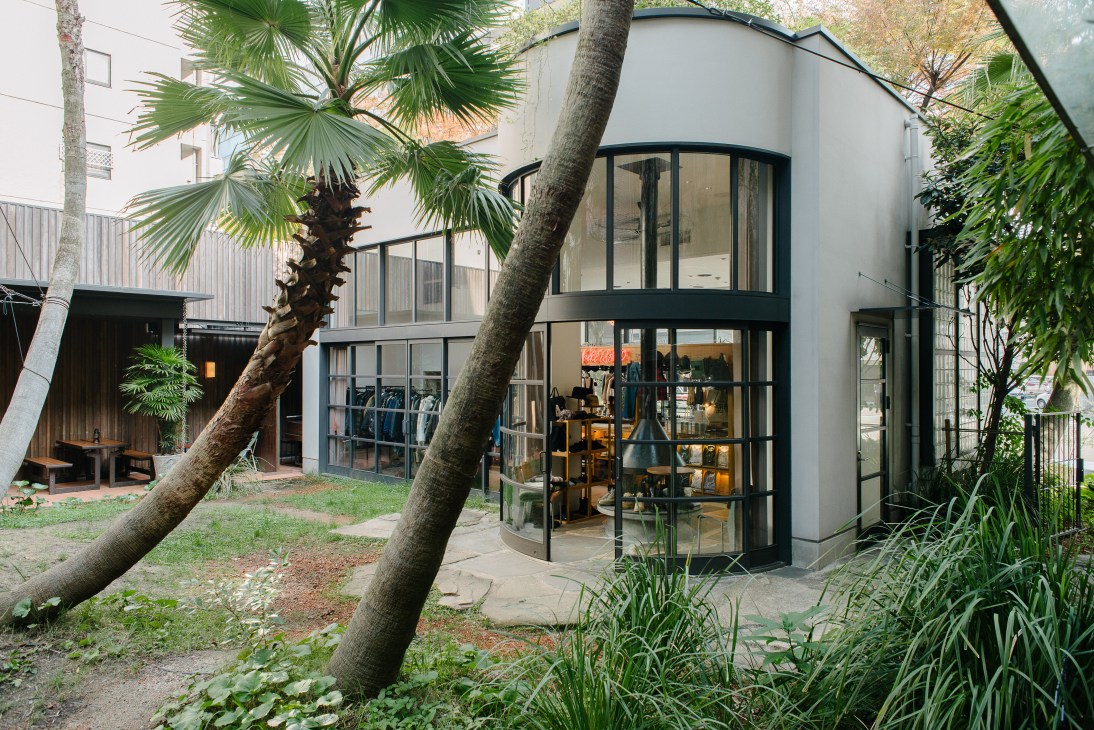
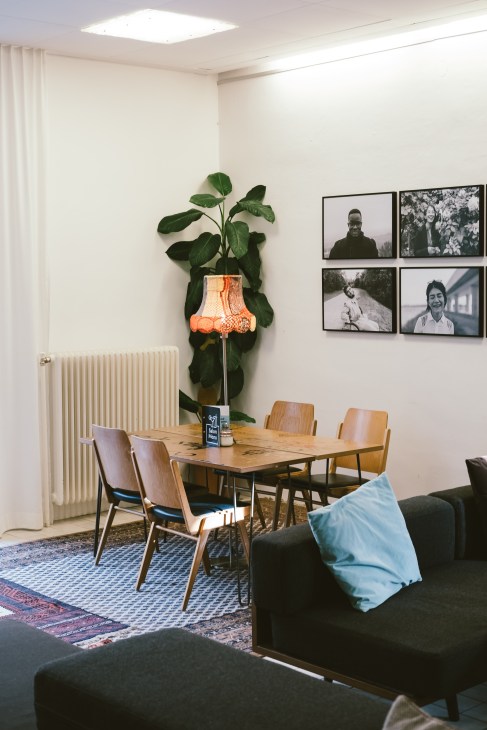
The Ace Hotel was itself a pioneer, integrating itself into each new neighbourhood over years of consultation. Its purpose was to attract the local population, thus offering out-of-towners a peek into the lives of the locals who now frequent its common areas as an extension of their own homes and workplaces. Jou-Yie Chou – cultural engineer and later brand director for the group – went on to be a partner at Studio Tack, a design and development group that specialises in independent hotel developments. He believes that assimilation and augmenting the metabolism of a neighbourhood are key.
“The unique thing about Ace Hotel is that the team is composed predominantly of creatives,” he says. “The staff are culturally curious and whether it’s art, music, design, fashion or culinary arts, the company is such that whatever the staff are interested in gets plugged into what happens at the properties.”
Beyond the questionable charm of staying in someone else’s flat and sharing in their everyday routine, there is also a shadowy side to the sharing model, a dark web of management companies that maintain extensive portfolios of Airbnb properties for absentee landlords. This not only hollows out the visitor’s experience but also hollows out the city, encouraging those with multiple properties to hang on to them.
Barcelona is rebelling against this acceleration in private-room rental, with detractors in the public and private sectors as well as in civil society. Heated demonstrations in the Barceloneta neighbourhood regularly bemoan the trend for stags, hens and dolts of all descriptions running amok and doing it from the convenience of a seven-bedroom bedsit.
The new left-leaning government has already added a temporary cap to the number of holiday rentals and raised the fine for non-registered apartments from €60,000 to €600,000. But the best example of how Barcelona is coping with the proliferation of cheap accommodation is the appearance of good-quality, mostly independent hotels that have benefited from the entrepreneurial spirit that was forged in the years following Spain’s economic decline.
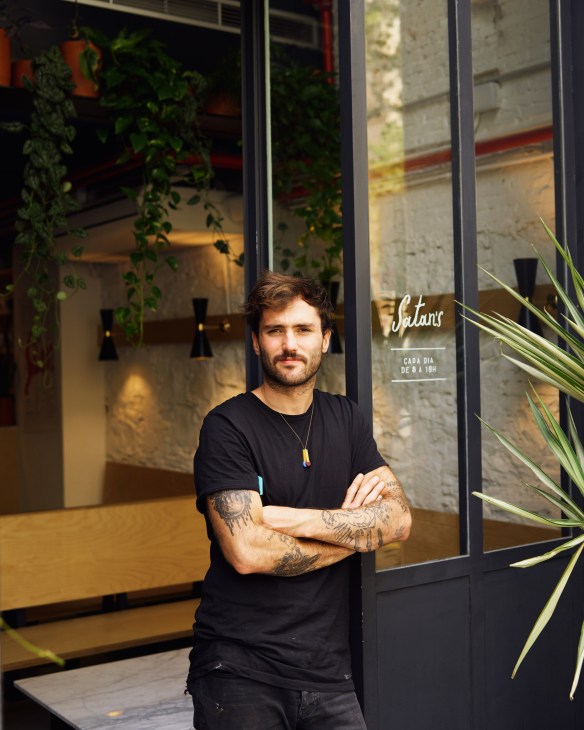
Casa Bonay (see Monocle issue 86) is the most remarkable in a string of openings that includes The Cotton House, The Wittmore, Margot House, Casa Mimosa and Soho House. Owner Inés Miró-Sans decided that engaging a roster of local providers to collaborate on the concept would refresh the traditional hotel model. She offered street-facing spaces in her building to small businesses such as Satan’s Coffee Corner, reducing the number of elements under her direct control and at the same time creating vibrant spaces for residents to use. Similarly in Japan, From Where I Stand, an independent kiosk that sells travel accessories, has opened its first two outlets at With The Style hotel in Fukuoka and at the Oriental in Kobe.
Claus Sendlinger, the founder of Design Hotels, who recently helped open La Granja hotel in Ibiza, is also unperturbed by Airbnb’s success. “I see hundreds of boutique hotels opening every year and they all reflect the needs of a growing group of affluent travellers,” he says. “Design hotels at the top end are no longer simply about furniture. It’s about creating communities. I don’t see Airbnb as a threat; I wonder when hotels will start to use it as a distribution channel.”
Many hotels and entrepreneurs are reacting well to the challenge of how to develop profitable concepts that offer tangible benefits to guests, locals and wider society. The hospitality industry is responsible for high rates of employment and hotels give people from every strata of society access to training and careers. Magdas Hotel, a 78-room property on Vienna’s Laufbergergasse, uses its employees, who hail from 14 countries and speak 23 languages, as brand advocates. An emphasis on buying art produced by the students at the nearby Academy of Fine Arts and supporting immigrants at work adds to the hotel’s credentials as a “social business”.
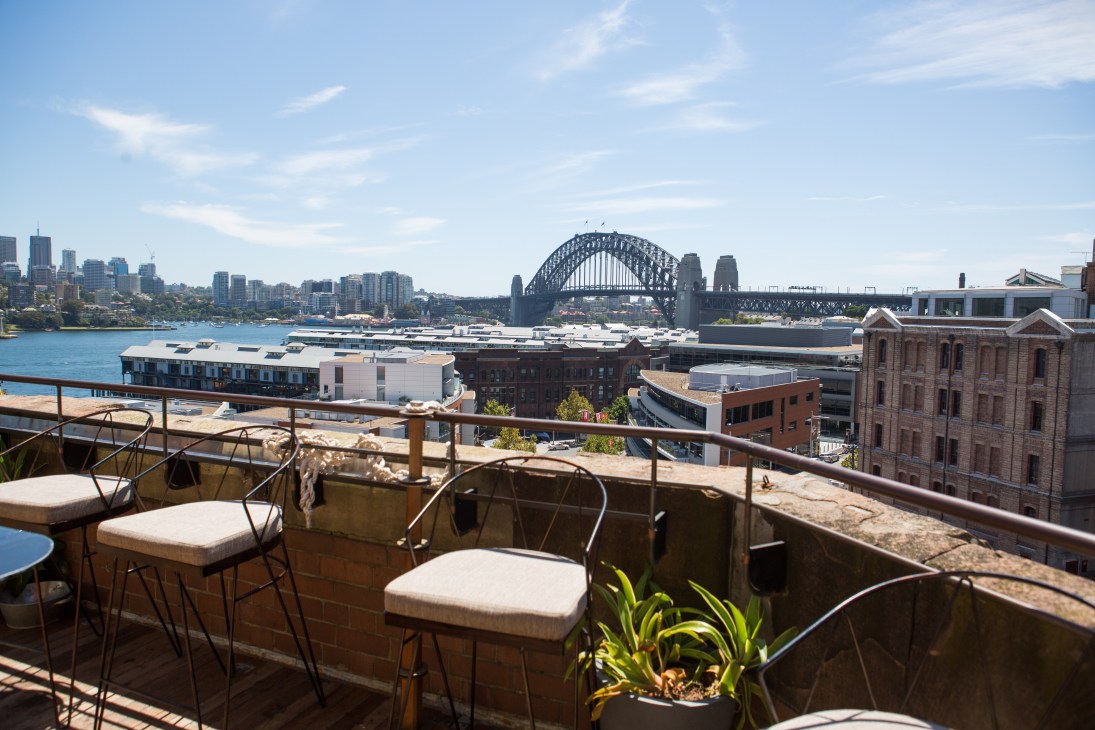
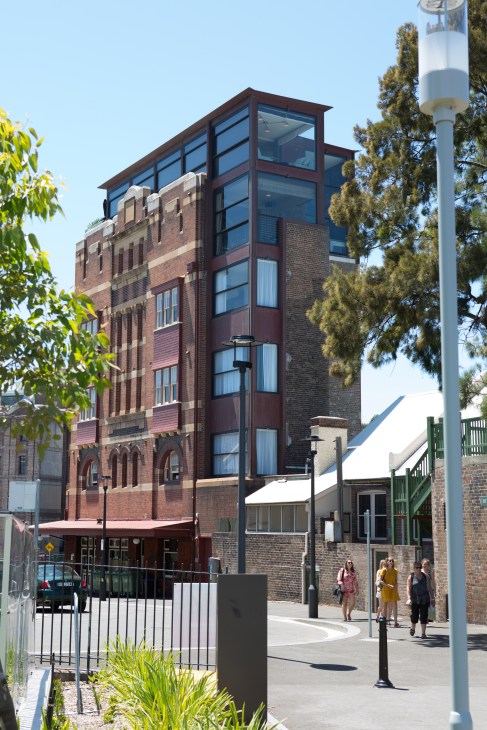
There are also hotels that land in less desirable vicinities and turn nearby streets into areas of opportunity for independent businesses. The Hotel Palisade in Sydney was responsible for raising the profile of its neighbourhood with a renovation of an old building and the addition of an atmospheric pub. This is the kind of concept that can win over developers that want to strike out in a new district but are worried about the risks.
Hoteliers of all ilks have spent recent years fretting over new ways to remain relevant in the face of Airbnb. Yet, as Jou-Yie Chou reminds us, “Back in 1920s New York, people’s apartments were so small that they gathered in hotels to be entertained. We’ve seen things come full circle – serving locals is just as important as serving your guests.” Hotels are simply another resident in a neighbourhood and like all good citizens, successful assimilation is born of engagement, collaboration and, above all, a welcoming disposition.
Tomorrow’s world
1.
Europol
The European law-enforcement agency with a leading role in tough times.
Tucked away in a leafy suburb of The Hague, Europol’s six-year-old HQ is a veritable 21st-century fortress. The building is less than inviting, with four slate-grey towers of varying heights, arrow slits for lower-floor windows, cctv cameras pointing in all directions and a moat-like pool wrapped around the structure. The interior of the pan-European law enforcement agency, however, is less austere – more like a large university library.
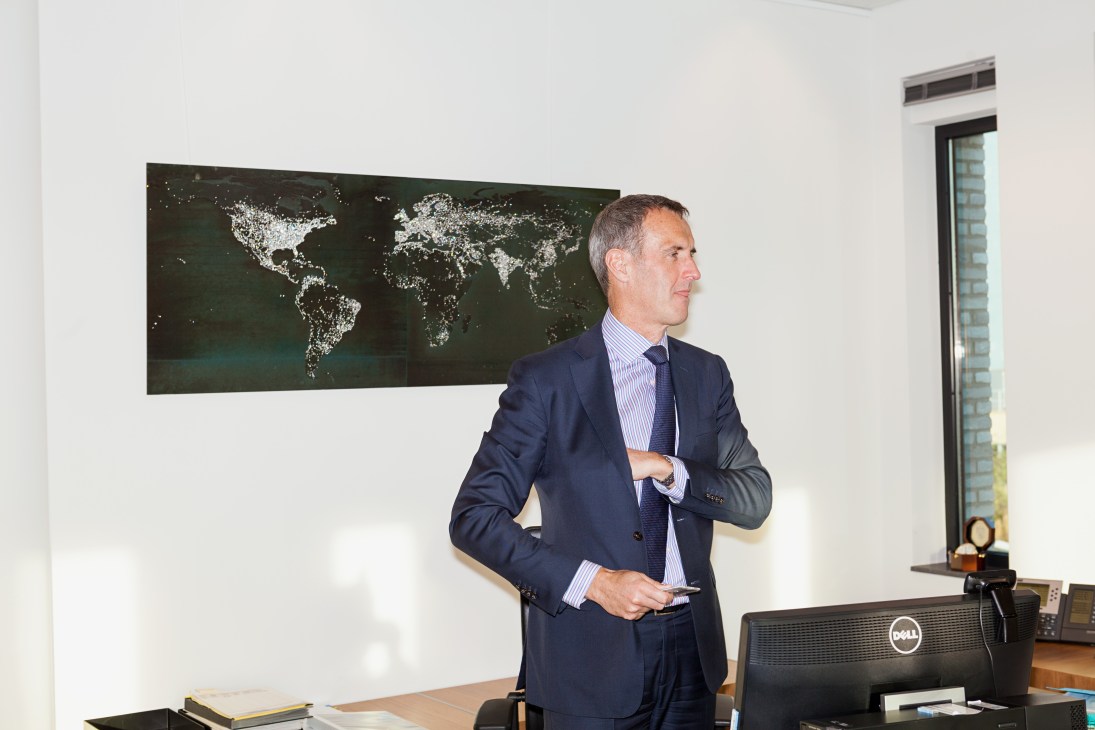
More than 1,000 staff of some 40 different nationalities work at Europol and, when we visit, that diversity is immediately evident: a security guard chats with his colleague in Spanish, a cheerful Belgian press attaché is on hand to greet us and a burly Romanian minder leads the way to the office of Europol director Rob Wainwright, who hails from the UK.
The towering former mi5 agent will have been in the job for nine years by the time his second term ends in 2018. It hasn’t been an easy task. “The international nature of terrorism and serious crime shows that never before has there been a stronger need for a co-ordinated approach,” he says. “Europol does not have the power to carry out arrests or intercept telephone conversations; we are not the European FBI.” Instead, he explains, Europol is the hub through which all EU members and their 30 or so partners share information and track criminal networks. Its central database contains the details of more than 85,000 suspects. The intelligence is loaded into the Secure Information Exchange Network Application (Siena), through which law-enforcement agencies exchange thousands of messages every day. Together with Europol’s in-house team of experts in fields such as terrorism, money-laundering, narcotics and counterfeiting, liaison officers discuss next steps with officials in the countries concerned. “There is hardly a single serious criminal activity that we do not cover in this building,” Wainwright tells us.
In response to increased concern about terrorism and people-smuggling on the continent, the agency’s 2017 budget has been increased to €115m. The lion’s share of this 20 per cent boost, which comes from the EU general budget, will be used to double the headcount in the counter-terrorism team. “We learnt a lot from the Paris and Brussels attacks; they really were a turning point for us, showing that Europol has come of age,” says Wainwright, adding that his team was quick to give the French and Belgian police forces support, as well as valuable leads. “However, we clearly need to co-ordinate even more closely and that gives us an even greater responsibility.”
The idea of Europe-wide police co-operation can be traced to the beginnings of European unity, though it was in the 1992 Maastricht Treaty that the first reference to Europol was made. Despite being relatively new it conducts about 18,000 cross-border investigations a year, disrupting criminal and terrorist networks in the process.
Asked if all EU member states are pulling their weight, Wainwright shrugs his shoulders. “Our work relies heavily on trust and it can be a struggle to convince all the law enforcement agencies of the need to co-operate,” he says. With the EU in the process of losing a member, the bloc’s ability to work together – let alone the individual agencies within it – might not inspire confidence.
But Wainwright believes that a co-operation agreement could be extended to a post-Brexit UK. He’s heartened by prime minister Theresa May’s professed commitment to security. “Several of the threats we face are transnational and so things are changing – but that pace of change needs to increase.”

2.
Aeroplane food
National carrier Japan Airlines delivers a mile-high burger to the folks in row 36 and is taking tastebuds to new heights.
Making tasty airplane food isn’t easy, particularly in Economy Class where budgets are tight. And there is one meal that is always the least appetising: the one served just before the plane lands. “You might get a pancake, omelette or rice gruel,” says Hironori Tsunashima, a director in Japan Airlines’ cabin-service group. “The problem is that it has to be quick – but nobody thought to ask why it always tasted bad.”
That was the case at JAL only a few years ago, before the company decided to do something drastic about its Economy Class meals. Tsunashima is in charge of the company’s food lab. Thanks to his efforts, JAL’s rice gruel has long since been replaced by an all-star line-up of comfort food, including Yoshinoya beef bowls, soup from Soup Stock and rice burgers from Mos Burger.
In an industry where profits hinge on attracting the highest-paying customers to the front of the plane, it’s rare to find an airline that’s putting so much effort into upgrading its services for the masses. JAL’s meals taste as if they came from restaurants in Japan. The reality is that nearly everything is prepared at Narita Airport by Jal Royal Catering (JRC), a joint venture with the company that made sandwiches and tea for JAL’s first domestic flight after the Second World War. Meals are frozen overnight and reheated in the aircrafts’ ovens.
The airline now comes up with new menus every quarter but there is an art to replicating the flavour of a beef bowl or burger for the harsh environment of an airplane. In the pressurised cabin your taste buds are less sensitive; the dry air also hinders your sense of smell, making food seem bland. Most airlines tackle the problem by drowning the meal in seasoning. “People think airplane food is unhealthy because there’s so much salt,” says Tsunashima. “We don’t do that. Instead we concentrate the umami flavours using Japanese soup stock from kelp and dried fish.”
When Tsunashima shows us around JRC’s kitchen, cooks are roasting sesame seeds, grilling scabbard fish and assembling bento-box meals. They have cards with photographs of what every dish should look like and precise measurements of ingredients down to a tenth of a gram. Over three months jal will make 200,000 meals; nailing every detail and staying within budget is vital.
Each new collaboration can end up with a year of tinkering and tasting; both sides stand to benefit but there’s a lot at stake. It took JAL 10 months to get Shiseido Parlour – a waiters-in-bow-ties Tokyo institution that specialises in Japanese-style western food, or yoshoku – to approve a meal of hamburger steak, quiche and potato salad. “For the potato salad we have to cut the onions in the same direction that Shiseido Parlour’s chefs do,” says Tsunashima.
As he speaks a bacon quiche is being assembled nearby for the next day’s flight to Honolulu. The worker places alternating slices of bacon and cheese – each the size of a stick of gum – in a pan; too many or too few and the egg mixture that’s poured in later won’t flow in between each slice. With so many details to look after it’s easy to lose sight of the goal. “There are many people from different backgrounds flying in Economy Class,” says Tsunashima. “We can’t do anything too fancy or have food that’s too unfamiliar. It’s about making something that as many people as possible will enjoy eating – and giving them something to look forward to during the flight.”
3.
Architecture
The property boom has given architects the opportunity to put some much-missed craft back into grand designs.
2016 was the year the McMansion bit the dust. This suburban monster of a home embodied the wasteful wealth of the late 20th century in the West. Derided on hit US architecture blog McMansion Hell, these “ugly houses that became ubiquitous before the bubble burst” came triple-garaged (at least), cheaply stuccoed and massively gabled.
Thankfully the cost-cutting construction methods used to maximise these homes’ ostentation was their undoing. Estate agents across the US increasingly report McMansion values in decline. Like a flashy car, the buildings tend to diminish in value the minute their owners open the door. It might be a win for good taste but why were these monstrosities built in the first place? Why do the rich choose to live in such poor houses?
Blenheim Palace is regarded as an English baroque masterpiece – and is one of the world’s most celebrated stately homes – but it shares similarities with the McMansion. It was commissioned to embody opulence on a sumptuous scale and in many of its design details, function follows form. A kitchen located some 400 metres from the grand dining hall, for example, never boded well for the house’s occupants. Yet today the site is a magnet for design buffs and with good reason: its architect John Vanbrugh was a pioneer. Vanbrugh designed for the time, using cutting-edge technology and the very best materials to make it happen. “The great stately homes were very daring and very controversial commissions,” says renowned British architect John Pawson.
Despite the size of the 180-or-so-room show-off dwellings of the 17th and 18th centuries, Pawson says they were built by architects thinking in the moment. It wasn’t legacy architecture; these “were buildings for the time, to serve a function and to be enjoyed”.
While the motivation for grand-home commissioning doesn’t seem to have changed much, our lifestyles have and Pawson, a man celebrated for his paring back of ornament, does today’s “stately” home well. His minimalist holiday dwelling Life House was luxuriously built with 80,000 Danish bricks in Wales and rents for €3,700 a week. For Pawson the notion of occupying a very beautiful home away from the city, even if it’s just for the weekend, still holds significance for the wealthy.
Fellow UK architect Roz Barr says there are two types of architecture clients operating in today’s top-end residential market: “Those who treat building a home like walking into a car showroom and buying on face value, and those who see the art in architecture, like they see the art in the tailoring of a Savile Row suit.”
While money can’t buy good taste, architects today are working hard to rid our streets of the rich’s rubbish. The city is where today’s mega-commissions are taking place and housing developments such as Kingwood on Hans Place (where the properly wealthy buy in London) are helping to define the difference between what is awfully grand and what is grandly awful. Designed by British architect Henry Squire, its architecture recognises history but is still very much rooted in the now. While the McMansion was a scary pastiche of styles, here rose-red bricks have been lavishly deployed, and intricate carvings made using new waterjet-cutting technology reference the vernacular of the surrounding Victorian buildings.
“In the great buildings of history, art and architecture were so intrinsically linked,” says Squire. “Great battle scenes were painted on walls and gargoyles – made to resemble the wife who the stone mason just had an argument with – were tucked high up in buildings. These are the little touches of real craft and humour stripped away by the machine age.”
Squire has harnessed the influx of foreign cash into London’s property market to promote sensitive decoration and high-quality materials in grand homes. And, while tastes differ, there’s no denying the universal joy in decoding details of a well-constructed building.
“I think what is coming back now, whether it is in affordable housing or the very opulent houses for the wealthy, is craft,” he says. “We are seeing stories, we are seeing textures, layers, ornamentation and a bit more art for art’s sake – or beauty for beauty’s sake.”
4.
Menus
John Mitchinson, the co-founder of publisher Unbound, on the importance of a palpable presence at the dining table.
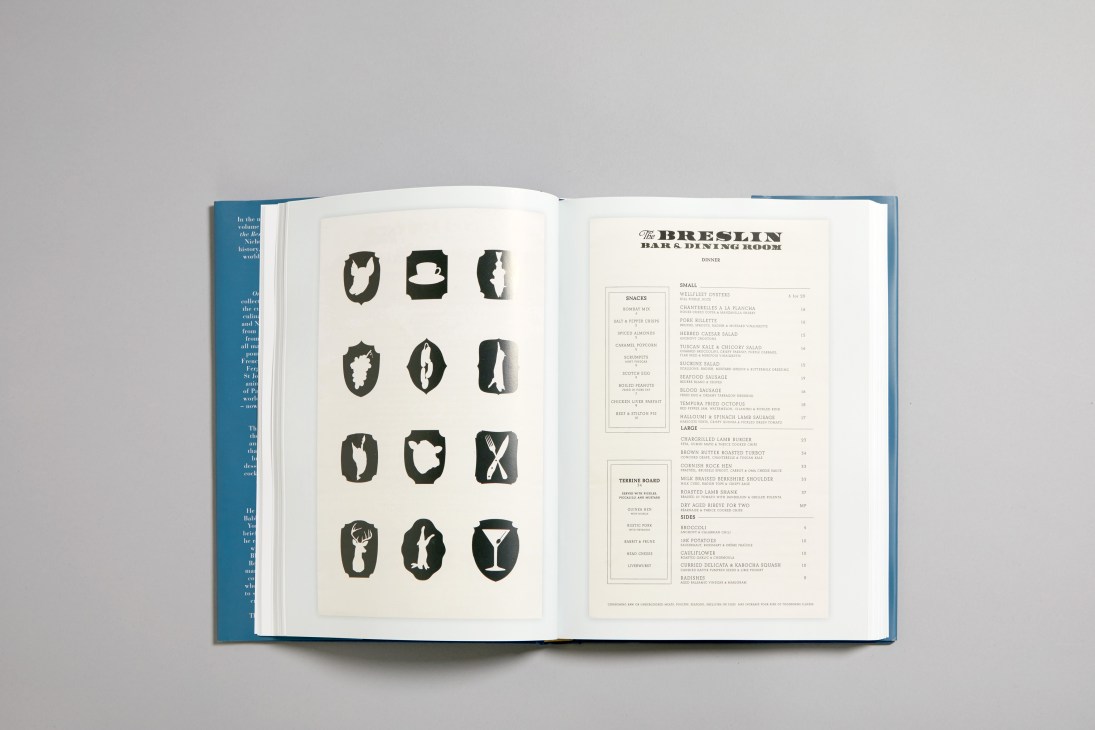
Menus. So ubiquitous, so much a part of our lives, so functional and useful that we barely notice them. But we should. They are exemplary artefacts: records of taste, fashion and geography, mementos of our most important moments that, in a digital age, remain defiantly analogue. When you sit in a restaurant with spring sunshine crisscrossing the white linen as the waiter pours your wine, the last thing you want to be handed is an iPad. You want paper: clear, elegant and full of gustatory promise.
That is what inspired Nicholas Lander, restaurant critic of the Financial Times and collector of menus from all over the world, to gather his favourites together in On the Menu, a gorgeously illustrated catalogue-cum-history. In it he set himself the task of establishing beyond reasonable doubt that “the menu is the single piece of paper that gives the world the most pleasure”. To date, he claims, nobody has successfully challenged his theory.
Lander is right: menus matter. As well as offering an unmatched record of human pleasure, the history of the menu is practically the history of the enlightenment itself. They began in France in the late 18th century, when a restaurant wasn’t a place at all but a bowl of “restorative” soup served in an establishment known as bouillon. In 1765, a bouillonner called Boulanger made culinary history by serving sheep’s feet with a dish of eggy white sauce on the side. He was immediately taken to court by the corporation of traiteurs (cooks), who accused him – zut alors! – of serving a ragout (meat cooked in a sauce), which was their exclusive right. Up to this point the culinary trades were strictly delineated. Only a rôtisseur could serve you roast meat; a patisseur, pies and cakes; a vinaigrier, dressings, and so on. The people running taverns and auberges had to collect money on behalf of all these different guilds. Boulanger made the first breach in this closed shop by winning his case in court. He became the first “restaurateur”: a person running an establishment where a single bill was made up for all the food and wine consumed. There followed an explosion of restaurants.
The bills of fare at these new establishments were vast: hundreds of dishes laid out on newsprint. As Nicholas Lander writes, since then menus have been transformed into “highly effective marketing tools created by highly talented, strongly opinionated chefs who use the menu to express their personal creativity”. At the same time the piece of paper itself “has just got smaller and smaller”.
The future belongs to the menus that engage our imaginations. Take Heston Blumenthal’s elaborate Alice in Wonderland-inspired adventure map at The Fat Duck or Massimo Bottura’s tasting menu at Osteria Francescana, which takes playful description to a new level: “An eel swimming up the Po River”; “The crunchy part of the lasagna”; or “Oops! I dropped the lemon tart”.
To some all this may seem like the worst kind of pretension but there’s something deeper at work here than showing off. These chefs understand that the food we eat is intimately connected to landscape, tradition and the taste memories each diner brings to the table. Eating together is our oldest, most sacred ritual. The best menus acknowledge this: they are portals between the familiar and the strange, the old and the new.

5.
Omar Sharif Jr
The scion of Egypt’s most-celebrated family on being gay, Arab and wanting the world to change.
“It was a tough night,” says actor and model Omar Sharif Jr over lunch at the Maison Kayser coffee house on Columbus Circle in New York. It is a day after Donald Trump’s election to the US presidency. “I definitely have mixed emotions,” he adds as our waitress arrives with green tea, a flat white and a raspberry-mousse cake. “I’m not American so I wasn’t as invested in it but as a global citizen you have to be invested in American politics.”
Sharif Jr, the grandson of the legendary Egyptian actor after whom he is named, has long mixed in the circles of the great and the good. Born in Montréal, his acting and modelling career began in Egypt, where being a Sharif is like being a Kennedy in the US. Now he is in New York, where his role as an ambassador for lgbt rights groups has taken him to the soirées of the city’s glitterati.
Sharif Jr’s ascent into the international public spotlight came in 2012. In a letter published in English and Arabic in The Advocate magazine, he outed himself as gay. “I wanted to be a litmus test,” he says above the din of the lunch crowd. “There was only one sentence on my sexuality. I was speaking to broader human rights. My message was hopeful, of tolerance. I was saying, ‘I just want to be included.’”
The response was less than positive. “I was called everything from a paedophile to a deviant,” he says. Intimidation and threats of violence or death ensued; he left Egypt and has yet to return. “I think, unfortunately, I became a distraction there – someone to pin negative thoughts upon. But ultimately someone has to get the ball rolling or else it never moves.”
The challenge for activists now, says Sharif Jr, is to not be cocooned in the sphere of one’s own cause or with those who already adhere to it. This is increasingly tricky when Facebook feeds tell you only what you already know and feel. “I think the fight needs to change and adapt,” he says. “I’m not sure it has yet. Right now, activism is about rallying the base. It really needs to be about reaching beyond our natural allies.”

6.
Icebergs
The little-known patrol that has a titanic task: keeping seafarers safe as they navigate an Atlantic obstacle course.
On the tarmac of St John’s airbase in Newfoundland on Canada’s blustery east coast, Commander Gabrielle McGrath climbs the narrow steps of the Elizabeth City 2006. The bulky Lockheed Martin hc130-j propeller plane is ready for the penultimate mission of the season for one of the US Coastguard’s most quietly storied units: the International Ice Patrol (IIP). “Even people in the US Coastguard have never heard of us,” says Cdr McGrath wryly of the unit she has led since 2013.
Between February and August the International Ice Patrol conducts its aerial expeditions above the western Atlantic, flying north from Canada’s east coast to the Arctic’s southern edge and back again. Its sole aim is to track the presence and movement of icebergs and assess the threat they pose to ships on transatlantic routes. “The work we do is still so important,” says Cdr McGrath, taking her seat at the back of the flight deck. “I don’t think a lot of people realise that a vessel, even with the technology we have these days, can still have issues with detecting icebergs. So the work we do is to ensure they don’t have that risk of collision.” It’s a task that the IIP has undertaken since it was established in 1914 as a response to one of the worst disaster in maritime history: the sinking of the Titanic in 1912.
As the Elizabeth City’s propellers whir to life, ice observer Jesse Paulk raises his voice to be heard. “We’re the only people in the world who do dedicated iceberg reconnaissance,” he says. “We are getting real-time information about where these bergs are. If you follow the limits we set, you aren’t going to encounter one.” Not once since the creation of the IIP has a ship following its guidance collided with an iceberg in the Atlantic.
An hour into the Elizabeth City’s 2,900km round-trip via the southern tip of Greenland, the patrol spots its first iceberg through a veil of cloud to the west. Its bright-white twin peaks prick through the low cloud like Halloween teeth. It’s a big one, according to Jacob Menard, who is stationed at an observation window. He logs the find into a laptop and the data is fed to the iip’s headquarters in New London, Connecticut, where the information is collated and sent out to governments and maritime bodies around the world.
“It can definitely get challenging,” says Menard. “There will be times where you won’t be so busy and you sit there seeing a lot of open ocean. Then there are others when you get hundreds of icebergs a minute.”
7.
Swiss salaries
Salaries in Zürich are the highest in the world – here’s why that’s a bad thing for them and the world.
Switzerland is a very nice place to live. From the crisp mountain air to the efficient public transport, it’s no wonder that Zürich and Geneva regularly make their way onto quality-of-life surveys (Monocle’s included). It may be an even nicer place to work. In many ways the Swiss employee has it made: salaries are among the highest in the world, benefits such as sick pay, parental leave and holidays are generous and, though the cost of living is high, consumer spending power in those aforementioned cities is among the strongest in the world.
This is, generally speaking, a good thing. Yet while it’s seemingly an employee’s paradise, it’s hard not to wonder how employers manage. Not the multinationals that set up European headquarters here to take advantage of generous corporate-tax policies – we’re sure they’re fine – but the small and medium-sized companies. What about the foreign firms that want to expand into the country, especially those that rely on service or nearby manufacturing? How do they fare?
On a recent stint at Monocle’s Zürich bureau I met a gentleman who had founded a small company producing and selling organic bottled drinks. When I asked him if starting a business was difficult in Switzerland because of the cost of labour, he heaved a sigh. “It’s very tough,” he said, noting that both the high cost of living and the high employment rate has led workers to expect high wages – which they typically get. In 2015 the average employee in Zürich made €37 an hour, making it the city with the highest hourly wages in the world according to UBS’s prices-and-earnings report.
So why would a growing company based in, say, France, which relies on labour but not necessarily the specialised variety, want to expand into Switzerland? “They wouldn’t,” says Josef Zweimüller bluntly. An economics professor at the University of Zürich, he specialises in the effect of welfare-state programmes on the labour market. “Switzerland is known for its highly skilled labour,” he says, highlighting the nation’s pharmaceutical, banking and watch-making industries. “That comes at a price. Unless you need those high skills it will make sense to go elsewhere.”
That the nation might be pricing itself out of the SME job market hasn’t appeared to pose much of a problem for the Swiss – so far. Unemployment has long hovered around a minuscule 3 per cent but things could be reaching a tipping point. While the robust Swiss franc has been appreciating for years, the exchange rate has now started to cause problems for companies that rely on exporting to Europe and beyond. “Firms that are exporting from Switzerland aren’t able to remain competitive with Swiss pricing,” says Zweimüller, who reports that companies have recently been seeing their profit margins decrease as they’re forced to lower prices to sell in other markets. “So these companies that rely on exporting are becoming reluctant to hire and in some cases are considering firing staff.” As for tourism, the high franc combined with high wages has priced it out of the market for many.
The Swiss also seem to be aware of how close to prohibitive their pay structure is: a 2014 referendum on implementing a robust mandatory minimum wage across the country was voted down by 76 per cent. Switzerland is suffering from the most luxurious case of “golden cage” syndrome. As one bank executive noted, “Young people are trapped. It’s very hard to move overseas when starting salaries as an assistant are as high as CHF85,000.”

8.
Countdown to Eurovision
The 2017 contest’s Ukrainian venue adds a chorus of political pyrotechnics to the well-versed kitsch and glitter.
Kiev is warming up to host what is, for many Europeans, one of the most anticipated cultural events of 2017: the Eurovision Song Contest. Expect the usual dose of musical fireworks, kitschy acts and nations strategically voting for their neighbours – as well as a bit of politics, of course. Kiev won the right to host following Ukraine’s 2016 victory in Stockholm, where singer Jamala performed “1944”. The song centres on the Soviet deportation of the Crimean Tatars to Central Asia by Joseph Stalin that year, including the musician’s own family; she was born in what is now Kyrgyzstan.
Sung in English and Tatar, the tune calls for a future “where people are free to live and love” – a particularly poignant sentiment in the context of Russia’s annexation of Crimea, which drove many Crimean Tatars from the peninsula once again.
Heavy stuff for a pop song, but then Eurovision traffics as much in global affairs as it does in glitter. Since Kiev last hosted Eurovision more than a decade ago the city centre has been marked by 2014’s Maidan protests, which led to president Viktor Yanukovych fleeing the country. A protracted conflict followed in Ukraine’s east, which remains unresolved.
As such Eurovision 2017 will be more than a chance for Ukrainians to let their hair down. Hosting the contest is as much about soft power through smooth organisation as having an ear for catchy beats. A key challenge for the European Broadcasting Union (EBU), which organises the contest, was finding a city in Ukraine that meets its requirements, including a transport hub, a suitable venue, a nearby press centre and a range of hotels.
The contest will be held at the International Exhibition Centre on Kiev’s Left Bank, which, with its grey blocks of flats, isn’t a particularly handsome part of the city. Yet it’s just a quick metro ride over the River Dnieper from the city centre, most hotels and the nightlife. With a capacity of 11,000 it is Ukraine’s largest venue of this kind. The opening ceremony, meanwhile, is to be held on the site of Kiev’s green-domed Saint Sophia Cathedral, a Unesco World Heritage site. The news caused a stir in some religious circles; one church spokesman slammed it as “blasphemy”. Yet, as one city official pointed out, the site now operates as a museum rather than a place of worship.
The city of 2.8 million people has brightened up somewhat since the Maidan revolution. It now boasts a sprinkling of sharp new bars and cafés, complete with hipster beards and bike stands, a marked contrast to the glitzy post-Soviet nightclubs that were once Kiev’s staple. The city has also set aside uah200m (€7m) for the contest, with the state preparing to put in several hundred million more.
Still, hosting Eurovision may prove to be a test for Kiev’s tolerance of diversity. “The contest has a long history of welcoming people of all backgrounds and from all minorities to perform,” says Jon Ola Sand, the ebu’s executive supervisor of Eurovision. That includes drag queens such as Ukraine’s own Verka Serduchka who, sporting a metallic helmet and heels, came second in 2007 with “Dancing Lasha Tumbai”, despite criticism from some politicians at home. Ukraine’s liberal record may be improving: the most recent Kiev Pride, in June 2016, passed largely without incident after violent clashes the year before, though this did involve 5,500 police marshalling the 1,500 lgbt marchers.
Another delicate matter is Russia. When Jamala won, Moscow’s political establishment accused Eurovision of being hijacked by politics, with some Russians calling for the 2017 contest to be boycotted. Kiev is talking tough too: the Ukrainian government has said that Russian singers who champion separatism in eastern Ukraine will be denied entry. Choosing one of these artists to represent Russia would be a “provocation”, culture minister Yevhen Nyshchuk has said.
Ukraine is well aware that all of Europe will be watching. With Kiev counting down the days, organisers point to the benefits, including an influx of fans (the city expects about 20,000 to attend). But hosting one of the most popular events in Europe in 2017 could boost confidence here too. “We understand that a competition of this size is a very responsible mission,” said the city’s mayor, heavyweight world boxing champion Vitali Klitschko. “[We’re displaying] the image not just of Kiev but of our state overall.”
9.
How to move a museum
The plan to transport more than seven million precious objects across a busy city exhibits one or two logistical concerns.
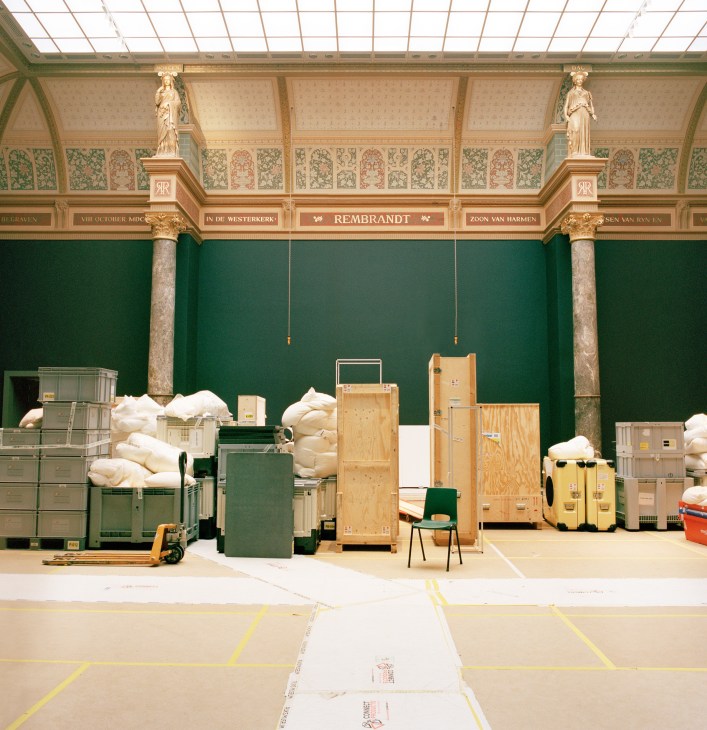
Museums can feel like islands of permanence in the heart of cities in flux. But these institutions need to evolve to stay relevant and sometimes this involves moving a longstanding collection into a new home.
What’s involved in uprooting and transporting a collection of thousands of artefacts across a city? The Museum of London is about to find out. Opened in 1976, the institute boasts a dizzying variety of collections, from Bronze Age weapons to digitally preserved oral histories that together provide a unique record of the social history of London.
The museum’s current site doesn’t make it easy for visitors to access these treasures. Located behind a roundabout at the rear of the Barbican arts and residential complex, there is no street-level access; instead the main entrance is reached via a warren of walkways, lifts and escalators. The museum’s director, Sharon Ament, admits that visitors to its current site have to be “purposeful”. This less-than-advantageous location is one of the reasons that the museum is moving to Smithfield Market in Farringdon, where more foot traffic and better transport connections should yield a boost in visitor numbers.
But while the new location is just 500 metres west of the current one, moving the museum’s 7.5 million objects poses a significant challenge. As with any museum move, Ament and her team need to make special arrangements to safely transport the collections.
First there’s the heavy lifting: the masonry collection, which includes stone from medieval monasteries, will need to be carefully moved via forklift trucks. Then there’s the far lighter but more fragile items, such as an extensive garment collection that ranges from 18th-century ball gowns to 1970s punk garb. “Every item is sensitive to light and moths,” says Finbarr Whooley, the museum’s director of content. “You have to decide whether to store and move each item by rolling, folding or laying it flat in a large box. For some particularly delicate hats we have to build a special mount to maintain their structural integrity in storage and while moving.”
There is also one collection, unique to the Museum of London, that poses an extraordinary challenge not faced by other moving institutes: the remains of more than 20,000 Londoners, which comprise one of the institute’s most physically and symbolically delicate collections. “There are strict ethical guidelines governing the treatment of human remains,” says Whooley. Those guidelines call for some complex procedures courtesy of a team of dedicated osteologists, who afford each of the departed the same level of care whether they’re Iron Age or Victorian.
“Intact bodies will never be broken up and they are stored and moved separately from the rest of the museum’s collection,” says Whooley. “The bodies are those of human beings – some of them named persons from medieval graveyards – and the osteologists respect their individuality by referring to them as ‘this gentlemen’ and ‘this lady’.”
It’s a lot of work, which explains why the process takes years to plan and execute. But protecting, storing and moving all those artefacts is worth it in order to better serve those other bodies – the ones that visit the museum – in a fresh and lively space.
10.
Acoustic city-planners
Listen carefully: in Bonn, soundscapes are paving the way for harmonious architectural advancement.
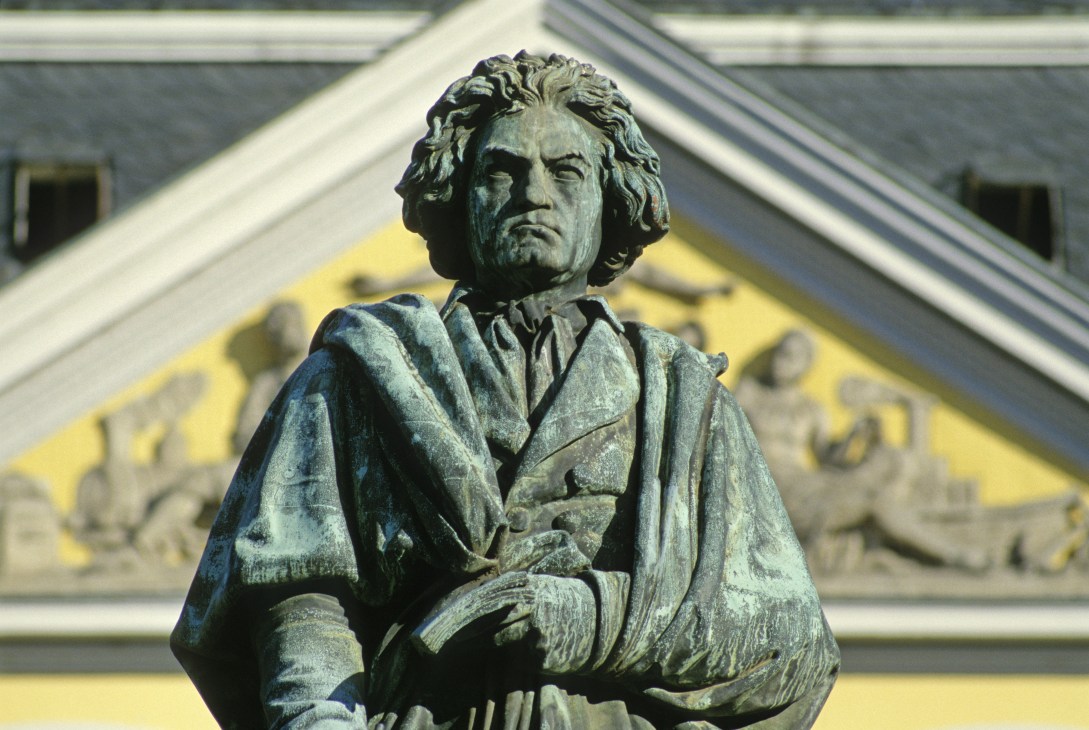
Though it may be best known as Beethoven’s place of birth and Germany’s sleepy postwar capital, Bonn has since taken on a new identity as a leader in its use of sound art – and it hasn’t done so quietly.
A “city sound artist” has been appointed every year since 2010, funded by Bonn’s Beethoven Foundation. Artists have included musicians, visual artists and academics, each of whom have had experience putting on large public sound installations. They have then worked with city-planners to pick out and promote the city’s most interesting noises, as well as to create new ones.
From the soft echoes of the cathedral’s cloisters to the melodic calls of traders in the open-air market – and a spot on the bank of the Rhine where the sound of the river bounces off a steel statue – Bonn’s most remarkable “listening-marks”, rather than landmarks, are now highlighted on tourist maps.
Carsten Seiffarth, the director of Bonn Hoeren, which oversees the project, says that sound art has provided a timely boost for the city’s reputation and self-confidence. “Beethoven is still Bonn’s most important attraction but sound art is becoming more and more important to the city, especially after losing its capital status.”
Bonn is not alone. Sound is increasingly making its way onto the agendas of city-planners as they realise that the auditory experience is part of what makes a city unique. Think about the clicking of heels along Paris’s Champs-Élysées, the tapping of flamenco dancing in Seville and the wailing call to prayer of Istanbul’s Blue Mosque. These are as much a part of a city’s appeal and heritage as its parks and monuments.
Cities around the world are incorporating sound into development strategies. Dublin’s city council appointed its urban acoustic planner in 2014 to create sound installations, such as a loudspeaker in Smithfield Plaza that collates sounds from the screens of a nearby cinema into a subtle sonic melody. The Croatian coastal city of Zadar has turned sound into a thriving tourist attraction: one of its most-visited sites is a “sea organ”, which creates deep melodies that rise and fall with the waves of the Adriatic Sea. These sound initiatives are not just coming from city officials but from their inhabitants, who contribute to digital listening maps online by sharing their favourite local sounds.
Yet there is a danger that many of the more pleasing sounds will be drowned out as the decibel level in cities rises with the growth in population, cars and flights overhead. As more tall buildings are built using materials such as glass, which reflects sound, the hum of traffic can be amplified into noise pollution. By drawing our attention to the more interesting sounds of markets, rivers, bells and music, sound artists hope that planners and developers will think more carefully about what effect a new building’s material and shape will have on the surrounding soundscape. Bonn’s city sound artists are working with architecture students to get this message across to the next generation of planners.
“Sound is another part of architecture – but a neglected one,” says Seiffarth. “Every city has its own sounds, it’s just about finding it first.”
Images: Alamy, Andres Putting, Thomas Hanses, Anna Velikova
Forward thinking
1.
My grandfather, the spy
by Alexei Korolyov
Notes: Ever get the feeling that you’re being watched? A Russian tale of hushed conversations, subversive politics and the potential threat of student revolts.
When I was in my third year at Moscow State University in 2007, like most other male students in the faculty, I got a call from a state security officer; some colonel. In a mildly coaxing tone he inquired after my health and grades and then went straight to the point: would I rather continue serving foreign interests with my part-time job at a US-funded NGO or do my bit for the motherland like the fine upstanding fellow that I was? The kind of knowledge I was getting at the university would be put to good use and, given my abilities, I could be confident of a long and prosperous career.
In Russia the “organs” – the secret police, basically – are always lurking around the corner. When the colonel rang I was reading Dante’s Divine Comedy and its heady mix of factionalism, betrayal and heavenly retribution suddenly became worryingly relevant. Until then unwanted attention – let alone a job offer – from the security services seemed impossible but if it did happen it would be something both fearful and exhilarating.
Not only did the colonel know about my work, he was also in possession of my medical records. You’re not cut out to be a paratrooper, he laughed down the line (I have poor eyesight and the slight frame of an intellectual) but not to worry. What we have in store for you is more up your alley: translation, infiltration and reconnaissance. For the good of the country, eh? Let’s show these Americans together!
Maybe I had been naive and this had been coming for some time. A few weeks before, the security police had descended on a student in the year below, a radical left-wing activist. He was dependent on the university for board and lodging and the officers threatened to evict him and cut off his measly stipend unless he stopped his political work. He was smart enough to record the exchange and went to the press. A minor scandal ensued, with a couple of higher-ranking officers disciplined, and he was left alone for the time being. So was my call from the colonel part of some not-so-devious stratagem to pre-empt a student revolt? This was when Vladimir Putin was in his final year as president, so perhaps they needed to ensure a smooth transition to his chosen successor Dmitry Medvedev, unclouded by any horseplay. Universities are, after all, where all subversive politics begin.
It had maybe also been coming for another reason: my grandfather, with whom I share the same name, was a spy. Until the collapse of the ussr in 1991, the phones in our apartment in northern Moscow were almost certainly tapped. When I was in my teens I liked to think that unseen agents were still eavesdropping on us and every so often I would pick up the telephone when I imagined that they – if they were there at all – least expected it and say, in a steely voice, “Well, hello.”
In Soviet times people preferred to keep their own company and only opened up with their closest circle; increasingly this secretiveness is returning to modern Russia. Bad-mouthing the authorities in the open today can still get you into trouble. The NGO I worked at when I got that call has since been shut down, its director now seeking refuge in western Europe. A person’s life – their life’s work – is still worth very little in Russia.
To that colonel I said a resounding no. What, to sell out to a regime that took over from, and was increasingly taking after, one that killed millions of people just because they thought and acted differently, or were born into the wrong family? Strangely enough I have never felt any vicarious guilt for whatever my grandfather might have done in service to this system. He was a lifelong communist and I doubt he ever did anything spectacularly evil, even if he had wanted to: he was active at the height of Nikita Khrushchev’s Thaw and not in Moscow but Vienna.
I imagine he and the colonel would be amused by the curious twist of fate that would fling me to the Austrian capital, bearing the same name as my grandfather and doing something similar but altogether less secret: journalism.
I have recently discovered a stash of photographs that my grandfather took during his time here. He spoke little and mostly about the war (he was a private on a torpedo boat) but never about his other persona. When he died we also found an unopened letter from the KGB among his effects. It remains unopened, not for fear of finding out some ghastly truth but just because it’s more fun that way.
Even so, I have often wondered about shedding some light on Alexei Korolyov Senior’s doings on Austrian soil. I never bothered asking for his file at the FSB, the successor to the KGB, as it’s probably not due for disclosure yet. When I made enquiries in Vienna, a fellow journalist said he knew the head special officer at the Russian embassy and could put me in touch. My answer was, again, no. Why give them the satisfaction of meeting me in person when they know all they need to know about me already? My grandfather would be proud of me: isn’t it one of the rules never to make any direct contact? Still, I would have been a terrible spy. Unlike my grandfather, I like to talk.
About: Alexei Korolyov, journalist. Sacked from Russia’s biggest news agency for his opposition views, Korolyov moved to Vienna in 2012 and has been a contributor to many Monocle 24 shows, and Monocle magazine, ever since.
2.
French bulldogs? Ooh la la
by Hugo Cuddlepup III
Notes: Silky smooth, strangely muscular and, let’s face it, a little snarfley, French bulldogs are now officially chart-toppers in major cities.
My name is Hugo. Or to tell you my full name: Hugo Cuddlepup iii. I am also known as Mr Big Ears, Monsieur Batty and a host of other names I shudder down my pert muscular body to reveal. I would be very happy to stick with Hugo – pronounced the French way, of course – but I seem to have little choice in the matter. You see I am a French bulldog; the most popular dog, it transpires, in numerous booming cities, including New York. In the UK our numbers have risen by 2,747 per cent since 2004. We are the dog of the moment – and we will be taking over more and more dog runs in 2017.
I live with two gentlemen in London – Roger and Oliver – who love me a great deal. And I love them too. But the names that they call me are a little excessive and I do wish that, in front of my waggier friends, they wouldn’t ask me to come and have “a likkle tickle wickle” on my tummy. It’s improper. That’s why on a Saturday night, when they start some tickle-wickle nonsense with each other, I always make a silent withdrawal to my bed and pretend to be fast asleep.
Let me tell you a little about my family. My ancestors trace their heritage back to England where, in the 1800s, a small or toy bulldog became rather popular. Some of us headed over to France at the time, with lace-makers who were losing their jobs and felt that Normandy might be a good bet for a new life of bobbins and boules. My great-great-great grandparents started having their way with some local types and soon an entirely new type of bulldog, the Frenchie (that’s me), was finally recognised.
Since then we have been going from strength to strength and keeping rather quiet about some of our bloodlines; no need to mention the Paris ratters that, thanks to some frisky action, had a paw in shaping our destiny. And don’t even suggest that I would be good for the task: those days are long gone.
Apart from giving us daft names – people also call us “frog dogs” because of the way in which we splay our legs when lying down – there is another trait that’s been bred into Frenchie owners that’s dismaying: they can’t stop themselves from dressing us up. I have raincoats, tartan jackets and a pvc number that makes me look like a dog-drag Mariah Hairy.
It’s when I spy Halloween or Christmas approaching on the calendar in the kitchen, however, that my little tail shrivels with fear and my sphincter tightens in anguish. I know that soon I will be sporting fancy dress.
Last Christmas I was dressed as a reindeer with fluffy antlers and made to pose for far too many photographs. A little piece of me died of shame that day when we were heading to the car to go to yet another soiree and our neighbour, Ronald the Retriever, just happened to be looking out of his apartment window; I saw the gummy smirk. But it’s Halloween when my self-respect vanishes faster than a gigolo’s knickers. In 2016 we went to Ronald’s house dressed as witches. Ronald’s slobby tongue, however, was stilled for once: he was dressed as The Grim Retriever.
While I know that they love me dearly – and I go almost everywhere with them, even occupying a small day divan under Robert’s desk at his agency during the week – there is one thing that I have never dared to ask them. As a breed we are diverse in our hues. I am fawn with a sooty face and I match the colour scheme in our home to perfection. Yet I have sometimes wondered, even as they kindly rub my tired shoulders, am I loved in part because I look fetching in this tauped-up setting? They are two men whose ability to co-ordinate slacks and a sweater knows no limits, so could it be that I am the chosen one not just because of my personality but because I look great against the Farrow & Ball paint chart?
I believe that our popularity goes beyond fitting in with the soft furnishings of metropolitans. We don’t demand too much exercise and are friendly; we tolerate children and doze a lot. I never protest when Roger and Oliver sleep in on a Sunday morning after too long a time with their best friend, Mistress Chardonnay. There is also our compactness: we are ideal for co-habiting a small city-centre abode. If you want to guess where we would be most at home you need to look for a few urban indicators: good wine shops, cafés where we can sit alfresco in the summer, women with good heels and men in T-shirts that are always on the tight side. This is our world.
So while I may complain about the names, my ever-growing wardrobe and the weekend bathing with Aesop dog shampoo, I have to admit that my two companions (I am not keen on that “owner” word) are rather ideal, as is our Primrose Hill home. At night – as I snore through my troublesome snout and allow my face, which resembles a badly rolled slab of pastry, to assume the rest position – I secretly count my lucky stars. If it means another Christmas jumper, so be it. The three of us, I feel, are in this for the long haul. And yes, go on then: a tickle wickle would be rather welcome.
About: Hugo Cuddlepup III, man’s best friend. Cuddlepup lives in Primrose Hill, London, and studied at Happy Hounds Finishing School and St Bernard’s College. He is an acknowledged authority on humans and their training. He is fond of a cockapoo but says he is not the marrying kind.
3.
Why look up to the Michelin stars?
by Josh Fehnert
Notes: Michelin stars may shine bright in some eyes but beyond the dazzle is a spread of fame-hungry chefs, fiddly dishes and, in Singapore, French food.
Eating at a Michelin-starred restaurant is considered a mark of good taste. But should it be? It’s high time we rated and rethought the guide’s credentials for recommending a decent restaurant.
The Star has long been a symbol of success for chefs but does a mention from the doughy Michelin Man really help an establishment? In the aftermath of scooping one, dining rooms from Shanghai to Sheffield (and now Singapore) experience a surge in customers keen to try fêted food. So the short answer is yes – with a “but”.
Michelin doesn’t just offer a rundown of good places to eat: it makes a judgement call. To the compilers of that slim reference book, good dining is and must be haute cuisine. And Michelin-style good chefs? Well, they’re celebrated wherever they open a restaurant, regardless of how connected they are to the community they serve or, heaven forfend, its cuisine.
Founded by the French siblings behind the Michelin tyre firm, the little red guide has a colourful history (not least because it was blue until 1931). It started as a go-to for fuel and food stops for the 3,000 motorists on France’s roads in 1900. As sales accelerated it grew into an authority on fine dining, expanding beyond Europe into the US in 2005 and Asia in 2007; it now has guides to some 27 countries. The reach is unquestionable and its say-so coveted: it’s sold some 30 million copies to date. Not bad for a French transport firm fronted by a man with a few spare tyres round his waist. The Michelin Man, or “Bibendum” mascot, first appeared in the 1890s, smoking a cigar and wearing a pince-nez. He’s since kicked the habit and lost a little timber.
The publication of the 2016 guide to Singapore (in which 29 restaurants shared 37 stars) has posed questions about what constitutes a decent feed. Was it a mishmash of Malay, Chinese, Indian and Eurasian or Peranakan food that made the cut? Nope. The Joël Robuchon Restaurant was the only place to nab a trio of stars (the highest honour). His restaurant next door also got a brace, bringing the chef’s total to a staggering 30. Great restaurants? Perhaps. A wonderful chef? Of course. But really, what does eating the food of a French chef in a resort on Sentosa Island tell you about Singapore’s lip-smacking food scene?
It’s a troubling trend. Starry-eyed celebrants of the Michelin guide – many seemingly intent on ditching kitchens altogether to become celebrities, pen books and front television shows – have compounded the problem of restaurants that compete for global acclaim. What happened to a chef wanting to be in the kitchen? Some of these places even run at a loss to show off their chef: a 2005 study showed that almost half of the Michelin-starred restaurants surveyed were not profitable.
While the research is sound and the inspectors qualified, the criteria are worlds away from what any sane person would be interested in paying for. Think dishes conceived in faraway kitchens, often dispensed by pretentious servers. Waiters willing to interrupt conversations to explain “the concept” behind each of the 15 courses you’ll have to struggle through. When exactly did all this rubbish become a mark of quality?
That the Michelin Guide’s taste isn’t to everyone’s palate seems obvious: a review that we all agree with is a tall order. But wouldn’t it be tasteful to pay a little mind to those restaurateurs running businesses that are there to stay or that honour the culinary traditions of the place they call home? What about an award for the restaurant that’s been a boon to its community? Or that backs local farmers against the odds, pays a few wages and still turns a profit?
The best restaurants should serve a wider purpose and guides should not just venerate the same few lauded chefs wherever they open a new place. If you’ve only got one meal in Singapore and you want my advice, ditch your little red book and steer clear of the French food altogether.
About: Josh Fehnert, Monocle. Fehnert is Monocle’s Edits editor. He handles the magazine’s food and drink coverage and is editor of The Monocle Guide to Drinking & Dining. He does occasionally dine at Michelin-starred restaurants but usually in spite of their billing.
4.
An open letter to the next UN secretary-general
by Tom Fletcher
Notes: A word of advice to António Guterres as he takes on the role of secretary-general of the UN.
António, congratulations on your appointment. You will bring extraordinary heart, soul and experience to the role. The UN is the best idea for global citizenship that mankind has yet had. If it did not exist, we would desperately need to invent it.
But you are going to have to reinvent it. We face a century of change unlike any other in history: states, ideas and industries will go out of business; inequality is growing; the world feels leaderless; and the scaffolding that your predecessors built around global security and peace is fragile. What the UN represents – a system based on states, hierarchies and the status quo – is becoming weaker. Digital technology is empowering other sources of power and the UN must urgently innovate and evolve with creativity, determination and patience or face a slow slide into under-resourced decline and irrelevance.
I know that Syria will be top of the pile in your in-tray because it is the grimmest example of what happens when the UN fails. We have to show Syrians that there is more to choose from than a barrel-bombing tyrant, the box-office barbarity of Isis and the perils of a Mediterranean raft. And we have to prove, through your personal engagement, that diplomacy can still work.
I believe that there are also three great 21st-century freedoms to fight for: the freedom of opportunity, the freedom to create and the freedom to coexist.
First, opportunity. For moral and pragmatic reasons our greatest challenge now is making more people less poor – and an individual’s freedom of opportunity should not be defined by where they are born. We need to get an education to 75 million children not in school and we should overhaul the global education system so that future global citizens have equal access to the best we can teach them.
Second, creativity. Our ability to keep pace with the dangerous political and social implications of technological change depends on our brightest global minds coming up with ingenious solutions to global challenges that range from climate change to economic instability. We should be unashamedly backing freedom of the internet so that the smartest people in the world can together create those extraordinary ideas that we may not yet know that we need.
The UN itself can also take advantage of the huge opportunities of the digital age in order to counter the growing threats of that age. How can we use solar drones for better peacekeeping and provision of education? How can we create digital citizenship to increase security and reduce identity fraud and international crime? How can the UN respond to the challenges and opportunities of artificial intelligence?
Third, coexistence. We were all migrants once and the 21st century will make many of us migrants again. Climate change, conflict and improved communications will create more people on the move than any previous era. So we need to learn how to absorb, assimilate and coexist. This pursuit of coexistence is at the heart of diplomacy. It was what motivated the first ever diplomat: the caveman who persuaded another caveman to stop clubbing him for long enough that they could hunt together.
The freedom to coexist also means making hard decisions to protect the most vulnerable. Whether children are bombed in Gaza, Aleppo or Mosul they look the same: small, broken and undefended. You can show that we have not reached the limits of our compassion. The Universal Declaration of Human Rights is mankind’s greatest text of all time. The problem is not that we don’t understand our duty to our fellow citizens but that we don’t have the will to deliver it. You can rescue the noble idea of “responsibility to protect” from the rubble of Syria.
The great dividing line of the 21st century is not between east and west or north and south but between two human instincts: to live together or to build bigger walls. We need the UN more than ever because the implications of diplomatic failure are more catastrophic than ever. I hope and believe that under your leadership the UN can reconnect with the magnetic sense of purpose and optimism that characterises this flawed but vital organisation at its best.
This is going to be an exhilarating decade. I know that you will not fail for want of creativity, humanity or courage.
Best wishes, Tom.
About: Tom Fletcher, diplomat. Fletcher is a former UK ambassador to Lebanon and currently a visiting professor at New York University, strategy director at the Global Business Coalition for Education and adviser at the Emirates Diplomatic Academy. He is the author of Naked Diplomacy: Power and Statecraft in the Digital Age.
5.
Why I need Bashar al-Assad
Anonymous author
Notes: From the outside, the situation in Syria looks dire. And while this Syrian doesn’t necessarily disagree, he cautions against the alternatives.
Let me begin by saying that Bashar al-Assad should step down when Syria has stability. As a figure, as a name, it’s no longer appropriate for him to serve as the face of the nation. But now is not the right time. We need Assad, at least until a suitable secular transition is possible, one that is representative of all Syrians.
I say this as a Syrian, a born-and-raised Damascene. I also say this as a minority in the country, though I never felt that way growing up. My family is Christian and we were free to practice our religion openly; we would set up a Christmas tree in December and go to church on Sunday and it was never an issue. The same went for my Muslim friends and a close friend who was Jewish. Religion was a part of our lives but never at the centre of our existence. My family and I certainly never felt discriminated against for being a religious minority; the Syria I know and love was a secular place.
Syria is largely made up of Sunnis. As an Alawite, Assad himself is a minority and has been open to other groups, including Christians and Jews. Though Syrians from all backgrounds have lived side by side for centuries, I believe the regime’s embrace of secularism has kept modern fundamentalist groups at bay. The truth is that the extremists that rose to power in other countries in the region weren’t able to get traction in Syria.
For most of the country that has now changed. Yet in Damascus, home of the regime, we still haven’t witnessed the rise of extremist groups despite the conflict across the country. For the past five years people have, relatively, lived the same day-to-day life, just with more-frequent water and electricity cuts and a crippled economy. Yet we worry about what the future holds. There is a fear of extremists, particularly following the takeover of Yarmouk Camp and Ghouta on the edges of the city.
The situation in Syria is one with no easy answers. With Assad at the helm there’s centralised power; the army is tied to the regime so they have a central command. Without that command we’d have chaos. We’re talking about a 40-year dictatorship but at the moment it is not clear what the anti-Assad camp wants: a better country with an inclusive agenda for all Syrians or just the head of the president, irrespective of the consequences?
Many Syrians fear that if Assad were to go and Islamic fundamentalist parties were allowed to stand in elections, we could go from a secular state to one ruled by extremists. We look to Iraq, as well as to the power vacuum in Libya, and we despair at the thought of a similar set of circumstances transpiring here.
What’s more, if you are Christian, Druze or Alawite, the assumption is that you are with the regime. This is not true: I have Sunni friends who are pro-regime, while some Christian and Alawi friends are against the regime and Assad. Those nuances have been lost in the conflict.
I fear that if an extremist group was to replace the regime things could take an ugly turn for my family and other minorities. At worst we’d be at risk of being retaliated against by revolutionaries; at best it would mean an upending of the way we’ve lived our lives up until now.
Syria will never go back to what it was. There is a general consensus – whether you are pro-regime or against it – that the country has forever changed. Even if the civil war ends without a religious extremist in power it will take a long time to eradicate the divisions that the uprising has introduced – if that’s even possible. Conversations about the country splitting into federal states, which were topics we could never imagine putting on the table, are now openly being discussed.
We don’t know what the future holds but at the moment, having Assad in power is the only possible way to retain the slightest bit of stability.
About: the writer. The author of this piece is a Syrian citizen. Due to the war in the country and the instability of the region, we’ve agreed to withhold his name for the safety of him and his family.
6.
The importance of texture
by Hugo Macdonald
Notes: From a flock of woolly sheep to freshly chopped planks of a Douglas fir tree, our former Design editor tells us why touching is believing.
I’ve seen the future and it bleats. At the 2016 Salone del Mobile in Milan, where the design world meets each year to ask how we might live better tomorrow, 15,000 people queued up over five days to stroke sheep in a petting zoo. The furry flock was part of the Design Academy Eindhoven exhibition called Touch Base curated by Ilse Crawford, the school’s head of the Man and Wellbeing department. The premise was simple: we are losing our ability to touch and so to feel things too.
We are living in a world of smooth edges and shiny surfaces. Our yearning for everything to be friction-free feels like it’s gone too far, rendering us with a wipe-clean reality, devoid of dirt and difficulties perhaps but stripped of any texture too. Much has been made of the misnomer of the touchscreens we love to caress. A study recently claimed that on average we touch our phones 2,617 times a day; it’s likely that we touch them more frequently than anything else. There must be consequences from investing so much touching in a surface that gives us no tactile response in return.
We use the mind and the hand together to understand our surroundings. The lack of texture in our lives today doesn’t just deny us sensory pleasure, it deadens us. When we touch something and do not get a response, tactile communication diminishes and we quickly lose trust in our environments.
That tactility and texture are in decline is matched by an increase in the things that we see and use that reveal nothing of where or how they were made. We are surrounded by sheet-glass buildings and soulless furniture designed on computers and built by machines.
Tactile materials are creeping back into our lives as an antidote to the seeping sickness of our compulsive screen-swiping. Honed and bush-hammered stone surfaces feel more contemporary in place of polished marbles, not so long ago the hallmark of good taste. We are beginning to see untreated wood, rough-cast metal, sand-blasted glass and unglazed ceramics in surprising places; it feels good to be surrounded by natural materials in their natural states. We talk about patina, the texture of the past, as something beautiful.
We are undergoing a re-evaluation of the human hand and with this comes a renewed appreciation of craft. It is not something whimsical or nostalgic, nor is it an aesthetic. Craft and craftsmanship are human knowledge, technique and skill: a dialogue between mind and hand. They reveal and celebrate process. We are allowed to see how things are made and we understand and respect the finished product more as a consequence. We value craft precisely because we feel the human hand within it. It has texture, implicit and explicit; both narrative and physical.
These are not just the quaint yearnings of the lofty design community. In the r&d department at Ikea’s HQ in Älmhult you will find all manner of natural materials that are rough, textured and coming flat-packed to a store near you. Ikea understands that texture is more than just a look. There has been a shift of late in its stance on revealing its process in order to gain consumer confidence. It recognises the need to go beyond providing the masses with good, affordable design: communicating its process translates as trust. Opening up the workshop is not radical these days. What’s shifting is the scale at which it’s happening and the consequent lack of trust that we feel towards the brands keeping their doors shut. Trust and texture go hand in hand.
Texture causes friction and friction is good. Friction creates energy; it gives birth to fire, passion and even children. We must be careful what we wish for in our quest for a friction-free world because for all of the bumps that we iron out, we take with them many of the pleasures. We need tension and stress. It’s only when we overcome difficulties that we learn how to deal with them; to eliminate them entirely runs the risk of leaving us cruising on autopilot, passive and powerless.
At 2016’s Orgatec, the biennial office-solutions trade fair in Köln, there was a development in priority from computer back to human. There weren’t any sheep but there was an understanding that we need to be stimulated by our working environments. There were clever systems made from tactile materials, carefully measured to encourage human interaction. One stand contained a Douglas fir tree, laid on its side and chopped into planks, inviting visitors to see, touch and smell what a real wood floor might be like in an office.
The office of the future is rich in texture because the industry understands that texture makes us feel good – and if we feel good, we perform better. Until recently computers, cables and servers were the driving force behind design solutions. Now that we have been liberated by wi-fi and the Cloud, the focus is back on us.
This shift was backed up in a recent report into the future of work by the World Economic Forum, which listed the changing hierarchy of skills valued in the workforce in 2020 compared to today. New in the top 10 is emotional intelligence, with critical thinking and creativity also rising up the chart. These are human skills. The report indicates that in order to be effective we must sharpen our human faculties, not blunt them. We need to be able to think, problem-solve and respond but also, crucially, to feel. We need to be the best of our human selves and develop our own faculties more than our system or programme-management abilities. In short, we need to regain control over ourselves.
And therein lies the crux. In the race to make sense of our friction-free, technology-enabled futures, we have left ourselves out of the picture. When our lives are spent surrounded by buildings, furniture and materials hatched from software, is it any wonder that we are becoming anaesthetised and increasingly useless?
Restoring the balance between our digital and physical lives is one of the definitive issues that we face in the near future. We need to celebrate the grit and gristle of reality and not throw a plastic coating over it – or build a robot to do it for us. We need to embrace texture to help us trust our environments and the fabric of our lives, to allow us to feel good – better even – and to perform at our best. It’s not about fearing the advances of technology or denying the power of its development and potential use: it’s about respecting the fact that we need to keep ourselves in the frame as humans and play to our strengths. We have five senses for a reason and using all of them makes us feel alive. We are more than just operators – we are more than sheep.
About: Hugo Macdonald, design writer. Macdonald lives between London and Hastings. A former Design editor at Monocle and brand director at Ilse Crawford’s studio, his first book, How To Live in the City, was published by Pan Macmillan in 2016.
Ageing gracefully: how Toyama redesigned city life for an older population
If you were looking for a candidate to represent the image of “healthy ageing” then Eiichi Takeoka would fit the bill. The 90-year-old lives alone, rises early to prepare his packed lunch and then heads to work. He is the president of Takeoka Auto Craft, a mini-car company he started in 1989 and now runs with his son, Manabu. He eats well, exercises every morning and gets around in a senior-friendly vehicle of his own design (top speed: 33km/h). He has a monthly check-up at the local hospital but is otherwise in tip-top condition. His secret? “Discipline,” he says with a smile. “I learnt it in the navy.”
Takeoka lives in Toyama, an attractive city of 420,000 on the Sea of Japan. In a country that is now working on the assumption that 30 per cent of its population will be over 65 by 2025, Toyama – where 28 per cent are already seniors – is leading the march towards gerontocracy. Instead of giving in to a demographic inevitability, Toyama is confronting the dual challenges of ageing and depopulation head on. Over the course of the past 15 years, Toyama, which was sprawling and car-dependent, has been reinvented as a compact city. It now revolves around a cheap and accessible new public transport system designed to keep the elderly active and bring people of all ages into the centre.
The man responsible for the radical overhaul is mayor Masashi Mori. “Toyama was a continually expanding, motorised society, just like many other Japanese cities,” says Mori. “And yet the population was decreasing and ageing; we knew those people wouldn’t be able to use cars in the future. We realised we had to do three things: rebuild the transport system, subsidise people to move into the centre and bring facilities into the city.”
Toyama – which was linked to the bullet train network for the first time in spring 2015 – now has a quiet new light-rail transit system with lower floors, barrier-free platforms and discounts for elderly passengers travelling from the suburbs. Mori and his team have worked hard to make the centre more appealing using everything from flower baskets to a smart new museum and public library designed by architect Kengo Kuma. Seniors who visit city facilities with their grandchildren are offered free entry.
The point is to make the city centre a vibrant place to live and work. There are financial incentives for anyone who moves into it: subsidies of up to ¥500,000 (€4,300) to citizens who buy a house and up to ¥10,000 (€85) a month for renters.
Another pillar of Mori’s compact city policy is to look after the growing population of elderly people and keep them as active and healthy as possible so that they won’t need expensive medical care. A showpiece of the approach is the Kadokawa Independent Living Centre, a preventative health centre for seniors. On any given day of the week, dozens of active older people are joining in with group fitness classes in the pool or hot spa area (there is a natural hot spring 1,200 metres directly below). There is a steam room, sauna, studio and senior-friendly weights room; a doctor is on hand to monitor blood pressure and bone density.
“There was nothing like this in Japan,” says manager Kyoko Hamatani. “Our aim is for older people to stay at the same level of fitness or even improve. If they are stuck at home, their ability to walk decreases and they’re more likely to fall. This centre is about physical fitness but it also has a huge impact on mental health too: by coming here, people get out and meet friends.”
Now 250 people come to the centre, which opened in 2011, every day. Four buses offer door-to-door transport for those who can’t make it on their own. It has already paid dividends: health tests on regular users show that their physical abilities have been enhanced.
Toyama has produced another innovative facility in the form of Kono Yubi Tomare: a daycare centre where young and old, able-bodied and disabled are looked after together. Kayoko Souman, the nurse who started the enterprise in 1993, said it was a struggle to gain acceptance at first but today there are 1,400 such centres around Japan. On a sunny autumn afternoon the staff and their charges sing “Happy Birthday” to 84-year-old Tomie Tamamura. She is presented with a homemade card and cake is shared around.
“If you have only elderly people together, it can be very quiet,” says Souman. “Children change the dynamic of the room – they are energetic and talkative. Older people benefit from that. Children can learn things from older people too. They are loved and sometimes they’re told off. People they know might die and they learn to face that too.”
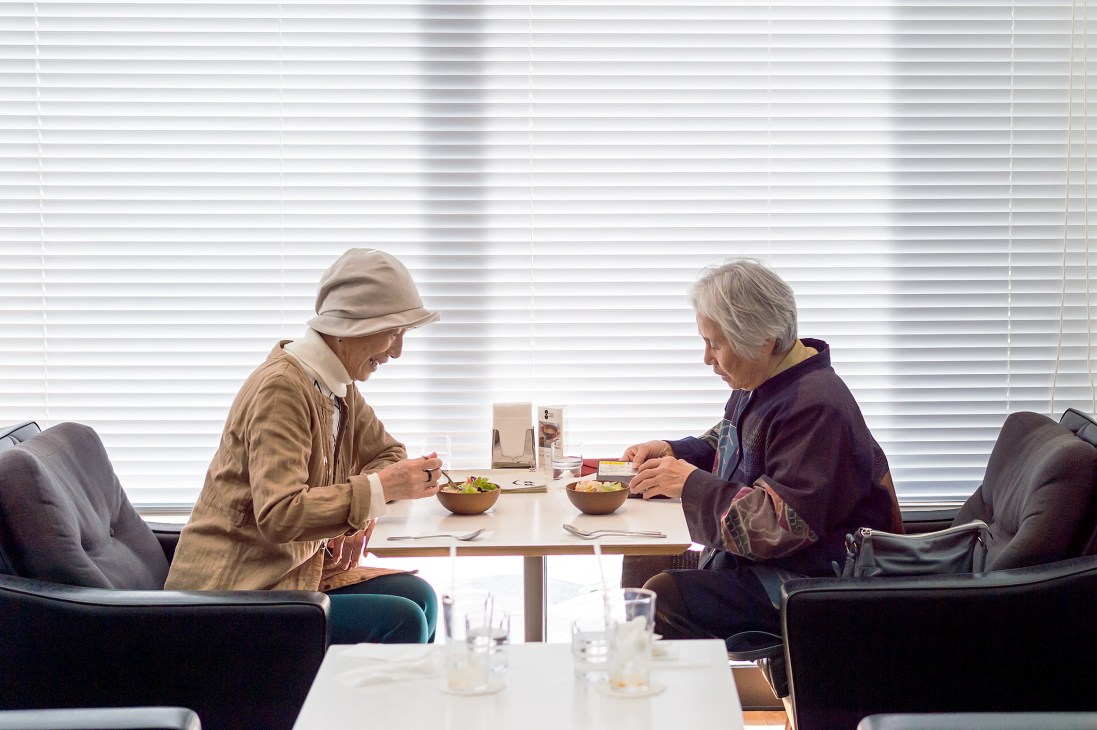
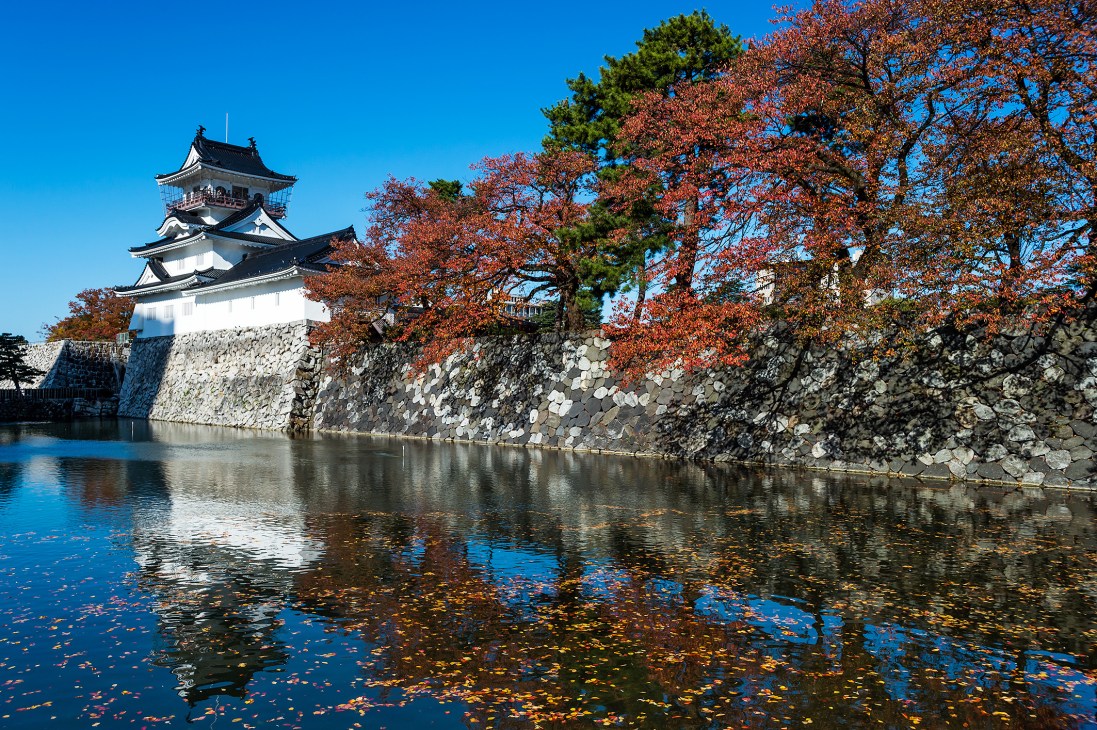
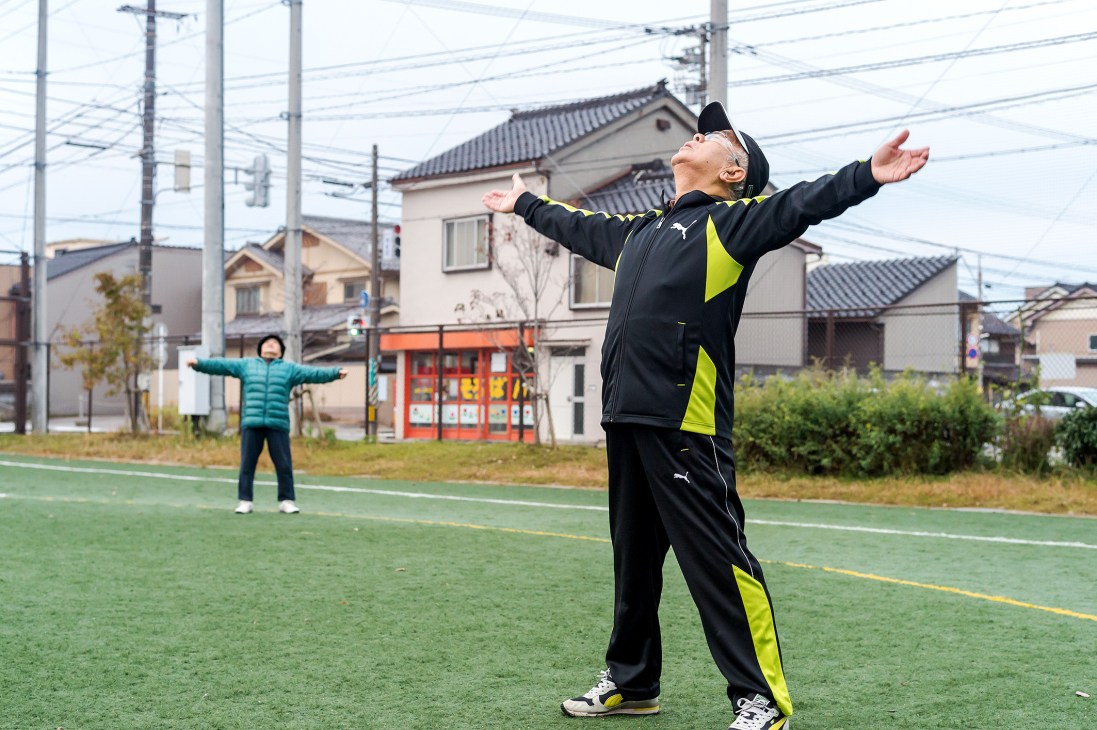
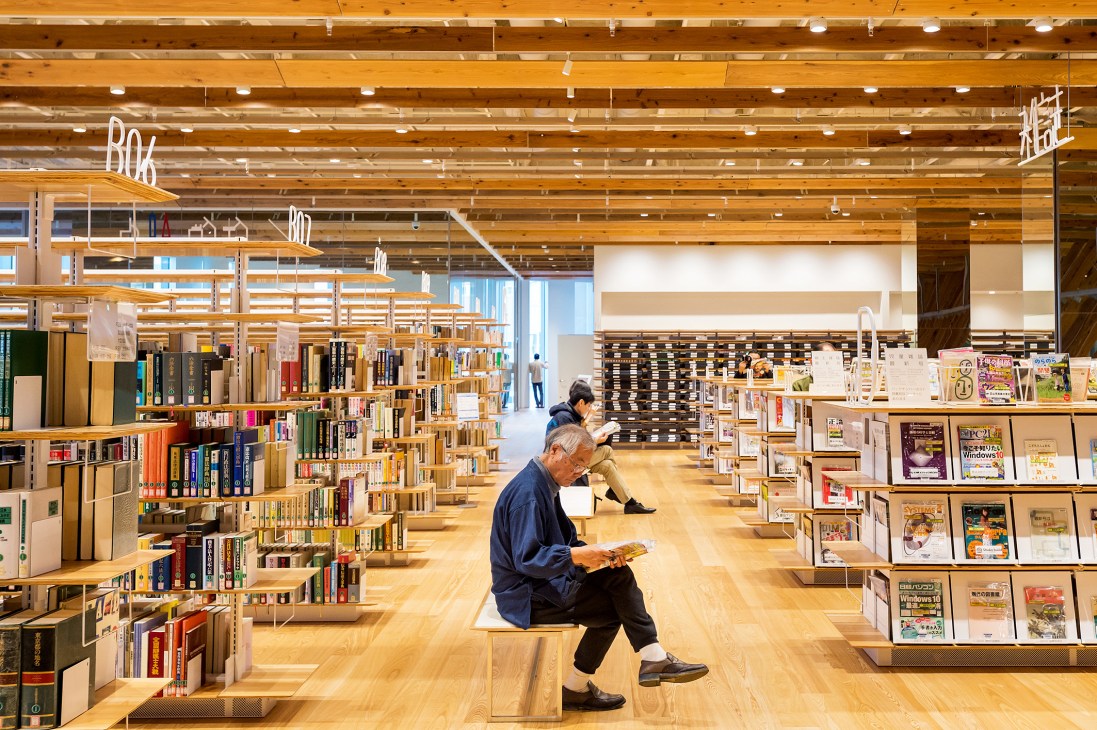
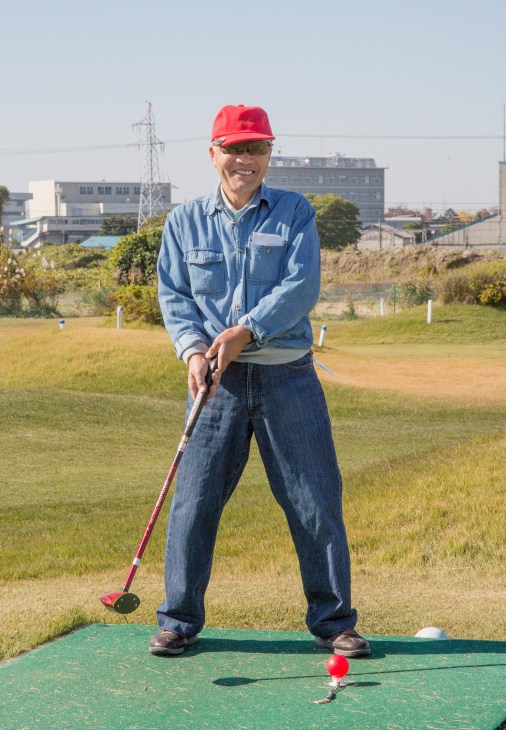
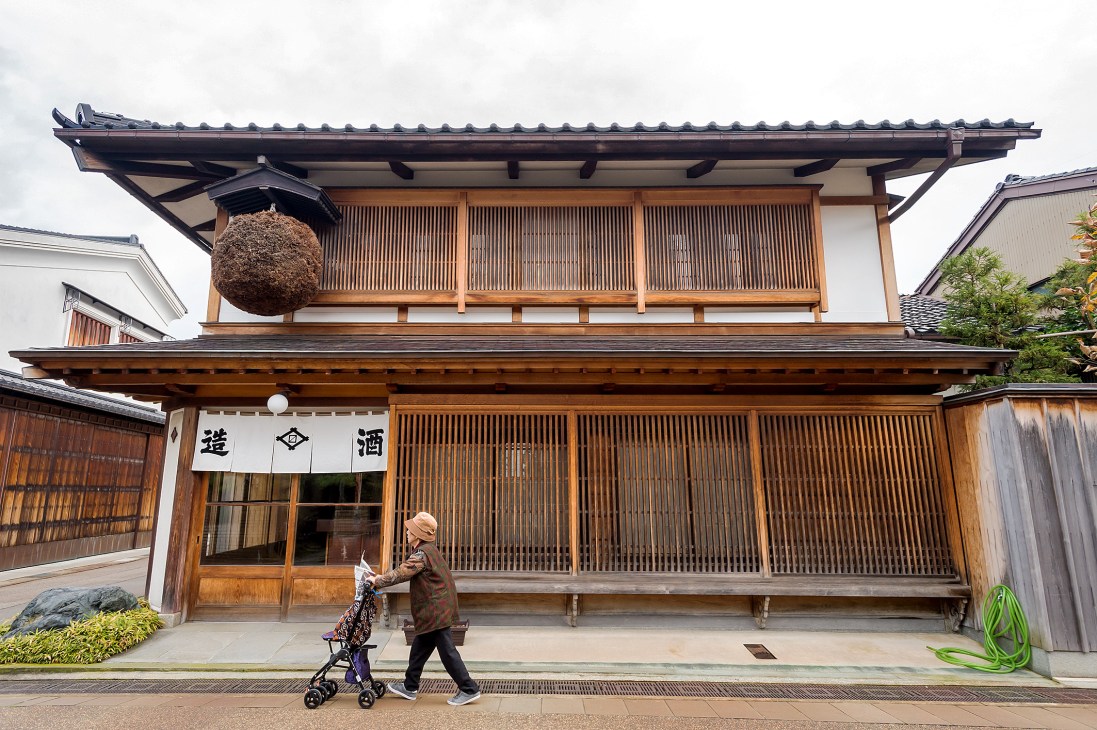
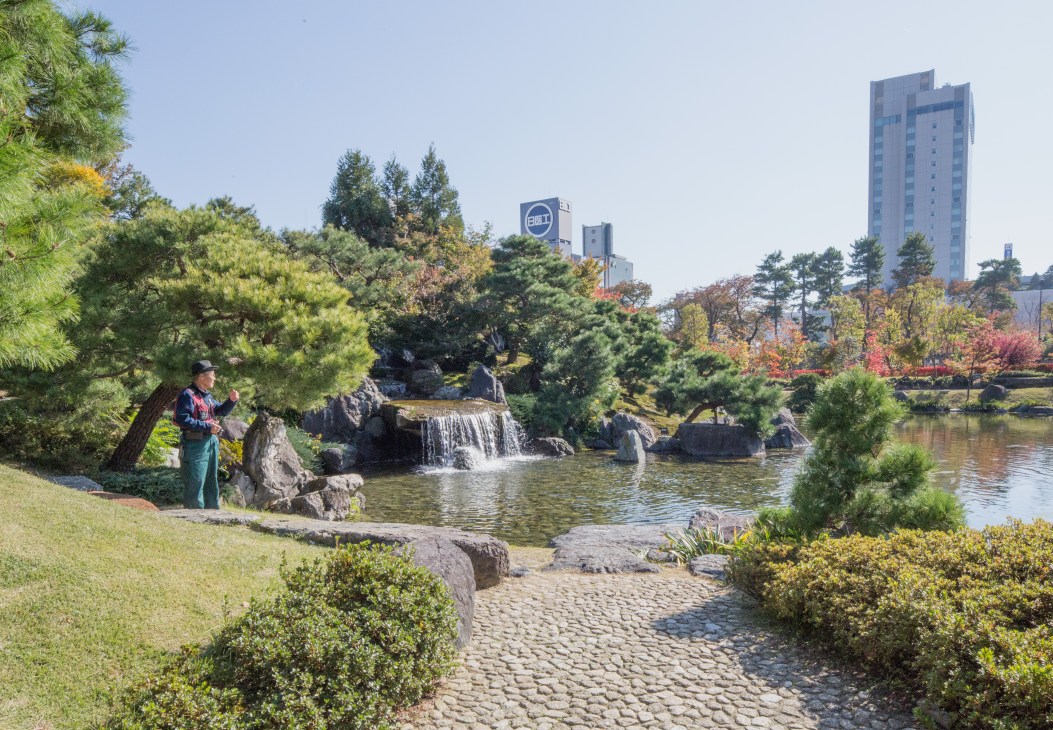
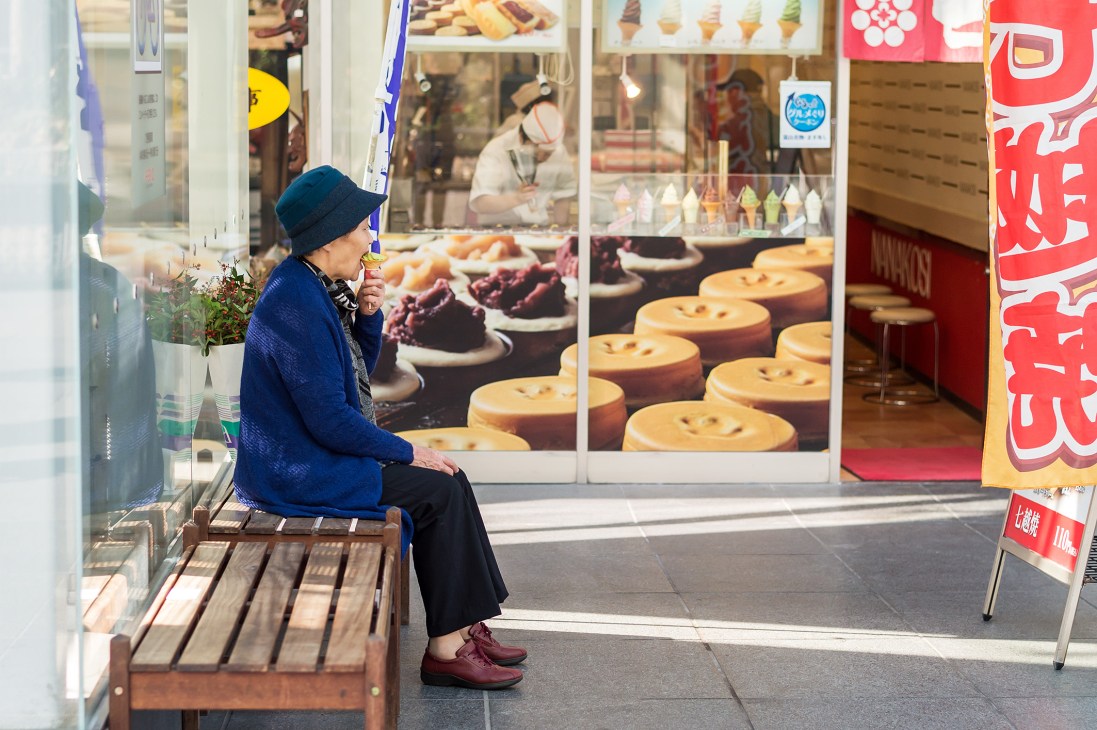
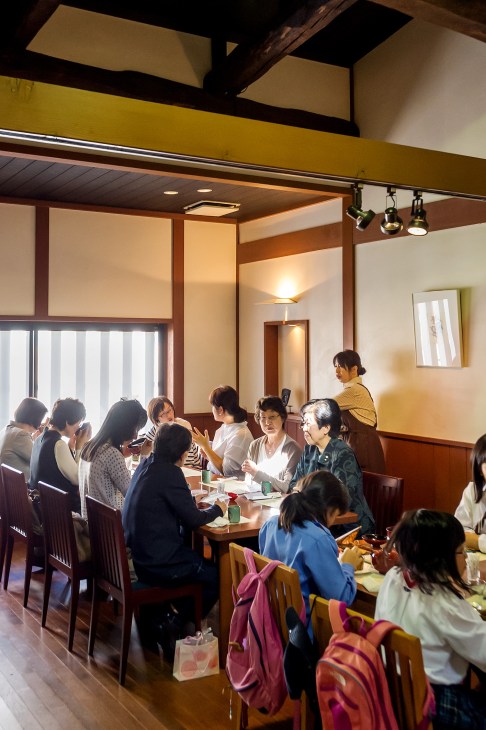
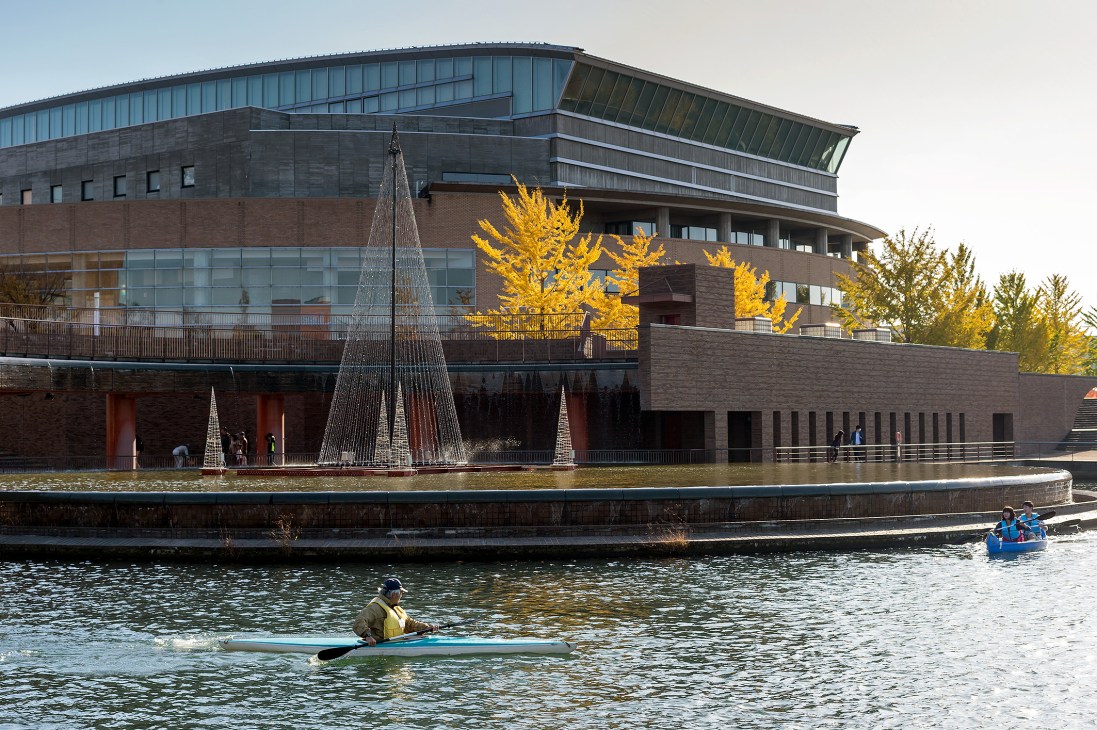
“We can’t do anything about ageing but we can do more to keep older people healthy and cheerful,” says Masashi Mori. “We’d like more seniors to move into the centre but if they don’t, we still want them to be able to get out and about on public transport and stay active.” Eiichi Takeoka’s mini cars, which are made at Takeoka’s workshop in Toyama, offer retirees an alternative mode of transport. With their low speed and super-light FRP bodies, they are designed for the elderly driver who only needs to make short trips.
Toyama’s radical approach to the issue of ageing has drawn interest from cities around Japan and beyond. It was designated a “Future City” by the Japanese government in 2011 and was picked for the UN’s “Sustainable Energy for All” initiative.
“Ageing is not just an issue for Japan and East Asia, it’s facing countries all over the world,” says Mori. In May the mayor visited Lisbon and heard from his counterpart there about the problems facing older people in his city. The issue might be more acute in Japan but the rest of the world is catching up.
In the richest nations about one in four people are over 60 – and the percentage is rising every year. The UN’s most recent World Population Ageing report warns that the figure for Japan is already one in three. Over the next 15 years the fastest growth in the elderly population will be in Latin America and the Caribbean, with a projected 71 per cent increase in the over-sixties, followed by Asia (66 per cent) and Africa (64 per cent).
According to the World Health Organisation (who), the number of people aged 60 or older will outnumber children under five by 2020; by 2050 there will be two billion people over 60 (up from 900 million in 2015). Western countries have had years to adapt to the new longevity; Brazil, China and India will only have 20 years to make the same level of adjustment. By 2050, China is projected to have 90.4 million over-eighties, the world’s largest population of this most elderly group (and quadruple the number in 2013).
With statistics like these it’s no wonder that countries are racing to get their policies for seniors in order. Causes and solutions might be specific to each region but it is clear that ageing is going to affect every corner of the globe. Governments in Asia are being increasingly proactive. Hong Kong – whose seniors are among the world’s longest living – has had an Elderly Commission since 1997 that advises the government on policies for its older population. Singapore is hurling s$3bn (€2bn) at the issue. Earlier this year the government announced its “Action Plan for Successful Ageing”: more than 70 initiatives for the elderly that range from installing slower traffic lights and therapeutic gardens to a National Silver Academy for 30,000 mature students.
Many cities are working to tackle an outdated urban model that resulted in unchecked sprawl and roads choked with traffic. This move towards compactness and energy efficiency – which is happening everywhere from Portland to Freiburg – would benefit all sectors of society: the elderly, the young and the growing number of people living on their own. Policies that aid the elderly, such as easy access to services and better public transport, are likely to be good for others too.
In the past, governments have tended to look at the elderly as a fiscal welfare problem; these days the approach is more holistic and the goal is a healthy, integrated (and valued) population of elderly people who might still be working, volunteering, teaching and studying. In the Helsinki neighbourhood of Lauttasaari the city has piloted a project to develop care services by talking to older residents and taking into account their lifestyles and wellbeing. The German city of Köln has come up with programmes that tackle the isolation of older people by encouraging multigenerational housing, community networks and the establishment of small shops in the city centre.
Some 332 cities and communities around the world have signed up to the who’s voluntary “Age-Friendly Cities” network, which started in 2010. Cities are required to offer concrete plans on how they will become more age-friendly and agree to monitor their results. “It must be a plan involving multiple stakeholders – not just one mode of transport, or just hospitals – working across different sectors,” says senior health adviser Alana Officer. “It’s not just about the elderly, it’s about people of all ages living in a socially cohesive community – bridging the gap between generations.”
The maturation of the world’s population can’t be halted but healthy old age is an achievable goal. The Max Planck Institute for the Biology of Ageing in Köln, founded in 2008, focuses its research on the causes and processes of ageing, its scientists scrutinising the reasons for longevity and finding ways to ameliorate age-related diseases. It turns out that lab research into the lifespan of worms and flies has human applications and the institute works with local clinicians and pharmaceutical companies to find real solutions to provide a better quality of life.
Dr Jane Barratt, secretary general of the Toronto-based International Federation on Ageing, says that older people have an increasingly important role to play. “With the whole world ageing we’re asking them to stay in the workforce. The world is changing its view on the elderly; they are not a burden to society. As long as they are healthy they can contribute both mentally and physically. They can work themselves or look after their grandchildren, allowing their children to work more.
“Smart nations and cities are adopting investment into keeping the elderly healthy, rather than investing in them remaining institutionalised and isolated,” adds Barratt. “A lot of this research, which started to gain momentum about 10 years ago, is about how to balance and combine different types of policies to maximise the intrinsic capacity of all generations.”
Even a light tweak to the local environment can make an impact. In the hilltop town of Gironella in Spain, architect Carles Enrich built a 24-metre outdoor lift that helped seniors in the steep historic centre go down the hill to where younger residents tend to live. “We are entering a period of needing to scale up the small-scale experiments that have been tested in these cities,” says Dr Barratt. “Evaluation of age-friendly cities and the results they are delivering will become very important.”
Toyama continues to draw interested visitors from all corners. When we visit Masashi Mori, the mayor had been playing saxophone (he does a fine rendition of “Misty”, by all accounts) for a group of visiting delegates from the World Bank the previous night. The following week he was preparing to welcome a large group of officials from Sweden. “Each city has to have its own approach,” he says. “We can provide hints and ideas but not results. The Toyama model has to be rebuilt to suit each place.”
Mori, who is toying with a fifth run at office in April, has many more plans, including safeguarding the city’s network of 79 local community centres and and pushing ahead with infrastructure investment to connect the bullet train, local train, tram and city-loop lines to make the city accessible without a car.
Moving to another city or even another country is not an attractive option; most seniors, wherever they are in the world, prefer to stay somewhere familiar. Toyama proves that point well. A survey showed that an astonishing 98 per cent of people born there in 1969 still live in the city. Some might have gone away for work or university but almost all come back. As Mori, the city’s most tireless advocate, says, “It’s just a very easy place to live.”
NOTES: Three places doing it well
As the elderly population increases, so will the need for a diverse range of specialised accommodation.
Bermondsey, London: Architecture firm Witherford Watson Mann designed a contemporary almshouse to provide independent accommodation for 90 residents. Spread over five floors, the building will counteract loneliness by featuring plenty of windows, street access, a central garden courtyard and shared facilities including a hair salon.
Graz: This care home by Dietger Wissounig Architekten shows the value of human scale. Buildings are divided into areas that house 15 residents and one carer in each to create a warm atmosphere; each cluster has its own shared living area. Sunlight, openness and greenery are key ingredients.
Lisbon: Security is an important feature at Alcabideche Social Complex, a retirement home development where architecture firm Guedes Cruz built a group of 52 cube units with white translucent roofs; if a tenant sounds the alarm, the roof will glow red.
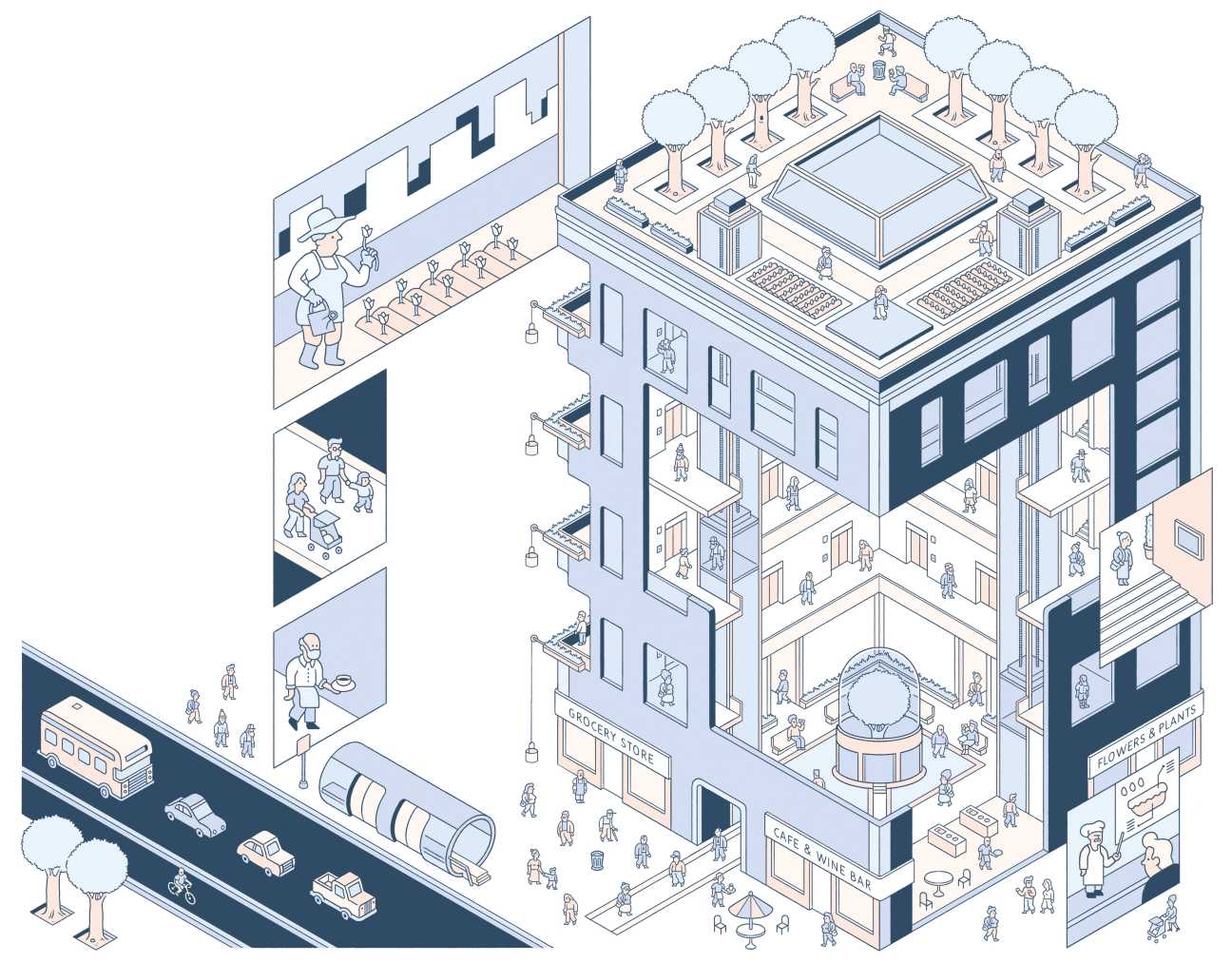
NOTES: How we’d do it
Located within the thrum of the city, our residential development promotes a social lifestyle for the silver set.
1.
Well lit:
Our five-storey building is flooded with natural light thanks to floor-to-ceiling windows.
2.
Courtyard:
The ground floor is alive with interaction. Here our friendly resident cat and dog mingle with inhabitants who shoot the breeze on high-backed chairs in a leafy courtyard.
3.
Social Kitchen:
The kitchen area makes for a focal point for residents to eat and cook together. Here they host culinary classes for the neighbourhood where old family recipes and traditional dishes are passed on to a younger audience.
4.
Café and Deli:
In the kitchen’s adjoining public café and deli (where room-service orders are delivered via an electric pulley system) residents can earn a bit of pocket money dishing up a menu they’ve helped to inspire.
5.
Transitions:
A handsome ThyssenKrupp lift leads to the rooftop farm. Moving between storeys is well planned, with shock-absorbing cork-floored stairs for fitness and safety.
6.
Upper floors:
Inside, smart private living spaces span the upper floors. There are also rooms reserved for family visitors on each floor.
7.
Rooftop:
Here planters allow gardening across various heights, meaning the space is alive with flora and fauna year round. There’s room on the sunny roof for brisk jogs and morning tai chi.
La bella vita
Life in Italy is an attractive proposition with its unbeatable food and drink, natural beauty and cultural treasures. Yet finding the right spot to settle down is a challenge. Big cities have drawbacks (see Rome’s failing infrastructure or Milan’s smog) and quaint Tuscan villages lack an edge. Our choice for 2017 is Trento, a vibrant city two hours by car from Milan that’s set in the foothills of the Alps.
Locals have data to back up their choice. Italy’s financial dailies regularly place Trento (population 117,000) in the top three of their annual quality-of-life rankings of places to live in the bel paese.
Trento’s good fortune is tied in part to its government: it enjoys fiscal autonomy in health, transport and education. It’s a haven for start-ups that attract overseas talent and its university runs a research centre with Microsoft; unemployment is below the national rate.
Litter is a rare sight in its pristine downtown and there’s a commitment to cycling with 430km of paths that extend into idyllic valleys dotted with lakes and slopes ideal for hiking. Come winter the nearest ski slopes are just 15 minutes away on Monte Bondone.
Despite a well-oiled economy, many shops down shutters for three hours at lunch to give residents a chance to head home for a proper meal. “Life runs at a leisurely pace; it’s more civilised and there’s not the chaos of big cities,” says Luigi Andreis, owner of clothing boutique Raccolta Differenziata, which sits in a 15th-century palazzo in the city’s former Jewish quarter.
For Elisa Burnazzi, who runs architecture practice Burnazzi Feltrin, the city’s strengths lie in its urban fabric and the presence of long-established family-run businesses. Her favourites include Demattè, a fruit-and-vegetable vendor on the corner of the city’s main piazza, and grocer Mein, which sells cheese and meat from the province.
“There’s a strong sense of community,” says Burnazzi. “People call out to each other in the street so it feels like you’re living in a village.”
Its urban landscape is a varied mix of impressive works that includes gothic architecture (the main cathedral and Buonconsiglio Castle), rationalist buildings from the 1930s and the recent effort by Renzo Piano to convert a former Michelin factory in the Quartiere Le Albere into a residential neighbourhood.
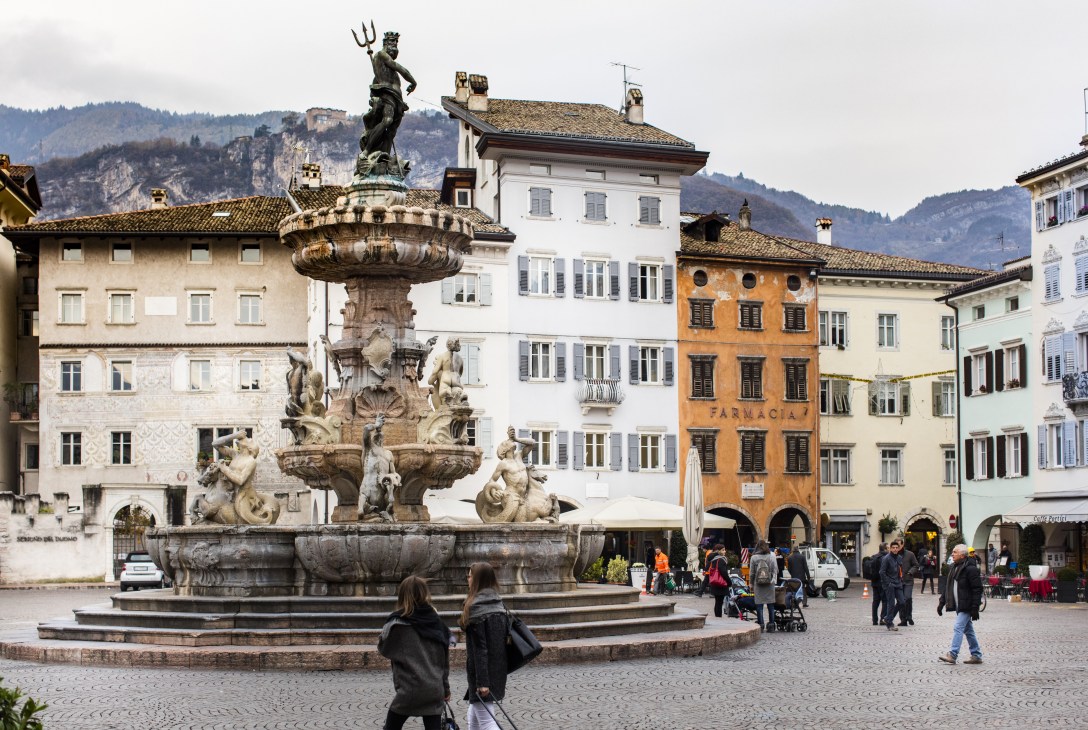
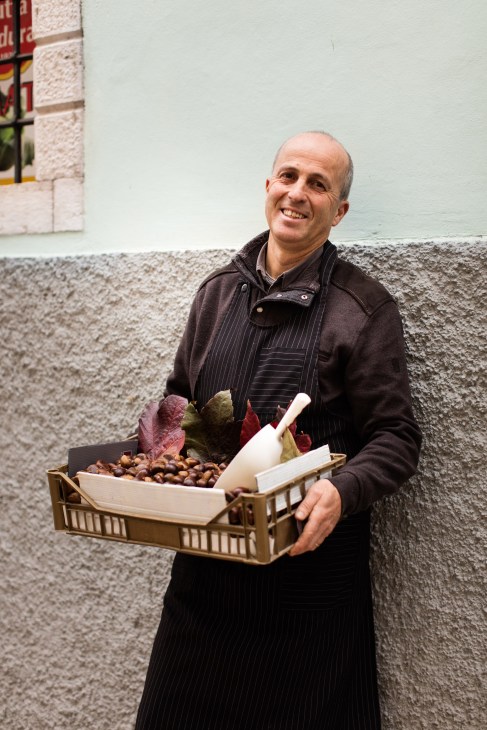
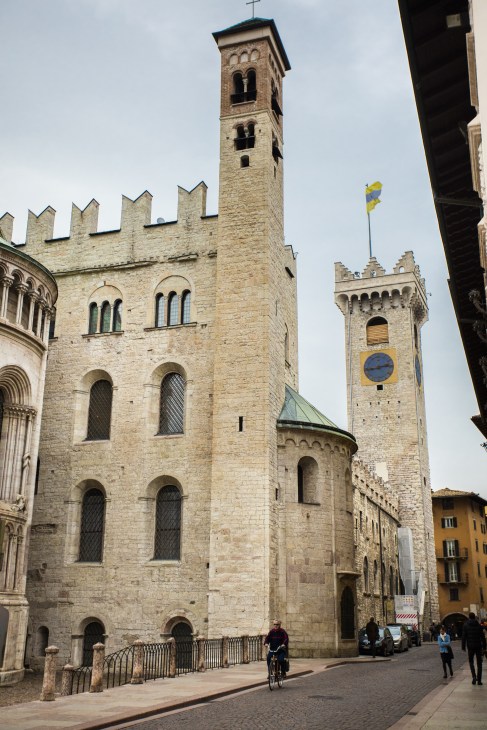
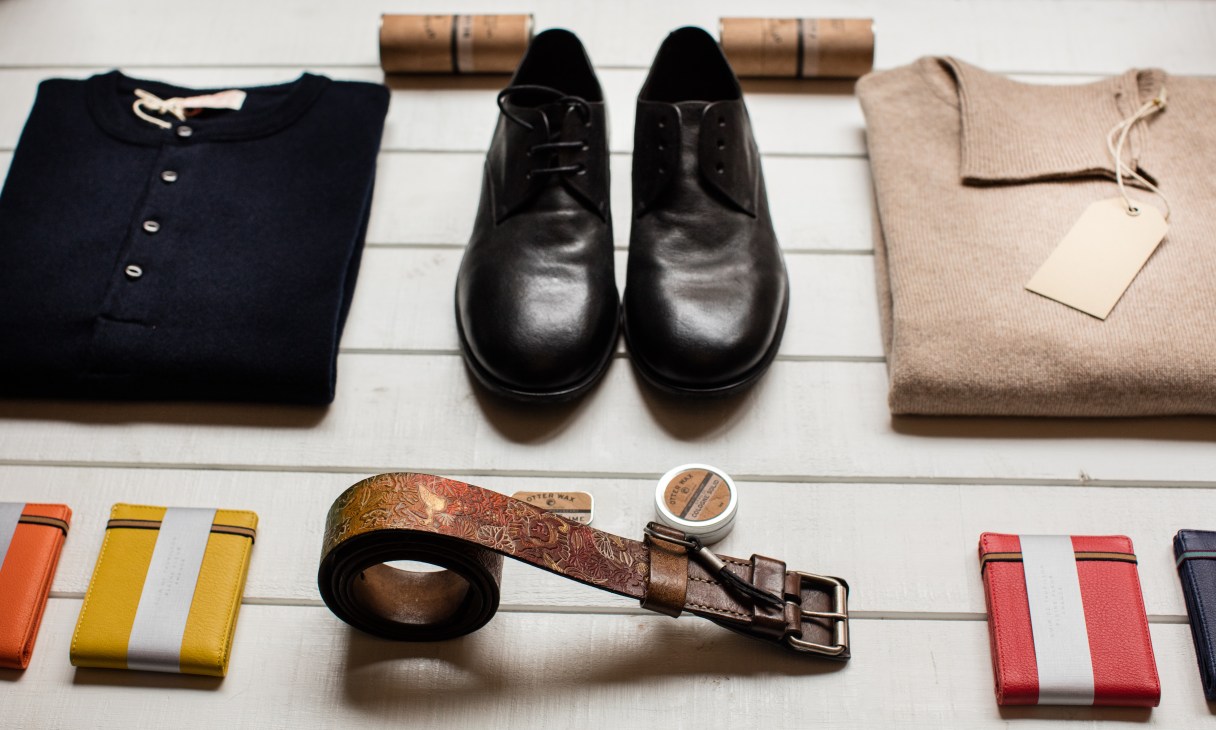
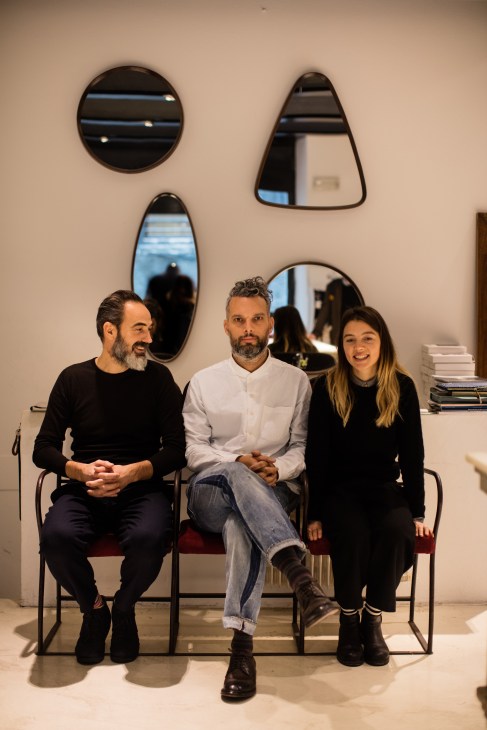
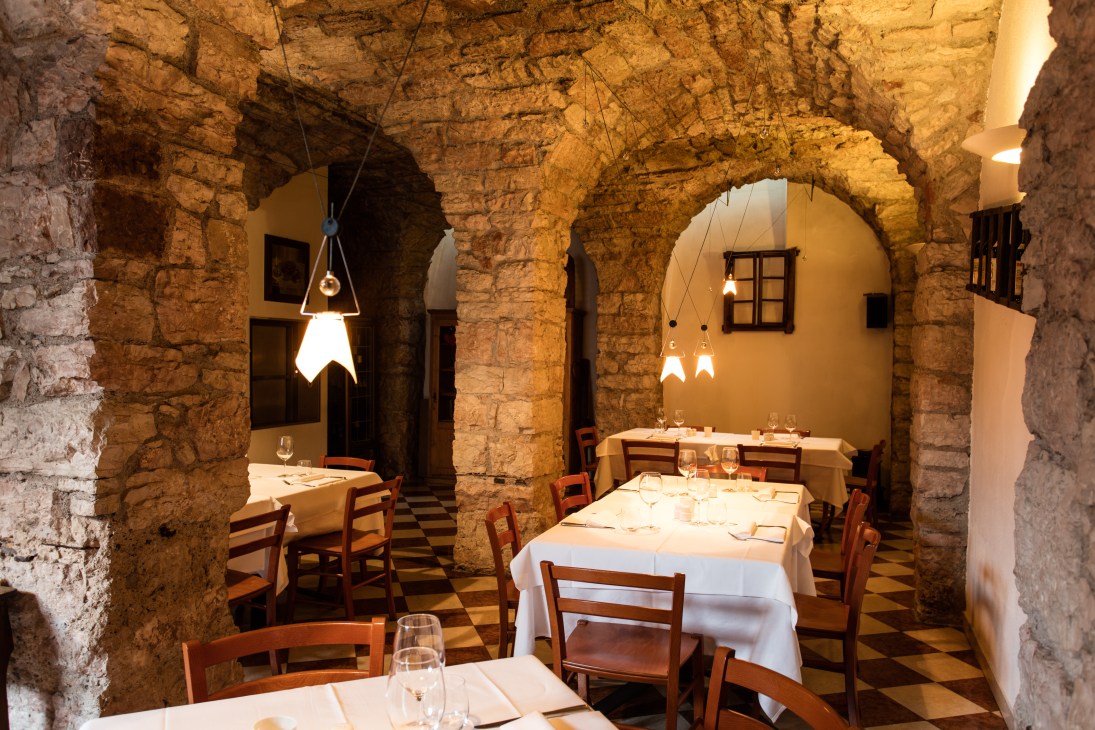
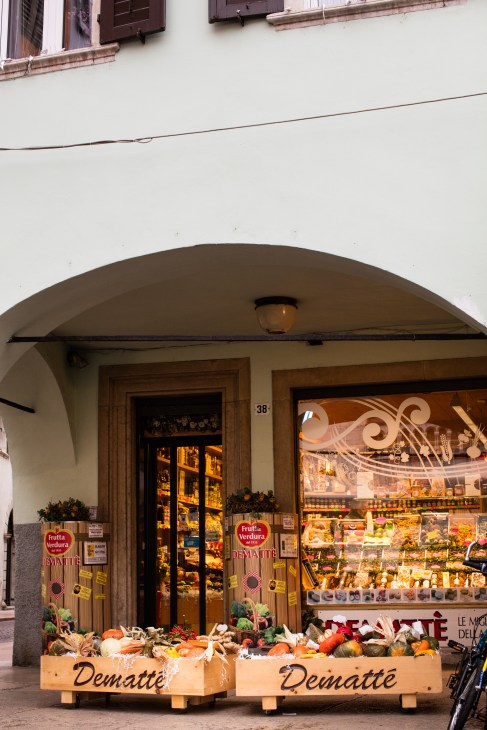
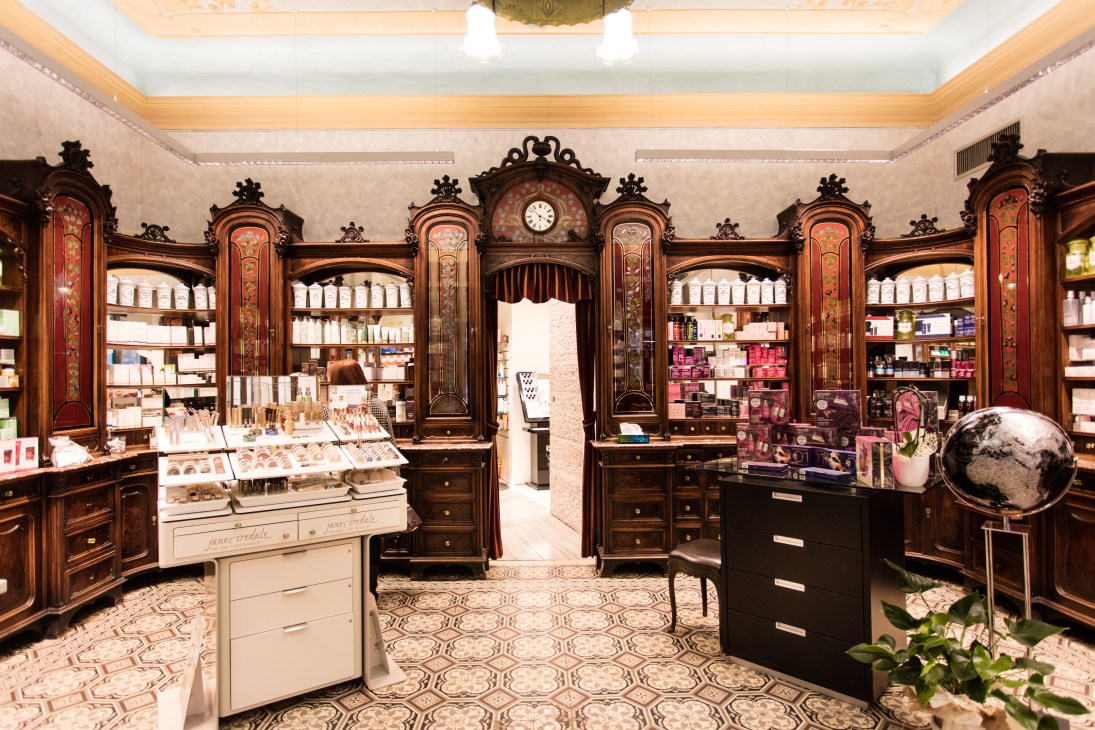
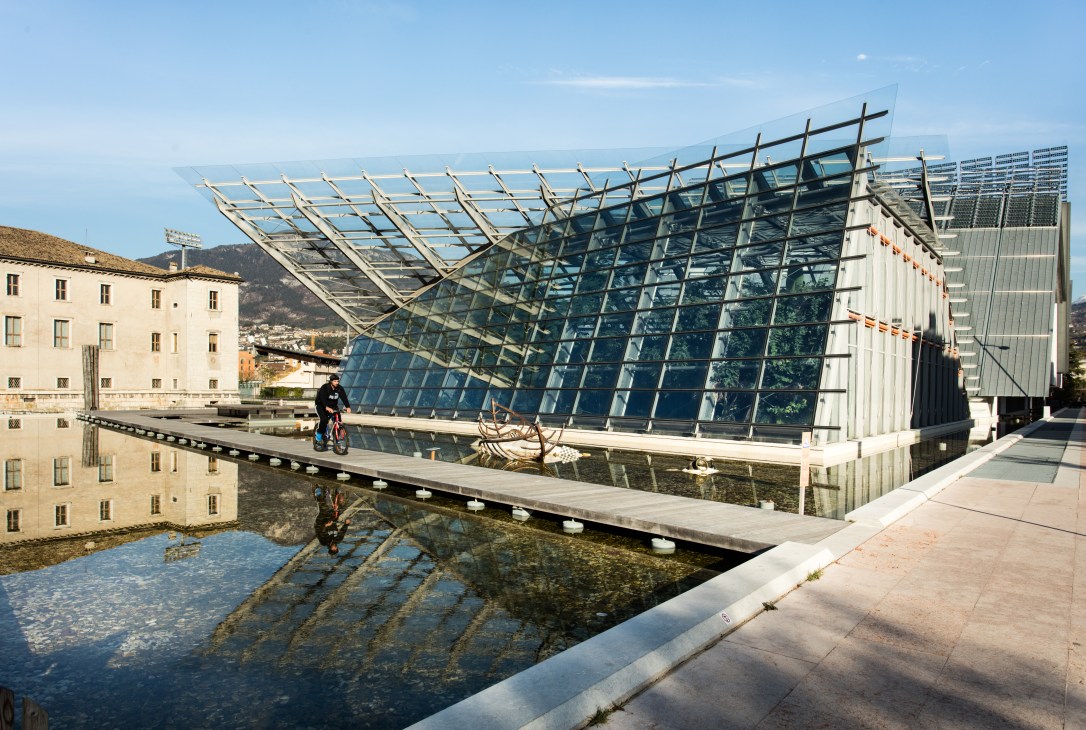
Residents don’t have to look far to toast their existence since the city lends its name to a region famed for its sparkling-wine appellation: Trento Doc. Led by the Ferrari winery, vintners make about eight million bottles of traditional-method bubbly per year. Critics from abroad commend their mountain viticulture, with grapes growing as high up as 800 metres. Yet another reason for residents to raise a glass.
Notes: Need to know
Stay
Villa Madruzzo
Set in the hills, the 15th-century noble residence-turned-hotel has modern and traditional guest rooms and a spa.
villamadruzzo.com
Eat & Drink
Osteria Il Cappello
Quaint bistro that serves tagliolini with rabbit ragu and risotto prepared with the local teroldego red wine.
osteriailcappello.it
Forsterbrau Trento
Traditional beer hall offerings comfort food and pints from South Tyrol’s family-owned Forst brewery.
forst-trento.it
Il Posto di Ste
This bijou deli serves gourmet panini, plus beer and wine by the glass.
ilpostodiste.com
Shop
Raccolta Differenziata
Well-stocked clothing boutique with niche labels including Barena, The Gigi, Massimo Alba and Salvatore Piccolo.
16 Via Malapaga
Grado 12
Opened in 1929, the shop stocks 1,200 vintners, including local Ferrari.
enotecagrado12.it
Culture
Muse
Inaugurated in 2013, the natural history museum was designed by Renzo Piano.
muse.it
Property Guide
Prices from €2,800 to €4,500 per sq m. Two-bed properties average €300,000.
Estate Agent
Archè
Offers sales and rental services.
immobiliarearche.it
What’s in store?
While the global face of retail may be changing, the department store remains an industry stalwart. From everyday essentials to more extraordinary buys, they offer an experience that simply can’t be beaten online; it’s the theatre of these places that keeps us returning. Their well-dressed windows inspire our wardrobe choices, thoughtful staff attend to our needs and then there’s that feel-good factor of strutting home with a handsome bag full of fresh purchases.
It’s not all smooth sailing for the department store though. Some major chains are shutting their doors and old family-run enterprises are also feeling the pinch as competition grows online. Yet smart brands such as Kadewe demonstrate that there is plenty of room for innovation and investment in the design of the department store.
Here we bring you the design identity checklist that the industry should be paying attention to.

1.
Brilliant branding
Nordiska Kompaniet, Stockholm
Karin Svensson, marketing manager of Nordiska Kompaniet (NK), is tasked with keeping watch over the historic Swedish department store’s branding; every word, symbol and picture published under its banner must first get past her discerning eye. “Our visual identity is extremely important and we keep a tight rein on it,” she says.
Elegant branding has been a key part of NK’s allure for more than a century. Its logo is almost identical to the one that architect David Blomberg designed in 1902. Elongated, intertwined “N” and “K” characters are encircled by a ring and a square; the letters are black, the backdrop is white and everything but the square – a 1960s addition – is original. “The logo was a brilliant design from the start,” says Svensson.
For the past 25 years NK has regulated its visual profile with the aid of a hefty black handbook. Detailed guidelines ensure its legacy is protected and promote uniformity across the in-store departments, which are set up as individual companies.
NK has not been afraid to play with its branding on occasion: its signature shopping bag was created by blowing up the logo and printing it diagonally. “It’s so zoomed in that it’s more of a graphic pattern,” says Svensson. Ultimately NK stands out because it has kept a vice-like grip on its identity. “We are very careful about the brand – the logo, font, graphics – and we have the same DNA today as when the store was founded.”
2.
Heritage Christmas window
Ogilvy, Montréal
For seven decades, Montréalers have made the pilgrimage to the Ogilvy department store on Rue St-Catherine for the unveiling of the Christmas windows. According to Normand Ciarlo, Ogilvy’s general manager and divisional vice-president, a commitment to tradition is one of the best ways to connect with a community that still values the physical shopping experience and a little bit of magic. “The windows are a landmark,” he says. “We have two or three generations who saw the windows as children and now bring their kids or grandkids.”
Change has come slowly since German toy-maker Steiff was first commissioned to create the woodland sets in 1947. Occasional restoration of the bears, ducks, monkeys and hedgehogs is undertaken by traditional toymakers. Recently the costumes were refreshed by Harricana par Mariouche, a fur specialist, bringing some quietly contemporary winter touches to the forest fashions.
In 2017 Ogilvy will expand and share its building with Holt Renfrew of the Weston family (owners of Selfridges and Brown Thomas). But there’s no doubt that the display will survive the transformation. “What that window does is bring stability,” says Ciarlo. “There will be room for it because it’s part of who we are.”
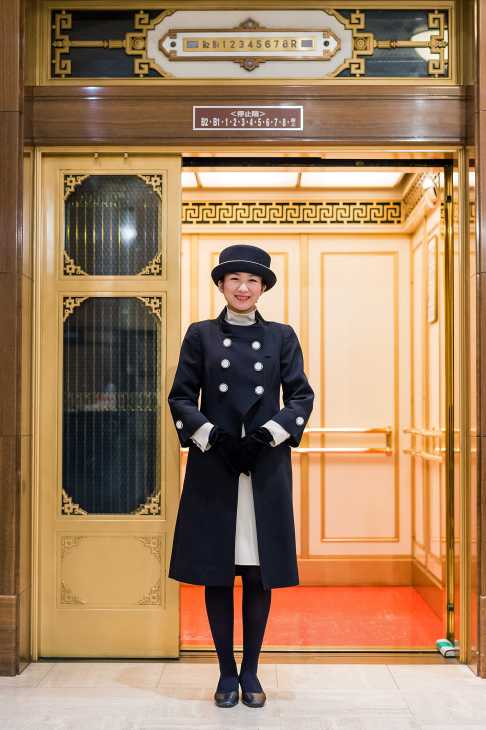
3.
Sharp staff
Takashimaya, Tokyo
The female lift attendants who were once a mainstay of Japanese department stores have mostly disappeared. But at Takashimaya’s Tokyo flagship the six US-made Otis lifts can’t go anywhere without the erebeitaa gaaruzu (elevator girls) manually operating the cranks and pressing the buttons.
The fact that the lifts haven’t changed since the building was completed in 1933 only partly explains why the elevator girls are still around: it’s also because of Takashimaya’s insistence on old-fashioned hospitality. “Our job is to greet customers and help them find what they’re looking for,” says Miki Shinmura, who heads the team of 30 at the store in the Nihonbashi district. Dressed in crisp black-and-cream uniforms by fashion designer Jun Ashida (navy in spring and summer), they make customers feel welcome and at ease in a shop with hundreds of thousands of items spread across 10 spacious floors. The elevator attendants know exactly where to look for, say, a ceramic rice pot, school backpack or calligraphy brush.
Before joining the team, trainees spend six months on the sales floor and another month at the controls of the lifts but the job requires an almost daily mental cataloguing of products, brands and seasonal gift ideas that are constantly in flux.
4.
Smart signage
Hyundai Department Store, Seoul
The Hyundai Department Store – one of South Korea’s big three alongside Shinsegae and Lotte – introduced a simple wayfinding system that pairs san serif fonts with a white background.
“As a premium brand, ‘less is more’ lies at the heart of our business,” says Park Ee-rang, art director of Hyundai in Seoul, who worked with graphic designers Studio fnt on the job.
Contrasting with the pink of its logo and shopping bags, this wayfinding system provides clear directions in a busy environment. “Not only does it upgrade the ambience but it also articulates the brand experience,” says Park.
Shooting stars
1.
Ninja Van
Singapore
Delivery start-up Ninja Van stood out when it entered the market in 2014, both for its smart branding and personal touch. Its endearing ninja mascot is emblazoned on bright red vans that zip around Southeast Asian cities, making 20,000 delivery trips a day and offering a friendlier vision of the logistics sector.
“We call ourselves a technology company but not everything is done by having the best technology,” says 29-year-old founder Lai Chang Wan. “We embrace it but we understand the real world.”
Clever software enables Ninja Van to get more packages to their destinations faster and propelled the business across borders, overtaking traditional postal services. “In the past year we’ve scaled up to almost 40 cities in six countries,” says Lai. “What’s next is to become the top five in these countries and to do so by combining the best of technology with the best customer service possible.”
ninjavan.co
2.
Tom and Captain
Melbourne
When Melbourne-based entrepreneur Tom Lillecrapp adopted a large German hunting dog in 2013, he knew it would require a lot of walking. Having just resigned from a job in property he was trying to work out what to do next; the answer was right in front of him.
He decided to set up a dog-walking business: Tom and Captain. The company’s point of difference? It shuns the use of leads and operates almost exclusively in out-of-the-way locations. “We take dogs to environments where they won’t bump into people: rivers, creaks and bushland,” says Lillecrapp. “They can run, dig holes and swim.”
Tom and Captain now has a staff of eight and there are plans to sell designer pet products. For Lillecrapp, the company’s fast growth can, in part, be attributed to the way it makes owners feel. “I bring along an SLR and take action shots of the dogs, which I send to the owners while they’re at work,” he says. “They love it – their dogs are almost like children.”
tomandcaptain.com
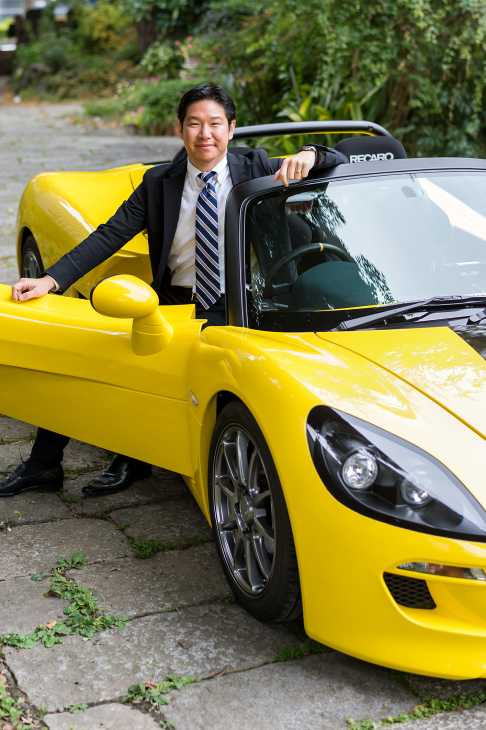
3.
GLM
Kyoto
Established in 2010, Kyoto start-up glm is the manufacturer of Japan’s first electric sports car. Founder Hiroyasu Koma, 39, started the firm while he was still an mba student; today he employs 22 staff (including 12 engineers). The company’s Tommy Kaira ZZ, released in 2015, can hit 100km/h in 3.9 seconds. The glm G4, a supercar concept model, was unveiled this year.
Starting out, Koma studied the market closely; he realised that interest in the electric-vehicle (EV) business was on the rise. “I picked sports vehicles because I knew that could work as a business: small quantities but with high value. And there was no competitor.”
glm has a unique manufacturing set-up. Kyoto’s high concentration of first-class EV parts-makers enabled glm to develop core components such as the lithium-ion battery with partner manufacturers. “We also sell just the chassis so people can make the EVs in their own way; now companies outside the EV industry approach us.”
glm.jp
4.
Loomia
New York
Wearable technology is often just a gimmick – but Loomia doesn’t agree. The renamed firm (it was called The Crated when founded in 2013) moved to its New Lab HQ in Brooklyn Navy Yard in September and is now working on a fabric that incorporates soft circuitry. In the next couple of years, founder Maddy Maxey hopes to partner fashion brands and major manufacturers to reach a mass market. “Clothing is ubiquitous but it doesn’t get a lot of innovation,” she says.
Maxey sees a future where technology is seamlessly integrated into the materials around us. In February the company will launch a year-long programme for companies interested in learning more about the possibilities of smart fabric, which might include a jacket that responds to cold weather by warming up. Maxey is also looking to collaborate with car-makers to create smart seats. “It’s materials that make the world around us,” she says.
loomia.co
5.
Recycle Beirut
Beirut
What do you do if you live in a country like Lebanon with a huge refugee population and a spiralling rubbish problem? If you’re Sam Kazak, you see an opportunity. He founded Recycle Beirut in 2015 to provide doorstep recycling services to the masses for a small fee. But the company also set out to create decent jobs for Syrians, who are locked out of much of the labour market.
The business breaks even simply by collecting glass, paper, plastic and metal from 1,200 households and selling it on, recycling 50 to 80 tonnes every month. They aim to triple that in the coming year. Furthermore, six of their 17 employees are women in a country that hosts 1.5 million Syrians – more refugees per capita than any other country.
“There are more than 50 million refugees in the world today,” says Kazak. “We are one of the few sustainable, scalable models that is capable of addressing the issue.”
recyclebeirut.com

6.
Castore
Liverpool
For a company built around agility and speed, Castore took a while to get up and running. The brand founded by Brothers Tom and Phil Beahon was the culmination of almost 24 months of preparatory work. Part of the reason was that both were committed to corporate-finance jobs in London but mostly it was a reflection of their determination to create perfect sports clothing.
In late 2014 the brothers began sourcing fabrics, travelling to Italy to visit mills. In early 2015 it was off to Portugal to meet potential manufacturing partners. Even then Castore was a long way from being ready. “All our garments are tested for 100 consecutive days by elite athletes to ensure the performance features work,” says Tom. From original design to final product, 48 people handle each piece.
The Beahons now want to grow their direct-to-consumer online model but are also selling through selected high-end gyms and hotels.
castore.co.uk
7.
FieldWorks
London
Federico Motka was kidnapped by Isis while working for an aid organisation in Syria in 2013. When the Italian was finally released in May 2014 he felt he had to “create something good out of something bad”; that’s when he began setting up FieldWorks with his friend Chris Man. The business, due to be fully operational in 2017, aims to challenge the way the international aid industry works, with big businesses keen to fund charitable projects always going to the same “safe” multinational organisations.
FieldWorks will partner, support and ultimately vet organisations around the world, providing a vital link between them and the millions of dollars earmarked for good causes. “The current model is that proposals are written without any contact with the people on the ground and strategies are dictated by politics,” says Motka. “If we support local groups, we can better allocate resources.”

8.
Boven
Taipei
Anyone who needs convincing about the revival of print journalism worldwide need only pay a visit to Boven in Taipei. This unique membership library stocks about 25,000 international magazine titles dating back decades, the culmination of 20 years of collecting by founder Spencer Chou. And it’s still growing: Chou adds roughly 400 new editions each month, from Vogue to the Japanese men’s magazine Popeye.
Originally opened at a different location selling records and coffee as well as print publications, this second edition took shape in 2015. Tucked away in the Da’an district of the capital, the new Boven has a sharper focus on magazines. The membership concept was inspired by Thailand Creative and Design Centre’s book library in Bangkok. Boven members pay a monthly fee and attendance is limited to 20 people at a time to ensure a peaceful environment. Boven also curates collections for corporate clients such as hotels, cafés and hair salons, and there are mini Bovens in co-working spaces.
Now Chou is fielding enquiries from China and Singapore. “My goal is to make Taiwan the biggest magazine library the world,” he says. “Anyone who would like to read a good stack of titles will know to come here.”
1886 2 2778 7526
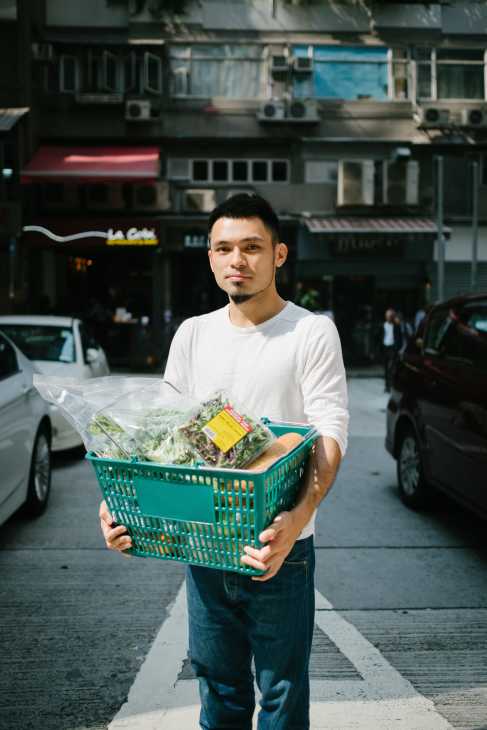
9.
Jou Sun
Hong Kong
Thanks to Jou Sun, chefs and housewives in Hong Kong now have serious competition when it comes to sourcing the freshest goods at the city’s markets. In 2015 Hinz Pak and Jessica Lam gathered seed capital from their friends and family to start their venture, a service that buys market-fresh groceries and delivers them to the doors of time-strapped white-collar commuters. The name means “good morning” in Cantonese.
“The key was to build a smooth supply chain with a trusted network of sellers and drivers,” says Pak, who, along with Lam, was engaged in cherry-picking and delivering groceries until the summer. Today the company has grown to eight full-time staff, and more than 2,000 items from more than 40 neighbourhood stalls and brands can be bought through Jou Sun’s website. The produce is packed in the company’s Wan Chai office before being delivered to customers’ homes. According to Pak, “Over 70 per cent of sales are driven by health-conscious women in their thirties and forties, who are the food decision-makers at home.”
The pair plans to expand the delivery service to Kowloon and the New Territories in 2017 and are keen to partner more local producers and stall owners to increase the range of groceries available.
jousun.com
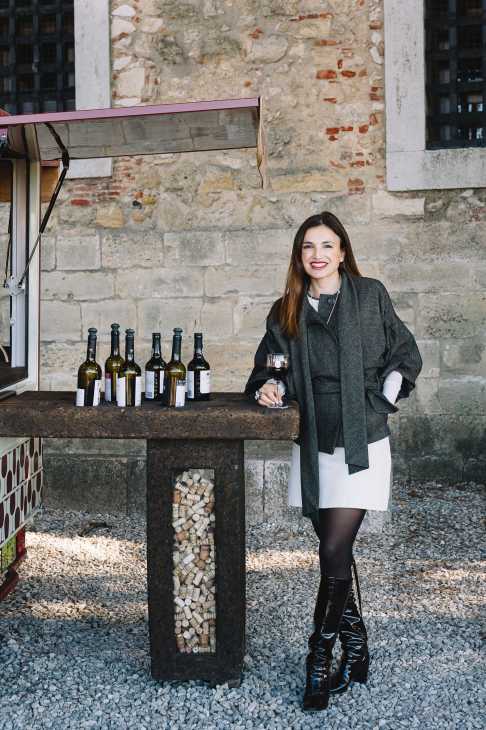
10.
Wine With a View
Lisbon
On your next trip to Lisbon, keep an eye out for a smartly repurposed 1960s motor tricycle. It’s likely to be Wine With a View, the invention of Portuguese entrepreneur Barbara Vidal, who launched the business in 2014. The concept is simple: Vidal parks up at the spots with the best views around the city, unfolds a bar with a claret awning and serves Portuguese wines by the glass – from rich reds and crisp whites to port from the Douro Valley and vinho verde. “After two and a half years we’ve sold 93,000 glasses,” says Vidal. Part of its success is down to clever branding but also because everything is sourced in her homeland.
After launching a thriving e-commerce branch, Vidal is keen to expand across the country. She is also aware that her business could travel well. “We would like to expand abroad – potentially starting with France – either through multiple local franchises or master franchises per country.”
winewithaview.myshopify.com
Images: Brook James, Ross Woodhall
Welcome to the land of prosperity and opportunity
Imagine dining out on Auckland’s picturesque waterfront, enjoying a glass of wine, before catching a direct flight to Dubai in time for breakfast. Or make it a business lunch of fresh regional produce followed by a late dinner in Hong Kong. New daily connections with the Middle East and the Middle Kingdom are bringing the faraway fantasy of Middle Earth closer to home for record numbers of international visitors. Savvy investors see New Zealand as both a smart business move and a rewarding lifestyle choice.
Bright outlook:
New Zealand continues to be one of the fastest-growing developed economies
Perfect timing:
Auckland has breakfast when Silicon Valley sits down for lunch.
Great hosts:
Kiwi warmth towards visitors is deep-rooted; the Māori word for it is manaakitanga.
Sunny disposition:
Wellington has 2,000 hours of annual sunshine, a third more than London.
Careful custodians:
Kiwis share a sense of guardianship (kaitiakitanga) of the environment.
Natural fit:
Most Kiwis have family or friends in another country; no wonder expats are welcome.
New Zealand: reasons to live and invest
New arrivals find it easy to integrate. An open society is matched by a level playing field for business and an inviting immigration system for people with skills and capital.
Easy living
New Zealand’s stunning landscape has long been the envy of the world; now its business environment is winning global plaudits. The World Bank has named it the easiest place to do business in 2017. Stable government, a peaceful society and no estate taxes make it a natural choice for growing family wealth. A government initiative to attract global investors and skilled talent is enhancing the country’s workforce. Two residency visas tailored to investors require a minimum commitment of NZ$1.5m (€997,000). Investing NZ$10m (€6.6m) for three years means 44 days must be spent in the country in the last two years of the investment period.
New Zealand by numbers
New Zealand’s population of 4.5 million enjoys a home the size of the UK or Japan. It has the buzz of Singapore but with breathing space and the hum of Hong Kong but without the crowded houses.
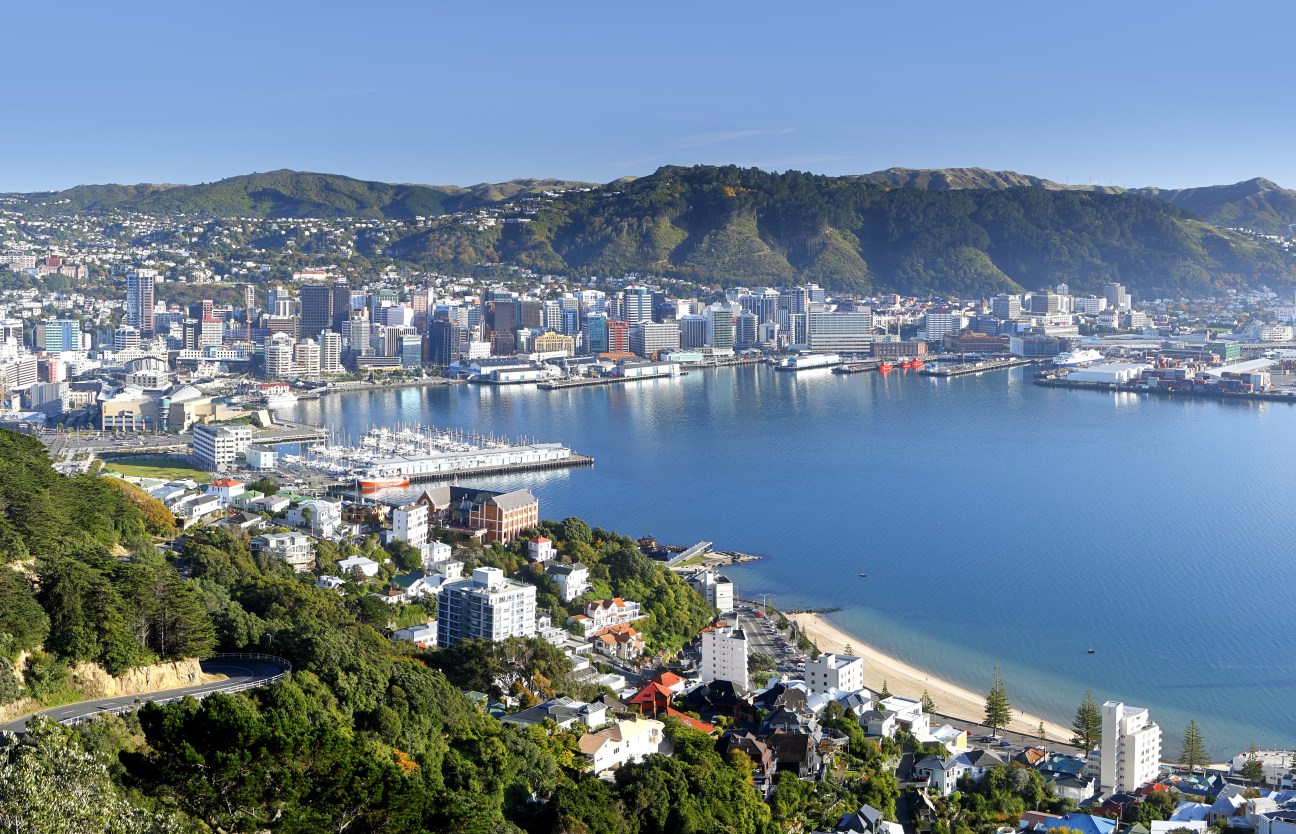
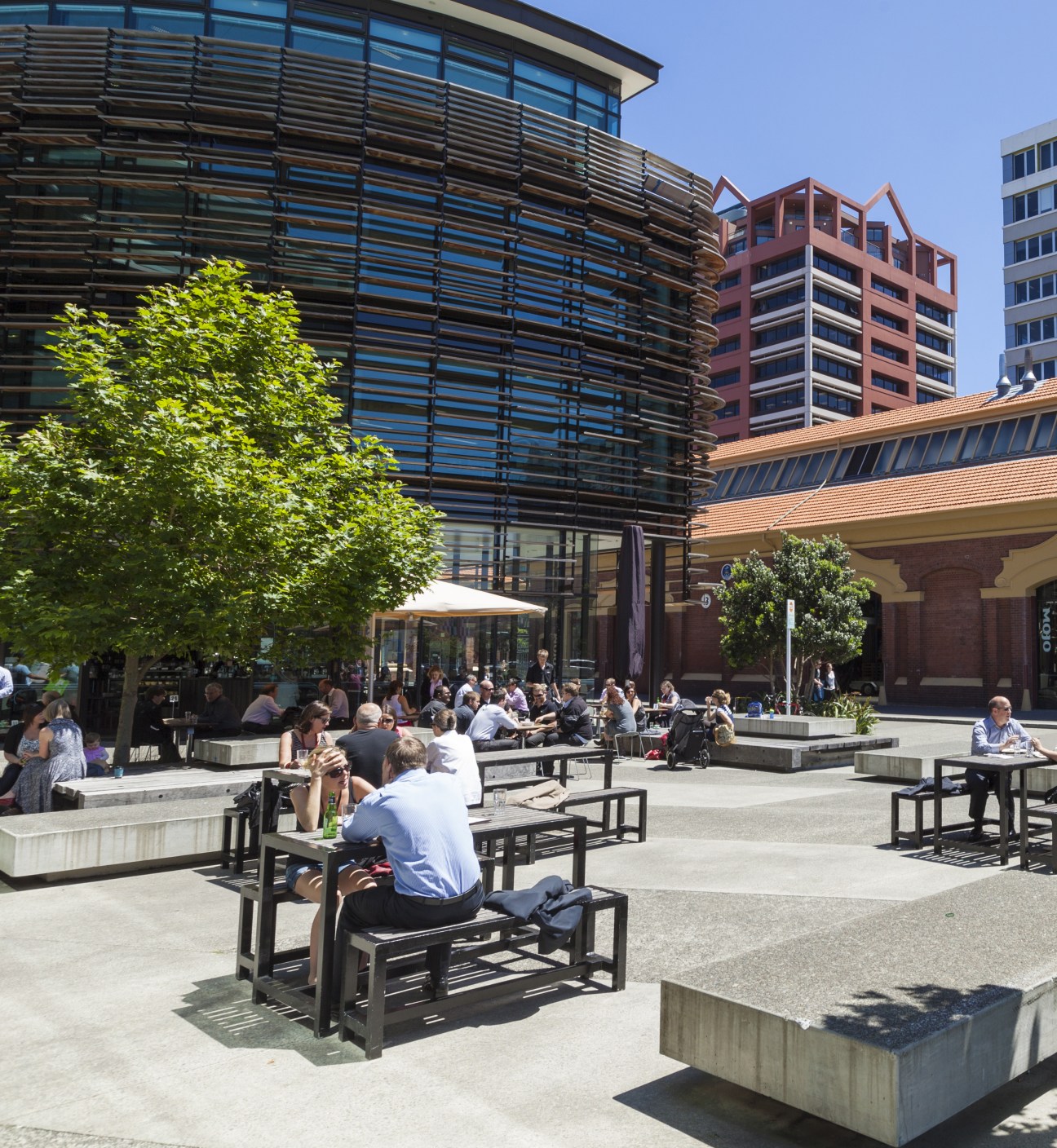
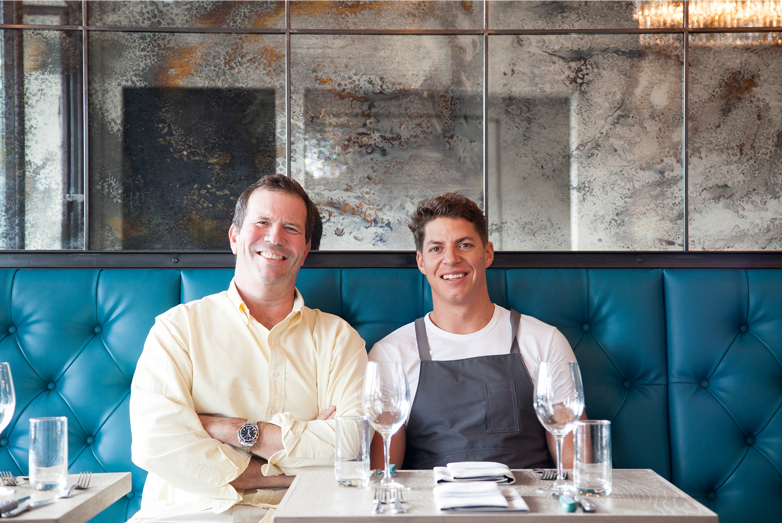
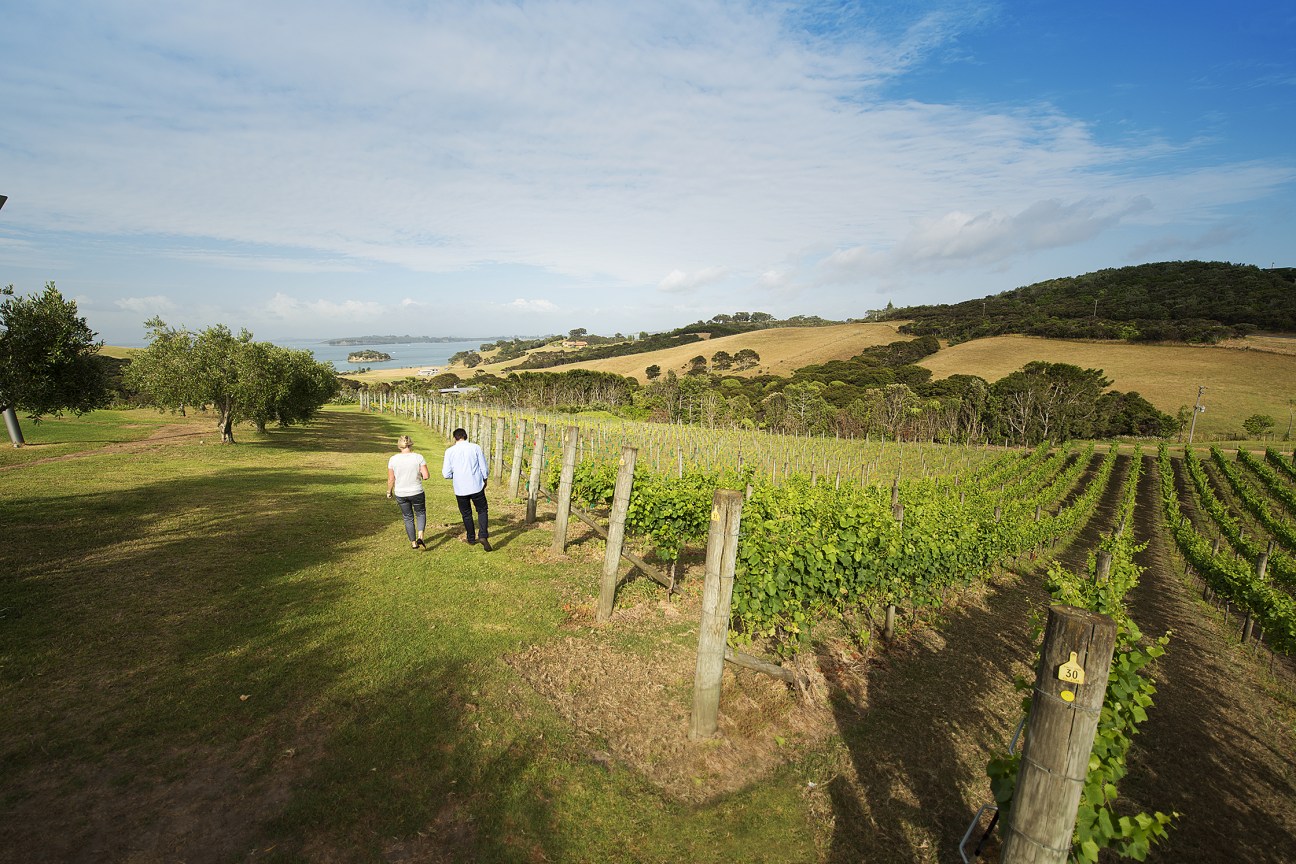

Q&A
Jeffrey Costello, investor
American Jeffrey Costello relocated to Auckland with his family in 2012. His wife Olga started an interior-design firm and the two former investment bankers recently worked together on a new restaurant.
Why did you settle in New Zealand?
We wanted to find the best place on Earth to raise kids. I’ve invested quite a lot here beyond the portfolio that I was obliged to put in place for the visa. New Zealand is about more than just agriculture; my own investments range from sheep-milking and data analytics to elderly care and opening a restaurant. This country is a great place to do business.
How did you meet your restaurant partner, Nick Honeyman?
It’s a classic example of the close-knit quality of New Zealand’s business communities and how the country operates. Whatever the business may be, it’s easy to quickly establish networks with relevant players.
Was Auckland your first pick?
We’ve lived in Los Angeles, New York, London and Moscow so we are city people. Auckland is the cultural and commercial capital; I’m ultimately an investor and this is where business is done. Vancouver was our second choice and what it came down to – weirdly enough – was water temperature. I’m a keen sailor.
Do you feel settled in New Zealand?
Aside from Auckland we have a house in Queenstown that we use for skiing and hiking – and we are also building a beach house. This is where we are going to be, certainly until my boys go to university, and I plan on pursuing New Zealand citizenship.
Investing in a quality life
There are two visas for investors who want to gain residence in New Zealand; selected criteria below.
Investor
- Min. NZ$1.5m (€997,000) invested for four years
- 146 days per year in NZ during final three years of investment period
- Settlement funds of NZ$1m (€664,000)
- 65 years old or younger
- Three years’ business experience
- Competent in English
Investor plus
- NZ$10m (€6.6m) invested for three years
- 44 days per year in NZ during final two years of investment period
- No additional requirements
How to make it happen
From research to registering, living and investing in New Zealand is just a few easy steps away.
1.
Check out newzealandnow.govt.nz/liveandinvestnz
2.
Register your interest and connect with Immigration New Zealand.
3.
Book your flights and come and explore.
Driving forces
There is an arms race underway in the field of mobility. Surprising new players are challenging the sector through their development of intriguing technolgy. Consumers and governments alike are turning their noses up at petrol-guzzling co2-emitters. And at the same time, the world’s largest car-makers are frantically trying to innovate in order to stay ahead.
The reason for the frenzied activity is clear. The ability to get around safely and seamlessly is one of humanity’s greatest challenges and few believe we’ll find a solution in the near future. As urbanisation continues apace, the pressure put on infrastructure in our cities will only grow. Already some swollen metropolises are buckling under that pressure.
But what does this mean for the car companies? If you were forced to pick an invention that defined the past century and reshaped the world more than any other, a strong case could be made for the mass-manufactured automobile. It’s a story that starts with Henry Ford in the early 1900s and has continued up until today. The rapid urbanisation we’ve seen around the world since 1900 has been made possible in large part by the mass-produced car.
Yet there has been precious little innovation in the first years of the 21st century. Although other industries have been turned upside down, the car industry has stayed virtually still. Cars are still manufactured broadly in the same way and sold using the same infrastructure of dealerships and global distribution chains as they have been for decades. Now, however, they are experiencing their “internet moment”.
In this report we look at how several car-makers, including Ford, are coming to terms with what the future might hold and how they’re preparing themselves. We start, however, in the present day looking at Munich, one of the best cities for driving. While some urbanists are keen to ban the car and get everyone cycling, Munich’s planners are including it in their thinking. They understand that future mobility revolves around one fundamental thing: choice.
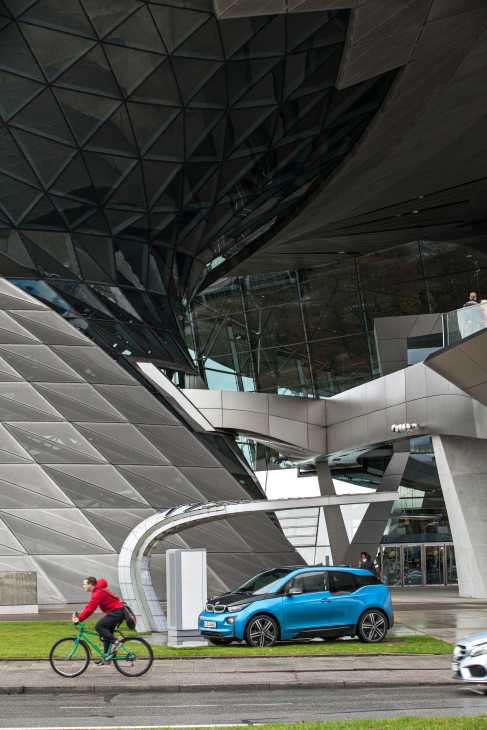
1.
The car city
Munich
Uli Büttner grew up in Saxony but his love for cars reveals a Bavarian spirit. The 31-year-old service consultant at bmw subsidiary Mini in Munich has owned eight cars in his life. His current runaround is a 1997 bmw 5 series, on special occasions he drives his 1986 bmw 3 series and for camping trips he owns a Ford Transit van. Büttner lives in central Munich and usually takes the underground or his bike to work for environmental and health reasons.
He says that driving would actually be faster because he can avoid rush hour and use high-speed roads. For him, Munich is a great city for driving. “Of course it’s hard to speak of ‘fun’ when you’re driving in the inner city,” he says. “But in terms of traffic planning, Munich is doing everything right. I love that you get out of the city very quickly. And the country roads around Munich are great.”
As the home of bmw and with Audi just up the road in Ingolstadt, it’s little wonder that Munich holds the car close to its heart. Yet thanks to a strong economy, this mid-sized city with its compact centre has grown fast over the past 10 years, putting pressure on urban roads. With 1.5 million people, Munich has the highest population density in Germany. Add another 1.4 million in the expanding metropolitan area and it becomes clear why the city has been investing heavily not just in public transport and its network of fast cycle routes but also in improving roads. In summer 2015 a new 1.5km tunnel opened along the ring road, greatly improving traffic flow and quality of life for residents; more ring-road tunnels are planned too.
Arguably the greatest strength of Munich’s traffic planning, however, is the speed with which you can leave the city. Outside of rush hour, it takes about 20 minutes to get on to any of the autobahns. Skiing in the Alps and sailing on the Tegernsee are just a few hours away. It is also this easy access to nature that makes the car so popular. Despite the urban density, two-thirds of households own at least one car, while 91 per cent in the suburbs do.
Georg Dunkel, head of the traffic department at Munich’s urban-planning office, knows it would be hard to convince residents to give up on driving. Asked if the city wants to get rid of the car, he is firm. “No. We want to create a mobility concept that accommodates every means of transport,” he says. “People depend on cars. But Munich has grown more than expected over the past 10 years. We’re reaching our car traffic limits.”
He believes that population growth means ownership rates will have to decrease “and car-sharing is an important topic”. DriveNow, the service co-owned by bmw, reckons that one shared car abolishes three to six private ones, so the city is keen to push it. Dunkel says they’ve recently made an agreement with DriveNow to introduce more electric vehicles as the city expands its network of charging stations. This won’t make Büttner sell his cars any time soon. But this is what the future of mobility is all about: giving people a range of ways to move around.
Keep the motor running
While Munich has been better than most at installing charging points, few cities outside Norway have invested anything like the money that electric-car companies are lobbying for. Also, because a charged battery is far from having the range of a full tank (and because it takes a minimum of 30 minutes to charge), consumers are wary of giving up on petrol.
So in spite of the calls for it to be outlawed and predictions of its obsolescence, the combustion engine is here to stay – at least for the foreseeable future. Of course you could always drive a hybrid Toyota Prius but then you might be mistaken for an Uber driver, the magnet for 90 per cent of insults hurled on our roads today.
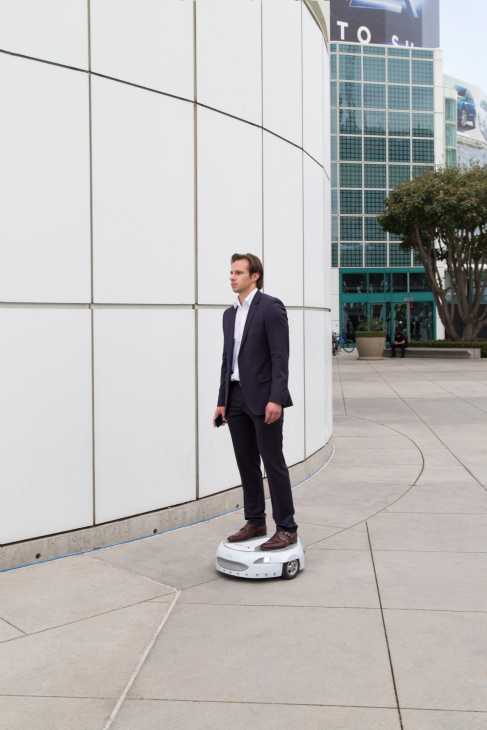
2.
The veterans
Ford
Visiting Ford’s production facility outside Valencia is an easy way to assuage any fears that the car industry is about to be brought to its knees by the technology revolution. The plant was opened in 1976 and today hi-tech robots combine with skilled engineers to assemble 400,000 cars and vans and 330,000 engines each year. To put it another way, a new vehicle rolls off the production line every 50 seconds.
Yet it was a watershed moment in March 2016 when Ford’s president and CEO Mark Fields announced the creation of a new subsidiary: Ford Smart Mobility. It was an acknowledgement that the global behemoth could not thrive in the modern marketplace simply as an auto company. As Fields said in his announcement: “Our plan is to quickly become part of the growing transportation-services market.” It’s a market that already accounts for €4.4trn in annual revenues worldwide. The manufacturer that pioneered the first mass-produced car was also becoming, as he put it, a “mobility company”.
Ford was not the first car company to spot this opportunity but it has been working quickly over the past few years, even before Ford Smart Mobility was formally created, to catch up with its competitors. A Global Mobility Challenge was launched within the company allowing employees to propose ideas that might propel Ford into the mobility space. One of the smarter products to come out of this in-house competition was the Carr-E, a cute, spare wheel-sized rideable platform designed in Köln by Ford engineer Kilian Vas.
Showcasing the eye-catching device at the company’s European research and innovation centre in Aachen, Vas stands upright on top of it then leans forward to set its four small wheels in motion. A second later he’s zipping across the lobby floor, leaning to one side and then the other to steer. As he does so, built-in red lights act as indicators, making the Carr-E look like a miniature Ford hatchback. In this capacity it is designed to help drivers get from their parked car to their final destination but it can also be loaded up with objects up to 200kg.
While the Carr-E is a prototype several years away from being marketed, Ford is also investing heavily in other mobility solutions that have more obvious revenue streams. This involves a shift in terms of who Ford sees as its customer. “We’ve put together a new operating paradigm that says our customers aren’t just individuals who buy and drive our automobiles,” says Sheryl Connelly, resident futurist. “Cities are also an important customer.”
The company has conducted dozens of mobility experiments in cities around the world, including a Dynamic Shuttle at Ford’s Michigan campus that allows visitors to summon point-to-point rides on demand. In September it bolstered this side of the business with its acquisition of Chariot, a similar smart-shuttle service based in San Francisco. These types of services can be created in partnership with city transport authorities, representing a departure from Ford’s usual model of selling cars straight to consumers.
And this is where the company sees the greatest opportunity for autonomous driving as well. Just like Local Motors and their Olli autonomous bus, Ford is banking on autonomy coming to shared transit before personal mobility. “By 2021 we expect autonomous vehicles to be in operation and we believe the first market will be those people-mover, ride-hailing services,” says Connelly.
At the same time she’s keen to stress that autonomous vehicles do not represent “a watershed moment”. “Even if we see them in 2021 that doesn’t mean they’ll be readily available to every individual around the world.” Partly this is down to affordability but it’s also about perception. In a recent survey carried out by Connelly, people were asked if they could imagine driving an autonomous vehicle in the next 10 years. “People in India said yes to a degree of 84 per cent and China was at 78 per cent. But the UK, for instance, was down at 30 per cent.” This is because markets such as the US and the UK have “a long, rich history of feeling a personal connection to or sense of identity with their automobiles”.
So those who claim we’ll all be sitting in driverless cars in the next 15 years are perhaps overestimating people’s eagerness to accept the technology. As Erica Klampfl, Ford’s global future mobility manager, puts it: “A lot of timelines are dictated by choices people make so it’s not always a matter of when technology is available.” Moreover there are many regions of the world where car ownership is still on the rise – indeed where the notion of “ownership” has yet to be discarded in favour of “access”.
In the meantime it’s not as if Ford, one of the world’s biggest car-makers, is calling a halt to its development and production of cars. “Our investment in performance vehicles has never been greater,” says Connelly. “This shows that we still believe in nurturing the enthusiasm of people who love the thrill of the drive. We’re not giving up one for the other.”
Look, no hands!
Executives in the car industry preach that driverless technology will transform the car into a “mobile, connected workspace”. Does the world really need another space for checking your emails, let alone billions of them globally? We now have “connected” outdoor parks and wi-fi is being introduced on long-haul flights. The art of switching off is being lost – and the car is one of the last bastions.
It’s here that the ambition of driverless technology reveals its shallowness; after all, it’s about making sure we stay on Google wherever we are. Plus, driving can be enjoyable and there are many of us who actually like a gear shift. And once the accidents start piling up, let’s see how this works out.
Q&A: Gareth Dunsmore
General manager of the electric vehicle division, Nissan Europe
The Nissan Leaf, launched in 2010, is now the bestselling all-electric car. But even though 230,000 models have been bought worldwide, its sales are currently behind expectations. Carlos Ghosn, the CEO of the Renault-Nissan alliance, has blamed cities and governments for not supporting construction of the necessary infrastructure. We ask the company’s head of electric cars in Europe if there is a future for electric vehicles.
How much do you think the lack of infrastructure is holding back sales of electric cars?
It takes a collaborative approach to really put infrastructure on the market. We’ve had success in service stations, in the UK and across Europe, where we’ve been investing collaboratively with the European Council and with local government and private enterprise. City-based charging does need more support from municipalities because it’s essentially about putting electricity cables and charging ports into streets.
Are you at all worried that other technologies that don’t require such extensive investment will leapfrog electric vehicles?
No. Our longer-term goal is to head towards zero-emissions mobility and the base facilitator of that is a battery and an electric motor. Then if you add on technologies such as a hydrogen-fuel cell or a bio-ethanol fuel cell, these will be built on top of that. But at its core it will be an electric vehicle. It’s important that we don’t wait, say, 10 years for long-range hydrogen fuel-cell transport to become an accessible reality because those years, from a climate-change and air-pollution perspective in cities, we can’t get back. So we need to move now.
3.
The futurists
Lynk & Co
As we enter the Berlin launch of car brand Lynk & Co – a subsidiary of Geely, the Chinese manufacturer that owns Volvo – we are greeted by 10 waiters eager to feed us lobster. If you want lobster you have to accept being spoon-fed by these young apron-clad men. This greeting could be a metaphor for what is then unveiled: a car that takes care of your needs without you lifting a finger. Well, almost.
The one that Lynk & Co is premiering – dubbed a “smartphone on wheels” – is a sleek, compact suv aptly called 01, due to hit the market in China in 2017 and in the US and Europe thereafter. According to the brand’s senior vice-president Alain Visser, it’s a direct response to consumers changing how they live their lives thanks to technology. We’ve shifted from a society that prefers ownership towards one that prefers experience.
That’s why Lynk & Co positions itself as a lifestyle brand. “It’s the story of the car but it’s what we do with the car,” says Visser. To that end 01 is equipped with an open application-programming interface (API) so that anyone can create an app specifically designed for the vehicle. The company is collaborating with Ericsson, Alibaba and Microsoft, who will allow them “to do things in the car where the sky is the limit”. One feature is a sharing button, which pings your network when your car is not in use so any friend with a “digital key” can have access. Similar to how phones have monthly packages, Lynk & Co offers a subscription model that will provide perks including insurance and groceries delivered direct to your vehicle. Lynk & Co is also cutting out the middleman – dealerships – so cars can be purchased direct from a showroom or online. Plus, cars can be traded up when a new range comes out with better technology. “We treat it almost like an iPad,” says Visser. “Within a year you can replace it.” If this leaves environmentalists shuddering, Visser assures us that Lynk & Co will introduce a used-car network so yesterday’s models don’t go to waste.
Lynk & Co has its work cut out if it wants to revolutionise the auto industry. For one thing, although the software may be groundbreaking, the hardware is not: the 01 is not a small car and although future models may be electric, this one has a traditional petrol engine.
The team relishes the challenges ahead. They launched in Germany to demonstrate that by bringing together the best designers from Sweden’s Volvo along with Chinese engineering, they can go head to head with Europe’s top car-makers. What’s most revolutionary is Lynk & Co’s attitude, which courts a generation increasingly forgoing traditional modes of transport and conventional status symbols. It’s an attitude that feels more in line with contemporary needs, whether you’re happy being spoon-fed or not.
In praise of the dealership
If the likes of Tesla and Lynk & Co have their way then the traditional car dealership is not long for this world. Seeing the dealership as an unnecessary middleman, these companies plan to circumvent it and to sell straight to their consumer.
We would rather not hear the death knell of the dealership quite so soon. There is a real benefit in being able to inspect the car you’re going to drive off the forecourt, in kicking the tyres and running a hand over the walnut dash, in haggling with the dealer and leaving with a sense that you negotiated a bargain. That’s not to say that the average dealership doesn’t need to be spruced up a bit – but other car companies shouldn’t follow Tesla’s lead and lose the personal touch.
4.
The innovators
Local Motors
Local Motors was founded in 2007 in Boston with a plan to bring mobility squarely into the 21st century. Among its products is the Olli, an autonomous 12-person minibus, which uses light sensors and cameras to navigate.
“Olli offers a safe, smart and sustainable transportation solution that is long overdue,” says company co-founder and CEO Jay Rogers. He has a point; the four-wheeled pod could solve a host of mobility conundrums.
Like Ford, Local Motors is working with city governments to move beyond the testing phase. Nevada and Florida are likely to be early adopters but the company is also looking to open a micro-factory in Berlin in 2017.